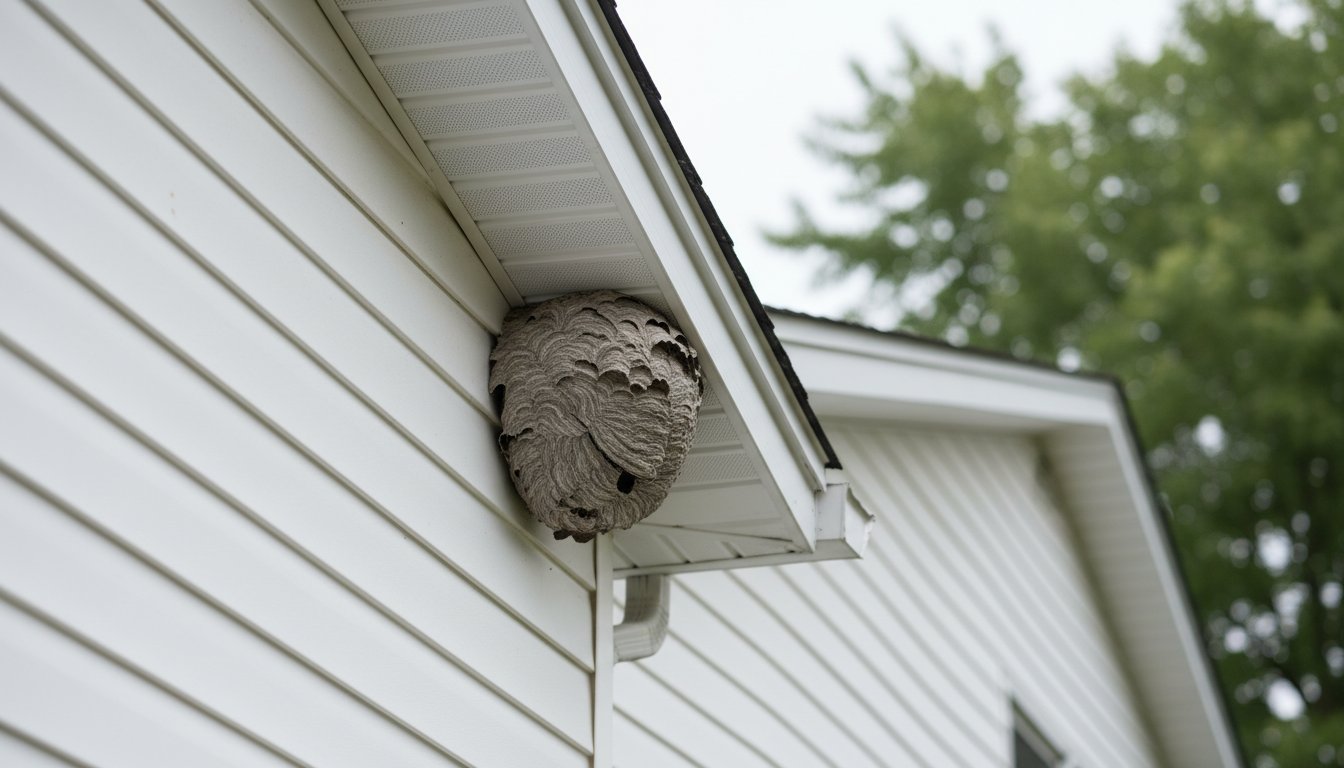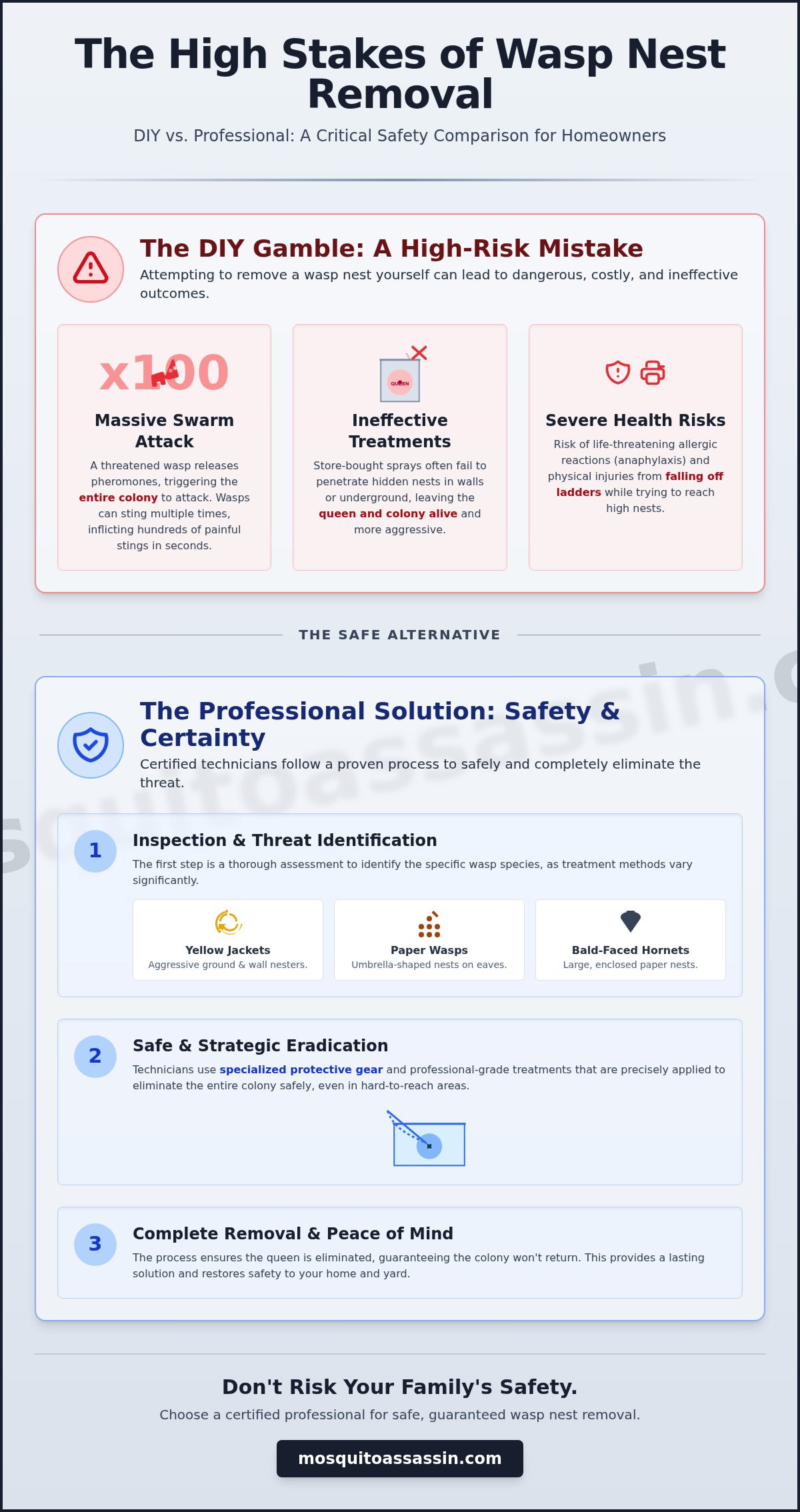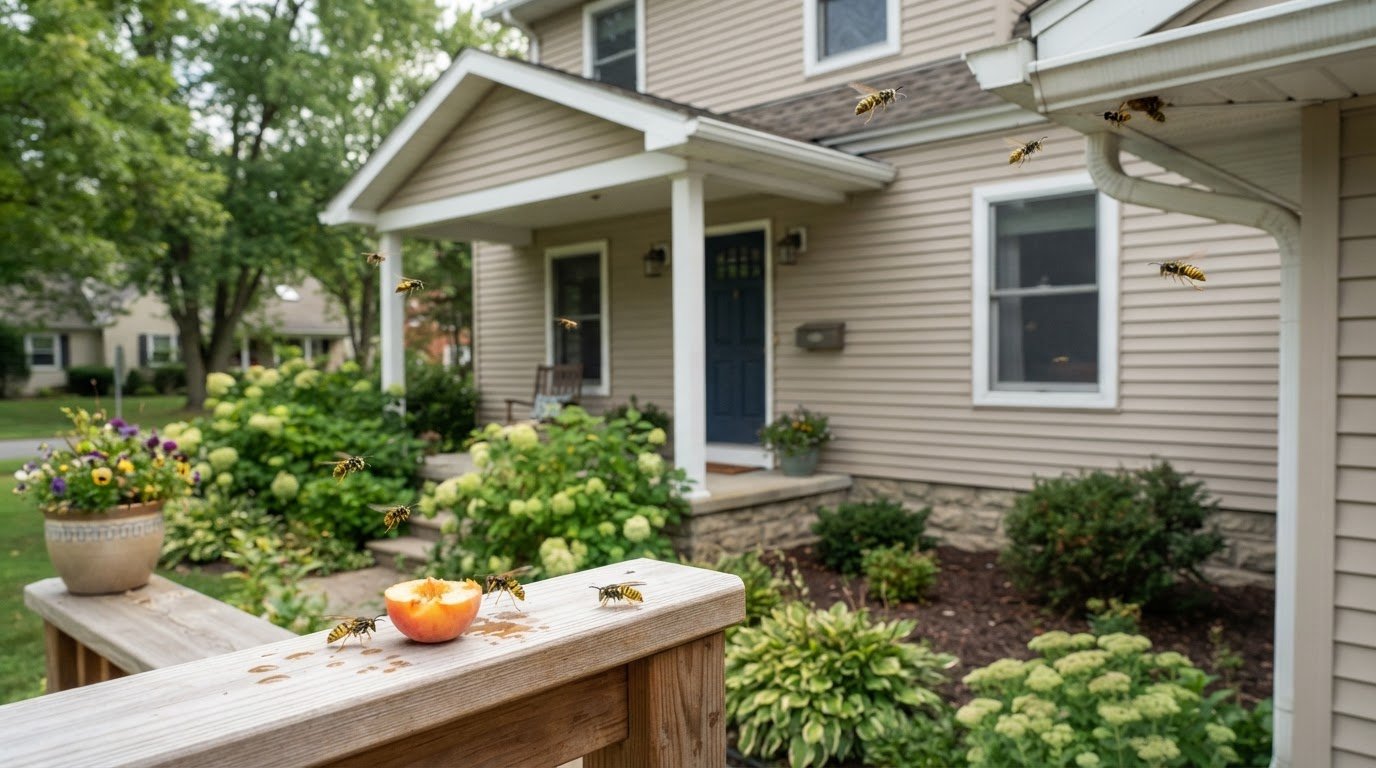
Why are there so many wasps around my house? Their presence may reflect an easy food source, a sheltered nesting spot, or seasonal foraging nearby. Wasps circling a yard aren’t necessarily nesting in the home, but repeated activity in one area can offer clues about what’s drawing them in.
It’s unsettling when wasps keep returning to a patio, doorway, or outdoor meal, especially when it’s hard to tell whether they’re passing through or coming from a nest. The pattern matters: where you see them, what they’re visiting, and whether activity stays concentrated in one spot can help narrow down possible causes.
This article explains how food, shelter, and seasonal changes influence wasp activity around homes. You’ll also learn what locations and behaviors to observe, how foraging may differ from activity near a nest, and when recurring or concentrated wasp activity may warrant a professional assessment.
Key Takeaways
- To understand why are there so many wasps around my house, consider possible food, water, shelter, and nesting opportunities nearby.
- Seasonal changes and colony activity can affect how often wasps appear, so sightings may vary over time.
- Frequent sightings alone don’t confirm a nest; repeated traffic focused on one location can be a useful clue to observe.
- Note when and where wasps appear and what’s nearby, while observing from a distance and avoiding disturbance.
- Recurring, concentrated activity or a suspected concealed nest may warrant a professional assessment.
Why are there so many wasps around my house? Start with what attracts them
Repeated wasp sightings around a patio, doorway, or yard can be unsettling, especially when the source isn’t obvious. There may be more than one explanation: wasps could be foraging for food or water, or they may be using a nearby sheltered spot to nest. Their presence around the house doesn’t automatically mean they’re nesting in the structure.
Wasps gather around homes when they find accessible food or water, protected shelter, or suitable places to build a nest. The specific draw can change, so noticing where they gather and what’s nearby can help make sense of the activity.
For a general overview of wasp behavior and life cycle, see this background reference. The video below also discusses why wasps may build nests near homes.
What food and water can draw wasps close to a home?
Exposed sweet foods and drinks can attract foraging wasps, as can ripe fruit left outdoors or fruit that has fallen and begun to soften. Food waste may also draw them, particularly when bins or outdoor dining areas give them easy access to scraps.
Wasps may also use accessible water sources. The presence of water alone doesn’t explain every sighting, but a source near food or a nesting area may contribute to activity. If food is no longer available in one spot, foraging wasps may be noticed elsewhere as they seek other sources.
Can siding, roof spaces, and yard structures offer shelter?
Some wasps seek protected locations for nesting. Eaves, sheds, and sheltered openings around wall or roof voids can provide cover from weather and disturbance. A yard structure may also offer a suitable spot, depending on its design and condition.
Still, a wasp flying near siding or an eave doesn’t prove there’s a nest inside. It could be passing through or searching for food. Repeated activity focused on one opening or structure is a useful observation, but it isn’t a diagnosis on its own.
To better understand why are there so many wasps around my house, consider both what may be drawing them to the area and where you’re seeing them. Food and water can influence foraging, while sheltered spaces may offer nesting opportunities. These clues help distinguish a passing visit from a pattern worth monitoring.
How season, colony activity, and wasp behavior change what you see
Wasp activity changes over the season, so a sudden increase in sightings doesn’t necessarily mean a colony has moved into your home. Social wasps live in colonies, and workers leave to forage for food and other resources. As colony activity and available resources shift, the number of wasps visible around a yard can change too. That distinction can help answer why are there so many wasps around my house without assuming the structure itself is the source.
In general, seasonal conditions influence when wasps are active, while species, colony development, and nearby food sources affect where and how often they’re seen. A rise in visible foraging may reflect more activity outdoors, not proof that a colony has grown inside a wall or roof space.
Why might wasp activity seem to increase during part of the year?
Wasps are generally active during the warmer part of the year, but the timing and pattern vary with species and local conditions. As social colonies develop, worker wasps may make more frequent trips to forage. Weather and the availability of food can also affect when people notice them and which parts of a property they visit.
For households in Erie and Crawford Counties in Pennsylvania and Ashtabula County in Ohio, sightings can vary from one season to another. Treat a change in activity as a clue to observe, not an automatic sign of increased danger. Repeated traffic near one point may be more informative than seeing individual wasps at different spots around the yard.
Do all wasps behave the same way around homes?
No. Yellowjackets, paper wasps, and hornets are common-name groups that include different wasps, and their nesting habits and foraging patterns can differ. Paper wasps may be noticed around sheltered structures, while yellowjackets may be encountered while they forage. A quick glimpse in flight often isn’t enough to identify a wasp reliably, so avoid drawing conclusions from color or size alone.
Regional examples include paper wasps, yellowjackets, and bald-faced hornets, though the species present and their behavior can vary by location. The University of Nebraska-Lincoln offers additional information on managing wasps around your home, including general identification and behavior guidance.
Season, colony activity, local weather, and available food together shape when wasps are active and where foraging is noticed, but none of those factors alone confirms a nest inside a house. If activity remains recurring or concentrated, a professional assessment may help clarify what’s happening; see the page on general pest control services.
Do frequent wasp sightings mean there is a nest nearby?
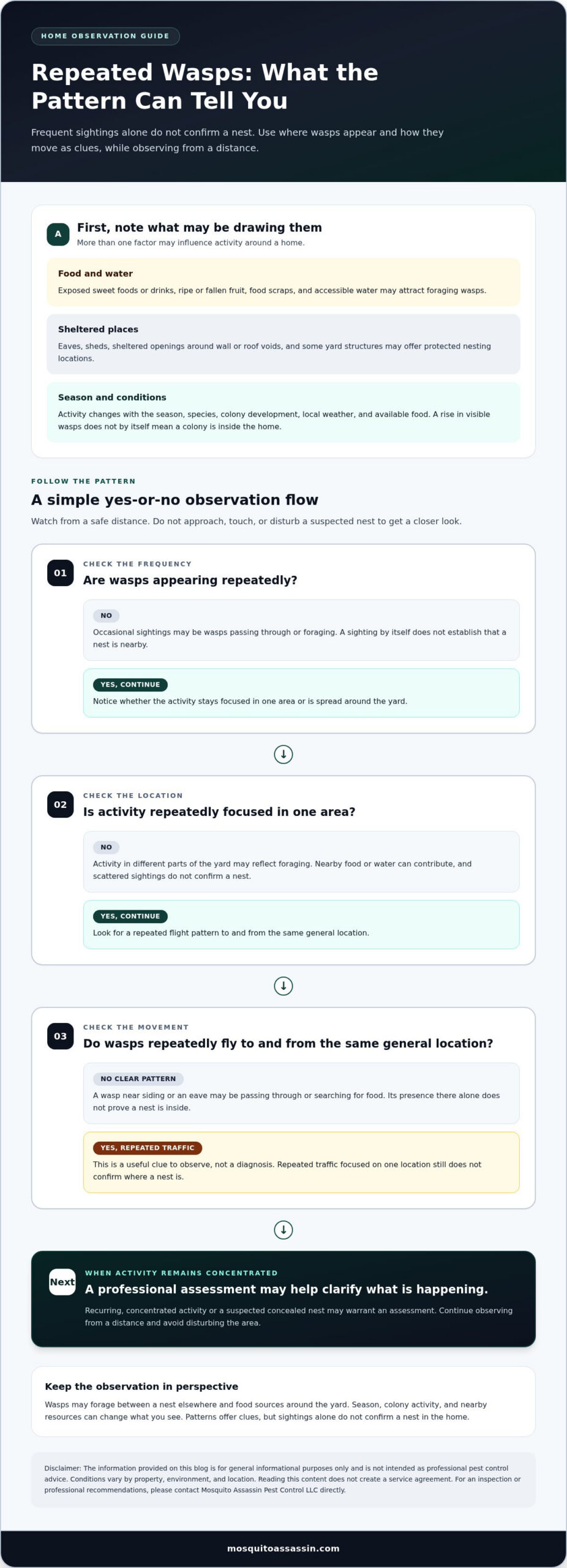
Frequent sightings can raise the question of whether wasps are nesting close to the house. But seeing wasps repeatedly doesn’t confirm a nest on the property, much less inside the home. They may be traveling between a nest elsewhere and food sources around the yard. Their flight patterns and the locations where they appear can offer clues, but those clues aren’t a substitute for confirming what species is present or where it’s nesting.
If you’re wondering why are there so many wasps around my house, focus on whether activity is spread across the yard or repeatedly centered near one area. Observe from a safe distance. Don’t approach, touch, or disturb a suspected nest to get a closer look.
What patterns may suggest activity is concentrated in one spot?
Repeated flight to and from the same general location is worth noting. For example, wasps may appear to enter and leave an opening near an eave, wall, or other structure. Record the location and when you notice the activity. A brief observation from indoors or another distant spot can help establish whether the pattern repeats without requiring you to get closer.
Some nesting locations can be concealed in walls, roof spaces, or other protected areas, so the source may not be visible. Wasps flying near siding or an eave still don’t prove that a nest is inside. A visible path can help describe the activity, but it can’t reliably identify the nest’s exact location.
When might wasps simply be passing through to forage?
Wasps may visit outdoor dining areas, exposed drinks, or ripe and fallen fruit, then move on. A wasp landing on a table or circling a bin shows where it found a potential food source, not where it lives. Social wasps may travel between a nest and multiple food sources, so visits to one spot can be temporary even if they happen repeatedly.
Notice whether sightings coincide with an outdoor meal or another changing food source, and whether wasps continue to appear in the same place when that activity isn’t present. This context can help distinguish foraging visits from a pattern that remains focused on a structure. Neither occasional visits nor repeated sightings alone prove a nest is nearby.
Keep observations simple: note the general location, time, and whether wasps follow a consistent route. If activity repeatedly concentrates around a structure or the source may be concealed, a professional assessment can help determine what may be happening without requiring you to investigate the area yourself.
What to observe around your home when wasps keep returning
A brief observation record can help show whether wasp activity is scattered or repeatedly focused in one area. You don’t need to approach the wasps or locate a nest. Watch from a comfortable distance, such as from indoors, and note only what you can see without disturbing them.
Which details are useful to record?
Keep notes about the general location and approximate time of sightings. Include whether you see wasps near a doorway, eave, shed, patio, or another area, and whether activity appears in the same place on different occasions. Avoid standing near a suspected entry point or following wasps toward a possible nest.
Nearby conditions can add useful context. Note exposed food or drinks, fallen fruit, food waste, or a sheltered structure. Also record whether wasps seem spread across the yard or repeatedly travel to and from one general location. These patterns may help clarify what’s attracting them, but they can’t confirm a nest or identify a species.
Which prevention observations are reasonable without treating a nest?
As a simple way to assess whether food is contributing to activity, keep outdoor food and drinks covered and observe whether sightings change. Remove fallen fruit and keep food waste secured. These steps reduce access to potential food sources, but they don’t establish where wasps are nesting or guarantee that activity will stop.
Compare what you see before and after changes in food availability. If sightings around a dining area lessen while activity continues elsewhere, that difference may suggest wasps were foraging there. If traffic remains concentrated near a structure, note the pattern rather than inspecting openings or attempting to disturb the area.
For anyone asking why are there so many wasps around my house, observations are most useful when they capture the pattern without putting the observer close to wasps. Record the time, location, frequency, and nearby attractants, then look for changes over time. Don’t apply products or attempt nest treatment based on these notes. If recurring activity remains concentrated or a nest may be concealed, a professional assessment may help evaluate the situation. Learn about general pest control services for wasp and yellowjacket concerns.
When recurring wasps may call for a professional assessment
Occasional wasps may be foraging, but activity that repeatedly centers on one location or appears to come from a concealed space can be a reason to seek a professional assessment. Sightings alone can’t confirm a nest or establish where it is. A professional can assess the property, consider the pattern and surrounding conditions, and recommend an appropriate response without assuming the source in advance.
What can a professional assessment help clarify?
An assessment can help distinguish general foraging from activity that appears concentrated near a structure. Relevant observations might include where wasps repeatedly appear, whether they follow a consistent route, and whether the source could be concealed in an eave, wall, or roof space. These details help provide context, but they don’t replace an on-site assessment.
Mosquito Assassin Pest Control LLC provides general pest control for wasps and yellowjackets in Erie and Crawford Counties, Pennsylvania, and Ashtabula County, Ohio. For background on the scope of general pest control services, see the service information available on the site.
What is a sensible next step for recurring activity?
Use your observation notes to describe what you’ve noticed: the locations, approximate times, how often activity recurs, and whether wasps seem to focus on a particular area. Don’t approach or disturb a suspected nest to gather more information. A clear description can help a professional understand the concern and assess what may be happening at the property.
If recurring or concentrated activity is concerning, request professional pest control guidance. An assessment can help clarify the situation and inform a suitable next step.
Disclaimer: The information provided on this blog is for general informational purposes only and is not intended as professional pest control advice. Conditions vary by property, environment, and location. Reading this content does not create a service agreement. For an inspection or professional recommendations, please contact Mosquito Assassin Pest Control LLC directly.
Use what you’ve observed to choose your next step
If you’re asking why are there so many wasps around my house, remember that food, water, shelter, and seasonal foraging can all contribute to sightings. Frequent wasps don’t automatically mean there’s a nest in your home. Instead, note whether activity is scattered or repeatedly focused near one area, and observe from a distance.
Covering outdoor food and drinks, removing fallen fruit, and securing food waste can help you assess whether accessible food is drawing foragers. If activity continues in a concentrated area or a nest may be concealed, a professional assessment can help clarify the situation and inform an appropriate response.
General pest control for wasps and yellowjackets is available in Erie and Crawford Counties, Pennsylvania, and Ashtabula County, Ohio. For an informational next step, request professional pest control guidance. Careful observation can help you move forward with greater clarity.
Disclaimer: The information provided on this blog is for general informational purposes only and is not intended as professional pest control advice. Conditions vary by property, environment, and location. Reading this content does not create a service agreement. For an inspection or professional recommendations, please contact Mosquito Assassin Pest Control LLC directly.
Frequently Asked Questions
Why are there so many wasps around my house?
Wasps may repeatedly visit because they find food, water, shelter, or potential nesting locations nearby. If you’re wondering why are there so many wasps around my house, look at where they gather and what’s around that area. Outdoor meals, fallen fruit, and protected building features can influence activity. Scattered visits may be foraging, while repeated traffic toward one spot is worth observing, but sightings alone don’t confirm a nest.
Does seeing wasps around my house mean there is a nest?
Not necessarily. Wasps can travel to a property to forage, so seeing one on a patio or near a doorway doesn’t show where it nests. Repeated traffic toward the same general location may be a useful clue, but it isn’t proof. Observe from a distance, avoid disturbing the area, and consider a professional assessment if activity continues to concentrate around one spot.
What attracts wasps to a house?
Possible attractants include exposed food and drinks, ripe or fallen fruit, food waste, accessible water, and sheltered places that may provide nesting opportunities. The relevant factor depends on the property and the wasp. Notice where activity occurs and what’s nearby. Covering food and securing waste can reduce access to some potential food sources, but those changes can’t establish whether a nest is present or where it may be.
Are wasps more active at certain times of year?
Wasp activity can change with the season, species, and local conditions. Foraging may become more noticeable as colony activity and food availability shift, but increased sightings don’t automatically mean a nest is inside the home. Seasonal patterns can vary, so avoid using a calendar date alone to identify a species or locate a nest. In Erie and Crawford Counties and Ashtabula County, local conditions matter.
Can fallen fruit or outdoor food attract wasps?
Yes. Exposed sweet foods and drinks, ripe or fallen fruit, and accessible food waste may attract wasps to outdoor areas. Keeping food covered during meals, removing fallen fruit where practical, and securing food waste can help limit access to these potential food sources. If sightings change after food is less exposed, that’s useful context, but it doesn’t confirm or rule out a nest elsewhere on the property.
How can I tell if wasps are nesting in my house?
You can’t confirm a nest just from seeing wasps around the house. Repeated flight toward the same general area may indicate concentrated activity, but a nest could be concealed, or the wasps may be foraging. Don’t approach or disturb a suspected location to investigate. Note where and when activity occurs from a distance, and consider professional assessment if the pattern persists or stays focused.
When should I call a professional about wasps around my house?
Consider a professional assessment if wasp activity repeatedly concentrates near one area, a nest may be concealed in a structure, or the source remains unclear. Share your observations about where and when you see activity, without approaching or disturbing a suspected nest. A professional can assess the property and recommend an appropriate response based on its conditions. A single sighting alone doesn’t establish an infestation.
Disclaimer: The information provided on this blog is for general informational purposes only and is not intended as professional pest control advice. For an inspection or professional recommendations, please contact Mosquito Assassin Pest Control LLC directly.