According to the National Pest Management Association, termites cause over $5 billion in property damage annually in the United States. For residents in Erie and Crawford Counties, this figure highlights the real risk that silent invaders pose to local property values. It’s natural to feel a sense of unease when discovering a tick after a hike or hearing the telltale signs of rodents in the attic. Dealing with common pests in western PA is a year-round challenge that demands both vigilance and local expertise.
This guide identifies the most frequent seasonal pests encountered in Western Pennsylvania and Ashtabula County, Ohio, while outlining professional prevention strategies to protect your home. You’ll gain a clear understanding of how to recognize local species and implement practical steps to reduce common attractants. By learning about pest behavior and environmental triggers, you can better decide when professional intervention is required to safeguard your family and property.
Disclaimer: The information provided on this blog is for general informational purposes only and is not intended as professional pest control advice. Conditions vary by property, environment, and location. Reading this content does not create a service agreement. For an inspection or professional recommendations, please contact Mosquito Assassin Pest Control LLC directly.
Key Takeaways
- Learn how the humid continental climate and proximity to Lake Erie influence the activity levels and breeding patterns of local species throughout the year.
- Identify the specific habitats of health-risk insects, such as black-legged ticks in wooded areas and mosquitoes in stagnant water, to better protect your household.
- Understand the differences between structural threats like Eastern subterranean termites and carpenter ants, which are among the most common pests in western PA and Northeast Ohio.
- Discover practical home maintenance strategies, including gutter clearing and proper soil grading, to eliminate the moisture sources that attract local pests.
- Explore the benefits of Integrated Pest Management (IPM) for achieving long-term protection through consistent monitoring and professional prevention techniques.
Understanding Common Pests in Western PA and the Seasonal Cycle
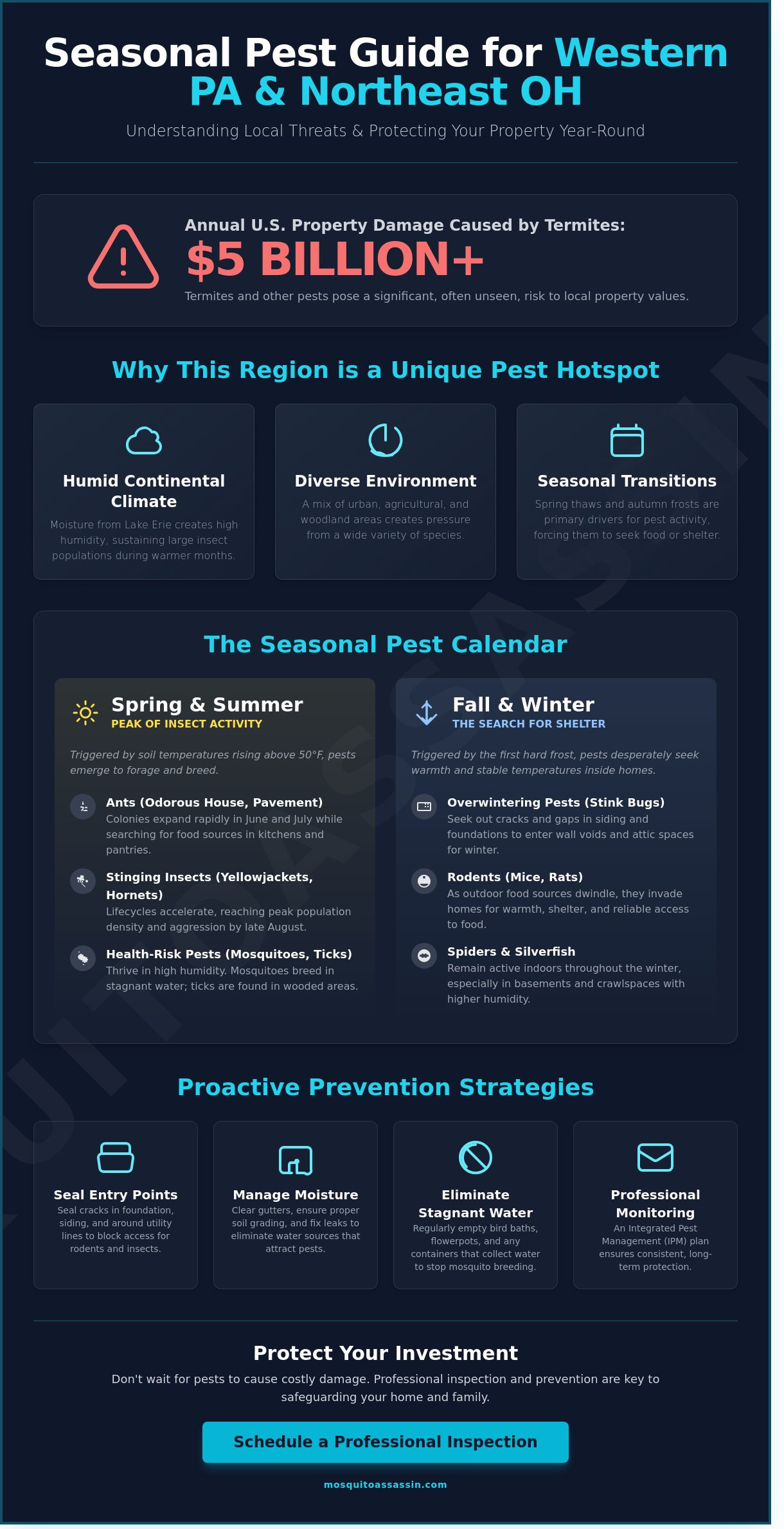
Western Pennsylvania presents a unique environment for homeowners because the region’s biodiversity means that common household pests often consist of a varied mix of urban, agricultural, and woodland species. Residents in Erie and Crawford Counties frequently deal with pressure from both industrial areas and the surrounding timberlands. The humid continental climate, heavily influenced by the moisture coming off Lake Erie, creates high humidity levels that sustain large insect populations throughout the warmer months.
Seasonal transitions act as a primary driver for pest activity. Spring thaws wake dormant colonies, while autumn frosts signal a desperate search for warmth inside residential structures. Understanding these cycles is the first step in protecting a property. The common pests in western PA generally fall into three main categories: stinging insects, wood-destroying organisms, and rodents. Each group responds differently to the local weather patterns and regional topography.
To see how local weather and agricultural shifts impact specific species, watch this report on seasonal pest trends:
Spring and Summer: The Peak of Insect Activity
As soil temperatures rise above 50 degrees Fahrenheit, odorous house ants and pavement ants begin their search for food. These colonies often expand rapidly during the humid months of June and July. Stinging insects like yellowjackets and hornets follow a fast-paced lifecycle, reaching peak population density by late August. In Crawford County, high summer humidity levels often drive moisture-loving pests like house centipedes into cooler, damp areas of the home, such as crawlspaces or bathrooms, to avoid desiccation.
Fall and Winter: The Search for Warmth
When the first hard frost hits, typically in late October or early November, the behavior of common pests in western PA shifts toward survival. Overwintering pests, specifically the brown marmorated stink bug, seek cracks in siding to enter attic spaces. Rodents also move indoors during this time, as they require stable temperatures to survive the harsh winters of the Great Lakes region. While many insects go dormant, spiders and silverfish often remain active in basement environments, where humidity levels stay high enough to support their needs throughout the winter.
If you notice signs of an infestation, professional pest control may help reduce risk. More information is available at our location page or through the online booking portal.
Disclaimer: The information provided on this blog is for general informational purposes only and is not intended as professional pest control advice. Conditions vary by property, environment, and location. Reading this content does not create a service agreement. For an inspection or professional recommendations, please contact Mosquito Assassin Pest Control LLC directly.
Health-Risk Pests: Mosquitoes, Ticks, and Stinging Insects
Biological threats from local wildlife often peak during the humid summer months in the Tri-County area. Homeowners frequently encounter various common pests in western PA that carry pathogens or possess aggressive defensive behaviors. Understanding the lifecycle and habitat of these species is the first step in maintaining a safe residential environment. Professional monitoring remains a standard recommendation because these specific pests require precise identification to manage effectively without disrupting the local ecosystem.
Ticks and Mosquitoes in the Tri-County Area
Black-legged ticks, also known as deer ticks, are prevalent throughout the wooded corridors of Northwest PA and Ashtabula County. These arachnids thrive in the leaf litter and tall grass found at the edges of residential properties. According to data from the Pennsylvania Department of Health, tick populations in Erie and Crawford counties have shown a consistent presence of Borrelia burgdorferi, the bacterium responsible for Lyme disease. For help with identification, homeowners can refer to this Penn State guide to common household insects to distinguish between different tick species and other yard invaders.
Mosquitoes present a different set of challenges, particularly in the Lake Erie lowlands where drainage can be slow. Species like the Culex mosquito are active from May through September, with peak activity occurring during the low-light hours of dawn and dusk. These insects utilize even the smallest amounts of stagnant water for breeding. Common attractants include:
- Clogged gutters that retain moisture and organic debris.
- Overturned flowerpots or equipment that collects rainfall.
- Dense vegetation and tall grass that provide cool, shaded resting spots during the day.
Stinging Insect Identification and Safety
As the season progresses into late summer and early fall, the behavior of stinging insects becomes more territorial. Ground-nesting yellowjackets are particularly aggressive during this window as their colony size reaches its peak and natural food sources become scarce. These are among the most hazardous common pests in western PA because their nests are often hidden beneath the soil, making them easy to disturb while mowing or gardening.
It’s vital to distinguish between beneficial pollinators and aggressive hornets. While honeybees and bumblebees generally avoid conflict, bald-faced hornets will strike repeatedly if they perceive a threat to their aerial nests. Another concern for homeowners is the carpenter bee. Unlike hornets, carpenter bees aren’t typically aggressive, but they pose a structural risk. They drill half-inch diameter holes into wooden decks, eaves, and fascia boards to lay eggs. Over several years, this activity can lead to significant wood decay and moisture intrusion.
When a nest is discovered on a property, safety should be the priority. Homeowners should avoid approaching or spraying nests with over-the-counter products, as this can trigger a swarm response. If you notice high levels of activity near your home, professional pest control may help reduce risk by identifying the species and implementing a targeted management plan. For an evaluation of your property, you may reach out through the online booking portal.
Disclaimer: The information provided on this blog is for general informational purposes only and is not intended as professional pest control advice. Conditions vary by property, environment, and location. Reading this content does not create a service agreement. For an inspection or professional recommendations, please contact Mosquito Assassin Pest Control LLC directly.
Structural and Nuisance Pests: Termites, Ants, and Rodents
Older homes in Erie and Crawford Counties face a persistent, hidden threat from Eastern subterranean termites. These insects are often called silent destroyers because they can consume structural wood for years without being detected. In Western PA, where many residential properties feature aged timber and damp basements, termites find ideal conditions to thrive. They typically enter through the soil, building protective mud tubes to reach the wooden components of a house. Homeowners often miss the early signs of an infestation, only realizing there is a problem when they find discarded wings or hollowed-out wood during a renovation.
Identifying the difference between wood-destroying insects is critical for effective management. While termites consume wood for nutrition, carpenter ants simply use it as a nesting site. These ants prefer wood that has been softened by moisture or decay. You can often tell the difference by the debris they leave behind. Carpenter ants produce “frass,” a substance resembling sawdust that contains wood fragments and insect parts. Termites, conversely, leave the wood looking layered or shredded. Following established guidelines for urban pest prevention and control helps manage these risks through integrated strategies that address moisture and entry points.
Wood-Destroying Organisms in PA and OH
In the regional climate of Ashtabula County and surrounding areas, wood-destroying organisms are a constant concern. Termite activity is most visible during “swarming” events in the spring, where winged reproductives emerge to start new colonies. Look for mud tubes on foundation walls, which look like dried veins of earth. Professional inspections are necessary to identify these subtle signs before structural degradation becomes a safety hazard or a major financial burden. Because carpenter ants don’t stop once a nest is established, professional intervention is often the only way to ensure a colony is fully neutralized.
The Challenge of Rodent Exclusion
The house mouse is one of the most prolific common pests in western PA. These rodents are capable of producing up to eight litters per year, meaning a small entry point can lead to a massive population in just a few months. Mice can squeeze through gaps as small as a dime in a home’s foundation, siding, or utility lines. Once inside, they pose significant health risks by contaminating food and surfaces with droppings and urine. Effective rodent removal requires a methodical three-step process:
- Removal: Eliminating the current population using professional-grade methods.
- Maintenance: Monitoring the property to ensure no new activity occurs.
- Exclusion: Sealing every possible entry point with durable materials like steel wool or metal flashing.
Managing these common pests in western PA requires a proactive approach. While DIY traps might catch a single mouse, they don’t address the root cause of the infestation. Professional pest control is frequently necessary for persistent ant colonies and rodent issues because it addresses the biological behaviors and entry patterns specific to local species.
Practical Prevention Strategies for Local Homeowners
Safeguarding a property against common pests in western PA requires a proactive approach. Homeowners can reduce the likelihood of infestations by making the environment less hospitable to local species. Moisture control is a primary defense. Termites, carpenter ants, and silverfish thrive in damp environments. Gutters should be cleaned at least twice a year, typically in late spring and late fall, to prevent water from pooling near the foundation. Soil should be graded to slope away from the house at a rate of one inch per foot for the first six to ten feet to ensure proper drainage and keep the crawl space or basement dry.
Sanitation habits are equally important. Many common pests in western PA, such as rodents and pavement ants, are attracted to accessible food sources. Storing pantry items in airtight glass or heavy plastic containers removes the olfactory triggers that draw these animals inside. Trash should be kept in bins with tight-fitting lids and emptied regularly to prevent odors from lingering. Sealing external gaps is the final step in basic exclusion. Using silicone-based caulk for small cracks and hardware cloth for larger vents or crawl space openings creates a physical barrier that pests cannot easily penetrate.
Hardening the Home Exterior
Pests often enter through damaged door sweeps or torn window screens. Homeowners don’t always realize that a gap of just 1/16th of an inch is enough for many insects to gain entry. Firewood should be stored at least 20 feet away from the home and elevated on a metal rack. This prevents wood-boring insects from migrating directly into the structure. Professional exclusion services provide a comprehensive long-term barrier by identifying hidden entry points that residents might overlook during a standard inspection.
Landscaping and Yard Maintenance
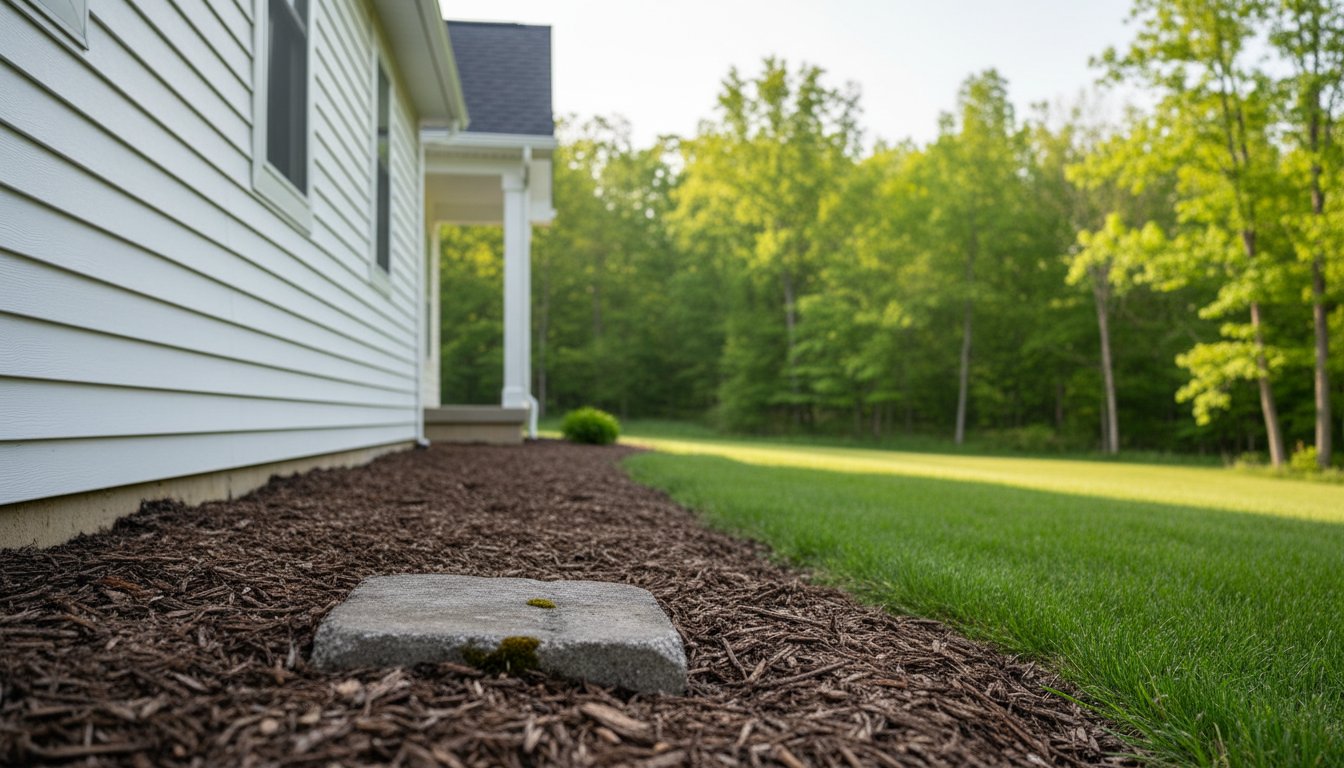
Vegetation acts as a natural bridge for ants and spiders. Trimming tree branches and shrubs so they remain at least 24 inches away from the siding prevents pests from bypassing ground-level treatments. Mulch depth should not exceed two to three inches. Excessive mulch retains moisture and provides a perfect nesting ground for earwigs and millipedes. Simple yard modifications, such as removing standing water in clogged drains or low spots, help with a mosquito control program by eliminating potential breeding sites.
If you’ve identified potential entry points or persistent activity, professional pest control may help reduce risk.
The Role of Professional Pest Management
Managing common pests in western PA effectively involves a shift from reactive treatments to proactive strategies. Integrated Pest Management (IPM) serves as the foundation for this approach. It’s a science-based process that prioritizes long-term prevention over temporary fixes. Instead of simply applying products when a bug is spotted, professionals analyze the ecosystem of the property. They look for food sources, moisture issues, and structural gaps that allow pests to thrive. This methodical approach ensures that the root cause of an infestation is addressed, not just the symptoms. According to industry standards, nearly 80 percent of effective pest management involves exclusion and sanitation rather than chemical application alone.
Customized treatment plans are significantly more effective than generic retail products. Big-box store sprays are often broad-spectrum and don’t account for the specific biological resistance or behavioral patterns of local species. Professionals use targeted applications that focus on the biology of the specific pest. This precision ensures a higher success rate while prioritizing family-safe treatments. These methods are designed to be used around children and pets, focusing on low-impact solutions that maintain the well-being of the household residents.
Comprehensive Protection for Every Season
The climate in Erie and Crawford Counties creates distinct pest pressures during different times of the year. Quarterly inspections are essential because they catch infestations in their early stages before they become a major financial burden. A professional’s knowledge of general pest control ensures that treatments are timed to the specific life cycles of local insects. Local providers with deep roots in the locations they serve understand how regional factors, such as Lake Erie’s humidity or local agricultural cycles, influence pest movement. This regional expertise allows for a level of protection that national chains often struggle to replicate.
Taking the Next Step for a Pest-Free Home
It’s common for homeowners to start with DIY efforts, but these often fall short when dealing with established colonies. Transitioning to professional assistance is a practical step when pests persist despite home remedies. Experts provide a satisfaction guarantee; if pests return between scheduled visits, the professionals return to address the issue. This creates a level of accountability and peace of mind that retail products cannot provide. Professional pest control may help reduce risk by creating a consistent barrier against the common pests in western PA. For residents in Ashtabula, Erie, or Crawford Counties, professional guidance is available through the online booking portal to help maintain a healthy, pest-free environment.
Disclaimer: The information provided on this blog is for general informational purposes only and is not intended as professional pest control advice. Conditions vary by property, environment, and location. Reading this content does not create a service agreement. For an inspection or professional recommendations, please contact Mosquito Assassin Pest Control LLC directly.
Securing Your Property Against Local Infestations
Managing common pests in western PA requires a proactive approach that shifts with the local seasons. According to the Pennsylvania Department of Health, the state frequently reports some of the highest numbers of Lyme disease cases in the country, making tick prevention a top priority for local families. Beyond health risks, structural pests like termites cause an estimated $5 billion in property damage across the United States each year, often going unnoticed until significant issues arise.
Effective prevention involves maintaining a 12-inch clear zone between mulch and your home’s foundation and ensuring all window screens are free of holes. While DIY methods offer temporary relief, a professional strategy provides a more durable solution. As a locally owned and operated company, Mosquito Assassin brings a five-star rated service to every property. The team is fully licensed and insured in PA and OH, offering expertise that helps homeowners maintain a comfortable environment. Professional pest control may help reduce risk, and for an inspection or professional recommendations, contact Mosquito Assassin Pest Control LLC directly. Taking small, consistent steps now will help keep your home secure all year long.
Disclaimer: The information provided on this blog is for general informational purposes only and is not intended as professional pest control advice. Conditions vary by property, environment, and location. Reading this content does not create a service agreement. For an inspection or professional recommendations, please contact Mosquito Assassin Pest Control LLC directly.
Frequently Asked Questions
What are the most common pests in Western PA during the winter?
Mice and spiders are the most common pests in western PA during the winter months. Rodents like the house mouse seek warmth when temperatures drop below 45 degrees Fahrenheit; they can enter through gaps as small as 1/4 inch. You’ll also frequently find cellar spiders or wolf spiders that have established themselves in basements or attics to escape the frost. These pests utilize the structural protection of your home to survive the harsh regional winters.
How do I identify a termite swarm in Pennsylvania?
Termite swarms in Pennsylvania typically occur on warm days following spring rain when temperatures reach approximately 70 degrees. You can identify these insects by their straight antennae, uniform waist, and four wings of equal length. Often, homeowners only find the discarded wings on windowsills or near light sources after the swarm has ended. These events are a primary indicator of an active colony nearby that requires a professional evaluation to prevent structural damage.
Are the spiders found in Western PA dangerous?
Most spiders found in Western PA aren’t medically significant to humans and don’t pose a serious health risk. The Northern Black Widow is the only native species with potentially dangerous venom, but they’re rarely encountered in living spaces. While species like the yellow sac spider or wolf spider can bite if they’re provoked, their venom typically causes only minor localized irritation. Professional identification is recommended if you’re concerned about a specific specimen found in your home.
When is mosquito and tick season in the Erie and Ashtabula area?
Mosquito and tick season in Erie, Crawford, and Ashtabula counties typically runs from April through October. Ticks become active whenever temperatures rise above 45 degrees, which can happen even during mid-winter thaws in our region. Mosquito activity peaks when nighttime temperatures consistently stay above 50 degrees. Local records indicate that the highest population densities for these pests usually occur between June and August.
Why do I have so many stink bugs in my house every fall?
Brown Marmorated Stink Bugs enter homes in the fall to find a protected place to overwinter. They’re attracted to the reflective surfaces and warmth of south-facing walls during the cooling months. Research shows these insects release a pheromone that attracts other stink bugs to the same location once they’ve found a suitable spot. Sealing gaps around windows and doors before September can help reduce the number of insects that successfully enter your living space.
Can professional pest control help with carpenter bee damage?
Professional pest control is an effective way to manage carpenter bee damage and prevent future nesting in your home’s exterior. These bees drill holes approximately 1/2 inch in diameter into untreated wood to create brood chambers for their young. Over several seasons, these tunnels can weaken structural components like fascia boards and deck joists. A technician can apply targeted treatments to active galleries and advise on long-term exclusion strategies to safeguard your property.
What is the difference between a house mouse and a deer mouse?
The primary difference between a house mouse and a deer mouse is their coloration and tail appearance. House mice are usually a solid light brown or gray with a hairless tail that’s the same color as their body. Deer mice have a distinct white underbelly and white feet, with a bi-colored tail that’s dark on top and light on the bottom. While house mice prefer living indoors year-round, deer mice often enter homes in rural areas during the fall.
Is it possible to be totally pest-free in a wooded area?
Achieving a totally pest-free environment in a wooded area is generally not possible due to the high natural biodiversity of the forest. However, professional management can significantly reduce the frequency of common pests in western PA entering your home. Maintaining a 12-inch gravel or mulch barrier around the foundation and keeping vegetation trimmed 2 feet away from the structure are proven methods to limit pest pressure. Professional pest control may help reduce risk even in high-pressure environments. For more information, visit www.mosquitoassassin.com/contact-us.
Disclaimer: The information provided on this blog is for general informational purposes only and is not intended as professional pest control advice. Conditions vary by property, environment, and location. Reading this content does not create a service agreement. For an inspection or professional recommendations, please contact Mosquito Assassin Pest Control LLC directly.