Last Saturday, a homeowner in Erie County spent just ten minutes gardening before finding a deer tick attached to their ankle. It’s a stressful reality for many families in Northwest Pennsylvania and Northeast Ohio who want to know how to prevent ticks in your yard without feeling like a prisoner in their own home. You likely feel that your backyard should be a sanctuary, yet the anxiety over Lyme disease (which saw over 8,000 reported cases in Pennsylvania in 2022) makes it difficult to relax when children or pets are playing outside.
This guide provides a professional roadmap for reducing these risks through strategic landscape modifications and wildlife management. By understanding the specific habits of local tick species, property owners can implement a plan that targets tick habitats directly. You will learn about the seasonal cycles of tick activity in Crawford and Ashtabula Counties and discover how managing the movements of deer and rodents can significantly lower the local population. Professional pest control may help reduce risk further by addressing specific environmental factors unique to your property.
Disclaimer: The information provided on this blog is for general informational purposes only and is not intended as professional pest control advice. Conditions vary by property, environment, and location. Reading this content does not create a service agreement. For an inspection or professional recommendations, please contact Mosquito Assassin Pest Control LLC directly.
Key Takeaways
- Learn why maintaining a clean lawn and clearing leaf litter is essential for reducing the high-humidity environments where ticks thrive.
- Understand how to prevent ticks in your yard by creating physical “dry zones” using gravel or woodchips to block their movement.
- Identify the role of local wildlife like the white-footed mouse in transporting ticks and carrying the bacteria responsible for Lyme disease.
- Discover the peak activity windows for ticks in Northwest Pennsylvania and Northeast Ohio to better time your personal protection efforts.
- Explore how professional integrated pest management identifies specific high-risk hot spots on a property for more effective population control.
Understanding Tick Habitats in Pennsylvania and Ohio
Erie and Crawford counties in Pennsylvania, along with Ashtabula County in Ohio, provide a lush environment where ticks thrive. These pests require high humidity levels, typically above 80%, to avoid drying out. Leaf litter serves as the primary incubator for local populations, offering a damp, shaded floor that protects them from the sun’s heat. Understanding these specific environmental needs is the foundation for learning how to prevent ticks in your yard effectively.
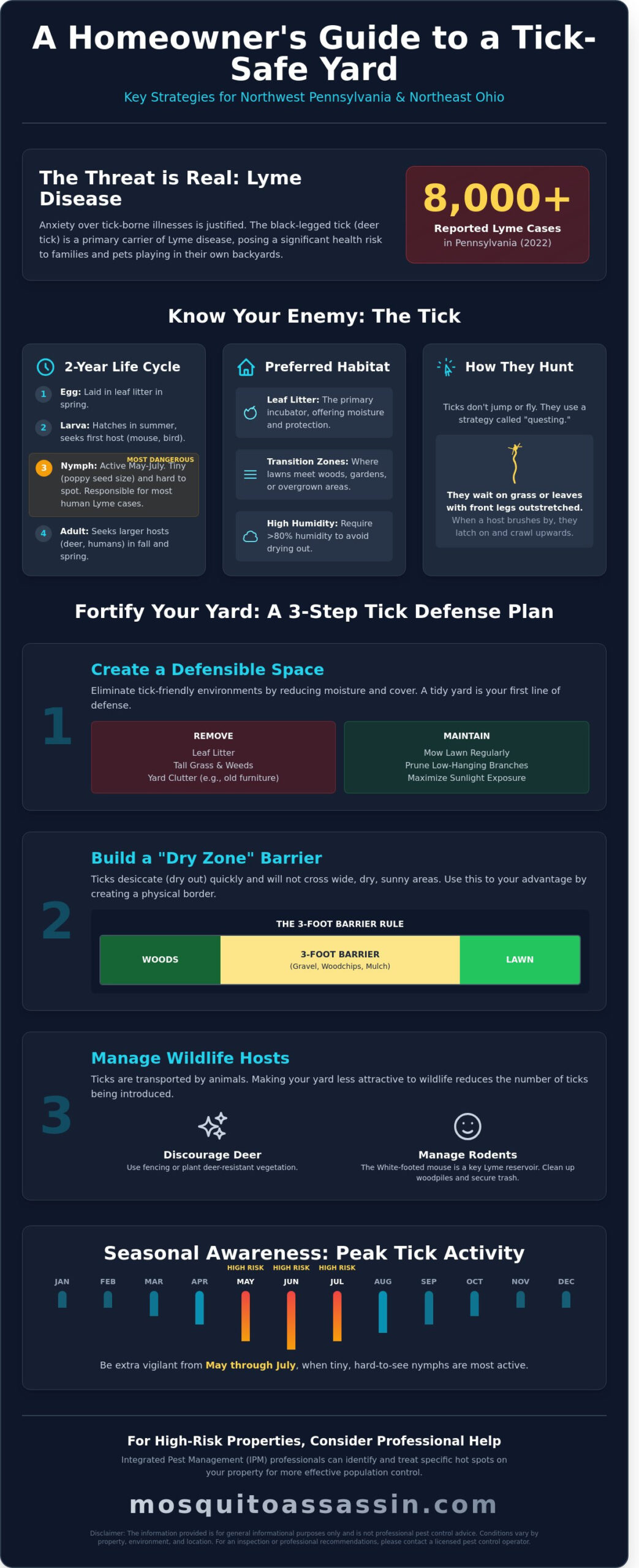
The black-legged tick, or deer tick, is the most significant concern for residents in the Northeast and Great Lakes regions. These arachnids follow a rigorous two-year life cycle that includes four distinct stages: egg, larva, nymph, and adult. Each stage requires a blood meal to advance. Learn more about tick biology to see how these stages dictate their behavior. Nymphs are particularly dangerous because they’re roughly the size of a poppy seed and are most active from May through July, making them difficult to spot on skin or clothing.
Ticks don’t have the physical ability to jump or fly onto their targets. They rely on a strategy called “questing.” During this process, a tick clings to the edge of a blade of grass or a low-hanging leaf with its back legs while reaching out with its front legs. When a person or animal brushes past the vegetation, the tick quickly latches on. Because they stay low to the ground, most ticks attach at the ankle or calf level before crawling upward to find a feeding site.
Common Tick Species in the Great Lakes Region
The black-legged tick is the primary vector for Lyme disease in our region, preferring the deep shade of wooded areas. However, the American dog tick is also a frequent threat. Unlike the deer tick, the dog tick is more likely to be found in open, grassy fields and along sun-drenched hiking trails. In Erie County, the consistent moisture from the lake helps maintain the humidity levels these species need to survive through the hottest parts of August.
The Biology of Questing and Survival
Ticks use specialized sensory organs, called Haller’s organs, to detect carbon dioxide, heat, and vibrations. These sensors allow them to identify a potential host from several feet away. They’re most successful in “transition zones,” which are the specific areas where a manicured lawn meets a wooded edge or an overgrown fence line. These borders offer the perfect combination of host traffic and protective moisture. Removing these high-risk zones is a critical step when considering how to prevent ticks in your yard.
Professional pest control may help reduce risk for homeowners in high-risk areas. For a detailed property assessment, visit https://portal.gorilladesk.com/mosquitoassassin to book an inspection.
Disclaimer: The information provided on this blog is for general informational purposes only and is not intended as professional pest control advice. Conditions vary by property, environment, and location. Reading this content does not create a service agreement. For an inspection or professional recommendations, please contact Mosquito Assassin Pest Control LLC directly.
Creating a Tick-Resistant Landscape through Yard Maintenance
Ticks don’t fall from trees or fly into your yard. They’re opportunistic hitchhikers that rely on high humidity and dense cover to survive. Understanding how to prevent ticks in your yard starts with altering the physical environment to make it inhospitable for these arachnids. A well-maintained landscape acts as a primary defense, removing the transitional cover ticks need to move from the woods into your active living spaces. By creating a landscape that prioritizes sunlight and airflow, you can naturally reduce the tick population on your property.
The Three-Foot Barrier Rule
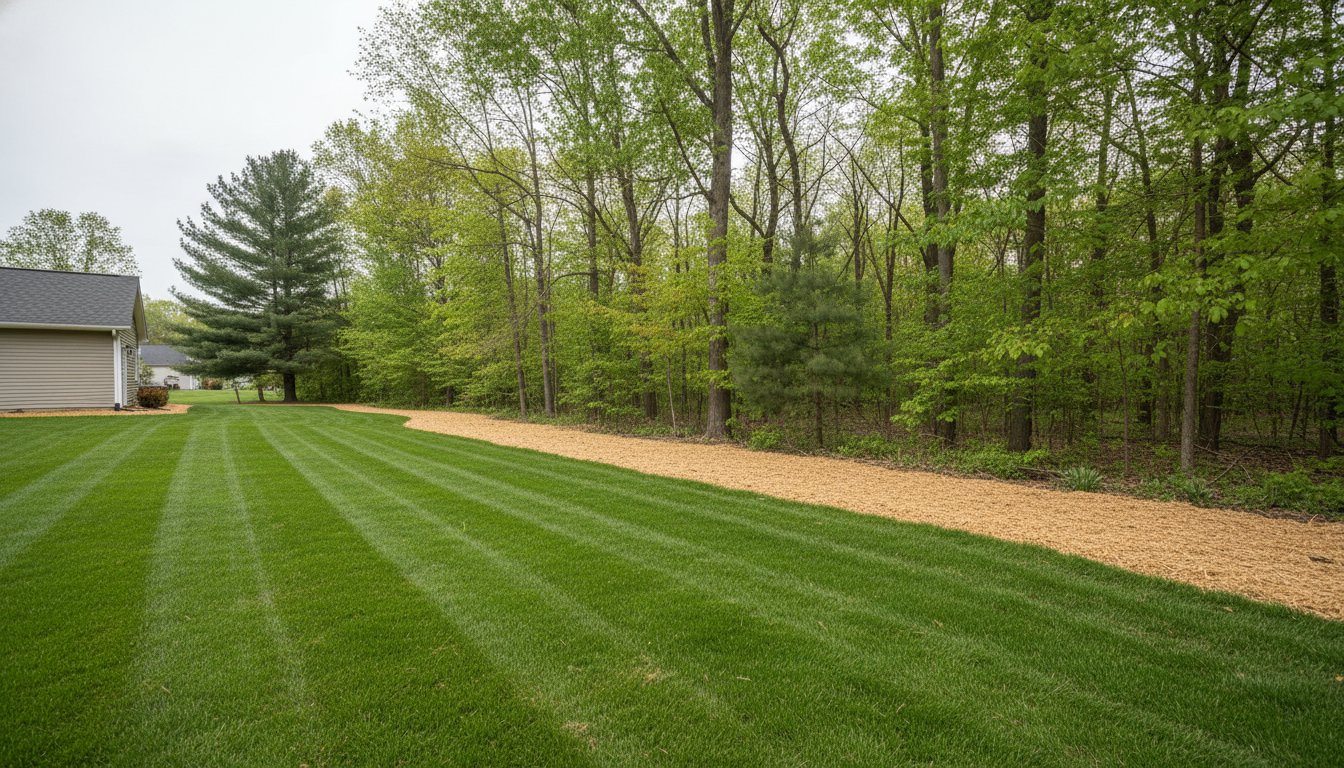
One of the most effective strategies for how to prevent ticks in your yard involves creating a physical “dry zone” between wooded areas and manicured lawns. Ticks are highly susceptible to desiccation, which is the process of drying out. They rarely cross wide, dry surfaces because they lose vital moisture quickly. Homeowners should install a three-foot-wide barrier of wood chips, gravel, or mulch along the perimeter of their property where the lawn meets the woods.
In the climate of Erie and Crawford Counties, where summer humidity often stays above 65%, these barriers are essential. Wood chips or bark mulch are popular choices because they’re affordable and blend with the natural landscape. Gravel or decorative stone provides an even more permanent solution. According to the Tick Management Handbook, these barriers serve a dual purpose. They remind family members where the “safe zone” ends and physically restrict tick migration by creating a hot, dry environment that ticks won’t cross.
Vegetation and Lawn Management
Proper vegetation control is about more than just aesthetics; it’s a safety requirement. Ticks thrive in tall grass and dense brush where they can quest for hosts without drying out. Keeping your grass mowed to a height of three inches or less is a critical maintenance task. Short grass allows the sun to reach the soil surface, which lowers the humidity levels where ticks spend most of their time.
Managing specific plant species is equally important. Invasive plants like Japanese Barberry are notorious for harboring tick populations. Research conducted in 2021 showed that areas infested with Japanese Barberry can host up to 120 infected black-legged ticks per acre, while areas with native vegetation host significantly fewer. Removing these shrubs and clearing leaf litter is vital. Nymphal ticks, which are responsible for the majority of Lyme disease cases, often overwinter in the leaf mulch. Clearing this debris before the spring thaw in Ashtabula County prevents these tiny pests from emerging directly into your yard.
Strategic placement of outdoor living areas also reduces exposure. Learning how to prevent ticks in your yard also requires a strategic approach to playground and patio placement. Keep swing sets, sandboxes, and seating areas at least 10 feet away from the yard’s edge. If possible, place these items in sunny locations rather than under dense tree canopies. While these landscape adjustments are powerful, professional pest control may help reduce risk during peak tick seasons.
Disclaimer: The information provided on this blog is for general informational purposes only and is not intended as professional pest control advice. Conditions vary by property, environment, and location. Reading this content does not create a service agreement. For an inspection or professional recommendations, please contact Mosquito Assassin Pest Control LLC directly.
Managing Wildlife Hosts to Reduce Tick Populations
Ticks are biological hitchhikers that lack the physical ability to jump or fly. They rely entirely on animal hosts for survival, nutrition, and transportation across a property. In the Great Lakes region, including Erie and Crawford Counties in Pennsylvania and Ashtabula County in Ohio, the movement of wildlife directly dictates the density of tick populations. By managing the animals that carry these parasites, homeowners can significantly disrupt the tick life cycle. Understanding how to prevent ticks in your yard requires a shift in focus from the insects themselves to the mammals that sustain them.
The white-footed mouse is the most significant reservoir for Lyme disease bacteria in the United States. While deer often receive the blame for tick infestations, mice are responsible for infecting the majority of ticks during their larval and nymphal stages. Research from the Cary Institute of Ecosystem Studies suggests that a single mouse can carry up to 100 ticks at a time. Because these rodents have small home ranges, an infestation of mice in a crawlspace or woodpile creates a localized “hot zone” for infected ticks right where families play and garden.
Rodent Prevention and Habitat Modification
Reducing nesting sites for rodents is a primary strategy in long-term tick management. Mice seek out sheltered areas that provide protection from predators and the elements. Homeowners should focus on these specific actions:
- Stack firewood at least 20 feet away from the home and keep it elevated off the ground.
- Clear away dense brush, leaf litter, and tall weeds, especially along the perimeter of the lawn.
- Seal gaps in stone walls or foundations that are larger than a quarter-inch (the size of a pencil).
- Remove fallen fruit and spilled birdseed, which serve as easy food sources for mice and chipmunks.
A comprehensive strategy often involves professional pest control to address existing rodent populations. Licensed technicians can identify high-traffic areas and implement baiting or trapping programs that reduce the number of hosts available to ticks. This professional intervention breaks the connection between the disease reservoir (the mouse) and the vector (the tick), providing a layer of protection that landscaping alone cannot achieve.
Deterring Larger Hosts
While mice infect the ticks, larger hosts like white-tailed deer are responsible for the reproduction of the species. Adult female ticks require a large blood meal to lay their eggs, and deer are their preferred source. A single deer can drop 500 or more engorged ticks in a single season. To limit this impact, physical fencing is the most effective deterrent. A fence must be at least 8 feet tall to prevent deer from jumping over, or it must be a slanted design that confuses their depth perception.
Landscaping choices also play a role in discouraging deer from entering the immediate perimeter of a home. Choosing deer-resistant plants like lavender, boxwood, or certain varieties of spruce can make a property less attractive as a feeding ground. Conversely, plants like hostas and arborvitae act as magnets for deer, bringing them closer to the house. Bird feeders are another common attractant. Spilled seed draws in both rodents and deer, essentially creating a centralized meeting point for various tick hosts. Moving feeders to the far edge of the property or removing them during peak tick months (April through November) can help reduce the risk of infestation.
Seasonal Prevention and Personal Safety Protocols
Tick activity in Northwest Pennsylvania and Northeast Ohio isn’t limited to the hottest days of summer. Understanding the biological triggers for these pests is a critical component of learning how to prevent ticks in your yard. Ticks become active as soon as ground temperatures reach 45 degrees Fahrenheit. In regions like Crawford and Ashtabula counties, this threshold is often met much earlier in the spring than many homeowners realize, sometimes as early as late February or March.
Peak Activity Windows in the Northeast
Adult black-legged ticks and nymphs follow a bimodal activity pattern in the Great Lakes region. The first peak typically occurs from April through June when nymphs are most active. These tiny, poppy-seed-sized ticks are responsible for a high percentage of disease transmission because they’re incredibly difficult to spot. A second peak occurs in the fall, usually from September through November, as adult ticks seek a final blood meal before winter. Mild winters in Erie and Crawford counties often lead to earlier emergence, making tick prevention a year-round necessity rather than a seasonal chore. In 2023, local observations showed ticks remained active well into December due to delayed hard frosts.
How to Perform an Effective Tick Check
Personal protection serves as the final line of defense after implementing yard treatments. Once yard work or outdoor recreation is finished, performing a thorough inspection is mandatory. Ticks prefer warm, moist areas where the skin is thin and blood flow is close to the surface. When considering how to prevent ticks in your yard from affecting your health, focus your search on these specific locations:
- Inside the belly button and around the waistline.
- Behind the knees and between the legs.
- Under the arms and around the chest.
- Inside and behind the ears.
- Throughout the hairline and across the scalp.
Showering within 120 minutes of coming indoors is proven to reduce the risk of tick-borne illness. This practice helps wash away unattached ticks and provides a focused opportunity for a visual check. Don’t leave outdoor clothing in a hamper where ticks can crawl out and hide in the home. Placing dry clothes in a dryer on high heat for 10 minutes will kill any ticks hiding in the fabric. If the clothes are damp, they require a full drying cycle plus an extra 10 minutes of high heat to ensure total eradication.
If you find a tick attached to the skin, removal must be handled with precision. Use fine-tipped tweezers to grasp the tick as close to the skin’s surface as possible. Pull upward with steady, even pressure; don’t twist or jerk, as this can cause the mouthparts to break off and remain in the skin. Avoid using folk remedies like nail polish, matches, or petroleum jelly, because these methods are ineffective and can increase the risk of infection. Professional pest control may help reduce risk by managing populations before they reach the home. For more information on property protection, you can contact a professional for an inspection.
The Role of Professional Integrated Pest Management
While basic maintenance like clearing tall grass is a vital first step, professional services provide a layer of protection that standard DIY methods often cannot match. Licensed technicians possess the specialized equipment and training required to identify high-risk “hot spots” that go unnoticed by the untrained eye. On a typical property in Erie County or Ashtabula County, these areas often include stone walls, dense groundcover, and the critical transition zones where a manicured lawn meets the woods. Identifying these micro-habitats is essential when determining how to prevent ticks in your yard effectively.
Integrated Pest Management (IPM) is the industry standard for long-term prevention. This methodology doesn’t rely on the heavy, indiscriminate use of chemicals. Instead, it focuses on a combination of biological, cultural, and physical tactics to manage pest populations with minimal environmental impact. For properties located near dense forests or fields, ongoing protection plans aren’t just a luxury; they’re a necessary strategy. Ticks are active whenever temperatures rise above 45 degrees Fahrenheit. Because local wildlife like deer and rodents constantly move through residential areas, new ticks are frequently reintroduced to the environment, making a single application insufficient for season-long safety.
Targeted Perimeter Treatments
Precision is the hallmark of professional tick control. Targeted perimeter treatments involve applying barrier products specifically to the areas where ticks are most likely to hide and quest for a host. There’s a significant difference between broadcast spraying and targeted application. Broadcast spraying often coats the center of a sunny lawn where ticks rarely survive due to the risk of drying out. In contrast, local experts customize plans for specific yard layouts by focusing on the shaded, moist leaf litter at the property’s edge. This might include a 10-foot wide buffer zone along the woodline or specific treatment of ornamental shrubs where pets often wander. This methodical approach ensures that the product is placed exactly where the pests reside.
Establishing a Year-Round Protection Plan
Consistency is the only way to maintain a low-risk environment. Establishing a year-round protection plan provides the benefit of regular monitoring and maintenance visits. These visits allow technicians to catch population surges before they become a threat to the household. Professional pest control may help reduce risk for families and pets by disrupting the tick life cycle at multiple stages. Learning more about professional standards for tick management can help homeowners understand the science behind these schedules. In regions like Crawford County, weather patterns can be unpredictable. A professional plan adapts to these changes, ensuring that the strategy for how to prevent ticks in your yard remains effective even during unseasonably warm winters or exceptionally wet springs. Regular inspections also provide an opportunity to identify new wildlife trails or wood piles that could serve as breeding grounds.
Taking Control of Your Outdoor Space
Maintaining a tick-resistant yard requires consistent effort and a strategic approach. Homeowners in Erie, Crawford, and Ashtabula Counties can significantly reduce risk by implementing 3-foot wide wood chip or gravel buffers between lawns and wooded areas. Keeping grass mowed to a height of 3 inches or less removes the tall vegetation ticks need to quest for hosts. Managing local wildlife like deer and rodents is also essential; these animals often carry ticks onto the property. Understanding how to prevent ticks in your yard involves a combination of these physical barriers and routine maintenance.
It’s important to remember that while DIY methods are a great start, professional inspections provide a deeper level of protection. Licensed and insured technicians in PA and OH use family-safe treatment approaches to address specific property needs. This locally owned and operated team in Cranesville focuses on integrated pest management to keep local landscapes enjoyable for families and pets. For a professional inspection of your property, contact Mosquito Assassin Pest Control LLC today. Taking these steps helps ensure a safer environment for everyone.
Disclaimer: The information provided on this blog is for general informational purposes only and is not intended as professional pest control advice. Conditions vary by property, environment, and location. Reading this content does not create a service agreement. For an inspection or professional recommendations, please contact Mosquito Assassin Pest Control LLC directly.
Frequently Asked Questions
What is the best thing to put in your yard for ticks?
Installing a 3-foot wide barrier of wood chips or gravel between your lawn and wooded areas is the most effective physical deterrent. According to the CDC, these dry borders can reduce tick migration into the main yard by up to 90 percent. This creates a high-temperature zone that ticks cannot cross without dehydrating. It’s a foundational step in how to prevent ticks in your yard by clearly defining safe recreation zones.
Can ticks survive in a well-mowed lawn?
Ticks struggle to survive in short grass because they require humidity levels above 80 percent to stay hydrated. Keeping a lawn mowed to 3 inches or shorter exposes these pests to direct sunlight and wind, which kills them. However, a 2018 study found that 82 percent of ticks in residential yards are still found within 9 feet of the lawn’s edge. Regular mowing helps, but edge management remains critical.
Do cedar chips actually repel ticks in a backyard?
Cedar chips contain thujone, a natural oil that repels certain insects, but their effectiveness is limited to a specific timeframe. The repellent properties typically decrease as the oils evaporate over 6 to 12 months. While they aren’t a foolproof chemical solution, using them as a 3-foot border provides a vital physical barrier. Don’t rely on the scent alone; the dry texture of the mulch does the heavy lifting.
How often should a yard be treated for ticks in Pennsylvania?
Properties in Erie and Crawford Counties usually require professional treatments every 30 to 60 days during the peak season. Tick activity in Pennsylvania starts when temperatures reach 45 degrees Fahrenheit, which often occurs as early as March. Most professional plans involve 4 to 6 applications between April and October. This schedule targets the Black-legged tick throughout its 2-year life cycle to ensure consistent suppression.
Are there plants that naturally keep ticks away from my house?
Plants like lavender, rosemary, and marigolds produce oils that ticks dislike, but they don’t create a protective “shield” for your home. You’d need a massive density of these plants to see any measurable impact on a property’s tick population. A single plant won’t stop a tick from crawling past it. Most experts recommend focusing on clearing brush and tall weeds rather than relying on a garden for pest management.
What should I do if I find a tick in my yard?
Identify the tick species immediately and check all family members and pets for hitchhikers. Finding one tick indicates a presence, and in 2022, the Pennsylvania Department of Environmental Protection confirmed ticks are active in all 67 counties. Save the tick in a sealed container with rubbing alcohol for identification. Professional pest control may help reduce risk if you notice an increase in sightings. Visit www.mosquitoassassin.com/contact-us for more information.
How do tick tubes work and are they effective for home use?
Tick tubes are cardboard cylinders filled with cotton treated with permethrin, which mice collect for nesting material. This method targets ticks during their larval and nymph stages by killing them on the rodents that act as their primary hosts. Research indicates that consistent use can reduce the risk of encountering an infected tick by over 70 percent. They’re a practical, targeted addition to a comprehensive plan for how to prevent ticks in your yard.
Is it possible to completely eliminate ticks from a property near the woods?
Total elimination is nearly impossible for properties bordering wooded areas, but populations can be managed with high success rates. Rural properties in Ashtabula County face constant “re-invasion” from wildlife like deer and white-footed mice that carry new ticks daily. Professional management strategies typically aim for an 85 to 95 percent reduction in tick numbers. The goal is creating a “tick-safe zone” through landscaping and regular maintenance rather than 100 percent eradication.
Disclaimer: The information provided on this blog is for general informational purposes only and is not intended as professional pest control advice. Conditions vary by property, environment, and location. Reading this content does not create a service agreement. For an inspection or professional recommendations, please contact Mosquito Assassin Pest Control LLC directly.