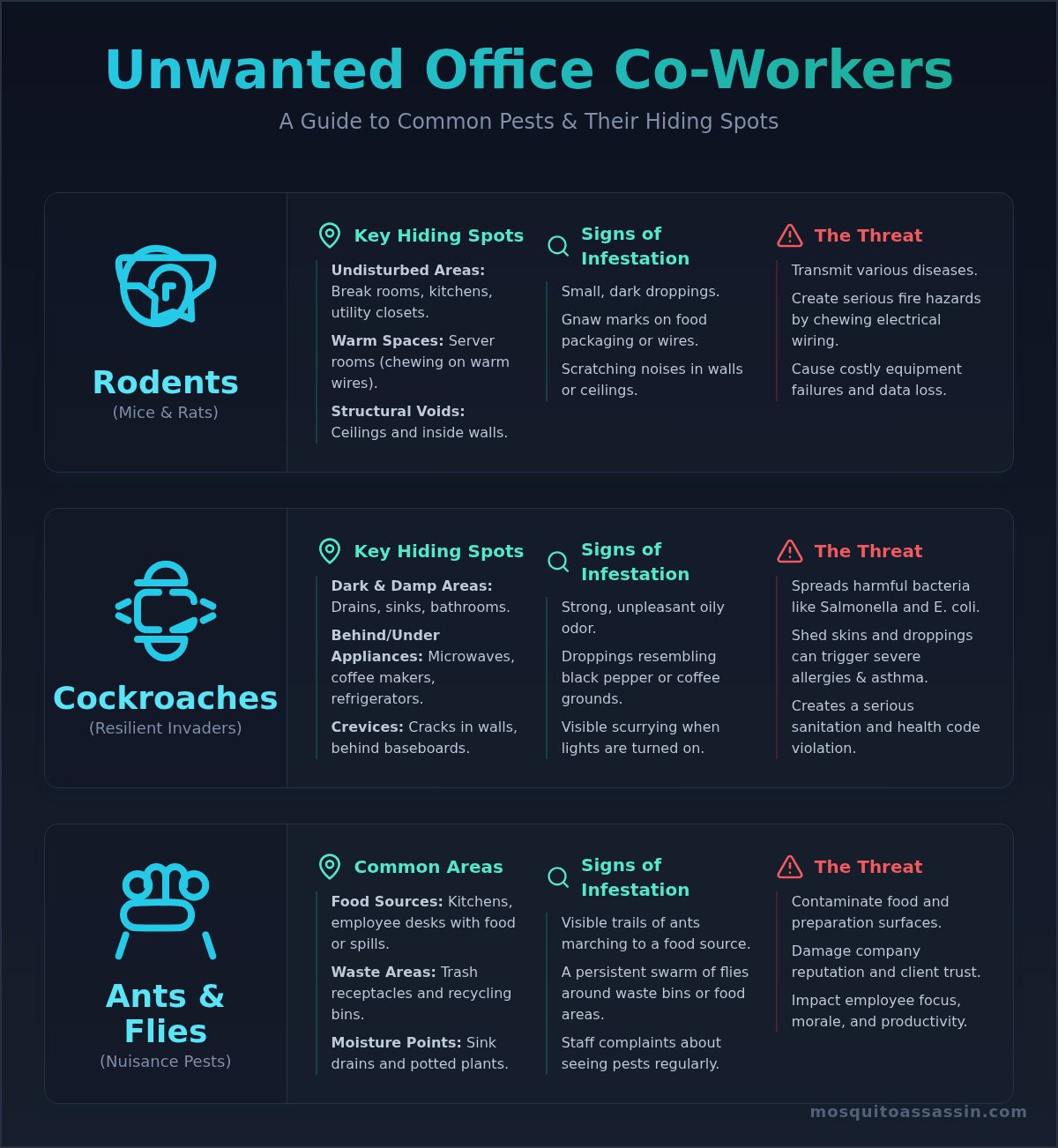
What if the cost of ignoring a pest problem is significantly higher than the price of professional intervention? In a commercial environment, a single sighting is rarely just a minor nuisance; it is a documented liability that threatens the bottom line through health code violations and damaged reputations. If you’ve noticed signs of an infestation at work, you likely feel the weight of responsibility but aren’t sure how to convince my boss we need pest control without sounding alarmist. It’s natural to feel anxious about workplace safety while worrying that management might dismiss your concerns as an unnecessary expense.
It’s frustrating to work in a space where sanitation feels compromised, especially when you lack the technical jargon to explain the severity of the situation. This guide provides a clear roadmap to build a data-driven business case that focuses on ROI, safety, and professional standards. You’ll learn how to identify specific business risks, present a framework for long-term savings, and gain the confidence to recommend a local professional who understands the specific regulatory requirements in Erie and Crawford Counties in Pennsylvania and Ashtabula County in Ohio.
Key Takeaways
- Learn how to translate pest sightings into quantifiable business risks to protect your company’s reputation and bottom line.
- Understand the critical differences between temporary DIY fixes and professional Integrated Pest Management (IPM) for long-term resolution.
- Discover the specific financial liabilities associated with structural damage and health code compliance in Pennsylvania and Ohio.
- Master a strategic framework for how to convince my boss we need pest control by focusing on risk mitigation and business continuity.
- Identify the essential credentials to look for when selecting a licensed commercial pest management partner in your local area.
The Critical Impact of Pests on the Modern Workplace
Commercial pest management is a systematic strategy designed to shield a business from invasive species. It isn’t just about reacting to a visible bug; it’s about establishing a perimeter of protection that ensures business continuity. In a professional setting, pests are a significant liability rather than a simple nuisance. Their presence often signals deep-seated issues with sanitation or structural integrity that require immediate attention. When you are building a case for how to convince my boss we need pest control, it’s vital to frame the conversation around these long-term risks.
A single sighting by a client or customer can cause irreversible brand damage. In the age of instant online reviews, a photo of a pest in a retail or office space can go viral, leading to a loss of trust that takes years to rebuild. Pests are often seen as indicators of poor management or lack of hygiene, which can deter potential business partners and customers alike. Protecting the company’s reputation requires a proactive approach that prioritizes prevention over reactive treatments.
To better understand the value of professional communication regarding these issues, watch this helpful video:
Professional intervention is the only way to ensure that these risks are managed effectively. It’s not just about the pests you see, but the ones you don’t see that are often doing the most damage. This perspective is a key part of how to convince my boss we need pest control, as it shifts the focus from a minor inconvenience to a necessary business protection service.
Employee Health and Safety Standards
Pests like rodents and cockroaches are documented vectors for various pathogens that can compromise the health of your staff. Stinging insects, including wasps or hornets, create immediate physical risks, especially in outdoor common areas or entryways. Maintaining a pest-free environment is a fundamental requirement for workplace safety compliance under local health department standards in Erie and Crawford Counties. By adopting Integrated Pest Management (IPM), businesses can address these risks through prevention and targeted intervention rather than relying solely on reactive chemical applications.
Protecting Workplace Morale and Productivity
Employee well-being is directly tied to the environment they work in. Staff members who feel uncomfortable or anxious due to pest sightings are naturally less productive. Persistent issues can lead to workplace anxiety and even high employee turnover as talent seeks cleaner, safer alternatives. When management invests in commercial pest control, it sends a powerful message that the company values the health and security of its team. This proactive stance demonstrates that leadership is committed to maintaining a high-quality workplace environment for everyone.
Identifying the Financial Risks of Ignoring Infestations
Pests represent a financial liability that compounds over time. While a few droppings or a single chewed container might seem minor, these are early warning signs of a systemic failure that can lead to exponential costs. When researching how to convince my boss we need pest control, it’s effective to frame the discussion around risk management. A professional protection plan acts as a fixed, predictable investment. In contrast, emergency remediation is an unpredictable, high-stakes expense that often forces a business to halt operations entirely. With the U.S. pest control industry revenue reaching approximately $13.4 billion in 2025, the sheer scale of the problem highlights why proactive management is the standard for successful enterprises.
In Pennsylvania and Ohio, the regulatory environment for businesses is particularly stringent. For instance, commercial pest control is mandatory for many industries in Pennsylvania to comply with health department standards. Meanwhile, Ohio regulations require a designated employee to be responsible for a regularly scheduled insect and rodent control program, even if a professional service is utilized. Ignoring these requirements places the company at risk of legal action and significant financial penalties. Establishing a commercial pest control strategy ensures that your facility remains compliant with local and state mandates.
Regulatory Compliance and Potential Fines
Health department inspections can lead to immediate business closures if evidence of pests is discovered. These closures result in lost revenue and can be devastating for a local brand’s reputation. Failure to maintain a sanitary facility often leads to heavy fines from local authorities in Erie or Ashtabula Counties. In industries like food service or hospitality, there is a zero-tolerance policy for infestations. Maintaining compliance with federal pesticide laws and regulations is essential for any business owner who wants to avoid the legal pitfalls of improper pest management or unsafe workplace conditions.
The True Cost of Structural and Equipment Damage
The physical damage caused by pests is often hidden until it becomes a crisis. Rodents are notorious for chewing through electrical wiring, which creates a significant fire hazard and can lead to expensive equipment failures. Wood-destroying organisms like carpenter ants or termites can compromise building integrity and destroy expensive office furniture over several months. Furthermore, product loss due to contamination is a direct hit to a company’s bottom line. When you present these facts, you show that professional pest management is a necessary safeguard for the company’s physical assets. Professional pest control may help reduce risk and protect the long-term value of the property.
Professional Pest Management vs Workplace DIY Attempts
Attempting to resolve a commercial infestation with retail-grade products is often a gamble that ends in frustration. Store-bought sprays and baits typically address only the visible symptoms of a much larger biological issue. While a quick spray might kill a few ants on a breakroom counter, it does nothing to neutralize the colony hidden within the wall voids. When you’re preparing a case for how to convince my boss we need pest control, it’s essential to explain that professional intervention uses a methodical, scientific approach known as Integrated Pest Management (IPM). This strategy focuses on long-term prevention and total removal rather than temporary suppression.
Professional technicians utilize commercial-grade tools and exclusion techniques that are unavailable to the general public. These methods are designed to be decisive and effective, ensuring the problem is resolved the first time. Professional commercial services provide advantages that off-the-shelf products can’t replicate:
- Access to commercial-grade baits and non-repellent formulations that pests don’t avoid.
- Advanced detection tools like thermal imaging or moisture meters to find hidden nests.
- Detailed documentation for health department audits and regulatory compliance.
- Specialized equipment for deep-harboraged pests in industrial machinery or warehouse racking.
Targeted Solutions for Commercial Environments
A professional technician doesn’t just apply treatment; they perform a comprehensive analysis of the building’s specific layout. They identify high-risk areas like loading docks, floor drains, and HVAC systems that DIY methods almost always miss. In regions like Crawford County or Ashtabula County, seasonal shifts drive specific pests indoors, making professional monitoring critical. Ongoing monitoring is a hallmark of commercial pest control, ensuring that new threats are neutralized before they escalate into a full-blown crisis.
The Liability of Employee-Led Pest Control
Assigning pest control tasks to untrained staff creates significant legal and safety liabilities. Inappropriate pesticide use can lead to cross-contamination of work surfaces or respiratory irritation among employees. Adhering to OSHA workplace safety standards for pest control is a legal necessity that protects both the workforce and the business owner from litigation. Professionals bring their own insurance and specialized certifications, shifting the risk away from the company. They also utilize commercial-grade exclusion techniques, such as sealing structural gaps with industrial materials, which provides a permanent barrier that consumer-grade kits lack. This level of decisive intervention is a key point in how to convince my boss we need pest control, as it transforms an ongoing expense into a one-time structural improvement.
A Strategic Framework for Persuading Your Boss
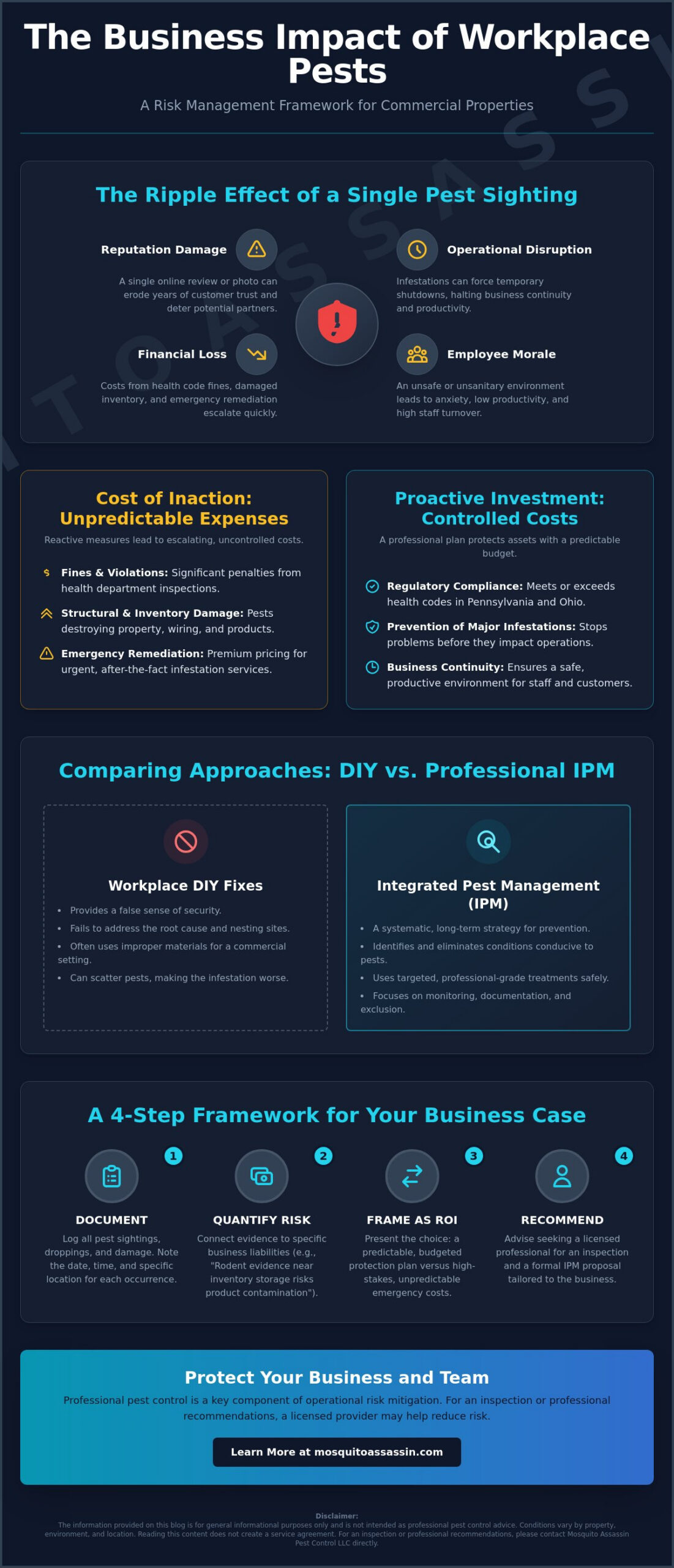
Preparation is the foundation of a successful proposal. When you approach a busy manager or business owner, presenting a vague concern about a few insects is rarely effective. You must transform the conversation from a personal discomfort into a formal business risk assessment. By focusing on business continuity and risk management, you align your request with the company’s primary goals. Professional pest control is a proactive investment in the facility’s longevity rather than a reactive, emergency cost. Using objective documentation is the most effective way to remove emotion from the request and present a clear, logical path forward.
A structured approach helps leadership see that you aren’t just complaining; you are identifying a threat to the organization’s stability. When considering how to convince my boss we need pest control, follow this strategic sequence to ensure your message is heard and respected:
- Gather concrete evidence of the problem over a set period.
- Identify the specific business areas at risk, such as inventory or sensitive electronics.
- Research the local regulatory requirements for your specific industry.
- Propose a professional inspection as a low-risk, diagnostic first step.
Documenting the Evidence
Data is much harder to ignore than anecdotes. Start a log of sightings that includes the date, time, and specific location within the building. Take clear photos of any damage or signs of activity, such as droppings, nesting materials, or chewed packaging. Documentation should also include any voiced concerns from other staff members or, more critically, any negative feedback from customers. In a professional environment in Erie or Ashtabula, a paper trail provides the necessary proof that the issue is persistent and requires specialized intervention rather than a temporary fix.
Building the Case for ROI
Business owners prioritize the return on investment (ROI). To make your case, compare the predictable cost of a monthly protection plan to the catastrophic cost of equipment replacement or structural repairs. Highlight that 86 percent of pest management professionals forecasted a revenue increase in 2026, reflecting the growing necessity of these services in the modern business world. A failed health inspection or a single negative online review can result in a significant loss of revenue that far outweighs the cost of prevention. Presenting a professional inspection as a diagnostic tool allows management to understand the scope of the problem without committing to a full treatment plan immediately. For a detailed look at how these protections work, reviewing commercial pest control options can help you provide specific examples of professional exclusion and monitoring techniques during your meeting.
Selecting a Professional Partner in PA and OH
The final step in your proposal is recommending a specific, qualified partner. Choosing a provider with deep local roots is a critical component of how to convince my boss we need pest control, as it demonstrates that you’ve done the necessary due diligence. A reputable company must be fully licensed and insured to perform commercial work in both Pennsylvania and Ohio. This protects the business from liability and ensures that all treatments follow established safety protocols. When evaluating potential partners, prioritize those who emphasize ongoing protection and exclusion rather than those who only suggest one-time, reactive fixes.
Professional pest management is a methodical process that begins with a comprehensive analysis of the property. A thorough inspection should always precede any treatment recommendations or service agreements. This diagnostic phase allows the technician to identify the specific species involved and the structural vulnerabilities that allowed them entry. By presenting a partner that follows this disciplined operational approach, you show management that the solution will be scientific and permanent.
Regional Knowledge in Erie, Crawford, and Ashtabula
Pest pressures in Northwest Pennsylvania and Northeast Ohio are heavily influenced by the changing seasons. A local provider understands the specific behaviors of area wildlife and insects, such as how dropping temperatures in Erie County drive rodents toward commercial foundations. They are familiar with the unique challenges posed by the humid environment near Lake Erie and the specific wood-destroying organisms common in Crawford and Ashtabula Counties. Having a deep understanding of General pest control knowledge is essential for local businesses that want to maintain a high standard of sanitation and safety. A partner who lives in the same community as your business will have specialized knowledge of the regional threats that distant, national contractors might overlook.
What to Look for in a Service Agreement
A professional service agreement should be transparent and focused on long-term results. Ensure the contract includes regularly scheduled inspections and preventative maintenance to catch new infestations before they escalate. It’s also important to look for a clear explanation of the exclusion methods being used to seal the property. These structural improvements are often more effective than chemical applications alone. Understanding pest control prices can help in budget planning, allowing you to present a clear financial roadmap to your manager. Professional providers often link the potential return of a pest to an immediate return of the service team, which provides the business with a reliable assurance that the problem will be resolved decisively. This level of commitment is a powerful selling point when explaining how to convince my boss we need pest control.
Disclaimer: The information provided on this blog is for general informational purposes only and is not intended as professional pest control advice. Conditions vary by property, environment, and location. Reading this content does not create a service agreement. For an inspection or professional recommendations, please contact Mosquito Assassin Pest Control LLC directly.
Securing Your Workplace with Professional Protection
A pest-free environment is a fundamental requirement for any successful business operation. By focusing on risk mitigation and the long-term ROI of specialized exclusion, you can present a case that leadership simply cannot ignore. Professional intervention protects your company’s reputation, secures employee morale, and ensures compliance with strict health and safety standards in Pennsylvania and Ohio. Understanding how to convince my boss we need pest control starts with shifting the focus from a few insects to a broader strategy of risk management and business continuity.
Choosing a local partner with regional expertise ensures that your facility is protected against the specific threats found in Northwest Pennsylvania and Northeast Ohio. Year-round protection plans and commercial-grade exclusion techniques provide a permanent shield that store-bought solutions cannot match. For a professional assessment of your business property, contact Mosquito Assassin Pest Control LLC. Taking a proactive stance now prevents a minor sighting from becoming a costly crisis. Specialists in commercial pest exclusion are ready to help you maintain a safe, productive workspace in Erie, Crawford, and Ashtabula Counties.
Disclaimer: The information provided on this blog is for general informational purposes only and is not intended as professional pest control advice. Conditions vary by property, environment, and location. Reading this content does not create a service agreement. For an inspection or professional recommendations, please contact Mosquito Assassin Pest Control LLC directly.
Frequently Asked Questions
Is it legal for a boss to ignore a pest problem in the workplace?
Employers are legally required to maintain a safe and sanitary work environment under OSHA regulations and local health codes. In Pennsylvania and Ohio, specific industries like food service and healthcare have even stricter mandates regarding sanitation. Ignoring a known infestation can lead to significant legal liabilities, failed inspections, and mandatory closures if the workplace is deemed hazardous to employee health or safety.
Can an employee be fired for reporting pests to the health department?
Whistleblower protection laws generally prevent employers from retaliating against staff members who report health and safety violations in good faith. If an employee reports a legitimate pest infestation to a regulatory body like a local health department, they are typically protected under state and federal labor laws. It’s often helpful to document the issue internally first as part of your strategy for how to convince my boss we need pest control before escalating to outside authorities.
How often should a commercial property receive professional pest inspections?
Most commercial properties benefit from monthly or quarterly professional inspections to maintain a preventative barrier against invasive species. High-risk environments, such as restaurants, food warehouses, or healthcare facilities, often require more frequent visits to comply with industry-specific regulations. Regular monitoring ensures that potential entry points are sealed and new activity is caught before it develops into a severe infestation that disrupts business continuity.
What are the most common pests found in offices in Pennsylvania and Ohio?
Offices in Northwest Pennsylvania and Northeast Ohio frequently deal with house mice, pavement ants, and German cockroaches. During seasonal transitions, stinging insects like yellow jackets may nest near entryways, while spiders often congregate in quiet storage areas. Local environmental factors near Lake Erie can also increase the prevalence of moisture-seeking pests within structural foundations if the building’s exterior is not properly maintained.
Does professional pest control interfere with daily business operations?
Professional pest management is designed to be discreet and minimally invasive to your daily business operations. Many technicians offer flexible scheduling to perform inspections or treatments during low-traffic hours or after the main shift ends. Modern methods focus on targeted applications and structural exclusion, which means most businesses don’t need to close or evacuate their staff during a standard service visit.
What is the difference between a one-time treatment and a protection plan?
A one-time treatment is a reactive response to an existing problem, while a protection plan is a proactive strategy for long-term prevention. Protection plans include regular monitoring and preventative maintenance to stop pests from entering the building in the first place. This ongoing approach is usually more cost-effective for a business than paying for multiple emergency remediations after an infestation has already caused structural damage.
Are the chemicals used in professional pest control safe for an office environment?
Licensed professionals use products that are registered for use in commercial and office environments when applied according to strict label instructions. Integrated Pest Management (IPM) prioritizes non-chemical methods like sealing gaps and improving sanitation first to reduce the need for treatments. When products are necessary, they are applied in a targeted manner to ensure the safety of employees while effectively neutralizing the specific pest threat.
How much does commercial pest control typically cost for a small business?
The cost of commercial pest management varies based on the size of the facility, the specific industry, and the level of environmental risk. A small retail shop in Ashtabula will have different requirements than a large food processing plant in Erie. While rates depend on the property’s unique conditions, a preventative plan is a predictable operational expense that helps avoid the high costs of emergency repairs, contaminated inventory, or legal fines.