Tag: yard safety

  • Professional Tick Control Services in Erie, PA: A Complete Homeowner Guide

    Professional Tick Control Services in Erie, PA: A Complete Homeowner Guide

    For 10 of the last 13 years, Pennsylvania has ranked number one in the United States for reported Lyme disease cases. This statistic is a sobering reality for homeowners in Erie and Crawford Counties who want to enjoy their outdoor spaces without constant fear. It’s a common struggle to feel secure when pets and children are playing in the grass, especially when retail sprays often yield disappointing results. The anxiety of checking for ticks after every outing can take the joy out of a Northwest Pennsylvania summer. Professional tick control services Erie PA offer a more definitive solution to these concerns by addressing the root of the infestation.

    This guide demonstrates how professional management protects families and pets by addressing the specific environmental challenges of the region. Understanding the local climate and tick behavior is the first step toward reclaiming the backyard. This article covers the prevalence of black-legged ticks in the PA and OH border region, the importance of ongoing protection plans over one-time applications, and practical strategies for reducing tick habitats. By focusing on scientific management and barrier protection, property owners can achieve a higher standard of safety and peace of mind.

    Disclaimer: The information provided on this blog is for general informational purposes only and is not intended as professional pest control advice. Conditions vary by property, environment, and location. Reading this content does not create a service agreement. For an inspection or professional recommendations, please contact Mosquito Assassin Pest Control LLC directly.
    Key Takeaways

    • Understand how the humid climate of Northwest Pennsylvania creates an ideal environment for tick populations to thrive and persist throughout the season.
    • Identify the specific risks associated with the Black-legged tick, which is the primary concern for residents in Erie and Crawford Counties.
    • Learn why professional tick control services Erie PA provide superior results compared to retail products by reaching deep into dense foliage where ticks hide.
    • Discover how Integrated Pest Management strategies combine professional treatments with physical property modifications to reduce the presence of ticks effectively.
    • Recognize the importance of ongoing protection plans that align with natural tick reproductive cycles to ensure consistent, long-term property safety.

    The Growing Need for Tick Control Services in Erie, PA

    Professional tick control services Erie PA involve a systematic approach to managing tick populations through detailed habitat assessment and targeted treatments. It isn’t just about a single application of product. Instead, it’s a scientific method designed to identify where ticks live, breed, and wait for a host. In Erie and Crawford Counties, the landscape is a mix of dense woodlots, tall grasses, and residential gardens. These areas provide the perfect environment for ticks to flourish. Expert tick control services Erie PA focus on creating a barrier that reduces the risk of contact between these pests and your family.

    To better understand the importance of professional intervention, watch this helpful video:

    Regional Climate Factors and Tick Activity

    The unique climate of Northwest Pennsylvania plays a significant role in local pest cycles. Proximity to Lake Erie creates a microclimate with high humidity and consistent annual rainfall. Ticks are highly sensitive to desiccation, meaning they need this moisture to stay hydrated and survive. When the air is damp, they can stay active for longer periods and climb higher on vegetation to seek hosts. In 2026, unseasonably warm temperatures in March and April led to an earlier start to the spring tick season than in previous years. These cool, damp springs, often seen in Erie and Ashtabula counties, combine with humid summers to extend the window of risk for property owners. This extended activity period makes seasonal planning essential for effective management.

    Why Traditional Yard Maintenance May Not Be Enough

    Many homeowners believe that keeping the grass short is enough to keep ticks away. While a well-manicured lawn helps, it doesn’t solve the problem. Ticks typically reside in the “ecotone,” which is the shaded transition zone where the lawn meets the woods, tall weeds, or ornamental brush. Mowers don’t reach into these dense thickets or the base of low-hanging shrubs where ticks prefer to wait. Local wildlife, including deer and small rodents, act as constant transport vehicles, dropping new ticks into your yard daily. Because these pests are vectors for common tick-borne diseases, a more robust strategy is required. Utilizing professional pest control services ensures that the treatment reaches the specific biological hotspots where ticks actually hide, rather than just the surface of the grass.

    Understanding Local Tick Species and Regional Risks

    Identifying the specific species present on a property is the foundational step for any effective management plan. In Erie and Crawford Counties, the local landscape features a mix of suburban lawns and dense woodlots, meaning multiple species often coexist in the same backyard. Each tick has a unique life cycle, preferred host, and specific habitat requirement. Effective tick control services Erie PA rely on this deep biological understanding to apply treatments where they will be most impactful. Without knowing which species is present, a general treatment may miss the specific areas where a certain tick is most likely to hide.

    The Black-legged Tick (Deer Tick) in Northwest PA

    The Black-legged Tick (Ixodes scapularis) remains the primary concern for residents throughout Northwest Pennsylvania. These ticks are most active during the spring and fall, yet they are hardy enough to emerge whenever temperatures rise above freezing. They typically inhabit the moist leaf litter and low-lying vegetation found at the edges of forests. Their “questing” behavior is a specific survival mechanism where they climb to the tips of grasses and wait for a host to brush past. In Pennsylvania, approximately 25% of nymphs and 50% of adults carry the bacteria that causes Lyme disease. A professional understanding of these behaviors is essential for placing barriers in the exact transition zones where contact is most likely to occur.

    Wood Ticks and Other Local Variations

    American Dog Ticks (Dermacentor variabilis) are also widespread in the region. Often called wood ticks, they are larger and prefer more open, sunny environments like tall grasses and meadows. These pests are most active during the peak summer months, contrasting with the cooler weather activity of the deer tick. The Lone Star Tick is also an emerging concern in the Pennsylvania and Ohio border regions, particularly in Ashtabula County where populations are becoming more established. Professional services monitor these shifting populations to adjust treatment strategies as new species move into the area. Understanding these Pennsylvania tick species allows for a more targeted approach to property protection.

    Managing these diverse species requires a systematic and scientific approach rather than a universal solution. It involves recognizing the subtle differences in where each type quests and when they are most likely to be seeking a host. While basic yard maintenance is helpful, professional pest control may help reduce risk by providing a comprehensive layer of defense against these local threats.

    Professional Management vs. DIY Yard Treatments

    Many homeowners in the Northwest Pennsylvania region initially attempt to manage pests using store-bought sprays and granules. While the intent is to protect the household, these DIY efforts often provide a false sense of security. Professional tick control services Erie PA utilize specialized, high-capacity equipment designed for deep penetration into the densest foliage. Ticks don’t simply sit on top of the grass waiting to be found. They thrive in the dark, humid microclimates at the base of shrubs and under leaf litter. Consumer-grade sprayers generally lack the pressure and volume necessary to reach these hidden recesses, often leaving the most dangerous areas of a property completely untreated.

    The Science of Residual Barrier Protection

    The primary difference between professional intervention and retail products lies in the chemistry and application strategy. Licensed professionals have access to advanced formulations that offer significantly longer residual protection than over-the-counter alternatives. These professional-grade products are engineered to remain effective even through the frequent rain showers common in Erie and Crawford Counties. A systematic application creates a durable perimeter that prevents ticks from migrating from wooded areas into the active lawn spaces where children and pets play. While tick-proofing your yard through landscaping is a vital step, it works most effectively when combined with these high-performance barriers. Targeted applications also allow for a reduction in the total volume of product used by focusing strictly on high-risk habitats rather than broadcasting chemicals indiscriminately across the entire lawn.

    Equipment and Application Accuracy

    Professional tick control services Erie PA rely on high-pressure misting systems that provide a level of uniform coverage that handheld bottles cannot match. These systems create a fine mist that swirls around vegetation, coating the undersides of leaves and the interior of thick brush. This thoroughness is critical because ticks are experts at avoiding exposure. Furthermore, trained technicians possess the expertise to identify specific “hot spots” that a typical homeowner might overlook. These include:

    • Decaying woodpiles and stacked timber
    • Gaps in stone walls and retaining structures
    • Dense groundcover like ivy or pachysandra
    • The shaded areas beneath low-hanging decks

    Consistency is another factor that separates professional management from DIY attempts. Effective control requires timing applications to match the natural reproductive cycles of local tick species. Implementing a systematic general pest control plan ensures that treatments occur at the correct intervals, maintaining a constant shield of protection throughout the entire active season. This methodical approach eliminates the gaps in coverage that often occur with sporadic, weather-dependent DIY efforts.

    Professional Tick Control Services in Erie, PA: A Complete Homeowner Guide

    Effective Habitat Modification Strategies for Homeowners

    Professional tick control services Erie PA establish a definitive line of defense, but property owners play a vital role in maintaining that barrier. Integrated Pest Management (IPM) is a collaborative strategy that combines professional treatments with physical modifications to the landscape. The goal is to alter the environment so it no longer supports the survival or reproduction of pests. In the humid climate of the PA and OH border region, managing moisture and vegetation is the most effective way to supplement professional management.

    Creating a Tick-Resistant Landscape

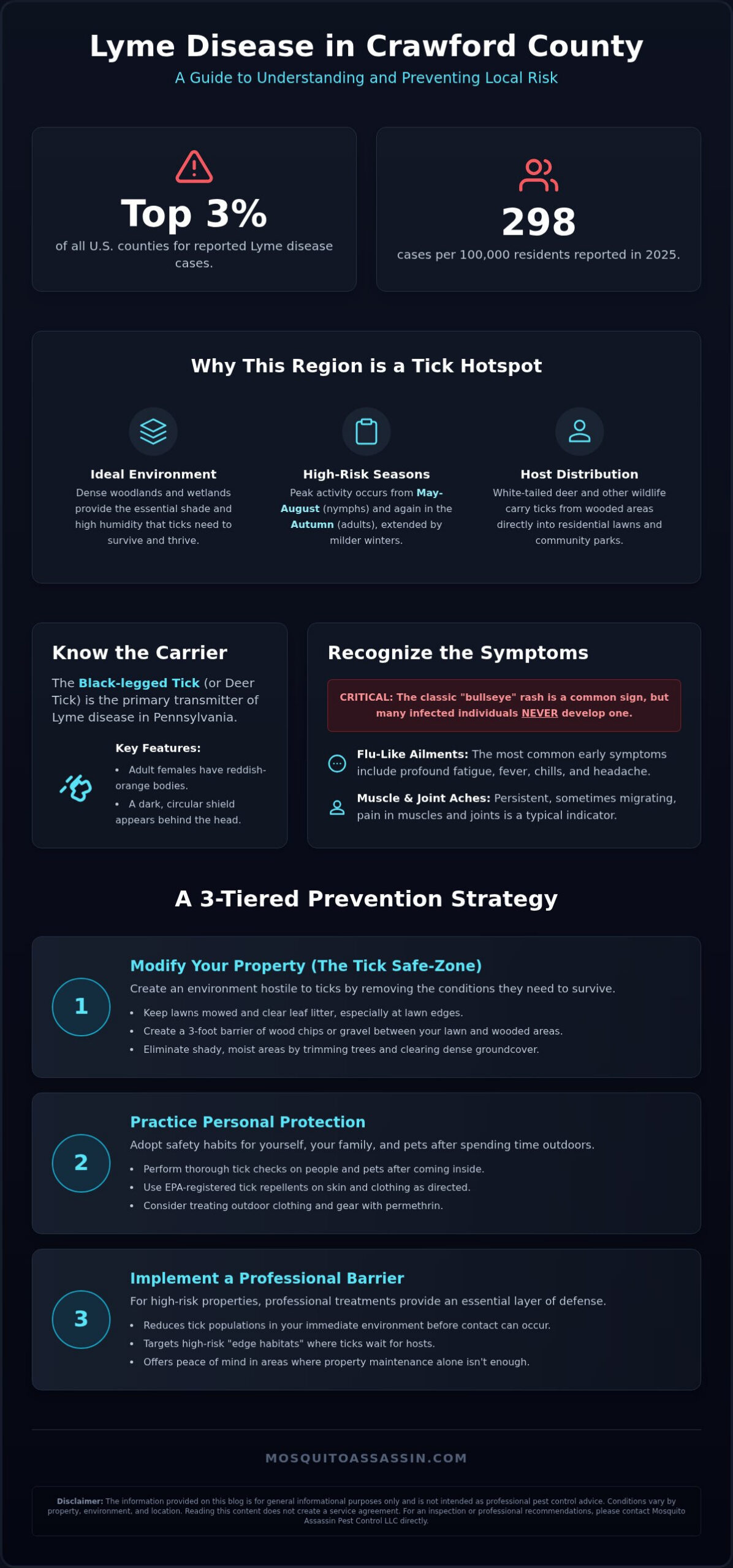
    Ticks require high humidity to remain active. When they lose moisture, they become stressed and eventually die. Homeowners can leverage this biological vulnerability by making specific adjustments to their outdoor spaces. Removing leaf litter and clearing tall grass from around the home foundation and lawn edges eliminates the damp microclimates ticks prefer. This simple maintenance task removes the insulation they need to survive the heat of the day.

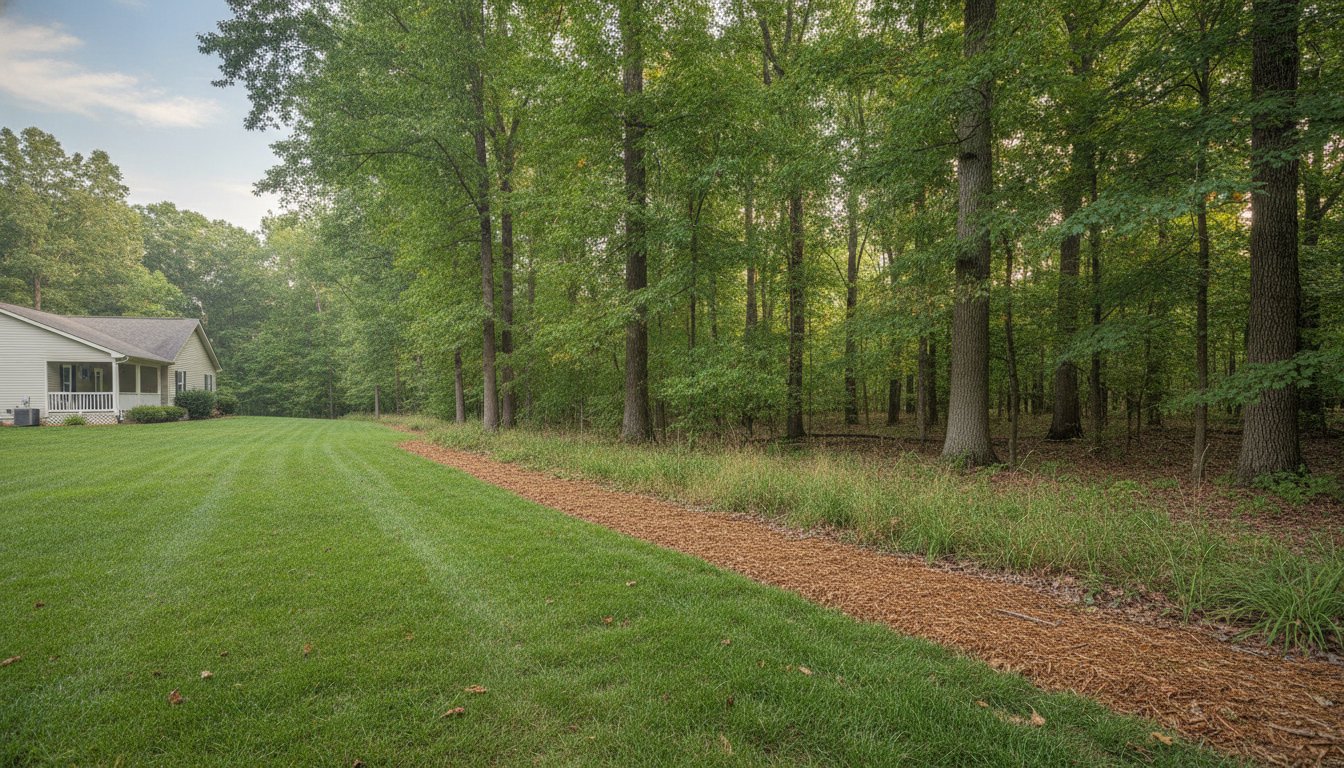
    A more permanent solution involves creating a physical deterrent between the lawn and any adjacent wooded areas. Installing a three-foot wide barrier of woodchips, mulch, or gravel serves this purpose well. Ticks rarely cross these dry, hot zones because they risk desiccation. Additionally, it’s important to place playground equipment, decks, and patios in sunny areas away from the yard’s perimeter. Sunlight is a natural enemy of the tick, and keeping recreational zones in bright, open spaces significantly lowers the risk of accidental contact.

    Managing Wildlife and Rodent Activity

    Ticks are frequently introduced to a yard by visiting wildlife. Small mammals like mice and chipmunks are often the primary hosts for larval and nymphal ticks, carrying them directly into residential spaces. Reducing the number of nesting sites for these animals is a critical component of long-term control. Stacking firewood neatly in dry, sunny locations away from the house discourages rodents from establishing nests near the home. Similarly, removing bird feeders or fallen fruit prevents larger carriers like deer from lingering on the property and dropping ticks in the grass.

    Because rodents play such a significant role in the tick life cycle, addressing their presence is often necessary for total property protection. Utilizing professional rodent control may help reduce the number of ticks that reach maturity on your land. Combining these habitat changes with a consistent pest control plan ensures that the property remains a hostile environment for invaders. Scheduling a property assessment for tick control services can help identify these specific habitat risks and provide a roadmap for a safer yard.

    Professional Tick Control: What to Expect from Property Protection

    Engaging professional tick control services Erie PA provides a systematic approach to property safety that goes far beyond a simple application of product. This process is rooted in a deep understanding of local ecology and the specific biological needs of Northwest Pennsylvania tick populations. A professional service begins with a comprehensive evaluation of the land to identify where pests are most likely to aggregate. Treatments are then strategically applied to the perimeter of the lawn, ornamental plantings, and wooded edges. By maintaining a consistent barrier throughout the peak season, professional pest control may help reduce risk for everyone on the property.

    The Inspection and Assessment Process

    The first step in effective management is a detailed property inspection. Technicians evaluate the unique geography of Erie and Crawford County properties, paying close attention to features like proximity to creeks, ravines, or dense woodlots. These geographical markers often act as humidity traps, creating ideal conditions for tick survival. During the assessment, the technician identifies “tick-safe zones” where activity is low, as well as high-risk areas that require more intensive management. Property owners receive professional recommendations based on the specific environment of their home, ensuring that the management plan addresses the actual pressure points of the landscape rather than following a generic template. This methodical evaluation ensures that resources are focused exactly where they will be most effective.

    Consistency and Ongoing Protection Plans

    One-time treatments are rarely sufficient to address the persistent nature of ticks in the PA and OH border region. Ongoing protection plans are recommended because they align with the natural reproductive cycles of local species. Ticks move through several life stages, and a single application may not reach individuals that are currently in a dormant phase or protected by deep leaf litter. Regularly scheduled visits ensure that the protective barrier is reinforced before it naturally degrades due to UV exposure or heavy rainfall.

    A comprehensive approach to outdoor safety often includes both mosquito and tick management. Understanding how a mosquito control program works can provide insight into the benefits of seasonal protection. When these services are combined, they create a multi-layered shield that addresses the most common regional pests simultaneously. This level of professional consistency allows families to spend more time outdoors with increased peace of mind, knowing that the property is being monitored and maintained by experts who understand the local terrain. Systematic management is the most dependable way to reclaim an outdoor space from the anxieties of tick-borne threats.

    Disclaimer: The information provided on this blog is for general informational purposes only and is not intended as professional pest control advice. Conditions vary by property, environment, and location. Reading this content does not create a service agreement. For an inspection or professional recommendations, please contact Mosquito Assassin Pest Control LLC directly.

    Reclaiming Your Outdoor Sanctuary in Northwest Pennsylvania

    Effective tick management requires more than occasional maintenance. By understanding the specific behaviors of local species and implementing physical landscape changes, property owners create a less hospitable environment for pests. While DIY efforts provide a baseline, they often lack the professional grade equipment needed to penetrate the dense foliage where ticks thrive. Utilizing tick control services Erie PA ensures that every transition zone and habitat hotspot on your property receives a thorough, scientific assessment.

    Licensed and insured professionals with local expertise understand the unique climate challenges of Erie, Crawford, and Ashtabula Counties. A consistent, ongoing protection plan aligns with natural biological cycles to maintain a reliable barrier throughout the active season. Taking these proactive steps allows families to enjoy their yards with greater confidence and peace of mind. Professional pest control may help reduce risk. Contact us for an inspection today.

    Disclaimer: The information provided on this blog is for general informational purposes only and is not intended as professional pest control advice. For an inspection or professional recommendations, please contact Mosquito Assassin Pest Control LLC directly.

    Frequently Asked Questions

    Is professional tick control safe for my pets and children?

    Professional treatments are applied according to strict label requirements to prioritize household safety. Once the applied product has fully dried, it’s generally acceptable for children and pets to return to the treated outdoor areas. Technicians focus on the perimeter and specific tick habitats rather than broadcasting across the entire lawn surface. This targeted approach ensures that the management plan remains effective while respecting the well-being of all household members and animals.

    How often should tick control services be performed in Erie, PA?

    Ongoing protection plans are the most effective way to manage these pests in Northwest Pennsylvania. Because local tick species have overlapping life cycles, a bi-monthly or monthly schedule is typically recommended throughout the active season. This consistent reinforcement ensures that the barrier remains active against new ticks introduced by wildlife. Professional tick control services Erie PA provide the necessary regularity to stay ahead of the natural reproductive cycles observed in the region.

    Can tick treatments be applied if my property is near a lake or stream?

    Yes, treatments can be applied to properties with water features by utilizing specific application techniques and maintaining required buffer zones. Professionals are trained to evaluate the unique geography of properties near Lake Erie or local ravines to prevent runoff into sensitive environments. The assessment identifies exactly where to place barriers while avoiding direct application to water or areas where drainage might occur. This scientific approach protects the local ecosystem while securing the property.

    Will professional tick control completely eliminate ticks from my yard?

    No professional service can claim 100% total elimination because wildlife like deer and rodents constantly transport new ticks onto the property. Instead, the goal is to significantly reduce the population and create a defensive barrier that minimizes contact risk. By managing the tick zone and high-risk habitats, professional intervention provides a much higher level of protection than DIY efforts. It’s about ongoing management and maintaining a hostile environment for these pests.

    What is the best time of year to start tick control services in Pennsylvania?

    The best time to begin services is in the early spring, typically March or April, as soon as temperatures consistently stay above freezing. In 2026, warm weather in early March led to an accelerated emergence of adult black-legged ticks from the leaf litter. Starting early allows for the establishment of a protective perimeter before the nymphal population peaks in the late spring and early summer. Early intervention is key to a safer season.

    Do I need to be home when the tick control service is performed?

    Property owners don’t typically need to be present for the service as long as the technician has unobstructed access to the exterior of the property. This includes ensuring that gates are unlocked and pets are kept indoors during the scheduled visit. After the treatment is completed, the technician can provide a summary of the work performed and any specific habitat recommendations. This flexibility allows for consistent property protection without disrupting the homeowner’s daily schedule.

    How long do I need to stay off the lawn after a tick treatment?

    It’s recommended to stay off treated areas until the application has completely dried. Depending on the humidity levels in Crawford or Erie County and the amount of sunlight, this process usually takes between 30 and 60 minutes. Once the product is dry, it binds to the vegetation and is much less likely to be transferred. Technicians provide clear instructions following each visit to ensure that everyone knows when it’s appropriate to resume outdoor activities.

    Does tick control also help with other pests like mosquitoes or fleas?

    Yes, many professional formulations used for tick management also provide significant control over mosquitoes and fleas. Because these pests often inhabit similar shaded, humid environments like tall grass and ornamental shrubs, a single application can address multiple concerns simultaneously. This integrated approach is a cornerstone of comprehensive pest management plans. Utilizing tick control services Erie PA often results in a broader reduction of seasonal outdoor pests, enhancing the overall comfort of your property.

    Disclaimer: The information provided on this blog is for general informational purposes only and is not intended as professional pest control advice. For an inspection or professional recommendations, please contact Mosquito Assassin Pest Control LLC directly.

  • Ticks in Erie PA: Essential Prevention Tips and Local Insights

    Ticks in Erie PA: Essential Prevention Tips and Local Insights

    A perfectly manicured lawn in Northwest Pennsylvania isn’t always the safe haven it appears to be. Many homeowners are surprised to find that even with regular mowing, their backyards remain prime territory for parasites. If you’ve ever found a tick on a pet or family member after a simple afternoon outside, you know the immediate sense of anxiety it brings. It’s frustrating to feel like you’re losing the use of your own outdoor space to the fear of Lyme disease and other serious illnesses.

    This guide addresses those concerns by providing a deep dive into ticks in Erie PA, prevention tips that actually work, and insights into local environmental factors. You’ll learn how to identify specific risks unique to Crawford and Erie Counties while discovering professional methods for securing your property. We’ll examine the most effective repellents, landscape modifications, and seasonal behaviors that every resident should know to maintain a secure, enjoyable yard throughout the year.

    Key Takeaways

    • Identify why the humid continental climate of Northwest Pennsylvania makes the Blacklegged tick a primary concern for local property owners.
    • Discover how to spot high-risk habitats like leaf litter and “edge zones” where wooded areas meet managed lawns.
    • Learn which EPA-registered repellents and clothing treatments provide the most reliable personal protection during outdoor activities.
    • Implement effective yard maintenance and property barriers as essential ticks in Erie PA – prevention tips to keep your family safe.
    • Understand how Integrated Pest Management and professional perimeter treatments create a long-term safety plan for your home.

    Understanding the Tick Population in Erie, PA

    Residents of Northwest Pennsylvania face a persistent challenge from parasitic pests. The Blacklegged tick, commonly known as the deer tick, is the most significant concern for those living in Erie and Crawford Counties. Unlike some pests that disappear during the colder months, these arachnids are remarkably resilient. Understanding their behavior is the first step in applying effective ticks in Erie PA – prevention tips to your property. The Blacklegged tick serves as the primary vector for Lyme disease in Erie County.

    Erie’s humid continental climate provides an ideal environment for these pests. Ticks require high moisture levels to survive; otherwise, they risk desiccation (drying out). Because the region experiences significant rainfall and lake-effect moisture, tick populations can thrive even during the heat of summer. However, local activity peaks typically occur during the spring and fall. During these windows, adult ticks are most active in their search for a host.

    Common Tick Species in Northwest Pennsylvania

    While the Blacklegged tick is the most dangerous from a health perspective, other species frequently inhabit the region. The American Dog tick is often found in open, grassy areas. It’s larger than the Blacklegged tick and features distinct white markings on its back. Recently, the Lone Star tick has also begun appearing more frequently in Northwest Pennsylvania. Female Lone Star ticks are easily identified by a single white dot on their dorsal shield. Recognizing the difference between an adult and a nymph is critical for safety. Nymphs are roughly the size of a poppy seed, making them extremely difficult to detect during a standard check.

    Why Erie Geography Increases Tick Activity

    The specific geography of the PA and OH border creates a perfect environment for tick proliferation. Lake Erie acts as a massive humidity regulator, keeping the surrounding air moist enough for ticks to remain active throughout the day. Additionally, the abundance of woodlots, state parks, and overgrown trails provides the dense cover ticks need for “questing,” the process where they wait on tall grass for a host to pass by. Local wildlife populations also play a major role. White-tailed deer and field mice act as primary transport systems, carrying ticks from wooded areas directly into residential lawns in Erie, Crawford, and Ashtabula Counties. Implementing ticks in Erie PA – prevention tips requires acknowledging that your backyard is part of a larger, interconnected ecosystem.

    Identifying High-Risk Tick Habitats in Your Backyard

    Understanding where ticks hide is just as vital as knowing how to remove them. In Erie and Crawford Counties, many residential properties feature a transition zone where maintained grass meets unmanaged woodland. This is known as the “edge effect.” This perimeter is often the most dangerous part of a yard because it provides the moisture ticks need alongside the high traffic of potential hosts. Ticks don’t drop from trees; they engage in “questing” behavior, clinging to the tips of tall fescue or low-hanging shrubs. They typically wait at a height of 18 to 24 inches, perfectly positioned to latch onto a human leg or a pet’s fur.

    Backyard features like woodpiles and bird feeders also increase local risk. Woodpiles offer a stable, high-humidity environment for ticks to overwinter and survive the harsh Lake Erie winters. Bird feeders, while pleasant, often attract small rodents like the white-footed mouse. These mice are significant reservoirs for the pathogens that cause Lyme disease. When mice congregate under feeders to eat fallen seed, they bring ticks directly into the center of your living space. Managing these specific areas is a core part of effective ticks in Erie PA – prevention tips for any property owner.

    Preferred Environments for Blacklegged Ticks

    Blacklegged ticks are extremely sensitive to dehydration. They seek out microclimates with at least 80 percent humidity, which is why they’re rarely found in the middle of a sunny, short-clipped lawn. However, shaded ornamental gardens and ground covers like pachysandra or ivy provide the perfect humid sanctuary. These lush areas are often located right next to patios or walkways, placing family members in close proximity to questing ticks. Keeping these zones maintained or treated by a professional pest control service can significantly lower the chances of an encounter.

    The Role of Wildlife in Local Tick Migration

    Wildlife acts as the primary vehicle for tick movement throughout Northwest Pennsylvania and Ashtabula County. White-tailed deer are the most common transporters of adult ticks, often dropping them in yards as they graze near the tree line. While deer bring the ticks, white-footed mice are the ones that actually infect them with bacteria. By managing backyard features that attract these animals, such as dense brush or accessible trash, you break the cycle of migration. Strategic property modification is one of the most reliable ticks in Erie PA – prevention tips for long-term safety.

    Personal Protection Strategies for Erie Residents

    Ticks in Erie PA – prevention tips often start with what you wear before stepping onto a trail or into your backyard. Using EPA-registered repellents is one of the most effective ways to discourage bites. Products containing at least 20 percent DEET or Picaridin provide several hours of protection against adult ticks and nymphs. While DEET is widely available, Picaridin is often preferred for its lack of scent and the fact that it won’t damage synthetic fabrics or gear. These chemicals work by interfering with the tick’s ability to locate a host, making you essentially invisible to their sensors.

    Effective Clothing and Repellent Practices

    Choosing the right outfit is a simple yet powerful defense. Light-colored clothing doesn’t repel ticks, but it makes dark-bodied pests much easier to spot before they reach your skin. Create a physical barrier by tucking your shirt into your waistband and your pants into your socks. This forces ticks to stay on the outside of your clothes where they can be brushed off easily. It’s much better to catch a tick on your pant leg than to find it attached later that evening.

    There’s a major difference between skin-applied and clothing-applied repellents. Permethrin should never be applied directly to the skin; instead, use it to treat boots, camping gear, and outer layers of clothing. Treated items often remain effective through several wash cycles and provide a lethal barrier to any tick that attempts to crawl across the fabric. Once you return home, immediately place your clothes in the dryer. Drying clothes on high heat for 10 minutes kills ticks.

    Post-Outdoor Checklists and Decontamination

    A thorough inspection is required after any outdoor activity in Northwest Pennsylvania or Ashtabula County. Ticks often crawl for several hours before attaching, so a quick check can prevent a bite entirely. Focus on these critical areas during your inspection:

    • Behind the ears and along the hairline
    • Under the arms and around the waistline
    • Behind the knees and between the toes
    • Inside the belly button and around the groin

    Taking a shower within two hours of coming indoors has been shown to significantly reduce the risk of tick-borne illness. It helps wash off unattached ticks and provides a better opportunity to feel for any that have already latched on. Don’t forget your pets; dogs and cats frequently carry ticks into the home, where they can eventually migrate to humans. While these personal steps are vital, professional pest control may help reduce risk on your own property by managing the population at the source.

    Ticks in Erie PA: Essential Prevention Tips and Local Insights

    Yard Maintenance and Landscape Modification

    Modifying your property is a proactive way to reduce the local tick population without relying solely on personal repellents. While you can’t control the public woods or state parks, you can control the “safe zone” of your own lawn. Incorporating specific ticks in Erie PA – prevention tips into your seasonal yard work creates a significant defensive layer for your family and pets. Start by maintaining a tidy perimeter; clear away tall brush and remove organic debris that provides the shade and moisture these parasites require to survive the summer heat.

    Regular mowing is one of the simplest yet most effective tools in your arsenal. Keeping your grass height low, ideally under three inches, allows the sun to reach the soil and dry out the ground level. Since ticks are highly susceptible to desiccation, a sunny and dry lawn is a hostile environment for them. Additionally, removing invasive plants like Japanese Barberry is critical. This specific shrub creates a dense, humid microclimate that has been shown to support much higher densities of Blacklegged ticks compared to native vegetation.

    Creating a Tick-Resistant Barrier

    A physical barrier is a structural way to restrict tick movement from the woods into your managed lawn. Construct a 3-foot wide barrier of wood chips, bark mulch, or gravel along the entire perimeter of your property where it meets wooded or brushy areas. This serves as a dry “no-man’s land” that ticks are unlikely to cross because they risk drying out. For the best results, use materials like cedar mulch, which remains dry and creates a distinct heat-absorbing surface.

    Strategic placement of outdoor living spaces is equally important. Move swing sets, sandboxes, and patios at least 10 feet away from the yard edge and the wood-chip barrier. By keeping play equipment in sunny, central locations, you significantly reduce the chance of children coming into contact with questing ticks. This landscape modification is a professional-grade strategy used by property owners throughout Erie and Crawford Counties to reclaim their outdoor spaces.

    Managing Leaf Litter and Vegetation

    Proper leaf management is a year-round task. While many homeowners wait until spring, fall leaf removal is actually a critical prevention step. Thick layers of damp leaves provide the perfect insulation for ticks to overwinter and stay protected from freezing temperatures. Raking leaves promptly and removing them from the property or composting them far from the house eliminates these vital survival sites. Trimming low-hanging branches also helps by increasing sunlight penetration and airflow across the lawn.

    You can also discourage tick-bearing wildlife from entering your yard through natural deterrents. Planting deer-resistant vegetation like lavender, sage, or certain ornamental grasses makes your property less attractive to white-tailed deer. When deer don’t linger to graze, they’re less likely to drop adult ticks near your home. For comprehensive protection, General Pest Control Plans can address these habitat concerns with targeted perimeter management.

    Long-Term Tick Management and Professional Monitoring

    Managing tick populations requires more than just occasional yard work or seasonal awareness. For residents in Northwest Pennsylvania, a comprehensive approach known as Integrated Pest Management (IPM) is the standard for long term safety. IPM focuses on prevention by combining property modifications with scientific monitoring and targeted treatments. This methodical approach ensures that your backyard environment is managed in a way that discourages tick survival while protecting the wellbeing of your household. Utilizing professional pest control may help reduce risk by addressing the specific biological needs of local tick species.

    Targeted perimeter treatments are a cornerstone of a professional strategy. Rather than applying broad treatments across an entire lawn where they are often least effective, professionals focus on the high-risk “edge zones” where ticks actually live. These treatments create a barrier that intercepts questing ticks as they attempt to move from the woods into your active living space. Ongoing monitoring is essential because tick populations are dynamic; they shift based on weather patterns, wildlife migration, and local humidity levels. Consistent oversight ensures that your property remains a hostile environment for parasites throughout the year.

    The Importance of Year-Round Protection

    It’s a common misconception that tick concerns disappear once the first frost hits Erie and Crawford Counties. Adult Blacklegged ticks can remain active whenever temperatures are above freezing and the ground isn’t covered by deep snow. In fact, Northwest Pennsylvania’s lake-effect snow can sometimes act as an insulator, protecting ticks from extreme cold at the ground level. A general pest control plan provides a recurring shield that manages multiple threats simultaneously. By reducing overall pest pressure, including the rodents that act as tick reservoirs, you create a much safer environment for everyone.

    When Professional Intervention Becomes Necessary

    Knowing when to step up your defensive strategy is vital. If you find ticks on your pets or family members after they’ve spent time in well-maintained areas of your yard, it may indicate an established population on the property. A professional inspection can identify hidden hotspots, such as specific ornamental gardens or stone walls, that are harboring nymphs and adults. These insights allow for a more precise application of ticks in Erie PA – prevention tips tailored to your specific acreage. If you’re concerned about a recent increase in activity, visiting a local contact page is a good first step toward a professional property assessment.

    Disclaimer: The information provided on this blog is for general informational purposes only and is not intended as professional pest control advice. Conditions vary by property, environment, and location. Reading this content does not create a service agreement. For an inspection or professional recommendations, please contact Mosquito Assassin Pest Control LLC directly.

    Reclaiming Your Outdoor Sanctuary

    Managing the persistent threat of parasites in Northwest Pennsylvania requires a consistent, multi-layered approach. By understanding the specific behaviors of the local tick population and implementing structural changes like wood-chip barriers, you can significantly lower the risk to your family. Personal vigilance, such as performing thorough checks after visiting local parks, remains a vital daily habit. These ticks in Erie PA – prevention tips provide a necessary foundation for a safer home environment, but long-term success often depends on professional oversight.

    For those seeking specialized protection, Contact Mosquito Assassin Pest Control LLC for professional recommendations. Licensed pest control professionals provide the specialized expertise needed to manage tick and mosquito populations throughout Erie and Crawford Counties. You don’t have to surrender your yard to the fear of pests. With a methodical strategy and reliable local support, you can enjoy the Northwest Pennsylvania outdoors with confidence and peace of mind.

    Disclaimer: The information provided on this blog is for general informational purposes only and is not intended as professional pest control advice. Conditions vary by property, environment, and location. Reading this content does not create a service agreement. For an inspection or professional recommendations, please contact Mosquito Assassin Pest Control LLC directly.
    Frequently Asked Questions

    Is Lyme disease common in Erie, PA?

    Yes, Lyme disease is prevalent throughout Northwest Pennsylvania. The Blacklegged tick, which is the primary vector for the bacteria, is widespread in Erie and Crawford Counties. Pennsylvania consistently ranks among the states with the highest number of reported cases in the nation. Residents should assume that any wooded, brushy, or tall-grass area in the region carries a risk of exposure during the active seasons.

    What is the best tick repellent for hiking in Northwest Pennsylvania?

    EPA-registered repellents containing at least 20 percent DEET or Picaridin are the most effective choices for hikers. These products provide several hours of protection against both adult ticks and nymphs. For a more robust defense, treat your hiking boots and outer clothing with Permethrin. This clothing-specific treatment kills ticks on contact and remains effective through multiple wash cycles, providing a reliable secondary barrier.

    Can ticks survive the winter in Erie?

    Ticks are remarkably resilient and can survive Erie’s harsh winters by sheltering under leaf litter or snow. While they become less active in freezing temperatures, Blacklegged ticks will emerge to search for a host whenever the temperature rises above 35 degrees Fahrenheit. This is why ticks in Erie PA – prevention tips should be followed even during mild winter days when the ground isn’t fully frozen.

    How do I properly remove a tick if I am bitten?

    Use fine-tipped tweezers to grasp the tick as close to the skin’s surface as possible. Pull upward with steady, even pressure without twisting or jerking, which can cause the mouthparts to break off in the skin. Once the tick is removed, clean the bite area and your hands with rubbing alcohol or soap and water. Avoid using home remedies like heat or oils, as these are ineffective.

    What are the early symptoms of a tick-borne illness?

    Early symptoms often include fever, chills, fatigue, muscle aches, and a characteristic bullseye rash. However, it is important to remember that not everyone develops a visible rash. Symptoms typically appear anywhere from 3 to 30 days after a bite. If you experience flu-like symptoms after spending time outdoors in Northwest Pennsylvania, consult a healthcare professional immediately for a proper evaluation and potential treatment plan.

    Are there specific plants that attract ticks to my Erie yard?

    Ticks aren’t attracted to plants for food, but they thrive in the humid microclimates created by invasive species like Japanese Barberry. These dense shrubs provide the perfect sanctuary for tick survival and attract the small rodents that carry them. Replacing these invasive plants with native, deer-resistant vegetation can help reduce the attractiveness of your property to both ticks and their animal hosts.

    How often should I have my yard treated for ticks?

    Professional yard treatments are most effective when applied during the peak activity windows of spring and fall. Most residential properties benefit from a recurring protection plan that includes monthly applications from April through October. This frequency ensures that the perimeter barrier remains strong during every stage of the tick lifecycle. Professional pest control may help reduce risk by maintaining these consistent defensive layers.

    Can my dog bring ticks into my house?

    Pets are common vehicles for transporting ticks from the yard into the home. Ticks can latch onto a dog’s fur and eventually migrate to furniture or human family members. Using a veterinarian-approved tick preventative is essential for your pet’s health and your own safety. Performing a quick paw-to-tail check after every outdoor excursion is one of the best ticks in Erie PA – prevention tips for local pet owners.

    Disclaimer: The information provided on this blog is for general informational purposes only and is not intended as professional pest control advice. Conditions vary by property, environment, and location. Reading this content does not create a service agreement. For an inspection or professional recommendations, please contact Mosquito Assassin Pest Control LLC directly.

  • Tick Bite Prevention in PA: Your Expert Guide to Staying Safe Outdoors

    Tick Bite Prevention in PA: Your Expert Guide to Staying Safe Outdoors

    Pennsylvania’s beautiful outdoors-from our rolling hills to our own backyards-should be a source of joy, not anxiety. Yet, the persistent threat of ticks and Lyme disease can make any parent or pet owner hesitate. You deserve to enjoy every moment without constantly worrying about your family’s safety. That’s why having a proven set of tick bite prevention tips PA residents can trust is not just helpful-it’s essential for your peace of mind.

    As local pest control experts who live and work in the communities we serve, we understand these concerns firsthand. In this comprehensive guide, we are eliminating the guesswork. You will learn actionable, Pennsylvania-specific strategies to safeguard your property, properly check your family and pets after coming indoors, and confidently handle a tick if you find one. Consider this your definitive plan for taking back your yard and enjoying the outdoors with confidence.

    Key Takeaways

    • Learn how to properly prepare yourself and your family before any outdoor activity, from hiking to gardening, to create a personal barrier against ticks.
    • Discover proven strategies to transform your own backyard from a tick habitat into a safe zone for your children and pets.
    • Master the correct, step-by-step method for safely removing an attached tick to minimize the risk of disease transmission.
    • This guide provides the comprehensive tick bite prevention tips PA residents need, covering personal repellents, yard maintenance, and professional treatments.

    Understanding the Tick Threat in Pennsylvania: Know Your Enemy

    When it comes to tick-borne illness, Pennsylvania is ground zero. For years, our state has consistently ranked among the highest in the nation for reported cases of Lyme disease, making it absolutely critical for families in Erie and Crawford counties to be proactive. Safeguarding your loved ones from these dangerous pests begins with a clear understanding of the enemy. The most effective tick bite prevention tips PA residents can use are rooted in knowledge of where ticks live, what they are, and when they are most active.

    For a professional overview of essential prevention strategies, this video from Johns Hopkins Medicine is an excellent resource:

    Ticks are not just a problem for deep-woods hikers. They thrive in common environments right here in our community, including wooded trails, areas with tall grass, damp leaf litter, and even your own backyard. Any time you, your children, or your pets spend time in these high-risk zones, you need a proven protection plan in place.

    Common Ticks in Erie and Crawford Counties

    To properly defend your family, you must know which specific threats you’re facing. Here in Northwest Pennsylvania, three tick species pose the most significant danger. For a comprehensive overview of the illnesses they transmit, Understanding Tick-Borne Diseases provides critical information. The primary culprits in our area include:

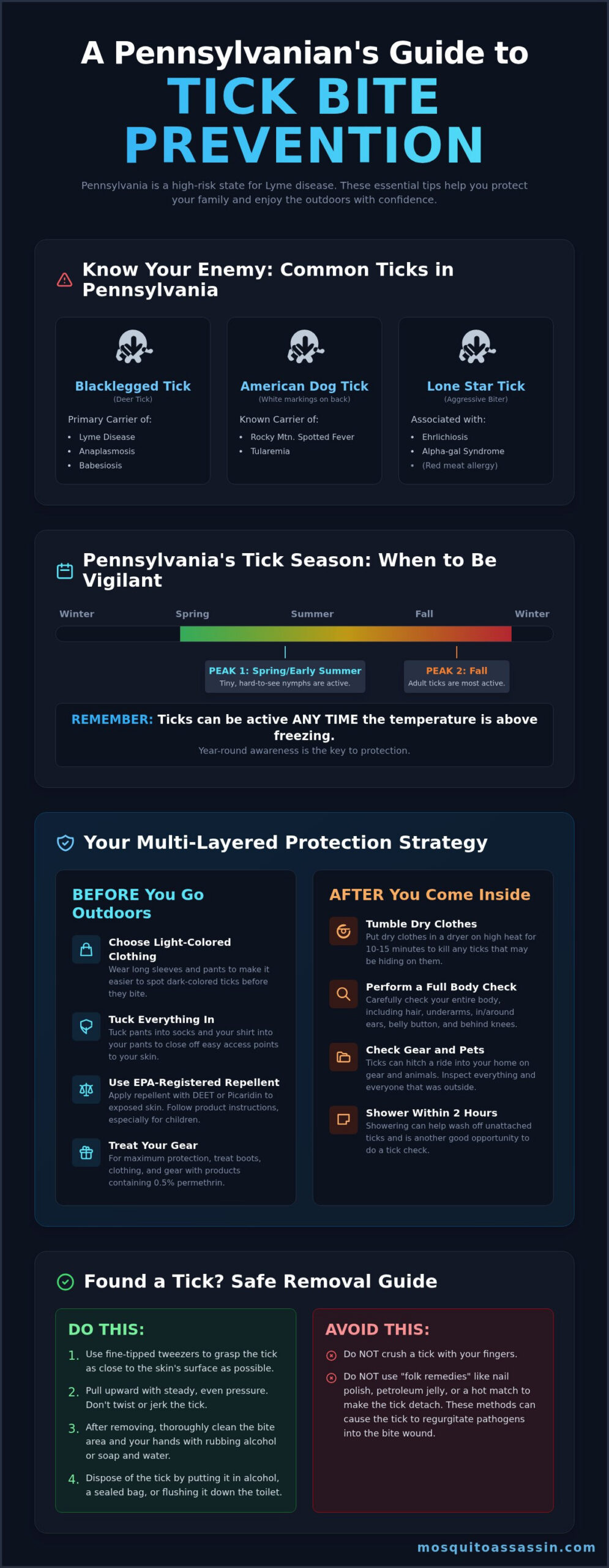
    • Blacklegged Tick (Deer Tick): The most dangerous tick in PA, it is the primary carrier of Lyme disease, anaplasmosis, and babesiosis.
    • American Dog Tick: Easily identified by the ornate white markings on its back, this tick is a known carrier of Rocky Mountain Spotted Fever and tularemia.
    • Lone Star Tick: An aggressive biter, this tick is associated with ehrlichiosis and alpha-gal syndrome, which can cause a severe red meat allergy.

    Pennsylvania’s Tick Season: When to Be Most Vigilant

    Many people mistakenly believe ticks are only a summer problem. The reality is that ticks can be active any time the temperature is above freezing. However, their activity peaks twice during the year: in the spring and early summer when the tiny, hard-to-see nymphs are questing, and again in the fall when adult ticks are most active. This is why year-round awareness is the cornerstone of any reliable tick protection strategy for your home and family.

    Personal Protection: Your First Line of Defense Against Ticks

    Safeguarding yourself and your family begins long before you step outside. Effective tick bite prevention is an active process, not a passive hope. By adopting a proven, multi-layered strategy, you can dramatically reduce your risk of encountering ticks and the dangerous diseases they carry. These essential tick bite prevention tips PA residents need to know will become a simple, second-nature routine for enjoying the outdoors safely.

    Before You Go Out: Dress and Repel

    Your first layer of defense is what you wear and apply. Ticks are opportunistic pests, so your goal is to create a physical and chemical barrier that makes you an undesirable target. Follow this professional checklist before any outdoor activity, from exploring local trails to gardening in your Erie backyard.

    • Choose Light-Colored Clothing: Wear light-colored long sleeves and pants. This simple tactic makes it much easier to spot a dark-colored tick crawling on you before it has a chance to bite.
    • Tuck Everything In: Tuck your long pants into your socks and your shirt into your pants. This closes off easy access points for ticks trying to reach your skin.
    • Use an EPA-Registered Repellent: Apply an insect repellent containing DEET or Picaridin to exposed skin. Always follow the product instructions, especially when applying to children.
    • Treat Your Gear: For maximum protection, treat your clothing, boots, and camping gear with products containing 0.5% permethrin. It remains effective through several washings and is a powerful tool for repelling and killing ticks on contact.

    After You Come Inside: The Critical 2-Hour Window

    What you do upon returning home is just as critical as your preparation. Ticks often wander on the body for hours before attaching, giving you a crucial window to find and remove them. Make these steps a non-negotiable routine for everyone in the family, including pets.

    • Tumble Dry Clothes First: Before washing, toss your clothes into a dryer on high heat for 10-15 minutes. The heat will kill any ticks that may have hitched a ride inside.
    • Shower Immediately: Taking a shower or bath within two hours of coming indoors can help wash off unattached ticks and provides a perfect opportunity for a tick check.
    • Perform a Full-Body Tick Check: This is the most important step. Use a handheld or full-length mirror to inspect your entire body. For a complete overview of what to look for, the official PA Department of Health Tick Guide provides excellent, state-specific resources. Pay special attention to their favorite hiding spots:
      • In and around the hair and scalp
      • Behind and inside the ears
      • Under the arms
      • Around the waist and in the belly button
      • In the groin area
      • Behind the knees

    Finally, don’t forget your four-legged family members. Dogs are prime targets for ticks and can easily carry them into your home. Check your pets thoroughly every time they come inside, and consult your veterinarian about the best tick prevention products to create a complete shield of protection for your entire household.

    Creating a Tick-Safe Zone: How to Protect Your PA Property

    While personal repellents are your first line of defense when you’re out and about, the battle against ticks truly begins at home. Studies show that a significant majority of tick encounters happen right in our own yards. By transforming your property from a tick paradise into a hostile environment, you can dramatically reduce your family’s risk. These proactive landscaping and maintenance strategies are some of the most effective tick bite prevention tips PA homeowners can implement.

    Landscaping Tips to Deter Ticks

    Creating a tick-safe yard is about eliminating the damp, shady habitats where they thrive. Ticks can’t survive in short, dry, sunny areas. The goal is to create clear transition zones and remove their hiding spots. These landscaping strategies are endorsed by experts and align with the official Pennsylvania Department of Health guide to tick prevention for creating a safer outdoor space.

    • Maintain Your Lawn: Keep your grass mowed to a height of three inches. This increases sun exposure to the soil, creating a drier environment that ticks hate.
    • Create a Barrier: Establish a 3-foot-wide barrier of dry wood chips or gravel between your lawn and any wooded areas, stone walls, or tall ornamental grasses. This “tick moat” is a dry, inhospitable zone that ticks are reluctant to cross.
    • Clean Up Debris: Remove leaf litter, brush piles, and tall weeds promptly. These are prime nesting and questing spots for ticks looking for their next meal.
    • Place Equipment Wisely: Position swing sets, sandboxes, patios, and other recreational areas in the sunniest, driest part of your yard, far from tree lines and overgrown edges.

    Discourage Tick-Carrying Wildlife

    Ticks don’t travel far on their own; they hitch rides on animals. Deer are the primary transportation and reproductive host for adult deer ticks, while mice and other small rodents are key hosts for the nymph stage, which is responsible for most Lyme disease transmissions. Making your yard less attractive to these animals is a crucial step in tick control.

    • Secure garbage cans with tight-fitting lids.
    • Remove bird feeders, as spilled seed attracts rodents.
    • Consider installing deer-resistant fencing around your primary yard area.

    Professional Yard Treatments: The Mosquito Assassin Pest Control LLC Advantage

    For the ultimate safeguard, nothing beats a professional barrier treatment. While the landscaping methods above reduce tick populations, our proven treatment process is designed to eliminate them. Our certified technicians apply a family-safe treatment that targets the cool, damp, and shady areas where ticks rest and wait for a host-like under decks, in shrubbery, and along the edges of your property. This powerful approach provides a reliable zone of protection, offering peace of mind that DIY tick bite prevention tips PA residents try can’t always guarantee. The treatments are highly effective and dry quickly, ensuring they are safe for your family and pets to enjoy the yard. Ready to reclaim your property? Contact us for a free estimate on our pest control services. This is also a key service for local businesses with outdoor seating; see our commercial services to keep your patrons safe.

    Tick Bite Prevention in PA: Your Expert Guide to Staying Safe Outdoors

    Found a Tick? A Step-by-Step Guide to Safe Removal and Next Steps

    Even with the best precautions, you might find a tick attached to yourself, a family member, or a pet. The most important thing is to stay calm and act swiftly. Prompt and proper removal is your best defense against the transmission of tick-borne diseases like Lyme disease. Panicking can lead to improper removal, which may increase your risk.

    The Correct Way to Remove an Attached Tick

    Forget the myths you’ve heard. The only professionally recommended method for tick removal is simple, direct, and requires one basic tool: fine-tipped tweezers. Follow these proven steps:

    • Grasp Firmly: Use the tweezers to grasp the tick as close to the skin’s surface as possible. You want to grab its head and mouthparts, not its body.
    • Pull Steadily: Pull upward with steady, even pressure. Do not twist, jerk, or crush the tick, as this can cause its mouthparts to break off in the skin or force it to regurgitate infectious fluids into the bite.
    • Clean Thoroughly: After removing the tick, thoroughly clean the bite area and your hands with rubbing alcohol, an iodine scrub, or soap and water.
    • Dispose Safely: Submerge the tick in alcohol, place it in a sealed bag/container, wrap it tightly in tape, or flush it down the toilet.

    Crucially, never use folk remedies. Applying petroleum jelly, nail polish, or a hot match to the tick is ineffective and dangerous. These methods can agitate the tick, causing it to burrow deeper or release more saliva, increasing the risk of infection.

    After the Bite: Monitoring for Symptoms

    While following the best tick bite prevention tips PA residents trust is your first line of defense, knowing what to do after a bite is just as critical. For the next 30 days, be vigilant for early signs of tick-borne illness, even if the bite seemed minor.

    Consult a doctor if you or a family member develops any of the following symptoms:

    • A rash, especially the classic bull’s-eye (Erythema migrans) rash associated with Lyme disease.
    • Fever and/or chills.
    • Unexplained fatigue, headache, or muscle and joint aches.

    Remember: Not everyone who contracts a tick-borne illness develops a rash. Any flu-like symptoms following a known tick bite warrant a professional medical evaluation. For comprehensive tick control that safeguards your property, contact the experts at Mosquito Assassin for a proven treatment plan.

    Why DIY Isn’t Enough: Trust PA’s Local Tick Control Experts

    Following personal safety measures and keeping a tidy yard are crucial first steps in protecting your family from tick-borne illnesses. However, when it comes to truly safeguarding your property, DIY solutions often create a false sense of security. For the most effective tick bite prevention tips PA residents can rely on, professional intervention is the key to comprehensive protection.

    The Limits of Store-Bought Products

    Consumer-grade granules and sprays you find at the hardware store offer a temporary fix at best. They have a low residual effect, meaning they break down quickly and wash away with the first heavy Pennsylvania rain. More importantly, effective application requires a deep understanding of tick biology. Ticks don’t just wander in open lawns; they hide in specific “hotspots” like dense ground cover, shaded perimeters, and under decks-areas that are easily missed without professional training.

    The Mosquito Assassin Guarantee

    This is where professional expertise makes all the difference. As a locally owned company, we aren’t a faceless national chain; our team lives and works right here, giving us firsthand knowledge of the specific tick pressures facing our communities. We safeguard your yard with a proven process designed for maximum effectiveness and family safety.

    • Expert Technicians: Our licensed professionals are trained to identify and target the precise areas on your property where ticks thrive, ensuring no hiding spot is overlooked.
    • Professional-Grade Treatments: We use powerful, long-lasting solutions that are proven to eliminate ticks while remaining safe for your children and pets once dry.
    • Season-Long Peace of Mind: Our services are designed to provide a durable barrier of protection, giving you the freedom to enjoy your yard all season long. We proudly serve homeowners throughout Erie, Crawford, and surrounding locations.

    Don’t leave your family’s health to chance with ineffective products. By partnering with a trusted local expert, you gain the confidence that your property is professionally protected. Implementing these professional tick bite prevention measures is the ultimate step in reclaiming your outdoor space. Contact Mosquito Assassin today to schedule a consultation and take back your yard with confidence.

    Safeguard Your Family with Pennsylvania’s Tick Experts

    Enjoying Pennsylvania’s beautiful outdoors doesn’t have to come with the constant worry of tick-borne illnesses. This guide has armed you with the essential knowledge for personal and property protection-from choosing the right repellent to creating a tick-safe zone in your yard. Mastering these tick bite prevention tips PA residents trust is your first line of defense, but true peace of mind comes from knowing your property is professionally secured against these persistent threats.

    Don’t leave your family’s safety to chance. As a locally owned and operated Pennsylvania team, Mosquito Assassin provides a definitive solution. Our family-safe and pet-safe treatments are designed to eliminate ticks and let you reclaim your outdoor living space. We’re so confident in our proven process that we back it with our Pest-Free Guarantee: if pests return, so do we! Protect your family and reclaim your yard. Get a free tick control quote from Mosquito Assassin today!

    Take the final step towards a safer, more enjoyable season outdoors. Your worry-free yard is just a call away.

    Frequently Asked Questions About Tick Prevention in PA

    What is the peak season for ticks in Pennsylvania?

    The peak season for ticks in Pennsylvania typically runs from April through September when nymphs and adult ticks are most active. However, ticks can be present and seek a host any time temperatures are above freezing, even during warmer winter days. This is why year-round vigilance is one of the most important tick bite prevention tips PA residents can follow to protect their families and pets from tick-borne illnesses.

    Are tick bites always painful or itchy?

    No, tick bites are often completely painless and go unnoticed. Ticks secrete a small amount of anesthetic in their saliva, which numbs the area while they feed. Any itching, soreness, or the development of a rash-like the bull’s-eye rash associated with Lyme disease-usually occurs hours or days after the tick has detached or been removed. This stealthy nature is why performing daily tick checks after spending time outdoors is so critical.

    Can ticks survive the winter in PA?

    Yes, many tick species, including the deer tick that transmits Lyme disease, are well-equipped to survive Pennsylvania’s cold winters. They find shelter and insulation by burrowing into leaf litter, soil, or under snow cover. On unseasonably warm winter days, these ticks can re-emerge and become active, posing a year-round threat. Consistent property maintenance and awareness are essential for comprehensive protection against these resilient pests.

    Is professional tick yard treatment safe for my children and pets?

    Absolutely. When performed by a licensed professional, a tick yard treatment is designed with your family’s safety as the top priority. We use proven, family-safe products and adhere to strict application protocols. Typically, we advise that you keep children and pets off the treated areas until the product has fully dried. This precaution ensures the treatment is both highly effective against ticks and completely safe for your loved ones to enjoy their yard.

    How long does a tick need to be attached to transmit Lyme disease?

    In most cases, a deer tick must be attached for 36 to 48 hours or more to transmit the bacteria that causes Lyme disease. However, other tick-borne diseases can be transmitted much more quickly. Because of this, it is crucial to find and properly remove any attached tick as soon as possible. Prompt removal is your best defense and significantly reduces the risk of contracting a dangerous illness.

    What is the most effective tick repellent I can use?

    The most effective repellents for skin, as recommended by the CDC, contain active ingredients like DEET (20-30% concentration) or Picaridin. For an even stronger layer of defense, treat your clothing and outdoor gear with products containing 0.5% permethrin. Permethrin is not for use on skin, but it kills ticks on contact with treated fabric and can last through multiple wash cycles, offering proven and long-lasting protection.

    Do all deer ticks in Pennsylvania carry Lyme disease?

    No, not every single deer tick carries the bacteria that causes Lyme disease. However, Pennsylvania has one of the highest rates of Lyme disease in the nation, and studies show a significant percentage of the deer tick population is infected. Because you cannot tell if a tick is a carrier just by looking at it, it is essential to treat every deer tick bite as a potential risk and take immediate, appropriate action.