Tag: Yellowjackets

  • Wasp Nest Removal in Erie PA: Professional Safety and Prevention Guide

    Wasp Nest Removal in Erie PA: Professional Safety and Prevention Guide

    You step onto your back porch on a warm afternoon, only to be met by a low, rhythmic hum echoing from the doorframe. As several yellowjackets dart past your head, that relaxing weekend quickly turns into a stressful situation for your family and pets. It is completely natural to feel a sense of urgency and anxiety when aggressive stinging insects take up residence right where you live and play. Most property owners want the problem handled immediately, yet they often feel stuck between the fear of being stung and the confusion of identifying exactly what is flying around their eaves.

    Understanding the risks is the first step toward a resolution. This guide provides the essential information needed for safe wasp nest removal Erie PA homeowners require to reclaim their outdoor spaces without the threat of a swarm. You will learn how to distinguish between beneficial honey bees and aggressive local wasps, why DIY removal attempts often lead to emergency room visits, and which professional strategies effectively prevent future infestations. Whether the property is in Erie, Crawford, or Ashtabula County, establishing a secure environment starts with local expertise and a methodical approach to pest management.

    Key Takeaways

    • Learn to distinguish between aggressive yellowjackets and aerial bald-faced hornet nests to determine the specific risk level on your property.
    • Understand the seasonal lifecycle of Northwest Pennsylvania wasps to identify and address infestations during the critical spring emergence phase.
    • Discover why professional wasp nest removal Erie PA services are necessary to avoid the dangers of swarm attacks, pheromone triggers, and ladder accidents.
    • Identify the immediate safety steps to take once a nest is discovered, including how to protect children and pets from accidental provocation.
    • Explore how transitioning to proactive year-round protection plans can stop future nesting cycles in Erie, Crawford, and Ashtabula counties.

    Identifying Common Wasp and Hornet Species in Erie PA

    Correct identification is the foundation of any pest management plan. In Northwest Pennsylvania, residents often encounter several different species, each with unique behaviors and nesting habits. Misidentifying a pest can lead to ineffective treatments or, worse, unnecessary danger to the property owner. For instance, while honey bees are vital pollinators that should be relocated by specialists, common North American wasps like yellowjackets require a more decisive intervention due to their aggressive nature. Identifying the specific insect involved allows for a safer and more methodical approach to removal.

    Ground-Nesting Wasps and Their Risks

    Yellowjackets are perhaps the most notorious pests in Erie and Crawford counties. These insects typically build their colonies in abandoned rodent burrows or cavities within the soil. A ground nest can house thousands of workers by late summer, creating a high-risk zone for anyone walking across the lawn. Mowing the grass is a primary trigger for attacks; the vibration from a mower engine often signals a threat to the colony, resulting in a coordinated swarm. Property owners should watch for small holes in the soil with constant, heavy insect traffic. Discovering these entrance points early is vital, as a hidden nest in a yard can lead to multiple stings for unsuspecting children or pets. When these subterranean colonies are found, professional wasp nest removal Erie PA services are often necessary to ensure the entire population is addressed safely.

    Aerial Nests: Hornets and Paper Wasps

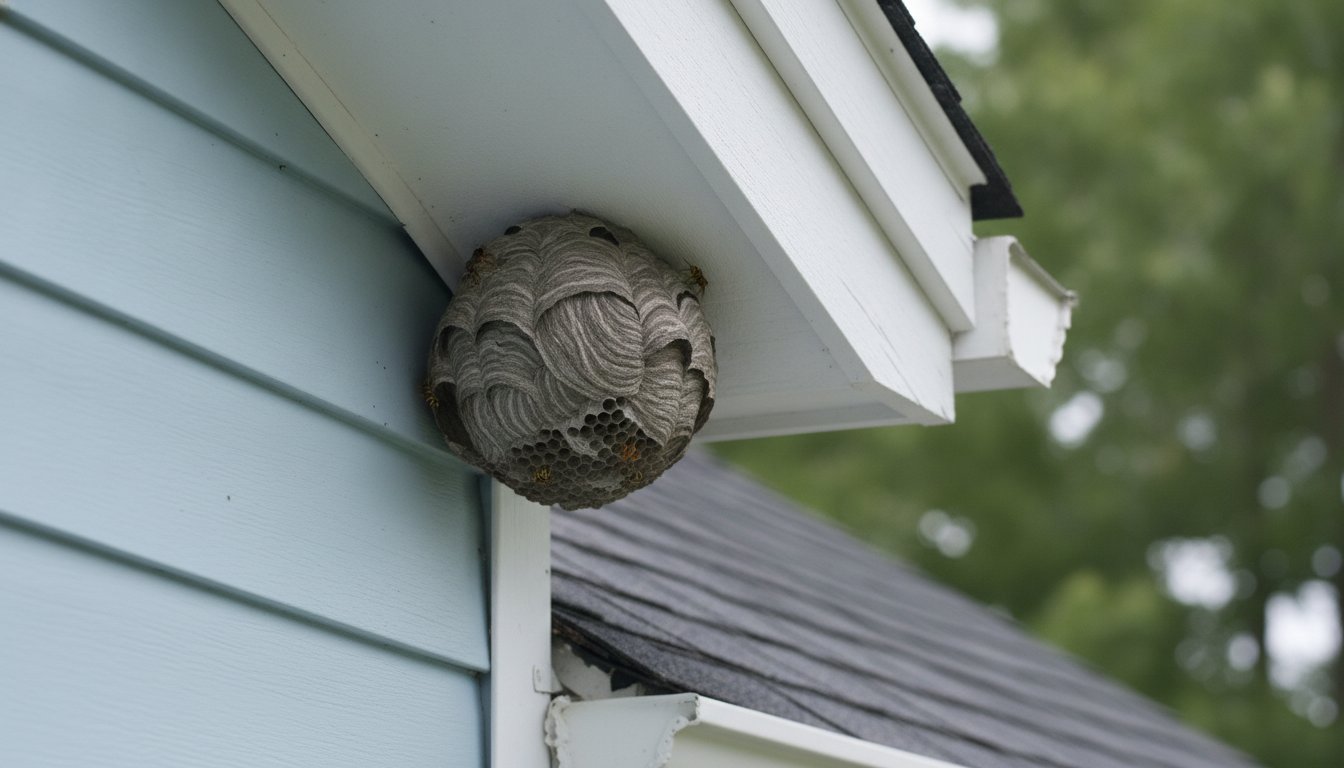
    Bald-faced hornets and paper wasps prefer elevated locations, though their nest structures differ significantly in appearance and risk level. Bald-faced hornets construct large, grey, paper-like structures that often resemble a football. These nests are frequently found high in trees or attached to the eaves of homes in Ashtabula and Erie. Because these hornets are highly protective of their space, nests located near doorways or walkways pose a constant threat to residents. Their stings are particularly painful and they can be much more aggressive than other species when their territory is breached.

    Paper wasps build smaller, open-faced nests that look like an inverted umbrella. While they are generally less aggressive than hornets, they frequently choose high-traffic areas like porch ceilings, window frames, or deck railings. Distinguishing between these species helps determine the level of urgency for a property. A large hornet nest near a primary entrance requires immediate attention, whereas a single paper wasp nest in a remote corner of an attic might be managed during a routine service visit. Correct identification ensures that the response is appropriate for the specific species present on the property.

    The Seasonal Cycle of Wasps in Northwest Pennsylvania

    Northwest Pennsylvania’s climate creates a distinct timeline for stinging insects. While the cold winters provide a temporary reprieve, the warming temperatures in April and May trigger the start of a new lifecycle. The proximity to Lake Erie often results in fluctuating spring starts and potentially longer autumns, which directly impacts the timing of wasp nest removal Erie PA. Understanding this progression helps property owners identify when their risk is highest and why certain months require more vigilance than others.

    Spring Queen Emergence and Nest Initiation

    As temperatures consistently reach the 50s, hibernating queens emerge to find new nesting sites. Unlike the massive swarms seen in August, spring activity is often solitary. A single queen is responsible for selecting a site, building the initial cells, and raising the first generation of workers. Common spots in Erie and Crawford counties include attic rafters, garage eaves, and sheltered corners of porches. Catching a nest at this stage is significantly more manageable than waiting until the colony grows to hundreds or thousands of individuals. It’s the most effective time for proactive measures before the population explodes.

    Late Summer Aggression and Food Scarcity

    By late July and August, the colony reaches its peak population. During this phase, the biological focus of the nest shifts. Workers no longer prioritize feeding larvae and instead seek out sugar-rich food sources for themselves. This is why wasps become persistent nuisances at outdoor events like the Erie County Fair or backyard barbecues in Ashtabula. Their aggressive behavior increases as natural food sources dwindle and they become more protective of the now-massive colony. According to research on wasp species in Pennsylvania, a single yellowjacket nest can contain several thousand workers by September.

    The “lake effect” climate plays a subtle but important role in local pest pressures. The moisture and moderated temperatures near the shore can allow colonies to remain active later into the fall compared to inland areas. If a warm October occurs, the window for stings remains open well past the typical frost date. Consistent monitoring of property boundaries during these seasonal transitions is a core part of professional pest control that helps reduce the risk of a dangerous late-season surprise. Maintaining a clear perimeter during these peak months is essential for the safety of everyone on the property.

    Why Professional Removal is Essential for Safety

    Attempting a DIY intervention often triggers a biological defense mechanism that property owners are unprepared to handle. Social wasps are highly protective of their colonies. When a nest is disturbed, the insects release alarm pheromones that signal a coordinated mass attack. Unlike honey bees, a single wasp or hornet can sting multiple times without dying. This means an individual facing a swarm could receive dozens of stings in a matter of seconds. Professional wasp nest removal Erie PA ensures that these pheromone triggers are managed correctly to prevent aggressive swarming during the extraction process.

    Physical hazards also play a significant role in the dangers of amateur removal. Many nests in Northwest Pennsylvania are located high in trees or attached to the second-story eaves of homes. Using a ladder while being swarmed by stinging insects is a recipe for disaster. Instinctive movements to swat away wasps can lead to falls, which often result in more severe injuries than the stings themselves. Additionally, over-the-counter sprays frequently lack the pressure or volume needed to reach the core of a large colony, leaving the most aggressive workers active and agitated inside the structure.

    The Reality of Stinging Insect Allergies

    Medical safety is a primary concern for residents in Erie and Crawford counties. Many people are unaware they have a life-threatening allergy to venom until they are stung. Even for those without a known history of anaphylaxis, the cumulative effect of multiple stings from a large colony can cause severe systemic reactions. According to the University of Kentucky, Controlling Wasps, Hornets, and Yellowjackets requires an understanding of their defensive biology and the medical risks involved. Professional pest control may help reduce risk for sensitive individuals by removing the threat without exposing the household to active swarms.

    Equipment and Training Standards

    Licensed professionals utilize specialized tools and protective gear that the average homeowner does not have access to. Heavy-duty bee suits, veils, and gloves provide a complete barrier against stings, allowing technicians to work directly at the nest site. Beyond personal protection, professional training involves specific application techniques that ensure the colony is neutralized without causing damage to the property. This methodical approach is essential when dealing with aggressive species that have nested inside wall voids or complex structural areas. Using the right equipment and following established safety protocols ensures the problem is resolved definitively and safely.

    Wasp Nest Removal in Erie PA: Professional Safety and Prevention Guide

    Immediate Steps After Finding a Nest on Your Property

    Finding a nest attached to your siding or hidden in the garden can be alarming. The most important action to take is to remain calm and maintain a distance of at least 15 to 20 feet. Rapid movements or swatting at individual insects can be interpreted as a threat, potentially triggering the defensive behaviors discussed in previous sections. Keeping children and pets indoors is the highest priority until the area is secured. Because pets are often curious, they may accidentally disturb a ground nest, leading to a dangerous situation for the animal and anyone nearby.

    Observe the nest from a safe vantage point, such as through a window. Note the flight patterns and the specific entry points. This information is invaluable for a professional inspection. Avoid using bright flashlights near the nest at night. Many species are attracted to light sources and may fly toward the beam, which can lead to accidental stings in the dark. This behavior is a common reason why DIY attempts after sunset often fail and result in injury.

    Securing the Area

    Close any nearby windows or doors immediately. Wasps can easily find their way inside through small gaps or damaged screens if they feel the colony is under pressure. If a nest is located in the ground or tall grass, mark the general area with a lawn ornament or a bright bucket placed several feet away. This prevents family members from accidentally stepping on or mowing over the entrance. If the nest is located near a property line, inform your neighbors so they can keep their households away from the shared boundary until the situation is resolved. Clear communication with those nearby is a vital part of community safety in residential areas of Crawford and Erie counties.

    When to Contact a Professional in Erie PA

    Certain situations demand immediate attention from experts in wasp nest removal Erie PA. If a nest is located directly above a primary entryway, inside a wall void, or if you notice a high volume of activity near play areas, professional intervention is necessary. Licensed technicians can identify the specific species and determine the safest method for extraction without putting the household at risk. For residents seeking local expertise, contacting Mosquito Assassin Pest Control LLC ensures that the property is evaluated by neighbors who understand the regional pest pressures of Northwest Pennsylvania. Professional pest control may help reduce risk and restore safety to your outdoor living spaces. For a thorough evaluation or to schedule a service, visit mosquitoassassin.com.

    Long-Term Wasp Prevention and Year-Round Protection

    Emergency interventions provide immediate relief, but relying solely on reactive treatments leaves a property vulnerable to the next cycle of infestation. A strategic shift toward proactive management is the most effective way to maintain a safe outdoor environment. While one-time wasp nest removal Erie PA addresses the current colony, it doesn’t prevent a new queen from selecting the same eaves or porch corners the following spring. Regular monitoring ensures that potential nesting sites are identified and treated before they can develop into major safety hazards.

    Integrating stinging insect management into a comprehensive general pest control plan provides a layered defense. This approach focuses on the biological habits of wasps and hornets throughout their active seasons in Northwest Pennsylvania and Northeast Ohio. By maintaining a consistent presence on the property, technicians can spot early-season activity that most homeowners might overlook. Early detection is especially critical in high-traffic areas where a growing nest could quickly become a liability for the household.

    The Platinum Year-Round Protection Strategy

    A consistent maintenance schedule is the cornerstone of effective pest management. The Platinum Year-Round Protection plan utilizes bi-monthly service visits to establish and maintain a protective barrier around the structure. This frequency is specifically designed to coincide with the rapid reproduction cycles of common social wasps. These visits involve more than just treatment; they include a thorough evaluation of the property for new activity and the implementation of exclusion techniques. Sealing entry points in siding, soffits, and window frames reduces the likelihood of wasps finding a foothold inside wall voids or attics.

    Local Expertise and Neighborhood Reliability

    Property owners in Erie, Meadville, and Ashtabula benefit from working with a provider deeply rooted in the local community. Based in Cranesville, PA, Mosquito Assassin Pest Control LLC understands the specific environmental factors that drive pest pressures in the Great Lakes region. This local knowledge allows for more accurate predictions of when activity will peak and which areas of a property are most likely to attract nesting queens. Professional pest control services can provide lasting peace of mind by ensuring that safety is managed by neighbors who share the same community values. For those interested in proactive management, professional pest control may help reduce risk. More information on protection plans is available at mosquitoassassin.com/services.

    Disclaimer: The information provided on this blog is for general informational purposes only and is not intended as professional pest control advice. Conditions vary by property, environment, and location. Reading this content does not create a service agreement. For an inspection or professional recommendations, please contact Mosquito Assassin Pest Control LLC directly.

    Secure Your Property with Professional Management

    Managing stinging insects in Northwest Pennsylvania requires a balance of immediate safety and long-term prevention. Correctly identifying aggressive species is the first step toward a secure property. Attempting to handle a colony without specialized equipment often results in dangerous swarm attacks and medical risks. Professional wasp nest removal Erie PA provides a methodical solution that prioritizes the wellbeing of your family and pets.

    Transitioning to comprehensive year-round protection plans allows property owners in Erie, Crawford, and Ashtabula counties to stop the cycle of annual infestations. Locally owned expertise ensures your home is monitored by neighbors who understand regional pest pressures. Taking these proactive steps lets you enjoy your outdoor spaces without the threat of stings. Establishing a pest-free environment provides the lasting peace of mind every homeowner deserves.

    Request a professional inspection from Mosquito Assassin Pest Control LLC to begin securing your property today.

    Disclaimer: The information provided on this blog is for general informational purposes only and is not intended as professional pest control advice. Conditions vary by property, environment, and location. Reading this content does not create a service agreement. For an inspection or professional recommendations, please contact Mosquito Assassin Pest Control LLC directly.
    Frequently Asked Questions

    Is it safe to remove a wasp nest myself at night?

    Attempting to remove a nest at night is not recommended for homeowners. While wasps are generally less active after sunset, they can still perceive threats and respond aggressively. A major risk involves using a flashlight; wasps are attracted to light and may fly directly toward the person holding the beam. This often leads to stings in the dark where visibility is limited and escape routes are harder to navigate safely.

    How can I tell the difference between a wasp and a honey bee?

    Identification depends on physical characteristics and nesting habits. Honey bees are typically fuzzy with rounder bodies and play a vital role in pollination. In contrast, wasps and hornets have smooth, shiny bodies with narrow waists. While honey bees only sting once and are generally docile unless provoked, social wasps can sting multiple times and are much more protective of their colonies. Observing these traits from a distance helps determine the necessary management approach.

    What should I do if a wasp nest is inside my wall?

    If you suspect a nest is inside a wall void, do not seal the exterior entrance hole. Closing the exit often forces the insects to find an alternative way out, which frequently leads them into the living spaces of your home. Professional wasp nest removal Erie PA technicians use specialized equipment to treat the colony within the structure safely. This ensures the population is neutralized without causing unnecessary damage or driving aggressive insects indoors.

    Will wasps return to the same nesting spot next year?

    Social wasps don’t reuse the same physical nest from a previous season. However, if a location provided ideal shelter and protection, new queens may be attracted to the same area the following spring. This is why exclusion techniques and regular monitoring are essential. Sealing gaps in siding and eaves after a nest is removed helps prevent future colonies from establishing themselves in the exact same high-traffic spots on your property.

    How quickly can a professional remove a nest in Erie PA?

    Response times for professional services in Erie, Crawford, and Ashtabula counties vary based on seasonal demand. Most local experts prioritize nests located near primary entryways or play areas due to the higher safety risk. The actual removal process is often completed within a single visit once the technician evaluates the species and nest location. Ongoing protection plans can further reduce the need for emergency removals by identifying nests during their initial spring development.

    Are the treatments used for wasp removal safe for my pets?

    Licensed professionals follow strict safety protocols to protect household members and animals. Technicians use targeted application methods that minimize exposure to non-target areas. It’s standard practice to keep pets and children indoors during the active treatment and until any applied products have completely dried. Following these professional recommendations ensures that the stinging insect threat is eliminated while maintaining a secure environment for all residents of the household.

    Can wasps damage the structure of my home?

    Most social wasps don’t cause direct structural damage like termites or carpenter ants. However, they can cause secondary issues when nesting in wall voids or attics. Some species chew weathered wood to create the paper pulp used for their nests, which can lead to minor cosmetic wear on decks or siding. The primary concern remains the safety of the residents rather than the integrity of the building materials themselves in most residential cases.

    What attracts wasps to build nests on certain properties?

    Several factors make a property attractive to nesting queens. Abundant food sources, such as flowering plants, unsealed trash bins, or fallen fruit, provide the energy needed for colony growth. Properties with plenty of sheltered areas like deep eaves, porch ceilings, or hollow trees offer ideal protection from the elements. Identifying these attractants is a core part of long-term prevention. Professional wasp nest removal Erie PA services often include recommendations for reducing these environmental draws.

    Disclaimer: The information provided on this blog is for general informational purposes only and is not intended as professional pest control advice. For an inspection or professional recommendations, please contact Mosquito Assassin Pest Control LLC directly.
  • Wasp Nest Removal in Edinboro PA: A Professional Safety Guide

    Wasp Nest Removal in Edinboro PA: A Professional Safety Guide

    Did you know that approximately 3% of adults in the United States face the risk of a severe, life-threatening allergic reaction from a single insect sting? For homeowners in Edinboro, discovering a paper wasp nest under the eaves or a yellowjacket colony in the lawn is more than just a nuisance; it’s a source of genuine anxiety for families and pet owners. You likely want the threat gone immediately, but uncertainty about the species or fear of aggressive swarms can make the situation feel overwhelming. Managing these pests requires a decisive and methodical approach to ensure the safety of everyone on the property.

    This guide will help you identify the specific stinging insect risks in Northwest Pennsylvania and explain why professional wasp nest removal Edinboro PA is the most reliable path to reclaiming your backyard. You’ll learn how to distinguish between common regional species like the bald-faced hornet and the Eastern yellowjacket, understand the dangers of late-season colony growth, and discover how expert management ensures a sting-free environment for your outdoor activities. Understanding these behaviors is the first step toward total protection and peace of mind for your household.

    Key Takeaways

    • Learn how to spot common nesting locations on your property, such as roof eaves and attic vents, before colonies grow too large.
    • Understand the behavioral differences between regional species, including the aggressive nature of yellowjackets and their underground nesting habits.
    • Discover why professional wasp nest removal Edinboro PA is the safest method for handling high-risk areas while avoiding the dangers of a swarm response.
    • Identify the limitations of store-bought treatments and the physical risks associated with disturbing active nests without specialized protective gear.
    • Benefit from regional knowledge regarding the specific pest cycles of Erie and Crawford Counties to ensure a safe outdoor environment.

    Identifying Wasp Nest Activity on Edinboro Properties

    Wasp activity in Northwest Pennsylvania follows a predictable seasonal pattern, typically peaking during the warm, humid months of July and August. As temperatures rise, colonies expand rapidly, increasing the likelihood of human-insect encounters on residential properties. Homeowners often find that nests which were barely visible in the spring have grown into significant hazards by mid-summer. Identifying these colonies early is essential for safety, as larger nests contain hundreds or even thousands of workers ready to defend their queen.

    To better understand the scale of these infestations and the challenges they present, watch this helpful video:

    Locating a nest requires careful observation of flight patterns. If you notice several insects flying in a straight line toward a specific point on your home or in your yard, there’s likely a nest nearby. These “flight paths” are one of the most reliable ways to find hidden colonies within structural voids or dense vegetation. Understanding the behavior of common wasp species helps in recognizing whether you’re dealing with social insects that pose a defensive threat or solitary types that are generally less aggressive.

    Signs of an Active Wasp or Hornet Infestation

    Identifying an active problem goes beyond seeing a single insect. Look for a concentration of activity near entry points, such as attic vents or gaps in siding. You might see paper-like structures, which are actually chewed wood fibers mixed with saliva, attached to gutters or tree branches. In some cases, the nest isn’t visible at all. Homeowners occasionally report audible buzzing or scratching sounds coming from behind drywall or within ceilings, indicating a colony has established itself inside the home’s structure.

    Common Nesting Locations in Erie County

    The variable climate in Erie County drives many stinging insects to seek the stable shelter provided by man-made structures. Roof eaves, porch railings, and the undersides of decks are frequent targets for paper wasps. Meanwhile, sheds and garage overhangs offer the perfect environment for hornets to build large, football-shaped nests. Don’t forget to look down; ground-nesting species often utilize abandoned rodent burrows or hollow tree stumps. These ground nests are particularly dangerous because they’re easily stepped on, which can trigger an immediate swarm. For those facing these risks, seeking professional wasp nest removal Edinboro PA ensures the threat is managed without putting the household in danger.

    Species of Stinging Insects Common in Northwest Pennsylvania

    Proper identification is the first step in assessing the risk level of an infestation on your property. In Northwest Pennsylvania, several distinct species thrive during the summer months. Each species exhibits unique nesting habits and defensive behaviors. For instance, the bald-faced hornet constructs large, football-shaped aerial nests in trees or on structural overhangs. These hornets are highly territorial and will defend their territory aggressively if they perceive a threat. Understanding the variety of stinging insects in Pennsylvania is essential for choosing the safest management approach.

    Yellowjackets: The Most Aggressive Local Species

    Yellowjackets represent the highest safety risk for Edinboro residents. Often mistaken for honeybees because of their size and yellow-and-black patterns, they’re actually far more aggressive. Unlike bees, yellowjackets can sting multiple times without dying. They typically nest underground in abandoned rodent burrows or within wall voids, making them easy to disturb by accident while mowing the lawn or performing home maintenance. By late summer, a single colony can contain between 1,000 and 5,000 workers. Because of this high population density and their unpredictable nature, professional wasp nest removal Edinboro PA is often recommended to prevent painful encounters.

    Paper Wasps and Mud Daubers

    Paper wasps are common sights under roof eaves and porch railings. Their nests are easily identified by their open, umbrella-like shape and visible hexagonal cells. While they’re generally less aggressive than yellowjackets, they’ll still attack if their nest is directly disturbed or if someone gets too close to their entry point. In contrast, mud daubers are solitary wasps that build small, tube-like structures from mud. They rarely sting and are often considered beneficial because they hunt spiders, but their nests can become unsightly or block vents.

    Distinguishing between these species helps professionals determine the level of intervention required. While a mud dauber nest might be a minor aesthetic issue, a hidden yellowjacket colony in a wall void is a high-stakes safety concern. Identifying these risks early allows for a more controlled resolution before the colony reaches its maximum size in the late summer heat. If you’re unsure which species has moved into your yard, professional pest control may help reduce risk by providing an expert assessment of the situation.

    The Risks of DIY Wasp Nest Removal

    Attempting to handle a stinging insect colony without professional training often leads to immediate physical danger. Many property owners in Northwest Pennsylvania consider using store-bought aerosol sprays, but these products frequently fall short of providing total elimination. While high-pressure cans might reach 15 or 20 feet, they rarely penetrate the dense, multi-layered paper of a large hornet nest or reach the depths of a yellowjacket colony hidden in a wall. When a DIY attempt fails to neutralize the entire population instantly, the remaining insects become highly agitated, creating a hazardous environment for anyone nearby. For these reasons, professional wasp nest removal Edinboro PA is a safer alternative to self-treatment.

    Physical injury isn’t limited to stings alone. Many nests are located high on roof eaves or within second-story shutters, requiring the use of a ladder. Attempting to balance on a ladder while spraying a nest is a recipe for disaster. If the insects swarm, the natural instinct is to retreat quickly, which often results in dangerous falls. Understanding the specialized nesting habits of common stinging insects in Pennsylvania helps highlight why these situations require professional-grade equipment and safety protocols rather than a simple trip to the hardware store.

    Biological Defense Mechanisms of Wasps

    Wasps don’t just act as individuals; they function as a highly coordinated unit when threatened. When a nest is disturbed, the insects release alarm pheromones into the air. These chemical signals alert every member of the colony to the presence of an intruder and trigger a collective attack. Because social wasps like yellowjackets can sting multiple times, a single person can receive dozens of stings in a matter of seconds. For individuals with unknown allergies, these multiple stings can lead to serious health complications or anaphylaxis. Professional pest control may help reduce risk to household members by managing the colony before an accidental encounter occurs.

    Structural Complications of Hidden Nests

    Nests located inside structural voids present a unique set of challenges that DIY methods can’t adequately address. If a homeowner sprays the entrance to a wall nest, they may inadvertently trap the insects inside, forcing them to find new ways out through the interior of the home. Furthermore, improperly treated nests can leave behind a mass of dead insects and larvae. This organic matter eventually decays, attracting secondary pests like carpet beetles or flies, and can even cause staining on drywall. Professional technicians use calibrated equipment to ensure the entire colony is managed effectively without causing collateral damage to the home. To learn more about regional service areas, you can visit the location information page for localized support.

    Wasp Nest Removal in Edinboro PA: A Professional Safety Guide

    Professional Strategies for Wasp and Hornet Management

    Professional management of stinging insects is a disciplined, multi-step operation that prioritizes safety and effectiveness. While a property owner might focus on the visible nest, a trained technician views the situation as a structural and biological puzzle. This systematic approach ensures that the immediate threat is neutralized without pushing the insects deeper into the building or triggering a defensive swarm. Utilizing professional-grade equipment and specialized knowledge, the process of wasp nest removal Edinboro PA transforms a high-risk scenario into a controlled resolution.

    The use of personal protective equipment, specifically heavy-duty bee suits, allows technicians to work in close proximity to the nest. This is vital for achieving a targeted application that reaches the center of the colony. Rather than spraying from a distance with limited accuracy, professionals can ensure that every active insect is managed. This precision is especially important for large aerial nests or underground colonies where the population can be dense and highly protective of the queen.

    The Inspection and Assessment Process

    Every effective management plan begins with a comprehensive property assessment. Technicians evaluate the species, colony size, and exact location to determine the most appropriate strategy. This step is crucial because a strategy for a paper wasp nest under a railing differs significantly from a yellowjacket colony inside a wall void. By understanding these nuances, professionals can apply the correct treatment method for the specific biological needs of the pest.

    During the inspection, hidden entry points in the foundation, siding, or roofline are identified. In the variable climate of Northwest Pennsylvania, small gaps in structural materials can become highways for pests. By understanding the specific environment of an Edinboro home, a customized plan is developed to address not just the visible nest, but any dormant colonies or potential nesting sites that could cause future problems.

    Long-Term Prevention and Exclusion

    Stopping a current infestation is only half the battle. Professional management includes exclusion techniques designed to prevent future queens from establishing new colonies in the same location. Sealing cracks and crevices in the home’s exterior reduces the likelihood of structural nesting, creating a more secure perimeter for the household. This proactive approach is the most effective way to maintain a safe outdoor environment.

    Ongoing monitoring is often part of a general pest control strategy. Year-round protection helps manage pests before they become a significant threat in the late summer months. By addressing vulnerabilities in the spring and fall, homeowners can effectively reduce the need for emergency wasp nest removal Edinboro PA during the peak of summer. If you are concerned about a potential nest on your property, checking the local service area and contacting a regional expert can help you establish a safer environment.

    Choosing Local Pest Control in Edinboro, PA

    Selecting a local provider for stinging insect management offers distinct advantages that national franchises often overlook. Professionals rooted in Northwest Pennsylvania possess a deep understanding of the specific pest cycles unique to Erie and Crawford Counties. Because the regional climate directly influences when queens emerge and how quickly colonies expand, having a technician who is familiar with the local environment is essential. Choosing a licensed professional ensures that all management activities adhere strictly to state safety regulations, providing a level of security that DIY attempts cannot match.

    The primary benefit of local expertise is the ability to anticipate how pests will react to regional weather shifts. Lake-effect weather patterns can delay or accelerate nesting cycles, and a neighborly expert understands these nuances better than a distant contractor. Utilizing professional wasp nest removal Edinboro PA ensures that the specific biological and environmental factors of our region are taken into account during every service visit.

    Regional Expertise in Northwest Pennsylvania

    Technicians who are familiar with the Edinboro terrain can better predict nesting habits based on local architecture and landscaping trends. Whether a nest is located near the lake or on a rural property toward Cranesville or Meadville, regional expertise allows for more accurate assessments. Proximity is another critical factor; local providers can often schedule inspections more quickly when a high-risk nest is discovered. These community-focused providers often provide more personalized services tailored to the specific needs of the property and its inhabitants.

    Next Steps for Wasp Management

    If you discover an active nest on your property, the first priority is maintaining a safe distance. Identifying the location of the activity from several feet away is the best way to gather information without triggering a defensive response from the colony. It’s vital to keep children and pets away from the area, as their unpredictable movements can easily agitate the insects. Once the area is secured, contacting a professional for an inspection is the most reliable way to receive expert recommendations. Professional pest control may help reduce risk and restore a safe environment for outdoor activities.

    Ultimately, the goal of professional intervention is to provide total peace of mind for property owners. By relying on experts who understand the nuances of wasp nest removal Edinboro PA, you ensure that the threat is managed thoroughly and safely. This professional approach protects your family, your pets, and the structural integrity of your home from the complications associated with stinging insect infestations.

    Securing Your Property from Stinging Insect Risks

    Managing stinging insects in Edinboro requires a balance of accurate species identification and professional safety protocols. Whether you’re dealing with aggressive yellowjackets or large aerial hornet nests, the physical risks of DIY attempts often lead to unnecessary danger. Expert intervention ensures that the entire colony is managed effectively, preventing structural damage and the return of future queens. By choosing a provider specialized in Northwest PA stinging insects, you gain the benefit of regional expertise and methodical exclusion techniques.

    Maintaining a sting-free environment is possible through year-round protection plans and professional monitoring. As a licensed service in Pennsylvania and Ohio, Mosquito Assassin Pest Control LLC focuses on delivering safe, effective results for local property owners. For an inspection or professional recommendations regarding wasp nest removal Edinboro PA, please contact Mosquito Assassin Pest Control LLC directly. Taking professional action today ensures your outdoor spaces remain safe for everyone to enjoy.

    Disclaimer: The information provided on this blog is for general informational purposes only and is not intended as professional pest control advice. Conditions vary by property, environment, and location. Reading this content does not create a service agreement. For an inspection or professional recommendations, please contact Mosquito Assassin Pest Control LLC directly.

    Frequently Asked Questions

    Is it safe to remove a wasp nest myself at night?

    No, attempting to remove a nest at night is not a safe practice for homeowners. While wasps are generally less active after dark, they remain highly protective and will still swarm if they feel the nest is threatened. Using a flashlight can actually make the situation more dangerous, as the light can attract the insects directly toward you. Professional pest control may help reduce risk by using specialized gear and lighting for safe management.

    How much does professional wasp nest removal cost in Edinboro?

    The cost of professional management varies based on several factors, including the species involved and the size of the colony. The location of the nest also plays a significant role; nests found in high eaves or deep within wall voids require different tools and safety protocols than those in easily accessible areas. For an accurate assessment, a professional inspection is necessary to evaluate the specific environmental conditions and structural challenges of your property.

    Will wasps return to the same spot after the nest is removed?

    Wasps do not typically reuse an old nest, but they are often drawn to the same locations if the area remains favorable for shelter. Implementing professional exclusion techniques, such as sealing gaps in siding or foundation vents, is the most effective way to prevent new queens from nesting in the same spot. Professional wasp nest removal Edinboro PA often includes identifying these vulnerabilities to ensure that future colonies cannot easily establish themselves.

    What is the difference between a wasp nest and a hornet nest?

    The primary difference is the structure and visibility of the nest itself. Most common wasps, such as paper wasps, build open-faced nests with visible hexagonal cells that resemble an umbrella. Hornets, which are a specific type of social wasp, construct large, enclosed nests made of a grey, paper-like material. These nests are often football-shaped and are usually found high in trees or attached to the sides of residential and commercial buildings.

    Can wasps damage the structure of my home in PA?

    Yes, certain species can lead to structural complications over time. While they do not consume wood, some wasps chew wood fibers to create nesting material, which can cause surface degradation. More importantly, if a colony is established inside a wall or attic, the accumulation of waste and moisture can eventually damage drywall, insulation, and wooden supports. Professional management is necessary to remove the colony and prevent the long-term decay of organic materials within the structure.

    What should I do if I find a wasp nest in my attic?

    If you discover a nest in your attic, you should immediately vacate the area and keep the access door closed. Attics provide a sheltered environment that allows colonies to grow to a significant size before they are noticed. Because these spaces are often cramped and poorly lit, attempting a DIY removal is extremely hazardous. Contacting a professional for an inspection is the safest way to address nests in confined or hard-to-reach structural areas of the home.

    How long does a professional wasp treatment take to work?

    Most professional treatments begin to neutralize the colony immediately, though it can take 24 to 48 hours for the entire population to be eliminated. This timeframe is necessary because foraging insects that were away from the nest during the initial application must return and come into contact with the treatment. It is important to avoid the area and keep children and pets away until a technician confirms that all activity has completely ceased.

    Does year-round pest control include wasp nest removal?

    Many general pest control plans include the management of stinging insects as part of a comprehensive protection strategy. These plans focus on identifying and treating potential nesting sites in the spring before colonies have the chance to grow and become aggressive. Consistent monitoring throughout the year ensures that wasp nest removal Edinboro PA is handled proactively. This approach helps maintain a safe outdoor environment and prevents the need for emergency services during the peak of summer.

    Disclaimer: The information provided on this blog is for general informational purposes only and is not intended as professional pest control advice. Conditions vary by property, environment, and location. Reading this content does not create a service agreement. For an inspection or professional recommendations, please contact Mosquito Assassin Pest Control LLC directly.

  • Professional Wasp Nest Removal in Ashtabula, Ohio: A 2026 Property Owner’s Guide

    Professional Wasp Nest Removal in Ashtabula, Ohio: A 2026 Property Owner’s Guide

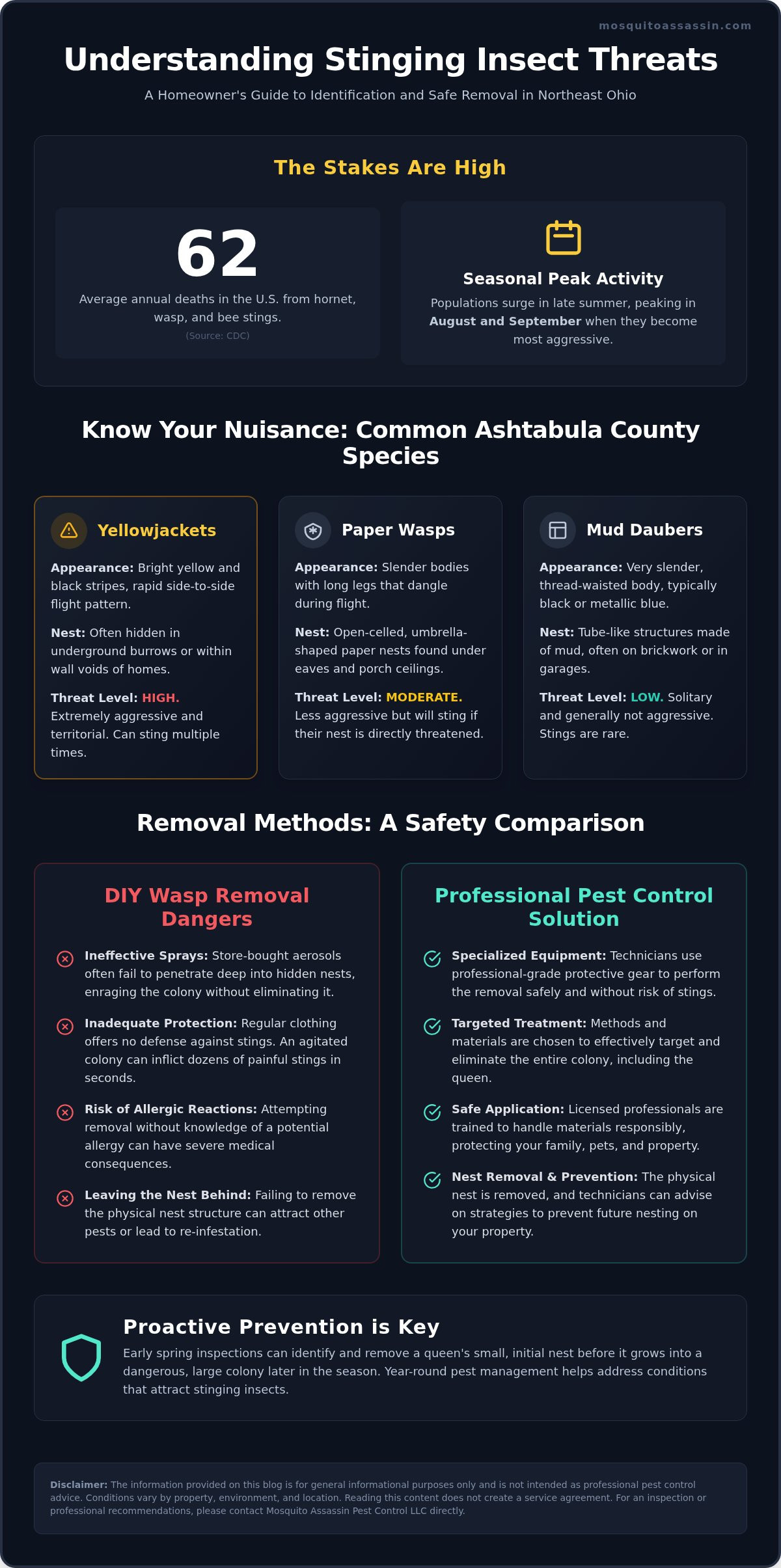
    An average of 62 people die each year in the United States from hornet, wasp, and bee stings, according to the Centers for Disease Control and Prevention. For many residents, the sight of a growing colony near a front door or under a porch creates immediate anxiety. If you’ve discovered a nest in a high-traffic area, seeking professional wasp nest removal Ashtabula Ohio is a critical step toward reclaiming your outdoor space. It’s understandable to worry about allergic reactions or the risk of multiple stings when aggressive species like yellowjackets feel threatened.

    This guide provides the necessary information to understand the risks of Northeast Ohio stinging insects and explains why professional intervention is the safest method for removal. You’ll learn how to identify common local species, the dangers associated with DIY attempts, and effective strategies to prevent future nesting. Understanding the behavior of these pests ensures that your property remains a secure environment for everyone.

    Disclaimer: The information provided on this blog is for general informational purposes only and is not intended as professional pest control advice. Conditions vary by property, environment, and location. Reading this content does not create a service agreement. For an inspection or professional recommendations, please contact Mosquito Assassin Pest Control LLC directly.

    Key Takeaways

    • Learn to identify common stinging insects in Ashtabula County, including aggressive yellowjackets, to determine the level of threat to your household.
    • Understand why store-bought sprays often fail to reach deep into colonies and how attempting removal without proper gear increases the risk of multiple stings.
    • Discover how licensed technicians perform wasp nest removal Ashtabula Ohio using specialized protective equipment and methods that target the entire colony safely.
    • Explore how year-round pest management plans and early spring inspections can prevent small nests from becoming dangerous infestations later in the season.

    Wasp Nest Removal in Ashtabula, Ohio: Understanding the Risk

    Professional wasp nest removal Ashtabula Ohio involves the systematic and safe extraction of stinging insect colonies from residential or commercial structures. This process isn’t a simple application of spray; it requires a methodical approach to ensure the entire population is managed and the physical structure of the nest is removed. In Northeast Ohio, the climate dictates a rigid timeline for these pests. Activity typically ramps up in late spring and continues through the first frost of autumn. During these months, property owners often find nests tucked into eaves, soffits, or even deep within attic insulation.

    Underground nests are also a major concern in local yards. They’re often hidden until accidentally disturbed by lawnmowers or pets. Professional intervention is essential when these colonies occupy high-traffic areas like doorways, porches, or play sets, posing a direct threat to children, pets, and those with known allergies. Licensed professionals have the tools to reach these difficult locations without putting the inhabitants of the home at risk. Understanding the risks associated with these insects is the first step in maintaining a safe property. Wasps are fiercely protective of their homes. When a nest is located near an entryway, the insects may perceive any movement as a threat. This leads to defensive behavior that can result in multiple stings.

    The Seasonal Cycle of Wasps in Northeast Ohio

    The colony begins when a queen emerges from hibernation in early spring. She builds a few paper cells to house the first generation of workers. By August and September, populations peak, sometimes numbering in the thousands. As natural prey becomes scarce, common wasp species shift their diet from proteins to sugars. This change makes them much more aggressive as they scavenge near trash cans and outdoor dining areas.

    Why Ashtabula Properties are Prime Nesting Sites

    Proximity to Lake Erie provides high humidity and plenty of insect prey. Older residential architecture in Ashtabula also features many gaps and crevices that are ideal for nesting. Large, wooded lots in the county provide natural habitats that easily spill into suburban yards. These factors allow colonies to grow undetected in trees or dense brush until they become a significant nuisance. Local expertise in wasp nest removal Ashtabula Ohio helps identify how the environment supports this growth.

    Disclaimer: The information provided on this blog is for general informational purposes only and is not intended as professional pest control advice. Conditions vary by property, environment, and location. Reading this content does not create a service agreement. For an inspection or professional recommendations, please contact Mosquito Assassin Pest Control LLC directly.

    Identifying Common Stinging Insects in Ashtabula County

    Correct identification is the first step in determining the level of threat a nest poses to your family or customers. While some stinging insects are relatively docile unless handled, others are notoriously aggressive and will defend their territory at the slightest provocation. For property owners considering wasp nest removal Ashtabula Ohio, knowing which species has moved in helps prioritize safety and determine the urgency of the situation. Misidentifying a colony can lead to improper removal attempts that put everyone nearby at risk.

    Yellowjackets are the most common source of aggressive behavior in Ohio. These insects are easily identified by their bright yellow and black striped patterns and their rapid, side-to-side flight. Unlike many other species that build visible nests, yellowjackets often choose hidden locations. They frequently inhabit abandoned rodent burrows in the ground or find their way into the wall voids of Ashtabula homes through small gaps in the siding. They are extremely protective and capable of stinging multiple times. Because they often nest in the ground, they are a significant hazard during yard work or outdoor gatherings when they are accidentally disturbed.

    Paper wasps and mud daubers are often confused, but their habits and risks differ significantly. Paper wasps build open-celled, umbrella-shaped nests, typically found under porch ceilings, window frames, or eaves. They are recognizable by their slender bodies and long, dangling legs during flight. Mud daubers are solitary insects that construct tube-like structures out of mud, often found on brickwork or in garages. While both species can sting, they are generally less aggressive than hornets. However, the dangers of stings should never be underestimated, especially for individuals with sensitivities to venom. Professional wasp nest removal Ashtabula Ohio ensures these nests are handled without incident.

    Bald-faced hornets are technically a type of yellowjacket, but they are larger and black with distinct white facial markings. They build large, grey, aerial nests made of a paper-like material, usually found high in trees or on the corners of commercial buildings. These nests can house hundreds of workers and are managed by ‘guard’ wasps that patrol the perimeter. These guards are highly observant and will signal an attack if they perceive a threat within several feet of the nest. Identifying these pests correctly is essential for a safe property. If you find a nest in a high-traffic area, professional pest control may help reduce risk and provide a permanent solution.

    Disclaimer: The information provided on this blog is for general informational purposes only and is not intended as professional pest control advice. Conditions vary by property, environment, and location. Reading this content does not create a service agreement. For an inspection or professional recommendations, please contact Mosquito Assassin Pest Control LLC directly.

    The Dangers of DIY Wasp Nest Removal

    Attempting to handle an infestation alone often backfires, creating a high-stakes situation for property owners. While it’s tempting to grab a retail aerosol can, the reality of wasp nest removal Ashtabula Ohio is far more complex than just pointing and spraying. When a nest is disturbed, the insects release alarm pheromones that signal every worker in the colony to attack. Without professional-grade personal protective equipment, an individual is defenseless against dozens or even hundreds of simultaneous stings. This aggressive response can happen in seconds, leaving very little time to retreat to safety.

    Store-bought sprays often lack the necessary reach or concentration to neutralize a colony instantly. Many products claim a twenty-foot spray distance, but wind or poor pressure can cause the stream to fall short. If the chemicals don’t reach the heart of the nest, the remaining wasps become extremely agitated. Incomplete removal often leads to wasps relocating. If the primary entrance is blocked or sprayed without eliminating the queen, the colony may chew through drywall or follow plumbing lines to find a new exit, often leading them directly into the living spaces of the home.

    Secondary injuries are another major concern during DIY attempts. Using ladders to reach high eaves or rooflines is a leading cause of emergency room visits during pest control incidents. The natural instinct to swat or flee while standing on a ladder leads to falls, which often result in more serious physical trauma than the stings themselves. Professional intervention ensures that nests in high-traffic or elevated areas are managed without these physical risks.

    Risks of Allergic Reactions

    Wasp stings can trigger anaphylaxis, a life-threatening allergic reaction, even in individuals with no prior history of sensitivity. A single colony can deploy workers with incredible speed if they perceive a threat. Because the reaction can escalate quickly, handling a nest without a plan for medical emergencies is dangerous. Professional pest control may help reduce risk by ensuring the nest is handled with proper protective gear and methodical application techniques that minimize insect dispersal.

    Structural Concerns and Improper Chemicals

    Spraying liquid pesticides into wall voids or attic spaces can lead to significant structural issues. The moisture can contribute to mold growth or cause damage to electrical components if the liquid seeps into wiring. Additionally, many over-the-counter pesticides are non-selective. This means they can harm beneficial local pollinators or contaminate the local Ashtabula watershed if misapplied. Licensed professionals use specific formulations and application methods designed to target the pest while protecting the surrounding environment.

    Disclaimer: The information provided on this blog is for general informational purposes only and is not intended as professional pest control advice. Conditions vary by property, environment, and location. Reading this content does not create a service agreement. For an inspection or professional recommendations, please contact Mosquito Assassin Pest Control LLC directly.

    Professional Wasp Nest Removal in Ashtabula, Ohio: A 2026 Property Owner's Guide

    How Professionals Manage Wasp Infestations Safely

    Professional wasp nest removal Ashtabula Ohio begins with a detailed technical inspection. Unlike DIY attempts that often miss the root cause, a professional assessment identifies the specific entry points and the full scope of the colony. Technicians look for small gaps in siding, holes in soffits, or hidden ground burrows that property owners might overlook. This identification is critical because the strategy for managing a paper wasp nest on an eave differs significantly from treating a yellowjacket colony inside a wall void. Proper identification ensures that the treatment reaches the heart of the colony rather than just the surface.

    Safety is the highest priority during this process. Professionals wear specialized personal protective equipment, including thick suits, veils, and gloves, designed to withstand aggressive defensive behavior. This gear allows for a calm and methodical approach, preventing the chaotic swarm response that often accompanies untrained removal attempts. By utilizing professional-grade materials and equipment, the colony is managed efficiently with minimal disruption to the rest of the property. This disciplined approach protects the inhabitants of the home and the technician alike.

    The Multi-Step Professional Process

    The process is broken down into several disciplined stages to ensure a permanent resolution. It starts with an assessment, where technicians identify entry points in the home’s exterior or find ground-level burrows in the yard. Next, targeted treatment involves utilizing professional-grade materials chosen specifically for the species and location. Finally, physical removal is performed. Once the insects are neutralized, the nest structure is physically extracted from the property.

    Removing the physical nest is a vital step that many property owners ignore. Wasps leave behind pheromones that can attract new queens to the same nesting site in future seasons. A thorough cleanup ensures these chemical markers are gone, which significantly reduces the chance of a recurring infestation in the same location. This methodical cleanup is what separates professional results from temporary fixes.

    Exclusion and Long-Term Prevention

    Managing an active nest is only half the battle. Long-term protection involves exclusion techniques that make the property less attractive to future colonies. Sealing cracks and crevices in Ashtabula homes, particularly around older wooden structures, prevents queens from finding overwintering spots or new nesting sites. Property owners should also manage outdoor attractants. Fallen fruit from trees and unsealed trash bins provide the high-sugar diet that wasps crave in late summer. For property owners looking to secure their home against these stinging threats, professional pest control may help reduce risk and provide year-round peace of mind.

    Disclaimer: The information provided on this blog is for general informational purposes only and is not intended as professional pest control advice. Conditions vary by property, environment, and location. Reading this content does not create a service agreement. For an inspection or professional recommendations, please contact Mosquito Assassin Pest Control LLC directly.

    Year-Round Protection for Ashtabula Properties

    Seeking professional wasp nest removal Ashtabula Ohio is often a reaction to a crisis, but year-round protection aims to prevent that crisis entirely. Proactive management is the most effective way to maintain a safe environment in Northeast Ohio. While reactive measures address immediate threats, a consistent strategy prevents infestations from reaching a critical stage. Professional services provide peace of mind for families and businesses in the Ashtabula location by identifying vulnerabilities before they’re exploited by stinging insects. By establishing a routine schedule, property owners can transition from a state of constant worry to a state of long-term security. This is especially important in our region, where seasonal shifts can cause sudden surges in pest activity.

    Consistency is key when dealing with species that have high reproductive rates. When a property is monitored throughout the year, the likelihood of a colony growing large enough to become a hazard is greatly diminished. This approach ensures that the exterior of the home remains a fortress against the local environment. It’s much simpler to manage a property when the baseline insect population is kept under control, rather than waiting for a crisis to occur. This disciplined methodology focuses on the long-term health of the structure and the safety of those within it.

    The Benefits of Regular Inspections

    Scheduling regular property assessments allows for the early detection of queen wasps searching for nesting sites in April and May. Catching a colony when it consists of only a few cells is significantly safer and more manageable than dealing with a mature nest in August. These inspections also include continuous monitoring of structural integrity. Technicians look for the subtle signs of wear that insects use as entry points. By identifying and sealing these gaps early, property owners can avoid the need for emergency wasp nest removal Ashtabula Ohio during the peak of summer. This proactive approach is often more cost-effective than addressing large-scale infestations on a one-time basis.

    Integrating Wasp Control into a General Pest Plan

    Wasp management is most effective when it’s part of a broader general pest control strategy. These year-round plans cover a wide array of pests beyond stinging insects, including ants, spiders, and rodents. A holistic approach reduces the overall insect population that wasps rely on for food. Because wasps are predators, a yard teeming with other insects is a prime target for a new nest. By managing the entire ecosystem of the property, you make the area inherently less attractive to queens looking for a place to build. Professional pest control may help reduce risk by maintaining a consistent defensive barrier around the home, ensuring that your property remains protected through every seasonal shift in Northeast Ohio.

    Disclaimer: The information provided on this blog is for general informational purposes only and is not intended as professional pest control advice. Conditions vary by property, environment, and location. Reading this content does not create a service agreement. For an inspection or professional recommendations, please contact Mosquito Assassin Pest Control LLC directly.

    Securing Your Ashtabula Property Against Stinging Threats

    Managing a stinging insect colony is a high-stakes task that requires a methodical approach and specialized equipment. Attempting to handle a nest without professional training often leads to aggressive swarms and unnecessary injuries. By prioritizing safety and correct identification, property owners ensure that aggressive species like yellowjackets are completely managed without risking the health of household members or pets. Understanding the seasonal behavior of these pests is the first step in maintaining a secure outdoor environment.

    Long-term security comes from proactive exclusion and regular monitoring rather than waiting for a crisis to emerge. Licensed and insured professionals with family-owned local expertise provide the most reliable solutions for families and businesses throughout Ashtabula, Erie, and Crawford counties. If you’ve discovered a nest in a high-traffic area, seeking expert wasp nest removal Ashtabula Ohio ensures the entire colony is neutralized and the physical structure is removed to prevent recurring infestations. Taking decisive action now protects your property through every season.

    Professional pest control may help reduce risk; contact Mosquito Assassin Pest Control LLC for an inspection.

    Disclaimer: The information provided on this blog is for general informational purposes only and is not intended as professional pest control advice. Conditions vary by property, environment, and location. Reading this content does not create a service agreement. For an inspection or professional recommendations, please contact Mosquito Assassin Pest Control LLC directly.

    Frequently Asked Questions

    Is it safe to remove a wasp nest myself?

    Attempting to remove a nest without professional training is generally unsafe due to the high risk of multiple stings and physical injury. When a colony is disturbed, the insects release alarm pheromones that trigger an immediate, aggressive response from every worker. Without professional-grade personal protective equipment and specific knowledge of insect behavior, individuals often face swarms that can lead to severe allergic reactions or falls from ladders.

    How much does professional wasp nest removal cost in Ashtabula?

    The cost for professional intervention depends on several variables including the species of insect, the size of the colony, and the accessibility of the nest. Nests located high on eaves, deep within wall voids, or inside attics require more labor and specialized equipment than those found at ground level. A professional inspection is necessary to determine the specific requirements of the job and provide an accurate assessment based on your property’s unique conditions.

    What is the most aggressive type of wasp in Ohio?

    Yellowjackets are widely considered the most aggressive stinging insects in the region. They are notoriously territorial and will chase perceived threats for significant distances. Because they often nest in the ground or within wall cavities, they are easily disturbed by common activities like mowing the lawn or walking near a home’s foundation. Their ability to sting repeatedly makes them a major safety concern during the peak summer months.

    Will wasps return to the same spot after the nest is removed?

    Wasps do not reuse old nests from previous seasons, but they are often attracted to the same locations due to favorable environmental conditions. Residual pheromones left behind can also signal to new queens that a site is suitable for a colony. This is why professional cleanup and exclusion are vital. Removing the physical structure and sealing entry points helps ensure that a new queen doesn’t select the same eave or crevice next spring.

    Can wasps damage the structure of my home?

    While wasps don’t eat wood like termites, certain species can cause indirect structural damage. Some wasps chew on wood fibers to create the paper pulp for their nests, which can weather wooden surfaces over time. Additionally, large nests inside wall voids can accumulate moisture, potentially leading to mold issues or dampness that affects drywall and insulation. In extreme cases, a large colony might even chew through drywall to expand their space.

    What should I do if I find a nest in my wall?

    You should never seal the exit hole if you suspect a colony is living inside a wall. Blocking their only way out often forces the insects to find a new path, which frequently leads them into the living areas of your home. Finding a colony inside a structure requires specialized wasp nest removal Ashtabula Ohio to ensure the insects are neutralized safely. Professional methods target the heart of the nest without causing the colony to disperse further into the building.

    Are hornets more dangerous than wasps?

    Hornets are a specific category of wasp, and they are often more dangerous because of their larger size and the volume of venom they can transition during a sting. Species like the Bald-faced hornet are known for their intense defensive perimeters and will attack anyone who gets too close to their aerial nests. Their stings are significantly more painful than those of smaller paper wasps and are more likely to cause a severe localized reaction.

    When is the best time of day to remove a wasp nest?

    The most effective time for treatment is typically during the early morning or late evening when temperatures are cooler. During these windows, the majority of the colony is inside the nest and less active, allowing for a more comprehensive neutralization of the population. Professionals often schedule wasp nest removal Ashtabula Ohio during these periods of low activity to minimize the number of foraging wasps that might return to the site later.

    Disclaimer: The information provided on this blog is for general informational purposes only and is not intended as professional pest control advice. Conditions vary by property, environment, and location. Reading this content does not create a service agreement. For an inspection or professional recommendations, please contact Mosquito Assassin Pest Control LLC directly.