
Blog

  • Pest Control in Titusville, PA: A Comprehensive Local Guide

    Pest Control in Titusville, PA: A Comprehensive Local Guide

    Your historic Titusville home is more than just a piece of Pennsylvania heritage; to local rodents and termites, it’s a primary target for structural destruction. Securing professional pest control in Titusville PA is a common necessity for residents in Crawford County, where the combination of older architecture and lush, wooded surroundings creates an ideal environment for infestations to thrive. Whether you’re worried about the health risks of deer ticks or the persistent nuisance of carpenter ants, the threat to your property and peace of mind is significant.

    Maintaining a secure residence requires a strategy tailored to our specific climate and geography. This guide provides the essential knowledge needed for year round protection, helping you understand how local pest cycles influence behavior throughout the seasons. You’ll learn how to identify early signs of activity from common invaders like German cockroaches and subterranean termites, as well as the most practical strategies for long-term prevention. The following sections examine the professional standards used to achieve a truly pest-free home, giving you the confidence to protect your household from the stressors of recurring infestations.

    Disclaimer: The information provided on this blog is for general informational purposes only and is not intended as professional pest control advice. Conditions vary by property, environment, and location. Reading this content does not create a service agreement. For an inspection or professional recommendations, please contact Mosquito Assassin Pest Control LLC directly.
    Key Takeaways

    • Understand how Titusville’s proximity to Oil Creek State Park and its historic wood-frame architecture create high pressure for wood-destroying insects and seasonal pests.
    • Identify the critical shift in seasonal activity, from the emergence of stinging insects in spring to peak mosquito and tick pressure during the humid summer months.
    • Compare the limitations of one-time treatments against the effectiveness of ongoing pest control in Titusville PA, which targets the biological cycles of pests to prevent re-entry.
    • Learn proactive sanitation and landscape management techniques that reduce harborage zones and make your property less attractive to local invaders.
    • Discover how Integrated Pest Management (IPM) focuses on long-term results through professional monitoring and strategic intervention rather than just temporary fixes.

    Understanding Titusville’s Unique Pest Landscape

    Effective pest management starts with a clear understanding of pest pressure. This term refers to the various environmental factors, such as habitat availability and climate conditions, that drive insects and animals into human dwellings. In our region, these pressures are uniquely intense. Securing effective pest control in Titusville PA requires more than a one size fits all approach; it demands a strategy that accounts for the specific biological drivers found in Crawford County. From the dense woods of Oil Creek State Park to the transition of rural farmland into residential plots, the local environment is constantly pushing pests toward your doorstep.

    Rodent migration patterns in this area are particularly influenced by land use. When rural fields are disturbed or as temperatures drop in late autumn, mice and rats seek the stability of residential structures. This shift is not a random occurrence. It is a calculated survival move by pests that have lost their natural foraging grounds. Understanding these local movements is the first step toward creating a defensive perimeter around your property.

    The Role of Crawford County Geography

    The geography of Northwest Pennsylvania plays a decisive role in local infestations. Local waterways, including Oil Creek and its various tributaries, provide the standing water and high humidity necessary for mosquito breeding. These areas serve as massive reservoirs for seasonal insects. Furthermore, the elevation changes across Crawford County create microclimates. Higher ridges often experience different pest cycles than the valley floors. Wooded areas near residential zones are known hot zones for deer ticks, which thrive in the leaf litter and tall grasses common to our landscape. Moisture levels in basements and crawlspaces often spike during the humid summer months, creating a secondary environment for silverfish and centipedes to flourish.

    Historical Architecture and Pest Vulnerability

    Titusville is home to significant historical architecture, much of it featuring traditional wood frame construction. While these homes are a point of local pride, they present specific challenges for exclusion. Older structures in the Oil Creek valley often have stone foundations or aging siding that has settled over decades. These small gaps and cracks are open invitations for carpenter ants, which are attracted to the softened wood found in older homes. Managing these vulnerabilities requires a methodical approach. Utilizing Integrated Pest Management (IPM) is the most effective way to address these issues. This scientific approach focuses on long term prevention by identifying and sealing entry points, reducing the reliance on reactive measures. It bridges the gap between preserving the historical integrity of a home and maintaining a modern, pest free environment.

    Disclaimer: The information provided on this blog is for general informational purposes only and is not intended as professional pest control advice. Conditions vary by property, environment, and location. Reading this content does not create a service agreement. For an inspection or professional recommendations, please contact Mosquito Assassin Pest Control LLC directly.

    Common Seasonal Pest Pressures in Northwest Pennsylvania

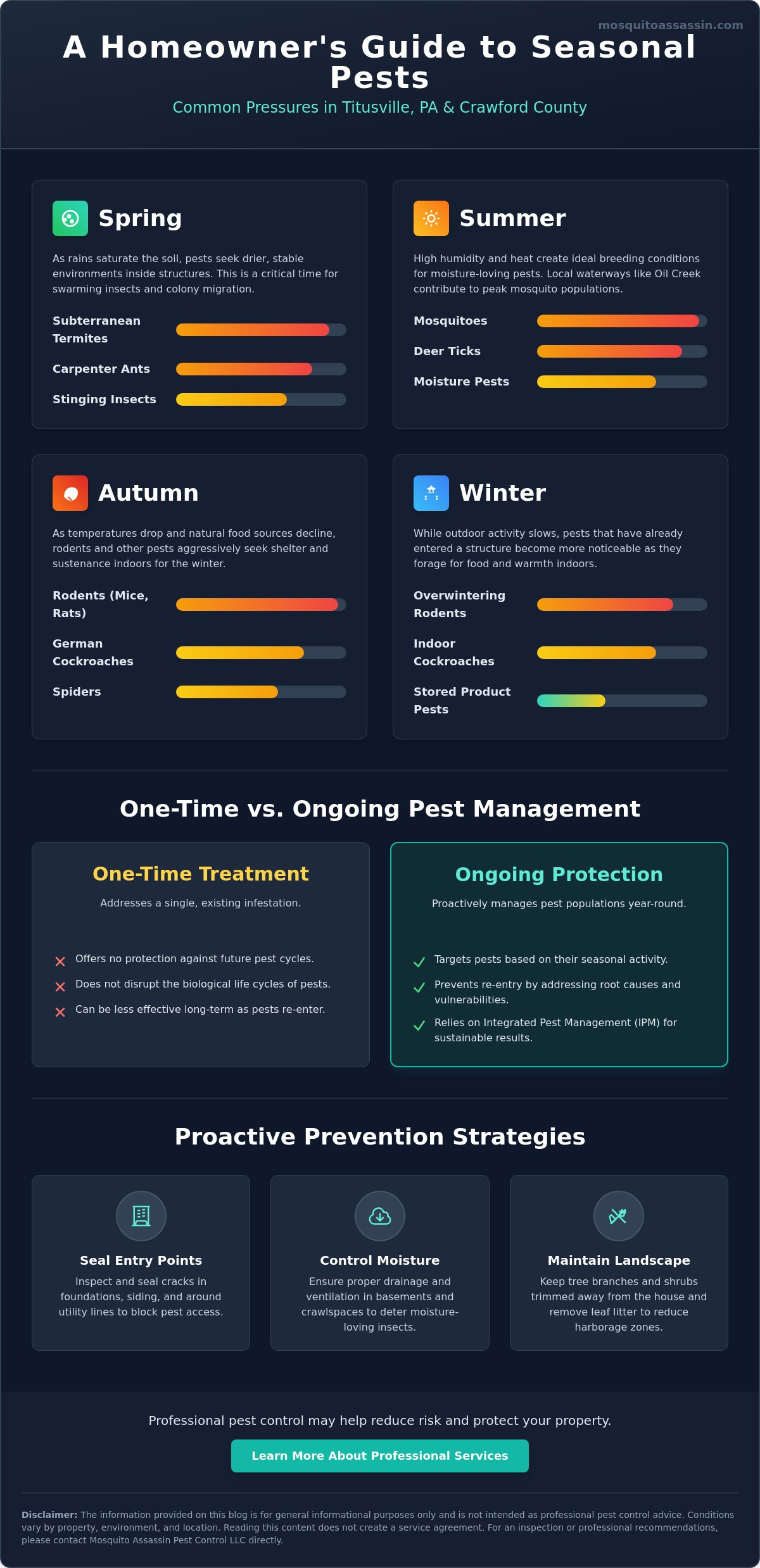
    Seasonal shifts in Crawford County dictate more than just the wardrobe of local residents; they signal a predictable change in biological threats to residential properties. Maintaining effective pest control in Titusville PA requires a proactive understanding of these cycles. Each season presents a unique set of pressures that can compromise the structural integrity and health of a household. By identifying these patterns early, property owners can implement defensive measures before an infestation becomes established.

    Spring and Summer Insect Activity

    Spring rains in Northwest Pennsylvania often saturate the soil, which triggers ant colonies to move toward the drier, stable environments found within home foundations. This is also the primary season for subterranean termite swarming. In May, homeowners frequently mistake termite swarmers for flying ants. Differentiating between the two is vital; termites have straight antennae and uniform wing lengths, while ants have elbowed antennae and varied wing sizes. As the weather warms, the focus shifts to mosquitoes and ticks. High humidity levels along the Oil Creek valley accelerate the lifecycle of local mosquito species, making them particularly aggressive during the summer months. Following guidelines from the Pennsylvania IPM Program can help residents manage these risks through environmental modifications and professional monitoring.

    The Autumn Rodent Migration

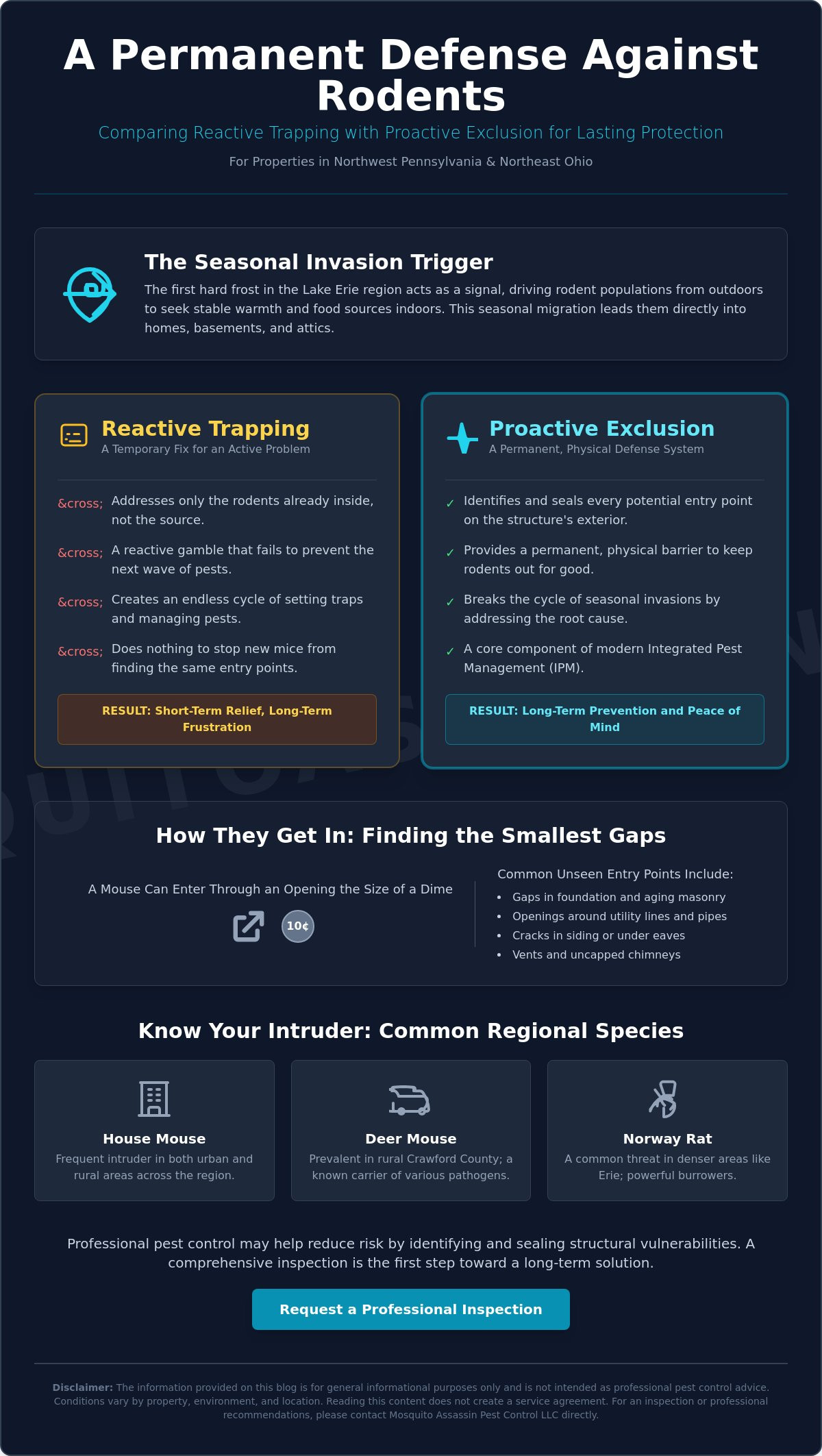
    When temperatures begin to drop in Crawford County, the “overwintering” rush begins. Spiders, stink bugs, and rodents seek the warmth of attics and basements. Mice can squeeze through openings as small as a dime, making fall the critical window for professional exclusion work. Rodents are not merely a nuisance; their nesting materials and droppings carry significant health risks and can damage electrical wiring. This transition from outdoor foraging to indoor nesting is a calculated survival move. Implementing comprehensive pest management plans during this period provides a barrier against these opportunistic invaders before they settle in for the winter.

    Winter does not mean pests disappear. While outdoor activity halts, internal infestations of bed bugs, cockroaches, or rodents can continue to thrive in sheltered, heated areas. Regular monitoring of crawlspaces and utility rooms remains a best practice for year round protection. Addressing these issues during the colder months prevents a massive population explosion when spring returns.

    Disclaimer: The information provided on this blog is for general informational purposes only and is not intended as professional pest control advice. Conditions vary by property, environment, and location. Reading this content does not create a service agreement. For an inspection or professional recommendations, please contact Mosquito Assassin Pest Control LLC directly.
    Pest Control in Titusville, PA: A Comprehensive Local Guide

    Comparing One-Time Treatments vs. Ongoing Protection

    Choosing between a single intervention and a recurring plan is a common dilemma for residents seeking pest control in Titusville PA. While both approaches have their place, the decision usually depends on whether the goal is a temporary fix or a permanent barrier. One-time treatments focus on the immediate knockdown of visible pests, providing a quick resolution to a surface-level problem. However, in a high-pressure environment like Crawford County, reactive measures often fail to address the underlying biological cycles that lead to re-infestation.

    When a One-Time Service is Appropriate

    A single visit is often sufficient for isolated, external issues. For example, removing a lone hornets nest or treating a specific area for a real estate clearance report are practical applications of one-time services. These situations involve pests that haven’t established a deep-rooted presence within the home’s structure. The reality, however, is that one-time sprays rarely reach the heart of a colony. For complex pests like carpenter ants or bed bugs, a single application may kill visible workers but leave the queen and larvae untouched, leading to a resurgence within weeks.

    The Advantages of Year-Round Management

    Ongoing protection plans are designed to stay ahead of the local pest cycles discussed in previous sections. By establishing a consistent perimeter, these plans break the breeding cycles of persistent invaders. According to research-based management techniques from the Penn State Extension, understanding the specific biology of local species is essential for effective control. Ongoing management provides peace of mind through regular professional monitoring, allowing for the early detection of issues before they become expensive disasters.

    Consistent pest management also safeguards long-term property value. In Titusville, where historic wood-frame homes are common, the cost of preventing a termite infestation is significantly lower than repairing structural damage to a foundation or joist. Utilizing professional pest control in Titusville PA as a year-round shield ensures that seasonal shifts don’t catch you off guard. A proactive approach transforms pest control from an emergency expense into a predictable part of home maintenance, ensuring the security and wellbeing of all household members. Residents often find that General Pest Control Plans offer the most reliable path to a secure, infestation-free environment.

    Disclaimer: The information provided on this blog is for general informational purposes only and is not intended as professional pest control advice. Conditions vary by property, environment, and location. Reading this content does not create a service agreement. For an inspection or professional recommendations, please contact Mosquito Assassin Pest Control LLC directly.
    Proactive Prevention Strategies for Titusville Homeowners

    While the environmental pressures in Northwest Pennsylvania are intense, property owners can take decisive action to harden their homes against invaders. Establishing a first line of defense doesn’t always require chemical intervention; it often starts with eliminating the resources that pests need to survive. By modifying the landscape and improving sanitation, you can significantly reduce the attractiveness of your property to opportunistic insects and rodents. These practical steps complement professional pest control in Titusville PA by making it harder for infestations to take root in the first place.

    Exterior Maintenance and Exclusion

    The area immediately surrounding your foundation is the most critical zone for prevention. Firewood piles, leaf litter, and construction debris serve as primary harborage sites for rodents and carpenter ants. To minimize risk, keep firewood and organic debris at least 20 feet away from the home and elevated off the ground. Managing the “bridges” that pests use is equally important. Trim tree branches and shrubs so they don’t touch the siding or roofline, as these provide a direct path for ants and squirrels to bypass ground-level defenses. Additionally, ensure that gutters are clear and downspouts direct water away from the foundation. Standing water in clogged gutters is a primary breeding ground for mosquito larvae, especially in the humid climate of the Oil Creek valley.

    Interior Sanitation and Storage

    Inside the home, the goal is to eliminate food sources and nesting sites. Foraging ants and rodents have a keen sense of smell and can detect unsealed food from a distance. Utilizing airtight glass or plastic containers for pantry items is a simple but effective deterrent. Beyond food, managing the environment in less-frequented areas like basements and attics is vital. Many pests found in Crawford County, such as silverfish and certain spider species, thrive in high-humidity environments. Using a dehumidifier to keep basement humidity levels below 50 percent can make these spaces inhospitable to moisture-loving insects. Finally, inspect utility penetrations where pipes or wires enter the home. Sealing these small gaps with silicone caulk or steel wool prevents rodents from gaining easy access to your interior walls.

    Moisture control is perhaps the most overlooked aspect of long-term prevention. Damp wood is a magnet for wood-destroying organisms, including subterranean termites and carpenter ants. Addressing leaky pipes and ensuring proper ventilation in crawlspaces reduces the likelihood of structural wood becoming a target. For residents dealing with persistent issues, professional pest control plans can provide the comprehensive monitoring needed to catch moisture-related threats early. Integrating these personal habits with expert oversight creates a robust shield for your property.

    Disclaimer: The information provided on this blog is for general informational purposes only and is not intended as professional pest control advice. Conditions vary by property, environment, and location. Reading this content does not create a service agreement. For an inspection or professional recommendations, please contact Mosquito Assassin Pest Control LLC directly.

    Professional Pest Management Solutions in Crawford County

    Homeowner prevention strategies provide a critical first line of defense, but the biological complexity of Northwest Pennsylvania often requires a higher level of specialized intervention. Licensed professionals possess the technical training to address the specific chemical and biological needs of our region. For those seeking reliable pest control in Titusville PA, the integration of professional expertise with personal maintenance creates a comprehensive barrier that seasonal invaders cannot easily penetrate. This scientific approach ensures that treatments are targeted, effective, and sustainable for the long term.

    Utilizing Integrated Pest Management (IPM) is the gold standard for modern property protection. This methodology focuses on long term results by combining thorough monitoring with strategic, low impact treatments. Instead of relying solely on broad spectrum applications, professionals analyze the environment to identify why a pest is present. By addressing the root cause, such as a specific entry point in a historic stone foundation or a moisture issue in a crawlspace, the reliance on reactive measures is minimized. This systematic discipline is what separates a temporary fix from a permanent resolution.

    What to Expect During a Professional Inspection

    It’s a detailed assessment of the property’s exterior, interior, and vulnerable areas like crawlspaces or attics. During an inspection, professionals look for specific indicators of activity that are often invisible to the untrained eye. This includes identifying particular species and their current population levels. Every home in Titusville has a unique footprint, and if a strategy doesn’t account for that, the results will suffer. A customized plan is developed based on the unique needs of the home, ensuring that the response is as unique as the infestation itself.

    Choosing a Local Service Provider

    Selecting a provider with deep roots in Northwest Pennsylvania is essential for managing our specific local challenges. Local experts understand how the proximity to Oil Creek or the transition of Crawford County farmland influences pest behavior. Property owners should always verify that a provider is fully licensed and insured for both residential and commercial services. Choosing a neighborly, locally based entity ensures that the staff understands the community values and the specific environmental regulations of the area. Consistent pest control in Titusville PA may help reduce risk and protect property investments over time. For those ready to secure their home, professional recommendations can be found at the online booking portal.

    Disclaimer: The information provided on this blog is for general informational purposes only and is not intended as professional pest control advice. Conditions vary by property, environment, and location. Reading this content does not create a service agreement. For an inspection or professional recommendations, please contact Mosquito Assassin Pest Control LLC directly.

    Securing Your Home Against Local Pest Pressures

    Protecting a property in the Oil Creek valley requires more than just reactive measures; it demands an understanding of how local geography and historic architecture influence pest behavior. By prioritizing ongoing protection over one-time fixes, residents can effectively break the breeding cycles of persistent invaders. Proactive maintenance, such as moisture control and proper food storage, serves as a vital foundation for a secure and healthy home.

    For residents seeking reliable pest control in Titusville PA, local expertise is the most effective tool for navigating these unique regional challenges. Professional services provide comprehensive protection across Erie, Crawford, and Ashtabula counties, utilizing specialized knowledge in mosquito and tick elimination to maintain a safe outdoor environment. As a locally owned and operated entity in Northwest PA, the focus remains on the long term security of the community. Professional pest control may help reduce risk and protect your property investment. To begin a thorough evaluation of your home, you may schedule a professional pest inspection through the online booking portal.

    Disclaimer: The information provided on this blog is for general informational purposes only and is not intended as professional pest control advice. Conditions vary by property, environment, and location. Reading this content does not create a service agreement. For an inspection or professional recommendations, please contact Mosquito Assassin Pest Control LLC directly.
    Frequently Asked Questions

    Is professional pest control in Titusville safe for my pets and children?

    Licensed professionals follow strict federal guidelines and product labels designed to minimize risks to non-target residents. Strategic application techniques ensure that products are placed in areas inaccessible to children and pets, such as wall voids or behind heavy appliances. Property owners should discuss specific concerns with their technician during the initial assessment to understand the specific safety protocols used during the service.

    How often should I have my home inspected for pests in Crawford County?

    Seasonal inspections are generally recommended every three months to account for the dramatic weather shifts in Northwest Pennsylvania. Consistent monitoring allows a professional to identify early signs of activity before a small issue becomes a structural problem. For properties with a history of pressure, more frequent checks during the spring and fall may be necessary to maintain a secure barrier.

    What is the most common pest problem in Titusville during the summer?

    Stinging insects, including yellow jackets and bald faced hornets, are among the most frequent calls for pest control in Titusville PA during the summer months. These pests often build nests in eaves, attics, or underground, posing a risk to anyone nearby. While mosquitoes are also prevalent, the aggressive nature of stinging insects often requires immediate professional intervention to ensure the safety of the household.

    Can I handle a rodent infestation on my own or do I need a professional?

    Handling a rodent infestation often requires professional exclusion work to identify and seal every potential entry point. While traps may remove individual mice, they don’t address the biological drive that brings them indoors. Professionals use a combination of strategic baiting and structural repairs to ensure that the source of the infestation is permanently neutralized, reducing the risk of disease transmission from droppings.

    How do I know if I have termites or just flying ants?

    Termites and flying ants are often confused, but they have distinct physical characteristics. Termites have straight antennae, a thick waist, and four wings of equal length. In contrast, ants have elbowed antennae, a pinched waist, and two pairs of wings with different lengths. If you see swarmers, a professional inspection is the most reliable way to confirm the species and assess potential structural damage.

    What should I do to prepare my home for a professional pest service?

    Proper preparation ensures the most effective application of pest control in Titusville PA. Homeowners should clear clutter from the floor, move furniture six to twelve inches away from the walls, and ensure that all pets are secured in a separate area. For interior services, it is also helpful to clean kitchen surfaces and store any open food items in airtight containers to allow technicians clear access to target zones.

    Does professional mosquito control really work in wooded areas like Titusville?

    Professional mosquito control is effective in wooded environments when it targets the specific areas where the insects rest. Technicians focus on the underside of broadleaf foliage and dense brush where mosquitoes hide during the heat of the day. While no service can eliminate every insect in a forest, these strategic treatments significantly reduce the local population and the associated risk of bites on your property.

    How long does a typical pest control treatment last before it needs a refresh?

    Most professional barrier treatments remain effective for approximately 30 to 90 days depending on the specific product and local weather conditions. Heavy rainfall or extreme humidity in Crawford County can sometimes accelerate the breakdown of external barriers. Ongoing maintenance plans are designed to refresh these protective zones before they fail, ensuring that your home remains secure throughout the entire year.

    Disclaimer: The information provided on this blog is for general informational purposes only and is not intended as professional pest control advice. Conditions vary by property, environment, and location. Reading this content does not create a service agreement. For an inspection or professional recommendations, please contact Mosquito Assassin Pest Control LLC directly.
  • Bed Bug Treatment Cost Factors in Erie, PA: A Property Owner Guide

    Bed Bug Treatment Cost Factors in Erie, PA: A Property Owner Guide

    What if the real expense of a bed bug problem isn’t the professional service fee, but the weeks of lost sleep and the mounting cost of failed DIY attempts? Property owners in Erie and Crawford Counties often feel a deep sense of anxiety when they realize a small infestation has spread through their home. It is natural to feel overwhelmed by the confusion of different methods and the fear of unexpected charges. Understanding the specific variables that dictate bed bug treatment cost erie pa is the first step toward reclaiming a peaceful night’s rest.

    This guide provides a clear framework for evaluating professional quotes by explaining the factors that local experts consider during an inspection. You will learn how the extent of the infestation, the amount of clutter in a room, and the specific construction of your home in Northwest Pennsylvania or Ashtabula County influence the final price. By the end of this article, you will have the knowledge needed to prepare your property for success, understand the value of professional intervention, and make an informed decision for your family’s wellbeing.

    Key Takeaways

    • Learn how Northwest Pennsylvania’s specific climate and humidity levels affect pest behavior and the labor required for effective eradication.
    • Discover how the duration of an infestation and the specific layout of your home directly influence the bed bug treatment cost erie pa.
    • Compare the long term benefits of thermal remediation against conventional chemical applications to choose the most efficient solution for your household.
    • Identify critical preparation steps, including laundry protocols and clutter management, that property owners must complete to ensure a successful outcome.
    • Establish a clear framework for verifying the credentials and inspection processes of professional pest management providers in Erie, Crawford, and Ashtabula Counties.

    Understanding the Variables of Bed Bug Treatment in Erie, PA

    Eradicating bed bugs isn’t a simple cleaning task. It’s a high-stakes operation that demands technical expertise and intense labor. Unlike standard pest control, bed bug removal requires a deep understanding of the parasite’s biology and hidden harborages. When calculating the bed bug treatment cost erie pa, professionals must evaluate the entire environment rather than just counting bedrooms. This approach ensures that every egg and nymph is addressed, preventing a secondary surge of the infestation weeks later.

    Local property owners often face unique challenges due to the historic architecture found throughout Erie, Crawford, and Ashtabula Counties. Older homes frequently feature lath and plaster walls, original hardwood flooring with deep gaps, and intricate baseboards that provide perfect hiding spots for these pests. These structural nuances require more time and specialized tools to ensure the treatment reaches the core of the problem. Effective results depend on a technician’s ability to navigate these complexities.

    To better understand the factors that influence the price of professional services, watch this helpful video:

    Why Flat Rate Pricing is Rare in Pest Management

    A “one size fits all” price model rarely works for bed bug eradication because no two infestations are identical. The level of introduction varies significantly. A few hitchhikers brought home from a trip require a different response than a multi-room infestation that has persisted for months. A thorough inspection allows a technician to map out the specific bed bug control techniques required for the property’s layout. If a technician has to navigate heavy clutter or move furniture to access harborages, the labor time increases. This extra effort is a major component of the bed bug treatment cost erie pa.

    The Impact of the Northwest Pennsylvania Climate

    The regional environment in Northwest Pennsylvania plays a subtle but significant role in pest management. High seasonal humidity near Lake Erie can influence how long certain treatment residuals remain effective on surfaces. Bed bugs also react to the indoor climate shifts that occur during our harsh winters and humid summers. When property owners adjust their thermostats, it can change the metabolic rate of the pests, potentially affecting how quickly they interact with treatment zones. Because these biological factors are constantly shifting, a localized, professional strategy is far more effective than generic, broad-spectrum attempts. Professional pest control may help reduce risk by accounting for these environmental variables.

    Disclaimer: The information provided on this blog is for general informational purposes only and is not intended as professional pest control advice. Conditions vary by property, environment, and location. Reading this content does not create a service agreement. For an inspection or professional recommendations, please contact Mosquito Assassin Pest Control LLC directly.
    Primary Factors That Influence Professional Eradication Costs

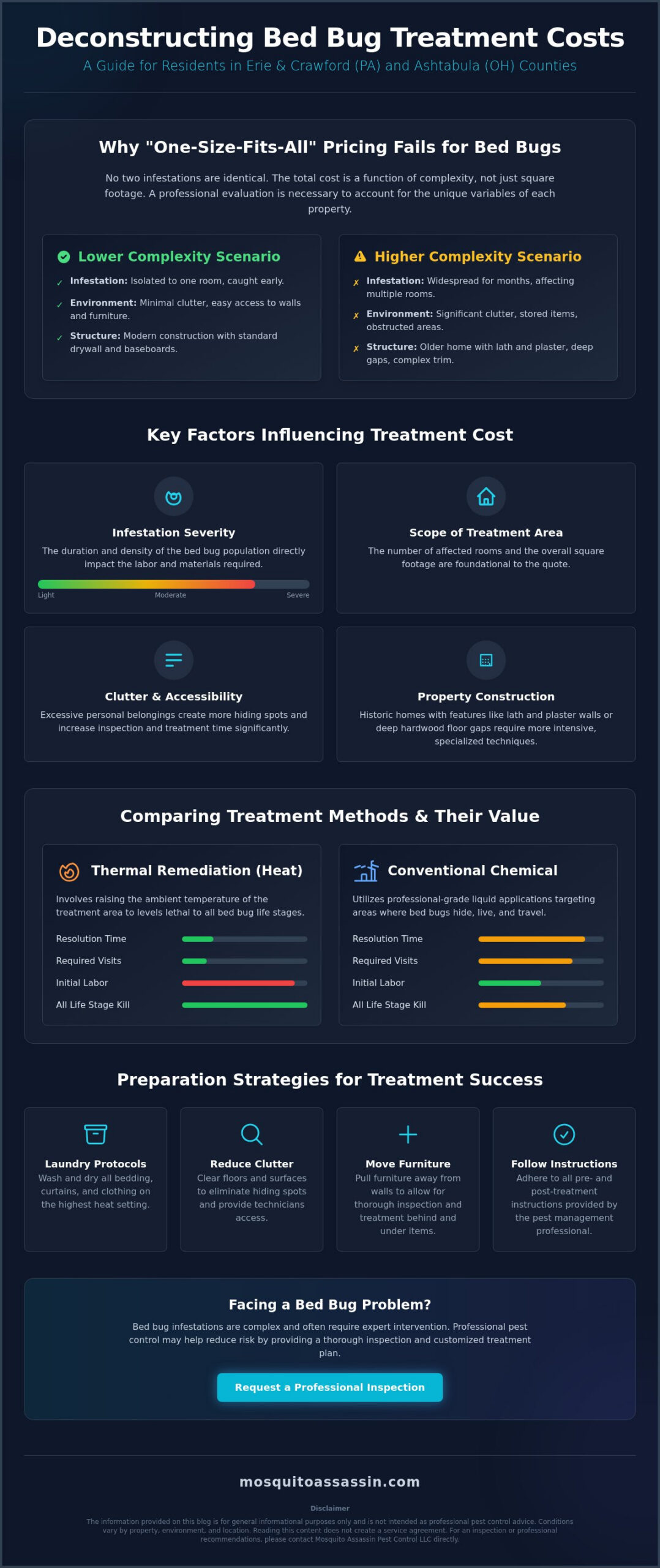
    While square footage provides a baseline for any service quote, the true bed bug treatment cost erie pa is dictated by the complexity of the environment. Professionals must evaluate how many rooms are impacted and the specific density of the infestation. A single room with light activity requires far less labor than a home where insects have moved into structural voids or multiple living areas. The chosen methodology also plays a pivotal role; thermal remediation involves significant equipment setup but often resolves the issue in one visit, whereas conventional chemical programs may require several follow-up appointments to account for the pest’s reproductive cycle.

    The amount of furniture and personal belongings in a space significantly impacts the time a technician spends on-site. For instance, a standard room that is heavily cluttered requires more intensive inspection and application time than a minimalist living space. This is because bed bugs are expert hiders, often tucking themselves into the folds of curtains, the undersides of chairs, or behind electrical faceplates. Many homeowners attempt Do-it-yourself Bed Bug Control before seeking professional help. While these efforts can manage surface level issues, they often fail to reach the deep harborages where bed bugs retreat during the day, which can lead to a longer, more expensive professional eradication process later.

    Infestation Severity and Spread

    Early detection usually results in localized treatments with lower labor requirements. If activity is caught while it’s still confined to a single mattress or bed frame, the intervention is relatively straightforward. However, widespread infestations that have spread to sofas, baseboards, or even adjacent rooms increase the time spent on-site. When activity is found in structural voids, it requires more complex intervention strategies to ensure the population is totally eliminated. Understanding these variables helps property owners prepare for a professional inspection in the Erie area.

    Property Size and Structural Complexity

    The type of building also influences the logistics of a treatment plan. Multi-unit dwellings in Erie require specialized coordination to prevent pests from migrating to neighboring apartments during the process. In contrast, large family homes in Crawford County or Ashtabula County often have more harborages, such as extensive baseboards, multiple bed frames, and electronics. Older homes with plaster walls or intricate woodwork require more detailed application methods than modern builds. These structural details ensure that the treatment penetrates every potential hiding spot to prevent a resurgence.

    Disclaimer: The information provided on this blog is for general informational purposes only and is not intended as professional pest control advice. Conditions vary by property, environment, and location. Reading this content does not create a service agreement. For an inspection or professional recommendations, please contact Mosquito Assassin Pest Control LLC directly.
    Bed Bug Treatment Cost Factors in Erie, PA: A Property Owner Guide

    Comparing Common Treatment Methods and Their Value

    Choosing between different eradication strategies involves balancing speed, cost, and long-term protection. While many property owners focus solely on the bottom line, the true value lies in a methodology’s ability to achieve total elimination. The bed bug treatment cost erie pa varies significantly between thermal remediation and conventional chemical programs, primarily because of the specialized equipment and labor hours required for each. Understanding these differences allows property owners to select a plan that fits both their budget and their timeline for results.

    The Pros and Cons of Thermal Remediation

    Heat treatment is often viewed as the gold standard for rapid results. By using specialized high-output heaters to raise the internal temperature of a structure to a range that is lethal to insects, professionals can kill all life stages in a single day. This includes eggs, which are notoriously resistant to many topical treatments. However, this method requires a higher initial investment due to the specialized monitoring equipment and the intensive labor needed to manage heat flow through the building. Property owners must also take care to remove heat-sensitive items, such as certain plastics, candles, and delicate electronics, before the process begins.

    Conventional Liquid and Dust Applications

    For those on a stricter budget, conventional treatments utilizing EPA-approved residuals offer a practical path forward. These applications create a defensive barrier that targets pests as they move across treated surfaces. According to research from the Ohio State University Extension, bed bugs have developed resistance to some older classes of pesticides, making the use of modern, professionally applied residuals essential. While the initial cost is lower than heat, this method typically requires multiple visits. Technicians must return to inspect for and treat newly hatched nymphs that were protected in egg form during the first application.

    A holistic approach, known as Integrated Pest Management (IPM), often yields the most reliable long-term results. This strategy doesn’t rely on a single tactic but combines multiple methods for maximum efficacy. Technicians might use high-powered vacuums to physically remove clusters of insects, followed by localized steam treatment to address eggs in delicate seams. When combined with targeted chemical residuals and physical barriers like mattress encasements, IPM provides a comprehensive shield for the home. This multi-layered defense is particularly valuable in Northwest Pennsylvania, where older building materials provide deep harborages that a single treatment method might miss. Professional pest control may help reduce risk by implementing these sophisticated, multi-step strategies.

    Disclaimer: The information provided on this blog is for general informational purposes only and is not intended as professional pest control advice. Conditions vary by property, environment, and location. Reading this content does not create a service agreement. For an inspection or professional recommendations, please contact Mosquito Assassin Pest Control LLC directly.
    Preparation Strategies to Improve Treatment Success

    Preparation is the single most important factor within a property owner’s control when addressing an infestation. The bed bug treatment cost erie pa is often a direct reflection of the labor hours required to complete a thorough application. When a technician arrives at a home that is cluttered or unprepared, their time must be spent moving personal items rather than performing the specialized work they were hired for. This inefficiency doesn’t just slow down the process; it can lead to gaps in treatment coverage where pests may survive and repopulate the space.

    Property owners must take full responsibility for the laundering of linens, curtains, and clothing. High heat in a standard clothes dryer is an effective way to kill all life stages of bed bugs on fabric items. Once cleaned, these items should be sealed in airtight plastic bags to prevent cross-contamination. By handling these tasks before the technician arrives, you ensure that professional products reach the hidden harborages where insects congregate during the day. Failure to follow these steps often results in re-infestation, which necessitates additional paid visits and increases the total financial burden on the household.

    The Link Between Preparation and Labor Efficiency

    Technicians can focus on precision application when they have clear access to the perimeter of every room. If a service team has to spend hours clearing floor space, the site time increases significantly. Professional guidance on preparation is a hallmark of a quality provider; they will typically provide a detailed checklist tailored to the specific needs of your property. Following this guide closely allows for more competitive service quotes because the provider can accurately estimate the time required for the actual eradication process. For those ready to begin the process, reviewing professional bed bug treatment options is a logical next step.

    Essential Steps for Erie Homeowners

    Residents in Northwest Pennsylvania should prioritize specific actions to ensure a successful outcome. Moving furniture at least two feet away from walls is critical, as it provides technicians with the necessary room to treat baseboards and electrical outlets. Additionally, property owners should vacuum all carpets and upholstered furniture daily leading up to the appointment. It’s vital to dispose of the vacuum bag or canister contents immediately in an outdoor receptacle to prevent any captured insects from escaping back into the home. These practical steps create an environment where professional interventions can work with maximum efficacy.

    Disclaimer: The information provided on this blog is for general informational purposes only and is not intended as professional pest control advice. Conditions vary by property, environment, and location. Reading this content does not create a service agreement. For an inspection or professional recommendations, please contact Mosquito Assassin Pest Control LLC directly.
    Selecting a Professional Pest Management Partner in Northwest Pennsylvania

    Professional intervention represents a decisive step toward reclaiming the security of your home. Property owners in Northwest Pennsylvania should prioritize vetting their service provider’s credentials before signing any agreement. It’s critical to verify that a company holds the proper state licensing and insurance for the specific service area, whether in Erie and Crawford Counties or across the border in Ashtabula County, Ohio. Licensing requirements vary by state, and a technician must be authorized to apply professional products in your specific jurisdiction. Choosing a provider who emphasizes education and long term prevention ensures that the root cause of the problem is addressed rather than just the visible symptoms. Professional pest control may help reduce the risk of recurring infestations by implementing a systematic, scientific approach that DIY methods cannot match.

    What to Look for in a Bed Bug Quote

    A transparent quote should never be provided over the phone without a physical assessment of the property. When evaluating the bed bug treatment cost erie pa, look for a detailed document that clearly outlines the specific areas to be treated. A quality quote includes a breakdown of follow up protocols and a comprehensive list of owner preparation requirements. This documentation ensures that both the property owner and the technician are aligned on the scope of work. It also prevents misunderstandings regarding what is included in the service fee. Be wary of quotes that seem unusually low; they often omit the necessary follow up visits that are required to break the bed bug life cycle. A professional quote is a roadmap for total eradication, not just a surface level price tag.

    The Value of Local Expertise

    Local providers offer a level of specialized knowledge that national franchises often lack. They understand the unique pest pressures and seasonal activity cycles specific to the Lake Erie region. Proximity is a major advantage; it allows for faster response times during the initial inspection and more flexible scheduling for necessary follow up visits. This local integration builds a rapport based on shared community values and a commitment to protecting neighboring households. Technicians who live in the same climate understand how high humidity or older housing stock in Erie and Ashtabula impacts treatment efficacy. Property owners can learn more about our services to understand the professional standards expected in the industry. For those facing an active problem, the next step is to contact us for an inspection to receive a professional recommendation tailored to your property’s specific needs.

    Disclaimer: The information provided on this blog is for general informational purposes only and is not intended as professional pest control advice. Conditions vary by property, environment, and location. Reading this content does not create a service agreement. For an inspection or professional recommendations, please contact Mosquito Assassin Pest Control LLC directly.

    Take Decisive Action Against Bed Bug Infestations

    Reclaiming a home from bed bugs requires a methodical approach that balances thorough preparation, the right treatment methodology, and professional expertise. As explored, the total investment is heavily influenced by how well a property is prepared and the structural complexity of the building. Whether choosing rapid thermal remediation or a strategic chemical program, the goal remains the same: total elimination of every life stage. Understanding that bed bug treatment cost erie pa is a reflection of intense labor and biological necessity helps property owners set realistic expectations for the process.

    Professional pest control may help reduce risk by providing a scientific strategy tailored to the unique climate of Northwest Pennsylvania. For a definitive resolution, you can request a professional bed bug inspection in Erie or Crawford County. Partnering with a local family-owned business that’s licensed in Pennsylvania and Ohio ensures that your property is handled with specialized bed bug treatment protocols. Don’t let the stress of an infestation linger; taking the first step toward a professional evaluation brings immediate peace of mind and a clear path to a pest-free home.

    Disclaimer: The information provided on this blog is for general informational purposes only and is not intended as professional pest control advice. Conditions vary by property, environment, and location. Reading this content does not create a service agreement. For an inspection or professional recommendations, please contact Mosquito Assassin Pest Control LLC directly.
    Frequently Asked Questions

    Is bed bug treatment expensive in Erie, PA?

    Professional eradication is generally considered a premium service because of the high labor intensity and specialized equipment involved. The bed bug treatment cost erie pa reflects the detailed process of inspecting every potential harborage and applying precise solutions. While the initial investment is higher than general pest control, it is often more cost effective than replacing infested furniture or paying for multiple failed DIY attempts.

    What factors change the price of bed bug removal?

    Price variations are primarily driven by the size of the living space and the level of clutter present. A technician must spend significantly more time treating a heavily furnished four bedroom home than a minimally decorated apartment. Additionally, the severity of the infestation and the specific structural challenges of older homes in Northwest Pennsylvania can influence the total labor hours required for a successful outcome.

    How many treatments are usually needed for total elimination?

    The number of visits depends on the specific methodology chosen for your property. Thermal remediation often achieves total elimination in a single day by killing all life stages, including eggs. Conventional chemical programs typically require two to three visits spaced roughly two weeks apart to account for the pest’s reproductive cycle. A professional inspection is necessary to determine the most efficient timeline for your situation.

    Does homeowners insurance cover bed bug extermination?

    Standard homeowners insurance policies rarely provide coverage for bed bug removal. Most insurance providers categorize these infestations as a preventable maintenance issue rather than a sudden or accidental loss. Property owners are almost always responsible for the costs associated with inspection and eradication. It is recommended to review your individual policy details or speak with your insurance agent to confirm your specific coverage.

    Is heat treatment better than chemical treatment for bed bugs?

    Both methods are highly effective when performed by licensed professionals. Heat treatment is often preferred for its speed and ability to reach deep into structural voids in a single session. Chemical treatments are a practical choice for property owners on a stricter budget or those seeking a long term residual barrier. Many professionals use an integrated approach that combines the strengths of both strategies for the best results.

    How do I get an accurate quote for bed bug service in Crawford County?

    An accurate quote requires a comprehensive on site inspection by a licensed technician. Phone estimates are often unreliable because they cannot account for the unique spread of an infestation or the amount of preparation needed. During a physical assessment in Crawford County, a professional will evaluate the specific harborages in your home to provide a detailed scope of work and a transparent price for the project.

    Can I stay in my home during a bed bug treatment?

    Residents must vacate the property for several hours during the actual application process. For thermal remediation, the home must be empty for the entire day as internal temperatures are raised to lethal levels for the pests. For conventional chemical applications, you can typically return once the products have completely dried. Your service provider will give you a specific timeline and safety instructions prior to the appointment.

    Why did my DIY bed bug treatment fail?

    Most DIY attempts fail because consumer grade products often lack the residual strength required to eliminate a full population. Bed bugs are also highly sensitive to certain materials and may retreat deeper into walls or floorboards when they detect a repellent. Professional pest control may help reduce risk by using specialized tools to reach these hidden harborages and ensuring the treatment addresses the pest’s entire biological cycle.

    Disclaimer: The information provided on this blog is for general informational purposes only and is not intended as professional pest control advice. Conditions vary by property, environment, and location. Reading this content does not create a service agreement. For an inspection or professional recommendations, please contact Mosquito Assassin Pest Control LLC directly.

  • How to Prevent Cockroaches: A Professional Guide for Homeowners

    How to Prevent Cockroaches: A Professional Guide for Homeowners

    Did you know that approximately 14 million American households reported seeing cockroaches in their homes in 2021? For homeowners in Erie and Crawford Counties in Pennsylvania, or Ashtabula County in Ohio, the sight of a single scuttling insect can trigger immediate anxiety about health risks and growing infestations. It’s a valid concern, especially considering that these pests can carry around 30 different types of bacteria and are a major trigger for childhood asthma. Learning how to prevent cockroaches effectively requires moving beyond basic cleaning to a more disciplined, professional approach.

    You likely already know that a clean kitchen is important, but you might feel confused about which habits actually stop an infestation before it starts. This guide provides evidence-based strategies to secure your property through structural exclusion, strategic sanitation, and professional environmental management. You’ll gain a clear understanding of common entry points and a practical checklist of preventative maintenance tasks. By the end, you will have the confidence to manage your home’s environment and know exactly when professional pest control may help reduce risk.

    Disclaimer: The information provided on this blog is for general informational purposes only and is not intended as professional pest control advice. Conditions vary by property, environment, and location. Reading this content does not create a service agreement. For an inspection or professional recommendations, please contact Mosquito Assassin Pest Control LLC directly.
    Key Takeaways

    • Identify the specific cockroach species common in Pennsylvania and Ohio to determine if they are entering through structural cracks or hitchhiking on household items.
    • Learn how to prevent cockroaches by moving beyond standard cleaning to focus on micro-sanitation in overlooked areas that provide food and water.
    • Implement exclusion techniques to physically block entry points and reduce clutter that serves as a primary hiding place for developing populations.
    • Address the regional challenges of high humidity near Lake Erie and seasonal shifts that frequently drive pests into homes in Erie, Crawford, and Ashtabula counties.
    • Shift from reactive treatments to proactive professional monitoring to identify early warning signs and secure your home before an infestation grows.

    Understanding Cockroach Behavior and Common Entry Points

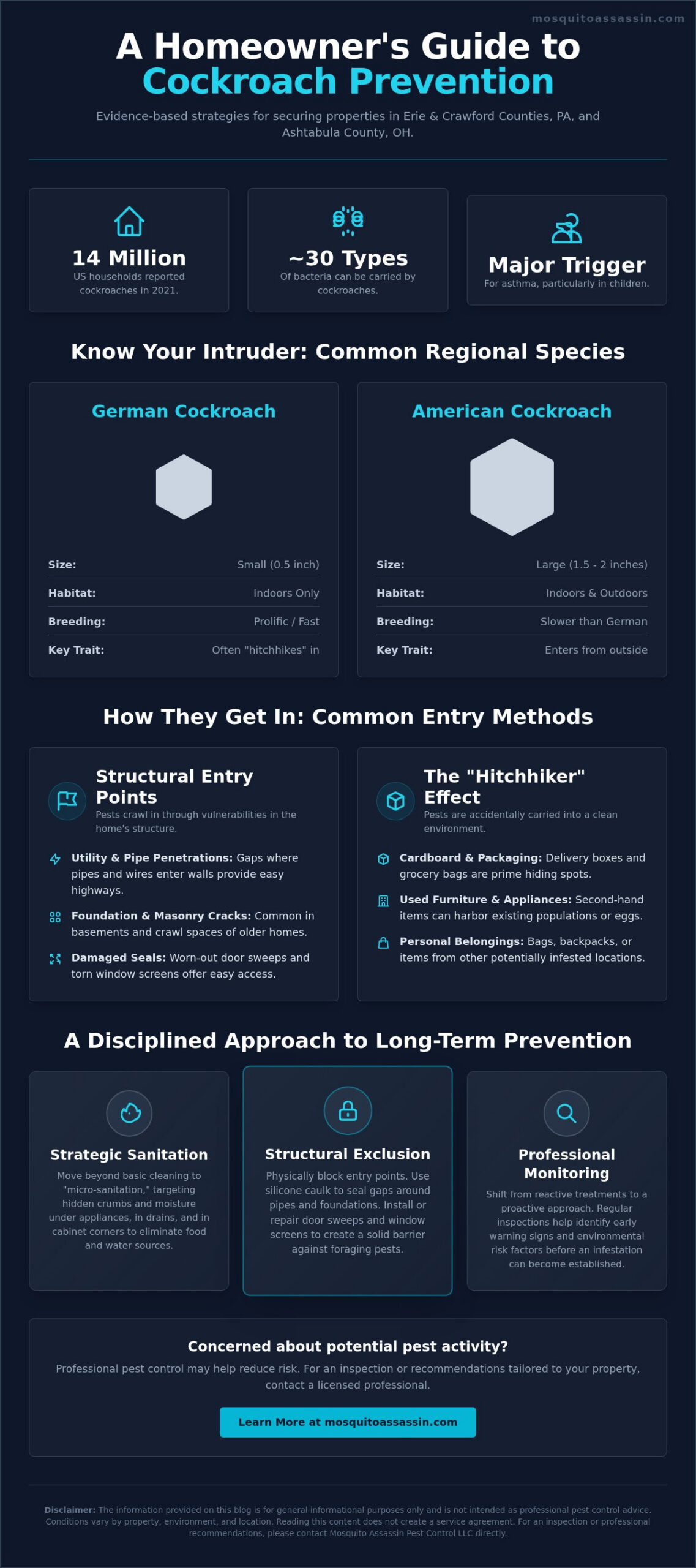
    Cockroaches are resilient survivors driven by a biological need for warmth, moisture, and darkness. In the regional climates of Erie and Crawford Counties in Pennsylvania and Ashtabula County in Ohio, two primary species dominate the landscape: the German cockroach and the American cockroach. German cockroaches are small, prolific breeders that typically stay indoors, while American cockroaches are larger and often move between outdoor environments and human structures. Understanding Cockroach behavior and life cycle is the first step in learning how to prevent cockroaches from establishing a presence in your home. These pests utilize aggregation pheromones, which are chemical signals left in their droppings, to alert other cockroaches that a specific area is a safe and viable nesting site.

    To better understand this concept, watch this helpful video:

    Structural Entry Points: How They Crawl In

    Structural vulnerabilities provide an open invitation to foraging pests. Utility pipes and electrical conduits often serve as primary highways, allowing insects to travel between walls and floors with ease. In older homes across Erie and the surrounding areas, basements and crawl spaces are frequent entry points due to settling foundations or porous masonry. Small gaps around door sweeps or damaged window screens in ground-level rooms also provide enough space for a cockroach to squeeze through. Securing these gaps is a fundamental part of a professional exclusion strategy. Using silicone-based caulk or heavy-duty weather stripping can close these physical paths effectively.

    The Hitchhiker Effect: How They Are Carried In

    While many pests crawl in, others are brought in through human activity. This is often how clean homes suddenly face a crisis. Used furniture, second-hand appliances, and corrugated cardboard boxes are high-risk items because they provide the tight, dark spaces cockroaches prefer for hiding and laying eggs. Even routine activities like bringing home grocery bags or receiving delivery packages can inadvertently introduce a pest.

    The hitchhiker effect is the accidental transport of pests into a clean environment through infested items or materials. Distinguishing between a single “hitchhiker” found in a delivery box and an established population living within the home’s structure is vital for proper management. While a single insect found on a package is a warning sign, an established population usually involves sightings near water sources or evidence of droppings. Inspecting all incoming items can significantly improve your efforts regarding how to prevent cockroaches from taking hold in your living space.

    Disclaimer: The information provided on this blog is for general informational purposes only and is not intended as professional pest control advice. Conditions vary by property, environment, and location. Reading this content does not create a service agreement. For an inspection or professional recommendations, please contact Mosquito Assassin Pest Control LLC directly.

    Strategic Sanitation: Disrupting the Cockroach Life Cycle

    While a clean kitchen is a great start, a determined cockroach population can survive on surprisingly little. Effective sanitation requires a shift toward “micro-sanitation,” which targets the hidden crumbs and organic matter that daily chores often miss. This level of detail is a cornerstone of professional pest management and focuses on long-term environmental control.

    Understanding how to prevent cockroaches involves more than just a quick sweep; it’s about removing every possible advantage the pests have. By disrupting their access to food and water, you can significantly slow their reproductive cycle and make your property far less attractive to new arrivals.

    Eliminating Food Sources Beyond the Kitchen Counter

    Pulling out the stove or refrigerator often reveals a goldmine of food for pests. Spilled flour, dried juice, or a thin grease film on the wall behind the range can sustain dozens of insects for weeks. Grease is a high-calorie resource that homeowners often overlook. It accumulates on vent hoods and the sides of cabinets, providing a reliable food source even when the counters are spotless.

    Storing pet food in open bags is another common mistake. Cockroaches are highly attracted to the proteins and fats in dog and cat kibble. Switching to airtight, hard-plastic containers creates a simple but effective barrier. Cleaning the area around pet bowls daily prevents the accumulation of small particles that serve as a nightly feast for foraging insects.

    Moisture Management: Removing the Vital Resource

    Cockroaches can live for a month without food but will perish in about a week without water. This makes moisture control just as critical as food elimination. In the humid regions near Lake Erie, sweating pipes and damp basements provide a constant supply of water. Using dehumidifiers in these lower levels can make the environment much less hospitable. Don’t forget to check refrigerator drip pans or pet water bowls; standing water is a vital resource that must be managed.

    Leaky faucets and slow-draining sinks are more than just a nuisance; they are life-support systems for pests. For a deeper look at these environmental factors, this Practical Guide to Cockroach Control provides excellent technical insights into how sanitation impacts population growth. If these environmental modifications seem daunting, professional pest control may help reduce risk by providing a comprehensive assessment of your property’s specific vulnerabilities.

    Finally, proper trash management is essential for success. Kitchen bins should have tight-fitting lids and be emptied every night. Storing outdoor bins away from the home’s exterior walls prevents drawing pests closer to your foundation. Cleaning the bins themselves with soap and water removes the odors and sticky residues that attract foraging pests from the neighborhood.

    Disclaimer: The information provided on this blog is for general informational purposes only and is not intended as professional pest control advice. Conditions vary by property, environment, and location. Reading this content does not create a service agreement. For an inspection or professional recommendations, please contact Mosquito Assassin Pest Control LLC directly.
    How to Prevent Cockroaches: A Professional Guide for Homeowners

    Exclusion and Habitat Modification for Long-Term Protection

    While strategic sanitation removes the incentive for pests to stay, exclusion is the process of physically blocking them from entering in the first place. This proactive approach is a core component of professional pest management. It moves beyond the reactive cycle of cleaning and focuses on the structural integrity of your home. Understanding how to prevent cockroaches requires a shift in perspective; you must view your property as a sealed fortress rather than an open environment. By identifying and closing specific gaps, you create a permanent barrier that high-standard cleaning alone cannot provide.

    A Systematic Approach to Sealing the Home

    A random application of caulk is rarely effective. Instead, homeowners in Erie and Crawford Counties should follow a disciplined, multi-step process to secure their living spaces. Focus on these specific areas to maximize your protection:

    • Step 1: Inspect every point where plumbing pipes or electrical conduits enter the walls. Use a high-quality silicone caulk to seal these gaps, as cockroaches often use these utility lines as internal highways.
    • Step 2: Replace worn or brittle weatherstripping on all exterior doors and windows. If you can see light through the bottom of a door, a cockroach can easily crawl under it.
    • Step 3: Install fine mesh screens over attic vents and crawl space openings. This is especially important in older homes in Ashtabula County where original vents may have widened over time.
    • Step 4: Seal the thin gaps between baseboards and floors in kitchens and bathrooms. These dark crevices provide immediate access to the wall voids where populations often nest.

    Eliminating Harborage: Reducing Indoor Hiding Spots

    Cockroaches don’t just need food; they need “harborage,” which are safe, dark places to hide and breed. Cardboard boxes are a primary risk factor because the starch-based glue used in their construction serves as a food source, while the corrugated layers provide perfect insulation for egg cases. Transitioning your storage to heavy-duty plastic bins with secure lids is one of the most effective ways to reduce environmental suitability. Additionally, accumulated paper piles, such as old magazines, newspapers, or mail, create a humid micro-climate that attracts foraging pests.

    Professional pest managers often utilize Integrated Pest Management (IPM) for cockroaches to address these habitat issues systematically. While DIY materials like expanding foam are popular, they often break down quickly or are easily chewed through by other pests. Professional-grade sealants and copper mesh are far more durable for long-term exclusion. If you are unsure how to prevent cockroaches from exploiting the specific structural weaknesses of your property, professional pest control may help reduce risk by providing a detailed structural analysis.

    Disclaimer: The information provided on this blog is for general informational purposes only and is not intended as professional pest control advice. Conditions vary by property, environment, and location. Reading this content does not create a service agreement. For an inspection or professional recommendations, please contact Mosquito Assassin Pest Control LLC directly.

    Regional Challenges: Cockroach Prevention in PA and OH

    Homeowners in Erie, Crawford, and Ashtabula counties face environmental pressures that directly influence pest behavior. The proximity to Lake Erie creates a high-humidity environment that is ideal for cockroach survival and reproduction, particularly for larger species like the American cockroach. Many residents believe these insects are only a summertime nuisance, but this is a dangerous misconception. In reality, the local climate and aging infrastructure, such as older municipal sewer systems found in many established Pennsylvania and Ohio towns, provide year-round resources for infestations to thrive. Learning how to prevent cockroaches in the Great Lakes region requires a strategy that accounts for these specific regional variables.

    Winter Behavior: Seeking Warmth in the Great Lakes Region

    When temperatures drop across the region, cockroaches don’t simply die off or hibernate. Instead, they seek out stable micro-climates within human structures to survive the harsh winters. During extreme cold snaps, populations often migrate toward primary heat sources like furnaces, water heaters, and the internal wall voids surrounding insulated plumbing. The cold drives them in. This shift often creates a sense of false security for homeowners who may stop seeing pests scuttling across kitchen floors. While activity in visible areas might decrease, the population remains active and continues breeding in the hidden, warmer parts of the house. They don’t disappear; they just hide better. Consistent monitoring throughout the colder months is essential. It ensures that a small, secluded winter population doesn’t explode into a major infestation when the spring thaw arrives.

    Managing Moisture in Local Basements and Crawl Spaces

    The damp, heavy soil conditions found throughout Crawford County present a specific challenge for maintaining a pest-free home. This soil often retains significant moisture, leading to elevated humidity levels in basements and crawl spaces that are difficult to control with standard ventilation. This environmental factor is a primary driver for cockroach migration, especially following heavy seasonal rains or local flooding. When outdoor habitats become oversaturated, pests are forced to move toward the relative safety and warmth of a home’s foundation. Professional general pest control can address these regional vulnerabilities by creating a consistent protective barrier. If you are concerned about moisture in your basement or crawl space, checking for local service options may help reduce risk and protect your property from seasonal migrations.

    Disclaimer: The information provided on this blog is for general informational purposes only and is not intended as professional pest control advice. Conditions vary by property, environment, and location. Reading this content does not create a service agreement. For an inspection or professional recommendations, please contact Mosquito Assassin Pest Control LLC directly.

    The Role of Professional Monitoring in Prevention

    Traditional extermination is often a reactive response to an existing crisis. In contrast, proactive pest management focuses on the environmental factors that allow a population to take hold in the first place. This shift in strategy is vital for homeowners who want to maintain a secure environment. While DIY efforts can address surface-level issues, they often fail to disrupt the hidden nesting sites that sustain a long-term infestation. Understanding how to prevent cockroaches effectively requires a transition from simply killing visible insects to managing the entire property’s ecosystem. Professional year-round protection plans create a permanent barrier that adapts to changing seasonal pressures in Pennsylvania and Ohio.

    Professional-grade tools offer a level of precision and safety that over-the-counter sprays cannot match. Licensed technicians use specialized equipment to apply targeted treatments exactly where pests hide, minimizing environmental impact while maximizing effectiveness. These methods are backed by a methodical approach to property analysis, ensuring that vulnerabilities are addressed before they become entry points. By integrating professional monitoring into your home maintenance routine, you gain a dependable layer of security that protects both the structure and the health of the household.

    Early Detection: Catching the First Signs

    Early intervention is the most effective way to avoid a full-scale infestation. Cockroaches are masters of concealment, but they leave behind subtle clues that an expert eye can identify. These signs include oothecae (egg cases) or small droppings that resemble grains of black pepper. Professional monitoring stations are strategically placed in high-risk areas to track pest movement and identify activity long before a homeowner sees an insect. It’s a common rule in pest management that seeing a single cockroach during the day often indicates a much larger hidden population; these pests are nocturnal, so daytime sightings usually mean their nesting sites are already overcrowded.

    Integrating Professional Service with Home Maintenance

    Professional pest control may help reduce risk when it’s combined with the strategic sanitation and exclusion habits discussed in previous sections. A licensed technician who understands local pest trends in Erie and Crawford Counties provides more than just a service; they offer specialized knowledge of how regional climate shifts drive pest behavior. This expertise allows for a more disciplined operational approach to property protection. Homeowners are encouraged to consider a professional inspection to assess their home’s specific vulnerabilities and develop a clear understanding of how to prevent cockroaches from establishing a foothold. This collaborative approach ensures that your home remains a fortress against unwanted pests throughout every season.

    Disclaimer: The information provided on this blog is for general informational purposes only and is not intended as professional pest control advice. Conditions vary by property, environment, and location. Reading this content does not create a service agreement. For an inspection or professional recommendations, please contact Mosquito Assassin Pest Control LLC directly.

    Securing Your Home for the Long Term

    Achieving a pest-free environment requires a transition from reactive cleaning to a disciplined, multi-step strategy. Prioritizing structural exclusion and micro-sanitation addresses the environmental factors that allow infestations to thrive and survive. Homeowners in Erie, Crawford, and Ashtabula counties must also account for regional humidity and seasonal shifts that drive pests indoors. Mastering how to prevent cockroaches is an ongoing process of monitoring and maintenance that protects both your property value and your family’s health.

    Mosquito Assassin Pest Control LLC is a locally owned and operated entity in Cranesville. This licensed and insured provider serves Pennsylvania and Ohio with specialized year-round protection plans. Professional pest control may help reduce risk by identifying early warning signs that homeowners might miss. For an inspection or professional recommendations, please contact Mosquito Assassin Pest Control LLC directly. You can maintain a safe, comfortable home with the right combination of proactive maintenance and expert oversight.

    Disclaimer: The information provided on this blog is for general informational purposes only and is not intended as professional pest control advice. Conditions vary by property, environment, and location. Reading this content does not create a service agreement. For an inspection or professional recommendations, please contact Mosquito Assassin Pest Control LLC directly.

    Frequently Asked Questions

    Can cockroaches come up through the drain?

    Yes, cockroaches can enter your home through plumbing and sewer lines. While the water in a standard P-trap usually acts as a barrier, dry drains or floor drains in basements provide an easy path for foraging pests. Ensuring that all drains are used regularly or covered with fine mesh can help reduce this risk. This is especially common in older municipal systems where pests travel between structures through the pipes.

    Is it possible to have cockroaches in a very clean house?

    Yes, even the most spotless homes can experience an infestation. Cockroaches are often introduced as hitchhikers in grocery bags, delivery boxes, or used appliances. Once inside, they only require a tiny amount of moisture and food, such as the starch in book bindings or glue, to survive. Cleanliness is helpful for management, but it doesn’t stop a pest that was carried inside your home accidentally.

    What smells do cockroaches hate?

    Cockroaches are naturally repelled by scents like peppermint, eucalyptus, and cedarwood. While these essential oils might act as a mild deterrent in a small area, they are not a substitute for professional pest management. Using scents alone won’t address the root cause of an established population or provide long-term protection. These smells simply cause the pests to relocate to a different, unscented part of your living space.

    How do I know if I have a cockroach infestation or just a single bug?

    A single bug is often a hitchhiker, but seeing signs like small, pepper-like droppings or egg cases suggests an established population. If you see a cockroach during the day, it’s a strong indicator that their hiding spots are already overcrowded. Professional monitoring stations can provide a definitive answer on the size of the population and identify the specific areas where the insects are most active.

    Does keeping lights on at night prevent cockroaches from coming out?

    No, keeping the lights on won’t stop cockroaches from foraging if they are hungry. While they prefer the dark and are naturally nocturnal, a growing population will eventually become active during the day or in well-lit rooms. Relying on light is an ineffective way to manage or prevent their activity. It merely changes their behavior slightly without addressing the underlying environmental factors that allow them to thrive.

    Can cockroaches survive the winter in unheated areas of my home?

    Most common domestic species, like the German cockroach, require warmth to survive and breed. However, they are highly skilled at finding micro-climates near heat-producing appliances or insulated pipes. In the Great Lakes region, they will move deep into wall voids to escape the freezing temperatures of unheated garages or attics. They are remarkably resilient and can survive in small, protected pockets until temperatures begin to rise.

    What is the most common way cockroaches enter homes in Pennsylvania?

    The most frequent entry points in Pennsylvania are structural gaps around utility pipes and the accidental transport of pests in cardboard boxes. Understanding how to prevent cockroaches involves sealing these utility penetrations with silicone caulk and inspecting all incoming packages. Older homes with settling foundations are particularly vulnerable to these structural entries, as they provide direct paths from the exterior into the hidden wall voids of the house.

    How often should I have my home inspected for pests if I do not see any?

    Professional pest control professionals generally recommend a comprehensive inspection at least once a year. For homeowners in high-humidity areas like Erie or Ashtabula, quarterly monitoring is more effective for early detection. This proactive approach is a key part of how to prevent cockroaches from establishing a foothold before you even notice their presence. Regular checkups identify structural shifts or new entry points that occur throughout the seasons.

    Disclaimer: The information provided on this blog is for general informational purposes only and is not intended as professional pest control advice. Conditions vary by property, environment, and location. Reading this content does not create a service agreement. For an inspection or professional recommendations, please contact Mosquito Assassin Pest Control LLC directly.

  • Why Do I Have So Many Spiders in My House? Causes and Solutions

    Why Do I Have So Many Spiders in My House? Causes and Solutions

    What if the spiders appearing in your living room aren’t the primary problem, but actually a biological indicator of a much larger, hidden pest issue? It’s unsettling to find fresh webs every morning or worry about what might be crawling near your family at night. Many homeowners in Erie and Crawford Counties in Pennsylvania and Ashtabula County in Ohio feel a sense of frustration and anxiety when they realize their space has been overtaken by eight-legged intruders. You’re likely asking, “why do I have so many spiders in my house,” and fearing it points to a deeper concern about your home’s hygiene.

    Discover the specific environmental factors and pest behaviors that lead to increased spider activity so you can regain control of your property. This guide explains the root causes behind a sudden spider spike and clarifies the difference between a few stray arachnids and a serious infestation. You’ll learn practical, professional steps to reduce sightings and manage the underlying conditions that attract them in the first place. Understanding these biological triggers is the first step toward a more secure and comfortable home environment.

    Disclaimer: The information provided on this blog is for general informational purposes only and is not intended as professional pest control advice. Conditions vary by property, environment, and location. Reading this content does not create a service agreement. For an inspection or professional recommendations, please contact Mosquito Assassin Pest Control LLC directly.

    Key Takeaways

    • Learn why spiders are opportunistic hunters and how their presence often signals a secondary infestation of other insects.
    • Discover the regional environmental factors in Pennsylvania and Ohio that explain why do I have so many spiders in my house.
    • Identify the specific physical markers of an escalating problem, such as rapid web construction and hidden egg sacs.
    • Understand the importance of exclusion and sanitation as effective strategies for long-term spider management.

    Understanding why spiders appear in your home

    Spiders are biological indicators. They don’t invade based on spite; they follow resources. If you find yourself asking why do I have so many spiders in my house, it’s usually because your property provides a reliable supply of food and moisture. Spiders are opportunistic hunters. They prioritize survival and reproduction over interaction with humans. In fact, they prefer undisturbed areas where they can build webs or hunt without being bothered. Residents in Erie and Crawford Counties in Pennsylvania often see shifts in activity as the seasons change and insects move indoors.

    Having a few spiders is actually normal and often beneficial. They naturally control populations of other pests like flies and gnats. However, a sudden spike in activity usually points to environmental changes rather than a lack of cleaning. When outdoor conditions shift, or when a local prey population booms, spiders migrate toward the easiest source of sustenance. Identifying these triggers is vital for long term management. Understanding the biology of these creatures helps alleviate the anxiety many homeowners feel when they see an unexpected web.

    To better understand the different types of spiders and their behaviors within your living space, watch this helpful video:

    Is it normal to see spiders every day?

    Seeing one or two spiders occasionally is standard for most homes. If you’re seeing five or more spiders daily, you might be dealing with a nearby hatching site or a high concentration of prey. The common house spider is a frequent resident that stays stationary in its web, while other species are active hunters that roam for food. Distinguishing between these behaviors helps determine if you have a localized issue or a broader infestation. Persistent daily sightings often indicate that the indoor environment is supporting their entire life cycle.

    Common entry points for arachnids

    Spiders can squeeze through incredibly small gaps. Damaged window screens and worn door sweeps are primary highways for these pests. They also utilize utility penetrations, such as where pipes or wires enter the home, and crawl space vents that aren’t properly screened. Attached garages are often the biggest culprit. They serve as a staging area where spiders can establish themselves before moving into the main living quarters. Professional pest control may help reduce risk by identifying these vulnerabilities and suggesting structural repairs. Sealing these gaps is a proactive way to protect your home in Ashtabula County and surrounding areas.

    Disclaimer: The information provided on this blog is for general informational purposes only and is not intended as professional pest control advice. Conditions vary by property, environment, and location. Reading this content does not create a service agreement. For an inspection or professional recommendations, please contact Mosquito Assassin Pest Control LLC directly.

    The role of food sources and other household pests

    Spiders are highly efficient predators. Their presence in your home is almost entirely dictated by the availability of prey. If you find yourself asking why do I have so many spiders in my house, the answer is usually crawling right under your nose. Spiders don’t care about your décor or your cleaning schedule; they stay where they can eat. Their presence is a biological signal that other insects are thriving in your living space. Common prey includes flies, gnats, and ants. By reducing the general insect population, you effectively remove the incentive for spiders to remain in your home.

    Spiders are also remarkably effective at finding hidden infestations of smaller bugs. While you might only see the spider on the wall, it likely found a food source you haven’t noticed yet. This predator-prey relationship is the driving force behind most indoor spider spikes. Addressing the spiders without addressing their food source is a temporary fix that rarely leads to long term success. You have to disrupt the entire ecosystem to see real results in Erie or Crawford Counties.

    The spider-prey connection

    Kitchens and basements are primary zones for spider activity because they host diverse food sources. Fruit fly or fungus gnat problems in the kitchen act like a magnet for web builders. These tiny insects reproduce quickly, providing a steady diet for species like the Common Pennsylvania Spiders found throughout our region. Outdoor lighting also plays a major role. Bright lights attract moths and beetles to your entryways, which in turn draws spiders to your doors and windows. In damp basements, moisture-loving pests provide the necessary calories for spiders to thrive and reproduce throughout the year.

    Hidden infestations that draw spiders

    If you continue to wonder why do I have so many spiders in my house despite regular cleaning, look toward the hidden corners of your property. Spiders are often the first sign of a deeper structural issue. For example, active carpenter ant colonies inside wall voids can provide a consistent food supply for larger hunting spiders. Similarly, silverfish and firebrats sustain spider populations in dark, humid areas like attics or behind heavy appliances. Understanding that spiders are a symptom of a larger problem is essential for a resolution. This is why a comprehensive general pest control strategy is so effective; it addresses the root cause by eliminating the prey insects. If you’re struggling with persistent sightings, professional pest control may help reduce risk by disrupting this biological food chain.

    Disclaimer: The information provided on this blog is for general informational purposes only and is not intended as professional pest control advice. Conditions vary by property, environment, and location. Reading this content does not create a service agreement. For an inspection or professional recommendations, please contact Mosquito Assassin Pest Control LLC directly.

    Why Do I Have So Many Spiders in My House? Causes and Solutions

    Environmental factors in Pennsylvania and Ohio

    The humid climate of Erie and Crawford counties acts as a primary driver for insect breeding cycles. High humidity levels support the rapid reproduction of gnats, flies, and beetles, which serve as a buffet for local arachnids. This abundance of food naturally leads to higher spider populations as the season progresses. In Ashtabula County, lake-effect moisture creates consistently damp pockets around home foundations. These conditions are ideal for moisture-loving prey like sowbugs and silverfish. When these insects gravitate toward the structure for moisture, the spiders follow closely behind. Homeowners often ask why do I have so many spiders in my house during these specific weather shifts.

    Seasonal peaks in activity typically hit their highest point in late summer and throughout the autumn months. During this window, the local environment has reached its maximum carrying capacity for insects. Spiders that have been growing outdoors all summer reach maturity, making them much more noticeable to the average resident. The regional weather patterns in Northwest Pennsylvania and Northeast Ohio play a direct role in how these populations behave as the first frost approaches and resources outdoors begin to dwindle.

    Autumn migration and temperature drops

    It’s a common myth that spiders enter homes in the fall specifically to seek out heat. In reality, many of these spiders have lived in the wall voids, attics, or crawl spaces for months without being seen. The reason you suddenly notice them is biological rather than environmental. Autumn is peak mating season for many species. Male spiders become much more active as they wander through living spaces in search of mates. This increased movement, combined with the natural growth of spiderlings born in the spring, creates the perception of a sudden invasion during seasonal transitions.

    The impact of local vegetation

    Landscaping choices significantly impact the level of spider pressure on a property. Overhanging branches and dense shrubs near the siding act as literal bridges to your roof, windows, and soffits. Mulch beds are another factor; they retain the moisture that attracts both spiders and their prey. Storing firewood directly against the house provides a perfect habitat for arachnids to establish themselves before moving indoors. Best practices for managing spiders in the home involve maintaining a clear gap between vegetation and the foundation. This simple step limits the natural entry paths that lead toward the interior of the structure.

    Disclaimer: The information provided on this blog is for general informational purposes only and is not intended as professional pest control advice. Conditions vary by property, environment, and location. Reading this content does not create a service agreement. For an inspection or professional recommendations, please contact Mosquito Assassin Pest Control LLC directly.

    Identifying the signs of a spider infestation

    Determining whether you have a few stray visitors or a reproducing population is the first step toward reclaiming your space. If you find yourself asking why do I have so many spiders in my house, start by monitoring the frequency of new web construction. In a typical home, an occasional web in a high corner is standard. However, seeing multiple active webs appearing in the same area within a 24 hour period is a clear indicator of high activity. Spiders are efficient builders; if they’re constantly spinning new silk, it means they’re finding enough food to support their energy needs. This rapid rebuilding is often the first sign that the indoor environment has become a permanent habitat.

    Beyond the webs, you should look for physical evidence of their presence on surfaces. Spider droppings appear as small, dark spots that resemble ink splatters or pepper flakes. You’ll typically find these on walls, baseboards, or floors directly beneath active webs. While often mistaken for dirt or mold, a high volume of these spots indicates a significant and long term presence. Frequent sightings of both large adults and tiny, translucent spiderlings further confirm that the spiders aren’t just passing through; they’re actively breeding inside the structure.

    Egg sacs and reproduction

    Finding an egg sac is a critical turning point in a spider problem. These small, silk-wrapped spheres are often tucked away in dark corners, behind furniture, or in basement joists. For a common house spider, a single egg sac can contain between 100 and 400 eggs. If these sacs aren’t removed before they hatch, a single spider can lead to a massive population surge within weeks. Removing these sacs promptly is essential to prevent a localized spike from becoming a widespread issue throughout your home in Erie or Crawford Counties. It’s best to use a vacuum with a long attachment to ensure the sac is contained without releasing the spiderlings.

    Differentiating spider species

    Most spiders found in Northwest Pennsylvania and Northeast Ohio are harmless, yet their presence causes significant anxiety. Identifying whether you’re dealing with common web builders or active hunting spiders is the first step in a professional pest service. While species like the common house spider are mostly a nuisance, identifying regional concerns like the occasional black widow requires a more careful approach. Knowing exactly what is crawling in your crawl space or attic provides the peace of mind necessary to handle the situation logically. If the sightings become overwhelming, professional pest control may help reduce risk by providing a thorough inspection and identifying the specific species involved.

    Disclaimer: The information provided on this blog is for general informational purposes only and is not intended as professional pest control advice. Conditions vary by property, environment, and location. Reading this content does not create a service agreement. For an inspection or professional recommendations, please contact Mosquito Assassin Pest Control LLC directly.

    Strategies for long-term spider management

    Resolving a spike in spider activity requires a shift from reactive cleaning to proactive environmental management. If you are still struggling with the question of why do I have so many spiders in my house, the solution lies in disrupting their habitat and entry routes. Maintaining a clutter-free environment is the foundation of this approach. Spiders thrive in undisturbed areas; removing cardboard boxes and unused items from basements and attics eliminates their primary hiding spots. Additionally, if you notice larger pests like mice, it’s wise to consider professional rodent removal. Rodents often create entry holes that spiders later exploit, and their nesting materials attract the very insects that spiders hunt.

    Managing exterior lighting is another technical step that yields significant results. Many nocturnal insects are drawn to bright white or blue lights near doorways. By switching to yellow “bug lights” or motion-activated fixtures, you reduce the concentration of prey near your home’s entry points. This simple change breaks the biological food chain that leads spiders directly to your windows and doors.

    Exclusion and structural maintenance

    Technical exclusion is the most effective way to keep spiders out of your living space. Start by inspecting the exterior of your home for gaps where the foundation meets the siding. Use a high-quality, silicone-based caulk to seal these cracks, as it remains flexible and durable against the temperature swings common in Northwest Pennsylvania. Pay close attention to door sweeps; if you can see light under a door, a spider can easily walk through. Repairing damaged window screens and ensuring that crawl space and attic vents are fitted with fine-mesh screening will block the primary highways these arachnids use to enter your home in Ashtabula County.

    Sanitation and moisture control

    Physical removal of existing webs and egg sacs is vital for breaking the reproductive cycle. Using a vacuum equipped with a HEPA filter ensures that tiny spiderlings or eggs are trapped securely and cannot escape back into the room. Since many prey insects are attracted to damp environments, reducing humidity in your basement with a dehumidifier can make the area less hospitable for the entire food chain. Outside, clear away leaf litter, mulch, and debris to maintain a three-foot gap from the foundation. This creates a dry zone that discourages moisture-seeking pests from congregating near your entry points.

    Professional oversight for persistent problems

    Sometimes DIY efforts aren’t enough to manage a large-scale infestation. If sightings continue despite your best exclusion and sanitation efforts, it usually indicates that spiders have established a deep-seated population in wall voids or other inaccessible areas. A year-round protection plan provides consistent results by managing the entire biological ecosystem of your property. Professional pest control may help reduce risk by identifying the specific triggers unique to your home’s location. This methodical approach ensures that your property remains a secure environment for your family throughout every season.

    Disclaimer: The information provided on this blog is for general informational purposes only and is not intended as professional pest control advice. Conditions vary by property, environment, and location. Reading this content does not create a service agreement. For an inspection or professional recommendations, please contact Mosquito Assassin Pest Control LLC directly.

    Reclaiming your home from arachnids

    Understanding why do I have so many spiders in my house is the first step toward a more comfortable living environment. These pests are often a secondary symptom of hidden insect activity and regional environmental triggers like high humidity in Erie, Crawford, and Ashtabula Counties. By addressing food sources and implementing professional exclusion techniques, you can effectively disrupt their lifecycle and secure your property’s perimeter. Maintaining a clean, moisture-controlled space and sealing structural gaps are proven methods to ensure long term results.

    Expertise in regional pest cycles is vital for identifying the root cause of any infestation. If persistent sightings continue despite your best efforts, Request an inspection from Mosquito Assassin Pest Control LLC to develop a comprehensive protection plan. Professional pest control may help reduce risk by targeting the specific biological factors that attract spiders to your home. You don’t have to tolerate constant webs and sightings when scientific, methodical solutions are available right in your neighborhood.

    Disclaimer: The information provided on this blog is for general informational purposes only and is not intended as professional pest control advice. Conditions vary by property, environment, and location. Reading this content does not create a service agreement. For an inspection or professional recommendations, please contact Mosquito Assassin Pest Control LLC directly.

    Frequently Asked Questions

    Why do I suddenly have so many spiders in my house?

    Sudden spikes usually stem from a surge in prey or seasonal mating activity. When a local population of flies or gnats increases, spiders migrate to follow the food. If you are wondering why do I have so many spiders in my house, it is likely because your property provides a reliable supply of insects. Environmental shifts, such as heavy rain or cooling temperatures, also push both predators and prey toward the shelter of your foundation.

    Can a clean house still have a spider infestation?

    Yes, spiders are attracted to biological resources rather than household dust or dirt. Even a very clean home can have high humidity or small structural gaps that allow prey insects to enter. Since spiders are opportunistic hunters, they will establish themselves anywhere a food source is present. Managing the property’s exterior and sealing entry points is often more effective than indoor cleaning alone for long term spider reduction.

    Do spiders come in through the drains or vents?

    Spiders primarily utilize vents and structural gaps rather than drains. It is a common misconception that they crawl up through plumbing; the water in the P-trap usually prevents this. Most spiders found in basins actually fell in from the walls or ceiling while seeking moisture and could not climb back out. Ensuring that attic and crawl space vents are fitted with intact, fine-mesh screening is a much more effective prevention strategy.

    What is the most common reason for a spider spike in the fall?

    The primary driver for fall activity is the biological mating cycle. Mature male spiders become active wanderers in late summer and autumn as they search for mates, making them much more visible in open living spaces. This behavior, combined with the fact that many species reach their maximum size by fall, creates the perception of a sudden invasion. It is a natural transition that occurs annually across Pennsylvania and Ohio.

    Are the spiders in Pennsylvania and Ohio dangerous to my family?

    Most species encountered in Erie, Crawford, and Ashtabula Counties are not dangerous. While the black widow is a native regional concern, these spiders are extremely reclusive and prefer dark, undisturbed areas like woodpiles or crawl spaces. The vast majority of spiders seen in daily life are nuisance species that pose no medical threat to healthy adults or pets. Identification is the best way to alleviate anxiety regarding local sightings.

    How can I prevent spiders from returning after I clean their webs?

    Web removal is only effective if you also eliminate the biological triggers that attract spiders. To prevent their return, you must reduce the prey population by managing exterior lighting and controlling indoor moisture. Sealing cracks in the foundation and ensuring door sweeps are tight prevents new spiders from entering. If you are asking why do I have so many spiders in my house after cleaning, it is likely because the entry points remain open.

    Should I be worried if I find a spider egg sac indoors?

    Finding an egg sac confirms that spiders are reproducing within the structure. Because a single sac can contain hundreds of eggs, it represents a potential population explosion. You should remove the sac immediately using a vacuum to ensure it is contained and disposed of outside. This proactive step is essential for preventing a minor nuisance from escalating into a widespread infestation that requires more intensive professional intervention.

    How does professional pest control manage spiders differently than DIY sprays?

    Professionals focus on integrated pest management rather than just surface treatments. While DIY sprays only kill the spiders you see, professional pest control addresses the root cause by managing the prey insects and identifying structural vulnerabilities. This methodical approach targets the entire ecosystem of the property. Using technical knowledge of regional pest cycles, professionals provide a more robust and long term solution than temporary, over-the-counter chemical applications.

    Disclaimer: The information provided on this blog is for general informational purposes only and is not intended as professional pest control advice. Conditions vary by property, environment, and location. Reading this content does not create a service agreement. For an inspection or professional recommendations, please contact Mosquito Assassin Pest Control LLC directly.

  • Attic Decontamination After Rats: A Guide to Safety and Sanitization

    Attic Decontamination After Rats: A Guide to Safety and Sanitization

    Did you know that an estimated 11.6% of households in the United States report rodent problems every year, with rates in some regional areas climbing as high as 21.8%? Discovering that your home requires rat removal from attic Erie PA is a stressful experience that often leaves property owners concerned about more than just the pests themselves. It’s common to feel anxious about lingering ammonia odors from urine or the invisible threat of diseases like hantavirus and leptospirosis that remain long after the rodents are gone.

    This guide outlines the essential safety protocols and restoration steps required to return your attic to a sanitary state and protect your household’s health. You’ll learn how to evaluate the necessity of insulation replacement and the methods used to neutralize biological hazards effectively. By following a methodical approach to decontamination, you can ensure your attic is clean, odor-free, and secured against future infestations.

    Disclaimer: The information provided on this blog is for general informational purposes only and is not intended as professional pest control advice. Conditions vary by property, environment, and location. Reading this content does not create a service agreement. For an inspection or professional recommendations, please contact Mosquito Assassin Pest Control LLC directly.

    Key Takeaways

    • Distinguish between cosmetic cleaning and professional biological remediation to ensure all hazardous waste is neutralized.
    • Explore the risks of airborne pathogens and how pheromone trails act as a roadmap for future infestations.
    • Understand the safety protocols and specialized equipment, such as N95 respirators, needed to prevent cross-contamination during the sanitization process.
    • Follow the essential steps for restoring safety after rat removal from attic Erie PA, focusing on the removal of compromised materials.
    • Learn how regional climate factors in Pennsylvania and Ohio impact rodent activity and why sealing entry points is vital for prevention.

    Why Attic Decontamination is Vital After Rat Removal from Attic Erie PA

    Attic decontamination is a specialized restoration process that goes far beyond a simple cleanup. It involves the systematic removal of hazardous biological waste, including droppings, urine, and nesting materials left behind by rodents. While the physical rat removal from attic Erie PA is the necessary first step, it doesn’t address the microscopic threats that linger in the insulation and floorboards. Professional biological remediation protocols use industrial-grade disinfectants and enzymes to neutralize pheromones and pathogens that common household cleaners simply can’t touch.

    To better understand this concept, watch this helpful video:

    If you leave the waste behind, you’re leaving a biological roadmap for the next generation of pests. Rodent waste impacts indoor air quality and can even compromise the efficiency of your HVAC system if contaminants enter the ductwork. Unlike superficial cleaning, professional decontamination ensures that every square inch of the space is treated to meet safety standards, protecting both the structure and the people living beneath it.

    The Hidden Dangers of Rodent Waste

    Urine and droppings serve as primary breeding grounds for bacteria and fungi. As these materials dry, they can crumble into fine dust. This contaminated dust often becomes airborne, circulating through your home’s living spaces. Understanding the Health Risks associated with these pathogens is critical for every homeowner in the Pennsylvania and Ohio region. Additionally, the presence of rodents often brings secondary infestations. Parasites like mites and fleas can migrate from the attic into your bedrooms, making comprehensive general pest control a vital part of the recovery process.

    Structural Impact on Attic Insulation

    Rodents don’t just live in your attic; they destroy it. Their nesting behavior involves tunneling through and compressing insulation, which significantly reduces its thermal effectiveness. Over time, urine saturation in fiberglass and cellulose materials creates a permanent odor source and a structural hazard. Spot cleaning is ineffective for these porous materials because liquids seep deep into the fibers. Effective rat removal from attic Erie PA must be paired with an assessment of the insulation. In many cases, full replacement is the only way to restore the home’s energy efficiency and eliminate the lingering ammonia smells that attract new rodents to the property.

    Disclaimer: The information provided on this blog is for general informational purposes only and is not intended as professional pest control advice. Conditions vary by property, environment, and location. Reading this content does not create a service agreement. For an inspection or professional recommendations, please contact Mosquito Assassin Pest Control LLC directly.

    Understanding the Health Risks and Pheromone Trails

    The smell of a rodent infestation is more than just a nuisance; it’s a chemical beacon. Residents often describe a lingering, sharp ammonia scent that permeates the upper floors of their home. This persistent odor can have a real psychological impact, making guests feel unwelcome and causing homeowners to feel a loss of control over their environment. Even after the initial rodent removal is complete, the biological residue continues to broadcast a message to every rat in the neighborhood that your attic is a viable habitat. These lingering scents act as a functional invitation for new pests to investigate your property.

    Pathogens and Airborne Hazards

    Pathogens like Hantavirus and Leptospirosis are primary concerns when dealing with infestations in the United States. These diseases are often spread through direct or indirect contact with rodent urine or droppings. A major risk occurs when homeowners attempt to sweep or vacuum dry droppings. This action releases microscopic pathogens into the air where they can be easily inhaled. In the humid environments of Erie, PA, and surrounding counties, organic rodent waste also provides a nutrient-rich base for mold colonies to thrive. Proper decontamination requires wetting these materials with specialized disinfectants before removal to keep particles from becoming airborne.

    The Science of Rodent Pheromones

    Rats are creatures of habit that follow established paths. They use their whiskers and an acute sense of smell to navigate in total darkness, relying heavily on the pheromone trails left by previous inhabitants. These scents tell them where food is located, where it’s safe to sleep, and exactly which entry points are vulnerable. When you invest in rat removal from attic Erie PA, failing to remove these markers is like leaving a vacancy sign lit for local pests. Professional decontamination uses enzymatic cleaners specifically designed to break down these complex proteins. Erasing this “scent roadmap” is a scientific necessity for long-term exclusion. It ensures your attic doesn’t attract a new colony as soon as the weather turns cold. If you’re concerned about lingering hazards in your home, professional pest control may help reduce risk.

    Disclaimer: The information provided on this blog is for general informational purposes only and is not intended as professional pest control advice. Conditions vary by property, environment, and location. Reading this content does not create a service agreement. For an inspection or professional recommendations, please contact Mosquito Assassin Pest Control LLC directly.

    Attic Decontamination After Rats: A Guide to Safety and Sanitization

    Professional Decontamination vs DIY Cleanup Efforts

    Attempting to clean an attic after a rodent infestation is a high-stakes task that requires more than just a bucket of bleach and a pair of gloves. While homeowners might feel tempted to handle the aftermath themselves, the biological risks associated with rat removal from attic Erie PA demand a specialized approach. Professional standards ensure that every step of the process minimizes exposure to pathogens that can cause serious illness. This process isn’t just about aesthetics; it’s about restoring the safety of your home’s environment.

    Professionals utilize high-grade Personal Protective Equipment (PPE), including P100 respirators and full-body biohazard suits. These tools are necessary because standard dust masks don’t provide the seal or filtration efficiency required to block microscopic bacteria found in rodent waste. Beyond personal safety, professional decontamination often involves thermal fogging or specialized misting. This technique allows sanitizing agents to penetrate deep into floorboard gaps and every crevice that manual scrubbing simply cannot reach. You can learn more about the local professional standards used in the Erie region to ensure your property is treated with the highest level of care.

    The Danger of DIY Vacuuming

    Standard household vacuums and shop vacs are dangerous tools in a contaminated attic. The filters in these machines are designed for common household dust, not microscopic biological hazards. When you vacuum rodent droppings, the machine often pulverizes the waste and blasts it out through the exhaust. This process aerosolizes the very contaminants you’re trying to remove, effectively spreading them throughout your living space. Professional remediation requires industrial-grade HEPA-filtered vacuums. These machines are designed to trap 99.97% of particles down to 0.3 microns, ensuring that no hazardous dust escapes back into the air.

    Specialized Cleaning Agents

    Standard household disinfectants usually fail on the porous surfaces found in attics, such as wood framing and drywall. True sanitization requires antimicrobial and antifungal treatments that kill pathogens on contact. Enzymatic cleaners are also a critical requirement. These agents are specifically designed to break down the complex proteins found in rodent urine. These proteins are the source of persistent ammonia smells and act as a beacon for other pests. Professionals also select non-corrosive sanitizers. This is vital when working near electrical wiring and junction boxes. It ensures your home’s infrastructure remains safe while the biological threats are eliminated. For complex infestations, professional pest control may help reduce risk.

    Disclaimer: The information provided on this blog is for general informational purposes only and is not intended as professional pest control advice. Conditions vary by property, environment, and location. Reading this content does not create a service agreement. For an inspection or professional recommendations, please contact Mosquito Assassin Pest Control LLC directly.

    The Multi-Step Process of Attic Sanitization

    Before any cleaning begins, professionals prioritize the safety of the rest of the home. This involves creating a physical barrier between the attic and living quarters to prevent cross-contamination. Technicians use heavy-duty plastic sheeting and negative air machines to ensure that dust and pathogens don’t drift into your bedrooms or kitchen. This preparation is a hallmark of high-quality rat removal from attic Erie PA. Once the environment is stabilized, the systematic removal of contaminated materials begins. This isn’t a simple sweep; it’s a deep extraction of every biological hazard present.

    Effective rat removal from attic Erie PA requires a multi-step approach that addresses the attic floor, joists, and rafters. Every structural member must be inspected and cleaned to remove biological debris that could harbor bacteria. The application of sanitizing agents follows this deep cleaning, ensuring that the space is restored to a safe, neutral state. This disciplined process is essential for long-term health and home security.

    Insulation Removal and Waste Management

    The process starts with the extraction of damaged insulation. Professionals use high-powered vacuum systems with long hoses that lead to external collection points. This keeps the waste entirely outside the home’s interior. In Pennsylvania and Ohio, disposing of biohazardous attic waste requires following specific local municipal protocols. After the insulation is gone, technicians inspect the attic floor for hidden damage or entry points. This is the best time to identify compromised electrical wiring or structural rot caused by long-term urine saturation. Clearing the space allows for a full view of the home’s protection through various professional pest control services.

    Sanitization and Odor Neutralization

    After debris removal, the focus shifts to neutralizing pathogens. Thermal fogging is a primary tool used to reach inaccessible crevices in the roofline and eaves. This mist carries disinfectants and odor neutralizers into every gap where liquid sprays can’t reach. Technicians also treat wood framing, joists, and rafters with antimicrobial agents to prevent mold growth. It’s vital to ensure the attic is completely dry before installing new insulation. Trapping moisture under new materials can lead to structural decay. If you suspect your attic has been compromised, you should schedule a professional inspection to assess the damage.

    Disclaimer: The information provided on this blog is for general informational purposes only and is not intended as professional pest control advice. Conditions vary by property, environment, and location. Reading this content does not create a service agreement. For an inspection or professional recommendations, please contact Mosquito Assassin Pest Control LLC directly.

    Preventing Future Infestations in the PA and OH Region

    Successful rat removal from attic Erie PA is a temporary victory if the structural vulnerabilities of the home remain unaddressed. In the Great Lakes region, the combination of lake-effect moisture and extreme temperature shifts creates a unique set of challenges for property owners. High humidity levels during the summer can soften wood around eaves and soffits, making them easier for rodents to gnaw through. When the harsh winters arrive in Erie and Crawford counties, rodents instinctively seek the warmth and security of residential attics. Sealing these entry points is the final, non-negotiable step in a total restoration plan. You can confirm the specific regional service coverage available in your area to ensure your property is protected by experts who understand these local conditions.

    Exclusion is a technical process that requires a keen eye for detail. Rats can squeeze through gaps as small as a quarter-inch, meaning that even minor cracks in a foundation or roofline are potential doorways. Ongoing monitoring is a critical component of a comprehensive management plan. It ensures that any new attempts by rodents to breach the structure are identified before they can establish a colony. A proactive approach is always more effective than reacting to a second infestation after the initial rat removal from attic Erie PA is complete.

    Regional Exclusion Strategies

    The architectural styles common in older neighborhoods throughout Erie and Ashtabula often feature intricate rooflines, decorative gable vents, and complex soffit designs. While these features add character, they also provide numerous hidden gaps. Effective exclusion requires identifying every opening and reinforcing it with rodent-proof materials. Heavy-gauge galvanized steel mesh and specialized gnaw-resistant sealants are the industry standards for these repairs. Standard spray foams or wood fillers are insufficient because rats can easily chew through them in a single night. Professional pest control may help reduce risk by ensuring these seals are installed correctly in hard-to-reach areas where DIY efforts often fall short.

    Environmental Maintenance

    The geography of Crawford and Ashtabula counties is characterized by abundant woodlots and agricultural fields. This means that rodent pressure is a constant reality for nearby homes. Homeowners must manage their landscape to discourage activity near the foundation. Bird feeders and outdoor pet food bowls are primary attractants that draw rodents from nearby fields toward the house. Additionally, keeping tree limbs trimmed at least six to eight feet away from the roofline prevents rats from jumping onto the shingles. Regular annual attic inspections are the most effective way to catch early signs of entry. Maintaining a clean, unattractive perimeter is just as important as the mechanical seals on the house itself.

    Disclaimer: The information provided on this blog is for general informational purposes only and is not intended as professional pest control advice. Conditions vary by property, environment, and location. Reading this content does not create a service agreement. For an inspection or professional recommendations, please contact Mosquito Assassin Pest Control LLC directly.

    Securing Your Home and Health for the Long Term

    Restoring your attic after an infestation is a vital step in reclaiming the safety of your living environment. A successful outcome requires more than just trapping rodents; it demands the scientific neutralization of pheromone trails and the safe removal of biohazardous waste. By prioritizing professional-grade sanitization and utilizing durable exclusion materials like steel mesh, you can effectively break the cycle of infestation. These protocols are especially important in the variable climates of Erie, Crawford, and Ashtabula counties, where humidity and seasonal shifts can exacerbate structural damage and odor issues.

    Professional rat removal from attic Erie PA should always conclude with a thorough decontamination to protect your home’s air quality and insulation efficiency. Licensed pest control professionals serving PA and OH bring the expertise needed for multi-step rodent exclusion and long-term maintenance. If you’re concerned about lingering biological hazards or structural vulnerabilities, request an inspection for professional rodent recommendations to verify that your home is fully restored. Taking decisive action today ensures a clean, odor-free environment for your family.

    Disclaimer: The information provided on this blog is for general informational purposes only and is not intended as professional pest control advice. Conditions vary by property, environment, and location. Reading this content does not create a service agreement. For an inspection or professional recommendations, please contact Mosquito Assassin Pest Control LLC directly.

    Frequently Asked Questions

    Is it safe to go into my attic if I know there were rats there?

    Entering an attic with known rodent activity is not safe without specialized equipment. Rodent droppings and urine harbor pathogens that can cause serious illness if inhaled or touched. Even if you don’t see active rats, the biological waste remains hazardous for a significant period. Professional pest control may help reduce risk by assessing the level of contamination before anyone enters the space for storage or repairs.

    How do I know if my attic insulation needs to be replaced after an infestation?

    Insulation often requires replacement if it shows signs of compression from nesting or saturation from urine. Rats tunnel through fiberglass and cellulose, which destroys the material’s thermal resistance. If you notice a persistent ammonia smell or see visible droppings embedded in the layers, the material is likely compromised. In these cases, superficial cleaning is insufficient because porous insulation traps biological contaminants deep within its fibers, necessitating a full removal.

    Can I use bleach to clean up rat droppings in my attic?

    Bleach is generally not the most effective tool for attic sanitization after rat removal from attic Erie PA. While it can kill some surface bacteria, it doesn’t effectively break down the complex proteins found in rodent pheromone trails. Additionally, bleach can be corrosive to metal fasteners and electrical components in your attic. Professionals use enzymatic cleaners and antimicrobial agents specifically formulated to neutralize biological markers without damaging the home’s infrastructure.

    What is the best way to get rid of the smell of rat urine in an attic?

    The most effective way to eliminate persistent odors is through the use of enzymatic cleaners and thermal fogging. These methods work by breaking down the organic compounds in urine that produce the sharp ammonia scent. Since urine often seeps into porous wood and insulation, simple surface spraying is rarely enough. Fogging allows the neutralizing agents to penetrate deep into structural gaps and crevices, ensuring the scent roadmap for future pests is completely erased.

    How long does the attic decontamination process usually take?

    A standard decontamination project typically takes between one and three days to complete. The timeline depends on the square footage of the attic and the severity of the infestation. The process involves multiple stages, including the extraction of contaminated insulation, detailed vacuuming of the floorboards, and the application of sanitizing agents. Allowing sufficient time for the attic to dry completely before installing new materials is a critical step in the restoration timeline.

    Does attic decontamination prevent rats from coming back?

    Decontamination is a vital part of prevention, but it must be paired with physical exclusion. By removing the pheromone trails and biological waste, you eliminate the chemical signals that attract new rodents to your home. However, if the original entry points remain open, new pests may still find their way inside. A complete management plan includes sealing every gap and crack to ensure the success of your rat removal from attic Erie PA.

    What should I wear if I have to enter a contaminated attic space?

    If you must enter a contaminated space, you should wear a full set of Personal Protective Equipment. This includes a P100 or N95 respirator to prevent the inhalation of airborne pathogens. You also need disposable gloves and a full-body biohazard suit to prevent skin contact with urine or droppings. Standard dust masks and everyday clothing don’t provide adequate protection against the microscopic hazards found in rodent waste.

    Disclaimer: The information provided on this blog is for general informational purposes only and is not intended as professional pest control advice. Conditions vary by property, environment, and location. Reading this content does not create a service agreement. For an inspection or professional recommendations, please contact Mosquito Assassin Pest Control LLC directly.

  • Professional Rodent Exclusion Services in Erie PA: A Permanent Solution

    Professional Rodent Exclusion Services in Erie PA: A Permanent Solution

    Setting another trap is a reactive gamble that does nothing to stop the next mouse from finding the same structural gap in your foundation. For homeowners across Northwest Pennsylvania, the cycle of recurring winter infestations often feels endless, exhausting, and invasive. Prioritizing professional rodent exclusion services Erie PA provides a decisive shift from temporary fixes to a permanent, physical defense for the property.

    It’s completely understandable to feel anxious when hearing scratching sounds in the walls or worrying about the health risks associated with the over 35 diseases the CDC links to rodents. This article explains how a methodical exclusion strategy identifies every hidden entry point to secure a home’s perimeter effectively. You’ll learn the practical steps required to transition from constant trapping to a reliable, long-term prevention plan that keeps mice and rats outside where they belong.

    Key Takeaways

    • Understand how the Lake Erie climate and fluctuating temperatures in Northwest Pennsylvania drive rodents indoors during the winter months.
    • Discover why professional rodent exclusion services Erie PA are more effective than temporary patches by using durable materials to seal structural gaps.
    • Learn the difference between reactive trapping and proactive exclusion to ensure a long-term solution for your property.
    • Identify common entry points, such as gaps the size of a dime, through a comprehensive ground-to-roof exterior inspection.
    • Find out what to look for when choosing a licensed professional who understands the unique architectural challenges of homes in Erie and Crawford Counties.

    The Rodent Challenge in the Erie and Ashtabula Region

    Living along the Lake Erie shoreline brings unique environmental challenges that extend beyond heavy lake effect snow. Property owners in Erie, PA and Ashtabula, OH deal with extreme seasonal shifts that directly influence pest behavior. During the humid summer months, local rodent populations thrive in the dense vegetation of rural Crawford County and the urban green spaces of Erie. As the first hard frost hits, these populations begin a desperate search for stable warmth and consistent food sources. This seasonal migration often leads them straight into residential crawl spaces, basements, and attics. Professional rodent exclusion services Erie PA address these local environmental pressures by reinforcing the structural vulnerabilities common in our region’s architecture.

    The older housing stock in cities like Erie and Meadville presents a specific risk. Settling foundations and aging masonry create small gaps that serve as open invitations for pests. A mouse only needs a space the size of a dime to enter. Once inside, the protection of your walls provides the perfect environment for them to multiply quickly. Effective Exclusion techniques are essential because rodents in Northwest Pennsylvania are remarkably resilient. They’ve adapted to survive harsh winters by identifying even the smallest heat leaks from a home’s exterior.

    Seasonal Migration Patterns of Local Rodents

    The transition from autumn to winter triggers a biological drive in rodents to find shelter. In Northwest Pennsylvania, the first frost acts as a starting gun for indoor infestations. While summers support large outdoor colonies, the arrival of deep snowfall limits their ability to forage outside. This forces mice and rats to move closer to human structures. Snow accumulation can actually help rodents by providing insulation and cover as they work to gnaw through weakened siding or soffits at the roofline.

    Common Species Found in Northwest PA and Northeast OH

    Understanding which species are trying to enter your home is the first step toward prevention. The common house mouse is a frequent intruder in both urban and rural areas; however, the deer mouse is also prevalent in Crawford County. Deer mice are particularly concerning because they’re known carriers of various pathogens. In more densely populated areas of Erie, the Norway rat is a common threat. These rats are powerful burrowers and can exploit gaps in concrete foundations. Regional rodent species are highly adept at finding structural weaknesses, making specialized rodent exclusion services Erie PA a vital part of long term home maintenance in our service area.

    Disclaimer: The information provided on this blog is for general informational purposes only and is not intended as professional pest control advice. Conditions vary by property, environment, and location. Reading this content does not create a service agreement. For an inspection or professional recommendations, please contact Mosquito Assassin Pest Control LLC directly.

    What is Rodent Exclusion and How Does it Work?

    Rodent exclusion is a specialized structural fortification process designed to physically prevent pests from entering a building. Unlike traditional methods that rely solely on baiting or trapping, exclusion addresses the root cause of an infestation: the entry points themselves. By identifying and sealing every gap, crack, and crevice in a home exterior, property owners can break the cycle of seasonal invasions. Professional rodent exclusion services Erie PA provide a permanent solution that protects the building’s integrity while reducing reliance on chemical treatments. It’s a proactive investment that stops the revolving door of pests common in Northwest Pennsylvania’s older homes.

    This approach is a core component of Integrated Pest Management (IPM), which prioritizes long term prevention over short term fixes. While trapping catches the rodents already inside, exclusion ensures that the next generation remains outdoors. It works by turning a vulnerable structure into a fortress. Securing these entry points is the most effective way to protect your family and property from damage and contamination. For those facing a persistent problem, a comprehensive rodent control plan can provide the necessary structural defense.

    The Science of Professional Exclusion Materials

    Standard building materials often fail to stop determined rodents. Mice and rats have incisors that grow continuously, allowing them to gnaw through wood, plastic, and even standard spray foam. Professional grade exclusion utilizes materials specifically designed to withstand these biological capabilities. Galvanized hardware cloth, a heavy duty steel mesh, is used to cover vents and larger openings. Specialized architectural sealants that don’t crack under Erie’s extreme temperature fluctuations are applied to smaller gaps. Metal flashing is often installed around corners and rooflines to provide a durable barrier that rodents simply cannot bypass. These rodent exclusion services Erie PA prioritize durability over temporary patches.

    The Three Step Process for Rodent Elimination

    Achieving a mouse free home requires a methodical, multi stage approach. A professional strategy typically follows these three phases:

    • Initial Removal: Existing populations within the structure must be completely eliminated before final sealing occurs. This prevents rodents from being trapped inside the walls where they can cause further damage.
    • Ongoing Maintenance: Monitoring for new activity is essential. This phase ensures that all residents have been accounted for and no new behavior is detected near the sealed areas.
    • Final Exclusion: Once the interior is clear, the property is fully secured. This involves the permanent installation of the professional materials mentioned above to ensure no new rodents can enter.

    Disclaimer: The information provided on this blog is for general informational purposes only and is not intended as professional pest control advice. Conditions vary by property, environment, and location. Reading this content does not create a service agreement. For an inspection or professional recommendations, please contact Mosquito Assassin Pest Control LLC directly.

    Professional Rodent Exclusion Services in Erie PA: A Permanent Solution

    Trapping vs. Exclusion: Choosing the Best Long Term Strategy

    Traps are often the first tool homeowners reach for when they hear a scratching sound in the attic. While a snap trap might resolve the immediate presence of a single mouse, it does nothing to prevent the next one from entering. Relying only on trapping is a reactive cycle that ignores the structural flaws of a building. Professional rodent exclusion services Erie PA provide a decisive shift in strategy by focusing on the perimeter rather than just the interior. Investing in exclusion is an investment in the structural integrity of your home, effectively stopping the seasonal influx of pests before they can establish a foothold.

    The difference in long term cost is substantial. A property owner might spend years buying retail traps and bait stations, only to face a new infestation every November. In contrast, a one time professional exclusion plan addresses the physical entry points permanently. This proactive approach is more cost effective because it eliminates the need for repetitive, short term interventions. It moves the focus from managing a pest population to maintaining a pest free environment.

    The Cycle of Re-infestation

    Removing a rodent from your home without sealing the entry point creates a biological vacuum. Rodents leave behind pheromone trails, which are invisible chemical markers that signal to other pests that your home is a safe and accessible shelter. When one mouse is trapped, another will soon follow that scent trail through the same gap in the foundation or siding. Retail rodent control products often fail because they don’t address these scent markers or the physical pathways. Professional rodent exclusion services Erie PA break this cycle by removing the access entirely, ensuring that pheromone trails lead to a structural dead end.

    Protecting Your Home Equity and Safety

    A rodent infestation is more than a nuisance; it’s a direct threat to your property’s value. Rodents are notorious for gnawing on electrical wiring, which can create significant fire hazards. They also destroy expensive attic insulation and drywall with nesting material and waste. By securing your home, you protect your equity from these hidden damages. Beyond the structural benefits, a sealed home reduces the risk of food contamination and the spread of allergens. The peace of mind that comes from knowing your perimeter is secure allows you to enjoy your home without the constant anxiety of a recurring winter infestation.

    Disclaimer: The information provided on this blog is for general informational purposes only and is not intended as professional pest control advice. Conditions vary by property, environment, and location. Reading this content does not create a service agreement. For an inspection or professional recommendations, please contact Mosquito Assassin Pest Control LLC directly.

    Identifying Common Entry Points in Local Properties

    Securing a home against pests requires a meticulous eye for detail because rodents are biological opportunists. Many property owners in Northwest Pennsylvania are surprised to learn that a young mouse can squeeze through a gap just six millimeters wide, which is roughly the size of a dime. Because of this, a superficial glance at the exterior is never enough. A comprehensive ground to roof inspection is the only way to ensure that all vulnerabilities are accounted for. Professional rodent exclusion services Erie PA prioritize this thorough assessment to find the hidden pathways that standard DIY efforts often miss.

    Utility penetrations are among the most common “highways” for mice and rats. When builders install air conditioning lines, gas pipes, or electrical conduits, they often leave small gaps in the siding or foundation. These openings provide direct access to the interior wall voids. Similarly, attached garages often serve as a staging area for infestations. If a garage door sweep is worn or the weather stripping is brittle, rodents can enter the garage and then find secondary entry points into the main living quarters through utility rooms or shared walls. To address these vulnerabilities, you can schedule a professional inspection to identify your home’s specific weak points.

    Foundation and Ground Level Vulnerabilities

    In the older architecture found throughout Erie and Meadville, foundation gaps are a primary concern. Sill plates, where the wooden frame of the house meets the concrete foundation, often develop small crevices as a house settles over time. Basement window wells also provide a protected environment where rodents can work undisturbed to gnaw through wooden frames or rotted masonry. Crawl space vents are another frequent target; if the mesh is damaged or made of flimsy plastic, it offers no resistance to a determined rat or mouse. Ensuring these ground level areas are sealed with professional grade materials is a critical step in rodent exclusion services Erie PA.

    Roofline and Upper Level Entry Points

    Rodents are exceptional climbers and often target the upper reaches of a home. Mice can easily scale brick, stone, or textured siding to reach the roofline. Soffit vents are a major vulnerability, especially if they are loose or have been damaged by weather. The intersection where the roof meets a chimney is another common weak point where flashing may have pulled away, creating a perfect entry hole. Additionally, gutters and downspouts act as protected ladders, allowing rodents to reach the attic without being seen by predators. An effective exclusion plan must include a detailed check of these high altitude areas to ensure the perimeter is truly sealed from top to bottom.

    Disclaimer: The information provided on this blog is for general informational purposes only and is not intended as professional pest control advice. Conditions vary by property, environment, and location. Reading this content does not create a service agreement. For an inspection or professional recommendations, please contact Mosquito Assassin Pest Control LLC directly.

    Selecting Professional Exclusion Services in Pennsylvania and Ohio

    Selecting the right provider for rodent exclusion services Erie PA requires more than just finding someone who can set a trap. Property owners in Northwest Pennsylvania and Northeast Ohio face specific environmental pressures that require a deep understanding of local building standards. A technician familiar with the settling foundations of historic homes in Meadville or the lake-front vulnerabilities in Ashtabula will be far more effective than a generalist. Choosing a licensed and insured professional is essential because exclusion involves making actual structural modifications to the home perimeter. These changes must be durable enough to withstand the freezing cycles of our regional winters while remaining aesthetically compatible with the structure.

    Local expertise matters because pest pressures vary by neighborhood. In more rural parts of Crawford County, field mice and deer mice are the primary concern, while urban Erie properties may deal with Norway rats. A professional who lives and works in these communities understands these nuances. They know exactly where a rodent is likely to seek shelter when the temperature drops. This specialized knowledge allows for a more targeted and effective defense strategy. This regional insight ensures that every structural reinforcement is placed where it will provide the most protection against local species.

    What to Expect During a Professional Inspection

    A quality service begins with a high stakes investigation. You should expect a detailed walkthrough of both the interior and exterior perimeter of your home. This is not a cursory glance; it’s a methodical search for active nesting sites, rub marks, and potential entry points. A professional inspector will provide clear recommendations for structural repairs and sanitation. This might include identifying contaminated insulation that needs replacement or suggesting ways to improve drainage around the foundation to prevent future masonry gaps. These insights help homeowners understand exactly where their defenses have failed in the past.

    Integrating Exclusion into a Comprehensive Plan

    Exclusion is most effective when it’s part of a broader strategy for year round security. While sealing the home is the permanent solution, it works best alongside general pest control plans that manage other seasonal intruders. It’s also vital to follow established rodent removal protocols to ensure any existing inhabitants are gone before the final seal is applied. Seeking professional pest control may help reduce risk for homeowners by providing a scientific, multi layered defense. If you have questions about securing your property, you can reach out through our contact page for more information.

    Disclaimer: The information provided on this blog is for general informational purposes only and is not intended as professional pest control advice. Conditions vary by property, environment, and location. Reading this content does not create a service agreement. For an inspection or professional recommendations, please contact Mosquito Assassin Pest Control LLC directly.

    Secure Your Home Perimeter for Long Term Protection

    Transitioning from reactive trapping to a proactive structural defense is the only way to break the cycle of seasonal mouse and rat invasions. By focusing on the scientific sealing of entry points, property owners in Erie, Crawford, and Ashtabula Counties can protect their home equity and health. Professional rodent exclusion services Erie PA provide a methodical approach that identifies vulnerable utility penetrations, roofline gaps, and foundation cracks. Utilizing durable materials like galvanized hardware cloth and metal flashing ensures that a home remains secure despite fluctuating Lake Erie temperatures.

    Licensed and insured local experts provide a comprehensive removal and exclusion process to address the specific architectural needs of Northwest Pennsylvania. For those ready to move beyond temporary fixes, contact Mosquito Assassin for professional rodent recommendations to establish a permanent barrier. Reclaiming a quiet, clean, and secure home starts with a thorough exterior assessment. Establishing a long term prevention plan provides the peace of mind every property owner deserves.

    Disclaimer: The information provided on this blog is for general informational purposes only and is not intended as professional pest control advice. Conditions vary by property, environment, and location. Reading this content does not create a service agreement. For an inspection or professional recommendations, please contact Mosquito Assassin Pest Control LLC directly.

    Frequently Asked Questions

    What exactly is rodent exclusion?

    Rodent exclusion is the process of physically sealing a building to prevent pests from entering. It involves a detailed inspection to identify every structural gap, crack, or hole as small as a dime. These vulnerabilities are then reinforced using professional grade materials like galvanized steel mesh and architectural sealants. Unlike temporary patches, exclusion creates a permanent, durable barrier that stops the cycle of seasonal infestations in Northwest Pennsylvania homes.

    Is professional rodent exclusion better than using traps?

    Traps are a reactive measure that only addresses the rodents already inside your living space. While they’re useful for initial removal, they don’t stop new pests from following pheromone trails into your home. Professional exclusion is a proactive strategy that addresses the root cause of the problem. By securing the perimeter, you eliminate the need for constant trapping and protect your property from future structural damage and contamination.

    How long does a rodent exclusion service typically last?

    When performed with high quality, weather resistant materials, a rodent exclusion service is designed to be a long term solution. The galvanized hardware cloth and specialized sealants used by professionals are built to withstand the extreme temperature shifts common in the Erie region. While the physical barriers are permanent, it’s still wise to have regular property inspections to ensure that new settling or home repairs haven’t created fresh vulnerabilities.

    Can mice chew through exclusion materials like steel wool or foam?

    Determined rodents can easily gnaw through standard spray foam, wood, and plastic. This is why rodent exclusion services Erie PA prioritize heavy duty materials like galvanized steel mesh and metal flashing. While some DIYers use steel wool, it can rust and degrade over time in our humid climate. Professionals use corrosion resistant metals and industrial sealants that rodents simply cannot penetrate with their teeth, ensuring the barrier remains intact for years.

    Will rodent exclusion seal my home so tightly it cannot breathe?

    Professional exclusion is designed to block pests without interfering with your home’s necessary ventilation. Technicians focus on sealing unintended gaps in the foundation, siding, and roofline. For essential openings like crawl space vents, attic soffits, and roof fans, they install specialized mesh screens. these allow for proper airflow and moisture control while creating a physical blockade that keeps even the smallest mice from squeezing through the vents.

    Do I need to leave my home during a rodent exclusion service?

    Evacuation is typically not required for an exclusion project. Most of the structural reinforcement and sealing work takes place on the exterior of the property. Because this process focuses on physical barriers rather than the heavy application of liquid pesticides, there are no air quality concerns that would necessitate leaving. You can go about your normal daily routine while the perimeter of your home is being secured by the service team.

    How much does rodent exclusion cost for a standard home?

    The cost of securing a property depends on several factors, including the total square footage and the number of entry points identified during the inspection. Older homes with stone foundations or settling issues may require more extensive reinforcement than newer constructions. Property owners should consult with a local specialist for a comprehensive assessment. This allows for a detailed breakdown of the structural repairs needed to provide a permanent defense for your specific building.

    What areas do you serve for rodent exclusion in Pennsylvania?

    Expert rodent exclusion services Erie PA are available throughout Erie and Crawford Counties in Pennsylvania. This includes residential and commercial properties in the City of Erie, Meadville, and surrounding communities. Service also extends into Ashtabula County, Ohio. Being a local provider ensures a deep understanding of the regional architecture and the specific pest pressures driven by the Lake Erie climate, allowing for a more effective and reliable protection plan.

    Disclaimer: The information provided on this blog is for general informational purposes only and is not intended as professional pest control advice. Conditions vary by property, environment, and location. Reading this content does not create a service agreement. For an inspection or professional recommendations, please contact Mosquito Assassin Pest Control LLC directly.

  • Cost to Remove Rodent From Walls: Understanding the Variables and Long-Term Value

    Cost to Remove Rodent From Walls: Understanding the Variables and Long-Term Value

    A single pair of rats can multiply to over 1,250 in a year, turning a small nuisance into a major structural threat before you even realize they’ve moved in. Hearing scratching behind the drywall causes immediate stress, especially with the fear of electrical fires from chewed wires or contaminated insulation. It’s natural to worry about how these variables impact the overall cost to remove rodent from walls while seeking a permanent solution that actually lasts.

    You’ll discover the primary factors that influence removal expenses and why professional intervention is a critical investment for the safety of your home. While the initial concern is often the immediate removal of the animal, the long-term value lies in identifying how they entered in the first place. This article explains what a professional inspection entails, the importance of sealing entry points through exclusion, and how homeowners in Erie, Crawford, and Ashtabula counties can secure long-term protection. By understanding the methodology behind professional pest control, you can move from a state of anxiety to a state of resolution with confidence in your home’s security.

    Key Takeaways

    • Understand how infestation severity and the accessibility of wall voids determine the total labor and strategy required for successful removal.
    • Identify the hidden risks of leaving rodents in walls, including fire hazards from chewed electrical wires and reduced energy efficiency due to damaged insulation.
    • Learn why the total cost to remove rodent from walls depends on professional exclusion techniques that seal entry points rather than just placing temporary traps.
    • Discover how year-round protection plans and professional inspections provide a more predictable and cost-effective solution compared to reactive emergency services.

    Factors That Influence the Cost of Rodent Removal From Walls

    Determining the cost to remove rodent from walls isn’t a one-size-fits-all calculation. Every property in Northwestern Pennsylvania and Northeastern Ohio presents unique challenges, from the age of the foundation to the specific species nesting within the voids. Identifying the scope of the problem is the first step toward a permanent resolution. Professional technicians evaluate how long the rodents have been present, as a colony that has been established for months requires significantly more labor than a recent intruder.

    Using comprehensive pest control methods ensures that the strategy addresses both the current population and the structural weaknesses of the building. This systematic approach is more effective than temporary fixes that fail to stop the root cause of the infestation. To better understand how these pests navigate your home’s structure, watch this helpful video:

    Infestation Severity and Population Size

    A single female mouse can produce up to 72 pups annually, meaning a small entry point can lead to a massive internal population in a very short timeframe. Larger populations naturally increase the cost to remove rodent from walls because they require more monitoring visits and extensive trapping cycles. Long-term infestations also result in heavy accumulation of nesting materials and pheromone trails that attract future pests. Professional pest control may help reduce risk by intervening before the population reaches a critical mass that requires structural dismantling for cleanup.

    Home Size and Architectural Complexity

    Older homes in Erie or Meadville often feature stone foundations or aging crawlspaces with numerous gaps. These architectural details provide easy access for rodents seeking warmth during harsh winters. Multi-story structures or homes with complex rooflines make it harder to identify entry points, requiring specialized equipment and more time for a thorough inspection. Homeowners across Erie and Crawford Counties often find that finished basements or walls filled with thick insulation add complexity, as technicians must pinpoint activity without causing unnecessary property damage.

    Accessibility and biohazard cleanup are the final variables in the investment. If rodents are nested deep within a crawlspace or behind expensive cabinetry, the strategy must be more precise and labor-intensive. Additionally, the presence of droppings and urine creates a need for professional sanitation. These biohazards can carry diseases like hantavirus, making thorough cleanup a non-negotiable part of restoring a safe environment for the family.

    The Hidden Expenses of Rodent Damage Inside Walls

    While a homeowner might focus strictly on the immediate cost to remove rodent from walls, the true financial impact often extends far beyond the initial service fee. Rodents are inherently destructive. They don’t just inhabit your home; they actively dismantle its internal components to build nests and navigate through the structure. These hidden damages often go unnoticed until a system fails or a secondary issue arises, making early intervention a critical financial decision for property owners in Pennsylvania and Ohio.

    The presence of mice or rats behind drywall leads to a steady degradation of your home’s value. From the structural supports to the mechanical systems that keep your household running, every day an infestation persists is a day that repair costs potentially climb. Addressing these issues through professional rodent control plans can help mitigate these risks before they require expensive contractor repairs.

    Electrical Hazards and Wiring Damage

    Mice and rats possess incisors that never stop growing. This creates a biological necessity to gnaw on hard materials to keep their teeth sharp and manageable. Unfortunately, the plastic coating on electrical wiring is a common target. Chewed wires are a leading cause of house fires that investigators often categorize as unexplained. Because this damage occurs deep within finished walls, it remains invisible to the naked eye. Professional technicians often look for signs of electrical interference or use specialized tools to identify where compromised wiring might be arcing. This risk makes the cost to remove rodent from walls a small price to pay compared to the potential loss of a home to fire.

    Insulation Contamination and Energy Loss

    Rodents treat home insulation as both a bathroom and a nursery. When rats or mice nest in fiberglass, mineral wool, or cellulose, they compress the material and soil it with urine and droppings. This compression significantly reduces the insulation’s R-value, which is its ability to resist heat flow. In the freezing winters of Erie or the humid summers of Ashtabula, this leads to significantly higher utility bills as your HVAC system works harder to compensate for heat loss. Effective rodent removal stops this cycle of degradation before you’re forced to invest in a full insulation replacement, which can cost thousands of dollars.

    Beyond utility lines and energy efficiency, rodents target the very bones of your house. Constant gnawing on wooden studs, floor joists, and headers can compromise structural integrity over time. Perhaps most frustrating is the chemical trail they leave behind. Rodents saturate their nesting sites with pheromones that act as a biological beacon. These scents signal to other rodents that your property is a safe and proven habitat, which is why following four simple steps to rodent-proof your home is vital for long-term protection. This biological marking ensures that without professional cleaning and exclusion, your home remains a target for future generations of pests.

    Cost to Remove Rodent From Walls: Understanding the Variables and Long-Term Value

    Professional Removal vs. The True Cost of DIY

    Many homeowners in Meadville or Ashtabula begin their rodent control journey with a trip to the local hardware store. While spending a few dollars on snap traps or glue boards seems like an economical choice, it rarely addresses the complex biological realities of an infestation. These DIY methods are purely reactive. They target the individual rodent you happen to see or hear, rather than the colony living undisturbed inside the wall voids. When calculating the actual cost to remove rodent from walls, the price of repeated trap purchases and various baits adds up. More importantly, these costs grow while the underlying problem remains completely unresolved.

    Ineffective DIY attempts provide a false sense of security while the population continues to expand. In the time it takes to realize that a single trapped mouse was just the tip of the iceberg, the remaining rodents are breeding at an alarming rate. This delay doesn’t simply increase the animal count; it extends the duration of exposure to structural damage and electrical hazards. A professional approach prioritizes a swift, definitive resolution that stops the damage immediately, rather than allowing it to compound over weeks of failed home remedies.

    The Cycle of Recurrence

    Rodents are creatures of habit that rely heavily on pheromone-scented trails to navigate their environment. Even if a DIY trap successfully removes an intruder, the scent of a safe habitat remains embedded in your wall studs and insulation. This biological marker acts as a guide for the next rodent looking for a warm nesting site during a harsh Pennsylvania or Ohio winter. Professional intervention breaks this cycle by pairing removal with high-grade exclusion work. Utilizing general pest control services offers a much more sustainable financial model for homeowners. It shifts the focus from temporary fixes to long-term property maintenance that prevents new infestations from ever taking hold.

    Risks of Improper Treatment

    Perhaps the most unpleasant risk of improper treatment involves rodents dying in inaccessible areas. Many consumer-grade products lead to rodents retreating deep into wall cavities or under floorboards before expiring. A decomposing rodent behind your drywall creates a pungent, persistent odor that is nearly impossible to mask. This often leads to secondary pest problems, such as infestations of blow flies or carpet beetles. In these cases, the cost to remove rodent from walls often includes the added expense of hiring contractors to cut into and repair finished surfaces just to eliminate the smell. Seeking professional guidance from the start helps avoid these complications and ensures that removal happens in a controlled, sanitary manner.

    Professional Rodent Exclusion: A Three-Step Value Process

    A professional approach to pest management doesn’t rely on guesswork or temporary fixes. When evaluating the cost to remove rodent from walls, property owners should view the investment as a comprehensive three-step cycle designed to reclaim the home and prevent future breaches. This methodical process ensures that the immediate population is eliminated while the structural vulnerabilities of the building are permanently addressed. A professional location assessment is the foundation of this strategy, allowing technicians to identify regional pest behaviors specific to the Erie and Crawford County areas.

    While DIY attempts often focus solely on the rodents currently visible, a professional service targets the entire colony and the environmental factors that attracted them. This systematic strategy is what provides long-term value, as it avoids the secondary costs associated with recurring infestations and ongoing structural damage. By following a disciplined operational approach, technicians ensure that every potential entry point is secured with professional-grade materials that rodents cannot easily bypass.

    Step 1: Removal and Monitoring

    The first phase of the process focuses on population reduction and activity assessment. Professionals utilize commercial-grade monitoring equipment to pinpoint exactly where rodents are traveling within the wall voids and crawlspaces. This data-driven approach allows for trapping strategies tailored to the specific species present, as rats and mice require different tactical interventions. The primary goal is to clear the structure entirely before any permanent sealing occurs. Sealing a home while rodents are still inside can lead to animals dying in inaccessible areas, which creates the odor and sanitation issues discussed in previous sections.

    Step 2 & 3: Maintenance and Exclusion

    Exclusion is the most critical component of a long-term solution. This involves identifying and sealing every gap larger than a quarter-inch using bite-proof materials (such as heavy-gauge hardware cloth or specialized metal sealants). Technicians focus their efforts on several high-risk areas:

    • Foundation Vents: Repairing or reinforcing screens that have been compromised by age or gnawing.
    • Utility Pipe Entries: Sealing the small gaps where plumbing, electrical, or HVAC lines enter the home.
    • Roof Lines and Soffits: Identifying entry points where rodents may have climbed siding or nearby trees to access the attic.

    Maintenance visits serve as a final layer of protection. These follow-up inspections verify that the exclusion measures remain intact and that no new activity has been detected. This proactive oversight ensures the property remains unattractive to new pests seeking shelter. For homeowners ready to secure their property against seasonal intruders, choosing professional rodent control service is the most effective way to ensure a pest-free environment.

    Long-Term Protection and Protecting Your Investment

    Securing your property against rodents is not a one-time event but an ongoing commitment to home maintenance. For residents in Ashtabula or Erie, seasonal shifts trigger predictable movements in rodent populations as they seek refuge from the lake effect winters. Investing in a permanent solution preserves your property value and ensures that potential buyers have confidence in the home’s structural integrity. A clean inspection report is a powerful asset during a real estate transaction, whereas evidence of past infestations can lead to significant price negotiations or lost sales.

    While the immediate cost to remove rodent from walls is a necessary expense during an active infestation, shifting to a proactive model is the most fiscally responsible path forward. Early detection is the only way to avoid the secondary damages to wiring and insulation that were previously discussed. Professional oversight provides the security that your home remains a fortress against the local pests that thrive in our specific regional climate.

    Predictable Budgeting with Protection Plans

    Relying on emergency services often leads to higher expenses and increased stress. Ongoing services prevent the need for reactive removals by maintaining a continuous barrier around your foundation and roofline. Regular monitoring identifies new entry points that naturally occur as a house settles or as weather cycles expand and contract building materials. Bi-monthly or quarterly visits ensure that exclusion measures remain intact, providing a predictable budget for homeowners who want to avoid the surprise cost to remove rodent from walls in the future.

    Next Steps for Homeowners

    Taking action early is the best way to minimize damage. Document any scratching sounds, sightings, or unusual pet behavior to provide a clear history for the professional inspection. On the exterior, clear debris and woodpiles away from the foundation to reduce attractive nesting sites near your walls. Maintaining a clean perimeter is a simple but effective way to support professional exclusion work.

    Professional pest control may help reduce risk and provide the peace of mind that comes with a secure environment. For an inspection or to discuss a long-term protection strategy, please contact Mosquito Assassin Pest Control LLC directly. Taking these steps today protects your household from the health risks and financial burdens of future infestations.

    Disclaimer: The information provided on this blog is for general informational purposes only and is not intended as professional pest control advice. Conditions vary by property, environment, and location. Reading this content does not create a service agreement. For an inspection or professional recommendations, please contact Mosquito Assassin Pest Control LLC directly.

    Securing Lasting Peace of Mind

    Protecting your property from the structural and health risks of a rodent infestation requires more than a quick fix. By focusing on a methodical three-step removal, maintenance, and exclusion process, homeowners can move away from the cycle of recurrence and toward lasting security. Understanding the total cost to remove rodent from walls involves prioritizing professional intervention that addresses the root cause of the entry and prevents future damage. This approach preserves the integrity of your insulation and electrical systems while maintaining your property’s long-term value.

    As a local family-owned and operated expert, Mosquito Assassin Pest Control LLC provides the technical proficiency needed to handle complex infestations. Licensed and insured in both Pennsylvania and Ohio, the team is dedicated to providing neighborly service and methodical results for the community. You don’t have to face the stress of scratching in the walls alone. Request a professional rodent inspection today to begin the process of total property protection.

    Disclaimer: The information provided on this blog is for general informational purposes only and is not intended as professional pest control advice. Conditions vary by property, environment, and location. Reading this content does not create a service agreement. For an inspection or professional recommendations, please contact Mosquito Assassin Pest Control LLC directly.

    Frequently Asked Questions

    How do I know if rodents are in my walls or in the attic?

    Listen for scratching, squeaking, or scurrying sounds, especially at night when rodents are most active. You might also notice smudges from oil and dirt on baseboards or near small gaps in the drywall. While attics often show visible nesting in insulation, wall activity is usually detected through sound and heat signatures. Professionals use specialized equipment to confirm exactly where the pests are nesting within the structure.

    Can rodents chew through the drywall to get into my living space?

    Yes, rodents can easily chew through drywall, wood, and even thin aluminum to enter your living area. Their teeth are strong enough to gnaw through most common building materials if they smell food or seek a warmer environment. This creates a direct path for pests to move from hidden wall voids into kitchens or pantries. Once a hole is established, it becomes a permanent doorway for any future rodents looking for shelter.

    What happens if a rodent dies inside the wall after treatment?

    A dead rodent inside a wall will produce a strong, persistent odor of decay that can last for several weeks. This decomposition can attract secondary pests like flesh flies or beetles, creating a new set of problems for the homeowner. Professional strategies focus on removal and exclusion to prevent this scenario, as removing a carcass often requires cutting into the drywall. Avoiding this outcome is a primary reason to seek professional intervention early.

    Is it possible to remove rodents from walls without cutting into the drywall?

    Professionals often use one-way doors and strategic trapping at external entry points to remove rodents without damaging the interior walls. These methods encourage the animals to exit the wall voids for food or water, where they are then captured or excluded. This approach helps minimize the total cost to remove rodent from walls by avoiding expensive cosmetic repairs. It’s a cleaner, more efficient way to handle an infestation without disrupting your home’s interior.

    How long does it typically take to completely clear a rodent infestation?

    A standard rodent removal process usually takes between one and three weeks to ensure the population is fully eliminated. The timeline depends on the size of the colony and how quickly the rodents respond to the trapping strategy. Consistent monitoring is necessary during this period to verify that no new activity is occurring. Once the structure is confirmed clear, the final exclusion work can be completed to ensure the pests do not return.

    Will homeowners insurance cover the cost of rodent removal or damage?

    Most standard homeowners insurance policies do not cover rodent removal or the resulting damage, as infestations are typically considered a preventable maintenance issue. However, you should review your specific policy or contact your agent to see if exceptions exist for sudden events like fire damage caused by chewed wiring. Investing in prevention is generally more cost-effective than paying for major structural repairs out of pocket later.

    How do I prevent mice from coming back after they have been removed?

    Permanent prevention requires sealing all structural gaps larger than a quarter-inch with metal or concrete-based materials that rodents cannot chew through. Maintaining a clean perimeter by removing tall grass and woodpiles near the foundation also reduces the likelihood of a return. Regular inspections help identify new vulnerabilities before the cost to remove rodent from walls becomes a factor again. Professional pest control may help reduce risk by providing year-round monitoring.

    What are the health risks associated with having rodents in the walls?

    Rodents carry various pathogens and can spread diseases like hantavirus, salmonellosis, and leptospirosis through their droppings and urine. Even when contained within walls, dried waste can break down into airborne particles that circulate through the home’s ventilation system. This contamination can trigger allergies or respiratory issues for sensitive household members. Professional removal and sanitation are necessary to restore a healthy living environment and eliminate these invisible biological threats.

    Disclaimer: The information provided on this blog is for general informational purposes only and is not intended as professional pest control advice. Conditions vary by property, environment, and location. Reading this content does not create a service agreement. For an inspection or professional recommendations, please contact Mosquito Assassin Pest Control LLC directly.

  • Getting Rid of Pests Before Moving In: A Comprehensive Homeowner’s Guide

    Getting Rid of Pests Before Moving In: A Comprehensive Homeowner’s Guide

    The “Empty House Window” is a non-repeatable opportunity for total pest exclusion that disappears the moment furniture covers the baseboards and corners. Moving into a new home in Erie, Crawford, or Ashtabula County should be a celebration, yet many homeowners find themselves paralyzed by the fear of inheriting a previous owner’s infestation. It’s natural to feel anxious about rodents nesting in the walls of an older property or the risk of hitchhiking pests like bed bugs entering on moving day. You want your family and pets to step into a clean, secure environment from the very first night.

    This guide explains why an empty house provides the ultimate strategic advantage for getting rid of pests before moving in and how to identify structural vulnerabilities before they become liabilities. You’ll learn the best practices for professional exclusion and how to secure every entry point from the foundation to the roofline. By understanding pest behavior and structural sealing, you can ensure your transition is focused on settling in rather than fighting an unseen enemy.

    Disclaimer: The information provided on this blog is for general informational purposes only and is not intended as professional pest control advice. Conditions vary by property, environment, and location. Reading this content does not create a service agreement. For an inspection or professional recommendations, please contact Mosquito Assassin Pest Control LLC directly.

    Key Takeaways

    • An empty house offers 100 percent visibility of floorboards and corners, making it the most effective time for inspection and treatment before furniture creates new hiding spots.
    • Homeowners in Northwest Pennsylvania and Northeast Ohio should prioritize getting rid of pests before moving in to address regional threats like wood-boring insects and carpenter bees.
    • Protect your new environment by using new packing materials and inspecting items moved via transit trucks, which can often act as vectors for bed bugs or roaches.
    • Structural exclusion, such as sealing gaps around utility lines and dryer vents, is significantly easier to perform before furniture blocks access to critical entry points.
    • While an initial treatment secures the property for move-in day, long-term protection through recurring service plans helps maintain a pest-free environment against seasonal pressure.

    The Strategic Advantage of Pest Prevention in an Empty Home

    The period between signing the closing papers and moving your first box is the most critical window for long-term property protection. Empty rooms offer a tactical advantage. An empty house provides 100 percent visibility of floorboards, corners, and baseboards that are usually hidden behind heavy furniture or appliances. This unobstructed access allows for a thorough inspection and the application of professional Integrated Pest Management (IPM) strategies. Without the presence of couches, beds, or kitchen islands, pests have nowhere to hide during a professional evaluation.

    To better understand how preparation impacts the effectiveness of pest control, watch this helpful video:

    Professional treatments can reach deep into wall voids and behind cabinetry where pests like cockroaches or silverfish typically congregate. By establishing preventative barriers now, you ensure that materials are applied directly to the structure’s surfaces rather than onto the backs of your belongings. This approach is safer for households with pets or children. The treatments have time to dry and bond with the building materials before any personal items are introduced to the space. This strategy is the most reliable way of getting rid of pests before moving in and protecting your new investment.

    Maximizing the Pre-Move Cleaning Window

    Cleaning and pest prevention are two sides of the same coin. When a house is vacant, it’s the perfect time to scrub away food debris, grease, or nesting materials left by previous occupants. Hidden crumbs under cabinets or behind the stove can sustain a rodent population for weeks. Getting rid of pests before moving in requires a clean slate. Look for signs of past infestations like droppings in the back of closets or grease marks along baseboards. Addressing these issues while the rooms are empty ensures you aren’t sealing pests inside with your furniture. A clean environment makes it much easier to spot new activity immediately.

    The Financial Logic of Early Prevention

    Investing in exclusion and preventative care early saves significant money over time. It’s much easier to seal a gap in the foundation or around a utility line when the area is accessible. Remember that a mouse can fit through an opening the size of a dime (about 1/4 inch). Once you’ve moved in, an infestation might require treating furniture or even replacing contaminated items. In areas like Erie County and Ashtabula County, protecting your home from wood-destroying organisms like termites is a vital part of maintaining property value. Utilizing general pest control plans before move-in day prevents pests from establishing a foothold in the structure. Early intervention is always more cost-effective than reactive extermination.

    Disclaimer: The information provided on this blog is for general informational purposes only and is not intended as professional pest control advice. Conditions vary by property, environment, and location. Reading this content does not create a service agreement. For an inspection or professional recommendations, please contact Mosquito Assassin Pest Control LLC directly.

    Identifying Regional Pests in Northwest Pennsylvania and Northeast Ohio

    Every geographic region faces specific pest pressures, and the tri-county area of Erie, Crawford, and Ashtabula is no exception. The proximity to Lake Erie creates a high-moisture environment where dampness-loving pests thrive. When properties sit vacant during a real estate transition, they become prime targets for local invaders that prioritize quiet, undisturbed spaces. Understanding the specific threats in our corner of the country is a vital part of getting rid of pests before moving in effectively.

    Local architecture often features expansive wooden decks, porches, and siding that attract carpenter bees and other wood-boring insects. Unlike honeybees, carpenter bees drill deep, perfectly circular holes into structural timber to create nesting galleries. Over time, this activity weakens the wood and attracts secondary pests. Identifying Regional Pests like these requires a keen eye for “frass” (sawdust-like waste) or staining on the exterior of the home. Because these insects are active from early spring through summer, an empty house is the perfect place to spot their entry points before you settle in.

    Rodent Behavior in Vacant Properties

    In Northwest Pennsylvania and Northeast Ohio, rodents are a year-round concern, but their activity peaks as temperatures drop. Mice and rats seek the warmth of attics, crawlspaces, and basements when a home is unoccupied. Without the daily noise of a family, these pests feel bold enough to explore every room. It’s essential to check the basement foundation for cracks, as a mouse only needs an opening the size of a dime to enter. If you discover droppings or chewed insulation, a professional rodent removal strategy for an empty home focuses on total exclusion and sealing entry points that furniture would otherwise hide.

    Crawling Insects and Structural Pests

    Quiet rooms are also magnets for spiders and ants. In older housing stock common in Crawford and Ashtabula Counties, termites can remain undetected for years within the floor joists or sill plates. Look for mud tubes along the foundation or discarded wings near windowsills. While spiders help control other bugs, large populations usually indicate a secondary infestation of smaller insects they’re preying upon. Establishing a foundation of general pest control helps eliminate these food sources. Scheduling a professional inspection in Erie or Ashtabula ensures these structural threats are identified before they cause expensive damage. Getting rid of pests before moving in isn’t just about comfort; it’s about protecting your financial investment.

    Disclaimer: The information provided on this blog is for general informational purposes only and is not intended as professional pest control advice. Conditions vary by property, environment, and location. Reading this content does not create a service agreement. For an inspection or professional recommendations, please contact Mosquito Assassin Pest Control LLC directly.

    Getting Rid of Pests Before Moving In: A Comprehensive Homeowner’s Guide

    Preventing Pest Stowaways During the Packing and Transit Process

    The success of your transition depends on more than just cleaning the new property. Even if you have spent weeks getting rid of pests before moving in to the new structure, you can easily undo that progress by transporting stowaways from your current residence or the transit vehicle itself. Pests are expert hitchhikers. They utilize the small crevices in furniture, the folds of moving blankets, and the corrugated layers of cardboard boxes to migrate into new territories. Controlling what enters your clean environment is just as important as treating the empty house.

    Cardboard boxes are a primary risk factor during a move. While they are inexpensive and accessible, recycled or second-hand boxes from grocery stores or warehouses often harbor cockroach egg casings or silverfish. These insects are attracted to the organic glues used in cardboard construction. Additionally, outdoor items like patio furniture, grills, and lawn equipment require a deep inspection. Spiders, ants, and even small rodents often nest inside the hollow legs of chairs or the dark recesses of a barbecue grill. Wiping these items down and checking for egg sacs before they touch the moving truck floor is a non-negotiable step for a pest-free arrival.

    Safe Packing Strategies

    Transitioning to plastic storage bins instead of cardboard is one of the most effective ways to prevent infestations. Plastic provides a durable, airtight seal that prevents pests from entering your belongings during storage or transit. For upholstered items, it is critical to inspect the seams of mattresses and the undersides of couches. Taking these precautions is a vital part of pest-proofing your new home and ensuring your hard work in the empty structure isn’t undone. While you focus on the logistics of the move, having a professional general pest control plan in place for both your old and new locations creates a seamless safety net for your family.

    The Moving Truck Inspection

    The moving truck itself is a commonly overlooked vector for infestations. High-turnover rental equipment travels between thousands of homes, many of which may have active bed bug or cockroach problems. Before loading a single box, perform a thorough sweep of the truck’s interior. Use a flashlight to check the corners and the wooden slats along the walls for signs of spotting or discarded skins. If you spot any activity, request a different vehicle immediately. Vigilance during the loading process ensures that getting rid of pests before moving in remains a one-time task rather than an ongoing battle in your new home in Erie or Crawford County.

    Disclaimer: The information provided on this blog is for general informational purposes only and is not intended as professional pest control advice. Conditions vary by property, environment, and location. Reading this content does not create a service agreement. For an inspection or professional recommendations, please contact Mosquito Assassin Pest Control LLC directly.

    Structural Exclusion: Sealing Entry Points Before Furniture Arrival

    While establishing chemical barriers is a vital step, physical exclusion is the most effective long-term defense for any property. An empty home offers a rare opportunity to inspect the “bones” of the structure without the obstruction of heavy boxes or decor. Identifying and sealing entry points is a primary component of getting rid of pests before moving in. Most pests, especially rodents, are opportunistic and will exploit the smallest structural vulnerabilities to find warmth and food. By addressing these gaps now, you create a permanent barrier that chemical treatments alone cannot provide.

    The garage is often the most vulnerable area of a new home. Large overhead doors frequently have worn weatherstripping at the corners, providing an easy highway for mice and spiders. Inspect the seal between the garage and the main living quarters. Additionally, check the areas where utility lines, plumbing pipes, and dryer vents penetrate the exterior walls. A mouse can squeeze through a gap the size of a dime, while a rat only needs a hole the size of a quarter. Sealing these penetrations with durable materials like steel wool or silicone caulk ensures that the interior remains secure. Foundation cracks should also be repaired while they are fully visible and accessible.

    Interior Exclusion Checklist

    Before your kitchen appliances are delivered and installed, inspect the wall voids behind where the stove and refrigerator will sit. These dark, warm areas are favorite nesting spots for roaches and silverfish. Check the back of every cabinet and the floor under every sink for plumbing gaps. It is also critical to examine attic insulation and crawlspace vents. Ensuring that vents have intact, fine-mesh screening prevents larger pests from taking up residence in your home’s infrastructure. These small steps are essential for getting rid of pests before moving in and maintaining a clean environment.

    Exterior Perimeter Defense

    The area immediately surrounding your foundation should be a “dead zone” for pest activity. Clear away any leaf litter, mulch, or wood piles that touch the siding, as these provide cover for dampness-loving insects. Ensure your gutters are clean and draining away from the house to prevent moisture buildup, which attracts termites and carpenter ants. Establishing a clear perimeter makes it easier to spot new activity. For homeowners in Erie and Ashtabula Counties, professional pest control may help reduce risk by applying specialized perimeter barriers that supplement your physical exclusion efforts. To secure your property before move-in day, consider scheduling a comprehensive structural inspection with a local expert.

    Disclaimer: The information provided on this blog is for general informational purposes only and is not intended as professional pest control advice. Conditions vary by property, environment, and location. Reading this content does not create a service agreement. For an inspection or professional recommendations, please contact Mosquito Assassin Pest Control LLC directly.

    Transitioning from Initial Treatment to Long-Term Pest Management Plans

    Achieving a pest-free start is a major milestone, but maintaining that security requires a shift in strategy once you’ve settled. While the initial focus was on getting rid of pests before moving in, the long-term goal is preventing their return. Pests are a persistent environmental pressure. A single treatment provides immediate relief, but it cannot account for the changing biological cycles of insects or the seasonal migration patterns of rodents in Northwest Pennsylvania and Northeast Ohio. Protective barriers naturally degrade over time, and new entry points can develop as a house settles or as weather patterns change.

    In counties like Erie, Crawford, and Ashtabula, the weather dictates pest behavior. Heavy spring rains often drive ant colonies indoors, while the arrival of winter pushes mice to seek the warmth of your attic or crawlspace. A recurring management plan ensures that protective barriers are refreshed before these seasonal surges occur. Building a relationship with a local professional allows for consistent monitoring of your property’s specific vulnerabilities, such as new cracks in the foundation or shifting door sweeps. This ongoing vigilance is the most effective way of getting rid of pests before moving in and keeping them out for good.

    The Importance of Ongoing Protection

    Pests don’t stop looking for entry points just because a house is occupied. In fact, the presence of food, water, and climate control makes your home even more attractive to invaders. Regular inspections catch structural issues, like moisture damage or new gaps in siding, before they escalate into full-blown infestations. This proactive approach is why many commercial pest control services rely on a recurring model to protect high-stakes environments. For homeowners, bi-monthly or quarterly plans provide the same level of professional oversight and peace of mind for the family.

    Preparing for the First 90 Days

    The first few months in a new home are a period of adjustment for both the structure and the family. As you begin cooking, managing household waste, and using the plumbing regularly, you may notice pests that were dormant when the house was empty. It’s wise to schedule a follow-up inspection approximately 90 days after the move is complete to ensure that no new entry points were created during the transition. If you notice any activity, professional pest control may help reduce risk. Maintaining a consistent general pest control plan is the most effective way to protect your property investment and ensure a healthy living environment.

    Disclaimer: The information provided on this blog is for general informational purposes only and is not intended as professional pest control advice. Conditions vary by property, environment, and location. Reading this content does not create a service agreement. For an inspection or professional recommendations, please contact Mosquito Assassin Pest Control LLC directly.

    Establishing a Foundation for a Pest-Free Future

    Transitioning into a new property is the perfect time to establish a clean slate for your family. By utilizing the empty house window, you’ve seen how structural exclusion and thorough transit inspections prevent common regional threats from taking hold. Consistency remains the most important factor for long-term success. Initial efforts for getting rid of pests before moving in are most effective when paired with a monitoring strategy that accounts for the unique seasonal pressures of Northwest Pennsylvania and Northeast Ohio.

    Professional pest control may help reduce the risk of infestations in your new home. For an inspection or professional recommendations, please contact the team at Mosquito Assassin Pest Control LLC. Licensed professionals serving Erie and Crawford Counties in PA and Ashtabula County in OH bring specialized expertise in both residential and commercial pest management. With comprehensive year-round protection plans available, you can focus on making your new house a home while experts handle the technical defense. Secure your peace of mind today and enjoy your first night in a protected environment.

    Disclaimer: The information provided on this blog is for general informational purposes only and is not intended as professional pest control advice. Conditions vary by property, environment, and location. Reading this content does not create a service agreement. For an inspection or professional recommendations, please contact Mosquito Assassin Pest Control LLC directly.

    Frequently Asked Questions

    Is it better to do pest control before or after moving in?

    It is significantly better to perform pest control before moving your belongings into the home. An empty house provides 100 percent visibility of the floors, corners, and baseboards that furniture would normally hide. This accessibility allows technicians to apply preventative barriers directly to the structure without the risk of contaminating personal items. This strategic window is the most effective time for getting rid of pests before moving in and securing the property.

    How long should I wait to move in after a pest control treatment?

    Most professionals recommend waiting two to four hours after a treatment before re-entering the home. This time allows liquid applications to dry completely and bond with the surfaces of the structure. Always follow the specific instructions provided by your licensed technician, as drying times can vary based on local humidity levels. Waiting for the products to dry ensures that the treatment is both effective and safe for your family and pets.

    Can pests live in an empty house with no food source?

    Pests can live in an empty house for a long time. Many species, such as termites, feed directly on the wood used in the home’s construction. Others, like silverfish, find sustenance in the adhesives found in wallpaper or the starch in leftover cardboard boxes. Spiders and rodents only need a consistent water source and a quiet nesting site to survive. Even without human food, a vacant structure provides plenty of resources for pests to thrive.

    Should I get a termite inspection even if the home appraiser did not require one?

    You should always schedule a professional termite inspection even if it is not required by an appraiser. Appraisers focus on the general market value and visible structural integrity of the home, but they are not trained to detect the subtle signs of wood-destroying organisms. Termites can cause significant damage inside wall voids and floor joists that remains hidden during a standard walkthrough. An inspection protects your financial investment from expensive, unseen structural damage.

    Do I need pest control for a brand new construction home?

    Yes, new construction homes often require pest control because the building site was likely exposed to the elements for months. Scraps of lumber and food waste from construction crews can attract rodents and insects before the walls are finished. Additionally, the high moisture levels in new concrete and drywall can attract dampness-loving pests like silverfish. Establishing a preventative barrier helps ensure your brand new home stays secure from the very first day.

    What are the most common pests to look for in an empty house in Erie, PA?

    In Erie, PA, you should look for mice, spiders, and carpenter bees in vacant properties. The high-moisture environment near Lake Erie also attracts carpenter ants and moisture-loving silverfish. During the winter months, rodents frequently migrate into attics and crawlspaces to escape the cold. Identifying these regional threats early is a vital part of getting rid of pests before moving in and prevents them from nesting in your walls before you arrive.

    Can bed bugs travel in a moving truck?

    Bed bugs are expert hitchhikers and can easily travel in a moving truck by hiding in moving blankets or the crevices of the vehicle walls. Because rental equipment has high turnover, it can become a vector for pests from previous users. It is critical to inspect the interior of any rental vehicle before loading your belongings. Using plastic bins instead of cardboard boxes also helps reduce the risk of introducing these pests into your home.

    How much does a pre-move pest inspection typically cost?

    The cost of a pre-move inspection depends on the size of the home and the specific pests being targeted. Factors such as the square footage of the property and the accessibility of attics or crawlspaces can influence the final price. While prices vary by property and location, most homeowners find that an initial inspection is a cost-effective way to prevent the much higher expenses of treating a full-blown infestation after they have moved in.

    Disclaimer: The information provided on this blog is for general informational purposes only and is not intended as professional pest control advice. Conditions vary by property, environment, and location. Reading this content does not create a service agreement. For an inspection or professional recommendations, please contact Mosquito Assassin Pest Control LLC directly.

  • How to Tell Your Landlord About Pests: A Professional Guide for Tenants

    How to Tell Your Landlord About Pests: A Professional Guide for Tenants

    Did you know that over 14 million housing units across the United States face rodent or cockroach invasions every single year? If you’ve spotted a trail of ants in your kitchen or heard scratching in the walls of your Erie or Crawford County rental, you aren’t alone. It’s completely natural to feel anxious about living with pests, especially when you’re unsure of your lease responsibilities or fear a difficult conversation with property management. Knowing exactly how to tell your landlord about pests is the first step toward reclaiming your peace of mind and ensuring your living space remains safe and habitable.

    You likely want a swift resolution but worry that speaking up might lead to conflict or unfair blame. This guide provides a professional roadmap to help you navigate these tricky waters with confidence. You’ll learn the most effective ways to notify your landlord, understand the implied warranty of habitability that protects tenants in Pennsylvania and Ohio, and discover how to document evidence properly. This overview covers clear communication strategies and legal standards that ensure your request is taken seriously, helping you transition from a state of concern to a pest-free home.

    Key Takeaways

    • Understand the implied warranty of habitability and how it defines a landlord’s legal duty to provide a safe, pest-free residence.
    • Learn how to collect and organize evidence, including clear photographs and damage reports, before initiating a formal request.
    • Master the professional approach for how to tell your landlord about pests through written notices that ensure a documented response.
    • Discover how to prepare your rental unit for an inspection to ensure licensed technicians can access and treat affected areas efficiently.
    • Identify long-term prevention habits and structural issues to report that help keep your home protected from future infestations.

    Understanding the Responsibility for Pest Control in Rental Properties

    Every tenant in Pennsylvania and Ohio is protected by a legal principle known as the implied warranty of habitability. This doctrine mandates that property owners must maintain their rentals in a condition fit for human occupation, which includes being free from significant pest infestations. While you might feel hesitant or unsure about how to tell your landlord about pests, understanding this right is essential for your safety and well-being. In regions like Erie and Ashtabula Counties, local standards typically place the burden of structural pest control on the landlord, especially when the issue involves rodents or wood-destroying insects that threaten the building’s integrity. Since over 14 million housing units in the U.S. experience rodent or cockroach invasions annually, these legal protections are a vital safeguard for modern renters.

    Landlords are generally responsible for the extermination of pests in multi-family dwellings, as seen in many state statutes across the country. However, this responsibility is a two-way street. If a tenant’s lack of cleanliness or improper waste management directly causes an infestation, the financial burden for treatment may shift. It’s vital to distinguish between a landlord’s duty to provide a secure structure and a tenant’s duty to maintain a sanitary interior environment. This balance ensures that properties remain safe for everyone while encouraging responsible living habits.

    To better understand the legal rights associated with rental habitability, watch this helpful overview:

    The Role of the Lease Agreement

    Your first step should always be a thorough review of your rental contract. Most modern leases in Crawford County include specific clauses detailing pest control protocols. Some agreements might cover routine seasonal maintenance for ants or spiders, while others may only address emergency situations like bed bugs. You should identify which pests are explicitly mentioned in the agreement. Understanding the difference between a landlord’s seasonal preventative measures and their obligation to treat an active, health-threatening infestation will help you frame your request professionally.

    When to Report a Pest Concern

    Timing is everything when dealing with an infestation. Reporting a concern at the first sign of activity is the most professional way to handle the situation. Waiting to see if the problem goes away often allows a small issue to grow into a complex and expensive treatment process. Even seeing a single cockroach or finding small droppings can indicate a much larger colony hidden behind the walls. Early notification isn’t just a right; it’s a proactive measure to protect the property and your health. When you’re deciding how to tell your landlord about pests, remember that promptness demonstrates you’re a responsible tenant who cares about the long-term condition of the home.

    Identifying and Documenting the Pest Issue

    Before you finalize a plan for how to tell your landlord about pests, you must gather undeniable evidence. Property owners and managers are much more likely to act quickly when presented with facts rather than vague concerns. Start by taking clear, well-lit photographs of any live insects, rodents, or droppings you find. If you notice physical damage to the property, such as holes in the drywall or chewed wires, document these immediately with your phone camera. This evidence prevents your concerns from being dismissed and ensures the landlord understands the urgency of the situation.

    Keep a systematic log of every encounter. Note the date, the time of day, and the exact location of the sighting. For example, finding ants on the kitchen counter at noon is a different scenario than seeing them in the bathroom at midnight. Detailed records also protect you if there are later disputes about when the problem started or how severe it became. This documentation helps licensed professionals determine the type of infestation and the most effective way to address it.

    Take a moment to check in with your neighbors in Erie or Ashtabula County. Pests don’t respect property lines, and in multi-unit buildings, they often travel through shared walls or plumbing. If your neighbors are experiencing similar issues, it suggests a structural problem that the landlord needs to address building-wide. Having this information strengthens your position when you finally discuss the situation with management, as it proves the issue is not isolated to your specific cleaning habits.

    Common Pests to Look For

    Being specific about what you’re seeing is key to a fast resolution. Look for gnaw marks on food containers or shredded nesting materials in dark corners, which are primary indicators that you need rodent removal. Bed bugs often leave small reddish-brown spots on bedding or mattresses, while carpenter bees create perfectly round holes in exterior wood. Distinguishing between these and common household ants helps your landlord contact the right professional for the job immediately.

    Gathering Physical Evidence Safely

    If you find a dead specimen, secure it for identification. Use a piece of clear tape to attach an insect to a white index card or place it in a small, sealed plastic bag. It’s important to avoid direct contact with any pests to prevent potential bites, stings, or the spread of bacteria. Store these samples in a sealed container until they can be inspected. When you are determining how to tell your landlord about pests, having a physical sample is the most effective way to prove the species and severity of the situation. For residents dealing with persistent issues, professional pest control may help reduce risk and provide a long-term solution.

    How to Tell Your Landlord About Pests: A Professional Guide for Tenants

    How to Formally Notify Your Landlord About Pests

    Once you’ve gathered your evidence, you must decide on the best communication channel. While a quick text or phone call might seem easiest, these methods rarely hold up if a dispute reaches a local housing authority in Erie or Crawford County. Professionalism requires a written record. Email is generally acceptable for initial contact, but sending a letter via certified mail with a return receipt requested provides the highest level of legal protection. This ensures you have verifiable proof that the landlord received your notification on a specific date and time.

    The tone of your message should be firm yet collaborative. Avoid accusatory language that might put the property manager on the defensive. Instead, focus on the facts of the infestation. State clearly what you found, where you found it, and when the activity began. By framing the issue as a shared concern for the property’s integrity, you’re more likely to receive a prompt, professional response. Always request a specific timeline for when an inspection or treatment will occur. A 24 to 48 hour window for an initial response is a standard professional expectation for most pest issues.

    Creating a Written Paper Trail

    A written paper trail is your most powerful tool. It transforms a verbal complaint into a formal request that triggers the landlord’s obligations under your lease agreement. When writing your notice, reference specific sections of your contract that mention maintenance or habitability. This demonstrates that you understand your rights and are taking the situation seriously. Keep digital or physical copies of every message sent and every reply received. If the property manager calls you to discuss the issue, follow up that conversation with a brief email summarizing what was discussed and any verbal promises made.

    Template for Pest Notification

    A structured notification letter ensures you don’t miss critical details. When determining how to tell your landlord about pests, follow this professional outline to maintain clarity:

    • The Date and Property Address: Start with the basics to ensure the record is clear for future reference.
    • The Specific Issue: Clearly identify the pest, such as signs of rodent activity in the pantry or bed bug sightings in the bedroom.
    • Reference to Evidence: Mention that you have attached photographs, sighting logs, or physical specimens you’ve collected.
    • Lease Reference: Briefly remind the landlord of their responsibility to maintain a habitable and safe living environment.
    • Availability: Provide specific dates and times when you can provide access for a professional inspection.
    • A Request for Action: Ask for a written response regarding the treatment plan within a set timeframe, typically two business days.

    Using a formal structure like this removes the emotional stress from the situation. It positions you as a methodical tenant who is focused on a swift resolution. Providing your availability upfront also eliminates unnecessary back and forth communication, allowing a licensed professional to begin work as soon as possible. This organized approach is the most effective way to ensure your living space returns to a safe, pest-free state.

    Tenant Responsibilities and Preparing for Professional Inspection

    Successfully navigating how to tell your landlord about pests is only half the battle. Once the property manager schedules a visit, your role shifts from advocate to collaborator. A licensed technician needs your full cooperation to perform a thorough evaluation and deliver results. Start by cleaning and decluttering the affected areas. Pests thrive in undisturbed clutter; removing these hiding spots allows for better visibility during the inspection. By taking these steps, you demonstrate that you are a responsible tenant committed to maintaining the property’s health.

    Safety is a primary concern for every household in Erie or Ashtabula County. On the day of the scheduled visit, ensure children and pets are secured in a separate area or removed from the property if requested. This prevents accidental interference with inspection tools and allows the technician to move freely through the unit. Following the specific preparation instructions provided by the professional is the most effective way to ensure the treatment plan succeeds. If you are unsure about what a standard visit entails, reviewing professional pest control plans can help you understand the process.

    General Preparation Guidelines

    Preparation requirements vary depending on the type of pest, but some rules are universal. Move furniture at least 12 inches away from walls to allow for perimeter inspections. If you suspect cockroaches or ants, empty your kitchen cabinets and pantries so the technician can inspect corners and crevices. For suspected bed bug issues, wash all bedding and clothing in the hottest water setting allowed by the fabric. These proactive steps are essential for identifying the source of the infestation and ensuring that any applied treatments reach the necessary areas.

    Maintaining Access for Professionals

    A technician cannot solve a problem they cannot reach. Ensure that the professional has clear access to critical areas like crawl spaces, attics, or basements. In Crawford County, many older homes have utility access points in closets or behind storage shelves; these must be cleared before the appointment. Storage areas and garages should have clear paths to the walls and corners. Effective general pest control requires thorough access to the building’s infrastructure to be successful. When you are determining how to tell your landlord about pests, mentioning your willingness to provide this access can speed up the scheduling process significantly.

    Working Together for Long-Term Pest Prevention

    Preventing a recurrence of pest activity requires a consistent partnership between you and your property manager. Once an initial infestation is resolved, the focus must shift toward long-term exclusion and sanitation strategies. While you now understand how to tell your landlord about pests when they appear, the most effective approach is to report structural vulnerabilities before they become entry points. Gaps in siding, crumbling masonry, or leaky pipes under the sink provide the perfect environment for rodents and insects to thrive. Reporting these issues immediately ensures the building remains secure and reduces the likelihood of future infestations.

    Clear communication is vital if you notice any recurring signs of activity. Pests are persistent, and a single treatment may not always reach every hidden nesting site. If you see a stray ant or find new droppings, notify your landlord right away. This allows for a quick follow-up visit from a professional rather than waiting for a full-blown infestation to take hold again. In Erie and Ashtabula Counties, seasonal changes often drive pests indoors, making year-round protection plans a valuable investment for rental properties to maintain a consistently safe environment.

    Preventive Habits for Tenants

    Maintaining a clean interior is your primary defense against attracting new pests. Dispose of household trash in sealed containers and remove it from the unit frequently to eliminate food sources. Wiping down counters and cleaning up spills immediately removes the chemical trails that ants use to navigate. Moisture control is equally important; use exhaust fans in bathrooms and kitchens to reduce humidity. Since many pests are drawn to damp environments, proper ventilation can make your home much less appealing to silverfish, cockroaches, and centipedes.

    Landlord Maintenance Duties

    The structural integrity of the rental unit falls under the landlord’s maintenance responsibilities. Property owners should ensure that all window screens are intact and that exterior doors have tight-fitting weather stripping. Sealing cracks and crevices in the foundation or around utility penetrations is a critical step in Integrated Pest Management (IPM). Landlords who schedule routine inspections can catch minor issues, like a small termite tube or a loose vent cover, before they escalate into costly problems. With termites causing over $5 billion in property damage annually across the United States, proactive maintenance is a smart financial decision for any property owner.

    For those living in multi-family housing in Crawford County, coordinated efforts are the only way to achieve total removal. If you feel that your current living conditions require further evaluation, professional pest control may help reduce risk and provide a permanent solution for your rental unit.

    Disclaimer: The information provided on this blog is for general informational purposes only and is not intended as professional pest control advice. Conditions vary by property, environment, and location. Reading this content does not create a service agreement. For an inspection or professional recommendations, please contact Mosquito Assassin Pest Control LLC directly.

    Reclaiming Your Home Through Professional Communication

    Navigating a pest infestation while renting doesn’t have to be a source of constant stress. By prioritizing clear documentation and professional communication, you protect both your rights as a tenant and the integrity of the property. Remember that the implied warranty of habitability is a legal standard designed to ensure your safety. Mastering how to tell your landlord about pests through written notices and factual evidence is your most effective tool for a swift resolution. Whether you are dealing with rodents in Erie or bed bugs in Ashtabula, your proactive approach helps licensed professionals perform their jobs more efficiently.

    Professional pest control may help reduce risk for everyone involved. For a professional inspection or recommendations, please contact Mosquito Assassin Pest Control LLC. Serving Erie and Crawford Counties in Pennsylvania and Ashtabula County in Ohio, this local expertise ensures your concerns are handled with precision. Taking these steps today leads to a secure, pest-free living environment for the future.

    Disclaimer: The information provided on this blog is for general informational purposes only and is not intended as professional pest control advice. Conditions vary by property, environment, and location. Reading this content does not create a service agreement. For an inspection or professional recommendations, please contact Mosquito Assassin Pest Control LLC directly.

    Frequently Asked Questions

    Is my landlord required to pay for pest control in Pennsylvania or Ohio?

    Landlords in Pennsylvania and Ohio are generally responsible for pest control costs under the implied warranty of habitability. This legal standard requires them to keep the property safe and sanitary for all occupants. However, if a landlord can prove that a tenant’s specific actions or unsanitary habits directly caused the infestation, the tenant might be held responsible for the bill. Always review your lease for specific clauses regarding seasonal maintenance.

    What should I do if my landlord ignores my request for pest control?

    If your initial request is ignored, send a formal notification via certified mail with a return receipt requested. This creates a legal paper trail that is essential if you need to contact local housing authorities in Erie or Crawford County. Documenting how to tell your landlord about pests through written records ensures you have proof of the request if the situation eventually escalates to a local health department or a court.

    Can a landlord evict a tenant for reporting a pest infestation?

    Retaliatory evictions are illegal in both Pennsylvania and Ohio. A landlord cannot legally evict you simply for reporting a pest infestation or requesting necessary repairs to maintain habitability. These protections ensure that tenants can speak up about health and safety concerns without fear of losing their housing. If you feel you are facing retaliation, contact a local tenant rights organization or legal aid office immediately for assistance.

    How long does a landlord have to fix a pest problem after being notified?

    Laws typically require landlords to address habitability issues within a reasonable timeframe after receiving notice. While the exact number of days isn’t always specified in state law, 24 to 48 hours is the standard professional expectation for an initial response. Severe infestations that threaten immediate health should be treated as emergencies. Consistent follow up is key to ensuring the professional treatment process moves forward as quickly as possible.

    Do I have to move out of my apartment during a pest treatment?

    Most modern pest treatments allow you to remain in the home or return within a few hours of the service. For general pest control, you typically don’t need to move out of the unit. Specific treatments, such as those for bed bugs or heavy flea infestations, might require you to vacate the unit for 4 to 6 hours for safety. Always follow the specific preparation and safety instructions provided by the licensed professional technician.

    Can I hire my own pest control company and deduct it from the rent?

    You should avoid hiring a private company and deducting the cost from your rent without specific legal guidance. This practice, known as repair and deduct, has very specific legal requirements that vary by city and state. Doing this incorrectly could lead to an eviction notice for nonpayment of rent. It is always better to work through the formal notification process and seek legal advice before withholding any portion of your rent.

    What if the pests are coming from a neighboring apartment unit?

    You should mention this suspicion in your formal written notice to the landlord. If pests are traveling between units, it indicates a structural or building-wide issue that the landlord must address to be effective. In multi-family housing, treating only one unit is rarely a permanent solution. The landlord must coordinate with a professional to inspect adjacent units to ensure the infestation is completely resolved throughout the entire structure.

    Are landlords responsible for bed bug treatments specifically?

    Landlords are almost always responsible for bed bug treatments in multi-unit buildings. Because these pests travel easily through shared walls and floors, it is difficult to prove a single tenant is at fault for their introduction. Knowing how to tell your landlord about pests like bed bugs early is crucial for success. Prompt treatment prevents the colony from spreading to other apartments and causing more extensive property damage or health issues for other residents.

    Disclaimer: The information provided on this blog is for general informational purposes only and is not intended as professional pest control advice. Conditions vary by property, environment, and location. Reading this content does not create a service agreement. For an inspection or professional recommendations, please contact Mosquito Assassin Pest Control LLC directly.

  • Healthcare Facility Pest Control Standards: A Comprehensive Guide for 2026

    Healthcare Facility Pest Control Standards: A Comprehensive Guide for 2026

    Did you know that 43% of citations from The Joint Commission involve failures in maintenance documentation? In a high-stakes clinical environment, a single pest sighting isn’t just a nuisance; it’s a direct threat to patient safety and a potential trigger for an accreditation crisis. Maintaining rigorous healthcare facility pest control standards is a clinical requirement rather than a basic maintenance task. As of January 1, 2026, the transition to the Physical Environment (PE) chapter means surveyors are focusing heavily on timestamped evidence and documented outcomes.

    It’s understandable to feel pressured by the complexity of OSHA’s updated Hazard Communication Standard or the risk of serious penalties. This guide provides the clarity needed to maintain a sterile environment while building an auditable documentation trail. You’ll learn the essential Integrated Pest Management (IPM) protocols and regulatory requirements required to protect facilities in Erie, Crawford, and Ashtabula Counties. This overview covers the critical compliance shifts you need to know to ensure patient safety and successful audits throughout 2026.

    Disclaimer: The information provided on this blog is for general informational purposes only and is not intended as professional pest control advice. Conditions vary by property, environment, and location. Reading this content does not create a service agreement. For an inspection or professional recommendations, please contact Mosquito Assassin Pest Control LLC directly.

    Key Takeaways

    • Learn how maintaining a pest-free environment directly reduces the risk of healthcare-associated infections and the spread of dangerous pathogens.
    • Understand the role of Integrated Pest Management in satisfying healthcare facility pest control standards through proactive sanitation and exclusion strategies.
    • Identify common entry points such as loading docks and laundry rooms to prevent hitchhiking pests from reaching sterile patient areas.
    • Discover how regional weather patterns in Northwest Pennsylvania and Northeast Ohio dictate the timing and intensity of local pest pressures.
    • Gain insights into the essential documentation and record-keeping practices required to pass outcome-based regulatory audits with confidence.

    Understanding Healthcare Pest Control Standards and Regulatory Oversight

    Healthcare facility pest control standards aren’t just suggestions; they’re vital clinical protocols designed to prevent healthcare-associated infections (HAIs). Pests like cockroaches, rodents, and flies are significant biological hazards in a medical setting. They act as mechanical vectors for dangerous pathogens, including MRSA, E. coli, and Salmonella. When these pests move from waste disposal areas to sterile surgical suites or patient rooms, they compromise the entire environment. This is why modern medical facilities maintain a zero-tolerance policy for any insect or rodent activity.

    To achieve this level of safety, facilities rely on Integrated Pest Management (IPM). This methodology prioritizes structural exclusion and sanitation over the routine application of chemicals. In a sensitive environment where patients may be immunocompromised, the goal is to eliminate the root causes of infestations without introducing unnecessary risks. Compliance with these standards is monitored by several federal and independent accrediting organizations that treat pest management as a core component of patient safety.

    To better understand this concept, watch this helpful video:

    The Role of The Joint Commission and CMS

    Effective January 1, 2026, The Joint Commission updated its evaluation process by consolidating the Environment of Care and Life Safety chapters into a new Physical Environment (PE) chapter. This shift moves away from simple checklists toward an outcome-based approach. Surveyors now look for timestamped evidence that a facility’s pest program is working. The Centers for Medicare & Medicaid Services (CMS) also play a major role, as they tie facility safety standards directly to reimbursement. A single unannounced survey that reveals active pest sightings or poor documentation can lead to immediate citations, putting both accreditation and funding at risk.

    FDA and OSHA Requirements for Medical Environments

    The FDA maintains strict oversight regarding the integrity of pharmaceutical storage and food preparation areas within hospitals. Any evidence of pests in these zones can lead to the immediate condemnation of supplies. On the safety side, OSHA focuses on protecting the staff from pest-related allergens and chemical exposure. As of January 15, 2026, the maximum OSHA penalty for a serious violation has reached $16,550, making compliance a financial necessity. Facilities must also follow the updated Hazard Communication Standard (HCS) to ensure all safety data sheets for pest treatments are current and accessible. For administrators in Erie or Ashtabula, aligning with commercial pest control best practices is the most reliable way to meet these high-stakes federal requirements while protecting vulnerable patients.

    Disclaimer: The information provided on this blog is for general informational purposes only and is not intended as professional pest control advice. Conditions vary by property, environment, and location. Reading this content does not create a service agreement. For an inspection or professional recommendations, please contact Mosquito Assassin Pest Control LLC directly.

    The Integrated Pest Management (IPM) Standard in Medical Settings

    Adhering to healthcare facility pest control standards requires a shift from reactive treatments to a proactive, clinical mindset. The primary vehicle for this transition is Integrated Pest Management (IPM). IPM is a collaborative, multi-step approach to pest prevention. Rather than relying on a predetermined schedule of chemical applications, this methodology focuses on understanding the biology of pests and the specific vulnerabilities of the building. In a healthcare setting, this approach is the gold standard because it minimizes the introduction of volatile compounds while maximizing the effectiveness of long-term control measures.

    Within the IPM framework, chemical treatments are only used as a last resort in a targeted manner. This hierarchy of intervention is vital for protecting sensitive patient populations, such as those in neonatal units or oncology wards. When an intervention is necessary, professionals select the lowest-risk products and apply them only to the specific areas where activity was confirmed. This disciplined strategy doesn’t just protect patients; it also ensures the facility remains compliant with the outcome-based evaluation methods currently favored by regulatory surveyors.

    Prioritizing Non-Chemical Prevention Strategies

    Structural exclusion is the foundation of a successful IPM program. This process involves a meticulous sealing of the building envelope to prevent pests from entering in the first place. Professionals often focus on utility penetrations, gaps under doors, and the integrity of weather stripping on loading docks. Sanitation protocols must be equally rigorous. In areas like breakrooms and kitchens, even microscopic food debris can sustain a population. Effective waste management is also essential; organic waste should be removed from the building frequently and stored in tightly sealed containers located away from primary entry points. By removing food, water, and entry points, the facility becomes naturally resistant to infestations.

    Monitoring and Threshold-Based Decision Making

    Continuous monitoring is the only way to identify potential issues before they escalate into an audit-failing infestation. Licensed professionals place non-toxic monitors in high-risk zones, such as laundry rooms and janitorial closets, to track activity patterns. This data is then evaluated against specific action thresholds. An action threshold is a predetermined point at which a pest sighting necessitates a specific professional response. For instance, a single fly in a cafeteria might trigger an inspection of the window screens, while any activity in a sterile surgical suite requires an immediate, comprehensive intervention. Regular inspections ensure that the facility stays aligned with healthcare facility pest control standards throughout the year. For administrators looking to refine their protocols, commercial pest control strategies provide the structure needed for auditable compliance.

    Disclaimer: The information provided on this blog is for general informational purposes only and is not intended as professional pest control advice. Conditions vary by property, environment, and location. Reading this content does not create a service agreement. For an inspection or professional recommendations, please contact Mosquito Assassin Pest Control LLC directly.

    Healthcare Facility Pest Control Standards: A Comprehensive Guide for 2026

    High-Risk Zones and Specific Pest Challenges in Hospitals

    A medical facility is a complex environment with diverse micro-climates, each presenting unique risks to operational integrity. Maintaining healthcare facility pest control standards requires recognizing that a basement mechanical room faces different threats than a neonatal intensive care unit. While some areas prioritize total sterility, others are prone to structural entry points that invite unwanted activity. A hospital is not a single building; it’s a collection of unique ecosystems that require specialized monitoring and intervention strategies.

    Loading docks and laundry rooms serve as the primary gateways for hitchhiking pests. Every shipment of medical supplies or bulk linens carries the risk of introducing German cockroaches or silverfish into the building’s interior. Similarly, mechanical rooms and basement tunnels provide the dark, undisturbed warmth that rodents and spiders prefer. Rodents often follow utility lines through these tunnels, using them as highways to bypass traditional barriers and reach upper floors. Professional pest control may help reduce risk in these critical infrastructure zones by identifying breaches in the building envelope before pests migrate toward patient-facing areas.

    Sterile Environments and Pharmaceutical Storage

    Operating rooms and sterile processing departments demand the highest degree of exclusion. Even the presence of a single insect can compromise surgical equipment and lead to costly delays or significant patient infection risks. Pharmaceutical storage areas face a specific challenge because ants and cockroaches are often attracted to glucose and other chemical components found in various medications. Ants, in particular, can detect trace amounts of sugars in pharmaceutical zones, leading to infestations that are difficult to locate without professional assistance. Contamination in these areas doesn’t just result in safety losses; it can lead to the destruction of high-value inventory that is vital for daily patient care.

    Food Service and Patient Care Areas

    Hospital kitchens operate at the intersection of commercial food safety and medical hygiene. Proper drainage maintenance is essential in these spaces to prevent the accumulation of organic film where drain flies and gnats breed. If these biofilms are left unchecked, they become permanent nurseries for pests that can quickly spread to nearby cafeterias. In patient care areas, the challenges are often introduced by the constant flow of people. Visitors can inadvertently introduce bed bugs into the facility on clothing or personal belongings, necessitating a rapid and discreet response to prevent a wider outbreak. Healthcare providers in Erie, Crawford, and Ashtabula Counties must remain vigilant, as local seasonal shifts often drive pests indoors seeking these stable, climate-controlled environments.

    Disclaimer: The information provided on this blog is for general informational purposes only and is not intended as professional pest control advice. Conditions vary by property, environment, and location. Reading this content does not create a service agreement. For an inspection or professional recommendations, please contact Mosquito Assassin Pest Control LLC directly.

    Regional Pest Pressures in Pennsylvania and Ohio Facilities

    Facilities in Erie, PA, and Ashtabula, OH, operate under unique environmental conditions that directly influence their ability to meet healthcare facility pest control standards. The Great Lakes region is defined by lake-effect weather patterns, which often dictate the timing and intensity of pest migrations. Sudden drops in temperature or heavy moisture events can drive insects and rodents toward the stable, climate-controlled environments of medical buildings earlier than in other parts of the country. Understanding these local biological cycles is essential for facility managers who must maintain a sterile environment regardless of the conditions outside.

    Local healthcare campuses often feature expansive landscaped areas, retention ponds, and wooded perimeters that serve as natural reservoirs for pests. While these features provide a therapeutic atmosphere for patients, they also require constant vigilance to prevent outdoor populations from moving indoors. Maintaining a high standard of safety requires more than just indoor monitoring; it demands a strategy that addresses the building’s exterior as a primary line of defense. Consistent, ongoing commercial pest control is necessary for year-round protection in this volatile climate.

    Seasonal Mosquito and Tick Management Near Medical Campuses

    Mosquitoes represent a significant nuisance and a potential health risk when they congregate near facility entrances, outdoor patient seating, or employee break areas. In the humid summers typical of Northwest Pennsylvania and Northeast Ohio, standing water in parking lot drains or retention ponds can become breeding grounds for thousands of mosquitoes. Professional monitoring of these water sources is a clinical necessity to prevent these insects from following patients and staff through sliding doors. Ticks are an additional concern, as local wildlife can introduce them to the well-manicured grounds of a medical campus. This poses a direct risk to maintenance staff and patients who use outdoor walking paths, requiring proactive management of the facility’s perimeter to keep these vectors away from high-traffic zones.

    Overwintering Rodents and Structural Exclusion

    As winter approaches, mice and rats aggressively seek the warmth and security provided by large healthcare structures. In Crawford County, completing exclusion work before the first frost is a critical preventative measure to stop rodents from finding refuge in basement tunnels or mechanical rooms. Once inside, rodents can cause catastrophic damage by gnawing on sensitive medical wiring or contaminating the insulation within walls. Because healthcare facility pest control standards require a zero-tolerance policy for rodent activity, sealing every gap in the building envelope is the most effective way to ensure winter compliance. Proactive measures, such as installing heavy-duty door sweeps and sealing utility penetrations, are far more effective than trying to manage an established population during the height of a PA or OH winter. For facilities requiring a comprehensive review of their perimeter defenses, contacting a professional for commercial pest control can help identify vulnerabilities before the seasonal shift begins.

    Disclaimer: The information provided on this blog is for general informational purposes only and is not intended as professional pest control advice. Conditions vary by property, environment, and location. Reading this content does not create a service agreement. For an inspection or professional recommendations, please contact Mosquito Assassin Pest Control LLC directly.

    Best Practices for Maintaining Compliance and Documentation

    Documentation is the most critical element of a successful healthcare audit. Under the 2026 outcome-based approach adopted by The Joint Commission, surveyors prioritize evidence of a functioning system over simple verbal assurances. Recent data indicates that 43% of citations from The Joint Commission involve failures in maintenance documentation. In the eyes of an auditor, if an action is not documented, it is considered not to have occurred. This strict standard means that every inspection, sighting, and corrective action must be recorded with precision to satisfy healthcare facility pest control standards.

    A centralized pest management logbook is the foundation of this process. This logbook should be kept in a location accessible to facility staff and regulatory inspectors at all times. It serves as a living record of the facility’s commitment to patient safety and environmental integrity. Maintaining this level of detail requires seamless communication between the facility administration and professional pest control services. When a professional identifies a structural vulnerability, like a gap in a loading dock seal in Ashtabula or a moisture issue in an Erie basement, the facility must document the repair to close the loop for future audits.

    Essential Record-Keeping for Audits

    To pass a high-stakes clinical survey, your documentation must be thorough and timestamped. A compliant logbook should include several specific categories of information to provide a clear audit trail. Ensure your records contain the following:

    • Pest Sighting Log: A detailed list of all sightings, including the specific date, time, and precise location within the facility.
    • Service Reports: Copies of all professional reports that outline findings, the specific methodology used, and any follow-up recommendations.
    • Safety Data Sheets (SDS): Readily accessible SDS for any materials used on the property, ensuring compliance with the updated OSHA Hazard Communication Standard.
    • Floor Plans: Maps indicating the placement of all monitoring stations and traps throughout the high-risk zones.

    Training Staff to Support Pest Prevention

    Staff members are the first line of defense in maintaining healthcare facility pest control standards. Environmental services (EVS) staff should be educated on how to identify early signs of activity, such as droppings or nesting materials, during their daily cleaning rounds. Establishing a clear reporting structure allows these employees to log sightings immediately, preventing a minor issue from becoming a systemic failure. Encouraging ‘clean desk’ policies and strict food storage rules in administrative areas also removes the attractants that draw pests into non-clinical zones. When the entire team understands their role in the Integrated Pest Management framework, the facility remains much more resilient against infestations and audit citations alike.

    Disclaimer: The information provided on this blog is for general informational purposes only and is not intended as professional pest control advice. Conditions vary by property, environment, and location. Reading this content does not create a service agreement. For an inspection or professional recommendations, please contact Mosquito Assassin Pest Control LLC directly.

    Securing Your Facility for Future Audits

    Maintaining a sterile environment is a continuous clinical commitment that requires more than just reactive treatments. By prioritizing structural exclusion and rigorous documentation, facility managers can confidently meet the evolving healthcare facility pest control standards set for 2026. Successfully navigating the new Physical Environment (PE) chapter means shifting toward an outcome-based approach where every action is recorded and every vulnerability is addressed before it impacts patient care.

    Professional pest control may help reduce risk by providing the specialized oversight needed in high-stakes medical environments. For facilities across Erie, Crawford, and Ashtabula Counties, finding a partner that’s licensed and insured in both Pennsylvania and Ohio ensures that regional pest pressures are managed with local expertise. A focus on documented IPM compliance protects not only your accreditation but also the safety of every patient and staff member within your walls. If you’re ready to strengthen your facility’s defenses, you can Request a professional consultation for your facility to ensure your protocols are audit-ready. Taking these proactive steps today creates a safer, more compliant environment for the future.

    Disclaimer: The information provided on this blog is for general informational purposes only and is not intended as professional pest control advice. Conditions vary by property, environment, and location. Reading this content does not create a service agreement. For an inspection or professional recommendations, please contact Mosquito Assassin Pest Control LLC directly.

    Frequently Asked Questions

    What is the standard for pest control in healthcare facilities?

    The primary standard is Integrated Pest Management (IPM), which prioritizes non-chemical prevention strategies. This clinical approach ensures that healthcare facility pest control standards are met without introducing unnecessary chemical risks to patients or staff. It involves a continuous cycle of inspection, exclusion, and monitoring to maintain a sterile environment and prevent healthcare-associated infections.

    How often should a hospital be inspected for pests?

    Inspection frequency depends on the specific risk level of each zone within the facility. High-risk areas like kitchens, loading docks, and laundry rooms typically require weekly or bi-weekly inspections to catch issues early. Administrative offices or low-traffic storage areas might only need monthly reviews. A professional assessment helps determine the appropriate schedule based on the facility’s history and structural vulnerabilities.

    Are pesticides allowed in patient rooms or operating theaters?

    Pesticides are generally restricted in patient rooms and operating theaters to protect vulnerable individuals from chemical exposure. If an intervention is absolutely necessary, licensed professionals use low-volatility baits or containerized gels in targeted, inaccessible locations. The priority in these sensitive areas is always structural exclusion and rigorous sanitation rather than broad chemical application.

    What does the Joint Commission look for regarding pest management?

    The Joint Commission focuses on documented evidence of a safe and functional environment. Under the 2026 standards, surveyors look for timestamped logs of sightings, detailed service reports, and proof that corrective actions were taken. They evaluate the effectiveness of the program through documented outcomes rather than just checking for a signed service contract.

    How does Integrated Pest Management (IPM) differ from traditional pest control?

    Traditional pest control often relies on reactive, scheduled chemical treatments regardless of current activity levels. In contrast, IPM is a proactive, scientific approach that uses chemical intervention only as a last resort. It focuses on removing the root causes of infestations, such as food sources and entry points, through structural maintenance and improved sanitation protocols.

    What are the most common pests found in Pennsylvania healthcare facilities?

    Common pests in Northwest Pennsylvania include German cockroaches, house mice, and Norway rats. During the humid summer months, facilities in Erie and Crawford Counties also deal with significant fly and mosquito pressures near entrances. In the winter, the focus shifts toward overwintering rodents seeking warmth within the building’s infrastructure and mechanical tunnels.

    How should a facility manager document a pest sighting for compliance?

    Every sighting must be recorded in a centralized logbook immediately to maintain compliance with healthcare facility pest control standards. This entry should include the date, time, specific room or area, and the type of pest observed. Documenting the specific follow-up action taken by professional pest control services is equally important to show auditors that the issue was identified and resolved.

    Can facility staff apply over-the-counter pesticides in a medical setting?

    Facility staff should not apply over-the-counter pesticides in a medical setting. Most state regulations and healthcare facility pest control standards require applications to be performed by a licensed professional applicator. Unregulated use can lead to dangerous chemical exposures, respiratory issues for patients, and severe regulatory citations during an audit.

    Disclaimer: The information provided on this blog is for general informational purposes only and is not intended as professional pest control advice. Conditions vary by property, environment, and location. Reading this content does not create a service agreement. For an inspection or professional recommendations, please contact Mosquito Assassin Pest Control LLC directly.