Can a single health department violation or a negative online review regarding a pest sighting permanently derail years of hard work in the Ashtabula business community? For local entrepreneurs, the fear of an unexpected infestation is a persistent stressor that threatens both the bottom line and public trust. Maintaining a professional, hygienic environment is a non-negotiable requirement for success, yet inconsistent results from DIY methods or cut-rate services often leave properties vulnerable. This is why securing professional commercial pest control Ashtabula Ohio is a critical step for any business looking to protect its assets and its image.
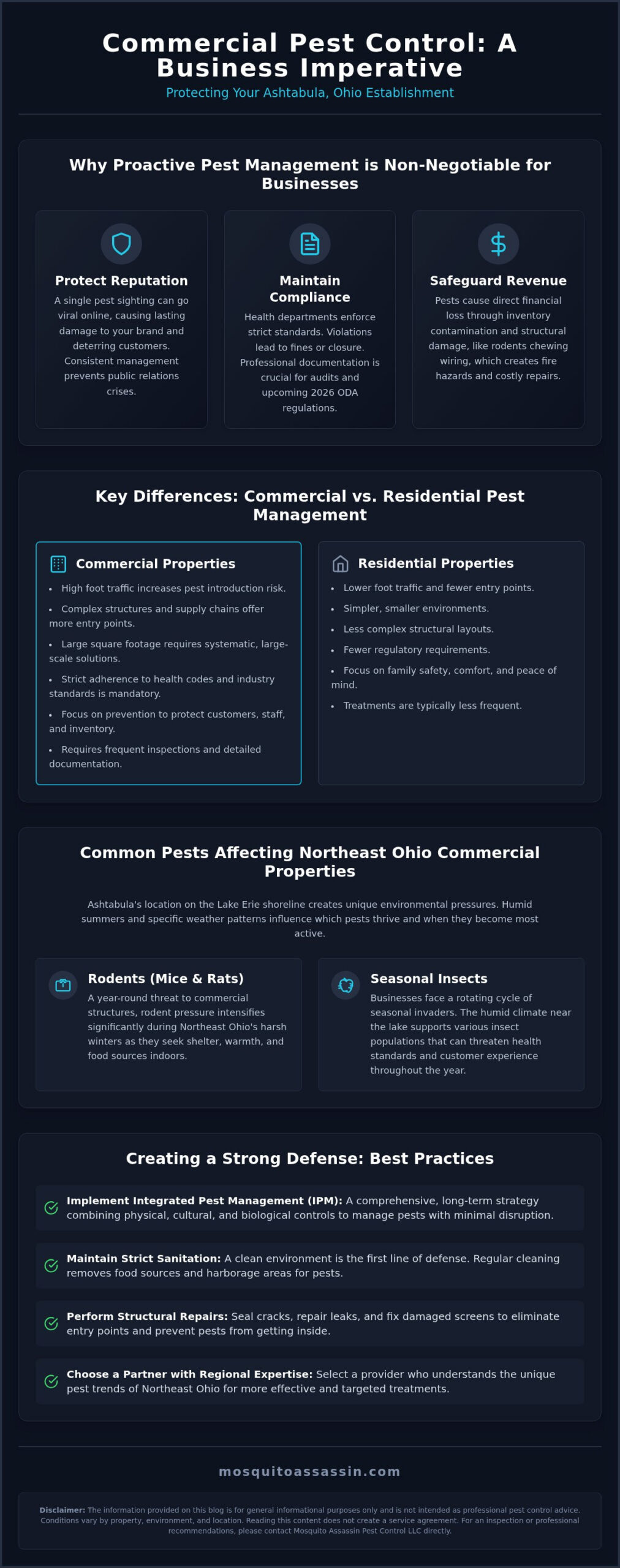
This guide explores how professional management protects businesses from the risks of health department penalties while ensuring compliance with Ohio Department of Agriculture regulations. By understanding the specific behaviors of local pests and the unique climate of Northeast Ohio, property owners can move from reactive treatments to a state of long-term resolution. Readers will learn about the essential components of a professional management plan, including seasonal exclusion techniques and the importance of a methodical, science-based approach to pest prevention.
Disclaimer: The information provided on this blog is for general informational purposes only and is not intended as professional pest control advice. Conditions vary by property, environment, and location. Reading this content does not create a service agreement. For an inspection or professional recommendations, please contact Mosquito Assassin Pest Control LLC directly.
Key Takeaways
- Professional Integrated Pest Management (IPM) focuses on proactive environmental controls rather than reactive treatments, which provides a more stable and effective solution for businesses.
- Securing professional commercial pest control Ashtabula Ohio ensures compliance with Ohio Department of Agriculture licensing standards and local health department regulations.
- Different industries face unique risks, such as rodent pressure in warehousing or strict sanitation requirements in hospitality, which require customized management strategies.
- The Northeast Ohio climate creates distinct seasonal pest patterns that professional services address through specialized exclusion and year-round monitoring.
- Long-term success depends on a partnership that includes staff education on sanitation practices and the early identification of potential pest entry points.
Common Commercial Pest Challenges in Ashtabula County
Managing a business in Northeast Ohio requires a deep understanding of how the local environment dictates pest behavior. Proximity to Lake Erie creates micro-climates that influence everything from insect hatch dates to rodent migration patterns. Effective commercial pest control Ashtabula Ohio relies on identifying these specific regional triggers rather than applying generic, one-size-fits-all solutions. Local geography, ranging from the industrial docks to the retail centers of downtown Ashtabula, presents unique entry points and harborage risks for various species.
To better understand the systematic approach required for business environments, watch this helpful video:
Ashtabula’s landscape features a mix of high-traffic commercial zones and sensitive agricultural areas. This diversity allows pests to move easily between environments. Professionals utilize Integrated Pest Management (IPM) to address these movements. This framework emphasizes understanding the life cycles of pests and their interaction with the environment. For instance, the 2026 expansion of the Box Tree Moth quarantine into Ashtabula County and the statewide Spotted Lanternfly quarantine require vigilant, localized monitoring. Businesses moving regulated products must now adhere to specific compliance agreements to prevent the spread of these invasive species.
Rodents and Structural Integrity
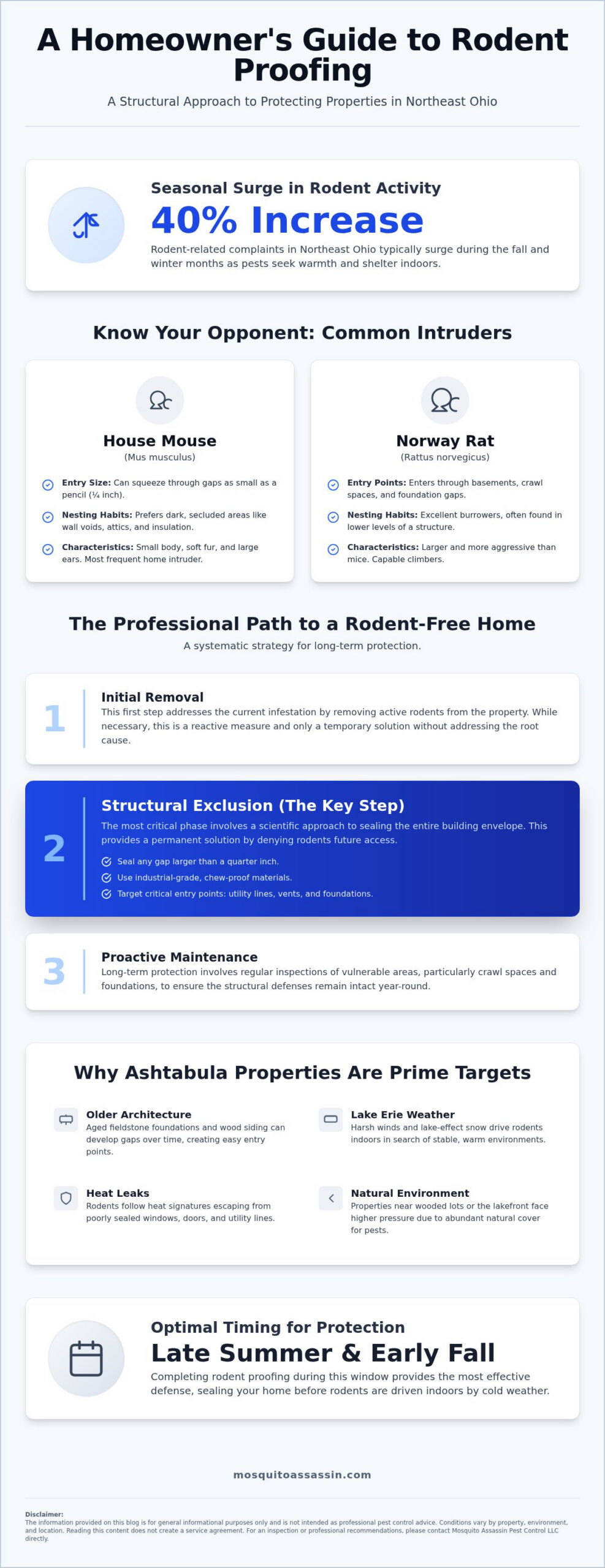
Rodents seek shelter in commercial structures as temperatures drop along the lakeshore. Common signs of mice and rats include dark rub marks along baseboards, droppings near food sources, and damaged packaging in storage areas. These pests pose severe risks to structural integrity by chewing through electrical wiring, which is a leading cause of electrical fires. They also contaminate inventory with pathogens. Basic traps often fail because they don’t address the root cause. Professional commercial services focus on a three-step process: removal, ongoing maintenance, and permanent exclusion to seal entry points.
Seasonal Pressures: Mosquitoes and Ticks
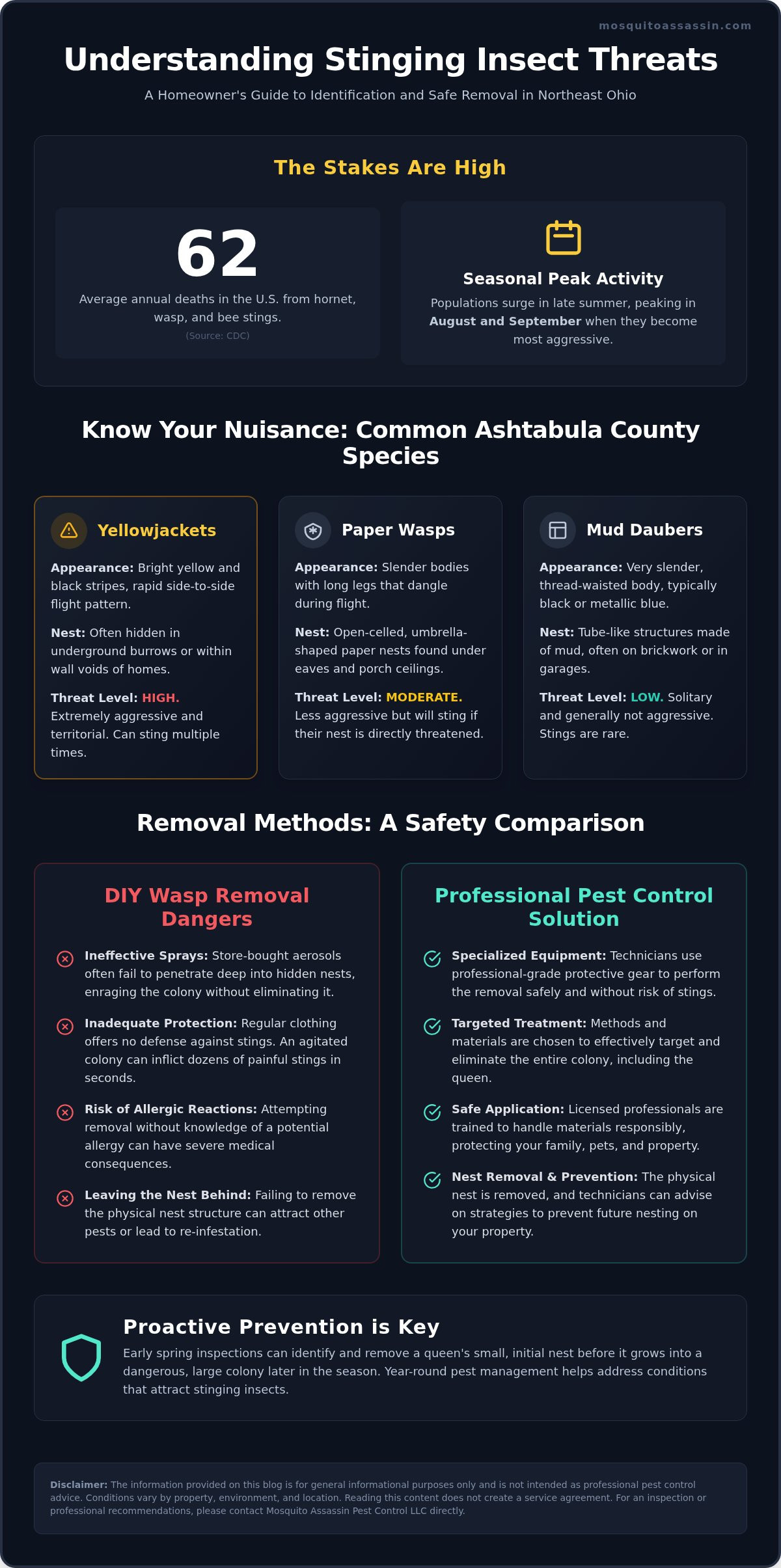
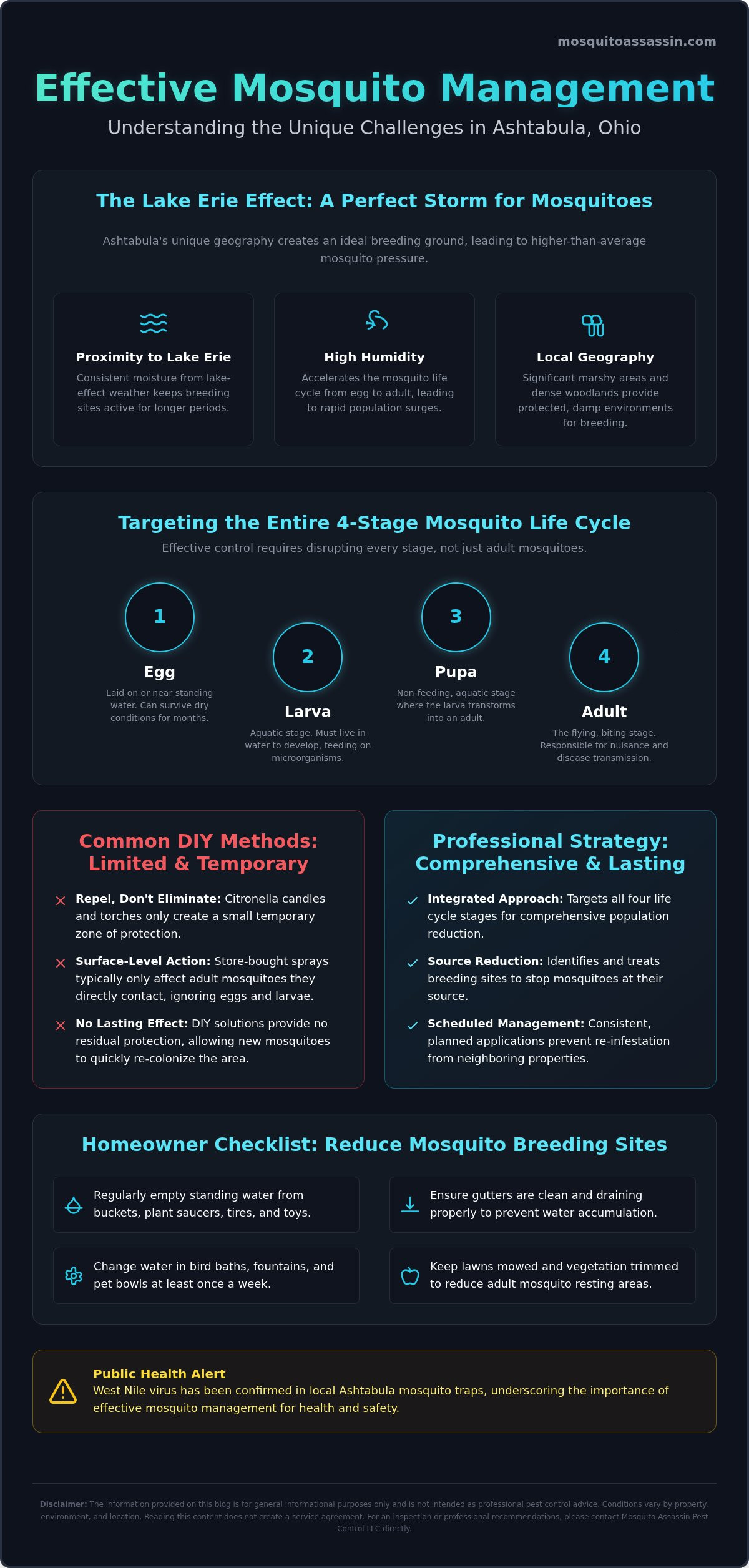
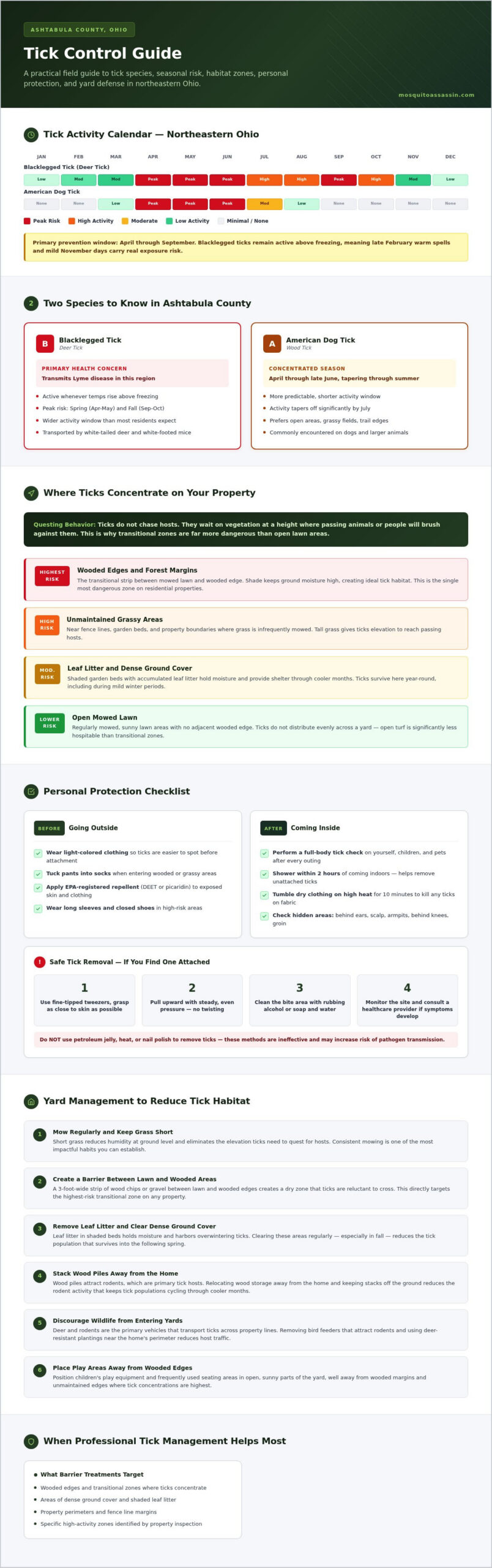
Outdoor hospitality and retail spaces face intense pressure during the warmer months. Seasonal pests like mosquitoes and ticks thrive in the humid conditions near Lake Erie, often driving customers away from outdoor seating areas. Protecting employees and customers in these high-traffic zones is essential for maintaining a positive reputation. Consistent monitoring during peak Ohio pest seasons helps identify breeding sites and reduce population spikes. Professional management ensures these outdoor areas remain usable and safe, mitigating the risks associated with public health pests throughout the year.
Disclaimer: The information provided on this blog is for general informational purposes only and is not intended as professional pest control advice. Conditions vary by property, environment, and location. Reading this content does not create a service agreement. For an inspection or professional recommendations, please contact Mosquito Assassin Pest Control LLC directly.
The Integrated Pest Management Framework for Businesses
Professional pest management has evolved beyond simple reactive treatments. Today, the industry standard is Integrated Pest Management (IPM), a strategic approach that prioritizes long-term prevention over temporary fixes. For businesses seeking commercial pest control Ashtabula Ohio, this framework is essential for maintaining a safe and compliant environment. Instead of relying solely on chemical applications, IPM focuses on managing the environment to make it less hospitable to pests. This shift from reactive spraying to proactive management reduces the risk of infestations before they can impact business operations.
A central benefit of this framework is the detailed documentation it provides. In a commercial setting, record-keeping is not just for internal use; it is a critical component of regulatory compliance. When health department inspectors review a facility, a professional pest management log serves as evidence of a proactive sanitation program. Following EPA’s IPM Principles, these logs track pest sightings, identify trends, and document the specific non-chemical interventions used to secure the property. This level of transparency builds trust with regulators and protects the business reputation.
Inspection and Identification
The foundation of any successful IPM plan is a comprehensive site evaluation. Professionals must accurately identify the specific species present and the environmental factors contributing to their survival. Commercial facilities often have unique attractants, such as large-scale waste disposal areas, loading docks, or complex HVAC systems, that require specialized attention. By using data to track activity levels over time, a management plan can be adjusted to meet the changing needs of the facility. This data-driven approach ensures that interventions are targeted and effective, rather than generalized.
The Three-Step Process: Removal, Maintenance, and Exclusion
A professional management strategy typically follows a disciplined three-step process to ensure a pest-free status. First, professional removal establishes a clean slate by eliminating any existing populations within the structure. Once the immediate threat is addressed, ongoing maintenance schedules are implemented to monitor for new activity and prevent infestations from taking root. Finally, structural exclusion techniques are used to seal the building against future entry. This includes installing heavy-duty door sweeps, sealing utility penetrations, and repairing screens. Implementing these commercial services creates a permanent barrier that protects the facility from the outside in.
Disclaimer: The information provided on this blog is for general informational purposes only and is not intended as professional pest control advice. For an inspection or professional recommendations, please contact Mosquito Assassin Pest Control LLC directly.
Industry-Specific Pest Risks and Regulatory Standards
Every commercial sector in Northeast Ohio operates under a unique set of biological pressures and regulatory requirements. A retail storefront in downtown Ashtabula faces different challenges than a manufacturing plant near the Lake Erie shoreline. Effective commercial pest control Ashtabula Ohio must be tailored to these specific operational environments to ensure both the safety of the facility and the protection of the business reputation. The regulatory landscape in Ohio involves overlapping jurisdictions, including the Ohio Department of Agriculture and local health departments, making professional oversight a necessity for compliance.
In the professional office environment, the focus is on maintaining a clean, distraction-free atmosphere for both clients and staff. While these spaces typically lack the high-volume food sources found in other industries, they are still susceptible to nuisance pests like ants or spiders that can compromise a professional image. Property managers face the added complexity of protecting multi-unit reputations. Managing pests in shared structures requires a consistent protocol to prevent activity from spreading through common walls, utility lines, or ventilation systems.
Food Service and Public Health
Commercial kitchens and hospitality venues are high-risk zones where pest activity can lead to immediate health department citations. Flies and cockroaches are significant public health concerns because they act as vectors for various pathogens. Adhering to Integrated Pest Management (IPM) principles is the professional standard for these facilities. This approach prioritizes sanitation and structural repairs, such as sealing gaps around plumbing and maintaining grease traps, to eliminate attractants. Professional management ensures that customer-facing dining areas remain hygienic, helping businesses pass strict Ohio health inspections and maintain public trust.
Logistics and Large-Scale Facilities
Warehousing and logistics centers deal with intense rodent pressure, particularly in facilities with high-volume shipping and receiving zones. Loading docks that remain open for extended periods provide easy entry for rats and mice, which can contaminate inventory and cause physical damage to stored goods. Coordinating commercial services across large-scale facilities requires a systematic approach to monitoring and exclusion. These hubs are also on the front lines of invasive species management. With the 2026 expansion of the Box Tree Moth quarantine into Ashtabula County and the statewide Spotted Lanternfly quarantine, logistics businesses must maintain strict compliance agreements to ensure regulated products remain pest-free during transport.
Disclaimer: The information provided on this blog is for general informational purposes only and is not intended as professional pest control advice. For an inspection or professional recommendations, please contact Mosquito Assassin Pest Control LLC directly.

Selecting a Commercial Pest Management Partner in Northeast Ohio
Choosing a service provider for a business property is a decision that impacts long-term operational stability. Property owners often weigh the perceived scale of national chains against the specialized knowledge of local experts. In Northeast Ohio, a partner with deep roots in the community often provides a higher level of accountability. These professionals understand the specific environmental stressors of the region, such as the high humidity near Lake Erie and the resulting pest cycles. Effective commercial pest control Ashtabula Ohio requires more than just a standard checklist; it demands a partner who is physically present in the same zip codes as the businesses they protect.
Accountability also extends to reporting and communication. A professional partner provides clear, actionable data after every visit. This documentation is vital for businesses that must demonstrate a proactive sanitation program to external auditors or health inspectors. Instead of generic service slips, look for providers who offer detailed insights into pest activity trends and structural vulnerabilities. This level of transparency ensures that the business owner is always informed about the status of their facility. For an inspection or professional recommendations, professional pest control may help reduce risk.
Licensing and Insurance Requirements
Professional licensing is a non-negotiable standard for commercial liability. In Ohio, any business performing pest control for hire must hold a Pesticide Business License issued by the Ohio Department of Agriculture. Additionally, the work must be performed or supervised by an individual holding a Commercial Pesticide Applicator License. These regulations ensure that technicians are trained in the latest Integrated Pest Management (IPM) best practices and safety protocols. Verified general liability insurance, which requires at least $300,000 per occurrence in Ohio, protects the business property in the event of unforeseen issues. Working with a provider who maintains these standards ensures that the facility remains compliant with state law.
Customization and Scalability
A one-size-fits-all approach rarely succeeds in complex commercial environments. A retail shop has different risk levels than a food processing plant, and service frequency should reflect these specific needs. Professional plans adapt to the shifting pressures of the Ohio climate, increasing monitoring during peak activity months. This scalability ensures that resources are allocated where they are most effective, preventing minor issues from becoming full-scale infestations. Dedicated account management provides a single point of contact for coordinating services across multiple locations, ensuring consistency in both results and reporting.
Disclaimer: The information provided on this blog is for general informational purposes only and is not intended as professional pest control advice. For an inspection or professional recommendations, please contact Mosquito Assassin Pest Control LLC directly.
Long-Term Protection Strategies for Ashtabula Businesses
Securing effective commercial pest control Ashtabula Ohio is most successful when viewed as a long-term partnership rather than a series of emergency visits. Maintaining a pest-free status in Northeast Ohio is not a seasonal task; it’s a year-round commitment that requires a proactive mindset. Businesses that treat pest management as a continuous operational priority find that they’re better equipped to handle the shifting biological pressures of the Lake Erie region. This ongoing effort involves a combination of professional intervention and internal vigilance. Staff education plays a vital role in this strategy. When employees are trained to recognize early signs of activity, such as rub marks or scattered debris, they become the first line of defense. Proper sanitation protocols, including the immediate cleanup of spills and the organized storage of inventory, significantly reduce the attractants that draw pests into a facility.
Facility Maintenance and Sanitation
The physical condition of a building is directly linked to its vulnerability. External perimeter care, such as keeping vegetation trimmed and dumpsters located away from entry points, discourages pests from nesting near the structure. Addressing moisture issues is equally important, as leaking pipes or poorly drained gutters create ideal breeding grounds for insects and rodents.
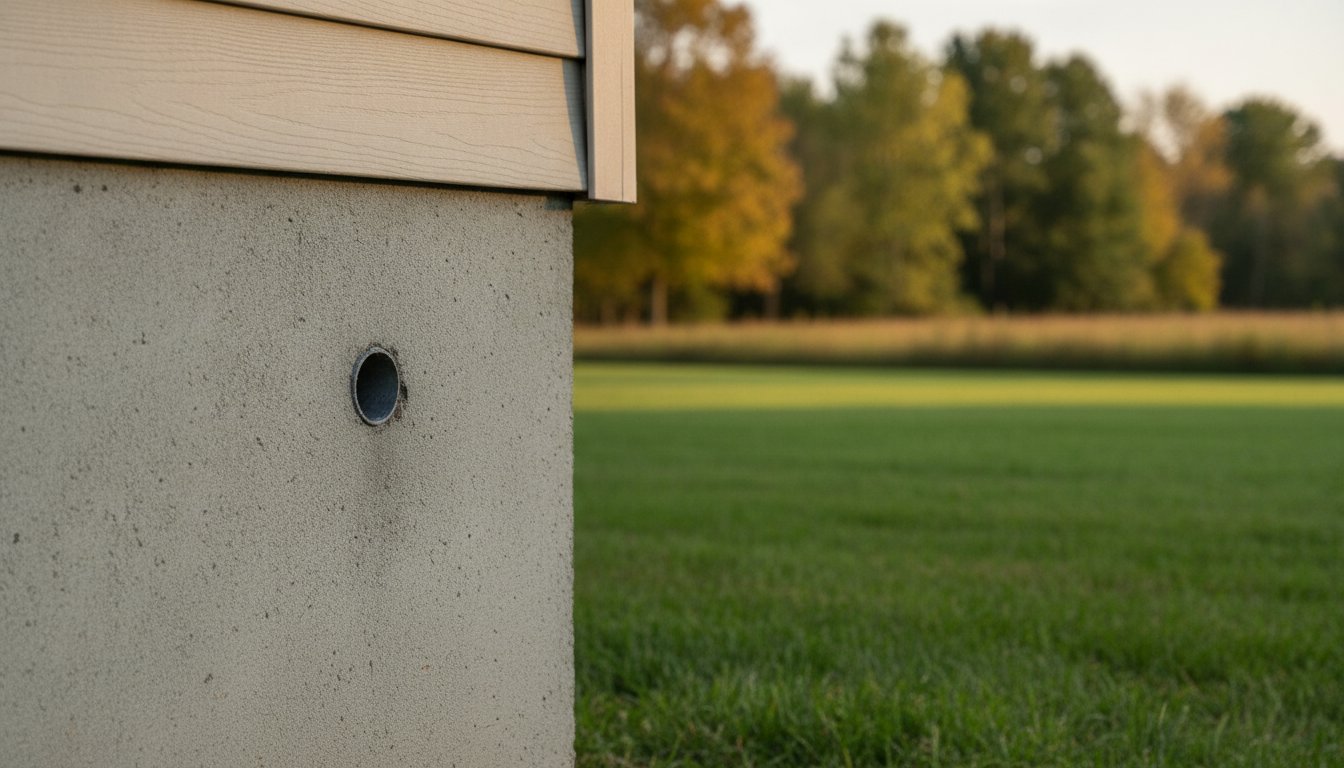
Exclusion is the physical sealing of a structure to prevent pest entry.
The Value of Continuous Monitoring
While some property owners may consider one-time treatments for immediate issues, these reactive measures rarely provide lasting results in a commercial environment. The constant movement of goods and people provides frequent opportunities for pests to re-enter a facility. Continuous monitoring allows for the early detection of these breaches before they escalate into a crisis that threatens business reputation. Investing in consistent commercial pest control Ashtabula Ohio reduces long-term operational costs by preventing inventory damage and avoiding expensive health department fines. Next steps for businesses seeking commercial pest control services include establishing a reliable partnership to ensure peace of mind. Professional expertise provides the security needed to focus on daily operations without the distraction of potential infestations.
Disclaimer: The information provided on this blog is for general informational purposes only and is not intended as professional pest control advice. For an inspection or professional recommendations, please contact Mosquito Assassin Pest Control LLC directly.
Securing Your Business Future in Northeast Ohio
Protecting a commercial property requires a transition from reactive treatments to a disciplined, year-round management strategy. Professional Integrated Pest Management (IPM) ensures that local businesses meet strict Ohio health codes while addressing the unique seasonal shifts of the Lake Erie shoreline. Local expertise matters. By prioritizing structural exclusion and consistent monitoring, property owners can safeguard their inventory and reputation from the risks of infestation. Licensed experts serving Ashtabula, Erie, and Crawford Counties provide the specialized knowledge necessary to navigate these regional challenges. Implementing a comprehensive commercial pest control Ashtabula Ohio plan is a strategic investment in long-term operational stability. Professional oversight allows staff to focus on daily success without the threat of unexpected health department violations. To ensure your facility remains compliant and secure, request professional pest management recommendations today. A proactive approach is the most effective way to maintain a clean and professional environment for clients and employees alike.
Disclaimer: The information provided on this blog is for general informational purposes only and is not intended as professional pest control advice. For an inspection or professional recommendations, please contact Mosquito Assassin Pest Control LLC directly.
Frequently Asked Questions
Why is commercial pest control necessary for businesses in Ashtabula?
Professional management protects business reputations and ensures compliance with local health regulations. In Ashtabula, the proximity to Lake Erie and industrial hubs creates high pest pressure that can lead to health department violations. Maintaining a professional, hygienic environment is a non-negotiable requirement for success. Professional services safeguard the physical structure from damage caused by rodents or insects, which is essential for long-term asset protection and public trust.
How often should a business in Ohio receive professional pest inspections?
Most commercial facilities benefit from monthly or bi-monthly inspections, though high-risk industries like food service often require more frequent monitoring. The specific frequency depends on the type of business, the history of pest activity, and the surrounding environment. Regular inspections are the foundation of a year-round protection plan. They allow professionals to identify structural vulnerabilities and address them before they escalate into significant infestations that disrupt daily operations.
Is professional pest management safe for restaurants and food service?
Professional management is designed to be safe and compliant with strict food safety standards. Licensed technicians use targeted application methods and non-chemical barriers to manage pests without compromising food preparation areas. Utilizing an Integrated Pest Management (IPM) framework allows for the effective control of flies and cockroaches while prioritizing the health of both employees and customers. This methodical approach ensures that dining areas remain hygienic and meet all regulatory requirements.
What is the difference between residential and commercial pest control?
Commercial pest control Ashtabula Ohio involves higher stakes and more complex regulatory requirements than residential services. While homes focus on the comfort of a single family, businesses must protect large-scale inventories and comply with health department mandates. Commercial plans typically involve more rigorous documentation and a focus on structural exclusion. This is necessary to handle the constant movement of goods and people across multiple facility entry points throughout the year.
Can professional pest control help a business pass health inspections?
A professional management plan is a critical asset for passing health inspections by providing documented evidence of proactive sanitation and monitoring. Inspectors look for signs of pest activity and the presence of a professional management log. By maintaining a clean environment and addressing structural vulnerabilities, professional services help businesses meet the standards set by the Ohio Department of Agriculture. This proactive oversight reduces the risk of citations and protects the business’s legal standing.
How does the climate in Ashtabula affect commercial pest risks?
The humid climate near Lake Erie and the distinct seasonal shifts in Northeast Ohio create specific pest cycles that businesses must manage. Warmer months bring intense pressure from mosquitoes and flies, while the onset of winter drives rodents toward the warmth of commercial structures. Professional plans adapt to these changes by increasing monitoring during peak activity periods. They focus on exclusion techniques that address the unique nesting habits of local pests during every season.
What should a business do if they see a rodent on the premises?
If a rodent is sighted, the business should immediately document the location and contact a professional service for a thorough evaluation. Avoid attempting DIY trapping, as these methods often fail to address the root cause of the entry. A professional will implement a three-step process involving removal, ongoing maintenance, and structural exclusion. Sealing the building is the only way to prevent future infestations from taking root and damaging the company’s inventory.
What are the most common pests found in Northeast Ohio commercial buildings?
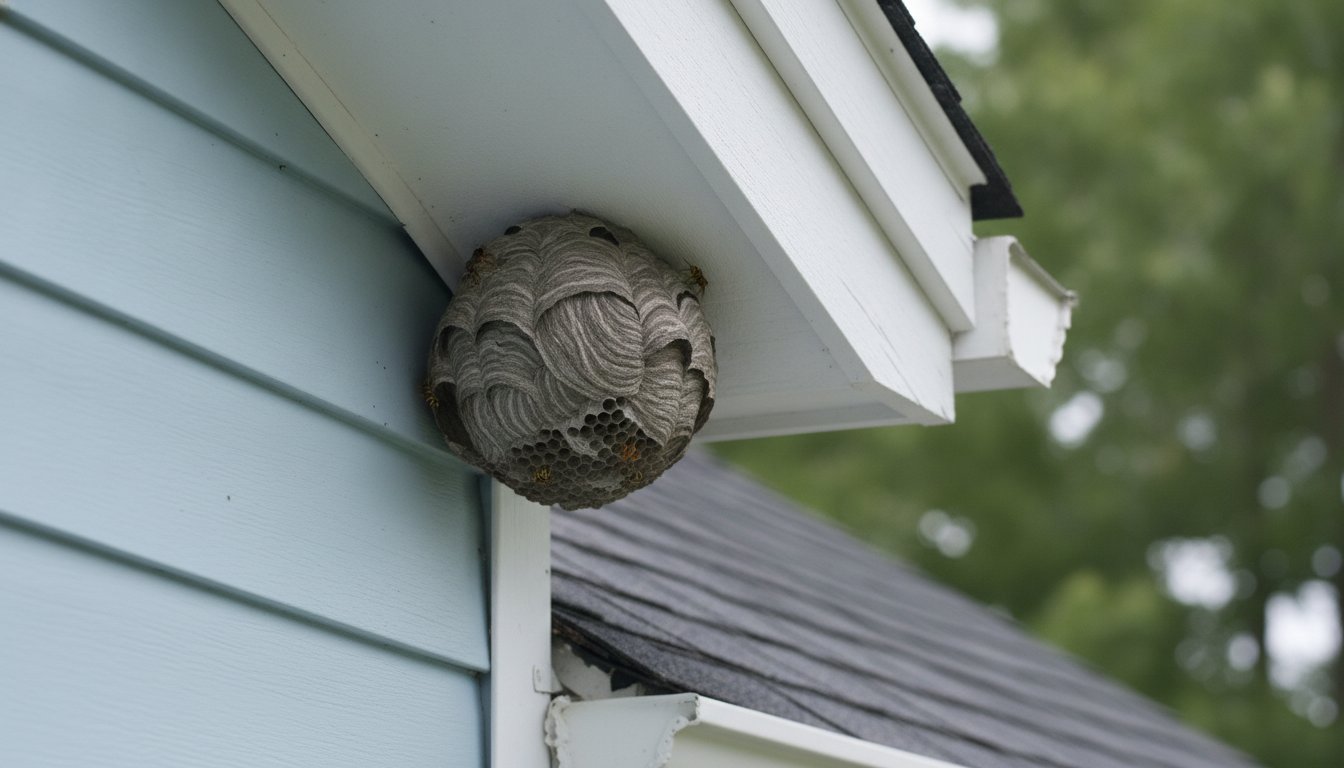
Common pests in the region include rodents like mice and rats, cockroaches, ants, and stinging insects such as wasps or hornets. Seasonal pests like mosquitoes and ticks also impact businesses with outdoor spaces. Additionally, invasive species like the Spotted Lanternfly and Box Tree Moth are increasingly significant concerns for businesses in Ashtabula County. These pests require specialized compliance agreements and vigilant monitoring to prevent their spread through regional logistics and shipping networks.
Disclaimer: The information provided on this blog is for general informational purposes only and is not intended as professional pest control advice. For an inspection or professional recommendations, please contact Mosquito Assassin Pest Control LLC directly.