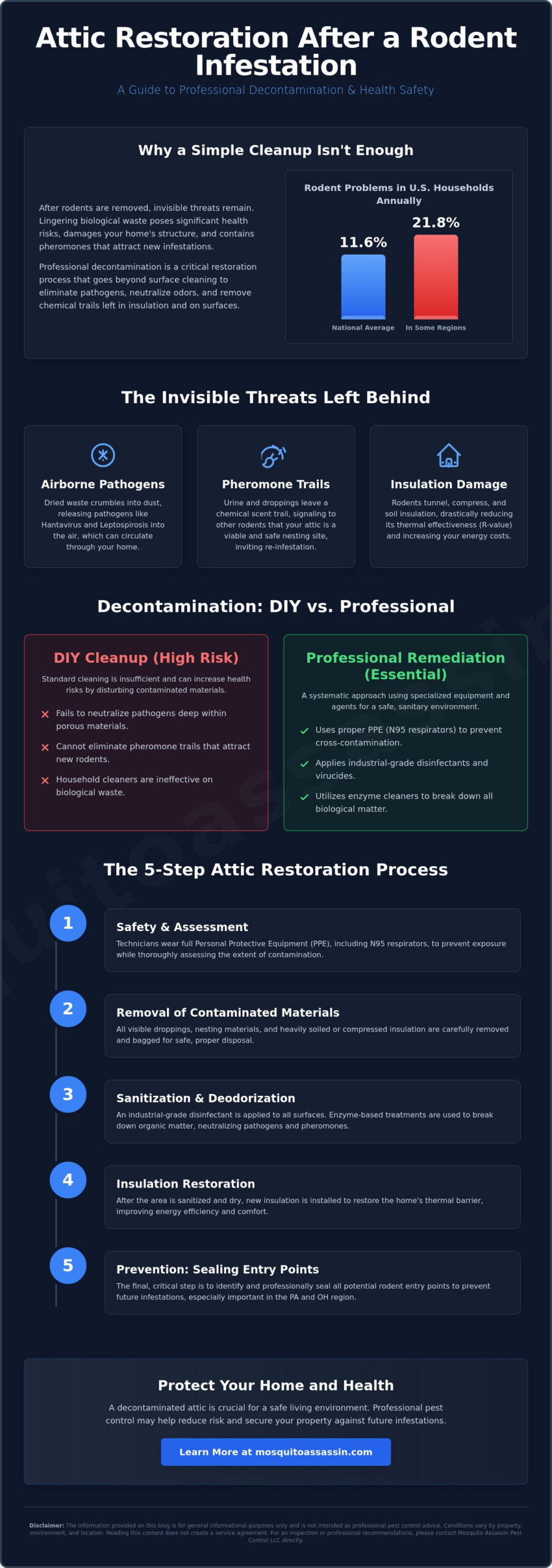
Did you know that an estimated 11.6% of households in the United States report rodent problems every year, with rates in some regional areas climbing as high as 21.8%? Discovering that your home requires rat removal from attic Erie PA is a stressful experience that often leaves property owners concerned about more than just the pests themselves. It’s common to feel anxious about lingering ammonia odors from urine or the invisible threat of diseases like hantavirus and leptospirosis that remain long after the rodents are gone.
This guide outlines the essential safety protocols and restoration steps required to return your attic to a sanitary state and protect your household’s health. You’ll learn how to evaluate the necessity of insulation replacement and the methods used to neutralize biological hazards effectively. By following a methodical approach to decontamination, you can ensure your attic is clean, odor-free, and secured against future infestations.
Disclaimer: The information provided on this blog is for general informational purposes only and is not intended as professional pest control advice. Conditions vary by property, environment, and location. Reading this content does not create a service agreement. For an inspection or professional recommendations, please contact Mosquito Assassin Pest Control LLC directly.
Key Takeaways
- Distinguish between cosmetic cleaning and professional biological remediation to ensure all hazardous waste is neutralized.
- Explore the risks of airborne pathogens and how pheromone trails act as a roadmap for future infestations.
- Understand the safety protocols and specialized equipment, such as N95 respirators, needed to prevent cross-contamination during the sanitization process.
- Follow the essential steps for restoring safety after rat removal from attic Erie PA, focusing on the removal of compromised materials.
- Learn how regional climate factors in Pennsylvania and Ohio impact rodent activity and why sealing entry points is vital for prevention.
Why Attic Decontamination is Vital After Rat Removal from Attic Erie PA
Attic decontamination is a specialized restoration process that goes far beyond a simple cleanup. It involves the systematic removal of hazardous biological waste, including droppings, urine, and nesting materials left behind by rodents. While the physical rat removal from attic Erie PA is the necessary first step, it doesn’t address the microscopic threats that linger in the insulation and floorboards. Professional biological remediation protocols use industrial-grade disinfectants and enzymes to neutralize pheromones and pathogens that common household cleaners simply can’t touch.
To better understand this concept, watch this helpful video:
If you leave the waste behind, you’re leaving a biological roadmap for the next generation of pests. Rodent waste impacts indoor air quality and can even compromise the efficiency of your HVAC system if contaminants enter the ductwork. Unlike superficial cleaning, professional decontamination ensures that every square inch of the space is treated to meet safety standards, protecting both the structure and the people living beneath it.
The Hidden Dangers of Rodent Waste
Urine and droppings serve as primary breeding grounds for bacteria and fungi. As these materials dry, they can crumble into fine dust. This contaminated dust often becomes airborne, circulating through your home’s living spaces. Understanding the Health Risks associated with these pathogens is critical for every homeowner in the Pennsylvania and Ohio region. Additionally, the presence of rodents often brings secondary infestations. Parasites like mites and fleas can migrate from the attic into your bedrooms, making comprehensive general pest control a vital part of the recovery process.
Structural Impact on Attic Insulation
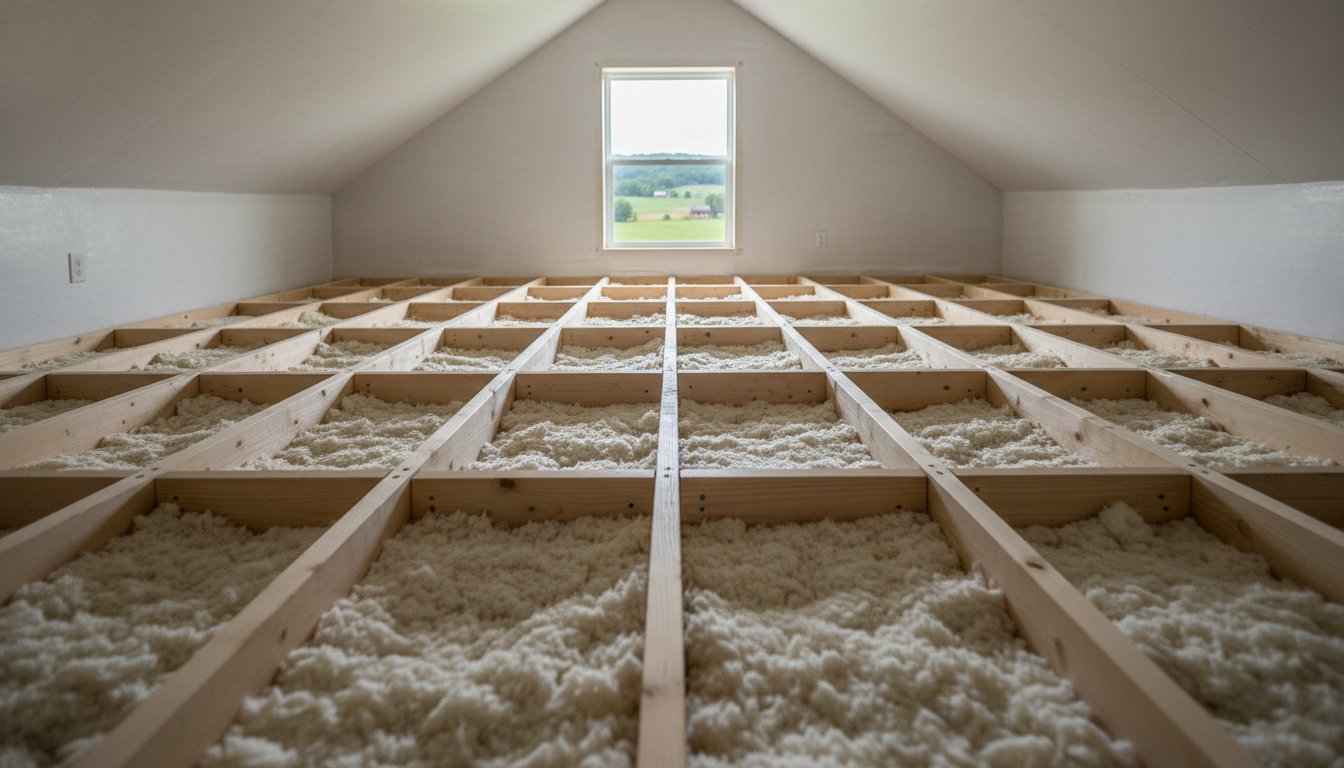
Rodents don’t just live in your attic; they destroy it. Their nesting behavior involves tunneling through and compressing insulation, which significantly reduces its thermal effectiveness. Over time, urine saturation in fiberglass and cellulose materials creates a permanent odor source and a structural hazard. Spot cleaning is ineffective for these porous materials because liquids seep deep into the fibers. Effective rat removal from attic Erie PA must be paired with an assessment of the insulation. In many cases, full replacement is the only way to restore the home’s energy efficiency and eliminate the lingering ammonia smells that attract new rodents to the property.
Disclaimer: The information provided on this blog is for general informational purposes only and is not intended as professional pest control advice. Conditions vary by property, environment, and location. Reading this content does not create a service agreement. For an inspection or professional recommendations, please contact Mosquito Assassin Pest Control LLC directly.
Understanding the Health Risks and Pheromone Trails
The smell of a rodent infestation is more than just a nuisance; it’s a chemical beacon. Residents often describe a lingering, sharp ammonia scent that permeates the upper floors of their home. This persistent odor can have a real psychological impact, making guests feel unwelcome and causing homeowners to feel a loss of control over their environment. Even after the initial rodent removal is complete, the biological residue continues to broadcast a message to every rat in the neighborhood that your attic is a viable habitat. These lingering scents act as a functional invitation for new pests to investigate your property.
Pathogens and Airborne Hazards
Pathogens like Hantavirus and Leptospirosis are primary concerns when dealing with infestations in the United States. These diseases are often spread through direct or indirect contact with rodent urine or droppings. A major risk occurs when homeowners attempt to sweep or vacuum dry droppings. This action releases microscopic pathogens into the air where they can be easily inhaled. In the humid environments of Erie, PA, and surrounding counties, organic rodent waste also provides a nutrient-rich base for mold colonies to thrive. Proper decontamination requires wetting these materials with specialized disinfectants before removal to keep particles from becoming airborne.
The Science of Rodent Pheromones
Rats are creatures of habit that follow established paths. They use their whiskers and an acute sense of smell to navigate in total darkness, relying heavily on the pheromone trails left by previous inhabitants. These scents tell them where food is located, where it’s safe to sleep, and exactly which entry points are vulnerable. When you invest in rat removal from attic Erie PA, failing to remove these markers is like leaving a vacancy sign lit for local pests. Professional decontamination uses enzymatic cleaners specifically designed to break down these complex proteins. Erasing this “scent roadmap” is a scientific necessity for long-term exclusion. It ensures your attic doesn’t attract a new colony as soon as the weather turns cold. If you’re concerned about lingering hazards in your home, professional pest control may help reduce risk.
Disclaimer: The information provided on this blog is for general informational purposes only and is not intended as professional pest control advice. Conditions vary by property, environment, and location. Reading this content does not create a service agreement. For an inspection or professional recommendations, please contact Mosquito Assassin Pest Control LLC directly.
Professional Decontamination vs DIY Cleanup Efforts
Attempting to clean an attic after a rodent infestation is a high-stakes task that requires more than just a bucket of bleach and a pair of gloves. While homeowners might feel tempted to handle the aftermath themselves, the biological risks associated with rat removal from attic Erie PA demand a specialized approach. Professional standards ensure that every step of the process minimizes exposure to pathogens that can cause serious illness. This process isn’t just about aesthetics; it’s about restoring the safety of your home’s environment.
Professionals utilize high-grade Personal Protective Equipment (PPE), including P100 respirators and full-body biohazard suits. These tools are necessary because standard dust masks don’t provide the seal or filtration efficiency required to block microscopic bacteria found in rodent waste. Beyond personal safety, professional decontamination often involves thermal fogging or specialized misting. This technique allows sanitizing agents to penetrate deep into floorboard gaps and every crevice that manual scrubbing simply cannot reach. You can learn more about the local professional standards used in the Erie region to ensure your property is treated with the highest level of care.
The Danger of DIY Vacuuming
Standard household vacuums and shop vacs are dangerous tools in a contaminated attic. The filters in these machines are designed for common household dust, not microscopic biological hazards. When you vacuum rodent droppings, the machine often pulverizes the waste and blasts it out through the exhaust. This process aerosolizes the very contaminants you’re trying to remove, effectively spreading them throughout your living space. Professional remediation requires industrial-grade HEPA-filtered vacuums. These machines are designed to trap 99.97% of particles down to 0.3 microns, ensuring that no hazardous dust escapes back into the air.
Specialized Cleaning Agents
Standard household disinfectants usually fail on the porous surfaces found in attics, such as wood framing and drywall. True sanitization requires antimicrobial and antifungal treatments that kill pathogens on contact. Enzymatic cleaners are also a critical requirement. These agents are specifically designed to break down the complex proteins found in rodent urine. These proteins are the source of persistent ammonia smells and act as a beacon for other pests. Professionals also select non-corrosive sanitizers. This is vital when working near electrical wiring and junction boxes. It ensures your home’s infrastructure remains safe while the biological threats are eliminated. For complex infestations, professional pest control may help reduce risk.
Disclaimer: The information provided on this blog is for general informational purposes only and is not intended as professional pest control advice. Conditions vary by property, environment, and location. Reading this content does not create a service agreement. For an inspection or professional recommendations, please contact Mosquito Assassin Pest Control LLC directly.
The Multi-Step Process of Attic Sanitization
Before any cleaning begins, professionals prioritize the safety of the rest of the home. This involves creating a physical barrier between the attic and living quarters to prevent cross-contamination. Technicians use heavy-duty plastic sheeting and negative air machines to ensure that dust and pathogens don’t drift into your bedrooms or kitchen. This preparation is a hallmark of high-quality rat removal from attic Erie PA. Once the environment is stabilized, the systematic removal of contaminated materials begins. This isn’t a simple sweep; it’s a deep extraction of every biological hazard present.
Effective rat removal from attic Erie PA requires a multi-step approach that addresses the attic floor, joists, and rafters. Every structural member must be inspected and cleaned to remove biological debris that could harbor bacteria. The application of sanitizing agents follows this deep cleaning, ensuring that the space is restored to a safe, neutral state. This disciplined process is essential for long-term health and home security.
Insulation Removal and Waste Management
The process starts with the extraction of damaged insulation. Professionals use high-powered vacuum systems with long hoses that lead to external collection points. This keeps the waste entirely outside the home’s interior. In Pennsylvania and Ohio, disposing of biohazardous attic waste requires following specific local municipal protocols. After the insulation is gone, technicians inspect the attic floor for hidden damage or entry points. This is the best time to identify compromised electrical wiring or structural rot caused by long-term urine saturation. Clearing the space allows for a full view of the home’s protection through various professional pest control services.
Sanitization and Odor Neutralization
After debris removal, the focus shifts to neutralizing pathogens. Thermal fogging is a primary tool used to reach inaccessible crevices in the roofline and eaves. This mist carries disinfectants and odor neutralizers into every gap where liquid sprays can’t reach. Technicians also treat wood framing, joists, and rafters with antimicrobial agents to prevent mold growth. It’s vital to ensure the attic is completely dry before installing new insulation. Trapping moisture under new materials can lead to structural decay. If you suspect your attic has been compromised, you should schedule a professional inspection to assess the damage.
Disclaimer: The information provided on this blog is for general informational purposes only and is not intended as professional pest control advice. Conditions vary by property, environment, and location. Reading this content does not create a service agreement. For an inspection or professional recommendations, please contact Mosquito Assassin Pest Control LLC directly.
Preventing Future Infestations in the PA and OH Region
Successful rat removal from attic Erie PA is a temporary victory if the structural vulnerabilities of the home remain unaddressed. In the Great Lakes region, the combination of lake-effect moisture and extreme temperature shifts creates a unique set of challenges for property owners. High humidity levels during the summer can soften wood around eaves and soffits, making them easier for rodents to gnaw through. When the harsh winters arrive in Erie and Crawford counties, rodents instinctively seek the warmth and security of residential attics. Sealing these entry points is the final, non-negotiable step in a total restoration plan. You can confirm the specific regional service coverage available in your area to ensure your property is protected by experts who understand these local conditions.
Exclusion is a technical process that requires a keen eye for detail. Rats can squeeze through gaps as small as a quarter-inch, meaning that even minor cracks in a foundation or roofline are potential doorways. Ongoing monitoring is a critical component of a comprehensive management plan. It ensures that any new attempts by rodents to breach the structure are identified before they can establish a colony. A proactive approach is always more effective than reacting to a second infestation after the initial rat removal from attic Erie PA is complete.
Regional Exclusion Strategies
The architectural styles common in older neighborhoods throughout Erie and Ashtabula often feature intricate rooflines, decorative gable vents, and complex soffit designs. While these features add character, they also provide numerous hidden gaps. Effective exclusion requires identifying every opening and reinforcing it with rodent-proof materials. Heavy-gauge galvanized steel mesh and specialized gnaw-resistant sealants are the industry standards for these repairs. Standard spray foams or wood fillers are insufficient because rats can easily chew through them in a single night. Professional pest control may help reduce risk by ensuring these seals are installed correctly in hard-to-reach areas where DIY efforts often fall short.
Environmental Maintenance
The geography of Crawford and Ashtabula counties is characterized by abundant woodlots and agricultural fields. This means that rodent pressure is a constant reality for nearby homes. Homeowners must manage their landscape to discourage activity near the foundation. Bird feeders and outdoor pet food bowls are primary attractants that draw rodents from nearby fields toward the house. Additionally, keeping tree limbs trimmed at least six to eight feet away from the roofline prevents rats from jumping onto the shingles. Regular annual attic inspections are the most effective way to catch early signs of entry. Maintaining a clean, unattractive perimeter is just as important as the mechanical seals on the house itself.
Disclaimer: The information provided on this blog is for general informational purposes only and is not intended as professional pest control advice. Conditions vary by property, environment, and location. Reading this content does not create a service agreement. For an inspection or professional recommendations, please contact Mosquito Assassin Pest Control LLC directly.
Securing Your Home and Health for the Long Term
Restoring your attic after an infestation is a vital step in reclaiming the safety of your living environment. A successful outcome requires more than just trapping rodents; it demands the scientific neutralization of pheromone trails and the safe removal of biohazardous waste. By prioritizing professional-grade sanitization and utilizing durable exclusion materials like steel mesh, you can effectively break the cycle of infestation. These protocols are especially important in the variable climates of Erie, Crawford, and Ashtabula counties, where humidity and seasonal shifts can exacerbate structural damage and odor issues.
Professional rat removal from attic Erie PA should always conclude with a thorough decontamination to protect your home’s air quality and insulation efficiency. Licensed pest control professionals serving PA and OH bring the expertise needed for multi-step rodent exclusion and long-term maintenance. If you’re concerned about lingering biological hazards or structural vulnerabilities, request an inspection for professional rodent recommendations to verify that your home is fully restored. Taking decisive action today ensures a clean, odor-free environment for your family.
Disclaimer: The information provided on this blog is for general informational purposes only and is not intended as professional pest control advice. Conditions vary by property, environment, and location. Reading this content does not create a service agreement. For an inspection or professional recommendations, please contact Mosquito Assassin Pest Control LLC directly.
Frequently Asked Questions
Is it safe to go into my attic if I know there were rats there?
Entering an attic with known rodent activity is not safe without specialized equipment. Rodent droppings and urine harbor pathogens that can cause serious illness if inhaled or touched. Even if you don’t see active rats, the biological waste remains hazardous for a significant period. Professional pest control may help reduce risk by assessing the level of contamination before anyone enters the space for storage or repairs.
How do I know if my attic insulation needs to be replaced after an infestation?
Insulation often requires replacement if it shows signs of compression from nesting or saturation from urine. Rats tunnel through fiberglass and cellulose, which destroys the material’s thermal resistance. If you notice a persistent ammonia smell or see visible droppings embedded in the layers, the material is likely compromised. In these cases, superficial cleaning is insufficient because porous insulation traps biological contaminants deep within its fibers, necessitating a full removal.
Can I use bleach to clean up rat droppings in my attic?
Bleach is generally not the most effective tool for attic sanitization after rat removal from attic Erie PA. While it can kill some surface bacteria, it doesn’t effectively break down the complex proteins found in rodent pheromone trails. Additionally, bleach can be corrosive to metal fasteners and electrical components in your attic. Professionals use enzymatic cleaners and antimicrobial agents specifically formulated to neutralize biological markers without damaging the home’s infrastructure.
What is the best way to get rid of the smell of rat urine in an attic?
The most effective way to eliminate persistent odors is through the use of enzymatic cleaners and thermal fogging. These methods work by breaking down the organic compounds in urine that produce the sharp ammonia scent. Since urine often seeps into porous wood and insulation, simple surface spraying is rarely enough. Fogging allows the neutralizing agents to penetrate deep into structural gaps and crevices, ensuring the scent roadmap for future pests is completely erased.
How long does the attic decontamination process usually take?
A standard decontamination project typically takes between one and three days to complete. The timeline depends on the square footage of the attic and the severity of the infestation. The process involves multiple stages, including the extraction of contaminated insulation, detailed vacuuming of the floorboards, and the application of sanitizing agents. Allowing sufficient time for the attic to dry completely before installing new materials is a critical step in the restoration timeline.
Does attic decontamination prevent rats from coming back?
Decontamination is a vital part of prevention, but it must be paired with physical exclusion. By removing the pheromone trails and biological waste, you eliminate the chemical signals that attract new rodents to your home. However, if the original entry points remain open, new pests may still find their way inside. A complete management plan includes sealing every gap and crack to ensure the success of your rat removal from attic Erie PA.
What should I wear if I have to enter a contaminated attic space?
If you must enter a contaminated space, you should wear a full set of Personal Protective Equipment. This includes a P100 or N95 respirator to prevent the inhalation of airborne pathogens. You also need disposable gloves and a full-body biohazard suit to prevent skin contact with urine or droppings. Standard dust masks and everyday clothing don’t provide adequate protection against the microscopic hazards found in rodent waste.
Disclaimer: The information provided on this blog is for general informational purposes only and is not intended as professional pest control advice. Conditions vary by property, environment, and location. Reading this content does not create a service agreement. For an inspection or professional recommendations, please contact Mosquito Assassin Pest Control LLC directly.