
Tag: Bed Bug Prevention

  • Can Bed Bugs Live in Your Car? What Drivers Need to Know

    Can Bed Bugs Live in Your Car? What Drivers Need to Know

    A bed bug in your car is a clue to investigate, not proof that the vehicle is infested. So, can bed bugs live in your car? Yes. They can hitchhike inside on luggage, clothing, or other belongings and hide in places such as seat seams or under seats. Finding one can be unsettling, especially if you’re worried about carrying pests home, but a single sighting doesn’t tell the whole story.

    It makes sense to want a clear answer before taking action. Bed bugs can persist in a vehicle, though changing temperatures and the lack of a consistent resting host can make a car less suitable than a home. A bug or mark could also be misidentified, so don’t assume there’s an infestation based on one clue.

    This guide explains how bed bugs may enter and hide in a car, what evidence to look for, and how to inspect without spreading the problem. You’ll also learn which signs add context and when professional identification or assessment may help clarify what’s happening.

    Key Takeaways

    • Yes, bed bugs can be transported into a vehicle, but a temporary presence is not the same as an established infestation.
    • Check potential hiding areas such as seat seams, gaps, and undisturbed spaces. These are places to inspect, not proof of bed bugs.
    • A single suspected insect doesn’t confirm an infestation. Identification and the surrounding evidence matter.
    • If you spot a possible bed bug, document what you see and avoid moving belongings unnecessarily while you assess the situation.
    • Repeated sightings, a confirmed identification, or related signs at home may be reasons to seek professional assessment in Erie or Crawford County, Pennsylvania, or Ashtabula County, Ohio.

    Can bed bugs live in your car? How they get there

    Finding a suspected bed bug in a vehicle can be unsettling, especially if you’re concerned about carrying it home. The direct answer is yes: bed bugs can be transported into a car and hide in its interior. But one encounter doesn’t automatically mean they’re established there. A bug may have arrived recently in a bag or on clothing, while an infestation suggests a more persistent presence supported by additional evidence.

    A bed bug sighting is a clue, not confirmation of a vehicle infestation. Identification and context matter. Bed bugs are hitchhikers, not insects that typically live on people or pets. A passenger can unknowingly carry one without serving as its host.

    The following video discusses bed bugs in vehicles. Treat any removal suggestions as general information, not a substitute for an assessment of your situation.

    How bed bugs may enter a vehicle

    Bed bugs can move with belongings. An infested bag, clothing, furniture, or another item brought into a car may carry a hitchhiker into the vehicle. A person may transport one without realizing it, then leave it behind when getting out. These are possible routes, not proof of how a particular bug arrived. Without evidence, it’s not possible to identify its source with certainty.

    Can a car support bed bugs over time?

    A vehicle’s interior can offer places to hide, but conditions vary. Bed bugs may shelter in tucked-away areas and avoid notice, while temperature changes and access to a host can affect whether the vehicle remains suitable for them. A car is generally less stable than a home as a habitat, but that doesn’t rule out their presence. Survival time depends on conditions, so don’t rely on a fixed timeline to decide whether a vehicle is clear.

    Think of an encounter as a reason to look for context, not a reason to assume the worst. Where the insect was found, whether it can be identified, and whether there are recurring signs can help distinguish a temporary hitchhiker from a more established problem.

    Where bed bugs may hide inside a car

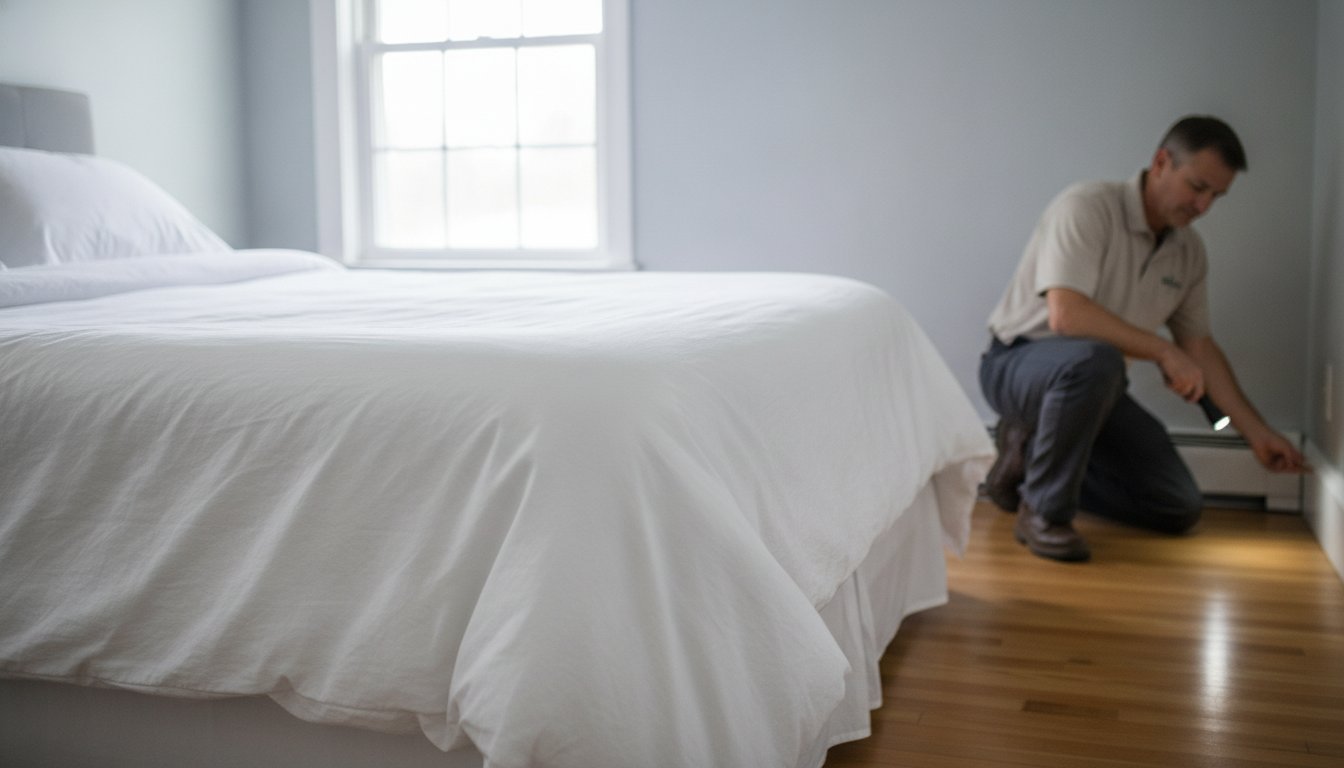
    If you’re checking your vehicle, focus on tucked-away areas rather than assuming every speck is a sign of bed bugs. Possible hiding places are simply areas to inspect, not evidence of an infestation. Seams, narrow gaps, and undisturbed spaces can conceal insects more easily than exposed surfaces, so a quick look across the seats may not tell the whole story.

    Vehicle areas to examine visually

    Check accessible areas carefully, including seams and narrow gaps. Possible places to look include:

    • Seat seams, folds, and crevices around seat structures
    • Spaces beneath seats and gaps near seat tracks
    • Floor mats, carpeting edges, and nearby crevices
    • Bags or other belongings that have been left in the vehicle
    • Gaps around the center console or glove compartment

    Small seams and crevices can make a visual check incomplete because they’re harder to see than open surfaces. That doesn’t mean bed bugs are present in every hidden area. These are locations to check carefully, not proof of an infestation.

    What possible bed bug evidence can look like

    A live insect or a shed skin may be worth documenting, but a vague description alone isn’t enough to identify a pest. Dark marks can be confused with dirt, lint, or other debris, while small eggs may be difficult to distinguish from particles caught in upholstery. Other insects can also be mistaken for bed bugs.

    If you find something suspicious, take a clear photograph and note where you saw it. Avoid treating a mark or an uncertain insect as confirmation. When identification remains unclear, a professional assessment may help make sense of the evidence. The U.S. Environmental Protection Agency’s information on non-chemical methods of killing bed bugs discusses control approaches, but it doesn’t identify what you’ve found in your car or determine which response fits your situation.

    Careful identification matters because asking can bed bugs live in your car is different from asking whether a particular speck or insect is a bed bug. If concerns persist or signs recur, information about professional pest control services can help you understand when professional input may be useful.

    Does finding one bed bug mean your car is infested?

    No. One suspected insect, even in a car, doesn’t by itself confirm an established infestation. It could be a hitchhiker, or it could be an insect that was misidentified. At the same time, a confirmed bed bug deserves attention. A single finding can’t establish how long it was there or whether others are present, so consider it alongside other signs and the circumstances around the sighting.

    There’s no reliable conclusion from a count alone. Repeated sightings, evidence of different life stages, or related signs in the vehicle or home may raise more concern than one isolated observation. They still need to be interpreted carefully, rather than treated as automatic proof.

    Clues that add context to a sighting

    Consider whether the insect has appeared more than once and whether anyone recently traveled, stayed overnight, or brought potentially infested belongings into the car. These details may help explain possible exposure, but they don’t prove where a bug came from. Bed bugs and lookalike insects can be difficult to distinguish, so a qualified identification can provide useful context. A photo may help document what you saw, but it shouldn’t be treated as a definitive diagnosis.

    When a professional assessment may help

    Consider asking a pest professional for guidance if suspected sightings recur, an insect has been identified as a bed bug, or credible signs remain uncertain. An assessment can consider the vehicle alongside relevant context, such as where and when the insect was found and whether there are related signs at home. This broader view can help avoid drawing a conclusion from one clue alone.

    If you’re still asking, “can bed bugs live in your car,” remember that possibility and confirmation are different questions. Keep a record of sightings and where they occurred, then share that context when asking for guidance. You can review professional pest services to learn about available service categories. Professional assessment may be especially useful when the evidence is unclear or sightings continue.

    Can Bed Bugs Live in Your Car? What Drivers Need to Know

    What to do after spotting a possible bed bug in your car

    A possible sighting can be stressful, but you don’t need to assume the whole vehicle is infested or start moving everything out. First, focus on what you observed. A clear record can help distinguish a confirmed insect from an uncertain identification and give a professional useful context if you seek advice.

    Record the observation without spreading assumptions

    Note where and when you saw the insect, whether it was moving, and whether you’ve noticed anything similar before. If you can do so safely, take a clear photo or preserve the specimen for identification. Avoid handling it unnecessarily. For now, keep belongings in place rather than carrying potentially affected items into your home or another area before getting appropriate guidance.

    Stick to what you know. For example, record “small insect on the rear seat” rather than labeling it a bed bug if you’re uncertain. This keeps the observation useful without turning a suspicion into a conclusion.

    Decide whether expert identification is appropriate

    Professional input may help if sightings recur, you’re unsure what the insect is, or other credible signs appear. A pest professional can consider where the insect was found, any repeat observations, and whether there are related concerns at home. If you’ve noticed signs in both places, mention them together. The vehicle and home context may be connected, and assessing only one part of the picture could leave important details out.

    There isn’t one action that confirms or resolves every situation. Avoid relying on an uncertain identification, and don’t assume that one suspected insect proves a vehicle infestation. If you’re asking, “can bed bugs live in your car,” remember that possibility alone doesn’t establish what’s happening in your vehicle. A measured response starts with documenting the evidence and getting appropriate guidance when uncertainty remains.

    For bed bug concerns in Erie or Crawford Counties in Pennsylvania, or Ashtabula County in Ohio, contact a pest professional for guidance about whether an assessment may be appropriate.

    When to seek bed bug help for a car in Pennsylvania or Ohio

    A single uncertain sighting may not establish an infestation, but some situations are worth discussing with a pest professional. Consider asking for guidance if you see suspected bed bugs repeatedly, get a credible identification, or notice related evidence at home. The goal is to assess the available clues, not jump from one observation to a conclusion.

    For readers in Erie or Crawford County, Pennsylvania, or Ashtabula County, Ohio, check the service area information for local availability. Bed bug concerns in a vehicle may involve different circumstances than concerns inside a home, so ask what assessment or recommendations are appropriate for your situation.

    What to share when asking for guidance

    Keep the information factual and concise. Describe where and when you saw the insect, whether you’ve seen anything similar again, and whether you’ve noticed related signs at home. If you have a clear photo or specimen, mention that as well. You don’t need to identify the insect yourself or assume that the vehicle is infested before seeking advice.

    These details help provide context, but they don’t confirm a diagnosis on their own. A professional can consider the circumstances and advise whether further assessment is appropriate.

    How professional input fits into the next steps

    Professional pest control may help assess suspected bed bug activity, particularly when sightings recur or the identification remains uncertain. If there are concerns in both the car and the home, share both sets of observations so they can be considered together. Mosquito Assassin Pest Control LLC provides bed bug treatment in its stated service area, but the appropriate recommendations depend on the situation and assessment.

    If you’re still wondering, “can bed bugs live in your car,” the possibility alone doesn’t tell you whether your vehicle has an infestation. Clear observations and qualified guidance can help you decide what to do next. For inspection or professional recommendations, use the contact page for bed bug guidance.

    Take a measured next step if you’re concerned

    Yes, can bed bugs live in your car? They can be carried into a vehicle and hide there, but a single suspected insect doesn’t confirm an infestation. Focus on what you can verify: where and when it appeared, whether sightings recur, and whether there are related signs at home. If identification remains uncertain or evidence repeats, professional assessment may help clarify the situation.

    Mosquito Assassin Pest Control LLC lists bed bug treatment among its specialized services in Erie and Crawford Counties, Pennsylvania, and Ashtabula County, Ohio. For an inspection or professional recommendations, contact Mosquito Assassin Pest Control. A calm, evidence-based next step can help you move forward with greater clarity.

    Disclaimer: The information provided on this blog is for general informational purposes only and is not intended as professional pest control advice. Conditions vary by property, environment, and location. Reading this content does not create a service agreement. For an inspection or professional recommendations, please contact Mosquito Assassin Pest Control LLC directly.

    Frequently Asked Questions

    Can bed bugs live in your car permanently?

    Bed bugs can hide in a vehicle, but a sighting alone doesn’t establish a permanent infestation. Whether they persist depends on conditions inside the car and access to a host. Avoid relying on a fixed survival period, since vehicle conditions vary. If sightings recur or an insect is confirmed as a bed bug, professional identification or assessment can help clarify what may be happening.

    How do bed bugs get into a car?

    Bed bugs can hitchhike into a car on belongings such as bags, clothing, or used furniture. A person may unknowingly transport one without the insect living on their body. Travel or an infested item can offer useful context when assessing a sighting, but neither proves where a particular bug came from. Consider what was recently carried in or out, while keeping in mind that the source may remain uncertain.

    Where do bed bugs hide in a car?

    Possible places to check include seat seams and folds, carpet edges, and small gaps around vehicle interiors. These are inspection areas, not proof that bed bugs are present. Insects tucked into concealed spaces can be missed during a visual check, so an apparently clear surface doesn’t confirm the entire vehicle is clear. If you find a suspected bug or related evidence, seek professional identification rather than relying on appearance alone.

    Can one bed bug in a car start an infestation?

    One confirmed bed bug could be a hitchhiker, and it doesn’t prove an established vehicle infestation. Still, take a confirmed sighting seriously because bed bugs can be transported to other locations. Consider whether there have been repeat sightings or related evidence in the car or home. If the insect’s identity is uncertain, or you’re concerned about further activity, qualified guidance is more useful than drawing a conclusion from one observation.

    Can bed bugs survive hot or cold temperatures in a car?

    Vehicle temperatures can change substantially, but a hot or cold car shouldn’t be treated as a reliable way to eliminate bed bugs. Survival depends on factors such as the temperature reached in hiding places and how long exposure lasts. Those conditions need to be checked against authoritative pest-management sources. Weather and parking conditions alone don’t confirm that bed bugs have been killed, so don’t rely on them as a control method.

    Should I drive my car if I think it has bed bugs?

    A suspected sighting alone doesn’t confirm that your car is infested, so it can’t determine what’s appropriate for every situation. Avoid moving potentially affected belongings unnecessarily while you seek identification or advice. If sightings recur or there’s confirmed evidence, ask a pest professional for recommendations based on the circumstances. This isn’t a blanket instruction about whether to drive; the available evidence and your situation matter.

    When should I call a pest professional about bed bugs in my car?

    Ask a pest professional for guidance if a bed bug is identified, sightings recur, or related evidence appears in the vehicle or home. An assessment can help interpret the clues and consider what next steps fit the situation. Mosquito Assassin Pest Control LLC provides bed bug treatment in Erie and Crawford Counties, Pennsylvania, and Ashtabula County, Ohio. The stated service area doesn’t imply availability beyond those counties.

    Disclaimer: The information provided on this blog is for general informational purposes only and is not intended as professional pest control advice. Conditions vary by property, environment, and location. Reading this content does not create a service agreement. For an inspection or professional recommendations, please contact Mosquito Assassin Pest Control LLC directly.
  • What to Throw Away After Bed Bugs: A Comprehensive Disposal Checklist

    What to Throw Away After Bed Bugs: A Comprehensive Disposal Checklist

    Dragging your mattress straight to the curb might seem like the fastest way to reclaim your home, but it’s often the exact opposite of what you should do. When faced with an infestation, many homeowners in Erie County or Ashtabula County immediately panic and wonder what to throw away after bed bugs invade their living spaces. The truth is that a panic-driven purge rarely solves the problem, and it can actually spread these resilient pests into other rooms or neighboring properties.

    Dealing with bugs brings immense emotional stress over losing personal belongings, a constant fear of re-infestation, and deep concerns about the high cost of replacing furniture. Fortunately, the vast majority of your possessions don’t need to go to the landfill. This guide outlines which items can be safely salvaged and how to properly dispose of ruined belongings without worsening the infestation. By understanding specific safety protocols and following a clear breakdown of salvageable goods, property owners can build a confident remediation plan to eliminate the threat completely.

    Key Takeaways

    • Most household items can be saved through professional treatment, meaning you rarely need to purge your entire home during an infestation.
    • Use specific criteria like the age and material of an item to determine if the cost of treatment outweighs the value of replacement.
    • Learn exactly what to throw away after bed bugs by identifying high-risk items that are too damaged or infested to salvage safely.
    • Follow strict safety protocols, including sealing items in airtight plastic, to prevent spreading pests during the removal process to the curb.
    • A professional inspection can identify precisely where pests are hiding, often revealing that expensive furniture is still treatable through heat remediation.

    The Reality of Bed Bug Infestations and Your Belongings

    Discovering an infestation often triggers an immediate fight-or-flight response. The urge to drag every piece of furniture to the curb is understandable but usually counterproductive. Property owners in Erie and Crawford Counties frequently worry about what to throw away after bed bugs are found, fearing that every fabric and crevice is permanently compromised. It’s a stressful situation, but the goal of professional management is total eradication without excessive property loss.

    Bed bugs are distinct from other pests because they don’t burrow into solid materials like wood or plastic. They are hitchhikers that prefer to hide in tight crevices, seams, and dark corners near their host. Because they live on the surface rather than inside your belongings, most items are salvageable. Maintaining a calm, methodical approach is vital to ensuring the infestation doesn’t spread through panicked movement.

    To better understand how to manage your home after a professional intervention, watch this helpful video:

    Why Tossing Everything Is Not Always Necessary

    Modern bed bug control techniques have shifted away from total disposal toward targeted remediation. Professional heat treatments can reach lethal temperatures that penetrate seams and cracks where insects hide, effectively cleaning items in place. When you compare the cost of professional remediation to the expense of replacing a bedroom set, living room furniture, and a full wardrobe, keeping your belongings makes significant financial sense. Professional pest control services focus on saving your property rather than filling landfills.

    The Risks of Premature Item Disposal

    Prematurely tossing furniture can actually backfire. As you drag a mattress or chair through your home, you risk dropping eggs or live bugs into hallways and clean rooms. Additionally, leaving infested items on the street in Ashtabula or Meadville without proper labeling invites others to take them, continuing the cycle of infestation in the community. Professional guidance should always precede any major furniture removal to ensure the process doesn’t inadvertently expand the problem. Before deciding what to throw away after bed bugs appear, wait for a thorough inspection to determine which items are truly beyond repair.

    Criteria for Deciding What to Keep or Discard

    Deciding what stays and what goes requires a systematic evaluation of your belongings. Instead of letting emotional stress dictate your choices, you can use objective criteria to determine if an object is worth saving. Property owners must balance the item’s age, physical condition, material composition, and overall sentimental or monetary value against the effort required to treat it. A methodical inspection helps clarify what to throw away after bed bugs have been detected, ensuring you do not waste energy on ruined goods or prematurely discard expensive furniture.

    Assessing the Level of Infestation

    Determining the severity of the insects’ presence on a specific item is the first critical step. Look closely at the seams, tufts, and zippers for clear evidence of activity, including:

    • Dark brown or black fecal spotting that resembles small marker dots.
    • Translucent, empty egg casings left behind by growing nymphs.
    • Live bugs clustered together in tight, dark recesses.

    Surface-level activity on a mattress seam is highly treatable, whereas a deep structural infestation inside a torn box spring or broken sofa frame may indicate the item is beyond saving. When an object suffers from severe physical damage or contains extreme nesting throughout its interior cavities, disposal becomes a practical necessity. For a definitive assessment of an item’s condition, a professional bed bug treatment inspection can provide clarity before you start hauling items away.

    Material Porosity and Structural Integrity

    The composition of your belongings plays a major role in how easily they can be cleared of pests. Solid wood, metal, and hard plastic items are the easiest to salvage because they lack deep, hidden voids. These non-porous surfaces allow for straightforward physical cleaning and targeted professional applications. Conversely, upholstered furniture features thick padding, fabric layers, and complex internal springs that require intensive professional intervention to ensure heat or treatments penetrate completely. According to official EPA bed bug control guidance, treating these complex items requires careful planning, and items made from cheap particle board or those with inaccessible, hollow voids are often the primary candidates for disposal if the structural integrity is already compromised.

    Category Specific Disposal Checklist

    Managing an infestation requires a clear understanding of which household goods are truly compromised. Homeowners often struggle to categorize their belongings, leading to unnecessary financial loss. By separating your items into distinct groups, you can easily determine what to throw away after bed bugs are discovered and what can be safely preserved. While a comprehensive general pest control assessment is always the safest first step, this checklist provides a practical breakdown for common bedroom and living area items.

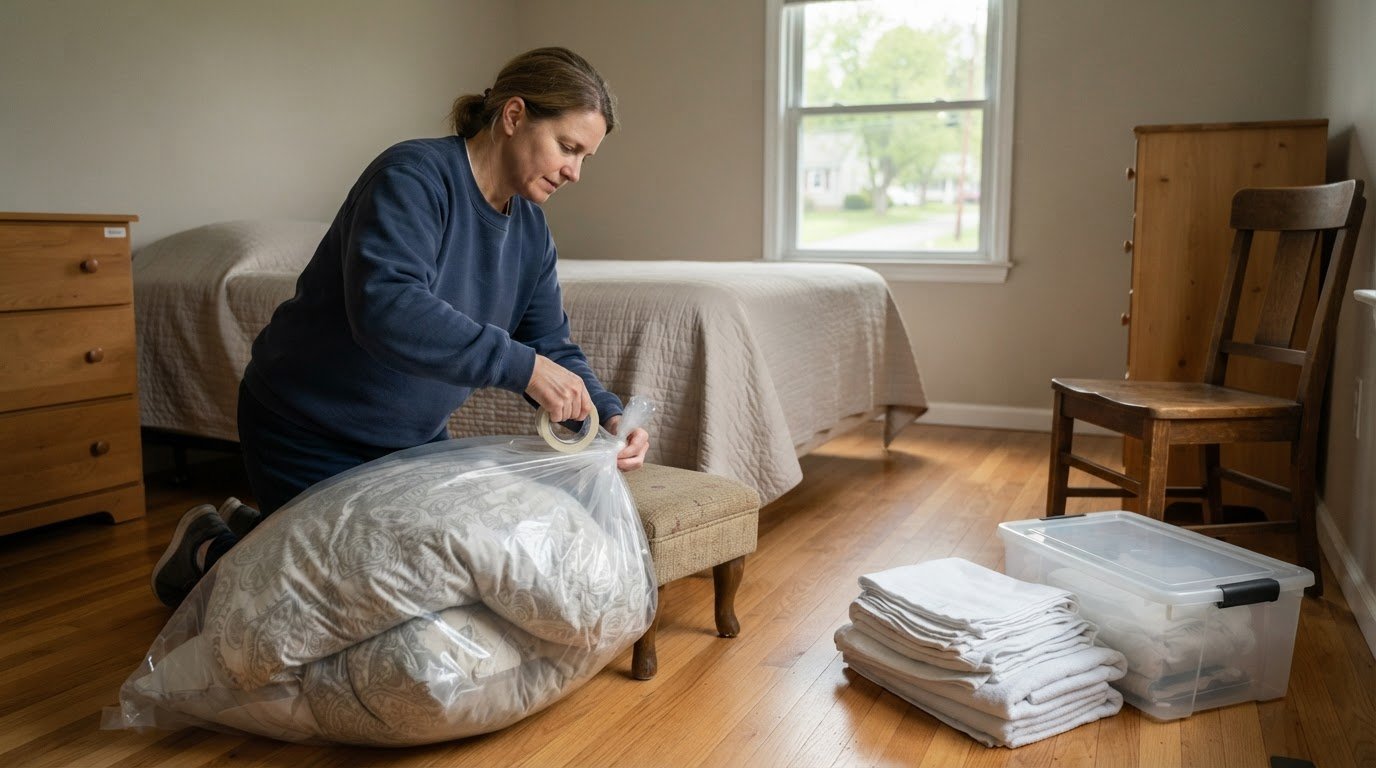
    Clothing, bedding, and curtains are rarely candidates for the dumpster. These fabric items can be entirely decontaminated using standard household appliances. Washing them in hot water and drying them on a high heat cycle for at least 30 minutes effectively destroys all life stages of the insect, including resilient eggs.

    Furniture and Large Household Items

    Large furniture items represent the highest replacement costs, making careful evaluation essential. Consider the following guidelines for major household pieces:

    • Mattresses and Box Springs: Discarding these is rarely required. Investing in high quality, tear resistant, bed bug proof encasements seals any remaining pests inside, starving them over time while protecting the exterior.
    • Couches and Recliners: Professional heat remediation is highly effective for upholstered seating, meaning treatment is almost always preferred over disposal.
    • Nightstands and Bed Frames: Because hard wood, metal, and plastic surfaces lack deep internal padding, they are low risk and easily sanitized through physical cleaning and targeted professional applications.

    If a piece of furniture is structurally ruined or too heavily infested to save, following Purdue’s furniture disposal protocol ensures you wrap, seal, and deface the item to prevent others from bringing it back into the community.

    Personal Belongings and Electronics

    Small personal items require a different approach since they cannot simply be tossed into a washing machine. Books, magazines, and loose paperwork can sometimes harbor pests in their bindings or pages, but they can be treated successfully using specialized professional heat chambers. Electronics such as televisions, desktop computers, or laptops are rarely infested because they do not provide a viable food source. However, they should still be inspected by a professional if they were located immediately next to a heavily infested bed. For children’s toys and plush animals, a simple trip through a high heat dryer cycle for 30 to 45 minutes is usually enough to salvage them safely without causing damage.

    What to Throw Away After Bed Bugs: A Comprehensive Disposal Checklist

    Best Practices for Safe Disposal and Removal

    Once you’ve decided what to throw away after bed bugs have damaged an item beyond repair, the physical removal process must be handled with extreme care. Moving an infested dresser or mattress through your home without a plan is a major risk factor for spreading the problem to previously clean areas. Residents in Erie, PA and Ashtabula, OH should prioritize containment above all else during the transition from the bedroom to the curb. Proper disposal prevents a localized issue from becoming a neighborhood-wide infestation.

    Bagging and Labeling Contaminated Items

    Use heavy duty plastic bags that are at least 3 mil thick for all smaller items and clothing destined for the trash. Standard kitchen bags are too thin and can easily puncture, allowing pests to escape. Once filled, seal these bags tightly with duct tape rather than simple twist-ties. For larger furniture, wrap the entire piece in heavy plastic sheeting and secure it completely. You must explicitly label every item with “Bed Bugs” or “Infested” using a bold permanent marker. This warning is a critical safety step that protects waste management workers and prevents neighbors from unknowingly bringing infested goods into their own homes.

    Preventing Community Spread in the Tri-County Area

    Preventing the spread of pests throughout your neighborhood is a shared responsibility. Before placing a couch or chair at the curb, use a utility knife to slash the upholstery or damage the frame. This ensures the item cannot be salvaged by others who might see it as a free find. If you live in an apartment complex, never leave infested items in shared hallways, laundry rooms, or common areas; take them directly to the dumpster or a designated pickup zone. In Pennsylvania, remember that the Covered Device Recycling Act bans electronics like televisions from landfills, so these must be taken to a dedicated recycler even if they are infested. Coordinating with your local waste management provider for a scheduled bulk pickup can also reduce the time infested items spend sitting outside.

    If you are unsure about the safety of your belongings, professional bed bug treatment can often save your property and eliminate the need for disposal.

    Professional Remediation vs Total Replacement

    Choosing between throwing away your furniture and investing in professional remediation is a critical turning point. Many property owners operate under the assumption that a total replacement is the only way to ensure a clean home. However, a thorough inspection by a licensed professional reveals that most items are fully salvageable. Instead of guessing what to throw away after bed bugs have entered a room, relying on expert identification clarifies the exact state of your belongings. This prevents the unnecessary loss of expensive assets.

    How Professional Heat Treatments Save Belongings

    Professional heat treatments provide a definitive solution that eliminates the need for mass disposal. Ambient heat safely penetrates deep into the complex seams, tufts, and hidden structural voids that standard sprays or DIY methods simply cannot reach. This methodology is entirely safe for the vast majority of household items when executed by trained technicians. When you evaluate the overall financial impact, the cost of a single professional treatment is far lower than the price of replacing an entire room of bedroom or living room furniture. For a deeper look at how these systems work alongside other eradication methods, consult the comprehensive bed bug guide.

    Integrating Disposal into a Long Term Protection Plan

    Discarding furniture alone rarely solves an infestation because these insects frequently harbor inside baseboards, electrical outlets, and wall voids. If you throw away a mattress but leave the surrounding structure untreated, the new bed will likely become infested within weeks. Selective disposal must be part of a broader, professional strategy to achieve true success.

    Long-term protection plans from Mosquito Assassin Pest Control LLC focus on thorough monitoring and multi-step management. Regular follow-up inspections are highly recommended in Erie and Crawford counties to confirm that all life stages, including hidden eggs, are completely gone. Knowing what to throw away after bed bugs are treated depends entirely on these follow-up assessments. Ultimately, professional pest control may help reduce risk of future occurrences and provide lasting peace of mind.

    Disclaimer: The information provided on this blog is for general informational purposes only and is not intended as professional pest control advice. Conditions vary by property, environment, and location. Reading this content does not create a service agreement. For an inspection or professional recommendations, please contact Mosquito Assassin Pest Control LLC directly.
    Reclaim Your Home and Protect Your Property

    Managing an infestation is an exhausting experience, but you don’t have to face it alone or lose your valuable belongings in the process. Determining what to throw away after bed bugs are found is a tactical decision that should be based on professional evidence rather than panic. By utilizing specialized bed bug remediation expertise, property owners can often save their mattresses, couches, and personal items through targeted heat treatments that outperform DIY methods. Containment and proper labeling remain the most effective ways to protect your neighbors and prevent the spread of pests throughout your community.

    Serving Erie, Crawford, and Ashtabula Counties, the focus remains on providing definitive solutions and year-round protection plans that keep your household secure. For a professional inspection or recommendations, please contact Mosquito Assassin Pest Control LLC today. With a methodical approach and the right local experts by your side, you can move forward with confidence and a pest-free home.

    Disclaimer: The information provided on this blog is for general informational purposes only and is not intended as professional pest control advice. Conditions vary by property, environment, and location. Reading this content does not create a service agreement. For an inspection or professional recommendations, please contact Mosquito Assassin Pest Control LLC directly.

    Frequently Asked Questions

    Do I have to throw away my mattress if I have bed bugs?

    You don’t have to throw away your mattress in most cases. Most mattresses are salvageable with professional heat treatment and the application of high-quality, tear-resistant encasements. These specialized covers trap any remaining insects inside, preventing them from feeding or escaping. You should only consider disposal if the mattress has significant physical damage, such as large internal tears that allow for deep nesting that treatment cannot reach.

    Can bed bugs live in electronics like my TV or computer?

    Bed bugs can occasionally hide in the vents or ports of electronics like TVs and computers, but they don’t live inside them as a primary habitat. These devices don’t provide a food source or ideal nesting material. If an electronic device was located very close to a heavy infestation, a professional inspection is necessary. Specialized heat chambers can often clear these sensitive items without damaging the delicate internal circuitry.

    How do I safely throw away a couch infested with bed bugs?

    To safely discard an infested couch, you must contain the pests before moving the item through your home. Wrap the entire piece in heavy plastic sheeting and seal all edges tightly with duct tape. Before placing it at the curb, use a utility knife to slash the cushions or damage the frame. This prevents others from salvaging the furniture and spreading the infestation elsewhere in your local neighborhood.

    Is it possible to save books and papers after an infestation?

    It is possible to save books and papers using specific professional decontamination methods. Because you can’t wash these items, professional pest control services often use portable heat chambers that maintain a lethal temperature without damaging the paper or bindings. For non-essential documents, sealing them in airtight plastic bags for at least a year is another option, as this ensures any trapped insects eventually die from a lack of food.

    Will a regular trash pickup take bed bug infested furniture?

    Regular trash pickup in areas like Erie or Ashtabula often requires special arrangements for bulk items. Most waste management companies will take infested furniture, but only if it is properly wrapped in plastic and labeled. Knowing what to throw away after bed bugs in Pennsylvania or Ohio involves contacting your local waste department to schedule a specific bulk pickup day. Never leave items out without a scheduled pickup.

    Should I throw away my clothes if I find bed bugs in my room?

    You shouldn’t throw away your clothes because high-heat laundering is incredibly effective at killing all life stages of these pests. Wash your garments in hot water and dry them on a high-heat setting for at least 30 minutes. Once clean, place them in sealed plastic bags or bins to prevent re-infestation while the rest of your home is being treated by a professional remediation team.

    How can I tell if an item is too infested to save?

    Determining what to throw away after bed bugs depends on the item’s condition and the depth of the infestation. An item is usually too infested to save if it has deep structural damage, such as hollow furniture legs or torn upholstery that allows for massive internal nesting. If the physical labor and cost required to clean a low-value or heavily damaged item exceed its replacement price, disposal is the more practical choice.

    What is the best way to label infested items for the trash?

    The best way to label infested items is to use a bold, permanent marker directly on the plastic wrapping. Write “BED BUGS” or “INFESTED” in large, clear capital letters on multiple sides of the package. This warning protects sanitation workers and discourages people from bringing the items back into the community. Clear communication is a vital part of a responsible disposal and remediation plan for your property.

    Disclaimer: The information provided on this blog is for general informational purposes only and is not intended as professional pest control advice. For an inspection or professional recommendations, please contact Mosquito Assassin Pest Control LLC directly.

  • Bed Bug Treatment in Erie PA: A Professional Eradication Guide

    Bed Bug Treatment in Erie PA: A Professional Eradication Guide

    What if the one place you should feel safest, your own bed, becomes a source of constant anxiety and sleepless nights? For many residents in Northwest Pennsylvania, this isn’t just a hypothetical fear but a stressful reality. It’s natural to feel overwhelmed by the social stigma of an infestation or frustrated by conflicting DIY advice that often fails to deliver results. Finding a professional bed bug treatment Erie PA homeowners can depend on is the first step toward reclaiming a sense of security and health within the home.

    This guide provides a clear, professional path toward total eradication and the peace of mind that comes with a restful night. You’ll learn how to accurately identify these resilient pests, prepare your property for intervention, and implement strategies to prevent future occurrences. By understanding the biology of infestations in Erie and Crawford Counties, as well as Ashtabula County, property owners can move from a state of concern to a state of resolution. The following sections examine the specific, methodical steps licensed professionals use to ensure these pests are removed safely and thoroughly.

    Key Takeaways

    • Identify the common entry points for bed bugs in Northwest Pennsylvania and understand the parasitic behavior of these resilient pests.
    • Learn why modern pesticide resistance makes professional bed bug treatment Erie PA more effective than over-the-counter DIY solutions.
    • Master the essential preparation steps, such as heat-treating linens and managing laundry, to ensure the success of a professional eradication plan.
    • Verify the importance of state-mandated pesticide application licenses and local expertise when selecting a pest control provider in Erie or Ashtabula.
    • Establish long-term prevention strategies, including travel protocols and used furniture inspections, to maintain a pest-free home environment.

    Understanding Bed Bug Infestations in Northwest Pennsylvania

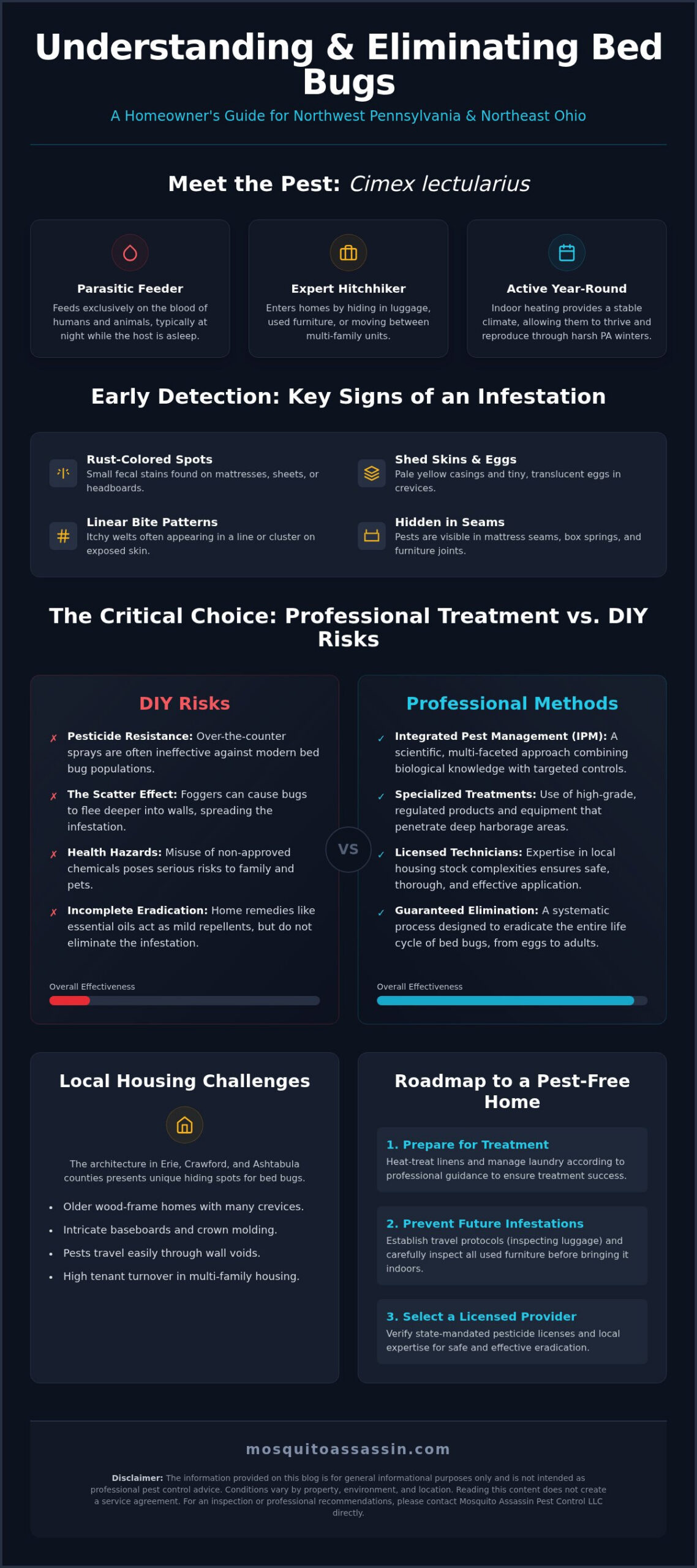
    Bed bugs, scientifically known as Cimex lectularius, are small, parasitic insects that feed exclusively on the blood of humans and animals while they sleep. Unlike many other pests that are attracted to specific food sources or poor sanitation, Bed Bugs are opportunistic hitchhikers. They thrive in any environment where they have access to a host. In Erie and Crawford Counties, these pests are a year-round concern. Our indoor heating systems provide the stable, warm climate they need to survive the harsh Pennsylvania winters. They don’t hibernate. They stay active as long as a host is nearby.

    They typically enter local residences through travel, infested used furniture, or by moving between units in multi-family housing. Because they’re thin and elusive, they can hide in the smallest crevices of luggage or upholstery. The psychological toll of an infestation is often as severe as the physical one. Residents frequently report intense anxiety, sleep deprivation, and a fear of social stigma. It’s a heavy emotional burden. This stress is why seeking a professional bed bug treatment Erie PA is vital. Professional intervention provides the scientific approach needed to restore both a home’s safety and the owner’s peace of mind.

    Early Signs of Bed Bugs in Local Residences

    Identifying an infestation early is the best way to prevent a massive outbreak. Homeowners should look for rust-colored spots on mattresses or sheets. These are actually fecal stains. Other signs include tiny, translucent eggs and pale yellow shed skins left behind as the insects grow. While many people first notice itchy welts on their skin, bed bug bites are often confused with those of mosquitoes or spiders. However, bed bugs typically bite in a linear pattern on exposed skin like arms or shoulders. This pattern is a key indicator for local residents. They’re hard to spot. Careful inspection is the only way to be sure.

    Why Erie Housing Stock Presents Unique Challenges

    The specific architecture of Northwest Pennsylvania and Ashtabula County presents unique obstacles for eradication. Many older wood-frame homes in Erie feature intricate baseboards, crown molding, and lath-and-plaster walls. These offer countless deep hiding spots. These insects can also travel through wall voids and along insulation. This makes it easy for them to move from one room to another undetected. In multi-family dwellings near local universities, high tenant turnover creates a constant risk of introduction. These structural factors make professional bed bug treatment Erie PA essential. Licensed technicians understand how to navigate the complexities of local housing stock to reach every hidden pocket of the infestation.

    Professional Eradication Methods vs. DIY Risks

    Eradicating bed bugs requires more than just a trip to the local hardware store. Modern populations have developed a significant biological resistance to common over-the-counter pesticides. This evolution makes traditional retail sprays largely ineffective for a full infestation. When homeowners rely on bug bombs or foggers, they often inadvertently worsen the problem. These products rarely penetrate the deep structural crevices where bed bugs harbor. Instead, the irritating chemicals often trigger a scatter response. This causes the insects to retreat deeper into wall voids or move into adjacent rooms, spreading the infestation throughout an Erie County home.

    A professional bed bug treatment Erie PA utilizes high-grade equipment and specialized knowledge to reach these hidden areas. Integrated Pest Management (IPM) is the gold standard for long-term success. This method combines biological understanding with mechanical and chemical controls. It’s particularly effective in Northwest Pennsylvania, where older housing stock requires a multi-faceted approach rather than a single spray application. Professional pest control may help reduce risk by addressing these complexities directly.

    Common Pitfalls of At-Home Bed Bug Treatments

    One of the most frequent mistakes is the use of non-approved or agricultural chemicals indoors. These substances can pose serious health risks to household members and pets. While essential oils like peppermint or lavender are popular home remedies, they typically act only as mild repellents. They lack the residual power needed to eliminate a breeding population. The EPA provides extensive resources on Do-it-yourself Bed Bug Control, which highlights why these complex pests are so difficult for untrained individuals to manage. Relying on unproven methods often leads to a cycle of temporary relief followed by a more intense resurgence.

    The Professional Multi-Step Process

    A systematic approach is necessary for total eradication. This begins with a meticulous inspection of all potential harborages. Professionals don’t just look at mattresses; they examine baseboards, electrical outlets, and furniture joints. Targeted application techniques then prioritize the safety of the household while delivering lethal results to the pests. Because bed bug eggs are highly resilient to many treatments, follow-up visits are a standard requirement. These return visits ensure that any newly hatched nymphs are eliminated before they can reach reproductive age. This disciplined, multi-step strategy is the most reliable way to achieve a pest-free environment.

    Evaluating Bed Bug Treatment Companies in Erie and Ashtabula

    Choosing a service provider during a pest crisis is a high-stakes decision that requires careful vetting. In Northwest Pennsylvania and Northeast Ohio, the law is clear about who can perform these services. According to the Pennsylvania Pesticide Control Act of 1973, any commercial application for bed bugs must be performed by a professional licensed by the Pennsylvania Department of Agriculture. Similarly, Ohio Code 921.06 requires licensed commercial applicators for multi-unit dwellings. Verifying these credentials ensures that the technician has the mandatory training to handle the complex Pesticides to Control Bed Bugs safely and effectively.

    Beyond legal requirements, the best results often come from technicians who understand regional pest patterns. A provider familiar with the specific housing challenges in Erie and Ashtabula will be better equipped to locate harborages in local architecture. Transparent communication is another hallmark of a quality service. Property owners deserve a clear explanation of the findings, the proposed plan, and the expected timeline for eradication. While some may seek a one-time bed bug treatment Erie PA, many find that integrating this service into year-round protection plans offers better long-term security against various seasonal pests.

    Questions to Ask a Prospective Exterminator

    Before hiring a company, it’s helpful to ask specific questions to gauge their expertise and commitment to safety. Consider inquiring about their direct experience with bed bug eradication in residential settings. It’s also important to understand the safety protocols they have in place for households with children and pets. A reputable company should be able to provide details on their regional service history and explain how they handle the resilient nature of modern infestations. For those seeking specialized care, more information on service areas is available at mosquitoassassin.com/location.

    The Benefit of Local Ownership

    Local ownership brings a level of accountability and responsiveness that national chains often struggle to match. Experts based in communities like Cranesville or Meadville have a vested interest in maintaining a strong local reputation. They aren’t just contractors; they’re neighbors who understand the specific environmental factors of Crawford and Erie counties. This local knowledge translates to more precise inspections and more effective treatment strategies. Community-rooted businesses prioritize the well-being of their service area, ensuring that every client receives the methodical attention required to achieve a pest-free home.

    Bed Bug Treatment in Erie PA: A Professional Eradication Guide

    Preparing Your Home for Professional Bed Bug Treatment

    Preparation isn’t just a suggestion; it’s the foundation of a successful eradication. Even the most advanced bed bug treatment Erie PA professionals use can be undermined by excessive clutter or untreated fabrics. High heat is one of the most effective tools for killing all life stages, including eggs. Homeowners should wash all linens, clothing, and curtains in hot water and dry them on the highest heat setting for at least 30 minutes. Once clean, these items must be sealed in airtight plastic bags to prevent re-infestation during the process.

    De-cluttering is equally vital. Bed bugs thrive in the small gaps provided by stacks of paper, cardboard boxes, and crowded closets. By removing these items, residents eliminate harborages and allow the treatment to reach the insects directly. Electronics like televisions or computers require careful handling. While they can be hiding spots, they shouldn’t be sprayed with liquid pesticides. Instead, consult with a professional about specialized methods for sensitive items. For more detailed guidance, residents can visit mosquitoassassin.com to learn about specific residential protocols.

    Room-by-Room Preparation Checklist

    A systematic approach ensures no area is overlooked. In the older housing stock common throughout Erie, pay special attention to the gaps between floorboards and wall moldings. Following a strict checklist helps maximize the efficacy of the intervention:

    • Strip all beds and place linens directly into plastic bags before moving them to the laundry area.
    • Clear the floor area in every room, including under beds and inside closets.
    • Move furniture at least 12 to 18 inches away from walls to provide access to baseboards.
    • Vacuum all floors and furniture thoroughly, paying close attention to seams and crevices. Discard the vacuum bag or empty the canister into a sealed trash bag and remove it from the home immediately.

    Post-Treatment Guidelines for Homeowners

    After the application is complete, residents must typically remain out of the treated area for a few hours. This allows the products to dry and settle completely. Professionals will provide a specific timeframe based on the products used for when it’s safe to re-occupy the home and resume normal activities. Monitoring is essential in the weeks following the initial visit. While a professional bed bug treatment Erie PA is highly effective, seeing a stray insect shortly after treatment doesn’t always indicate failure; it may be a pest emerging from a deep hiding spot to come into contact with the residual product. Consistent monitoring helps confirm the total elimination of the population.

    Long-Term Prevention and Reclaiming Your Peace of Mind

    A successful bed bug treatment Erie PA resolves the immediate threat, but long-term success depends on a defensive mindset. Total eradication is a victory, but staying pest-free requires ongoing vigilance. These insects don’t just appear out of nowhere; they’re introduced. In Northwest Pennsylvania, one of the most common ways infestations restart is through used furniture or curbside finds. While a vintage chair in an Erie alley might look like a treasure, it often harbors hidden eggs or nymphs. Avoiding these high-risk items is a simple but effective way to protect your home. Reclaiming your peace of mind means moving beyond the initial crisis and establishing a permanent defensive perimeter around your living space.

    Regular inspections serve as an essential early warning system. Catching a new introduction before it becomes a full-blown infestation saves time, money, and significant emotional stress. Integrating specific bed bug monitoring into a broader pest management plan ensures that your home remains a sanctuary. This proactive approach is much more efficient than waiting for physical signs to reappear. Professional pest control may help reduce risk by identifying vulnerabilities in a property’s structure or lifestyle habits that might invite future hitchhikers.

    Travel Safety Tips for Erie Residents

    Whether you’re visiting family in Pittsburgh or taking a weekend trip to Cleveland, travel remains the primary spreader of these insects. Always inspect hotel rooms in popular PA and OH travel destinations before unpacking. Check the mattress seams and headboard for the rust-colored stains discussed in previous sections. Keep luggage on elevated racks rather than the floor or bed. Upon returning to Erie, Crawford, or Ashtabula County, immediately wash all travel clothing in hot water and dry on high heat. Professional pest control may help reduce risk of future infestations by providing specialized preventative advice tailored to your family’s travel frequency.

    Establishing a Year-Round Protection Strategy

    A holistic approach to pest management addresses the entire ecosystem of a property. For homes in high-risk areas or multi-unit dwellings, ongoing maintenance provides a layer of security that a single intervention cannot match. Licensed technicians can monitor for changes and apply preventative measures that keep your environment hostile to invaders. This year-round strategy isn’t just about chemicals; it’s about education and exclusion. For those interested in maintaining a secure environment, exploring professional pest control services can provide the necessary framework for long-term protection.

    Disclaimer: The information provided on this blog is for general informational purposes only and is not intended as professional pest control advice. Conditions vary by property, environment, and location. Reading this content does not create a service agreement. For an inspection or professional recommendations, please contact Mosquito Assassin Pest Control LLC directly.

    Securing Your Home and Peace of Mind

    Regaining control of your home from a bed bug infestation is a systematic process that requires patience and professional precision. As explored throughout this guide, combining high-heat laundry protocols with meticulous de-cluttering creates the necessary environment for successful eradication. Because modern pests have developed significant resistance to retail chemicals, a professional bed bug treatment Erie PA remains the most reliable method for achieving total removal. Specialized experts serving Erie, Crawford, and Ashtabula Counties understand the unique architectural challenges of our region and use methodical approaches to reach every hidden pocket.

    Property owners don’t have to face the stress and social stigma of an infestation alone. Transitioning from a state of anxiety to a state of resolution is possible with the right local support. For residents seeking to reclaim their comfort and secure a good night’s sleep, request a professional inspection and consultation to begin the process. Taking proactive steps today ensures a safer, more comfortable living environment for your entire household.

    Disclaimer: The information provided on this blog is for general informational purposes only and is not intended as professional pest control advice. Conditions vary by property, environment, and location. Reading this content does not create a service agreement. For an inspection or professional recommendations, please contact Mosquito Assassin Pest Control LLC directly.

    Frequently Asked Questions

    How much does bed bug treatment typically cost in Erie PA?

    Pricing for professional intervention varies based on the size of the property and the severity of the infestation. A localized bed bug treatment Erie PA residents seek involves a detailed inspection to determine the scope of work. Factors like the number of rooms, the type of housing, and the level of preparation required influence the final quote. It’s best to request an on-site evaluation for an accurate estimate tailored to your specific environment.

    Can I get rid of bed bugs on my own using store-bought sprays?

    Relying on over-the-counter sprays is often ineffective due to the widespread pesticide resistance in modern bed bug populations. These retail products typically lack the residual strength to eliminate eggs or insects hidden deep within structural gaps. In many cases, DIY attempts cause the pests to scatter, making the eventual professional eradication more complex. Licensed professionals use specialized equipment and high-grade products that are not available to the general public for safety reasons.

    Are professional bed bug treatments safe for my children and pets?

    Professional treatments are conducted with strict adherence to safety protocols designed to protect vulnerable household members. Technicians use targeted application methods and provide clear instructions on how long residents and animals should remain out of the treated area. Once the products have completely dried, the home is safe for re-entry. Always discuss any specific health concerns with your provider to ensure the plan is customized for your family’s unique well-being and security.

    How long does a professional bed bug treatment take to work?

    The timeline for total eradication depends on the methodology used and the biology of the pest. While many active insects are eliminated upon contact, it often takes several weeks to ensure all life stages, including newly hatched eggs, are fully addressed. Most professional plans include follow-up visits to monitor activity and apply additional treatments if necessary. Consistency and following all preparation guidelines are the most important factors in achieving a swift and definitive resolution.

    Do I need to throw away my mattress if I have bed bugs?

    It is rarely necessary to discard your mattress or furniture if you have an infestation. Most mattresses can be successfully treated and then protected with high-quality, bed bug-proof encasements. These encasements trap any remaining insects inside and prevent new ones from entering the seams. Discarding furniture without proper precautions can actually spread the pests to other areas of your home or neighborhood. Consult with a professional before moving any large items from the home.

    What should I do if I find bed bugs in my apartment in Erie?

    If you find pests in an Erie apartment, notify your landlord or property manager immediately. In Pennsylvania, the responsibility for treatment often depends on local municipal codes and the terms of your lease. Because bed bugs travel easily through wall voids and electrical outlets, multi-unit buildings require a coordinated response. A professional bed bug treatment Erie PA service can inspect adjacent units to ensure the infestation is not spreading through the entire building complex.

    How do I know if the bed bug treatment was successful?

    The most reliable sign of success is the complete absence of new bites and physical evidence over a period of several weeks. You should monitor your sleeping area for fresh blood spots, fecal stains, or live insects. Many professionals use specialized monitoring traps or interceptors placed under bed legs to catch any remaining activity. If no signs are detected after the final follow-up visit, the infestation is typically considered resolved and the property safe for normal use.

    Can bed bugs travel between houses in my neighborhood?

    Bed bugs do not travel between houses by crawling across lawns like some other pests, but they are expert hitchhikers. They move between properties by clinging to clothing, bags, or furniture during social visits or moves. In high-density areas or multi-family dwellings, they can migrate through shared walls and utility lines. Maintaining awareness during travel and avoiding used furniture finds are the best ways to prevent them from moving into your specific neighborhood or home.

    Disclaimer: The information provided on this blog is for general informational purposes only and is not intended as professional pest control advice. For an inspection or professional recommendations, please contact Mosquito Assassin Pest Control LLC directly.

  • Getting Rid of Pests Before Moving In: A Comprehensive Homeowner’s Guide

    Getting Rid of Pests Before Moving In: A Comprehensive Homeowner’s Guide

    The “Empty House Window” is a non-repeatable opportunity for total pest exclusion that disappears the moment furniture covers the baseboards and corners. Moving into a new home in Erie, Crawford, or Ashtabula County should be a celebration, yet many homeowners find themselves paralyzed by the fear of inheriting a previous owner’s infestation. It’s natural to feel anxious about rodents nesting in the walls of an older property or the risk of hitchhiking pests like bed bugs entering on moving day. You want your family and pets to step into a clean, secure environment from the very first night.

    This guide explains why an empty house provides the ultimate strategic advantage for getting rid of pests before moving in and how to identify structural vulnerabilities before they become liabilities. You’ll learn the best practices for professional exclusion and how to secure every entry point from the foundation to the roofline. By understanding pest behavior and structural sealing, you can ensure your transition is focused on settling in rather than fighting an unseen enemy.

    Disclaimer: The information provided on this blog is for general informational purposes only and is not intended as professional pest control advice. Conditions vary by property, environment, and location. Reading this content does not create a service agreement. For an inspection or professional recommendations, please contact Mosquito Assassin Pest Control LLC directly.

    Key Takeaways

    • An empty house offers 100 percent visibility of floorboards and corners, making it the most effective time for inspection and treatment before furniture creates new hiding spots.
    • Homeowners in Northwest Pennsylvania and Northeast Ohio should prioritize getting rid of pests before moving in to address regional threats like wood-boring insects and carpenter bees.
    • Protect your new environment by using new packing materials and inspecting items moved via transit trucks, which can often act as vectors for bed bugs or roaches.
    • Structural exclusion, such as sealing gaps around utility lines and dryer vents, is significantly easier to perform before furniture blocks access to critical entry points.
    • While an initial treatment secures the property for move-in day, long-term protection through recurring service plans helps maintain a pest-free environment against seasonal pressure.

    The Strategic Advantage of Pest Prevention in an Empty Home

    The period between signing the closing papers and moving your first box is the most critical window for long-term property protection. Empty rooms offer a tactical advantage. An empty house provides 100 percent visibility of floorboards, corners, and baseboards that are usually hidden behind heavy furniture or appliances. This unobstructed access allows for a thorough inspection and the application of professional Integrated Pest Management (IPM) strategies. Without the presence of couches, beds, or kitchen islands, pests have nowhere to hide during a professional evaluation.

    To better understand how preparation impacts the effectiveness of pest control, watch this helpful video:

    Professional treatments can reach deep into wall voids and behind cabinetry where pests like cockroaches or silverfish typically congregate. By establishing preventative barriers now, you ensure that materials are applied directly to the structure’s surfaces rather than onto the backs of your belongings. This approach is safer for households with pets or children. The treatments have time to dry and bond with the building materials before any personal items are introduced to the space. This strategy is the most reliable way of getting rid of pests before moving in and protecting your new investment.

    Maximizing the Pre-Move Cleaning Window

    Cleaning and pest prevention are two sides of the same coin. When a house is vacant, it’s the perfect time to scrub away food debris, grease, or nesting materials left by previous occupants. Hidden crumbs under cabinets or behind the stove can sustain a rodent population for weeks. Getting rid of pests before moving in requires a clean slate. Look for signs of past infestations like droppings in the back of closets or grease marks along baseboards. Addressing these issues while the rooms are empty ensures you aren’t sealing pests inside with your furniture. A clean environment makes it much easier to spot new activity immediately.

    The Financial Logic of Early Prevention

    Investing in exclusion and preventative care early saves significant money over time. It’s much easier to seal a gap in the foundation or around a utility line when the area is accessible. Remember that a mouse can fit through an opening the size of a dime (about 1/4 inch). Once you’ve moved in, an infestation might require treating furniture or even replacing contaminated items. In areas like Erie County and Ashtabula County, protecting your home from wood-destroying organisms like termites is a vital part of maintaining property value. Utilizing general pest control plans before move-in day prevents pests from establishing a foothold in the structure. Early intervention is always more cost-effective than reactive extermination.

    Disclaimer: The information provided on this blog is for general informational purposes only and is not intended as professional pest control advice. Conditions vary by property, environment, and location. Reading this content does not create a service agreement. For an inspection or professional recommendations, please contact Mosquito Assassin Pest Control LLC directly.

    Identifying Regional Pests in Northwest Pennsylvania and Northeast Ohio

    Every geographic region faces specific pest pressures, and the tri-county area of Erie, Crawford, and Ashtabula is no exception. The proximity to Lake Erie creates a high-moisture environment where dampness-loving pests thrive. When properties sit vacant during a real estate transition, they become prime targets for local invaders that prioritize quiet, undisturbed spaces. Understanding the specific threats in our corner of the country is a vital part of getting rid of pests before moving in effectively.

    Local architecture often features expansive wooden decks, porches, and siding that attract carpenter bees and other wood-boring insects. Unlike honeybees, carpenter bees drill deep, perfectly circular holes into structural timber to create nesting galleries. Over time, this activity weakens the wood and attracts secondary pests. Identifying Regional Pests like these requires a keen eye for “frass” (sawdust-like waste) or staining on the exterior of the home. Because these insects are active from early spring through summer, an empty house is the perfect place to spot their entry points before you settle in.

    Rodent Behavior in Vacant Properties

    In Northwest Pennsylvania and Northeast Ohio, rodents are a year-round concern, but their activity peaks as temperatures drop. Mice and rats seek the warmth of attics, crawlspaces, and basements when a home is unoccupied. Without the daily noise of a family, these pests feel bold enough to explore every room. It’s essential to check the basement foundation for cracks, as a mouse only needs an opening the size of a dime to enter. If you discover droppings or chewed insulation, a professional rodent removal strategy for an empty home focuses on total exclusion and sealing entry points that furniture would otherwise hide.

    Crawling Insects and Structural Pests

    Quiet rooms are also magnets for spiders and ants. In older housing stock common in Crawford and Ashtabula Counties, termites can remain undetected for years within the floor joists or sill plates. Look for mud tubes along the foundation or discarded wings near windowsills. While spiders help control other bugs, large populations usually indicate a secondary infestation of smaller insects they’re preying upon. Establishing a foundation of general pest control helps eliminate these food sources. Scheduling a professional inspection in Erie or Ashtabula ensures these structural threats are identified before they cause expensive damage. Getting rid of pests before moving in isn’t just about comfort; it’s about protecting your financial investment.

    Disclaimer: The information provided on this blog is for general informational purposes only and is not intended as professional pest control advice. Conditions vary by property, environment, and location. Reading this content does not create a service agreement. For an inspection or professional recommendations, please contact Mosquito Assassin Pest Control LLC directly.

    Getting Rid of Pests Before Moving In: A Comprehensive Homeowner’s Guide

    Preventing Pest Stowaways During the Packing and Transit Process

    The success of your transition depends on more than just cleaning the new property. Even if you have spent weeks getting rid of pests before moving in to the new structure, you can easily undo that progress by transporting stowaways from your current residence or the transit vehicle itself. Pests are expert hitchhikers. They utilize the small crevices in furniture, the folds of moving blankets, and the corrugated layers of cardboard boxes to migrate into new territories. Controlling what enters your clean environment is just as important as treating the empty house.

    Cardboard boxes are a primary risk factor during a move. While they are inexpensive and accessible, recycled or second-hand boxes from grocery stores or warehouses often harbor cockroach egg casings or silverfish. These insects are attracted to the organic glues used in cardboard construction. Additionally, outdoor items like patio furniture, grills, and lawn equipment require a deep inspection. Spiders, ants, and even small rodents often nest inside the hollow legs of chairs or the dark recesses of a barbecue grill. Wiping these items down and checking for egg sacs before they touch the moving truck floor is a non-negotiable step for a pest-free arrival.

    Safe Packing Strategies

    Transitioning to plastic storage bins instead of cardboard is one of the most effective ways to prevent infestations. Plastic provides a durable, airtight seal that prevents pests from entering your belongings during storage or transit. For upholstered items, it is critical to inspect the seams of mattresses and the undersides of couches. Taking these precautions is a vital part of pest-proofing your new home and ensuring your hard work in the empty structure isn’t undone. While you focus on the logistics of the move, having a professional general pest control plan in place for both your old and new locations creates a seamless safety net for your family.

    The Moving Truck Inspection

    The moving truck itself is a commonly overlooked vector for infestations. High-turnover rental equipment travels between thousands of homes, many of which may have active bed bug or cockroach problems. Before loading a single box, perform a thorough sweep of the truck’s interior. Use a flashlight to check the corners and the wooden slats along the walls for signs of spotting or discarded skins. If you spot any activity, request a different vehicle immediately. Vigilance during the loading process ensures that getting rid of pests before moving in remains a one-time task rather than an ongoing battle in your new home in Erie or Crawford County.

    Disclaimer: The information provided on this blog is for general informational purposes only and is not intended as professional pest control advice. Conditions vary by property, environment, and location. Reading this content does not create a service agreement. For an inspection or professional recommendations, please contact Mosquito Assassin Pest Control LLC directly.

    Structural Exclusion: Sealing Entry Points Before Furniture Arrival

    While establishing chemical barriers is a vital step, physical exclusion is the most effective long-term defense for any property. An empty home offers a rare opportunity to inspect the “bones” of the structure without the obstruction of heavy boxes or decor. Identifying and sealing entry points is a primary component of getting rid of pests before moving in. Most pests, especially rodents, are opportunistic and will exploit the smallest structural vulnerabilities to find warmth and food. By addressing these gaps now, you create a permanent barrier that chemical treatments alone cannot provide.

    The garage is often the most vulnerable area of a new home. Large overhead doors frequently have worn weatherstripping at the corners, providing an easy highway for mice and spiders. Inspect the seal between the garage and the main living quarters. Additionally, check the areas where utility lines, plumbing pipes, and dryer vents penetrate the exterior walls. A mouse can squeeze through a gap the size of a dime, while a rat only needs a hole the size of a quarter. Sealing these penetrations with durable materials like steel wool or silicone caulk ensures that the interior remains secure. Foundation cracks should also be repaired while they are fully visible and accessible.

    Interior Exclusion Checklist

    Before your kitchen appliances are delivered and installed, inspect the wall voids behind where the stove and refrigerator will sit. These dark, warm areas are favorite nesting spots for roaches and silverfish. Check the back of every cabinet and the floor under every sink for plumbing gaps. It is also critical to examine attic insulation and crawlspace vents. Ensuring that vents have intact, fine-mesh screening prevents larger pests from taking up residence in your home’s infrastructure. These small steps are essential for getting rid of pests before moving in and maintaining a clean environment.

    Exterior Perimeter Defense

    The area immediately surrounding your foundation should be a “dead zone” for pest activity. Clear away any leaf litter, mulch, or wood piles that touch the siding, as these provide cover for dampness-loving insects. Ensure your gutters are clean and draining away from the house to prevent moisture buildup, which attracts termites and carpenter ants. Establishing a clear perimeter makes it easier to spot new activity. For homeowners in Erie and Ashtabula Counties, professional pest control may help reduce risk by applying specialized perimeter barriers that supplement your physical exclusion efforts. To secure your property before move-in day, consider scheduling a comprehensive structural inspection with a local expert.

    Disclaimer: The information provided on this blog is for general informational purposes only and is not intended as professional pest control advice. Conditions vary by property, environment, and location. Reading this content does not create a service agreement. For an inspection or professional recommendations, please contact Mosquito Assassin Pest Control LLC directly.

    Transitioning from Initial Treatment to Long-Term Pest Management Plans

    Achieving a pest-free start is a major milestone, but maintaining that security requires a shift in strategy once you’ve settled. While the initial focus was on getting rid of pests before moving in, the long-term goal is preventing their return. Pests are a persistent environmental pressure. A single treatment provides immediate relief, but it cannot account for the changing biological cycles of insects or the seasonal migration patterns of rodents in Northwest Pennsylvania and Northeast Ohio. Protective barriers naturally degrade over time, and new entry points can develop as a house settles or as weather patterns change.

    In counties like Erie, Crawford, and Ashtabula, the weather dictates pest behavior. Heavy spring rains often drive ant colonies indoors, while the arrival of winter pushes mice to seek the warmth of your attic or crawlspace. A recurring management plan ensures that protective barriers are refreshed before these seasonal surges occur. Building a relationship with a local professional allows for consistent monitoring of your property’s specific vulnerabilities, such as new cracks in the foundation or shifting door sweeps. This ongoing vigilance is the most effective way of getting rid of pests before moving in and keeping them out for good.

    The Importance of Ongoing Protection

    Pests don’t stop looking for entry points just because a house is occupied. In fact, the presence of food, water, and climate control makes your home even more attractive to invaders. Regular inspections catch structural issues, like moisture damage or new gaps in siding, before they escalate into full-blown infestations. This proactive approach is why many commercial pest control services rely on a recurring model to protect high-stakes environments. For homeowners, bi-monthly or quarterly plans provide the same level of professional oversight and peace of mind for the family.

    Preparing for the First 90 Days

    The first few months in a new home are a period of adjustment for both the structure and the family. As you begin cooking, managing household waste, and using the plumbing regularly, you may notice pests that were dormant when the house was empty. It’s wise to schedule a follow-up inspection approximately 90 days after the move is complete to ensure that no new entry points were created during the transition. If you notice any activity, professional pest control may help reduce risk. Maintaining a consistent general pest control plan is the most effective way to protect your property investment and ensure a healthy living environment.

    Disclaimer: The information provided on this blog is for general informational purposes only and is not intended as professional pest control advice. Conditions vary by property, environment, and location. Reading this content does not create a service agreement. For an inspection or professional recommendations, please contact Mosquito Assassin Pest Control LLC directly.

    Establishing a Foundation for a Pest-Free Future

    Transitioning into a new property is the perfect time to establish a clean slate for your family. By utilizing the empty house window, you’ve seen how structural exclusion and thorough transit inspections prevent common regional threats from taking hold. Consistency remains the most important factor for long-term success. Initial efforts for getting rid of pests before moving in are most effective when paired with a monitoring strategy that accounts for the unique seasonal pressures of Northwest Pennsylvania and Northeast Ohio.

    Professional pest control may help reduce the risk of infestations in your new home. For an inspection or professional recommendations, please contact the team at Mosquito Assassin Pest Control LLC. Licensed professionals serving Erie and Crawford Counties in PA and Ashtabula County in OH bring specialized expertise in both residential and commercial pest management. With comprehensive year-round protection plans available, you can focus on making your new house a home while experts handle the technical defense. Secure your peace of mind today and enjoy your first night in a protected environment.

    Disclaimer: The information provided on this blog is for general informational purposes only and is not intended as professional pest control advice. Conditions vary by property, environment, and location. Reading this content does not create a service agreement. For an inspection or professional recommendations, please contact Mosquito Assassin Pest Control LLC directly.

    Frequently Asked Questions

    Is it better to do pest control before or after moving in?

    It is significantly better to perform pest control before moving your belongings into the home. An empty house provides 100 percent visibility of the floors, corners, and baseboards that furniture would normally hide. This accessibility allows technicians to apply preventative barriers directly to the structure without the risk of contaminating personal items. This strategic window is the most effective time for getting rid of pests before moving in and securing the property.

    How long should I wait to move in after a pest control treatment?

    Most professionals recommend waiting two to four hours after a treatment before re-entering the home. This time allows liquid applications to dry completely and bond with the surfaces of the structure. Always follow the specific instructions provided by your licensed technician, as drying times can vary based on local humidity levels. Waiting for the products to dry ensures that the treatment is both effective and safe for your family and pets.

    Can pests live in an empty house with no food source?

    Pests can live in an empty house for a long time. Many species, such as termites, feed directly on the wood used in the home’s construction. Others, like silverfish, find sustenance in the adhesives found in wallpaper or the starch in leftover cardboard boxes. Spiders and rodents only need a consistent water source and a quiet nesting site to survive. Even without human food, a vacant structure provides plenty of resources for pests to thrive.

    Should I get a termite inspection even if the home appraiser did not require one?

    You should always schedule a professional termite inspection even if it is not required by an appraiser. Appraisers focus on the general market value and visible structural integrity of the home, but they are not trained to detect the subtle signs of wood-destroying organisms. Termites can cause significant damage inside wall voids and floor joists that remains hidden during a standard walkthrough. An inspection protects your financial investment from expensive, unseen structural damage.

    Do I need pest control for a brand new construction home?

    Yes, new construction homes often require pest control because the building site was likely exposed to the elements for months. Scraps of lumber and food waste from construction crews can attract rodents and insects before the walls are finished. Additionally, the high moisture levels in new concrete and drywall can attract dampness-loving pests like silverfish. Establishing a preventative barrier helps ensure your brand new home stays secure from the very first day.

    What are the most common pests to look for in an empty house in Erie, PA?

    In Erie, PA, you should look for mice, spiders, and carpenter bees in vacant properties. The high-moisture environment near Lake Erie also attracts carpenter ants and moisture-loving silverfish. During the winter months, rodents frequently migrate into attics and crawlspaces to escape the cold. Identifying these regional threats early is a vital part of getting rid of pests before moving in and prevents them from nesting in your walls before you arrive.

    Can bed bugs travel in a moving truck?

    Bed bugs are expert hitchhikers and can easily travel in a moving truck by hiding in moving blankets or the crevices of the vehicle walls. Because rental equipment has high turnover, it can become a vector for pests from previous users. It is critical to inspect the interior of any rental vehicle before loading your belongings. Using plastic bins instead of cardboard boxes also helps reduce the risk of introducing these pests into your home.

    How much does a pre-move pest inspection typically cost?

    The cost of a pre-move inspection depends on the size of the home and the specific pests being targeted. Factors such as the square footage of the property and the accessibility of attics or crawlspaces can influence the final price. While prices vary by property and location, most homeowners find that an initial inspection is a cost-effective way to prevent the much higher expenses of treating a full-blown infestation after they have moved in.

    Disclaimer: The information provided on this blog is for general informational purposes only and is not intended as professional pest control advice. Conditions vary by property, environment, and location. Reading this content does not create a service agreement. For an inspection or professional recommendations, please contact Mosquito Assassin Pest Control LLC directly.