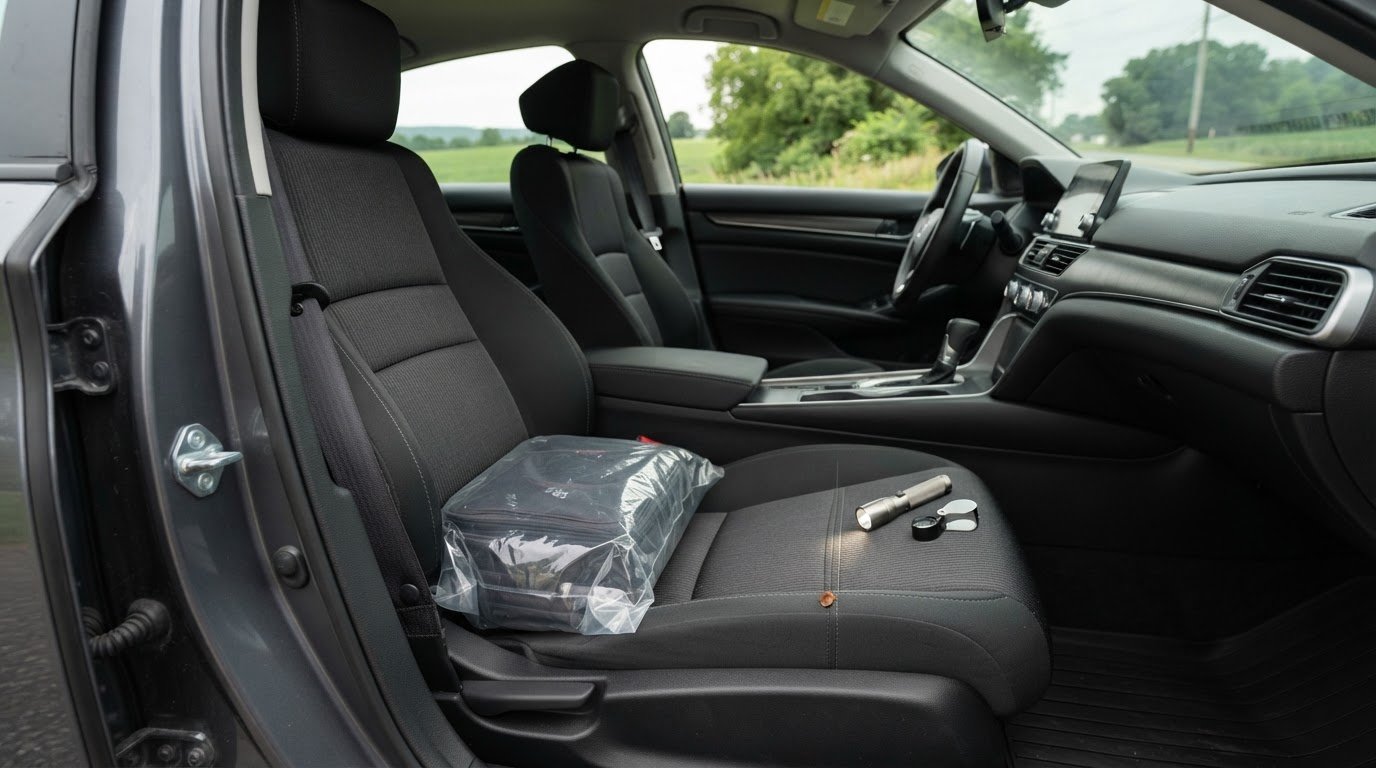
A bed bug in your car is a clue to investigate, not proof that the vehicle is infested. So, can bed bugs live in your car? Yes. They can hitchhike inside on luggage, clothing, or other belongings and hide in places such as seat seams or under seats. Finding one can be unsettling, especially if you’re worried about carrying pests home, but a single sighting doesn’t tell the whole story.
It makes sense to want a clear answer before taking action. Bed bugs can persist in a vehicle, though changing temperatures and the lack of a consistent resting host can make a car less suitable than a home. A bug or mark could also be misidentified, so don’t assume there’s an infestation based on one clue.
This guide explains how bed bugs may enter and hide in a car, what evidence to look for, and how to inspect without spreading the problem. You’ll also learn which signs add context and when professional identification or assessment may help clarify what’s happening.
Key Takeaways
- Yes, bed bugs can be transported into a vehicle, but a temporary presence is not the same as an established infestation.
- Check potential hiding areas such as seat seams, gaps, and undisturbed spaces. These are places to inspect, not proof of bed bugs.
- A single suspected insect doesn’t confirm an infestation. Identification and the surrounding evidence matter.
- If you spot a possible bed bug, document what you see and avoid moving belongings unnecessarily while you assess the situation.
- Repeated sightings, a confirmed identification, or related signs at home may be reasons to seek professional assessment in Erie or Crawford County, Pennsylvania, or Ashtabula County, Ohio.
Can bed bugs live in your car? How they get there
Finding a suspected bed bug in a vehicle can be unsettling, especially if you’re concerned about carrying it home. The direct answer is yes: bed bugs can be transported into a car and hide in its interior. But one encounter doesn’t automatically mean they’re established there. A bug may have arrived recently in a bag or on clothing, while an infestation suggests a more persistent presence supported by additional evidence.
A bed bug sighting is a clue, not confirmation of a vehicle infestation. Identification and context matter. Bed bugs are hitchhikers, not insects that typically live on people or pets. A passenger can unknowingly carry one without serving as its host.
The following video discusses bed bugs in vehicles. Treat any removal suggestions as general information, not a substitute for an assessment of your situation.
How bed bugs may enter a vehicle
Bed bugs can move with belongings. An infested bag, clothing, furniture, or another item brought into a car may carry a hitchhiker into the vehicle. A person may transport one without realizing it, then leave it behind when getting out. These are possible routes, not proof of how a particular bug arrived. Without evidence, it’s not possible to identify its source with certainty.
Can a car support bed bugs over time?
A vehicle’s interior can offer places to hide, but conditions vary. Bed bugs may shelter in tucked-away areas and avoid notice, while temperature changes and access to a host can affect whether the vehicle remains suitable for them. A car is generally less stable than a home as a habitat, but that doesn’t rule out their presence. Survival time depends on conditions, so don’t rely on a fixed timeline to decide whether a vehicle is clear.
Think of an encounter as a reason to look for context, not a reason to assume the worst. Where the insect was found, whether it can be identified, and whether there are recurring signs can help distinguish a temporary hitchhiker from a more established problem.
Where bed bugs may hide inside a car
If you’re checking your vehicle, focus on tucked-away areas rather than assuming every speck is a sign of bed bugs. Possible hiding places are simply areas to inspect, not evidence of an infestation. Seams, narrow gaps, and undisturbed spaces can conceal insects more easily than exposed surfaces, so a quick look across the seats may not tell the whole story.
Vehicle areas to examine visually
Check accessible areas carefully, including seams and narrow gaps. Possible places to look include:
- Seat seams, folds, and crevices around seat structures
- Spaces beneath seats and gaps near seat tracks
- Floor mats, carpeting edges, and nearby crevices
- Bags or other belongings that have been left in the vehicle
- Gaps around the center console or glove compartment
Small seams and crevices can make a visual check incomplete because they’re harder to see than open surfaces. That doesn’t mean bed bugs are present in every hidden area. These are locations to check carefully, not proof of an infestation.
What possible bed bug evidence can look like
A live insect or a shed skin may be worth documenting, but a vague description alone isn’t enough to identify a pest. Dark marks can be confused with dirt, lint, or other debris, while small eggs may be difficult to distinguish from particles caught in upholstery. Other insects can also be mistaken for bed bugs.
If you find something suspicious, take a clear photograph and note where you saw it. Avoid treating a mark or an uncertain insect as confirmation. When identification remains unclear, a professional assessment may help make sense of the evidence. The U.S. Environmental Protection Agency’s information on non-chemical methods of killing bed bugs discusses control approaches, but it doesn’t identify what you’ve found in your car or determine which response fits your situation.
Careful identification matters because asking can bed bugs live in your car is different from asking whether a particular speck or insect is a bed bug. If concerns persist or signs recur, information about professional pest control services can help you understand when professional input may be useful.
Does finding one bed bug mean your car is infested?
No. One suspected insect, even in a car, doesn’t by itself confirm an established infestation. It could be a hitchhiker, or it could be an insect that was misidentified. At the same time, a confirmed bed bug deserves attention. A single finding can’t establish how long it was there or whether others are present, so consider it alongside other signs and the circumstances around the sighting.
There’s no reliable conclusion from a count alone. Repeated sightings, evidence of different life stages, or related signs in the vehicle or home may raise more concern than one isolated observation. They still need to be interpreted carefully, rather than treated as automatic proof.
Clues that add context to a sighting
Consider whether the insect has appeared more than once and whether anyone recently traveled, stayed overnight, or brought potentially infested belongings into the car. These details may help explain possible exposure, but they don’t prove where a bug came from. Bed bugs and lookalike insects can be difficult to distinguish, so a qualified identification can provide useful context. A photo may help document what you saw, but it shouldn’t be treated as a definitive diagnosis.
When a professional assessment may help
Consider asking a pest professional for guidance if suspected sightings recur, an insect has been identified as a bed bug, or credible signs remain uncertain. An assessment can consider the vehicle alongside relevant context, such as where and when the insect was found and whether there are related signs at home. This broader view can help avoid drawing a conclusion from one clue alone.
If you’re still asking, “can bed bugs live in your car,” remember that possibility and confirmation are different questions. Keep a record of sightings and where they occurred, then share that context when asking for guidance. You can review professional pest services to learn about available service categories. Professional assessment may be especially useful when the evidence is unclear or sightings continue.

What to do after spotting a possible bed bug in your car
A possible sighting can be stressful, but you don’t need to assume the whole vehicle is infested or start moving everything out. First, focus on what you observed. A clear record can help distinguish a confirmed insect from an uncertain identification and give a professional useful context if you seek advice.
Record the observation without spreading assumptions
Note where and when you saw the insect, whether it was moving, and whether you’ve noticed anything similar before. If you can do so safely, take a clear photo or preserve the specimen for identification. Avoid handling it unnecessarily. For now, keep belongings in place rather than carrying potentially affected items into your home or another area before getting appropriate guidance.
Stick to what you know. For example, record “small insect on the rear seat” rather than labeling it a bed bug if you’re uncertain. This keeps the observation useful without turning a suspicion into a conclusion.
Decide whether expert identification is appropriate
Professional input may help if sightings recur, you’re unsure what the insect is, or other credible signs appear. A pest professional can consider where the insect was found, any repeat observations, and whether there are related concerns at home. If you’ve noticed signs in both places, mention them together. The vehicle and home context may be connected, and assessing only one part of the picture could leave important details out.
There isn’t one action that confirms or resolves every situation. Avoid relying on an uncertain identification, and don’t assume that one suspected insect proves a vehicle infestation. If you’re asking, “can bed bugs live in your car,” remember that possibility alone doesn’t establish what’s happening in your vehicle. A measured response starts with documenting the evidence and getting appropriate guidance when uncertainty remains.
For bed bug concerns in Erie or Crawford Counties in Pennsylvania, or Ashtabula County in Ohio, contact a pest professional for guidance about whether an assessment may be appropriate.
When to seek bed bug help for a car in Pennsylvania or Ohio
A single uncertain sighting may not establish an infestation, but some situations are worth discussing with a pest professional. Consider asking for guidance if you see suspected bed bugs repeatedly, get a credible identification, or notice related evidence at home. The goal is to assess the available clues, not jump from one observation to a conclusion.
For readers in Erie or Crawford County, Pennsylvania, or Ashtabula County, Ohio, check the service area information for local availability. Bed bug concerns in a vehicle may involve different circumstances than concerns inside a home, so ask what assessment or recommendations are appropriate for your situation.
What to share when asking for guidance
Keep the information factual and concise. Describe where and when you saw the insect, whether you’ve seen anything similar again, and whether you’ve noticed related signs at home. If you have a clear photo or specimen, mention that as well. You don’t need to identify the insect yourself or assume that the vehicle is infested before seeking advice.
These details help provide context, but they don’t confirm a diagnosis on their own. A professional can consider the circumstances and advise whether further assessment is appropriate.
How professional input fits into the next steps
Professional pest control may help assess suspected bed bug activity, particularly when sightings recur or the identification remains uncertain. If there are concerns in both the car and the home, share both sets of observations so they can be considered together. Mosquito Assassin Pest Control LLC provides bed bug treatment in its stated service area, but the appropriate recommendations depend on the situation and assessment.
If you’re still wondering, “can bed bugs live in your car,” the possibility alone doesn’t tell you whether your vehicle has an infestation. Clear observations and qualified guidance can help you decide what to do next. For inspection or professional recommendations, use the contact page for bed bug guidance.
Take a measured next step if you’re concerned
Yes, can bed bugs live in your car? They can be carried into a vehicle and hide there, but a single suspected insect doesn’t confirm an infestation. Focus on what you can verify: where and when it appeared, whether sightings recur, and whether there are related signs at home. If identification remains uncertain or evidence repeats, professional assessment may help clarify the situation.
Mosquito Assassin Pest Control LLC lists bed bug treatment among its specialized services in Erie and Crawford Counties, Pennsylvania, and Ashtabula County, Ohio. For an inspection or professional recommendations, contact Mosquito Assassin Pest Control. A calm, evidence-based next step can help you move forward with greater clarity.
Disclaimer: The information provided on this blog is for general informational purposes only and is not intended as professional pest control advice. Conditions vary by property, environment, and location. Reading this content does not create a service agreement. For an inspection or professional recommendations, please contact Mosquito Assassin Pest Control LLC directly.
Frequently Asked Questions
Can bed bugs live in your car permanently?
Bed bugs can hide in a vehicle, but a sighting alone doesn’t establish a permanent infestation. Whether they persist depends on conditions inside the car and access to a host. Avoid relying on a fixed survival period, since vehicle conditions vary. If sightings recur or an insect is confirmed as a bed bug, professional identification or assessment can help clarify what may be happening.
How do bed bugs get into a car?
Bed bugs can hitchhike into a car on belongings such as bags, clothing, or used furniture. A person may unknowingly transport one without the insect living on their body. Travel or an infested item can offer useful context when assessing a sighting, but neither proves where a particular bug came from. Consider what was recently carried in or out, while keeping in mind that the source may remain uncertain.
Where do bed bugs hide in a car?
Possible places to check include seat seams and folds, carpet edges, and small gaps around vehicle interiors. These are inspection areas, not proof that bed bugs are present. Insects tucked into concealed spaces can be missed during a visual check, so an apparently clear surface doesn’t confirm the entire vehicle is clear. If you find a suspected bug or related evidence, seek professional identification rather than relying on appearance alone.
Can one bed bug in a car start an infestation?
One confirmed bed bug could be a hitchhiker, and it doesn’t prove an established vehicle infestation. Still, take a confirmed sighting seriously because bed bugs can be transported to other locations. Consider whether there have been repeat sightings or related evidence in the car or home. If the insect’s identity is uncertain, or you’re concerned about further activity, qualified guidance is more useful than drawing a conclusion from one observation.
Can bed bugs survive hot or cold temperatures in a car?
Vehicle temperatures can change substantially, but a hot or cold car shouldn’t be treated as a reliable way to eliminate bed bugs. Survival depends on factors such as the temperature reached in hiding places and how long exposure lasts. Those conditions need to be checked against authoritative pest-management sources. Weather and parking conditions alone don’t confirm that bed bugs have been killed, so don’t rely on them as a control method.
Should I drive my car if I think it has bed bugs?
A suspected sighting alone doesn’t confirm that your car is infested, so it can’t determine what’s appropriate for every situation. Avoid moving potentially affected belongings unnecessarily while you seek identification or advice. If sightings recur or there’s confirmed evidence, ask a pest professional for recommendations based on the circumstances. This isn’t a blanket instruction about whether to drive; the available evidence and your situation matter.
When should I call a pest professional about bed bugs in my car?
Ask a pest professional for guidance if a bed bug is identified, sightings recur, or related evidence appears in the vehicle or home. An assessment can help interpret the clues and consider what next steps fit the situation. Mosquito Assassin Pest Control LLC provides bed bug treatment in Erie and Crawford Counties, Pennsylvania, and Ashtabula County, Ohio. The stated service area doesn’t imply availability beyond those counties.
Disclaimer: The information provided on this blog is for general informational purposes only and is not intended as professional pest control advice. Conditions vary by property, environment, and location. Reading this content does not create a service agreement. For an inspection or professional recommendations, please contact Mosquito Assassin Pest Control LLC directly.