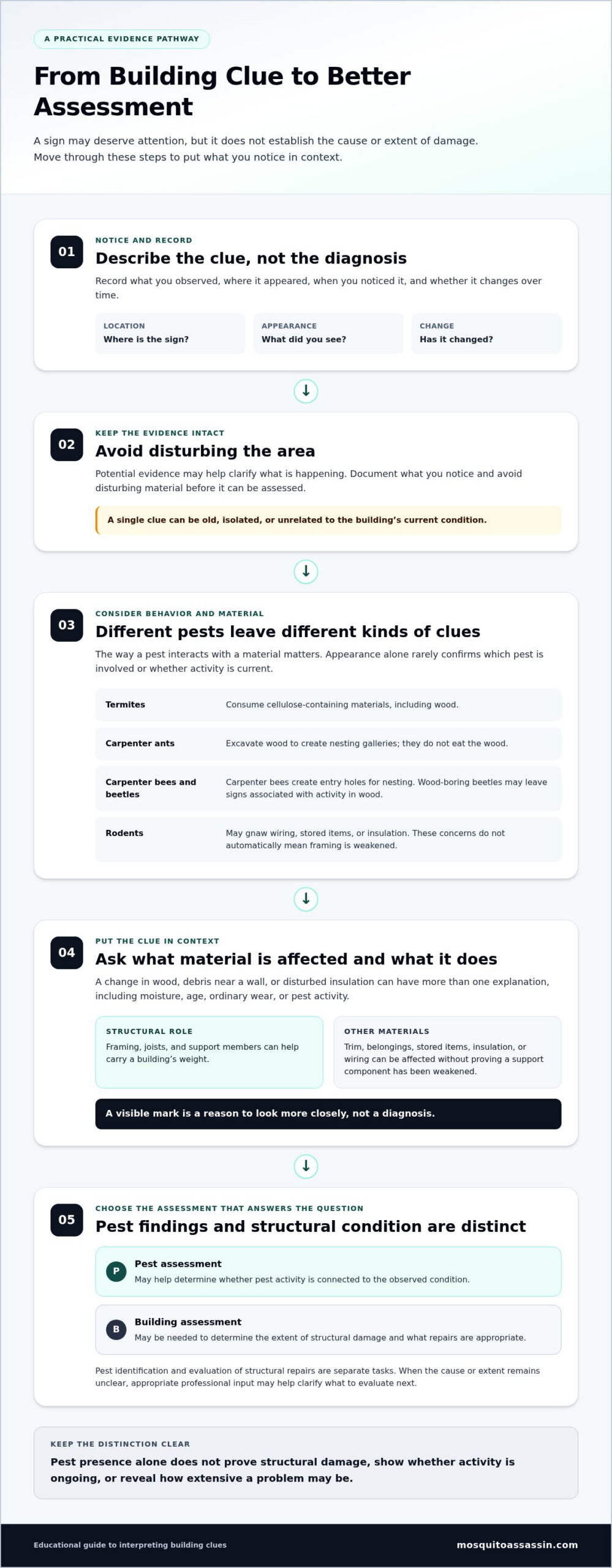
Tag: Carpenter Ants

  • Professional Carpenter Ant Treatment: Identification, Behavior, and Control

    Professional Carpenter Ant Treatment: Identification, Behavior, and Control

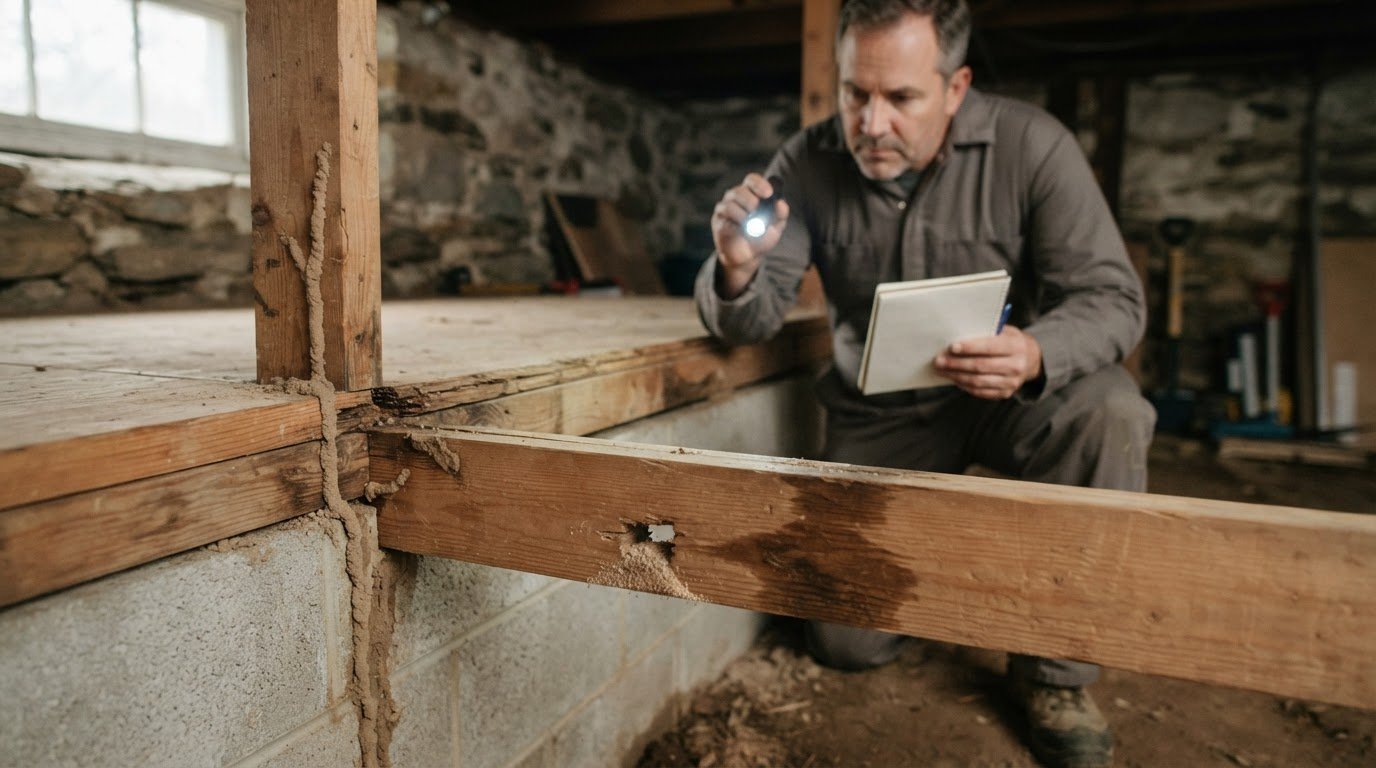
    Last Tuesday, a homeowner in Erie County discovered a small pile of what appeared to be sawdust near a basement support beam, unaware that a satellite colony was currently excavating the structural timber. It’s a common frustration to realize that standard DIY sprays often fail to reach the heart of a nest hidden deep within wall voids. Most people feel a sense of urgency when they realize that seeing a few large ants might indicate a much larger, invisible problem threatening their home’s stability. Professional carpenter ant treatment is essential in these cases because these insects don’t consume wood; they hollow it out for shelter, often compromising the integrity of the support beams within a structure.

    This guide provides the information needed to accurately identify these wood-destroying pests and understand their complex nesting habits. Readers will learn the specific signs of an active infestation and the professional methods used to safeguard properties across Erie and Crawford Counties in Pennsylvania and Ashtabula County in Ohio. This overview covers the differences between carpenter ants and other species, the conditions that attract them, and the systematic approach required for successful long-term control.

    Disclaimer: The information provided on this blog is for general informational purposes only and is not intended as professional pest control advice. Conditions vary by property, environment, and location. Reading this content does not create a service agreement. For an inspection or professional recommendations, please contact Mosquito Assassin Pest Control LLC directly.
    Key Takeaways

    • Learn to identify carpenter ants by their specific anatomical markers, such as an evenly rounded thorax and a single-node waist.
    • Understand the relationship between moisture-damaged wood and nesting habits to better protect the structural integrity of a property.
    • Discover how professional carpenter ant treatment uses non-repellent insecticides to facilitate material transfer throughout the entire colony.
    • Explore the importance of seasonal moisture control and structural maintenance for preventing infestations in Erie, Crawford, and Ashtabula counties.
    • Gain insight into why comprehensive inspections and year-round management plans are more effective than standard over-the-counter sprays.

    Identifying Carpenter Ants in Pennsylvania and Ohio

    Carpenter ants are among the most common wood-destroying insects found throughout the Northeast, including Erie and Crawford Counties in Pennsylvania and Ashtabula County in Ohio. Unlike termites that consume wood for nutrition, these ants excavate galleries to create nesting sites. Understanding Carpenter ant behavior and biology is the first step in determining if a property requires professional carpenter ant treatment. These insects are known for their structural impact, especially in older homes or structures with history of moisture issues.

    To better understand this concept, watch this helpful video:

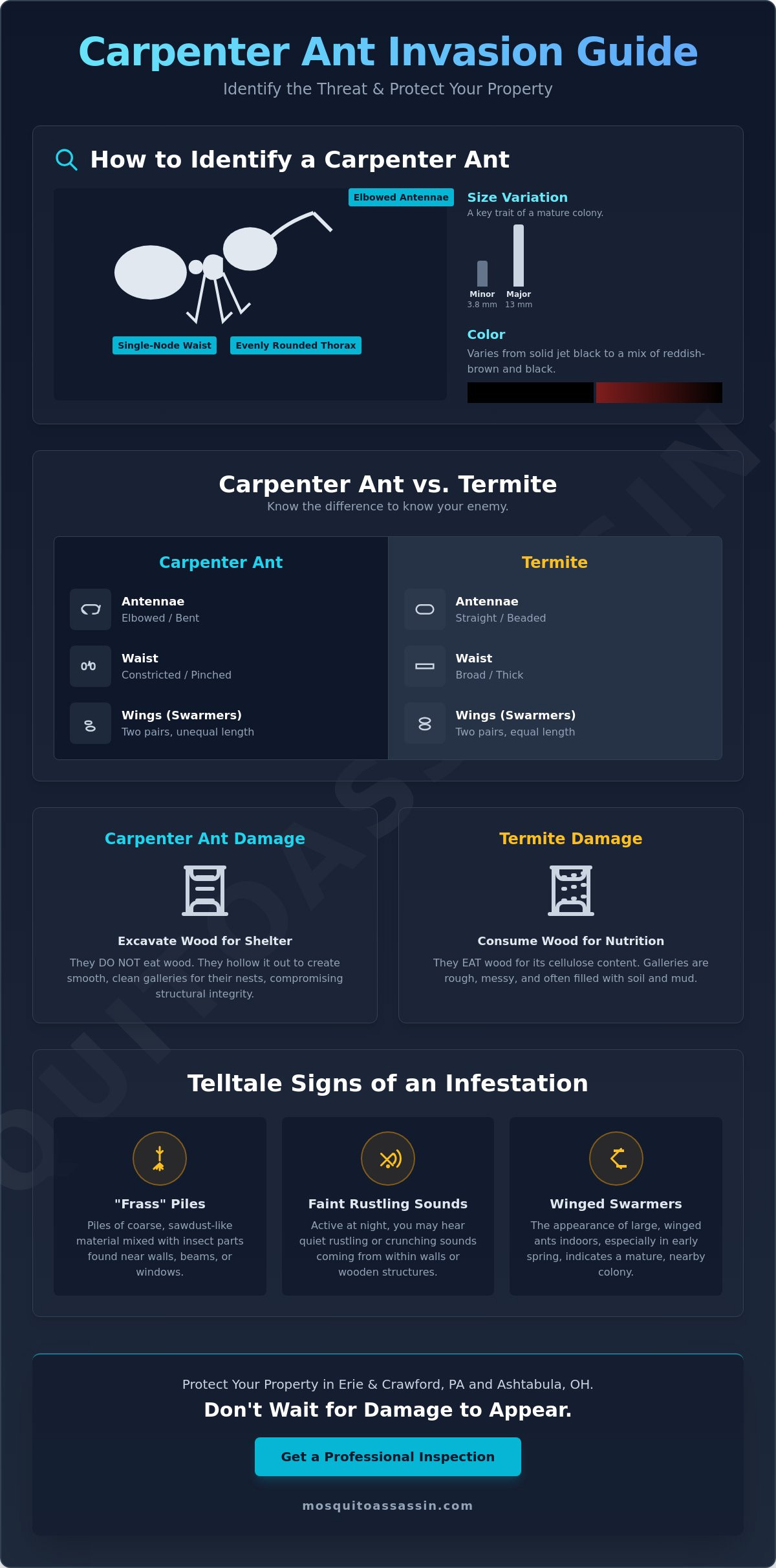
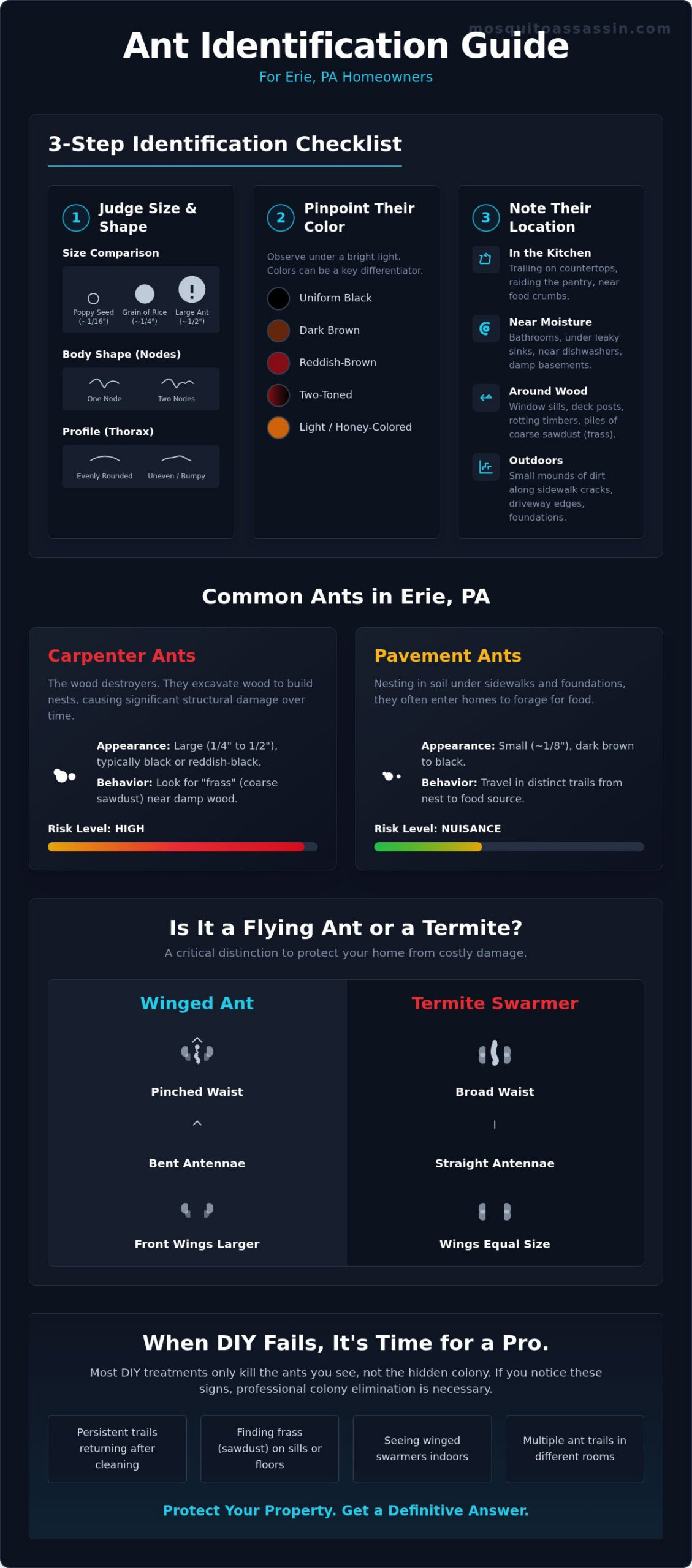
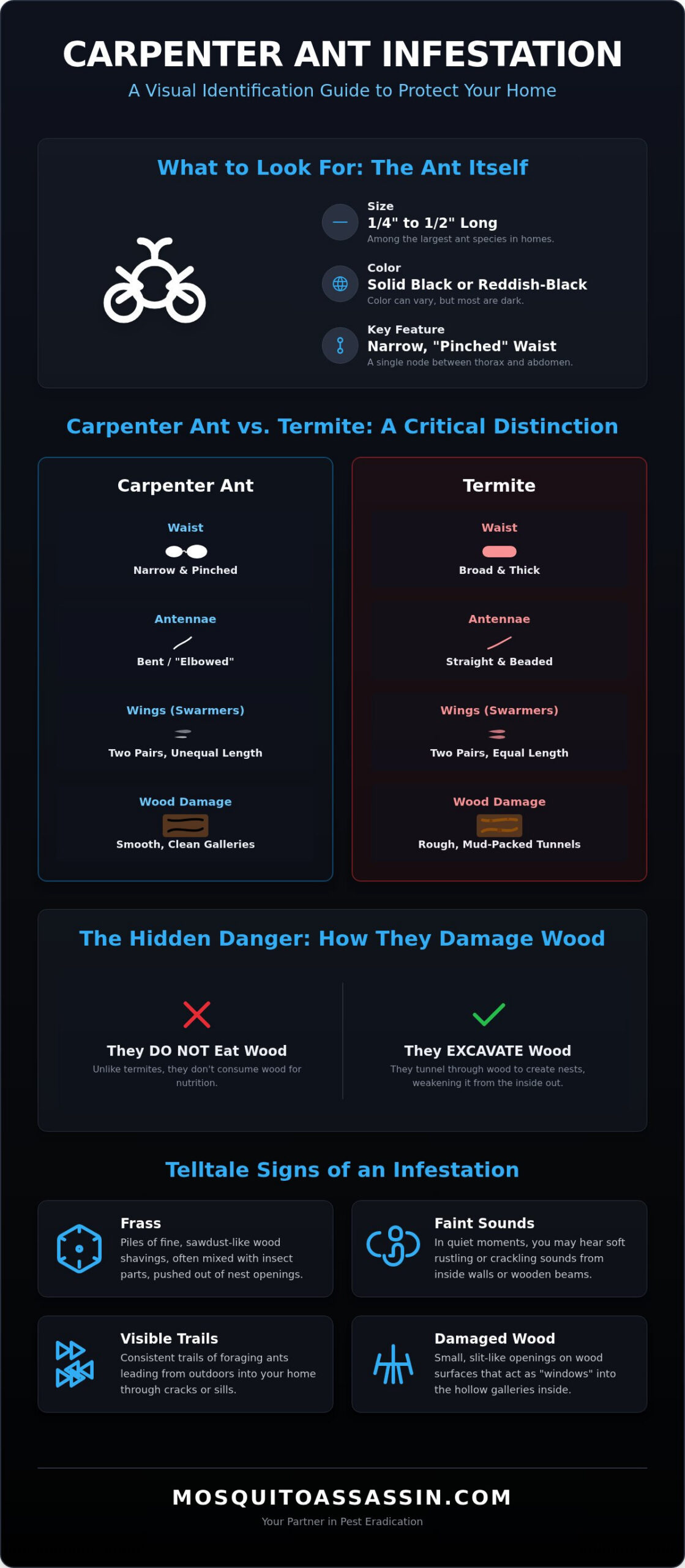
    Identifying these pests requires looking for specific physical traits. A carpenter ant has an evenly rounded thorax when viewed from the side and a single node, or petiole, between the thorax and abdomen. Colony members vary significantly in size within a single nest. Major workers can reach 13 mm in length, while minor workers might be as small as 3.8 mm. This size variation is a distinct trait of a mature, healthy colony. Many homeowners confuse these ants with termites, but the differences are clear upon close inspection. Termites have straight antennae and a broad waist, while carpenter ants have elbowed antennae and a constricted waist. Additionally, the wings on a reproductive ant are unequal in length, whereas termite wings are equal in size and much longer than their bodies.

    Visual Markers and Physical Characteristics

    Local species in the Pennsylvania and Ohio region range in color from solid jet black to a combination of reddish brown and black. Their size is a major indicator, as they are significantly larger than common pavement ants. The elbowed antennae are a vital identification marker, helping to distinguish them from other crawling insects that might inhabit a home foundation or attic. Because they don’t eat the wood, their presence is often related to a search for protein and sugar based food sources in kitchens and pantries.

    Signs of an Active Infestation

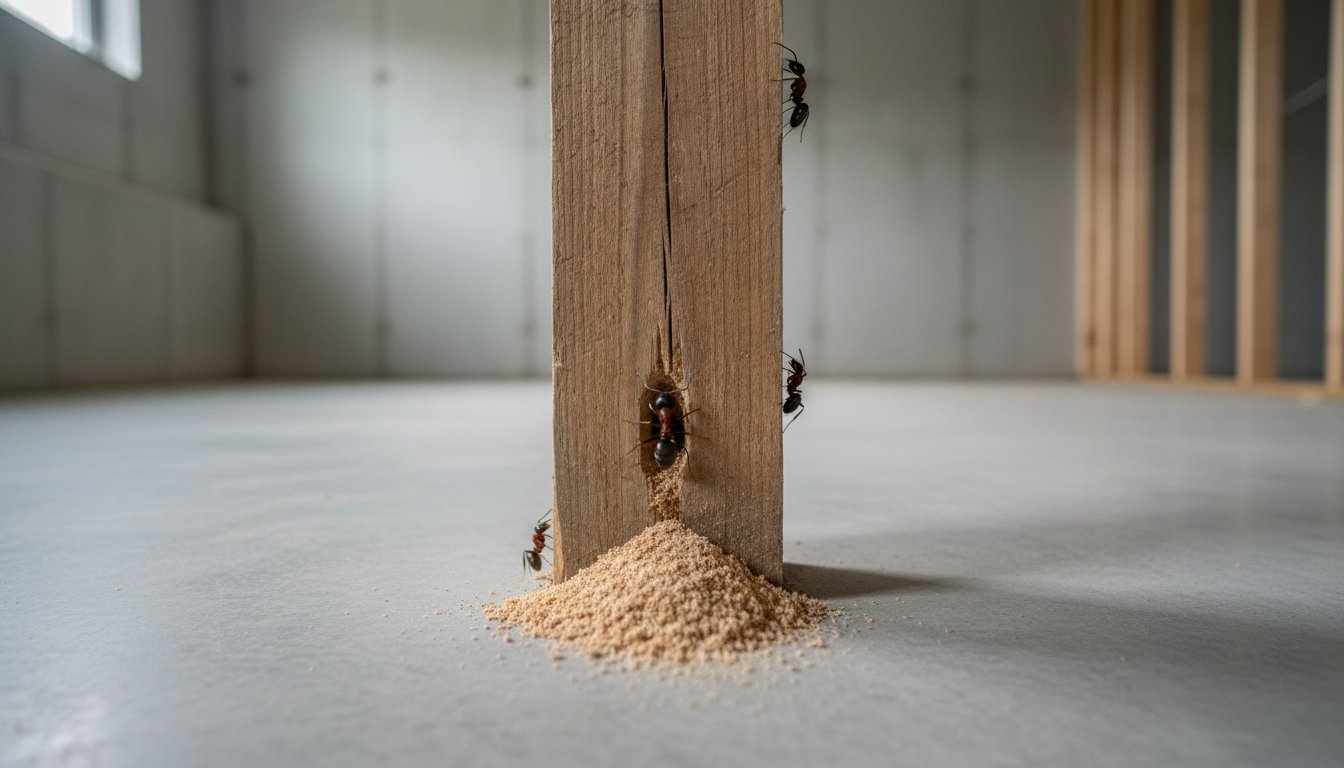
    Finding “frass” is often the most obvious sign of an issue. This material looks like coarse sawdust but contains fragments of dead insects and wood shavings. Because these ants are active at night, residents might hear faint rustling sounds within walls or structural timbers during quiet hours. In the early spring months, the appearance of winged swarmers indoors is a strong indicator of a nearby or internal nest. Identifying these signs early is essential for effective carpenter ant treatment and preventing long term structural damage. Professional pest control may help reduce risk if these signs are present. For more information on identifying local pests, you can visit mosquitoassassin.com/location.

    Disclaimer: The information provided on this blog is for general informational purposes only and is not intended as professional pest control advice. Conditions vary by property, environment, and location. Reading this content does not create a service agreement. For an inspection or professional recommendations, please contact Mosquito Assassin Pest Control LLC directly.
    Understanding Carpenter Ant Behavior and Property Damage

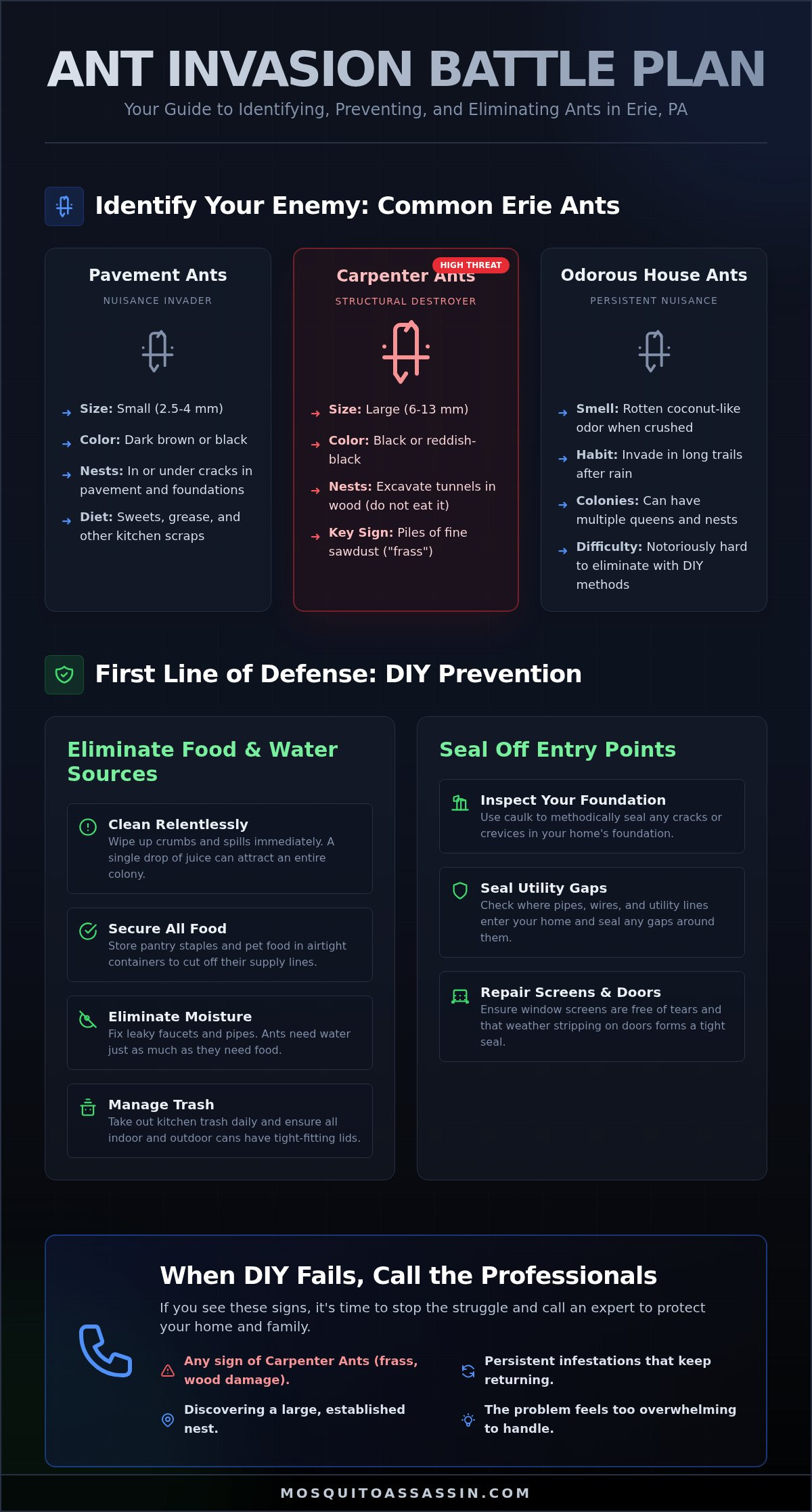
    Carpenter ants are often misunderstood by homeowners who mistake them for termites. While both pests damage wood, their methods differ significantly. Termites consume cellulose for nutrition, but carpenter ants don’t eat wood at all. Instead, they use their powerful mandibles to excavate it. They chew through the fibers to create smooth, clean galleries for their colonies to inhabit. In Erie County and surrounding regions, property owners often identify an infestation by finding “frass.” This material looks like fine sawdust and consists of wood shavings, dead insects, and debris that the ants have pushed out of their tunnels.

    Infestations typically start in wood that has been softened by moisture, rot, or fungal decay. This might include a leaking window frame, a damp corner in a crawlspace, or a porch pillar exposed to heavy rain. Once a colony is established, it doesn’t remain restricted to these soft areas. As the population grows, the ants expand their galleries into sound, dry structural timber. Over a period of three to five years, this expansion can compromise the integrity of wall studs, floor joists, and roof rafters. Because the damage happens inside the wood, it often remains hidden until the structural weakening becomes severe.

    The Parent and Satellite Nest Dynamic

    A single colony often operates across multiple locations, creating a complex management challenge. The parent nest, which houses the queen and young larvae, is usually located outdoors in a high-moisture environment like a stump, log, or stacked firewood. Satellite nests are then established indoors to house older larvae and workers. These satellite sites don’t require the same moisture levels as the parent nest, allowing the ants to spread throughout a home’s dry framing. Treating only the visible ants inside a kitchen rarely eliminates the problem because the queen remains protected in the outdoor parent nest. Effective Carpenter Ant Management strategies require identifying these travel paths to ensure the entire network is addressed.

    Dietary Habits and Foraging Patterns

    Outside the home, these ants primarily feed on “honeydew,” a sugary substance produced by aphids and scale insects. They also hunt other small insects for protein. When they venture into homes in Ashtabula or Crawford counties, they’re searching for similar nutrients. They’re naturally attracted to:

    • Sugars like honey, jelly, and syrup
    • Proteins found in pet food or meat scraps
    • Fats and grease spills in kitchens

    Most foraging activity is nocturnal, peaking between 10:00 PM and 2:00 AM. A worker ant can travel over 100 yards from its nest to find food, often using established trails along garden hoses, tree branches, or utility lines. Because they’re so mobile, a comprehensive carpenter ant treatment involves more than just surface sprays; it requires a deep understanding of these foraging habits. While homeowners can take steps to limit food access, professional pest control may help reduce risk for those facing persistent activity. If you’re seeing consistent activity, you can reach out through the Mosquito Assassin contact page for more information. Understanding these biological patterns is vital for a successful carpenter ant treatment plan that protects the long-term value of a property.

    Disclaimer: The information provided on this blog is for general informational purposes only and is not intended as professional pest control advice. Conditions vary by property, environment, and location. Reading this content does not create a service agreement. For an inspection or professional recommendations, please contact Mosquito Assassin Pest Control LLC directly.
    Professional Carpenter Ant Treatment: Identification, Behavior, and Control

    Professional Approaches to Carpenter Ant Treatment

    Professional carpenter ant treatment requires a systematic approach that addresses both the visible foragers and the hidden colony structure. A single colony often consists of a primary parent nest located outdoors and multiple satellite nests established within a building’s framework. Because of this complex social structure, a simple surface spray is rarely enough to solve the problem permanently. Eradication depends on reaching the queen, who remains protected deep within the nesting galleries.

    Inspection and Nest Location

    Technicians begin by following foraging trails, which are often most visible during the evening hours between 10:00 PM and 2:00 AM when ant activity peaks. These trails lead back to entry points such as gaps around utility lines or cracks in the foundation. Inspection focuses on moisture-prone areas where wood moisture content often exceeds 20 percent, such as window sills, door frames, and areas under leaking sinks. In regions like Erie and Crawford counties, overhanging tree branches frequently serve as bridges, allowing ants to bypass ground-level barriers and enter through rooflines. For residents in the neighboring Ashtabula County, Identifying Carpenter Ants in Ohio provides specific details on recognizing the black carpenter ant and its unique nesting habits. Understanding these local environmental factors is a vital step for those living in Erie, Crawford, and Ashtabula counties.

    Integrated Pest Management Strategies

    Integrated Pest Management (IPM) combines chemical and physical methods to achieve long-term results. Professionals utilize non-repellent insecticides that ants cannot detect. This allows the insects to carry the material back to the nest, ensuring a colony-wide transfer that eventually reaches the queen. Strategic baiting techniques also exploit natural foraging behaviors by providing a slow-acting food source that workers share with the rest of the colony through a process called trophallaxis. This method is highly effective because it uses the ants’ own social biology against them.

    When nests are concealed behind drywall or within insulation, void treatments are necessary. This involves precision application into wall cavities where moisture levels remain high. To prevent future infestations, physical exclusion is required, including sealing cracks and trimming vegetation at least 12 inches away from the structure. Growth regulators may also be used to disrupt the reproductive cycle, preventing the colony from rebounding. Consistent follow-up protocols verify that the parent nest is fully neutralized, as satellite nests cannot survive indefinitely without a connection to the primary colony. If you suspect an infestation, professional pest control may help reduce risk and protect your property’s structural integrity. For more information, you may visit www.mosquitoassassin.com/contact-us.

    Disclaimer: The information provided on this blog is for general informational purposes only and is not intended as professional pest control advice. Conditions vary by property, environment, and location. Reading this content does not create a service agreement. For an inspection or professional recommendations, please contact Mosquito Assassin Pest Control LLC directly.
    Moisture Control and Structural Prevention

    Effective carpenter ant treatment starts with moisture management. These insects don’t actually eat wood for nutrition, but they excavate it to create galleries for their nests. They’re drawn to wood that’s been softened by fungal decay or consistent water exposure. While a colony can eventually migrate into sound, dry wood, initial satellite nests almost always begin in areas with high moisture content. By eliminating these damp conditions, property owners remove the primary invitation for a long-term infestation.

    In regions like Erie, Crawford, and Ashtabula counties, the risk of infestation increases significantly during the spring thaw. As temperatures climb above 50 degrees Fahrenheit in late March or early April, overwintering colonies become active and begin foraging. The frequent rainfall and high humidity levels common to the Great Lakes region often lead to hidden water accumulation in wall voids. This moisture makes local residential and commercial structures particularly vulnerable to wood-destroying organisms.

    Addressing Environmental Vulnerabilities

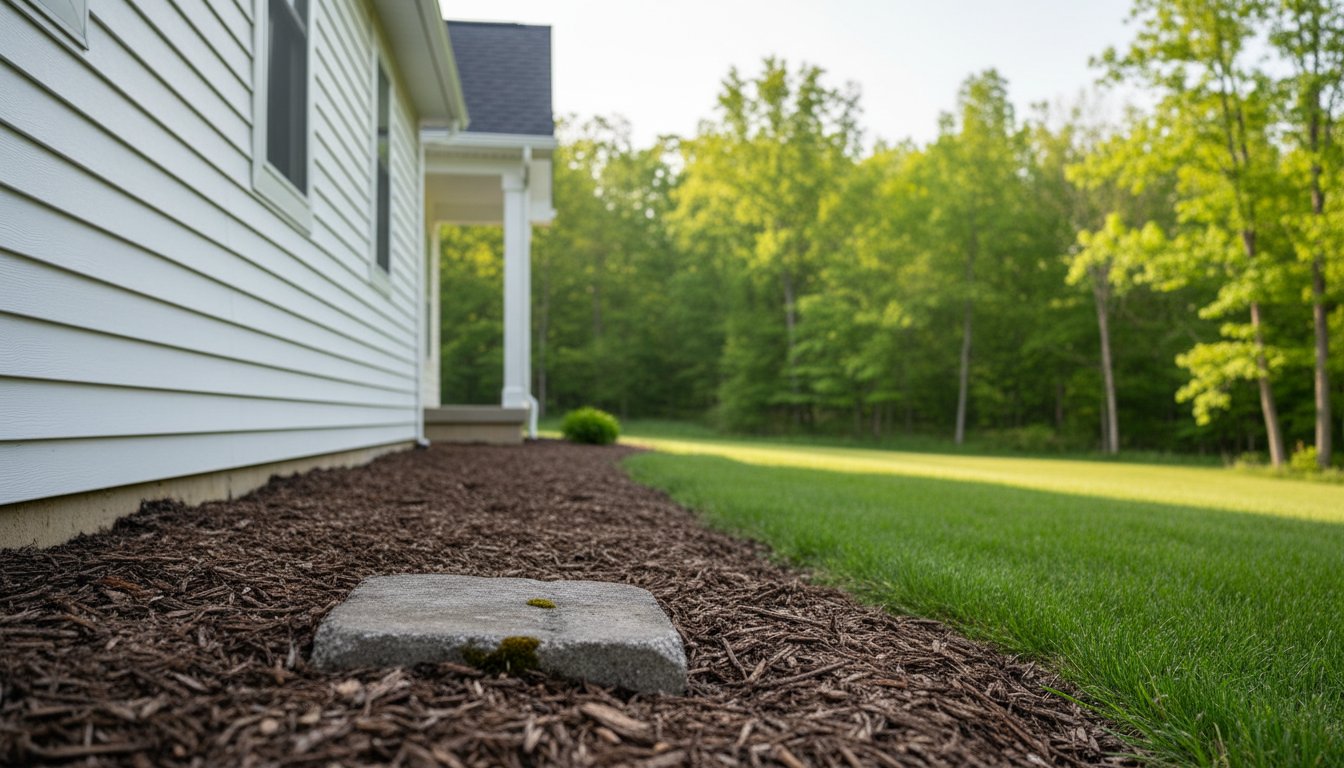
    Structural integrity depends on keeping water away from wooden components. Leaky gutters or poorly aimed downspouts can saturate rim joists and sill plates, creating ideal nesting sites. Property owners should ensure that crawlspaces and attics maintain proper ventilation to prevent condensation buildup. A gap of at least six inches between the soil and wooden siding is a standard professional recommendation to prevent subterranean moisture from wicking into the structure. Fixing plumbing leaks under sinks and around tubs is equally vital, as even a small drip can rot floorboards over time.

    Landscape and Exterior Maintenance

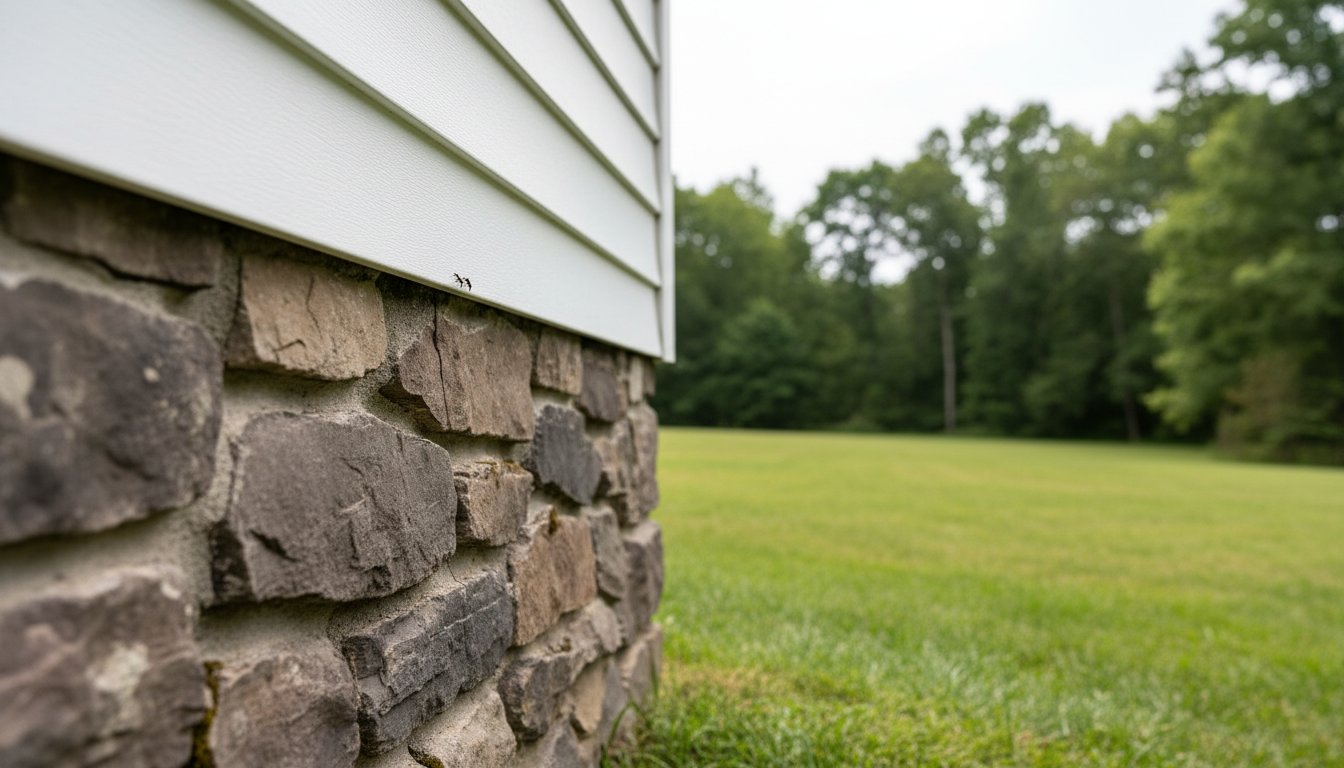
    The exterior environment often dictates how easily pests access a building. Trees and shrubs that touch the roofline or siding serve as natural bridges for foraging ants. Trimming these back by at least three feet reduces direct access points. Additionally, removing decaying stumps and moving firewood piles at least 20 feet away from the foundation eliminates common parent nesting sites. Sealing cracks in the foundation and around utility lines with professional-grade silicone or urethane caulk further hardens the structure against entry. These physical barriers are essential components of a comprehensive carpenter ant treatment plan.

    If you’ve noticed signs of wood damage or active foraging near your foundation, professional pest control services may help reduce the risk of structural damage.

    Disclaimer: The information provided on this blog is for general informational purposes only and is not intended as professional pest control advice. Conditions vary by property, environment, and location. Reading this content does not create a service agreement. For an inspection or professional recommendations, please contact Mosquito Assassin Pest Control LLC directly.
    Professional Management for Wood-Destroying Pests

    Over-the-counter sprays often fail to address the root of a carpenter ant infestation. These retail products typically target only the visible foragers, leaving the queen and the main colony intact. In many cases, these sprays can actually worsen the situation by causing a colony to split into multiple satellite nests, a process known as budding. Effective carpenter ant treatment requires reaching deep-seated galleries hidden within wall voids or structural timbers that standard aerosols cannot penetrate.

    Licensed technicians utilize a methodical approach to verify the total elimination of a colony. This involves more than just a single application; it requires monitoring activity levels and identifying the specific trails leading to the parent nest, which can be located up to 300 feet away from the structure. Year-round protection plans are a practical solution for preventing re-infestation, especially in areas with high pest pressure. Consistent monitoring ensures that new queens attempting to establish colonies are stopped before they can cause significant structural damage.

    Benefits of Professional Oversight

    Professional management provides access to specialized tools that the average homeowner doesn’t possess. Moisture meters and acoustic sensors help technicians locate hidden galleries without unnecessary demolition. In Erie and Crawford Counties, local environmental factors like high humidity and seasonal temperature shifts play a major role in pest behavior. Technicians familiar with the Great Lakes region understand how these patterns affect wood-destroying organisms. This localized knowledge allows for a more targeted carpenter ant treatment that accounts for regional biology and environmental stress.

    Taking Action Against Carpenter Ants

    Early detection is the most effective way to save on structural repair costs. Industry data indicates that wood-destroying pests cause billions of dollars in property damage across the United States annually. Professional inspections offer property peace of mind by identifying vulnerabilities like leaking pipes or failing sealants that attract ants. Taking proactive steps can help reduce the risk of long-term damage to a home’s integrity. For tailored recommendations or to schedule an inspection, property owners in Ashtabula County and surrounding areas can visit the online booking portal or submit a request at www.mosquitoassassin.com/contact-us.

    Disclaimer: The information provided on this blog is for general informational purposes only and is not intended as professional pest control advice. Conditions vary by property, environment, and location. Reading this content does not create a service agreement. For an inspection or professional recommendations, please contact Mosquito Assassin Pest Control LLC directly.
    Protecting Your Home From Structural Damage

    Managing wood-destroying insects requires a combination of vigilance and technical expertise. Property owners in Erie and Crawford Counties in Pennsylvania and Ashtabula County in Ohio should prioritize identifying moisture sources; damp wood is a primary attractant for nesting colonies. Because these pests tunnel through structural members rather than eating them, the damage often remains hidden until it’s substantial. A comprehensive carpenter ant treatment involves more than just surface-level sprays; it requires locating the parent colony and implementing structural modifications to prevent re-infestation. Licensed and insured professionals based in Cranesville understand the specific challenges posed by the regional environment. These experts specialize in wood-destroying insect management, providing the necessary oversight to maintain a sound structure. It’s often more effective to address small signs of activity before they turn into major structural failures. For a professional inspection or recommendations, contact Mosquito Assassin Pest Control LLC today. Maintaining a dry, well-ventilated home is a great first step toward long-term protection.

    Disclaimer: The information provided on this blog is for general informational purposes only and is not intended as professional pest control advice. Conditions vary by property, environment, and location. Reading this content does not create a service agreement. For an inspection or professional recommendations, please contact Mosquito Assassin Pest Control LLC directly.

    Frequently Asked Questions

    Do carpenter ants actually eat the wood in my house?

    Carpenter ants don’t eat wood; they only excavate it to create nesting galleries. Unlike termites, these ants lack the specific enzymes required to digest cellulose. They use their powerful mandibles to chew through wood fibers, pushing the debris out of the nest. According to the University of Minnesota Extension, their primary diet consists of protein and sugars like the honeydew produced by aphids.

    How can I tell the difference between a carpenter ant and a termite?

    You can distinguish these pests by observing their body shape and wing structure. Carpenter ants have a narrow, pinched waist and elbowed antennae. Their four wings are unequal in length. In contrast, termites have a broad waist, straight antennae, and four wings of equal length. Identifying a pinched midsection is a reliable way to confirm the insect is an ant rather than a termite.

    Why do I see large black ants in my house during the winter?

    Seeing active ants during the winter usually indicates a nest is located inside the home’s structure. Carpenter ants typically hibernate during cold months in Erie County and Crawford County. If they’re active indoors while it’s freezing outside, they’ve likely found a heat source within walls or insulation. This activity suggests the colony is established and reacting to the home’s internal climate.

    Is a one-time treatment enough to get rid of carpenter ants?

    A single application rarely provides a complete solution for an established infestation. Professional carpenter ant treatment often requires multiple visits to locate the parent colony and various satellite nests. Research from Iowa State University indicates that colonies can house up to 50,000 workers. Effective management involves ongoing monitoring to ensure the queen is eliminated and the reproductive cycle is permanently broken.

    Are the treatments used for carpenter ants safe for my family and pets?

    Licensed professionals use products that are registered with the EPA specifically for residential use. When applied according to the strict label instructions, these treatments minimize exposure to residents. Technicians focus on targeted applications in wall voids or exterior perimeters rather than broad spraying. It’s standard practice to keep children and pets away from treated areas until the product has dried, which usually takes 2 to 4 hours.

    What is the “sawdust” I found near my baseboards?

    This material, known as frass, is a mixture of wood shavings, insect parts, and general debris. Because carpenter ants don’t consume the wood they remove, they must discard it through small openings. Finding small piles of light-colored wood fibers often indicates a nearby nest entrance. In 90% of cases, frass is located directly below the exit holes where the ants are actively tunneling.

    How long does it take to completely eliminate a carpenter ant colony?

    Total elimination can take anywhere from a few weeks to several months depending on the colony size. While initial carpenter ant treatment may reduce visible activity by 70% within the first week, the baiting process relies on workers carrying materials back to the queen. This biological process takes time to ensure the entire population, including the reproductive core, is successfully reached and managed.

    Can carpenter ants cause the house to collapse?

    It’s extremely rare for carpenter ants to cause a total structural collapse. While they can cause significant damage over 5 to 10 years, they work much slower than subterranean termites. They prefer moist or decaying wood, which can eventually compromise the integrity of specific beams or joists. Regular inspections in Ashtabula County help identify these issues before the structural stability of the home is at risk.

    If you suspect an infestation, professional pest control may help reduce risk. You can find more information at www.mosquitoassassin.com/contact-us.

    Disclaimer: The information provided on this blog is for general informational purposes only and is not intended as professional pest control advice. Conditions vary by property, environment, and location. Reading this content does not create a service agreement. For an inspection or professional recommendations, please contact Mosquito Assassin Pest Control LLC directly.
  • Common Pests in Western PA: A Homeowner Guide to Local Species

    Common Pests in Western PA: A Homeowner Guide to Local Species

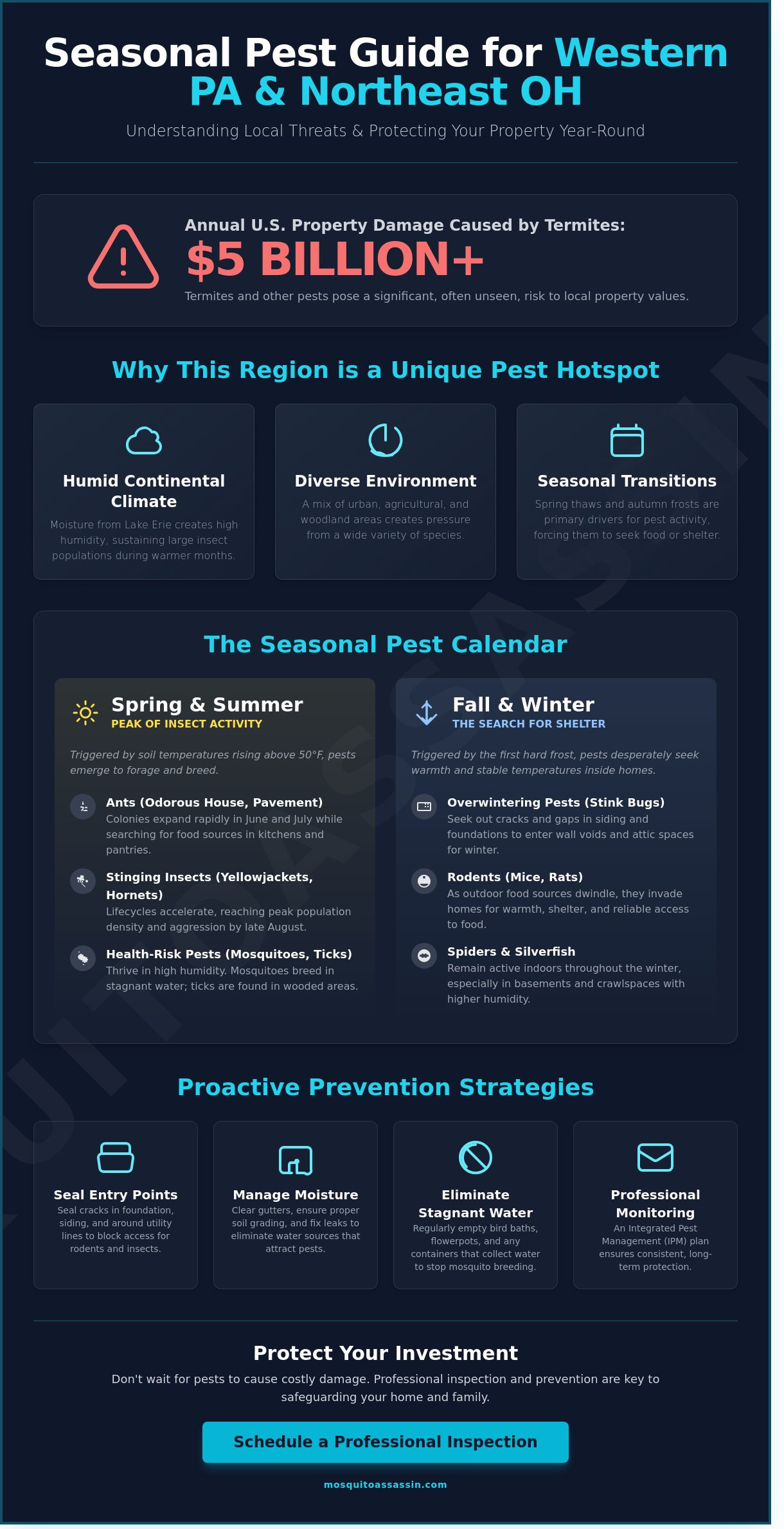
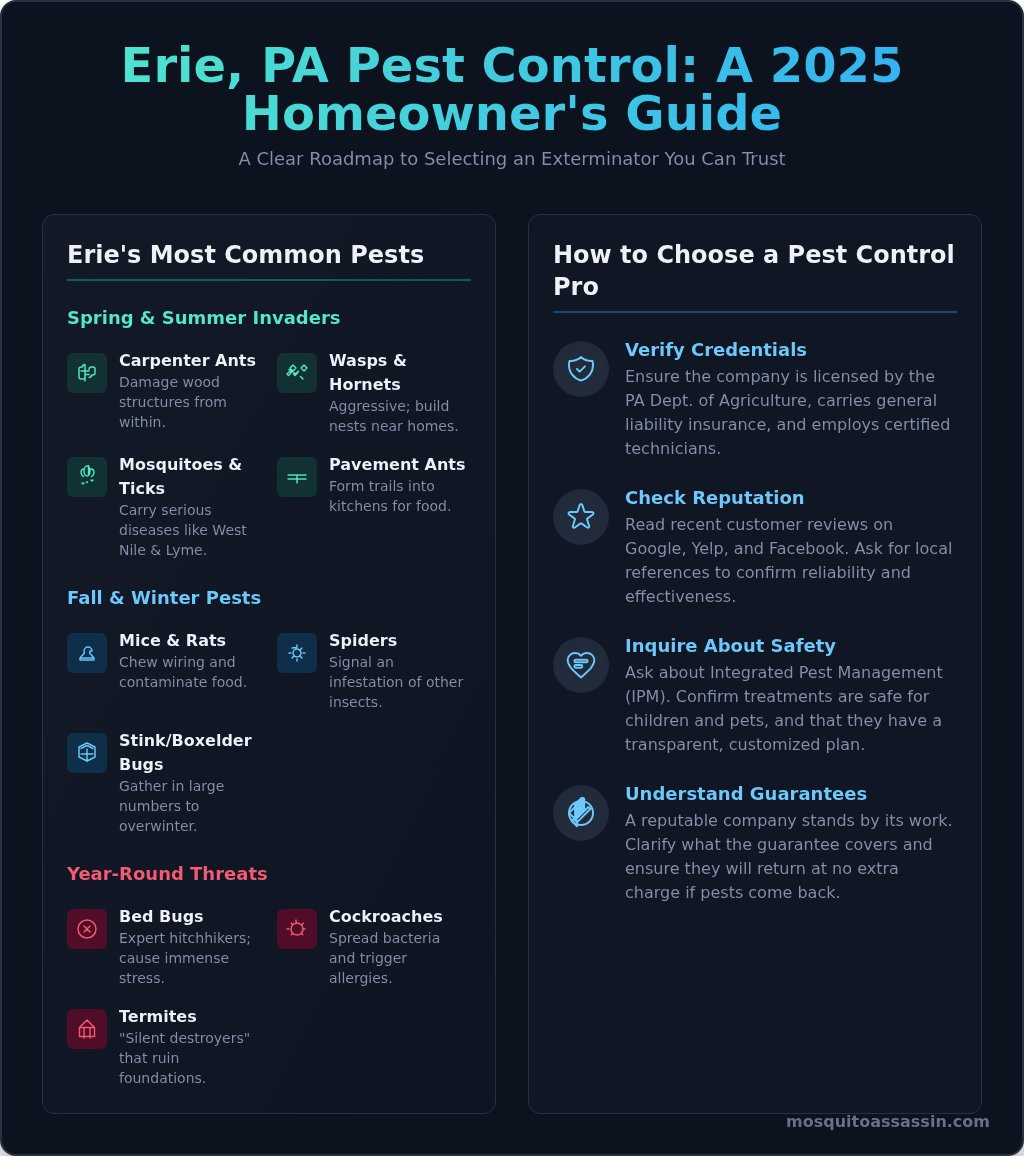
    According to the National Pest Management Association, termites cause over $5 billion in property damage annually in the United States. For residents in Erie and Crawford Counties, this figure highlights the real risk that silent invaders pose to local property values. It’s natural to feel a sense of unease when discovering a tick after a hike or hearing the telltale signs of rodents in the attic. Dealing with common pests in western PA is a year-round challenge that demands both vigilance and local expertise.

    This guide identifies the most frequent seasonal pests encountered in Western Pennsylvania and Ashtabula County, Ohio, while outlining professional prevention strategies to protect your home. You’ll gain a clear understanding of how to recognize local species and implement practical steps to reduce common attractants. By learning about pest behavior and environmental triggers, you can better decide when professional intervention is required to safeguard your family and property.

    Disclaimer: The information provided on this blog is for general informational purposes only and is not intended as professional pest control advice. Conditions vary by property, environment, and location. Reading this content does not create a service agreement. For an inspection or professional recommendations, please contact Mosquito Assassin Pest Control LLC directly.
    Key Takeaways

    • Learn how the humid continental climate and proximity to Lake Erie influence the activity levels and breeding patterns of local species throughout the year.
    • Identify the specific habitats of health-risk insects, such as black-legged ticks in wooded areas and mosquitoes in stagnant water, to better protect your household.
    • Understand the differences between structural threats like Eastern subterranean termites and carpenter ants, which are among the most common pests in western PA and Northeast Ohio.
    • Discover practical home maintenance strategies, including gutter clearing and proper soil grading, to eliminate the moisture sources that attract local pests.
    • Explore the benefits of Integrated Pest Management (IPM) for achieving long-term protection through consistent monitoring and professional prevention techniques.

    Understanding Common Pests in Western PA and the Seasonal Cycle

    Western Pennsylvania presents a unique environment for homeowners because the region’s biodiversity means that common household pests often consist of a varied mix of urban, agricultural, and woodland species. Residents in Erie and Crawford Counties frequently deal with pressure from both industrial areas and the surrounding timberlands. The humid continental climate, heavily influenced by the moisture coming off Lake Erie, creates high humidity levels that sustain large insect populations throughout the warmer months.

    Seasonal transitions act as a primary driver for pest activity. Spring thaws wake dormant colonies, while autumn frosts signal a desperate search for warmth inside residential structures. Understanding these cycles is the first step in protecting a property. The common pests in western PA generally fall into three main categories: stinging insects, wood-destroying organisms, and rodents. Each group responds differently to the local weather patterns and regional topography.

    To see how local weather and agricultural shifts impact specific species, watch this report on seasonal pest trends:

    Spring and Summer: The Peak of Insect Activity

    As soil temperatures rise above 50 degrees Fahrenheit, odorous house ants and pavement ants begin their search for food. These colonies often expand rapidly during the humid months of June and July. Stinging insects like yellowjackets and hornets follow a fast-paced lifecycle, reaching peak population density by late August. In Crawford County, high summer humidity levels often drive moisture-loving pests like house centipedes into cooler, damp areas of the home, such as crawlspaces or bathrooms, to avoid desiccation.

    Fall and Winter: The Search for Warmth

    When the first hard frost hits, typically in late October or early November, the behavior of common pests in western PA shifts toward survival. Overwintering pests, specifically the brown marmorated stink bug, seek cracks in siding to enter attic spaces. Rodents also move indoors during this time, as they require stable temperatures to survive the harsh winters of the Great Lakes region. While many insects go dormant, spiders and silverfish often remain active in basement environments, where humidity levels stay high enough to support their needs throughout the winter.

    If you notice signs of an infestation, professional pest control may help reduce risk. More information is available at our location page or through the online booking portal.

    Disclaimer: The information provided on this blog is for general informational purposes only and is not intended as professional pest control advice. Conditions vary by property, environment, and location. Reading this content does not create a service agreement. For an inspection or professional recommendations, please contact Mosquito Assassin Pest Control LLC directly.
    Health-Risk Pests: Mosquitoes, Ticks, and Stinging Insects

    Biological threats from local wildlife often peak during the humid summer months in the Tri-County area. Homeowners frequently encounter various common pests in western PA that carry pathogens or possess aggressive defensive behaviors. Understanding the lifecycle and habitat of these species is the first step in maintaining a safe residential environment. Professional monitoring remains a standard recommendation because these specific pests require precise identification to manage effectively without disrupting the local ecosystem.

    Ticks and Mosquitoes in the Tri-County Area

    Black-legged ticks, also known as deer ticks, are prevalent throughout the wooded corridors of Northwest PA and Ashtabula County. These arachnids thrive in the leaf litter and tall grass found at the edges of residential properties. According to data from the Pennsylvania Department of Health, tick populations in Erie and Crawford counties have shown a consistent presence of Borrelia burgdorferi, the bacterium responsible for Lyme disease. For help with identification, homeowners can refer to this Penn State guide to common household insects to distinguish between different tick species and other yard invaders.

    Mosquitoes present a different set of challenges, particularly in the Lake Erie lowlands where drainage can be slow. Species like the Culex mosquito are active from May through September, with peak activity occurring during the low-light hours of dawn and dusk. These insects utilize even the smallest amounts of stagnant water for breeding. Common attractants include:

    • Clogged gutters that retain moisture and organic debris.
    • Overturned flowerpots or equipment that collects rainfall.
    • Dense vegetation and tall grass that provide cool, shaded resting spots during the day.

    Stinging Insect Identification and Safety

    As the season progresses into late summer and early fall, the behavior of stinging insects becomes more territorial. Ground-nesting yellowjackets are particularly aggressive during this window as their colony size reaches its peak and natural food sources become scarce. These are among the most hazardous common pests in western PA because their nests are often hidden beneath the soil, making them easy to disturb while mowing or gardening.

    It’s vital to distinguish between beneficial pollinators and aggressive hornets. While honeybees and bumblebees generally avoid conflict, bald-faced hornets will strike repeatedly if they perceive a threat to their aerial nests. Another concern for homeowners is the carpenter bee. Unlike hornets, carpenter bees aren’t typically aggressive, but they pose a structural risk. They drill half-inch diameter holes into wooden decks, eaves, and fascia boards to lay eggs. Over several years, this activity can lead to significant wood decay and moisture intrusion.

    When a nest is discovered on a property, safety should be the priority. Homeowners should avoid approaching or spraying nests with over-the-counter products, as this can trigger a swarm response. If you notice high levels of activity near your home, professional pest control may help reduce risk by identifying the species and implementing a targeted management plan. For an evaluation of your property, you may reach out through the online booking portal.

    Disclaimer: The information provided on this blog is for general informational purposes only and is not intended as professional pest control advice. Conditions vary by property, environment, and location. Reading this content does not create a service agreement. For an inspection or professional recommendations, please contact Mosquito Assassin Pest Control LLC directly.
    Common Pests in Western PA: A Homeowner Guide to Local Species

    Structural and Nuisance Pests: Termites, Ants, and Rodents

    Older homes in Erie and Crawford Counties face a persistent, hidden threat from Eastern subterranean termites. These insects are often called silent destroyers because they can consume structural wood for years without being detected. In Western PA, where many residential properties feature aged timber and damp basements, termites find ideal conditions to thrive. They typically enter through the soil, building protective mud tubes to reach the wooden components of a house. Homeowners often miss the early signs of an infestation, only realizing there is a problem when they find discarded wings or hollowed-out wood during a renovation.

    Identifying the difference between wood-destroying insects is critical for effective management. While termites consume wood for nutrition, carpenter ants simply use it as a nesting site. These ants prefer wood that has been softened by moisture or decay. You can often tell the difference by the debris they leave behind. Carpenter ants produce “frass,” a substance resembling sawdust that contains wood fragments and insect parts. Termites, conversely, leave the wood looking layered or shredded. Following established guidelines for urban pest prevention and control helps manage these risks through integrated strategies that address moisture and entry points.

    Wood-Destroying Organisms in PA and OH

    In the regional climate of Ashtabula County and surrounding areas, wood-destroying organisms are a constant concern. Termite activity is most visible during “swarming” events in the spring, where winged reproductives emerge to start new colonies. Look for mud tubes on foundation walls, which look like dried veins of earth. Professional inspections are necessary to identify these subtle signs before structural degradation becomes a safety hazard or a major financial burden. Because carpenter ants don’t stop once a nest is established, professional intervention is often the only way to ensure a colony is fully neutralized.

    The Challenge of Rodent Exclusion

    The house mouse is one of the most prolific common pests in western PA. These rodents are capable of producing up to eight litters per year, meaning a small entry point can lead to a massive population in just a few months. Mice can squeeze through gaps as small as a dime in a home’s foundation, siding, or utility lines. Once inside, they pose significant health risks by contaminating food and surfaces with droppings and urine. Effective rodent removal requires a methodical three-step process:

    • Removal: Eliminating the current population using professional-grade methods.
    • Maintenance: Monitoring the property to ensure no new activity occurs.
    • Exclusion: Sealing every possible entry point with durable materials like steel wool or metal flashing.

    Managing these common pests in western PA requires a proactive approach. While DIY traps might catch a single mouse, they don’t address the root cause of the infestation. Professional pest control is frequently necessary for persistent ant colonies and rodent issues because it addresses the biological behaviors and entry patterns specific to local species.

    Disclaimer: The information provided on this blog is for general informational purposes only and is not intended as professional pest control advice. Conditions vary by property, environment, and location. Reading this content does not create a service agreement. For an inspection or professional recommendations, please contact Mosquito Assassin Pest Control LLC directly.
    Practical Prevention Strategies for Local Homeowners

    Safeguarding a property against common pests in western PA requires a proactive approach. Homeowners can reduce the likelihood of infestations by making the environment less hospitable to local species. Moisture control is a primary defense. Termites, carpenter ants, and silverfish thrive in damp environments. Gutters should be cleaned at least twice a year, typically in late spring and late fall, to prevent water from pooling near the foundation. Soil should be graded to slope away from the house at a rate of one inch per foot for the first six to ten feet to ensure proper drainage and keep the crawl space or basement dry.

    Sanitation habits are equally important. Many common pests in western PA, such as rodents and pavement ants, are attracted to accessible food sources. Storing pantry items in airtight glass or heavy plastic containers removes the olfactory triggers that draw these animals inside. Trash should be kept in bins with tight-fitting lids and emptied regularly to prevent odors from lingering. Sealing external gaps is the final step in basic exclusion. Using silicone-based caulk for small cracks and hardware cloth for larger vents or crawl space openings creates a physical barrier that pests cannot easily penetrate.

    Hardening the Home Exterior

    Pests often enter through damaged door sweeps or torn window screens. Homeowners don’t always realize that a gap of just 1/16th of an inch is enough for many insects to gain entry. Firewood should be stored at least 20 feet away from the home and elevated on a metal rack. This prevents wood-boring insects from migrating directly into the structure. Professional exclusion services provide a comprehensive long-term barrier by identifying hidden entry points that residents might overlook during a standard inspection.

    Landscaping and Yard Maintenance

    Vegetation acts as a natural bridge for ants and spiders. Trimming tree branches and shrubs so they remain at least 24 inches away from the siding prevents pests from bypassing ground-level treatments. Mulch depth should not exceed two to three inches. Excessive mulch retains moisture and provides a perfect nesting ground for earwigs and millipedes. Simple yard modifications, such as removing standing water in clogged drains or low spots, help with a mosquito control program by eliminating potential breeding sites.

    If you’ve identified potential entry points or persistent activity, professional pest control may help reduce risk.

    Disclaimer: The information provided on this blog is for general informational purposes only and is not intended as professional pest control advice. Conditions vary by property, environment, and location. Reading this content does not create a service agreement. For an inspection or professional recommendations, please contact Mosquito Assassin Pest Control LLC directly.

    The Role of Professional Pest Management

    Managing common pests in western PA effectively involves a shift from reactive treatments to proactive strategies. Integrated Pest Management (IPM) serves as the foundation for this approach. It’s a science-based process that prioritizes long-term prevention over temporary fixes. Instead of simply applying products when a bug is spotted, professionals analyze the ecosystem of the property. They look for food sources, moisture issues, and structural gaps that allow pests to thrive. This methodical approach ensures that the root cause of an infestation is addressed, not just the symptoms. According to industry standards, nearly 80 percent of effective pest management involves exclusion and sanitation rather than chemical application alone.

    Customized treatment plans are significantly more effective than generic retail products. Big-box store sprays are often broad-spectrum and don’t account for the specific biological resistance or behavioral patterns of local species. Professionals use targeted applications that focus on the biology of the specific pest. This precision ensures a higher success rate while prioritizing family-safe treatments. These methods are designed to be used around children and pets, focusing on low-impact solutions that maintain the well-being of the household residents.

    Comprehensive Protection for Every Season

    The climate in Erie and Crawford Counties creates distinct pest pressures during different times of the year. Quarterly inspections are essential because they catch infestations in their early stages before they become a major financial burden. A professional’s knowledge of general pest control ensures that treatments are timed to the specific life cycles of local insects. Local providers with deep roots in the locations they serve understand how regional factors, such as Lake Erie’s humidity or local agricultural cycles, influence pest movement. This regional expertise allows for a level of protection that national chains often struggle to replicate.

    Taking the Next Step for a Pest-Free Home

    It’s common for homeowners to start with DIY efforts, but these often fall short when dealing with established colonies. Transitioning to professional assistance is a practical step when pests persist despite home remedies. Experts provide a satisfaction guarantee; if pests return between scheduled visits, the professionals return to address the issue. This creates a level of accountability and peace of mind that retail products cannot provide. Professional pest control may help reduce risk by creating a consistent barrier against the common pests in western PA. For residents in Ashtabula, Erie, or Crawford Counties, professional guidance is available through the online booking portal to help maintain a healthy, pest-free environment.

    Disclaimer: The information provided on this blog is for general informational purposes only and is not intended as professional pest control advice. Conditions vary by property, environment, and location. Reading this content does not create a service agreement. For an inspection or professional recommendations, please contact Mosquito Assassin Pest Control LLC directly.
    Securing Your Property Against Local Infestations

    Managing common pests in western PA requires a proactive approach that shifts with the local seasons. According to the Pennsylvania Department of Health, the state frequently reports some of the highest numbers of Lyme disease cases in the country, making tick prevention a top priority for local families. Beyond health risks, structural pests like termites cause an estimated $5 billion in property damage across the United States each year, often going unnoticed until significant issues arise.

    Effective prevention involves maintaining a 12-inch clear zone between mulch and your home’s foundation and ensuring all window screens are free of holes. While DIY methods offer temporary relief, a professional strategy provides a more durable solution. As a locally owned and operated company, Mosquito Assassin brings a five-star rated service to every property. The team is fully licensed and insured in PA and OH, offering expertise that helps homeowners maintain a comfortable environment. Professional pest control may help reduce risk, and for an inspection or professional recommendations, contact Mosquito Assassin Pest Control LLC directly. Taking small, consistent steps now will help keep your home secure all year long.

    Disclaimer: The information provided on this blog is for general informational purposes only and is not intended as professional pest control advice. Conditions vary by property, environment, and location. Reading this content does not create a service agreement. For an inspection or professional recommendations, please contact Mosquito Assassin Pest Control LLC directly.

    Frequently Asked Questions

    What are the most common pests in Western PA during the winter?

    Mice and spiders are the most common pests in western PA during the winter months. Rodents like the house mouse seek warmth when temperatures drop below 45 degrees Fahrenheit; they can enter through gaps as small as 1/4 inch. You’ll also frequently find cellar spiders or wolf spiders that have established themselves in basements or attics to escape the frost. These pests utilize the structural protection of your home to survive the harsh regional winters.

    How do I identify a termite swarm in Pennsylvania?

    Termite swarms in Pennsylvania typically occur on warm days following spring rain when temperatures reach approximately 70 degrees. You can identify these insects by their straight antennae, uniform waist, and four wings of equal length. Often, homeowners only find the discarded wings on windowsills or near light sources after the swarm has ended. These events are a primary indicator of an active colony nearby that requires a professional evaluation to prevent structural damage.

    Are the spiders found in Western PA dangerous?

    Most spiders found in Western PA aren’t medically significant to humans and don’t pose a serious health risk. The Northern Black Widow is the only native species with potentially dangerous venom, but they’re rarely encountered in living spaces. While species like the yellow sac spider or wolf spider can bite if they’re provoked, their venom typically causes only minor localized irritation. Professional identification is recommended if you’re concerned about a specific specimen found in your home.

    When is mosquito and tick season in the Erie and Ashtabula area?

    Mosquito and tick season in Erie, Crawford, and Ashtabula counties typically runs from April through October. Ticks become active whenever temperatures rise above 45 degrees, which can happen even during mid-winter thaws in our region. Mosquito activity peaks when nighttime temperatures consistently stay above 50 degrees. Local records indicate that the highest population densities for these pests usually occur between June and August.

    Why do I have so many stink bugs in my house every fall?

    Brown Marmorated Stink Bugs enter homes in the fall to find a protected place to overwinter. They’re attracted to the reflective surfaces and warmth of south-facing walls during the cooling months. Research shows these insects release a pheromone that attracts other stink bugs to the same location once they’ve found a suitable spot. Sealing gaps around windows and doors before September can help reduce the number of insects that successfully enter your living space.

    Can professional pest control help with carpenter bee damage?

    Professional pest control is an effective way to manage carpenter bee damage and prevent future nesting in your home’s exterior. These bees drill holes approximately 1/2 inch in diameter into untreated wood to create brood chambers for their young. Over several seasons, these tunnels can weaken structural components like fascia boards and deck joists. A technician can apply targeted treatments to active galleries and advise on long-term exclusion strategies to safeguard your property.

    What is the difference between a house mouse and a deer mouse?

    The primary difference between a house mouse and a deer mouse is their coloration and tail appearance. House mice are usually a solid light brown or gray with a hairless tail that’s the same color as their body. Deer mice have a distinct white underbelly and white feet, with a bi-colored tail that’s dark on top and light on the bottom. While house mice prefer living indoors year-round, deer mice often enter homes in rural areas during the fall.

    Is it possible to be totally pest-free in a wooded area?

    Achieving a totally pest-free environment in a wooded area is generally not possible due to the high natural biodiversity of the forest. However, professional management can significantly reduce the frequency of common pests in western PA entering your home. Maintaining a 12-inch gravel or mulch barrier around the foundation and keeping vegetation trimmed 2 feet away from the structure are proven methods to limit pest pressure. Professional pest control may help reduce risk even in high-pressure environments. For more information, visit www.mosquitoassassin.com/contact-us.

    Disclaimer: The information provided on this blog is for general informational purposes only and is not intended as professional pest control advice. Conditions vary by property, environment, and location. Reading this content does not create a service agreement. For an inspection or professional recommendations, please contact Mosquito Assassin Pest Control LLC directly.

  • Carpenter Ant Treatment in Meadville, PA: A Comprehensive Guide

    Carpenter Ant Treatment in Meadville, PA: A Comprehensive Guide

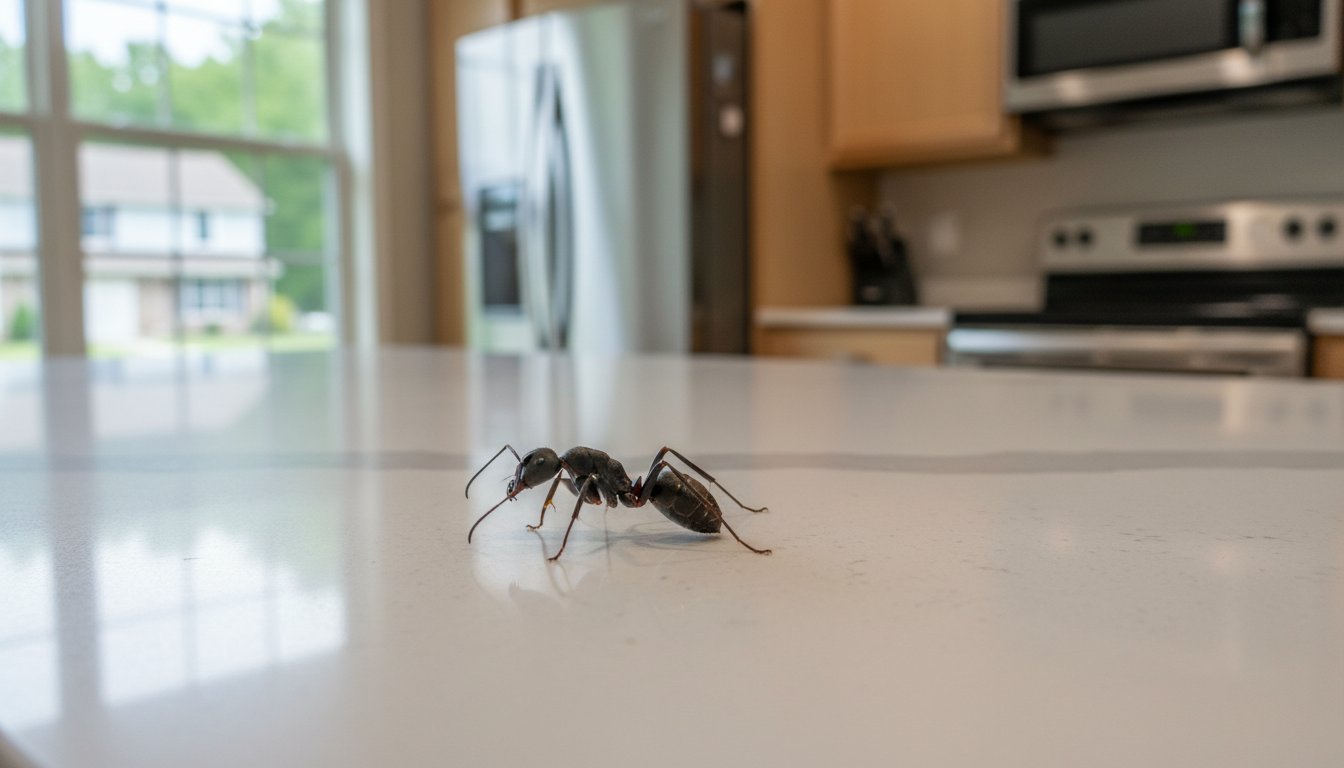
    If you spot a single large black ant on your kitchen counter in Meadville, it’s rarely a scout looking for crumbs; it’s often a sign that a colony of up to 10,000 workers is already excavating the structural beams of your home. Most homeowners in Crawford County find it incredibly frustrating when DIY sprays provide only temporary relief while the sound of rustling inside the walls continues. It’s common to worry about the high costs of structural repairs, especially when these pests are easily confused with termites. By understanding the unique biology of these wood-destroying insects, you can secure the right carpenter ant treatment Meadville PA to stop the destruction before it requires a contractor.

    This guide explores identification techniques, the limitations of over-the-counter solutions, and professional strategies to ensure the entire colony is neutralized. You’ll learn how to protect your property investment and gain peace of mind through proven prevention methods tailored for the Northwest Pennsylvania climate. Understanding these behaviors is the first step toward safeguarding your home from long-term damage.

    Disclaimer: The information provided on this blog is for general informational purposes only and is not intended as professional pest control advice. Conditions vary by property, environment, and location. Reading this content does not create a service agreement. For an inspection or professional recommendations, please contact Mosquito Assassin Pest Control LLC directly.

    Key Takeaways

    • Identify the physical characteristics of Pennsylvania carpenter ants, including their large size and dull black appearance.
    • Understand the relationship between outdoor parent colonies and indoor satellite nests to better locate the source of structural damage.
    • Differentiate between carpenter ants and termites by comparing their dietary habits and the cleanliness of their nesting galleries.
    • Implement effective prevention strategies, such as managing moisture levels and eliminating wood-to-ground contact around the foundation.
    • Discover why Integrated Pest Management (IPM) provides a systematic approach to carpenter ant treatment Meadville PA homeowners can use for long-term protection.

    Identifying Carpenter Ants in Meadville and Crawford County

    Carpenter ants, belonging to the genus Camponotus, represent one of the largest and most structurally significant ant species in Pennsylvania. These insects are distinguished by their dull black coloration and polymorphic size variations. Within a single colony, workers can range from small minors to large majors, creating a diverse workforce dedicated to nest expansion. Recognizing these physical traits is essential for homeowners considering the necessity of carpenter ant treatment Meadville PA requires to protect local properties from wood-boring pests.

    The activity cycle in Northwest Pennsylvania follows a predictable seasonal timeline. As the spring thaw begins and ground temperatures rise above 50 degrees Fahrenheit, dormant colonies become active. This period often brings the appearance of reproductive swarmers. These winged ants are frequently confused with termites; however, they’re identified by their elbowed antennae, pinched waists, and unequal wing lengths. Seeing these swarmers indoors often indicates a mature colony is already established within the structure.

    Common Species in Northwest Pennsylvania

    The Black Carpenter Ant is the most frequent invader in Crawford County residential areas. These ants typically measure between 0.25 inches and 0.55 inches in length. Unlike other common house ants, they possess a single, distinct node between the thorax and the abdomen. Their thorax also features a continuous, rounded curve when viewed from the side, a detail that helps professionals distinguish them from other wood-boring insects. They thrive in the moisture-rich environments found near local woodlands and aging timber.

    Signs of an Active Infestation

    Identifying an active infestation is the first step toward determining if a professional carpenter ant treatment Meadville PA protocol is necessary. Early detection helps mitigate potential structural damage. Homeowners should watch for specific behavioral and physical markers that indicate a nesting site is nearby. Professional pest control may help reduce risk when these signs are present:

    • Evening Activity: Observing large, dark ants in moisture-prone areas like kitchens, bathrooms, or laundry rooms during late-night hours when they’re most active.
    • Presence of Frass: Finding piles of sawdust-like material near baseboards or windowsills. This “frass” often contains insect parts and insulation debris, as the ants don’t consume the wood but rather excavate it to create galleries.
    • Audible Sounds: Hearing faint rustling or clicking noises coming from behind drywall or within structural beams, particularly when the house is quiet at night.

    Disclaimer: The information provided on this blog is for general informational purposes only and is not intended as professional pest control advice. Conditions vary by property, environment, and location. Reading this content does not create a service agreement. For an inspection or professional recommendations, please contact Mosquito Assassin Pest Control LLC directly.

    Understanding Carpenter Ant Nesting and Structural Impact

    Carpenter ants are among the most misunderstood pests in Crawford County. Unlike termites, these insects don’t eat wood for food. They use their powerful mandibles to excavate galleries, carving out smooth tunnels to house their growing colonies. This biological distinction is critical because it changes how homeowners should approach a potential infestation. Identifying the specific nesting habits of these ants is the first step toward a successful carpenter ant treatment Meadville PA residents need to protect their property.

    Parent vs. Satellite Colony Dynamics

    A carpenter ant infestation usually involves a network of nests rather than a single location. The parent colony, which contains the queen and young larvae, typically stays outdoors in high-moisture environments like decaying tree stumps, fallen logs, or stacks of firewood. When the population grows, workers establish satellite nests inside nearby structures. These indoor nests house older larvae and pupae; they don’t require the high humidity levels the queen needs to survive. This is why satellite nests are often found in dry areas like wall voids, attic insulation, or behind appliances. For a permanent solution, the connection between these two locations must be broken.

    Moisture plays a dual role in how these ants select a home. Initially, they target wood that’s been softened by leaks or fungal decay. Common entry points in Meadville homes include window sills, door frames, and roof eaves where water may collect. Once the ants have established a satellite nest in damp wood, they can easily expand their galleries into sound, dry structural timber. This expansion is what leads to long term damage if the colony isn’t addressed quickly. If you suspect an active nest, professional pest control may help reduce risk to your home’s infrastructure.

    Potential Structural Consequences

    While carpenter ants work slower than subterranean termites, their impact is cumulative and dangerous. A mature colony can consist of thousands of workers constantly chewing through support beams. Over several years, this “honeycombing” effect hollows out the wood from the inside, often leaving the exterior surface looking perfectly normal. Specific risks include:

    • Weakened Load-Bearing Beams: Continuous excavation can reduce the weight-bearing capacity of floor joists.
    • Window and Door Misalignment: As frames are hollowed out, they may warp or sag, making it difficult to open or close windows.
    • Secondary Infestations: Abandoned galleries can become homes for other pests or trap moisture, leading to mold growth.

    The presence of multiple satellite nests within a single structure accelerates this damage. Because Meadville’s climate provides plenty of moisture during the spring and summer, carpenter ant treatment Meadville PA homeowners seek should focus on both the immediate indoor threat and the outdoor source to prevent the cycle from repeating.

    Disclaimer: The information provided on this blog is for general informational purposes only and is not intended as professional pest control advice. Conditions vary by property, environment, and location. Reading this content does not create a service agreement. For an inspection or professional recommendations, please contact Mosquito Assassin Pest Control LLC directly.

    Carpenter Ants vs. Termites: Key Differences for Homeowners

    Distinguishing between carpenter ants and termites is a critical first step for property owners in Crawford County. While both pests damage structures, they do so in fundamentally different ways. Termites are detritivores that consume cellulose found in wood, turning the structural beams of a home into a food source. Carpenter ants don’t eat wood; they simply excavate it to create nesting galleries. These ants forage outside the nest for proteins and sugars, often trailing toward kitchens or trash bins. Because their biology and habits differ, effective general pest control requires specialized strategies tailored to each species. Applying a termite-specific solution to an ant infestation rarely yields results.

    Physical characteristics provide the most reliable identification. Carpenter ants have a distinct, pinched waist with one or two nodes. Their antennae are elbowed, or bent, and their back is rounded. Termites have a broad, rectangular waist and straight antennae that look like tiny beads. Professional carpenter ant treatment Meadville PA focuses on these biological markers to ensure the correct protocols are used. Misidentifying these pests can lead to unnecessary damage if the wrong treatment is applied.

    Identifying Wood Damage

    Homeowners can often identify the culprit by inspecting the texture of the damaged wood. Carpenter ant galleries are remarkably clean and smooth, appearing as if they’ve been finished with fine-grit sandpaper. These ants are tidy and remove all debris from their tunnels. This debris, known as frass, consists of wood shavings, bits of soil, and dead insect parts. It’s often pushed out through small “kick out holes,” forming small piles that resemble sawdust. Termite damage is the opposite. Their galleries are typically filled with a gritty mixture of soil and mud, as subterranean termites use mud tubes to maintain moisture levels while they feed. These tubes are often found along foundation walls or floor joists.

    Swarmer Identification

    Identifying winged “swarmers” is common during the spring months in Meadville, typically between March and June. Ant swarmers have two pairs of wings that are unequal in length; the front wings are significantly larger than the hind wings. Termite swarmers also have four wings, but all four are the same length and often twice as long as their bodies. While termite wings break off easily and are often found in piles on windowsills, ant wings remain attached more firmly. Accurate identification during these swarming events is vital for securing the right carpenter ant treatment Meadville PA. Professional inspection is recommended when swarmers are found indoors, as this often indicates a mature colony is nesting within the structure.

    Disclaimer: The information provided on this blog is for general informational purposes only and is not intended as professional pest control advice. Conditions vary by property, environment, and location. Reading this content does not create a service agreement. For an inspection or professional recommendations, please contact Mosquito Assassin Pest Control LLC directly.

    Prevention Strategies for Meadville Properties

    Effective carpenter ant treatment Meadville PA starts with proactive prevention. Because these pests are attracted to moisture and decaying wood, maintaining a dry environment is the most critical step for local homeowners. Crawford County experiences an average of 43 inches of rainfall annually, which can lead to saturated foundations and hidden rot if not managed correctly. Reducing moisture levels around the foundation and within crawlspaces prevents the wood from softening, making it less attractive to nesting queens.

    Environmental Modifications

    Moisture control is the foundation of long term prevention. Leaking pipes under sinks or in crawlspaces should be repaired immediately; even a small drip creates the softened wood these ants prefer for nesting. It’s vital to ensure gutters are clear and downspouts direct water at least six feet away from the structure. When wood becomes water damaged or shows signs of decay, it should be replaced with pressure treated alternatives or synthetic materials to remove the primary attractant. Sealing cracks in the foundation and gaps around utility penetrations (such as where cable lines or pipes enter the home) prevents easy access for foraging scouts looking for new nesting sites.

    Landscaping Best Practices

    Landscaping choices often dictate how easily pests can reach a home. Many Meadville properties feature heavy mulch, which retains moisture and provides a perfect habitat for satellite colonies. Maintaining a 12 to 18 inch gravel or stone border between the lawn and the foundation significantly reduces the likelihood of ants crossing into the siding. Proper yard maintenance is a key component of comprehensive carpenter ant treatment Meadville PA strategies.

    Crawford County’s dense vegetation, including mature oaks and maples, often provides “bridges” for ants to bypass ground level defenses. Trimming tree branches and shrubs so they don’t touch the roofline or siding is essential. Additionally, homeowners should remove old stumps and decaying logs from the yard, as these serve as primary nesting sites for parent colonies. Firewood must be stored at least 20 feet away from the main structure and elevated off the ground to prevent it from becoming an easy entry point for wood destroying insects.

    If you suspect an active infestation, professional pest control may help reduce risk and protect your property.

    Disclaimer: The information provided on this blog is for general informational purposes only and is not intended as professional pest control advice. Conditions vary by property, environment, and location. Reading this content does not create a service agreement. For an inspection or professional recommendations, please contact Mosquito Assassin Pest Control LLC directly.

    Professional Management and Integrated Pest Management (IPM)

    Managing wood-destroying insects requires more than just reactive measures. Integrated Pest Management (IPM) offers a sustainable alternative to traditional broad-spectrum spraying. While older methods often rely on heavy chemical applications that only address visible ants, IPM focuses on understanding the biology and behavior of the pest. This method prioritizes long-term prevention by combining biological, physical, and targeted tactics. Effective carpenter ant treatment Meadville PA relies on this precision to ensure the entire colony, including the queen, is addressed rather than just the foragers seen on a kitchen counter.

    Regional expertise is vital because the climate in Crawford and Erie counties presents unique challenges. Localized pest control in Erie, PA and Meadville requires an understanding of how high humidity levels and seasonal temperature shifts affect wood-boring insects. Professionals in this region recognize that local architecture, often featuring older timber frames and specific crawl space designs, provides vulnerabilities that national chains might overlook. Knowledge of local tree species, such as the common black cherry or oak, also helps identify where outdoor parent colonies might be nesting.

    The Inspection Process

    A systematic evaluation is the foundation of any successful management plan. Professionals conduct a thorough walkthrough of the perimeter, attic, and basement to identify active trails. Since these ants are often nocturnal, technicians use non-invasive techniques to find hidden galleries without damaging the home’s structure. Documentation of moisture issues is a critical step; data from university extension offices suggests that nearly 90 percent of indoor carpenter ant nests are located near wood with a moisture content above 20 percent. Identifying these leaks or drainage problems is essential for a permanent resolution.

    Long-Term Protection Plans

    One-time applications rarely provide a permanent solution for established colonies. Incorporating monitoring into a broader year-round pest control strategy ensures that new queens don’t re-establish themselves in the same area. Follow-up visits are necessary to confirm the parent colony, which may be located outdoors in a nearby stump or landscape timber, is completely neutralized. Without this comprehensive approach, satellite colonies inside the home can survive and continue to cause structural damage. Professional carpenter ant treatment Meadville PA provides the oversight needed to maintain a pest-free environment throughout the changing seasons.

    Professional pest control may help reduce risk and protect the structural integrity of your property. For more information, please visit the online booking portal.

    Disclaimer: The information provided on this blog is for general informational purposes only and is not intended as professional pest control advice. Conditions vary by property, environment, and location. Reading this content does not create a service agreement. For an inspection or professional recommendations, please contact Mosquito Assassin Pest Control LLC directly.

    Protecting Meadville Homes from Structural Damage

    Maintaining a sound structure in Crawford County requires constant vigilance against wood-destroying insects. Unlike termites that consume cellulose, carpenter ants excavate smooth galleries to create satellite nests, often targeting structural timber with a moisture content exceeding 20 percent. Effective management relies on identifying these nesting sites and addressing the underlying environmental conditions, such as overgrown vegetation or leaking gutters, that attract them. Utilizing detailed Integrated Pest Management (IPM) protocols ensures that every carpenter ant treatment Meadville PA property owners receive is targeted and follows 2024 industry standards for effectiveness.

    For homeowners in Northwest Pennsylvania, working with a licensed and insured professional service provides a methodical approach to pest eradication. A locally owned and operated provider in the region understands the specific climate challenges, including the high humidity levels common in the Great Lakes basin, that lead to increased pest activity. Accessing a professional inspection helps identify early signs of structural compromise before they lead to significant repair costs. To address an active infestation or establish a preventative strategy, schedule a professional inspection through the online portal at mosquitoassassin.com. Taking proactive steps today helps safeguard the long-term integrity of a home against wood-destroying pests.

    Disclaimer: The information provided on this blog is for general informational purposes only and is not intended as professional pest control advice. Conditions vary by property, environment, and location. Reading this content does not create a service agreement. For an inspection or professional recommendations, please contact Mosquito Assassin Pest Control LLC directly.

    Frequently Asked Questions

    How can I tell if I have carpenter ants or regular house ants?

    Carpenter ants are significantly larger than common nuisance ants, typically measuring between 0.5 and 1 inch in length. While most house ants are about 0.125 inches long, carpenter ants have a distinct single node on their waist and a perfectly rounded thorax when viewed from the side. Finding coarse sawdust, known as frass, near wood structures is a 100 percent certain sign of carpenter ant activity rather than regular house ants.

    Do carpenter ants actually eat the wood in my Meadville home?

    Carpenter ants don’t eat wood for nutrition like termites do. Instead, they use their powerful mandibles to excavate galleries for nesting, which removes 100 percent of the wood in those specific channels. This process creates smooth tunnels that compromise the structural integrity of the timber over time. Because they don’t digest the material, they push the debris out of the nest, creating visible piles of wood shavings.

    Why do I see large black ants in my house even in the winter?

    Seeing active ants inside a Crawford County home during winter months usually means a colony is already nesting within the walls. When outdoor temperatures drop below 50 degrees Fahrenheit, local ants typically go into a dormant state. However, the internal heat of a home allows an established colony to remain active 365 days a year, foraging for food and water in kitchens or bathrooms.

    Can I get rid of a carpenter ant colony using store bought sprays?

    Store bought contact sprays generally only eliminate the 10 percent of the colony that is currently foraging outside the nest. These products often act as repellents, which can cause a colony to “bud” or split into 2 or 3 smaller colonies deeper in the structure. Effective carpenter ant treatment Meadville PA requires non-repellent materials that workers carry back to the queen for total colony elimination.

    What attracts carpenter ants to a specific house in Crawford County?

    Moisture is the primary attractant, as these ants prefer to nest in wood with a moisture content of 20 percent or higher. Leaking roof shingles, clogged gutters, or poor drainage around the foundation create the damp conditions they need. Properties with firewood stacked within 5 feet of the exterior walls or tree branches touching the roofline are at a significantly higher risk for infestation.

    Are carpenter ant treatments safe for my children and pets?

    Professional treatments utilize products registered by the EPA specifically for use in residential environments. Licensed technicians apply these materials in targeted areas like wall voids and crevices where pests hide but children and pets cannot easily reach. Residents are typically asked to stay off treated liquid surfaces for 2 to 4 hours until the application is completely dry to ensure safety.

    How long does it typically take to eliminate a carpenter ant infestation?

    Complete elimination of a colony usually takes between 14 and 21 days from the initial application. While homeowners often see a 90 percent reduction in ant activity within the first 48 hours, the remaining time is necessary for the bait to circulate through the entire population. This slow-acting process is vital because it ensures the queen is reached, preventing the colony from rebounding.

    Is a professional inspection necessary if I only see one or two ants?

    Seeing just 1 or 2 ants often indicates the presence of a much larger parent colony that can contain over 3,000 workers. These “scout” ants are sent out to find food sources for the rest of the group hidden inside the structure. Identifying the nesting site early can prevent structural damage that costs thousands of dollars to repair, making a professional assessment a practical step for long-term protection.

    Disclaimer: The information provided on this blog is for general informational purposes only and is not intended as professional pest control advice. Conditions vary by property, environment, and location. Reading this content does not create a service agreement. For an inspection or professional recommendations, please contact Mosquito Assassin Pest Control LLC directly.

  • Common Pests in Crawford County PA: A Professional Overview for 2026

    Common Pests in Crawford County PA: A Professional Overview for 2026

    That quiet scratching sound from behind a wall, the constant concern over ticks after a walk through the woods, or the sight of wood-destroying insects near your foundation-these are more than simple annoyances. For property owners, they represent a significant source of stress, potential health risks, and the threat of costly damage. Gaining a clear understanding of the top pests in Crawford County PA is the most effective first step toward safeguarding your home and family. This professional overview for 2026 is designed to do just that.

    Beyond structural pests and rodents, rural properties can also contend with burrowing animals like gophers and ground squirrels that damage lawns, gardens, and agricultural land. For those facing these specific challenges, it’s helpful to explore Gopher Control & Elimination options to protect your property’s integrity.

    In this guide, you will find reliable information to help you accurately identify the most common invaders in the region, from ants and spiders to mosquitoes and rodents. More importantly, you will learn proven, professional-grade prevention strategies to help fortify your home against these recurring threats. The guide also provides clarity on recognizing the signs that an infestation has grown beyond a simple DIY fix and may require the attention of a licensed pest control professional. Prepare to take control and protect your peace of mind.

    Key Takeaways

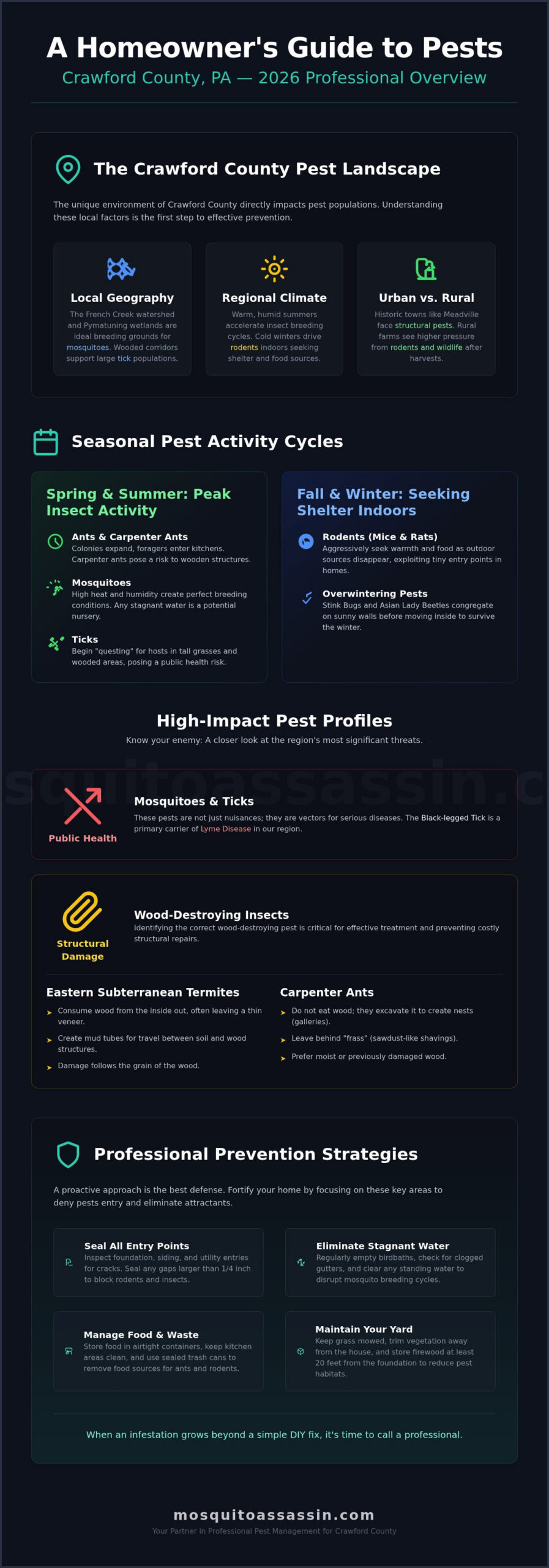
    • Learn how Crawford County’s unique geography, including the French Creek watershed and local agriculture, influences which pests are most active each season.
    • Identify the primary public health pests in the region, such as the Black-legged Tick and specific mosquito species, and understand their peak activity periods.
    • Discover the key differences and warning signs of structural damage caused by Eastern Subterranean Termites versus Carpenter Ants in Pennsylvania homes.
    • Understand professional-grade prevention strategies to help manage the top pests in Crawford County PA by focusing on sealing entry points and eliminating attractants.

    Understanding the Local Pest Landscape in Crawford County PA

    Effective pest management begins with understanding the local environment. Crawford County’s unique combination of geography, climate, and land use creates a distinct set of challenges for homeowners. Unlike generic national strategies, a localized approach considers the specific factors that allow insects and rodents to thrive in our region. Recognizing what makes Northwest Pennsylvania a haven for certain pests is the first step toward safeguarding your property and identifying the top pests in Crawford County PA.

    To better understand some of the common pests homeowners may encounter, this video offers a helpful visual guide:

    The region’s high humidity and significant seasonal temperature swings play a major role in pest activity. Warm, damp summers create ideal breeding conditions for insects, while cold winters drive rodents indoors seeking shelter and food. Furthermore, the extensive agricultural patterns in the area mean that as crops are harvested in the fall, mice and rats often migrate from fields to nearby homes and structures. This seasonal pressure is a key reason why proactive pest control is so important for local residents.

    The Impact of Local Geography on Pest Pressure

    Crawford County’s natural features directly influence pest populations. The French Creek watershed and the expansive wetlands around Pymatuning State Park are primary breeding grounds for mosquitoes and biting midges. The area’s beautiful wooded corridors, while great for recreation, also support large tick populations. Proximity to Lake Erie contributes to regional moisture levels, creating an environment where moisture-loving pests like carpenter ants and certain types of beetles can flourish. These conditions create ideal habitats for many common household pests that can become a significant nuisance.

    Urban vs Rural Pest Challenges

    Pest pressures vary significantly between the county’s towns and its rural expanses. In historic communities like Meadville, older homes can be more vulnerable to structural pests such as termites, powderpost beetles, and carpenter ants that damage wood. In contrast, rural farming communities often face heightened pressure from rodents and larger wildlife seeking food and shelter in barns, sheds, and homes. Understanding these distinct urban and rural challenges is critical for developing an effective management plan for the top pests in Crawford County PA. Homeowners can view a local service map to see the diverse areas that require specialized attention.

    Seasonal Pest Activity Cycles in Northwest Pennsylvania

    Understanding the seasonal behavior of the top pests in Crawford County PA is a critical first step toward effective home protection. Pest pressures are not constant; they fluctuate dramatically with the region’s distinct seasons, from the insect population boom of summer to the determined rodent intrusions of winter. Recognizing these cycles helps homeowners anticipate and prepare for potential infestations.

    Spring and Summer: The Peak of Insect Activity

    As the ground thaws and temperatures rise in spring, insect activity surges. Ant colonies, dormant through the winter, expand rapidly and send out foragers for food, often leading them straight into kitchens and pantries. Carpenter ants are particularly active and can pose a risk to wooden structures. Homeowners can find valuable information on Carpenter ant damage and prevention from university extension resources. By late spring and summer, high heat and humidity create ideal conditions for mosquitoes and ticks. Ticks begin “questing” in tall grasses and wooded areas, while mosquitoes use any source of stagnant water to lay their eggs, making regular property maintenance essential.

    Fall and Winter: Seeking Shelter Indoors

    The arrival of cooler autumn weather signals a shift in pest behavior. As outdoor food sources dwindle and temperatures drop below freezing, rodents like mice and rats aggressively seek warmth and shelter. They can exploit tiny openings in a home’s exterior to invade attics, basements, and crawl spaces. At the same time, overwintering insects such as the Brown Marmorated Stink Bug and Asian Lady Beetle congregate on sunny exterior walls before finding their way indoors. While not destructive, their presence can be a significant nuisance. Because the types of pests threatening your home change with each season, managing them effectively requires a consistent approach. Proactive homeowners can learn about comprehensive year-round protection plans designed to provide continuous coverage against these predictable threats.

    High-Impact Public Health Pests: Mosquitoes and Ticks

    Beyond being simple annoyances, certain insects present genuine public health concerns for residents. Among the top pests in Crawford County PA, mosquitoes and ticks are vectors for diseases that can have serious health consequences. Our region’s beautiful landscape, with its abundant woodlands and proximity to Pymatuning Lake, provides an ideal environment for these pests to thrive. The Black-legged Tick (or deer tick), a known carrier of Lyme disease, is particularly prevalent throughout Northwest Pennsylvania.

    Mosquito populations also flourish in our humid summers, with species common to the area being most active during dawn and dusk. Protecting your family requires understanding their habits, managing your property, and taking personal precautions. Simple steps like using an EPA-registered insect repellent, wearing light-colored long sleeves and pants in wooded areas, and performing thorough tick checks after spending time outdoors are essential first-line defenses.

    Tick Identification and Habitat Management

    Recognizing different tick species is key to assessing risk. The deer tick is much smaller than the more common American dog tick and has a reddish-orange body. To reduce tick exposure on your property, create a “tick-safe zone” by keeping lawns mowed, removing leaf litter, and creating a buffer of wood chips or gravel between your yard and wooded areas. For more comprehensive protection, professional tick management can target areas where ticks live and quest.

    Mosquito Breeding Mitigation Strategies

    Mosquitoes can breed in any amount of standing water that lasts for more than a week. Diligently eliminating these sources is critical. Routinely check for hidden water in clogged gutters, birdbaths, tarps, and children’s toys. For broader control, professional barrier treatments are an effective science-based solution. Licensed technicians apply a fine mist to foliage where adult mosquitoes rest, disrupting their life cycle. A comprehensive approach, which you can learn more about in guides to Common Pests in Pennsylvania, combined with diligent property maintenance, is highly effective. Professional pest control may help reduce the risk of bites around your home.

    Structural and Wood-Destroying Insects Common to the Region

    Some of the most significant threats to a home’s structural integrity are insects that chew, tunnel, and nest within its wooden components. These structural invaders are among the top pests in Crawford County PA because they can cause thousands of dollars in damage before homeowners even notice a problem. Understanding the signs of these destructive insects is the first step in safeguarding your property and maintaining its value.

    Termite and Carpenter Ant Recognition

    Eastern Subterranean Termites pose a relentless threat to wooden structures. They consume wood from the inside out, often going unnoticed for years. Key signs of their presence include mud tubes on foundation walls, discarded wings from seasonal swarms, and wood that sounds hollow when tapped. In contrast, carpenter ants excavate moisture-damaged wood to build their nests, leaving behind piles of coarse sawdust-like material called frass. Because both pests operate out of sight, a regular structural inspection by a licensed professional is essential for early detection.

    Stinging Insects and Secondary Damage

    While known for their painful stings, insects like yellowjackets and hornets can also cause property damage by building large nests in wall voids and attics. Carpenter bees, often mistaken for bumble bees, create structural problems by drilling perfectly round, half-inch holes into wood siding, decks, and fascia boards. This damage is often worsened by woodpeckers, which are attracted to the bee larvae and will tear at the wood to get to them, causing significant secondary damage. Managing these pests is critical to preventing this destructive cycle.

    Early detection is the most effective strategy for mitigating damage from all wood-destroying insects. If you suspect an infestation, seeking a professional evaluation can provide peace of mind and a clear path forward. For professional assistance, you may contact a licensed pest control company for a comprehensive assessment.

    Long-Term Prevention and Professional Management Strategies

    Effectively safeguarding a property from pests requires more than just reactive treatments. A long-term strategy focuses on prevention and proactive management to create an environment that is less attractive to common invaders. By addressing the root causes of infestations, homeowners can significantly reduce the risk of future problems with the top pests in Crawford County PA. Key principles include sealing entry points, maintaining proper sanitation, and managing the property’s perimeter.

    A comprehensive approach known as Integrated Pest Management (IPM) combines these preventative measures with targeted, professional interventions when necessary. This strategy prioritizes sustainable results by focusing on the pest’s life cycle and environmental interactions, offering a reliable alternative to repeated chemical applications.

    Homeowner Maintenance Checklist

    Consistent property maintenance is a homeowner’s first line of defense against pests. Regularly checking and addressing potential vulnerabilities can prevent pests from ever getting inside. Key tasks include:

    • Inspect Entry Points: Routinely check window screens, door sweeps, and weather stripping for damage. Seal any cracks in the foundation or gaps around utility lines where pests can enter.
    • Manage Outdoor Attractants: Keep mulch at least six inches away from the foundation to discourage moisture-loving pests. Store firewood on a raised rack and away from the house.
    • Plan for Prevention: Understanding available general pest services can help homeowners create an effective year-round preventative maintenance schedule.

    The Professional Inspection Process

    When dealing with persistent issues or for a comprehensive assessment, a professional inspection is invaluable. A licensed technician conducts a thorough walk-through of the property, looking for more than just active pests. They identify potential entry points, moisture problems, food sources, and other conditions that could attract the top pests in Crawford County PA. This detailed evaluation allows for the creation of a customized management plan tailored to the property’s specific needs and challenges. For a complete evaluation, homeowners can contact a professional.

    Your Proactive Pest Management Strategy in Crawford County

    Navigating the seasonal challenges presented by pests in Northwest Pennsylvania is the foundation of a secure and comfortable property. Understanding the life cycles of common invaders, from public health concerns like mosquitoes and ticks to structural threats like carpenter ants and termites, empowers homeowners to take effective preventative action. A proactive approach, including routine maintenance and landscape management, remains the most reliable defense against the top pests in Crawford County PA.

    When pest activity escalates beyond simple prevention, a professional assessment is a logical next step. A locally owned and operated team with specialized knowledge of the regional pest ecosystem can provide a comprehensive evaluation. As a fully licensed and insured provider in both Pennsylvania and Ohio, Mosquito Assassin Pest Control LLC is equipped to handle local challenges. For professional recommendations or a thorough property inspection, contact Mosquito Assassin Pest Control LLC directly.

    By pairing your own knowledge with expert support when needed, you can confidently protect your home or business from unwanted intrusions year-round.

    Frequently Asked Questions About Crawford County Pests

    What are the most common pests in Crawford County PA?

    Homeowners in this region face a variety of intruders depending on the season. The top pests in Crawford County PA include carpenter ants, which can damage wood structures, and stinging insects like wasps and hornets. Rodents, particularly mice, become a major issue in the fall and winter as they seek shelter indoors. Other common nuisances include stink bugs, mosquitoes, ticks, and spiders, each presenting unique challenges for property owners throughout the year.

    When is tick season most active in Northwest Pennsylvania?

    While ticks can be active any time temperatures are above freezing, their activity peaks from late spring through early fall. The highest risk period in Northwest Pennsylvania generally runs from April through October. The blacklegged tick (deer tick), a carrier of Lyme disease, is a significant concern. Diligence is crucial after spending time outdoors in wooded or grassy areas, as regular checks can help prevent tick-borne illnesses and ensure early removal of any attached ticks.

    Are termites a significant problem for homeowners in Meadville?

    Yes, termites are a serious threat to homeowners in Meadville and throughout Crawford County. The Eastern subterranean termite is prevalent in this area and can cause extensive, silent damage to a home’s wooden structure. Because they operate out of sight within walls and foundations, an infestation can go unnoticed for years. Regular inspections by a pest control professional are recommended to detect termite activity early and protect your property from costly repairs.

    How can I tell the difference between a flying ant and a termite?

    There are three key features to distinguish them. First, check the antennae: termites have straight, beaded antennae, while ants have elbowed or bent antennae. Second, look at the waist: termites have a broad, thick waist with no pinching, whereas ants have a distinctly narrow, constricted waist. Finally, examine the wings. Both have two pairs, but a termite’s wings are all equal in length, while a flying ant’s front wings are noticeably longer than its back wings.

    What is the best way to prevent mice from entering my home in the winter?

    The most effective method for preventing mice is exclusion, which means sealing any potential entry points. Inspect your home’s foundation and exterior for cracks or gaps, paying close attention to areas where utility lines enter the house. Use steel wool and caulk to seal holes, as mice can squeeze through openings as small as a dime. Also, ensure door sweeps and garage door seals are intact to eliminate easy access points before cold weather arrives.

    Are there venomous spiders common to Crawford County?

    While most spiders in the area are harmless, two medically significant species can be found in Pennsylvania: the Northern Black Widow and, less frequently, the Brown Recluse. Both are reclusive and prefer to live in dark, undisturbed areas like woodpiles, sheds, and cluttered basements or garages. Bites are rare and typically occur only when the spider feels threatened or trapped. Caution is advised when working in or cleaning out these types of spaces.

    Why do I have so many mosquitoes in my yard despite having no standing water?

    Mosquitoes can breed in very small, often overlooked sources of moisture. Clogged gutters, corrugated drain pipes, plant saucers, and even wrinkled tarps can hold enough water for larvae to develop. Furthermore, dense, shady vegetation and damp leaf litter can provide the moist environment adult mosquitoes need to rest during the day. A thorough property inspection can often reveal these hidden breeding grounds that contribute to a high mosquito population.

    Can professional pest control help with seasonal stink bug infestations?

    Yes, professional pest management is highly effective for controlling stink bugs. The most successful approach is preventative. A licensed technician can apply a specialized exterior treatment to your home in the late summer or early fall, just before stink bugs begin searching for overwintering sites. This creates a protective barrier that stops them from congregating on and entering your home, preventing the large-scale indoor infestations that occur during colder months.

  • How to Get Rid of Ants in Erie, PA: A Complete Guide

    How to Get Rid of Ants in Erie, PA: A Complete Guide

    You’ve tried the store-bought sprays and sticky traps, but the relentless line of ants marching across your kitchen counter just keeps coming back. It’s a frustrating battle, especially when you’re worried about which chemicals are safe around your children and pets. For homeowners, figuring out how to get rid of ants in Erie, PA, for good can feel like an impossible task. Are they just a nuisance, or could they be destructive carpenter ants threatening your home’s very structure? You deserve a permanent solution and the peace of mind that comes with a truly pest-free home.

    This comprehensive guide is your battle plan. We will break down exactly why ants are targeting your Erie home, empowering you with the knowledge to fight back effectively. You’ll discover proven, family-safe prevention tips you can implement today to safeguard your space from future invasions. Most importantly, we’ll help you identify the critical signs that mean it’s time to stop the DIY struggle and call in Erie’s trusted professionals for a guaranteed, long-term eradication.

    Key Takeaways

    • Properly identifying common Erie ants, like Pavement or Carpenter ants, is the critical first step when learning how to get rid of ants Erie PA effectively.
    • Discover simple DIY tactics as part of your strategy for how to get rid of ants Erie PA, focusing on eliminating the food, water, and shelter sources they seek.
    • Learn to recognize when your problem is too big for DIY, a key part of knowing how to get rid of ants in Erie PA and when to call a professional to prevent damage.
    • When DIY methods fail, understanding how to get rid of ants Erie PA for good involves a professional, multi-step process that targets the entire colony safely.

    Identify Your Enemy: Common Ants Found in Erie, PA Homes

    Before you can effectively eliminate an ant infestation, you must first identify your enemy. Not all ants are created equal; a strategy that works on one species might be completely ineffective against another. Erie’s unique climate, with its humid summers and proximity to Lake Erie, creates a perfect environment for specific types of ants to thrive. Understanding which invader has breached your home is the critical first step in learning how to get rid of ants in Erie, PA, for good.

    Correctly identifying the ant species helps determine the level of threat to your property and dictates the most effective treatment plan. A few ants on the counter might be a simple nuisance, or they could be scouts for a destructive colony hidden within your walls. A professional inspection is always the surest way to get a definitive answer.

    To see some general approaches to ant control, watch this helpful video:

    Pavement Ants: The Tiny Sidewalk Invaders

    These small, dark brown or black ants are a common sight on sidewalks, driveways, and patios across Erie County. Pavement ants typically build their nests in or under the cracks in pavement, foundations, or concrete slabs. While they don’t pose a structural threat, they are a significant nuisance, constantly foraging in your kitchen for sugary foods, grease, and other scraps.

    Carpenter Ants: The Wood-Destroying Threat

    Easily the most destructive ant species in our region, carpenter ants are a serious threat to your home. These large, black or reddish-black ants don’t eat wood; they excavate it to create smooth tunnels and galleries for their nests, compromising structural integrity over time. A key sign of an infestation is finding piles of fine sawdust, known as frass, near baseboards, window sills, or in crawl spaces.

    Odorous House Ants: The Smelly Nuisance

    Named for the distinct rotten coconut-like smell they release when crushed, odorous house ants are a persistent nuisance. These small, dark ants often march indoors in long trails after heavy rain, searching for sweets. Unlike many other types of Common Ants, their colonies can contain multiple queens and split into several nests, making them notoriously difficult to eliminate with DIY methods.

    First Line of Defense: DIY Ant Prevention & Control

    Before you call for professional backup, you can take powerful, proactive steps to make your Erie home an unwelcome place for ants. The most effective strategies are often the simplest, focusing on eliminating the three things every ant colony needs to survive: food, water, and shelter. Consistent prevention is the secret to long-term success and is a core component of any plan for how to get rid of ants in Erie PA for good.

    These methods are part of a professional strategy known as Integrated Pest Management (IPM). By making your home less attractive to pests, you create a powerful first line of defense. As experts in local pest behavior, we know that a clean, sealed home is the best deterrent, a concept supported by resources on DIY Ant Prevention & Control from the Penn State Extension.

    Eliminate Food and Water Sources

    An ant scout is always searching for its next meal. Don’t let it be in your kitchen. By cutting off their supply lines, you can send them marching elsewhere. Make these habits part of your routine:

    • Clean Relentlessly: Wipe up crumbs and spills, especially sugary liquids like juice or soda, immediately. A single drop can attract hundreds of ants.
    • Secure All Food: Store food, including pet food and pantry staples like sugar and flour, in airtight containers.
    • Eliminate Moisture: Fix leaky faucets, dripping pipes, and any areas of standing water. Ants need water just as much as food.
    • Manage Your Trash: Take out kitchen trash daily and ensure both indoor and outdoor cans have tight-fitting lids.

    Seal Off Entry Points

    Ants are incredibly small and can exploit the tiniest cracks to invade your home. Fortify your home’s perimeter by methodically sealing any potential entry points. Walk the perimeter of your house and look for:

    • Foundation Cracks: Use caulk to seal any cracks or crevices in your home’s foundation.
    • Utility Gaps: Check where pipes, wires, and utility lines enter your home and seal any gaps around them.
    • Windows & Doors: Ensure weather stripping is intact and that window and door frames are properly sealed.
    • “Ant Bridges”: Trim back tree branches, shrubs, and overgrown vegetation that touch your house, as ants use these as highways to get inside.

    The Truth About DIY Sprays and Baits

    While store-bought products can offer temporary relief, they often fall short of providing a permanent solution. Understanding their limitations is key. Over-the-counter sprays typically only kill the worker ants you see, leaving the queen and the rest of the hidden colony safe to continue breeding. Baits can be more effective, but they must be the correct type for the specific ant species and placed strategically in their foraging paths. Using the wrong product or placement can sometimes cause a phenomenon called “budding,” where the colony splits into multiple new colonies, making your infestation even worse.

    When to Call a Professional: Signs You Need an ‘Assassin’

    While many small ant problems can be handled with store-bought solutions, some infestations in Erie are simply too established for DIY methods to be effective. Recognizing the warning signs that you’re outmatched can save you significant time, money, and potential property damage down the road. A professional technician has the training, tools, and proven products to eliminate the entire colony for good, not just the foragers you see. Don’t wait for a nuisance to become a nightmare.

    If you see any of the following signs, it’s time to call for professional backup.

    You See Large, Winged Ants Inside

    Spotting a few large ants with wings crawling on your windowsill or near a light fixture is more than just an annoyance-it’s a serious red flag. These are “swarmers,” the reproductive members of a mature ant colony. Their sole purpose is to leave the original nest and establish a new one nearby. This often signals that a well-established colony, possibly destructive carpenter ants, is operating in or around your home and requires immediate, expert attention.

    DIY Efforts Have Failed

    You’ve set out baits, sprayed the baseboards, and sealed every crack you can find, but the ants keep marching back. Persistent ant activity despite your best efforts means the source of the problem-the hidden nest-remains active and untouched. While resources like Penn State Extension’s guide to ant control offer excellent strategies, a resilient infestation indicates a deeper issue that over-the-counter products can’t solve. Our professional pest control services are designed to bypass the foragers and target the queen and colony directly for complete eradication.

    You Suspect Carpenter Ants

    When the question of how to get rid of ants in Erie, PA, involves potential structural damage, the stakes are much higher. Look for these tell-tale signs of carpenter ants:

    • Unexplained Wood Shavings: Finding small, sawdust-like piles (called “frass”) along baseboards, in basements, or in crawl spaces is a classic sign of excavation.
    • Faint Rustling Noises: At night, you may hear faint crinkling or rustling sounds coming from inside your walls as the ants work.

    Your home is your biggest investment. Don’t risk its integrity by trying to fight a destructive carpenter ant infestation on your own.

    The Mosquito Assassin Solution: Our Proven Ant Control Process in Erie

    DIY sprays and traps often fail because they only kill the ants you see, not the hidden colony. At Mosquito Assassin, we deliver a strategic, multi-step solution designed for total ant eradication. Our approach isn’t just about eliminating the current invasion; it’s about safeguarding your home and family from future ones. We understand that knowing how to get rid of ants in Erie, PA, means targeting the source with professional-grade, family-safe treatments. As your local pest control experts, we are deeply committed to protecting our neighbors. You can learn more about our company and our dedication to Erie residents.

    Step 1: Comprehensive Property Inspection

    Effective ant control starts with a professional assessment. Our certified technicians conduct a thorough inspection of your property to identify the specific ant species causing the problem-whether it’s odorous house ants in the kitchen or carpenter ants in your walls. We meticulously trace ant trails to pinpoint entry points, foraging routes, and the location of the nest. This critical first step allows us to build a precise and effective battle plan.

    Step 2: Customized Treatment Plan

    There is no one-size-fits-all solution for ant infestations. Based on our inspection, we develop a customized treatment strategy tailored to your home’s unique situation. This may include:

    • Targeted Baits: Placed strategically to be carried back to the colony, eliminating the queen and the entire nest from within.
    • Non-Repellent Sprays: Applied to key areas so ants unknowingly track the treatment back to the colony, maximizing its effectiveness.
    • Exterior Barrier Protection: Creating a powerful shield around your home’s foundation to stop new ants from getting inside.

    We walk you through the entire plan before we begin, ensuring you know exactly what to expect from our professional service.

    Step 3: Long-Term Prevention and Guarantee

    Our job isn’t done after the initial treatment. We focus on long-term prevention by creating a protective barrier and providing you with practical recommendations to make your property less attractive to ants. All our ant control services are backed by our ironclad Pest-Free Guarantee. It’s simple: if the pests return between scheduled services, so do we-at no extra charge. That’s the Mosquito Assassin promise.

    Why Choose a Local Erie, PA Exterminator?

    When you discover an ant infestation, you have a choice to make. While national chains offer a one-size-fits-all approach, pest control is not a universal problem-it’s a local one. When dealing with pests in Erie County, local expertise makes a significant difference. A local company is invested in our community’s well-being and its reputation, offering a level of personalized service and accountability that larger corporations simply can’t match. If you’re looking for the most effective way how to get rid of ants in Erie, PA, the answer is a professional who knows your neighborhood.

    Unmatched Knowledge of Local Ant Behavior

    We understand the unique pest pressures facing homeowners in Erie. Our certified technicians know how our distinct seasons-from humid summers to lake-effect winters-affect ant activity. We anticipate the carpenter ant swarms in spring and the pavement ants that invade kitchens seeking warmth in the fall. This local knowledge allows us to time our proven treatments for maximum effectiveness, targeting ants based on their seasonal behavior and the specific building styles common throughout our area.

    Fast, Reliable Service When You Need It Most

    An ant problem can’t wait. Being local means we can provide faster, more reliable response times when you need us most. Our team lives in the communities we serve across the Erie area, so we’re never far away. To us, you’re not just an account number in a national database; you’re our neighbor, and we are committed to providing the dependable, professional service you deserve.

    Invest in the Community You Call Home

    Choosing a local exterminator like Mosquito Assassin means your investment stays right here in the Erie economy. We are proud to safeguard the health and property of our neighbors, serving both homeowners and other local businesses. In addition to residential services, we offer specialized commercial pest control services to protect restaurants, offices, and other establishments that make our community thrive. When you need a definitive, professional solution for how to get rid of ants in Erie, PA, trust the local experts at Mosquito Assassin.

    Your Final Step to an Ant-Free Home in Erie

    Dealing with a persistent ant invasion is a battle no Erie homeowner should fight alone. This guide has walked you through the essential first steps, from identifying common local ant species to trying effective DIY prevention tactics. While these measures are a great first line of defense, we’ve also seen that a stubborn, large-scale infestation often requires the strategic intervention of a professional to achieve complete eradication.

    When you need the most reliable and effective answer for how to get rid of ants Erie PA, trust your local experts at Mosquito Assassin. As a locally owned and operated team, we are your neighbors, dedicated to safeguarding our community. We combine our deep knowledge of Erie’s unique pest challenges with family-safe treatments and our ironclad Pest-Free Guarantee: If pests return, so do we.

    Don’t let ants take over your peace of mind for another day. Take decisive action and reclaim your space with confidence. Reclaim Your Home from Ants. Get Your Free Estimate Today!

    Frequently Asked Questions

    How much does professional ant extermination cost in Erie, PA?

    The cost for professional ant extermination in Erie varies depending on the type of ant, the size of your property, and the severity of the infestation. While a standard treatment may range from $150 to $350, a complex carpenter ant problem could be more. At Mosquito Assassin, we provide a comprehensive inspection and a detailed, no-obligation quote. This ensures you receive a customized and effective treatment plan tailored specifically to your home’s needs for dependable results.

    Are the treatments used by Mosquito Assassin safe for my children and pets?

    Absolutely. Safeguarding your family is our highest priority. We use professional-grade, family-safe treatments that are approved by the EPA. Our certified technicians are expertly trained in precise application methods that target ants where they live and breed, minimizing any risk to your loved ones. We will always provide clear instructions for any necessary precautions, ensuring your home is returned to you pest-free and, most importantly, safe for your entire family, including pets.

    How long will it take to completely get rid of my ant problem?

    You will see a dramatic reduction in ant activity within 24-48 hours of our initial treatment. However, complete colony eradication can take longer, as our treatments are designed to be carried back to the nest to eliminate the queen. For a reliable solution on how to get rid of ants in Erie PA for good, our proven process may include a follow-up visit to ensure the entire colony has been destroyed and to prevent re-infestation.

    What is the difference between flying ants and termites?

    Misidentifying these pests can be a costly mistake. Flying ants have a distinctly pinched “waist,” bent antennae, and two pairs of wings of unequal length. In contrast, termites have a broad, uniform waist, straight antennae, and two pairs of wings that are equal in size and length. If you see swarming winged insects, it’s crucial to get a professional inspection from our expert technicians to correctly identify the pest and protect your home from potential damage.

    Why do I get ants in my kitchen every spring?

    As temperatures rise in Erie each spring, ant colonies become active and begin foraging for food and water sources. Your kitchen provides the perfect environment with crumbs, sticky spills, and moisture around sinks. Once ants find a food source, they leave behind an invisible pheromone trail for the rest of the colony to follow. This is why they often return to the exact same spots year after year until that trail and the colony are professionally eliminated.

    Can you get rid of carpenter ants for good?

    Yes. Complete and permanent eradication of carpenter ants is absolutely possible with a professional strategy. Unlike simple baiting, our comprehensive treatment focuses on locating and destroying the primary nest and any satellite colonies, which are often hidden inside your home’s wood structures. Our technicians have the expertise and tools to eliminate the entire colony, stopping the structural damage they cause and safeguarding your home from future infestations. We guarantee our results.

  • How to Identify Ants in Erie, PA: A Homeowner’s Guide

    How to Identify Ants in Erie, PA: A Homeowner’s Guide

    You see that thin, dark line marching across your kitchen counter and your mind starts racing. Are these just harmless ants searching for a crumb, or are they a sign of a much bigger problem, like destructive carpenter ants chewing away inside your walls? For most homeowners, the uncertainty is the worst part. Trying to tell one tiny black ant from another feels impossible, and store-bought sprays often feel like a temporary fix. Learning how to identify ants in Erie is the first, most critical step to safeguarding your property and regaining your peace of mind.

    This professional guide was created to eliminate the guesswork for Erie homeowners just like you. We’ll give you the clear, reliable information you need to distinguish between common local invaders-from pavement ants to odorous house ants and the wood-destroying carpenter ant. By the end of this article, you will be able to confidently identify your specific ant problem, understand the real threat level to your home, and know the proven next steps to eliminate them for good. Let’s get you the answers you need to take back control.

    Key Takeaways

    • Use our simple 3-step checklist to confidently identify the ant species in your home before taking action.
    • This guide covers how to identify ants in Erie, detailing the 5 most common species and the specific threats they pose to your property.
    • Protect your home from costly damage by learning the critical visual differences between a harmless winged ant and a destructive termite swarmer.
    • Discover why most DIY ant treatments fail and learn the definitive signs that it’s time to call a professional for complete colony elimination.

    Start Here: A 3-Step Ant Identification Checklist for Erie Residents

    Seeing a trail of ants marching across your kitchen floor is a frustrating sight for any homeowner. Before you can effectively eliminate them, you must first identify your opponent. Different ant species require different treatment strategies, and a misidentification can lead to ineffective results and prolonged infestations. Knowing how to identify ants in Erie is the first, most critical step toward reclaiming your home.

    A thorough visual inspection is crucial for accurate identification. Take your time to observe their behavior and physical characteristics. If you’re struggling to get a clear picture, don’t hesitate to reach out to the experts at Mosquito Assassin Pest Control LLC for assistance with how to identify ants in Erie.

    Use this simple, professional checklist to narrow down the ant species you’re dealing with. If you can, safely capture one in a clear container and grab a magnifying glass. Focus on these three key characteristics to gather the intel you need.

    Step 1: Judge Their Size and Shape

    An ant’s physical profile provides major clues. While it helps to understand the full anatomy of an ant, from its antennae to its abdomen-you can learn all about ants and their complex structures for a deeper dive-start with these basics:

    • Size: Are they very small (around 1/16 inch, like a poppy seed) or relatively large (up to 1/2 inch or more)? For a simple reference, compare one to a dry grain of rice.
    • Body Shape: Look at the section between the ant’s main body (thorax) and its rear end (abdomen). Do you see one small hump or “node,” or are there two?
    • Profile: Does the ant’s upper body (thorax) have a smooth, evenly rounded curve, or is it bumpy and uneven?

    Step 2: Pinpoint Their Color

    While many people assume all ants are black, color can be a key differentiator. Don’t just glance; try to get a good look under a bright light. Note if the ants are:

    • Uniformly colored: Are they solid black, dark brown, or reddish-brown from head to tail?
    • Two-toned: Do they have a combination of colors, such as a reddish-brown head and thorax with a black abdomen?
    • Light or Pale: Some smaller indoor ants can appear light brown, honey-colored, or almost translucent.

    Step 3: Note Where You Found Them

    The location of the ant trail is your final piece of the puzzle. An ant’s behavior and nesting preferences tell you a lot about its species. This is a crucial part of how to identify ants in Erie homes.

    • In the Kitchen: Are they trailing along countertops, raiding the pantry, or marching along baseboards?
    • Near Moisture: Did you spot them in a damp area like a bathroom, under a leaky sink, or near a dishwasher?
    • Around Wood: Are they emerging from window sills, deck posts, rotting landscape timbers, or other wooden structures?
    • Outdoors: Have you seen small mounds of displaced, sand-like dirt along sidewalk cracks or at the edge of your driveway?

    The 4 Most Common Ants in Erie, PA (And What They Mean for Your Home)

    When you see a line of ants in your home, it’s tempting to think they’re all the same. However, our region is home to several common ant invaders, and each species poses a different threat and requires a unique approach for eradication. Knowing how to identify ants in Erie is the first critical step toward safeguarding your home. While a comprehensive ant identification guide can help with fine details, this overview covers the pests our certified technicians see most often in Erie County.

    Carpenter Ants: The Wood Destroyers

    These are the heavyweights of the ant world and a major threat to your home’s integrity. They don’t eat wood but excavate it to build their nests, causing significant structural damage over time.

    • Appearance: Large (1/4 to 1/2 inch long), and typically black or a combination of reddish-black.
    • Behavior: Look for piles of coarse sawdust-like material called “frass” near damp window sills, decks, or porches.
    • Risk Level: High. A carpenter ant infestation requires immediate professional attention to protect your property.

    Pavement Ants: The Driveway Invaders

    As their name suggests, these ants nest in the soil under sidewalks, driveways, and foundations. While less destructive than carpenter ants, they can easily find their way inside your home to forage for food.

    • Appearance: Small (about 1/8 inch long) and dark brown to black.
    • Behavior: Often seen traveling in distinct trails from their nest to a food source. They are attracted to greasy and sweet substances.
    • Risk Level: Low to Medium. Primarily a nuisance, but they can contaminate food supplies.

    Odorous House Ants: The Smelly Nuisance

    Famous for the unpleasant, rotten coconut-like smell they release when crushed, these are one of Erie’s most common indoor pests. They are drawn to moisture and can build massive colonies with multiple queens.

    • Appearance: Very small (1/16 to 1/8 inch long), and dark brown or black.
    • Behavior: They often nest in wall voids near leaky pipes, under sinks, or behind appliances.
    • Risk Level: Low. While not dangerous, their sheer numbers make them a persistent and frustrating nuisance.

    Pharaoh Ants: The Indoor Health Risk

    Pharaoh ants are a serious concern because of their ability to spread pathogens. They are notoriously difficult to control, as standard baits can cause the colony to split into multiple new colonies-a process called “budding” that makes the problem worse.

    • Appearance: Tiny (about 1/16 inch long) with a light yellow to reddish-brown body.
    • Behavior: They nest in warm, hidden areas like wall voids, behind baseboards, or in electrical outlets.
    • Risk Level: Medium. Known to spread bacteria, making them a significant health risk in kitchens.

    Is It a Flying Ant or a Termite? A Critical Distinction

    When spring arrives in Erie, you might notice swarms of small, winged insects emerging around your property. It’s easy to dismiss them as a temporary nuisance, but mistaking a termite swarmer for a flying ant is one of the most expensive errors a homeowner can make. While most common household ants are primarily a nuisance, termites are silent destroyers, causing billions in property damage across the country each year. Knowing how to identify ants in Erie versus their destructive look-alikes is critical for safeguarding your home. Fortunately, you don’t need to be an expert. Just look for three simple visual cues to tell them apart instantly.

    Check the Body: Waist Shape is Key

    The most reliable and easiest difference to spot is the insect’s waist. An ant has a distinctly thin, “pinched” waist (thorax) that creates a segmented appearance. It’s a clear separation between the middle and back sections of its body. In stark contrast, a termite has a broad, straight body with no defined waist, making it look more like a single, solid piece from its chest to its abdomen.

    Look at the Antennae: Bent vs. Straight

    If you can get a closer look, the antennae provide another definitive clue. Ants possess elbowed or “bent” antennae that look like they have a joint in the middle. Termite swarmers, however, have straight antennae that often appear beaded, like a tiny string of pearls. This feature can be small, so you may need a clear view or a magnified image to confirm it with confidence.

    Examine the Wings: Equal vs. Unequal

    Both insects have two pairs of wings, but their size and shape differ significantly. A flying ant’s front pair of wings is noticeably longer than its back pair. A termite swarmer has two pairs of wings that are equal in length and size. Termites also shed their wings after swarming, so a tell-tale sign of their presence is finding piles of identical, discarded wings on windowsills or near baseboards.

    If you’re still unsure after checking these features, don’t risk your property on a guess. Learning how to identify ants in Erie is a valuable skill, but when wood-destroying insects are a possibility, professional confirmation from a certified technician is your safest and most reliable course of action.

    Finding the Source: How to Track an Ant Infestation

    Spotting a single ant foraging in your kitchen is a warning shot. Seeing a distinct line of them marching across your floor means you have an established colony, and it’s time for action. Simply spraying the ants you see is a temporary fix that does nothing to solve the core problem. To truly eliminate an infestation, you must locate the nest and neutralize the queen. This is the only proven method for lasting ant control.

    Successfully tracking an ant colony requires patience and a bit of detective work. A key part of how to identify ants in Erie and solve the problem is understanding their behavior. The worker ants you see are just a fraction of a much larger, hidden population.

    How to Follow an Ant Trail Like a Pro

    Resist the urge to grab the nearest can of ant spray. Your first step is observation. Ants create invisible “pheromone trails” for other colony members to follow from the nest to a food source. To leverage this, place a small drop of honey or jam on a piece of wax paper near their trail. Don’t interrupt them; watch where they take their prize. The trail will lead you directly back to their entry point-a tiny crack in the foundation, a gap under a door, or an opening around a utility pipe.

    Common Indoor and Outdoor Nesting Spots

    Once you’ve tracked the trail to an entry point, the nest is likely nearby. Ants are experts at finding protected, out-of-the-way locations to build their colonies. Knowing where to look is critical for homeowners trying to figure out how to identify ants in Erie and their hiding places.

    • Indoor Nests: Check inside wall voids, behind baseboards, underneath large appliances like refrigerators and dishwashers, in and around potted plants, and in quiet corners of basements or attics.
    • Outdoor Nests: Common locations include under stones and pavers, within rotting tree stumps, in piles of firewood, and beneath mulch. Pavement ants often create small, tell-tale mounds of sand along sidewalk cracks. Carpenter ants, a more destructive species, prefer to nest in water-damaged or decaying wood around your home’s foundation, deck, or roofline.

    Finding the heart of the infestation can be challenging. If the trail disappears into a wall or you suspect a carpenter ant problem, don’t hesitate. For a comprehensive inspection and guaranteed elimination, contact the professional technicians at Mosquito Assassin today.

    When to Call a Professional Ant Exterminator in Erie

    Many homeowners in Erie reach for store-bought sprays and baits, only to find the same ant trails reappearing days later. This frustrating cycle happens because most DIY products only kill the worker ants you see, leaving the queen and the core of the colony safe to rebuild. A persistent or large-scale ant problem requires a strategic, professional approach. Knowing when to call for help saves you time, money, and stress in the long run.

    The Limits of DIY Ant Control

    Over-the-counter ant treatments often fall short and can even make the situation worse. Without professional expertise, you risk:

    • Causing the colony to split. Certain sprays can trigger a defensive response called “budding,” where the colony divides into multiple new colonies, spreading the infestation throughout your home.
    • Using ineffective treatments. If you don’t know exactly how to identify ants in Erie, you can’t choose the right bait. Some species, like Pharaoh ants, require specific baits, and using the wrong one is a waste of money.
    • Allowing property damage. Misidentifying destructive carpenter ants as common house ants is a critical mistake that can lead to silent, unchecked structural damage to your home’s wood frame.

    The Mosquito Assassin Advantage: Our Proven Process

    At Mosquito Assassin, we replace guesswork with a proven, methodical process for total ant eradication. Our expertise in how to identify ants in Erie is the critical first step to effective, long-lasting control.

    • Our certified technicians correctly identify the specific ant species and locate their nests.
    • We use targeted, family-safe treatments designed to eliminate the entire colony, including the queen.
    • We find and seal potential entry points to safeguard your home against future invasions.
    • Our comprehensive pest control services are backed by our Pest-Free Guarantee: If the pests return, so do we.

    Your Local, Trusted Erie Pest Experts

    We aren’t a faceless national chain. Mosquito Assassin is locally owned, and our team lives right here in the communities we serve. We have firsthand knowledge of the specific pest pressures facing homeowners across Erie County. We understand the local environment and how it impacts pest behavior. Learn more about our company and our unwavering commitment to protecting your home.

    Don’t let a frustrating ant infestation take over your home. Put an end to the endless cycle of ineffective treatments. Schedule your professional ant inspection today!

    Take Back Your Erie Home from Ants for Good

    You now have the essential knowledge for how to identify ants in Erie. Understanding the difference between a nuisance pavement ant and a structure-damaging carpenter ant is the critical first step to protecting your property. You also know how to distinguish a harmless flying ant from a destructive termite and why tracking an infestation to its nest is the only path to a real solution. This knowledge puts you in control of your home’s defense.

    But when DIY methods fall short and that line of ants keeps marching, it’s time for a definitive solution. As a proud Locally Owned and Operated company, Mosquito Assassin is your trusted neighbor in the fight against pests. We bring professional expertise and powerful, Family-Safe Treatments to your doorstep, ensuring your family and pets are protected. Our commitment is absolute, backed by our Pest-Free Guarantee: If pests return, so do we!

    Don’t Guess, Get Answers. Schedule a Free Ant Inspection Today! Reclaim your peace of mind and enjoy an ant-free home.

    Frequently Asked Questions

    Why do I suddenly have so many ants in my house in Erie?

    A sudden ant invasion is often due to weather changes in Erie, like heavy rain or drought, driving them inside for shelter or food. A single scout ant can find a crumb and create a chemical trail for the entire colony to follow. Understanding how to identify ants in Erie is the first step, as different species are attracted to different things. This helps pinpoint the source and create an effective eradication plan for your specific problem.

    What is the fastest way to get rid of ants?

    The fastest and most effective way to eliminate an ant colony is to bypass ineffective store-bought sprays. These often just scatter the ants, making the problem worse. A professional-grade baiting system is the superior solution. Worker ants carry the bait back to the nest, which eliminates the entire colony, including the queen. For guaranteed, rapid results, a professional treatment is the most reliable method for safeguarding your home from these pests.

    Are carpenter ants a serious problem for homes in Pennsylvania?

    Yes, carpenter ants pose a significant threat to homes throughout Pennsylvania. Unlike termites, they don’t eat wood, but they excavate it to build their nests. This tunneling process can compromise the structural integrity of your home’s framework, support beams, and subflooring over time, leading to extensive and costly repairs. If you see large black ants and small piles of sawdust-like material (frass), you need a professional inspection immediately.

    How can I prevent ants from coming into my house in the first place?

    Proactive prevention is your best defense. Start by sealing cracks and gaps in your foundation, around windows, and where utility lines enter the house. Maintain a clean kitchen, storing food in airtight containers and wiping up spills promptly. Trim back any tree branches or shrubs touching your home, as ants use these as bridges. For the ultimate protection, a professional exterior barrier treatment from a licensed technician will stop them before they ever get inside.

    How much does it cost for a professional to get rid of ants?

    The cost for professional ant eradication depends on the specific situation, including the type of ant, the size of the infestation, and your property’s size. Knowing how to identify ants in Erie is a key part of our process, as a complex carpenter ant treatment will differ from a standard pavement ant service. We provide a comprehensive inspection and a transparent, no-obligation quote for a customized treatment plan that guarantees results.

    What scent do ants hate?

    Ants strongly dislike potent scents that disrupt their chemical trails. Natural deterrents like peppermint oil, citrus peels, cinnamon, and white vinegar can be effective for short-term prevention. Wiping down counters with a vinegar-water solution or placing peppermint-soaked cotton balls near entry points can help repel them. However, while these scents can deter scouts, they are not powerful enough to eliminate an established colony and its nest.

  • Carpenter Ant Removal: The Ultimate Guide to Protecting Your Home

    Carpenter Ant Removal: The Ultimate Guide to Protecting Your Home

    That nagging worry often starts with just a few large black ants in your kitchen. Are they simply foraging, or is something more sinister happening unseen within your walls? The fear of hidden, costly structural damage is real, and the uncertainty of whether you’re dealing with carpenter ants or termites can be paralyzing. For effective carpenter ant removal, you need more than a can of store-bought spray, which often just scatters the colony and makes the problem worse.

    This is your definitive guide to safeguarding your home. We will empower you with the expert knowledge to confidently identify these wood-destroying pests, pinpoint the exact location of their hidden nests, and implement a proven plan for their complete and permanent eradication. Forget wasting time and money on solutions that don’t work. Get ready to reclaim your peace of mind and learn how to protect your home’s structure for good.

    Key Takeaways

    • Learn to correctly identify carpenter ants versus other pests to ensure you are targeting the right threat before any damage occurs.
    • Understand how carpenter ants silently compromise your home’s structural integrity by excavating wood for their nests, not by eating it.
    • Discover the most effective strategies for complete carpenter ant removal and learn why professional methods are crucial for eliminating the entire colony.
    • Implement proven prevention techniques to safeguard your property and make your home a hostile environment for future infestations.

    First Steps: How to Identify a Carpenter Ant Infestation

    Before you can begin any treatment, positive identification is the essential first step. Misidentifying your pest can lead to ineffective solutions and wasted time, allowing the real problem to worsen. The key to successful carpenter ant removal is knowing exactly what you’re up against, from the appearance of the insect to the unique signs of damage they leave behind.

    To help you visually confirm what you’re seeing, this video provides an excellent overview:

    What Do Carpenter Ants Look Like?

    Carpenter ants are among the largest ant species you’ll find in your home, typically measuring between 1/4 and 1/2 inch long. While most are solid black, some can be reddish-black or a combination of red and black. Their most distinct feature is a single, small node between their thorax and abdomen, giving them a segmented, “pinched” waist. In the spring, you might also spot winged swarmers, which are reproductive ants leaving the nest to mate. For a more detailed Carpenter ant overview, including their life cycle and behavior, this resource is highly informative.

    Carpenter Ants vs. Termites: A Critical Distinction

    It’s common to confuse carpenter ants with termites, but they are very different pests requiring different treatments. Here’s how to tell them apart:

    • Waist: Carpenter ants have a narrow, pinched waist. Termites have a broad, thick waist with no visible segmentation.
    • Antennae: Ants possess bent or “elbowed” antennae. Termites have straight, beaded antennae.
    • Wings: Winged ant swarmers have two pairs of wings of unequal length (front wings are longer than hind wings). Termite swarmers have two pairs of wings that are equal in length.
    • Damage: Carpenter ants excavate wood to create nests, leaving behind smooth, clean galleries. Termites eat wood and leave behind rough tunnels packed with mud and soil.

    Telltale Signs of Carpenter Ant Activity

    Even if you don’t see the ants themselves, they leave behind clear evidence of their presence. Recognizing these signs is crucial for assessing the scale of your infestation and planning for carpenter ant removal. Look for:

    • Frass: Piles of fine, sawdust-like wood shavings mixed with insect parts. Ants push this debris out of small holes in wood as they excavate their nests.
    • Faint Sounds: In quiet moments, you may hear soft rustling or crackling sounds coming from inside your walls or wooden beams.
    • Visible Trails: Watch for consistent trails of foraging ants, often leading from outdoor areas (like a tree stump or woodpile) into your home through cracks in the foundation or window sills.
    • Damaged Wood: Small, slit-like openings on the surface of wood can be “windows” into the smooth, hollowed-out galleries the ants have created inside.

    The Hidden Danger: How Carpenter Ants Damage Your Home

    Many homeowners mistakenly believe carpenter ants are like termites, but there’s a critical difference: carpenter ants don’t eat wood. Instead, they excavate it, tunneling through beams and joists to create vast, hidden nests. This relentless excavation process systematically weakens the structural integrity of your home. They are particularly drawn to wood with existing moisture damage, turning a small leak into a major vulnerability. If left unaddressed, a single colony can cause thousands of dollars in repairs, making prompt and professional carpenter ant removal essential for safeguarding your property.

    Understanding Their Nesting Habits

    A carpenter ant infestation typically involves a main “parent” colony, often located outdoors in a dead tree stump or damp woodpile, and one or more “satellite” colonies inside your home. These indoor nests are where the real damage occurs. The ants create smooth, clean, and sandpaper-like galleries within the wood, a key sign that distinguishes them from the messy, mud-packed tunnels of termites. Seeing a few large black ants in your kitchen is rarely an isolated incident; it’s a warning sign of a much larger, hidden colony that requires a comprehensive approach. Correctly identifying carpenter ants and their activity is the first step toward effective eradication.

    Common Nesting Spots in PA & OH Homes

    As local experts serving Pennsylvania and Ohio, we know exactly where these pests love to hide. Their prime targets are areas where moisture compromises wood, providing the perfect environment for a satellite nest. Be sure to check:

    • Window and door frames, especially those with poor seals.
    • Attics and crawl spaces suffering from poor ventilation or roof leaks.
    • Underneath siding or behind walls, particularly on the cooler, north side of a house.
    • Water-damaged wood in porch columns, decks, and outdoor sheds.

    The Long-Term Structural Risks

    The damage from carpenter ants is slow but devastating. Over several years, their tunneling can severely weaken floor joists, wall studs, and critical support beams. The integrity of your deck, porch, or even your roof structure can be compromised, turning what was once a minor nuisance into a major structural failure. Don’t wait for sagging floors or warped window frames to appear. Effective carpenter ant removal is not just about eliminating pests-it’s about protecting the very foundation of your home.

    Worried about hidden damage? Get a professional inspection from Mosquito Assassin.

    Carpenter Ant Removal Methods: DIY vs. Professional Extermination

    When you discover a carpenter ant infestation, you face a critical decision: attempt a do-it-yourself solution or call in the professionals. While handling it yourself might seem like a cost-saving measure, effective carpenter ant removal is more complex than simply spraying the ants you see. The right choice depends on the scale of the problem and your confidence in eliminating the entire colony, not just the visible foragers.

    Popular DIY Approaches and Their Limitations

    Home improvement stores offer various products, from bait stations and insecticidal sprays to boric acid dusts. These can provide temporary relief by killing worker ants, but their effectiveness is often superficial and short-lived.

    • Bait Stations: These are slow-acting and can be ineffective if ants have a more attractive food source nearby, rendering the bait useless.
    • Insecticidal Sprays: These products only kill ants on contact and rarely penetrate the wall voids or wood galleries where the nest and queen are hidden.
    • Dusts: Boric acid can work but is only effective if applied directly into nest galleries, which are notoriously difficult for homeowners to locate.

    The primary risk with DIY methods is that they create a false sense of security. You might eliminate the foraging workers, but the satellite and parent colonies remain active, continuing to damage your home’s structure. As experts in Carpenter ant prevention and control emphasize, a comprehensive approach is necessary for complete eradication.

    Why Professional Treatment is More Effective

    A licensed pest control professional brings expertise and tools that are unavailable to the public. We don’t just treat the symptoms; we eliminate the source. Our technicians are trained to accurately locate hidden nests by identifying subtle signs of activity. We then use specialized, non-repellent insecticides that foraging ants carry back to the colony, unknowingly poisoning the queen and other members. This targeted application into wall voids, crawlspaces, and other inaccessible areas ensures the entire infestation is destroyed from the inside out.

    The Mosquito Assassin 4-Step Eradication Process

    At Mosquito Assassin, we’ve developed a proven, methodical process to guarantee complete elimination and protect your home. Our approach ensures nothing is left to chance.

    • Step 1: Thorough Inspection: We conduct a comprehensive assessment of your property to identify all nest locations, entry points, and the extent of any damage.
    • Step 2: Customized Treatment Plan: Based on our findings, we create a tailored plan that addresses your home’s specific vulnerabilities and the unique characteristics of the infestation.
    • Step 3: Targeted, Family-Safe Application: We apply our family-safe treatments directly to the source, eliminating the entire colony while safeguarding your loved ones and pets.
    • Step 4: Follow-Up & Prevention: We provide follow-up service and expert advice to ensure the ants don’t return, giving you lasting peace of mind.

    Don’t let a failed DIY attempt lead to costly structural repairs. Trust the proven system for complete carpenter ant removal by contacting the experts at Mosquito Assassin today.

    How to Prevent Carpenter Ants From Coming Back

    Successfully eliminating a carpenter ant colony is a major victory, but the battle isn’t over. Effective carpenter ant removal is only half the solution; the other half is diligent prevention. To safeguard your home for the long term, you must make it an unattractive and inaccessible fortress for these wood-destroying pests. Most preventative strategies focus on two key areas: controlling moisture and sealing potential entry points.

    Eliminate Moisture Sources

    Carpenter ants don’t eat wood, they excavate it to build nests. They overwhelmingly prefer wood that has been softened by water. By eliminating moisture, you remove their ideal nesting material. Focus on these critical tasks:

    • Immediately repair any leaky pipes, dripping faucets, clogged gutters, or damaged roofing that could create damp conditions.
    • Use dehumidifiers and fans to ensure basements, attics, and crawl spaces stay dry and well-ventilated.
    • Check that the soil around your foundation is graded to slope away from the house, preventing water from pooling against your home’s structure.

    Seal Up Entry Points

    Think of your home’s exterior as its armor-even the smallest crack is a vulnerability that ants can exploit. A thorough inspection and sealing project can fortify your defenses and deny them access.

    • Use high-quality silicone caulk to seal cracks and crevices in your foundation, around windows and door frames, and along siding.
    • Pay close attention to where utility pipes, wires, and cables enter your house. Seal any gaps with caulk or expanding foam.
    • Install fine-mesh screens over attic, foundation, and crawl space vents to block pests without impeding essential airflow.

    Manage Wood and Landscaping

    Your yard can inadvertently create a direct highway for pests to march right up to your home. Simple landscaping maintenance creates a crucial buffer zone that keeps ants at a distance.

    • Keep firewood stacks at least 20 feet away from your house and elevated off the ground on a rack.
    • Trim tree branches, shrubs, and overgrown vegetation so they do not make contact with your siding or roof.
    • Promptly remove dead tree stumps, fallen logs, and other decaying wood from your property, as these are prime nesting sites.

    These proactive measures are the most effective way to protect your home after a professional carpenter ant removal service. While these DIY steps are powerful, nothing beats a comprehensive, year-round strategy. Need ongoing protection? Explore our Year-Round Pest Control Plans.

    Your Final Step to a Carpenter Ant-Free Home

    Protecting your home from wood-destroying insects is a serious responsibility. You’ve learned how to identify the subtle signs of a carpenter ant infestation, from faint rustling sounds in your walls to tell-tale piles of sawdust-like frass. You also understand the hidden, structural danger they pose, silently chewing through your home’s framework. While DIY solutions can seem appealing, the only certain path to total eradication and lasting protection is professional carpenter ant removal.

    Don’t leave the integrity of your biggest investment to chance. For homeowners in Erie and Crawford Counties, Mosquito Assassin is your trusted local partner in pest elimination. As a locally owned and operated team, we are committed to safeguarding our neighbors’ homes with proven, family-safe treatments. Our confidence is backed by our Pest-Free Guarantee: If the pests return, so do we!

    Take decisive action against these destructive pests. Protect Your Home from Carpenter Ant Damage. Schedule Your Free Inspection Now!

    Frequently Asked Questions About Carpenter Ant Removal

    How much does professional carpenter ant removal cost?

    The cost for professional carpenter ant removal depends on several factors, including the size of your property and the severity of the infestation. A small, localized colony will be less complex to treat than a large, established nest with multiple satellite colonies. For an accurate and transparent price, Mosquito Assassin provides a comprehensive inspection to create a customized treatment plan. This ensures you only pay for the precise services needed to safeguard your home effectively.

    Are the treatments used by Mosquito Assassin safe for my children and pets?

    Absolutely. The safety of your family is our top priority. We use proven, family-safe treatments and our licensed technicians apply them with precision according to strict industry standards. We will always provide clear instructions, such as keeping children and pets away from specific treated areas until they are completely dry. This methodical approach ensures we eliminate the pests while giving you total peace of mind, knowing your loved ones are protected.

    Can carpenter ants return after a professional treatment?

    While our treatments are designed for complete eradication, new colonies can attempt to move in if the original attracting conditions, like moisture-damaged wood, persist. However, we stand by our work with our Pest-Free Guarantee. Our comprehensive process is designed to eliminate the entire colony structure to prevent a rebound. As we always say at Mosquito Assassin, if the pests return, so do we. We’ll make it right at no extra charge.

    How long does it take to completely get rid of a carpenter ant infestation?

    The timeline for complete elimination varies with the infestation’s size and complexity. You will see a significant reduction in ant activity shortly after our initial treatment. However, it can take a few weeks for the treatment to be carried back to the nest and eliminate the entire colony, including the queen. Our process includes diligent follow-up and monitoring to ensure the job is done right, delivering the dependable, lasting results you expect.

    What’s the difference between a big black ant and a carpenter ant?

    While many large ants are black, carpenter ants have specific identifying features: a single, small node between their thorax and abdomen, an evenly rounded upper back, and a defined, pinched waist. The most definitive sign, however, is their behavior. Carpenter ants excavate wood to create nests, leaving behind piles of coarse, sawdust-like shavings called “frass.” Finding frass near wood structures is a clear sign you are dealing with destructive carpenter ants.

    Do carpenter ants bite people?

    Yes, carpenter ants can bite. They do not have a stinger, but if they feel their nest is threatened, they will use their strong mandibles to bite defensively. They can also spray formic acid into the wound, which creates a painful burning sensation. While the bites are not medically dangerous for most people, they are a clear sign that an infestation is uncomfortably close and requires immediate professional attention for safe and effective removal.

  • Pest Control Erie PA: A 2026 Guide to Choosing the Best Exterminator

    Pest Control Erie PA: A 2026 Guide to Choosing the Best Exterminator

    That sinking feeling when you spot a mouse scurrying across the floor or find a line of ants marching through your kitchen is unmistakable. The immediate stress is quickly followed by an overwhelming search for a solution. Choosing the right company for ****pest control in Erie, PA, shouldn’t add to that anxiety. You deserve a definitive, safe solution for your family, not a temporary fix or a confusing contract filled with hidden fees that leaves you wondering if the pests will just come back.

    That’s exactly why we created this comprehensive 2025 guide. We’re cutting through the noise to give you a clear, straightforward roadmap for selecting a local exterminator you can truly depend on. Inside, you’ll learn how to identify a professional service, what to ask about treatment safety for your children and pets, and how to secure a guarantee that actually means something. It’s time to eliminate the pests-and the worry-for good.

    Erie’s Most Common Pests: Know Your Enemy

    Erie’s location on the shores of Lake Erie gives us beautiful summers and legendary winters-but this unique climate also creates a year-round battleground for homeowners against invasive pests. Understanding who you’re up against is the first step in safeguarding your property. A proactive, season-aware approach is essential for effective pest control in Erie, PA, as different pests pose threats at different times of the year.

    Spring & Summer Invaders

    As the weather warms, a new wave of pests emerges, eager to establish territory in and around your home. These seasonal invaders can cause property damage, deliver painful stings, and ruin your outdoor enjoyment, making them a top concern for pest control erie pa specialists.

    • Carpenter Ants: Not just a nuisance, these large ants chew through damp or damaged wood, threatening your home’s structural integrity from the inside out.

    • Wasps & Hornets: Aggressive and territorial, they build nests in eaves, under decks, and in sheds, posing a painful threat to your family and pets.

    • Mosquitoes & Ticks: These dangerous pests thrive in Erie’s humid summers, carrying serious diseases like West Nile virus and Lyme disease.

    • Pavement Ants: Often seen on sidewalks and patios, these ants can quickly form trails into your kitchen in search of food crumbs and spills.

    Fall & Winter Pests Seeking Shelter

    When temperatures drop, your warm home becomes an irresistible target for pests seeking food and shelter from the cold. They can enter through the smallest cracks and crevices, establishing hidden nests within your walls and storage areas.

    • Mice & Rats: Seeking warmth, rodents can chew through wiring, contaminate food supplies, and spread disease.

    • Spiders: While most house spiders are harmless, an increase in their population often signals an underlying infestation of other insects they prey on.

    • Stink Bugs & Boxelder Bugs: These overwintering pests gather in large numbers on the sunny sides of homes before finding their way inside to wait out the winter.

    Year-Round Threats to Watch For

    Some intruders don’t take a season off. These pests represent a constant threat that demands a professional, vigilant response. Because they are notoriously difficult to eliminate and pose significant health and property risks, managing them requires a comprehensive strategy. The best pest control erie pa service utilizes proven methods based on Integrated Pest Management (IPM) to eradicate these resilient invaders for good.

    • Bed Bugs: These cryptic pests are expert hitchhikers and can cause immense stress and sleepless nights, requiring specialized treatment to eliminate.

    • Cockroaches: Incredibly resilient, cockroaches spread bacteria and trigger allergies, posing a significant health risk to your family.

    • Termites: Known as "silent destroyers," termites can cause catastrophic damage to your home’s foundation without any obvious signs until it’s too late.

    How to Choose the Best Pest Control Company in Erie, PA

    When you need to safeguard your home from pests, it’s crucial to understand that not all exterminators are created equal. You aren’t just hiring a service; you’re choosing a partner for your pest control in Erie, PA, to protect your property and family. Making the right choice upfront saves you time, money, and stress. This checklist covers the essential criteria for making a confident choice, aligning with expert advice from the U.S. Environmental Protection Agency on how to choose a pest control company.

    Check for Licensing, Insurance, and Certifications

    Professionalism starts with credentials. Any legitimate pest control company must be licensed by the Pennsylvania Department of Agriculture-this is non-negotiable. Additionally, ensure they carry general liability insurance to protect your home from accidental damage. Ask if their technicians are certified and receive ongoing training, which demonstrates a commitment to using the latest, most effective, and safest methods.

    Read Reviews and Ask for Local References

    A company’s reputation is a clear indicator of its quality. Check recent customer feedback on Google, Yelp, and Facebook to look for consistent patterns in comments about reliability, effectiveness, and customer service. A confident, locally-owned company that is proud of its work will also be happy to provide references from other satisfied clients in the Erie area.

    Inquire About Treatment Methods and Safety

    Your family’s safety is the top priority. Ask potential companies if they practice Integrated Pest Management (IPM), a comprehensive and environmentally responsible approach. Confirm that their treatments are proven to be safe for children and pets. A trustworthy provider will transparently discuss their approach for both interior and exterior treatments, customizing a plan that is both effective and reassuring.

    Understand Guarantees and Contracts

    A reputable company stands firmly behind its work. Ask about their service guarantee and clarify what it covers. What happens if pests return between scheduled visits? A solid guarantee means they will return to solve the problem at no extra charge. Be cautious of companies that pressure you into vague, long-term contracts. You want a flexible plan that meets your needs, not a rigid agreement. Get a No-Obligation Quote from a Guaranteed Pro to see the difference.

    The Mosquito Assassin Process: What to Expect from Your Exterminator

    When you invest in professional pest control, you deserve more than a quick spray and a bill. A truly effective service follows a clear, methodical process designed for lasting results. At Mosquito Assassin , we believe in complete transparency, so you know exactly what’s happening in and around your home every step of the way. Our proven four-step process is the standard of service you should expect from any top provider of pest control erie pa.

    Step 1: A Comprehensive Property Inspection

    Effective treatment starts with a thorough diagnosis. Our certified technicians don’t just look for pests; they act as detectives. We meticulously inspect your property to identify the specific type of pest, locate their nesting areas and entry points, and assess the environmental factors contributing to the infestation. This foundational step is the key to creating a truly effective, targeted strategy.

    Step 2: A Customized Treatment Plan

    Your home is unique, and your pest problem deserves a unique solution. Based on our inspection findings, we develop a customized treatment plan tailored specifically to your property, your family’s needs, and the pest issue at hand. We’ll walk you through the methods we’ll use and what to expect, providing a clear, upfront estimate with absolutely no hidden fees.

    Step 3: Safe and Targeted Treatment

    Protecting your family is our top priority. Our licensed technicians apply treatments with precision, focusing on the areas where pests live and breed while minimizing exposure to your living spaces. We use family-safe products that are tough on pests, not on your loved ones. Our approach aligns with the principles found in the official EPA Guide to Safe Pest Control, ensuring both effectiveness and peace of mind. The goal is twofold: eliminate the current problem and prevent its return.

    Step 4: Follow-Up and Our Pest-Free Guarantee

    Our commitment doesn’t end after the first treatment. We schedule follow-up visits as needed to monitor the situation and ensure complete pest eradication. Our job isn’t done until you are 100% satisfied with the results. We stand behind our work with an ironclad promise that defines our service: *If pests return, so do we. *

    Our Comprehensive Pest Control Services for Erie County

    At Mosquito Assassin, we provide a full arsenal of services to safeguard your home from any pest threat. Whether you need an immediate, one-time solution for an unexpected invasion or a proactive, year-round protection plan, we have you covered. Our programs are specifically designed to combat the unique challenges Erie homeowners face, from lakeside spiders to resilient winter rodents. Explore our core services to find the dependable, professional pest control in Erie, PA, that fits your needs.

    General Pest Control & Year-Round Protection

    Our most popular option provides proactive, ongoing defense against the most common invaders in Erie County. This comprehensive plan is designed to stop pests before they get inside, creating a powerful barrier around your home’s foundation. We ensure your property is consistently protected from nuisance pests.

    • Covers: Ants, spiders, wasps, centipedes, and more.

    • Method: Scheduled exterior treatments to maintain a pest-free perimeter.

    • Benefit: Year-round peace of mind and prevention.

    Specialized Mosquito & Tick Control

    Reclaim your yard and enjoy the outdoors without the threat of biting pests. Our targeted treatments drastically reduce mosquito and tick populations, targeting their breeding and resting areas. This service is essential for protecting your family and pets from the vector-borne illnesses these pests can carry, allowing you to enjoy summer in Erie County worry-free.

    • Protects Against: West Nile virus, Lyme disease, and other illnesses.

    • Focus: Treatments applied to foliage, landscaping, and property lines.

    • Schedule: Seasonal plans for continuous protection all summer long.

    Complete Rodent Removal and Exclusion

    Our proven three-step process doesn’t just eliminate the current problem-it prevents future ones. We go beyond simply setting traps. Our expert technicians identify and seal potential entry points rodents use to access your home, providing a long-term solution to protect your property from costly damage and health hazards.

    • Step 1: Thorough inspection and effective removal of existing rodents.

    • Step 2: Strategic maintenance to ensure the infestation is resolved.

    • Step 3: Professional exclusion work to seal cracks and gaps for good.

    Targeted Treatments for Tough Pests

    Some infestations, like bed bugs and termites, require specialized expertise and equipment. We offer discreet and highly effective solutions for these challenging pests. Our certified technicians use proven, industry-leading methods to ensure complete eradication, restoring safety and comfort to your home with the professionalism you deserve.

    • Expertise: Advanced solutions for bed bugs, termites, and other stubborn pests.

    • Guarantee: We stand by our work to ensure total elimination.

    • Discretion: We provide our services with your privacy and peace of mind as a top priority.

    No matter the pest, we have a proven strategy to eliminate it. View All Our Pest Control Services or contact us today to build your customized home protection plan.

    Take Back Your Home with Erie’s Best Pest Control

    Navigating the world of pest control doesn’t have to be overwhelming. This guide has equipped you with the knowledge to identify Erie’s most common pests and recognize the key qualities of a top-tier exterminator-from proper licensing to proven treatment methods. The most critical takeaway is that choosing a professional isn’t just about eliminating a nuisance; it’s about safeguarding your home and family with a reliable, long-term solution.

    For the most effective pest control erie pa residents trust, the choice is clear. Mosquito Assassin is not a faceless national chain; we are a locally owned and operated team dedicated to protecting our neighbors. Our five-star rated service is a testament to our commitment, and we back our work with the strongest promise in the business-our Pest-Free Guarantee. Remember: If the pests return, so do we.

    Ready to eliminate pests for good? Let us restore your peace of mind. Your protected, pest-free home is just one call away.

    **Call the Best of the Best! Schedule Your Free Estimate Today! **

    Frequently Asked Questions About Pest Control in Erie, PA

    How much does pest control cost in Erie, PA?

    The cost of pest control in Erie, PA, varies based on key factors like the type of pest, the size of your property, and the severity of the infestation. We provide a comprehensive inspection to accurately assess your unique situation. This allows us to create a customized and effective treatment plan with a transparent quote, ensuring you get the precise protection your home needs without paying for services you don’t require. Contact us for a reliable, no-obligation estimate today.

    Are your pest control treatments safe for my kids and pets?

    Absolutely. Safeguarding your family is our highest priority. We use proven, family-safe treatments and employ Integrated Pest Management (IPM) principles to minimize material usage while maximizing effectiveness. Our certified technicians are trained to apply products strategically and will give you clear instructions on any necessary precautions. You can have complete peace of mind knowing your loved ones and home are protected by professionals who care about your safety and well-being.

    Do I have to sign a long-term contract for service?

    No, you are not required to sign a long-term contract. We offer flexible service options designed to fit your specific needs and budget. Whether you need a powerful one-time treatment to eliminate an active infestation or prefer the year-round peace of mind that comes with our ongoing home protection plans, the choice is yours. Our mission is to provide dependable results and earn your trust, not lock you into a commitment you don’t want.

    How quickly can you come to my house for a pest problem?

    We understand that pest problems are urgent, which is why we guarantee a rapid response. In most situations, we can dispatch a certified technician to your home within 24 to 48 hours to inspect the issue and begin the elimination process. For severe infestations that pose an immediate threat, we make every effort to provide same-day emergency service. Our team is always ready to act swiftly to restore your comfort and security.

    What is Integrated Pest Management (IPM) and why is it important?

    Integrated Pest Management (IPM) is a smart, effective, and environmentally-conscious approach to pest elimination. Rather than just spraying chemicals, IPM focuses on long-term prevention. The process involves a thorough inspection, identifying and sealing pest entry points, removing food and water sources, and then applying targeted, low-impact treatments where necessary. This comprehensive strategy is more effective at safeguarding your home and safer for your family.

    How do I know if I have termites or carpenter ants?

    While both pests damage wood, they leave different clues. Termites consume wood from the inside out, often leaving behind damaged, hollow-sounding wood and pencil-sized mud tubes. Carpenter ants do not eat wood; they tunnel through it to create nests, pushing out piles of coarse, sawdust-like debris called "frass." Because both can cause serious structural damage, a professional inspection is the only certain way to identify the culprit and ensure complete eradication.

    Why is professional rodent control better than using DIY traps?

    DIY traps may catch a single rodent, but they rarely solve the entire infestation. Professional rodent control is a comprehensive solution designed for complete eradication. Our technicians identify and seal all entry points rodents use to invade your home, preventing future access. We then use strategic, commercial-grade baiting and trapping systems to eliminate the entire colony. This professional approach is the only way to guarantee a lasting solution for your Erie, PA home.