Tag: facility management

  • Healthcare Facility Pest Control Standards: A Comprehensive Guide for 2026

    Healthcare Facility Pest Control Standards: A Comprehensive Guide for 2026

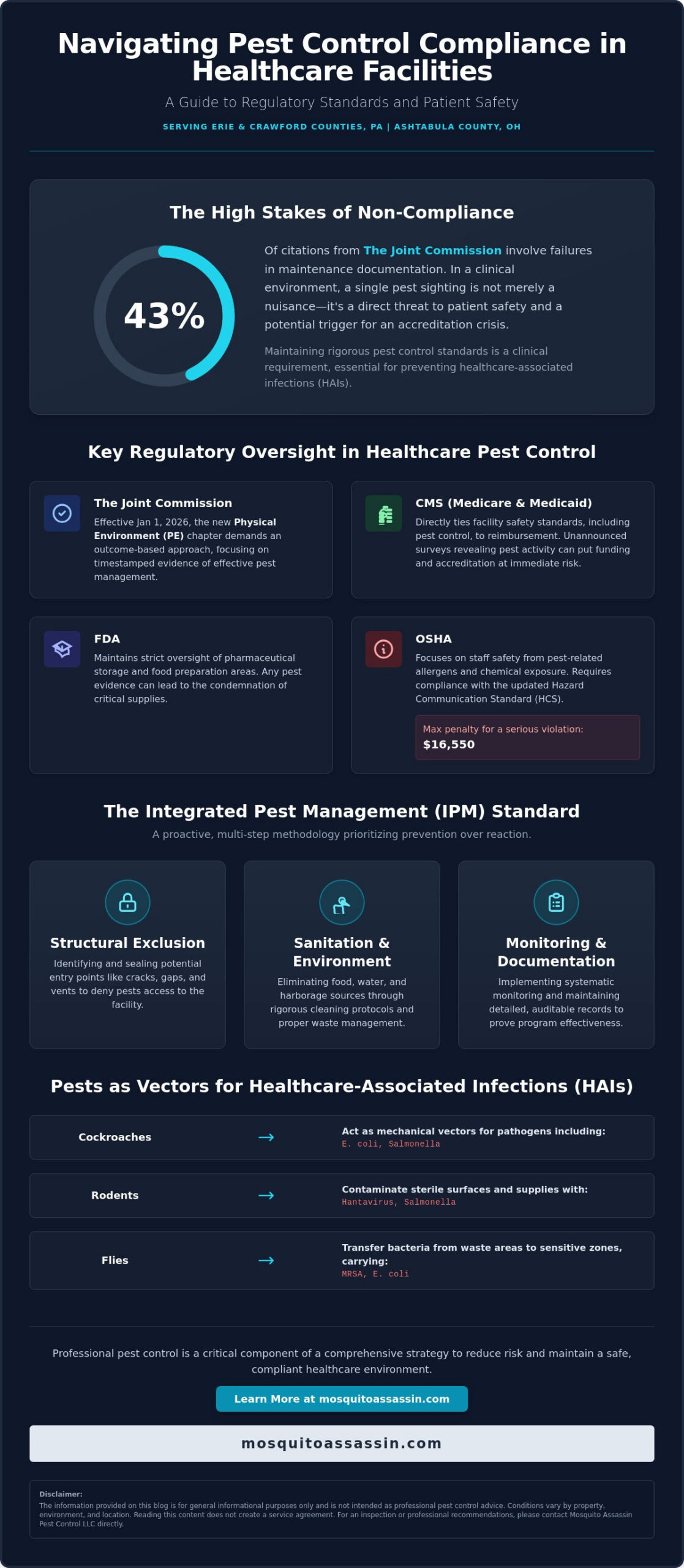
    Did you know that 43% of citations from The Joint Commission involve failures in maintenance documentation? In a high-stakes clinical environment, a single pest sighting isn’t just a nuisance; it’s a direct threat to patient safety and a potential trigger for an accreditation crisis. Maintaining rigorous healthcare facility pest control standards is a clinical requirement rather than a basic maintenance task. As of January 1, 2026, the transition to the Physical Environment (PE) chapter means surveyors are focusing heavily on timestamped evidence and documented outcomes.

    It’s understandable to feel pressured by the complexity of OSHA’s updated Hazard Communication Standard or the risk of serious penalties. This guide provides the clarity needed to maintain a sterile environment while building an auditable documentation trail. You’ll learn the essential Integrated Pest Management (IPM) protocols and regulatory requirements required to protect facilities in Erie, Crawford, and Ashtabula Counties. This overview covers the critical compliance shifts you need to know to ensure patient safety and successful audits throughout 2026.

    Disclaimer: The information provided on this blog is for general informational purposes only and is not intended as professional pest control advice. Conditions vary by property, environment, and location. Reading this content does not create a service agreement. For an inspection or professional recommendations, please contact Mosquito Assassin Pest Control LLC directly.

    Key Takeaways

    • Learn how maintaining a pest-free environment directly reduces the risk of healthcare-associated infections and the spread of dangerous pathogens.
    • Understand the role of Integrated Pest Management in satisfying healthcare facility pest control standards through proactive sanitation and exclusion strategies.
    • Identify common entry points such as loading docks and laundry rooms to prevent hitchhiking pests from reaching sterile patient areas.
    • Discover how regional weather patterns in Northwest Pennsylvania and Northeast Ohio dictate the timing and intensity of local pest pressures.
    • Gain insights into the essential documentation and record-keeping practices required to pass outcome-based regulatory audits with confidence.

    Understanding Healthcare Pest Control Standards and Regulatory Oversight

    Healthcare facility pest control standards aren’t just suggestions; they’re vital clinical protocols designed to prevent healthcare-associated infections (HAIs). Pests like cockroaches, rodents, and flies are significant biological hazards in a medical setting. They act as mechanical vectors for dangerous pathogens, including MRSA, E. coli, and Salmonella. When these pests move from waste disposal areas to sterile surgical suites or patient rooms, they compromise the entire environment. This is why modern medical facilities maintain a zero-tolerance policy for any insect or rodent activity.

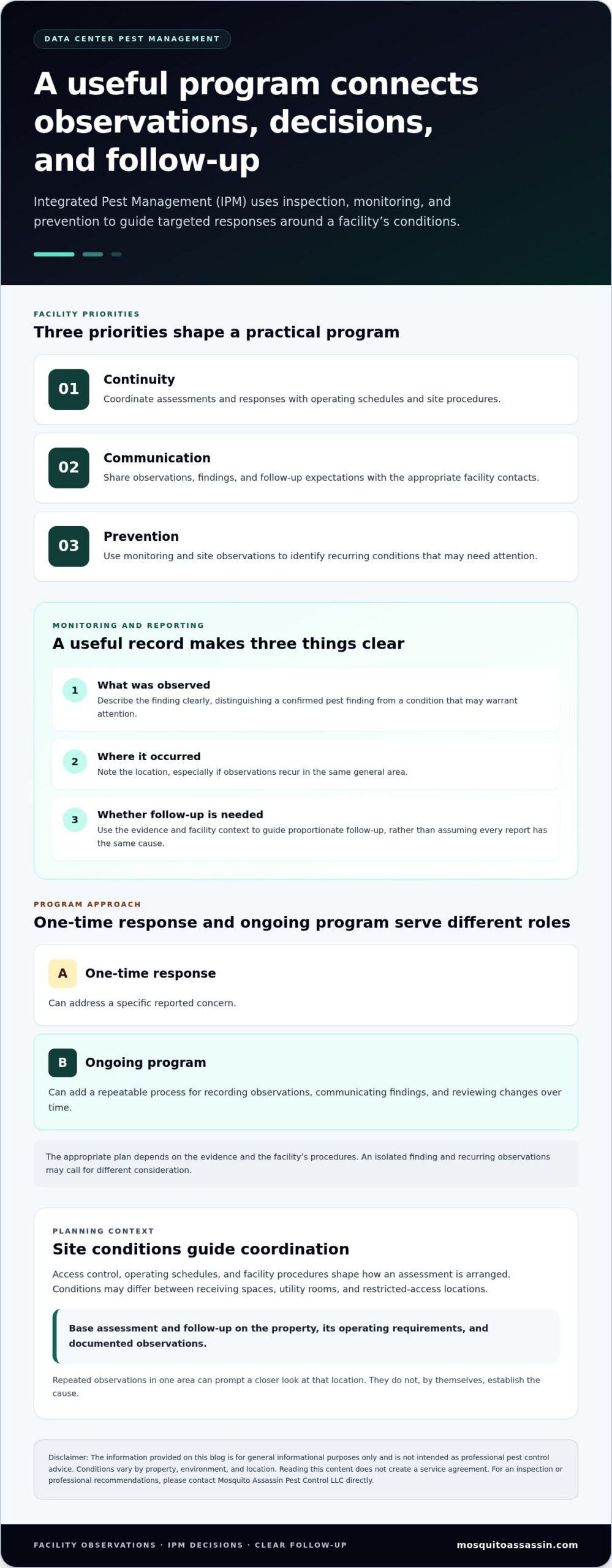
    To achieve this level of safety, facilities rely on Integrated Pest Management (IPM). This methodology prioritizes structural exclusion and sanitation over the routine application of chemicals. In a sensitive environment where patients may be immunocompromised, the goal is to eliminate the root causes of infestations without introducing unnecessary risks. Compliance with these standards is monitored by several federal and independent accrediting organizations that treat pest management as a core component of patient safety.

    To better understand this concept, watch this helpful video:

    The Role of The Joint Commission and CMS

    Effective January 1, 2026, The Joint Commission updated its evaluation process by consolidating the Environment of Care and Life Safety chapters into a new Physical Environment (PE) chapter. This shift moves away from simple checklists toward an outcome-based approach. Surveyors now look for timestamped evidence that a facility’s pest program is working. The Centers for Medicare & Medicaid Services (CMS) also play a major role, as they tie facility safety standards directly to reimbursement. A single unannounced survey that reveals active pest sightings or poor documentation can lead to immediate citations, putting both accreditation and funding at risk.

    FDA and OSHA Requirements for Medical Environments

    The FDA maintains strict oversight regarding the integrity of pharmaceutical storage and food preparation areas within hospitals. Any evidence of pests in these zones can lead to the immediate condemnation of supplies. On the safety side, OSHA focuses on protecting the staff from pest-related allergens and chemical exposure. As of January 15, 2026, the maximum OSHA penalty for a serious violation has reached $16,550, making compliance a financial necessity. Facilities must also follow the updated Hazard Communication Standard (HCS) to ensure all safety data sheets for pest treatments are current and accessible. For administrators in Erie or Ashtabula, aligning with commercial pest control best practices is the most reliable way to meet these high-stakes federal requirements while protecting vulnerable patients.

    Disclaimer: The information provided on this blog is for general informational purposes only and is not intended as professional pest control advice. Conditions vary by property, environment, and location. Reading this content does not create a service agreement. For an inspection or professional recommendations, please contact Mosquito Assassin Pest Control LLC directly.

    The Integrated Pest Management (IPM) Standard in Medical Settings

    Adhering to healthcare facility pest control standards requires a shift from reactive treatments to a proactive, clinical mindset. The primary vehicle for this transition is Integrated Pest Management (IPM). IPM is a collaborative, multi-step approach to pest prevention. Rather than relying on a predetermined schedule of chemical applications, this methodology focuses on understanding the biology of pests and the specific vulnerabilities of the building. In a healthcare setting, this approach is the gold standard because it minimizes the introduction of volatile compounds while maximizing the effectiveness of long-term control measures.

    Within the IPM framework, chemical treatments are only used as a last resort in a targeted manner. This hierarchy of intervention is vital for protecting sensitive patient populations, such as those in neonatal units or oncology wards. When an intervention is necessary, professionals select the lowest-risk products and apply them only to the specific areas where activity was confirmed. This disciplined strategy doesn’t just protect patients; it also ensures the facility remains compliant with the outcome-based evaluation methods currently favored by regulatory surveyors.

    Prioritizing Non-Chemical Prevention Strategies

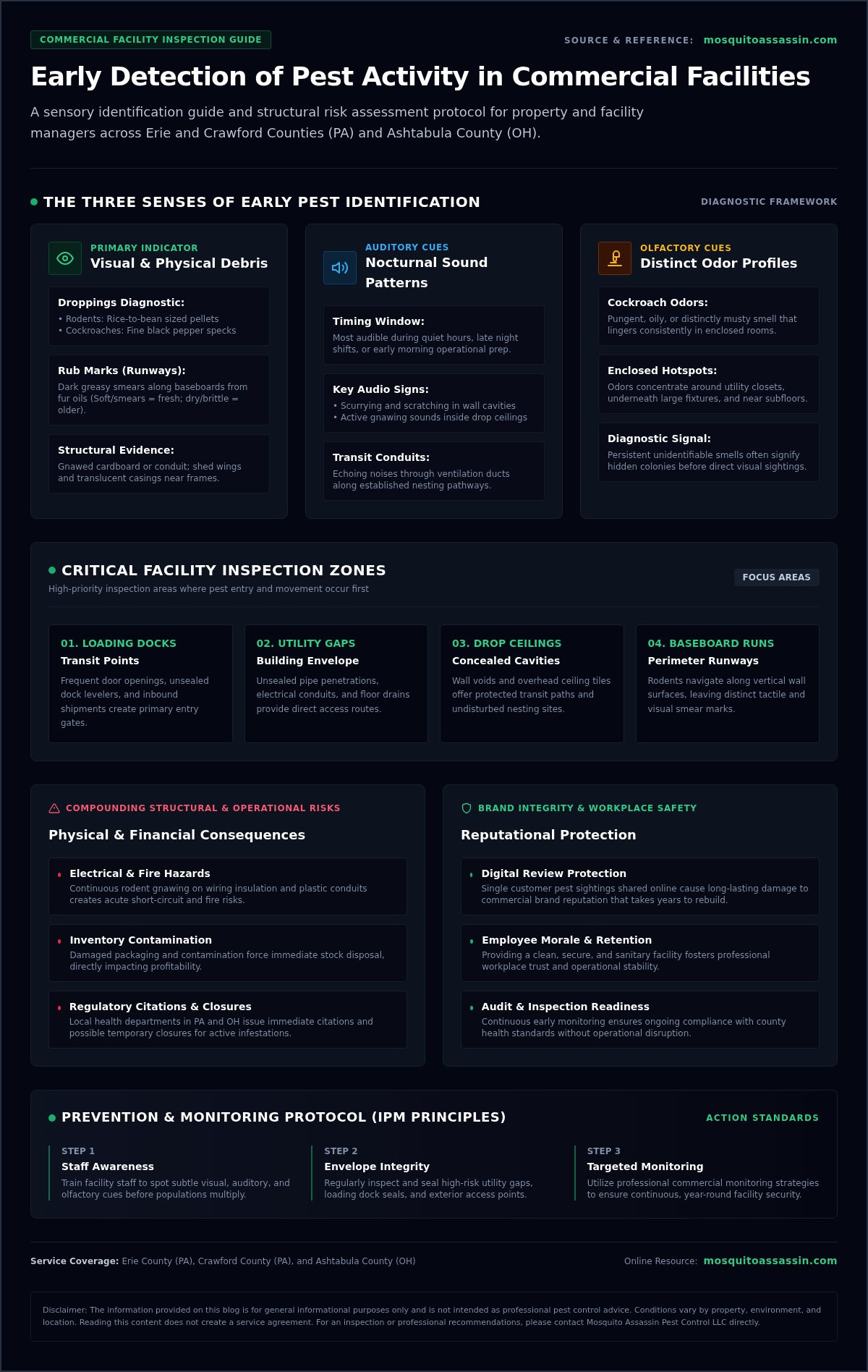
    Structural exclusion is the foundation of a successful IPM program. This process involves a meticulous sealing of the building envelope to prevent pests from entering in the first place. Professionals often focus on utility penetrations, gaps under doors, and the integrity of weather stripping on loading docks. Sanitation protocols must be equally rigorous. In areas like breakrooms and kitchens, even microscopic food debris can sustain a population. Effective waste management is also essential; organic waste should be removed from the building frequently and stored in tightly sealed containers located away from primary entry points. By removing food, water, and entry points, the facility becomes naturally resistant to infestations.

    Monitoring and Threshold-Based Decision Making

    Continuous monitoring is the only way to identify potential issues before they escalate into an audit-failing infestation. Licensed professionals place non-toxic monitors in high-risk zones, such as laundry rooms and janitorial closets, to track activity patterns. This data is then evaluated against specific action thresholds. An action threshold is a predetermined point at which a pest sighting necessitates a specific professional response. For instance, a single fly in a cafeteria might trigger an inspection of the window screens, while any activity in a sterile surgical suite requires an immediate, comprehensive intervention. Regular inspections ensure that the facility stays aligned with healthcare facility pest control standards throughout the year. For administrators looking to refine their protocols, commercial pest control strategies provide the structure needed for auditable compliance.

    Disclaimer: The information provided on this blog is for general informational purposes only and is not intended as professional pest control advice. Conditions vary by property, environment, and location. Reading this content does not create a service agreement. For an inspection or professional recommendations, please contact Mosquito Assassin Pest Control LLC directly.
    Healthcare Facility Pest Control Standards: A Comprehensive Guide for 2026

    High-Risk Zones and Specific Pest Challenges in Hospitals

    A medical facility is a complex environment with diverse micro-climates, each presenting unique risks to operational integrity. Maintaining healthcare facility pest control standards requires recognizing that a basement mechanical room faces different threats than a neonatal intensive care unit. While some areas prioritize total sterility, others are prone to structural entry points that invite unwanted activity. A hospital is not a single building; it’s a collection of unique ecosystems that require specialized monitoring and intervention strategies.

    Loading docks and laundry rooms serve as the primary gateways for hitchhiking pests. Every shipment of medical supplies or bulk linens carries the risk of introducing German cockroaches or silverfish into the building’s interior. Similarly, mechanical rooms and basement tunnels provide the dark, undisturbed warmth that rodents and spiders prefer. Rodents often follow utility lines through these tunnels, using them as highways to bypass traditional barriers and reach upper floors. Professional pest control may help reduce risk in these critical infrastructure zones by identifying breaches in the building envelope before pests migrate toward patient-facing areas.

    Sterile Environments and Pharmaceutical Storage

    Operating rooms and sterile processing departments demand the highest degree of exclusion. Even the presence of a single insect can compromise surgical equipment and lead to costly delays or significant patient infection risks. Pharmaceutical storage areas face a specific challenge because ants and cockroaches are often attracted to glucose and other chemical components found in various medications. Ants, in particular, can detect trace amounts of sugars in pharmaceutical zones, leading to infestations that are difficult to locate without professional assistance. Contamination in these areas doesn’t just result in safety losses; it can lead to the destruction of high-value inventory that is vital for daily patient care.

    Food Service and Patient Care Areas

    Hospital kitchens operate at the intersection of commercial food safety and medical hygiene. Proper drainage maintenance is essential in these spaces to prevent the accumulation of organic film where drain flies and gnats breed. If these biofilms are left unchecked, they become permanent nurseries for pests that can quickly spread to nearby cafeterias. In patient care areas, the challenges are often introduced by the constant flow of people. Visitors can inadvertently introduce bed bugs into the facility on clothing or personal belongings, necessitating a rapid and discreet response to prevent a wider outbreak. Healthcare providers in Erie, Crawford, and Ashtabula Counties must remain vigilant, as local seasonal shifts often drive pests indoors seeking these stable, climate-controlled environments.

    Disclaimer: The information provided on this blog is for general informational purposes only and is not intended as professional pest control advice. Conditions vary by property, environment, and location. Reading this content does not create a service agreement. For an inspection or professional recommendations, please contact Mosquito Assassin Pest Control LLC directly.
    Regional Pest Pressures in Pennsylvania and Ohio Facilities

    Facilities in Erie, PA, and Ashtabula, OH, operate under unique environmental conditions that directly influence their ability to meet healthcare facility pest control standards. The Great Lakes region is defined by lake-effect weather patterns, which often dictate the timing and intensity of pest migrations. Sudden drops in temperature or heavy moisture events can drive insects and rodents toward the stable, climate-controlled environments of medical buildings earlier than in other parts of the country. Understanding these local biological cycles is essential for facility managers who must maintain a sterile environment regardless of the conditions outside.

    Local healthcare campuses often feature expansive landscaped areas, retention ponds, and wooded perimeters that serve as natural reservoirs for pests. While these features provide a therapeutic atmosphere for patients, they also require constant vigilance to prevent outdoor populations from moving indoors. Maintaining a high standard of safety requires more than just indoor monitoring; it demands a strategy that addresses the building’s exterior as a primary line of defense. Consistent, ongoing commercial pest control is necessary for year-round protection in this volatile climate.

    Seasonal Mosquito and Tick Management Near Medical Campuses

    Mosquitoes represent a significant nuisance and a potential health risk when they congregate near facility entrances, outdoor patient seating, or employee break areas. In the humid summers typical of Northwest Pennsylvania and Northeast Ohio, standing water in parking lot drains or retention ponds can become breeding grounds for thousands of mosquitoes. Professional monitoring of these water sources is a clinical necessity to prevent these insects from following patients and staff through sliding doors. Ticks are an additional concern, as local wildlife can introduce them to the well-manicured grounds of a medical campus. This poses a direct risk to maintenance staff and patients who use outdoor walking paths, requiring proactive management of the facility’s perimeter to keep these vectors away from high-traffic zones.

    Overwintering Rodents and Structural Exclusion

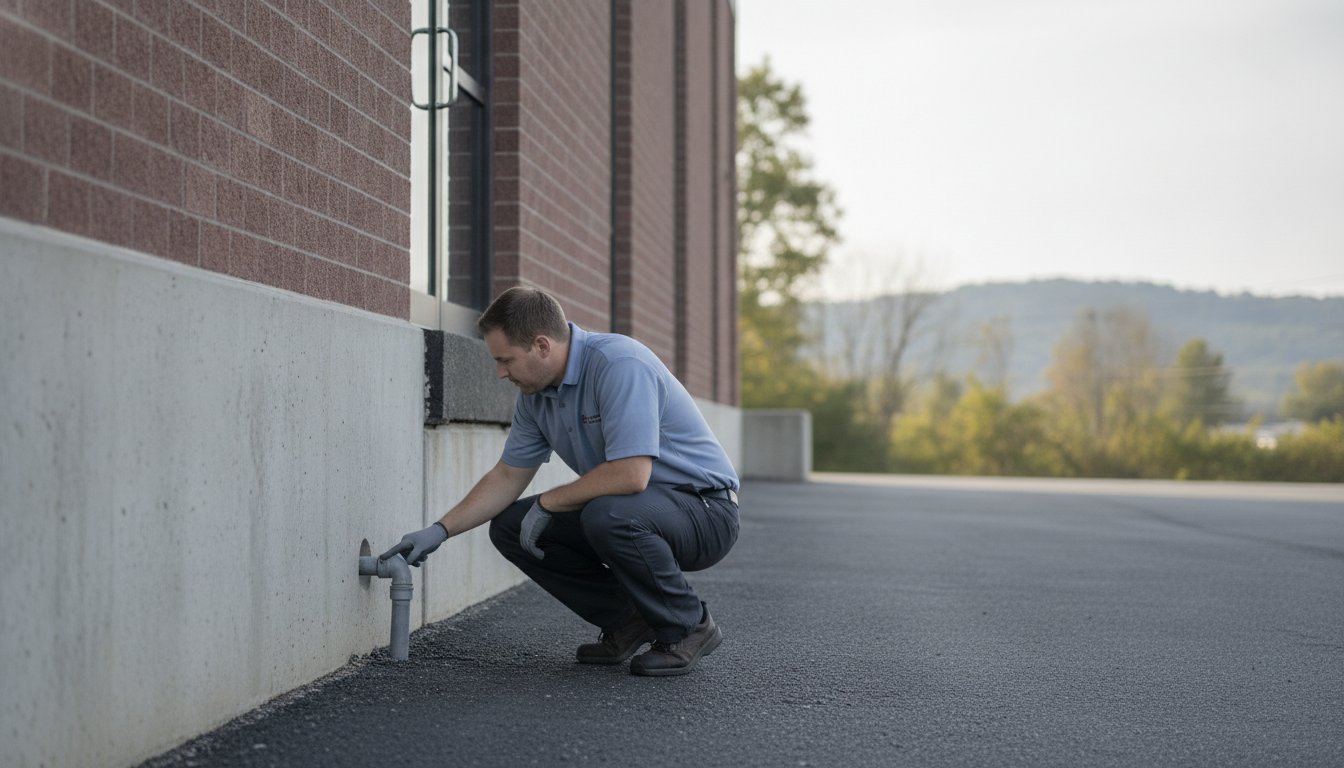
    As winter approaches, mice and rats aggressively seek the warmth and security provided by large healthcare structures. In Crawford County, completing exclusion work before the first frost is a critical preventative measure to stop rodents from finding refuge in basement tunnels or mechanical rooms. Once inside, rodents can cause catastrophic damage by gnawing on sensitive medical wiring or contaminating the insulation within walls. Because healthcare facility pest control standards require a zero-tolerance policy for rodent activity, sealing every gap in the building envelope is the most effective way to ensure winter compliance. Proactive measures, such as installing heavy-duty door sweeps and sealing utility penetrations, are far more effective than trying to manage an established population during the height of a PA or OH winter. For facilities requiring a comprehensive review of their perimeter defenses, contacting a professional for commercial pest control can help identify vulnerabilities before the seasonal shift begins.

    Disclaimer: The information provided on this blog is for general informational purposes only and is not intended as professional pest control advice. Conditions vary by property, environment, and location. Reading this content does not create a service agreement. For an inspection or professional recommendations, please contact Mosquito Assassin Pest Control LLC directly.
    Best Practices for Maintaining Compliance and Documentation

    Documentation is the most critical element of a successful healthcare audit. Under the 2026 outcome-based approach adopted by The Joint Commission, surveyors prioritize evidence of a functioning system over simple verbal assurances. Recent data indicates that 43% of citations from The Joint Commission involve failures in maintenance documentation. In the eyes of an auditor, if an action is not documented, it is considered not to have occurred. This strict standard means that every inspection, sighting, and corrective action must be recorded with precision to satisfy healthcare facility pest control standards.

    A centralized pest management logbook is the foundation of this process. This logbook should be kept in a location accessible to facility staff and regulatory inspectors at all times. It serves as a living record of the facility’s commitment to patient safety and environmental integrity. Maintaining this level of detail requires seamless communication between the facility administration and professional pest control services. When a professional identifies a structural vulnerability, like a gap in a loading dock seal in Ashtabula or a moisture issue in an Erie basement, the facility must document the repair to close the loop for future audits.

    Essential Record-Keeping for Audits

    To pass a high-stakes clinical survey, your documentation must be thorough and timestamped. A compliant logbook should include several specific categories of information to provide a clear audit trail. Ensure your records contain the following:

    • Pest Sighting Log: A detailed list of all sightings, including the specific date, time, and precise location within the facility.
    • Service Reports: Copies of all professional reports that outline findings, the specific methodology used, and any follow-up recommendations.
    • Safety Data Sheets (SDS): Readily accessible SDS for any materials used on the property, ensuring compliance with the updated OSHA Hazard Communication Standard.
    • Floor Plans: Maps indicating the placement of all monitoring stations and traps throughout the high-risk zones.

    Training Staff to Support Pest Prevention

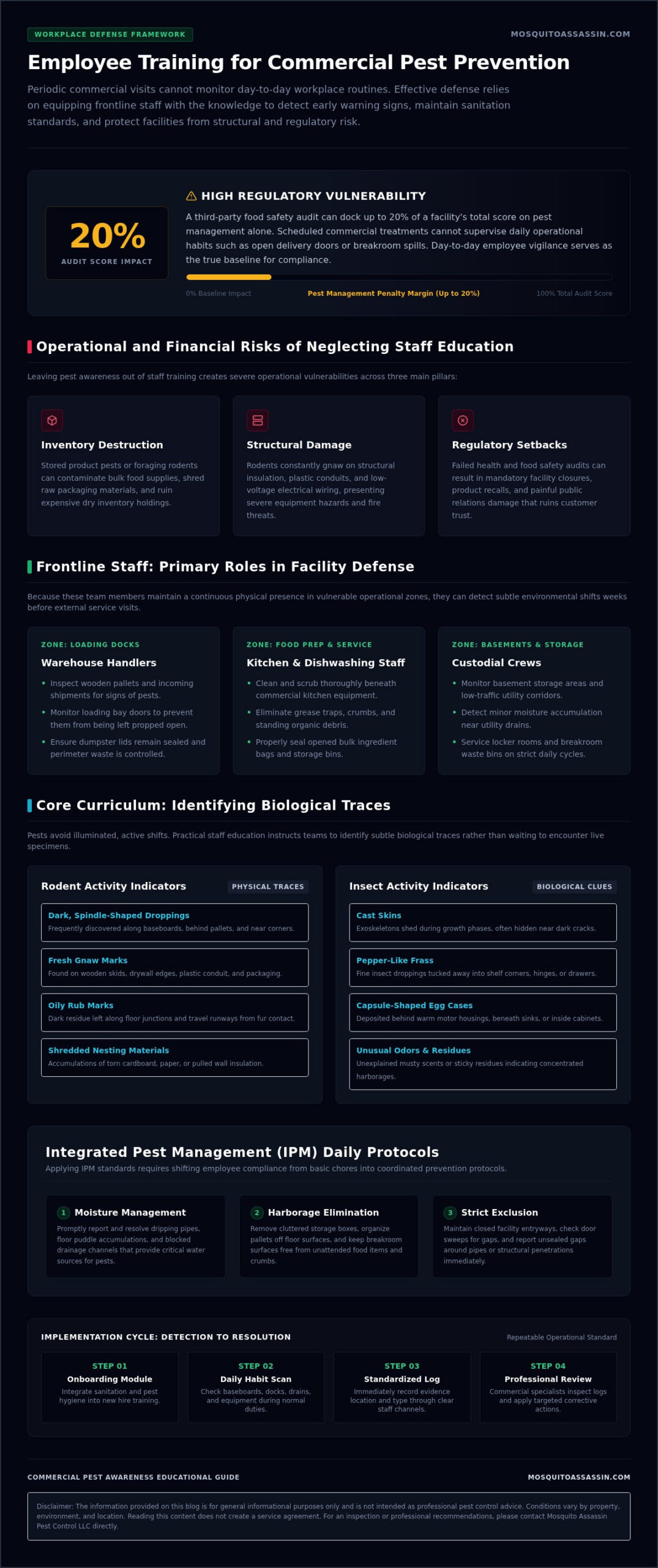
    Staff members are the first line of defense in maintaining healthcare facility pest control standards. Environmental services (EVS) staff should be educated on how to identify early signs of activity, such as droppings or nesting materials, during their daily cleaning rounds. Establishing a clear reporting structure allows these employees to log sightings immediately, preventing a minor issue from becoming a systemic failure. Encouraging ‘clean desk’ policies and strict food storage rules in administrative areas also removes the attractants that draw pests into non-clinical zones. When the entire team understands their role in the Integrated Pest Management framework, the facility remains much more resilient against infestations and audit citations alike.

    Disclaimer: The information provided on this blog is for general informational purposes only and is not intended as professional pest control advice. Conditions vary by property, environment, and location. Reading this content does not create a service agreement. For an inspection or professional recommendations, please contact Mosquito Assassin Pest Control LLC directly.
    Securing Your Facility for Future Audits

    Maintaining a sterile environment is a continuous clinical commitment that requires more than just reactive treatments. By prioritizing structural exclusion and rigorous documentation, facility managers can confidently meet the evolving healthcare facility pest control standards set for 2026. Successfully navigating the new Physical Environment (PE) chapter means shifting toward an outcome-based approach where every action is recorded and every vulnerability is addressed before it impacts patient care.

    Professional pest control may help reduce risk by providing the specialized oversight needed in high-stakes medical environments. For facilities across Erie, Crawford, and Ashtabula Counties, finding a partner that’s licensed and insured in both Pennsylvania and Ohio ensures that regional pest pressures are managed with local expertise. A focus on documented IPM compliance protects not only your accreditation but also the safety of every patient and staff member within your walls. If you’re ready to strengthen your facility’s defenses, you can Request a professional consultation for your facility to ensure your protocols are audit-ready. Taking these proactive steps today creates a safer, more compliant environment for the future.

    Disclaimer: The information provided on this blog is for general informational purposes only and is not intended as professional pest control advice. Conditions vary by property, environment, and location. Reading this content does not create a service agreement. For an inspection or professional recommendations, please contact Mosquito Assassin Pest Control LLC directly.
    Frequently Asked Questions

    What is the standard for pest control in healthcare facilities?

    The primary standard is Integrated Pest Management (IPM), which prioritizes non-chemical prevention strategies. This clinical approach ensures that healthcare facility pest control standards are met without introducing unnecessary chemical risks to patients or staff. It involves a continuous cycle of inspection, exclusion, and monitoring to maintain a sterile environment and prevent healthcare-associated infections.

    How often should a hospital be inspected for pests?

    Inspection frequency depends on the specific risk level of each zone within the facility. High-risk areas like kitchens, loading docks, and laundry rooms typically require weekly or bi-weekly inspections to catch issues early. Administrative offices or low-traffic storage areas might only need monthly reviews. A professional assessment helps determine the appropriate schedule based on the facility’s history and structural vulnerabilities.

    Are pesticides allowed in patient rooms or operating theaters?

    Pesticides are generally restricted in patient rooms and operating theaters to protect vulnerable individuals from chemical exposure. If an intervention is absolutely necessary, licensed professionals use low-volatility baits or containerized gels in targeted, inaccessible locations. The priority in these sensitive areas is always structural exclusion and rigorous sanitation rather than broad chemical application.

    What does the Joint Commission look for regarding pest management?

    The Joint Commission focuses on documented evidence of a safe and functional environment. Under the 2026 standards, surveyors look for timestamped logs of sightings, detailed service reports, and proof that corrective actions were taken. They evaluate the effectiveness of the program through documented outcomes rather than just checking for a signed service contract.

    How does Integrated Pest Management (IPM) differ from traditional pest control?

    Traditional pest control often relies on reactive, scheduled chemical treatments regardless of current activity levels. In contrast, IPM is a proactive, scientific approach that uses chemical intervention only as a last resort. It focuses on removing the root causes of infestations, such as food sources and entry points, through structural maintenance and improved sanitation protocols.

    What are the most common pests found in Pennsylvania healthcare facilities?

    Common pests in Northwest Pennsylvania include German cockroaches, house mice, and Norway rats. During the humid summer months, facilities in Erie and Crawford Counties also deal with significant fly and mosquito pressures near entrances. In the winter, the focus shifts toward overwintering rodents seeking warmth within the building’s infrastructure and mechanical tunnels.

    How should a facility manager document a pest sighting for compliance?

    Every sighting must be recorded in a centralized logbook immediately to maintain compliance with healthcare facility pest control standards. This entry should include the date, time, specific room or area, and the type of pest observed. Documenting the specific follow-up action taken by professional pest control services is equally important to show auditors that the issue was identified and resolved.

    Can facility staff apply over-the-counter pesticides in a medical setting?

    Facility staff should not apply over-the-counter pesticides in a medical setting. Most state regulations and healthcare facility pest control standards require applications to be performed by a licensed professional applicator. Unregulated use can lead to dangerous chemical exposures, respiratory issues for patients, and severe regulatory citations during an audit.

    Disclaimer: The information provided on this blog is for general informational purposes only and is not intended as professional pest control advice. Conditions vary by property, environment, and location. Reading this content does not create a service agreement. For an inspection or professional recommendations, please contact Mosquito Assassin Pest Control LLC directly.
  • Commercial Pest Control for Businesses in Ohio: A Comprehensive Guide

    Commercial Pest Control for Businesses in Ohio: A Comprehensive Guide

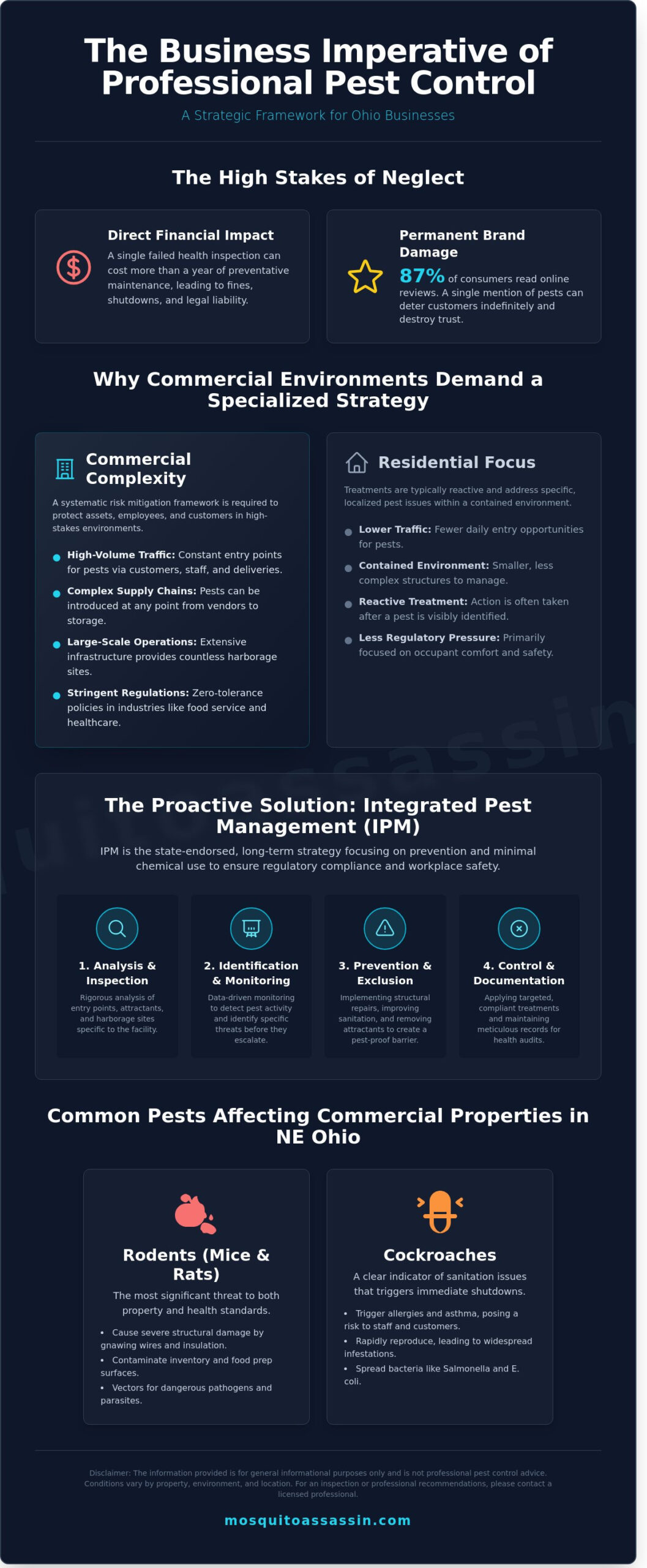
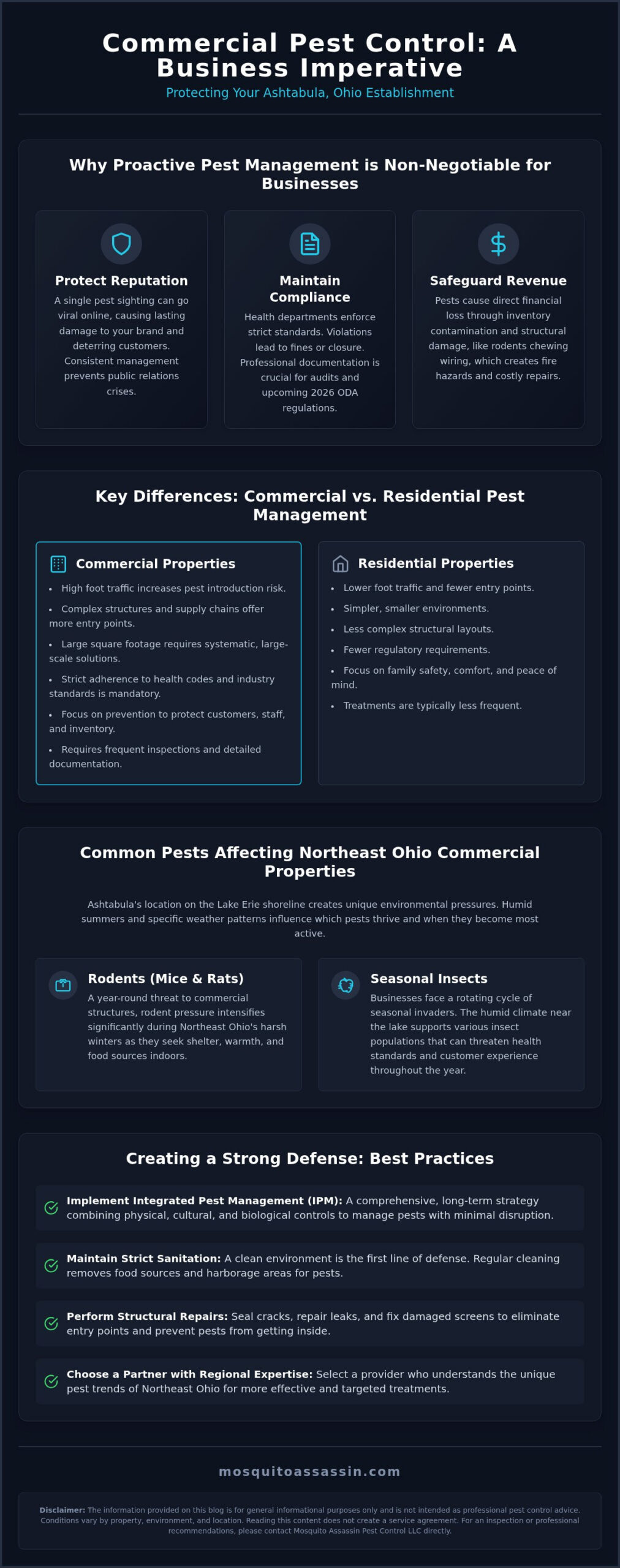
    What if a single health department inspection could cost your Ashtabula County business more than a year of professional maintenance? It’s a reality that surfaced in 2023 health audit reports, where improper pest documentation led to immediate operational setbacks for local establishments. Most professionals understand that a single rodent sighting doesn’t just mean a fine; it can damage a brand’s reputation permanently. Implementing effective pest control for businesses in Ohio is a non-negotiable requirement for staying compliant with state health codes and protecting your facility from structural damage.

    This guide provides the essential strategies and regulatory insights needed to maintain a pest-free commercial environment in Northeast Ohio. You’ll learn how to move from reactive treatments to a reliable prevention framework that aligns with Ohio’s safety standards. By understanding local pest behaviors and implementing professional management practices, businesses can focus on growth instead of health department violations. Professional pest control may help reduce risk for your facility.

    Disclaimer: The information provided on this blog is for general informational purposes only and is not intended as professional pest control advice. Conditions vary by property, environment, and location. Reading this content does not create a service agreement. For an inspection or professional recommendations, please contact Mosquito Assassin Pest Control LLC directly.
    Key Takeaways

    • Understand how systematic risk mitigation strategies protect brand reputation and maintain customer trust in commercial environments.
    • Identify the specific threats rodents and cockroaches pose to the structural integrity and hygiene of facilities in Northeast Ohio.
    • Learn about the stringent regulatory requirements and zero-tolerance policies governing the food service, hospitality, and healthcare industries.
    • Discover how Integrated Pest Management (IPM) serves as a proactive framework for professional pest control for businesses in ohio.
    • Gain insights on evaluating commercial partnerships by verifying state licensing and sector-specific experience for licensed applicators.

    The Role of Professional Pest Management in Ohio Business Operations

    Commercial pest management functions as a systematic framework for risk mitigation. It isn’t merely a reactive service; it’s a proactive strategy to protect physical assets and operational continuity. For a company, a pest infestation represents more than a nuisance. It is a direct threat to the structural integrity of the building and the safety of the inventory. Professional pest control for businesses in ohio focuses on creating a barrier between the enterprise and external biological threats. This involves a rigorous analysis of entry points, attractants, and harborage sites specific to the local climate in areas like Ashtabula County.

    Commercial environments require strategies that differ significantly from residential protocols. While a homeowner might prioritize the removal of a specific visible pest, a business must account for high-volume foot traffic, complex supply chains, and large-scale waste management. Residential treatments often address localized issues. In contrast, commercial strategies must account for the daily movement of goods and people, which provides constant opportunities for pests to hitchhike into a facility. Effective pest control for businesses in ohio utilizes data-driven monitoring to detect activity before it becomes a public-facing problem.

    Protecting Business Reputation and Revenue

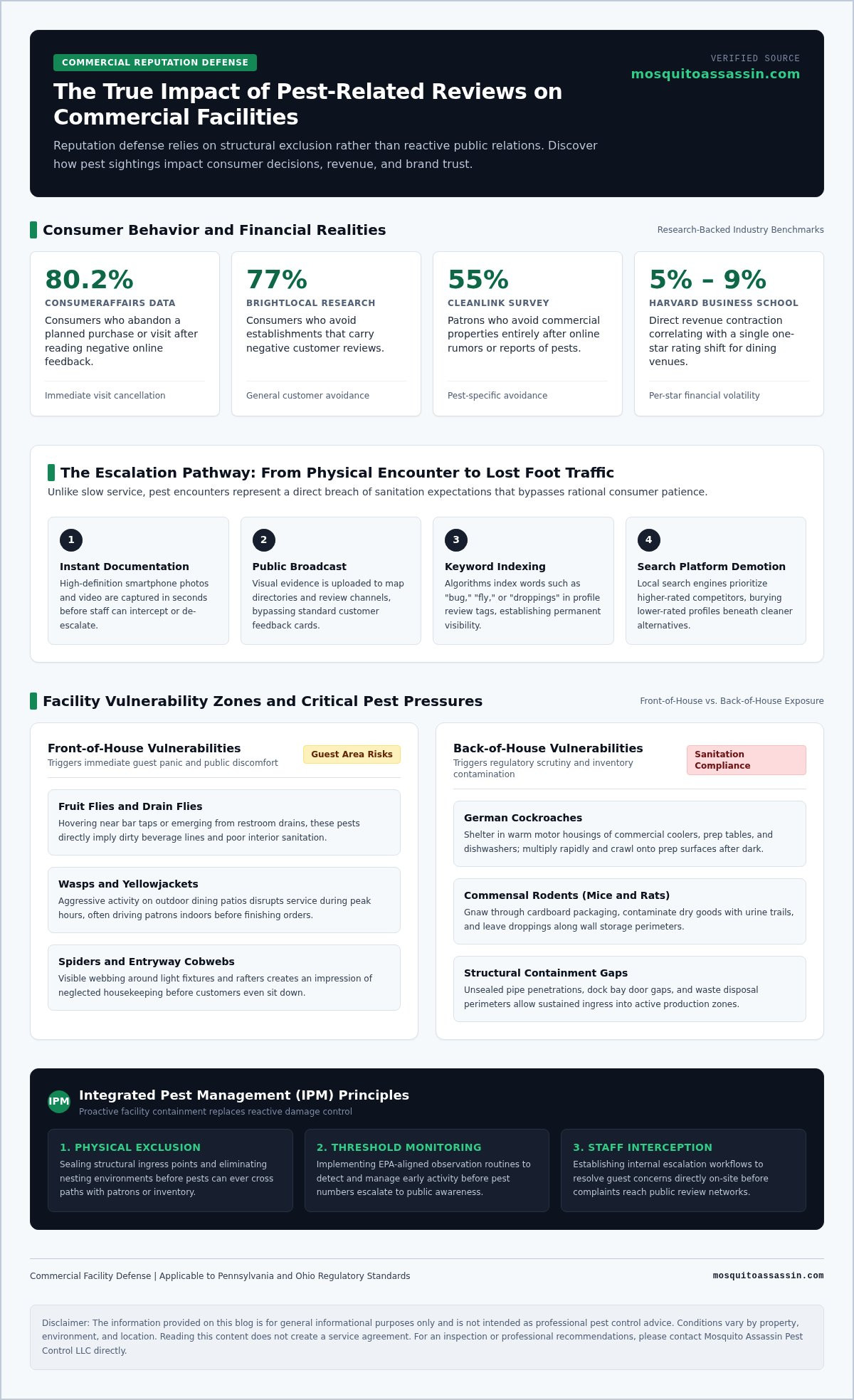
    A single pest sighting can trigger a cascade of financial losses. In an era where 87% of consumers read online reviews before visiting a local business, a mention of rodents or insects can be devastating. Negative feedback spreads rapidly across social media and review platforms. This often results in a measurable decline in foot traffic and immediate revenue loss. Maintaining high sanitation standards is directly correlated with customer retention; shoppers and diners expect a sterile environment as a baseline for their patronage.

    Utilizing professional commercial services provides a critical layer of protection against public relations crises. It demonstrates a commitment to quality that reassures both customers and employees. When a business invests in a professional management plan, they’re essentially purchasing insurance for their brand equity. Consistent monitoring ensures that small issues don’t escalate into headline-grabbing infestations that could force a temporary or permanent closure.

    Regulatory Compliance and Health Standards

    The Ohio Department of Agriculture (ODA) maintains strict standards for commercial properties, particularly regarding pesticide application and environmental safety. Compliance isn’t optional. Businesses that fail to meet these health codes face heavy fines, legal liability, and the potential revocation of operating licenses. Licensed professionals follow the principles of Integrated Pest Management (IPM) to ensure that treatments are both effective and compliant with state regulations. This methodology focuses on long-term prevention and minimizes the use of chemicals through improved sanitation and structural repairs.

    Workplace safety is another primary driver for professional pest management. Pests are known vectors for various pathogens that can cause respiratory issues or allergic reactions among staff. In properties with high foot traffic, the risk of disease transmission increases. Managing these risks involves more than just spraying; it requires a comprehensive understanding of pest biology and behavior. Professional intervention helps maintain a healthy environment for employees, which reduces sick leave and improves overall morale. Following ODA guidelines ensures that the property remains a safe space for the public and the workforce alike.

    Disclaimer: The information provided on this blog is for general informational purposes only and is not intended as professional pest control advice. Conditions vary by property, environment, and location. Reading this content does not create a service agreement. For an inspection or professional recommendations, please contact Mosquito Assassin Pest Control LLC directly.
    Common Pests Affecting Commercial Properties in Northeast Ohio

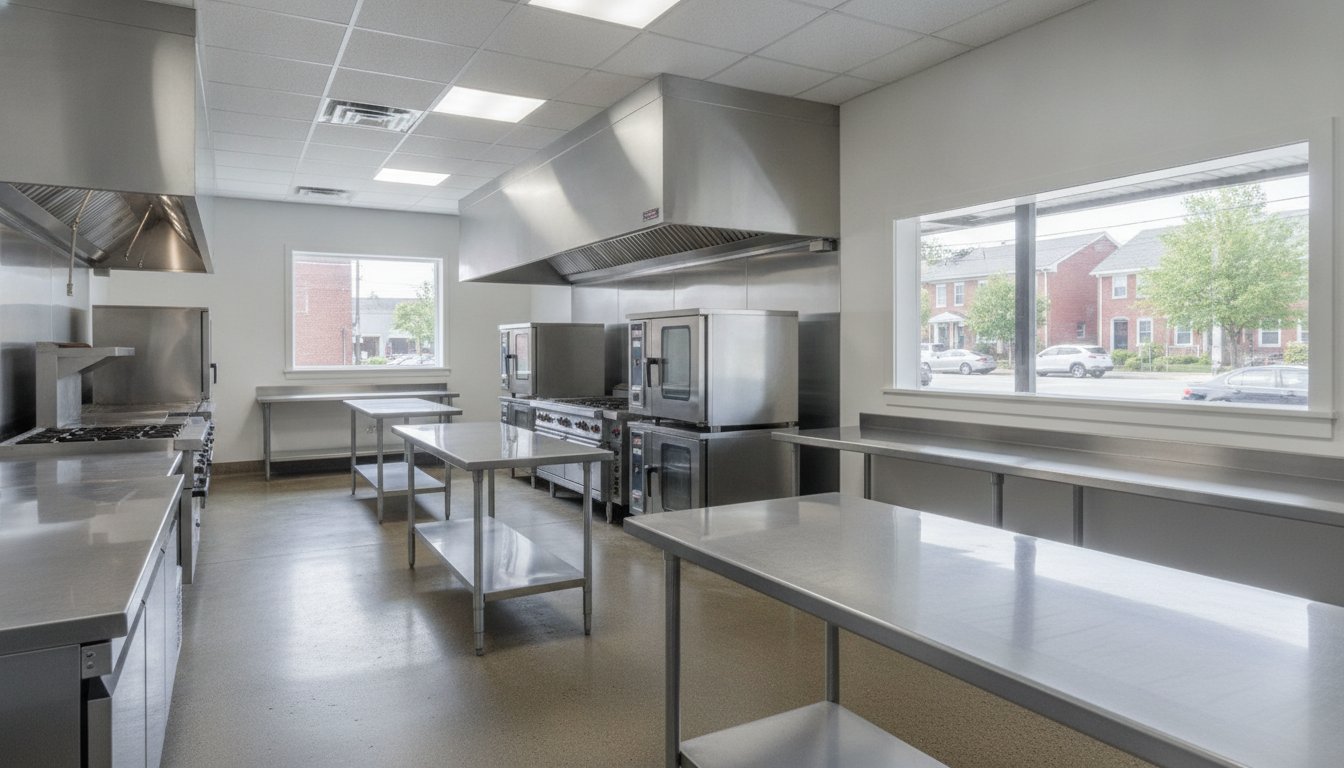
    Commercial properties in Northeast Ohio face a diverse range of pest pressures that fluctuate with the seasons. Rodents, specifically mice and rats, represent the most significant threat to both structural integrity and hygiene standards. A Norway rat can exert up to 24,000 pounds of pressure per square inch with its teeth, allowing it to chew through wood, plastic, and even soft metals. This behavior often leads to damaged electrical wiring and compromised insulation. In commercial kitchens and food service environments, cockroach infestations are a primary concern. A single female German cockroach and her subsequent offspring can produce more than 30,000 individuals within a single year if left unchecked. This rapid colonization makes consistent pest control for businesses in ohio essential for meeting health department regulations and maintaining a professional reputation.

    Warehouses and food processing facilities often encounter stored product pests like Indian meal moths and saw-toothed grain beetles. These insects can contaminate entire shipments of dry goods, leading to significant financial losses. Outside the facility, flies and stinging insects create immediate issues for entryways and outdoor dining areas. Filth flies are known to carry more than 100 different pathogens, including Salmonella and E. coli, which they transfer to surfaces upon landing. Effective management often involves following Integrated Pest Management (IPM) principles to address the root causes of these infestations rather than relying solely on reactive measures.

    Rodent Pressures in Urban and Rural Ohio Settings

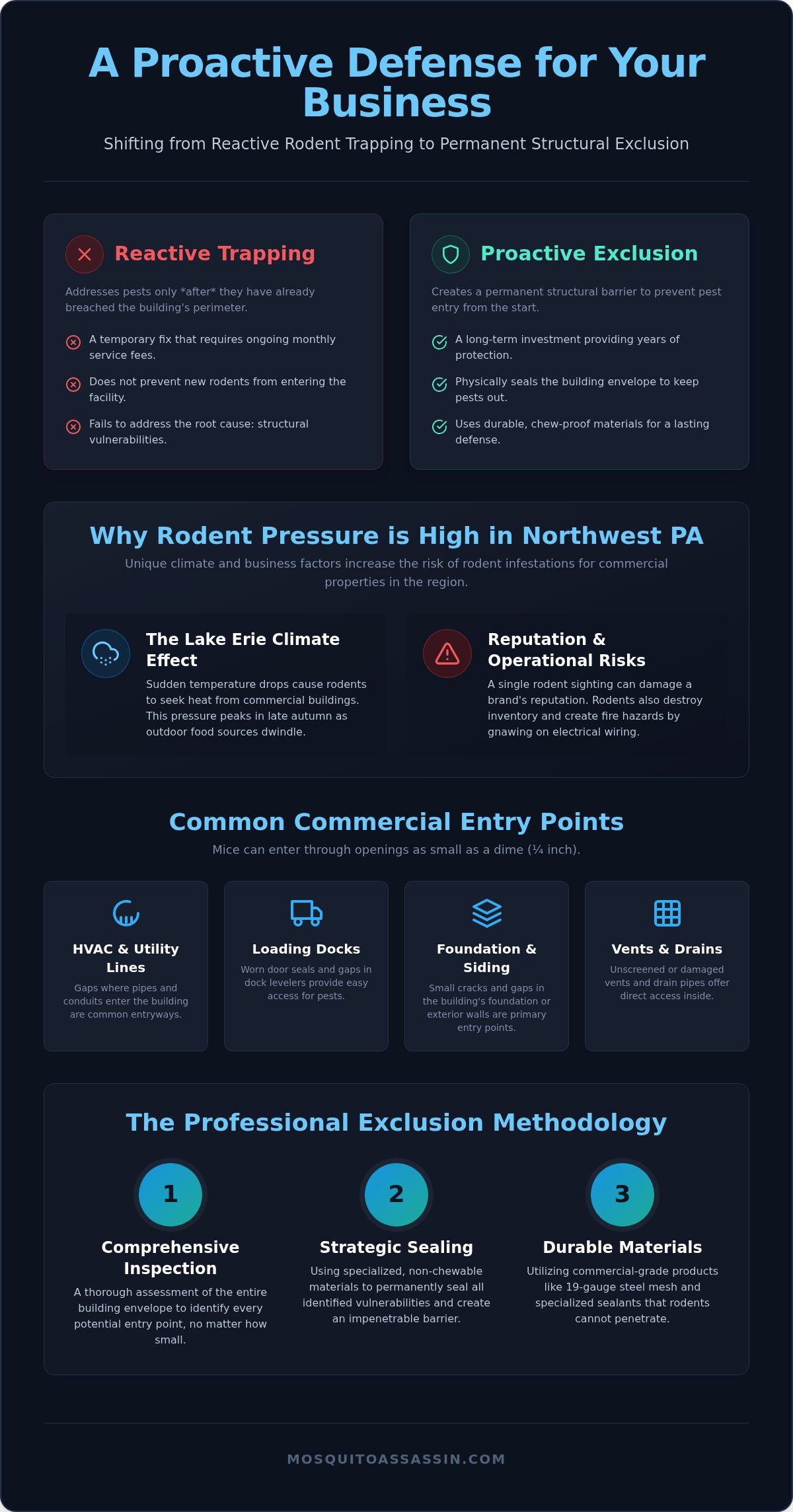
    The behavior of rodents varies significantly between urban centers and rural commercial sites. In urban areas, Norway rats are common near loading docks and waste disposal zones. These rats are burrowers and often enter buildings through utility gaps or damaged floor drains. House mice are more prevalent in rural settings, though they’re found in nearly every commercial environment. A mouse only requires a gap of 1/4 inch (about the size of a dime) to gain access to a structure. The Northeast Ohio climate plays a decisive role in rodent activity; as temperatures drop in October and November, rodents aggressively seek indoor shelter and food sources to survive the winter months.

    Nuisance and Health-Hazard Insects

    Insects in a business context are categorized by the specific risks they pose. Filth flies originate from decaying organic matter and represent a high health risk, while fruit flies are typically drawn to fermenting liquids in bars or breakrooms. In Ashtabula County, Odorous house ants are a frequent spring nuisance, often entering buildings in large numbers following heavy rains. For businesses with outdoor amenities, seasonal pressures from mosquitoes and ticks are a major concern from May through September. Black-legged ticks are particularly active in properties with high grass or wooded borders. Implementing professional pest control may help reduce risk for employees and customers alike. Facility managers seeking an evaluation of their property can visit the Mosquito Assassin contact page for further information.

    Disclaimer: The information provided on this blog is for general informational purposes only and is not intended as professional pest control advice. Conditions vary by property, environment, and location. Reading this content does not create a service agreement. For an inspection or professional recommendations, please contact Mosquito Assassin Pest Control LLC directly.
    Industry-Specific Pest Control Requirements

    Commercial pest management isn’t a one-size-fits-all solution. Different sectors face unique biological threats and regulatory pressures that dictate how treatments are applied. In warehousing and logistics hubs throughout Ashtabula County, the primary concern involves preventing the transport of pests through complex supply chains. A 2023 industry report indicated that 24% of warehouse infestations originate from incoming shipments rather than local environmental factors. Technicians must focus on high-traffic loading docks and pallet storage areas where hitchhiking pests like German cockroaches or stored product beetles often hide.

    Multi-unit housing and office complexes present a different challenge: pest migration. In buildings with shared walls and utility lines, a localized issue can quickly become a building-wide crisis. Research shows that if one apartment in a complex has a cockroach infestation, there’s a 60% chance the adjacent units will also be affected within 14 days. Effective management requires a holistic approach that addresses structural gaps and common areas to prevent pests from moving between units. For those evaluating a professional partnership, Ohio State University’s Pesticide Safety Education Program provides essential resources on the standards required for commercial applicators to handle these complex environments safely.

    Food Safety and Restaurant Standards

    Food service establishments operate under a zero-tolerance policy for pests. According to the 2022 FDA Food Code, even a single sighting of a rodent or cockroach can lead to immediate facility closure. Management must maintain detailed service logs for health inspectors to prove consistent monitoring. Focusing on waste disposal areas is critical; 75% of restaurant pest entries begin at poorly maintained dumpsters or grease traps. Proper exclusion and sanitation are the primary defenses in these high-risk zones.

    Healthcare and Sensitive Environments

    Hospitals, clinics, and assisted living facilities require sterile environments where traditional chemical applications are often restricted. Pest management in these spaces prioritizes low-impact, non-disruptive schedules to protect patient health and comfort. Utilizing localized pest control for businesses in Ohio ensures that service providers are familiar with regional health department regulations and the specific needs of Ohio healthcare facilities. Technicians focus on Integrated Pest Management (IPM) techniques, emphasizing structural repairs and monitoring over broad-spectrum sprays. This approach safeguards vulnerable populations while maintaining the high hygiene standards necessary for medical certification. Precise pest control for businesses in Ohio helps facility managers stay compliant with state-specific healthcare safety audits while keeping sensitive areas free of biological contaminants.

    Disclaimer: The information provided on this blog is for general informational purposes only and is not intended as professional pest control advice. Conditions vary by property, environment, and location. Reading this content does not create a service agreement. For an inspection or professional recommendations, please contact Mosquito Assassin Pest Control LLC directly.

    Implementing Integrated Pest Management (IPM) for Long-Term Protection

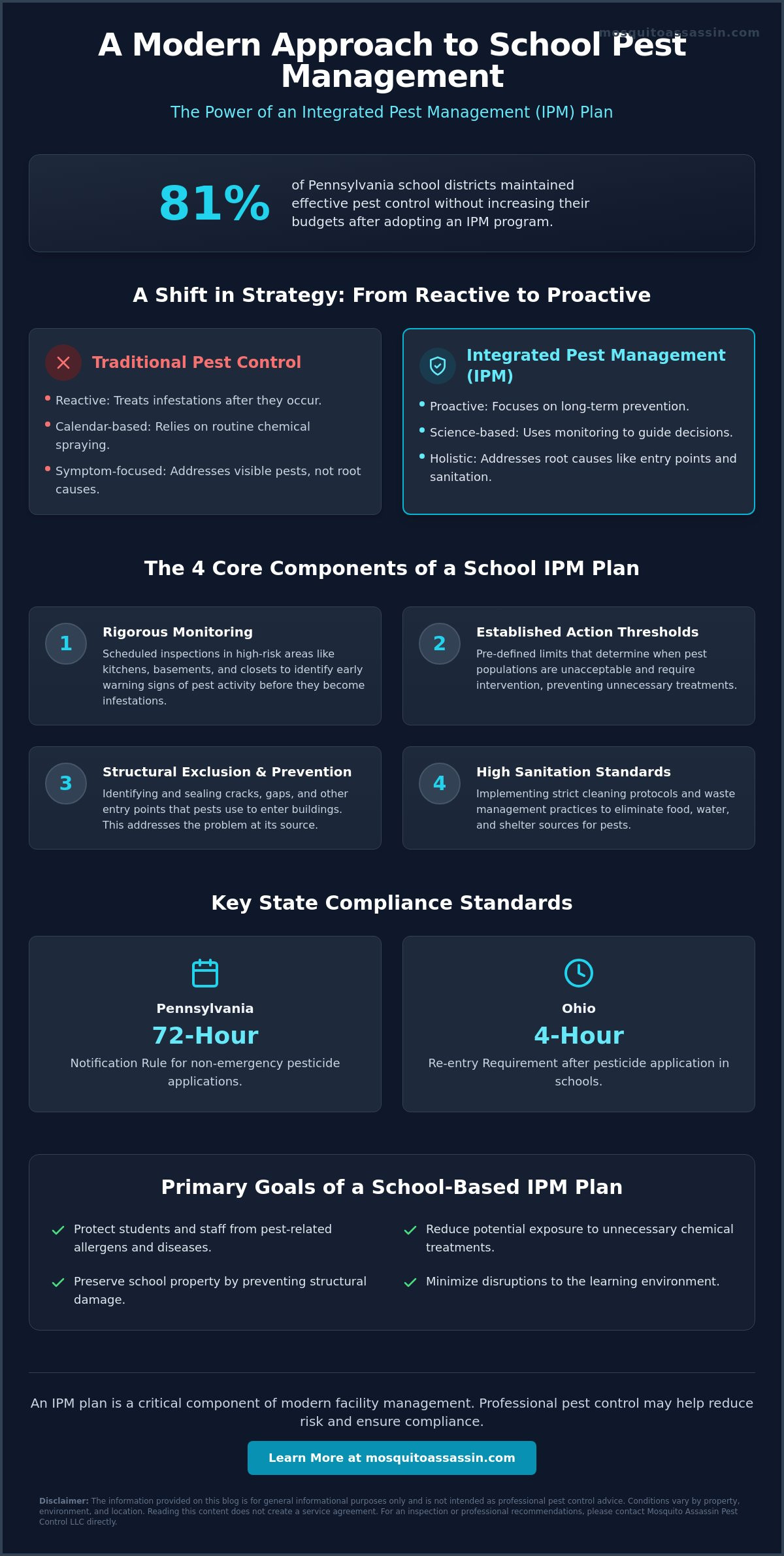
    Integrated Pest Management (IPM) is a science-based approach that focuses on long-term prevention rather than just reacting to infestations. It’s a strategy that prioritizes the least hazardous methods first. Effective pest control for businesses in ohio relies on this methodology to ensure that commercial environments remain compliant with health codes and safety standards. According to a 2022 report from the National Pest Management Association, proactive IPM strategies can reduce the need for intensive chemical applications by up to 90% in commercial settings. The process follows five distinct steps that work together to create a hostile environment for pests.

    • Step 1: Comprehensive facility inspection. A thorough walkthrough identifies structural vulnerabilities. This includes checking loading docks, utility penetrations, and employee breakrooms where crumbs often accumulate.
    • Step 2: Identification of specific pest species. Knowing the biology of the pest is vital. For instance, treating for a German cockroach requires a different strategy than managing an American cockroach due to their different nesting habits and reproductive cycles.
    • Step 3: Implementation of non-chemical measures. This involves physical changes to the building. It’s about removing the food, water, and shelter that pests need to survive.
    • Step 4: Targeted treatment only when necessary. If pests persist after exclusion, professionals apply treatments to specific areas. This minimizes exposure and ensures the most effective results.
    • Step 5: Ongoing monitoring and documentation. Keeping a detailed log of sightings and trap counts allows for data-driven decisions. It’s not enough to solve the problem once; it’s about maintaining a barrier.

    The Science of Exclusion and Sanitation

    Exclusion is the first line of defense in any commercial facility. Small gaps are significant risks; a mouse can fit through a hole the size of a dime, which is roughly 0.7 inches. Sealing cracks with weather-resistant caulk and installing heavy-duty door sweeps prevents these intruders from gaining access. Moisture control is equally vital. Leaky pipes or poorly graded landscaping in Erie or Ashtabula Counties can create standing water that attracts flies and mosquitoes. Employee training is the final piece of this puzzle. When staff members understand how to properly store food and dispose of waste, the risk of an internal infestation drops significantly. This collective effort is a core component of sustainable pest control for businesses in ohio.

    Monitoring and Reporting Systems

    Modern pest management utilizes advanced monitoring tools to catch problems before they escalate. Pheromone traps are used to detect stored product pests in warehouses, while digital bait stations can alert managers to rodent activity in real-time. These systems provide 24/7 surveillance that manual inspections might miss. Digital reporting provides facility managers with a transparent trail of data for audits and health inspections. Regular services allow for adjustments based on seasonal pest activity, ensuring the strategy evolves as the weather changes. Monitoring ensures that every action taken is based on current, site-specific evidence rather than guesswork.

    For facility managers in Crawford County or surrounding areas, understanding these protocols is the first step toward a cleaner workspace. While many factors influence pest behavior, professional pest control may help reduce risk and protect a company’s reputation.

    Disclaimer: The information provided on this blog is for general informational purposes only and is not intended as professional pest control advice. Conditions vary by property, environment, and location. Reading this content does not create a service agreement. For an inspection or professional recommendations, please contact Mosquito Assassin Pest Control LLC directly.
    Evaluating Professional Pest Control Partnerships in Ohio

    Selecting the right partner for securing reliable pest control for businesses in ohio requires more than a quick online search. Verification of credentials is the first essential step. The Ohio Department of Agriculture (ODA) regulates all commercial pesticide applications in the state. Business owners should confirm that a provider holds a valid commercial applicator license and maintains at least $300,000 in general liability insurance. This coverage protects the physical assets of the facility and ensures the provider meets state-mandated safety standards. Checking these documents annually helps maintain a high standard of safety for employees and customers alike.

    Experience in specific commercial sectors is just as vital as licensing. A technician who understands the strict sanitation requirements of a food processing plant may not have the same approach as one specializing in multi-unit housing. Effective pest control for businesses in ohio relies on sector-specific knowledge to address unique vulnerabilities. For example, a 50,000-square-foot warehouse has different entry points and nesting risks than a retail storefront. Professional partners should demonstrate a history of managing similar environments, as this reduces the risk of overlooked infestations.

    Communication protocols define the success of a long-term partnership. Clear channels for reporting sightings and a guaranteed response time, often within 24 hours for urgent issues, prevent minor problems from becoming full-scale infestations. Documentation is the backbone of this communication. In 2023, data from regional health inspections showed that nearly 35% of pest-related citations were linked to inadequate record-keeping rather than the presence of pests themselves. Audit-ready reporting must include detailed pesticide usage logs, comprehensive site maps, and trend analysis reports that show the history of the facility’s pest activity.

    Local Expertise vs. National Chains

    Local knowledge of regional pest cycles is a major advantage for businesses in Ashtabula County. The Lake Erie climate creates specific humidity levels that influence when insects like carpenter ants or cluster flies emerge. A provider with about ten years of experience in the local area understands these seasonal shifts better than a national corporation using a one-size-fits-all strategy. Local teams often provide faster response times during extreme weather events, such as heavy spring rains, which can drive pests indoors across the region.

    Questions to Ask Potential Service Providers

    When interviewing a potential partner, specific questions help reveal their level of expertise and commitment to professional standards. Business owners don’t have to guess about the quality of service if they ask the right technical questions during the consultation phase. Use these points to evaluate their capabilities:

    • Can you provide examples of Integrated Pest Management (IPM) strategies used in facilities similar to mine? Genuine IPM focuses on prevention and structural repairs rather than just chemical application.
    • What is your experience with specific industry audits like SQF, AIB, or GFSI? Providers should be familiar with the documentation requirements of these third-party auditors.
    • How do you handle emergency call-outs between scheduled visits? Confirm if there are additional fees for these visits and what the expected arrival time is.
    • Will I receive digital documentation immediately after every site visit? Real-time reporting ensures that management can address structural recommendations or sanitation issues without delay.

    A professional partnership is an investment in the reputation and operational continuity of a company. By focusing on licensing, sector experience, and clear documentation, business owners can safeguard their property against the financial and physical risks of pests. Professional pest control may help reduce risk and ensure long-term compliance with state and local health regulations.

    Disclaimer: The information provided on this blog is for general informational purposes only and is not intended as professional pest control advice. Conditions vary by property, environment, and location. Reading this content does not create a service agreement. For an inspection or professional recommendations, please contact Mosquito Assassin Pest Control LLC directly.

    Protecting Your Business Reputation and Infrastructure

    Maintaining a pest-free environment is a critical component of successful business operations in the Great Lakes region. Implementing specialized commercial Integrated Pest Management protocols allows facility managers to address vulnerabilities before they escalate into infestations. These methods prioritize long-term prevention and structural integrity over temporary fixes. Because regulations for commercial properties are strict, working with a provider that’s licensed and insured in Ohio and Pennsylvania is essential for maintaining industry standards. A locally owned and operated partner understands the specific seasonal pressures facing Erie, Crawford, and Ashtabula Counties.

    Consistency is the foundation of effective pest control for businesses in Ohio. It’s important to establish a routine that includes regular inspections and data-driven monitoring to safeguard inventory and staff. Effective management requires understanding the specific biological cycles of regional pests like rodents or flies. Taking these proactive steps helps maintain a professional atmosphere and protects the bottom line from costs associated with property damage or health code violations. Professional pest control may help reduce risk and ensure compliance. By focusing on prevention today, business owners invest in the continued success and safety of their commercial space.

    Disclaimer: The information provided on this blog is for general informational purposes only and is not intended as professional pest control advice. Conditions vary by property, environment, and location. Reading this content does not create a service agreement. For an inspection or professional recommendations, please contact Mosquito Assassin Pest Control LLC directly.
    Frequently Asked Questions

    What are the legal requirements for pest control in Ohio businesses?

    Ohio Administrative Code 3701-21-02 requires food service operations to stay free of insects and rodents. Commercial facilities must adhere to standards set by the Ohio Department of Agriculture for safe pesticide application. 100% of food-handling businesses must keep detailed records of all pest management activities to satisfy local health department inspections. Professional pest control may help reduce risk for these establishments.

    How often should a commercial property in Ohio be inspected for pests?

    Most commercial properties in Ohio benefit from monthly inspections to identify vulnerabilities before they lead to an infestation. High-risk facilities like restaurants or warehouses often schedule weekly visits, while standard retail spaces might only require 4 inspections per year. Consistent monitoring prevents 90% of pest-related structural damage and ensures the property remains in good standing.

    What is Integrated Pest Management (IPM) and why is it used for businesses?

    Integrated Pest Management is a strategic approach that prioritizes sanitation and structural repairs over chemical applications. It’s the preferred method for pest control for businesses in ohio because it reduces chemical usage by 70% while maintaining high efficacy. This science-based system focuses on the biology of pests to create long-term solutions that don’t rely solely on reactive treatments.

    Can a business stay open during a professional pest control treatment?

    Most businesses can continue operations during a professional treatment, especially when technicians use non-volatile baits and traps. If a liquid application is necessary, it’s often scheduled during the 8 to 12 hours the business is closed. When treatments occur during business hours, technicians focus on secluded areas to ensure zero disruption for customers. It’s important to coordinate with professionals to determine the best timing.

    What should a business do if they fail a health inspection due to pests?

    A business that fails an inspection should immediately secure a professional evaluation to address the specific violations cited. The Ohio Department of Health usually schedules a re-inspection within 10 days to confirm that the issues are resolved. Implementing corrective actions like sealing entry points can fix 85% of common pest-related health code failures. Professional pest control may help reduce risk of future failures.

    Are commercial pest treatments safe for employees and customers?

    Professional treatments are safe for people when applied by licensed technicians following EPA-approved label instructions. These applications target specific pest harborages like cracks and wall voids rather than open surfaces. 100% of modern commercial-grade products are chosen for their effectiveness and low impact on the indoor environment. Technicians ensure that no one is exposed to unnecessary risks during the process.

    How do seasonal changes in Ohio affect commercial pest management?

    Pest activity in Ohio fluctuates with the 4 distinct seasons, requiring different strategies throughout the year. For instance, 80% of ant infestations occur when spring temperatures reach 50 degrees, while rodents migrate indoors when the ground freezes in November. Effective pest control for businesses in ohio involves adjusting prevention tactics every 90 days to stay ahead of these biological shifts.

    What documentation does a business need to provide to health inspectors regarding pest control?

    Business owners should maintain a logbook containing service reports, pesticide labels, and safety data sheets. Inspectors also look for a site map showing the location of all 20 or 30 bait stations on the property. Keeping 100% of these records organized ensures the business remains compliant with the Ohio Food Code during unannounced audits. For more information, please visit www.mosquitoassassin.com/contact-us.

    Disclaimer: The information provided on this blog is for general informational purposes only and is not intended as professional pest control advice. Conditions vary by property, environment, and location. Reading this content does not create a service agreement. For an inspection or professional recommendations, please contact Mosquito Assassin Pest Control LLC directly.

  • Office Pest Management: The Complete Guide for Businesses

    Office Pest Management: The Complete Guide for Businesses

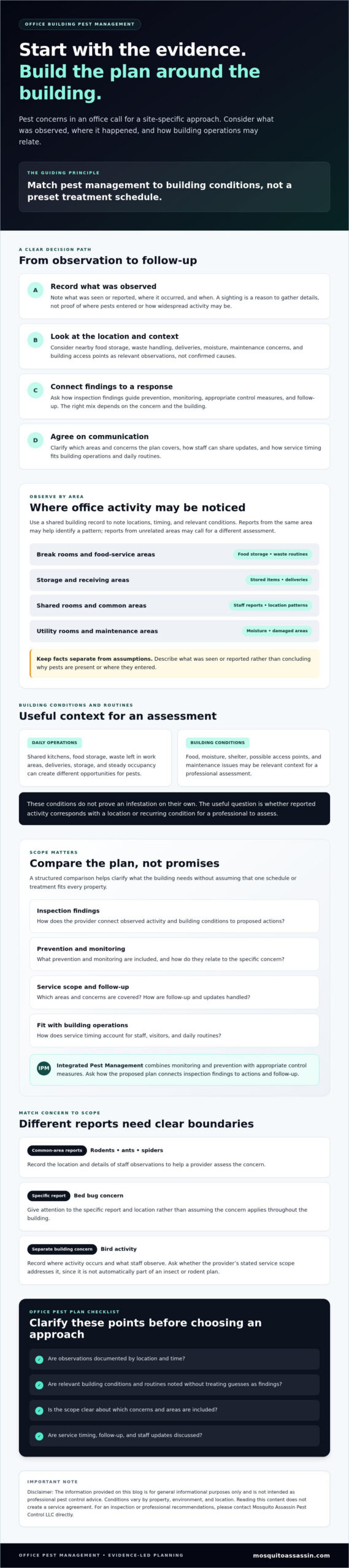
    That one mouse sighting. The ant trail by the coffee machine. The hushed complaints from your team. These seemingly small annoyances are more than just a nuisance; they’re a direct threat to your company’s reputation, employee morale, and even your compliance with health and safety standards. Ignoring the problem isn’t an option, and DIY solutions rarely work without disrupting your operations. This is where a strategic, professional approach to office pest management becomes essential for safeguarding your bottom line and professional image.

    In this complete guide, we eliminate the guesswork. You will learn how to implement a proven, professional plan to protect your workspace, reassure your employees, and impress your clients. We’ll outline a comprehensive process that is both effective and discreet, giving you the peace of mind that comes from having a reliable, ongoing strategy in place. It’s time to secure your workplace and get back to business, confident that the problem is handled by experts.

    Why Professional Pest Management is a Business Essential

    In a commercial setting, pests are far more than a simple nuisance-they are a direct and serious threat to your business operations, your employees, and your bottom line. Ignoring the signs of an infestation can lead to cascading problems that impact health, safety, and your company’s reputation. Effective office pest management isn’t an expense; it’s a critical investment in the long-term stability and success of your enterprise.

    To see why professional oversight is crucial for a healthy workplace, watch this short video:

    Protecting Your People and Productivity

    Your team is your most valuable asset, and their well-being is paramount. Pests introduce significant health risks into the workplace. Rodents and cockroaches can spread diseases and trigger allergies, while the mere presence of pests can create a stressful and distracting environment. A clean, pest-free office ensures your employees can focus on their work without anxiety, safeguarding both their health and their productivity.

    Safeguarding Your Reputation and Client Trust

    First impressions are everything. A single cockroach skittering across a conference room floor or a rodent sighting in a breakroom can instantly demolish client confidence and tarnish your brand. In today’s digital world, a negative online review mentioning pests can cause lasting damage. Proactive office pest management demonstrates that you are a professional, well-run business that pays attention to every detail, building and maintaining client trust.

    Avoiding Financial and Structural Damage

    The hidden costs of an unchecked infestation can be devastating. Rodents are notorious for chewing through electrical wiring, creating serious fire hazards and causing costly equipment failures. Meanwhile, pests like termites or carpenter ants can silently compromise your building’s structural integrity. A proven, long-term strategy involves Integrated Pest Management (IPM), a comprehensive approach that prioritizes prevention. This professional oversight is always more cost-effective than facing emergency repairs, downtime, and potential legal issues from failing to meet health codes or lease agreements.

    Common Pests in Office Environments and Their Hiding Spots

    An office building, with its climate control, steady supply of crumbs, and hidden water sources, is an unintentional paradise for pests. What seems like a secure, professional space to you is an all-inclusive resort for rodents, insects, and other unwelcome invaders looking for shelter and sustenance.

    Understanding where these pests hide and what to look for is the first step in safeguarding your workspace. A proactive approach is central to any successful office pest management strategy. In fact, identifying potential threats and their habitats is a cornerstone of the official IPM principles outlined by the U.S. Environmental Protection Agency (EPA). Knowing your enemy is the key to effective elimination.

    Rodents (Mice & Rats)

    Rodents are more than a nuisance; they are a direct threat to your building’s infrastructure and your team’s health. They seek warmth and food, making your office a prime target, especially during colder months.

    • Key Hiding Spots: Look for them in undisturbed areas like break rooms, kitchens, utility closets, server rooms (where they chew on warm wires), ceilings, and inside wall voids.

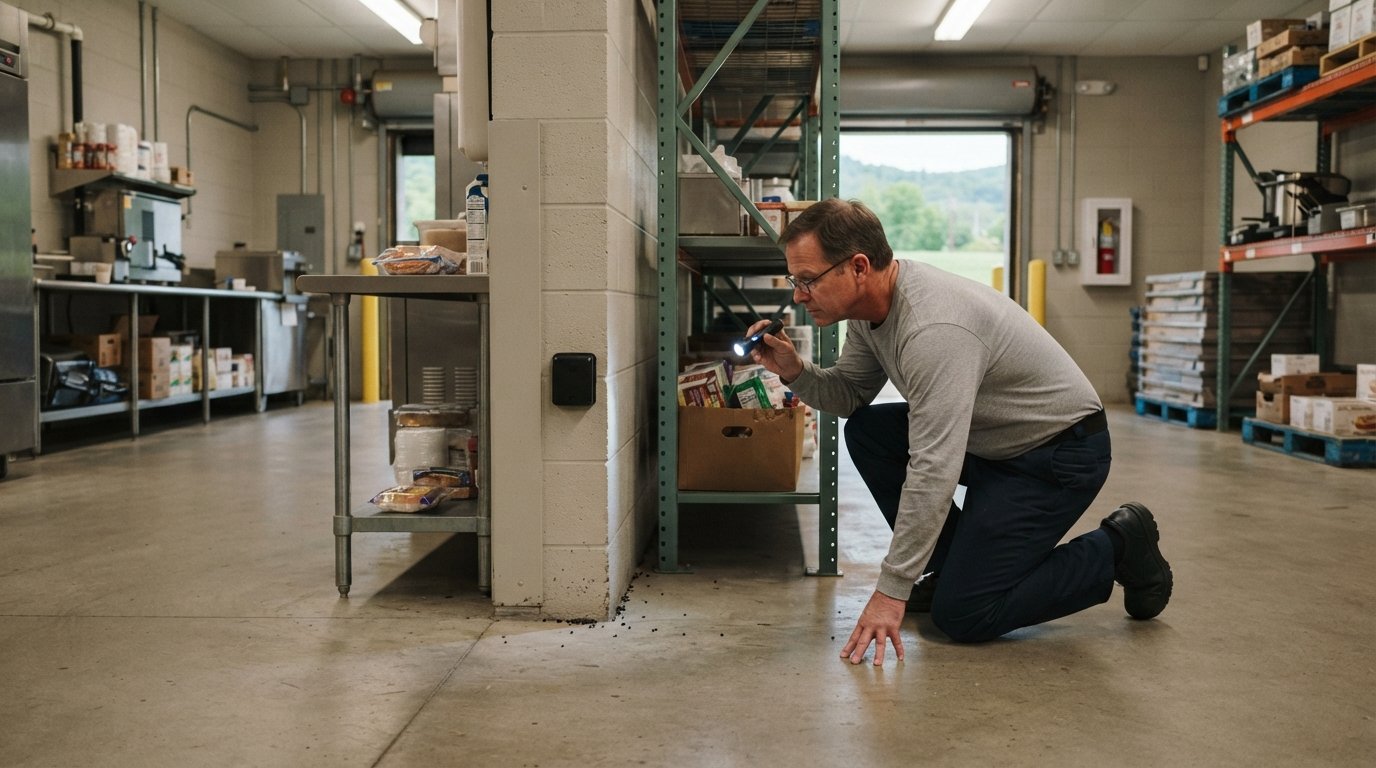
    • Signs of Infestation: Keep an eye out for small, dark droppings; gnaw marks on food packaging or electrical wires; and distinct scratching noises in walls or ceilings.

    • The Threat: Rodents transmit diseases and can cause fires or equipment failure by chewing through critical wiring.

    Cockroaches

    Notoriously resilient, cockroaches thrive in environments with moisture and food debris. Their presence is a serious sanitation concern that demands immediate, professional action to prevent a widespread infestation.

    • Key Hiding Spots: Check dark, damp areas such as drains, sinks, bathrooms, and behind or under break room appliances like microwaves, coffee makers, and refrigerators.

    • Signs of Infestation: A strong, unpleasant oily odor; droppings that resemble black pepper or coffee grounds; and seeing them scurry away when lights are turned on.

    • The Threat: They spread bacteria like Salmonella and E. coli, while their shed skins and droppings can trigger severe allergies and asthma.

    Ants and Flies

    These common invaders are masters at finding the smallest spills and crumbs. A few ants or flies can quickly become a major infestation, creating a disruptive and unsanitary work environment.

    • Common Areas: They are drawn to kitchens, trash receptacles, sink drains, and any employee desks where food is consumed or left out.

    • Signs of Infestation: The most obvious signs are visible trails of ants marching toward a food source or a persistent swarm of flies around waste bins and food prep surfaces.

    • The Threat: Both pests contaminate surfaces and food, damaging your company’s reputation and impacting employee focus and morale.

    The Professional Approach: What to Expect from a Commercial Service

    Effective pest control in a commercial setting goes far beyond simply spraying for bugs. A professional service understands that your business needs a strategic, multi-faceted approach that protects your employees, clients, and reputation. Unlike residential treatments, a plan for an office must account for high foot traffic, sensitive equipment, and strict health regulations. This is why our process is built on a modern, sustainable methodology that delivers long-term results. We focus on safeguarding your workspace by following established Integrated Pest Management (IPM) Principles, which prioritize prevention and targeted solutions over broad chemical applications.

    Here’s a breakdown of our proven, professional process for comprehensive office pest management:

    Step 1: Discreet and Thorough Inspection

    Our work begins with a comprehensive assessment conducted by a certified technician. We schedule our inspections to minimize any disruption to your daily operations, often working before or after business hours. During this phase, we identify not just the pests themselves, but also the root causes: entry points, food and water sources, and harborage areas. You receive a detailed report outlining our findings and a clear, customized action plan.

    Step 2: A Customized, Targeted Treatment Plan

    There is no one-size-fits-all solution in professional pest control. Based on our inspection, we design a customized treatment plan that directly addresses your building’s specific vulnerabilities and pest pressures. We utilize low-impact, professional-grade products that are safe for your work environment. Our primary focus is on eradication and exclusion-sealing entry points and removing attractants-to create a lasting barrier against future infestations.

    Step 3: Ongoing Monitoring and Prevention

    Eliminating pests is a process, not a single event. Our service includes regularly scheduled visits to monitor for any new activity, maintain protective barriers, and adjust your plan as needed. This proactive approach ensures your office remains a safe, pest-free environment year-round, giving you and your team complete peace of mind. Ready to secure your workspace? Schedule your free office inspection today.

    Developing an Integrated Pest Management (IPM) Program for Your Office

    Reactive spraying is an outdated, inefficient approach to pest control. A modern, professional strategy focuses on long-term prevention. An Integrated Pest Management (IPM) program is a comprehensive and sustainable system designed to safeguard your workplace. It combines proactive measures like sanitation and exclusion with targeted, low-risk treatments when necessary. This smarter approach to office pest management not only eliminates current issues but also prevents future infestations, creating a healthier environment for your employees and clients. A key component of a successful IPM plan is employee involvement; when your team understands their role, your defenses become significantly stronger.

    Sanitation and Exclusion: The First Line of Defense

    The most powerful pest control tools are often the simplest. By denying pests access to food, water, and shelter, you create an environment where they cannot thrive. This is the core of an IPM strategy.

    • Daily Cleanliness: Enforce clean desk policies to remove food crumbs and clutter. Pay special attention to break rooms and kitchens, ensuring spills are cleaned immediately and food is stored in airtight containers.

    • Proper Waste Management: Utilize trash receptacles with secure, tight-fitting lids. Schedule frequent trash removal, especially in areas where food waste is generated.

    • Structural Seal-Up: A professional will help you identify and seal cracks in the foundation, gaps around pipes, and damaged window screens to physically block pests from entering.

    Facility Maintenance and Landscaping

    Your building’s physical condition and its immediate surroundings directly impact your vulnerability to pests. Diligent maintenance is a non-negotiable part of effective prevention.

    • Eliminate Moisture: Promptly repair leaky pipes, faucets, and clogged drains. Pests are drawn to moisture, and eliminating these sources is critical for control.

    • Manage Landscaping: Keep tree branches and shrubbery trimmed back from the building. This removes "pest highways" and improves airflow, reducing damp conditions near the foundation.

    • Secure Entryways: Check that all exterior doors have proper door sweeps and that windows seal tightly to prevent pests from simply walking or crawling inside.

    The Role of Your Pest Control Professional

    While your team’s efforts are vital, partnering with a certified pest control expert ties everything together. A professional provides the expert guidance needed to develop and execute a customized IPM plan tailored to your specific property. They use their knowledge to implement targeted, precise treatments only where necessary, minimizing the use of materials and focusing on maximum impact. They also provide essential documentation for health and safety compliance. A reliable professional partner transforms your checklist into a proven, ongoing system for dependable office pest management.

    How to Choose the Right Pest Management Partner for Your Business

    Selecting a pest control provider for your facility isn’t just about eliminating a current problem; it’s about safeguarding your employees, clients, and brand reputation. Not all companies are equipped for the unique challenges of a commercial setting. A proactive approach to office pest management requires a partner who understands the complexities of high-traffic areas, sensitive equipment, and regulatory compliance. Use this checklist to vet potential vendors and find a reliable partner.

    Licensing, Insurance, and Experience

    Your first step is to verify credentials. A professional partner must be fully licensed and insured for commercial work to protect your business from liability. Ask about their direct experience with businesses similar to yours and their specific protocols for office pest management. Inquire about their technicians’ certifications and commitment to ongoing training to ensure they use the most current, effective, and safe methods available.

    Communication and Reporting

    A successful partnership is built on clear communication. Vague promises aren’t enough; you need tangible proof of service and a transparent process. Before signing a contract, ask these critical questions:

    • Do you provide detailed digital reports after every visit?

    • Will we have a dedicated account manager or a direct point of contact?

    • What is your typical response time for non-emergency and emergency calls?

    A partner who values clear reporting and accessibility is one you can trust.

    Guarantees and Local Expertise

    A confident provider will always stand behind their work. Ask them directly: "What is your service guarantee?" The answer should be simple and powerful, like our promise: If pests return, so do we. Furthermore, a local company possesses invaluable regional knowledge. They understand the specific pest pressures in Erie and Ashtabula counties-from spiders that thrive near the lake to rodents seeking shelter in commercial zones during the winter. This local expertise translates to faster, more effective solutions for your business.

    Don’t leave your property’s health to chance. Choose a partner with proven local expertise and an unwavering commitment to results. Get a no-obligation quote from your local experts at Mosquito Assassin Pest Control LLC.

    Safeguard Your Reputation with Expert Pest Management

    Protecting your workplace from pests is more than a simple cleaning task-it’s an essential investment in your company’s reputation, employee morale, and public health. This guide has shown that a proactive strategy, built on a comprehensive Integrated Pest Management (IPM) program, is the most effective defense. Executing this strategy requires professional expertise, as successful office pest management is a continuous process, not a one-time fix. Choosing the right partner is the most critical step in safeguarding your commercial space from unwanted intruders.

    For businesses in PA & OH, Mosquito Assassin is the definitive solution. As your locally owned and operated partner, we bring unparalleled expertise to every job. Our licensed, insured, and certified technicians don’t just treat problems-they create customized, year-round protection plans to prevent them from ever happening. Your peace of mind is our priority. Don’t wait for an infestation to damage your business. Protect your business. Schedule a free commercial pest inspection now.

    Frequently Asked Questions About Office Pest Management

    How much does office pest management cost?

    The cost of professional office pest control is customized to your facility’s specific needs. We determine pricing based on several factors, including the size of your building, the type of pest, the severity of the infestation, and the required frequency of service. To provide an accurate and transparent price, we begin with a comprehensive inspection and then deliver a detailed, no-obligation quote tailored to your business, ensuring you only pay for the protection you need.

    Are the treatments you use safe for my employees and clients?

    Absolutely. The safety of your staff and visitors is our highest priority. We utilize EPA-approved, low-impact treatments and adhere to the strictest industry safety standards. Our certified technicians are experts in Integrated Pest Management (IPM), a proven approach that minimizes material use while maximizing effectiveness. We are committed to safeguarding your workplace, ensuring it remains a healthy and productive environment for everyone long after our service is complete.

    How discreet is your service? We don’t want to alarm anyone.

    We understand that maintaining a professional image is crucial. Our technicians operate with the utmost discretion to avoid disrupting your business operations or causing concern. We arrive in unmarked vehicles and can schedule services during non-peak or after-hours, including evenings and weekends. Our goal is to perform our work efficiently and invisibly, protecting your reputation while we eliminate pests from your property.

    Do we need to close the office for treatment?

    In the vast majority of cases, closing your office is not necessary. Our targeted treatments and modern application methods are designed for minimal disruption to your daily operations. We can focus on specific problem areas without affecting your employees’ workflow. For more comprehensive services, we will coordinate with you to schedule a time outside of business hours that ensures zero downtime for your company.

    What’s the difference between a one-time service and a year-round plan for a business?

    A one-time service is a reactive solution designed to eliminate a current, active pest problem. In contrast, a year-round commercial plan is a proactive strategy focused on prevention. Our ongoing office pest management program establishes a protective barrier around your property, with regular monitoring and preventative treatments to stop infestations before they can start. This provides continuous, reliable protection for your facility, employees, and reputation.

    How can our employees help prevent pests in the office?

    Employee participation is a powerful tool in preventing pests. Encourage your team to maintain clean desks and breakroom areas by promptly wiping up spills and crumbs. Storing food in airtight containers and ensuring trash is disposed of in lined bins are also critical steps. Ask staff to immediately report any signs of pest activity, such as droppings or gnaw marks, so we can take swift, decisive action during our next scheduled visit.