
Tag: Historic Homes

  • Pest Control for Historic Homes: A Preservation-First Guide

    Pest Control for Historic Homes: A Preservation-First Guide

    A historic home is more than just a residence; it’s a living piece of Pennsylvania and Ohio history that requires a specialized approach to maintenance. While modern builds offer tight seals and synthetic materials, the old-growth timber and rubble-stone foundations found in Erie, Crawford, and Ashtabula counties are particularly vulnerable to silent invaders. Effective pest control for historic homes must balance the urgent need for structural protection with a deep respect for original materials. Many homeowners worry that traditional treatments might stain hand-carved woodwork or introduce harsh chemicals into porous surfaces that have stood for over a century.

    It’s understandable to feel protective of a property’s architectural integrity when faced with the threat of wood-boring beetles or termites. This guide provides a clear path forward for maintaining a pest-free environment without compromising the features that make a vintage property unique. Readers will learn about the specific regional risks facing the tri-county area, the importance of structural exclusion, and how to implement a long-term preservation plan that keeps the history of the home intact for future generations.

    Disclaimer: The information provided on this blog is for general informational purposes only and is not intended as professional pest control advice. Conditions vary by property, environment, and location. Reading this content does not create a service agreement. For an inspection or professional recommendations, please contact Mosquito Assassin Pest Control LLC directly.
    Key Takeaways

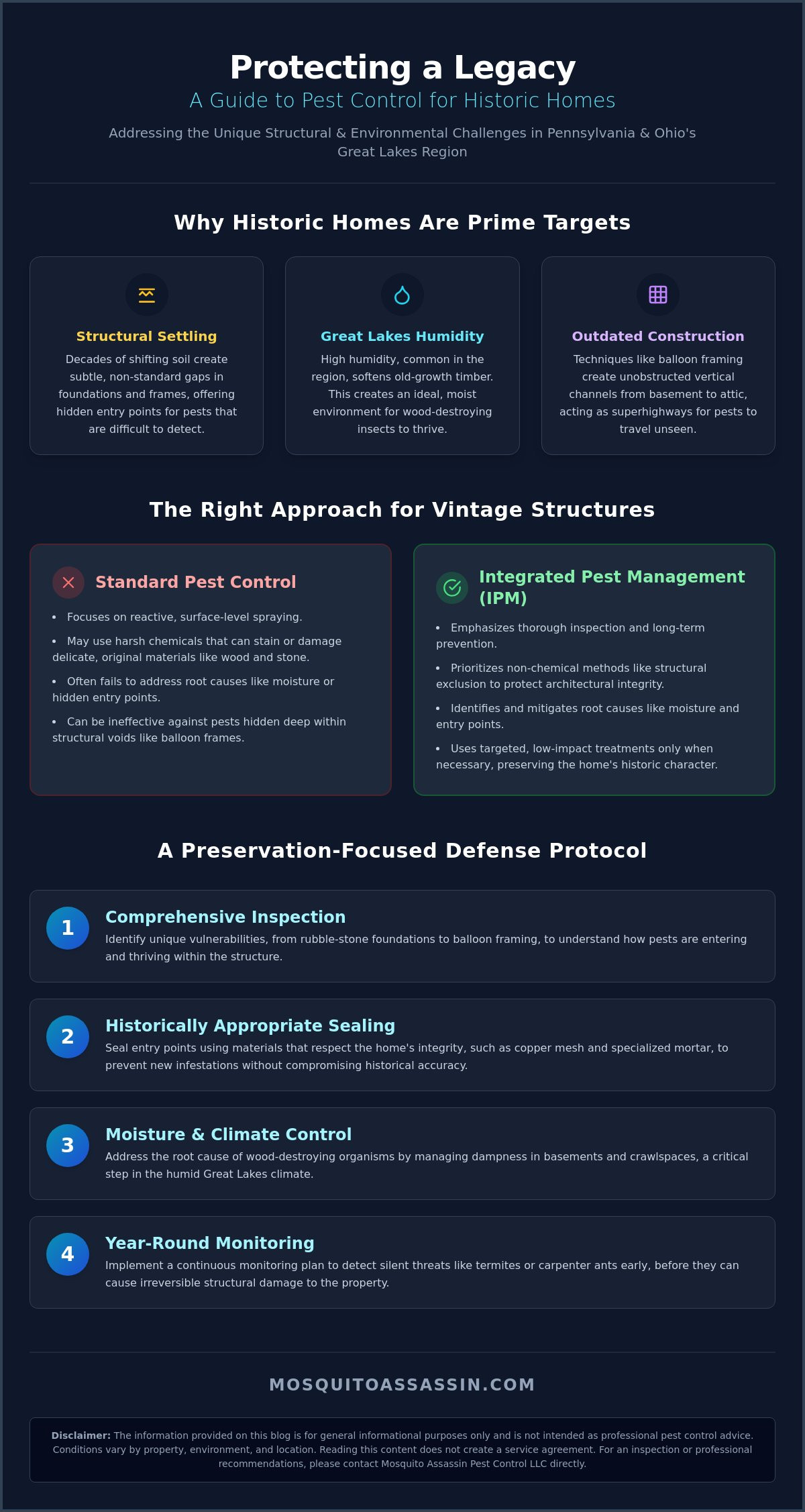
    • Identify how structural settling and the local climate in Pennsylvania and Ohio create unique entry points for wood-destroying organisms.
    • Learn why Integrated Pest Management is the preferred standard for pest control for historic homes to protect original finishes and delicate surfaces.
    • Discover how to seal your property using historically appropriate materials, such as copper mesh and mortar, to maintain architectural accuracy.
    • Understand why year-round monitoring is necessary to detect silent threats like termites or carpenter ants before they cause irreversible structural damage.
    • Gain a long-term prevention plan tailored to the specific construction methods and vulnerabilities of older homes in the Great Lakes region.

    Why Historic Homes in Pennsylvania and Ohio Face Unique Pest Challenges

    Historic structures in the Great Lakes region face a perfect storm of environmental and structural risks. Unlike modern suburban developments, these properties have spent decades or even centuries reacting to the shifting soil and extreme temperature swings of Northwest Pennsylvania and Northeast Ohio. This long history results in settling, where the foundation and frame shift just enough to create non-standard entry points. These gaps are often hidden behind original siding or within rubble-stone foundations, making traditional exclusion work a complex task. Effective Integrated Pest Management for cultural property requires understanding that these buildings are dynamic, breathing structures that require more than a generic treatment plan.

    To better understand how pests find their way into a structure, watch this helpful video:

    The Great Lakes Humidity Factor

    The humid continental climate prevalent in Erie, Crawford, and Ashtabula counties plays a direct role in pest attraction. High humidity levels, often exacerbated by lake-effect weather, can soften even the densest old-growth timber. When wood moisture content rises, it becomes an ideal environment for wood-boring beetles and carpenter ants. Damp basements and crawlspaces, common in 19th-century architecture, act as incubators for these colonies. Because the wood in these homes is often structural rather than decorative, moisture management is a vital part of pest control for historic homes. Protecting these assets requires a strategy that addresses the damp conditions specific to our service area.

    Structural Voids and Balloon Framing

    Many homes built before the mid-20th century utilize balloon framing, a technique where wall studs run continuously from the foundation sill to the roofplate. While this method allowed for rapid construction, it created unobstructed vertical channels inside the walls. A rodent or insect colony starting in a damp basement can reach the attic instantly without ever entering a living space. This is why standard baseboard spraying is typically ineffective in these structural types. The activity occurs deep within structural voids, requiring a professional who understands how to target the internal skeleton of the building. Identifying these hidden cavities is the only way to ensure a colony is fully managed rather than just displaced.

    Disclaimer: The information provided on this blog is for general informational purposes only and is not intended as professional pest control advice. Conditions vary by property, environment, and location. Reading this content does not create a service agreement. For an inspection or professional recommendations, please contact Mosquito Assassin Pest Control LLC directly.
    The Historic Lineup: Identifying Pests That Target Older Structures

    In the Great Lakes region, the changing seasons dictate pest behavior with predictable precision. Spring typically brings the emergence of swarming termites and ants, while the first frost drives rodents into the warmth of aging foundations. For homeowners in Erie, Crawford, and Ashtabula counties, identifying these threats early is vital to preservation. Unlike modern construction, where materials are often uniform, historic homes contain a variety of wood species and ages that attract a diverse range of wood-destroying organisms (WDO). Understanding these biological cycles is a core component of effective pest control for historic homes.

    Carpenter ants represent one of the most persistent threats to properties in Northwest Pennsylvania and Northeast Ohio. These insects don’t eat wood for nutrition; instead, they excavate it to create nesting galleries. They are particularly drawn to wood that has been softened by moisture, which is common around the drafty windows and aging rooflines of older structures. If left unchecked, a single colony can compromise the structural integrity of hand-hewn floor joists or wall studs. Because these pests often operate deep within the frame, a professional termite and WDO inspection is often the only way to confirm their presence before the damage becomes visible.

    Managing these risks requires a disciplined approach to monitoring and identification. Many property owners find value in following established protocols, such as the English Heritage pest management guidelines, which emphasize the importance of regular inspections and environment-specific strategies. This methodology ensures that the home remains protected without resorting to invasive measures that could harm the property’s character.

    Wood-Boring Beetles and Powder Post Damage

    Powder post beetles are often described as a silent threat because their activity is rarely seen until the damage is extensive. Powder post beetles are larvae that can spend years inside wood before emerging as adults, leaving behind tiny exit holes. The most common sign of an active infestation is “frass,” a fine, flour-like sawdust found beneath these holes. In historic timber, it’s important to distinguish between old, inactive damage and a current problem. Fresh frass is typically light in color, while old dust appears dark and compacted. Hand-hewn beams in basements and attics should be checked annually for these signs.

    Carpenter Bees and Exterior Trim

    Historic siding, especially when it’s weathered or unpainted, is a primary target for carpenter bees. These large, solitary bees bore perfectly round, half-inch holes into fascia boards, eaves, and porch ceilings. While a single hole might seem minor, repetitive boring over several seasons can lead to significant structural decay and attract secondary pests like woodpeckers. Because these bees often target high-flying areas of the home, professional monitoring is necessary to reach and treat these vulnerable exterior points effectively.

    Disclaimer: The information provided on this blog is for general informational purposes only and is not intended as professional pest control advice. Conditions vary by property, environment, and location. Reading this content does not create a service agreement. For an inspection or professional recommendations, please contact Mosquito Assassin Pest Control LLC directly.

    Integrated Pest Management (IPM) vs. Standard Pest Control

    Standard pest control often relies on a “spray and pray” methodology, applying broad-spectrum chemicals along baseboards and perimeters. In the context of older architecture, this approach is frequently insufficient. The drafty windows and settling foundations of 19th-century homes allow air to circulate freely, often diluting chemical barriers before they can be effective. Integrated Pest Management (IPM) offers a more sophisticated alternative by focusing on the biology of the pest and the specific vulnerabilities of the structure. This systematic process prioritizes long-term prevention over temporary chemical fixes, making it the superior choice for pest control for historic homes.

    The Preservation-First Approach

    Historic properties require a delicate touch because aging materials react differently to modern treatments. Certain pesticides can cause permanent staining on original wood finishes or trigger chemical degradation in historic lime mortar. A preservation-first strategy utilizes non-invasive monitoring stations to track pest activity without saturating historic surfaces in chemicals. This data-driven method allows for targeted interventions only when and where they are needed. Adopting a comprehensive general pest control strategy ensures that the home’s history remains protected while its structural integrity is defended against wood-destroying organisms. Professional monitoring also provides a written record of the home’s health, which is invaluable for property owners who view themselves as stewards of local history.

    Moisture Control as Pest Prevention

    In the Great Lakes region, moisture is the primary driver of pest infestations. A single leaky gutter or a misdirected downspout can saturate a sill plate, making it an irresistible target for subterranean termites. These pests require high moisture levels to survive; maintaining wood moisture content below 20 percent is often the most effective defense. In the stone foundations common across Erie and Crawford counties, installing a dehumidifier can drastically reduce populations of silverfish and house centipedes that thrive in damp environments. When evaluating pest control for historic homes, addressing the foundation is often the most important first step.

    Physical exclusion is another pillar of the IPM philosophy. Sealing foundation gaps with breathable, historically appropriate materials is often more effective than relying on chemical barriers alone. This is particularly true in drafty homes where air exchange rates are high. By addressing the root causes of an infestation, such as moisture and entry points, rather than just the symptoms, homeowners create a sustainable environment that is naturally hostile to pests. Professional pest control may help reduce risk by identifying these environmental triggers during regular quarterly audits.

    Disclaimer: The information provided on this blog is for general informational purposes only and is not intended as professional pest control advice. Conditions vary by property, environment, and location. Reading this content does not create a service agreement. For an inspection or professional recommendations, please contact Mosquito Assassin Pest Control LLC directly.

    Pest Control for Historic Homes: A Preservation-First Guide

    A 5-Step Structural Defense Protocol for Historic Property Owners

    Maintaining a vintage property in Erie or Ashtabula requires a disciplined defense strategy. A structured protocol ensures that no vulnerability is overlooked as the seasons shift from humid summers to freezing winters. Implementing effective pest control for historic homes is a multi-stage process that moves from the exterior perimeter to the internal skeleton. This approach prioritizes the physical integrity of the building while minimizing the need for reactive chemical applications.

    • Step 1: Perform a Comprehensive Perimeter Audit. Inspect the entire structure from the foundation sill to the roofline. Look for gaps in siding, cracks in masonry, and openings near utility penetrations.
    • Step 2: Seal Entry Points with Historically Appropriate Materials. Use copper mesh, which does not rust or stain wood, to block voids. For masonry, use breathable lime-based mortars rather than hard modern cements that can trap moisture and crack original brick.
    • Step 3: Manage the Micro-Climate Around the Foundation. Ensure that the soil grades away from the house. Excess moisture near the foundation is the primary attractant for termites and carpenter ants.
    • Step 4: Implement a Professional Monitoring System. Use non-invasive bait stations or internal monitors to detect activity before structural damage occurs. This provides early warning without the need for broad chemical barriers.
    • Step 5: Establish a Recurring Maintenance Schedule. Historic homes are dynamic. A quarterly schedule allows for the adjustment of defense tactics to match seasonal pest behaviors, such as winter rodent intrusion or spring insect swarming.

    Exclusion for Historic Foundations

    Fieldstone and early brick foundations often feature irregular gaps that provide easy access for mice and rats. Because rodents can squeeze through openings as small as a dime, rodent removal must begin with a thorough sealing of the foundation. It is vital to use flexible, breathable materials for these repairs. Old houses are designed to move and breathe; using rigid fillers can lead to structural stress and further cracking. Professional pest control may help reduce risk by identifying these subtle entry points during a structural audit.

    Landscaping and Drainage

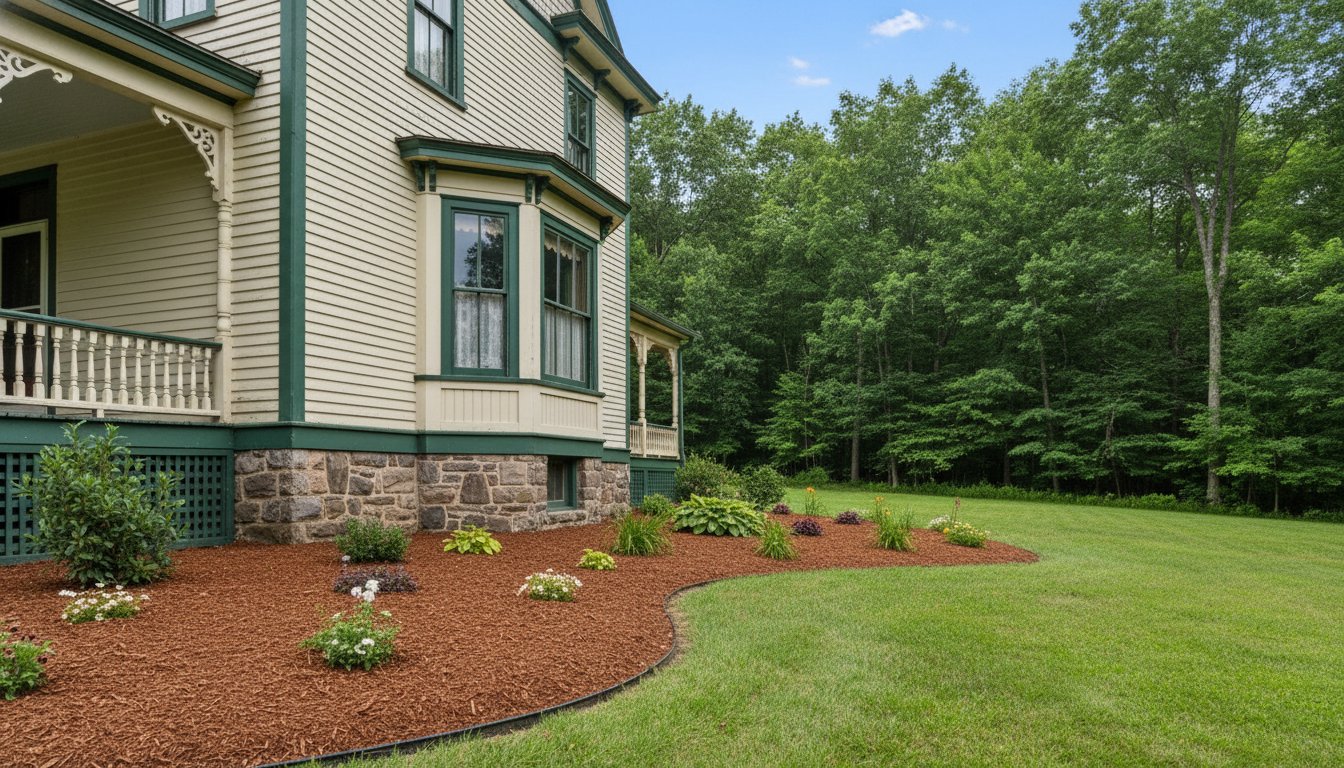
    The environment immediately surrounding the home dictates the level of pest pressure. Keeping mulch at least 12 inches away from historic siding prevents moisture from wicking into the wood and creating a bridge for subterranean termites. While climbing ivy and vines are often seen as charming features of older homes, they function as pest highways for ants and spiders. These plants also trap moisture against the facade, accelerating wood decay. Ensure that downspout extensions carry water at least three to five feet away from the foundation to prevent the damp basement conditions that attract centipedes and silverfish. For property owners seeking to protect their investment, professional termite inspections and treatment are essential components of a long-term preservation plan.

    Disclaimer: The information provided on this blog is for general informational purposes only and is not intended as professional pest control advice. Conditions vary by property, environment, and location. Reading this content does not create a service agreement. For an inspection or professional recommendations, please contact Mosquito Assassin Pest Control LLC directly.

    Professional Monitoring and Year-Round Protection for Historic Assets

    Historic properties require a commitment to proactive stewardship rather than reactive crisis management. A “one and done” treatment approach often fails to account for the complex architecture and shifting seasonal biology found in older structures. Because these homes feature numerous entry points that expand and contract with the weather, a single application cannot provide a permanent shield. Establishing a recurring inspection schedule is the most effective way to manage pest control for historic homes. Bi-monthly or quarterly visits allow a professional to catch wood-boring activity or moisture issues in their early stages before they compromise original structural timbers.

    Professional documentation is a significant benefit of a long-term protection plan. Detailed records of every inspection and treatment create a “health history” for the property, which is invaluable for maintaining its market value. When it comes time to pass the home to a new owner, having a documented history of professional oversight proves that the structural integrity has been a priority. This transitions the homeowner’s role from simply living in a house to serving as a diligent protector of local history. Professional pest control may help reduce risk by providing this consistent, expert oversight.

    The Value of Ongoing Protection

    Seasonal shifts in Northwest Pennsylvania and Northeast Ohio bring distinct pest pressures that require different tactical responses. The humid summers near Lake Erie can lead to increased activity in crawlspaces, while the harsh winters drive rodents toward the warmth of aging foundations. Comprehensive mosquito control programs can also protect outdoor historic spaces, such as original wrap-around porches and gardens, making these areas more functional for the family. Maintaining a year-round presence ensures that as one pest threat fades, the home is already prepared for the next wave of seasonal invaders.

    Choosing a Local Specialist

    Protecting a 19th-century home requires more than just general knowledge; it requires an understanding of regional construction methods and the specific pests that target them. It is essential to work with professionals who live and work in the same community, as they are familiar with the unique environmental factors of the Great Lakes region. You can find our service locations across Erie, Crawford, and Ashtabula counties, where we focus on preservation-first strategies. Because every historic property has a unique set of vulnerabilities, professional recommendations are best sought through a direct, on-site inspection of the structure.

    Disclaimer: The information provided on this blog is for general informational purposes only and is not intended as professional pest control advice. Conditions vary by property, environment, and location. Reading this content does not create a service agreement. For an inspection or professional recommendations, please contact Mosquito Assassin Pest Control LLC directly.

    Preserving Your Historic Legacy Through Proactive Care

    Protecting a century-old property requires more than just reactive treatments; it demands a philosophy of diligent stewardship. By prioritizing moisture management and utilizing historically appropriate exclusion materials like copper mesh, homeowners can defend against wood-destroying organisms without damaging original surfaces. A successful plan for pest control for historic homes relies on identifying regional threats early and maintaining a systematic monitoring schedule that adjusts to the changing seasons of the Great Lakes. This proactive approach ensures that the unique character and structural integrity of properties in Erie, Crawford, and Ashtabula counties remain intact for the next generation.

    Professional pest control may help reduce risk by providing specialized knowledge of regional wood-boring pests and tailored year-round protection plans. For an inspection or professional recommendations, please contact Mosquito Assassin Pest Control LLC directly. Your home has stood the test of time, and with a careful preservation-first strategy, it will continue to be a pillar of the community for years to come.

    Disclaimer: The information provided on this blog is for general informational purposes only and is not intended as professional pest control advice. Conditions vary by property, environment, and location. Reading this content does not create a service agreement. For an inspection or professional recommendations, please contact Mosquito Assassin Pest Control LLC directly.

    Frequently Asked Questions

    Do historic homes have more pests than modern homes?

    Historic homes often experience higher pest pressure because they have had more time to settle, creating gaps in foundations and siding. These properties were built with breathable materials that naturally develop small voids over decades. Unlike modern, air-tight construction, the complex architecture of older homes provides numerous hidden pathways for insects and rodents to navigate through the internal skeleton of the building.

    Will pest control chemicals damage my historic wood or paint?

    Certain modern pesticides can react with historic lime mortar or original oil-based finishes, causing staining or chemical degradation. Professional pest control for historic homes utilizes an Integrated Pest Management approach to select low-impact solutions that are compatible with aging surfaces. This methodology prioritizes non-invasive monitoring and targeted applications rather than broad, saturated spraying that could harm delicate materials.

    How can I tell the difference between old termite damage and an active infestation?

    Active termite activity is typically indicated by the presence of mud tubes that feel moist when broken or the discovery of live insects. Old damage usually appears dark, brittle, and weathered, while fresh activity reveals light-colored wood and moist debris. Professional inspections are the most reliable way to confirm if a colony is currently feeding on the structure or if the damage is historical.

    What is the most common pest in old houses in Pennsylvania?

    Carpenter ants are the most frequent structural pest found in older Pennsylvania residences, particularly in Erie and Crawford counties. These insects are attracted to the moisture-softened wood often found in historic rooflines and windowsills. During the winter months, house mice also become a primary concern as they seek warmth within aging foundations, often entering through gaps larger than a dime.

    Can I do my own pest control on a historic property?

    Attempting DIY treatments on a historic property can be risky because many over-the-counter products are not designed for sensitive, old-growth timber. Improper application can trap moisture inside wall voids or damage delicate finishes. Professional pest control may help reduce risk by using specialized tools and materials that respect the home’s architectural integrity while effectively managing the infestation.

    How often should a historic home be inspected for termites and beetles?

    A comprehensive inspection for wood-destroying organisms should be performed at least once a year. For homes with a known history of activity, bi-annual or quarterly checks are often recommended to catch new infestations before they cause structural harm. Regular monitoring is a vital component of pest control for historic homes to prevent silent damage from progressing unnoticed behind original walls.

    Is it possible to pest-proof an old house with a fieldstone foundation?

    It is possible to effectively proof a fieldstone foundation by using historically appropriate, breathable exclusion materials. Sealing gaps with copper mesh and lime-based mortar prevents rodents from entering while allowing the foundation to shift naturally with the soil. This method avoids the structural stress and cracking often associated with rigid modern foams and hard Portland cements.

    What are the signs of powder post beetles in old floor joists?

    The primary signs of powder post beetles are tiny, pinhead-sized exit holes in the wood surface accompanied by fine, flour-like sawdust called frass. If the frass is white and sits in small piles beneath the holes, the infestation is likely active and requires attention. Old, inactive holes will often be filled with dark, compacted dust and won’t show new piles of sawdust.

    Disclaimer: The information provided on this blog is for general informational purposes only and is not intended as professional pest control advice. Conditions vary by property, environment, and location. Reading this content does not create a service agreement. For an inspection or professional recommendations, please contact Mosquito Assassin Pest Control LLC directly.

  • Pest Control in Titusville, PA: A Comprehensive Local Guide

    Pest Control in Titusville, PA: A Comprehensive Local Guide

    Your historic Titusville home is more than just a piece of Pennsylvania heritage; to local rodents and termites, it’s a primary target for structural destruction. Securing professional pest control in Titusville PA is a common necessity for residents in Crawford County, where the combination of older architecture and lush, wooded surroundings creates an ideal environment for infestations to thrive. Whether you’re worried about the health risks of deer ticks or the persistent nuisance of carpenter ants, the threat to your property and peace of mind is significant.

    Maintaining a secure residence requires a strategy tailored to our specific climate and geography. This guide provides the essential knowledge needed for year round protection, helping you understand how local pest cycles influence behavior throughout the seasons. You’ll learn how to identify early signs of activity from common invaders like German cockroaches and subterranean termites, as well as the most practical strategies for long-term prevention. The following sections examine the professional standards used to achieve a truly pest-free home, giving you the confidence to protect your household from the stressors of recurring infestations.

    Disclaimer: The information provided on this blog is for general informational purposes only and is not intended as professional pest control advice. Conditions vary by property, environment, and location. Reading this content does not create a service agreement. For an inspection or professional recommendations, please contact Mosquito Assassin Pest Control LLC directly.

    Key Takeaways

    • Understand how Titusville’s proximity to Oil Creek State Park and its historic wood-frame architecture create high pressure for wood-destroying insects and seasonal pests.
    • Identify the critical shift in seasonal activity, from the emergence of stinging insects in spring to peak mosquito and tick pressure during the humid summer months.
    • Compare the limitations of one-time treatments against the effectiveness of ongoing pest control in Titusville PA, which targets the biological cycles of pests to prevent re-entry.
    • Learn proactive sanitation and landscape management techniques that reduce harborage zones and make your property less attractive to local invaders.
    • Discover how Integrated Pest Management (IPM) focuses on long-term results through professional monitoring and strategic intervention rather than just temporary fixes.

    Understanding Titusville’s Unique Pest Landscape

    Effective pest management starts with a clear understanding of pest pressure. This term refers to the various environmental factors, such as habitat availability and climate conditions, that drive insects and animals into human dwellings. In our region, these pressures are uniquely intense. Securing effective pest control in Titusville PA requires more than a one size fits all approach; it demands a strategy that accounts for the specific biological drivers found in Crawford County. From the dense woods of Oil Creek State Park to the transition of rural farmland into residential plots, the local environment is constantly pushing pests toward your doorstep.

    Rodent migration patterns in this area are particularly influenced by land use. When rural fields are disturbed or as temperatures drop in late autumn, mice and rats seek the stability of residential structures. This shift is not a random occurrence. It is a calculated survival move by pests that have lost their natural foraging grounds. Understanding these local movements is the first step toward creating a defensive perimeter around your property.

    The Role of Crawford County Geography

    The geography of Northwest Pennsylvania plays a decisive role in local infestations. Local waterways, including Oil Creek and its various tributaries, provide the standing water and high humidity necessary for mosquito breeding. These areas serve as massive reservoirs for seasonal insects. Furthermore, the elevation changes across Crawford County create microclimates. Higher ridges often experience different pest cycles than the valley floors. Wooded areas near residential zones are known hot zones for deer ticks, which thrive in the leaf litter and tall grasses common to our landscape. Moisture levels in basements and crawlspaces often spike during the humid summer months, creating a secondary environment for silverfish and centipedes to flourish.

    Historical Architecture and Pest Vulnerability

    Titusville is home to significant historical architecture, much of it featuring traditional wood frame construction. While these homes are a point of local pride, they present specific challenges for exclusion. Older structures in the Oil Creek valley often have stone foundations or aging siding that has settled over decades. These small gaps and cracks are open invitations for carpenter ants, which are attracted to the softened wood found in older homes. Managing these vulnerabilities requires a methodical approach. Utilizing Integrated Pest Management (IPM) is the most effective way to address these issues. This scientific approach focuses on long term prevention by identifying and sealing entry points, reducing the reliance on reactive measures. It bridges the gap between preserving the historical integrity of a home and maintaining a modern, pest free environment.

    Disclaimer: The information provided on this blog is for general informational purposes only and is not intended as professional pest control advice. Conditions vary by property, environment, and location. Reading this content does not create a service agreement. For an inspection or professional recommendations, please contact Mosquito Assassin Pest Control LLC directly.

    Common Seasonal Pest Pressures in Northwest Pennsylvania

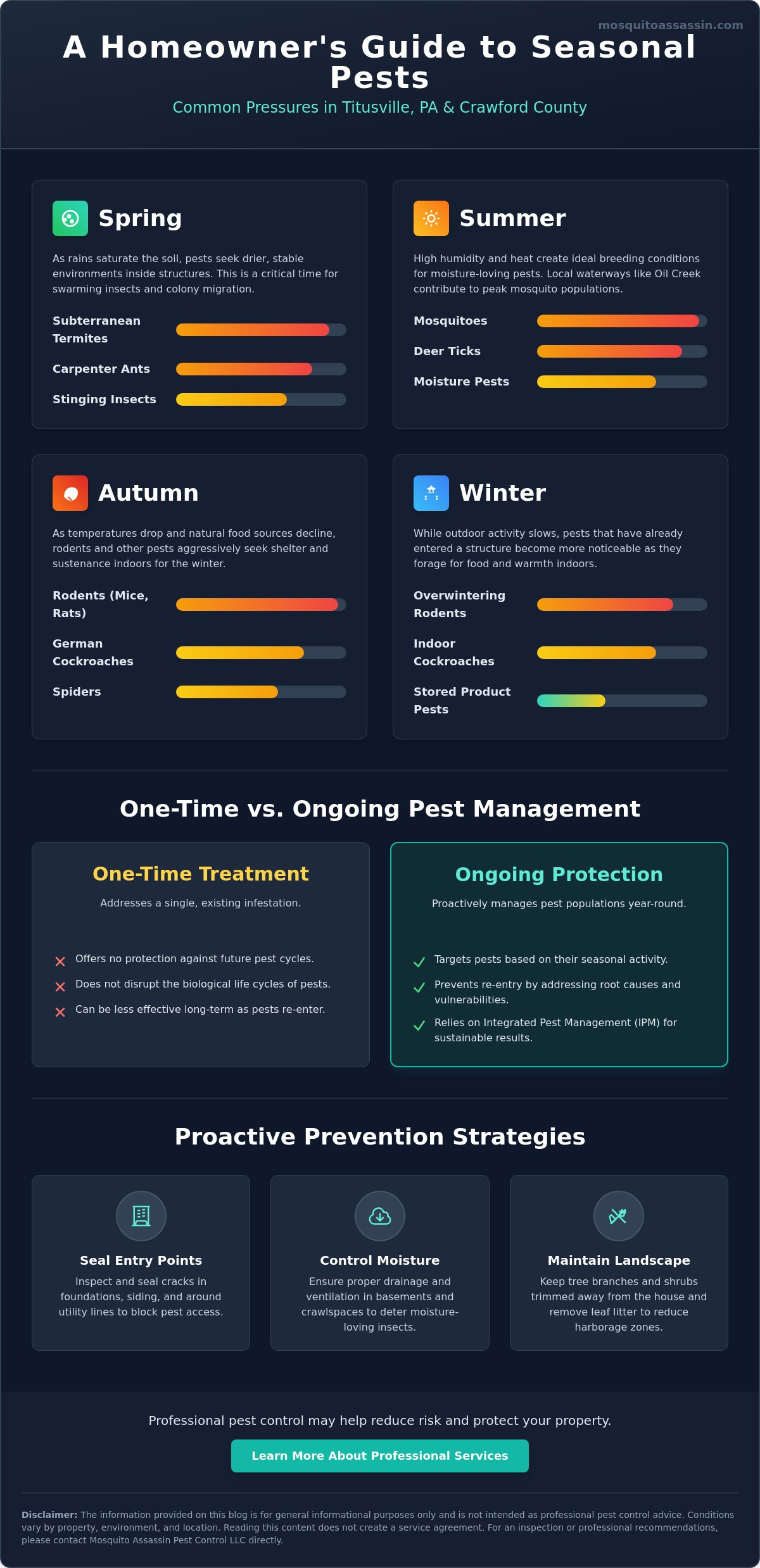
    Seasonal shifts in Crawford County dictate more than just the wardrobe of local residents; they signal a predictable change in biological threats to residential properties. Maintaining effective pest control in Titusville PA requires a proactive understanding of these cycles. Each season presents a unique set of pressures that can compromise the structural integrity and health of a household. By identifying these patterns early, property owners can implement defensive measures before an infestation becomes established.

    Spring and Summer Insect Activity

    Spring rains in Northwest Pennsylvania often saturate the soil, which triggers ant colonies to move toward the drier, stable environments found within home foundations. This is also the primary season for subterranean termite swarming. In May, homeowners frequently mistake termite swarmers for flying ants. Differentiating between the two is vital; termites have straight antennae and uniform wing lengths, while ants have elbowed antennae and varied wing sizes. As the weather warms, the focus shifts to mosquitoes and ticks. High humidity levels along the Oil Creek valley accelerate the lifecycle of local mosquito species, making them particularly aggressive during the summer months. Following guidelines from the Pennsylvania IPM Program can help residents manage these risks through environmental modifications and professional monitoring.

    The Autumn Rodent Migration

    When temperatures begin to drop in Crawford County, the “overwintering” rush begins. Spiders, stink bugs, and rodents seek the warmth of attics and basements. Mice can squeeze through openings as small as a dime, making fall the critical window for professional exclusion work. Rodents are not merely a nuisance; their nesting materials and droppings carry significant health risks and can damage electrical wiring. This transition from outdoor foraging to indoor nesting is a calculated survival move. Implementing comprehensive pest management plans during this period provides a barrier against these opportunistic invaders before they settle in for the winter.

    Winter does not mean pests disappear. While outdoor activity halts, internal infestations of bed bugs, cockroaches, or rodents can continue to thrive in sheltered, heated areas. Regular monitoring of crawlspaces and utility rooms remains a best practice for year round protection. Addressing these issues during the colder months prevents a massive population explosion when spring returns.

    Disclaimer: The information provided on this blog is for general informational purposes only and is not intended as professional pest control advice. Conditions vary by property, environment, and location. Reading this content does not create a service agreement. For an inspection or professional recommendations, please contact Mosquito Assassin Pest Control LLC directly.

    Pest Control in Titusville, PA: A Comprehensive Local Guide

    Comparing One-Time Treatments vs. Ongoing Protection

    Choosing between a single intervention and a recurring plan is a common dilemma for residents seeking pest control in Titusville PA. While both approaches have their place, the decision usually depends on whether the goal is a temporary fix or a permanent barrier. One-time treatments focus on the immediate knockdown of visible pests, providing a quick resolution to a surface-level problem. However, in a high-pressure environment like Crawford County, reactive measures often fail to address the underlying biological cycles that lead to re-infestation.

    When a One-Time Service is Appropriate

    A single visit is often sufficient for isolated, external issues. For example, removing a lone hornets nest or treating a specific area for a real estate clearance report are practical applications of one-time services. These situations involve pests that haven’t established a deep-rooted presence within the home’s structure. The reality, however, is that one-time sprays rarely reach the heart of a colony. For complex pests like carpenter ants or bed bugs, a single application may kill visible workers but leave the queen and larvae untouched, leading to a resurgence within weeks.

    The Advantages of Year-Round Management

    Ongoing protection plans are designed to stay ahead of the local pest cycles discussed in previous sections. By establishing a consistent perimeter, these plans break the breeding cycles of persistent invaders. According to research-based management techniques from the Penn State Extension, understanding the specific biology of local species is essential for effective control. Ongoing management provides peace of mind through regular professional monitoring, allowing for the early detection of issues before they become expensive disasters.

    Consistent pest management also safeguards long-term property value. In Titusville, where historic wood-frame homes are common, the cost of preventing a termite infestation is significantly lower than repairing structural damage to a foundation or joist. Utilizing professional pest control in Titusville PA as a year-round shield ensures that seasonal shifts don’t catch you off guard. A proactive approach transforms pest control from an emergency expense into a predictable part of home maintenance, ensuring the security and wellbeing of all household members. Residents often find that General Pest Control Plans offer the most reliable path to a secure, infestation-free environment.

    Disclaimer: The information provided on this blog is for general informational purposes only and is not intended as professional pest control advice. Conditions vary by property, environment, and location. Reading this content does not create a service agreement. For an inspection or professional recommendations, please contact Mosquito Assassin Pest Control LLC directly.

    Proactive Prevention Strategies for Titusville Homeowners

    While the environmental pressures in Northwest Pennsylvania are intense, property owners can take decisive action to harden their homes against invaders. Establishing a first line of defense doesn’t always require chemical intervention; it often starts with eliminating the resources that pests need to survive. By modifying the landscape and improving sanitation, you can significantly reduce the attractiveness of your property to opportunistic insects and rodents. These practical steps complement professional pest control in Titusville PA by making it harder for infestations to take root in the first place.

    Exterior Maintenance and Exclusion

    The area immediately surrounding your foundation is the most critical zone for prevention. Firewood piles, leaf litter, and construction debris serve as primary harborage sites for rodents and carpenter ants. To minimize risk, keep firewood and organic debris at least 20 feet away from the home and elevated off the ground. Managing the “bridges” that pests use is equally important. Trim tree branches and shrubs so they don’t touch the siding or roofline, as these provide a direct path for ants and squirrels to bypass ground-level defenses. Additionally, ensure that gutters are clear and downspouts direct water away from the foundation. Standing water in clogged gutters is a primary breeding ground for mosquito larvae, especially in the humid climate of the Oil Creek valley.

    Interior Sanitation and Storage

    Inside the home, the goal is to eliminate food sources and nesting sites. Foraging ants and rodents have a keen sense of smell and can detect unsealed food from a distance. Utilizing airtight glass or plastic containers for pantry items is a simple but effective deterrent. Beyond food, managing the environment in less-frequented areas like basements and attics is vital. Many pests found in Crawford County, such as silverfish and certain spider species, thrive in high-humidity environments. Using a dehumidifier to keep basement humidity levels below 50 percent can make these spaces inhospitable to moisture-loving insects. Finally, inspect utility penetrations where pipes or wires enter the home. Sealing these small gaps with silicone caulk or steel wool prevents rodents from gaining easy access to your interior walls.

    Moisture control is perhaps the most overlooked aspect of long-term prevention. Damp wood is a magnet for wood-destroying organisms, including subterranean termites and carpenter ants. Addressing leaky pipes and ensuring proper ventilation in crawlspaces reduces the likelihood of structural wood becoming a target. For residents dealing with persistent issues, professional pest control plans can provide the comprehensive monitoring needed to catch moisture-related threats early. Integrating these personal habits with expert oversight creates a robust shield for your property.

    Disclaimer: The information provided on this blog is for general informational purposes only and is not intended as professional pest control advice. Conditions vary by property, environment, and location. Reading this content does not create a service agreement. For an inspection or professional recommendations, please contact Mosquito Assassin Pest Control LLC directly.

    Professional Pest Management Solutions in Crawford County

    Homeowner prevention strategies provide a critical first line of defense, but the biological complexity of Northwest Pennsylvania often requires a higher level of specialized intervention. Licensed professionals possess the technical training to address the specific chemical and biological needs of our region. For those seeking reliable pest control in Titusville PA, the integration of professional expertise with personal maintenance creates a comprehensive barrier that seasonal invaders cannot easily penetrate. This scientific approach ensures that treatments are targeted, effective, and sustainable for the long term.

    Utilizing Integrated Pest Management (IPM) is the gold standard for modern property protection. This methodology focuses on long term results by combining thorough monitoring with strategic, low impact treatments. Instead of relying solely on broad spectrum applications, professionals analyze the environment to identify why a pest is present. By addressing the root cause, such as a specific entry point in a historic stone foundation or a moisture issue in a crawlspace, the reliance on reactive measures is minimized. This systematic discipline is what separates a temporary fix from a permanent resolution.

    What to Expect During a Professional Inspection

    It’s a detailed assessment of the property’s exterior, interior, and vulnerable areas like crawlspaces or attics. During an inspection, professionals look for specific indicators of activity that are often invisible to the untrained eye. This includes identifying particular species and their current population levels. Every home in Titusville has a unique footprint, and if a strategy doesn’t account for that, the results will suffer. A customized plan is developed based on the unique needs of the home, ensuring that the response is as unique as the infestation itself.

    Choosing a Local Service Provider

    Selecting a provider with deep roots in Northwest Pennsylvania is essential for managing our specific local challenges. Local experts understand how the proximity to Oil Creek or the transition of Crawford County farmland influences pest behavior. Property owners should always verify that a provider is fully licensed and insured for both residential and commercial services. Choosing a neighborly, locally based entity ensures that the staff understands the community values and the specific environmental regulations of the area. Consistent pest control in Titusville PA may help reduce risk and protect property investments over time. For those ready to secure their home, professional recommendations can be found at the online booking portal.

    Disclaimer: The information provided on this blog is for general informational purposes only and is not intended as professional pest control advice. Conditions vary by property, environment, and location. Reading this content does not create a service agreement. For an inspection or professional recommendations, please contact Mosquito Assassin Pest Control LLC directly.

    Securing Your Home Against Local Pest Pressures

    Protecting a property in the Oil Creek valley requires more than just reactive measures; it demands an understanding of how local geography and historic architecture influence pest behavior. By prioritizing ongoing protection over one-time fixes, residents can effectively break the breeding cycles of persistent invaders. Proactive maintenance, such as moisture control and proper food storage, serves as a vital foundation for a secure and healthy home.

    For residents seeking reliable pest control in Titusville PA, local expertise is the most effective tool for navigating these unique regional challenges. Professional services provide comprehensive protection across Erie, Crawford, and Ashtabula counties, utilizing specialized knowledge in mosquito and tick elimination to maintain a safe outdoor environment. As a locally owned and operated entity in Northwest PA, the focus remains on the long term security of the community. Professional pest control may help reduce risk and protect your property investment. To begin a thorough evaluation of your home, you may schedule a professional pest inspection through the online booking portal.

    Disclaimer: The information provided on this blog is for general informational purposes only and is not intended as professional pest control advice. Conditions vary by property, environment, and location. Reading this content does not create a service agreement. For an inspection or professional recommendations, please contact Mosquito Assassin Pest Control LLC directly.

    Frequently Asked Questions

    Is professional pest control in Titusville safe for my pets and children?

    Licensed professionals follow strict federal guidelines and product labels designed to minimize risks to non-target residents. Strategic application techniques ensure that products are placed in areas inaccessible to children and pets, such as wall voids or behind heavy appliances. Property owners should discuss specific concerns with their technician during the initial assessment to understand the specific safety protocols used during the service.

    How often should I have my home inspected for pests in Crawford County?

    Seasonal inspections are generally recommended every three months to account for the dramatic weather shifts in Northwest Pennsylvania. Consistent monitoring allows a professional to identify early signs of activity before a small issue becomes a structural problem. For properties with a history of pressure, more frequent checks during the spring and fall may be necessary to maintain a secure barrier.

    What is the most common pest problem in Titusville during the summer?

    Stinging insects, including yellow jackets and bald faced hornets, are among the most frequent calls for pest control in Titusville PA during the summer months. These pests often build nests in eaves, attics, or underground, posing a risk to anyone nearby. While mosquitoes are also prevalent, the aggressive nature of stinging insects often requires immediate professional intervention to ensure the safety of the household.

    Can I handle a rodent infestation on my own or do I need a professional?

    Handling a rodent infestation often requires professional exclusion work to identify and seal every potential entry point. While traps may remove individual mice, they don’t address the biological drive that brings them indoors. Professionals use a combination of strategic baiting and structural repairs to ensure that the source of the infestation is permanently neutralized, reducing the risk of disease transmission from droppings.

    How do I know if I have termites or just flying ants?

    Termites and flying ants are often confused, but they have distinct physical characteristics. Termites have straight antennae, a thick waist, and four wings of equal length. In contrast, ants have elbowed antennae, a pinched waist, and two pairs of wings with different lengths. If you see swarmers, a professional inspection is the most reliable way to confirm the species and assess potential structural damage.

    What should I do to prepare my home for a professional pest service?

    Proper preparation ensures the most effective application of pest control in Titusville PA. Homeowners should clear clutter from the floor, move furniture six to twelve inches away from the walls, and ensure that all pets are secured in a separate area. For interior services, it is also helpful to clean kitchen surfaces and store any open food items in airtight containers to allow technicians clear access to target zones.

    Does professional mosquito control really work in wooded areas like Titusville?

    Professional mosquito control is effective in wooded environments when it targets the specific areas where the insects rest. Technicians focus on the underside of broadleaf foliage and dense brush where mosquitoes hide during the heat of the day. While no service can eliminate every insect in a forest, these strategic treatments significantly reduce the local population and the associated risk of bites on your property.

    How long does a typical pest control treatment last before it needs a refresh?

    Most professional barrier treatments remain effective for approximately 30 to 90 days depending on the specific product and local weather conditions. Heavy rainfall or extreme humidity in Crawford County can sometimes accelerate the breakdown of external barriers. Ongoing maintenance plans are designed to refresh these protective zones before they fail, ensuring that your home remains secure throughout the entire year.

    Disclaimer: The information provided on this blog is for general informational purposes only and is not intended as professional pest control advice. Conditions vary by property, environment, and location. Reading this content does not create a service agreement. For an inspection or professional recommendations, please contact Mosquito Assassin Pest Control LLC directly.