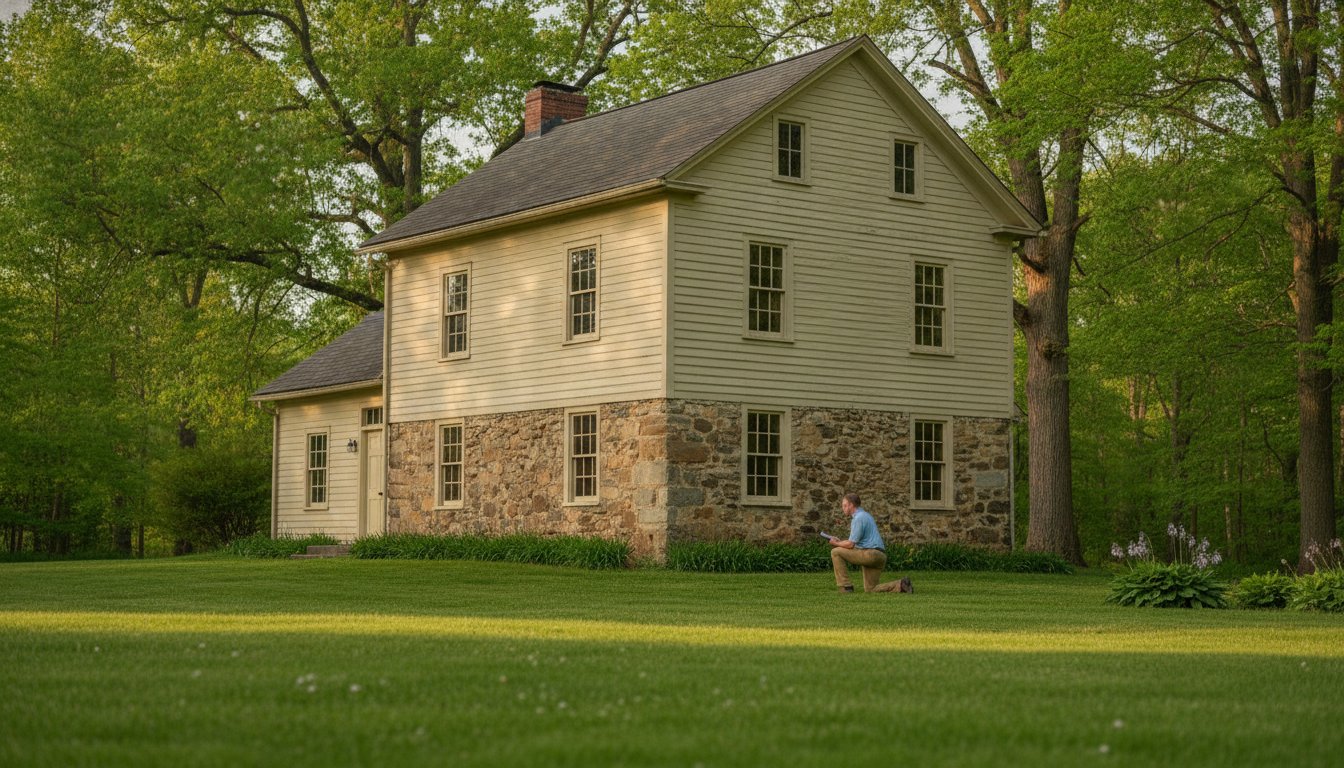
A historic home is more than just a residence; it’s a living piece of Pennsylvania and Ohio history that requires a specialized approach to maintenance. While modern builds offer tight seals and synthetic materials, the old-growth timber and rubble-stone foundations found in Erie, Crawford, and Ashtabula counties are particularly vulnerable to silent invaders. Effective pest control for historic homes must balance the urgent need for structural protection with a deep respect for original materials. Many homeowners worry that traditional treatments might stain hand-carved woodwork or introduce harsh chemicals into porous surfaces that have stood for over a century.
It’s understandable to feel protective of a property’s architectural integrity when faced with the threat of wood-boring beetles or termites. This guide provides a clear path forward for maintaining a pest-free environment without compromising the features that make a vintage property unique. Readers will learn about the specific regional risks facing the tri-county area, the importance of structural exclusion, and how to implement a long-term preservation plan that keeps the history of the home intact for future generations.
Disclaimer: The information provided on this blog is for general informational purposes only and is not intended as professional pest control advice. Conditions vary by property, environment, and location. Reading this content does not create a service agreement. For an inspection or professional recommendations, please contact Mosquito Assassin Pest Control LLC directly.
Key Takeaways
- Identify how structural settling and the local climate in Pennsylvania and Ohio create unique entry points for wood-destroying organisms.
- Learn why Integrated Pest Management is the preferred standard for pest control for historic homes to protect original finishes and delicate surfaces.
- Discover how to seal your property using historically appropriate materials, such as copper mesh and mortar, to maintain architectural accuracy.
- Understand why year-round monitoring is necessary to detect silent threats like termites or carpenter ants before they cause irreversible structural damage.
- Gain a long-term prevention plan tailored to the specific construction methods and vulnerabilities of older homes in the Great Lakes region.
Why Historic Homes in Pennsylvania and Ohio Face Unique Pest Challenges
Historic structures in the Great Lakes region face a perfect storm of environmental and structural risks. Unlike modern suburban developments, these properties have spent decades or even centuries reacting to the shifting soil and extreme temperature swings of Northwest Pennsylvania and Northeast Ohio. This long history results in settling, where the foundation and frame shift just enough to create non-standard entry points. These gaps are often hidden behind original siding or within rubble-stone foundations, making traditional exclusion work a complex task. Effective Integrated Pest Management for cultural property requires understanding that these buildings are dynamic, breathing structures that require more than a generic treatment plan.
To better understand how pests find their way into a structure, watch this helpful video:
The Great Lakes Humidity Factor
The humid continental climate prevalent in Erie, Crawford, and Ashtabula counties plays a direct role in pest attraction. High humidity levels, often exacerbated by lake-effect weather, can soften even the densest old-growth timber. When wood moisture content rises, it becomes an ideal environment for wood-boring beetles and carpenter ants. Damp basements and crawlspaces, common in 19th-century architecture, act as incubators for these colonies. Because the wood in these homes is often structural rather than decorative, moisture management is a vital part of pest control for historic homes. Protecting these assets requires a strategy that addresses the damp conditions specific to our service area.
Structural Voids and Balloon Framing
Many homes built before the mid-20th century utilize balloon framing, a technique where wall studs run continuously from the foundation sill to the roofplate. While this method allowed for rapid construction, it created unobstructed vertical channels inside the walls. A rodent or insect colony starting in a damp basement can reach the attic instantly without ever entering a living space. This is why standard baseboard spraying is typically ineffective in these structural types. The activity occurs deep within structural voids, requiring a professional who understands how to target the internal skeleton of the building. Identifying these hidden cavities is the only way to ensure a colony is fully managed rather than just displaced.
Disclaimer: The information provided on this blog is for general informational purposes only and is not intended as professional pest control advice. Conditions vary by property, environment, and location. Reading this content does not create a service agreement. For an inspection or professional recommendations, please contact Mosquito Assassin Pest Control LLC directly.
The Historic Lineup: Identifying Pests That Target Older Structures
In the Great Lakes region, the changing seasons dictate pest behavior with predictable precision. Spring typically brings the emergence of swarming termites and ants, while the first frost drives rodents into the warmth of aging foundations. For homeowners in Erie, Crawford, and Ashtabula counties, identifying these threats early is vital to preservation. Unlike modern construction, where materials are often uniform, historic homes contain a variety of wood species and ages that attract a diverse range of wood-destroying organisms (WDO). Understanding these biological cycles is a core component of effective pest control for historic homes.
Carpenter ants represent one of the most persistent threats to properties in Northwest Pennsylvania and Northeast Ohio. These insects don’t eat wood for nutrition; instead, they excavate it to create nesting galleries. They are particularly drawn to wood that has been softened by moisture, which is common around the drafty windows and aging rooflines of older structures. If left unchecked, a single colony can compromise the structural integrity of hand-hewn floor joists or wall studs. Because these pests often operate deep within the frame, a professional termite and WDO inspection is often the only way to confirm their presence before the damage becomes visible.
Managing these risks requires a disciplined approach to monitoring and identification. Many property owners find value in following established protocols, such as the English Heritage pest management guidelines, which emphasize the importance of regular inspections and environment-specific strategies. This methodology ensures that the home remains protected without resorting to invasive measures that could harm the property’s character.
Wood-Boring Beetles and Powder Post Damage
Powder post beetles are often described as a silent threat because their activity is rarely seen until the damage is extensive. Powder post beetles are larvae that can spend years inside wood before emerging as adults, leaving behind tiny exit holes. The most common sign of an active infestation is “frass,” a fine, flour-like sawdust found beneath these holes. In historic timber, it’s important to distinguish between old, inactive damage and a current problem. Fresh frass is typically light in color, while old dust appears dark and compacted. Hand-hewn beams in basements and attics should be checked annually for these signs.
Carpenter Bees and Exterior Trim
Historic siding, especially when it’s weathered or unpainted, is a primary target for carpenter bees. These large, solitary bees bore perfectly round, half-inch holes into fascia boards, eaves, and porch ceilings. While a single hole might seem minor, repetitive boring over several seasons can lead to significant structural decay and attract secondary pests like woodpeckers. Because these bees often target high-flying areas of the home, professional monitoring is necessary to reach and treat these vulnerable exterior points effectively.
Disclaimer: The information provided on this blog is for general informational purposes only and is not intended as professional pest control advice. Conditions vary by property, environment, and location. Reading this content does not create a service agreement. For an inspection or professional recommendations, please contact Mosquito Assassin Pest Control LLC directly.
Integrated Pest Management (IPM) vs. Standard Pest Control
Standard pest control often relies on a “spray and pray” methodology, applying broad-spectrum chemicals along baseboards and perimeters. In the context of older architecture, this approach is frequently insufficient. The drafty windows and settling foundations of 19th-century homes allow air to circulate freely, often diluting chemical barriers before they can be effective. Integrated Pest Management (IPM) offers a more sophisticated alternative by focusing on the biology of the pest and the specific vulnerabilities of the structure. This systematic process prioritizes long-term prevention over temporary chemical fixes, making it the superior choice for pest control for historic homes.
The Preservation-First Approach
Historic properties require a delicate touch because aging materials react differently to modern treatments. Certain pesticides can cause permanent staining on original wood finishes or trigger chemical degradation in historic lime mortar. A preservation-first strategy utilizes non-invasive monitoring stations to track pest activity without saturating historic surfaces in chemicals. This data-driven method allows for targeted interventions only when and where they are needed. Adopting a comprehensive general pest control strategy ensures that the home’s history remains protected while its structural integrity is defended against wood-destroying organisms. Professional monitoring also provides a written record of the home’s health, which is invaluable for property owners who view themselves as stewards of local history.
Moisture Control as Pest Prevention
In the Great Lakes region, moisture is the primary driver of pest infestations. A single leaky gutter or a misdirected downspout can saturate a sill plate, making it an irresistible target for subterranean termites. These pests require high moisture levels to survive; maintaining wood moisture content below 20 percent is often the most effective defense. In the stone foundations common across Erie and Crawford counties, installing a dehumidifier can drastically reduce populations of silverfish and house centipedes that thrive in damp environments. When evaluating pest control for historic homes, addressing the foundation is often the most important first step.
Physical exclusion is another pillar of the IPM philosophy. Sealing foundation gaps with breathable, historically appropriate materials is often more effective than relying on chemical barriers alone. This is particularly true in drafty homes where air exchange rates are high. By addressing the root causes of an infestation, such as moisture and entry points, rather than just the symptoms, homeowners create a sustainable environment that is naturally hostile to pests. Professional pest control may help reduce risk by identifying these environmental triggers during regular quarterly audits.
Disclaimer: The information provided on this blog is for general informational purposes only and is not intended as professional pest control advice. Conditions vary by property, environment, and location. Reading this content does not create a service agreement. For an inspection or professional recommendations, please contact Mosquito Assassin Pest Control LLC directly.
A 5-Step Structural Defense Protocol for Historic Property Owners
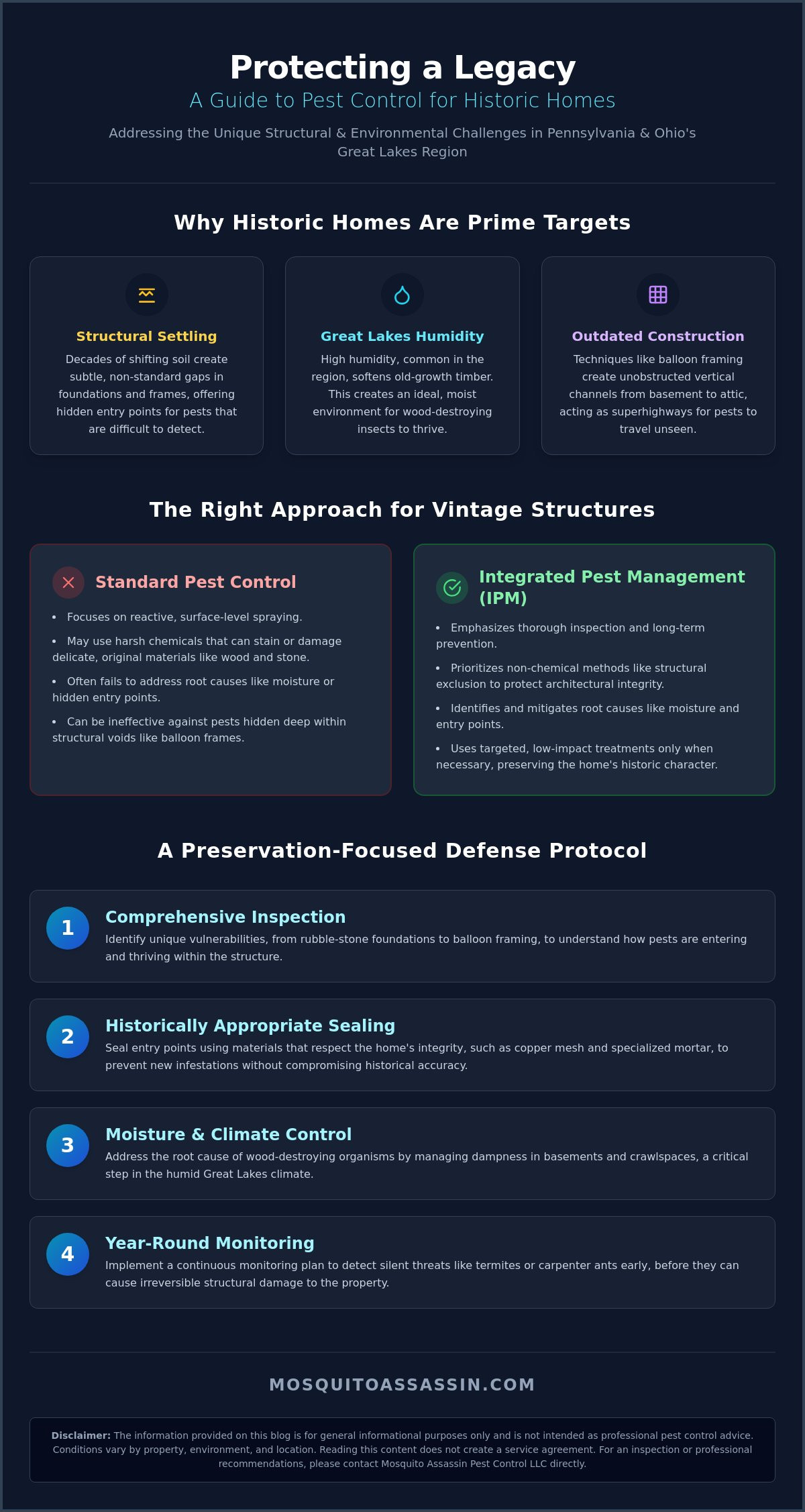
Maintaining a vintage property in Erie or Ashtabula requires a disciplined defense strategy. A structured protocol ensures that no vulnerability is overlooked as the seasons shift from humid summers to freezing winters. Implementing effective pest control for historic homes is a multi-stage process that moves from the exterior perimeter to the internal skeleton. This approach prioritizes the physical integrity of the building while minimizing the need for reactive chemical applications.
- Step 1: Perform a Comprehensive Perimeter Audit. Inspect the entire structure from the foundation sill to the roofline. Look for gaps in siding, cracks in masonry, and openings near utility penetrations.
- Step 2: Seal Entry Points with Historically Appropriate Materials. Use copper mesh, which does not rust or stain wood, to block voids. For masonry, use breathable lime-based mortars rather than hard modern cements that can trap moisture and crack original brick.
- Step 3: Manage the Micro-Climate Around the Foundation. Ensure that the soil grades away from the house. Excess moisture near the foundation is the primary attractant for termites and carpenter ants.
- Step 4: Implement a Professional Monitoring System. Use non-invasive bait stations or internal monitors to detect activity before structural damage occurs. This provides early warning without the need for broad chemical barriers.
- Step 5: Establish a Recurring Maintenance Schedule. Historic homes are dynamic. A quarterly schedule allows for the adjustment of defense tactics to match seasonal pest behaviors, such as winter rodent intrusion or spring insect swarming.
Exclusion for Historic Foundations
Fieldstone and early brick foundations often feature irregular gaps that provide easy access for mice and rats. Because rodents can squeeze through openings as small as a dime, rodent removal must begin with a thorough sealing of the foundation. It is vital to use flexible, breathable materials for these repairs. Old houses are designed to move and breathe; using rigid fillers can lead to structural stress and further cracking. Professional pest control may help reduce risk by identifying these subtle entry points during a structural audit.
Landscaping and Drainage
The environment immediately surrounding the home dictates the level of pest pressure. Keeping mulch at least 12 inches away from historic siding prevents moisture from wicking into the wood and creating a bridge for subterranean termites. While climbing ivy and vines are often seen as charming features of older homes, they function as pest highways for ants and spiders. These plants also trap moisture against the facade, accelerating wood decay. Ensure that downspout extensions carry water at least three to five feet away from the foundation to prevent the damp basement conditions that attract centipedes and silverfish. For property owners seeking to protect their investment, professional termite inspections and treatment are essential components of a long-term preservation plan.
Disclaimer: The information provided on this blog is for general informational purposes only and is not intended as professional pest control advice. Conditions vary by property, environment, and location. Reading this content does not create a service agreement. For an inspection or professional recommendations, please contact Mosquito Assassin Pest Control LLC directly.
Professional Monitoring and Year-Round Protection for Historic Assets
Historic properties require a commitment to proactive stewardship rather than reactive crisis management. A “one and done” treatment approach often fails to account for the complex architecture and shifting seasonal biology found in older structures. Because these homes feature numerous entry points that expand and contract with the weather, a single application cannot provide a permanent shield. Establishing a recurring inspection schedule is the most effective way to manage pest control for historic homes. Bi-monthly or quarterly visits allow a professional to catch wood-boring activity or moisture issues in their early stages before they compromise original structural timbers.
Professional documentation is a significant benefit of a long-term protection plan. Detailed records of every inspection and treatment create a “health history” for the property, which is invaluable for maintaining its market value. When it comes time to pass the home to a new owner, having a documented history of professional oversight proves that the structural integrity has been a priority. This transitions the homeowner’s role from simply living in a house to serving as a diligent protector of local history. Professional pest control may help reduce risk by providing this consistent, expert oversight.
The Value of Ongoing Protection
Seasonal shifts in Northwest Pennsylvania and Northeast Ohio bring distinct pest pressures that require different tactical responses. The humid summers near Lake Erie can lead to increased activity in crawlspaces, while the harsh winters drive rodents toward the warmth of aging foundations. Comprehensive mosquito control programs can also protect outdoor historic spaces, such as original wrap-around porches and gardens, making these areas more functional for the family. Maintaining a year-round presence ensures that as one pest threat fades, the home is already prepared for the next wave of seasonal invaders.
Choosing a Local Specialist
Protecting a 19th-century home requires more than just general knowledge; it requires an understanding of regional construction methods and the specific pests that target them. It is essential to work with professionals who live and work in the same community, as they are familiar with the unique environmental factors of the Great Lakes region. You can find our service locations across Erie, Crawford, and Ashtabula counties, where we focus on preservation-first strategies. Because every historic property has a unique set of vulnerabilities, professional recommendations are best sought through a direct, on-site inspection of the structure.
Disclaimer: The information provided on this blog is for general informational purposes only and is not intended as professional pest control advice. Conditions vary by property, environment, and location. Reading this content does not create a service agreement. For an inspection or professional recommendations, please contact Mosquito Assassin Pest Control LLC directly.
Preserving Your Historic Legacy Through Proactive Care
Protecting a century-old property requires more than just reactive treatments; it demands a philosophy of diligent stewardship. By prioritizing moisture management and utilizing historically appropriate exclusion materials like copper mesh, homeowners can defend against wood-destroying organisms without damaging original surfaces. A successful plan for pest control for historic homes relies on identifying regional threats early and maintaining a systematic monitoring schedule that adjusts to the changing seasons of the Great Lakes. This proactive approach ensures that the unique character and structural integrity of properties in Erie, Crawford, and Ashtabula counties remain intact for the next generation.
Professional pest control may help reduce risk by providing specialized knowledge of regional wood-boring pests and tailored year-round protection plans. For an inspection or professional recommendations, please contact Mosquito Assassin Pest Control LLC directly. Your home has stood the test of time, and with a careful preservation-first strategy, it will continue to be a pillar of the community for years to come.
Disclaimer: The information provided on this blog is for general informational purposes only and is not intended as professional pest control advice. Conditions vary by property, environment, and location. Reading this content does not create a service agreement. For an inspection or professional recommendations, please contact Mosquito Assassin Pest Control LLC directly.
Frequently Asked Questions
Do historic homes have more pests than modern homes?
Historic homes often experience higher pest pressure because they have had more time to settle, creating gaps in foundations and siding. These properties were built with breathable materials that naturally develop small voids over decades. Unlike modern, air-tight construction, the complex architecture of older homes provides numerous hidden pathways for insects and rodents to navigate through the internal skeleton of the building.
Will pest control chemicals damage my historic wood or paint?
Certain modern pesticides can react with historic lime mortar or original oil-based finishes, causing staining or chemical degradation. Professional pest control for historic homes utilizes an Integrated Pest Management approach to select low-impact solutions that are compatible with aging surfaces. This methodology prioritizes non-invasive monitoring and targeted applications rather than broad, saturated spraying that could harm delicate materials.
How can I tell the difference between old termite damage and an active infestation?
Active termite activity is typically indicated by the presence of mud tubes that feel moist when broken or the discovery of live insects. Old damage usually appears dark, brittle, and weathered, while fresh activity reveals light-colored wood and moist debris. Professional inspections are the most reliable way to confirm if a colony is currently feeding on the structure or if the damage is historical.
What is the most common pest in old houses in Pennsylvania?
Carpenter ants are the most frequent structural pest found in older Pennsylvania residences, particularly in Erie and Crawford counties. These insects are attracted to the moisture-softened wood often found in historic rooflines and windowsills. During the winter months, house mice also become a primary concern as they seek warmth within aging foundations, often entering through gaps larger than a dime.
Can I do my own pest control on a historic property?
Attempting DIY treatments on a historic property can be risky because many over-the-counter products are not designed for sensitive, old-growth timber. Improper application can trap moisture inside wall voids or damage delicate finishes. Professional pest control may help reduce risk by using specialized tools and materials that respect the home’s architectural integrity while effectively managing the infestation.
How often should a historic home be inspected for termites and beetles?
A comprehensive inspection for wood-destroying organisms should be performed at least once a year. For homes with a known history of activity, bi-annual or quarterly checks are often recommended to catch new infestations before they cause structural harm. Regular monitoring is a vital component of pest control for historic homes to prevent silent damage from progressing unnoticed behind original walls.
Is it possible to pest-proof an old house with a fieldstone foundation?
It is possible to effectively proof a fieldstone foundation by using historically appropriate, breathable exclusion materials. Sealing gaps with copper mesh and lime-based mortar prevents rodents from entering while allowing the foundation to shift naturally with the soil. This method avoids the structural stress and cracking often associated with rigid modern foams and hard Portland cements.
What are the signs of powder post beetles in old floor joists?
The primary signs of powder post beetles are tiny, pinhead-sized exit holes in the wood surface accompanied by fine, flour-like sawdust called frass. If the frass is white and sits in small piles beneath the holes, the infestation is likely active and requires attention. Old, inactive holes will often be filled with dark, compacted dust and won’t show new piles of sawdust.
Disclaimer: The information provided on this blog is for general informational purposes only and is not intended as professional pest control advice. Conditions vary by property, environment, and location. Reading this content does not create a service agreement. For an inspection or professional recommendations, please contact Mosquito Assassin Pest Control LLC directly.