Tag: IPM

  • Healthcare Facility Pest Control Standards: A Comprehensive Guide for 2026

    Healthcare Facility Pest Control Standards: A Comprehensive Guide for 2026

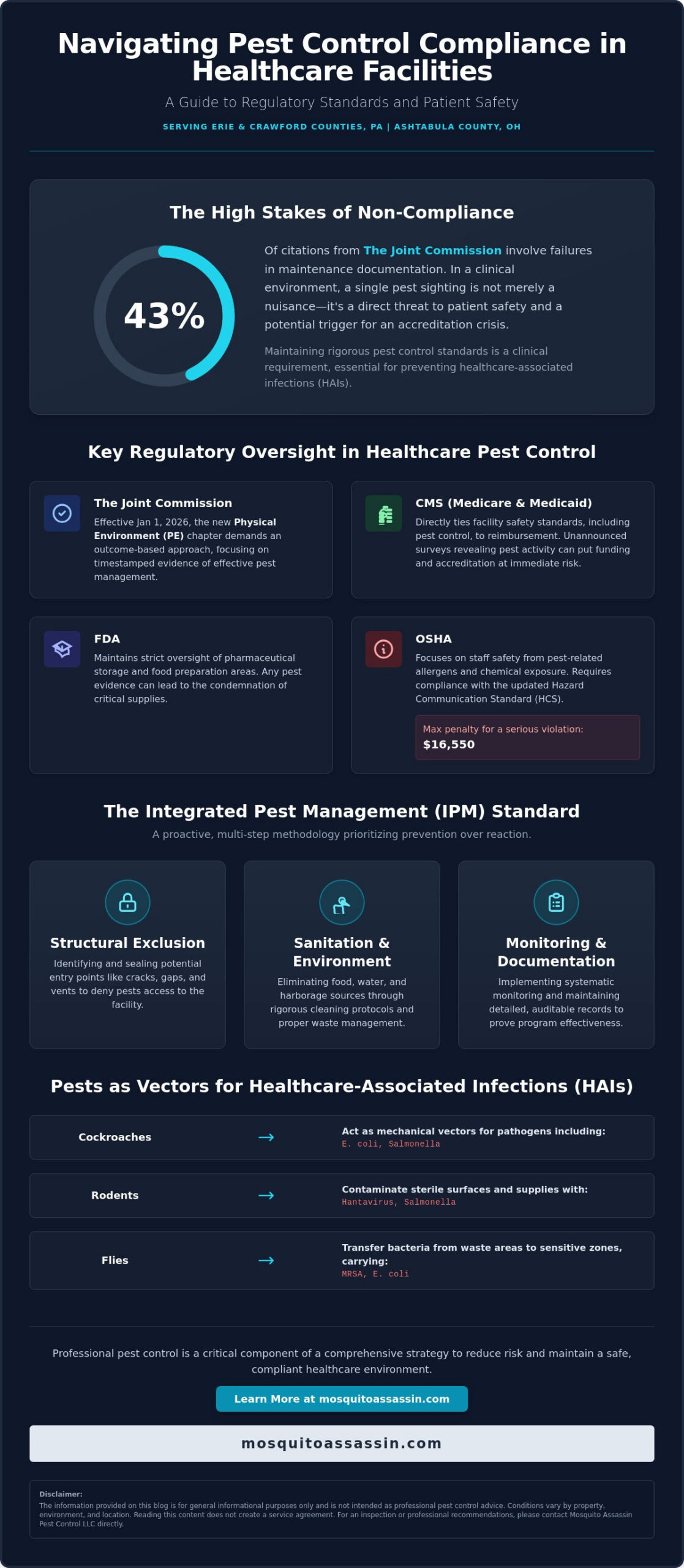
    Did you know that 43% of citations from The Joint Commission involve failures in maintenance documentation? In a high-stakes clinical environment, a single pest sighting isn’t just a nuisance; it’s a direct threat to patient safety and a potential trigger for an accreditation crisis. Maintaining rigorous healthcare facility pest control standards is a clinical requirement rather than a basic maintenance task. As of January 1, 2026, the transition to the Physical Environment (PE) chapter means surveyors are focusing heavily on timestamped evidence and documented outcomes.

    It’s understandable to feel pressured by the complexity of OSHA’s updated Hazard Communication Standard or the risk of serious penalties. This guide provides the clarity needed to maintain a sterile environment while building an auditable documentation trail. You’ll learn the essential Integrated Pest Management (IPM) protocols and regulatory requirements required to protect facilities in Erie, Crawford, and Ashtabula Counties. This overview covers the critical compliance shifts you need to know to ensure patient safety and successful audits throughout 2026.

    Disclaimer: The information provided on this blog is for general informational purposes only and is not intended as professional pest control advice. Conditions vary by property, environment, and location. Reading this content does not create a service agreement. For an inspection or professional recommendations, please contact Mosquito Assassin Pest Control LLC directly.

    Key Takeaways

    • Learn how maintaining a pest-free environment directly reduces the risk of healthcare-associated infections and the spread of dangerous pathogens.
    • Understand the role of Integrated Pest Management in satisfying healthcare facility pest control standards through proactive sanitation and exclusion strategies.
    • Identify common entry points such as loading docks and laundry rooms to prevent hitchhiking pests from reaching sterile patient areas.
    • Discover how regional weather patterns in Northwest Pennsylvania and Northeast Ohio dictate the timing and intensity of local pest pressures.
    • Gain insights into the essential documentation and record-keeping practices required to pass outcome-based regulatory audits with confidence.

    Understanding Healthcare Pest Control Standards and Regulatory Oversight

    Healthcare facility pest control standards aren’t just suggestions; they’re vital clinical protocols designed to prevent healthcare-associated infections (HAIs). Pests like cockroaches, rodents, and flies are significant biological hazards in a medical setting. They act as mechanical vectors for dangerous pathogens, including MRSA, E. coli, and Salmonella. When these pests move from waste disposal areas to sterile surgical suites or patient rooms, they compromise the entire environment. This is why modern medical facilities maintain a zero-tolerance policy for any insect or rodent activity.

    To achieve this level of safety, facilities rely on Integrated Pest Management (IPM). This methodology prioritizes structural exclusion and sanitation over the routine application of chemicals. In a sensitive environment where patients may be immunocompromised, the goal is to eliminate the root causes of infestations without introducing unnecessary risks. Compliance with these standards is monitored by several federal and independent accrediting organizations that treat pest management as a core component of patient safety.

    To better understand this concept, watch this helpful video:

    The Role of The Joint Commission and CMS

    Effective January 1, 2026, The Joint Commission updated its evaluation process by consolidating the Environment of Care and Life Safety chapters into a new Physical Environment (PE) chapter. This shift moves away from simple checklists toward an outcome-based approach. Surveyors now look for timestamped evidence that a facility’s pest program is working. The Centers for Medicare & Medicaid Services (CMS) also play a major role, as they tie facility safety standards directly to reimbursement. A single unannounced survey that reveals active pest sightings or poor documentation can lead to immediate citations, putting both accreditation and funding at risk.

    FDA and OSHA Requirements for Medical Environments

    The FDA maintains strict oversight regarding the integrity of pharmaceutical storage and food preparation areas within hospitals. Any evidence of pests in these zones can lead to the immediate condemnation of supplies. On the safety side, OSHA focuses on protecting the staff from pest-related allergens and chemical exposure. As of January 15, 2026, the maximum OSHA penalty for a serious violation has reached $16,550, making compliance a financial necessity. Facilities must also follow the updated Hazard Communication Standard (HCS) to ensure all safety data sheets for pest treatments are current and accessible. For administrators in Erie or Ashtabula, aligning with commercial pest control best practices is the most reliable way to meet these high-stakes federal requirements while protecting vulnerable patients.

    Disclaimer: The information provided on this blog is for general informational purposes only and is not intended as professional pest control advice. Conditions vary by property, environment, and location. Reading this content does not create a service agreement. For an inspection or professional recommendations, please contact Mosquito Assassin Pest Control LLC directly.

    The Integrated Pest Management (IPM) Standard in Medical Settings

    Adhering to healthcare facility pest control standards requires a shift from reactive treatments to a proactive, clinical mindset. The primary vehicle for this transition is Integrated Pest Management (IPM). IPM is a collaborative, multi-step approach to pest prevention. Rather than relying on a predetermined schedule of chemical applications, this methodology focuses on understanding the biology of pests and the specific vulnerabilities of the building. In a healthcare setting, this approach is the gold standard because it minimizes the introduction of volatile compounds while maximizing the effectiveness of long-term control measures.

    Within the IPM framework, chemical treatments are only used as a last resort in a targeted manner. This hierarchy of intervention is vital for protecting sensitive patient populations, such as those in neonatal units or oncology wards. When an intervention is necessary, professionals select the lowest-risk products and apply them only to the specific areas where activity was confirmed. This disciplined strategy doesn’t just protect patients; it also ensures the facility remains compliant with the outcome-based evaluation methods currently favored by regulatory surveyors.

    Prioritizing Non-Chemical Prevention Strategies

    Structural exclusion is the foundation of a successful IPM program. This process involves a meticulous sealing of the building envelope to prevent pests from entering in the first place. Professionals often focus on utility penetrations, gaps under doors, and the integrity of weather stripping on loading docks. Sanitation protocols must be equally rigorous. In areas like breakrooms and kitchens, even microscopic food debris can sustain a population. Effective waste management is also essential; organic waste should be removed from the building frequently and stored in tightly sealed containers located away from primary entry points. By removing food, water, and entry points, the facility becomes naturally resistant to infestations.

    Monitoring and Threshold-Based Decision Making

    Continuous monitoring is the only way to identify potential issues before they escalate into an audit-failing infestation. Licensed professionals place non-toxic monitors in high-risk zones, such as laundry rooms and janitorial closets, to track activity patterns. This data is then evaluated against specific action thresholds. An action threshold is a predetermined point at which a pest sighting necessitates a specific professional response. For instance, a single fly in a cafeteria might trigger an inspection of the window screens, while any activity in a sterile surgical suite requires an immediate, comprehensive intervention. Regular inspections ensure that the facility stays aligned with healthcare facility pest control standards throughout the year. For administrators looking to refine their protocols, commercial pest control strategies provide the structure needed for auditable compliance.

    Disclaimer: The information provided on this blog is for general informational purposes only and is not intended as professional pest control advice. Conditions vary by property, environment, and location. Reading this content does not create a service agreement. For an inspection or professional recommendations, please contact Mosquito Assassin Pest Control LLC directly.

    Healthcare Facility Pest Control Standards: A Comprehensive Guide for 2026

    High-Risk Zones and Specific Pest Challenges in Hospitals

    A medical facility is a complex environment with diverse micro-climates, each presenting unique risks to operational integrity. Maintaining healthcare facility pest control standards requires recognizing that a basement mechanical room faces different threats than a neonatal intensive care unit. While some areas prioritize total sterility, others are prone to structural entry points that invite unwanted activity. A hospital is not a single building; it’s a collection of unique ecosystems that require specialized monitoring and intervention strategies.

    Loading docks and laundry rooms serve as the primary gateways for hitchhiking pests. Every shipment of medical supplies or bulk linens carries the risk of introducing German cockroaches or silverfish into the building’s interior. Similarly, mechanical rooms and basement tunnels provide the dark, undisturbed warmth that rodents and spiders prefer. Rodents often follow utility lines through these tunnels, using them as highways to bypass traditional barriers and reach upper floors. Professional pest control may help reduce risk in these critical infrastructure zones by identifying breaches in the building envelope before pests migrate toward patient-facing areas.

    Sterile Environments and Pharmaceutical Storage

    Operating rooms and sterile processing departments demand the highest degree of exclusion. Even the presence of a single insect can compromise surgical equipment and lead to costly delays or significant patient infection risks. Pharmaceutical storage areas face a specific challenge because ants and cockroaches are often attracted to glucose and other chemical components found in various medications. Ants, in particular, can detect trace amounts of sugars in pharmaceutical zones, leading to infestations that are difficult to locate without professional assistance. Contamination in these areas doesn’t just result in safety losses; it can lead to the destruction of high-value inventory that is vital for daily patient care.

    Food Service and Patient Care Areas

    Hospital kitchens operate at the intersection of commercial food safety and medical hygiene. Proper drainage maintenance is essential in these spaces to prevent the accumulation of organic film where drain flies and gnats breed. If these biofilms are left unchecked, they become permanent nurseries for pests that can quickly spread to nearby cafeterias. In patient care areas, the challenges are often introduced by the constant flow of people. Visitors can inadvertently introduce bed bugs into the facility on clothing or personal belongings, necessitating a rapid and discreet response to prevent a wider outbreak. Healthcare providers in Erie, Crawford, and Ashtabula Counties must remain vigilant, as local seasonal shifts often drive pests indoors seeking these stable, climate-controlled environments.

    Disclaimer: The information provided on this blog is for general informational purposes only and is not intended as professional pest control advice. Conditions vary by property, environment, and location. Reading this content does not create a service agreement. For an inspection or professional recommendations, please contact Mosquito Assassin Pest Control LLC directly.
    Regional Pest Pressures in Pennsylvania and Ohio Facilities

    Facilities in Erie, PA, and Ashtabula, OH, operate under unique environmental conditions that directly influence their ability to meet healthcare facility pest control standards. The Great Lakes region is defined by lake-effect weather patterns, which often dictate the timing and intensity of pest migrations. Sudden drops in temperature or heavy moisture events can drive insects and rodents toward the stable, climate-controlled environments of medical buildings earlier than in other parts of the country. Understanding these local biological cycles is essential for facility managers who must maintain a sterile environment regardless of the conditions outside.

    Local healthcare campuses often feature expansive landscaped areas, retention ponds, and wooded perimeters that serve as natural reservoirs for pests. While these features provide a therapeutic atmosphere for patients, they also require constant vigilance to prevent outdoor populations from moving indoors. Maintaining a high standard of safety requires more than just indoor monitoring; it demands a strategy that addresses the building’s exterior as a primary line of defense. Consistent, ongoing commercial pest control is necessary for year-round protection in this volatile climate.

    Seasonal Mosquito and Tick Management Near Medical Campuses

    Mosquitoes represent a significant nuisance and a potential health risk when they congregate near facility entrances, outdoor patient seating, or employee break areas. In the humid summers typical of Northwest Pennsylvania and Northeast Ohio, standing water in parking lot drains or retention ponds can become breeding grounds for thousands of mosquitoes. Professional monitoring of these water sources is a clinical necessity to prevent these insects from following patients and staff through sliding doors. Ticks are an additional concern, as local wildlife can introduce them to the well-manicured grounds of a medical campus. This poses a direct risk to maintenance staff and patients who use outdoor walking paths, requiring proactive management of the facility’s perimeter to keep these vectors away from high-traffic zones.

    Overwintering Rodents and Structural Exclusion

    As winter approaches, mice and rats aggressively seek the warmth and security provided by large healthcare structures. In Crawford County, completing exclusion work before the first frost is a critical preventative measure to stop rodents from finding refuge in basement tunnels or mechanical rooms. Once inside, rodents can cause catastrophic damage by gnawing on sensitive medical wiring or contaminating the insulation within walls. Because healthcare facility pest control standards require a zero-tolerance policy for rodent activity, sealing every gap in the building envelope is the most effective way to ensure winter compliance. Proactive measures, such as installing heavy-duty door sweeps and sealing utility penetrations, are far more effective than trying to manage an established population during the height of a PA or OH winter. For facilities requiring a comprehensive review of their perimeter defenses, contacting a professional for commercial pest control can help identify vulnerabilities before the seasonal shift begins.

    Disclaimer: The information provided on this blog is for general informational purposes only and is not intended as professional pest control advice. Conditions vary by property, environment, and location. Reading this content does not create a service agreement. For an inspection or professional recommendations, please contact Mosquito Assassin Pest Control LLC directly.

    Best Practices for Maintaining Compliance and Documentation

    Documentation is the most critical element of a successful healthcare audit. Under the 2026 outcome-based approach adopted by The Joint Commission, surveyors prioritize evidence of a functioning system over simple verbal assurances. Recent data indicates that 43% of citations from The Joint Commission involve failures in maintenance documentation. In the eyes of an auditor, if an action is not documented, it is considered not to have occurred. This strict standard means that every inspection, sighting, and corrective action must be recorded with precision to satisfy healthcare facility pest control standards.

    A centralized pest management logbook is the foundation of this process. This logbook should be kept in a location accessible to facility staff and regulatory inspectors at all times. It serves as a living record of the facility’s commitment to patient safety and environmental integrity. Maintaining this level of detail requires seamless communication between the facility administration and professional pest control services. When a professional identifies a structural vulnerability, like a gap in a loading dock seal in Ashtabula or a moisture issue in an Erie basement, the facility must document the repair to close the loop for future audits.

    Essential Record-Keeping for Audits

    To pass a high-stakes clinical survey, your documentation must be thorough and timestamped. A compliant logbook should include several specific categories of information to provide a clear audit trail. Ensure your records contain the following:

    • Pest Sighting Log: A detailed list of all sightings, including the specific date, time, and precise location within the facility.
    • Service Reports: Copies of all professional reports that outline findings, the specific methodology used, and any follow-up recommendations.
    • Safety Data Sheets (SDS): Readily accessible SDS for any materials used on the property, ensuring compliance with the updated OSHA Hazard Communication Standard.
    • Floor Plans: Maps indicating the placement of all monitoring stations and traps throughout the high-risk zones.

    Training Staff to Support Pest Prevention

    Staff members are the first line of defense in maintaining healthcare facility pest control standards. Environmental services (EVS) staff should be educated on how to identify early signs of activity, such as droppings or nesting materials, during their daily cleaning rounds. Establishing a clear reporting structure allows these employees to log sightings immediately, preventing a minor issue from becoming a systemic failure. Encouraging ‘clean desk’ policies and strict food storage rules in administrative areas also removes the attractants that draw pests into non-clinical zones. When the entire team understands their role in the Integrated Pest Management framework, the facility remains much more resilient against infestations and audit citations alike.

    Disclaimer: The information provided on this blog is for general informational purposes only and is not intended as professional pest control advice. Conditions vary by property, environment, and location. Reading this content does not create a service agreement. For an inspection or professional recommendations, please contact Mosquito Assassin Pest Control LLC directly.
    Securing Your Facility for Future Audits

    Maintaining a sterile environment is a continuous clinical commitment that requires more than just reactive treatments. By prioritizing structural exclusion and rigorous documentation, facility managers can confidently meet the evolving healthcare facility pest control standards set for 2026. Successfully navigating the new Physical Environment (PE) chapter means shifting toward an outcome-based approach where every action is recorded and every vulnerability is addressed before it impacts patient care.

    Professional pest control may help reduce risk by providing the specialized oversight needed in high-stakes medical environments. For facilities across Erie, Crawford, and Ashtabula Counties, finding a partner that’s licensed and insured in both Pennsylvania and Ohio ensures that regional pest pressures are managed with local expertise. A focus on documented IPM compliance protects not only your accreditation but also the safety of every patient and staff member within your walls. If you’re ready to strengthen your facility’s defenses, you can Request a professional consultation for your facility to ensure your protocols are audit-ready. Taking these proactive steps today creates a safer, more compliant environment for the future.

    Disclaimer: The information provided on this blog is for general informational purposes only and is not intended as professional pest control advice. Conditions vary by property, environment, and location. Reading this content does not create a service agreement. For an inspection or professional recommendations, please contact Mosquito Assassin Pest Control LLC directly.

    Frequently Asked Questions

    What is the standard for pest control in healthcare facilities?

    The primary standard is Integrated Pest Management (IPM), which prioritizes non-chemical prevention strategies. This clinical approach ensures that healthcare facility pest control standards are met without introducing unnecessary chemical risks to patients or staff. It involves a continuous cycle of inspection, exclusion, and monitoring to maintain a sterile environment and prevent healthcare-associated infections.

    How often should a hospital be inspected for pests?

    Inspection frequency depends on the specific risk level of each zone within the facility. High-risk areas like kitchens, loading docks, and laundry rooms typically require weekly or bi-weekly inspections to catch issues early. Administrative offices or low-traffic storage areas might only need monthly reviews. A professional assessment helps determine the appropriate schedule based on the facility’s history and structural vulnerabilities.

    Are pesticides allowed in patient rooms or operating theaters?

    Pesticides are generally restricted in patient rooms and operating theaters to protect vulnerable individuals from chemical exposure. If an intervention is absolutely necessary, licensed professionals use low-volatility baits or containerized gels in targeted, inaccessible locations. The priority in these sensitive areas is always structural exclusion and rigorous sanitation rather than broad chemical application.

    What does the Joint Commission look for regarding pest management?

    The Joint Commission focuses on documented evidence of a safe and functional environment. Under the 2026 standards, surveyors look for timestamped logs of sightings, detailed service reports, and proof that corrective actions were taken. They evaluate the effectiveness of the program through documented outcomes rather than just checking for a signed service contract.

    How does Integrated Pest Management (IPM) differ from traditional pest control?

    Traditional pest control often relies on reactive, scheduled chemical treatments regardless of current activity levels. In contrast, IPM is a proactive, scientific approach that uses chemical intervention only as a last resort. It focuses on removing the root causes of infestations, such as food sources and entry points, through structural maintenance and improved sanitation protocols.

    What are the most common pests found in Pennsylvania healthcare facilities?

    Common pests in Northwest Pennsylvania include German cockroaches, house mice, and Norway rats. During the humid summer months, facilities in Erie and Crawford Counties also deal with significant fly and mosquito pressures near entrances. In the winter, the focus shifts toward overwintering rodents seeking warmth within the building’s infrastructure and mechanical tunnels.

    How should a facility manager document a pest sighting for compliance?

    Every sighting must be recorded in a centralized logbook immediately to maintain compliance with healthcare facility pest control standards. This entry should include the date, time, specific room or area, and the type of pest observed. Documenting the specific follow-up action taken by professional pest control services is equally important to show auditors that the issue was identified and resolved.

    Can facility staff apply over-the-counter pesticides in a medical setting?

    Facility staff should not apply over-the-counter pesticides in a medical setting. Most state regulations and healthcare facility pest control standards require applications to be performed by a licensed professional applicator. Unregulated use can lead to dangerous chemical exposures, respiratory issues for patients, and severe regulatory citations during an audit.

    Disclaimer: The information provided on this blog is for general informational purposes only and is not intended as professional pest control advice. Conditions vary by property, environment, and location. Reading this content does not create a service agreement. For an inspection or professional recommendations, please contact Mosquito Assassin Pest Control LLC directly.
  • Warehouse Pest Control Solutions: A Comprehensive Guide for Logistics Facilities

    Warehouse Pest Control Solutions: A Comprehensive Guide for Logistics Facilities

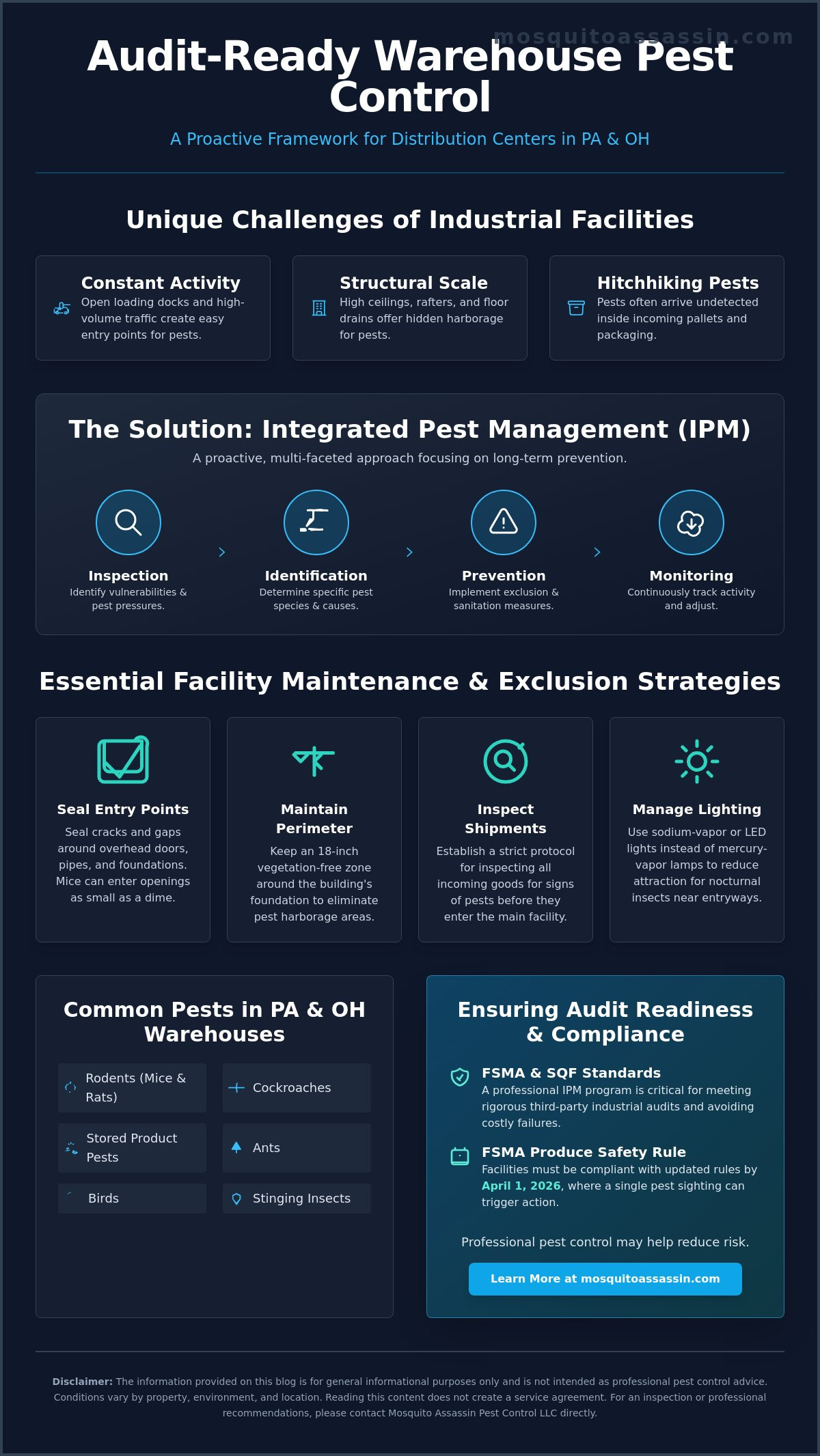
    A single pest sighting in a high-volume distribution center isn’t just a nuisance; it’s a direct threat to a facility’s audit-ready status under the April 1, 2026, FSMA Produce Safety Rule updates. Managing a massive logistics hub requires more than just occasional traps. It demands a sophisticated approach to warehouse pest control solutions that addresses the unique pressures of large-scale storage. Whether operating in Erie County, Crawford County, or Ashtabula County, the risks of structural damage and inventory loss remain constant threats to daily operations.

    It’s understandable to feel the pressure of maintaining a facility that must pass strict health inspections while keeping the bottom line secure. No logistics manager should have to worry about rodent-borne diseases affecting staff or pests compromising the supply chain. This guide outlines the professional standards for protecting distribution centers from infestations and costly audit failures. Readers will learn about the benefits of Integrated Pest Management (IPM), the importance of structural exclusion, and how to transition from reactive treatments to a proactive prevention framework that keeps a facility clean and compliant.

    Key Takeaways

    • Industrial facilities require specialized strategies because standard residential methods cannot account for constant loading dock activity and massive interior spaces.
    • Understanding the seasonal migration of rodents during the transition from fall to winter is critical for protecting high-volume distribution centers in Pennsylvania and Ohio.
    • Implementing an Integrated Pest Management (IPM) framework provides comprehensive warehouse pest control solutions by prioritizing structural prevention over reactive chemical applications.
    • Proper facility maintenance, such as sealing gaps around overhead doors and maintaining an 18-inch vegetation-free perimeter, creates a vital physical barrier against infestations.
    • Selecting a professional partner familiar with FSMA and SQF standards ensures that your pest management program remains compliant with rigorous third-party industrial audits.

    The Unique Challenges of Warehouse Pest Management

    Managing a logistics center involves a constant battle against the elements and local wildlife. Warehouses in Erie and Crawford Counties face environmental pressures that residential properties never encounter. The primary hurdle is the constant movement required to keep a supply chain running. Loading docks often remain open for hours at a time; this creates an open invitation for rodents and insects to enter the facility. Traditional methods designed for small homes fail here because the sheer scale of the building allows pests to hide in plain sight. When a facility spans tens of thousands of square feet, a small localized issue can quickly become a widespread infestation if it isn’t managed with professional commercial pest control strategies.

    To better understand how these pests interact with large-scale environments, watch this helpful video:

    The stakes involve more than just damaged goods. Under the updated April 1, 2026, FSMA Produce Safety Rule, a single pest sighting in a food-grade facility can trigger immediate regulatory action or even temporary shutdowns. Logistics managers must view their inventory as a potential harborage site. Pests often “hitchhike” inside incoming pallets or corrugated packaging, bypassing exterior perimeter defenses entirely. Implementing a modern Integrated Pest Management (IPM) Framework is essential for identifying these risks before they compromise an entire shipment. These warehouse pest control solutions focus on the structural and logistical realities of the industry rather than just reactive spraying.

    Structural Vulnerabilities in Large Facilities

    The physical design of industrial buildings often works against pest exclusion. High ceilings and exposed rafters provide ideal nesting sites for birds and stinging insects, safe from the daily activity on the warehouse floor. Below the surface, expansion joints and floor drains act as hidden highways, allowing cockroaches and ants to move undetected across the facility. Even the lighting used for night shifts can complicate matters. Intense exterior security lights often draw nocturnal insects toward loading bays, where they wait for the next door to open and provide access to the interior.

    The Logistical Risk of Incoming Shipments

    Cross-docking and high-velocity distribution models increase the speed of operations, but they also increase the risk of pest introduction. When pallets move quickly from one truck to another, there is rarely enough time for a deep inspection. German cockroaches or stored product beetles can easily hide in the gaps of a wooden pallet or the folds of corrugated cardboard. Establishing a strict protocol for inspecting incoming goods is a vital component of effective warehouse pest control solutions. Without these checks, a facility essentially imports its own pest problems from hundreds of miles away, rendering exterior treatments less effective.

    Common Pests in PA and OH Distribution Centers

    The climate around Lake Erie dictates the movement of pests in the Tri-County region. Facilities in Erie, Crawford, and Ashtabula Counties face distinct seasonal pressures that require specialized warehouse pest control solutions. Unlike residential settings, a distribution center offers massive amounts of heat and shelter, making it the primary target for local wildlife when the weather turns. Identifying these intruders early is the only way to prevent inventory loss and maintain the high standards required by industrial audits.

    Rodent Pressure in the Tri-County Region

    The transition from fall to winter in Pennsylvania and Ohio triggers a massive migration of rodents toward heated structures. House mice are common year-round, but they become an urgent threat when temperatures drop. These small rodents can squeeze through gaps as thin as a pencil to reach stored goods. Norway rats are a more formidable challenge. They often burrow beneath foundations or enter through damaged loading dock seals. Maintaining a clear perimeter is vital; thick exterior vegetation provides the necessary cover for rodents to approach the building undetected. Removing weeds and tall grass reduces the “runways” these animals use to scout for entry points.

    Stored Product Pests and Inventory Integrity

    Food-grade warehouses and pharmaceutical sites face specific risks from Stored Product Pests (SPP). Indian meal moths and saw-toothed grain beetles are the most frequent offenders in these environments. These pests don’t just eat the product; they contaminate it with webbing, larvae, and waste. Implementing a “First-In, First-Out” (FIFO) inventory method is a powerful prevention tool. It ensures that older stock doesn’t sit long enough to become a breeding ground. Signs of an SPP infestation include small holes in packaging or fine silk-like threads inside containers. Because these insects thrive in stagnant air, moisture control and proper ventilation are critical for preventing secondary beetle infestations that can ruin entire pallets of dry goods.

    Beyond rodents and beetles, cockroaches and birds present ongoing operational risks. Cockroaches typically congregate in moisture-rich utility areas or employee breakrooms where food debris is present. Birds, specifically pigeons and sparrows, utilize high rafters for nesting. Their droppings are highly acidic and carry pathogens, posing a direct threat to both structural integrity and employee safety. Managing these diverse threats requires an ecosystem-based strategy that focuses on long-term prevention rather than just temporary fixes. If you’re concerned about seasonal pest migration, scheduling a professional inspection for your facility can help identify vulnerabilities before they lead to an audit failure.

    Effective pest management in a logistics environment is a technical discipline. It requires a deep understanding of local biology and the specific regulatory requirements of the industry. Ensuring your facility is protected from the unique pressures of the PA and OH climate is a full-time job that starts with a solid defense of the building’s exterior envelope. Professional warehouse pest control solutions provide the consistent monitoring needed to keep these regional pests at bay year-round.

    Warehouse Pest Control Solutions: A Comprehensive Guide for Logistics Facilities

    The Integrated Pest Management (IPM) Framework

    Modern logistics facilities require a disciplined approach to sanitation and safety. Integrated Pest Management (IPM) is a science-based strategy that prioritizes long-term prevention over reactive chemical treatments. This framework represents a significant shift in the industry, moving away from broad-spectrum pesticide applications toward targeted, low-impact interventions. By focusing on the root causes of infestations, warehouse pest control solutions become more sustainable and effective. The foundation of this process is constant monitoring and accurate pest identification, ensuring that every action taken is based on real-time data rather than guesswork.

    Determining when to intervene is based on established action thresholds. These thresholds define the point at which pest populations or environmental conditions indicate that action must be taken to prevent a nuisance or hazard. In a high-stakes storage environment, even a single sighting of certain pests might trigger a response to protect inventory integrity and meet safety standards. In areas like Crawford County or Ashtabula County, where seasonal changes are drastic, this methodical approach is the only way to maintain a clean facility year-round.

    The Four Pillars of Industrial IPM

    Successful implementation of this framework involves four distinct areas of focus that work together to create a hostile environment for pests:

    • Inspection: Routine, thorough walkthroughs of the facility perimeter and interior help detect early warning signs before they become major infestations.
    • Sanitation: Eliminating food and water sources is essential. This includes managing employee breakrooms and ensuring that spilled inventory is cleaned immediately.
    • Exclusion: Hardening the building envelope is a physical priority. Sealing gaps in dock levelers and repairing door seals keeps pests from entering in the first place.
    • Mechanical Controls: Professionals utilize traps and specialized light devices as the first line of defense, reducing the need for chemical applications.

    Documentation and Compliance Standards

    In the world of logistics, if an action isn’t documented, it didn’t happen. Logbooks are the primary tool for tracking pest activity, sightings, and the specific corrective actions taken by facility staff or professionals. Detailed reporting serves as the backbone for successful third-party audits, providing the transparency required by organizations like the AIB or SQF. These records prove that a facility is following the updated April 1, 2026, FSMA Produce Safety Rule requirements. You can learn more about commercial pest standards to see how these frameworks apply to your specific industry requirements and help maintain a compliant, pest-free environment.

    Facility Maintenance and Exclusion Strategies

    Effective warehouse pest control solutions rely heavily on structural integrity. While treatments address active populations, the physical building must serve as the first line of defense. A facility’s “envelope” consists of every door, window, and utility penetration that could allow an intruder inside. In large logistics centers, dock levelers and overhead doors are the most common points of failure. Even a gap as small as a quarter inch can permit a young rodent to enter, while smaller insects require even less space. Prioritizing the maintenance of these entry points prevents infestations from ever taking root.

    The exterior environment also dictates pest pressure levels. Adhering to the “18 inch rule” is a standard practice for industrial facilities in Erie and Crawford Counties. This involves maintaining a clear, vegetation free zone around the entire perimeter of the building. Using gravel or river rock instead of mulch or grass removes the cover pests need to approach the foundation. Similarly, waste management protocols must be strict. Dumpsters should be located at least 50 feet away from the building when possible and kept on concrete pads that are cleaned weekly to remove organic debris and standing water.

    Employees are the primary observers of a facility’s health. Training staff to identify the early signs of pest activity, such as droppings, gnaw marks, or grease rubs along walls, allows for rapid intervention. When workers understand that a clean breakroom is a deterrent for resident pest populations, the overall risk of an audit failure decreases. Integrating these maintenance tasks into a standard operating procedure ensures that warehouse pest control solutions remain effective long after the initial treatment. If your facility currently shows signs of activity, a professional commercial pest evaluation can identify specific structural gaps you may have missed.

    Hardening Entry Points

    Hardening a facility involves using materials that pests cannot easily bypass. Installing heavy duty brush seals on all exterior and pedestrian doors creates a physical barrier that blocks light and air, which often attract insects. For utility penetrations, such as where pipes or wires enter the building, using copper mesh or stainless steel wool provides a permanent seal that rodents cannot chew through. Foundation cracks and gaps in masonry should be repaired with high grade sealant or concrete to eliminate hidden highways into the structure.

    Sanitation and Cultural Controls

    Sanitation is a form of pest control that focuses on removing the resources pests need to survive. Standardizing breakroom cleanliness is vital; crumbs and open food containers can support a German cockroach population indefinitely. Additionally, managing standing water on the warehouse floor or in clogged drainage systems prevents moisture rich environments that attract flies and beetles. For those managing complex infestations, reviewing professional rodent removal strategies can provide deeper insight into how these animals exploit structural weaknesses in industrial settings.

    Selecting a Professional Partner for Audit Readiness

    Selecting a partner for an industrial facility requires a shift in perspective. A provider who primarily handles residential homes may struggle with the sheer scale and technical complexity of a massive distribution center. Comprehensive warehouse pest control solutions demand a partner who understands that a single oversight can lead to a failed audit or a significant inventory loss. Professional providers focus on the big picture, ensuring that every dock door, pallet rack, and perimeter fence is part of a unified defense strategy.

    Proactive communication is the hallmark of a high-quality service relationship. You should expect more than just a signature on a service ticket after a visit. A professional partner provides specific insights into structural vulnerabilities and sanitation lapses before they attract pests. This transparency builds trust and ensures that warehouse pest control solutions are integrated into the facility’s daily operational flow. This level of detail keeps the building in a constant state of readiness for unannounced inspections.

    Preparing for Third-Party Audits

    Third-party audits from organizations like AIB International or the Safe Quality Food (SQF) Institute are rigorous. A professional pest management plan serves as documented evidence of due diligence. It proves to auditors that the facility is actively managing risks according to the updated April 1, 2026, FSMA Produce Safety Rule. In food-grade logistics, a zero-tolerance approach is the only acceptable standard for safety.

    Trend analysis reports are a critical component of this documentation. These reports track pest activity over time, allowing managers to identify patterns and demonstrate continuous improvement to auditors. Having a clear, data-driven paper trail shows that the facility is committed to the highest levels of safety and quality. Professional pest control may help reduce risk by providing the technical documentation required to pass these high-stakes evaluations.

    The Local Advantage in Erie, Crawford, and Ashtabula

    Regional expertise is irreplaceable in the Tri-County area. A local provider understands how the Lake Erie climate influences the behavior of Norway rats or stored product beetles. They are familiar with specific Pennsylvania and Ohio regulations, such as the updated pesticide recordkeeping requirements for commercial applicators. This specialized knowledge ensures that your facility remains compliant with both state and federal laws.

    When an urgent issue arises, rapid response times are essential for containment. A local team residing in the same community can arrive quickly to address a breach, helping to protect your business and reputation. This deep community integration ensures that the service is tailored to the environmental factors and pest pressures specific to Erie, Crawford, and Ashtabula Counties. For an inspection or professional recommendations, please contact a licensed professional to evaluate your facility’s specific needs.

    Disclaimer: The information provided on this blog is for general informational purposes only and is not intended as professional pest control advice. Conditions vary by property, environment, and location. Reading this content does not create a service agreement. For an inspection or professional recommendations, please contact Mosquito Assassin Pest Control LLC directly.

    Securing Your Facility for Long-Term Compliance

    Maintaining a pest-free distribution center is a continuous logistical commitment that requires more than just reactive treatments. By prioritizing structural exclusion and adopting a science-based Integrated Pest Management framework, facility managers can significantly reduce the risk of inventory loss and audit failure. It’s clear that comprehensive warehouse pest control solutions are essential for meeting the strict requirements of the FSMA and other third-party standards.

    Licensed professionals in Pennsylvania and Ohio provide the local expertise needed to handle the specific environmental pressures of Erie, Crawford, and Ashtabula Counties. This expertise in commercial IPM standards ensures your facility remains protected and compliant year-round. Professional pest control may help reduce risk. For an inspection or professional recommendations, please contact us today.

    Disclaimer: The information provided on this blog is for general informational purposes only and is not intended as professional pest control advice. Conditions vary by property, environment, and location. Reading this content does not create a service agreement. For an inspection or professional recommendations, please contact Mosquito Assassin Pest Control LLC directly.
    Frequently Asked Questions

    What are the most common pests found in warehouses?

    Rodents, stored product pests, and cockroaches are the most frequent intruders in industrial spaces. In the Pennsylvania and Ohio regions, Norway rats and house mice are primary threats, especially during seasonal transitions. Food-grade sites often deal with Indian meal moths or saw-toothed grain beetles. Maintaining comprehensive warehouse pest control solutions ensures these diverse threats are identified before they compromise inventory or structural integrity.

    How do I pass a pest control audit in a distribution center?

    Passing a pest control audit requires meticulous documentation and evidence of a proactive prevention plan. Facilities must maintain updated logbooks, trend analysis reports, and proof of corrective actions taken to address structural or sanitation issues. Adhering to the April 1, 2026, FSMA Produce Safety Rule updates is essential for compliance. A professional partner can help ensure all documentation meets the specific requirements of third-party auditors like AIB or SQF.

    How often should a warehouse be inspected for pests?

    Most industrial facilities require at least monthly inspections to remain compliant and proactive. High-velocity distribution centers or food-grade warehouses often benefit from weekly or bi-weekly visits due to the constant movement of goods and higher risk levels. Regular monitoring allows professionals to detect early signs of activity and adjust warehouse pest control solutions based on seasonal pressures in Erie, Crawford, and Ashtabula Counties.

    What is Integrated Pest Management (IPM) in a commercial setting?

    Integrated Pest Management (IPM) is a science-based framework that emphasizes long-term prevention through non-chemical methods. This approach focuses on detailed inspections, improved sanitation, and structural exclusion to make the facility less attractive to pests. In a commercial setting, IPM minimizes the reliance on broad-spectrum pesticides by utilizing mechanical traps and targeted, low-impact interventions only when established action thresholds are met.

    Can pests arrive in a warehouse through incoming shipments?

    Pests frequently bypass exterior defenses by hitchhiking inside pallets, crates, and corrugated packaging. Cockroaches, beetles, and even rodents can hide within shipments arriving from other regions. Establishing a strict inspection protocol for all incoming goods is a vital cultural control. This practice prevents the introduction of new populations and protects the existing inventory from contamination or damage.

    How do I keep rodents out of my loading docks?

    Keeping rodents out of loading docks requires a combination of physical exclusion and strict sanitation. Installing heavy-duty brush seals on overhead doors and sealing gaps around dock levelers removes the primary entry points. Additionally, keeping the area free of spilled product and debris reduces the food sources that attract mice and rats. Correcting these structural vulnerabilities is the most effective way to harden the building’s envelope.

    Is professional pest control safe for warehouse employees?

    Professional pest management standards are designed to prioritize the safety and wellbeing of all facility staff. By utilizing the IPM framework, professionals focus on targeted applications and mechanical controls rather than broad-spectrum spraying. This approach reduces potential exposure while effectively managing pest populations. Licensed technicians follow strict federal and state guidelines to ensure that all interventions are performed in a controlled, responsible manner.

    What is the 18-inch rule in warehouse pest management?

    The 18-inch rule is a standard maintenance practice that involves keeping a clear, vegetation-free zone around the building’s perimeter. This zone is typically filled with gravel or river rock to eliminate the cover pests need to approach the foundation undetected. By removing tall grass and weeds, facility managers can significantly reduce the rodent pressure on the structure and make inspections more effective.

    Disclaimer: The information provided on this blog is for general informational purposes only and is not intended as professional pest control advice. Conditions vary by property, environment, and location. Reading this content does not create a service agreement. For an inspection or professional recommendations, please contact Mosquito Assassin Pest Control LLC directly.

  • Green Pest Control in Erie: A Guide to Eco-Friendly Management

    Green Pest Control in Erie: A Guide to Eco-Friendly Management

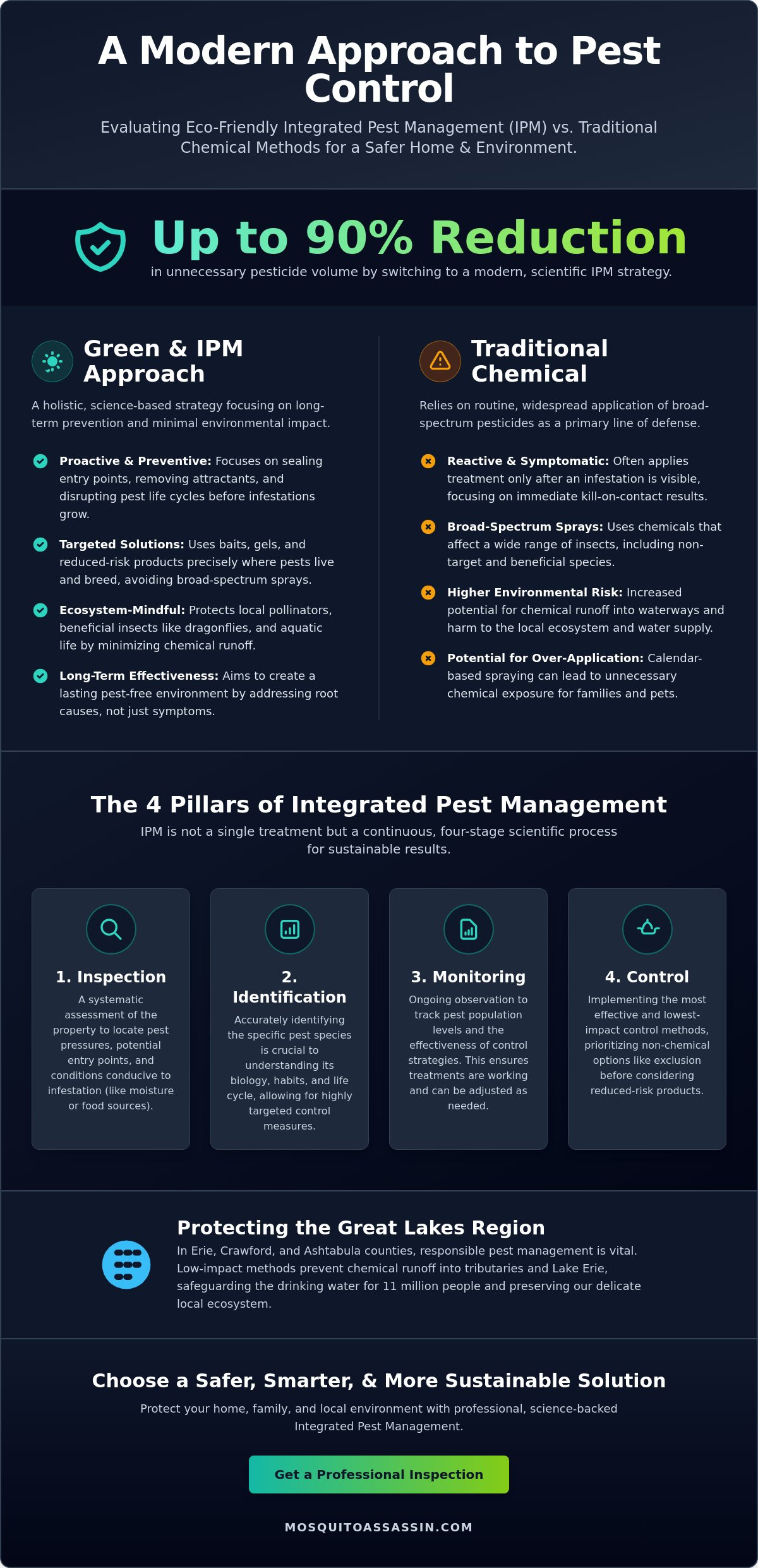
    Can a pest management strategy actually strengthen the local ecosystem while effectively removing unwanted intruders from your home? A significant portion of homeowners in Erie, Crawford, and Ashtabula Counties find themselves caught between the desire for a pest-free living space and the fear of exposing their families to chemical residues. It’s a valid concern when considering the delicate balance of the Great Lakes environment. Implementing green pest control Erie residents can trust doesn’t mean you have to settle for less effective results. Modern Integrated Pest Management (IPM) can reduce unnecessary pesticide volume by up to 90% while maintaining high levels of control through scientific, targeted applications.

    This guide explores how environmentally conscious management protects your property while safeguarding the local pollinators that keep the Pennsylvania and Ohio landscapes thriving. You’ll learn the scientific differences between traditional and eco-friendly approaches to make an informed decision for your household. By understanding these sustainable methods, you can achieve a secure home and identify a professional service that balances safety with technical precision.

    Disclaimer: The information provided on this blog is for general informational purposes only and is not intended as professional pest control advice. Conditions vary by property, environment, and location. Reading this content does not create a service agreement. For an inspection or professional recommendations, please contact Mosquito Assassin Pest Control LLC directly.
    Key Takeaways

    • Learn how the four pillars of Integrated Pest Management provide a scientific framework for managing infestations through systematic inspection and monitoring.
    • Understand how regional geography influences local pest behavior and why the green pest control Erie homeowners utilize focuses on long-term prevention.
    • Evaluate the science behind eco-friendly treatments to understand their effectiveness and how they compare to traditional chemical applications.
    • Identify seasonal prevention strategies tailored for the humid climates of Crawford and Ashtabula counties to better manage mosquitoes and stinging insects.
    • Discover why consistent monitoring and professional identification offer the most sustainable results for maintaining a pest-free home.

    Understanding Green Pest Control in the Erie Region

    Effective green pest control Erie residents rely on is defined as a holistic strategy that prioritizes long-term prevention over temporary fixes. It’s a science-based methodology that considers the entire ecosystem of a property rather than just the immediate infestation. In Northwest Pennsylvania, the humid climate and the 836 miles of Lake Erie shoreline create unique pest pressures. This local geography means that pest management must be precise to avoid harming the delicate balance of the Great Lakes basin.

    To better understand this concept, watch this helpful video:

    Many homeowners mistakenly believe that eco-friendly treatments are less powerful or don’t last as long as traditional chemicals. In reality, modern botanical and reduced-risk products provide targeted results without the broad-spectrum impact of older pesticides. These solutions are designed to break the life cycle of pests while remaining mindful of local pollinators like honeybees and monarch butterflies. A professional approach often utilizes Integrated Pest Management (IPM) to ensure treatments are both effective and environmentally responsible.

    The Environmental Impact of Local Pest Management

    Chemical runoff is a significant concern for properties in Erie and Crawford Counties. When heavy rains hit the region, substances applied to lawns can wash into local tributaries like French Creek and eventually reach Lake Erie. Protecting these water systems is vital for the 11 million people who rely on the lake for drinking water. Native species, such as dragonflies and certain beetle varieties, act as natural predators. Maintaining their populations through low-impact management helps suppress pest numbers naturally. Residential properties near lakefronts benefit from these reduced-risk products because they minimize the footprint on the immediate aquatic environment.

    Distinguishing Between Green and Traditional Approaches

    The primary difference lies in the shift from reactive spraying to proactive exclusion. Traditional methods often rely on broad-spectrum applications that affect non-target insects. In contrast, a green approach focuses on detailed inspections to identify entry points and food sources. Professionals look for structural gaps or moisture issues that attract pests in the first place.

    • Targeted Solutions: Using baits and gels instead of wall-to-wall sprays.
    • Exclusion: Sealing cracks and crevices to prevent entry.
    • Professional Standards: Seeking technicians who follow rigorous eco-friendly protocols.

    Consulting with a professional may help identify specific risks on a property. For more information on service areas, visiting a local service page can provide context on regional pest behaviors. If an infestation is suspected, professional pest control may help reduce risk and restore comfort to the home. Scheduling an inspection through a booking portal

    The Science of Integrated Pest Management (IPM)

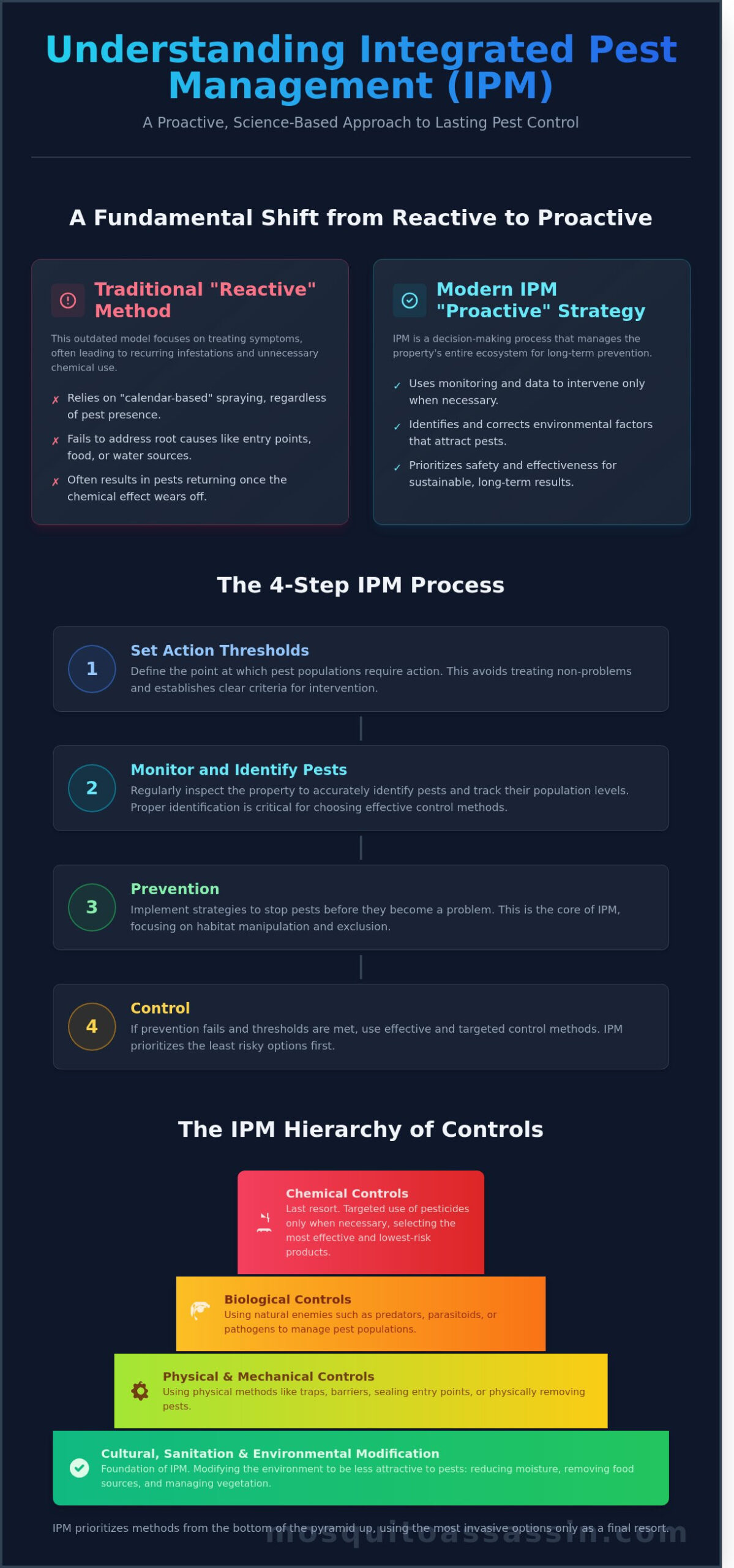
    Integrated Pest Management, or IPM, serves as the scientific foundation for modern, sustainable pest solutions. It’s not just a single treatment method; it’s a comprehensive strategy that prioritizes long-term prevention over short-term fixes. In the context of green pest control Erie homeowners often look for solutions that minimize environmental impact while maximizing effectiveness. This approach relies on four essential pillars: inspection, identification, monitoring, and control. By understanding the specific needs of a property, technicians can apply the most effective methods with the least amount of waste.

    According to the UC Guide to IPM, this methodology focuses on biological and environmental information rather than just broad chemical application. Using pest biology allows for smarter timing. For instance, treating for specific species during their most vulnerable life stages ensures better results with fewer resources. This biological approach is vital in Erie and Crawford Counties, where seasonal shifts dictate pest behavior. By focusing on the “why” and “how” of an infestation, the need for heavy, recurring treatments is significantly reduced.

    How Professional Inspections Drive Eco-Friendly Results

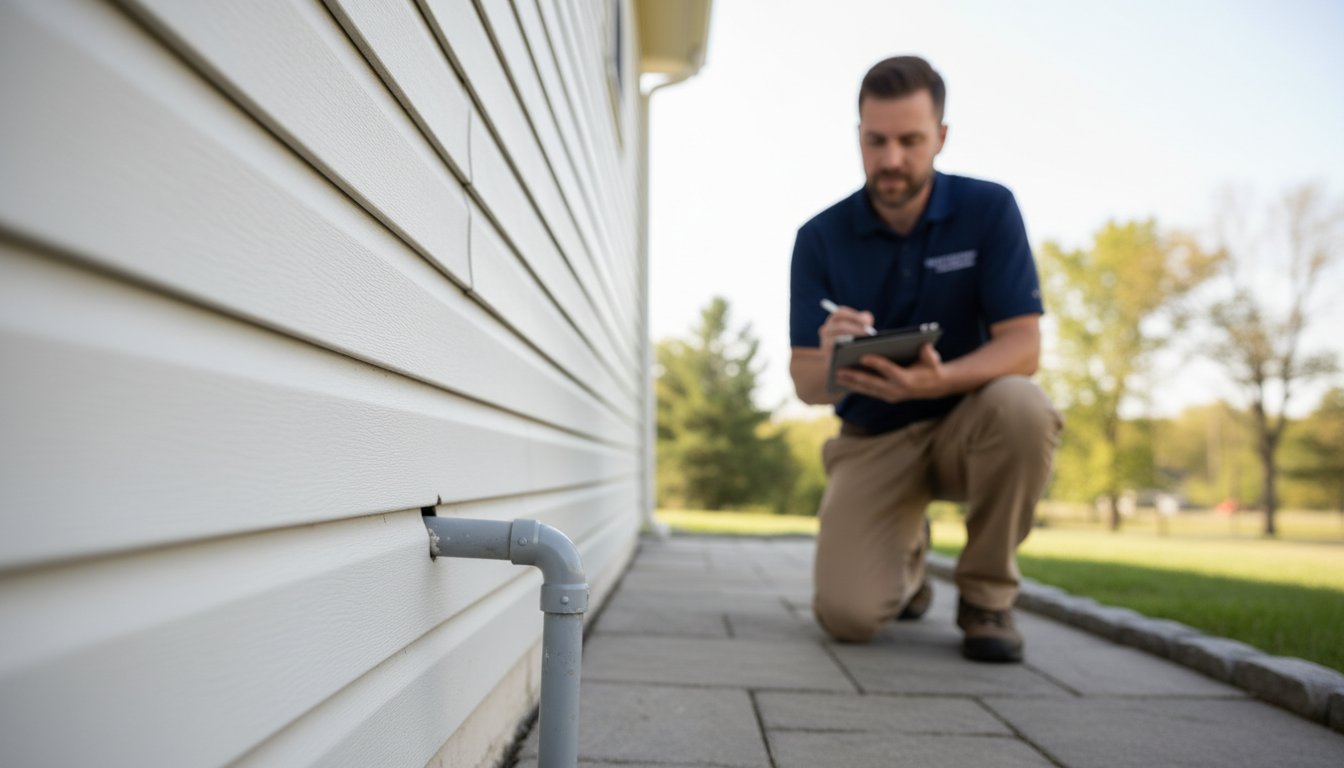
    Effective management starts with a thorough walk-through. Erie’s older architecture, featuring stone foundations and aged woodwork, often presents unique entry points for pests like carpenter ants or mice. A professional inspection identifies these conducive conditions before they become full-blown infestations. Monitoring tools, such as sticky traps or pheromone lures, help determine if a pest population is high enough to require intervention. This data-driven approach prevents unnecessary treatments and ensures that any action taken is justified by real-time evidence. It’s a precise way to manage risks without guessing.

    Mechanical and Physical Control Strategies

    Physical barriers are a core component of green pest control Erie residents can implement to protect their homes. Exclusion involves sealing cracks, crevices, and gaps in a home’s exterior using weather-resistant materials. In the damp climates of Ashtabula and Erie, managing moisture in basements and crawlspaces is critical. High humidity levels, often exceeding 60% in summer months, attract silverfish, centipedes, and wood-destroying organisms. Simple sanitation, like removing standing water or securing food sources, removes the incentives for pests to stay. These mechanical fixes provide a permanent defense that chemicals simply can’t match.

    For those dealing with persistent issues, a professional inspection can help identify these hidden vulnerabilities and provide a clear path forward.

    Disclaimer: The information provided on this blog is for general informational purposes only and is not intended as professional pest control advice. Conditions vary by property, environment, and location. Reading this content does not create a service agreement. For an inspection or professional recommendations, please contact Mosquito Assassin Pest Control LLC directly.

    Green Pest Control in Erie: A Guide to Eco-Friendly Management

    Effectiveness and Safety: Green vs. Traditional Methods

    A frequent question regarding green pest control Erie residents ask is whether eco-friendly products actually work. The short answer is yes. Modern botanical and mineral-based treatments are highly effective at eliminating active infestations. However, the mechanism of action differs from traditional synthetics. While older chemicals relied on long-lasting residuals that could persist in the environment for 90 days or more, many green products utilize natural oils that break down within 30 to 45 days. This shorter lifespan reduces chemical accumulation in the home but may require more strategic application schedules to maintain a protective barrier.

    Safety is the primary driver for choosing eco-friendly options. Households with infants, elderly family members, or pets often prefer methods that minimize chemical exposure. Traditional broadcast spraying involves treating large surface areas, whereas modern protocols focus on the science of Integrated Pest Management (IPM) principles. By identifying the specific biology of a pest, a technician can apply treatments only where they are needed, significantly reducing the total volume of product used in a living space.

    Targeted Applications and Reduced Exposure

    Precision placement is a hallmark of professional pest management. Instead of a broad liquid perimeter spray, targeted applications use baiting systems and gel placements in areas where pests hide but humans and pets don’t frequent. This approach is particularly effective for ants and cockroaches. Understanding the “LD50” value is helpful here; this is a standard measure of a substance’s toxicity. Many green products have significantly higher LD50 ratings than traditional pesticides, indicating they require a much higher dose to be harmful to mammals. This provides an additional layer of reassurance for families in Erie and Crawford Counties.

    Managing Expectations for Eco-Friendly Services

    Success with green pest control Erie services often involves a partnership between the professional and the homeowner. Because these products don’t leave heavy residues, initial monitoring may occur more frequently, perhaps every 14 to 21 days, until the population is controlled. Homeowners play a vital role by eliminating food sources and sealing entry points. Professional pest control may help reduce risk while maintaining safety by focusing on long-term prevention rather than just temporary knockdown. This methodical approach ensures that the home remains a healthy environment for all residents in the Ashtabula County and Erie regions.

    Disclaimer: The information provided on this blog is for general informational purposes only and is not intended as professional pest control advice. Conditions vary by property, environment, and location. Reading this content does not create a service agreement. For an inspection or professional recommendations, please contact Mosquito Assassin Pest Control LLC directly.
    Seasonal Eco-Friendly Prevention for Erie Homeowners

    Effective pest management in the Great Lakes region requires a strategy that shifts alongside the local climate. Homeowners looking for green pest control Erie solutions often find that the best defense is a proactive seasonal schedule. In Ashtabula County, the arrival of spring signals the awakening of carpenter ants and social wasps. Inspecting the foundation for cracks and clearing debris away from the home’s perimeter during these months prevents early season colonies from establishing a foothold.

    Summer in Crawford County brings high humidity levels, often exceeding 65 percent, which accelerates the life cycle of biting insects. As autumn approaches, the focus shifts to the building’s exterior envelope. When the first frost hits Northwest Pennsylvania, rodents instinctively seek the warmth of residential insulation. Winter remains a time for interior vigilance; maintaining the protective barrier and monitoring basement or crawlspace areas ensures that no pests have successfully overwintered inside the structure.

    Mosquito and Tick Management Without Harsh Chemicals

    Controlling outdoor pests in the humid Erie climate starts with habitat modification. Mosquitoes require very little water to breed; a bottle cap full of stagnant water can host hundreds of larvae. Emptying birdbaths weekly and clearing clogged gutters are essential steps in a mosquito control program that prioritizes environmental health. For yard treatments, botanical oils derived from cedarwood or peppermint offer a low-impact alternative to traditional synthetics. These biological controls work by disrupting the sensory receptors of ticks and mosquitoes without leaving long-lasting chemical residues in the local soil.

    Rodent Prevention Through Exclusion

    Mechanical exclusion is the most sustainable way to keep mice and rats out of a home. Mice can squeeze through gaps no larger than a dime; this makes sealing even the smallest exterior cracks vital. Using steel wool or copper mesh to plug holes around utility pipes is far more effective than chemical baits, as rodents cannot chew through these metallic barriers. This physical approach prevents the need for toxins that could potentially harm local wildlife or household pets. For those dealing with an active entry, professional rodent removal focuses on identifying these structural vulnerabilities to ensure a long-term solution.

    Maintaining a pest-free home through every season is a year-round commitment. For residents who need assistance identifying potential entry points or developing a prevention plan, professional pest control may help reduce risk.

    Disclaimer: The information provided on this blog is for general informational purposes only and is not intended as professional pest control advice. Conditions vary by property, environment, and location. Reading this content does not create a service agreement. For an inspection or professional recommendations, please contact Mosquito Assassin Pest Control LLC directly.

    Professional Solutions for Erie, Crawford, and Ashtabula Counties

    Local expertise provides the foundation for effective management because the Great Lakes region presents specific biological challenges. Lake Erie influences local weather patterns, creating high-humidity environments that favor pests like carpenter ants and mosquitoes. Applying green pest control Erie strategies requires a deep understanding of these regional life cycles. A technician must recognize how a late spring in Crawford County or a humid summer in Ashtabula County shifts pest behavior. Year-round protection plans offer the most sustainable results by focusing on prevention rather than reaction. Industry data suggests that consistent monitoring can reduce the need for emergency interventions by significant margins. By maintaining a perimeter and identifying vulnerabilities early, homeowners prevent infestations before they start.

    When evaluating a professional service, look for Integrated Pest Management (IPM) practices. This methodology prioritizes physical barriers and sanitation. A reputable provider will explain how they use exclusion techniques to keep pests out. They shouldn’t rely solely on one method but should offer a multifaceted strategy tailored to the property’s specific environment. This approach focuses on long-term solutions that address the root cause of pest activity rather than just treating the symptoms.

    Selecting a Local Partner in Pest Management

    It’s essential to verify that a provider holds valid licenses for both Pennsylvania and Ohio, especially for those living near state lines. Proper insurance is equally important to protect the property during any service. Homeowners should look for customized treatment plans instead of generic solutions. A rural property in Crawford County has different needs than an urban residence in Erie. For more information on professional standards, residents can review a general pest control guide to understand common management practices.

    The Professional Process: What to Expect

    A professional strategy always begins with a comprehensive initial inspection. This step identifies entry points, moisture issues, and nesting sites. This data allows for the development of a green strategy that targets pests at the source. Successful management also relies on ongoing communication and follow-up visits to ensure the plan remains effective as seasons change. For an inspection or professional recommendations, please contact Mosquito Assassin Pest Control LLC directly.
    Disclaimer: The information provided on this blog is for general informational purposes only and is not intended as professional pest control advice. Conditions vary by property, environment, and location. Reading this content does not create a service agreement. For an inspection or professional recommendations, please contact Mosquito Assassin Pest Control LLC directly.
    Protecting Your Property with Sustainable Pest Management

    Implementing eco-friendly strategies requires a shift toward Integrated Pest Management (IPM), a science-based approach focusing on long-term prevention. According to the Environmental Protection Agency, IPM programs can significantly reduce the need for traditional pesticide applications by addressing the root causes of infestations. By focusing on seasonal exclusion and habitat modification, residents in the Great Lakes region can maintain a healthy home environment. Choosing green pest control Erie methods ensures that property management aligns with the specific ecological needs of Northwestern Pennsylvania and Northeastern Ohio.

    Reliable results come from local expertise. Mosquito Assassin Pest Control LLC is a five-star rated professional service locally owned and operated in Cranesville, PA. They’re licensed and insured in both PA and OH, providing an extra layer of security for homeowners in Erie, Crawford, and Ashtabula counties. Taking proactive steps today prevents larger infestations tomorrow. It’s often more effective to address environmental factors before pests become a significant problem.

    For an inspection or professional recommendations, please contact Mosquito Assassin Pest Control LLC directly.
    Disclaimer: The information provided on this blog is for general informational purposes only and is not intended as professional pest control advice. Conditions vary by property, environment, and location. Reading this content does not create a service agreement. For an inspection or professional recommendations, please contact Mosquito Assassin Pest Control LLC directly.

    Frequently Asked Questions

    Is green pest control as effective as traditional chemical treatments?

    Green pest control is highly effective when implemented as part of an Integrated Pest Management (IPM) strategy. Data from the Environmental Protection Agency (EPA) shows that IPM methods, which prioritize low-toxicity solutions and prevention, can reduce pest populations by up to 90 percent in residential settings. These treatments target the root cause of infestations rather than just killing visible bugs. This approach provides long term results by focusing on exclusion and habitat modification.

    Are eco-friendly pest products safe for use around dogs and cats?

    Eco-friendly pest products are safe for use around dogs and cats when applied according to the manufacturer’s label. Many of these solutions utilize botanical oils, such as rosemary or peppermint, which possess natural insecticidal properties but have low mammalian toxicity. It’s still standard practice to keep pets away from treated areas until the product has fully dried, which usually takes about 30 to 60 minutes. This ensures maximum safety for all family members.

    How often does a home need green pest control treatments in Erie?

    Most properties in Northwest Pennsylvania require green pest control Erie treatments approximately four times per year. This quarterly schedule aligns with the changing seasons in Erie County, where pests seek shelter indoors as temperatures drop in October or emerge as the ground thaws in April. Regular maintenance helps establish a consistent barrier that prevents pests from establishing large colonies. Professional pest control may help reduce risk by maintaining these protective barriers year round.

    What pests are most common in Erie and Crawford Counties?

    The most common pests in Erie and Crawford Counties include carpenter ants, cluster flies, and deer ticks. According to local agricultural data, carpenter ant activity typically peaks between May and August. In Crawford County, tick populations have increased by 20 percent in some areas over the last three years. Stink bugs and boxelder bugs are also frequent seasonal invaders that often enter homes during the cooling temperatures of late September.

    Can green pest control handle a severe infestation of ants or roaches?

    Green pest control can manage severe infestations of ants or roaches through the use of targeted baits and growth regulators. These methods disrupt the life cycle of the insects, preventing them from reaching reproductive maturity. While a single application may reduce the population, a 2022 industry report suggests that heavy infestations often require three to four follow up visits to ensure total elimination of the nesting site. Professional intervention is often necessary for these advanced cases.

    Do I need to leave my house during an eco-friendly pest treatment?

    Residents don’t usually need to leave their house during an eco-friendly pest treatment. Because these products often rely on natural ingredients and have low odor, there’s no requirement for the 4 to 6 hour evacuation period common with traditional fumigants. It’s generally sufficient to stay out of the specific room being treated for about 15 minutes while the application dries. This makes eco-friendly options a convenient choice for busy households in the tri-state area.

    How does the weather in Northwest Pennsylvania affect green pest control?

    The high humidity and heavy snowfall in Northwest Pennsylvania directly influence pest behavior and treatment longevity. Erie receives an average of 100 inches of snow annually, which can create moisture problems that attract wood-destroying insects like carpenter ants. Green treatments often include granular applications that remain effective even during light rain. These durable solutions provide a consistent defense against the region’s unpredictable weather patterns, ensuring that properties remain protected throughout the harsh winter months.

    What is the difference between organic and green pest control?

    Organic pest control uses products derived solely from natural sources, while green pest control Erie focuses on the broader environmental impact of the treatment. Organic solutions must meet strict standards for natural ingredients. Green pest control is a more comprehensive category that includes low-toxicity synthetic options and preventative techniques like sealing cracks to minimize chemical use. Both methods aim to reduce the ecological footprint of pest management while effectively safeguarding the home from invaders.

    Disclaimer: The information provided on this blog is for general informational purposes only and is not intended as professional pest control advice. Conditions vary by property, environment, and location. Reading this content does not create a service agreement. For an inspection or professional recommendations, please contact Mosquito Assassin Pest Control LLC directly.

  • Child-Safe Pest Removal: A Comprehensive Guide for Families in PA and OH

    Child-Safe Pest Removal: A Comprehensive Guide for Families in PA and OH

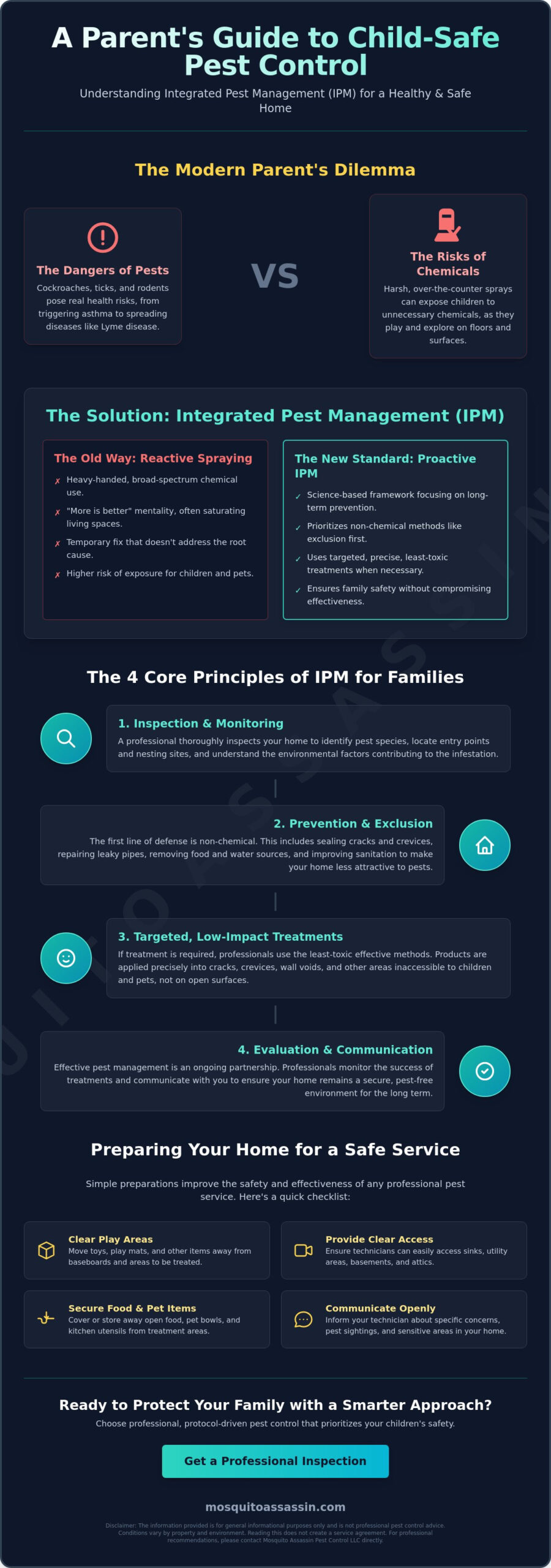
    What if the standard store-bought spray used to stop ants is actually more concerning for a toddler than the insects themselves? Most parents in Erie and Crawford Counties feel caught in a difficult position. They worry about the bacteria cockroaches carry or the risk of Lyme disease from ticks, yet the thought of harsh chemicals near play areas is equally unsettling. This is why child-safe pest removal has become a priority for local households. It’s a common struggle when DIY natural remedies fail to provide lasting results. Finding a balance is essential for a healthy home.

    Professional Integrated Pest Management (IPM) provides a solution that balances effective eradication with high safety standards for families. According to the Environmental Protection Agency (EPA), IPM focuses on long-term prevention by managing the home environment rather than relying on heavy surface sprays. This guide explains how professional protocols protect children from both pests and unnecessary exposure. Readers will learn about targeted treatment methods used in Ashtabula County and discover practical steps to maintain a secure, pest-free environment.

    Disclaimer: The information provided on this blog is for general informational purposes only and is not intended as professional pest control advice. Conditions vary by property, environment, and location. Reading this content does not create a service agreement. For an inspection or professional recommendations, please contact Mosquito Assassin Pest Control LLC directly.

    Key Takeaways

    • Discover why Integrated Pest Management (IPM) serves as the industry standard for protecting households with children from pests and unnecessary treatment exposure.
    • Learn how professional child-safe pest removal protocols prioritize non-chemical methods, such as exclusion and thorough inspection, before considering targeted applications.
    • Understand the specific pest challenges facing families in Erie, Crawford, and Ashtabula counties and how to evaluate the effectiveness of various treatment options.
    • Find out how simple household preparations, such as clearing play areas and maintaining open communication with a professional, can improve the safety and accuracy of a service.
    • Identify the critical factors to look for when selecting a licensed pest management partner who emphasizes family-safe practices and protocol-driven solutions.

    Understanding the Need for Child-Safe Pest Management

    Child-safe pest removal is a protocol-driven approach to pest management that prioritizes the health and safety of children while effectively addressing infestations. This method isn’t just about the products used; it’s about a comprehensive strategy that considers the unique behaviors and biology of children. Parents in Erie and Crawford Counties in Pennsylvania, along with those in Ashtabula County, Ohio, often find themselves managing a dual risk. They must balance the very real dangers posed by pests, such as disease and physical injury, with the necessity of ensuring that any treatment applied to the home is handled with extreme care.

    To better understand this concept, watch this helpful video:

    Children are significantly more vulnerable to both pests and environmental factors than adults. Their developing bodies, faster metabolisms, and tendency to play on the floor increase their potential exposure to anything introduced into their living environment. Because kids are naturally curious and explore their surroundings with their hands and mouths, a standard broad-spectrum application of chemicals is no longer the industry preference. Instead, professional standards have shifted toward targeted applications that focus on pest biology rather than saturating a living space with product.

    Health Risks Associated with Common Household Pests

    The presence of pests in a home is a legitimate health concern. Cockroaches and rodents are known to carry allergens that can trigger severe respiratory distress and asthma attacks in sensitive children. In the regional climate of Pennsylvania and Ohio, ticks and mosquitoes represent significant threats as vectors for diseases like Lyme disease. Additionally, curious children are at a higher risk of encounters with stinging insects or spiders, which can lead to painful reactions or allergic emergencies if nests are located near play areas.

    Why Traditional Pesticide Views Are Changing

    The history of pest control has seen a major evolution from the heavy-handed chemical use of previous decades to the refined methods used today. Modern professional standards are rooted in The Principles of Integrated Pest Management (IPM), a science-based framework that emphasizes prevention, monitoring, and the use of the least-toxic effective methods. There’s a clear distinction between professional-grade protocols and over-the-counter DIY options. While DIY products often encourage a “more is better” mentality, professional child-safe pest removal focuses on precise placement in cracks, crevices, and wall voids where children cannot reach them. This shift ensures that the home remains a fortress against pests without compromising the safety of the family.

    Disclaimer: The information provided on this blog is for general informational purposes only and is not intended as professional pest control advice. Conditions vary by property, environment, and location. Reading this content does not create a service agreement. For an inspection or professional recommendations, please contact Mosquito Assassin Pest Control LLC directly.

    The Principles of Integrated Pest Management (IPM) for Families

    Integrated Pest Management (IPM) represents the industry gold standard for maintaining a healthy home. It’s a strategy that prioritizes long term prevention over temporary fixes. For parents seeking child-safe pest removal, IPM provides a framework that minimizes exposure to chemicals by focusing on the underlying causes of an infestation. Instead of merely treating symptoms, such as seeing an occasional ant, this method addresses the source. This might involve removing a rotting log near the foundation or fixing a moisture problem in a crawlspace. This rigorous standard is why many state regulations in Pennsylvania and Ohio require IPM practices in schools and daycares. It ensures that the environment remains hostile to pests but safe for occupants.

    Inspection and Identification

    Professional monitoring is the first line of defense. Identifying the exact species is critical because different pests require different strategies. For instance, a technician might find that a specific beetle is attracted to a spilled bag of grain in the pantry rather than structural issues. Understanding these biological nuances helps limit the scope of any necessary intervention. Citing Practical Steps to Prepare a Household, experts emphasize that identifying entry points and attractants unique to family households, like pet food bowls or crumb-heavy high chairs, is essential for effective control.

    Exclusion and Habitat Modification

    Prevention is more effective than a cure. Sealing cracks with silicone caulk or installing door sweeps keeps pests out physically without the use of chemicals. In Erie and Crawford Counties, managing moisture is equally important. Fixing a leaky pipe under a kitchen sink removes the water source that attracts silverfish and cockroaches. Yard maintenance also plays a vital role. Keeping grass short and removing leaf litter reduces the habitat for ticks and mosquitoes, creating a safer outdoor play area for children and pets.

    Targeted Application Techniques

    When treatments are required, they’re applied with extreme precision. Instead of broad surface sprays, professionals use gel baits tucked deep into wall voids or behind heavy appliances. These areas are inaccessible to curious hands or pets. For rodent management, the use of tamper-resistant bait stations is a non negotiable safety standard. These stations are designed to keep the bait secure and isolated from the living environment. This targeted approach ensures that child-safe pest removal remains the priority while still achieving total eradication of the pest population. Professional pest control services can help families implement these IPM strategies effectively.

    Disclaimer: The information provided on this blog is for general informational purposes only and is not intended as professional pest control advice. Conditions vary by property, environment, and location. Reading this content does not create a service agreement. For an inspection or professional recommendations, please contact Mosquito Assassin Pest Control LLC directly.

    Child-Safe Pest Removal: A Comprehensive Guide for Families in PA and OH

    Evaluating Child-Safe Treatment Options for Regional Pests

    Families living in Erie, Crawford, and Ashtabula counties face unique pest pressures due to the region’s diverse landscape and climate. When selecting Evaluating Child-Safe Treatment Options, it’s vital to distinguish between marketing claims and scientific efficacy. Many “natural” or “green” products available at hardware stores rely on essential oils that provide short term repellency but fail to eliminate the source of an infestation. If these substances are applied incorrectly or in excessive amounts, they can still cause respiratory irritation or skin sensitivity in young children.

    Professional protocols prioritize Integrated Pest Management (IPM). This approach focuses on long term prevention by studying pest life cycles and their interaction with the environment. Experts select products based on low toxicity profiles and high efficacy, ensuring that the treatment targets the specific biology of the pest without unnecessary chemical broadcast. This method is the foundation of effective child-safe pest removal, as it minimizes the volume of products used while maximizing results.

    Rodent Management in Family Homes

    Rodents are more than just a nuisance; they carry pathogens and can trigger allergies in children. Traditional loose rodenticides, such as pellets or grain baits, are generally avoided in child-safe plans because they can be scattered or moved by the rodents into areas where children play. Professional rodent removal utilizes a safety-first process. This strategy emphasizes mechanical traps placed in locked stations or inaccessible voids and exclusion techniques. Sealing gaps with durable materials prevents mice from entering, reducing the need for reactive treatments inside the living space.

    Mosquito and Tick Protection for Outdoor Play

    Outdoor safety is a major concern in Pennsylvania and Ohio, where the risks of Lyme disease and West Nile virus are well documented by local health departments. Professional mosquito control programs don’t just spray; they target the problem at its source. This involves identifying breeding sites, such as stagnant water in clogged gutters or flowerpots, and using larvicides that specifically target mosquito larvae. Strategic barrier treatments are then applied to the underside of leaves where adult pests rest, protecting play areas while keeping products away from high-touch surfaces.

    Ant and Crawling Insect Control

    Kitchen invaders like pavement ants or carpenter ants are common in the tri-county area. To maintain a child-safe pest removal standard, professionals often use containerized baits instead of broad-spectrum aerosol sprays. These baits are housed in tamper-resistant stations that keep the active ingredient enclosed and away from curious hands. The ants carry the bait back to the colony, providing a targeted solution that doesn’t leave lingering residues on countertops. Consistent general pest control focuses on the home’s exterior perimeter to stop insects before they ever reach the kitchen or nursery.

    Disclaimer: The information provided on this blog is for general informational purposes only and is not intended as professional pest control advice. Conditions vary by property, environment, and location. Reading this content does not create a service agreement. For an inspection or professional recommendations, please contact Mosquito Assassin Pest Control LLC directly.

    Practical Steps to Prepare a Household for Professional Service

    Preparation is the most critical phase in ensuring child-safe pest removal is both effective and efficient. When a technician arrives at a home in Ashtabula or Erie County, their ability to target specific pest harborage areas depends on the accessibility of the property. Clear communication regarding the presence of infants, toddlers, or pets allows the professional to adjust their application methods to suit the specific needs of the family. Homeowners should identify high-traffic play areas or specific rooms where children spend the majority of their time, as this information helps the technician prioritize safety protocols.

    Understanding the “wait time” is a vital part of the process. Most professional treatments require a period of 2 to 4 hours where the treated areas must remain undisturbed. This window allows products to dry completely and bond to surfaces, which significantly reduces the risk of accidental contact. Technicians will provide specific instructions based on the products used, but staying out of the home until the designated time has passed is a standard industry best practice.

    Pre-Service Checklist for Parents

    • Clear the Perimeter: Remove toys, shoes, and clutter from baseboards and corners. Since 70 percent of indoor pest activity occurs along these edges, technicians need unobstructed access to apply targeted treatments.
    • Secure Personal Items: Place all child gear, including high chairs, strollers, and play mats, in the center of the room or inside sealed plastic bins. Storing pet bowls and water dishes in a separate, closed cabinet prevents any accidental exposure.
    • Ensure Access: Unlock basement doors and clear paths to the exterior foundation. Professionals in Crawford County often find that pests enter through small cracks in the basement or crawl space; providing easy access to these areas ensures a more comprehensive inspection.

    Post-Service Safety Measures

    Once the service is complete and the recommended wait time has passed, parents should focus on maintaining a secure environment. Opening windows for 20 to 30 minutes after returning home can help facilitate fresh air circulation, although modern professional treatments are designed to be low-odor. It’s common to see an increase in pest sightings for 24 to 48 hours after a service as insects emerge from hiding spots; parents should promptly dispose of any dead pests found on the floor to keep them out of reach of curious children.

    Ongoing maintenance is the final piece of the safety puzzle. Professionals often recommend exclusion techniques, such as sealing gaps around windows or doors, to prevent future infestations. Monitoring bait stations, if used, ensures they remain undisturbed and functional. For families seeking more information on scheduling a visit, professional pest control may help reduce risk.

    Disclaimer: The information provided on this blog is for general informational purposes only and is not intended as professional pest control advice. Conditions vary by property, environment, and location. Reading this content does not create a service agreement. For an inspection or professional recommendations, please contact Mosquito Assassin Pest Control LLC directly.

    Selecting a Professional Pest Management Partner

    Licensing and insurance protect the homeowner and ensure the service provider meets state-mandated standards for safety and efficacy. In Pennsylvania and Ohio, licensed professionals must complete rigorous training and stay updated on the latest application techniques to follow current safety standards. Choosing a partner that prioritizes Integrated Pest Management (IPM) is a critical step for families seeking child-safe pest removal. IPM focuses on biological and physical controls first, minimizing the reliance on chemical treatments through habitat modification and exclusion.

    Local expertise in Northwest Pennsylvania and Northeast Ohio provides a significant advantage. Technicians familiar with the climate in Erie and Crawford counties understand how seasonal shifts drive pests indoors. Professional management can reduce the risk of accidental exposure to harmful substances by ensuring treatments are applied precisely where needed, often in areas children cannot reach. Licensed and insured professionals provide the expertise needed to safeguard a home without compromising the health of its youngest residents.

    Questions to Ask a Potential Service Provider

    Homeowners should ask specific questions before hiring a provider to ensure their methods align with family safety goals. It’s important to understand the specific approach a company takes before they begin work on the property.

    • What are the specific child-safe protocols used? Inquire about the protocols used for child-safe pest removal and request a list of product types to ensure they meet your standards.
    • Can I see a detailed inspection report? A thorough provider will always offer a detailed inspection report that identifies entry points and nesting sites before any treatment begins.
    • What is the follow-up process? A reliable service should provide clear communication on how they handle situations where pests persist after the initial visit and what their guarantee covers.

    The Role of Year-Round Protection

    Consistent monitoring is often more effective and safer than reactive, high-intensity treatments used only after a major infestation occurs. A year-round pest control plan allows for ongoing safeguarding of the home environment. This proactive approach identifies potential issues early, which can limit the amount of product needed over time. Finding a partner familiar with the specific pest pressures in Ashtabula, Erie, and Crawford counties ensures the protection plan is tailored to the local environment. Professional pest control may help reduce risk for growing families. For an evaluation or to learn more about localized protection, visit the online booking portal.

    Disclaimer: The information provided on this blog is for general informational purposes only and is not intended as professional pest control advice. Conditions vary by property, environment, and location. Reading this content does not create a service agreement. For an inspection or professional recommendations, please contact Mosquito Assassin Pest Control LLC directly.

    Securing a Healthy Home Environment

    Maintaining a pest-free home doesn’t have to compromise the safety of children or pets. Implementing Integrated Pest Management (IPM) strategies allows families to address infestations through a combination of sanitation, exclusion, and targeted treatments. Research from the Environmental Protection Agency (EPA) indicates that IPM focuses on long term prevention by addressing environmental factors that attract pests. Choosing a professional partner committed to child-safe pest removal ensures that every action taken is methodical and evidence-based. It’s vital to rely on licensed and insured professionals who are locally owned and operated in Northwest PA and Northeast OH, specifically serving Erie, Crawford, and Ashtabula Counties. These specialists provide tailored inspections that reflect the specific environmental conditions of the region. For professional recommendations or a detailed home inspection, contact a specialist today. Taking these proactive steps helps create a safer, more comfortable living space for everyone in the family.

    Disclaimer: The information provided on this blog is for general informational purposes only and is not intended as professional pest control advice. Conditions vary by property, environment, and location. Reading this content does not create a service agreement. For an inspection or professional recommendations, please contact Mosquito Assassin Pest Control LLC directly.

    Frequently Asked Questions

    Is professional pest control safer than DIY methods for children?

    Professional pest control is safer for families because licensed technicians possess the training to apply products with precision. Many homeowners who attempt DIY treatments accidentally over-apply chemicals or use products in high-traffic areas where children play. According to data from the Environmental Protection Agency, professional application follows strict federal guidelines that prioritize targeted placement over broad spraying.

    How long should children stay away from a room after it has been treated?

    Children should typically remain out of a treated area for 2 to 4 hours after the application is complete. This timeframe ensures that liquid treatments have fully dried and any necessary ventilation has occurred. It’s important to wait until surfaces are dry to the touch to prevent any accidental skin contact or inhalation of damp product.

    Are the baits used for ants and roaches dangerous if a child finds them?

    Ant and cockroach baits are hazardous if ingested, but professionals mitigate this risk through strategic placement. Technicians place these baits deep within wall voids, behind heavy appliances, or inside tamper-resistant stations that require a key to open. The National Pesticide Information Center notes that while the active ingredient concentrations are low, keeping these materials out of reach is a standard safety protocol.

    Can professional pest control help with my child’s allergies or asthma?

    Professional pest management can significantly reduce asthma triggers by eliminating pests like cockroaches and rodents. The Asthma and Allergy Foundation of America reports that 63% of homes in the United States contain cockroach allergens, which are known to cause severe respiratory distress in children. Removing the source of these biological allergens helps create a cleaner breathing environment indoors.

    What should I do if my child touches a treated surface?

    If a child comes into contact with a recently treated area, wash the affected skin immediately with plenty of soap and water. Most modern pest products are applied to baseboards or crevices where contact is unlikely, but accidents can happen. Monitoring for skin redness or irritation is a practical step, and parents can consult the product’s safety data sheet for specific ingredient information.

    How often should a home with children be inspected for pests?

    Homes in Erie and Crawford Counties should undergo professional inspections on a quarterly basis to maintain a protective barrier. A 90 day inspection cycle allows technicians to identify seasonal pest entries before they become full infestations. Regular monitoring reduces the need for heavy, reactive treatments, keeping the home environment more consistent and controlled for young residents.

    Are there specific pests in Erie, PA that are more dangerous for kids?

    Ticks and mosquitoes are the primary health concerns for children in the Erie and Ashtabula regions due to their ability to transmit diseases. The Pennsylvania Department of Health has documented more than 10,000 cases of Lyme disease in a single year, highlighting the risk to children playing outdoors. Professional management focuses on reducing these populations in high-risk zones like tall grass and perimeter foliage.

    Do natural pest control sprays actually work for large infestations?

    Natural sprays often function better as short-term repellents rather than long-term solutions for established infestations. While essential oils might deter a few insects, they lack the residual power needed to eliminate a colony. Effective child-safe pest removal involves a comprehensive approach that combines mechanical barriers with targeted treatments to ensure the problem doesn’t return after a few days.

    Disclaimer: The information provided on this blog is for general informational purposes only and is not intended as professional pest control advice. Conditions vary by property, environment, and location. Reading this content does not create a service agreement. For an inspection or professional recommendations, please contact Mosquito Assassin Pest Control LLC directly.

  • What is Integrated Pest Management (IPM)? A Comprehensive Guide

    What is Integrated Pest Management (IPM)? A Comprehensive Guide

    Why does a kitchen that was just treated for ants still have scouts appearing on the counters just 48 hours later? It’s a common frustration for property owners in Erie, Crawford, and Ashtabula Counties who find themselves trapped in a cycle of recurring infestations. Many people believe that simply applying more chemicals is the answer, but relying solely on reactive treatments often fails to address why the pests arrived in the first place. This is where understanding what is integrated pest management (IPM) becomes essential for achieving lasting results.

    It’s understandable to feel concerned about the over-application of chemicals, especially when the pests seem to return regardless of the effort. This guide explains how science-based IPM principles provide sustainable, long-term protection for homes and businesses. This article examines the specific steps of the IPM process, including how environmental modifications can prevent pests from returning. By the end, you’ll have the knowledge to choose professional methods that prioritize safety and effectiveness over temporary fixes.

    Key Takeaways

    • Learn the core principles of what is integrated pest management (IPM) and how it shifts the focus from reactive extermination to proactive, long-term prevention strategies.
    • Understand the systematic four-step workflow that helps define what is integrated pest management (IPM) when creating customized plans tailored to unique environmental needs.
    • Discover the hierarchy of control methods central to what is integrated pest management (IPM), prioritizing cultural and physical barriers over invasive chemical applications.
    • Identify how seasonal pest behaviors in Erie, Crawford, and Ashtabula Counties influence the specific tactics used when applying what is integrated pest management (IPM).
    • Recognize the importance of professional expertise in navigating the complexities of what is integrated pest management (IPM) as a science-based program.

    Understanding the Principles of Integrated Pest Management (IPM)

    When homeowners ask what is integrated pest management (IPM), they’re often surprised to learn it isn’t a single product or service. Instead, Integrated pest management (IPM) is a science-based decision-making process that identifies and manages pest populations while minimizing risks to people, pets, and the environment. This method represents a major shift in the industry, moving away from reactive extermination toward a proactive, long-term strategy. Rather than simply treating a symptom, this approach manages the entire ecosystem of a property to prevent pests from finding food, water, or shelter in the first place.

    The Environmental Protection Agency (EPA) emphasizes that IPM relies on a combination of common-sense practices. By using comprehensive information on the life cycles of pests and their interaction with the environment, professionals can manage pest damage by the most economical means. This strategy focuses on long-term prevention through a mix of techniques such as biological control, habitat manipulation, and the use of resistant varieties. It’s about working with nature to keep populations at manageable levels without relying solely on chemical intervention.

    To better understand this concept, watch this helpful video:

    The Core Philosophy of Sustainable Pest Control

    The priority of a modern pest strategy is identifying the root cause of an infestation. Traditional “calendar-based” spraying methods, which were common in the mid-20th century, involved applying pesticides on a set schedule regardless of whether pests were actually present. IPM replaces this outdated model with regular monitoring and precise intervention. Professionals look for entry points, moisture issues, or food sources that attract insects and rodents. By balancing economic factors, public health, and environmental safety, this philosophy ensures that treatments are only applied when necessary and targeted exactly where they’ll be most effective.

    Why IPM is the Standard for Modern Property Protection

    For residential properties in Erie and Crawford counties, this approach builds a more resilient environment. Local weather patterns in Northwest Pennsylvania and Northeast Ohio often drive pests indoors during seasonal shifts. A proactive plan helps homeowners safeguard their structures before these migrations occur. This standard is equally critical for commercial pest control services, where maintaining a pest-free reputation is vital for business continuity. Using these methods reduces the likelihood of recurring infestations by addressing the environmental factors that allowed the pests to thrive initially. Professional pest control may help reduce risk and provide peace of mind for property owners in the Ashtabula County area.

    Disclaimer: The information provided on this blog is for general informational purposes only and is not intended as professional pest control advice. Conditions vary by property, environment, and location. Reading this content does not create a service agreement. For an inspection or professional recommendations, please contact Mosquito Assassin Pest Control LLC directly.

    The Four Essential Steps of an IPM Program

    Understanding what is integrated pest management (IPM) begins with recognizing that it’s a systematic process, not a random application of products. Every property in Erie and Crawford Counties has a unique ecosystem, meaning a cookie-cutter approach won’t work. Success depends on a customized plan that adapts to the specific structure and surrounding environment of the home. This method shifts the focus from a “one and done” mindset to an ongoing cycle of evaluation. Professional documentation is a key part of this workflow. It allows for tracking population trends over several months and identifying if a specific strategy needs adjustment based on real-time data.

    The Environmental Protection Agency outlines the four essential steps of an IPM program to ensure long-term results. By following these established stages, property owners can address the root causes of infestations rather than just treating the visible symptoms. This structured approach ensures that interventions are only used when truly necessary, focusing on long-term prevention and sustainability.

    Monitoring and Accurate Pest Identification

    Effective control starts with knowing exactly what’s crawling in the walls. Misidentifying a pest often leads to wasted time and ineffective treatments because different species respond to different baits or exclusion methods. Monitoring tools, such as glue boards or pheromone traps, act as early warning systems. These tools help determine where pests are traveling and how many are present in a specific area. Understanding pest life cycles is equally important for timing. For instance, knowing that a certain species of cockroach produces an egg case every 20 to 25 days allows a professional to time follow-up visits perfectly to break the reproductive cycle. Without accurate identification, it’s impossible to implement a truly effective management plan.

    Setting Action Thresholds for Intervention

    Properly implementing what is integrated pest management (IPM) involves setting an action threshold. This is the specific point where pest activity becomes a nuisance, a health hazard, or an economic threat. It’s the moment when a response is required. Finding a single ant in a kitchen doesn’t always require immediate chemical intervention; it might just mean a crumb needs to be swept up or a window seal needs a small repair. However, thresholds change based on the environment. A residential home in Ashtabula County may have a higher tolerance for occasional insects than a commercial food facility. In food processing, strict regulations often mandate a zero-tolerance policy for certain pests to ensure public safety. Establishing these levels helps prevent the unnecessary use of treatments while ensuring that action is taken before an infestation becomes unmanageable.

    When these thresholds are met, professional pest control may help reduce risk by implementing targeted, science-based solutions.

    Disclaimer: The information provided on this blog is for general informational purposes only and is not intended as professional pest control advice. Conditions vary by property, environment, and location. Reading this content does not create a service agreement. For an inspection or professional recommendations, please contact Mosquito Assassin Pest Control LLC directly.

    What is Integrated Pest Management (IPM)? A Comprehensive Guide

    The IPM Toolbox: Four Types of Control Methods

    Understanding what is integrated pest management (IPM) requires viewing it as a tiered hierarchy of defense. Rather than jumping straight to chemical solutions, this framework utilizes a diverse toolbox to address the root causes of an infestation. This systematic approach ensures that interventions are effective, sustainable, and tailored to the specific environment of a home. By combining multiple strategies, technicians create a comprehensive barrier that is far more resilient than any single method used in isolation. Professional general pest control relies on this multi-layered strategy to protect properties in Erie and Crawford Counties from recurring issues.

    Cultural and Physical Controls

    Cultural controls are the first line of defense and focus on modifying human behavior to make a property less attractive to invaders. This involves strict sanitation practices, such as removing standing water or ensuring food is stored in airtight containers. Since many pests are opportunistic, removing their survival resources can drastically reduce population growth. Statistics from the Environmental Protection Agency (EPA) indicate that effective IPM programs can reduce the need for pesticides by 50 to 90 percent through these preventative measures alone.

    Physical controls involve mechanical barriers that block entry or remove pests directly. Technicians prioritize exclusion tactics, such as installing door sweeps or using high-quality caulk to seal gaps. For larger intruders, professional rodent removal often starts with identifying and sealing every opening larger than 1/4 inch. Moisture control also plays a vital role here; maintaining gutters and fixing leaky pipes removes the damp environments where termites and silverfish thrive. Proper landscape maintenance, such as keeping mulch at least 12 inches away from the foundation, further eliminates the “bridges” pests use to enter a home.

    Biological and Chemical Control Options

    Biological control involves the use of natural enemies, such as predators, parasites, or pathogens, to manage pest populations. While this is more common in large-scale agricultural settings, it remains a core component of the broader definition of what is integrated pest management (IPM). In a residential context, this might include encouraging natural local predators or using specific microbial products that target larvae without affecting other beneficial insects.

    Chemical control is the final tier of the IPM hierarchy. It’s used judiciously and only when other methods fail to keep a pest population below an acceptable threshold. When chemicals are necessary, professionals select targeted, low-toxicity options that minimize risk to residents and pets. Licensed technicians in Ashtabula County apply these treatments to specific cracks and crevices rather than performing broad, unnecessary sprays. This precision ensures that the “assassin” approach to pest management remains both definitive and responsible, safeguarding the home while effectively eradicating the threat.

    Disclaimer: The information provided on this blog is for general informational purposes only and is not intended as professional pest control advice. Conditions vary by property, environment, and location. Reading this content does not create a service agreement. For an inspection or professional recommendations, please contact Mosquito Assassin Pest Control LLC directly.

    Implementing IPM for Common Pests in Pennsylvania and Ohio

    The humid continental climate of Northwest Pennsylvania and Northeast Ohio creates unique pest pressures for homeowners. In regions like Erie and Ashtabula, seasonal shifts dictate pest behavior with precision. When temperatures consistently rise above 50 degrees Fahrenheit, typically in late March or early April, biological activity for many species begins to accelerate. Understanding what is integrated pest management (IPM) helps residents adapt to these changes by focusing on long-term prevention rather than reactive measures. Local environmental factors, such as the high moisture levels near Lake Erie and the dense foliage of Crawford County, directly influence how pests move and reproduce. For residents looking to understand how these factors affect their specific community, the Mosquito Assassin location page provides context on the regional service area.

    Managing Seasonal Mosquito and Tick Populations

    Effective IPM for biting insects starts with source reduction. This process involves removing standing water where mosquitoes deposit eggs. A single discarded tire or a clogged gutter can host over 100 larvae in less than a cup of water. A science-based mosquito control program uses biological knowledge to disrupt these life cycles before insects reach the flying adult stage. For ticks, vegetation management is the primary defense. Keeping grass mowed to a height of 3 inches or less reduces the humid microclimates ticks need to survive. Creating a 3 foot wide barrier of wood chips or gravel between lawns and wooded areas serves as a physical deterrent that limits tick migration into high-traffic yard zones.

    Long-Term Rodent Exclusion and Prevention

    Older residential structures across the tri-county area often have foundation gaps or settling cracks that serve as entry points. A house mouse can squeeze through an opening as small as 0.25 inches, which is roughly the width of a pencil. A professional IPM strategy for rodents follows a rigorous three-step process: population removal, ongoing maintenance, and permanent exclusion. Exclusion involves sealing gaps with durable materials like steel wool or hardware cloth that pests cannot chew through. Sanitation is the most powerful tool in this process. By storing birdseed in metal bins and cleaning kitchen surfaces daily, homeowners reduce the environmental “carrying capacity,” making the property less attractive to scavengers. When physical barriers and cleanliness are prioritized, the reliance on chemical baits is significantly reduced.

    Professional inspections and online booking for pest evaluations can help identify structural vulnerabilities before they lead to an infestation.

    Disclaimer: The information provided on this blog is for general informational purposes only and is not intended as professional pest control advice. Conditions vary by property, environment, and location. Reading this content does not create a service agreement. For an inspection or professional recommendations, please contact Mosquito Assassin Pest Control LLC directly.

    The Role of Professional Expertise in IPM Success

    While many homeowners attempt to handle pests independently, DIY methods often focus on reactive measures rather than the systematic approach required by what is integrated pest management (IPM). Professional expertise bridges the gap between temporary relief and long-term prevention. Licensed technicians utilize commercial-grade equipment and specialized knowledge that isn’t available to the general public. This ensures that treatments are applied precisely where they’re needed, reducing unnecessary exposure and maximizing effectiveness. Comprehensive pest management services provide the technical foundation for a successful IPM strategy by addressing the root causes of infestations.

    Why Professional Inspections are Vital

    A professional inspection is the cornerstone of any IPM program. Trained eyes can identify subtle indicators of pest activity that often go unnoticed by residents. For instance, a technician might spot specialized fecal spotting from bed bugs or the specific “kick-out” holes of wood-boring insects. Beyond spotting the pests themselves, professionals evaluate structural vulnerabilities. This includes identifying gaps in foundations or moisture-damaged wood that invite infestations. According to the National Pest Management Association, pests cause billions in property damage annually, much of which begins with undetected entry points. Based on inspection findings, a customized plan is developed. This plan addresses the unique biology of the pest and the specific layout of the property, rather than relying on a one-size-fits-all solution.

    Maintaining Pest-Free Environments Year-Round

    Pest activity changes with the seasons, especially in regions like Erie and Crawford Counties in Pennsylvania or Ashtabula County in Ohio. A successful application of what is integrated pest management (IPM) requires ongoing monitoring and adjustments. Follow-up visits allow professionals to track the success of previous interventions and detect new threats before they become full-blown infestations. Professional-grade monitoring tools can detect activity behind walls or in crawlspaces that homeowners rarely access. Consistent management is the most reliable way to ensure a home remains a protected environment throughout the year. For those seeking an inspection or professional recommendations, contacting a local professional is a practical next step to secure a property against seasonal invaders.

    Disclaimer: The information provided on this blog is for general informational purposes only and is not intended as professional pest control advice. Conditions vary by property, environment, and location. Reading this content does not create a service agreement. For an inspection or professional recommendations, please contact Mosquito Assassin Pest Control LLC directly.

    Achieving Long Term Protection Through IPM

    Successful pest control relies on a systematic approach rather than a single application. Understanding what is integrated pest management (IPM) allows property owners to utilize a scientific, four-step management process that combines inspection, monitoring, and diverse control methods. This strategy effectively reduces pest populations while minimizing environmental impact through biological, cultural, and physical interventions. By focusing on the root causes of an infestation, this method provides a sustainable alternative to traditional reactive treatments.

    In regions like Erie and Crawford Counties in Pennsylvania, or Ashtabula County in Ohio, local conditions dictate specific pest pressures. Licensed and insured experts from locally owned operations in Cranesville, Pennsylvania, provide the professional oversight needed to execute these complex plans. Taking proactive steps today can prevent significant property damage and health risks in the future. To begin securing a property, residents can schedule a professional property inspection via the online portal at mosquitoassassin.com. Professional expertise is a reliable way to maintain a comfortable, pest-free environment throughout the year.

    Disclaimer: The information provided on this blog is for general informational purposes only and is not intended as professional pest control advice. Conditions vary by property, environment, and location. Reading this content does not create a service agreement. For an inspection or professional recommendations, please contact Mosquito Assassin Pest Control LLC directly.

    Frequently Asked Questions

    Is Integrated Pest Management (IPM) the same as organic pest control?

    Integrated Pest Management (IPM) is not the same as organic pest control, though they share common goals regarding environmental safety. While organic control relies strictly on naturally derived products, what is integrated pest management (IPM) is a comprehensive strategy that uses biological, cultural, physical, and chemical tools. It prioritizes the least toxic methods first but allows for synthetic treatments when they’re necessary to protect a structure from damage or health risks.

    Does IPM mean that pesticides are never used on my property?

    Pesticides are still a component of an IPM strategy, but they aren’t the first or only line of defense. In an IPM framework, professionals only apply pesticides when monitoring shows that pest populations have reached a specific action threshold. These applications are targeted to specific areas rather than being used as broad, calendar-based sprays. This approach ensures that chemicals are used efficiently and only when other methods like exclusion or sanitation fail.

    How long does it take for an IPM program to show results?

    Most homeowners see a noticeable reduction in pest activity within 7 to 14 days of implementing an IPM plan. Because this method addresses the root causes of an infestation, such as food sources or entry points, it may take longer than traditional sprays to achieve total elimination. However, the results are more sustainable. Research from the Environmental Protection Agency (EPA) suggests that long-term IPM programs can reduce pest complaints by up to 90 percent.

    Can I implement Integrated Pest Management on my own without a pro?

    Homeowners can perform the foundational steps of IPM, such as sealing gaps and managing waste. Success often starts with simple tasks like installing door sweeps or fixing leaky pipes that provide water to insects. While DIY efforts are helpful for prevention, complex infestations in Erie and Crawford Counties often require professional expertise to accurately identify species. Professional pest control may help reduce risk, and more information is available at https://portal.gorilladesk.com/mosquitoassassin.

    Is Integrated Pest Management safer for my children and pets?

    IPM is designed to minimize risks to human health and the environment by reducing unnecessary chemical exposure. By focusing on non-chemical methods like trapping and exclusion, the amount of pesticide residue in living spaces is significantly lowered. The strategy involves applying products in cracks, crevices, or bait stations where pets and children cannot easily reach them. This targeted approach aligns with safety guidelines while still effectively managing pest populations in the home.

    Why is pest identification so important in the IPM process?

    Accurate identification is the most critical step because different pests require vastly different management strategies. For example, treating a carpenter ant infestation requires a different approach than managing nuisance pavement ants. Identifying the specific species ensures that the chosen control method is effective, which prevents the waste of resources and unnecessary chemical applications. Understanding what is integrated pest management (IPM) involves recognizing that every pest has a unique biology and set of behaviors.

    What are some examples of cultural controls I can use at home?

    Cultural controls are practices that reduce pest survival and reproduction by changing the environment. Examples include keeping firewood at least 20 feet away from the foundation and ensuring that mulch is not touching the siding of the house. Inside the home, storing food in airtight containers and cleaning crumbs from under appliances are effective cultural controls. These simple adjustments remove the resources that pests need to thrive, making the property less attractive to invaders.

    How often should a property be monitored under an IPM plan?

    Properties should generally be monitored on a monthly or quarterly basis. This frequency helps catch potential issues before they become full-blown infestations. Seasonal changes in Pennsylvania and Ohio often trigger new pest behaviors, making regular checks essential. Monitoring involves checking traps, inspecting entry points, and looking for signs of activity like droppings. Consistent oversight allows for small adjustments to the plan, ensuring the home remains protected throughout the year.

    Disclaimer: The information provided on this blog is for general informational purposes only and is not intended as professional pest control advice. Conditions vary by property, environment, and location. Reading this content does not create a service agreement. For an inspection or professional recommendations, please contact Mosquito Assassin Pest Control LLC directly.

  • Pest Control in Crawford County: A Guide to Local Management

    Pest Control in Crawford County: A Guide to Local Management

    Last October, a homeowner near Conneaut Lake discovered that a single family of rodents caused $600 in structural damage to their crawl space in just 72 hours. It’s a common story for residents in Crawford County, where the transition from humid summers to freezing winters creates a constant cycle of pest pressure. You likely already know that keeping a home secure against local wildlife is a year-round battle. Dealing with mosquitoes or the threat of ticks in rural areas shouldn’t be the price you pay for living in a beautiful area.

    This guide provides the knowledge you need to identify seasonal threats, from Pennsylvania mosquitoes to rodents seeking warmth. You’ll learn how to implement effective prevention strategies that reduce health risks and protect your property. This article explores local pest behaviors and helps you determine when professional pest control may help reduce risk.

    Disclaimer: The information provided on this blog is for general informational purposes only and is not intended as professional pest control advice. Conditions vary by property, environment, and location. Reading this content does not create a service agreement. For an inspection or professional recommendations, please contact Mosquito Assassin Pest Control LLC directly.

    Key Takeaways

    • Learn how the humid continental climate and proximity to Lake Erie influence seasonal pest activity in Northwest Pennsylvania.
    • Identify the specific health and property risks posed by mosquitoes, ticks, and rodents common in Crawford County.
    • Discover practical exclusion and sanitation techniques to help protect your home from unwanted intruders year-round.
    • Understand how licensed professionals use Integrated Pest Management (IPM) to prioritize family and pet safety.
    • Gain insights into the distinct seasonal cycles of local pests to better time your home maintenance and prevention efforts.

    Understanding the Pest Landscape in Crawford County

    Crawford County spans over 1,000 square miles of diverse terrain, including the wetlands of Pymatuning and the dense woodlots near Meadville. This varied environment supports a high density of biological life. While this biodiversity is a hallmark of Northwest Pennsylvania, it often results in high populations of insects and rodents that frequently interact with human structures. Local pest activity isn’t random; it follows a predictable timeline dictated by the distinct four-season climate of the region. Property owners often see a 25% increase in activity reports during transitional months as pests seek new sources of food or shelter.

    The Seasonal Cycle of Pests in Northwest Pennsylvania

    Spring in the region marks the end of dormancy. As temperatures consistently hit 50 degrees Fahrenheit, stinging insects like yellow jackets and paper wasps begin establishing new colonies. This is also when mosquito larvae emerge in standing water left by spring rains. By mid-summer, tick activity reaches its peak. Wooded areas and tall grasses become high-risk zones for black-legged ticks. Data suggests that June and July are the most active months for these pests in the area. Common seasonal threats include:

    • Spring: Emergence of carpenter ants and early mosquito breeding in stagnant water.
    • Summer: Peak activity for ticks, fleas, and stinging insect colonies.
    • Fall: Stink bugs and lady beetles congregating on sun-warmed siding.
    • Winter: Rodents seeking warmth inside crawlspaces, basements, and attics.

    When temperatures drop in late September, the focus shifts toward indoor protection. Rodents like house mice and Norway rats begin their search for overwintering sites. A single mouse can squeeze through a gap the size of a dime, making exclusion tactics vital before the first frost hits the ground.

    Why Local Knowledge Matters for Effective Management

    Effective pest management requires more than general knowledge. It demands an understanding of how regional migration patterns and local weather events impact insect behavior. For example, a particularly wet spring in the French Creek watershed can lead to a localized explosion in the mosquito population later in the year. Targeted strategies depend on identifying the specific species native to the area. Professional pest control services provide this specialized expertise tailored to the Crawford environment. Using methods based on regional data ensures that management remains effective without relying on guesswork. Predictive modeling helps property owners stay ahead of infestations rather than just reacting to them after damage occurs.

    Disclaimer: The information provided on this blog is for general informational purposes only and is not intended as professional pest control advice. Conditions vary by property, environment, and location. Reading this content does not create a service agreement. For an inspection or professional recommendations, please contact Mosquito Assassin Pest Control LLC directly.

    Primary Pest Concerns for Crawford County Residents

    Crawford County’s diverse landscape, ranging from glacial lakes to dense hardwood forests, creates a thriving environment for various pests. Residents often face seasonal surges that threaten both property integrity and family comfort. Mosquitoes and ticks represent the most significant seasonal health concerns for families, particularly during the humid summer months. These pests thrive in the local climate, requiring proactive management to keep outdoor spaces usable.

    Beyond seasonal insects, rodents such as mice and rats cause significant property damage if left unchecked. These mammals are persistent and can breach small openings to access food and warmth. Additionally, ants and spiders frequently infiltrate homes seeking shelter from the elements, while stinging insects like wasps and hornets pose increased risks during the late summer as colonies reach peak size.

    Mosquito and Tick Activity in Rural Areas

    Crawford contains extensive wetlands and wooded areas that serve as primary breeding grounds. Ticks in Pennsylvania are known carriers of Lyme disease and other pathogens, with the state consistently reporting high case numbers annually. In 2022 alone, Pennsylvania documented thousands of tick-borne illness cases, highlighting the need for vigilance. Reducing standing water in gutters and low-lying yard spots is a critical step in managing local mosquito populations. Homeowners concerned about local activity might find that professional pest control helps reduce these environmental risks.

    Common Rodents and Structural Pests

    When temperatures drop below 40 degrees Fahrenheit, house mice and deer mice become the most frequent winter intruders. These rodents can chew through electrical wiring and insulation, creating potential fire hazards and efficiency losses. Carpenter ants also present a long-term threat to structural integrity. These insects don’t eat wood but excavate it to build nests, often targeting damp or decaying sections of a home. Identifying signs of activity early, such as small piles of sawdust-like frass, can prevent large-scale infestations and costly repairs.

    Geographic Hotspots for Activity

    Pest pressures vary significantly across the region based on local geography. Areas near Meadville and Titusville often see different pest pressures than rural farms, with urban environments more prone to pavement ants and cockroaches. Properties near Crawford County service locations may face unique challenges based on proximity to water sources like French Creek or Conneaut Lake. Consistent monitoring is recommended for all property types in the region to ensure that small pest sightings don’t turn into established colonies.

    Disclaimer: The information provided on this blog is for general informational purposes only and is not intended as professional pest control advice. Conditions vary by property, environment, and location. Reading this content does not create a service agreement. For an inspection or professional recommendations, please contact Mosquito Assassin Pest Control LLC directly.

    Environmental Factors Affecting Crawford County Homes

    Crawford County experiences a humid continental climate, characterized by significant seasonal temperature swings and high moisture levels. Because the county is situated near Lake Erie, local humidity often exceeds 70 percent during summer months. These conditions are ideal for pests that thrive in damp environments. Beyond the weather, the local geography plays a major role. Crawford contains roughly 230,000 acres of agricultural land, providing a massive food source and habitat for rodents and insects. Additionally, the region’s historic architecture, with many homes built before 1940, presents unique challenges. Older foundations often settle over time; this creates gaps as small as a quarter inch that allow mice or spiders to enter crawlspaces and living areas.

    Humidity and Moisture Management

    Basements and crawlspaces in Northwest Pennsylvania are prone to excessive dampness. When indoor humidity levels stay above 60 percent, it creates a sanctuary for silverfish and house centipedes. These pests rely on moisture to survive and reproduce. Homeowners can mitigate these risks by ensuring gutters direct water at least six feet away from the foundation. In many cases, it’s a vital step to implement professional dehumidification to keep sub-levels dry. Maintaining a dry perimeter helps deter subterranean pests, such as termites, that seek out softened or water-damaged wood.

    The Impact of Local Vegetation

    The lush landscape of Crawford County is a double-edged sword for property owners. Dense vegetation near a structure acts as a bridge for unwanted visitors. Proper landscape management is a primary defense against seasonal invaders.

    • Tree Canopies: Branches hanging within six feet of a roofline allow squirrels and carpenter ants easy access to attics and soffits.
    • Tick Habitats: Ticks thrive in tall grass and leaf litter. Keeping lawn growth under four inches significantly reduces their presence in high-traffic residential areas.
    • Perimeter Barriers: A 12-inch gravel or mulch-free border around the foundation makes it harder for insects to transition from the soil to the house siding.

    Managing these environmental factors is a practical way to reduce pest pressure throughout the year. If these conditions lead to an active infestation, professional pest control may help reduce risk. More information on specialized treatments can be found at https://mosquitoassassin.com/services.

    Disclaimer: The information provided on this blog is for general informational purposes only and is not intended as professional pest control advice. Conditions vary by property, environment, and location. Reading this content does not create a service agreement. For an inspection or professional recommendations, please contact Mosquito Assassin Pest Control LLC directly.

    Practical Prevention Methods for Year-Round Protection

    Effective pest management in Crawford requires a proactive strategy that addresses the root causes of infestations. Instead of reacting to a visible problem, property owners can implement a multi layered approach to reduce the likelihood of insects and rodents taking up residence. This method focuses on changing the environment to make it less hospitable to common local pests. Preventing access to food, water, and shelter is the most reliable way to maintain a pest free environment.

    • Exclusion: This involves physically blocking entry points. A mouse can squeeze through a hole as small as 1/4 inch, which is roughly the width of a standard pencil eraser. Sealing these small openings is vital for long term success.
    • Sanitation: Removing food and water sources eliminates the primary reasons pests enter a building. Even small crumbs or a leaky pipe can sustain a colony for weeks.
    • Landscaping: Overhanging branches and dense ground cover act as bridges for ants and spiders. Keeping vegetation at least 12 inches away from the foundation creates a buffer zone that discourages pests from crossing.
    • Regular Inspections: Professional assessments can identify up to 85% of potential vulnerabilities before they result in a full scale infestation.

    Home Maintenance and Exclusion Tactics

    Maintaining the structural integrity of a house is a critical step in exclusion. Doors and windows often develop gaps as a house settles. Installing heavy duty weather stripping can eliminate these light leaks that attract nocturnal insects. For utility penetrations, such as where pipes or wires enter the home, using a combination of steel wool and silicone caulk provides a durable barrier that rodents cannot easily chew through. It’s also necessary to inspect attic vents and crawl space screens for tears; even a 1/2 inch hole can allow bats or squirrels to enter.

    Commercial Property Considerations

    Businesses in Crawford face unique challenges, especially those in the food service or hospitality industries. Maintaining high health and safety standards is mandatory to avoid regulatory penalties. Professional commercial pest control focuses on high traffic areas and loading docks where pests are frequently introduced via shipments. Proper waste management is equally important. Dumpsters should be located at least 50 feet away from building entrances and cleaned weekly to prevent fly and rodent attractants from building up.

    Developing a consistent prevention routine is the most effective way to safeguard a property. For those who need assistance identifying specific entry points, scheduling a professional inspection may help reduce the risk of future infestations.

    Disclaimer: The information provided on this blog is for general informational purposes only and is not intended as professional pest control advice. Conditions vary by property, environment, and location. Reading this content does not create a service agreement. For an inspection or professional recommendations, please contact Mosquito Assassin Pest Control LLC directly.

    Professional Standards for Crawford County Pest Control

    Professional pest management in Crawford relies on the core principles of Integrated Pest Management (IPM). This science-based approach prioritizes long-term prevention by focusing on habitat modification and structural repairs rather than relying solely on chemical applications. By identifying the root cause of an infestation, technicians can implement solutions that are both effective and sustainable. This methodology ensures that safety for families and pets remains the primary consideration in every treatment plan.

    Local expertise is essential for maintaining compliance with the specific regulations set by the Pennsylvania and Ohio Departments of Agriculture. Technicians must stay updated on changing laws regarding application distances from water sources and the protection of local pollinator populations. Adhering to these professional standards doesn’t just protect the environment; it also shields homeowners from the liability of improper pesticide use. Engaging a professional service helps reduce the risk of significant property damage and potential health issues associated with pests like rodents or stinging insects.

    The Importance of Licensing and Certification

    Certified technicians undergo rigorous training and must pass state-administered exams to demonstrate their knowledge of pest biology and material safety. This education ensures that every application is precise and targeted. Insurance and bonding provide an additional layer of peace of mind, protecting the homeowner’s assets during the service process. It’s helpful to spend time about local professionals to understand the specific qualifications and local experience a team brings to the job. In a field where technology and products evolve rapidly, continuous education is a hallmark of a reputable provider.

    What to Expect During a Professional Inspection

    A professional inspection is a comprehensive process that goes far beyond a simple walkthrough. Technicians perform a detailed evaluation of the property’s perimeter, looking for entry points as small as one-quarter of an inch. Inside the home, they focus on high-moisture areas and dark corners where pests often hide. This step is critical because identifying the specific species determines the entire course of action. Once the assessment is complete, the technician develops a customized management plan tailored to the property’s unique layout and environmental factors. This plan often includes practical recommendations for the homeowner to help maintain a pest-free environment.

    Professional pest control may help reduce risk of property damage and health issues. For further inquiries or to schedule a property evaluation, visit the contact page.

    Disclaimer: The information provided on this blog is for general informational purposes only and is not intended as professional pest control advice. Conditions vary by property, environment, and location. Reading this content does not create a service agreement. For an inspection or professional recommendations, please contact Mosquito Assassin Pest Control LLC directly.

    Securing Your Home Against Local Pests

    Maintaining a pest-free environment requires a combination of vigilance and strategic prevention. Residents in Crawford County deal with specific environmental pressures, including an average annual rainfall of 43 inches that contributes to high local humidity. Effective management starts with year-round habits like moisture control and regular structural maintenance to eliminate entry points. Since its inception, licensed and insured professionals have served these 2 counties by prioritizing family-safe and pet-safe management practices. These established protocols focus on 365 days of protection rather than temporary fixes. While individual prevention efforts are vital, they don’t always address the root cause of an infestation. Utilizing the four-step professional process ensures that treatment plans remain targeted and effective for the specific needs of Pennsylvania homeowners. Professional pest control may help reduce risk. Contact us for an inspection. Consistent attention to these details helps keep your living space comfortable and secure throughout every season.

    Disclaimer: The information provided on this blog is for general informational purposes only and is not intended as professional pest control advice. Conditions vary by property, environment, and location. Reading this content does not create a service agreement. For an inspection or professional recommendations, please contact Mosquito Assassin Pest Control LLC directly.

    Frequently Asked Questions

    What are the most common pests found in Crawford County?

    In Crawford County, approximately 60% of residential service calls involve carpenter ants, house spiders, or rodents. Carpenter ants are particularly active during the spring thaw, while house mice often seek indoor shelter when temperatures drop below 50 degrees Fahrenheit in the autumn. Stinging insects like yellow jackets become a primary concern for homeowners during the late summer months of August and September.

    When is the peak season for ticks in Northwest Pennsylvania?

    Tick activity in Northwest Pennsylvania peaks twice a year, first from April to June and again from October to November. Black-legged ticks, which are known to carry Lyme disease, remain active whenever the ground isn’t frozen and temperatures exceed 32 degrees Fahrenheit. Pennsylvania reported 10,208 cases of Lyme disease in 2021, emphasizing the importance of year-round awareness for residents in wooded or grassy areas.

    How can I prevent mosquitoes from breeding in my yard?

    Eliminate all sources of standing water because mosquitoes can lay up to 300 eggs in a single teaspoon of liquid. Property owners should clear debris from gutters, tip over empty flowerpots, and change the water in birdbaths every 48 hours. Trimming dense vegetation also helps because it removes the shaded resting spots that adult mosquitoes use during the heat of the day.

    Are professional pest control treatments safe for children and pets?

    Professional treatments are safe for children and pets once the applied products have dried completely. Technicians focus on targeted applications in cracks, crevices, and entry points where pests hide but residents rarely touch. Most modern treatments require a 60-minute drying period before the area is ready for normal activity, and professional pest control may help reduce risk of exposure to pest-borne illnesses.

    How often should a home in Crawford County be inspected for pests?

    Property owners in Crawford should schedule a professional inspection at least once every 12 months to identify early signs of activity. Quarterly visits are often recommended to address the specific pests that emerge during each season, such as spring ants or fall rodents. Regular monitoring helps detect 90% of potential infestations before they cause structural damage or become difficult to manage.

    What should I do if I find signs of rodents in my crawlspace?

    Homeowners should immediately inspect the area for entry points as small as 0.25 inches, which is roughly the size of a dime. Rodents can damage 15% of a home’s electrical wiring if left unchecked, creating a potential fire hazard. Sealing gaps with durable materials and removing contaminated insulation are necessary steps to restore a healthy environment. For a professional assessment, visit https://portal.gorilladesk.com/mosquitoassassin.

    Do I need different pest services for a commercial building?

    Commercial buildings require specialized plans that often involve 12 monthly inspections to comply with local health regulations and industry standards. While residential services focus on common household nuisances, commercial programs prioritize sanitation and public safety in high-traffic environments. Maintaining a detailed log of pest activity is a requirement for 90% of food-handling businesses to pass mandatory audits and inspections.

    How does the weather in Crawford County affect pest activity?

    Crawford County averages 42 inches of rain annually, which frequently forces ground-dwelling pests like ants and centipedes into homes. Cold snaps with temperatures below 20 degrees Fahrenheit also drive rodents to seek warmth in attics and crawlspaces. Understanding these local climate shifts helps in timing preventative treatments to create a more effective barrier against seasonal invasions throughout the year.

    Disclaimer: The information provided on this blog is for general informational purposes only and is not intended as professional pest control advice. Conditions vary by property, environment, and location. Reading this content does not create a service agreement. For an inspection or professional recommendations, please contact Mosquito Assassin Pest Control LLC directly.

  • Restaurant Pest Control Services in Erie, PA: A Guide to Food Safety and Compliance

    Restaurant Pest Control Services in Erie, PA: A Guide to Food Safety and Compliance

    Last Tuesday, a local bistro owner in downtown Erie watched a health inspector walk through the front door right at the start of the lunch rush. Even with a spotless kitchen, the stress of managing a century-old building means the fear of a surprise visitor is always present. Maintaining high food safety standards in such environments often requires professional restaurant pest control services erie pa to address the unique structural vulnerabilities found near the lakefront.

    It’s a fact that 84% of customers will never return to a restaurant after spotting a pest; you likely agree that protecting your reputation is just as important as the food you serve. This guide explains how professional management helps you achieve a clean kitchen and total compliance with local health regulations in Erie and Crawford Counties. You’ll find information on common regional pests, the importance of discreet monitoring, and how to maintain peace of mind during your next surprise inspection.

    Disclaimer: The information provided on this blog is for general informational purposes only and is not intended as professional pest control advice. Conditions vary by property, environment, and location. Reading this content does not create a service agreement. For an inspection or professional recommendations, please contact Mosquito Assassin Pest Control LLC directly.

    Key Takeaways

    • Understand the critical connection between pest activity and health department compliance to safeguard a restaurant’s reputation and customer reviews.
    • Identify how local rodents and insects exploit aging urban infrastructure in downtown Erie and Crawford County to gain entry into food service facilities.
    • Explore the benefits of Integrated Pest Management (IPM), a science-based approach that prioritizes long-term prevention over reactive chemical applications.
    • Learn practical sanitation and waste management strategies designed to eliminate attractants and reduce pest pressure around commercial kitchen perimeters.
    • Discover why specialized restaurant pest control services erie pa provide the local expertise necessary to address the unique environmental challenges of the Great Lakes region.

    The Importance of Professional Pest Management for Erie Restaurants

    Erie restaurants face a unique set of environmental challenges. The proximity to Lake Erie brings high humidity levels that frequently exceed 70% during the summer months. These conditions are ideal for German cockroaches and various fly species to thrive and reproduce rapidly. It isn’t just a seasonal issue. When temperatures drop below freezing in December, rodents seek the warmth and consistent food supplies found in commercial kitchens. Utilizing professional restaurant pest control services erie pa ensures that these biological cycles don’t disrupt daily operations or compromise food safety.

    Local data from the Erie County Health Department indicates that sanitation and pest evidence are among the most cited violations during unannounced inspections. A single critical violation can lead to a “yellow” or “red” placard. This immediately signals a problem to every potential customer walking through the door. Beyond the public embarrassment, the financial consequences of a health code violation are steep. Fines can range from hundreds to thousands of dollars, and the cost of discarded inventory due to contamination can sink a small business’s profit margins for an entire quarter.

    To better understand how these strategies work in a commercial kitchen, watch this helpful video:

    Health Department Standards and Compliance

    The Erie County Health Department inspection criteria are rigorous and focused on identifying active harborages and entry points. Inspectors don’t just look for live insects; they look for evidence like rub marks, gnawings, or droppings. Most professionals utilize Integrated Pest Management (IPM) to address these issues. This method focuses on long term prevention rather than just reactive treatments. It involves detailed documentation that proves a restaurant is following a proactive sanitation plan. This paper trail is often the first thing an inspector asks to see during a visit. Having a “zero tolerance” policy is the only way to ensure compliance, as even a minor sighting can trigger a mandatory follow up inspection within 48 hours.

    Protecting the Brand and Customer Trust

    A restaurant’s reputation is its most valuable asset. In the digital age, a single photo of a pest posted to a review site can cause a 20% drop in revenue within weeks. Modern diners in Erie and Crawford Counties rely on platforms like Yelp and Google Reviews to vet their dining choices. Consistent restaurant pest control services erie pa help maintain the “invisible layer” of protection that keeps the guest experience positive. Discreet service is vital to this process. Technicians usually work during off hours to ensure that pest management activities remain out of the public eye. This maintains the atmosphere while safeguarding the business from the financial ruin of a public relations crisis. When a guest sees a clean, pest free environment, it reinforces their trust in the kitchen’s overall hygiene and food quality.

    Disclaimer: The information provided on this blog is for general informational purposes only and is not intended as professional pest control advice. Conditions vary by property, environment, and location. Reading this content does not create a service agreement. For an inspection or professional recommendations, please contact Mosquito Assassin Pest Control LLC directly.

    Common Pests in Northwestern Pennsylvania Food Service

    Northwestern Pennsylvania’s unique climate and aging urban landscape create specific challenges for food service providers. In Erie and Crawford Counties, the transition from humid summers to harsh winters drives pests indoors, looking for the warmth and steady food supply found in commercial kitchens. Maintaining high standards for hygiene and safety requires a deep understanding of the local pest biology. Adhering to the guidelines set by the FDA Food Code is a baseline requirement for any establishment, as these regulations are designed to prevent the contamination of food and equipment. Effective restaurant pest control services erie pa rely on identifying these threats before they escalate into health department violations.

    Rodent Challenges in Historic Erie Buildings

    Downtown Erie and Meadville are home to many structures built in the late 1800s and early 1900s. While these buildings offer character, they also present significant structural vulnerabilities. Mice only need a gap of 6 millimeters (about 1/4 inch) to enter a facility, while rats can squeeze through an opening the size of a half-dollar. Over time, settling foundations and aging brickwork in Lake Erie coastal properties create these entry points. Rodents often exploit loading docks, utility lines, and basement floor drains to gain access.

    The presence of rodents in a food environment is a critical safety issue. They are known carriers of various pathogens and their droppings, urine, and nesting materials can quickly contaminate dry storage areas. In addition to health risks, rodents pose a fire hazard. They have a constant need to gnaw to keep their incisors sharp, often targeting electrical wiring behind kitchen walls. Implementing consistent restaurant pest control services erie pa ensures that these historic vulnerabilities don’t become permanent liabilities for a business. Identifying these entry points through professional inspections can help reduce the risk of a full-scale infestation.

    Cockroach and Fly Management in Kitchens

    The German cockroach is the most common species found in commercial kitchens in the tri-county area. These pests thrive in the micro-climates created by heavy-duty appliances. They prefer temperatures around 85 degrees Fahrenheit and high humidity, making the space behind reach-in coolers and under dishwashing stations ideal. Their reproduction cycle is incredibly fast; a single female can produce an egg capsule containing 30 to 40 eggs, which can reach maturity in as little as 28 days. This rapid growth means a few hitchhikers on a delivery pallet can become a significant problem within a single month.

    • German Cockroaches: These pests are often introduced via cardboard boxes or food shipments rather than entering from the outdoors.
    • Fruit Flies: Often found near bar areas or produce storage, these flies indicate overripe organic matter or fermenting liquids.
    • Drain Flies: These pests breed in the gelatinous film that builds up inside floor drains, signaling a need for deep cleaning or plumbing maintenance.

    Small flies are frequently more than just a nuisance; they are indicators of underlying sanitation or plumbing issues. While occasional invaders like house flies might enter through an open door, a persistent population of fruit or drain flies suggests that organic debris is accumulating somewhere in the facility. Distinguishing between a one-time visitor and an established infestation is vital for proper management. Professionals look for “hot spots” where moisture and food particles collect, such as the gaskets of refrigeration units or the undersides of prep tables, to address the root cause of the activity.

    Disclaimer: The information provided on this blog is for general informational purposes only and is not intended as professional pest control advice. Conditions vary by property, environment, and location. Reading this content does not create a service agreement. For an inspection or professional recommendations, please contact Mosquito Assassin Pest Control LLC directly.

    Integrated Pest Management (IPM) for Food Safety

    Integrated Pest Management (IPM) is a science-based decision-making process that identifies and reduces risks from pests and pest management strategies. Instead of relying solely on the scheduled application of pesticides, IPM focuses on long-term prevention through a combination of techniques such as biological control, habitat manipulation, and modification of cultural practices. Implementing high-quality restaurant pest control services erie pa involves moving away from reactive treatments and toward a proactive system that prioritizes the structural integrity and cleanliness of the facility.

    Adopting this science-based framework aligns with the 2022 FDA Food Code, which emphasizes the necessity of protecting food from contamination. Statistics from the food service industry indicate that environmental management can resolve up to 90% of recurring pest issues without the immediate need for chemical intervention. This approach is particularly effective in Erie and Crawford Counties, where seasonal temperature shifts drive rodents and insects toward the warmth of commercial kitchens. By managing the environment, restaurant operators create a sustainable defense that protects both their reputation and their customers.

    Success depends on a collaborative relationship between kitchen staff and licensed pest professionals. Technicians provide the expertise to identify vulnerabilities, but the daily habits of employees determine the long-term effectiveness of the program. When staff members understand how their actions impact pest behavior, they become the first line of defense in maintaining a pest-free environment.

    The Four Pillars of a Successful IPM Program

    Effective restaurant pest control services erie pa rely on four foundational pillars to maintain a sterile environment. The first pillar is a comprehensive inspection. Professionals conduct site surveys to find the root cause of activity, looking for entry points as small as 1/16th of an inch for cockroaches or 1/4th of an inch for mice. This data drives the rest of the strategy.

    Sanitation stands as the second pillar. Removing food and water sources is vital for long-term success. Practical prevention strategies often focus on deep cleaning schedules and proper waste management to discourage nesting. Third is exclusion, which involves using physical barriers like door sweeps and silicone sealants to keep pests outside where they belong. Finally, monitoring involves the use of non-toxic tracking tools to detect new activity 24 hours a day, allowing for rapid response before a single sighting becomes a full-blown crisis.

    Documentation and Reporting for Inspectors

    Detailed logbooks are a mandatory component of professional pest management in Pennsylvania. Health inspectors from the Erie County Department of Health specifically look for a chronological record of all pest control activities, including sightings, treatments, and corrective actions taken by the restaurant. A complete logbook proves that the management is exercising due diligence in protecting public health.

    Digital reporting has transformed how managers track trends across their facilities. Modern systems provide data visualization that highlights problem areas, such as a specific floor drain or a loading dock door that stays open too long. When an inspector arrives, having instant access to these records via a digital portal demonstrates a high level of professional oversight. This transparency helps ensure that the restaurant remains compliant with all local and federal food safety regulations while providing peace of mind to the ownership team.

    Disclaimer: The information provided on this blog is for general informational purposes only and is not intended as professional pest control advice. Conditions vary by property, environment, and location. Reading this content does not create a service agreement. For an inspection or professional recommendations, please contact Mosquito Assassin Pest Control LLC directly.

    Practical Prevention Strategies for Commercial Kitchens

    Maintaining a pest-free environment in Erie County requires more than reactive treatments; it demands a daily commitment to rigorous sanitation. Research from the Journal of Food Protection indicates that nearly 85 percent of pest sightings in commercial kitchens correlate directly with sanitation lapses or structural defects. Establishing a strict daily schedule ensures that food debris and grease don’t accumulate in hard-to-reach areas. This proactive approach is a cornerstone of effective restaurant pest control services erie pa, as it removes the primary attractants that draw insects and rodents indoors.

    Waste management plays a vital role in reducing exterior pest pressure. Dumpsters should be located at least 25 feet away from the building’s entrance to prevent pests from migrating inside. Keeping lids tightly closed and scheduling power washing for the dumpster pad every 14 days can reduce fly populations by up to 50 percent. Additionally, managing incoming shipments is critical. German cockroaches and stored product pests often hitchhike into facilities inside corrugated cardboard boxes. Inspecting every delivery on the loading dock before it enters the storage area prevents a localized infestation from becoming a facility-wide crisis.

    Staff members are the first line of defense against infestations. Training employees to spend 10 minutes at the end of each shift looking for early signs of activity (such as small droppings, smear marks along baseboards, or damaged packaging) allows for faster intervention. When employees understand the biology of common pests, they can identify risks before they escalate into health code violations.

    Sanitation Protocols and Moisture Control

    Deep cleaning must extend beyond visible surfaces. Organic buildup in floor drains is a primary breeding ground for small flies; using microbial cleaners can eliminate this “biofilm” where larvae thrive. Addressing plumbing leaks is equally urgent. A single dripping faucet can provide enough water to sustain a rodent colony indefinitely. Eliminating standing water in mop buckets and floor pans reduces the survival rate of pests by removing their most essential resource.

    Structural Exclusion and Maintenance

    Physical barriers are the most permanent form of pest control. Mice can squeeze through gaps as small as 1/4 inch, which is roughly the width of a pencil. Sealing utility penetrations with stainless steel wool and caulk prevents entry. Loading docks should be equipped with heavy-duty door sweeps and air curtains to deter flying insects. Maintaining window screens (using 16-mesh or finer) ensures that ventilation doesn’t become an invitation for flies during the humid summer months in Erie and Crawford Counties.

    Implementing these practical steps creates a hostile environment for pests and protects the reputation of the establishment. For a detailed assessment of a facility’s specific vulnerabilities, professional pest control may help reduce risk by identifying hidden entry points and nesting sites.

    Disclaimer: The information provided on this blog is for general informational purposes only and is not intended as professional pest control advice. Conditions vary by property, environment, and location. Reading this content does not create a service agreement. For an inspection or professional recommendations, please contact Mosquito Assassin Pest Control LLC directly.

    Selecting a Professional Partner in Erie and Crawford Counties

    Selecting a professional partner in Erie and Crawford counties requires more than just picking a name from a list. The unique climate of the Great Lakes region means pests behave differently here than in southern Pennsylvania or central Ohio. Business owners in Erie, Meadville, and Ashtabula must prioritize providers who understand these local variables. Choosing restaurant pest control services erie pa ensures that the unique architectural styles and older infrastructure found in downtown Erie are accounted for during inspections. Older buildings often have hidden entry points that generic, cookie-cutter treatment plans might miss. A customized approach focuses on these structural vulnerabilities and identifies specific risks, such as the 15% increase in rodent activity typically observed during the first frost in late October.

    Evaluating the credentials and licensing of a commercial provider is a non-negotiable step in the selection process. In Pennsylvania, commercial pesticide applicators must hold valid certification in specific categories, such as Category 11 for household and health-related pests. Verifying these licenses ensures that the methods used align with modern Integrated Pest Management (IPM) practices. Professional pest control may help reduce risk for local business owners by providing a layer of documented compliance that health inspectors look for during unannounced visits. This proactive stance protects the reputation of the establishment and ensures the environment remains conducive to food safety.

    What to Look for in a Commercial Service Plan

    A robust plan prioritizes consistency and transparency. High-traffic food service environments usually require monthly or bi-monthly inspections to remain compliant with 2024 regional health standards. It’s vital that a provider delivers written reports after every visit. These documents should detail sightings, sanitation issues, and structural repairs needed to prevent future infestations. Availability of emergency support within 24 hours is another critical factor for businesses that can’t afford downtime. When evaluating restaurant pest control services erie pa, look for a partner that offers detailed service recommendations rather than just a quick application of product.

    The Value of Local Knowledge and Support

    Regional pest cycles dictate the timing of specific treatments. In Northwestern PA, the transition from humid summers to lake-effect snow creates distinct windows for pest migration. Local providers anticipate the surge of cluster flies in the spring or the movement of rats toward heat sources in December. They understand how local health regulations in Crawford and Ashtabula counties might differ slightly in their documentation requirements. For more information on tailored solutions, professional pest control services can provide a comprehensive assessment of these seasonal risks and structural needs.

    Working with a provider who lives and works in the Erie and Crawford county areas ensures a faster response and a deeper understanding of the local environment. This local expertise is the most effective way to safeguard a commercial kitchen against the persistent threat of regional pests. By focusing on data-driven results and local pest behavior, business owners can maintain a clean, safe, and professional environment for their staff and customers throughout the year.

    Disclaimer: The information provided on this blog is for general informational purposes only and is not intended as professional pest control advice. Conditions vary by property, environment, and location. Reading this content does not create a service agreement. For an inspection or professional recommendations, please contact Mosquito Assassin Pest Control LLC directly.

    Maintaining Compliance and Food Safety Standards

    Food safety standards in Northwestern Pennsylvania require constant vigilance to prevent infestations. Small oversights can lead to health code violations. Implementing a comprehensive Integrated Pest Management (IPM) approach helps maintain a sterile environment by focusing on exclusion and sanitation. Licensed and insured technicians who live in the Erie community understand the specific seasonal challenges of the local climate. Choosing professional restaurant pest control services erie pa ensures that a commercial kitchen remains compliant with the latest Pennsylvania Department of Agriculture food safety regulations. It’s a proactive step that protects the investment made into the business and the health of every customer. High standards build long-term trust with the community in Erie and Crawford counties. For those seeking to safeguard their establishment, scheduling a professional inspection for your restaurant through a locally owned provider can identify hidden risks before they become costly problems. Taking action today keeps the focus on serving the local community.

    Disclaimer: The information provided on this blog is for general informational purposes only and is not intended as professional pest control advice. Conditions vary by property, environment, and location. Reading this content does not create a service agreement. For an inspection or professional recommendations, please contact Mosquito Assassin Pest Control LLC directly.

    Frequently Asked Questions

    How often should a restaurant have professional pest control services?

    Most commercial kitchens in Erie, PA, schedule professional inspections at least 12 times per year to maintain compliance with local health codes. High-volume establishments often require bi-weekly visits to monitor traps and maintain sanitation standards. Monthly inspections help identify 100% of potential entry points before they lead to larger infestations.

    Can a pest infestation cause a restaurant to be shut down in Erie, PA?

    Yes, a severe infestation can lead to an immediate closure by the Erie County Department of Health. Inspectors categorize active pest activity as a high-risk violation; this often results in a 48-hour mandatory shutdown until the facility is cleared. Statistics show that roughly 15% of health code failures in commercial kitchens stem from inadequate pest management.

    Are pest control treatments safe to use in food preparation areas?

    Professional treatments are designed for use in food-handling environments when applied by licensed technicians. These experts follow EPA-approved labels that specify application methods, such as crack and void treatments, which keep products away from 100% of food contact surfaces. Integrated Pest Management (IPM) focuses on non-chemical solutions first to ensure the highest level of safety.

    What are the most common signs of rodents in a commercial kitchen?

    The most frequent indicators include droppings, which are typically 3 to 6 millimeters long, and gnaw marks on food packaging. You might also find nesting materials like shredded paper or cardboard tucked into dark corners or behind large appliances. Since a single pair of mice can produce up to 50 offspring in one year, identifying these signs early is critical for restaurant pest control services erie pa.

    How do I get rid of fruit flies in my restaurant bar or kitchen?

    Eliminating fruit flies requires removing their breeding grounds, which are usually fermenting organic matter in drains or under equipment. A single female fruit fly can lay up to 500 eggs in its brief 10-day lifespan. Deep cleaning floor drains with enzymatic cleaners every 7 days helps break the life cycle and reduces the population significantly.

    What documentation do I need for a health department inspection?

    Restaurants must maintain a detailed pest management logbook for health inspectors to review. This folder should contain 3 years of service reports, pesticide application records, and site maps showing the location of all bait stations. Providing these documents proves that the facility follows a consistent schedule for restaurant pest control services erie pa.

    Will professional pest control help with cockroach problems in an old building?

    Professional treatments are effective even in historic buildings where cracks and crevices are common. Since German cockroaches can fit through gaps as narrow as 1.5 millimeters, technicians use specialized baits and dusts that reach deep into wall voids. Regular monitoring helps detect 90% of new activity before it spreads through the plumbing or electrical chases of older structures.

    Does professional pest control offer a guarantee for restaurants?

    Most professional services include a service guarantee that ensures a technician will return if pests appear between scheduled visits. This typically includes a 24-hour response time for emergency sightings of high-risk pests like rodents or cockroaches. While no one can promise 0% pest presence forever, these agreements provide a 100% commitment to resolving issues as they arise.

    For those managing a commercial kitchen, professional pest control may help reduce risk. To request an inspection or learn more about management plans, visit the online booking portal or contact a specialist at www.mosquitoassassin.com/contact-us.

    Disclaimer: The information provided on this blog is for general informational purposes only and is not intended as professional pest control advice. Conditions vary by property, environment, and location. Reading this content does not create a service agreement. For an inspection or professional recommendations, please contact Mosquito Assassin Pest Control LLC directly.