Last October, a homeowner near Conneaut Lake discovered that a single family of rodents caused $600 in structural damage to their crawl space in just 72 hours. It’s a common story for residents in Crawford County, where the transition from humid summers to freezing winters creates a constant cycle of pest pressure. You likely already know that keeping a home secure against local wildlife is a year-round battle. Dealing with mosquitoes or the threat of ticks in rural areas shouldn’t be the price you pay for living in a beautiful area.
This guide provides the knowledge you need to identify seasonal threats, from Pennsylvania mosquitoes to rodents seeking warmth. You’ll learn how to implement effective prevention strategies that reduce health risks and protect your property. This article explores local pest behaviors and helps you determine when professional pest control may help reduce risk.
Disclaimer: The information provided on this blog is for general informational purposes only and is not intended as professional pest control advice. Conditions vary by property, environment, and location. Reading this content does not create a service agreement. For an inspection or professional recommendations, please contact Mosquito Assassin Pest Control LLC directly.
Key Takeaways
- Learn how the humid continental climate and proximity to Lake Erie influence seasonal pest activity in Northwest Pennsylvania.
- Identify the specific health and property risks posed by mosquitoes, ticks, and rodents common in Crawford County.
- Discover practical exclusion and sanitation techniques to help protect your home from unwanted intruders year-round.
- Understand how licensed professionals use Integrated Pest Management (IPM) to prioritize family and pet safety.
- Gain insights into the distinct seasonal cycles of local pests to better time your home maintenance and prevention efforts.
Understanding the Pest Landscape in Crawford County
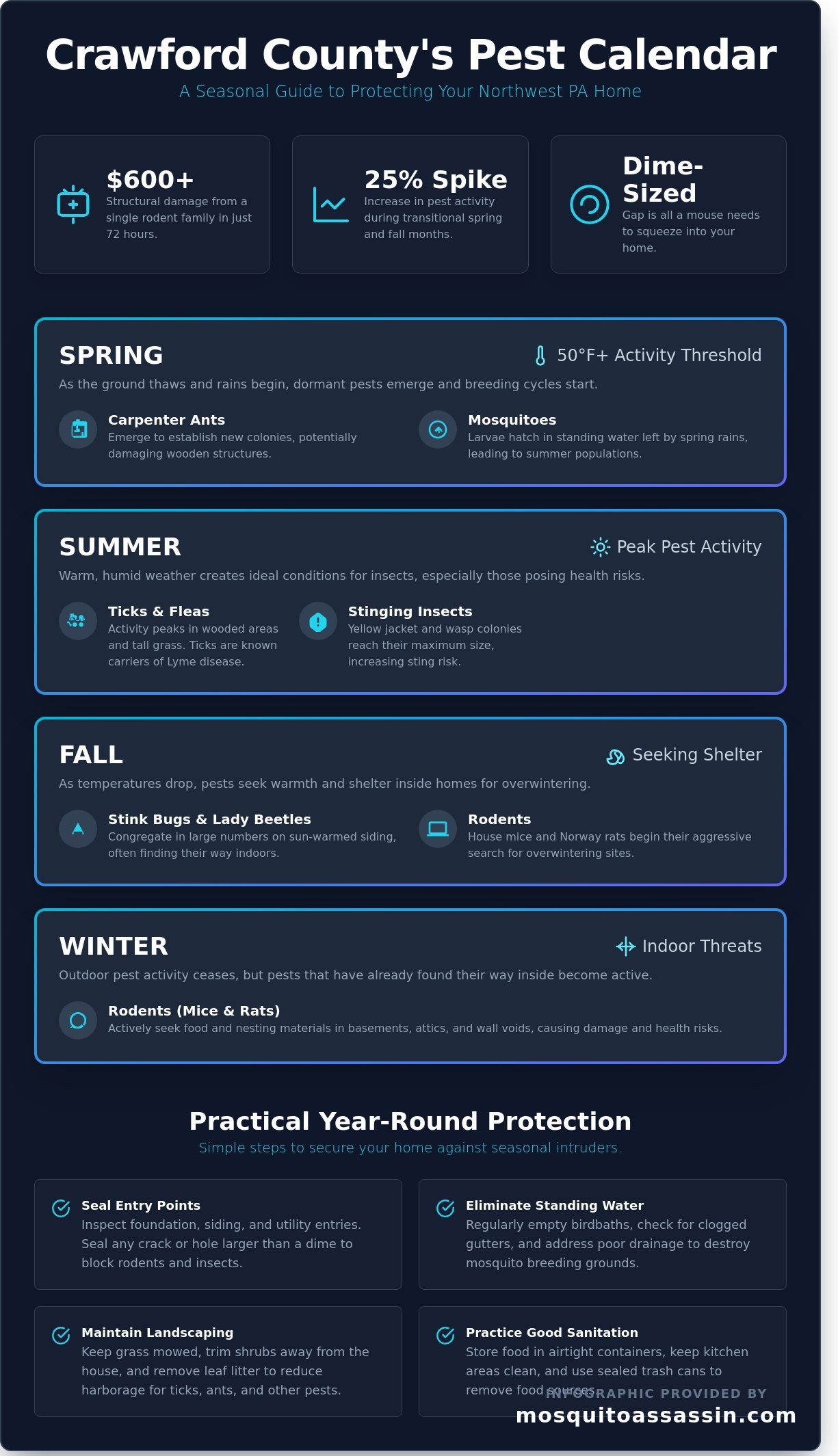
Crawford County spans over 1,000 square miles of diverse terrain, including the wetlands of Pymatuning and the dense woodlots near Meadville. This varied environment supports a high density of biological life. While this biodiversity is a hallmark of Northwest Pennsylvania, it often results in high populations of insects and rodents that frequently interact with human structures. Local pest activity isn’t random; it follows a predictable timeline dictated by the distinct four-season climate of the region. Property owners often see a 25% increase in activity reports during transitional months as pests seek new sources of food or shelter.
The Seasonal Cycle of Pests in Northwest Pennsylvania
Spring in the region marks the end of dormancy. As temperatures consistently hit 50 degrees Fahrenheit, stinging insects like yellow jackets and paper wasps begin establishing new colonies. This is also when mosquito larvae emerge in standing water left by spring rains. By mid-summer, tick activity reaches its peak. Wooded areas and tall grasses become high-risk zones for black-legged ticks. Data suggests that June and July are the most active months for these pests in the area. Common seasonal threats include:
- Spring: Emergence of carpenter ants and early mosquito breeding in stagnant water.
- Summer: Peak activity for ticks, fleas, and stinging insect colonies.
- Fall: Stink bugs and lady beetles congregating on sun-warmed siding.
- Winter: Rodents seeking warmth inside crawlspaces, basements, and attics.
When temperatures drop in late September, the focus shifts toward indoor protection. Rodents like house mice and Norway rats begin their search for overwintering sites. A single mouse can squeeze through a gap the size of a dime, making exclusion tactics vital before the first frost hits the ground.
Why Local Knowledge Matters for Effective Management
Effective pest management requires more than general knowledge. It demands an understanding of how regional migration patterns and local weather events impact insect behavior. For example, a particularly wet spring in the French Creek watershed can lead to a localized explosion in the mosquito population later in the year. Targeted strategies depend on identifying the specific species native to the area. Professional pest control services provide this specialized expertise tailored to the Crawford environment. Using methods based on regional data ensures that management remains effective without relying on guesswork. Predictive modeling helps property owners stay ahead of infestations rather than just reacting to them after damage occurs.
Disclaimer: The information provided on this blog is for general informational purposes only and is not intended as professional pest control advice. Conditions vary by property, environment, and location. Reading this content does not create a service agreement. For an inspection or professional recommendations, please contact Mosquito Assassin Pest Control LLC directly.
Primary Pest Concerns for Crawford County Residents
Crawford County’s diverse landscape, ranging from glacial lakes to dense hardwood forests, creates a thriving environment for various pests. Residents often face seasonal surges that threaten both property integrity and family comfort. Mosquitoes and ticks represent the most significant seasonal health concerns for families, particularly during the humid summer months. These pests thrive in the local climate, requiring proactive management to keep outdoor spaces usable.
Beyond seasonal insects, rodents such as mice and rats cause significant property damage if left unchecked. These mammals are persistent and can breach small openings to access food and warmth. Additionally, ants and spiders frequently infiltrate homes seeking shelter from the elements, while stinging insects like wasps and hornets pose increased risks during the late summer as colonies reach peak size.
Mosquito and Tick Activity in Rural Areas
Crawford contains extensive wetlands and wooded areas that serve as primary breeding grounds. Ticks in Pennsylvania are known carriers of Lyme disease and other pathogens, with the state consistently reporting high case numbers annually. In 2022 alone, Pennsylvania documented thousands of tick-borne illness cases, highlighting the need for vigilance. Reducing standing water in gutters and low-lying yard spots is a critical step in managing local mosquito populations. Homeowners concerned about local activity might find that professional pest control helps reduce these environmental risks.
Common Rodents and Structural Pests
When temperatures drop below 40 degrees Fahrenheit, house mice and deer mice become the most frequent winter intruders. These rodents can chew through electrical wiring and insulation, creating potential fire hazards and efficiency losses. Carpenter ants also present a long-term threat to structural integrity. These insects don’t eat wood but excavate it to build nests, often targeting damp or decaying sections of a home. Identifying signs of activity early, such as small piles of sawdust-like frass, can prevent large-scale infestations and costly repairs.
Geographic Hotspots for Activity
Pest pressures vary significantly across the region based on local geography. Areas near Meadville and Titusville often see different pest pressures than rural farms, with urban environments more prone to pavement ants and cockroaches. Properties near Crawford County service locations may face unique challenges based on proximity to water sources like French Creek or Conneaut Lake. Consistent monitoring is recommended for all property types in the region to ensure that small pest sightings don’t turn into established colonies.
Disclaimer: The information provided on this blog is for general informational purposes only and is not intended as professional pest control advice. Conditions vary by property, environment, and location. Reading this content does not create a service agreement. For an inspection or professional recommendations, please contact Mosquito Assassin Pest Control LLC directly.
Environmental Factors Affecting Crawford County Homes
Crawford County experiences a humid continental climate, characterized by significant seasonal temperature swings and high moisture levels. Because the county is situated near Lake Erie, local humidity often exceeds 70 percent during summer months. These conditions are ideal for pests that thrive in damp environments. Beyond the weather, the local geography plays a major role. Crawford contains roughly 230,000 acres of agricultural land, providing a massive food source and habitat for rodents and insects. Additionally, the region’s historic architecture, with many homes built before 1940, presents unique challenges. Older foundations often settle over time; this creates gaps as small as a quarter inch that allow mice or spiders to enter crawlspaces and living areas.
Humidity and Moisture Management
Basements and crawlspaces in Northwest Pennsylvania are prone to excessive dampness. When indoor humidity levels stay above 60 percent, it creates a sanctuary for silverfish and house centipedes. These pests rely on moisture to survive and reproduce. Homeowners can mitigate these risks by ensuring gutters direct water at least six feet away from the foundation. In many cases, it’s a vital step to implement professional dehumidification to keep sub-levels dry. Maintaining a dry perimeter helps deter subterranean pests, such as termites, that seek out softened or water-damaged wood.
The Impact of Local Vegetation
The lush landscape of Crawford County is a double-edged sword for property owners. Dense vegetation near a structure acts as a bridge for unwanted visitors. Proper landscape management is a primary defense against seasonal invaders.
- Tree Canopies: Branches hanging within six feet of a roofline allow squirrels and carpenter ants easy access to attics and soffits.
- Tick Habitats: Ticks thrive in tall grass and leaf litter. Keeping lawn growth under four inches significantly reduces their presence in high-traffic residential areas.
- Perimeter Barriers: A 12-inch gravel or mulch-free border around the foundation makes it harder for insects to transition from the soil to the house siding.
Managing these environmental factors is a practical way to reduce pest pressure throughout the year. If these conditions lead to an active infestation, professional pest control may help reduce risk. More information on specialized treatments can be found at https://mosquitoassassin.com/services.
Practical Prevention Methods for Year-Round Protection
Effective pest management in Crawford requires a proactive strategy that addresses the root causes of infestations. Instead of reacting to a visible problem, property owners can implement a multi layered approach to reduce the likelihood of insects and rodents taking up residence. This method focuses on changing the environment to make it less hospitable to common local pests. Preventing access to food, water, and shelter is the most reliable way to maintain a pest free environment.
- Exclusion: This involves physically blocking entry points. A mouse can squeeze through a hole as small as 1/4 inch, which is roughly the width of a standard pencil eraser. Sealing these small openings is vital for long term success.
- Sanitation: Removing food and water sources eliminates the primary reasons pests enter a building. Even small crumbs or a leaky pipe can sustain a colony for weeks.
- Landscaping: Overhanging branches and dense ground cover act as bridges for ants and spiders. Keeping vegetation at least 12 inches away from the foundation creates a buffer zone that discourages pests from crossing.
- Regular Inspections: Professional assessments can identify up to 85% of potential vulnerabilities before they result in a full scale infestation.
Home Maintenance and Exclusion Tactics
Maintaining the structural integrity of a house is a critical step in exclusion. Doors and windows often develop gaps as a house settles. Installing heavy duty weather stripping can eliminate these light leaks that attract nocturnal insects. For utility penetrations, such as where pipes or wires enter the home, using a combination of steel wool and silicone caulk provides a durable barrier that rodents cannot easily chew through. It’s also necessary to inspect attic vents and crawl space screens for tears; even a 1/2 inch hole can allow bats or squirrels to enter.
Commercial Property Considerations
Businesses in Crawford face unique challenges, especially those in the food service or hospitality industries. Maintaining high health and safety standards is mandatory to avoid regulatory penalties. Professional commercial pest control focuses on high traffic areas and loading docks where pests are frequently introduced via shipments. Proper waste management is equally important. Dumpsters should be located at least 50 feet away from building entrances and cleaned weekly to prevent fly and rodent attractants from building up.
Developing a consistent prevention routine is the most effective way to safeguard a property. For those who need assistance identifying specific entry points, scheduling a professional inspection may help reduce the risk of future infestations.
Disclaimer: The information provided on this blog is for general informational purposes only and is not intended as professional pest control advice. Conditions vary by property, environment, and location. Reading this content does not create a service agreement. For an inspection or professional recommendations, please contact Mosquito Assassin Pest Control LLC directly.
Professional Standards for Crawford County Pest Control
Professional pest management in Crawford relies on the core principles of Integrated Pest Management (IPM). This science-based approach prioritizes long-term prevention by focusing on habitat modification and structural repairs rather than relying solely on chemical applications. By identifying the root cause of an infestation, technicians can implement solutions that are both effective and sustainable. This methodology ensures that safety for families and pets remains the primary consideration in every treatment plan.
Local expertise is essential for maintaining compliance with the specific regulations set by the Pennsylvania and Ohio Departments of Agriculture. Technicians must stay updated on changing laws regarding application distances from water sources and the protection of local pollinator populations. Adhering to these professional standards doesn’t just protect the environment; it also shields homeowners from the liability of improper pesticide use. Engaging a professional service helps reduce the risk of significant property damage and potential health issues associated with pests like rodents or stinging insects.
The Importance of Licensing and Certification
Certified technicians undergo rigorous training and must pass state-administered exams to demonstrate their knowledge of pest biology and material safety. This education ensures that every application is precise and targeted. Insurance and bonding provide an additional layer of peace of mind, protecting the homeowner’s assets during the service process. It’s helpful to spend time about local professionals to understand the specific qualifications and local experience a team brings to the job. In a field where technology and products evolve rapidly, continuous education is a hallmark of a reputable provider.
What to Expect During a Professional Inspection
A professional inspection is a comprehensive process that goes far beyond a simple walkthrough. Technicians perform a detailed evaluation of the property’s perimeter, looking for entry points as small as one-quarter of an inch. Inside the home, they focus on high-moisture areas and dark corners where pests often hide. This step is critical because identifying the specific species determines the entire course of action. Once the assessment is complete, the technician develops a customized management plan tailored to the property’s unique layout and environmental factors. This plan often includes practical recommendations for the homeowner to help maintain a pest-free environment.
Professional pest control may help reduce risk of property damage and health issues. For further inquiries or to schedule a property evaluation, visit the contact page.
Securing Your Home Against Local Pests
Maintaining a pest-free environment requires a combination of vigilance and strategic prevention. Residents in Crawford County deal with specific environmental pressures, including an average annual rainfall of 43 inches that contributes to high local humidity. Effective management starts with year-round habits like moisture control and regular structural maintenance to eliminate entry points. Since its inception, licensed and insured professionals have served these 2 counties by prioritizing family-safe and pet-safe management practices. These established protocols focus on 365 days of protection rather than temporary fixes. While individual prevention efforts are vital, they don’t always address the root cause of an infestation. Utilizing the four-step professional process ensures that treatment plans remain targeted and effective for the specific needs of Pennsylvania homeowners. Professional pest control may help reduce risk. Contact us for an inspection. Consistent attention to these details helps keep your living space comfortable and secure throughout every season.
Disclaimer: The information provided on this blog is for general informational purposes only and is not intended as professional pest control advice. Conditions vary by property, environment, and location. Reading this content does not create a service agreement. For an inspection or professional recommendations, please contact Mosquito Assassin Pest Control LLC directly.
Frequently Asked Questions
What are the most common pests found in Crawford County?
In Crawford County, approximately 60% of residential service calls involve carpenter ants, house spiders, or rodents. Carpenter ants are particularly active during the spring thaw, while house mice often seek indoor shelter when temperatures drop below 50 degrees Fahrenheit in the autumn. Stinging insects like yellow jackets become a primary concern for homeowners during the late summer months of August and September.
When is the peak season for ticks in Northwest Pennsylvania?
Tick activity in Northwest Pennsylvania peaks twice a year, first from April to June and again from October to November. Black-legged ticks, which are known to carry Lyme disease, remain active whenever the ground isn’t frozen and temperatures exceed 32 degrees Fahrenheit. Pennsylvania reported 10,208 cases of Lyme disease in 2021, emphasizing the importance of year-round awareness for residents in wooded or grassy areas.
How can I prevent mosquitoes from breeding in my yard?
Eliminate all sources of standing water because mosquitoes can lay up to 300 eggs in a single teaspoon of liquid. Property owners should clear debris from gutters, tip over empty flowerpots, and change the water in birdbaths every 48 hours. Trimming dense vegetation also helps because it removes the shaded resting spots that adult mosquitoes use during the heat of the day.
Are professional pest control treatments safe for children and pets?
Professional treatments are safe for children and pets once the applied products have dried completely. Technicians focus on targeted applications in cracks, crevices, and entry points where pests hide but residents rarely touch. Most modern treatments require a 60-minute drying period before the area is ready for normal activity, and professional pest control may help reduce risk of exposure to pest-borne illnesses.
How often should a home in Crawford County be inspected for pests?
Property owners in Crawford should schedule a professional inspection at least once every 12 months to identify early signs of activity. Quarterly visits are often recommended to address the specific pests that emerge during each season, such as spring ants or fall rodents. Regular monitoring helps detect 90% of potential infestations before they cause structural damage or become difficult to manage.
What should I do if I find signs of rodents in my crawlspace?
Homeowners should immediately inspect the area for entry points as small as 0.25 inches, which is roughly the size of a dime. Rodents can damage 15% of a home’s electrical wiring if left unchecked, creating a potential fire hazard. Sealing gaps with durable materials and removing contaminated insulation are necessary steps to restore a healthy environment. For a professional assessment, visit https://portal.gorilladesk.com/mosquitoassassin.
Do I need different pest services for a commercial building?
Commercial buildings require specialized plans that often involve 12 monthly inspections to comply with local health regulations and industry standards. While residential services focus on common household nuisances, commercial programs prioritize sanitation and public safety in high-traffic environments. Maintaining a detailed log of pest activity is a requirement for 90% of food-handling businesses to pass mandatory audits and inspections.
How does the weather in Crawford County affect pest activity?
Crawford County averages 42 inches of rain annually, which frequently forces ground-dwelling pests like ants and centipedes into homes. Cold snaps with temperatures below 20 degrees Fahrenheit also drive rodents to seek warmth in attics and crawlspaces. Understanding these local climate shifts helps in timing preventative treatments to create a more effective barrier against seasonal invasions throughout the year.
Disclaimer: The information provided on this blog is for general informational purposes only and is not intended as professional pest control advice. Conditions vary by property, environment, and location. Reading this content does not create a service agreement. For an inspection or professional recommendations, please contact Mosquito Assassin Pest Control LLC directly.