Tag: Northwest Pennsylvania

  • Ticks in Erie PA: Essential Prevention Tips and Local Insights

    Ticks in Erie PA: Essential Prevention Tips and Local Insights

    A perfectly manicured lawn in Northwest Pennsylvania isn’t always the safe haven it appears to be. Many homeowners are surprised to find that even with regular mowing, their backyards remain prime territory for parasites. If you’ve ever found a tick on a pet or family member after a simple afternoon outside, you know the immediate sense of anxiety it brings. It’s frustrating to feel like you’re losing the use of your own outdoor space to the fear of Lyme disease and other serious illnesses.

    This guide addresses those concerns by providing a deep dive into ticks in Erie PA, prevention tips that actually work, and insights into local environmental factors. You’ll learn how to identify specific risks unique to Crawford and Erie Counties while discovering professional methods for securing your property. We’ll examine the most effective repellents, landscape modifications, and seasonal behaviors that every resident should know to maintain a secure, enjoyable yard throughout the year.

    Key Takeaways

    • Identify why the humid continental climate of Northwest Pennsylvania makes the Blacklegged tick a primary concern for local property owners.
    • Discover how to spot high-risk habitats like leaf litter and “edge zones” where wooded areas meet managed lawns.
    • Learn which EPA-registered repellents and clothing treatments provide the most reliable personal protection during outdoor activities.
    • Implement effective yard maintenance and property barriers as essential ticks in Erie PA – prevention tips to keep your family safe.
    • Understand how Integrated Pest Management and professional perimeter treatments create a long-term safety plan for your home.

    Understanding the Tick Population in Erie, PA

    Residents of Northwest Pennsylvania face a persistent challenge from parasitic pests. The Blacklegged tick, commonly known as the deer tick, is the most significant concern for those living in Erie and Crawford Counties. Unlike some pests that disappear during the colder months, these arachnids are remarkably resilient. Understanding their behavior is the first step in applying effective ticks in Erie PA – prevention tips to your property. The Blacklegged tick serves as the primary vector for Lyme disease in Erie County.

    Erie’s humid continental climate provides an ideal environment for these pests. Ticks require high moisture levels to survive; otherwise, they risk desiccation (drying out). Because the region experiences significant rainfall and lake-effect moisture, tick populations can thrive even during the heat of summer. However, local activity peaks typically occur during the spring and fall. During these windows, adult ticks are most active in their search for a host.

    Common Tick Species in Northwest Pennsylvania

    While the Blacklegged tick is the most dangerous from a health perspective, other species frequently inhabit the region. The American Dog tick is often found in open, grassy areas. It’s larger than the Blacklegged tick and features distinct white markings on its back. Recently, the Lone Star tick has also begun appearing more frequently in Northwest Pennsylvania. Female Lone Star ticks are easily identified by a single white dot on their dorsal shield. Recognizing the difference between an adult and a nymph is critical for safety. Nymphs are roughly the size of a poppy seed, making them extremely difficult to detect during a standard check.

    Why Erie Geography Increases Tick Activity

    The specific geography of the PA and OH border creates a perfect environment for tick proliferation. Lake Erie acts as a massive humidity regulator, keeping the surrounding air moist enough for ticks to remain active throughout the day. Additionally, the abundance of woodlots, state parks, and overgrown trails provides the dense cover ticks need for “questing,” the process where they wait on tall grass for a host to pass by. Local wildlife populations also play a major role. White-tailed deer and field mice act as primary transport systems, carrying ticks from wooded areas directly into residential lawns in Erie, Crawford, and Ashtabula Counties. Implementing ticks in Erie PA – prevention tips requires acknowledging that your backyard is part of a larger, interconnected ecosystem.

    Identifying High-Risk Tick Habitats in Your Backyard

    Understanding where ticks hide is just as vital as knowing how to remove them. In Erie and Crawford Counties, many residential properties feature a transition zone where maintained grass meets unmanaged woodland. This is known as the “edge effect.” This perimeter is often the most dangerous part of a yard because it provides the moisture ticks need alongside the high traffic of potential hosts. Ticks don’t drop from trees; they engage in “questing” behavior, clinging to the tips of tall fescue or low-hanging shrubs. They typically wait at a height of 18 to 24 inches, perfectly positioned to latch onto a human leg or a pet’s fur.

    Backyard features like woodpiles and bird feeders also increase local risk. Woodpiles offer a stable, high-humidity environment for ticks to overwinter and survive the harsh Lake Erie winters. Bird feeders, while pleasant, often attract small rodents like the white-footed mouse. These mice are significant reservoirs for the pathogens that cause Lyme disease. When mice congregate under feeders to eat fallen seed, they bring ticks directly into the center of your living space. Managing these specific areas is a core part of effective ticks in Erie PA – prevention tips for any property owner.

    Preferred Environments for Blacklegged Ticks

    Blacklegged ticks are extremely sensitive to dehydration. They seek out microclimates with at least 80 percent humidity, which is why they’re rarely found in the middle of a sunny, short-clipped lawn. However, shaded ornamental gardens and ground covers like pachysandra or ivy provide the perfect humid sanctuary. These lush areas are often located right next to patios or walkways, placing family members in close proximity to questing ticks. Keeping these zones maintained or treated by a professional pest control service can significantly lower the chances of an encounter.

    The Role of Wildlife in Local Tick Migration

    Wildlife acts as the primary vehicle for tick movement throughout Northwest Pennsylvania and Ashtabula County. White-tailed deer are the most common transporters of adult ticks, often dropping them in yards as they graze near the tree line. While deer bring the ticks, white-footed mice are the ones that actually infect them with bacteria. By managing backyard features that attract these animals, such as dense brush or accessible trash, you break the cycle of migration. Strategic property modification is one of the most reliable ticks in Erie PA – prevention tips for long-term safety.

    Personal Protection Strategies for Erie Residents

    Ticks in Erie PA – prevention tips often start with what you wear before stepping onto a trail or into your backyard. Using EPA-registered repellents is one of the most effective ways to discourage bites. Products containing at least 20 percent DEET or Picaridin provide several hours of protection against adult ticks and nymphs. While DEET is widely available, Picaridin is often preferred for its lack of scent and the fact that it won’t damage synthetic fabrics or gear. These chemicals work by interfering with the tick’s ability to locate a host, making you essentially invisible to their sensors.

    Effective Clothing and Repellent Practices

    Choosing the right outfit is a simple yet powerful defense. Light-colored clothing doesn’t repel ticks, but it makes dark-bodied pests much easier to spot before they reach your skin. Create a physical barrier by tucking your shirt into your waistband and your pants into your socks. This forces ticks to stay on the outside of your clothes where they can be brushed off easily. It’s much better to catch a tick on your pant leg than to find it attached later that evening.

    There’s a major difference between skin-applied and clothing-applied repellents. Permethrin should never be applied directly to the skin; instead, use it to treat boots, camping gear, and outer layers of clothing. Treated items often remain effective through several wash cycles and provide a lethal barrier to any tick that attempts to crawl across the fabric. Once you return home, immediately place your clothes in the dryer. Drying clothes on high heat for 10 minutes kills ticks.

    Post-Outdoor Checklists and Decontamination

    A thorough inspection is required after any outdoor activity in Northwest Pennsylvania or Ashtabula County. Ticks often crawl for several hours before attaching, so a quick check can prevent a bite entirely. Focus on these critical areas during your inspection:

    • Behind the ears and along the hairline
    • Under the arms and around the waistline
    • Behind the knees and between the toes
    • Inside the belly button and around the groin

    Taking a shower within two hours of coming indoors has been shown to significantly reduce the risk of tick-borne illness. It helps wash off unattached ticks and provides a better opportunity to feel for any that have already latched on. Don’t forget your pets; dogs and cats frequently carry ticks into the home, where they can eventually migrate to humans. While these personal steps are vital, professional pest control may help reduce risk on your own property by managing the population at the source.

    Ticks in Erie PA: Essential Prevention Tips and Local Insights

    Yard Maintenance and Landscape Modification

    Modifying your property is a proactive way to reduce the local tick population without relying solely on personal repellents. While you can’t control the public woods or state parks, you can control the “safe zone” of your own lawn. Incorporating specific ticks in Erie PA – prevention tips into your seasonal yard work creates a significant defensive layer for your family and pets. Start by maintaining a tidy perimeter; clear away tall brush and remove organic debris that provides the shade and moisture these parasites require to survive the summer heat.

    Regular mowing is one of the simplest yet most effective tools in your arsenal. Keeping your grass height low, ideally under three inches, allows the sun to reach the soil and dry out the ground level. Since ticks are highly susceptible to desiccation, a sunny and dry lawn is a hostile environment for them. Additionally, removing invasive plants like Japanese Barberry is critical. This specific shrub creates a dense, humid microclimate that has been shown to support much higher densities of Blacklegged ticks compared to native vegetation.

    Creating a Tick-Resistant Barrier

    A physical barrier is a structural way to restrict tick movement from the woods into your managed lawn. Construct a 3-foot wide barrier of wood chips, bark mulch, or gravel along the entire perimeter of your property where it meets wooded or brushy areas. This serves as a dry “no-man’s land” that ticks are unlikely to cross because they risk drying out. For the best results, use materials like cedar mulch, which remains dry and creates a distinct heat-absorbing surface.

    Strategic placement of outdoor living spaces is equally important. Move swing sets, sandboxes, and patios at least 10 feet away from the yard edge and the wood-chip barrier. By keeping play equipment in sunny, central locations, you significantly reduce the chance of children coming into contact with questing ticks. This landscape modification is a professional-grade strategy used by property owners throughout Erie and Crawford Counties to reclaim their outdoor spaces.

    Managing Leaf Litter and Vegetation

    Proper leaf management is a year-round task. While many homeowners wait until spring, fall leaf removal is actually a critical prevention step. Thick layers of damp leaves provide the perfect insulation for ticks to overwinter and stay protected from freezing temperatures. Raking leaves promptly and removing them from the property or composting them far from the house eliminates these vital survival sites. Trimming low-hanging branches also helps by increasing sunlight penetration and airflow across the lawn.

    You can also discourage tick-bearing wildlife from entering your yard through natural deterrents. Planting deer-resistant vegetation like lavender, sage, or certain ornamental grasses makes your property less attractive to white-tailed deer. When deer don’t linger to graze, they’re less likely to drop adult ticks near your home. For comprehensive protection, General Pest Control Plans can address these habitat concerns with targeted perimeter management.

    Long-Term Tick Management and Professional Monitoring

    Managing tick populations requires more than just occasional yard work or seasonal awareness. For residents in Northwest Pennsylvania, a comprehensive approach known as Integrated Pest Management (IPM) is the standard for long term safety. IPM focuses on prevention by combining property modifications with scientific monitoring and targeted treatments. This methodical approach ensures that your backyard environment is managed in a way that discourages tick survival while protecting the wellbeing of your household. Utilizing professional pest control may help reduce risk by addressing the specific biological needs of local tick species.

    Targeted perimeter treatments are a cornerstone of a professional strategy. Rather than applying broad treatments across an entire lawn where they are often least effective, professionals focus on the high-risk “edge zones” where ticks actually live. These treatments create a barrier that intercepts questing ticks as they attempt to move from the woods into your active living space. Ongoing monitoring is essential because tick populations are dynamic; they shift based on weather patterns, wildlife migration, and local humidity levels. Consistent oversight ensures that your property remains a hostile environment for parasites throughout the year.

    The Importance of Year-Round Protection

    It’s a common misconception that tick concerns disappear once the first frost hits Erie and Crawford Counties. Adult Blacklegged ticks can remain active whenever temperatures are above freezing and the ground isn’t covered by deep snow. In fact, Northwest Pennsylvania’s lake-effect snow can sometimes act as an insulator, protecting ticks from extreme cold at the ground level. A general pest control plan provides a recurring shield that manages multiple threats simultaneously. By reducing overall pest pressure, including the rodents that act as tick reservoirs, you create a much safer environment for everyone.

    When Professional Intervention Becomes Necessary

    Knowing when to step up your defensive strategy is vital. If you find ticks on your pets or family members after they’ve spent time in well-maintained areas of your yard, it may indicate an established population on the property. A professional inspection can identify hidden hotspots, such as specific ornamental gardens or stone walls, that are harboring nymphs and adults. These insights allow for a more precise application of ticks in Erie PA – prevention tips tailored to your specific acreage. If you’re concerned about a recent increase in activity, visiting a local contact page is a good first step toward a professional property assessment.

    Disclaimer: The information provided on this blog is for general informational purposes only and is not intended as professional pest control advice. Conditions vary by property, environment, and location. Reading this content does not create a service agreement. For an inspection or professional recommendations, please contact Mosquito Assassin Pest Control LLC directly.

    Reclaiming Your Outdoor Sanctuary

    Managing the persistent threat of parasites in Northwest Pennsylvania requires a consistent, multi-layered approach. By understanding the specific behaviors of the local tick population and implementing structural changes like wood-chip barriers, you can significantly lower the risk to your family. Personal vigilance, such as performing thorough checks after visiting local parks, remains a vital daily habit. These ticks in Erie PA – prevention tips provide a necessary foundation for a safer home environment, but long-term success often depends on professional oversight.

    For those seeking specialized protection, Contact Mosquito Assassin Pest Control LLC for professional recommendations. Licensed pest control professionals provide the specialized expertise needed to manage tick and mosquito populations throughout Erie and Crawford Counties. You don’t have to surrender your yard to the fear of pests. With a methodical strategy and reliable local support, you can enjoy the Northwest Pennsylvania outdoors with confidence and peace of mind.

    Disclaimer: The information provided on this blog is for general informational purposes only and is not intended as professional pest control advice. Conditions vary by property, environment, and location. Reading this content does not create a service agreement. For an inspection or professional recommendations, please contact Mosquito Assassin Pest Control LLC directly.

    Frequently Asked Questions

    Is Lyme disease common in Erie, PA?

    Yes, Lyme disease is prevalent throughout Northwest Pennsylvania. The Blacklegged tick, which is the primary vector for the bacteria, is widespread in Erie and Crawford Counties. Pennsylvania consistently ranks among the states with the highest number of reported cases in the nation. Residents should assume that any wooded, brushy, or tall-grass area in the region carries a risk of exposure during the active seasons.

    What is the best tick repellent for hiking in Northwest Pennsylvania?

    EPA-registered repellents containing at least 20 percent DEET or Picaridin are the most effective choices for hikers. These products provide several hours of protection against both adult ticks and nymphs. For a more robust defense, treat your hiking boots and outer clothing with Permethrin. This clothing-specific treatment kills ticks on contact and remains effective through multiple wash cycles, providing a reliable secondary barrier.

    Can ticks survive the winter in Erie?

    Ticks are remarkably resilient and can survive Erie’s harsh winters by sheltering under leaf litter or snow. While they become less active in freezing temperatures, Blacklegged ticks will emerge to search for a host whenever the temperature rises above 35 degrees Fahrenheit. This is why ticks in Erie PA – prevention tips should be followed even during mild winter days when the ground isn’t fully frozen.

    How do I properly remove a tick if I am bitten?

    Use fine-tipped tweezers to grasp the tick as close to the skin’s surface as possible. Pull upward with steady, even pressure without twisting or jerking, which can cause the mouthparts to break off in the skin. Once the tick is removed, clean the bite area and your hands with rubbing alcohol or soap and water. Avoid using home remedies like heat or oils, as these are ineffective.

    What are the early symptoms of a tick-borne illness?

    Early symptoms often include fever, chills, fatigue, muscle aches, and a characteristic bullseye rash. However, it is important to remember that not everyone develops a visible rash. Symptoms typically appear anywhere from 3 to 30 days after a bite. If you experience flu-like symptoms after spending time outdoors in Northwest Pennsylvania, consult a healthcare professional immediately for a proper evaluation and potential treatment plan.

    Are there specific plants that attract ticks to my Erie yard?

    Ticks aren’t attracted to plants for food, but they thrive in the humid microclimates created by invasive species like Japanese Barberry. These dense shrubs provide the perfect sanctuary for tick survival and attract the small rodents that carry them. Replacing these invasive plants with native, deer-resistant vegetation can help reduce the attractiveness of your property to both ticks and their animal hosts.

    How often should I have my yard treated for ticks?

    Professional yard treatments are most effective when applied during the peak activity windows of spring and fall. Most residential properties benefit from a recurring protection plan that includes monthly applications from April through October. This frequency ensures that the perimeter barrier remains strong during every stage of the tick lifecycle. Professional pest control may help reduce risk by maintaining these consistent defensive layers.

    Can my dog bring ticks into my house?

    Pets are common vehicles for transporting ticks from the yard into the home. Ticks can latch onto a dog’s fur and eventually migrate to furniture or human family members. Using a veterinarian-approved tick preventative is essential for your pet’s health and your own safety. Performing a quick paw-to-tail check after every outdoor excursion is one of the best ticks in Erie PA – prevention tips for local pet owners.

    Disclaimer: The information provided on this blog is for general informational purposes only and is not intended as professional pest control advice. Conditions vary by property, environment, and location. Reading this content does not create a service agreement. For an inspection or professional recommendations, please contact Mosquito Assassin Pest Control LLC directly.
  • When to Start Mosquito Treatment in Erie, PA: The 2026 Season Guide

    When to Start Mosquito Treatment in Erie, PA: The 2026 Season Guide

    Last summer, many families in Northwest Pennsylvania watched their evening gatherings dissolve into a frantic retreat indoors as swarms of biting insects took over. It’s a common frustration to see outdoor plans ruined, especially when concerns over West Nile Virus in Erie County are on the rise. Many property owners feel the sting of wasted money on DIY sprays that simply don’t last through a humid Great Lakes evening. Understanding when to start mosquito treatment Erie PA is the difference between a season of swatting and a summer of relaxation.

    This 2026 season guide provides the exact temperature triggers and seasonal windows required to prevent infestations before they begin. You’ll discover the biological indicators that signal the end of dormancy and how to time your intervention to align with the local climate cycle. By following these professional best practices, you can secure your outdoor space for the entire season. This article previews the essential 50-degree rule, the importance of early intervention, and practical steps for property preparation in Erie, Crawford, and Ashtabula counties.

    Key Takeaways

    • Learn why the 50-degree Fahrenheit threshold is the scientific signal for when to start mosquito treatment Erie PA to ensure early-season success.
    • Understand the importance of maintaining a consistent 21 to 30-day treatment cycle to disrupt the “First Hatch” and prevent mid-summer population surges.
    • Discover how professional monitoring helps address the rising health concerns of West Nile Virus in Erie County following local confirmations in August 2026.
    • Identify common backyard water collectors, such as clogged gutters and low-lying lawn areas, that must be cleared to eliminate breeding sites before the season begins.
    • Recognize why the Northwest Pennsylvania climate requires professional protection from the initial April thaw until the first hard frost of autumn.

    The Mosquito Season in Northwest Pennsylvania: A 2026 Outlook

    The mosquito season in Northwest Pennsylvania is defined by the transition from the final winter thaw to the first hard frost of autumn. For the 2026 season, the official start date was April 1, but biological activity is rarely tied to a calendar. Instead, it follows a strict moisture and temperature cycle. Heavy spring rainfall creates the stagnant pools necessary for the “First Hatch,” where dormant eggs finally activate. Without intervention, these initial larvae become the ancestors of millions by mid-summer. Property owners in Erie and Crawford counties should recognize that early spring moisture is the primary fuel for July infestations. Primary species in the region include the Culex mosquito, often associated with disease transmission, and the Aedes mosquito, known for aggressive daytime biting.

    To better understand how these pests thrive and how to manage your environment, watch this educational video:

    The Impact of Lake Erie on Local Pest Cycles

    Lake Erie significantly influences local pest cycles by creating persistent humidity pockets in residential areas. This lake-effect moisture often settles in shaded areas or heavy vegetation, providing ideal breeding grounds even during dry spells. Additionally, the lake acts as a thermal regulator. It often keeps coastal temperatures cooler in early spring, which may slightly delay the initial hatch but extends the overall breeding window once the water warms. Homeowners in coastal Erie County often face different pressure levels than those in inland Crawford County or Ashtabula County due to these varying microclimates. Deciding when to start mosquito treatment Erie PA requires looking at these local weather patterns rather than just the date on a calendar.

    Health Risks and Regional Concerns for 2026

    Beyond the discomfort of bites, 2026 has brought a renewed focus on public health. The Erie County Department of Health confirmed West Nile Virus in local mosquito samples on August 3, 2026. This follows a 2025 season where Pennsylvania recorded 80 human cases of the virus, 58 of which were neuroinvasive. Implementing comprehensive mosquito control strategies early in the season helps reduce the overall population before the virus begins to circulate heavily in late summer. Determining when to start mosquito treatment Erie PA is essential because reactive spraying in August cannot undo the population growth that began in May. Professional monitoring and community awareness are the most effective ways to mitigate these regional risks while protecting local neighborhoods in Northwest Pennsylvania and Northeast Ohio.

    Disclaimer: The information provided on this blog is for general informational purposes only and is not intended as professional pest control advice. Conditions vary by property, environment, and location. Reading this content does not create a service agreement. For an inspection or professional recommendations, please contact Mosquito Assassin Pest Control LLC directly.
    The 50-Degree Rule: When to Start Mosquito Treatment

    Many residents in Northwest Pennsylvania assume the first warm sunny day of March signals the start of pest season. However, biological activity is tethered to a specific thermal floor. Mosquitoes enter a state called diapause to survive the freezing winters typical of the Great Lakes region. This is a physiological dormancy triggered by shorter days and falling temperatures in the autumn. They don’t simply die off; they wait in protected areas like hollow logs, animal burrows, or residential crawlspaces until the environment becomes hospitable again.

    The scientific consensus for Pennsylvania mosquito control centers on the 50-degree Fahrenheit threshold. When evening temperatures consistently remain above this level, dormant eggs begin to hatch and adults emerge from diapause. Historically, Erie weather patterns suggest this window typically opens between late March and mid-April. A single afternoon at 60 degrees isn’t enough to wake the population. It takes sustained warmth to signal that winter has truly ended and the breeding cycle can safely begin.

    Monitoring Nighttime Temperature Thresholds

    Nighttime lows are far more descriptive of pest behavior than daytime highs. While an Erie sun might warm the air to 55 degrees at noon, a drop to 32 degrees at night will keep mosquitoes inactive. Tracking the soil temperature and the local forecast for consistent 50-degree nights provides the most accurate timeline for when to start mosquito treatment Erie PA. Waiting until you feel the first bite often means you’re already three weeks behind the breeding cycle. Monitoring these shifts allows for a proactive strike against the first generation of the year.

    The Biological Clock of Northwest PA Mosquitoes

    Once temperatures stabilize, the transition from egg to biting adult can happen in as little as seven to ten days. Early-season warmth can lead to an accelerated lifecycle, meaning a small population in April can become an unmanageable swarm by June if left unchecked. Fluctuating spring temperatures, which are common in Crawford and Ashtabula counties, can complicate treatment efficacy if not timed correctly. Understanding these biological triggers is why a professional mosquito control service is often planned around local climate data rather than a fixed calendar date.

    Disclaimer: The information provided on this blog is for general informational purposes only and is not intended as professional pest control advice. Conditions vary by property, environment, and location. Reading this content does not create a service agreement. For an inspection or professional recommendations, please contact Mosquito Assassin Pest Control LLC directly.

    Early Intervention vs. Reactive Treatment

    Waiting until June to address mosquito activity is a tactical error that forces homeowners into a defensive position for the rest of the summer. The most effective strategy for Northwest Pennsylvania properties is the “First Hatch” rule. This principle focuses on disrupting the very first generation of mosquitoes as they emerge in April. Because a single female can produce thousands of offspring by July, failing to stop the initial breeding cycle leads to an exponential population explosion that is difficult to reverse. Determining when to start mosquito treatment Erie PA in the early spring allows for the application of barrier treatments to dormant foliage, catching pests as they first become active.

    Reactive measures, such as wearing long sleeves or using temporary sprays, only address the symptoms of an infestation. Professional intervention targets the source. By establishing a protective perimeter before the canopy fully fills in, treatments can reach the deep underside of leaves and overwintering sites that become inaccessible later in the season. This proactive approach ensures that the population never reaches the critical mass that ruins outdoor gatherings in late July and August.

    Disrupting the First Breeding Cycle

    The transition from a frozen landscape to a habitable environment happens quickly in Erie and Crawford counties. Professional monitoring identifies specific overwintering sites, such as hollow trees, heavy brush, and rock piles, before mosquitoes reach the adult biting stage. Utilizing larvicides in areas of standing water further disrupts the cycle by preventing larvae from maturing. This early season water management is a scientific necessity. It targets the pests while they are most vulnerable and stationary, rather than waiting to chase mobile adults through the air.

    Long-Term Benefits of a Consistent Schedule

    Maintaining a consistent 21 to 30-day treatment cadence is the only way to ensure the barrier remains effective against migrating insects. Skipping the first treatment often creates a “catch-up” scenario where the property owner is constantly fighting a losing battle against established nests. For comprehensive protection, many residents find success by integrating their mosquito services with general pest control plans. This multi-layered approach addresses a wider variety of seasonal threats, from ants to rodents, providing peace of mind through the entire Great Lakes climate cycle. Consistency in the early months pays dividends in the form of a quiet, bite-free backyard during the peak of summer.

    Disclaimer: The information provided on this blog is for general informational purposes only and is not intended as professional pest control advice. Conditions vary by property, environment, and location. Reading this content does not create a service agreement. For an inspection or professional recommendations, please contact Mosquito Assassin Pest Control LLC directly.

    When to Start Mosquito Treatment in Erie, PA: The 2026 Season Guide

    Preparing Your Property for the 2026 Mosquito Season

    Determining when to start mosquito treatment Erie PA is only the first step toward a bite-free summer. Physical property preparation serves as the foundation for any successful pest management plan. Mosquitoes require very little water to breed; a bottle cap full of stagnant liquid can host hundreds of larvae. Homeowners in Northwest Pennsylvania must be diligent in identifying hidden water collectors that often go unnoticed during the winter months. By eliminating these sources early, you reduce the overall pressure on your property before the first professional application occurs.

    A comprehensive spring checklist includes the following actions:

    • Clean all gutters: Clogged downspouts are the primary breeding ground for mosquitoes in Erie residential neighborhoods.
    • Inspect tarps and covers: Check pool covers, boat tarps, and woodpile plastic for pockets of standing water.
    • Level low-lying areas: Fill in depressions in the lawn where spring rain or snowmelt tends to pool.
    • Maintain vegetation: Trim overgrown bushes and tall grass to eliminate the shaded, humid resting spots that adult mosquitoes prefer during the heat of the day.

    Spring Yard Cleanup and Habitat Mitigation

    The transition from winter to spring in Crawford County often involves significant runoff. Clearing debris from drainage systems and culverts is essential to prevent stagnant water from backing up onto your lawn. Lake-effect snowmelt can create temporary ponds in areas with poor soil drainage, providing an early window for the “First Hatch” mentioned in previous sections. Residents should also focus on seasonal items like birdbaths, flowerpots, and outdoor equipment. Emptying and scrubbing these containers removes dormant eggs that may have survived the winter attached to the side of the vessel. Consistent yard maintenance ensures that professional barrier treatments can reach the most effective areas of your landscape.

    Collaborating with Professional Technicians

    An initial property assessment in early spring allows a technician to identify “hot zones” that a homeowner might miss. These professionals use their expertise to map your yard, noting specific drainage issues and heavy foliage areas that require targeted attention. Utilizing local pest control near me ensures that the person inspecting your property understands the unique climate challenges of Erie, Meadville, and Ashtabula. This collaborative approach combines your property maintenance with a scientific barrier plan to create a fortress against biting insects. For the best results, you should schedule a professional mosquito control service before nighttime temperatures reach the critical 50-degree threshold.

    Disclaimer: The information provided on this blog is for general informational purposes only and is not intended as professional pest control advice. Conditions vary by property, environment, and location. Reading this content does not create a service agreement. For an inspection or professional recommendations, please contact Mosquito Assassin Pest Control LLC directly.

    Choosing a Professional Mosquito Control Service in Erie

    Selecting a licensed pest control provider in Pennsylvania and Ohio is a matter of both efficacy and property safety. Professional technicians must navigate the specific regulatory requirements of both states while addressing the unique humidity and temperature shifts of the Erie region. When deciding when to start mosquito treatment Erie PA, residents should distinguish between a one-time event spray and a comprehensive seasonal protection plan. While a one-time application may provide temporary relief for a single graduation party, it does not address the underlying breeding cycles that lead to mid-summer infestations. A seasonal plan establishes a consistent barrier that persists from the initial April hatch through the first hard frost of autumn.

    Local expertise in Erie, Crawford, and Ashtabula counties is invaluable. A provider rooted in the community understands that a property in Meadville may face different pest pressures than one on the shores of Lake Erie. This specialized knowledge allows for scientific application methods that target mosquitoes at their source. Professional monitoring helps reduce the risk of insect-borne diseases, such as West Nile Virus, by maintaining a protective perimeter during the peak transmission months of late summer. By using precise, data-driven applications, professionals provide a level of coverage that general over-the-counter products cannot replicate.

    Evaluating Treatment Methods and Safety

    Scientific professional mosquito control relies on high-grade equipment to ensure thorough coverage of a property’s foliage. Barrier sprays are applied to the underside of leaves where mosquitoes rest; this strategy minimizes the impact on non-target insects like bees and butterflies that typically land on the tops of flowers. Professional-grade mist blowers provide a level of penetration that DIY handheld canisters simply cannot match. This methodical approach prioritizes the safety of household members and pets by ensuring the product is applied exactly where the pests reside, following all professional standards and environmental best practices.

    Securing Your Outdoor Space for Summer

    Planning your treatment schedule early allows you to secure your yard for major summer milestones. Whether you’re hosting graduation parties, July 4th celebrations, or family reunions, a managed protection plan provides the peace of mind that guests won’t be driven indoors by biting swarms. The next step for property owners is to arrange a spring inspection. This assessment identifies potential breeding sites and establishes the ideal timeline for your first application. By coordinating with a local expert before the 50-degree threshold is reached, you ensure your outdoor space is protected for the entire 2026 season.

    Disclaimer: The information provided on this blog is for general informational purposes only and is not intended as professional pest control advice. Conditions vary by property, environment, and location. Reading this content does not create a service agreement. For an inspection or professional recommendations, please contact Mosquito Assassin Pest Control LLC directly.

    Securing Your Backyard for the 2026 Season

    Effective mosquito control in Northwest Pennsylvania is a matter of timing and consistency. As discussed, the biological clock of local pests is set to the 50-degree rule. Waiting for the peak of summer to address infestations often leads to a reactive and frustrating experience. By focusing on the first hatch during the April thaw, you can disrupt the breeding cycle early. Consistent 21 to 30-day treatment cycles then keep the population from rebounding. Determining when to start mosquito treatment Erie PA is the most important decision you’ll make for your outdoor comfort this year.

    Protecting your family from regional health concerns requires a scientific approach. Our licensed technicians specialize in Great Lakes pest cycles across Erie, Crawford, and Ashtabula counties. As a locally owned and operated team in Northwest Pennsylvania, we understand the specific needs of our neighbors. To prepare your yard for a safe summer, contact a professional for a property inspection or recommendation today. Reclaim your outdoor space before the first bite happens.

    Disclaimer: The information provided on this blog is for general informational purposes only and is not intended as professional pest control advice. Conditions vary by property, environment, and location. Reading this content does not create a service agreement. For an inspection or professional recommendations, please contact Mosquito Assassin Pest Control LLC directly.

    Frequently Asked Questions

    When is the best time to start mosquito spraying in Erie, PA?

    The ideal time to begin is when evening temperatures consistently remain above 50 degrees Fahrenheit. While the 2026 season officially began on April 1, biological activity depends on this specific thermal threshold. Starting at this point ensures the first generation of pests is addressed before they have the chance to multiply and establish a permanent presence on your property.

    Does a cold winter in Northwest PA mean fewer mosquitoes in the summer?

    A freezing winter rarely impacts summer populations because local species are biologically adapted to the Great Lakes climate. Many mosquitoes enter diapause, a state of dormancy, while others leave behind winter-hardy eggs. Heavy lake-effect snow actually acts as an insulator for these eggs, protecting them from the most extreme sub-zero temperatures until the spring thaw begins.

    How often should mosquito treatments be applied in Erie County?

    Professional treatments are most effective when applied every 21 to 30 days throughout the season. This schedule maintains a consistent barrier as products naturally break down from UV exposure and rainfall. Sticking to this cadence prevents gaps in protection that migrating insects from neighboring properties might exploit during the peak humidity of July and August.

    Is it worth starting mosquito control in July or August?

    Starting treatment late in the season is still highly effective for reducing active adult populations and providing immediate relief. Even if you missed the early spring window, professional applications can significantly lower the number of biting insects during the height of summer. This is particularly important for protecting outdoor events and reducing the presence of pests during the peak West Nile Virus window.

    Do mosquitoes in Erie carry West Nile Virus?

    Yes, West Nile Virus is a persistent concern in the region, with local samples testing positive as recently as August 3, 2026. Pennsylvania recorded 80 human cases in 2025, which underscores the importance of professional monitoring. Reducing the mosquito population in your immediate environment is a practical way to mitigate the risk of insect-borne illnesses for your household and pets.

    Can I start mosquito treatment if it is still raining frequently in the spring?

    Professional treatments can be applied during the rainy spring season as long as the foliage has time to dry. Modern barrier sprays are designed to be rain-fast once they have bonded to the underside of leaves. Since spring rain creates the stagnant water needed for the first breeding cycle, it’s actually the most critical time to establish a protective perimeter.

    What is the “First Hatch” and why does it matter for my yard?

    The “First Hatch” is the initial wave of larvae that emerges from overwintered eggs once the ground warms. Targeting this specific generation is the most effective way to prevent exponential population growth later in the summer. When you decide when to start mosquito treatment Erie PA based on this biological event, you stop thousands of future pests before they can reproduce.

    Do I need to be home when the professional mosquito treatment is applied?

    Homeowners do not need to be present for the application if the technician has clear access to the property. Licensed professionals use yard mapping and initial assessments to identify breeding sites and “hot zones” independently. Most residents find it convenient to have the barrier established while they are away, receiving a service notification once the work is complete.

    Disclaimer: The information provided on this blog is for general informational purposes only and is not intended as professional pest control advice. Conditions vary by property, environment, and location. Reading this content does not create a service agreement. For an inspection or professional recommendations, please contact Mosquito Assassin Pest Control LLC directly.

  • Signs of Mice Infestation in Erie, PA: A Homeowner’s Identification Guide

    Signs of Mice Infestation in Erie, PA: A Homeowner’s Identification Guide

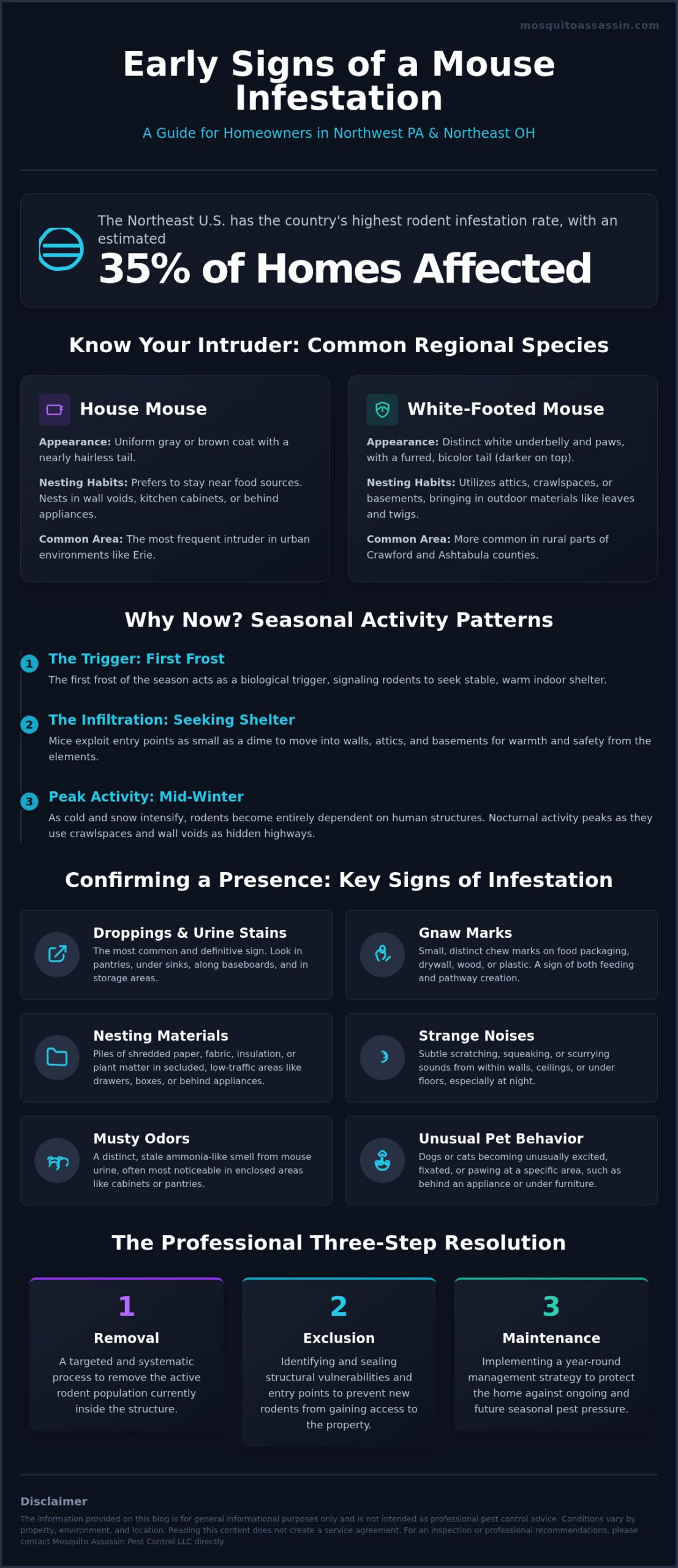
    Did you know that the Northeast United States has the highest percentage of rodent infestations in the country, with approximately 35 percent of homes affected? While Northwest Pennsylvania is known for its beautiful seasons, the region also faces significant rodent pressure that can leave property owners feeling vulnerable. Identifying the early signs of mice infestation Erie PA homeowners often encounter is the first step toward reclaiming your peace of mind. It’s natural to feel a sense of anxiety when you hear an unidentified scratching sound behind a baseboard or discover a chewed cereal box in the pantry. You aren’t just worried about a single pest; you’re concerned about potential structural damage and the health of your household. This guide provides a definitive list of indicators to check, explains why these rodents are entering your home now, and outlines a clear path to resolving the issue. You’ll learn how to spot subtle evidence and implement professional prevention strategies tailored for the specific climate of Erie and Crawford Counties in Pennsylvania and Ashtabula County in Ohio.

    Disclaimer: The information provided on this blog is for general informational purposes only and is not intended as professional pest control advice. Conditions vary by property, environment, and location. Reading this content does not create a service agreement. For an inspection or professional recommendations, please contact Mosquito Assassin Pest Control LLC directly.

    Key Takeaways

    • Identify the specific rodent species common to Northwest Pennsylvania and Northeast Ohio to better understand their nesting habits and behaviors.
    • Recognize the primary signs of mice infestation Erie PA homeowners often overlook, including subtle nocturnal sounds and nesting materials in low-traffic areas.
    • Discover how to address structural vulnerabilities through exclusion techniques to prevent new rodents from entering the property.
    • Understand the professional three-step process of removal, maintenance, and exclusion as the standard for achieving a long-term resolution.
    • Learn why year-round management is essential for protecting homes against seasonal pest pressure in the local climate.

    Common Rodent Species in Northwest Pennsylvania and Northeast Ohio

    Identifying the specific type of rodent in your home is more than just a matter of curiosity; it dictates the most effective management strategy. In our region, the biology of these pests determines how they enter, where they hide, and how quickly they reproduce. While most property owners look for the physical House mouse, they might actually be dealing with a field-dwelling relative. Spotting the early signs of mice infestation Erie PA families deal with requires knowing which species is likely behind the activity. Understanding these biological differences helps in identifying the severity of a potential problem before it escalates.

    The House mouse is the most frequent intruder found in urban Erie environments. These pests have spent centuries adapting to human structures, making them experts at finding entry points as small as a dime. In contrast, white-footed mice are common in more rural parts of Crawford and Ashtabula counties. These rodents often move indoors when their natural food sources in fields and forests become scarce. Both species are highly adaptable and can survive harsh Pennsylvania winters by seeking indoor shelter within the safety of your walls.

    The House Mouse vs. The White-Footed Mouse

    Distinguishing between these two can be difficult for the untrained eye, but specific physical markers exist. The house mouse typically has a uniform gray or brown coat with a tail that is nearly hairless and the same color as its body. White-footed mice, however, feature a distinct white underbelly and white paws, with a tail that is noticeably more furred and bicolor, usually darker on top and lighter on the bottom.

    Their nesting preferences also differ significantly in residential settings. House mice prefer to stay close to food sources, often nesting in wall voids, kitchen cabinets, or behind appliances. White-footed mice are more likely to utilize attics, crawlspaces, or basements, bringing in outside materials like dried leaves, twigs, or grass. Identifying the specific species influences the management strategy, as it tells a professional where to look for nests and which entry points are most likely being used.

    Seasonal Activity Patterns in the Erie Region

    Our unique lake-effect weather patterns play a major role in rodent behavior. When the first frost hits Northwest Pennsylvania, it acts as a biological trigger for rodents to seek stable temperatures. This is often when homeowners first notice the signs of mice infestation Erie PA residents encounter most frequently, such as droppings in the pantry or nesting material in the garage. As the cold intensifies, these rodents move deeper into the structure to find warmth.

    Indoor activity often peaks during the mid-winter months. As temperatures drop and snow accumulates in Crawford and Ashtabula counties, rodents become entirely dependent on the warmth and resources provided by human structures. They use crawlspaces and attics as highways to move through the home undetected. Because they are nocturnal, you might hear them long before you see them. Recognizing these seasonal shifts is essential for maintaining a rodent-free environment year-round.

    Disclaimer: The information provided on this blog is for general informational purposes only and is not intended as professional pest control advice. Conditions vary by property, environment, and location. Reading this content does not create a service agreement. For an inspection or professional recommendations, please contact Mosquito Assassin Pest Control LLC directly.

    Visible Signs of a Mouse Infestation

    Confirming a rodent presence starts with a methodical search for physical evidence. In Northwest Pennsylvania, many homes feature older stone foundations or unfinished basements that provide perfect hiding spots for small intruders. Regular inspections of these low-traffic areas can reveal the first signs of mice infestation Erie PA residents often miss during their daily routines. Catching these indicators early is the key to preventing a small group of pests from establishing a permanent colony within your walls. Spotting physical evidence is almost always the first step in confirming that a problem exists.

    Identifying Rodent Droppings and Urine

    Droppings are a primary indicator and are typically found near food sources, such as pantries or pet food bowls, and along the perimeter of rooms where rodents feel safest. These pests are creatures of habit and usually follow the same paths every night. Mouse droppings resemble small grains of dark rice, usually measuring about 1/8 to 1/4 inch in length. The texture of these droppings tells a story about the timeline of the activity. Fresh evidence is dark and pliable, indicating active movement within the last 24 to 48 hours. If the droppings are gray and brittle, they may be from a previous season.

    In dusty areas like basements or crawlspaces in Crawford or Ashtabula counties, you might also notice “urine pillars.” These are small mounds consisting of grease, dirt, and urine that accumulate over time in heavily traveled areas. The U.S. Environmental Protection Agency provides a comprehensive guide on the Signs of rodent infestation to help homeowners with early detection. If you’ve discovered these indicators in your home, seeking professional rodent control can help identify the extent of the activity and prevent further damage.

    Gnaw Marks and Material Damage

    Rodents have incisors that never stop growing. To manage this growth, they must gnaw continuously on hard materials. This biological necessity leads to structural damage like gnawed baseboards, cabinet corners, and even electrical insulation. Chewed wires are particularly concerning because they create a significant fire hazard that remains hidden behind your walls until a problem occurs. Rodents also target cardboard boxes and plastic storage bins to reach food or nesting materials.

    Beyond tooth marks, look for “rub marks” or dark grease stains along floorboards and corners. Because mice have poor eyesight, they navigate by keeping their bodies in contact with walls. Over time, the oils and dirt in their fur leave dark smudges on frequently used paths. If these marks are fresh enough to smear, the infestation is likely current and active. Identifying these marks along with shredded paper or attic insulation confirms that rodents are actively building nests inside your home.

    Disclaimer: The information provided on this blog is for general informational purposes only and is not intended as professional pest control advice. Conditions vary by property, environment, and location. Reading this content does not create a service agreement. For an inspection or professional recommendations, please contact Mosquito Assassin Pest Control LLC directly.

    Sensory Indicators: Noises, Smells, and Pet Behavior

    Because rodents are primarily nocturnal, you’ll likely hear or smell them long before you ever see one. These sensory indicators are some of the most reliable signs of mice infestation Erie PA homeowners can use to gauge the severity of a problem. While droppings and gnaw marks provide definitive physical proof, the sounds and smells emanating from hidden voids offer a real-time map of where rodents are active. Recognizing these subtle cues early allows you to address the issue before a few seasonal intruders turn into a year-round colony.

    Auditory Clues in Walls and Ceilings

    The quiet of the evening often reveals the first auditory clues. Homeowners in Erie and Crawford counties frequently report hearing scratching, scurrying, or faint squeaking sounds coming from behind baseboards or inside drop ceilings. Unlike the predictable creaks of a settling house, rodent noises are erratic and purposeful. These sounds are often localized in kitchens, where food is stored, or in attics and behind large appliances where rodents find warmth and nesting materials. If the scratching sounds move across a ceiling or down a wall, it’s a strong indicator that pests are using your home’s structural channels as a highway system.

    Olfactory Signs and Pet Reactions

    As a rodent population grows, a distinct musky or ammonia-like scent often develops. This odor is caused by rodent urine and is particularly noticeable in poorly ventilated areas like pantries, closets, or basements. In more rural parts of Ashtabula County, this scent might be mistaken for dampness or old storage, but a persistent, pungent smell that doesn’t dissipate with cleaning usually points toward established nesting sites. For those looking to integrate professional advice with home maintenance, reviewing Pennsylvania rodent prevention strategies from educational institutions can provide a solid foundation for long-term control.

    Domestic pets often detect these intruders through scent or high-frequency sound long before humans do. If your dog or cat suddenly begins pawing at a specific section of the wall or stares intensely at the gap under a refrigerator, they aren’t just acting out. They are likely tracking the movement of a mouse behind the surface. A sudden change in pet behavior, such as unexplained barking at a corner or increased agitation at night, warrants a closer inspection of the home for other physical signs. Monitoring how your animals react to specific areas of your property can help you pinpoint exactly where the infestation is concentrated.

    Disclaimer: The information provided on this blog is for general informational purposes only and is not intended as professional pest control advice. Conditions vary by property, environment, and location. Reading this content does not create a service agreement. For an inspection or professional recommendations, please contact Mosquito Assassin Pest Control LLC directly.

    Signs of Mice Infestation in Erie, PA: A Homeowner’s Identification Guide

    Effective Rodent Prevention for Pennsylvania Homeowners

    Prevention is a critical component of maintaining a rodent-free environment. In the Great Lakes region, the onset of severe weather creates a unique pressure on local wildlife. As temperatures drop and Lake Erie begins to cool, rodents instinctively seek the thermal stability of residential foundations. Addressing structural vulnerabilities prevents new rodents from replacing those already removed during a treatment cycle. If you have already detected the physical signs of mice infestation Erie PA homes typically exhibit, implementing exclusion tactics is the only way to break the cycle of seasonal re-entry.

    Exclusion and Structural Sealing

    Exclusion begins with identifying every possible entry point. Rodents frequently exploit gaps in the foundation, siding, or the small spaces around utility penetrations like gas lines and dryer vents. Using durable materials like steel wool or hardware cloth is necessary; unlike wood or plastic, these materials resist the constant gnawing of determined pests. It’s also vital to check the integrity of door sweeps and window screens. A worn sweep on a garage door provides enough space for multiple rodents to enter a home in minutes. A gap as small as a quarter-inch is often enough for a house mouse to bypass your home’s exterior defenses.

    Sanitation and Habitat Modification

    Sanitation plays a major role in reducing the overall attractiveness of a property. Secure all pantry items in airtight glass or metal containers to cut off scent trails. Outdoor landscaping choices can also either deter or invite rodents toward your foundation. For instance, bird feeders and fallen fruit from trees provide easy food sources that encourage rodents to linger near your walls. Maintaining a clear perimeter is essential. Keeping firewood and debris piles at least 20 feet away from the structure removes the protective cover rodents use to move toward your home safely. These simple habitat changes significantly lower the risk of a persistent problem.

    These practical steps form a strong defense against future problems. However, if you’re currently dealing with an active population, professional intervention is often the most efficient path forward. You can book an inspection online to have a professional evaluate your property’s specific vulnerabilities and provide a tailored plan for your home.

    Disclaimer: The information provided on this blog is for general informational purposes only and is not intended as professional pest control advice. Conditions vary by property, environment, and location. Reading this content does not create a service agreement. For an inspection or professional recommendations, please contact Mosquito Assassin Pest Control LLC directly.

    Professional Rodent Management and Maintenance

    While home maintenance is a powerful tool, recurring problems often signal a deeper structural vulnerability. Professional intervention becomes necessary when the signs of mice infestation Erie PA residents observe persist despite their best efforts. A systematic approach ensures that every life cycle stage of the rodent population is addressed, from nesting adults to developing young. This methodical strategy helps reduce the long-term risk of food contamination and hidden structural damage that can occur when a population remains unchecked. Professional pest control may help reduce risk by identifying activity that is often invisible to the untrained eye.

    The Three-Step Process: Removal, Maintenance, and Exclusion

    A professional standard for total eradication involves a disciplined three-step process: removal, maintenance, and exclusion. It’s critical to remove the current rodent population before sealing the structure. Sealing entry points while rodents are still active inside can lead to them dying within the walls, causing secondary odor and pest issues. Once the interior is clear, scheduled maintenance visits ensure that any new rodent pressure is identified early, before a new colony can establish itself. Finally, exclusion serves as the only long-term solution. By permanently blocking the pathways used for re-infestation with professional-grade materials, the structural integrity of the home is restored.

    The Value of Year-Round Protection

    The shifting climates of Northwest Pennsylvania and Northeast Ohio mean that rodent pressure is never truly absent. While activity peaks in the winter, rodents are active year-round in the fields and forests of Crawford and Ashtabula counties. Integrating rodent management into a general pest control plan provides a consistent shield against seasonal invasions. These plans focus on maintaining a defensive perimeter so that rodents don’t have the opportunity to move from the landscaping into the foundation. For homeowners interested in professional options, viewing available services can provide a clearer understanding of how to maintain a rodent-free environment through every season.

    Disclaimer: The information provided on this blog is for general informational purposes only and is not intended as professional pest control advice. Conditions vary by property, environment, and location. Reading this content does not create a service agreement. For an inspection or professional recommendations, please contact Mosquito Assassin Pest Control LLC directly.

    Protecting Your Home from Seasonal Rodent Pressure

    Identifying the early signs of mice infestation Erie PA families encounter is the first step toward a secure, pest-free household. By recognizing the difference between urban house mice and rural white-footed mice, you can better understand where to look for activity. Whether you’ve noticed physical evidence like rice-shaped droppings or sensory indicators like nocturnal scratching in the walls, taking swift action prevents a few intruders from becoming a widespread problem. Year-round protection remains the professional standard for homes in Northwest Pennsylvania and Northeast Ohio, where lake-effect weather patterns constantly drive rodents indoors seeking warmth.

    Utilizing a professional three-step process that focuses on removal, maintenance, and exclusion ensures that structural vulnerabilities are permanently addressed. Licensed service in Erie and Crawford Counties provides property owners with a methodical way to resolve current activity and prevent future re-entry. Reclaiming your peace of mind starts with a thorough evaluation of your property. To understand the specific needs of your home, you may contact a professional for a rodent inspection and discover the most effective year-round protection options for your area.

    Disclaimer: The information provided on this blog is for general informational purposes only and is not intended as professional pest control advice. Conditions vary by property, environment, and location. Reading this content does not create a service agreement. For an inspection or professional recommendations, please contact Mosquito Assassin Pest Control LLC directly.

    Frequently Asked Questions

    How do I know if I have mice or rats?

    The primary difference lies in their physical size and the scale of the evidence they leave behind. Mice are small, typically three to four inches long, with thin tails and rice-sized droppings. Rats are significantly larger, often reaching ten inches in length, and produce droppings the size of an olive pit. While both species are common in the Northeast, the house mouse is the most frequent intruder in residential settings.

    Can mice enter through the roof or attic in Erie homes?

    Rodents are exceptional climbers that can easily scale brick, siding, and downspouts to reach your roofline. In Northwest Pennsylvania, overhanging tree limbs often act as a bridge to the roof, where gaps in fascia boards or soffits offer easy entry. Once they reach the attic, they utilize the insulation for nesting and move downward through wall voids to reach food sources.

    Is a single mouse sighting a sign of a larger infestation?

    Seeing a single mouse usually indicates that a larger population is hidden nearby. Because they are nocturnal and naturally secretive, a mouse spotted during the day often suggests that their nest is overcrowded or food is becoming scarce. This is one of the most common signs of mice infestation Erie PA homeowners encounter when an established colony is present.

    What smells attract mice into a clean kitchen?

    Even in a spotless kitchen, the scent of unsealed pet food, birdseed, or aromatic grains can draw rodents from a distance. They have a highly developed sense of smell and can detect grease residue on a stovetop or crumbs trapped behind a refrigerator. Securing all food in airtight glass or metal containers is the only way to effectively mask these attractants.

    Are rodent droppings dangerous to handle?

    You should never handle droppings with bare hands due to the risk of pathogens like Hantavirus or Salmonellosis. Professional standards require wearing gloves and a mask while using a disinfectant spray to wet the area before cleaning. Never sweep or vacuum dry droppings, as this can aerosolize harmful particles and increase the risk of inhalation.

    How long does it take for a professional to clear a mouse problem?

    The timeline for a total resolution depends on the scale of the infestation and the structural condition of the home. A typical professional cycle involving removal and exclusion takes approximately two to four weeks. This duration ensures that the existing population is fully removed before the final sealing of entry points prevents new rodents from entering the structure.

    Can mice survive in the walls during a Pennsylvania winter?

    Mice don’t hibernate; they thrive in the warmth and protection of wall voids throughout the coldest months. Your home’s heating system and wall insulation provide an ideal environment for them to remain active and continue reproducing. Identifying the early signs of mice infestation Erie PA residents see in the fall is essential for stopping this winter activity before it causes structural damage.

    Disclaimer: The information provided on this blog is for general informational purposes only and is not intended as professional pest control advice. Conditions vary by property, environment, and location. Reading this content does not create a service agreement. For an inspection or professional recommendations, please contact Mosquito Assassin Pest Control LLC directly.

  • Understanding the Value of a Free Pest Inspection in Erie and Surrounding Areas

    Understanding the Value of a Free Pest Inspection in Erie and Surrounding Areas

    On a quiet Tuesday evening in Erie, a homeowner might notice a faint scratching behind the drywall or a small, unexplained pile of debris near the baseboard. It’s often in these small moments that property owners realize they aren’t alone in their own houses. Dealing with potential infestations causes significant anxiety, especially when you aren’t sure if you’re looking at ants, termites, or something else entirely. Most people worry that calling a professional will lead to high-pressure sales or confusing jargon, but a free pest inspection Erie residents can access is actually a structured, educational process designed to provide clarity and peace of mind.

    You’ll learn exactly what occurs during a professional property evaluation and how identifying specific vulnerabilities helps safeguard homes across Northwest Pennsylvania and Northeast Ohio. This guide covers the essential steps of a thorough inspection, from identifying specific pests to creating a practical roadmap for long-term prevention. Understanding these vulnerabilities is the first step in ensuring a secure, pest-free environment.

    Key Takeaways

    • Differentiate between a basic visual check and a thorough professional diagnostic audit to uncover hidden pest vulnerabilities.
    • Understand how the Lake Erie shoreline and local humidity levels impact seasonal pest activity in Northwest Pennsylvania and Northeast Ohio.
    • Learn why a free pest inspection Erie residents schedule is essential for identifying structural entry points and exterior perimeter risks.
    • Identify common moisture management issues and structural gaps that frequently attract pests to residences in the tri-county area.
    • Discover how Integrated Pest Management (IPM) principles use inspection data to establish proactive, long-term protection for your property.

    The Role of a Professional Pest Inspection in Property Maintenance

    A professional pest inspection serves as a systematic evaluation of a residential or commercial property. It involves a thorough search for active infestations, evidence of past activity, and structural vulnerabilities that might invite future issues. Homeowners in Erie County, Crawford County, and Ashtabula County often view these evaluations as a critical part of routine property maintenance. Scheduling a free pest inspection Erie provides a baseline for understanding the health and safety of a building’s structure.

    To better understand the technical aspects of a professional evaluation, watch this helpful video:

    Unlike a simple visual walkthrough, a professional diagnostic audit relies on specialized knowledge of insect behavior and local environmental factors. Trained technicians look for signs that are often invisible to the untrained eye, such as mud tubes in crawlspaces, subtle frass piles, or specific exit holes in timber. In Pennsylvania and Ohio, where seasonal shifts drastically change pest pressure, these inspections protect long-term property value by identifying problems before they require expensive structural repairs. Utilizing a free pest inspection Erie ensures that localized threats, such as moisture-driven wood rot or attic-dwelling rodents, are documented before they escalate into an emergency.

    Diagnostic vs. Promotional Inspections

    Professional inspections focus on pest biology and environmental science rather than meeting sales quotas. This approach aligns with the principles of Integrated Pest Management (IPM), which prioritizes long-term prevention and minimal impact. An objective report provides homeowners with factual data, allowing them to make informed decisions based on the actual risks present on their property. Educational assessments help residents understand why certain pests are attracted to their specific landscape or foundation type, shifting the focus from a quick fix to a sustainable strategy.

    Benefits of Regular Property Evaluations

    Regular evaluations lead to the early detection of wood-destroying organisms like termites or carpenter bees. These pests can cause thousands of dollars in damage long before a homeowner notices a single insect. Seasonal monitoring reduces the likelihood of large-scale infestations by addressing entry points and nesting sites during peak activity periods. For those looking to understand the broader context of home protection, learning about general pest control provides a foundation for maintaining a healthy living environment. Consistent oversight ensures that a property remains a fortress against the common pests found in the Great Lakes region.

    Disclaimer: The information provided on this blog is for general informational purposes only and is not intended as professional pest control advice. Conditions vary by property, environment, and location. Reading this content does not create a service agreement. For an inspection or professional recommendations, please contact Mosquito Assassin Pest Control LLC directly.

    Regional Pest Pressures in Erie, Crawford, and Ashtabula Counties

    Property owners in Erie, Crawford, and Ashtabula counties deal with a climate that is heavily influenced by the Great Lakes. This region sees an average of 100 inches of snow annually in some lake-effect zones, which forces wildlife and rodents to seek shelter in man-made structures. Understanding these local pressures is the first step in effective management. A free pest inspection Erie residents can access helps pinpoint where these environmental factors are compromising a home’s exterior before a minor issue becomes a full-scale infestation.

    The geography of Northwest Pennsylvania and Northeast Ohio creates unique biological corridors. The combination of dense hardwood forests in Crawford County and the marshy coastal areas of Erie County supports a diverse range of pests. These pests don’t just exist in the wild; they actively migrate toward residential areas as seasons change. Professional pest management in this region requires a deep understanding of how local weather patterns, such as the high humidity from Lake Erie, dictate the life cycles of everything from ants to arachnids.

    Lake Effect Environments and Insect Activity

    The Lake Erie shoreline produces a microclimate characterized by high moisture and rapid temperature shifts. These conditions are particularly conducive to carpenter ant and cockroach infestations. Moisture-damaged wood, common in lakefront properties, serves as a primary nesting site for wood-destroying organisms. Professional evaluations often follow EPA’s IPM Principles to manage these risks by focusing on habitat reduction rather than just reactive treatments. This approach is vital in the tri-county area, where environmental sensitivity is a priority for protecting local waterways and soil health.

    High humidity levels, which often exceed 75% during the summer months in Ashtabula and Erie, also accelerate the decay of organic matter. This provides an abundant food source for silverfish and centipedes. Without addressing the underlying moisture issues typical of lake-effect environments, pest populations can rebound quickly even after initial removal efforts.

    Seasonal Transitions in the Tri-County Area

    Pest activity follows a predictable, yet intense, cycle in this region. In the spring, typically starting in late April, stinging insects and termites emerge as ground temperatures rise. Summer brings peak mosquito and tick activity, fueled by the dense vegetation and tall grasses found throughout rural Crawford and Ashtabula counties. Identifying larval sites in standing water is a critical summer prevention step to reduce the local mosquito population.

    • Spring: Emergence of carpenter ants and social wasps seeking nesting sites.
    • Summer: Rapid mosquito breeding cycles in humid, stagnant environments.
    • Fall: Rodent exclusion becomes the priority as mice look for warmth.
    • Winter: Indoor pests like cockroaches and spiders remain active in climate-controlled spaces.

    As temperatures drop in October, rodents become a primary concern. Mice can squeeze through openings as small as a quarter inch to escape the harsh lake-effect winters. Scheduling a free pest inspection Erie can help identify these tiny entry points before the first deep freeze. Property owners concerned about seasonal infestations can find more information or schedule a professional evaluation at the online booking portal.

    Disclaimer: The information provided on this blog is for general informational purposes only and is not intended as professional pest control advice. Conditions vary by property, environment, and location. Reading this content does not create a service agreement. For an inspection or professional recommendations, please contact Mosquito Assassin Pest Control LLC directly.

    Understanding the Value of a Free Pest Inspection in Erie and Surrounding Areas

    The Anatomy of a Comprehensive Professional Evaluation

    A professional evaluation is much more than a quick walk-through of a property. It’s a systematic process that begins with a detailed consultation to discuss specific observations and the history of the building. In Erie and Crawford Counties, local environmental factors like seasonal lake-effect moisture and older structural foundations play a significant role in how pests behave. Technicians look for patterns that reveal how pests interact with the environment. This methodical approach is grounded in the principles of Integrated Pest Management (IPM), which focuses on long-term prevention and accurate identification before any action is taken.

    Exterior Inspection Protocols

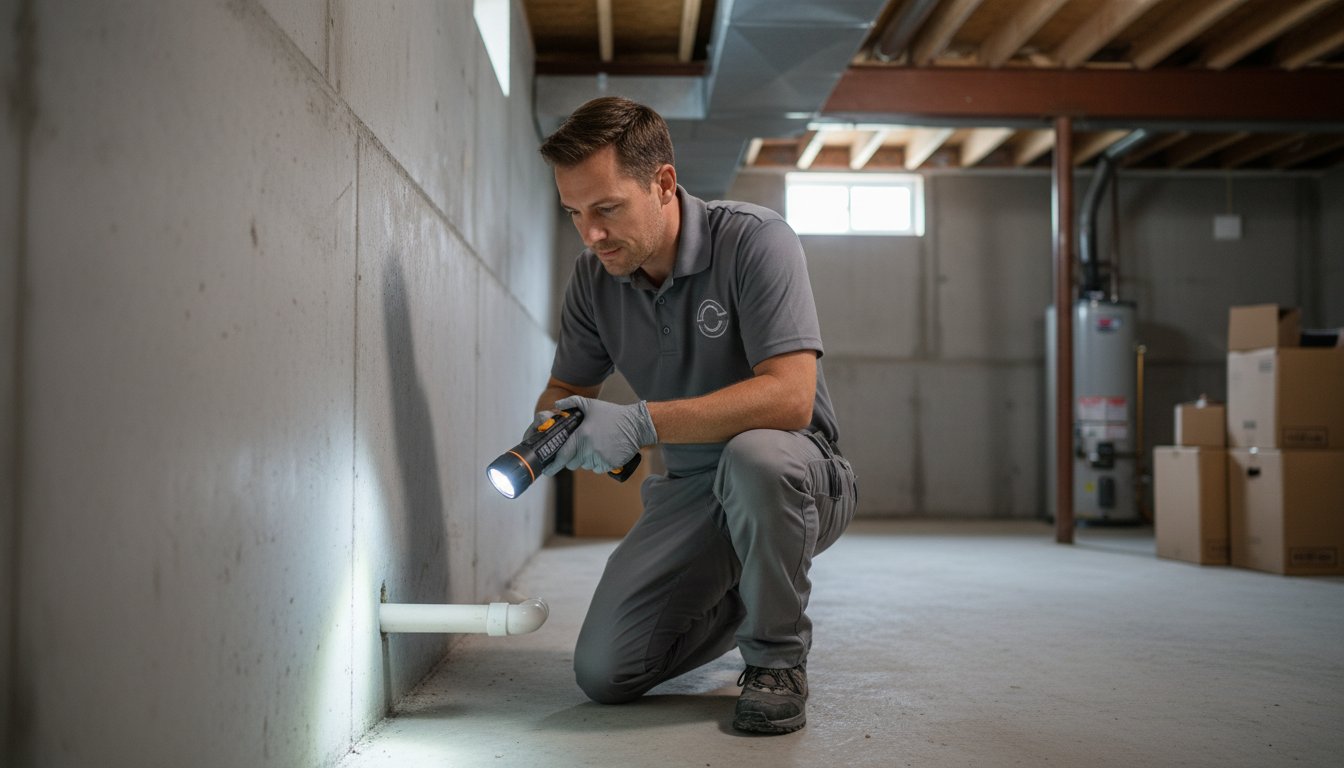
    The exterior of a home serves as the first line of defense. During a free pest inspection Erie, the foundation is examined for any gaps or cracks larger than 0.25 inches. These small openings are common entry points for rodents and crawling insects. In areas like Ashtabula County, rooflines and eaves require close attention for signs of stinging insect nests or wildlife activity. Proper drainage is also critical; standing water or overgrown landscaping within 12 inches of the structure can create ideal harborage sites for pests seeking shelter and hydration. Identifying these vulnerabilities helps property owners understand how to harden their homes against local threats.

    Interior Assessment Focal Points

    Inside the home, the focus shifts to high-risk zones where pests often hide or travel undetected. Kitchens and bathrooms are primary targets because of plumbing penetrations. Small openings around pipes under sinks provide a direct highway for insects and mice. Technicians also evaluate moisture levels in basements and crawlspaces. High humidity levels, often exceeding 60% during humid Pennsylvania summers, can attract wood-destroying organisms and other moisture-loving pests. Searching for subtle signs of activity, such as droppings, shed skins, or grease tracks along baseboards, allows for a more accurate assessment of the situation.

    The final stage of the evaluation involves the documentation of findings and the identification of specific pest species. It’s not enough to simply know that “bugs” are present; knowing whether a property has carpenter ants or field ants changes the entire approach to management. Accurate documentation ensures that any future strategy is tailored to the unique needs of the property. Professional pest control may help reduce risk for those concerned about local infestations. For more information on identifying potential issues, property owners can visit mosquitoassassin.com/location to learn about regional pest pressures.

    Disclaimer: The information provided on this blog is for general informational purposes only and is not intended as professional pest control advice. Conditions vary by property, environment, and location. Reading this content does not create a service agreement. For an inspection or professional recommendations, please contact Mosquito Assassin Pest Control LLC directly.

    Identifying Common Vulnerabilities in Local Homes

    Homes in Erie and Crawford Counties face unique environmental pressures due to the regional climate and the age of local architecture. Many residences in the city of Erie were constructed before 1960, meaning they often feature stone foundations or aging wood siding that has shifted over decades. These structural shifts create tiny gaps that serve as open invitations for pests. Scheduling a free pest inspection Erie homeowners can utilize is a practical way to identify where these vulnerabilities exist before they lead to significant property damage.

    The Great Lakes region receives an average of 43 inches of rain and over 100 inches of snow annually. This consistent moisture leads to wood rot and high humidity in crawlspaces, which attracts damp-wood pests like carpenter ants and termites. Beyond structural issues, internal habits often contribute to pest pressure. Kitchen pantries with unsealed containers or leaking pipes under sinks provide the necessary resources for a colony to thrive. Additionally, cluttered storage areas in basements or attics offer the perfect nesting material for rodents seeking shelter from the harsh Pennsylvania winters.

    Exclusion Gaps and Entry Points

    Utility penetrations are among the most common entry points in local residences. When lines for gas, water, or electricity enter a home, the surrounding hole is often larger than the conduit itself. Mice can squeeze through a gap the size of a dime, making these openings prime targets for entry. Maintaining intact door sweeps and ensuring window screens don’t have tears is essential for a pest-resistant home. Professional pest control may help reduce risk through exclusion recommendations that target these specific “weak links” in the home’s perimeter.

    Sanitation and Habitat Modification

    Managing the environment outside the home is just as vital as cleaning the inside. Piles of firewood or construction debris stacked against the foundation provide immediate harborage for spiders and rodents. Proper waste management, including the use of heavy-duty bins with locking lids, helps deter larger wildlife from frequenting the property. For those already dealing with an active infestation, following professional rodent removal strategies can assist in reclaiming the home and preventing future nesting. Removing standing water and keeping gutters clear of debris are also critical steps in modifying the habitat to be less attractive to local pests.

    Identifying these vulnerabilities early is the most effective way to safeguard your family and property. To get a professional assessment of your home’s defenses, schedule an inspection through the online booking portal.

    Disclaimer: The information provided on this blog is for general informational purposes only and is not intended as professional pest control advice. Conditions vary by property, environment, and location. Reading this content does not create a service agreement. For an inspection or professional recommendations, please contact Mosquito Assassin Pest Control LLC directly.

    Interpreting Findings and Planning for Prevention

    The conclusion of a free pest inspection Erie homeowners utilize serves as a critical turning point in property maintenance. This document isn’t just a list of insects; it’s a strategic blueprint for safeguarding a home. By reviewing the findings, property owners can move from a reactive state of worry to a proactive state of control. A professional report establishes a clear baseline for ongoing monitoring. This allows for the detection of subtle changes in pest activity before they become costly structural issues.

    Professional strategies rely heavily on Integrated Pest Management (IPM). This approach shifts the focus from temporary fixes to long-term prevention. While DIY methods often rely on the repeated application of over-the-counter sprays, professional recommendations target the root cause. This might include identifying moisture sources or entry points that a typical homeowner might overlook. Professional logic is built on building science and pest biology, ensuring the solution matches the specific environment of the Great Lakes region.

    Understanding the Inspection Report

    A comprehensive report differentiates between active infestations and potential risks. Active infestations require immediate action to prevent further damage to the structure or health risks to residents. Potential risks, often called conducive conditions, include things like wood-to-ground contact or high humidity in crawlspaces. Prioritizing structural repairs, such as sealing gaps or fixing leaky pipes, often provides more permanent results than chemical treatments alone. Utilizing professional services ensures that the plan is customized to the specific biology of local pests found in Erie and Crawford counties. According to 2024 industry standards, exclusion techniques are now considered the first line of defense in modern pest management.

    Next Steps for Homeowners

    Once the inspection is complete, homeowners should implement environmental changes based on the technician’s feedback. Simple actions like moving firewood piles 20 feet away from the foundation or clearing gutters can significantly reduce pest pressure. Scheduling follow-up evaluations is also vital because pest behavior shifts with the seasons in Erie and Ashtabula counties. Residents can learn more about us and the local expertise required to manage these regional challenges. Professional pest control may help reduce risk through consistent, data-driven monitoring and seasonal adjustments to the protection plan. Taking these steps ensures the home remains a fortress against local invaders year-round.

    Disclaimer: The information provided on this blog is for general informational purposes only and is not intended as professional pest control advice. Conditions vary by property, environment, and location. Reading this content does not create a service agreement. For an inspection or professional recommendations, please contact Mosquito Assassin Pest Control LLC directly.

    Securing Your Home Against Regional Pest Pressures

    Maintaining a property in Northwest Pennsylvania and Northeast Ohio requires a strategy that accounts for the unique climate of the Great Lakes region. With Erie County receiving an average of over 100 inches of snow annually according to historical weather data, local structures often become primary targets for pests seeking shelter from the cold. A detailed evaluation helps identify entry points and moisture issues that attract wood-destroying insects or rodents. Utilizing a free pest inspection Erie residents have access to provides a clear diagnostic report, highlighting specific vulnerabilities before they escalate into structural damage. Professional technicians who live in and understand the Erie, Crawford, and Ashtabula county areas can spot subtle signs of activity that often go unnoticed by the untrained eye. It’s a practical way to ensure property maintenance remains manageable and effective throughout the changing seasons.

    For an inspection or professional recommendations, please contact Mosquito Assassin Pest Control LLC directly. Taking charge of your home’s defense today prevents avoidable headaches tomorrow.

    Disclaimer: The information provided on this blog is for general informational purposes only and is not intended as professional pest control advice. Conditions vary by property, environment, and location. Reading this content does not create a service agreement. For an inspection or professional recommendations, please contact Mosquito Assassin Pest Control LLC directly.

    Frequently Asked Questions

    What is included in a free pest inspection in Erie?

    A comprehensive evaluation involves a detailed walkthrough of both the interior and exterior of the property to identify active infestations and potential vulnerabilities. Technicians examine common entry points, nesting sites, and signs of activity such as droppings or structural damage. A free pest inspection Erie typically covers common local threats like ants, spiders, and rodents across Erie and Crawford Counties.

    How long does a professional pest evaluation typically take?

    A standard professional evaluation usually takes between 30 and 45 minutes to complete for an average residential property. The exact duration depends on the square footage of the home and the complexity of its layout. Larger properties or those with detached structures in Ashtabula County might require up to 60 minutes for a thorough assessment of all potential hiding spots.

    Do I need to be home for the technician to inspect my property?

    Yes, it’s necessary for the property owner or an adult representative to be present during the scheduled visit. This presence allows the technician to access interior spaces like basements, attics, and crawlspaces where pests often congregate. Being on-site also ensures the technician can discuss specific observations and provide immediate feedback on the property’s condition.

    What happens if the technician finds pests during the inspection?

    If activity is detected, the technician documents the specific species and the extent of the infestation within a detailed report. They’ll identify environmental factors, such as moisture or food sources, that are attracting the pests to the home. After the assessment, a customized management plan is developed to address the specific biological needs of the pests found on the property.

    Are the methods used during an inspection safe for my family and pets?

    Professional inspections are non-invasive and rely primarily on visual observation and diagnostic tools rather than chemical applications. Technicians use equipment like high-powered flashlights and moisture meters to locate pests without disturbing the household. This process is completely safe for children and pets, as it focuses on identification rather than active treatment during the initial visit.

    Is a free inspection truly free, or are there hidden costs?

    A legitimate free pest inspection Erie carries no financial obligation or hidden service fees for the homeowner. The purpose of the visit is to provide an accurate diagnosis of the property’s health so the owner can make informed decisions. While the initial assessment is complimentary, any recommended treatment plans or preventative measures would involve separate costs that are clearly outlined before any work begins.

    How often should a home in Pennsylvania or Ohio be inspected for pests?

    Licensed professionals recommend an annual inspection for most residential properties in the Great Lakes region to catch issues before they escalate. In environments with high humidity or older construction, a bi-annual schedule (every 6 months) is often more effective at preventing seasonal infestations. Regular checks are vital because pests like rodents and insects often seek shelter indoors during the fluctuating weather patterns of the Northeast.

    Can an inspection detect termites even if there are no visible signs?

    Yes, trained technicians can identify subtle indicators of termite activity that are invisible to the untrained eye. They look for specific evidence like mud tubes, pin-sized holes in drywall, or hollow-sounding wood in structural supports. Early detection through a professional evaluation is critical because termites can cause significant structural damage for 3 to 5 years before becoming obvious to a homeowner.

    Disclaimer: The information provided on this blog is for general informational purposes only and is not intended as professional pest control advice. Conditions vary by property, environment, and location. Reading this content does not create a service agreement. For an inspection or professional recommendations, please contact Mosquito Assassin Pest Control LLC directly.