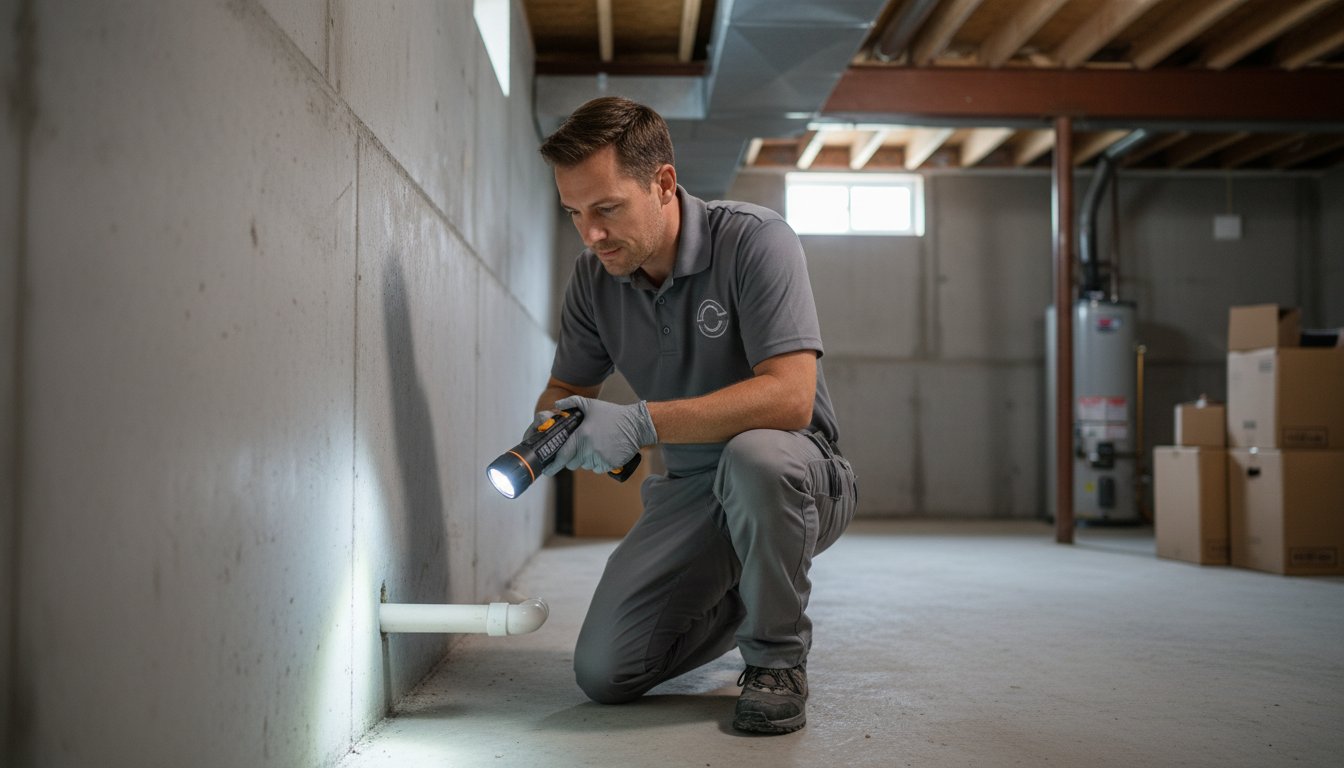
On a quiet Tuesday evening in Erie, a homeowner might notice a faint scratching behind the drywall or a small, unexplained pile of debris near the baseboard. It’s often in these small moments that property owners realize they aren’t alone in their own houses. Dealing with potential infestations causes significant anxiety, especially when you aren’t sure if you’re looking at ants, termites, or something else entirely. Most people worry that calling a professional will lead to high-pressure sales or confusing jargon, but a free pest inspection Erie residents can access is actually a structured, educational process designed to provide clarity and peace of mind.
You’ll learn exactly what occurs during a professional property evaluation and how identifying specific vulnerabilities helps safeguard homes across Northwest Pennsylvania and Northeast Ohio. This guide covers the essential steps of a thorough inspection, from identifying specific pests to creating a practical roadmap for long-term prevention. Understanding these vulnerabilities is the first step in ensuring a secure, pest-free environment.
Key Takeaways
- Differentiate between a basic visual check and a thorough professional diagnostic audit to uncover hidden pest vulnerabilities.
- Understand how the Lake Erie shoreline and local humidity levels impact seasonal pest activity in Northwest Pennsylvania and Northeast Ohio.
- Learn why a free pest inspection Erie residents schedule is essential for identifying structural entry points and exterior perimeter risks.
- Identify common moisture management issues and structural gaps that frequently attract pests to residences in the tri-county area.
- Discover how Integrated Pest Management (IPM) principles use inspection data to establish proactive, long-term protection for your property.
The Role of a Professional Pest Inspection in Property Maintenance
A professional pest inspection serves as a systematic evaluation of a residential or commercial property. It involves a thorough search for active infestations, evidence of past activity, and structural vulnerabilities that might invite future issues. Homeowners in Erie County, Crawford County, and Ashtabula County often view these evaluations as a critical part of routine property maintenance. Scheduling a free pest inspection Erie provides a baseline for understanding the health and safety of a building’s structure.
To better understand the technical aspects of a professional evaluation, watch this helpful video:
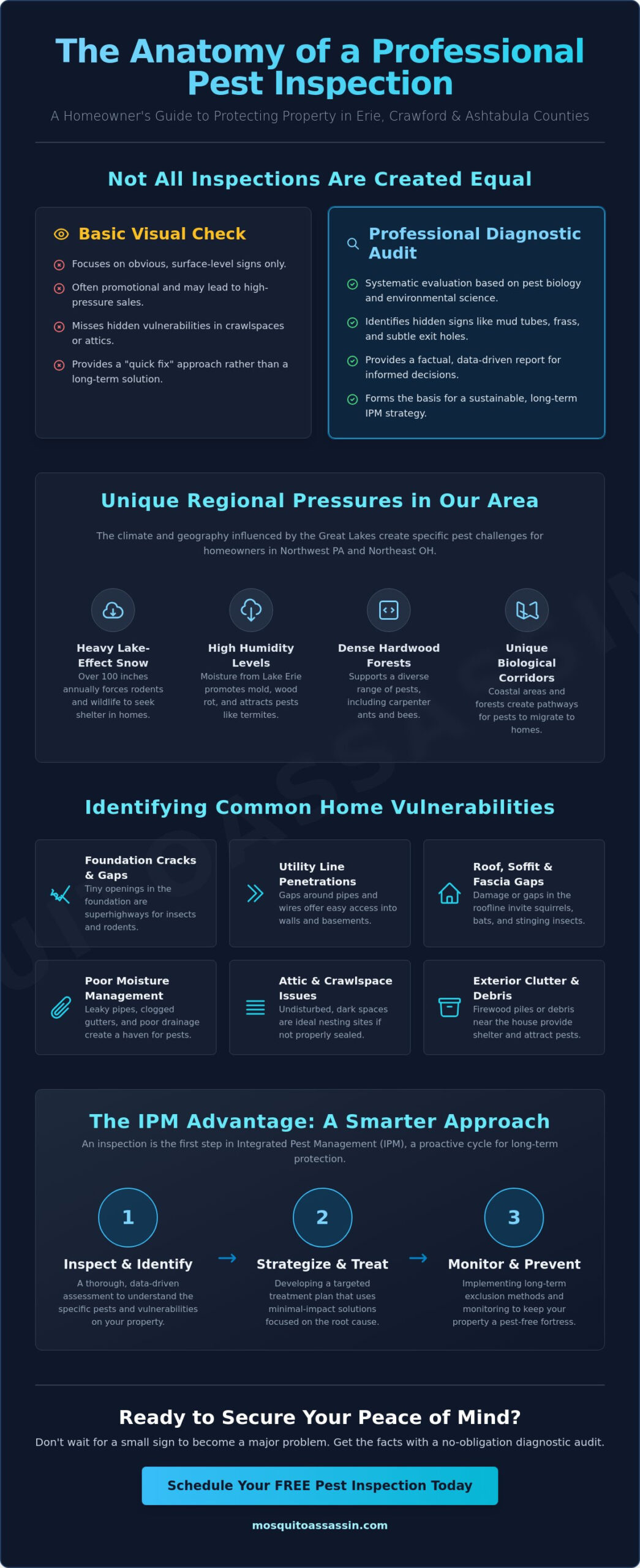
Unlike a simple visual walkthrough, a professional diagnostic audit relies on specialized knowledge of insect behavior and local environmental factors. Trained technicians look for signs that are often invisible to the untrained eye, such as mud tubes in crawlspaces, subtle frass piles, or specific exit holes in timber. In Pennsylvania and Ohio, where seasonal shifts drastically change pest pressure, these inspections protect long-term property value by identifying problems before they require expensive structural repairs. Utilizing a free pest inspection Erie ensures that localized threats, such as moisture-driven wood rot or attic-dwelling rodents, are documented before they escalate into an emergency.
Diagnostic vs. Promotional Inspections
Professional inspections focus on pest biology and environmental science rather than meeting sales quotas. This approach aligns with the principles of Integrated Pest Management (IPM), which prioritizes long-term prevention and minimal impact. An objective report provides homeowners with factual data, allowing them to make informed decisions based on the actual risks present on their property. Educational assessments help residents understand why certain pests are attracted to their specific landscape or foundation type, shifting the focus from a quick fix to a sustainable strategy.
Benefits of Regular Property Evaluations
Regular evaluations lead to the early detection of wood-destroying organisms like termites or carpenter bees. These pests can cause thousands of dollars in damage long before a homeowner notices a single insect. Seasonal monitoring reduces the likelihood of large-scale infestations by addressing entry points and nesting sites during peak activity periods. For those looking to understand the broader context of home protection, learning about general pest control provides a foundation for maintaining a healthy living environment. Consistent oversight ensures that a property remains a fortress against the common pests found in the Great Lakes region.
Disclaimer: The information provided on this blog is for general informational purposes only and is not intended as professional pest control advice. Conditions vary by property, environment, and location. Reading this content does not create a service agreement. For an inspection or professional recommendations, please contact Mosquito Assassin Pest Control LLC directly.
Regional Pest Pressures in Erie, Crawford, and Ashtabula Counties
Property owners in Erie, Crawford, and Ashtabula counties deal with a climate that is heavily influenced by the Great Lakes. This region sees an average of 100 inches of snow annually in some lake-effect zones, which forces wildlife and rodents to seek shelter in man-made structures. Understanding these local pressures is the first step in effective management. A free pest inspection Erie residents can access helps pinpoint where these environmental factors are compromising a home’s exterior before a minor issue becomes a full-scale infestation.
The geography of Northwest Pennsylvania and Northeast Ohio creates unique biological corridors. The combination of dense hardwood forests in Crawford County and the marshy coastal areas of Erie County supports a diverse range of pests. These pests don’t just exist in the wild; they actively migrate toward residential areas as seasons change. Professional pest management in this region requires a deep understanding of how local weather patterns, such as the high humidity from Lake Erie, dictate the life cycles of everything from ants to arachnids.
Lake Effect Environments and Insect Activity
The Lake Erie shoreline produces a microclimate characterized by high moisture and rapid temperature shifts. These conditions are particularly conducive to carpenter ant and cockroach infestations. Moisture-damaged wood, common in lakefront properties, serves as a primary nesting site for wood-destroying organisms. Professional evaluations often follow EPA’s IPM Principles to manage these risks by focusing on habitat reduction rather than just reactive treatments. This approach is vital in the tri-county area, where environmental sensitivity is a priority for protecting local waterways and soil health.
High humidity levels, which often exceed 75% during the summer months in Ashtabula and Erie, also accelerate the decay of organic matter. This provides an abundant food source for silverfish and centipedes. Without addressing the underlying moisture issues typical of lake-effect environments, pest populations can rebound quickly even after initial removal efforts.
Seasonal Transitions in the Tri-County Area
Pest activity follows a predictable, yet intense, cycle in this region. In the spring, typically starting in late April, stinging insects and termites emerge as ground temperatures rise. Summer brings peak mosquito and tick activity, fueled by the dense vegetation and tall grasses found throughout rural Crawford and Ashtabula counties. Identifying larval sites in standing water is a critical summer prevention step to reduce the local mosquito population.
- Spring: Emergence of carpenter ants and social wasps seeking nesting sites.
- Summer: Rapid mosquito breeding cycles in humid, stagnant environments.
- Fall: Rodent exclusion becomes the priority as mice look for warmth.
- Winter: Indoor pests like cockroaches and spiders remain active in climate-controlled spaces.
As temperatures drop in October, rodents become a primary concern. Mice can squeeze through openings as small as a quarter inch to escape the harsh lake-effect winters. Scheduling a free pest inspection Erie can help identify these tiny entry points before the first deep freeze. Property owners concerned about seasonal infestations can find more information or schedule a professional evaluation at the online booking portal.
The Anatomy of a Comprehensive Professional Evaluation
A professional evaluation is much more than a quick walk-through of a property. It’s a systematic process that begins with a detailed consultation to discuss specific observations and the history of the building. In Erie and Crawford Counties, local environmental factors like seasonal lake-effect moisture and older structural foundations play a significant role in how pests behave. Technicians look for patterns that reveal how pests interact with the environment. This methodical approach is grounded in the principles of Integrated Pest Management (IPM), which focuses on long-term prevention and accurate identification before any action is taken.
Exterior Inspection Protocols
The exterior of a home serves as the first line of defense. During a free pest inspection Erie, the foundation is examined for any gaps or cracks larger than 0.25 inches. These small openings are common entry points for rodents and crawling insects. In areas like Ashtabula County, rooflines and eaves require close attention for signs of stinging insect nests or wildlife activity. Proper drainage is also critical; standing water or overgrown landscaping within 12 inches of the structure can create ideal harborage sites for pests seeking shelter and hydration. Identifying these vulnerabilities helps property owners understand how to harden their homes against local threats.
Interior Assessment Focal Points
Inside the home, the focus shifts to high-risk zones where pests often hide or travel undetected. Kitchens and bathrooms are primary targets because of plumbing penetrations. Small openings around pipes under sinks provide a direct highway for insects and mice. Technicians also evaluate moisture levels in basements and crawlspaces. High humidity levels, often exceeding 60% during humid Pennsylvania summers, can attract wood-destroying organisms and other moisture-loving pests. Searching for subtle signs of activity, such as droppings, shed skins, or grease tracks along baseboards, allows for a more accurate assessment of the situation.
The final stage of the evaluation involves the documentation of findings and the identification of specific pest species. It’s not enough to simply know that “bugs” are present; knowing whether a property has carpenter ants or field ants changes the entire approach to management. Accurate documentation ensures that any future strategy is tailored to the unique needs of the property. Professional pest control may help reduce risk for those concerned about local infestations. For more information on identifying potential issues, property owners can visit mosquitoassassin.com/location to learn about regional pest pressures.
Identifying Common Vulnerabilities in Local Homes
Homes in Erie and Crawford Counties face unique environmental pressures due to the regional climate and the age of local architecture. Many residences in the city of Erie were constructed before 1960, meaning they often feature stone foundations or aging wood siding that has shifted over decades. These structural shifts create tiny gaps that serve as open invitations for pests. Scheduling a free pest inspection Erie homeowners can utilize is a practical way to identify where these vulnerabilities exist before they lead to significant property damage.
The Great Lakes region receives an average of 43 inches of rain and over 100 inches of snow annually. This consistent moisture leads to wood rot and high humidity in crawlspaces, which attracts damp-wood pests like carpenter ants and termites. Beyond structural issues, internal habits often contribute to pest pressure. Kitchen pantries with unsealed containers or leaking pipes under sinks provide the necessary resources for a colony to thrive. Additionally, cluttered storage areas in basements or attics offer the perfect nesting material for rodents seeking shelter from the harsh Pennsylvania winters.
Exclusion Gaps and Entry Points
Utility penetrations are among the most common entry points in local residences. When lines for gas, water, or electricity enter a home, the surrounding hole is often larger than the conduit itself. Mice can squeeze through a gap the size of a dime, making these openings prime targets for entry. Maintaining intact door sweeps and ensuring window screens don’t have tears is essential for a pest-resistant home. Professional pest control may help reduce risk through exclusion recommendations that target these specific “weak links” in the home’s perimeter.
Sanitation and Habitat Modification
Managing the environment outside the home is just as vital as cleaning the inside. Piles of firewood or construction debris stacked against the foundation provide immediate harborage for spiders and rodents. Proper waste management, including the use of heavy-duty bins with locking lids, helps deter larger wildlife from frequenting the property. For those already dealing with an active infestation, following professional rodent removal strategies can assist in reclaiming the home and preventing future nesting. Removing standing water and keeping gutters clear of debris are also critical steps in modifying the habitat to be less attractive to local pests.
Identifying these vulnerabilities early is the most effective way to safeguard your family and property. To get a professional assessment of your home’s defenses, schedule an inspection through the online booking portal.
Disclaimer: The information provided on this blog is for general informational purposes only and is not intended as professional pest control advice. Conditions vary by property, environment, and location. Reading this content does not create a service agreement. For an inspection or professional recommendations, please contact Mosquito Assassin Pest Control LLC directly.
Interpreting Findings and Planning for Prevention
The conclusion of a free pest inspection Erie homeowners utilize serves as a critical turning point in property maintenance. This document isn’t just a list of insects; it’s a strategic blueprint for safeguarding a home. By reviewing the findings, property owners can move from a reactive state of worry to a proactive state of control. A professional report establishes a clear baseline for ongoing monitoring. This allows for the detection of subtle changes in pest activity before they become costly structural issues.
Professional strategies rely heavily on Integrated Pest Management (IPM). This approach shifts the focus from temporary fixes to long-term prevention. While DIY methods often rely on the repeated application of over-the-counter sprays, professional recommendations target the root cause. This might include identifying moisture sources or entry points that a typical homeowner might overlook. Professional logic is built on building science and pest biology, ensuring the solution matches the specific environment of the Great Lakes region.
Understanding the Inspection Report
A comprehensive report differentiates between active infestations and potential risks. Active infestations require immediate action to prevent further damage to the structure or health risks to residents. Potential risks, often called conducive conditions, include things like wood-to-ground contact or high humidity in crawlspaces. Prioritizing structural repairs, such as sealing gaps or fixing leaky pipes, often provides more permanent results than chemical treatments alone. Utilizing professional services ensures that the plan is customized to the specific biology of local pests found in Erie and Crawford counties. According to 2024 industry standards, exclusion techniques are now considered the first line of defense in modern pest management.
Next Steps for Homeowners
Once the inspection is complete, homeowners should implement environmental changes based on the technician’s feedback. Simple actions like moving firewood piles 20 feet away from the foundation or clearing gutters can significantly reduce pest pressure. Scheduling follow-up evaluations is also vital because pest behavior shifts with the seasons in Erie and Ashtabula counties. Residents can learn more about us and the local expertise required to manage these regional challenges. Professional pest control may help reduce risk through consistent, data-driven monitoring and seasonal adjustments to the protection plan. Taking these steps ensures the home remains a fortress against local invaders year-round.
Securing Your Home Against Regional Pest Pressures
Maintaining a property in Northwest Pennsylvania and Northeast Ohio requires a strategy that accounts for the unique climate of the Great Lakes region. With Erie County receiving an average of over 100 inches of snow annually according to historical weather data, local structures often become primary targets for pests seeking shelter from the cold. A detailed evaluation helps identify entry points and moisture issues that attract wood-destroying insects or rodents. Utilizing a free pest inspection Erie residents have access to provides a clear diagnostic report, highlighting specific vulnerabilities before they escalate into structural damage. Professional technicians who live in and understand the Erie, Crawford, and Ashtabula county areas can spot subtle signs of activity that often go unnoticed by the untrained eye. It’s a practical way to ensure property maintenance remains manageable and effective throughout the changing seasons.
For an inspection or professional recommendations, please contact Mosquito Assassin Pest Control LLC directly. Taking charge of your home’s defense today prevents avoidable headaches tomorrow.
Disclaimer: The information provided on this blog is for general informational purposes only and is not intended as professional pest control advice. Conditions vary by property, environment, and location. Reading this content does not create a service agreement. For an inspection or professional recommendations, please contact Mosquito Assassin Pest Control LLC directly.
Frequently Asked Questions
What is included in a free pest inspection in Erie?
A comprehensive evaluation involves a detailed walkthrough of both the interior and exterior of the property to identify active infestations and potential vulnerabilities. Technicians examine common entry points, nesting sites, and signs of activity such as droppings or structural damage. A free pest inspection Erie typically covers common local threats like ants, spiders, and rodents across Erie and Crawford Counties.
How long does a professional pest evaluation typically take?
A standard professional evaluation usually takes between 30 and 45 minutes to complete for an average residential property. The exact duration depends on the square footage of the home and the complexity of its layout. Larger properties or those with detached structures in Ashtabula County might require up to 60 minutes for a thorough assessment of all potential hiding spots.
Do I need to be home for the technician to inspect my property?
Yes, it’s necessary for the property owner or an adult representative to be present during the scheduled visit. This presence allows the technician to access interior spaces like basements, attics, and crawlspaces where pests often congregate. Being on-site also ensures the technician can discuss specific observations and provide immediate feedback on the property’s condition.
What happens if the technician finds pests during the inspection?
If activity is detected, the technician documents the specific species and the extent of the infestation within a detailed report. They’ll identify environmental factors, such as moisture or food sources, that are attracting the pests to the home. After the assessment, a customized management plan is developed to address the specific biological needs of the pests found on the property.
Are the methods used during an inspection safe for my family and pets?
Professional inspections are non-invasive and rely primarily on visual observation and diagnostic tools rather than chemical applications. Technicians use equipment like high-powered flashlights and moisture meters to locate pests without disturbing the household. This process is completely safe for children and pets, as it focuses on identification rather than active treatment during the initial visit.
Is a free inspection truly free, or are there hidden costs?
A legitimate free pest inspection Erie carries no financial obligation or hidden service fees for the homeowner. The purpose of the visit is to provide an accurate diagnosis of the property’s health so the owner can make informed decisions. While the initial assessment is complimentary, any recommended treatment plans or preventative measures would involve separate costs that are clearly outlined before any work begins.
How often should a home in Pennsylvania or Ohio be inspected for pests?
Licensed professionals recommend an annual inspection for most residential properties in the Great Lakes region to catch issues before they escalate. In environments with high humidity or older construction, a bi-annual schedule (every 6 months) is often more effective at preventing seasonal infestations. Regular checks are vital because pests like rodents and insects often seek shelter indoors during the fluctuating weather patterns of the Northeast.
Can an inspection detect termites even if there are no visible signs?
Yes, trained technicians can identify subtle indicators of termite activity that are invisible to the untrained eye. They look for specific evidence like mud tubes, pin-sized holes in drywall, or hollow-sounding wood in structural supports. Early detection through a professional evaluation is critical because termites can cause significant structural damage for 3 to 5 years before becoming obvious to a homeowner.
Disclaimer: The information provided on this blog is for general informational purposes only and is not intended as professional pest control advice. Conditions vary by property, environment, and location. Reading this content does not create a service agreement. For an inspection or professional recommendations, please contact Mosquito Assassin Pest Control LLC directly.