Tag: Pennsylvania

  • Safe Pest Control for Pregnant Women: A Guide to Household Safety in 2026

    Safe Pest Control for Pregnant Women: A Guide to Household Safety in 2026

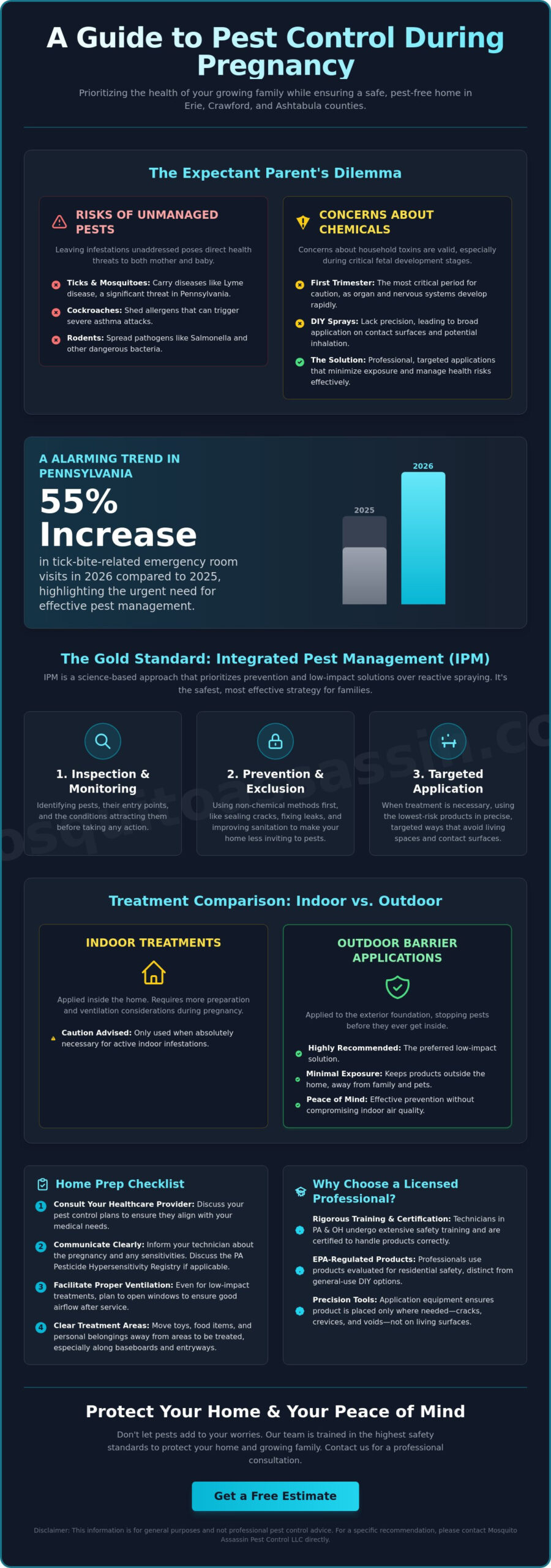
    Did you know that tick-bite-related emergency room visits in Pennsylvania increased by 55% in 2026 compared to 2025? For expectant mothers, this statistic highlights a difficult dilemma: the risk of diseases carried by pests versus the potential impact of chemicals on fetal development. It’s completely normal to feel caught between the worry of an infestation and the desire to avoid household toxins, especially when medical sites and parenting forums offer conflicting advice. Finding safe pest control for pregnant women doesn’t have to be a source of anxiety or confusion.

    This guide provides a clear path to managing household invaders through research-backed Integrated Pest Management (IPM) and the high safety standards practiced across Erie, Crawford, and Ashtabula counties. You’ll discover which methods are lowest-risk, how to navigate 2026 regulatory updates like the Pennsylvania Pesticide Hypersensitivity Registry, and how to prepare your home for a professional visit. By focusing on prevention and targeted, low-impact solutions, it’s possible to achieve a pest-free home while prioritizing the health of your baby and your peace of mind.

    Disclaimer: The information provided on this blog is for general informational purposes only and is not intended as professional pest control advice. Conditions vary by property, environment, and location. Reading this content does not create a service agreement. For an inspection or professional recommendations, please contact Mosquito Assassin Pest Control LLC directly.

    Key Takeaways

    • Learn how Integrated Pest Management (IPM) prioritizes non-chemical methods like sanitation and exclusion to manage pests with minimal risk.
    • Identify the best practices for safe pest control for pregnant women by understanding current research on residential exposure and professional application standards.
    • Evaluate the differences between indoor treatments and outdoor barrier applications to determine the most effective low-impact solution for your property.
    • Discover essential preparation steps to take before a professional technician arrives, including how to facilitate proper ventilation and clear communication.
    • Understand the rigorous certification and safety training required for pest control professionals operating in Erie, Crawford, and Ashtabula counties.

    Understanding Pesticide Safety and Reproductive Health

    Safety in a residential environment isn’t defined by a total absence of intervention. Instead, it involves a calculated balance between controlling disease-carrying pests and minimizing chemical exposure. For many families, the priority is finding safe pest control for pregnant women that targets the problem without introducing unnecessary risks. Professional standards in 2026 focus on targeted applications rather than broad, indiscriminate sprays. This distinction is vital because the goal is to protect the home’s inhabitants while effectively eliminating the threat.

    Research regarding the Health effects of pesticides suggests that the most critical period for caution is the first trimester. During these first 12 weeks, fetal organ systems and the nervous system undergo rapid development. Studies, including those from the Environmental Health Perspectives Journal, indicate that minimizing indoor pesticide exposure during this window is a prudent step for long-term developmental health. This is why professional application is preferred over DIY sprays, as technicians use precise tools to keep products away from common contact surfaces.

    To better understand the complexities of pesticide safety during pregnancy, watch this helpful video:

    Potential Risks of Unmanaged Pest Infestations

    Living with an active infestation often carries more documented health risks than a professional, controlled treatment. Cockroaches are known to shed allergens that trigger severe asthma attacks; rodents carry pathogens like Salmonella and various bacteria. In Northwest Pennsylvania, the stakes are even higher in 2026. Tick-bite-related emergency room visits have surged by 55% this year compared to 2025. With Pennsylvania leading the nation in Lyme disease cases, leaving a tick or mosquito problem unaddressed poses a direct threat to maternal health. A controlled, professional plan manages these biological hazards without compromising fetal safety.

    How Professional Standards Minimize Exposure

    The Environmental Protection Agency (EPA) strictly regulates which products can be used in residential settings. Licensed professionals distinguish between general-use pesticides, which are available to the public, and restricted-use products that require specific certification. Professionals follow Integrated Pest Management (IPM) protocols, which prioritize non-chemical barriers first. Before starting any pest control services, it’s essential to consult with a healthcare provider. They can provide personalized guidance based on your health history, ensuring your home preparation plan aligns with your medical needs. Professional technicians in Erie and Crawford counties are trained to apply products in ways that prevent contact with skin or food surfaces, providing a level of precision that DIY aerosol cans simply can’t match.

    Integrated Pest Management (IPM): A Low-Impact Approach

    Integrated Pest Management, or IPM, is a science-based decision-making process that shifts the focus from reactive spraying to proactive prevention. It’s the methodology used by licensed professionals to ensure effective results with the lowest possible environmental impact. For families seeking safe pest control for pregnant women, IPM is the gold standard. It doesn’t rely on a single “silver bullet” solution. Instead, it combines multiple strategies to make the home less hospitable to pests while keeping treatments away from living spaces. In states like Ohio, this approach is so critical that Administrative Code 901:5-11-14 specifically defines the standards for IPM in non-agricultural settings.

    This framework is built on the understanding that pests need food, water, and shelter to survive. By removing these essentials, the need for chemical intervention drops significantly. Utilizing general pest control as a preventative framework allows technicians to address the root causes of an infestation before it begins. This methodical approach is especially reassuring for expectant mothers who want to avoid the broad application of aerosols or sprays inside their homes.

    The Four Pillars of Professional IPM

    A professional IPM plan in Erie, Crawford, or Ashtabula counties follows a strict four-step process:

    • Inspection: Technicians perform a thorough sweep to identify specific pest species and their entry points.
    • Exclusion: This involves physical barriers; sealing cracks, crevices, and gaps around pipes prevents pests from entering in the first place.
    • Sanitation: Identifying and removing food or water sources, such as leaky pipes or crumb-filled crevices, eliminates the “welcome mat” for rodents and roaches.
    • Targeted Treatment: If chemicals are necessary, professionals use baits or gels placed in wall voids or areas completely inaccessible to residents.

    By focusing on these steps, the amount of product used is often reduced by a significant margin compared to traditional methods. Understanding your home’s unique vulnerabilities through professional pest control may help reduce risk by stopping pests before they require more intensive treatments.

    Benefits of Low-Volatile and Botanical Options

    Modern pest management has evolved toward formulations that prioritize safety and low odor. Many professionals now utilize pyrethrins, which are derived from chrysanthemum flowers, or other botanical-based products. These options are often preferred because they break down quickly in the environment and have low volatility. This means they don’t linger in the air as vapors, which is a primary concern for respiratory health during pregnancy. Professional placement is the key; by applying these products only where pests travel, such as behind baseboards or inside cabinetry hinges, the risk of accidental contact for residents is nearly eliminated.

    Disclaimer: The information provided on this blog is for general informational purposes only and is not intended as professional pest control advice. Conditions vary by property, environment, and location. Reading this content does not create a service agreement. For an inspection or professional recommendations, please contact Mosquito Assassin Pest Control LLC directly.

    Safe Pest Control for Pregnant Women: A Guide to Household Safety in 2026

    Comparing Indoor Treatments and Outdoor Barriers

    Achieving safe pest control for pregnant women often begins with a strategic shift in geography. By focusing on the exterior of the property, professionals can create a defensive line that prevents pests from ever crossing the threshold. This proactive strategy is highly effective because it addresses the problem before it requires an indoor response. In 2026, with a forecasted 60% year-over-year increase in ant and spider activity across the region, these barriers are more essential than ever for maintaining a pest-free home without the need for intensive interior treatments.

    Outdoor Perimeter Protection

    Liquid barrier treatments are applied to the home’s foundation and common entry points, such as door frames, window sills, and utility penetrations. Because these applications occur exclusively outside, they have a negligible impact on indoor air quality. This makes outdoor mosquito control programs and perimeter sprays a preferred choice for expectant mothers. These programs target pests where they live and breed, significantly reducing the population before they can migrate toward living spaces.

    Professional protocols in Erie and Ashtabula counties require that residents, children, and pets remain indoors during the application. For maximum safety, everyone should stay off treated surfaces until they are completely dry. This process typically takes between 30 and 60 minutes, depending on local humidity levels. Proactive maintenance of these barriers throughout the 2026 growing season ensures that the interior of the home remains a sanctuary, free from the diseases carried by pests like ticks and mosquitoes.

    Indoor Baiting vs. Broadcast Spraying

    When an infestation is already established inside, the method of delivery is just as important as the product itself. Traditional broadcast spraying, which involves coating large areas of flooring or baseboards, is rarely the first choice in a modern safety-first plan. Instead, licensed technicians utilize gel baits and “crack and crevice” treatments. These methods are designed to be surgical rather than broad, placing the product exactly where the pests are known to hide.

    Gel baits are applied in tiny droplets within wall voids, behind electrical faceplates, or deep under heavy appliances where residents cannot reach them. These formulations are non-volatile, which means they do not release fumes into the nursery or kitchen air. This targeted approach ensures that the active ingredients remain contained and away from common contact surfaces. By contrast, aerosol sprays can drift and settle on countertops or furniture. Choosing a professional who prioritizes baiting over broadcast spraying is a key component of a reliable household safety plan during pregnancy.

    Disclaimer: The information provided on this blog is for general informational purposes only and is not intended as professional pest control advice. Conditions vary by property, environment, and location. Reading this content does not create a service agreement. For an inspection or professional recommendations, please contact Mosquito Assassin Pest Control LLC directly.
    Practical Preparation Steps for Professional Treatments

    Preparation is the most critical factor in ensuring that a professional service remains targeted and effective. While previous sections highlighted the benefits of Integrated Pest Management (IPM), those strategies rely on a technician’s ability to access specific areas of the home. By taking proactive steps, residents can minimize the amount of time a technician spends in the home and ensure that products are applied only where necessary. Achieving safe pest control for pregnant women requires a collaborative effort between the homeowner and the licensed professional.

    Pre-Treatment Checklist

    A structured approach to preparation reduces the risk of accidental contact with treated surfaces. Before a technician arrives, residents should focus on clearing the path for precise application. This typically involves the following steps:

    • Clear Baseboards: Move furniture, toys, and storage bins at least 3 feet away from walls. This allows the technician to inspect and treat the “pest highway” where insects naturally travel.
    • Empty Under-Sink Areas: Remove all items from under kitchen and bathroom sinks. These are high-moisture zones where roaches and ants often congregate, and technicians need clear access to apply gels or baits.
    • Secure Sensitive Items: Place baby clothes, blankets, bottles, and toys in sealed plastic bins. If items cannot be moved, cover them with heavy plastic sheeting.
    • Manage Food Surfaces: Store all food in airtight containers or the refrigerator. Clear countertops and cover small appliances like toasters or coffee makers.

    Open communication is also vital. Inform the service provider about the pregnancy during the initial scheduling call. This allows the company to assign a technician familiar with low-impact protocols and ensures they bring the appropriate Safety Data Sheets (SDS) for the products they intend to use. If you have specific concerns about a room, such as a nursery, discussing professional pest control may help reduce risk by identifying non-chemical alternatives for that specific space.

    Safety During and After Application

    Standard safety protocols in the industry recommend that pregnant women remain out of the home for the duration of any indoor treatment. While modern baits and gels are non-volatile, staying away provides total peace of mind. Most professional guidelines suggest a re-entry period of 2 to 4 hours after the service is completed. This window allows any liquid applications to dry completely and ensures the air has cleared through natural ventilation. It’s a good practice to crack a few windows before leaving to facilitate airflow.

    Upon returning, focus on high-touch surfaces. While technicians avoid food preparation areas, wiping down kitchen countertops and dining tables with warm, soapy water is a prudent final step. Avoid using harsh chemical cleaners immediately after a treatment, as these can sometimes interfere with the efficacy of the pest control baits. By following these structured protocols, you can maintain a high standard of household safety throughout the process.

    Disclaimer: The information provided on this blog is for general informational purposes only and is not intended as professional pest control advice. Conditions vary by property, environment, and location. Reading this content does not create a service agreement. For an inspection or professional recommendations, please contact Mosquito Assassin Pest Control LLC directly.

    Professional Standards for Pest Control in Pennsylvania and Ohio

    Professional standards for pest control are governed by state-specific agencies that mandate rigorous training and certification. In Pennsylvania and Ohio, these regulations ensure that any individual applying products in a residential setting understands the science of chemical safety and environmental impact. For families prioritizing safe pest control for pregnant women, these state-mandated qualifications provide a layer of oversight that DIY methods lack. Technicians must demonstrate proficiency in Integrated Pest Management (IPM) and the proper handling of materials in sensitive environments. This expertise is vital for ensuring that treatments remain targeted and do not compromise the indoor air quality of the home.

    Licensing and Safety Training Requirements

    The Pennsylvania Department of Agriculture oversees the certification of applicators within the state. As of 2026, the fee for registering a pesticide product in Pennsylvania is $250, and registrations must be renewed annually. This regulatory framework includes the Pesticide Hypersensitivity Registry. This registry allows individuals with physician-verified sensitivities to receive notifications of pesticide applications within 500 feet of their property. It’s a critical resource for expectant mothers who wish to stay informed about local chemical use.

    In Ohio, the Department of Agriculture updated record-keeping requirements as of March 26, 2026. These changes increased the supervision distance for trained servicepersons to 60 miles and eliminated the requirement for businesses to register each individual location. Licensed professionals are trained to identify specific pest behaviors and apply only the necessary amount of product in the correct locations. Verifying that a service provider is licensed and insured is a fundamental step in ensuring residential treatments meet current safety benchmarks. Residents can find more information about professional services that adhere to these regional standards.

    Local Service Areas and Community Support

    Pest pressures vary significantly across Northwest Pennsylvania and Northeast Ohio. Communities like Cranesville, Erie, and Meadville face unique challenges in 2026, such as the urgent need to destroy spotted lanternfly egg masses and a predicted 60% increase in spider activity. Local expertise is essential for identifying the specific environmental factors that contribute to infestations in these service locations. A technician who lives in the community understands how local weather patterns, like the milder winters of 2026, influence when pests emerge.

    Year-round protection plans offer a methodical way to maintain a pest-free environment without the need for high-intensity, reactive treatments. By establishing a consistent perimeter barrier, professionals reduce the likelihood of pests entering the home. This long-term approach is particularly beneficial for households with expectant mothers, as it focuses on prevention and external maintenance. Seeking professional pest control may help reduce risk by ensuring that all interventions are performed by certified experts who follow the latest 2026 safety protocols and state regulations.

    Disclaimer: The information provided on this blog is for general informational purposes only and is not intended as professional pest control advice. Conditions vary by property, environment, and location. Reading this content does not create a service agreement. For an inspection or professional recommendations, please contact Mosquito Assassin Pest Control LLC directly.
    Protecting Your Home and Family in 2026

    Managing a household during pregnancy requires a careful balance between health and comfort. As pest populations surge in 2026, the safest approach remains proactive prevention through Integrated Pest Management. By prioritizing exterior barriers and targeted, non-volatile indoor treatments, residents can effectively safeguard their living spaces. Understanding the rigorous licensing standards in Pennsylvania and Ohio provides the peace of mind that all interventions meet professional safety benchmarks. Implementing a structured preparation plan ensures that safe pest control for pregnant women is both effective and minimally intrusive.

    Choosing a locally owned and operated provider who is licensed and insured in PA and OH guarantees that your home receives expert care tailored to regional pest pressures. Relying on professional standards rather than DIY chemicals reduces unnecessary exposure while eliminating the health risks posed by rodents, roaches, and ticks. For an inspection or professional recommendations, please contact Mosquito Assassin Pest Control LLC directly. Taking these steps now creates a secure, pest-free environment for your growing family.
    Disclaimer: The information provided on this blog is for general informational purposes only and is not intended as professional pest control advice. Conditions vary by property, environment, and location. Reading this content does not create a service agreement. For an inspection or professional recommendations, please contact Mosquito Assassin Pest Control LLC directly.
    Frequently Asked Questions

    Is it safe to spray for ants while pregnant?

    Professional ant treatments are safe if they utilize targeted gel baits rather than broadcast sprays. These baits are applied in hidden areas like wall voids or cabinet hinges where residents won’t come into contact with them. This precision is a hallmark of safe pest control for pregnant women because it keeps active ingredients away from food preparation surfaces and common living areas.

    How long should I stay out of the house after pest control?

    Standard industry protocols suggest remaining out of the home for 2 to 4 hours after an indoor treatment. This time frame allows liquid applications to dry completely and ensures that any vapors have dissipated through natural ventilation. It’s helpful to open windows before you leave to facilitate airflow. Always wait until the technician confirms it’s okay to re-enter the property.

    Can I use natural pest control methods instead of chemicals?

    Non-chemical deterrents are the foundation of any effective Integrated Pest Management plan. Sanitation and exclusion, such as sealing gaps in foundation walls or keeping food in airtight containers, are highly effective natural strategies. These methods address the root cause of an infestation without the need for chemical intervention. Professional technicians often prioritize these steps before recommending any supplemental treatments to ensure the home remains a healthy environment.

    Are mosquito yard treatments safe for pregnant women?

    Outdoor mosquito treatments are generally considered low-risk because the application occurs entirely outside the home. These barriers target breeding sites and resting areas in the yard, which prevents pests from entering the house. Residents should stay indoors during the application and wait 30 to 60 minutes for the product to dry before going back outside. This ensures that the treatment doesn’t impact indoor air quality.

    What should I do if I accidentally touch a treated surface?

    If you come into contact with a treated surface, wash the affected skin thoroughly with soap and water. Professional residential products are applied in highly diluted concentrations, but washing removes any residue immediately. If you have concerns, consult your healthcare provider or review the Safety Data Sheets (SDS) provided by your service company. Taking these quick steps ensures that any potential exposure is addressed immediately for your peace of mind.

    Should I tell my pest control technician that I am pregnant?

    You should always notify your technician about a pregnancy during the initial scheduling call and again upon their arrival. Sharing this information allows the professional to customize the treatment plan, choosing the lowest-impact products and application methods. It ensures the service aligns with your specific safety needs while effectively managing household pests. Clear communication is the best way to ensure your home preparation and the technician’s plan work together seamlessly.

    What pests are the most dangerous to have in the house during pregnancy?

    Rodents and cockroaches are particularly hazardous because they carry pathogens and trigger respiratory issues. In 2026, mosquitoes and ticks are also high-priority threats in the Mid-Atlantic region. Pennsylvania remains the state with the highest number of reported Lyme disease cases in the country. Managing these pests is a vital part of safe pest control for pregnant women to prevent the transmission of dangerous illnesses that could impact maternal health.

    Disclaimer: The information provided on this blog is for general informational purposes only and is not intended as professional pest control advice. Conditions vary by property, environment, and location. Reading this content does not create a service agreement. For an inspection or professional recommendations, please contact Mosquito Assassin Pest Control LLC directly.

  • The 2026 Seasonal Pest Control Schedule for Pennsylvania and Ohio Homes

    The 2026 Seasonal Pest Control Schedule for Pennsylvania and Ohio Homes

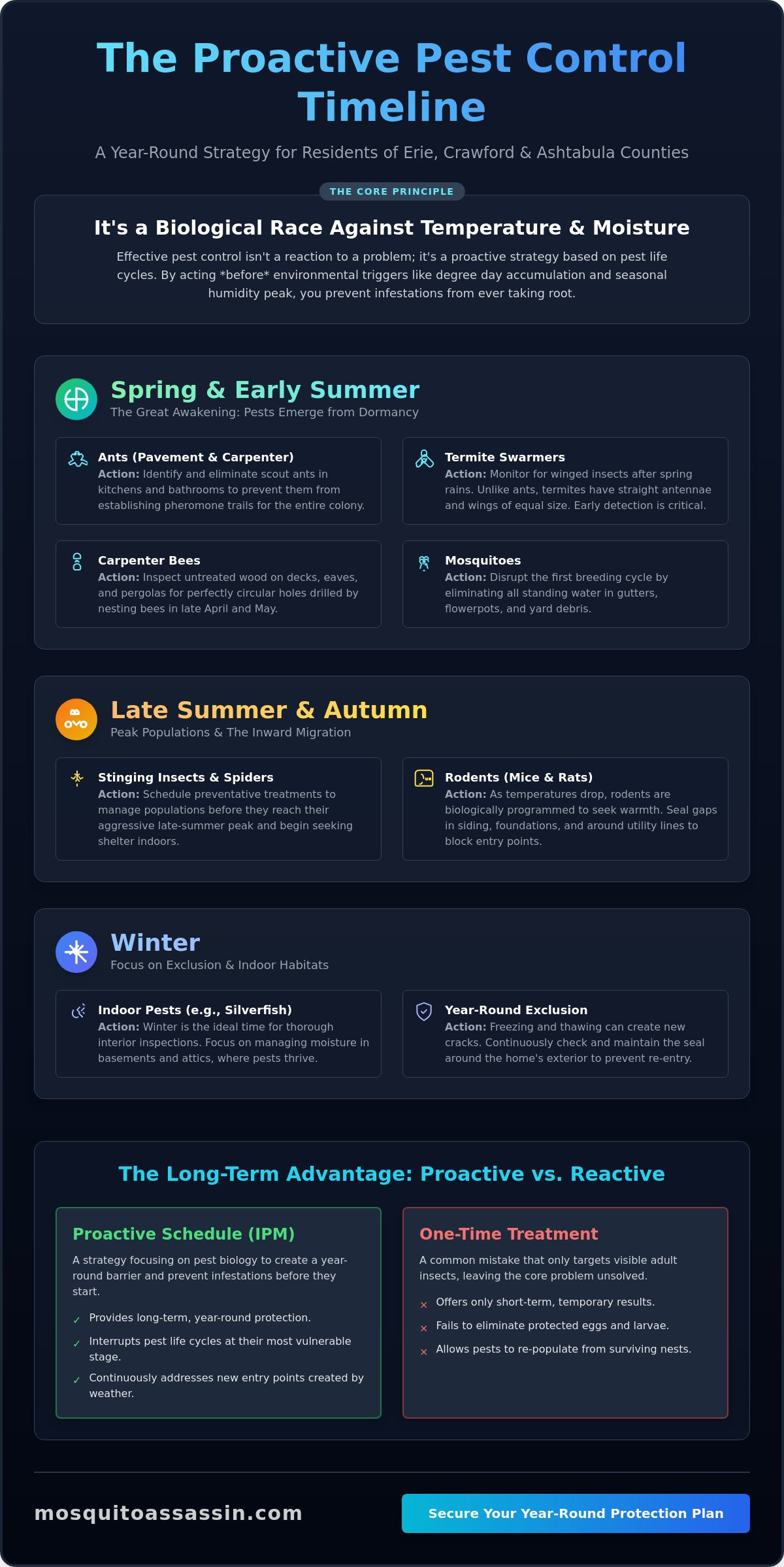
    Waiting for the first ant to crawl across the kitchen counter in May is often the exact moment a homeowner has already lost the battle against spring infestations. While many people believe pest control is a reactive response to a visible problem, the most effective strategy is actually a biological race against temperature and moisture. With the National Pest Management Association predicting an early start to the 2026 season due to a mild winter and erratic temperatures, sticking to a proactive seasonal pest control schedule is more critical than ever for residents in Erie, Crawford, and Ashtabula counties.

    It is exhausting to face recurring ant problems every spring or to worry about ticks every time the dog comes inside. This article explains the specific biological cycles of pests in the tri-state area and how a structured timeline prevents these issues from taking root. Readers will gain a clear understanding of when to expect specific threats, from summer stinging insects to winter rodents, and receive a preventative maintenance checklist designed to provide year-round peace of mind.

    Key Takeaways

    • Understand how temperature and degree days trigger the emergence of pests in early spring to stay ahead of the curve.
    • Identify the early signs of ant activity and the critical timing for tick prevention in wooded or grassy areas as temperatures rise.
    • Discover how a proactive seasonal pest control schedule targets stinging insects and spiders before they reach peak populations in late summer.
    • Learn why winter is the most effective time for interior inspections and exclusion tactics to manage indoor pests like silverfish.
    • Explore how Integrated Pest Management (IPM) provides long-term protection by focusing on pest biology rather than just reactive treatments.

    Understanding the Biological Drivers of a Seasonal Pest Schedule

    Pest control is often misunderstood as a “see a bug, spray a bug” service. Effective protection relies on a seasonal pest control schedule that targets pests before they reach maturity. This proactive approach focuses on the Biological Drivers of a Seasonal Pest Schedule, which are the environmental factors that dictate when insects hatch, feed, and reproduce. Instead of waiting for an infestation to become visible, a scheduled strategy interrupts these life cycles at their most vulnerable stages.

    The primary trigger for pest activity isn’t the date on a calendar; it’s the accumulation of degree days, which is the measure of heat over time. For example, the National Pest Management Association (NPMA) predicts that the mild winter of 2025 and the warm start to 2026 will cause termites and ants to emerge weeks earlier than in previous years. While reactive extermination attempts to eliminate an existing population, preventative management ensures that a protective barrier is already in place before these biological triggers occur.

    To better understand why timing is everything in pest management, watch this helpful video:

    The Impact of the Great Lakes Climate on Local Pests

    Residents in Erie and Crawford counties experience unique pest pressures due to the Lake Erie effect. The lake acts as a massive thermal regulator; it often delays the first spring thaw, but it also creates intense localized humidity. In Ashtabula County and Northeast Ohio, this high moisture level is a primary driver for mosquito and tick populations, which thrive in damp environments. As the first frosts typically arrive in late September or October, the sudden drop in temperature signals a biological migration for rodents. Mice and rats don’t just happen to find your basement; they’re biologically programmed to seek the thermal heat of your home the moment the ground begins to freeze.

    Why One-Time Treatments Often Fail Long-Term

    A common mistake is assuming a single treatment can solve a pest problem. Most one-time applications only target adult insects, leaving behind hundreds of eggs or larvae that are protected by protective casings or hidden in deep wall voids. Without a consistent seasonal pest control schedule, these survivors will simply repopulate within weeks. Additionally, the extreme temperature fluctuations in Pennsylvania and Ohio cause building materials like wood and vinyl siding to expand and contract. This physical movement creates new gaps and entry points throughout the year. Maintaining a year-round barrier is the only way to ensure these new openings aren’t immediately exploited by opportunistic pests.

    Spring and Early Summer: Managing the Seasonal Awakening

    Spring in the tri-state area triggers a surge in biological activity as pests emerge from winter dormancy. For homeowners in Erie and Crawford counties, this represents the most critical window in a seasonal pest control schedule. The first signs often appear indoors as tiny pavement ants or larger carpenter ants scout for moisture in kitchens and bathrooms. Identifying these scouts early prevents them from establishing the pheromone trails that lead the rest of the colony into living spaces.

    Beyond ants, homeowners should monitor for termite swarmers. These winged insects often emerge on warm, humid days following spring rains. They are frequently mistaken for flying ants, but their straight antennae and uniform wing size are key identifiers. According to resources on Pennsylvania Pest Management, early detection of wood-destroying organisms is essential to preventing long-term structural issues. Carpenter bees also become active in late April and May, drilling perfectly circular holes into untreated wood on decks, pergolas, and eaves.

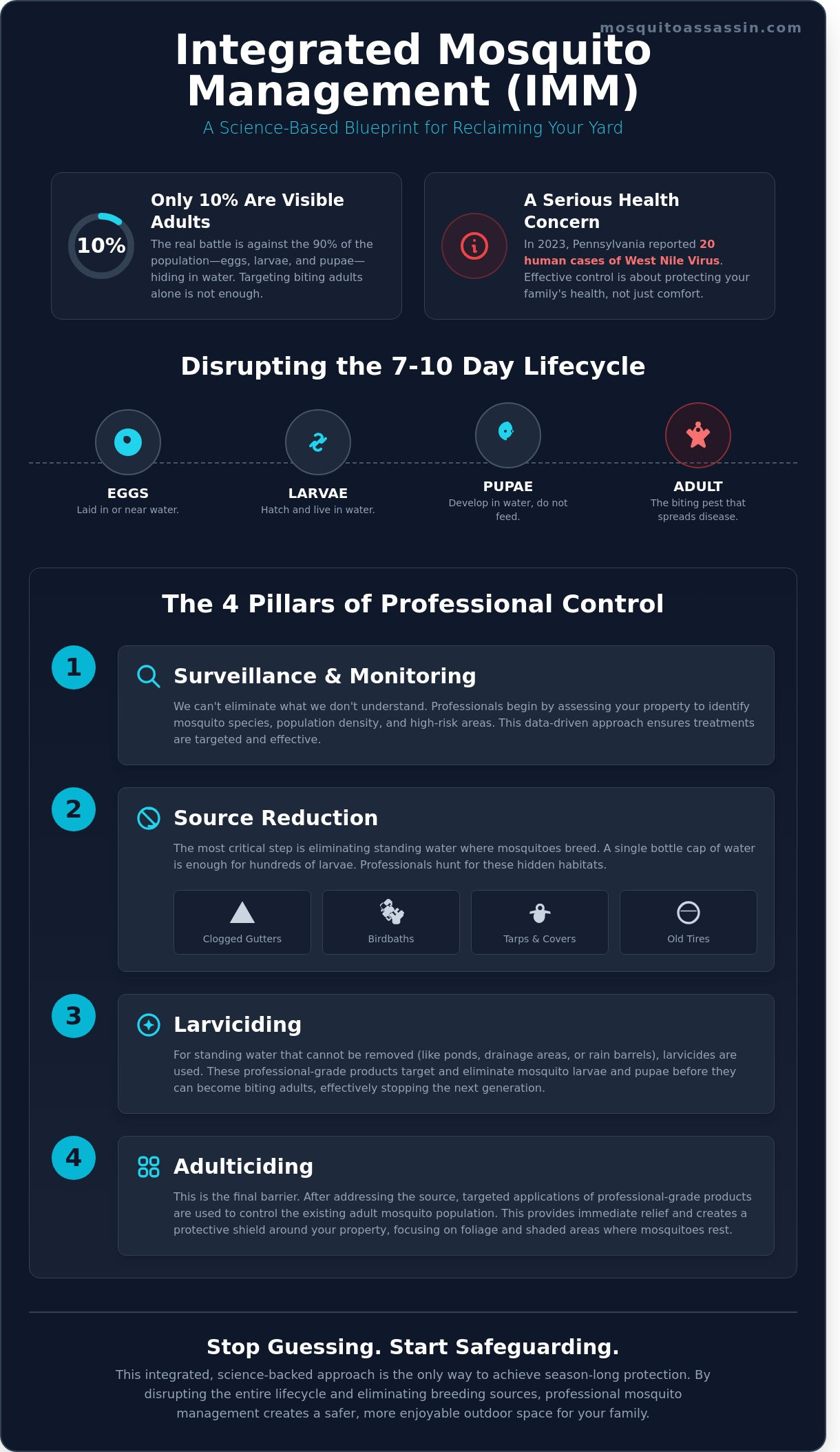
    Standing water is another priority during the seasonal awakening. Even a small amount of water in a clogged gutter or a forgotten flowerpot can host thousands of mosquito larvae. Emptying these containers early disrupts the first breeding cycle of the year. This significantly reduces the local population before the intense heat of July arrives.

    Foundational Protection for the Year Ahead

    The winter freeze-thaw cycles in Northeast Ohio and Western Pennsylvania are brutal on home foundations. These shifts create hairline cracks that serve as highways for insects. Inspecting the perimeter and sealing these gaps is a vital first step in home maintenance. Clearing debris from gutters is equally important; trapped organic matter holds moisture against the roofline, attracting silverfish and other moisture-loving pests. Implementing a professional general pest control plan during this time creates a durable barrier that keeps the spring awakening outside where it belongs.

    Tick and Mosquito Prevention Strategies

    Ticks become active as soon as temperatures consistently stay above 45 degrees Fahrenheit. Early season applications are often more effective than waiting until mid-summer because they target pests before they reach peak reproductive capacity. Homeowners can assist by trimming tall grass and managing leaf litter, which removes the cool, damp habitats these pests prefer. Strategic mosquito control programs focus on these early biological windows to ensure outdoor spaces remain usable throughout the summer. If you noticed high pest activity on your property last year, professional pest control may help reduce risk by identifying breeding sites you might have missed.

    The 2026 Seasonal Pest Control Schedule for Pennsylvania and Ohio Homes

    Late Summer and Autumn: Peak Populations and Indoor Migration

    As the calendar turns toward August and September, the biological activity that began in the spring reaches its maximum intensity. This period represents the peak of the seasonal pest control schedule because insect colonies have had months to grow to their full size. Homeowners in Erie, Crawford, and Ashtabula counties will notice a significant increase in spider activity as these predators follow the abundance of smaller insects like flies and gnats. Simultaneously, invasive species such as the brown marmorated stink bug and multicolored Asian lady beetles begin congregating on the sun-facing exterior walls of homes, searching for small openings to overwinter inside wall voids.

    The drop in evening temperatures during late September acts as a biological alarm clock for rodents. Mice and rats begin scouting for reliable heat sources and nesting sites, often following the scent of food or the warm air escaping from gaps as small as a quarter inch. Addressing these issues before the first hard frost is essential for maintaining a pest-free environment throughout the colder months. Establishing a defensive perimeter during this transition prevents these opportunistic pests from claiming your attic or basement as their winter shelter.

    Stinging Insect Safety and Prevention

    By late summer, social insect colonies like yellowjackets and bald-faced hornets have thousands of members. Their behavior becomes increasingly aggressive as their natural food sources, such as nectar and other insects, begin to dwindle. It is vital to distinguish between ground-nesting yellowjackets, which often build nests in abandoned rodent burrows, and aerial hornets that construct large, paper-like nests in trees or under eaves. DIY nest removal is hazardous; stinging insects are highly protective of their colonies and can swarm if they perceive a threat. Professional intervention is the safest way to manage these risks, particularly for nests located near high-traffic areas like decks or entryways.

    The Fall Exclusion Phase

    The most effective way to prevent autumn infestations is through the application of Integrated Pest Management (IPM) principles, which emphasize physical barriers over reactive chemicals. This exclusion phase involves sealing gaps around utility lines, dryer vents, and door sweeps. Professional rodent removal should be prioritized if signs of activity, such as droppings or chewed insulation, are found in the attic or crawlspace. Checking these areas in early October allows for the identification of nesting sites before populations expand under the protection of your home’s heating system.

    Winter Pest Management: Focus on Exclusion and Indoor Habitats

    While the sub-zero temperatures of a Pennsylvania or Ohio winter might seem like a natural deterrent, they actually drive pests deeper into the structural voids of a home. Pests like silverfish and cockroaches don’t hibernate; they thrive in the 68 to 72-degree temperatures of a climate-controlled environment. This makes the winter months a vital phase of a seasonal pest control schedule. During this time, the focus shifts from the exterior perimeter to deep-interior inspections and exclusion tactics. Because outdoor activity is limited, it’s the ideal window to identify and seal the tiny entry points that pests exploit to reach warmth and food sources.

    Basements and crawlspaces are particularly vulnerable during the winter. These areas often harbor excess moisture from melting snow or plumbing condensation, providing the perfect habitat for centipedes and spiders. Homeowners should also remain vigilant when bringing items into the home. Firewood stored outside can harbor wood-boring beetles or carpenter ants, while holiday decorations kept in garages or sheds often contain hitchhiking rodents or spiders. Inspecting these items before they cross the threshold prevents accidental introductions of new pest populations.

    Indoor Vigilance Checklist

    Maintaining a pest-free home in the winter requires a methodical approach to indoor monitoring. Focus on these three areas to catch problems early:

    • Step 1: Inspect dark, undisturbed areas. Use a flashlight to check under kitchen sinks, behind heavy appliances, and around water heaters for signs of silverfish or cockroach activity.
    • Step 2: Monitor for signs of mice. Look for gnaw marks on baseboards or small, dark droppings in the corners of pantries and utility rooms.
    • Step 3: Check pantry items. Inspect flour, grains, and birdseed for stored product pests like Indian meal moths, which can be introduced via contaminated packaging.

    Why Winter Service is Critical for Year-Round Success

    The primary goal of winter service is to eliminate overwintering populations before they have the chance to breed in the spring. If a small rodent population or a cockroach colony is allowed to establish itself in December, it will reach peak numbers by the time the first spring thaw occurs. Maintaining the integrity of the home’s exterior barrier is also essential; even in the middle of a snowstorm, opportunistic pests will follow the thermal heat escaping from unsealed vents or gaps in the siding. This proactive approach is equally important for local businesses, as commercial pest control services often use the winter months to reinforce exclusion zones and monitor sensitive areas without the interference of high summer foot traffic. Homeowners looking to secure their property before the spring awakening can professional pest control may help reduce risk by identifying hidden nesting sites.

    Implementing a Year-Round Pest Prevention Strategy

    Adopting a comprehensive strategy is the most effective way to manage the biological pressures unique to Erie, Crawford, and Ashtabula counties. A consistent seasonal pest control schedule relies on the principles of Integrated Pest Management (IPM). This scientific approach prioritizes long-term prevention by combining thorough inspections, habitat modification, and targeted treatments. Instead of relying solely on reactive applications, IPM focuses on why a pest is present in the first place, addressing the root causes like moisture, food access, and entry points.

    Professional inspections are the cornerstone of this strategy. A licensed technician can identify subtle signs of activity, such as early-stage termite mud tubes or pheromone trails from scouting ants, long before a homeowner notices a problem. This early intervention is particularly important for maintaining a healthy home environment. By using family-safe treatments and focusing on the exterior perimeter, professionals can keep the interior of the home free from unnecessary products while still providing a high level of protection against invasive species.

    Proactive vs. Reactive Maintenance

    There is a significant difference between reactive extermination and proactive maintenance. Reactive services often involve higher costs due to the need for emergency visits or the repair of structural damage caused by wood-destroying insects or rodents. When evaluating the prices of pest control, recurring services generally prove more cost-effective over time. Regular visits allow for the maintenance of a continuous protective barrier, which actually reduces the total amount of product required annually. Because the population is never allowed to reach peak levels, the treatments can be more localized and less intensive, providing consistent peace of mind that the property is safeguarded.

    Next Steps for Homeowners in PA and OH

    Homeowners can begin their prevention journey by conducting a self-audit of the property exterior. Look for areas where mulch touches the siding, check for gaps around utility penetrations, and ensure that gutters are directing water at least three feet away from the foundation. While these steps are helpful, consulting with a licensed professional for a customized property assessment ensures that no hidden vulnerabilities are overlooked. A professional can provide a tailored seasonal pest control schedule based on the specific environment of your lot, whether it is a wooded area in Crawford County or a lakeside property in Ashtabula. Taking these steps early in the year ensures that you stay ahead of the biological cycles of local pests. Ultimately, professional pest control may help reduce risk and safeguard your property against the evolving threats of the 2026 season.

    Disclaimer: The information provided on this blog is for general informational purposes only and is not intended as professional pest control advice. Conditions vary by property, environment, and location. Reading this content does not create a service agreement. For an inspection or professional recommendations, please contact Mosquito Assassin Pest Control LLC directly.
    Securing Your Home for the Year Ahead

    Effective pest management is a year-round commitment that adapts to the biological rhythms of the tri-state area. By following a seasonal pest control schedule, homeowners move away from reactive treatments and toward a model of consistent protection. Success depends on understanding the early spring awakening triggered by heat accumulation and the critical late-autumn exclusion window before rodents seek warmth. Maintaining these physical and chemical barriers ensures that pests are addressed at their most vulnerable life stages before they can establish indoor colonies.

    As a locally owned and operated business based in Cranesville, PA, Mosquito Assassin understands the specific climate pressures facing Erie, Crawford, and Ashtabula counties. Professional technicians provide family-safe treatment options and are fully licensed and insured in both Pennsylvania and Ohio. Taking a proactive step now prevents the stress of a full-scale infestation later in the year. To begin safeguarding your property, you may schedule a professional inspection for your property today. Consistent vigilance is the most reliable way to maintain a healthy, comfortable home environment for your family.

    Disclaimer: The information provided on this blog is for general informational purposes only and is not intended as professional pest control advice. Conditions vary by property, environment, and location. Reading this content does not create a service agreement. For an inspection or professional recommendations, please contact Mosquito Assassin Pest Control LLC directly.

    Frequently Asked Questions

    Why is pest control necessary in the winter if I do not see bugs?

    Winter pest control is necessary because most pests don’t die off; they seek the thermal heat of your home’s interior. Rodents, cockroaches, and silverfish thrive in climate-controlled environments even when outdoor temperatures drop below freezing. A winter service visit focuses on deep-interior inspections and sealing entry points. By destroying indoor nesting sites during the cold months, you significantly reduce the risk of a massive population surge when spring arrives.

    When is the best time to start a seasonal pest control program?

    Implementing a seasonal pest control schedule in early spring, typically by late March, is the most effective strategy. This proactive approach allows technicians to establish a protective barrier before the first cycle of insect emergence begins. By targeting pests during their initial reproductive phase, you prevent the exponential population growth that usually occurs in July and August. Early intervention is the key to maintaining a pest-free home throughout the entire year.

    How often should a professional pest control service visit my home?

    Quarterly visits are generally recommended for homes in the tri-state area to align with seasonal biological shifts. Each visit addresses specific threats, such as spring ants or autumn rodents. According to industry data, 70% of residential pest problems are prevented through these regular maintenance cycles. While some properties with heavy foliage may benefit from monthly service, a four-visit annual plan provides the foundational protection needed for most Pennsylvania and Ohio homes.

    Can I manage seasonal pests myself using DIY products?

    DIY products often provide only temporary relief because they fail to reach the heart of the colony. Most store-bought aerosols are contact killers that don’t have the residual strength to eliminate hidden larvae or eggs. Licensed professionals use specialized equipment and integrated strategies that target pest biology. This approach is more effective than the “see a bug, spray a bug” method common with over-the-counter products.

    What pests are most active in Erie and Crawford Counties during the spring?

    Ants and wood-destroying insects are the primary concerns in Erie and Crawford counties during the spring. Pavement ants often appear in kitchens after the first significant rain, while termite swarmers emerge once soil temperatures hit 50 degrees Fahrenheit. Carpenter bees also begin drilling into wooden structures during late April. Identifying these pests early is essential for preventing structural damage and maintaining the integrity of your home’s exterior during the spring awakening.

    Is professional pest control safe for my children and pets?

    Professional pest control is safe for families and pets when performed by trained technicians following EPA-approved labels. Modern methods prioritize low-impact, targeted applications in areas that are inaccessible to children. By focusing on cracks, crevices, and the exterior perimeter, professionals minimize product exposure while maximizing effectiveness. This methodical approach ensures your home remains a safe environment while still being completely protected from the health risks associated with pests.

    What should I do if I see pests between scheduled service visits?

    You should notify your pest control provider immediately if you notice activity between your scheduled visits. Seeing pests can mean a new entry point has opened or a specific environmental factor has triggered a local surge. Most professional service agreements include follow-up treatments at no additional cost to address these issues. Prompt reporting allows the technician to adjust your customized plan and reinforce the barrier before a minor sighting becomes an infestation.

    How does the weather in Ohio and Pennsylvania affect pest activity?

    The unique climate of the Great Lakes region dictates the timing of local infestations. High humidity in Ashtabula County and Erie County creates ideal conditions for moisture-loving pests like mosquitoes and silverfish. Additionally, the rapid shift from a frozen winter to a wet spring in Pennsylvania triggers immediate biological responses in wood-destroying insects. Weather patterns are the primary driver of the seasonal pest control schedule, making local expertise vital for effective treatment.

    Disclaimer: The information provided on this blog is for general informational purposes only and is not intended as professional pest control advice. Conditions vary by property, environment, and location. Reading this content does not create a service agreement. For an inspection or professional recommendations, please contact Mosquito Assassin Pest Control LLC directly.

  • Outdoor Tick Spray Service: A Comprehensive Guide for Homeowners in 2026

    Outdoor Tick Spray Service: A Comprehensive Guide for Homeowners in 2026

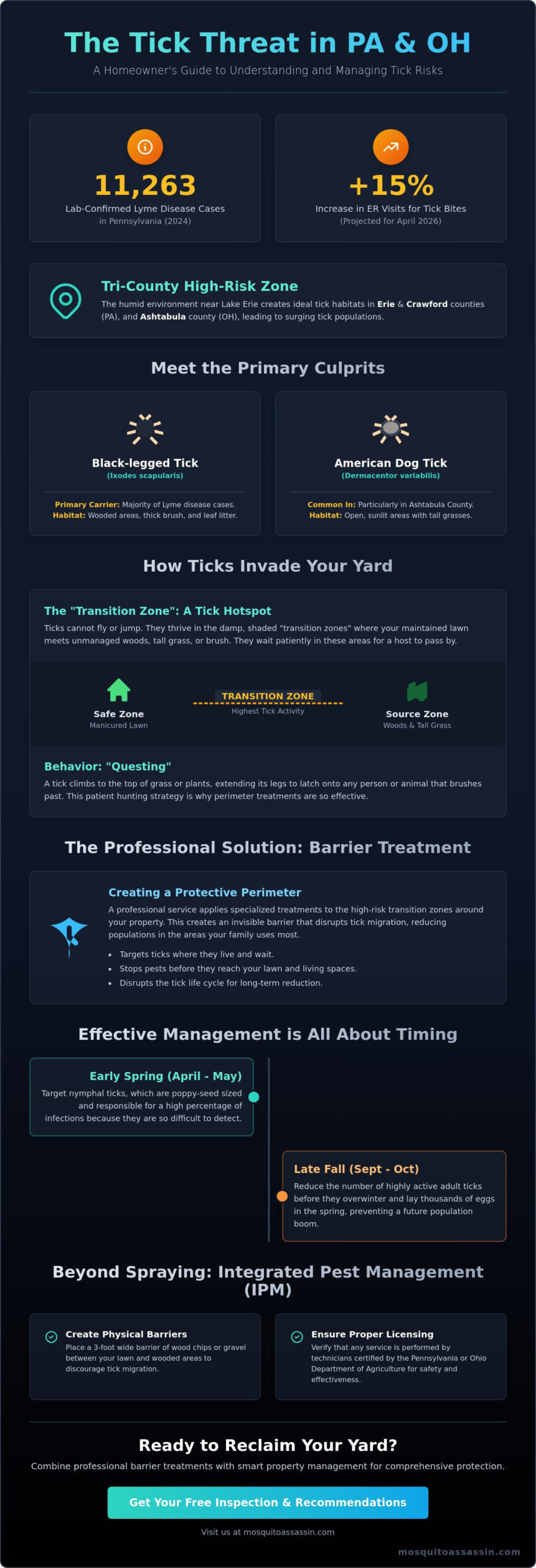
    With 11,263 lab-confirmed cases of Lyme disease in Pennsylvania in 2024 and a 15 percent increase in emergency room visits for tick bites in April 2026, the health risks in the tri-county region have reached a critical point. Many homeowners are now considering a professional outdoor tick spray service to address these concerns, as tick populations in Northeast Ohio have surged to record levels this season. It is natural to feel a sense of anxiety when letting pets or children play in the yard, especially when the effectiveness of various retail products remains inconsistent and confusing.

    This guide explains the science behind professional tick treatments and how they function as part of a comprehensive property management plan. You will learn about the differences between various treatment formulas (including 25(b) minimum-risk options) and how state-certified applicators navigate strict regulations in Pennsylvania and Ohio. By combining professional expertise with strategic landscape modifications, residents in Erie, Crawford, and Ashtabula counties can better manage their outdoor spaces and reduce the presence of these persistent pests.

    Disclaimer: The information provided on this blog is for general informational purposes only and is not intended as professional pest control advice. Conditions vary by property, environment, and location. Reading this content does not create a service agreement. For an inspection or professional recommendations, please contact Mosquito Assassin Pest Control LLC directly.

    Key Takeaways

    • Identify high-risk transition zones where residential lawns meet wooded areas to focus prevention efforts where ticks are most likely to quest for hosts.
    • Understand how a professional outdoor tick spray service creates a perimeter barrier to reduce populations in the areas of your yard used most frequently by families.
    • Learn to implement Integrated Pest Management techniques, such as using wood chips or gravel to create physical boundaries that discourage tick migration.
    • Ensure all property treatments are performed by technicians who are properly licensed and certified by the Pennsylvania or Ohio Department of Agriculture.

    Ticks in Pennsylvania and Ohio: Understanding Regional Risks

    An outdoor tick spray service involves the application of specialized products to yard perimeters to reduce tick populations before they reach your family. For residents in Erie and Crawford counties in Pennsylvania and Ashtabula County in Ohio, this protection is a necessity rather than a luxury. The region’s unique geography near Lake Erie creates a humid environment where ticks thrive in both wooded edges and tall grasses. Professional treatments focus on the specific areas where these pests hide, creating a barrier that disrupts their ability to migrate into your active lawn space.

    To better understand how these pests interact with your property, watch this helpful video:

    Common Tick Species in the Tri-County Area

    The black-legged tick (Ixodes scapularis) is the primary concern for homeowners in Pennsylvania and Ohio. This species is responsible for the majority of common tick-borne diseases reported in the state. In 2024, Pennsylvania recorded 11,263 lab-confirmed cases of Lyme disease, highlighting the prevalence of this species in wooded habitats. They’re often found in the leaf litter at the base of trees or in thick brush.

    American dog ticks (Dermacentor variabilis) are also common, particularly in Ashtabula County. Unlike the black-legged tick, the dog tick prefers open, sunlit areas with tall grasses. They’re hardy and can survive in drier conditions. Because ticks go through a multi-year life cycle consisting of egg, larva, nymph, and adult stages, a single treatment isn’t enough. Professional outdoor tick spray service protocols are designed to address these pests at various points in their development to ensure the population doesn’t rebound.

    The Importance of Seasonal Timing

    Local weather patterns in the Great Lakes region significantly influence tick behavior. While many believe ticks disappear in winter, they actually remain active whenever temperatures rise above 32 degrees Fahrenheit. This means adult ticks can be questing for a host even during a mid-winter thaw. However, activity typically peaks during two distinct windows in our region.

    • Early Spring: Applications during April and May target nymphal ticks. These are the size of a poppy seed and cause a high percentage of infections because they’re so hard to detect.
    • Late Fall: As temperatures drop in September and October, adult black-legged ticks become highly active. Fall treatments help reduce the number of adults that would otherwise overwinter and lay thousands of eggs in the spring.

    Effective management requires understanding these biological clocks. By timing treatments to match local emergence patterns, homeowners can maintain a more consistent level of protection throughout the year.

    Disclaimer: The information provided on this blog is for general informational purposes only and is not intended as professional pest control advice. Conditions vary by property, environment, and location. Reading this content does not create a service agreement. For an inspection or professional recommendations, please contact Mosquito Assassin Pest Control LLC directly.

    Tick Habitats and Behavior: Where Pests Hide in Residential Landscapes

    Ticks are patient, opportunistic hunters that don’t possess the ability to fly or jump. Instead, they rely on a unique behavior known as questing to find their next host. A tick will climb to the top of a blade of grass or the tip of a low-hanging branch, extending its front legs to latch onto any person or animal that brushes past. Because they move so slowly on their own, their survival depends entirely on being in the right place at the right time. A professional outdoor tick spray service focuses on these specific high-risk areas rather than treating the middle of a sunny lawn where ticks are unlikely to survive.

    The Science of Questing

    Ticks are highly sensitive to their environment. They use specialized sensors, called Haller’s organs, located on their front legs to detect carbon dioxide, heat, and vibrations from a distance. When a potential host approaches, the tick becomes alert and prepares to grab hold. You’ll rarely find ticks in the center of a well-manicured, sun-drenched lawn. This is because ticks are extremely vulnerable to desiccation (drying out). They require shady, moist environments with at least 80 percent humidity to maintain their internal water balance. If they stay in the sun too long, they will die from dehydration, which is why they retreat to the cool dampness of leaf litter during the heat of the day.

    Identifying High-Risk Zones on Your Property

    In the tri-county region of Erie, Crawford, and Ashtabula, the transition zone is the most dangerous area for tick encounters. This is the perimeter where your maintained grass meets woods, tall weeds, or decorative ground cover. Research suggests that the vast majority of ticks in residential yards are found within nine feet of this edge. These areas provide the perfect “nursery” environment: plenty of shade, high moisture, and a steady supply of hosts.

    • Woodpiles and Stone Walls: These structures are ideal nesting sites for white-footed mice and other small rodents. These animals are the primary reservoirs for pathogens. When rodents live near your home, they bring ticks directly into your landscape.
    • Dense Ornamental Plantings: Thick ground covers like pachysandra or ivy create a humid microclimate at the soil level. This protects ticks from the wind and sun, allowing them to remain active longer.
    • Leaf Litter: Accumulations of dead leaves provide an insulating blanket that protects ticks from temperature extremes, even during the colder months in Northwest Pennsylvania.

    Understanding these biological requirements helps homeowners prioritize their yard work. While maintaining your landscape is essential, professional pest control may help reduce risk by treating these specific zones where ticks are most concentrated. Managing the environment is a powerful way to disrupt the tick life cycle before they have a chance to quest for a host.

    Disclaimer: The information provided on this blog is for general informational purposes only and is not intended as professional pest control advice. Conditions vary by property, environment, and location. Reading this content does not create a service agreement. For an inspection or professional recommendations, please contact Mosquito Assassin Pest Control LLC directly.

    Outdoor Tick Spray Service: A Comprehensive Guide for Homeowners in 2026

    The Science of Professional Tick Barrier Treatments

    A professional outdoor tick spray service relies on technical precision rather than simple volume. Unlike a general broadcast application that blankets an entire property, a barrier treatment is a surgical approach. Licensed technicians use high-pressure sprayers to penetrate deep into dense foliage and reach the underside of leaves where ticks congregate to avoid the sun. This high-pressure delivery is essential. Standard handheld sprayers often lack the force to reach the humid micro-climates at the base of shrubs or within thick ground covers where ticks are most likely to survive.

    Perimeter vs. Broadcast Spraying

    Targeting the property edge is significantly more effective than treating a sunny, well-manicured lawn. Since ticks are concentrated within the first nine feet of the transition zone, the treatment focuses on creating a literal barrier between the woods and your living space. Professional equipment is calibrated to provide a consistent droplet size that adheres to organic matter. This differs from many retail products, which often wash away after the first heavy rain. In addition to sprays, comprehensive management may include the use of tick tubes. These are biodegradable cylinders filled with treated cotton that rodents take back to their nests. This targets ticks at their host source; the mice and chipmunks that bring them onto your property. Granular applications are also used in thick leaf litter to reach ticks that are buried beneath the surface where liquid sprays might not penetrate.

    Residual Effectiveness and Follow-Up

    Modern formulations are engineered to bind to the surface of plants and mulch, providing residual protection for several weeks. However, environmental factors like UV light and heavy rainfall naturally break down these products. In the Great Lakes region, where spring rains can be frequent, maintaining this barrier requires a recurring schedule. With tick populations in Northeast Ohio reaching record highs in 2026, consistent protection is vital to manage the ongoing threat. Technicians identify specific micro-climates on a property, such as shaded dog runs or the areas around stone walls, that require targeted attention.

    By understanding the local environment and the specific biology of regional ticks, a customized plan ensures that the treatment remains effective throughout the peak seasons. While environmental management is a key part of the process, professional pest control may help reduce risk by significantly lowering the number of questing ticks in your immediate landscape. This methodical approach provides a level of coverage that is difficult to achieve with standard DIY methods.

    Disclaimer: The information provided on this blog is for general informational purposes only and is not intended as professional pest control advice. Conditions vary by property, environment, and location. Reading this content does not create a service agreement. For an inspection or professional recommendations, please contact Mosquito Assassin Pest Control LLC directly.

    Integrated Strategies for Reducing Tick Populations on Your Property

    Effective tick control is rarely the result of a single action. It requires a partnership between a professional outdoor tick spray service and strategic landscape management. This approach, known as Integrated Pest Management (IPM), focuses on making the environment less hospitable for pests through multiple biological and physical methods. By reducing the humidity and shelter that ticks require, homeowners can significantly decrease the likelihood of these parasites establishing a presence in active yard spaces. This strategy doesn’t just target the ticks themselves; it addresses the entire ecosystem that allows them to thrive.

    Landscape Modification Tips

    Using woodchips or gravel to create a three-foot buffer zone between the lawn and wooded areas is a proven strategy for disrupting tick movement. This physical barrier serves two important purposes. It creates a dry, sun-exposed strip that ticks are reluctant to cross because they risk dehydration. It also provides a clear visual reminder for family members and pets to stay within the maintained safe zone. For properties in Erie and Crawford counties, where woods often meet suburban lawns, this separation is vital. Keeping playground equipment, patios, and deck areas at least ten feet away from the yard perimeter further reduces the chance of accidental encounters. Pruning low-hanging branches and thinning out dense ornamental shrubs increases sunlight and airflow, which naturally lowers the humidity levels at the soil surface.

    Managing Tick Hosts

    Ticks don’t travel long distances on their own; they rely on wildlife to move through the tri-county region. The white-footed mouse is the primary host for nymphal ticks and a major reservoir for the bacteria that cause Lyme disease. Reducing rodent attractants is a critical step in a comprehensive plan. Bird feeders often drop seeds that attract mice and chipmunks directly to your foundation. Moving these feeders to the far edge of the property and sealing trash containers can limit rodent activity. Deer are the primary hosts for adult ticks, often transporting them from deep woods into residential landscapes. Planting deer-resistant vegetation or installing physical fencing can help discourage these larger animals from bedding down near your home. Clearing leaf litter remains the most effective DIY task for homeowners, as it removes the damp insulation ticks use for protection during temperature fluctuations. For an inspection of your property’s specific high-risk zones, professional pest control may help reduce risk.

    Regular lawn maintenance also plays a role in this integrated approach. Keeping grass mown to a height of three inches or less allows the sun to reach the soil, creating a drier environment. When combined with a targeted outdoor tick spray service, these landscape changes create a multi-layered defense system that is much more effective than relying on any single treatment alone.

    Disclaimer: The information provided on this blog is for general informational purposes only and is not intended as professional pest control advice. Conditions vary by property, environment, and location. Reading this content does not create a service agreement. For an inspection or professional recommendations, please contact Mosquito Assassin Pest Control LLC directly.

    Choosing a Professional Tick Control Service for Your Home

    Selecting an outdoor tick spray service requires careful consideration of credentials and methodology. In both Pennsylvania and Ohio, anyone applying pesticides for hire must be a certified commercial applicator. This means they have passed rigorous exams administered by the Pennsylvania or Ohio Department of Agriculture. Beyond legal requirements, a reputable provider should emphasize a customized treatment plan. Every property has unique drainage, vegetation, and wildlife patterns that dictate where ticks are most likely to aggregate. Professional recommendations should always follow a thorough on-site inspection rather than a blind estimate over the phone. Homeowners should also inquire about safety protocols, ensuring that treatments are applied in a manner that respects the health of families and pets. This includes verifying that the products used are registered for residential use and that the technician follows all label instructions precisely.

    The Value of Local Expertise

    Pest pressure isn’t uniform across the country. Technicians who live in communities like Erie or Meadville understand the specific environmental factors of the Lake Erie region. They know how a particularly wet spring or a mild winter affects local tick emergence. This regional knowledge is essential for identifying the specific micro-climates on a property that require targeted attention. When a company is locally owned and operated, they’re often more responsive if pests return between scheduled visits. You can learn more about the importance of community-focused service on the Mosquito Assassin about page, which highlights how local roots contribute to more effective pest management. Local experts aren’t just visiting a territory; they’re protecting the neighborhoods where they also live and work.

    Establishing an Ongoing Protection Plan

    Because ticks and mosquitoes often thrive in the same shaded, humid environments, many residents find value in a combined mosquito control program. This dual-purpose approach ensures that the perimeter barrier addresses multiple pests simultaneously, providing a more comprehensive shield for the yard. When reviewing a service agreement, look for clear language regarding a satisfaction guarantee. A reliable provider stands by their work and will return to re-treat the area if the initial application doesn’t meet the expected results. This commitment is a hallmark of professional service, indicating that the company is invested in the long-term management of your property’s pest population. To confirm if service is available in your specific town, visiting the Mosquito Assassin location page is a helpful next step.

    Professional pest control may help reduce risk when managed by experts who understand the seasonal biology of the tri-county area. By choosing a licensed professional who prioritizes a methodical, integrated approach, homeowners can reclaim their outdoor spaces with greater confidence. Managing tick populations is a seasonal commitment, but with the right partnership, it’s possible to maintain a more comfortable environment for your family throughout the year.

    Disclaimer: The information provided on this blog is for general informational purposes only and is not intended as professional pest control advice. Conditions vary by property, environment, and location. Reading this content does not create a service agreement. For an inspection or professional recommendations, please contact Mosquito Assassin Pest Control LLC directly.

    Protecting Your Property for the Seasons Ahead

    Managing a property in the tri-county region requires a proactive approach to tick population control. By focusing on the transition zones where lawns meet wooded areas and implementing Integrated Pest Management strategies, residents can create a less hospitable environment for these parasites. A professional outdoor tick spray service provides the technical precision needed to reach questing ticks in their humid micro-habitats. This methodical approach, combined with regular leaf litter removal and rodent management, forms a comprehensive defense for your outdoor living space. Mosquito Assassin is locally owned and operated in Northwest PA and Northeast OH; utilizing licensed and insured technicians who understand regional pest pressures. Their satisfaction-focused service approach ensures that treatment plans are tailored to the specific needs of each property.

    Professional pest control may help reduce risk. Contact Mosquito Assassin for a property assessment to begin establishing a customized barrier for your yard. Taking these steps now ensures you can enjoy your outdoor space with greater peace of mind throughout the 2026 season.

    Disclaimer: The information provided on this blog is for general informational purposes only and is not intended as professional pest control advice. Conditions vary by property, environment, and location. Reading this content does not create a service agreement. For an inspection or professional recommendations, please contact Mosquito Assassin Pest Control LLC directly.

    Frequently Asked Questions

    When is the best time to start an outdoor tick spray service?

    The ideal time to begin treatment is in early spring, typically during April or May, when nymphal ticks first become active. Starting an outdoor tick spray service early in the season targets these younger pests before they have a chance to mature and reproduce. This proactive approach helps suppress the population before it reaches peak levels during the summer months.

    How long does a tick spray treatment last in my yard?

    A professional barrier treatment generally remains effective for approximately 21 to 30 days. Environmental conditions in the Great Lakes region, such as heavy rainfall or intense UV exposure, can cause the product to break down more quickly. Consistent, recurring applications are necessary to maintain a protective shield and ensure that the barrier remains intact throughout the entire active season.

    Is the tick spray service safe for my children and pets to be around?

    Treatments are designed to be family-safe and pet-safe once the application has completely dried on the foliage. Licensed technicians utilize products registered for residential use and follow strict application protocols to ensure the safety of your household. It’s important to keep everyone indoors during the treatment and for a short period afterward until the yard is dry.

    Do I need to be home when the tick treatment is applied?

    Homeowners do not need to be present for the application as long as the technician can access the perimeter of the property. Most professional services provide a notification once the treatment is finished, allowing you to go about your daily schedule without interruption. Simply ensure that all pets are indoors and that any gates or entry points are unlocked for the technician.

    Will the tick spray also kill mosquitoes and other yard pests?

    The formulations used in an outdoor tick spray service are often effective against mosquitoes and other common perimeter pests. Since these insects thrive in the same shaded, humid environments, a single barrier application can provide broad-spectrum protection. This integrated approach simplifies yard maintenance by addressing multiple pest concerns with a coordinated treatment plan.

    How soon can we use the yard after a tick treatment has been applied?

    The yard can typically be used within 30 to 60 minutes after the technician finishes the application. The primary requirement is that the product must be completely dry on the grass and shrubs before people or pets resume outdoor activities. Drying times can vary slightly based on local humidity levels and the amount of sunlight the yard receives.

    Does a professional tick spray guarantee I will not find ticks on my property?

    No service can provide a 100 percent guarantee because wildlife, such as deer and rodents, can continuously drop new ticks into the landscape. Professional pest control may help reduce risk by significantly lowering the number of questing ticks in your immediate environment. Using a professional service should always be combined with personal protection measures like regular tick checks.

    Can I spray for ticks myself using products from a home improvement store?

    While DIY products are available, they often lack the residual strength and professional-grade delivery systems required for effective control. Licensed professionals use high-pressure sprayers to ensure the product reaches the underside of leaves and deep into thick brush where ticks hide. They also have the expertise to identify specific micro-climates that are most likely to harbor pests.

    Disclaimer: The information provided on this blog is for general informational purposes only and is not intended as professional pest control advice. Conditions vary by property, environment, and location. Reading this content does not create a service agreement. For an inspection or professional recommendations, please contact Mosquito Assassin Pest Control LLC directly.

  • Black Widows in PA: Identification and Safety Guide for Homeowners

    Black Widows in PA: Identification and Safety Guide for Homeowners

    Last Tuesday, a homeowner in Erie County reached for an old storage bin in their garage and discovered a glossy black spider with a vibrant red hourglass. It’s completely normal to feel a surge of anxiety when encountering venomous pests in your living space. The presence of black widows in pa is a concern for many families throughout Crawford and Ashtabula Counties who want to safeguard their homes from potential bites.

    You can regain peace of mind by learning how to distinguish these spiders from common house spiders and identifying the specific environments where they thrive. This guide covers the physical characteristics of the Northern black widow, their favorite hiding spots in dark corners, and professional strategies to reduce the risk of an infestation. You’ll gain the knowledge needed to maintain a spider-free environment for your family and pets.

    Understanding spider behavior is the first step toward a more secure home. If you’re concerned about venomous spiders on your property, professional pest control may help reduce risk. Visit www.mosquitoassassin.com/contact-us for more information.

    Disclaimer: The information provided on this blog is for general informational purposes only and is not intended as professional pest control advice. Conditions vary by property, environment, and location. Reading this content does not create a service agreement. For an inspection or professional recommendations, please contact Mosquito Assassin Pest Control LLC directly.

    Key Takeaways

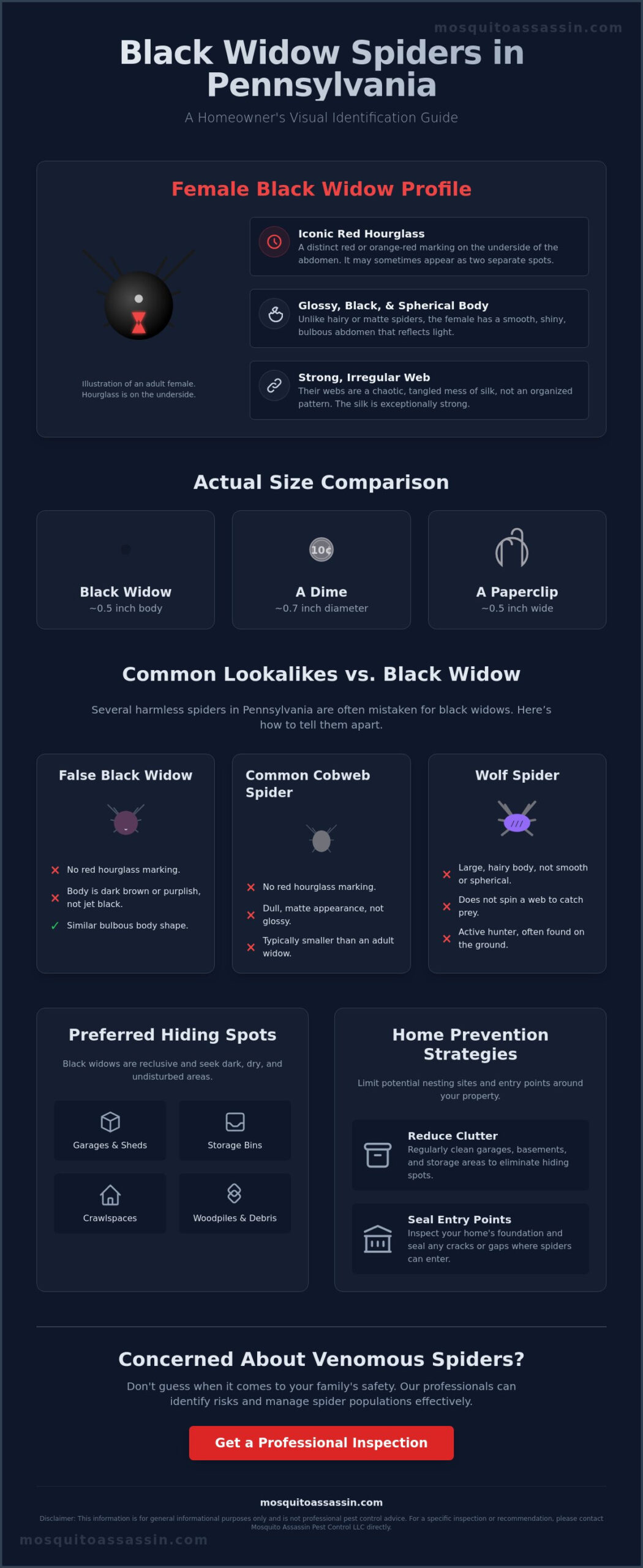
    • Learn to identify female black widow spiders by their glossy black bodies and the distinct red hourglass marking found on the underside of the abdomen.
    • Understand the regional differences between Northern and Southern black widows in pa, as Pennsylvania serves as a unique geographic intersection for both species.
    • Discover common hiding spots for these reclusive spiders, which typically prefer dark (undisturbed) locations such as storage areas and crawlspaces.
    • Implement effective prevention strategies such as reducing clutter and sealing exterior gaps to limit potential nesting sites around the home.
    • Explore how professional pest management may help reduce risk by identifying entry points and managing populations that a homeowner might overlook.

    Identifying Black Widow Spiders in Pennsylvania

    The black widow spider is a member of the Latrodectus genus native to Pennsylvania. While their reputation often precedes them, understanding how to recognize these arachnids is vital for homeowners in Erie and Crawford Counties. Identifying black widows in pa involves looking for specific markers that separate them from harmless local species. Only the adult females are considered medically significant due to their venom, which they use to paralyze prey. Males and juveniles are smaller, lighter in color, and don’t possess the same level of toxicity.

    To better understand this concept, watch this helpful video:

    Key Physical Characteristics

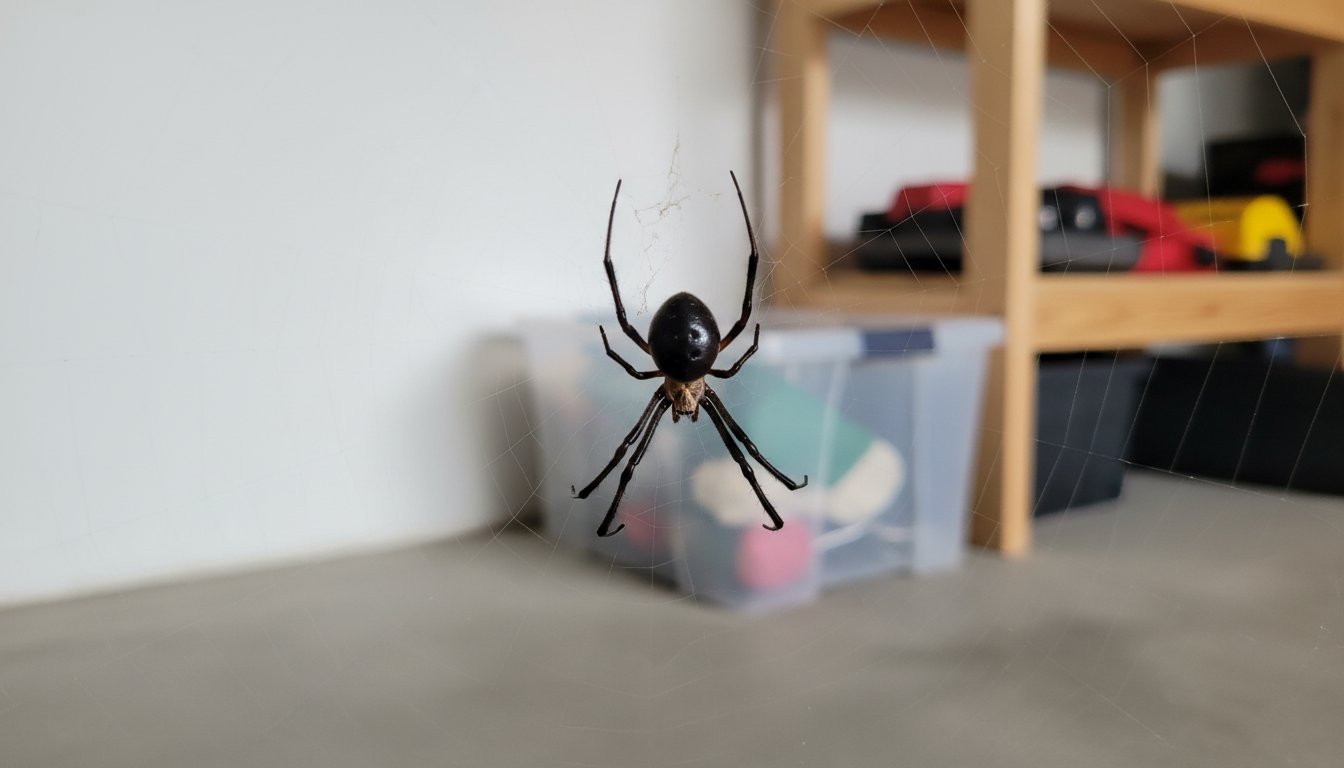
    The most recognizable feature of a female black widow is her bulbous, spherical abdomen. Unlike many other spiders that appear matte or hairy, the black widow has a distinct, glossy texture that reflects light. On the underside, or ventral side, you’ll find the iconic red or orange-red hourglass marking. This shape isn’t always a perfect hourglass; it may appear as two separate red spots or an incomplete triangle. In terms of size, an adult female’s body is about 0.5 inches long, which is roughly comparable to the diameter of a dime or a standard paperclip.

    Common Lookalike Spiders

    Several spiders in Pennsylvania are frequently mistaken for black widows in pa. Differentiating between them is key to maintaining peace of mind. Common lookalikes include:

    • False Black Widow (Steatoda grossa): These spiders have a similar bulbous shape but lack the red hourglass. Their bodies are typically dark brown or purplish rather than jet black.
    • Cobweb Spiders: Often found in damp basements, these spiders are smaller and have a duller, matte appearance compared to the glossy finish of a true widow.
    • Wolf Spiders: These are much larger, hairy, and do not spin webs. They are active hunters that stay on the floor, whereas black widow spiders prefer dark, recessed corners to build their irregular, tangled webs.

    If you encounter a spider that matches these descriptions in your home or garage, professional pest control may help reduce risk. You can find more information about our service areas in Pennsylvania and Ohio at mosquitoassassin.com/location.

    Disclaimer: The information provided on this blog is for general informational purposes only and is not intended as professional pest control advice. Conditions vary by property, environment, and location. Reading this content does not create a service agreement. For an inspection or professional recommendations, please contact Mosquito Assassin Pest Control LLC directly.

    Habitat and Behavior of Pennsylvania Black Widows

    Understanding the daily habits of black widows in pa is essential for effective property management. These spiders are notoriously reclusive; they avoid open spaces and light whenever possible. Instead, they seek out dark, cramped, and undisturbed locations to build their webs. While they remain active throughout the warmer months between May and October, they often migrate toward more permanent shelter as temperatures drop in late autumn. This seasonal shift often brings them closer to residential structures in Erie and Crawford Counties.

    A black widow web is distinct and easy to identify if you know what to look for. Unlike the symmetrical, circular patterns of common garden spiders, a widow’s web is a tangled, chaotic mess of silk. Despite its disorganized appearance, this silk is exceptionally strong. Scientific studies have shown it has a higher tensile strength than many types of steel. According to researchers at black widows in Pennsylvania usually display non-aggressive behavior toward humans. Bites typically only occur as a defensive reaction when the spider is accidentally pinched, squeezed, or pressed against a person’s skin while cleaning or gardening.

    Preferred Outdoor Locations

    In Western Pennsylvania and Ashtabula County, homeowners often find these spiders in outdoor areas that provide both protection and a steady supply of prey. Woodpiles and hollow tree stumps are primary nesting sites because they offer the humidity and darkness these arachnids crave. You should also regularly inspect the undersides of patio furniture and children’s outdoor play equipment, as these items often remain stationary for long periods. Other common spots include stone walls, rock gardens, and utility meter boxes. These structures provide the narrow crevices where a spider can retreat during daylight hours to avoid predators.

    Indoor Hiding Spots

    When black widows in pa move indoors, they gravitate toward low-traffic areas where they won’t be disturbed. Cluttered basements and crawl spaces provide ideal environments because they offer numerous hiding spots behind storage boxes or within structural gaps. Dark corners of garages are also frequent habitats, especially near seldom-used gardening tools or bins. You might find them behind large appliances or inside cardboard boxes that have remained stationary for several seasons. Reducing clutter and using sealed plastic bins instead of cardboard can lower the chances of an accidental encounter. If you suspect an infestation in your storage areas, professional pest control may help reduce risk by identifying high-pressure areas and nesting sites.

    Disclaimer: The information provided on this blog is for general informational purposes only and is not intended as professional pest control advice. Conditions vary by property, environment, and location. Reading this content does not create a service agreement. For an inspection or professional recommendations, please contact Mosquito Assassin Pest Control LLC directly.

    Black Widows in PA: Identification and Safety Guide for Homeowners

    Northern vs. Southern Black Widows: Regional Differences

    Pennsylvania sits at a unique ecological crossroads where the natural ranges of two distinct venomous spiders overlap. Homeowners searching for information on black widows in pa should understand that the state hosts both the Northern black widow (Latrodectus variolus) and the Southern black widow (Latrodectus mactans). While their appearances are remarkably similar at first glance, their habitats and physical markings differ based on their specific lineage. In regions like Erie and Crawford Counties, the Northern variety is the most frequent encounter. Conversely, the Southern variety becomes more prevalent as you move toward the southern border of the state.

    Despite these regional differences, both species possess a potent neurotoxic venom that requires respect and caution. The biological makeup of the venom is nearly identical between the two. A bite from either spider can cause significant physical distress, including muscle aches, nausea, and localized pain. Because both species are present within the state’s borders, residents must treat any shiny black spider with red markings as a potential safety risk. Professional pest control may help reduce risk by identifying these spiders before they establish large populations near your home.

    The Northern Black Widow

    The Northern black widow is the species most commonly found in the wooded environments of northern Pennsylvania and eastern Ohio. A key trait of this variety is the “split” hourglass marking on the underside of the abdomen. Instead of a connected shape, the red marking is typically broken into two separate triangles. Many individuals also display a row of white or red spots along the midline of their back, which can make them look slightly more colorful than their southern counterparts. These spiders prefer forest edges and more wooded environments. They often hide in hollow logs, under loose tree bark, or inside stone piles where they can remain undisturbed. This Penn State Extension guide to spiders provides further details on how these physical traits help experts distinguish the species in the field.

    The Southern Black Widow

    The Southern black widow is the “classic” version of the spider often depicted in media. It features the complete, connected red hourglass shape that most people recognize instantly. This species shows a much stronger preference for locations closer to human structures. It’s common to find them in barns, sheds, garages, and under porch railings. When comparing web placement, Southern widows often build their webs much closer to the ground than Northern widows. They favor dark, recessed corners of crawlspaces or the gaps under outdoor equipment. Because they thrive in man made environments, they are frequently encountered during routine home maintenance or cleaning projects. If you notice these distinctive webs in high traffic areas, visiting www.mosquitoassassin.com/services can provide information on professional management strategies to safeguard your property.

    Disclaimer: The information provided on this blog is for general informational purposes only and is not intended as professional pest control advice. Conditions vary by property, environment, and location. Reading this content does not create a service agreement. For an inspection or professional recommendations, please contact Mosquito Assassin Pest Control LLC directly.

    Preventing Spider Infestations Around the Home

    Effective spider control starts with making your property less attractive to pests. For homeowners concerned about black widows in pa, the most successful strategy involves removing the three things spiders need: food, water, and shelter. By systematically addressing these factors, you can significantly reduce the likelihood of a dangerous encounter. Spiders are opportunistic hunters; they won’t stay where they can’t find a steady supply of insects or a quiet place to hide.

    Managing outdoor lighting is a simple but overlooked prevention step. Standard incandescent or mercury vapor lights attract moths, beetles, and other flying insects. These bugs serve as a primary food source for spiders. Switching to yellow LED “bug bulbs” or moving light fixtures away from entryways can reduce insect activity by up to 60 percent. Fewer insects near your doors mean fewer spiders building webs in those high-traffic areas.

    Safety is paramount when working in areas where spiders might hide. Always wear heavy leather gloves when handling firewood, moving stones, or reaching into dark corners of a garage. It’s common to find black widows in pa tucked away in woodpiles or behind stored items in Erie and Crawford Counties. Taking this one precaution can prevent a defensive bite if you accidentally disturb a web.

    Exterior Maintenance Tips

    • Maintain the perimeter: Keep grass mowed to a height of 3 inches or less and trim all vegetation at least 12 inches away from the home foundation. This creates a “dry zone” that spiders and their prey find difficult to cross.
    • Manage firewood correctly: Store all firewood at least 20 feet away from the house. Keep the logs elevated off the ground on a rack to prevent moisture buildup and discourage nesting.
    • Disrupt web building: Use a broom or a high-powered vacuum to clear away old webs and egg sacs every 30 days. Consistent disruption makes the area feel unsafe for spiders, forcing them to relocate.

    Interior Organization Strategies

    • Upgrade storage containers: Replace cardboard boxes with plastic storage bins that feature tight-fitting, gasket-sealed lids. Cardboard often uses starch-based adhesives that attract silverfish and other insects that spiders hunt.
    • Seal the envelope: Inspect the foundation for cracks wider than 1/16th of an inch. Use high-quality silicone caulk to seal these gaps. Ensure all window screens are free of holes and that door sweeps make firm contact with the threshold.
    • Organize secluded spaces: Keep basements and garages well-organized to minimize dark corners. Pulling shelving units 2 inches away from walls allows for better airflow and easier inspections.

    Reducing clutter in storage areas limits potential nesting sites for spiders. When items are left undisturbed for months at a time, they become ideal habitats for various species. Regular cleaning and reorganization of crawlspaces and attics ensure that you catch any potential issues before they become full-scale infestations. If you notice an increase in spider activity despite these efforts, professional pest control may help reduce risk in your home.

    Disclaimer: The information provided on this blog is for general informational purposes only and is not intended as professional pest control advice. Conditions vary by property, environment, and location. Reading this content does not create a service agreement. For an inspection or professional recommendations, please contact Mosquito Assassin Pest Control LLC directly.

    Professional Pest Management for Venomous Spiders

    Professional pest management for venomous spiders involves a systematic strategy designed to safeguard the home environment. Licensed technicians bring a level of expertise that allows them to identify subtle entry points, such as gaps in siding or unsealed utility lines, which are frequently missed during DIY inspections. When homeowners encounter black widows in pa, professional pest control may help reduce risk by addressing both the spiders and their food sources. Technicians can identify foundation cracks as small as 1/16th of an inch where these arachnids might hide.

    Integrated Pest Management (IPM) serves as the foundation for these services. Instead of just reacting to a single spider, this approach focuses on long-term prevention through habitat modification and exclusion. Technicians evaluate the property to determine why spiders are attracted to specific areas. This might include identifying high-moisture zones or excessive outdoor lighting that attracts the insects spiders prey upon. By removing the incentive for pests to stay, homeowners see more sustainable results.

    When to Seek Professional Assistance

    Certain scenarios demand the specialized tools and knowledge of a professional. If sightings become frequent within living spaces like laundry rooms or finished basements, it often indicates an established population rather than a stray individual. Professional intervention is essential when infestations are found in proximity to areas where children or pets frequently play. These groups are more vulnerable to the effects of venom, making a swift response necessary.

    Safety is the primary concern when dealing with black widows in pa. Homeowners shouldn’t attempt to clear nesting sites in confined or hazardous locations. Crawlspaces, deep corners of garages, and cluttered sheds can be dangerous to navigate without proper protective gear. A licensed technician can safely access these zones to remove egg sacs and adult spiders, preventing a new generation from emerging and spreading throughout the structure.

    The Role of Year-Round Protection

    Maintaining a consistent defense is more effective than waiting for a problem to arise. Year-round protection plans establish a reliable barrier around the home’s exterior. In Erie and Crawford Counties in Pennsylvania and Ashtabula County in Ohio, seasonal shifts trigger changes in pest behavior. Spiders often seek indoor shelter as temperatures drop in the autumn months. Consistent monitoring ensures that these shifts don’t lead to an indoor infestation.

    Treating the perimeter is a critical step in stopping spiders before they cross the threshold. This involves applying treatments to the foundation and around windows and doors to create a deterrent for pests. For those interested in a comprehensive approach to home safety, viewing a General Pest Control guide provides further insight into how these systems work together. Professional pest control may help reduce risk by providing these layers of defense, keeping the interior of the home secure regardless of the season.

    Disclaimer: The information provided on this blog is for general informational purposes only and is not intended as professional pest control advice. Conditions vary by property, environment, and location. Reading this content does not create a service agreement. For an inspection or professional recommendations, please contact Mosquito Assassin Pest Control LLC directly.

    Protecting Your Pennsylvania Property

    Recognizing the distinct red hourglass of black widows in pa is a vital step toward maintaining a secure home. These spiders typically prefer dark, low-traffic zones such as basements, crawl spaces, or outdoor woodpiles. It’s important to remember that Pennsylvania is home to two medically significant spider species, making proper identification essential for safety. Practical prevention starts with reducing outdoor clutter and sealing small entry points around the home foundation.

    Professional pest control may help reduce risk through systematic inspections and integrated management. Technicians who are licensed and insured in PA and OH provide locally owned and operated expertise across Erie, Crawford, and Ashtabula Counties. These experts utilize family-safe treatment approaches to address infestations without compromising the household environment. For an inspection or professional recommendations, contact Mosquito Assassin Pest Control LLC today. Staying proactive is an excellent way to keep your living space comfortable and spider-free.

    Disclaimer: The information provided on this blog is for general informational purposes only and is not intended as professional pest control advice. Conditions vary by property, environment, and location. Reading this content does not create a service agreement. For an inspection or professional recommendations, please contact Mosquito Assassin Pest Control LLC directly.

    Frequently Asked Questions

    How dangerous is a black widow bite?

    A black widow bite is serious because it contains latrotoxin, a potent neurotoxin that affects the nervous system. While these bites are rarely fatal, with fewer than 1 percent of reported cases resulting in death according to the American Association of Poison Control Centers, they cause significant pain. Symptoms typically include muscle aches, nausea, and localized swelling that can last for 3 to 7 days.

    Are black widows common in Pennsylvania homes?

    Black widows in pa are present but typically prefer undisturbed outdoor areas or secluded parts of a structure. You’ll most likely find them in basements, crawlspaces, or garages rather than main living areas. Data from regional entomology studies suggest they’re less common than standard house spiders, but their presence increases in properties with high levels of clutter or insect activity.

    What should I do if I find a black widow in my house?

    Keep children and pets away from the spider immediately and do not attempt to handle it with your bare hands. If you must move it, use a sturdy container with a lid, but it’s safer to leave the spider alone and monitor its location. Professional pest control may help reduce risk by identifying if a larger infestation exists within the home’s dark corners.

    Can black widow spiders live in cold Pennsylvania winters?

    Black widows survive the freezing temperatures of Pennsylvania by entering a state of dormancy called diapause. They seek shelter in protected voids, such as stone walls, hollow logs, or heated foundations, where they can remain inactive for 4 to 5 months. Once temperatures consistently rise above 50 degrees Fahrenheit in the spring, they become active and begin searching for prey again.

    How can I tell the difference between a black widow and a false widow?

    The most reliable way to identify a black widow is the bright red hourglass marking on the underside of its shiny black abdomen. False widows belong to the same family but have a more brownish hue and lack the red hourglass, often displaying pale or white markings instead. While false widows can bite, their venom is significantly less potent than the neurotoxins found in the black widow species.

    What attracts black widows to a specific property?

    Black widows in pa are primarily attracted to environments that offer both protection and a steady supply of food. Properties with outdoor woodpiles, tall grass, or heavy debris provide the 2 most critical elements for their survival: hiding spots and insect prey. Reducing outdoor clutter and managing exterior lighting, which attracts the bugs spiders eat, can help make a property less inviting.

    Is professional pest control necessary for black widows?

    Engaging a professional is the safest way to handle a black widow problem due to the risks associated with their venom. Licensed technicians have the training to locate hidden nesting sites in crawlspaces or attics that homeowners often overlook. For a thorough evaluation of your property in Erie or Crawford Counties, you can contact a specialist through the online booking portal at https://portal.gorilladesk.com/mosquitoassassin.

    Disclaimer: The information provided on this blog is for general informational purposes only and is not intended as professional pest control advice. Conditions vary by property, environment, and location. Reading this content does not create a service agreement. For an inspection or professional recommendations, please contact Mosquito Assassin Pest Control LLC directly.

  • Comprehensive Mosquito Control Methods for Pennsylvania and Ohio Homeowners

    Comprehensive Mosquito Control Methods for Pennsylvania and Ohio Homeowners

    What if the citronella candles and store-bought foggers you’re using are actually doing more for the marketing companies than for your backyard? For homeowners across Pennsylvania and Ohio, the reality of July and August is often a self-imposed house arrest to avoid the relentless swarm. It’s frustrating when you’ve invested in a deck or patio only to be driven inside by pests that seem immune to every DIY fix. We understand that local families aren’t just annoyed by the itching; they’re genuinely concerned about the 20 human cases of West Nile virus reported in Pennsylvania in 2023. You need protection that goes beyond the surface level.

    You deserve a definitive solution that actually works. We’re going to pull back the curtain on the science-based mosquito control methods that professional assassins use to eliminate populations at every stage of their lifecycle. This article provides a clear, actionable 5-point checklist for your property and explains how integrated pest management creates a permanent shield for your outdoor space. You’ll learn exactly how to stop the breeding cycle and reclaim your yard for the rest of the season. It’s time to stop guessing and start safeguarding your home with proven expertise.

    Key Takeaways

    • Learn how to disrupt the four stages of the mosquito lifecycle and why Lake Erie’s unique humidity makes strategic timing critical for Pennsylvania and Ohio homeowners.
    • Discover the four pillars of Integrated Mosquito Management, a scientific approach that combines professional mosquito control methods with surveillance to safeguard your property.
    • Identify hidden breeding grounds in your yard and understand when DIY efforts require the power of professional-grade treatments to achieve total eradication.
    • Master landscape management techniques and physical barrier strategies to transform your outdoor living space into a zone that is naturally unfriendly to pests.
    • Find out how customized protection plans tailored specifically for Erie, Crawford, and Ashtabula counties provide the consistent, season-long defense your family deserves.

    Understanding Mosquito Control Methods and Lifecycle Disruption

    Homeowners in Erie and Crawford counties know that summer isn’t just about lake days; it’s about the relentless swarm of pests. Effectively reclaiming your yard requires more than just a stray citronella candle or a single application of spray. You need a strategy that disrupts the entire mosquito lifecycle. Most people only see the biting adults, but those make up only about 10% of the total population at any given time. The real battle happens in the water. By targeting eggs, larvae, and pupae, we stop the next generation before it takes flight. Professional mosquito control methods must be comprehensive because a single female can lay up to 300 eggs in one sitting. Relying on one tactic is rarely enough for long-term suppression.

    To better understand how these lifecycle disruptions work in a backyard setting, watch this helpful video:

    The Biology of Local Mosquito Populations

    In the Great Lakes region, species like Aedes vexans and Culex pipiens dominate the landscape. These pests are highly sensitive to the unique climate near Lake Erie, where humidity levels frequently stay above 70% during July and August. This moisture, combined with frequent rainfall, creates a perfect storm for rapid reproduction. A mosquito can go from egg to biting adult in as little as 7 to 10 days when temperatures hit 80 degrees. If you don’t time your treatments to match these hatch cycles, you’re just playing catch-up. Our team understands these local patterns and uses that data to eliminate threats before they become an infestation.

    Why Professional Property Assessment Matters

    Mosquito Assassin doesn’t just spray and leave. We hunt for the micro-habitats that homeowners often miss. A single bottle cap full of water can host dozens of larvae. Whether it’s a blocked downspout, a corrugated drain pipe, or a low spot under a deck, these areas require targeted management. This level of detail is a core part of our general pest control framework. We focus on site-specific solutions rather than broad-spectrum guesswork. Identifying these hidden breeding grounds is the only way to ensure family-safe results and long-term protection. We look for:

    • Clogged gutters holding stagnant organic matter
    • Tarps over woodpiles or boats that collect small pools
    • Over-irrigated flower beds with poor drainage
    • Potted plant saucers and birdbaths

    Professional management is about more than just comfort; it’s about public health. Mosquitoes in Pennsylvania and Ohio are known vectors for West Nile Virus and Eastern Equine Encephalitis. By reducing the population on your property, we directly lower the risk of disease transmission for your family and pets. If pests return, so do we. That is our commitment to every neighbor we serve in the community.

    The Science of Integrated Mosquito Management (IMM)

    Effective mosquito control isn’t about luck or a single spray. It’s about a scientific, ecosystem-based strategy called Integrated Mosquito Management (IMM). This approach focuses on long-term prevention by using a combination of techniques that target pests at every stage of their life cycle. We don’t just show up and spray; we analyze the environment to understand why pests are there in the first place. IMM relies on four critical pillars: surveillance, source reduction, larviciding, and adulticiding. By following this framework, we use the least intrusive mosquito control methods to achieve maximum results for your property.

    Surveillance and Population Monitoring

    We can’t eliminate what we don’t understand. Our technicians monitor local populations to identify high-pressure areas and specific species. Pennsylvania is home to approximately 60 different mosquito species, each with unique breeding habits and flight ranges. Identifying whether you’re facing the aggressive Asian Tiger mosquito or a common house mosquito allows us to tailor our management plan. This data-driven approach prevents the over-application of materials, ensuring we only treat when and where it’s necessary. For homeowners, this process often begins with practical yard management to identify and eliminate standing water before the season peaks.

    Surveillance data tells us exactly when the population is about to spike. By tracking weather patterns and trap counts, we determine the most effective treatment window. This precision is what separates a professional assassin from a DIY attempt. We use this information to safeguard your yard before the infestation becomes unmanageable.

    Larval vs. Adult Control Strategies

    A truly effective mosquito control program attacks the problem from two angles. First, we focus on larviciding. This involves treating breeding sites to stop the next generation before they ever reach the biting adult stage. It’s the most efficient way to keep numbers down because it strikes at the source. Stopping larvae in a stagnant birdbath is much easier than chasing thousands of flying adults across a property line.

    Second, we use adulticiding to provide immediate relief. This part of our mosquito control methods reduces the current population of biting mosquitoes that are already active on your property. These two methods work in tandem to create a protective shield around your home. Larviciding provides the long-term solution, while adulticiding delivers the instant results you need for a weekend barbecue. If you’re ready to take back your lawn, you can learn more about our professional mosquito services and how we customize these pillars for your specific needs. We don’t just manage pests; we eliminate the threat so your family can stay safe.

    Comprehensive Mosquito Control Methods for Pennsylvania and Ohio Homeowners

    Source Reduction vs. Professional Treatment: A Balanced Approach

    Effective mosquito control methods start with a tactical strike on breeding grounds. This process is known as source reduction. You can’t rely on sprays alone if your yard is an active nursery for larvae. Homeowners in Erie County or Crawford County often struggle with stagnant water after heavy rains. While DIY efforts are a great first step, they rarely achieve total eradication. Professional intervention uses high-grade equipment that reaches deep into dense foliage where over-the-counter foggers fail.

    Common Breeding Sites in Residential Yards

    Mosquitoes need very little water to multiply. A clogged gutter or a forgotten birdbath becomes a factory for thousands of pests. You must clear debris from drainage systems at least twice a year to prevent standing pools. According to research on mosquito biology and control methods, old tires represent the most significant hazard in regional counties. A single discarded tire can produce over 10,000 mosquitoes in one summer season because the rubber insulates the water and provides a perfect dark environment for eggs. If you have landscape ponds, ensure they have active aeration or stock them with mosquito-eating fish to disrupt the lifecycle.

    When Maintenance Isn’t Enough

    Sometimes your yard is spotless, but the neighbors have a swampy lot or a thick wooded area. Mosquitoes don’t respect property lines. They’ll fly from hundreds of yards away to find a meal. This is where our professional mosquito services

    Practical Yard Management and Personal Protection Strategies

    Effective yard management is the first line of defense in your battle against biting insects. While professional treatments provide the heavy lifting, maintaining your property ensures that mosquitoes don’t find a welcoming habitat between service visits. Our team sees the best results when homeowners combine our professional mosquito control methods with consistent property maintenance. This dual approach creates a hostile environment for pests while safeguarding your family and pets.

    Landscaping for Mosquito Suppression

    Mosquitoes are fragile creatures that dehydrate quickly in the sun. They spend their days hiding in cool, damp, shaded areas. To eliminate these resting sites, keep your grass mowed to a height of 3 inches or less. Overgrown shrubs and tall weeds act as nurseries for adult mosquitoes; trim back foliage at least 12 inches from your home’s foundation to increase sunlight exposure and airflow. This simple step makes your immediate living space much less attractive to invaders.

    Airflow is a natural enemy of the mosquito. Because they are weak fliers, they struggle to navigate in winds exceeding 10 miles per hour. Setting up high-velocity oscillating fans on your deck or patio provides immediate, localized relief. Regarding “mosquito-repelling” plants like citronella or lavender, the reality is less impressive than the marketing. While these plants smell pleasant, they don’t release enough essential oils to protect a yard. You’d need to crush the leaves to see any benefit, so don’t rely on greenery alone to do the job of an assassin.

    Safety Protocols for Professional Applications

    At Mosquito Assassin, we prioritize the health of your family and the local environment in Erie, Crawford, and Ashtabula counties. Our technicians only use EPA-registered products and follow strict manufacturer labels to ensure every application is precise. We focus our treatments on the undersides of leaves and dense brush where pests congregate, rather than broadcast spraying across open areas.

    Safety is our top concern for your children and four-legged friends. We require that pets and family members stay indoors during the application process. Once the treatment has dried, which typically takes 30 to 60 minutes depending on the humidity levels in Pennsylvania and Ohio, the yard is completely ready for play. Our licensed professionals are also trained to protect non-target insects. We intentionally avoid spraying flowering plants where bees and butterflies forage, ensuring we eliminate the pests without harming the local ecosystem.

    For personal protection during peak activity hours at dawn and dusk, wear light-colored clothing and use repellents containing 20 percent DEET or Picaridin. These methods, combined with our targeted treatments, ensure your summer remains itch-free.

    Ready to take back your backyard? Explore our professional mosquito control services and schedule your customized treatment plan today.

    Professional Mosquito Management in Northwest PA and Northeast OH

    Living in Erie, Crawford, or Ashtabula County means dealing with a unique set of environmental factors that pests love. The proximity to Lake Erie and the dense woodlines of Northwest Pennsylvania create a perfect storm for high insect activity. Generic, big-box mosquito control methods often fail because they don’t account for the specific geography of our region. You need a team that lives where you live and understands the pressure these pests put on your daily life. Our “Assassin” approach is designed to eliminate the threat quickly and decisively.

    Our recurring protection plans offer consistent seasonal coverage so you don’t have to worry about the next swarm. We don’t just spray and leave; we analyze your property to identify breeding sites and harborage areas. This local approach ensures our technicians understand whether your backyard is a high-risk zone or simply a nuisance area. Reclaiming your outdoor living space is about more than just comfort. It’s about safety and peace of mind for your kids and pets. When you safeguard your yard, you’re taking back your summer.

    Customized Treatment Plans for Local Homes

    Every property in our tri-county service area is different. A half-acre lot in a suburban Erie neighborhood requires a different strategy than a five-acre estate surrounded by fields in Crawford County. We factor in property size, nearby standing water, and heavy vegetation to build your specific strategy. Choosing a professional pest service with a satisfaction guarantee is the only way to ensure results. If pests return, so do we. We also link mosquito management with other seasonal needs like tick control to provide a comprehensive shield for your entire yard.

    Next Steps for Homeowners

    Timing is everything when you want to stop an infestation. Starting your intervention in April or May provides a much better foundation for summer success. These early-season treatments target the first generation of larvae before they can multiply into a massive problem by July. It’s best to find a local provider with deep roots in the community by checking their location page to see their service range. Professional pest control helps reduce the risk of insect-borne illnesses and drastically improves the quality of your outdoor life. Don’t let pests dictate when you can enjoy your own deck. Call the best of the best and protect your family today.

    Reclaim Your Outdoor Space Today

    Protecting your home from relentless pests requires a strategic shift from reactive swatting to proactive prevention. Successful elimination depends on breaking the lifecycle through Integrated Mosquito Management and consistent source reduction. By removing standing water and utilizing professional mosquito control methods, you create a definitive barrier against infestation. Our licensed and insured technicians serve homeowners across Erie, Crawford, and Ashtabula counties with a proven 4-step process including inspection, customized planning, treatment, and follow-up. We aren’t just a national chain; we’re your neighbors who understand the specific pest pressures of Northwest PA and Northeast OH.

    You don’t have to settle for a yard that’s off-limits to your family and pets. Our local expertise ensures your property receives the exact safeguarding it needs to stay bite-free all season long. If the pests return, so do we. That’s our commitment to your total satisfaction. Take the first step toward a safer, more comfortable summer by partnering with the best of the best. Schedule your professional property inspection today and let us eliminate the threat for good. It’s time to enjoy your backyard with absolute confidence again.

    Frequently Asked Questions

    Is professional mosquito control safe for my pets and children?

    Professional treatments are family-safe and pet-friendly once the product has dried completely. At Mosquito Assassin, we use EPA-registered products that allow your family to return to the yard within 30 to 45 minutes of application. Our technicians follow strict safety protocols to safeguard your home. We prioritize your peace of mind by using specific mosquito control methods that target pests while protecting your loved ones.

    How often should a professional mosquito treatment be applied?

    You should schedule professional treatments every 21 days to maintain a continuous barrier against pests. This 3-week cycle is critical because it disrupts the mosquito life cycle before new larvae can reach adulthood. In Pennsylvania and Ohio, the peak season often requires 7 to 9 applications to ensure total protection from May through September. Consistent application prevents the population from rebounding between our scheduled visits.

    Do mosquito control methods also work on ticks?

    Yes, our comprehensive mosquito control methods effectively eliminate ticks and other biting insects on your property. Since ticks often inhabit the same shaded, brushy areas as mosquitoes, our barrier spray provides dual protection. Research from the CDC indicates that 80 percent of Lyme disease cases are contracted in residential backyards. Our targeted approach safeguards your perimeter against these dangerous hitchhikers throughout the entire season.

    What is the most effective DIY method for reducing mosquitoes?

    The most effective DIY action is the Tip ‘n Toss method to eliminate standing water every 7 days. Mosquitoes can lay up to 300 eggs in a single bottle cap of water, so clearing gutters and emptying birdbaths is essential. While DIY candles or sprays offer temporary relief, they rarely solve the root problem. Professional intervention remains the only way to achieve a 90 percent reduction in the local population.

    Can mosquitoes be completely eliminated from a property?

    No service can promise 100 percent eradication of every single insect, but we can reduce populations by up to 95 percent. Mosquitoes are mobile and can fly in from neighboring properties or wooded areas. However, our “If pests return, so do we” guarantee ensures that we manage the population effectively. We focus on creating a powerful shield that makes your outdoor space livable and comfortable again.

    What happens if it rains shortly after a professional treatment?

    Your treatment remains effective as long as the product has had 30 minutes to dry before the rainfall begins. Once dry, the solution bonds to the underside of leaves and vegetation, making it weather-resistant. If a heavy storm occurs within 24 hours of application and you notice a surge in activity, contact us immediately. We’ll return to your property to re-treat the area at no additional cost.

    Are there natural or organic mosquito control methods available?

    Yes, we offer natural treatment options that utilize essential oils like peppermint, cedarwood, and lemongrass to repel pests. These organic solutions provide an eco-friendly alternative for homeowners who prefer non-synthetic options. While these treatments typically require more frequent application every 14 days, they’re highly effective at safeguarding your yard. Our technicians can customize a plan that fits your specific environmental preferences and safety goals.

    When is the best time of year to start a mosquito control program?

    You should start your mosquito control program in April or May when temperatures consistently stay above 50 degrees Fahrenheit. Starting early allows us to target the first wave of emerging adults before they begin their rapid breeding cycle. In the Ohio Valley and Pennsylvania regions, waiting until June often means you’re fighting an uphill battle against an established infestation. Early intervention ensures a pest-free summer for your family.