
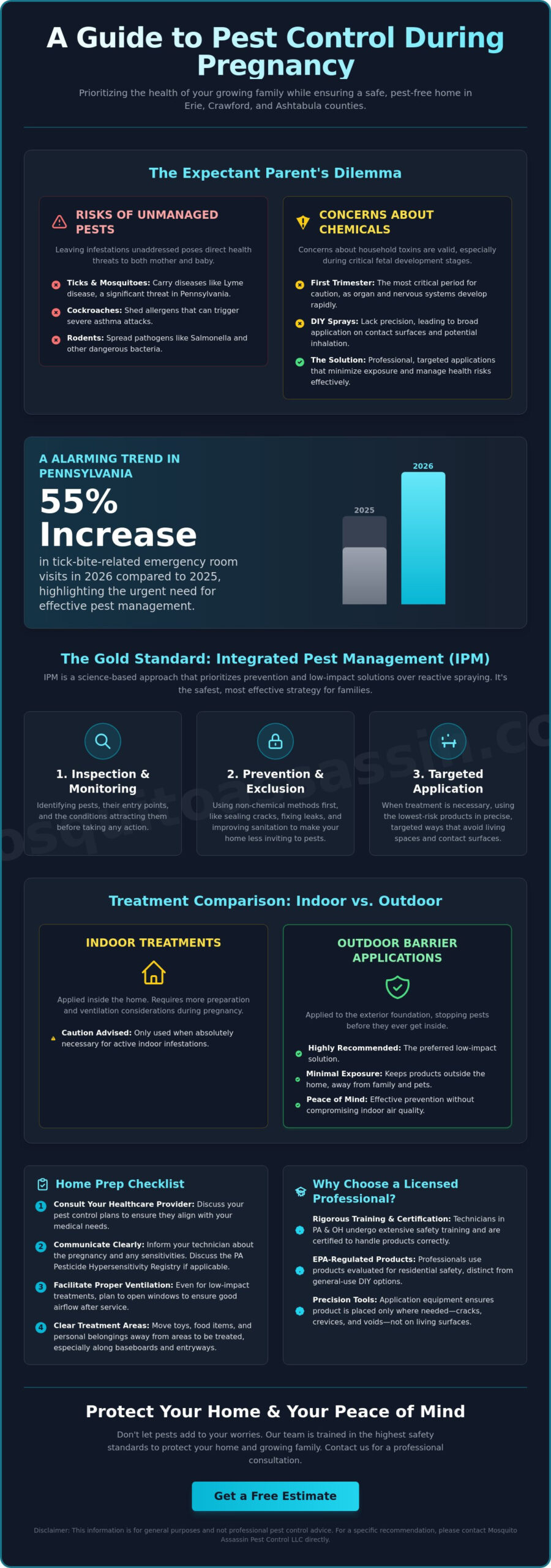
Did you know that tick-bite-related emergency room visits in Pennsylvania increased by 55% in 2026 compared to 2025? For expectant mothers, this statistic highlights a difficult dilemma: the risk of diseases carried by pests versus the potential impact of chemicals on fetal development. It’s completely normal to feel caught between the worry of an infestation and the desire to avoid household toxins, especially when medical sites and parenting forums offer conflicting advice. Finding safe pest control for pregnant women doesn’t have to be a source of anxiety or confusion.
This guide provides a clear path to managing household invaders through research-backed Integrated Pest Management (IPM) and the high safety standards practiced across Erie, Crawford, and Ashtabula counties. You’ll discover which methods are lowest-risk, how to navigate 2026 regulatory updates like the Pennsylvania Pesticide Hypersensitivity Registry, and how to prepare your home for a professional visit. By focusing on prevention and targeted, low-impact solutions, it’s possible to achieve a pest-free home while prioritizing the health of your baby and your peace of mind.
Disclaimer: The information provided on this blog is for general informational purposes only and is not intended as professional pest control advice. Conditions vary by property, environment, and location. Reading this content does not create a service agreement. For an inspection or professional recommendations, please contact Mosquito Assassin Pest Control LLC directly.
Key Takeaways
- Learn how Integrated Pest Management (IPM) prioritizes non-chemical methods like sanitation and exclusion to manage pests with minimal risk.
- Identify the best practices for safe pest control for pregnant women by understanding current research on residential exposure and professional application standards.
- Evaluate the differences between indoor treatments and outdoor barrier applications to determine the most effective low-impact solution for your property.
- Discover essential preparation steps to take before a professional technician arrives, including how to facilitate proper ventilation and clear communication.
- Understand the rigorous certification and safety training required for pest control professionals operating in Erie, Crawford, and Ashtabula counties.
Understanding Pesticide Safety and Reproductive Health
Safety in a residential environment isn’t defined by a total absence of intervention. Instead, it involves a calculated balance between controlling disease-carrying pests and minimizing chemical exposure. For many families, the priority is finding safe pest control for pregnant women that targets the problem without introducing unnecessary risks. Professional standards in 2026 focus on targeted applications rather than broad, indiscriminate sprays. This distinction is vital because the goal is to protect the home’s inhabitants while effectively eliminating the threat.
Research regarding the Health effects of pesticides suggests that the most critical period for caution is the first trimester. During these first 12 weeks, fetal organ systems and the nervous system undergo rapid development. Studies, including those from the Environmental Health Perspectives Journal, indicate that minimizing indoor pesticide exposure during this window is a prudent step for long-term developmental health. This is why professional application is preferred over DIY sprays, as technicians use precise tools to keep products away from common contact surfaces.
To better understand the complexities of pesticide safety during pregnancy, watch this helpful video:
Potential Risks of Unmanaged Pest Infestations
Living with an active infestation often carries more documented health risks than a professional, controlled treatment. Cockroaches are known to shed allergens that trigger severe asthma attacks; rodents carry pathogens like Salmonella and various bacteria. In Northwest Pennsylvania, the stakes are even higher in 2026. Tick-bite-related emergency room visits have surged by 55% this year compared to 2025. With Pennsylvania leading the nation in Lyme disease cases, leaving a tick or mosquito problem unaddressed poses a direct threat to maternal health. A controlled, professional plan manages these biological hazards without compromising fetal safety.
How Professional Standards Minimize Exposure
The Environmental Protection Agency (EPA) strictly regulates which products can be used in residential settings. Licensed professionals distinguish between general-use pesticides, which are available to the public, and restricted-use products that require specific certification. Professionals follow Integrated Pest Management (IPM) protocols, which prioritize non-chemical barriers first. Before starting any pest control services, it’s essential to consult with a healthcare provider. They can provide personalized guidance based on your health history, ensuring your home preparation plan aligns with your medical needs. Professional technicians in Erie and Crawford counties are trained to apply products in ways that prevent contact with skin or food surfaces, providing a level of precision that DIY aerosol cans simply can’t match.
Integrated Pest Management (IPM): A Low-Impact Approach
Integrated Pest Management, or IPM, is a science-based decision-making process that shifts the focus from reactive spraying to proactive prevention. It’s the methodology used by licensed professionals to ensure effective results with the lowest possible environmental impact. For families seeking safe pest control for pregnant women, IPM is the gold standard. It doesn’t rely on a single “silver bullet” solution. Instead, it combines multiple strategies to make the home less hospitable to pests while keeping treatments away from living spaces. In states like Ohio, this approach is so critical that Administrative Code 901:5-11-14 specifically defines the standards for IPM in non-agricultural settings.
This framework is built on the understanding that pests need food, water, and shelter to survive. By removing these essentials, the need for chemical intervention drops significantly. Utilizing general pest control as a preventative framework allows technicians to address the root causes of an infestation before it begins. This methodical approach is especially reassuring for expectant mothers who want to avoid the broad application of aerosols or sprays inside their homes.
The Four Pillars of Professional IPM
A professional IPM plan in Erie, Crawford, or Ashtabula counties follows a strict four-step process:
- Inspection: Technicians perform a thorough sweep to identify specific pest species and their entry points.
- Exclusion: This involves physical barriers; sealing cracks, crevices, and gaps around pipes prevents pests from entering in the first place.
- Sanitation: Identifying and removing food or water sources, such as leaky pipes or crumb-filled crevices, eliminates the “welcome mat” for rodents and roaches.
- Targeted Treatment: If chemicals are necessary, professionals use baits or gels placed in wall voids or areas completely inaccessible to residents.
By focusing on these steps, the amount of product used is often reduced by a significant margin compared to traditional methods. Understanding your home’s unique vulnerabilities through professional pest control may help reduce risk by stopping pests before they require more intensive treatments.
Benefits of Low-Volatile and Botanical Options
Modern pest management has evolved toward formulations that prioritize safety and low odor. Many professionals now utilize pyrethrins, which are derived from chrysanthemum flowers, or other botanical-based products. These options are often preferred because they break down quickly in the environment and have low volatility. This means they don’t linger in the air as vapors, which is a primary concern for respiratory health during pregnancy. Professional placement is the key; by applying these products only where pests travel, such as behind baseboards or inside cabinetry hinges, the risk of accidental contact for residents is nearly eliminated.
Disclaimer: The information provided on this blog is for general informational purposes only and is not intended as professional pest control advice. Conditions vary by property, environment, and location. Reading this content does not create a service agreement. For an inspection or professional recommendations, please contact Mosquito Assassin Pest Control LLC directly.
Comparing Indoor Treatments and Outdoor Barriers
Achieving safe pest control for pregnant women often begins with a strategic shift in geography. By focusing on the exterior of the property, professionals can create a defensive line that prevents pests from ever crossing the threshold. This proactive strategy is highly effective because it addresses the problem before it requires an indoor response. In 2026, with a forecasted 60% year-over-year increase in ant and spider activity across the region, these barriers are more essential than ever for maintaining a pest-free home without the need for intensive interior treatments.
Outdoor Perimeter Protection
Liquid barrier treatments are applied to the home’s foundation and common entry points, such as door frames, window sills, and utility penetrations. Because these applications occur exclusively outside, they have a negligible impact on indoor air quality. This makes outdoor mosquito control programs and perimeter sprays a preferred choice for expectant mothers. These programs target pests where they live and breed, significantly reducing the population before they can migrate toward living spaces.
Professional protocols in Erie and Ashtabula counties require that residents, children, and pets remain indoors during the application. For maximum safety, everyone should stay off treated surfaces until they are completely dry. This process typically takes between 30 and 60 minutes, depending on local humidity levels. Proactive maintenance of these barriers throughout the 2026 growing season ensures that the interior of the home remains a sanctuary, free from the diseases carried by pests like ticks and mosquitoes.
Indoor Baiting vs. Broadcast Spraying
When an infestation is already established inside, the method of delivery is just as important as the product itself. Traditional broadcast spraying, which involves coating large areas of flooring or baseboards, is rarely the first choice in a modern safety-first plan. Instead, licensed technicians utilize gel baits and “crack and crevice” treatments. These methods are designed to be surgical rather than broad, placing the product exactly where the pests are known to hide.
Gel baits are applied in tiny droplets within wall voids, behind electrical faceplates, or deep under heavy appliances where residents cannot reach them. These formulations are non-volatile, which means they do not release fumes into the nursery or kitchen air. This targeted approach ensures that the active ingredients remain contained and away from common contact surfaces. By contrast, aerosol sprays can drift and settle on countertops or furniture. Choosing a professional who prioritizes baiting over broadcast spraying is a key component of a reliable household safety plan during pregnancy.
Disclaimer: The information provided on this blog is for general informational purposes only and is not intended as professional pest control advice. Conditions vary by property, environment, and location. Reading this content does not create a service agreement. For an inspection or professional recommendations, please contact Mosquito Assassin Pest Control LLC directly.
Practical Preparation Steps for Professional Treatments
Preparation is the most critical factor in ensuring that a professional service remains targeted and effective. While previous sections highlighted the benefits of Integrated Pest Management (IPM), those strategies rely on a technician’s ability to access specific areas of the home. By taking proactive steps, residents can minimize the amount of time a technician spends in the home and ensure that products are applied only where necessary. Achieving safe pest control for pregnant women requires a collaborative effort between the homeowner and the licensed professional.
Pre-Treatment Checklist
A structured approach to preparation reduces the risk of accidental contact with treated surfaces. Before a technician arrives, residents should focus on clearing the path for precise application. This typically involves the following steps:
- Clear Baseboards: Move furniture, toys, and storage bins at least 3 feet away from walls. This allows the technician to inspect and treat the “pest highway” where insects naturally travel.
- Empty Under-Sink Areas: Remove all items from under kitchen and bathroom sinks. These are high-moisture zones where roaches and ants often congregate, and technicians need clear access to apply gels or baits.
- Secure Sensitive Items: Place baby clothes, blankets, bottles, and toys in sealed plastic bins. If items cannot be moved, cover them with heavy plastic sheeting.
- Manage Food Surfaces: Store all food in airtight containers or the refrigerator. Clear countertops and cover small appliances like toasters or coffee makers.
Open communication is also vital. Inform the service provider about the pregnancy during the initial scheduling call. This allows the company to assign a technician familiar with low-impact protocols and ensures they bring the appropriate Safety Data Sheets (SDS) for the products they intend to use. If you have specific concerns about a room, such as a nursery, discussing professional pest control may help reduce risk by identifying non-chemical alternatives for that specific space.
Safety During and After Application
Standard safety protocols in the industry recommend that pregnant women remain out of the home for the duration of any indoor treatment. While modern baits and gels are non-volatile, staying away provides total peace of mind. Most professional guidelines suggest a re-entry period of 2 to 4 hours after the service is completed. This window allows any liquid applications to dry completely and ensures the air has cleared through natural ventilation. It’s a good practice to crack a few windows before leaving to facilitate airflow.
Upon returning, focus on high-touch surfaces. While technicians avoid food preparation areas, wiping down kitchen countertops and dining tables with warm, soapy water is a prudent final step. Avoid using harsh chemical cleaners immediately after a treatment, as these can sometimes interfere with the efficacy of the pest control baits. By following these structured protocols, you can maintain a high standard of household safety throughout the process.
Disclaimer: The information provided on this blog is for general informational purposes only and is not intended as professional pest control advice. Conditions vary by property, environment, and location. Reading this content does not create a service agreement. For an inspection or professional recommendations, please contact Mosquito Assassin Pest Control LLC directly.
Professional Standards for Pest Control in Pennsylvania and Ohio
Professional standards for pest control are governed by state-specific agencies that mandate rigorous training and certification. In Pennsylvania and Ohio, these regulations ensure that any individual applying products in a residential setting understands the science of chemical safety and environmental impact. For families prioritizing safe pest control for pregnant women, these state-mandated qualifications provide a layer of oversight that DIY methods lack. Technicians must demonstrate proficiency in Integrated Pest Management (IPM) and the proper handling of materials in sensitive environments. This expertise is vital for ensuring that treatments remain targeted and do not compromise the indoor air quality of the home.
Licensing and Safety Training Requirements
The Pennsylvania Department of Agriculture oversees the certification of applicators within the state. As of 2026, the fee for registering a pesticide product in Pennsylvania is $250, and registrations must be renewed annually. This regulatory framework includes the Pesticide Hypersensitivity Registry. This registry allows individuals with physician-verified sensitivities to receive notifications of pesticide applications within 500 feet of their property. It’s a critical resource for expectant mothers who wish to stay informed about local chemical use.
In Ohio, the Department of Agriculture updated record-keeping requirements as of March 26, 2026. These changes increased the supervision distance for trained servicepersons to 60 miles and eliminated the requirement for businesses to register each individual location. Licensed professionals are trained to identify specific pest behaviors and apply only the necessary amount of product in the correct locations. Verifying that a service provider is licensed and insured is a fundamental step in ensuring residential treatments meet current safety benchmarks. Residents can find more information about professional services that adhere to these regional standards.
Local Service Areas and Community Support
Pest pressures vary significantly across Northwest Pennsylvania and Northeast Ohio. Communities like Cranesville, Erie, and Meadville face unique challenges in 2026, such as the urgent need to destroy spotted lanternfly egg masses and a predicted 60% increase in spider activity. Local expertise is essential for identifying the specific environmental factors that contribute to infestations in these service locations. A technician who lives in the community understands how local weather patterns, like the milder winters of 2026, influence when pests emerge.
Year-round protection plans offer a methodical way to maintain a pest-free environment without the need for high-intensity, reactive treatments. By establishing a consistent perimeter barrier, professionals reduce the likelihood of pests entering the home. This long-term approach is particularly beneficial for households with expectant mothers, as it focuses on prevention and external maintenance. Seeking professional pest control may help reduce risk by ensuring that all interventions are performed by certified experts who follow the latest 2026 safety protocols and state regulations.
Disclaimer: The information provided on this blog is for general informational purposes only and is not intended as professional pest control advice. Conditions vary by property, environment, and location. Reading this content does not create a service agreement. For an inspection or professional recommendations, please contact Mosquito Assassin Pest Control LLC directly.
Protecting Your Home and Family in 2026
Managing a household during pregnancy requires a careful balance between health and comfort. As pest populations surge in 2026, the safest approach remains proactive prevention through Integrated Pest Management. By prioritizing exterior barriers and targeted, non-volatile indoor treatments, residents can effectively safeguard their living spaces. Understanding the rigorous licensing standards in Pennsylvania and Ohio provides the peace of mind that all interventions meet professional safety benchmarks. Implementing a structured preparation plan ensures that safe pest control for pregnant women is both effective and minimally intrusive.
Choosing a locally owned and operated provider who is licensed and insured in PA and OH guarantees that your home receives expert care tailored to regional pest pressures. Relying on professional standards rather than DIY chemicals reduces unnecessary exposure while eliminating the health risks posed by rodents, roaches, and ticks. For an inspection or professional recommendations, please contact Mosquito Assassin Pest Control LLC directly. Taking these steps now creates a secure, pest-free environment for your growing family.
Disclaimer: The information provided on this blog is for general informational purposes only and is not intended as professional pest control advice. Conditions vary by property, environment, and location. Reading this content does not create a service agreement. For an inspection or professional recommendations, please contact Mosquito Assassin Pest Control LLC directly.
Frequently Asked Questions
Is it safe to spray for ants while pregnant?
Professional ant treatments are safe if they utilize targeted gel baits rather than broadcast sprays. These baits are applied in hidden areas like wall voids or cabinet hinges where residents won’t come into contact with them. This precision is a hallmark of safe pest control for pregnant women because it keeps active ingredients away from food preparation surfaces and common living areas.
How long should I stay out of the house after pest control?
Standard industry protocols suggest remaining out of the home for 2 to 4 hours after an indoor treatment. This time frame allows liquid applications to dry completely and ensures that any vapors have dissipated through natural ventilation. It’s helpful to open windows before you leave to facilitate airflow. Always wait until the technician confirms it’s okay to re-enter the property.
Can I use natural pest control methods instead of chemicals?
Non-chemical deterrents are the foundation of any effective Integrated Pest Management plan. Sanitation and exclusion, such as sealing gaps in foundation walls or keeping food in airtight containers, are highly effective natural strategies. These methods address the root cause of an infestation without the need for chemical intervention. Professional technicians often prioritize these steps before recommending any supplemental treatments to ensure the home remains a healthy environment.
Are mosquito yard treatments safe for pregnant women?
Outdoor mosquito treatments are generally considered low-risk because the application occurs entirely outside the home. These barriers target breeding sites and resting areas in the yard, which prevents pests from entering the house. Residents should stay indoors during the application and wait 30 to 60 minutes for the product to dry before going back outside. This ensures that the treatment doesn’t impact indoor air quality.
What should I do if I accidentally touch a treated surface?
If you come into contact with a treated surface, wash the affected skin thoroughly with soap and water. Professional residential products are applied in highly diluted concentrations, but washing removes any residue immediately. If you have concerns, consult your healthcare provider or review the Safety Data Sheets (SDS) provided by your service company. Taking these quick steps ensures that any potential exposure is addressed immediately for your peace of mind.
Should I tell my pest control technician that I am pregnant?
You should always notify your technician about a pregnancy during the initial scheduling call and again upon their arrival. Sharing this information allows the professional to customize the treatment plan, choosing the lowest-impact products and application methods. It ensures the service aligns with your specific safety needs while effectively managing household pests. Clear communication is the best way to ensure your home preparation and the technician’s plan work together seamlessly.
What pests are the most dangerous to have in the house during pregnancy?
Rodents and cockroaches are particularly hazardous because they carry pathogens and trigger respiratory issues. In 2026, mosquitoes and ticks are also high-priority threats in the Mid-Atlantic region. Pennsylvania remains the state with the highest number of reported Lyme disease cases in the country. Managing these pests is a vital part of safe pest control for pregnant women to prevent the transmission of dangerous illnesses that could impact maternal health.
Disclaimer: The information provided on this blog is for general informational purposes only and is not intended as professional pest control advice. Conditions vary by property, environment, and location. Reading this content does not create a service agreement. For an inspection or professional recommendations, please contact Mosquito Assassin Pest Control LLC directly.