Tag: pest control tips

  • How to Reduce Mosquitoes in Your Yard: A Professional Guide for 2026

    How to Reduce Mosquitoes in Your Yard: A Professional Guide for 2026

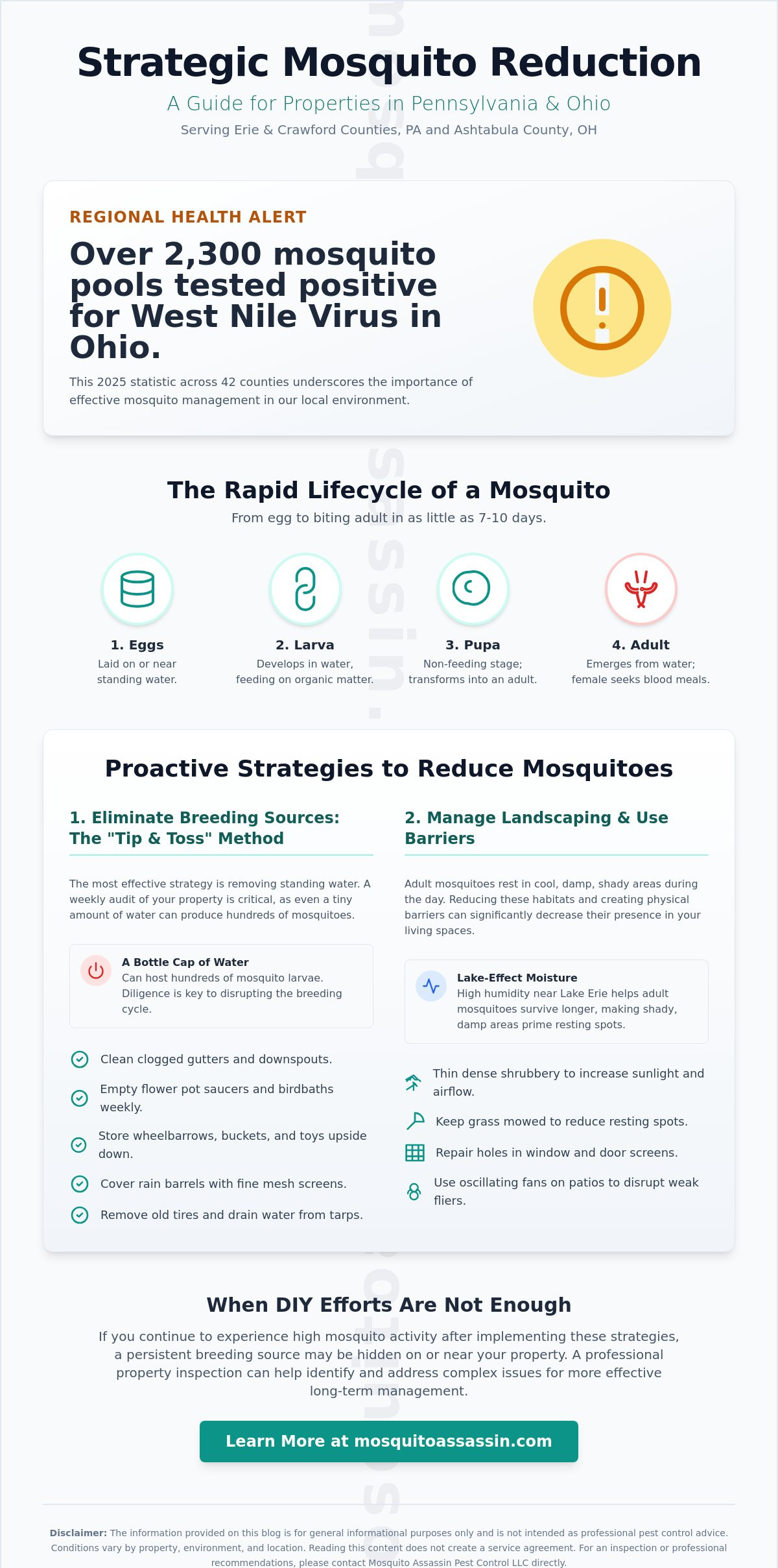
    Did you know that in 2025, more than 2,300 mosquito pools tested positive for West Nile virus across 42 Ohio counties? This alarming statistic highlights why many property owners in Erie and Crawford counties in Pennsylvania and Ashtabula County in Ohio feel a growing sense of anxiety when stepping outside. The constant itching from bites and the genuine fear of mosquito-borne illnesses can quickly turn a relaxing evening on the patio into a stressful ordeal. You deserve to enjoy your outdoor living spaces without the persistent nuisance of biting insects.

    Learning how to reduce mosquitoes in your yard requires a strategic approach that combines habitat management with an understanding of local pest behavior. This professional guide for 2026 offers practical, science-based strategies to minimize these populations effectively. You’ll gain a clear understanding of which DIY methods are worth your time and effort, and which ones fall short of expectations. The following sections explore the critical signs that indicate a professional assessment is necessary to protect your household. By the end of this article, you’ll have the knowledge needed to create a more secure and comfortable environment for your family and pets.

    Key Takeaways

    • Identify how specific local species and lake-effect moisture in Pennsylvania and Ohio contribute to rapid population surges on your property.
    • Master the “tip and toss” method and drainage maintenance to understand exactly how to reduce mosquitoes in your yard through source elimination.
    • Discover landscaping techniques, such as thinning dense shrubbery and managing tall grasses, that eliminate resting sites for adult insects.
    • Implement practical physical barriers like repaired window screens and the strategic use of oscillating fans to disrupt flight patterns in outdoor living areas.
    • Learn to recognize the threshold where DIY efforts are insufficient and professional property inspections become necessary for long-term management.

    Understanding Mosquito Habitats in Pennsylvania and Ohio

    Effective mosquito management begins with understanding the specific environmental factors of Northwest Pennsylvania and Northeast Ohio. In Erie and Crawford counties, as well as Ashtabula County, the primary threats are the Aedes albopictus (Asian tiger mosquito) and the Culex pipiens (common house mosquito). These species are the main carriers of West Nile virus in our region, which remains a serious concern for 2026. Surveillance efforts in Pennsylvania typically begin by early April to monitor these emerging populations as temperatures rise. Under ideal conditions, a mosquito can transition from an egg to a biting adult in just 7 to 10 days. This rapid cycle means that a small problem can become a full-scale infestation in less than two weeks. Understanding this biology is the first step in learning how to reduce mosquitoes in your yard.

    The Role of Humidity and Lake-Effect Moisture

    Living near Lake Erie provides beautiful scenery but also creates a high-humidity microclimate that mosquitoes require to survive. High humidity levels prevent adult mosquitoes from dehydrating, allowing them to remain active and biting for longer periods throughout the day. Shaded, damp areas on your property act as primary reservoirs for these pests during the heat of the afternoon. Seasonal rainfall patterns in Ashtabula and Erie often leave behind pockets of moisture that don’t evaporate quickly due to frequent lake-effect cloud cover. For those seeking a comprehensive overview of mosquito control, it’s clear that managing this moisture is a constant battle in our region. This persistent dampness is why many local yards feel heavy with insect activity even days after the last rain.

    Common Local Breeding Grounds

    Our region’s heavy canopy of deciduous trees leads to a specific local problem: clogged gutters and leaf-filled drains. Decomposing organic matter in standing water creates a nutrient-rich soup that’s perfect for developing larvae. On larger properties in Crawford or Ashtabula, the transition zones between manicured lawns and wooded or agricultural borders are high-risk areas. It’s a scientific fact that even a single bottle cap filled with water can host hundreds of larvae. This makes a thorough property audit essential for anyone wondering how to reduce mosquitoes in your yard. You must look beyond obvious ponds and check inside old tires, flower pot saucers, and even the folds of plastic tarps. These small, overlooked sources are often the biggest contributors to local mosquito surges.

    Disclaimer: The information provided on this blog is for general informational purposes only and is not intended as professional pest control advice. Conditions vary by property, environment, and location. Reading this content does not create a service agreement. For an inspection or professional recommendations, please contact Mosquito Assassin Pest Control LLC directly.

    Eliminating Breeding Sources: The Foundation of Control

    The most effective way to break the breeding cycle is to conduct a weekly “tip and toss” audit of your entire property. Because local mosquito surveillance in Pennsylvania typically begins on April 1, you should start these inspections in early spring to prevent the first generation of larvae from reaching adulthood. Walk your yard and empty any containers holding standing water. Common culprits include flower pot saucers, children’s toys, and the folds of plastic tarps. By removing these sources, you directly address how to reduce mosquitoes in your yard before they have a chance to bite. Consistency is vital; even a single missed weekend can allow a new population to emerge on your property in Erie or Crawford County.

    Structural Maintenance for Water Management

    Your home’s infrastructure often hides the most significant breeding sites. Clogged gutters and downspouts are primary breeding grounds because they trap organic debris and moisture high above the ground. In areas with many deciduous trees, like Ashtabula or Erie, these systems can become blocked quickly. You should also inspect outdoor faucets and irrigation components for leaks that create persistent damp spots. For those seeking expert mosquito control advice for Pennsylvania, ensuring that rain barrels are tightly screened is a top recommendation. A fine mesh screen prevents adult females from accessing the water to lay their eggs while still allowing you to collect rainwater for your garden.

    Managing Natural and Decorative Water

    You don’t have to remove your favorite yard features to stay protected. For decorative ponds, utilize circulating pumps to keep the water moving, as mosquitoes prefer stagnant environments. If you have non-drainable water features, using bacterial larvicides like BTI can safely target larvae without harming other wildlife. For smaller items like birdbaths and pet bowls, simply refresh the water every 48 hours to disrupt the developmental cycle. If you find that these manual tasks are becoming overwhelming, a professional mosquito control service can provide a more comprehensive management plan for your outdoor spaces.

    Hardscaping for Better Drainage

    The heavy clay soils common in parts of Ohio and Pennsylvania often lead to poor drainage and persistent puddling after storms. You can address these low spots by grading the soil to ensure water moves away from your home’s foundation. Some property owners find success using permeable pavers for patios and walkways, which allow water to soak into the ground rather than pooling on the surface. These long-term hardscaping improvements reduce the number of micro-habitats available for mosquitoes. Improving the overall drainage of your land is a professional-grade strategy that provides lasting benefits for your property’s health and your own comfort.

    Disclaimer: The information provided on this blog is for general informational purposes only and is not intended as professional pest control advice. Conditions vary by property, environment, and location. Reading this content does not create a service agreement. For an inspection or professional recommendations, please contact Mosquito Assassin Pest Control LLC directly.

    Landscaping Strategies to Discourage Mosquito Activity

    Strategic landscaping is a powerful tool for homeowners who want to change the biological environment of their property. Adult mosquitoes are weak fliers and highly susceptible to dehydration. They spend the daylight hours clinging to the underside of leaves in cool, shaded, and damp areas. If you are researching how to reduce mosquitoes in your yard, you must focus on making your property less hospitable for these resting adults. By altering the microclimate of your outdoor space, you can significantly lower the number of insects that remain on your land throughout the day.

    Vegetation Management for Airflow

    Dense vegetation acts as a windbreak and traps humidity, creating a perfect sanctuary for pests. You should keep your lawn mowed to a professional height; tall grass is one of the most common resting sites for mosquitoes in Erie and Crawford counties. Thinning out thick shrubbery and ornamental bushes allows sunlight to reach the soil and improves airflow. This increased circulation helps evaporate the moisture that mosquitoes need to stay hydrated. You should also trim back low-hanging tree branches and remove invasive vines or thick brush from your property perimeters. These steps align with the principles of Pennsylvania’s mosquito control program, which emphasizes habitat reduction as a core component of pest management.

    The Truth About Repellent Plants

    Many homeowners in Ashtabula and Erie are told that planting certain botanicals will create a natural “shield” against insects. While plants like citronella, marigolds, and lavender do contain repellent oils, they are largely ineffective when simply growing in a garden. These oils are only released in significant quantities when the leaves are crushed or burned. Relying solely on these plants often leads to a false sense of security. A better approach is to choose plants that do not contribute to excess moisture retention. Avoid species with large, cup-shaped leaves that can trap tiny amounts of water after a rainstorm. Instead of searching for a “magic” plant, focus on maintaining a clean, well-manicured landscape that promotes dry conditions and high visibility.

    Effective landscaping is a long-term investment in your comfort. When you combine these efforts with the source elimination strategies mentioned previously, you create a multi-layered defense. Consistency in your yard maintenance routine is the best way to see a noticeable reduction in biting insects. If your property borders heavy woods or wetlands where you cannot control the vegetation, professional pest control may help reduce risk by creating a more defined barrier around your active living areas.

    Disclaimer: The information provided on this blog is for general informational purposes only and is not intended as professional pest control advice. Conditions vary by property, environment, and location. Reading this content does not create a service agreement. For an inspection or professional recommendations, please contact Mosquito Assassin Pest Control LLC directly.

    How to Reduce Mosquitoes in Your Yard: A Professional Guide for 2026

    Barriers and Personal Protection for Outdoor Spaces

    While managing habitats and landscaping are essential long-term steps, creating immediate physical barriers is the most direct way to protect your family from bites today. Even the most well-maintained property in Erie or Crawford County can experience “drifting” mosquitoes from neighboring areas. Establishing a secure perimeter around your active living spaces ensures that your efforts to understand how to reduce mosquitoes in your yard translate into a comfortable outdoor experience. This multi-layered defense starts at the entry points of your home and extends to the clothes you wear.

    Mechanical Controls and Fans

    One of the most effective yet overlooked tools for patio protection is the common oscillating fan. Mosquitoes are notoriously weak fliers, often struggling to navigate in any breeze over one or two miles per hour. By placing large fans at the corners of your deck or patio, you create a turbulent environment that these insects simply cannot penetrate. For maximum coverage, position fans so the airflow crosses the seating area at leg level, as many local species prefer to bite lower on the body. Additionally, consider replacing standard white outdoor bulbs with yellow “bug lights.” While these LEDs don’t actually repel insects, they emit a wavelength of light that is much less attractive to mosquitoes, reducing the number of pests drawn to your home at night.

    Personal Repellent Best Practices

    When you step away from the protection of your fans, personal repellents become your primary defense. Always select products that are EPA-registered to ensure both safety and efficacy. Look for active ingredients such as DEET, Picaridin, or Oil of Lemon Eucalyptus (OLE). These substances disrupt the mosquito’s ability to “smell” the carbon dioxide and heat signatures emitted by humans. For the best results, apply repellent to exposed skin and the outside of your clothing. Wearing light-colored, loose-fitting long sleeves and pants provides an additional physical barrier that is difficult for most insects to pierce. If you find that these personal measures are still not enough to keep the pests away, professional mosquito control may help reduce risk by treating the perimeters where these insects hide.

    Regularly inspecting your home’s physical defenses is also vital. Small tears in window screens or gaps under door sweeps act as open invitations for mosquitoes to enter your living quarters. Repairing these minor issues prevents the outdoor problem from becoming an indoor infestation. By combining these personal protection habits with the environmental strategies discussed in previous sections, you create a comprehensive shield for your property in Northwest Pennsylvania or Northeast Ohio.

    Disclaimer: The information provided on this blog is for general informational purposes only and is not intended as professional pest control advice. Conditions vary by property, environment, and location. Reading this content does not create a service agreement. For an inspection or professional recommendations, please contact Mosquito Assassin Pest Control LLC directly.

    Integrating Professional Management for Total Protection

    Homeowners in Northwest Pennsylvania and Northeast Ohio often find that even the most diligent DIY efforts have a ceiling. While temporary solutions like oscillating fans or personal repellents provide immediate relief, they don’t address the core of the population. Understanding how to reduce mosquitoes in your yard for the long term involves shifting from reactive tasks to a proactive management strategy. When biting insects continue to disrupt your ability to enjoy your deck or patio despite your best efforts; it’s a clear signal that the population has exceeded what manual source reduction can handle alone.

    The Professional Inspection Process

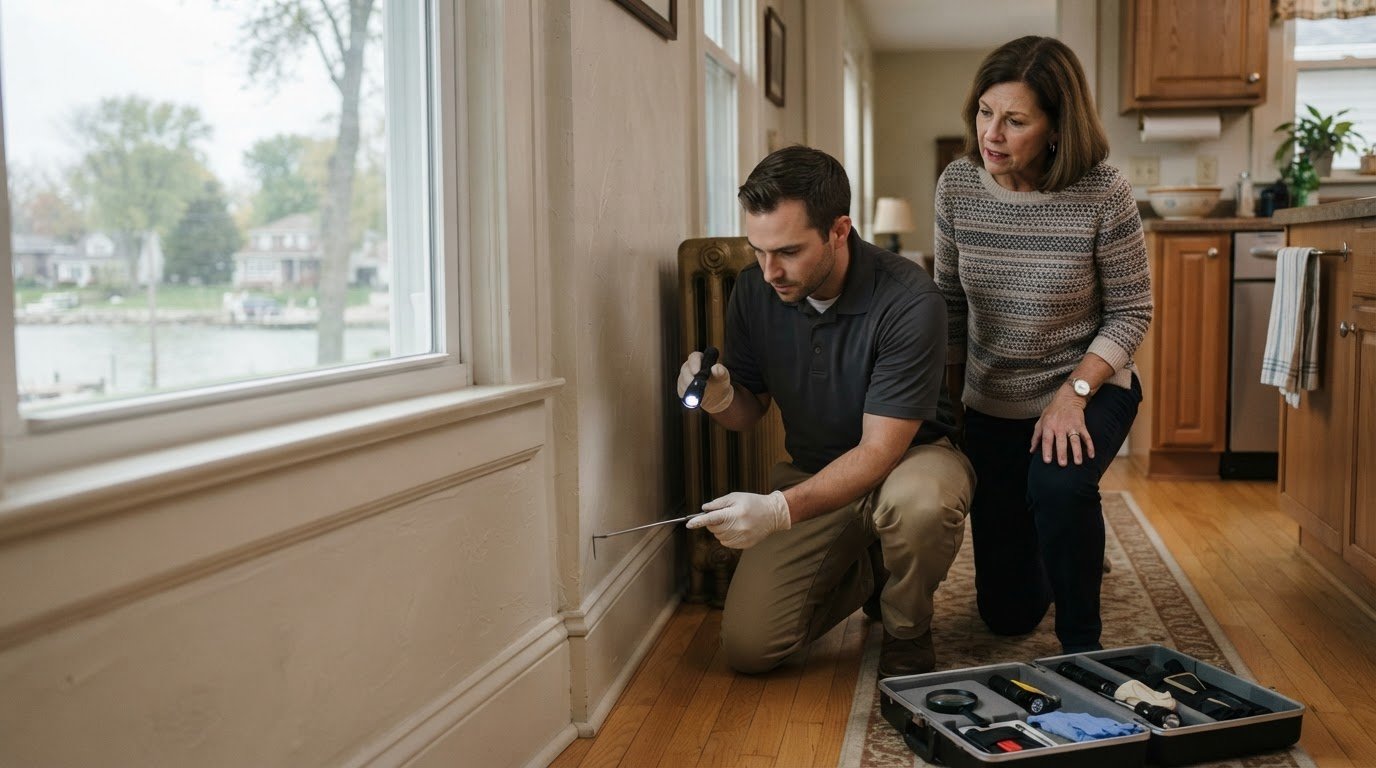
    A primary benefit of professional intervention is the depth of the property assessment. Licensed technicians identify cryptic breeding sites that are easily overlooked during a standard yard walkthrough. This might include water trapped inside hollow fence posts, specific types of dense groundcover, or drainage issues hidden beneath heavy vegetation. Professionals also utilize specialized equipment designed for comprehensive coverage of resting sites, ensuring that treatments reach the underside of leaves where mosquitoes hide. In many cases, general pest control often complements mosquito efforts by managing other yard pests that contribute to a property’s overall insect pressure.

    Consistency and Year-Round Strategies

    Effective mosquito reduction is not a one-time event; it’s a seasonal commitment. Because the mosquito lifecycle is so rapid, a single treatment provides only a temporary window of relief. Integrating comprehensive mosquito control programs into your home maintenance routine ensures that barriers are replenished before they break down. In the local climate of Erie, Crawford, and Ashtabula counties, timing is everything. Treatments must align with the specific emergence patterns of local species as temperatures fluctuate throughout the spring and summer. Ongoing management is significantly more effective than waiting for an infestation to peak before taking action.

    For property owners seeking a definitive resolution, professional pest control may help reduce risk by providing customized property evaluations. This expert oversight bridges the gap between simple DIY methods and total habitat management. By combining your own maintenance habits with professional-grade perimeter treatments, you can finally reclaim your outdoor spaces for the entire season. Knowing how to reduce mosquitoes in your yard effectively means recognizing that a dual-track approach is the most reliable way to achieve a noticeable reduction in biting insects.

    Disclaimer: The information provided on this blog is for general informational purposes only and is not intended as professional pest control advice. Conditions vary by property, environment, and location. Reading this content does not create a service agreement. For an inspection or professional recommendations, please contact Mosquito Assassin Pest Control LLC directly.

    Reclaiming Your Outdoor Sanctuary in 2026

    Achieving a bite-free summer requires a disciplined approach to property maintenance. By identifying local breeding habitats and implementing physical barriers like oscillating fans, you take the first steps toward real relief. Consistency in your weekly audits remains the most effective way to understand how to reduce mosquitoes in your yard without relying on guesswork. These practical steps significantly lower the environmental pressure on your property and protect your outdoor living areas.

    Licensed pest control professionals in PA and OH provide specialized mosquito and tick management across Erie, Crawford, and Ashtabula counties. While habitat management is a powerful foundation, professional pest control may help reduce risk when local populations become overwhelming. For a professional inspection or recommendations, please contact Mosquito Assassin Pest Control LLC directly. You don’t have to surrender your patio to pests this season. With a methodical strategy and local expertise, you can enjoy a comfortable and secure outdoor environment for your entire family.

    Disclaimer: The information provided on this blog is for general informational purposes only and is not intended as professional pest control advice. Conditions vary by property, environment, and location. Reading this content does not create a service agreement. For an inspection or professional recommendations, please contact Mosquito Assassin Pest Control LLC directly.

    Frequently Asked Questions

    Do mosquito-repelling plants actually work in a yard?

    Mosquito-repelling plants like citronella, lavender, and marigolds don’t provide a protective shield just by growing in a garden. The repellent oils within these plants must be released by crushing the leaves or burning them to have any measurable effect on insects. Simply planting these botanicals won’t significantly change the biting pressure on your property. It’s more effective to focus on removing the standing water where they breed.

    How often should I dump standing water to stop mosquitoes?

    You should dump standing water at least once every seven days to disrupt the breeding cycle. Because the mosquito lifecycle from egg to adult typically takes 7 to 10 days in the Pennsylvania and Ohio climate, weekly audits are essential. This practice is a fundamental part of learning how to reduce mosquitoes in your yard. Consistency ensures that new generations don’t have time to reach maturity.

    Can mosquitoes breed in tall grass or just in water?

    Mosquitoes require standing water to breed and cannot lay eggs in grass or soil. However, they use tall grass and dense vegetation as cool, shaded resting sites to hide from the sun during the day. Keeping your lawn mowed to a professional height reduces these hiding spots, but it won’t stop the breeding process if water sources like clogged gutters or tarps remain nearby.

    What is the best time of day to avoid mosquito bites in PA and OH?

    The peak activity for most local species, including the common house mosquito, occurs during the dawn and dusk hours. These insects are most active when temperatures are cooler and humidity levels are higher. If you’re planning outdoor activities in Erie, Crawford, or Ashtabula counties, try to avoid these transition periods when biting pressure is at its highest and the wind is usually calm.

    Is professional mosquito control worth it for a standard residential lot?

    Professional management is often necessary when DIY methods fail to provide adequate relief for your family. For properties bordering wooded areas or wetlands in Crawford County, a professional service creates a more durable barrier than store-bought sprays. It’s a strategic investment for property owners who want to reclaim their outdoor living spaces without the constant stress of itching and irritation from persistent infestations.

    How long do professional mosquito treatments typically last?

    Most professional barrier treatments are designed to remain effective for approximately 21 to 30 days. Factors like heavy rainfall or extreme heat can influence the longevity of the application by breaking down the active ingredients faster. Consistent, scheduled visits are the best way to maintain a protective shield throughout the entire biting season, which typically runs from April through late September in our region.

    Are there natural ways to reduce mosquito larvae in ponds?

    Using bacterial larvicides like BTI is a highly effective and natural way to target larvae in non-drainable water features. You can also install circulating pumps or fountains; mosquitoes require stagnant water and cannot survive in moving water. Introducing native fish that feed on larvae can also help manage populations in decorative ponds. These methods allow you to keep your water features without increasing the local mosquito count.

    Why are mosquitoes so bad in Erie and Ashtabula counties?

    The high humidity and lake-effect moisture near Lake Erie create an ideal environment for mosquitoes to thrive and stay hydrated. These conditions prevent adult insects from dehydrating, which allows them to stay active and biting for longer periods. When combined with the heavy deciduous tree canopy and frequent seasonal rainfall, the region provides perfect breeding and resting habitats. Understanding these local factors is key to knowing how to reduce mosquitoes in your yard.

    Disclaimer: The information provided on this blog is for general informational purposes only and is not intended as professional pest control advice. Conditions vary by property, environment, and location. Reading this content does not create a service agreement. For an inspection or professional recommendations, please contact Mosquito Assassin Pest Control LLC directly.

  • Pest Prevention Tips for Homeowners: The 2026 Essential Defense Guide

    Pest Prevention Tips for Homeowners: The 2026 Essential Defense Guide

    That faint scratching in the walls at night. The relentless line of ants marching toward your kitchen counter. The nagging worry about ticks every time your family enjoys the yard. Your home is your sanctuary, but it can feel like a fortress under constant siege when pests invade. Reclaiming your peace of mind starts not with panic, but with a powerful, proactive strategy. This guide delivers the essential pest prevention tips for homeowners needed to build an impenetrable defense against unwanted invaders, ensuring your home remains a safe haven for your family.

    Forget temporary fixes and ineffective store-bought sprays. We’re unlocking the professional secrets to safeguarding your property from the inside out. You’ll learn practical, low-cost methods to seal entry points, eliminate common attractants, and create an environment where pests simply can’t thrive. Master these defensive tactics to fortify your home, and discover exactly when a strategic strike is necessary-and it’s time to call in the Assassins for a swift, decisive victory. Your pest-free home is within reach.

    Key Takeaways

    • Master the “Pest Triangle” principle by systematically eliminating the food, water, and shelter sources that attract invaders to your property.
    • Fortify your home’s exterior with our step-by-step checklist for finding and sealing the tiny cracks and gaps pests use as hidden entry points.
    • Get exclusive pest prevention tips for homeowners tailored to the unique seasonal pest cycles and humidity challenges in Pennsylvania and Ohio.
    • Recognize the critical signs that a pest issue requires professional-grade, family-safe treatments for guaranteed eradication.

    Understanding Pest Prevention: More Than Just a Clean House

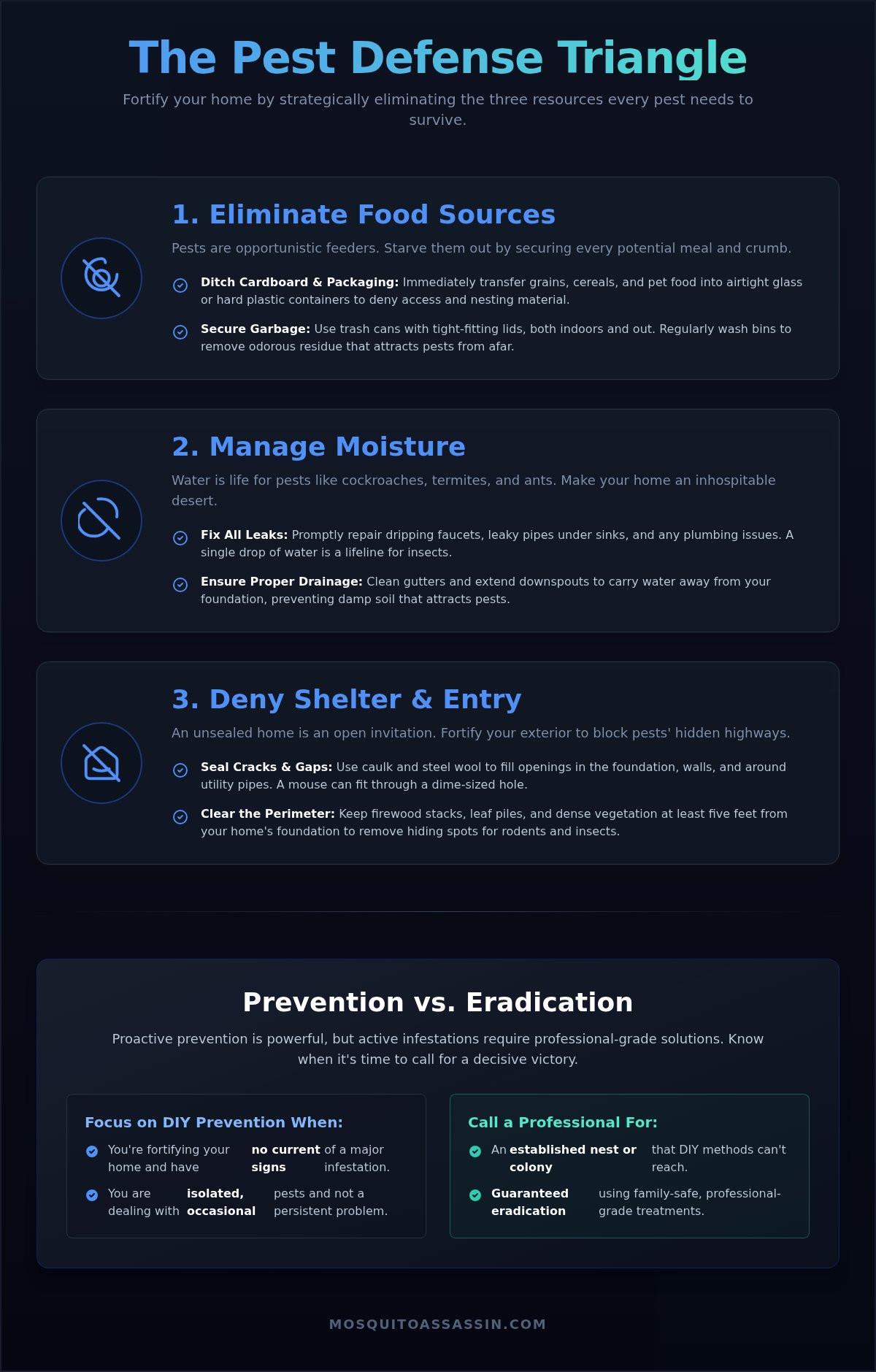
    Effective pest prevention is about safeguarding your home through proactive management, not just reactive cleaning. While a tidy house helps, true protection involves understanding what attracts pests in the first place. Every unwanted invader-from ants to rodents-is searching for three simple things: food, water, and shelter. This “Pest Triangle” is the foundation of nearly every infestation. By strategically removing their access to these resources, you can make your home an undesirable target. These foundational pest prevention tips for homeowners are about creating an environment that naturally repels insects and wildlife.

    To see these principles in action, watch this helpful overview for new homeowners:

    It’s crucial to distinguish between surface cleaning and deep-sanitation prevention. Wiping down counters is a daily task, but pulling out your refrigerator to clean up food debris or fixing a slow drip under the sink are the actions that eliminate critical resources for pests. This comprehensive mindset is the core of modern pest control. The gold standard for 2026 and beyond is a proven, science-based philosophy known as Integrated Pest Management (IPM), which combines environmental management, physical barriers, and targeted treatments for a sustainable, long-term solution.

    This IPM approach is adopted by leading experts globally. For example, even in Australia, the principles remain the same, as demonstrated by the comprehensive services offered by ABC Pest Control Sydney to protect local homes and businesses.

    The Psychology of a Pest: Why They Chose Your Home

    Pests are not a sign that your home is “dirty”-they are opportunistic survivalists hardwired to find resources. The first scout that finds a crumb trail or water source leaves a pheromone signal for others to follow, quickly turning a single intruder into a full-blown infestation. Common “invitation” signals you might be sending include exterior lights that attract flying insects, pet food left out overnight, or firewood stacked directly against your foundation, which provides ideal shelter for rodents and termites.

    Prevention vs. Eradication: Knowing the Difference

    Think of prevention as proactively locking your doors and windows. Eradication is the process of removing an intruder who has already broken in. While DIY pest prevention tips for homeowners are excellent for keeping your home secure, they often fail once an active nest is established. At that point, you are no longer just cleaning up-you are fighting an entrenched colony. For active infestations, the most reliable and efficient solution is to enlist professional services to eliminate the problem at its source and restore your home’s defenses.

    The Three Pillars of Home Pest Defense

    Effective, long-term pest control isn’t about just spraying chemicals; it’s about strategic environmental control. At Mosquito Assassin, our professional approach is built on safeguarding your home by systematically eliminating the three things every pest needs to survive: food, water, and shelter. By disrupting this survival triangle, you transform your property from a welcoming haven into a hostile environment for invaders. Mastering these core principles is the foundation of all effective pest prevention tips for homeowners.

    Starving the Enemy: Advanced Food Storage

    Pests are opportunistic feeders, and your home can be an all-you-can-eat buffet if you’re not careful. It goes far beyond just pantry crumbs. To truly eliminate food sources, you must think like a pest and cut off every potential meal.

    • Ditch the Cardboard: Shipping boxes and cereal packaging are not just containers; they are food and nesting material for cockroaches, silverfish, and rodents. Transfer grains, cereals, and pastas into airtight glass or hard plastic containers immediately.
    • Pet Food Protocols: A pet food bowl left out overnight is a guaranteed attractant for ants, roaches, and even rodents. For homeowners in Erie or Crawford County, it’s crucial to pick up bowls after feeding and store pet food in a sealed, chew-proof container.
    • Garbage Management: Your trash can is a primary target. Always use cans with tight-fitting lids, both indoors and out. Regularly wash your bins to remove odorous residue that signals a feast to nearby pests.

    Moisture Management: Drying Out the Invaders

    Water is life, especially for pests like termites, cockroaches, and carpenter ants that thrive in damp conditions. Controlling moisture is a non-negotiable step in safeguarding your home from these destructive and unsanitary invaders.

    • Fix Leaks Immediately: A slow drip from a pipe in your basement or under a sink creates a permanent watering hole for rodents and insects. Regular inspections and prompt repairs are critical.
    • Control Humidity: The damp crawl spaces and basements common in our PA/OH climate are ideal for pests. A dehumidifier is a powerful tool to make these areas inhospitable.
    • Maintain Your Gutters: We find that clogged gutters are the #1 cause of carpenter ant infestations. When water overflows, it soaks the fascia boards and siding, creating soft, rotted wood that is perfect for nesting.

    Finally, you must address shelter by modifying the habitat around your home. Your yard can act as a staging ground for pests preparing to invade. Create a defensive perimeter by trimming shrubs away from your foundation, clearing away leaf litter, and removing large debris. An old vehicle, for instance, is a prime nesting spot for rodents and insects. If you need to clear out an old car, a service like Cash For Junk Cars Michigan can be a useful resource. These foundational steps, detailed in nearly every professional home pest management guide, deny pests the cover they need to approach your house. When you eliminate their food, water, and shelter in tandem, you create a powerful, pest-free fortress.

    Generic advice doesn’t cut it in the Tri-State area. The “lake effect” from Lake Erie creates a unique microclimate with higher humidity, accelerating pest breeding cycles and creating distinct seasonal challenges. Effective pest prevention tips for homeowners in our region must account for these unique shifts. From the spring thaw in Erie County to the first frost in Ashtabula, pests follow a predictable, yet formidable, calendar of invasion.

    Spring and Summer: The Mosquito and Tick Surge

    As temperatures rise, our area experiences a population explosion of mosquitoes and ticks. With vector-borne diseases becoming more prevalent, peak season-typically May through September-demands proactive defense. In our location, this means focusing on eliminating breeding grounds and creating hostile environments for these dangerous pests.

    • The “Tip and Toss” Method: Once a week, walk your property and empty any standing water from buckets, tarps, birdbaths, and clogged gutters. A mosquito can breed in a bottle cap of water.
    • Landscaping for Tick Prevention: To combat the black-legged ticks common in Crawford County, create a three-foot-wide barrier of gravel or woodchips between your lawn and wooded areas. This deters ticks from migrating into your yard.

    Fall and Winter: The Great Rodent Migration

    The moment the temperature drops in Northwest PA, a different threat emerges. Rodents like mice and rats begin their relentless search for warmth, food, and shelter inside your home. They are joined by overwintering pests like stink bugs and lady beetles, which gather on sunny walls before finding their way inside. Sealing your home is the most critical step in preventing this migration.

    • The “Dime-Sized” Rule: A mouse can squeeze through an opening the size of a dime. Meticulously inspect your foundation, siding, and utility entry points for even the smallest gaps. For a comprehensive guide on finding these vulnerabilities, Clemson’s Pest Prevention Checklist offers expert-level detail.

    Understanding this seasonal cycle is why year-round protection is no longer optional. With climate projections for 2026 indicating milder winters and earlier springs, the pest activity window is expanding. This makes constant vigilance one of the most important pest prevention tips for homeowners looking to safeguard their property now and in the future.

    Pest Prevention Tips for Homeowners: The 2026 Essential Defense Guide

    The Ultimate Homeowner’s Exclusion Checklist

    Your home’s first and most effective line of defense against pests is physical exclusion. By sealing entry points, you create a fortress that keeps unwanted invaders out. Following this checklist is one of the most crucial pest prevention tips for homeowners, safeguarding your family and property from infestation before it begins.

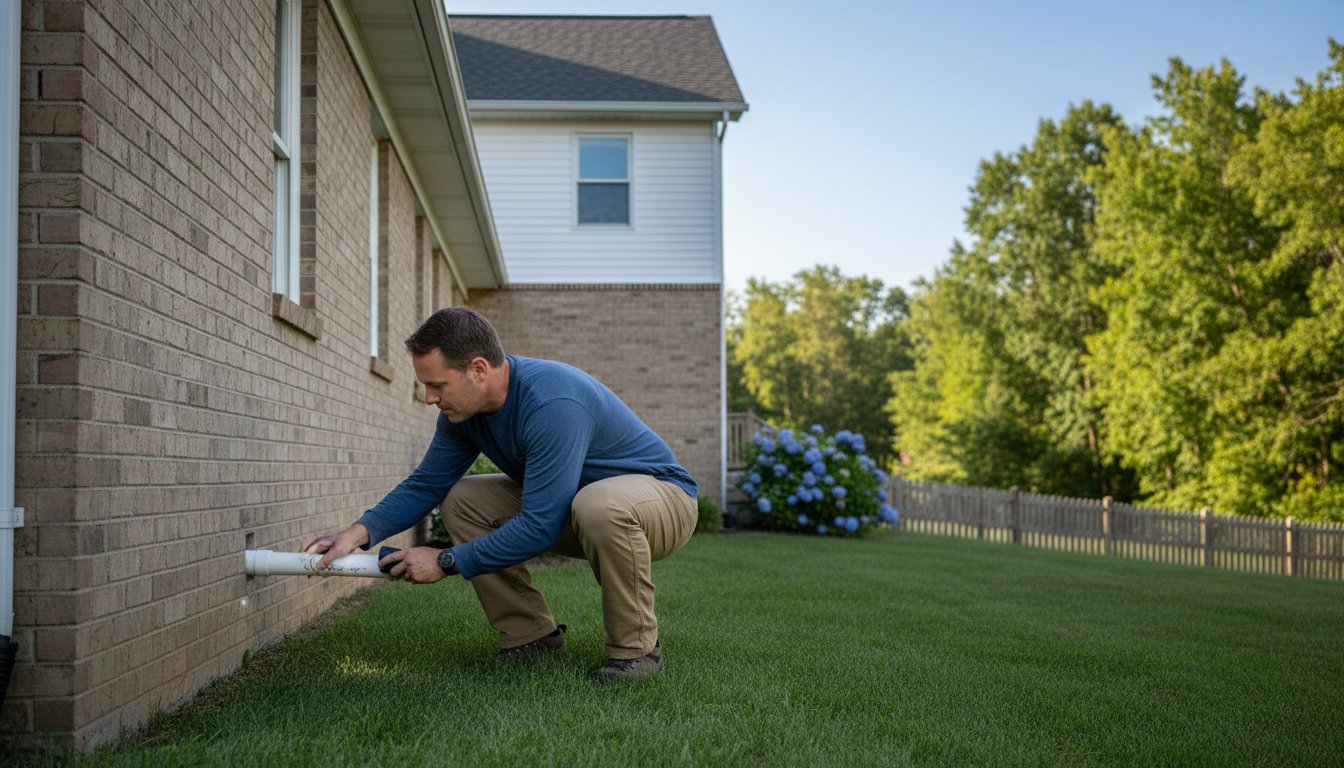
    Step 1: The Perimeter Walk. Grab a pencil and walk the exterior of your home. Your mission is to identify every crack, gap, or hole larger than the pencil’s eraser-that’s all a mouse needs to squeeze through. Pay close attention to the foundation, where siding meets brick, and around window frames.

    Step 2: Seal the Envelope. Once you’ve identified the weak points, it’s time to seal them with the right materials. Don’t just rely on a single solution; a professional approach layers defenses:

    • Caulk: Use high-quality silicone caulk for sealing small cracks and gaps.
    • Copper Mesh & Steel Wool: For larger holes, stuff them tightly with copper mesh or steel wool, as rodents cannot chew through these materials. Then, seal over them for a permanent fix.

    Step 3: Door and Window Fortification. Check all exterior doors for worn-out weatherstripping or damaged door sweeps. A tight seal not only keeps pests out but also improves energy efficiency. Meticulously inspect every window and door screen for even the smallest tears and repair or replace them immediately.

    Step 4: Utility Entry Point Defense. Pests often use utility lines as a highway into your home. Inspect where pipes, electrical wiring, and HVAC lines enter the structure. Seal any gaps around these entry points to shut down these common pest pathways.

    Professional Sealing Techniques

    While DIY efforts are a great start, professional techniques offer guaranteed protection. Many homeowners reach for expanding foam, but rodents can and will chew right through it. A true pest professional will pack a void with chew-proof steel wool before sealing. For plumbing lines under sinks, decorative escutcheon plates provide a clean, tight seal. We also recommend screening attic vents and installing chimney caps to block entry for wildlife like squirrels and wasps.

    Landscaping for Exclusion

    Your yard can either invite pests or deter them. Keep vegetation trimmed at least 18 inches away from your foundation to eliminate hiding spots and moisture buildup. While wood mulch looks nice, it’s a playground for termites and ants; consider using stone or rubber mulch near your home. Finally, trim back tree branches that touch or overhang your roofline-these act as a bridge for rodents and insects to gain access to your attic.

    Managing large trees to ensure they don’t serve as bridges for pests is often a job for specialists. Professional arborists, like the team at We Love Trees, can help maintain a safe distance between branches and your home, which is a critical part of any pest exclusion plan.

    Implementing these pest prevention tips for homeowners is a powerful step. For a comprehensive inspection and professional exclusion services guaranteed to fortify your home, contact the experts at Mosquito Assassin today.

    When DIY Isn’t Enough: The Mosquito Assassin Advantage

    While the right DIY strategies are a great first line of defense, some pest infestations require a more definitive, professional approach. When you’ve exhausted your options, it’s time to call in a specialist. The Mosquito Assassin philosophy isn’t just about spraying chemicals; it’s about systematic eradication. We use professional-grade tools and a proven methodology to eliminate pests at their source, safeguarding your home and family.

    The principle of relying on a specialist for guaranteed results applies to many areas of life, not just pest control. For travelers, ensuring a timely and professional airport transfer is crucial, which is why services like MSP Car Service are so valued in their region. In the same way, we provide that expert-level assurance for protecting your home.

    Our Four-Step Systematic Process

    Our confidence comes from a methodical process designed for total pest elimination. We leave nothing to chance:

    • Deep Inspection: Our certified technicians identify the root of the problem, uncovering nesting sites and entry points that DIYers almost always miss.
    • Customized Treatment: We don’t use a one-size-fits-all solution. We design a targeted plan for your specific Erie or Ashtabula pest profile.
    • Execution (The Assassination): We implement the plan with precision, using advanced, family-safe treatments for a rapid knockdown of active pest populations.
    • Follow-up & Guarantee: Our job isn’t done after the first visit. We ensure the treatment is effective, backed by our simple promise: “If pests return, so do we.”

    Many homeowners worry that “family-safe” means “weak.” Modern pest control has evolved. Our targeted treatments are engineered to be highly effective against specific pests while being safe for use around your children and pets. We focus on eliminating the threat without compromising your family’s well-being.

    For true peace of mind, the most effective of all pest prevention tips for homeowners is proactive, year-round protection. Our Platinum Year-Round Protection plan is designed to stop infestations before they start, creating a permanent barrier around your property. It’s the ultimate investment in a consistently pest-free home.

    Protecting Your Family and Your Investment

    Ignoring a pest problem can lead to costly structural damage from termites, health risks from rodents, and endless stress. As your neighbors, we understand the unique challenges local pests present because we live where we work. Don’t let a small issue become a major crisis. Schedule your professional inspection with Mosquito Assassin today and take the first, definitive step toward a pest-free 2026.

    Your Ultimate Defense: From Prevention to Professional Protection

    You now have a powerful arsenal of strategies for safeguarding your home. From understanding the three pillars of defense-exclusion, sanitation, and maintenance-to implementing a detailed exclusion checklist, you’re better equipped than ever to stop pests before they start. Mastering these pest prevention tips for homeowners is the crucial first step in maintaining a secure, comfortable living space.

    However, even the most diligent homeowner can face a persistent invasion. When DIY measures fall short, or for guaranteed year-round peace of mind, it’s time to call in the professionals. The team at Mosquito Assassin is ready to provide the ultimate backup. As a 5-Star Rated local service with licensed and insured technicians, we deliver professional, family-safe solutions you can trust. We stand by our work with our signature “If Pests Return, So Do We” Guarantee. Take the final step in securing your home.

    Get Your Free Pest Protection Quote from the Best of the Best

    Your pest-free home is just a click away.

    Frequently Asked Questions About Pest Prevention

    Is professional pest control safe for my kids and pets?

    Absolutely. Your family’s safety is our number one priority. We use proven, family-safe treatments and Integrated Pest Management (IPM) techniques to minimize material use. Our certified technicians are experts at applying products strategically in areas inaccessible to children and pets, like wall voids and crawl spaces. We provide clear instructions after treatment to ensure a safe environment for everyone, giving you complete peace of mind while we safeguard your home from unwanted intruders.

    How often should a homeowner perform a pest prevention check?

    We recommend performing a thorough pest prevention check at least seasonally, especially in the spring and fall when pest activity changes. Walk your property to inspect for foundation cracks, check the seals around windows and doors, and ensure gutters are clean and directing water away from your home. Following these proactive pest prevention tips for homeowners is a crucial first step in creating a defensive barrier and keeping your home protected year-round from common invaders.

    What are the most common pests in the Erie and Ashtabula regions?

    As a locally owned and operated team, we know exactly what our neighbors in Erie County and Ashtabula County are up against. The most common pests we eliminate include carpenter ants, which can cause significant structural damage, as well as spiders, stinging insects like wasps and hornets, and rodents such as mice and rats. Our comprehensive plans are designed specifically to target and control the pests that are most prevalent right here in our community.

    Can I really get rid of mice on my own without a professional?

    While DIY traps might catch an occasional mouse, they rarely solve the entire problem. A single mouse often indicates a larger, hidden infestation. Professional technicians are trained to identify all entry points mice use to get inside and will implement a comprehensive eradication plan to eliminate the entire colony. Relying on a professional ensures the problem is handled completely, protecting your home from the property damage and health risks associated with a lingering rodent infestation.

    How much does a year-round pest protection plan cost?

    The cost of a year-round protection plan is tailored to your specific needs. Pricing depends on several factors, including the size of your home and property, the type of pests being targeted, and the level of existing infestation. We provide a comprehensive inspection to create a customized treatment plan that offers the most effective and affordable solution. Contact us today for a free, no-obligation quote to see how we can safeguard your home all year long.

    What should I do if I find a tick on my property?

    Finding a single tick often signals a larger population is hiding on your property. Due to the health risks associated with ticks, such as Lyme disease, it’s critical to take immediate action. Avoid DIY sprays, which can be ineffective. The most reliable solution is a professional yard treatment. Our technicians target tick habitats like tall grass, shrubs, and wooded areas, effectively eliminating them and providing lasting protection for your family and pets.

    Does a clean house guarantee I won’t get pests?

    A clean house is certainly less attractive to pests, but it is not a guarantee of protection. Pests need only three things to survive: food, water, and shelter. Even the most spotless home provides these resources. Pests can enter through tiny cracks in the foundation, gaps under doors, or even on packages brought inside. True protection combines a clean environment with professional pest control services that create a barrier to stop pests before they get in.

    What happens if the pests come back after a professional treatment?

    Our commitment to you is simple: if the pests return, so do we. We stand behind our work with a 100% satisfaction guarantee. If you see any pest activity between your regularly scheduled service visits, just give us a call. A certified technician will return to your home at no additional charge to assess the situation and provide further treatment. Your peace of mind is our mission, and we won’t stop until the problem is solved for good.