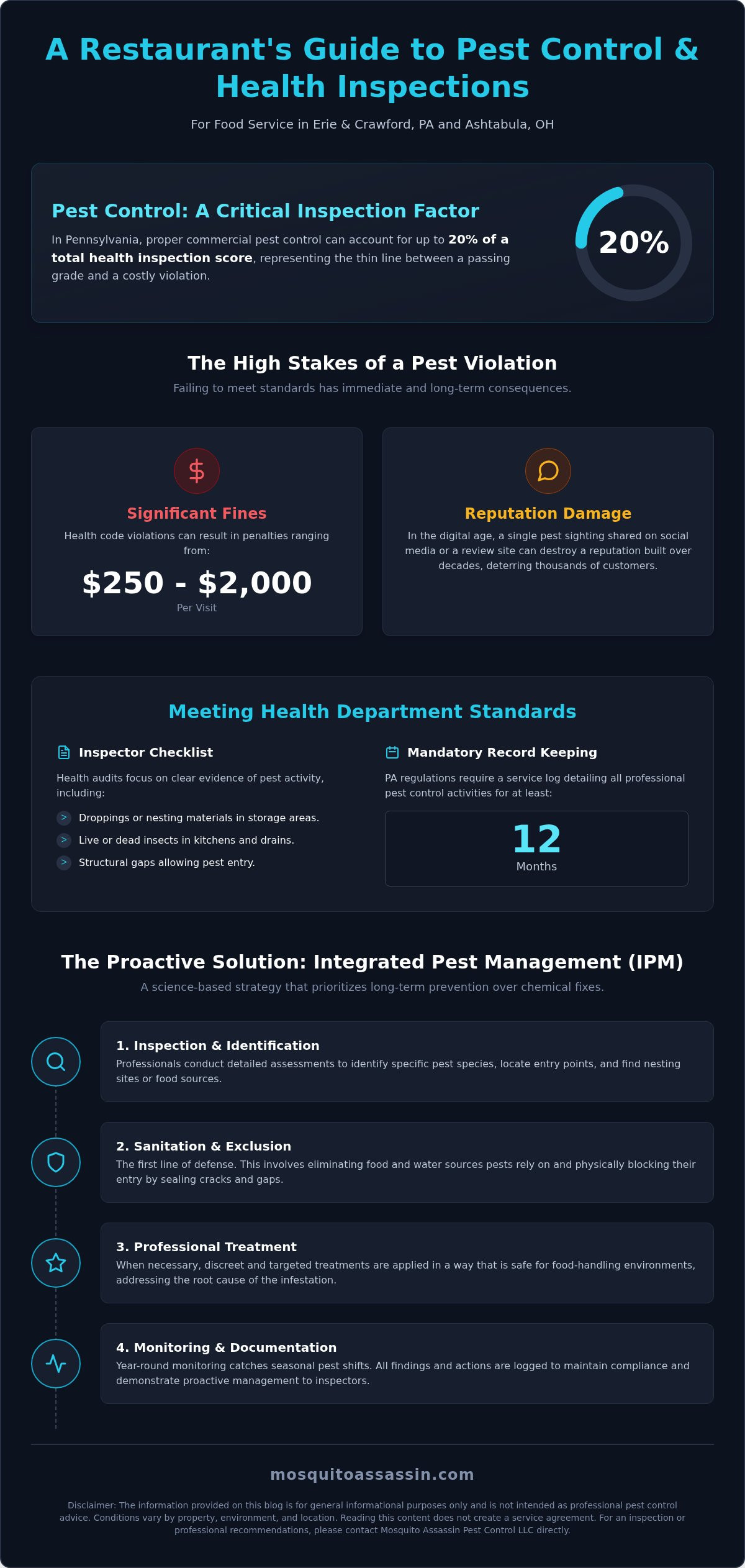
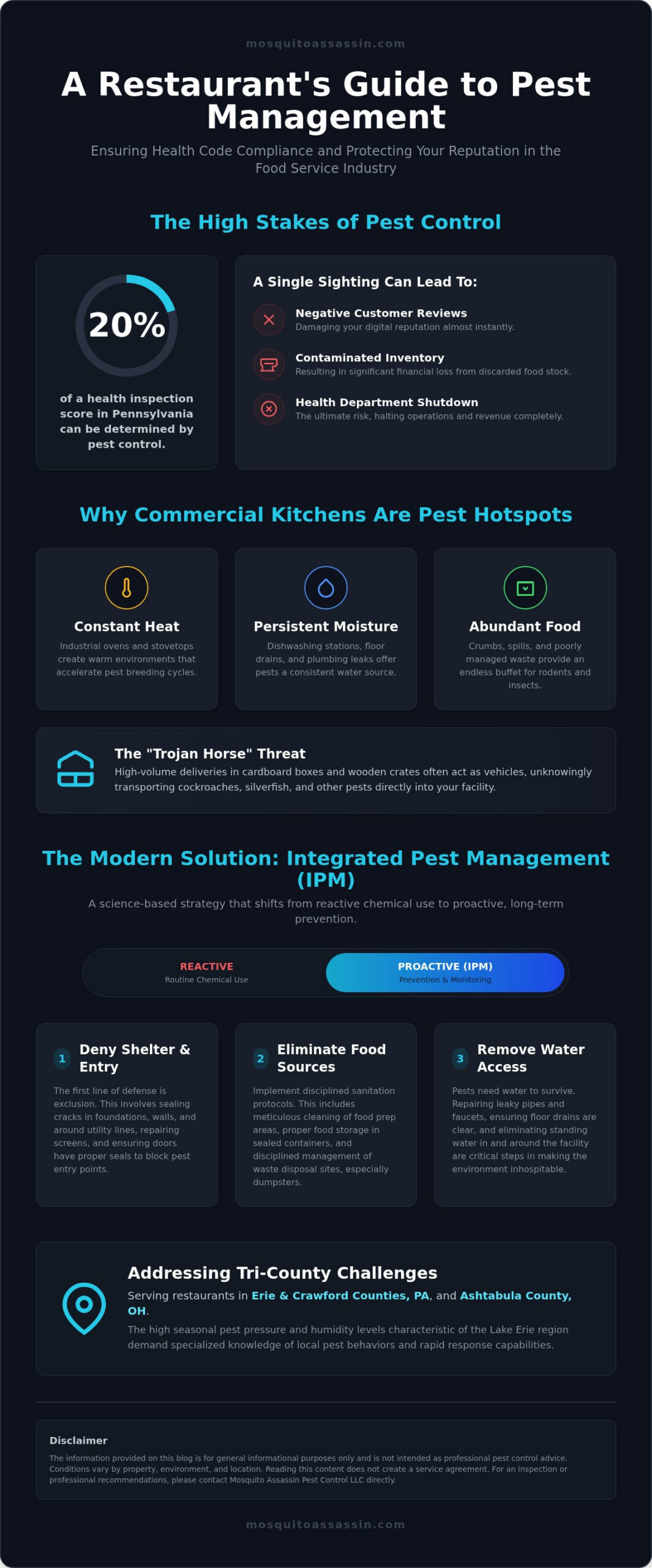
Did you know that pest control can account for as much as 20% of a health inspection score in Pennsylvania? For a local establishment, the stakes involve more than just a grade on a window. A single rodent sighting can lead to negative customer reviews, contaminated inventory, and the constant fear of a health department shutdown. Professional pest control for restaurants Erie PA is not just a cleaning task, it’s a critical component of risk management for any food service professional.
Maintaining a sanitary environment requires a proactive strategy that aligns with the 2026 FDA Food Code updates and regional health regulations. This guide provides an educational overview of how specialized management protects a restaurant’s reputation while ensuring strict health code compliance. By focusing on exclusion and consistent maintenance, it’s possible to achieve zero pest sightings in both front-of-house and back-of-house areas. Readers will learn the essential steps for maintaining perfect health inspection scores and protecting property from damage in Erie, Crawford, and Ashtabula counties.
Disclaimer: The information provided on this blog is for general informational purposes only and is not intended as professional pest control advice. Conditions vary by property, environment, and location. Reading this content does not create a service agreement. For an inspection or professional recommendations, please contact Mosquito Assassin Pest Control LLC directly.
Key Takeaways
- Commercial kitchens provide ideal habitats for pests, making it vital to understand how heat, moisture, and high-volume deliveries impact facility safety.
- Modern food safety relies on Integrated Pest Management (IPM), a science-based approach that prioritizes thorough inspections and long-term prevention over reactive chemical use.
- Professional pest control for restaurants Erie PA addresses specific local challenges, including the high seasonal pressure and humidity levels characteristic of the Lake Erie region.
- Implementing disciplined sanitation protocols and managing waste disposal sites are practical ways for managers to significantly reduce the likelihood of food contamination.
- Selecting a regional partner familiar with Erie and Crawford counties ensures that your business benefits from specialized knowledge of local pest behaviors and rapid response times.
Why Restaurant Operations Require Specialized Commercial Pest Management
Commercial kitchens are high-activity hubs that inadvertently serve as sanctuaries for various pests. Several factors contribute to this vulnerability:
- Constant heat generated by industrial ovens and stovetops.
- Persistent moisture around dishwashing stations and floor drains.
- Abundant food sources and prep waste.
Unlike residential settings, restaurants face a unique challenge: the constant influx of external supplies. High-volume deliveries arrive daily in cardboard boxes and wooden crates, which often act as “Trojan horses” for cockroaches or silverfish. Effective pest control for restaurants Erie PA requires a deep understanding of these operational vulnerabilities and the specific behaviors of local pests.
To manage these risks, industry professionals utilize The Core of Modern Food Safety: Integrated Pest Management (IPM). This methodology moves away from heavy chemical reliance and focuses on exclusion and sanitation. By sealing entry points and eliminating breeding grounds, businesses can maintain a sanitary environment that meets both local health codes and customer expectations. Since pest control can account for as much as 20% of a health inspection score in Pennsylvania, professional pest control for restaurants Erie PA is a critical component of any compliance strategy.
Reputation Management and the Digital Age
A restaurant’s reputation is its most valuable asset, yet it’s also the most fragile. In the current digital landscape, a single pest sighting isn’t just a private incident; it’s a potential viral post. Online reviews frequently use cleanliness as a primary filter for quality. If a customer spots a rodent or insect in the dining area, that experience can reach thousands of people in the local Erie community within hours. This type of negative feedback is difficult to erase and can lead to a significant drop in foot traffic. Consistent monitoring and professional oversight are the only ways to prevent these sightings. Utilizing professional commercial pest control services helps maintain the high standards that patrons expect and keeps the brand’s image untarnished.
Financial Implications of Inadequate Pest Control
The financial impact of an infestation extends far beyond the cost of a service visit. Inventory loss is a primary concern for kitchen managers. When pests contaminate food stocks, the entire inventory must be discarded to remain compliant, which directly hits the bottom line. Rodents pose an additional threat to the facility’s physical structure and equipment. They’re known to chew through electrical wiring, which can lead to expensive equipment failure or even fire hazards. Structural repairs to drywall and insulation are also common after an infestation. Choosing a proactive maintenance plan is generally more cost-effective than waiting for an emergency. Reactive treatments often involve higher fees and potential business downtime, whereas regular maintenance keeps operations running smoothly for establishments across Erie, Crawford, and Ashtabula counties.
The Core of Modern Food Safety: Integrated Pest Management (IPM)
Modern food safety has shifted from reactive treatments to a structured, scientific discipline. Integrated Pest Management (IPM) serves as the foundation of this shift. It prioritizes long-term prevention by removing the resources pests need to survive: food, water, and shelter. Instead of relying on routine chemical applications, IPM uses monitoring and data to determine when and where intervention is necessary. This approach aligns with federal food safety regulations that mandate effective measures for pest elimination.
Establishing a comprehensive plan for pest control for restaurants Erie PA involves more than just a monthly visit. It requires a partnership between the facility manager and the service provider to maintain a fortress-like environment. Professional commercial pest management can help identify these structural gaps before they become entry points.
The Four Pillars of an Effective IPM Program
A successful IPM strategy is built on four distinct stages that ensure no detail is overlooked. First, a detailed inspection examines high-risk areas like loading docks, floor drains, and dry storage. Second, accurate identification is crucial. Treating a German cockroach requires a different strategy than managing an occasional invader from the Lake Erie shoreline. Third, monitoring stations are placed strategically to track activity levels and identify “hot spots” within the kitchen. Finally, control methods prioritize structural exclusion (sealing cracks or installing door sweeps) and sanitation improvements. Chemical treatments are used as a targeted tool only when monitoring data confirms a specific need.
Documentation and Regulatory Compliance
In Pennsylvania and Ohio, maintaining a paper trail is just as important as maintaining a clean kitchen. The Pennsylvania Food Code (7 Pa. Code Chapter 46) requires establishments to be maintained free of pests, and local health inspectors often look for proof of a proactive plan. Under state law (7 Pa. Code § 128.112), pesticide application records for commercial facilities must be kept for a minimum of three years. Technicians performing these services in Pennsylvania must be certified in Category 7B (Structural Pest Control) under the Pennsylvania Pesticide Control Act of 1973. A professional pest management folder should include service logs, monitoring data, and corrective action reports. This documentation provides clear evidence of due diligence during surprise inspections, helping managers secure high health scores and avoid costly violations. Keeping these records organized ensures that a restaurant is always ready for a regulatory review and demonstrates a commitment to high-quality pest control for restaurants Erie PA.
Common Pest Challenges for Restaurants in Erie, PA and Surrounding Areas
The unique geography of Northwest Pennsylvania creates specific challenges for food service establishments. The proximity to Lake Erie results in high humidity levels, which acts as a catalyst for pest activity throughout the year. While national chains might treat every location the same, effective pest control for restaurants Erie PA requires an understanding of how the local climate dictates insect and rodent behavior.
Cockroaches remain a primary threat due to their ability to spread pathogens such as Salmonella and E. coli. In a commercial kitchen, these pests exploit small cracks and the warmth behind refrigeration units. Similarly, small flies, including fruit flies and drain flies, thrive in moist environments. They often breed in the organic film found in floor drains or under heavy equipment, making deep sanitation as vital as professional intervention. Consistent monitoring is the only way to catch these issues before they escalate into a health code violation.
Seasonal Pest Cycles in the Tri-County Region
Establishments in Erie, Crawford, and Ashtabula counties experience distinct shifts in pest pressure as the seasons change. Spring and summer months bring a surge in flying insects and stinging pests that can disrupt outdoor dining areas. As the humid summer air transitions into the crisp autumn of Northwest PA, the focus shifts toward the exterior perimeter. This is the period when rodents begin their migration toward the warmth and abundant food sources found inside commercial buildings. During the harsh winter months, pests don’t disappear; they simply move indoors. Winter management focuses on intensive indoor monitoring within heated facilities to ensure that populations don’t establish themselves in out-of-the-way storage areas.
The Threat of Rodents and Structural Integrity
Rodents are more than just a sanitation issue; they’re a direct threat to the building’s infrastructure. Mice can squeeze through a gap the size of a dime, while rats only need a hole the size of a quarter. Once inside, their constant need to gnaw leads them to chew through drywall, insulation, and even electrical wiring. This behavior creates significant fire hazards and can cause expensive equipment failures that disrupt service. Exclusion is the first defense.
Effective rodent removal focuses heavily on structural exclusion. By identifying and sealing these tiny entry points, a restaurant can break the cycle of infestation. Maintaining a secure perimeter is a fundamental part of professional pest control for restaurants Erie PA, ensuring that the local rodent population stays outdoors where it belongs. Professional management ensures these vulnerabilities are addressed before they impact the bottom line.
Practical Prevention Strategies for Restaurant Staff and Managers
Daily operations play a decisive role in the efficacy of any professional program. While technicians manage the technical aspects of exclusion and monitoring, restaurant staff maintain the environment that either invites or repels activity. A successful strategy for pest control for restaurants Erie PA relies on this synergy between professional expertise and operational discipline. A strict sanitation schedule for all food preparation and storage areas is non-negotiable. This involves more than just wiping down surfaces; it requires deep cleaning behind heavy equipment and inside refrigeration gaskets where organic debris accumulates over time.
Managing waste disposal is another critical pillar of prevention. Dumpsters must be kept clean, lids must remain shut, and ideally, these units should be located as far from the building as possible. If dumpsters are neglected, they become a beacon for rodents and flies, drawing them toward the kitchen entrance. Inside the pantry, utilizing a first-in, first-out (FIFO) system for inventory ensures that older stock is used before it can become a potential harborage site for stored product pests. This practice also makes it easier for staff to spot early signs of an issue during routine inventory rotations.
Back-of-House Sanitation and Maintenance
Back-of-house maintenance often focuses on what is visible, but the invisible areas are where pests thrive. Floor drains are primary breeding grounds for small flies, such as drain flies and fruit flies. Regularly cleaning these drains to prevent the buildup of organic matter is a vital preventative step. Structural integrity is equally important. Ensuring that all exterior doors have tight-fitting sweeps eliminates the most common entry points for rodents seeking warmth. To facilitate thorough inspections, all food items should be stored at least six inches off the floor and away from walls, leaving no place for pests to hide undetected.
Employee Engagement and Reporting
Training employees to recognize early signs of activity, such as droppings or actual sightings, is a powerful defense. Staff should be encouraged to report these findings immediately in a dedicated logbook that is accessible to the management and the pest control technician. Education helps staff understand that simple actions, such as keeping back doors closed during deliveries, are essential for exclusion. Even the breakroom requires attention; maintaining a clean staff area ensures that pests aren’t attracted to non-production zones where they might eventually migrate into the main kitchen. Implementing these daily practices alongside professional commercial pest control may help reduce risk for your establishment.
Disclaimer: The information provided on this blog is for general informational purposes only and is not intended as professional pest control advice. Conditions vary by property, environment, and location. Reading this content does not create a service agreement. For an inspection or professional recommendations, please contact Mosquito Assassin Pest Control LLC directly.
Selecting a Local Commercial Pest Control Partner in the Tri-County Area
Selecting a partner for pest control for restaurants Erie PA is a decision that impacts both food safety and business reputation. While national corporations emphasize their scale, they often lack the granular knowledge of Northwest Pennsylvania’s specific environmental pressures. A local provider understands how the lakefront humidity and seasonal shifts in Crawford County influence pest migration. This regional insight allows for more accurate predictions of activity and more effective exclusion strategies. Consistency is a hallmark of a dedicated local partner. Having professionals who are familiar with a facility’s layout and history ensures that monitoring remains thorough and that small changes in the building’s integrity are caught early.
Quick response times are vital when a business faces an urgent concern. In the food service industry, waiting days for a technician isn’t an option. Local experts reside in the same communities they serve, allowing for more flexible scheduling and rapid intervention. This neighborly approach builds a rapport based on shared community values and a mutual interest in the success of local businesses.
The Value of Regional Expertise
Local expertise goes beyond knowing the pests; it involves understanding the architecture of the region. From the historic buildings in downtown Erie to newer commercial developments in Meadville, each structure has unique vulnerabilities. Professionals who live and work in the same community can identify common structural weaknesses that national technicians might overlook. This familiarity extends to regulatory compliance as well. Local providers are well-versed in the specific documentation requirements and standards of regional health departments in Pennsylvania and Ohio. This knowledge is invaluable during surprise inspections, as it ensures the restaurant’s pest management folder is always audit-ready. Clear communication between the provider and the client ensures that everyone understands their role in maintaining a pest-free facility.
Next Steps for Protecting Your Restaurant
Establishing a long-term defense starts with a professional evaluation of the facility. This proactive assessment helps managers identify current risk levels and prioritize necessary structural repairs or sanitation improvements. While one-time treatments might address an immediate sighting, ongoing general pest control plans offer the most reliable protection against future infestations. Sustained management is the only definitive way to remain pest-free throughout the year.
Professional pest control for restaurants Erie PA may help reduce risk for businesses across Erie, Meadville, and Ashtabula. By choosing a partner that prioritizes exclusion and maintenance, managers can focus on their operations with the confidence that their reputation is protected. Requesting a professional inspection is a practical first step toward maintaining a sanitary environment and achieving perfect health inspection scores.
Disclaimer: The information provided on this blog is for general informational purposes only and is not intended as professional pest control advice. Conditions vary by property, environment, and location. Reading this content does not create a service agreement. For an inspection or professional recommendations, please contact Mosquito Assassin Pest Control LLC directly.
Securing the Future of Your Food Service Establishment
Maintaining a high standard of cleanliness is a continuous commitment that goes beyond passing a single inspection. By adopting Integrated Pest Management (IPM) protocols, businesses move away from reactive treatments and toward a sustainable, science-based model of prevention. This approach prioritizes structural exclusion and rigorous sanitation, ensuring that pests never find a foothold in the first place. Consistency in staff training and documentation remains the most effective way to safeguard a restaurant’s reputation and bottom line.
Implementing professional pest control for restaurants Erie PA provides the specialized oversight needed to navigate the unique seasonal challenges of the Lake Erie region. Neighborly expertise and a deep understanding of local building styles allow for a level of precision that national providers often miss. For a professional evaluation of your facility, contact Mosquito Assassin Pest Control LLC today. Protecting the health of patrons and the integrity of the facility is a goal that’s entirely achievable with the right regional partner.
Disclaimer: The information provided on this blog is for general informational purposes only and is not intended as professional pest control advice. Conditions vary by property, environment, and location. Reading this content does not create a service agreement. For an inspection or professional recommendations, please contact Mosquito Assassin Pest Control LLC directly.
Frequently Asked Questions
Is commercial pest control different from residential pest control?
Yes, commercial management focuses on high-traffic environments and strict regulatory compliance. Commercial facilities face higher risks due to large-scale food storage and frequent high-volume deliveries. Unlike residential homes, restaurants must adhere to specific health codes and maintain detailed service documentation. Specialized protocols emphasize exclusion and sanitation in high-heat areas like kitchens, which require a more rigorous and frequent monitoring schedule than a typical household would normally need.
How often should a restaurant have a professional pest inspection?
Most restaurants require at least monthly inspections to remain proactive. High-volume facilities or those in older buildings often benefit from bi-weekly visits. Regular monitoring is essential because pest pressure in Northwest Pennsylvania shifts with the seasons. Monthly checks ensure that small issues, like a minor fly breeding site or a new rodent entry point, are identified and resolved before they impact health inspection scores or lead to negative customer reviews.
Are the treatments used in commercial kitchens safe for employees and guests?
Licensed professionals prioritize non-chemical methods and targeted applications to ensure the safety of food preparation areas. Integrated Pest Management (IPM) focuses on sanitation and structural exclusion first. When chemical intervention is necessary, products are applied according to strict label instructions and federal safety standards. This methodical approach minimizes exposure while effectively managing pest populations, protecting both the staff and the dining public from potential contamination risks and health hazards.
Can professional pest control help my restaurant stay compliant with health regulations?
Professional management is a primary tool for meeting state and local health codes. In Pennsylvania, pest control can account for up to 20% of a health inspection score. A professional partner provides the required documentation, including service logs and pesticide application records, which must be kept for three years. This proof of due diligence demonstrates to inspectors that the facility is actively managing risks and maintaining a sanitary environment for food production.
What are the most common pests found in restaurants in Erie and Crawford Counties?
Establishments in this region frequently encounter German cockroaches, rodents, and various species of small flies. The humid climate near Lake Erie creates ideal conditions for fruit flies and drain flies to thrive in moist kitchen areas. During autumn, mice and rats often attempt to enter buildings for warmth. Identifying these specific local behaviors is a core part of effective pest control for restaurants Erie PA, allowing for targeted prevention strategies.
How can a restaurant prepare for a professional pest control visit?
Preparation involves clearing clutter and ensuring access to high-risk areas like floor drains and storage rooms. Staff should have the pest sighting logbook ready for the technician to review. It’s helpful to move trash receptacles and clean under heavy equipment before the visit. This allows the professional to conduct a thorough inspection of the facility’s perimeter and interior “hot spots” without obstruction, ensuring the most accurate assessment of the property’s needs.
Does professional pest control offer discretion for my customers?
Professional services are designed to be discreet and minimally disruptive to daily operations. Many commercial visits are scheduled during off-peak hours or before the restaurant opens to avoid contact with patrons. Technicians use professional, unmarked equipment and focus on targeted applications that aren’t visible to the public. This ensures that the facility remains protected without drawing unnecessary attention to the pest management activities taking place behind the scenes in the kitchen.
What happens if pests return between scheduled service visits?
A dependable local expert provides ongoing support to address activity that occurs between regular visits. Professional pest control for restaurants Erie PA typically includes a response protocol for urgent sightings. Managers should document the location and type of pest in their logbook and notify their provider immediately. This allows for a swift follow-up inspection to identify any new entry points or sanitation lapses that may have contributed to the unexpected activity during the month.
Disclaimer: The information provided on this blog is for general informational purposes only and is not intended as professional pest control advice. Conditions vary by property, environment, and location. Reading this content does not create a service agreement. For an inspection or professional recommendations, please contact Mosquito Assassin Pest Control LLC directly.