
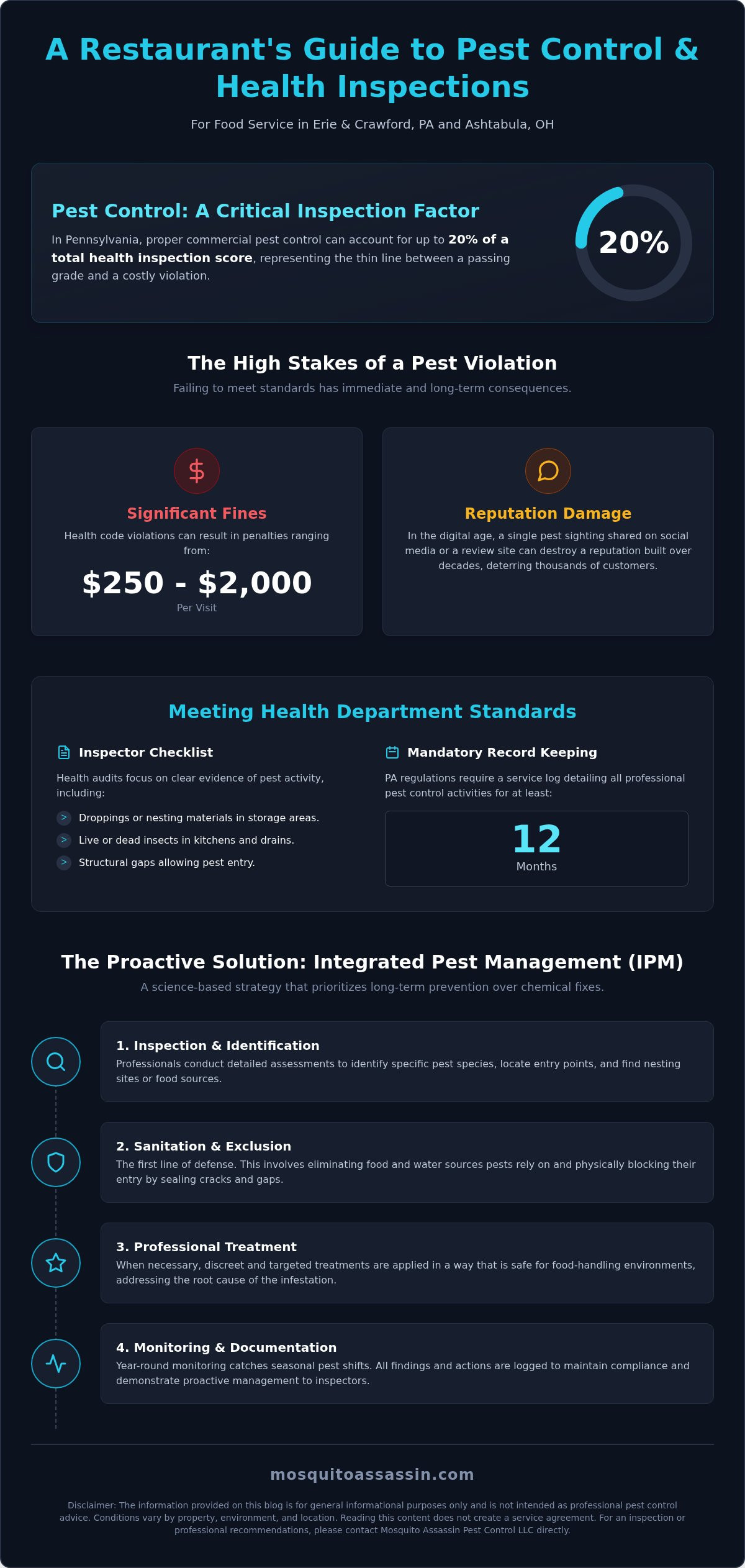
Did you know that commercial pest control can account for 20% of a health inspection score in Pennsylvania? For a local business, that single statistic represents the thin line between a passing grade and a costly violation. Implementing effective restaurant pest control Erie PA depends on decisive protection rather than reactive fixes. Managing a commercial kitchen in Erie, Crawford, or Ashtabula County is demanding, and the constant fear of a health department shutdown or a viral negative review regarding a sighting can be overwhelming. Every restaurateur knows that even one incident of food contamination can destroy a reputation that took decades to build.
Maintaining a high standard for food safety is about protecting your customers and your bottom line. This guide provides the essential information needed to protect food inventory and ensure that your facility meets the rigorous standards set by the Erie County Department of Health. You’ll learn about the documentation requirements for local inspectors, effective exclusion strategies to prevent entry, and how a discreet management plan creates a safe environment for both staff and guests.
Disclaimer: The information provided on this blog is for general informational purposes only and is not intended as professional pest control advice. Conditions vary by property, environment, and location. Reading this content does not create a service agreement. For an inspection or professional recommendations, please contact Mosquito Assassin Pest Control LLC directly.
Key Takeaways
- Understand how local health departments evaluate sanitation and the specific documentation required to pass inspections in Erie and Crawford Counties.
- Explore the core principles of Integrated Pest Management (IPM) and how this science-based approach prioritizes prevention for restaurant pest control Erie PA.
- Identify the environmental factors that attract rodents and small flies to commercial kitchens and how to eliminate these common triggers.
- Learn practical sanitation and exclusion techniques that restaurant staff can implement daily to serve as the first line of defense against infestations.
- Discover the benefits of year-round professional monitoring to catch seasonal pest shifts before they impact your food safety or business reputation.
Navigating Restaurant Pest Control Standards in Erie, PA
Operating a food service establishment in Northwest Pennsylvania involves meeting strict regulatory hurdles. The Erie County Department of Health oversees more than 1,600 retail food facilities, ensuring each one adheres to the Pennsylvania Food Code. Within this framework, pest management is a non-negotiable requirement. Health inspectors prioritize sanitation and look for clear evidence of professional monitoring during their visits. Relying on commercial pest control helps owners meet these rigorous local standards while protecting their investment.
Maintaining Health Department Compliance
During a routine audit, inspectors search for specific indicators of pest activity. They look for droppings, nesting materials, or live insects in storage areas, floor drains, and kitchens. Finding these signs can lead to significant fines, which often range from $250 to $2,000 per visit depending on the severity of the violation. To avoid these penalties, restaurants must maintain a professional service log. Pennsylvania regulations require establishments to keep detailed records of pest control services for at least 12 months. These logs must include service dates, specific findings, and any corrective actions taken by the staff or professionals. Utilizing Integrated Pest Management principles ensures that all treatments are both effective and safe for food-handling environments. This methodical approach is essential for effective restaurant pest control Erie PA, as it proves to local authorities that the business is proactive rather than reactive.
Protecting Business Reputation in Northwest Pennsylvania
The financial impact of a health code violation is only one part of the problem. In the digital age, a single pest sighting in a public dining area can trigger a public relations crisis. Social media and online review platforms allow a single negative experience to reach thousands of potential customers instantly. For restaurants in Erie and Crawford counties, maintaining a positive reputation is essential for long-term success. Discreet service is a vital component of a professional management plan. It ensures that treatments and inspections occur without disrupting the customer experience. Consistent, year-round oversight prevents minor issues from escalating into major infestation reports that could lead to a total shutdown. Effective restaurant pest control Erie PA focuses on total protection, ensuring that the only thing customers talk about is the quality of the food and the service.
Disclaimer: The information provided on this blog is for general informational purposes only and is not intended as professional pest control advice. Conditions vary by property, environment, and location. Reading this content does not create a service agreement. For an inspection or professional recommendations, please contact Mosquito Assassin Pest Control LLC directly.
Understanding Integrated Pest Management for Food Service
Integrated Pest Management (IPM) isn’t just a service; it’s a science-based strategy that prioritizes long-term prevention over quick fixes. For managers seeking reliable restaurant pest control Erie PA, this methodology provides a sustainable way to protect food inventory without relying heavily on broad-spectrum chemicals. By focusing on the biology and behavior of pests, IPM targets the root cause of an infestation. This approach is specifically designed for high-sensitivity environments like commercial kitchens, where food safety is the highest priority.
The Core Principles of IPM
A successful IPM strategy relies on a systematic process rather than a one-size-fits-all application. This rigorous standard aligns with the FDA Food Code, which emphasizes the importance of maintaining a pest-free environment through scientific and documented methods. The process includes:
- Regular Inspections: Professionals look for structural gaps, such as spaces under doors or cracks in the foundation, that allow pests to enter.
- Accurate Identification: Knowing exactly which species is present is critical. Treating a fruit fly infestation requires a completely different approach than managing a rodent problem.
- Activity Monitoring: Consistent tracking of activity levels allows for a data-driven evaluation of prevention measures. This data is a hallmark of high-quality restaurant pest control Erie PA.
Why Chemical-Only Approaches Often Fail
Relying solely on sprays or foggers often leads to disappointment and recurring issues. These methods only address the pests that are visible at the moment, completely ignoring the nests or breeding grounds hidden behind walls and equipment. Over time, certain pests can even develop resistance to specific chemical treatments if the underlying environmental factors aren’t corrected. IPM provides a more durable and cost-effective solution for year-round protection by removing the food, water, and shelter that pests need to survive. When kitchen staff and professionals work together to maintain high sanitation standards, the need for intensive chemical intervention drops significantly.
Implementing these advanced strategies ensures that your establishment remains compliant with local health audits while keeping your customers safe. If you’re concerned about your current prevention plan, a professional commercial pest management assessment can help identify hidden vulnerabilities in your facility. Taking a proactive stance today prevents the stressful and expensive emergencies of tomorrow.
Disclaimer: The information provided on this blog is for general informational purposes only and is not intended as professional pest control advice. Conditions vary by property, environment, and location. Reading this content does not create a service agreement. For an inspection or professional recommendations, please contact Mosquito Assassin Pest Control LLC directly.
Common Pests Affecting Erie County Establishments
Erie’s seasonal shifts create a revolving door of pest pressures for local kitchens. From the humid lakefront summers to the freezing winters, pests view commercial establishments as permanent sanctuaries. Understanding the specific threats in our region is the first step toward effective restaurant pest control Erie PA. While many species can cause issues, four main groups consistently challenge local food service managers: rodents, flies, cockroaches, and ants. Professional commercial pest control plans provide the systematic oversight needed to catch these invaders before they establish a permanent colony.
Cockroaches are perhaps the most resilient threat, often acting as expert hitchhikers that enter your facility through supply deliveries or cardboard packaging. Once inside, they find refuge in the warm, dark crevices behind industrial ovens and refrigeration units. Similarly, ants are relentless scouts. They seek out sugary substances and can create invisible chemical trails leading directly into your food storage areas. All management efforts must align with Pennsylvania’s pesticide laws and regulations, which dictate how treatments are applied in sensitive food environments to ensure both efficacy and public safety.
Rodent Exclusion and Prevention Strategies
Rodents are naturally attracted to the consistent food sources and warmth of restaurant environments, especially as temperatures drop in Northwest Pennsylvania. A common mistake is underestimating their agility; a mouse can squeeze through an opening as small as a quarter-inch. Effective exclusion involves a meticulous sweep of the property to seal gaps around utility pipes, door sweeps, and foundation vents. Professional rodent management utilizes a multi-step process that focuses on immediate removal, ongoing maintenance, and permanent exclusion to ensure your kitchen remains a fortress against these pests.
Managing Small Fly Populations in Kitchen Areas
Small flies, including fruit flies and drain flies, can rapidly colonize moist areas in a kitchen, turning a minor nuisance into a health code violation within days. Drain flies thrive in the organic film that naturally builds up inside floor drains and grease traps. Fruit flies are frequently introduced through fresh produce deliveries and can linger if sanitation is overlooked. Maintaining clean soda lines and beer taps is critical, as the sugary residue in these areas provides a perfect breeding site. Regular, deep cleaning of these specific zones is the most effective way to break the fly life cycle and maintain a sterile environment.
Disclaimer: The information provided on this blog is for general informational purposes only and is not intended as professional pest control advice. Conditions vary by property, environment, and location. Reading this content does not create a service agreement. For an inspection or professional recommendations, please contact Mosquito Assassin Pest Control LLC directly.
Practical Sanitation and Exclusion for Restaurant Staff
While professional monitoring is essential for restaurant pest control Erie PA, the daily habits of your kitchen staff serve as the primary defense against infestations. Pests thrive on the smallest oversights. A single spill left overnight or a door propped open during a delivery can invite unwanted guests. Training your team to maintain a clean as you go policy removes the food and water sources that pests need to survive. Beyond cleaning, staff should be trained to recognize and report early signs of activity, such as unusual smells or small droppings, before a minor issue becomes a health department violation.
Critical Sanitation Checkpoints
Routine cleaning often misses the hidden spots where debris accumulates. Focus on these high-risk areas to minimize attraction:
- Trash Management: Empty all interior bins daily. Clean the inside of the cans themselves to remove sticky residue and food particles that attract flies.
- Under-Appliance Cleaning: Food debris frequently slides under heavy industrial ovens, fryers, and refrigeration units. These warm, undisturbed areas are prime real estate for pests.
- Proper Storage: Store all dry goods in airtight plastic or metal containers. Keeping items at least six inches off the floor on wire shelving makes inspections easier and discourages nesting.
Eliminating clutter in storage rooms is equally important. Cardboard boxes are not just a fire hazard; they are a favorite harborage for cockroaches. Transitioning to plastic totes for long-term storage can significantly reduce pest pressure.
Structural Exclusion and Maintenance
Exclusion is the practice of physically barring pests from entering the building. In Northwest Pennsylvania, where seasonal temperature changes drive pests indoors, building integrity is paramount. Start by installing heavy-duty weather stripping on back doors and loading docks. If you can see light through the bottom of a closed door, a rodent can likely get inside. Ensure all window screens are intact and free of holes, especially in prep areas. Repair leaky pipes and dripping faucets immediately. Standing water is a magnet for pests, and a small leak behind a wall can support a large colony for months. Consistent commercial pest control strategies combine these staff efforts with expert intervention to create a comprehensive safety net for your business.
Disclaimer: The information provided on this blog is for general informational purposes only and is not intended as professional pest control advice. Conditions vary by property, environment, and location. Reading this content does not create a service agreement. For an inspection or professional recommendations, please contact Mosquito Assassin Pest Control LLC directly.
Benefits of Ongoing Professional Monitoring and Documentation
Professional oversight transforms pest management from a stressful emergency into a predictable operational routine. Year-round protection plans provide consistent oversight, ensuring that potential issues are identified long before they escalate into a full-scale infestation. For business owners seeking reliable restaurant pest control Erie PA, a partnership with a local expert offers more than just treatments; it provides the peace of mind that comes from knowing a facility is being monitored by someone who understands the unique environmental pressures of Northwest Pennsylvania. Proactive monitoring catches seasonal shifts in pest behavior, such as the indoor migration of rodents during the late autumn months, before they impact your kitchen’s safety.
The Importance of Accurate Service Logs
A comprehensive service log is a critical tool during health department audits. These records serve as a transparent paper trail, demonstrating a consistent commitment to food safety and public health. When an inspector arrives, being able to produce a detailed history of professional oversight can significantly streamline the audit process. A professional log should include:
- Service History: Exact dates and times of all professional visits.
- Inspection Details: Specific areas checked, including high-risk zones like floor drains, prep areas, and storage rooms.
- Findings and Trends: Detailed notes on any pest activity or structural vulnerabilities identified during the visit.
- Corrective Actions: Clear recommendations for sanitation or maintenance improvements that the staff has implemented.
Having this information organized and readily available shows inspectors that the establishment is taking proactive steps to maintain compliance. It moves the conversation from a defensive stance to one of professional cooperation, proving that the business prioritizes the wellbeing of its customers.
Local Expertise in Erie, Crawford, and Ashtabula Counties
Regional pest pressures aren’t uniform across the tri-county area. The challenges faced by a lakefront bistro in Erie differ significantly from those of a rural diner in Crawford County or a food facility in Ashtabula County. Local professionals understand how the specific climate factors of our region drive pests indoors. As the harsh Pennsylvania winter approaches, rodents and insects seek the warmth and stability of commercial kitchens. Professional pest control may help reduce risk by anticipating these seasonal shifts and reinforcing exclusion points before the first frost hits. This specialized knowledge of local geography and pest biology is a vital asset for any food service manager. Utilizing a commercial pest control plan tailored to the specific needs of Northwest Pennsylvania and Northeast Ohio ensures that your establishment remains a safe, compliant, and thriving part of the community.
Disclaimer: The information provided on this blog is for general informational purposes only and is not intended as professional pest control advice. Conditions vary by property, environment, and location. Reading this content does not create a service agreement. For an inspection or professional recommendations, please contact Mosquito Assassin Pest Control LLC directly.
Securing Your Restaurant’s Future and Reputation
Maintaining a pest-free environment is a continuous commitment that requires both staff vigilance and expert oversight. By focusing on Integrated Pest Management and strict sanitation protocols, food service establishments can meet the rigorous standards of the Erie County Department of Health. Accurate documentation and year-round monitoring are not just regulatory requirements; they’re essential safeguards for your business reputation. Implementing a proactive plan for restaurant pest control Erie PA ensures that seasonal shifts don’t turn into operational crises.
Licensed pest control professionals provide the systematic approach needed to protect your inventory and customers. To schedule a visit, you may contact professional pest management for a commercial inspection. Professional pest control may help reduce risk for facilities across Erie and Crawford Counties in PA and Ashtabula County in OH. Taking these steps today creates a safer kitchen and a more successful dining experience for everyone in our community.
Disclaimer: The information provided on this blog is for general informational purposes only and is not intended as professional pest control advice. Conditions vary by property, environment, and location. Reading this content does not create a service agreement. For an inspection or professional recommendations, please contact Mosquito Assassin Pest Control LLC directly.
Frequently Asked Questions
How often should a restaurant have a pest control inspection?
Restaurants should generally schedule professional inspections at least once a month. Some facilities in Erie County opt for bi-monthly plans to maintain a consistent barrier against invaders. The frequency depends on the size of the building, the volume of food handled, and any history of activity. Regular oversight ensures that minor issues are identified before they lead to a failed health audit or a public relations crisis.
What are the most common pests found in Erie restaurants?
Rodents, cockroaches, and small flies are the most frequent challenges for food service establishments in Northwest Pennsylvania. The local climate drives mice indoors as temperatures drop, while humid lakefront summers favor fly and ant activity. Cockroaches are often introduced through supply deliveries. Identifying these specific threats early is the foundation of effective restaurant pest control Erie PA, allowing for targeted management strategies that protect both food inventory and customer safety.
Can a restaurant stay open during a pest control treatment?
Most commercial establishments can remain open during routine inspections and many preventative treatments. Licensed professionals use targeted methods that minimize disruption to your operations. If a more intensive application is necessary, it is typically scheduled during after-hours to ensure the safety of staff and guests. Professional management plans are designed to be discreet, allowing your kitchen to continue serving customers while the property remains protected from infestations.
What documentation do I need for a health department inspection?
You must maintain a detailed service log that includes the dates of all professional visits and a record of any pesticides used. Health department inspectors in Pennsylvania look for documented evidence of monitoring, specific findings, and the corrective actions taken to resolve issues. This log should be kept on-site for at least 12 months. Having organized, professional records demonstrates a proactive commitment to food safety and helps streamline the auditing process.
How can I prevent fruit flies in my restaurant bar area?
Preventing fruit flies requires a strict sanitation routine focused on moist areas and organic residue. Clean soda lines, beer taps, and bar mats daily, as these are primary breeding sites for small flies. Ensure that all fruit garnishes are stored in sealed containers and that trash bins are emptied every night. Eliminating the sugary film that builds up on surfaces is the most effective way to break the breeding cycle in a bar environment.
Is professional pest control safe for use in commercial kitchens?
Professional pest management is specifically designed for use in sensitive commercial kitchens when applied by licensed experts. These professionals follow strict federal and state regulations to ensure that treatments are safe for food-handling environments. Methods often focus on baiting and exclusion rather than broad-spectrum sprays. This targeted approach minimizes chemical exposure while effectively removing pests, providing a safe environment for your employees and the people they serve.
What is the best way to keep mice out of a restaurant basement?
The most effective way to keep mice out of a basement is through structural exclusion and removing harborage. Seal every gap or crack in the foundation that is larger than a quarter-inch using metal mesh or industrial sealants. Keep the basement free of unnecessary clutter, such as old cardboard boxes, which provide nesting material. Promptly repairing leaky pipes also removes the water sources that rodents need to survive in lower levels of a building.
How do I know if my restaurant has a cockroach infestation?
Signs of a cockroach infestation include small, pepper-like droppings, discarded egg cases, and a distinct, musty odor in dark areas. You might also notice smear marks along baseboards or see live insects when turning on lights in a dark kitchen. Since cockroaches are nocturnal and expert hiders, seeing even one during the day often indicates a larger population behind walls or under appliances. Early detection is critical for maintaining restaurant pest control Erie PA.
Disclaimer: The information provided on this blog is for general informational purposes only and is not intended as professional pest control advice. Conditions vary by property, environment, and location. Reading this content does not create a service agreement. For an inspection or professional recommendations, please contact Mosquito Assassin Pest Control LLC directly.