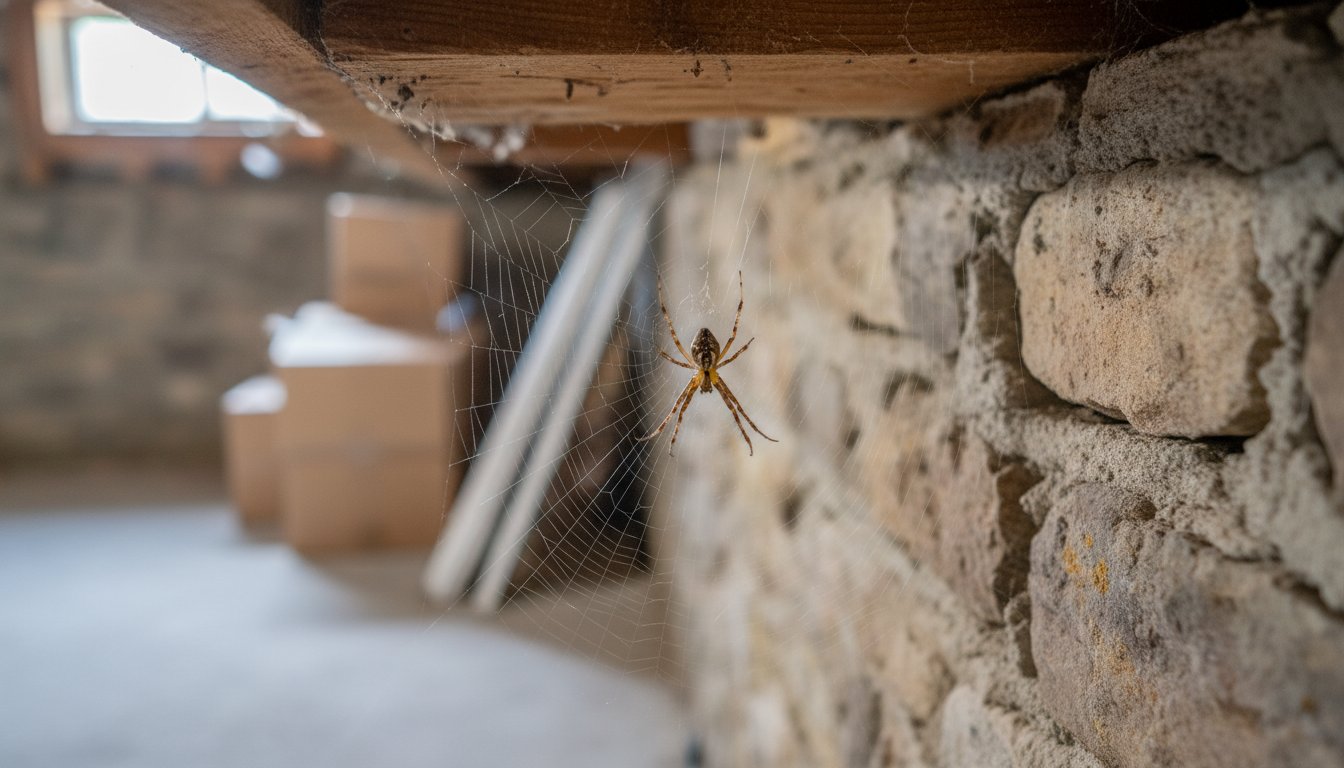
A spring 2026 pest forecast predicted a 60% year-over-year increase in spider activity across Pennsylvania, meaning you’re more likely than ever to encounter unexpected guests in your living spaces. It’s natural to feel a sense of dread when you spot a dark shape scuttling across the floor, especially when you’re unsure if the intruder poses a legitimate threat to your family. Learning how to identify common house spiders in PA is the first step toward reclaiming your peace of mind and determining whether a sighting is a minor nuisance or a situation that requires expert intervention.
You likely share the common frustration of clearing away messy cobwebs only to find them rebuilt by morning, paired with the uncertainty of which species are actually dangerous. This guide provides the tools to accurately identify the most frequent eight-legged residents in local homes, from the harmless American House Spider to the rarely seen but medically significant Black Widow. By understanding specific hunting behaviors and physical markers, you’ll gain the knowledge necessary to prevent future sightings and recognize when professional pest control may help reduce risk.
Disclaimer: The information provided on this blog is for general informational purposes only and is not intended as professional pest control advice. Conditions vary by property, environment, and location. Reading this content does not create a service agreement. For an inspection or professional recommendations, please contact Mosquito Assassin Pest Control LLC directly.
Key Takeaways
- Differentiate between common insects and Pennsylvania’s 45 spider species by recognizing key arachnid body segments and leg counts.
- Master how to identify common house spiders in PA using visual markers like mottled brown coloring or the unique vibrating defense of cellar spiders.
- Identify why the specific climate of Erie and Crawford Counties makes local basements and attics attractive hunting grounds for various species.
- Learn to separate fact from fiction regarding venomous spiders, including how to spot a Black Widow and why Brown Recluse sightings are rare in the region.
- Gain practical prevention strategies to limit indoor populations by modifying storage habits and sealing common entry points around your property.
Understanding the Common House Spiders of Pennsylvania
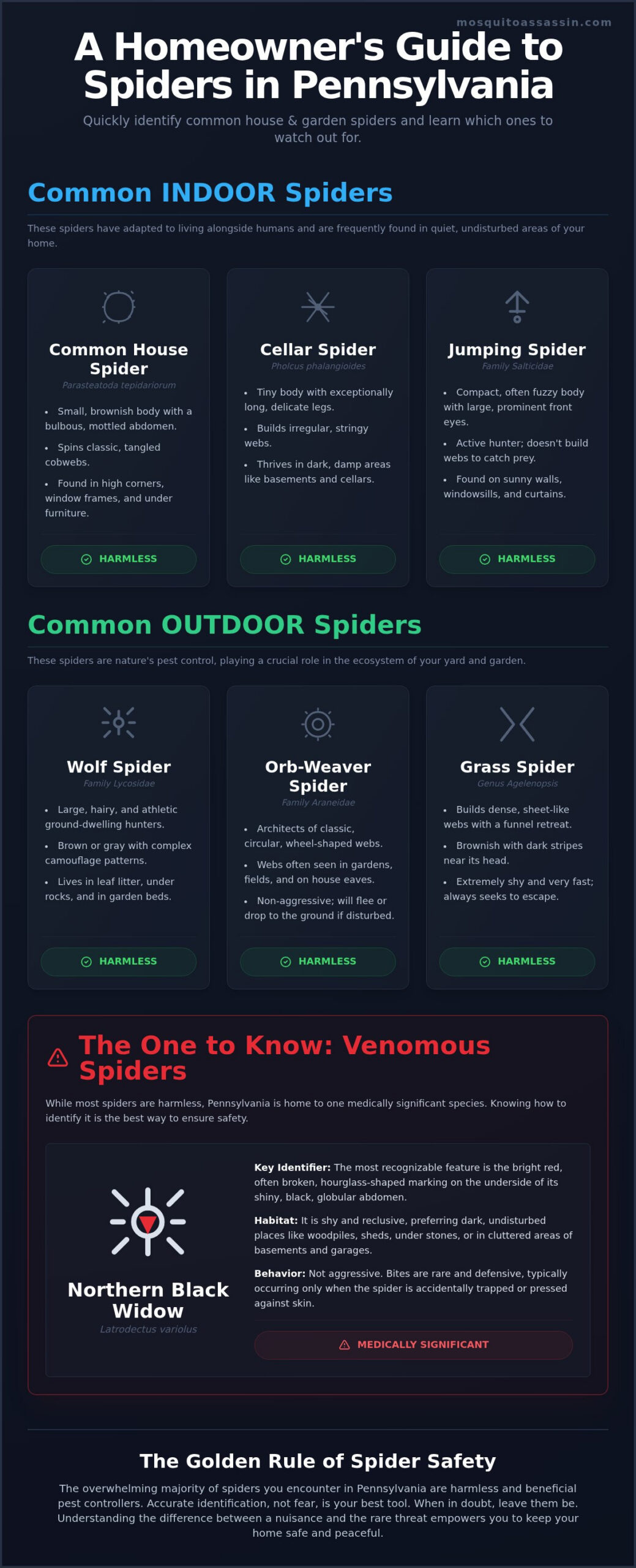
Pennsylvania is home to approximately 45 different spider species, though the vast majority of these arachnids are harmless to humans. Unlike six-legged insects, spiders are characterized by having two body segments and eight legs. Most species encountered inside local residences are either accidental invaders or specialized varieties that have adapted to indoor climates over generations. Learning how to identify common house spiders in PA starts with recognizing that their presence usually signals an underlying population of other insects, which serve as their primary food source. If you see a high volume of webs or active spiders, it’s a sign that your home provides a reliable buffet of smaller pests.
To better understand this concept, watch this helpful video:
The Role of Spiders in the Local Ecosystem
Spiders function as natural pest controllers within the regional environment. By preying on flies, moths, and mosquitoes, they help manage insect populations that might otherwise become overwhelming. In Northwest PA, homeowners often see a surge in spider activity during seasonal transitions, particularly in the spring and fall as temperatures fluctuate. These predators move toward warmth and food sources, making houses in Erie and Crawford Counties prime real estate for opportunistic hunters. Their presence is a biological response to the environment; they go where the food is most abundant. Understanding this predatory nature helps you predict where they might hide, such as near light fixtures or windows where other insects gather.
Web-Builders vs. Active Hunters
Identification is easier when you categorize spiders by their hunting methods. Web-builders, such as the Common House Spider (Parasteatoda tepidariorum), typically remain sedentary and wait for prey to become entangled in irregular cobwebs. In contrast, active hunters like wolf spiders don’t rely on webs; they roam floors and baseboards to chase down their meals. You can often identify the species by examining the web pattern, which may be orb-shaped, funnel-like, or a messy tangle. Sedentary species often have rounder, bulbous abdomens designed for storing energy between catches. Active hunters tend to be more streamlined, featuring longer legs and robust bodies to support their constant movement across varied surfaces. Recognizing these physical traits allows you to quickly determine if a spider is a permanent resident or just passing through.
Disclaimer: The information provided on this blog is for general informational purposes only and is not intended as professional pest control advice. Conditions vary by property, environment, and location. Reading this content does not create a service agreement. For an inspection or professional recommendations, please contact Mosquito Assassin Pest Control LLC directly.
Key Identification Features: How to Recognize PA Arachnids
Accurately determining which species has entered your home requires a close look at physical traits and behaviors. When learning how to identify common house spiders in PA, focus first on the body shape and leg structure. The American House Spider is one of the most frequent residents; it features a mottled brown color and distinct ‘comb feet’ on its fourth pair of legs, which are used to wrap prey in silk. In contrast, Cellar Spiders are recognizable by their extremely thin, elongated legs and small, cylindrical bodies. If you disturb their web, these spiders often vibrate rapidly as a defense mechanism, making them appear as a blur to potential predators.
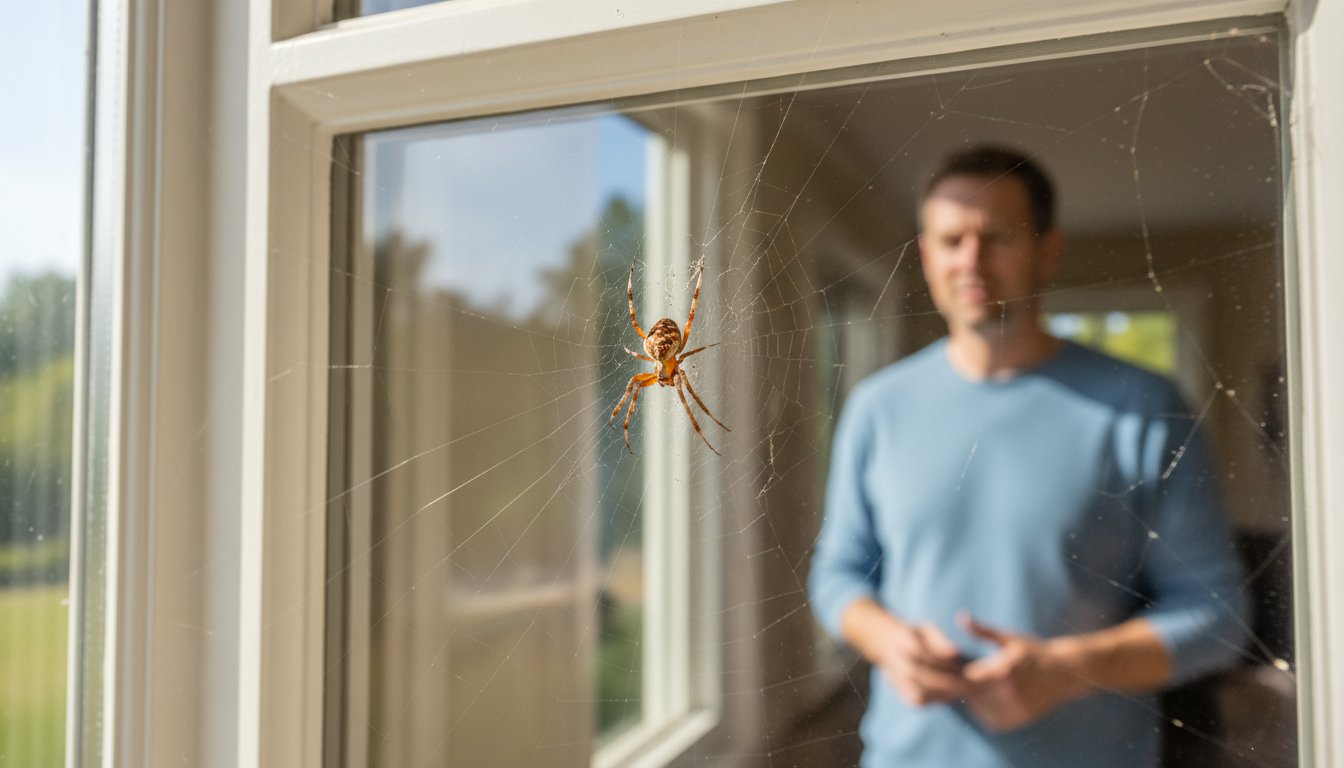
Wolf spiders are perhaps the most intimidating species due to their robust, hairy bodies and rapid movement. You can distinguish them by their eye arrangement, specifically the two large eyes positioned prominently on the top of their head. While they look formidable, they are nomadic hunters that don’t spin traditional webs. For more detailed images and descriptions of these physical markers, the Penn State Extension guide to PA spiders provides an excellent resource for local property owners. You may also encounter Yellow Garden Spiders, which sport striking bright yellow and black patterns. These are typically found outdoors near windows or porches where sunlight attracts the flying insects they prefer to eat.
Common Look-Alikes in Pennsylvania Homes
Many homeowners struggle with species that look nearly identical. For instance, the Grass Spider is frequently mistaken for a Wolf Spider. To tell them apart, check the rear of the abdomen; Grass Spiders have prominent, tail-like spinnerets that Wolf Spiders lack. Similarly, Nursery Web Spiders may resemble these hunters, but they carry their egg sacs in their jaws rather than attached to their spinnerets. Size is often a misleading factor. A large spider isn’t necessarily more dangerous than a small one, and most local species are non-aggressive unless directly handled.
Identifying Spiders by Their Webs
Web patterns offer another reliable identification tool when the spider itself remains hidden. Common House Spiders create irregular, messy tangles in corners, under furniture, or in basements. Grass Spiders build flat, sheet-like webs with a distinct funnel-shaped retreat at one end, usually near ground level or in foundation gaps. If you see a classic circular pattern, you’re looking at an orb web, typically spun by garden-dwelling species on porches or eaves. If these sightings become frequent or cause concern, professional pest control may help reduce risk by managing the insect populations that draw spiders into your living space.
Disclaimer: The information provided on this blog is for general informational purposes only and is not intended as professional pest control advice. Conditions vary by property, environment, and location. Reading this content does not create a service agreement. For an inspection or professional recommendations, please contact Mosquito Assassin Pest Control LLC directly.
Common Hiding Spots in Northwest Pennsylvania Homes
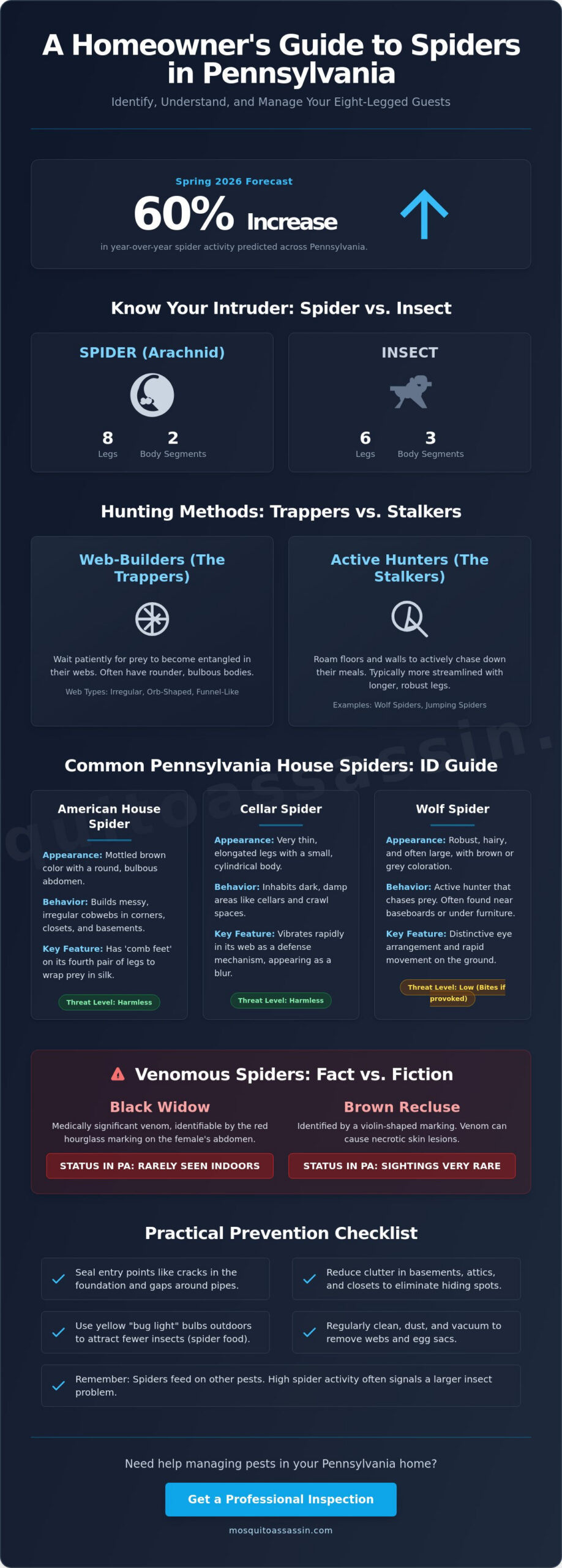
Spiders are opportunistic survivors that prioritize three things: moisture, safety, and a steady supply of food. In Erie and Crawford Counties, the damp environments found in basements and crawlspaces are particularly attractive. These subterranean areas provide the high humidity levels that Cellar Spiders require to thrive. Because these spaces are often left undisturbed for long periods, they offer a perfect sanctuary for permanent web construction. If you are struggling with how to identify common house spiders in PA, looking in these moisture-rich zones is a logical starting point for your search.
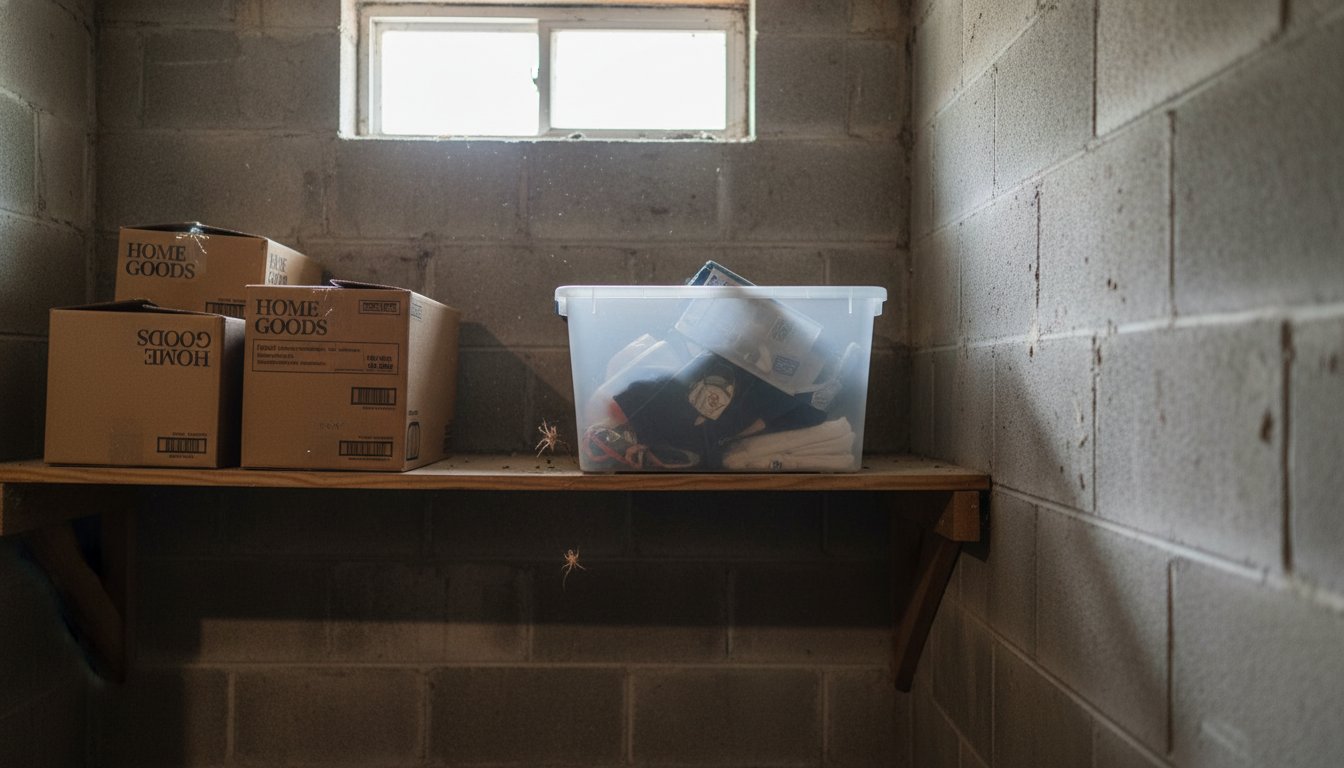
While some species stay low, others prefer the vertical advantage of attics and ceilings. Jumping spiders and sac spiders are frequently found near crown molding or in the upper corners of rooms. These elevated areas serve as effective hunting grounds where they can intercept flying insects. Similarly, windows and door frames are high-traffic zones. Exterior lighting at night attracts moths, flies, and beetles, creating a concentrated feeding station that draws spiders toward your entry points. Cluttered storage areas, particularly those filled with rarely moved cardboard boxes, provide the narrow crevices spiders use for nesting and protecting egg sacs.
Seasonal Activity Patterns in the Keystone State
Weather plays a significant role in when you see arachnids. Spring emergence typically begins as soon as temperatures consistently stay above freezing, as this triggers the hatching of overwintered eggs. Many homeowners believe spiders migrate indoors during the fall to escape the cold. In reality, most house spiders have lived inside your walls year-round. They simply become more visible in autumn because it’s their primary mating season. For visual assistance, a Pennsylvania spider identification guide can help you distinguish between these seasonal visitors. Indoor heating systems also influence behavior; the dry, warm air from a furnace can cause egg sacs to hatch prematurely, leading to sudden mid-winter sightings.
Outdoor vs. Indoor Habitats
The vegetation surrounding your home foundation often dictates which species are likely to wander inside. Grass Spiders prefer the shelter of woodpiles and tall grass, but they may accidentally enter through gaps in the siding or foundation. Other species are true indoor specialists that spend their entire life cycle within drywall crevices or behind baseboards. Managing the transition zone between your yard and your home is a key part of long-term prevention. For a broader look at managing various household invaders, you can read more in our guide to General Pest Control. Understanding these habitat preferences is essential for anyone learning how to identify common house spiders in PA and keep them at bay.
Disclaimer: The information provided on this blog is for general informational purposes only and is not intended as professional pest control advice. Conditions vary by property, environment, and location. Reading this content does not create a service agreement. For an inspection or professional recommendations, please contact Mosquito Assassin Pest Control LLC directly.
Addressing Safety Concerns: Venomous Spiders in PA
Understanding how to identify common house spiders in PA involves distinguishing between nuisance pests and those with medical significance. It’s vital to clarify a common scientific distinction: spiders are venomous, not poisonous. Venom is a toxin injected through fangs to submerge prey, whereas poison is harmful only if ingested or touched. For the vast majority of spiders found in Pennsylvania, a bite results in symptoms no more severe than a typical bee sting, including minor redness, localized swelling, and itching. While the sight of a spider can be startling, most species have no interest in human contact and only bite when they feel physically crushed or threatened.
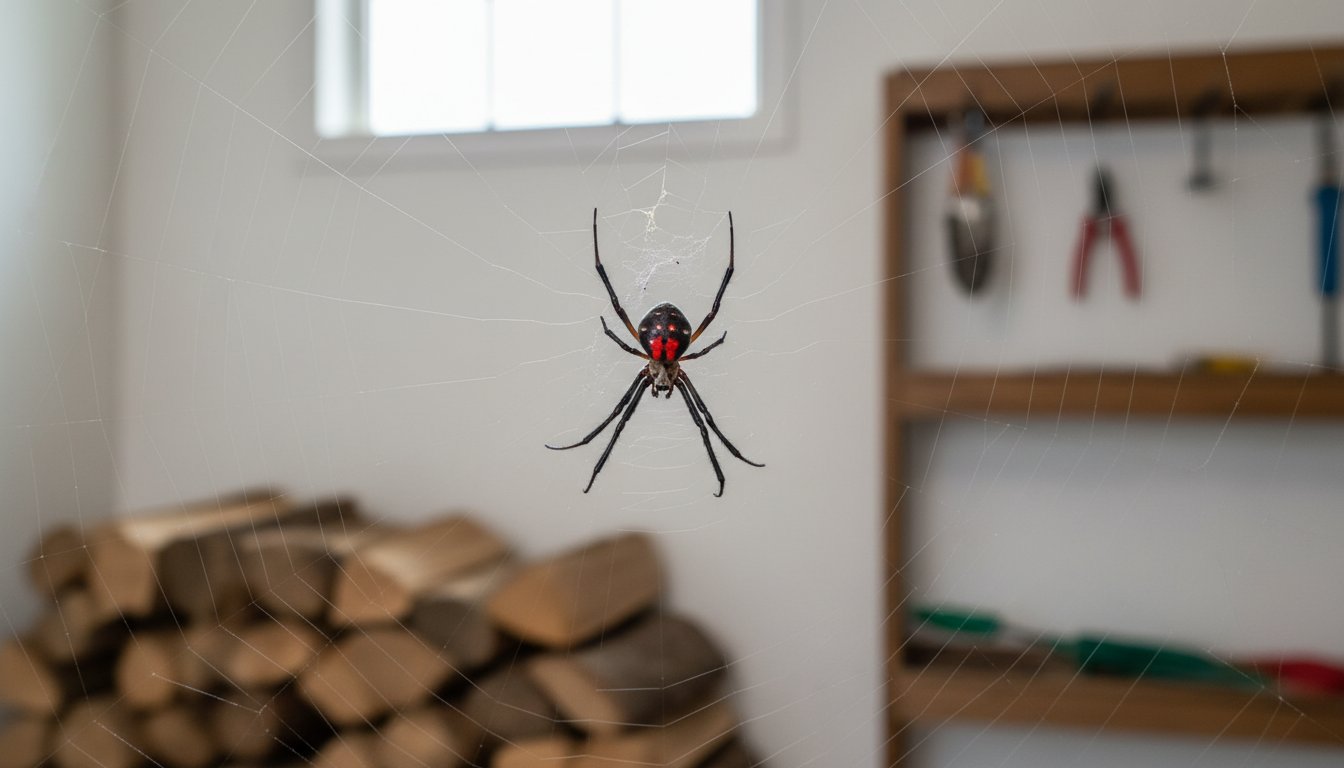
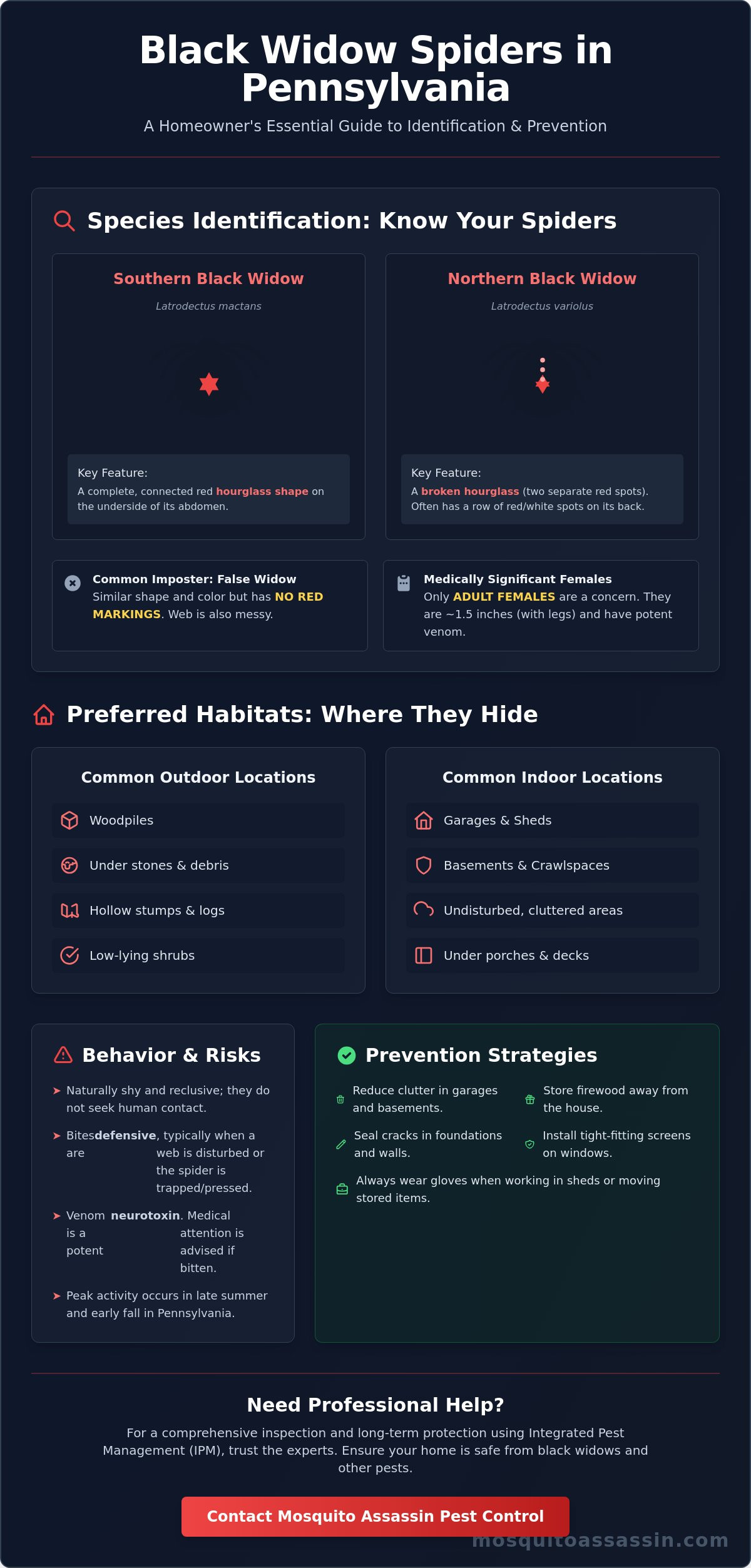
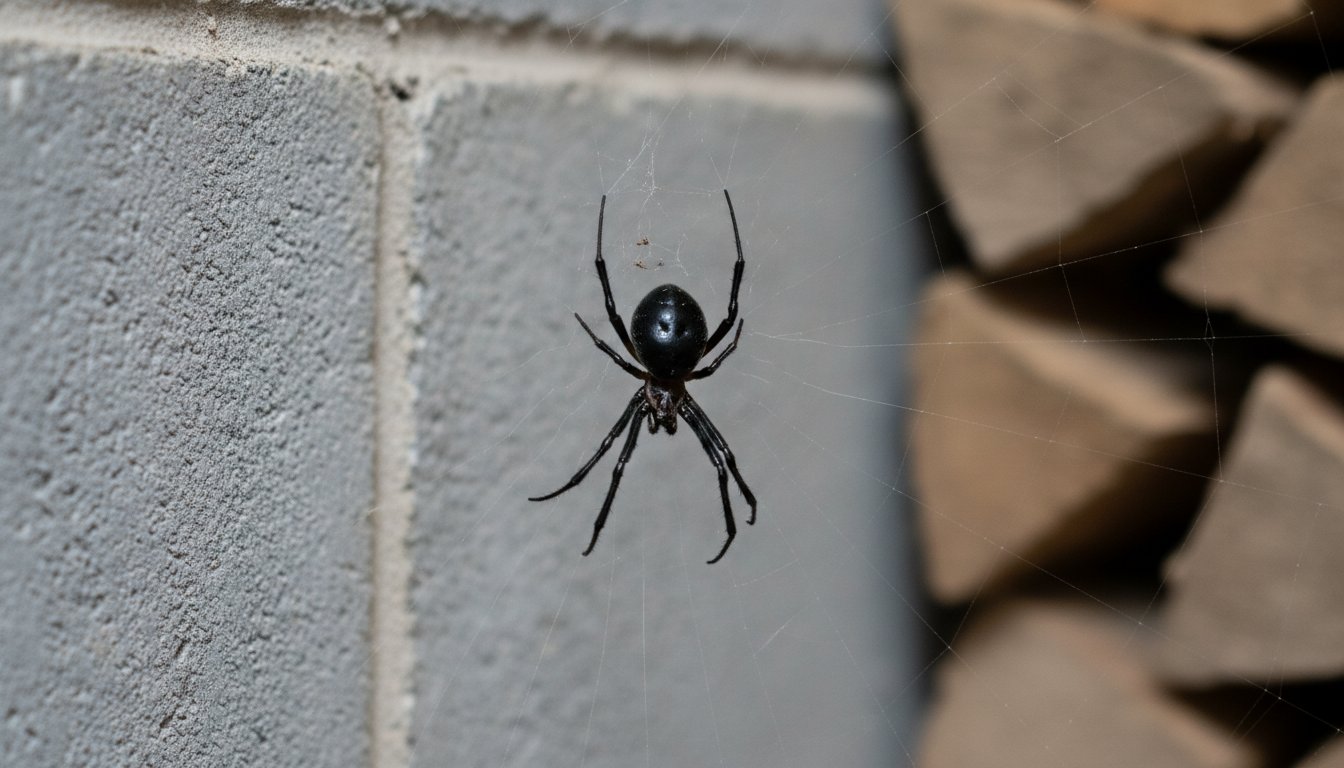
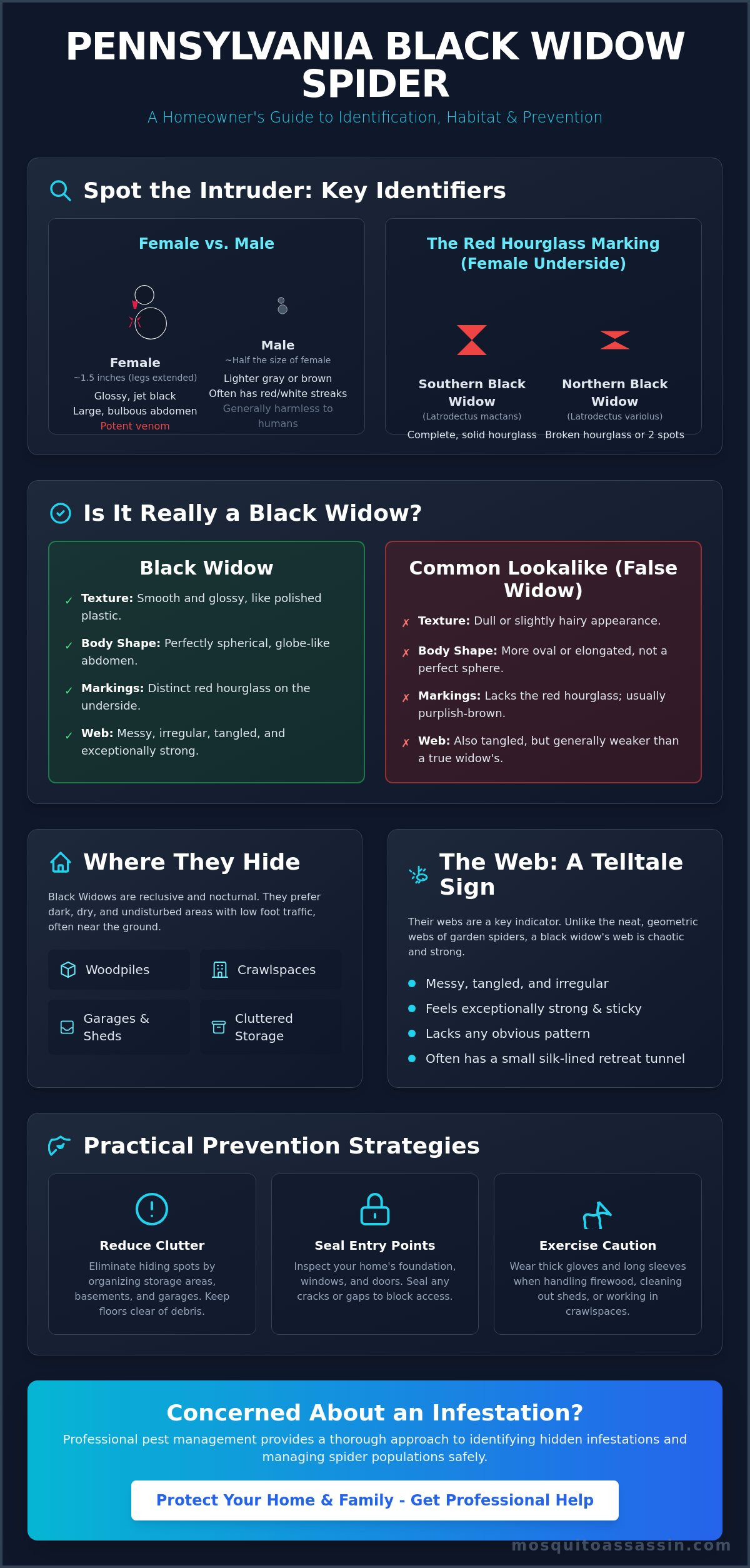
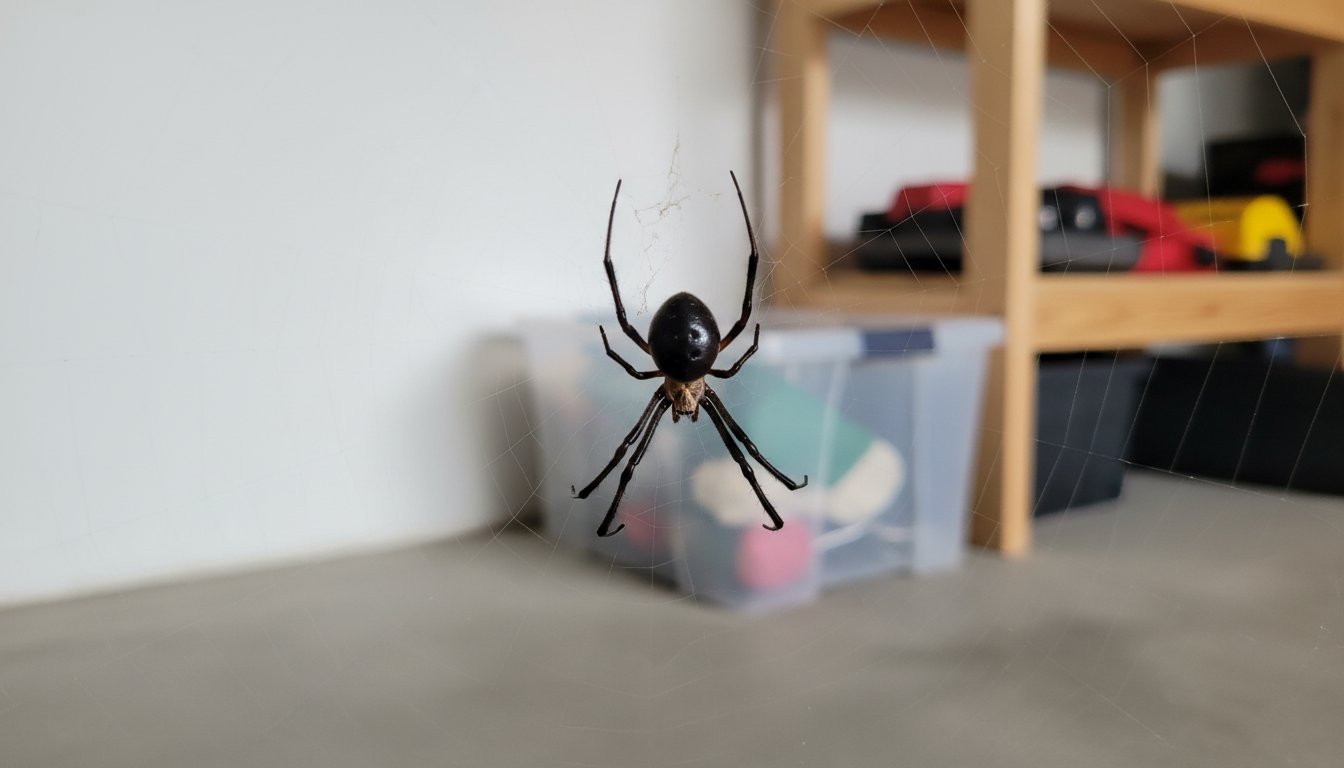
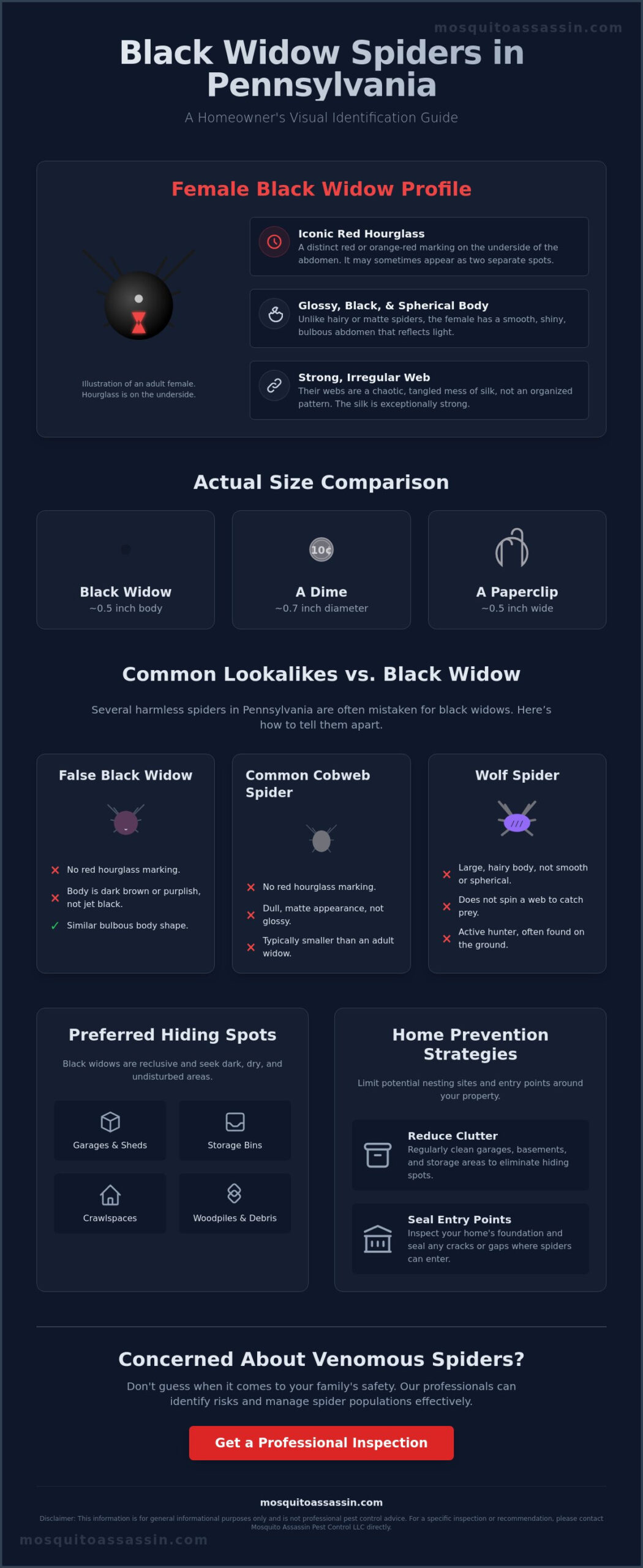
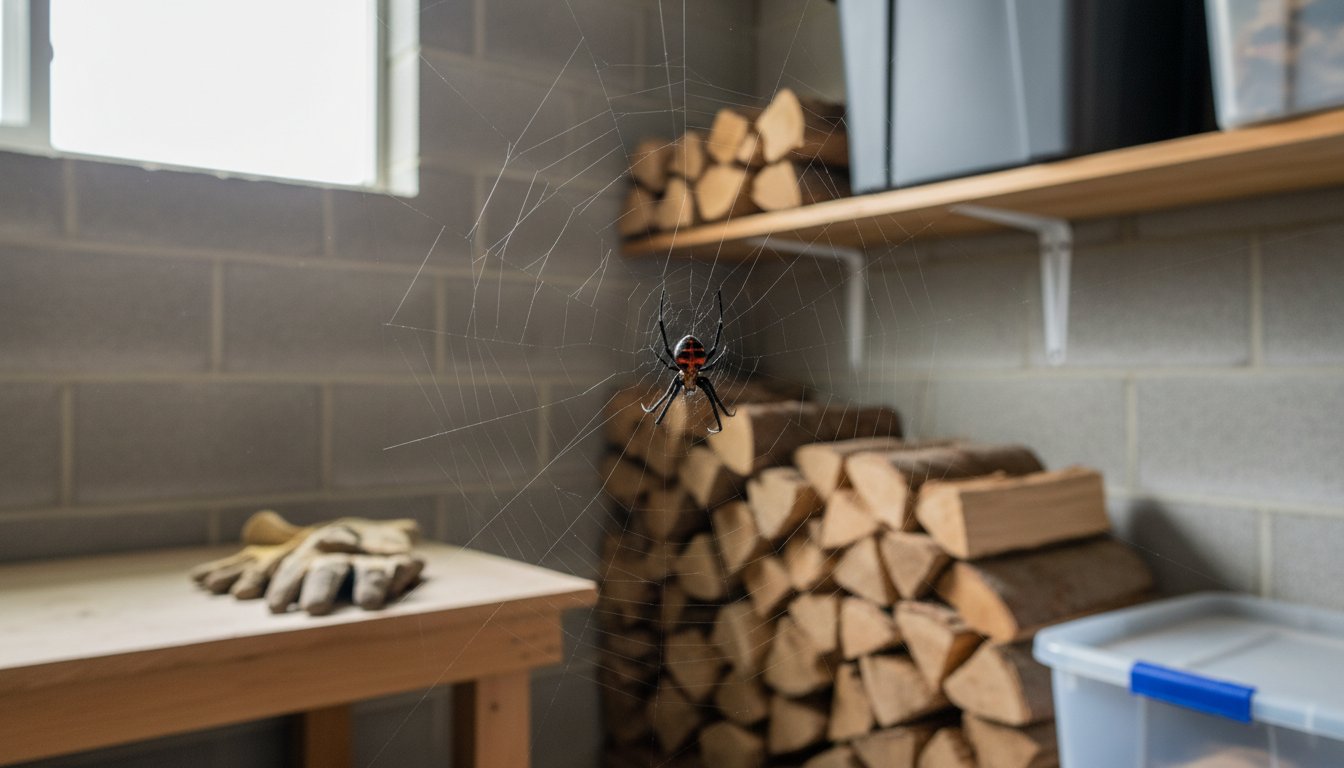
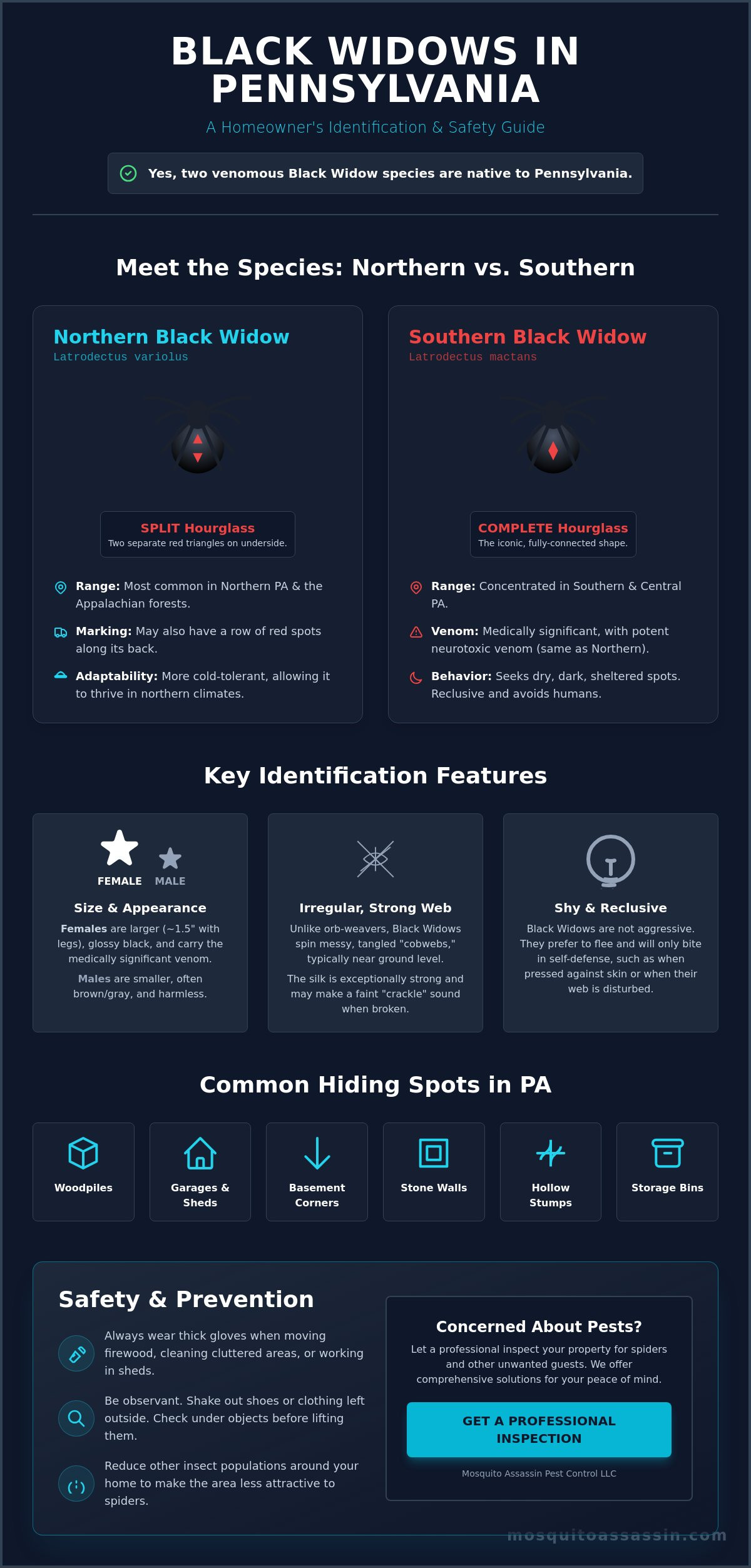
The Northern Black Widow is the only native species in Pennsylvania with venom considered medically significant. These spiders are easily recognized by their shiny black abdomens and distinct red markings. While the southern variant has a full hourglass, the northern variety often features a split hourglass or a series of red spots along the back. They prefer undisturbed, dark environments such as woodpiles, cluttered sheds, or old garages. When cleaning these areas in Erie County or Crawford County, always wear heavy gloves to prevent accidental contact with a hidden web.
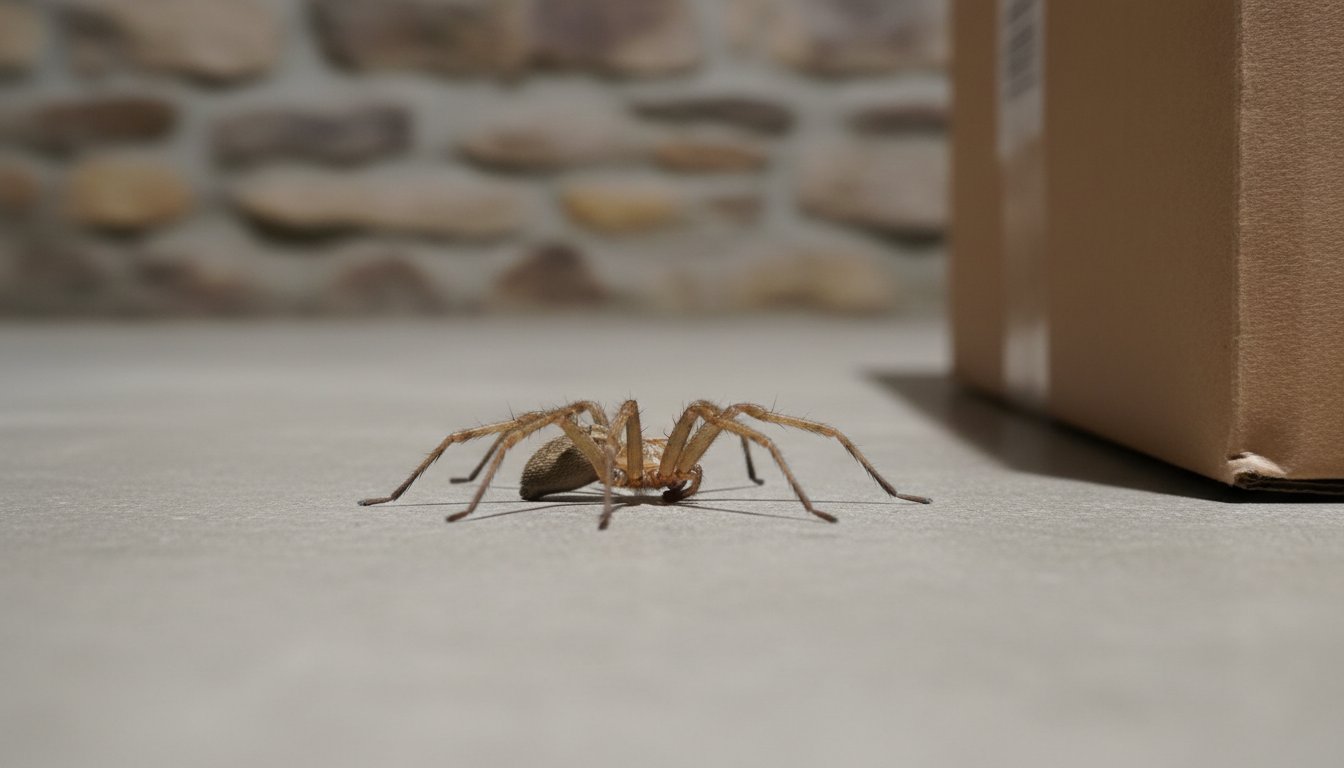
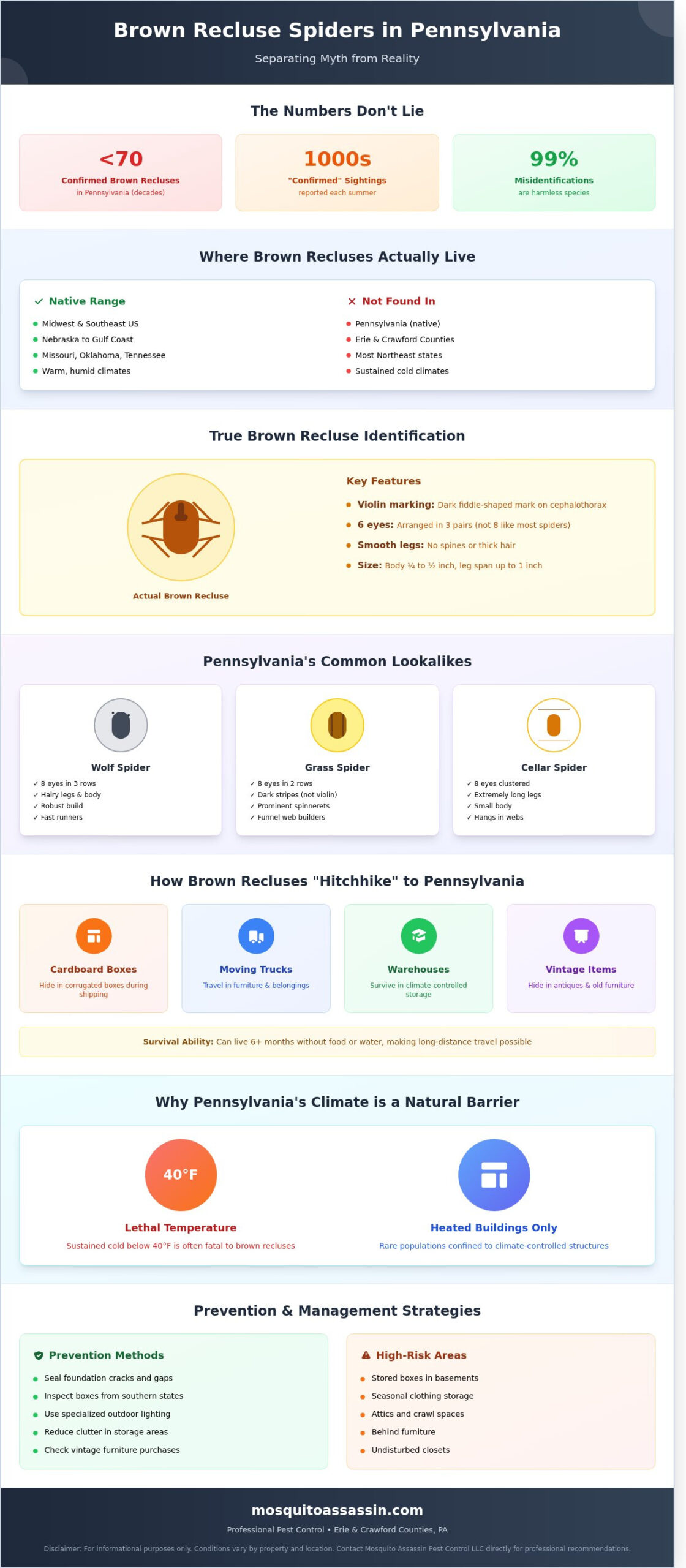
There is a persistent myth regarding Brown Recluse populations in the Keystone State. These spiders are not native to or established in Pennsylvania. While they occasionally appear as “hitchhikers” in shipments of furniture or boxes from southern states, they do not survive or reproduce well in our local climate. Most reported sightings of Brown Recluse spiders in the region are actually misidentified grass spiders or wolf spiders, which lack the necrotic venom of the recluse.
When to Seek Professional Insight
Identifying a single spider is one thing, but recognizing a larger infestation requires a systematic approach. If you notice multiple egg sacs or a high volume of webs appearing in active living areas, it indicates a stable and breeding population. Professional pest control may help reduce risk by eliminating the smaller insects that serve as the spider’s primary food source. If you are uncertain about a specific species in your home or feel overwhelmed by a sudden surge in activity, professional pest control services provide the expertise needed for an accurate risk assessment and a definitive resolution.
Disclaimer: The information provided on this blog is for general informational purposes only and is not intended as professional pest control advice. Conditions vary by property, environment, and location. Reading this content does not create a service agreement. For an inspection or professional recommendations, please contact Mosquito Assassin Pest Control LLC directly.
Practical Strategies for Managing Indoor Spider Populations
Once you’ve mastered how to identify common house spiders in PA, the next step is implementing environmental controls to discourage their presence. Reducing clutter is a high-priority task for any homeowner. Cardboard boxes are notorious for attracting spiders because they provide countless narrow crevices and are often held together with organic glues that some insects find attractive. Replacing these with airtight plastic bins for long-term storage removes these nesting sites immediately and protects your belongings from being used as a habitat. It’s a simple change that yields significant results in storage areas like basements or attics.
Focusing on exclusion is another professional-grade tactic. Sealing entry points prevents accidental invaders from ever crossing the threshold. Use high-quality caulk to close gaps around window frames, door sills, and where utility lines enter the foundation. Additionally, consider your exterior lighting. Standard white bulbs attract swarms of flying insects, creating a concentrated buffet that draws spiders toward your doorways. Switching to yellow “bug lights” reduces the number of attracted prey insects, making your home a less desirable hunting ground for nomadic species. Routine cleaning also plays a vital role. Vacuuming is one of the most effective ways to disrupt the spider life cycle. You should vacuum webs, the spiders themselves, and any visible egg sacs to prevent the next generation from hatching inside your living space.
Natural Deterrents and Maintenance
Managing the internal environment is critical for long-term success. In the damp climates of Erie and Crawford Counties, running a dehumidifier can make basements significantly less hospitable to moisture-loving species like Cellar Spiders. Outside, maintain a clear perimeter around the house. Keep shrubs and tall grass at least one foot away from the foundation to eliminate bridge-like pathways that spiders use to reach your siding. Regular dusting of high corners, behind appliances, and under large furniture prevents colonies from becoming established in the first place. These small habits collectively make your property much less attractive to arachnids.
The Value of Year-Round Protection
Successful management relies on addressing the root cause: the food source. Spiders stay where they can eat. By managing the underlying insect populations through Year-Round Protection, you naturally reduce the spider population as well. This proactive approach ensures that seasonal surges in flies, moths, or beetles don’t turn into a secondary spider infestation. The regional expertise found in Erie, Crawford, and Ashtabula Counties allows for a targeted strategy that respects local pest behaviors while securing your property. If you’ve struggled with how to identify common house spiders in PA or are overwhelmed by persistent webs, professional pest control may help reduce risk by creating a comprehensive barrier against all household pests.
Disclaimer: The information provided on this blog is for general informational purposes only and is not intended as professional pest control advice. Conditions vary by property, environment, and location. Reading this content does not create a service agreement. For an inspection or professional recommendations, please contact Mosquito Assassin Pest Control LLC directly.
Securing Your Home Against Regional Arachnids
Maintaining a spider free environment requires a combination of vigilance and practical environmental changes. By prioritizing the removal of clutter and sealing entry points, you disrupt the habits of nomadic hunters and sedentary web builders alike. Accurate knowledge of how to identify common house spiders in PA ensures you can distinguish between a beneficial garden visitor and a species that requires more direct intervention. Most local sightings involve harmless varieties, but recognizing the specific markers of the Northern Black Widow provides an essential layer of safety for your household.
Licensed professionals serving Erie and Crawford Counties in PA apply a systematic approach to pest management that addresses the root of the problem. This expertise in regional pests of the Keystone State helps property owners achieve long term resolution rather than temporary fixes. If you are concerned about spiders in your home, professional pest control may help reduce risk and restore your peace of mind. With the right prevention strategies in place, you can enjoy a more comfortable and secure living space throughout every season.
Disclaimer: The information provided on this blog is for general informational purposes only and is not intended as professional pest control advice. Conditions vary by property, environment, and location. Reading this content does not create a service agreement. For an inspection or professional recommendations, please contact Mosquito Assassin Pest Control LLC directly.
Frequently Asked Questions
Are there brown recluse spiders in Pennsylvania?
Brown recluse spiders are not native to Pennsylvania and no established populations exist within the state. While these spiders can occasionally be transported into the region as “hitchhikers” in shipping containers or moving boxes from the South, they don’t survive well in our local climate. Most reported sightings in Northwest PA are actually misidentified wolf spiders or nursery web spiders, which lack the necrotic venom of a recluse.
How can I tell if a spider in my house is a black widow?
You can identify a black widow by its shiny, jet-black body and the distinct red marking on the underside of its abdomen. In the Northern Black Widow, which is the variety found in this region, the hourglass is often split into two separate spots or may appear as a row of red dots along the back. These spiders are reclusive and prefer dark, undisturbed areas like woodpiles, crawlspaces, or cluttered sheds.
What is the most common house spider in PA?
The American House Spider is the species most frequently encountered by homeowners throughout the state. Learning how to identify common house spiders in PA involves looking for their mottled brown coloring and the messy, tangled webs they build in corners or under furniture. They are harmless to humans and act as natural pest controllers by focusing their hunting efforts on smaller nuisance insects like flies and gnats.
Do house spiders in PA bite humans while they sleep?
It is extremely rare for a spider to bite a human while they are sleeping. Spiders don’t feed on human blood and have no biological reason to approach a sleeping person. Most bites occur only as a defensive reaction when a spider is accidentally pressed against skin, such as when someone rolls over on one in bed or puts on a shoe where a spider is hiding.
Why do I suddenly have so many spiders in my basement?
A sudden increase in basement spiders usually indicates high humidity levels and a plentiful food source of other insects. The damp foundations common in Erie and Crawford Counties provide the perfect environment for cellar spiders and their prey to thrive. Reducing moisture with a dehumidifier and clearing away cardboard storage boxes can help disrupt these established colonies and make the area less attractive to predators.
Can professional pest control get rid of spiders permanently?
No service can guarantee the permanent removal of all spiders because nature is dynamic and new spiders can always wander in from the outdoors. However, professional pest control significantly reduces indoor populations by managing the insects that spiders eat and sealing structural gaps. A systematic approach ensures that the environment remains inhospitable to pests, providing long term relief and security for property owners.
What do spider egg sacs look like in a house?
Spider egg sacs typically look like small, silken balls or teardrop shaped pouches hidden in dark corners or suspended within webs. The American House Spider produces a brownish, pear shaped sac, while other species might create white, spherical clusters. Vacuuming these sacs as soon as they are spotted is a practical way to prevent hundreds of new spiderlings from emerging and spreading throughout your living space.
Are jumping spiders in Pennsylvania dangerous to pets?
Jumping spiders in Pennsylvania are not dangerous to household pets like cats or dogs. Their venom is highly specialized for paralyzing small insects and isn’t potent enough to cause medical harm to larger animals. These spiders are actually beneficial residents that actively track down and pounce on flies and mosquitoes, helping to keep your home’s internal insect population under control without the use of webs.
Disclaimer: The information provided on this blog is for general informational purposes only and is not intended as professional pest control advice. Conditions vary by property, environment, and location. Reading this content does not create a service agreement. For an inspection or professional recommendations, please contact Mosquito Assassin Pest Control LLC directly.