Tag: termite cost

  • Understanding Termite Treatment Cost Factors in Erie PA: 2026 Guide

    Understanding Termite Treatment Cost Factors in Erie PA: 2026 Guide

    Termites cause more than $5 billion in property damage across the United States every year, often operating as “silent destroyers” for years before a homeowner notices the first sign of trouble. If you’ve discovered mud tubes along your foundation or hollow-sounding wood in the basement, it’s natural to feel a surge of anxiety regarding the potential termite treatment cost Erie PA property owners must navigate. Pennsylvania sits in a high-risk infestation zone, and most neighbors in Northwest Pennsylvania share your fear of structural collapse and the frustration of trying to distinguish between a basic inspection and a comprehensive remediation strategy.

    It’s stressful to realize your largest investment is under attack by pests that thrive in our local climate. This 2026 guide clarifies the specific variables that influence remediation expenses in Erie, Crawford, and Ashtabula Counties, allowing you to protect your property investment with total confidence. You’ll learn how your home’s unique construction, the specific behavior of the Eastern Subterranean Termite, and the importance of proactive monitoring systems dictate the scope of a professional response. Understanding these drivers is the first step toward a secure, pest-free home.

    Disclaimer: The information provided on this blog is for general informational purposes only and is not intended as professional pest control advice. Conditions vary by property, environment, and location. Reading this content does not create a service agreement. For an inspection or professional recommendations, please contact Mosquito Assassin Pest Control LLC directly.
    Key Takeaways

    • Discover how your home’s foundation type and total linear footage directly influence the termite treatment cost Erie PA homeowners can expect for professional remediation.
    • Understand why the high humidity of the Lake Erie region makes Eastern subterranean termites a persistent threat to property investments in Northwest Pennsylvania.
    • Learn practical landscaping and grading techniques that minimize wood-to-ground contact and moisture buildup to help prevent future termite activity.
    • Identify the differences between a standard termite assessment and a formal Wood Destroying Insect (WDI) report required for regional property transactions.
    • Gain insights into why local knowledge regarding Erie and Crawford County building codes and soil conditions ensures a more accurate and effective risk assessment.

    Termite Activity and Structural Risks in the Lake Erie Region

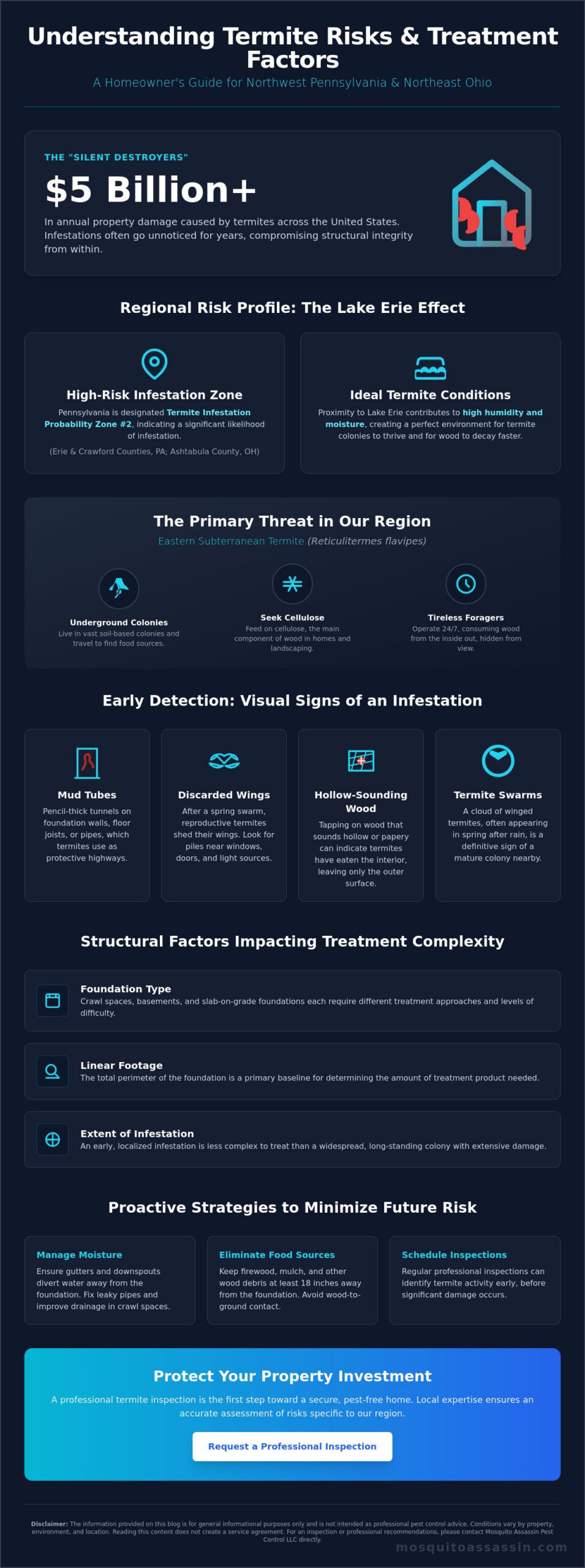
    Property owners in Northwest Pennsylvania face a specific set of environmental challenges not found in drier parts of the state. The eastern subterranean termite is the most prevalent and destructive wood-destroying insect in Erie and Crawford counties. These pests live in underground colonies and forage tirelessly for cellulose, the organic compound found in structural lumber and landscaping materials. Because Pennsylvania is classified in Termite Infestation Probability Zone 2, homeowners live in a region where infestation is a significant statistical likelihood.

    To better understand the factors that drive professional remediation and the overall termite treatment cost Erie PA property owners navigate, watch this helpful video:

    The proximity to Lake Erie plays a massive role in local pest pressure. High humidity levels and frequent lake-effect moisture create ideal conditions for colony expansion and rapid wood decay. When wood stays damp, it becomes softer and more attractive to foraging termites. These insects often remain undetected for years, operating behind drywall, inside floor joists, or within dark crawl spaces. By the time visible signs appear, the structural damage can already be extensive, potentially compromising the safety and resale value of your property. Professional termite inspections and treatment can help identify these hidden risks before they escalate.

    The Biology of Termites in Northwest Pennsylvania

    Termite colonies in our region are highly organized. They rely on local soil moisture to survive and build protective tunnels to reach food sources above ground. In the spring, usually following a warm rain, mature colonies produce swarms of winged reproductives. These swarms are often the first clear indicator of an active infestation nearby. The unique moisture profile of the Lake Erie shoreline accelerates the breakdown of cellulose, making local homes particularly vulnerable to these silent foragers.

    Signs of Activity Homeowners Should Monitor

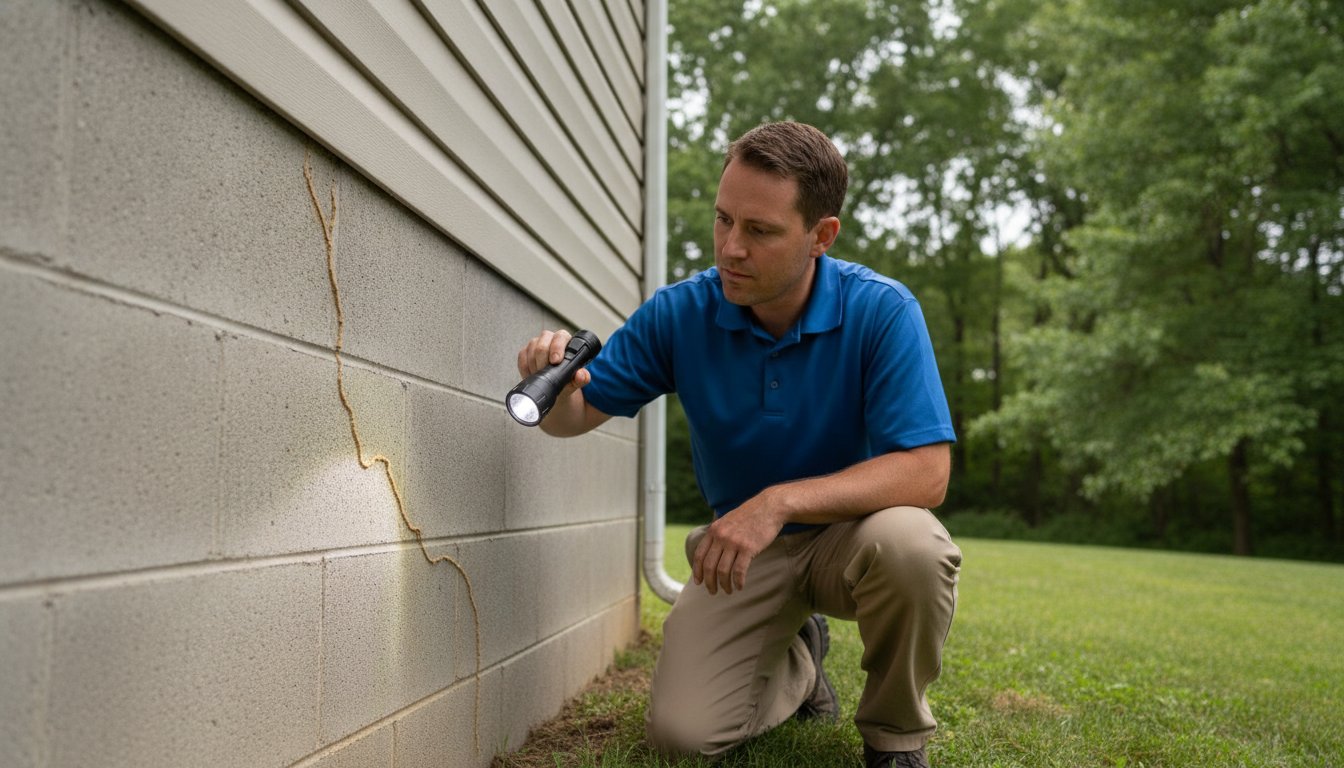
    Early detection is the best way to manage long term expenses. Homeowners should regularly inspect foundation walls and floor joists for mud tubes, which are pencil-thick tunnels made of soil and saliva. You might also find discarded wings near windowsills or entry points after a spring swarm. While several factors influence the total termite treatment cost Erie PA residents pay, the level of existing damage is often the most significant. It’s vital to distinguish between termite damage and standard wood rot. While rot is caused by fungi in wet wood, termite damage often looks like galleries or tunnels carved along the grain of the wood, frequently filled with bits of soil.

    Disclaimer: The information provided on this blog is for general informational purposes only and is not intended as professional pest control advice. Conditions vary by property, environment, and location. Reading this content does not create a service agreement. For an inspection or professional recommendations, please contact Mosquito Assassin Pest Control LLC directly.
    Structural Factors That Impact Termite Treatment Complexity

    While many property owners assume that home size is the only factor in determining expenses, the architectural reality of Northwest Pennsylvania homes tells a different story. The total linear footage of your foundation perimeter is the primary baseline for liquid treatments, but the technical difficulty of the application often dictates the final termite treatment cost Erie PA residents encounter. A larger home with easy foundation access may actually be less complex to treat than a smaller, historic residence with a stone foundation and a finished basement.

    Foundation type is arguably the most significant variable in labor and equipment requirements. Slab-on-grade homes, common in newer developments, often require specialized drilling through concrete floors to create a continuous chemical barrier in the soil beneath. In contrast, homes with full basements or crawl spaces present different challenges. The soil composition in Erie and Crawford counties, which can be heavy in clay or rock, influences how effectively liquid termiticides move through the earth. This makes a thorough understanding of how to identify and control termites essential for any remediation plan.

    Foundation Types and Remediation Challenges

    Older homes in the Lake Erie region frequently feature stone or brick foundations. These porous materials provide numerous tiny entry points for termites to bypass traditional barriers. Treating these structures requires a methodical approach to ensure every potential gallery is addressed. Crawl space clearance also impacts the professional labor needed; tight, low-clearance areas require more time and specialized protective gear for technicians to navigate safely. If you’re concerned about the integrity of your foundation, professional termite inspections and treatment can clarify the specific needs of your property.

    Severity and Scope of the Infestation

    The scope of the problem also dictates the technical difficulty. While a localized spot treatment might address a visible mud tube, it doesn’t provide the comprehensive protection of a full-perimeter barrier. If an inspection reveals multiple colonies or activity in several areas of the home, the scope of work increases significantly. Identifying structural damage before beginning any chemical application is a best practice. It ensures that the treatment reaches the heart of the infestation rather than just the surface. Professional assessments prioritize finding every hidden colony, especially in finished basements where drywall and flooring can mask the pests mentioned previously.

    Disclaimer: The information provided on this blog is for general informational purposes only and is not intended as professional pest control advice. Conditions vary by property, environment, and location. Reading this content does not create a service agreement. For an inspection or professional recommendations, please contact Mosquito Assassin Pest Control LLC directly.

    Comparing Local Inspection Types and Remediation Strategies

    Selecting the right path for property protection requires a clear distinction between a basic assessment and a formal regulatory report. Many homeowners feel anxious when they realize a standard visual check isn’t the same as a comprehensive Wood Destroying Insect (WDI) inspection. While a standard assessment focuses on identifying active colonies and immediate risk factors, a WDI report is a specialized legal document. These reports are often mandatory for real estate transactions in Northwest Pennsylvania, particularly for those utilizing FHA or VA loans.

    WDI Inspections for Erie Real Estate

    Lenders and buyers rely on WDI reports to verify the structural integrity of a home before a sale is finalized. A certified inspector must document evidence of past or present infestations, including termites, carpenter ants, and wood-boring beetles. It’s important to understand that a routine general pest control visit differs significantly from a WDI inspection. While general plans manage common household pests, a WDI inspection is a rigorous, point-by-point examination of the entire structure. Professional documentation ensures that all parties in a real estate transaction have a transparent view of the property’s history.

    Professional Treatment Methods

    Determining the final termite treatment cost Erie PA property owners pay often starts with selecting the right remediation strategy. There are two primary approaches used by licensed professionals: liquid soil barriers and baiting systems. Liquid barriers involve applying a termiticide to the soil around the foundation, creating a continuous zone of protection. This method provides immediate results by preventing insects from entering the structure from the ground. Because Eastern subterranean termite behavior involves constant foraging, a liquid barrier is a highly effective way to intercept them before they reach the wood.

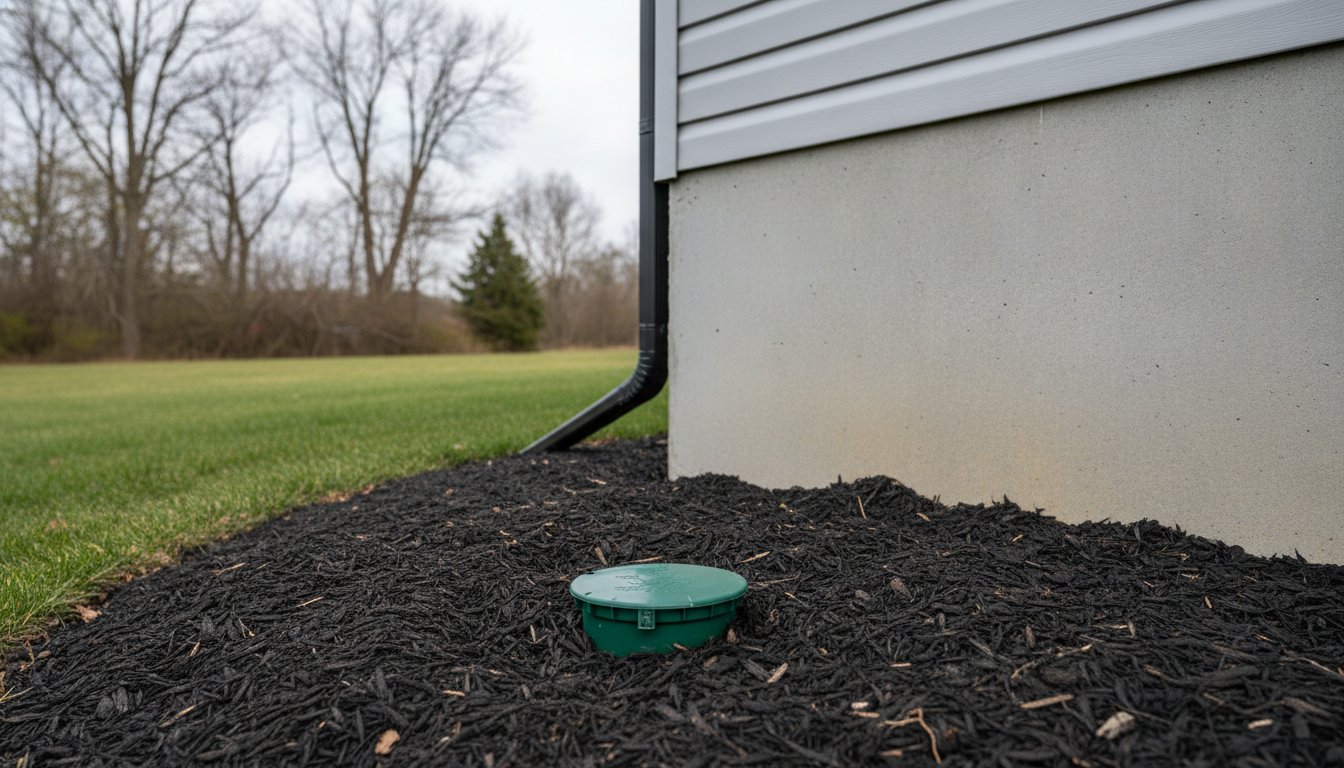
    Baiting technology offers a different, targeted approach. Professionals install monitoring stations around the perimeter of the property. When termites find the bait, they share it with the rest of the colony, eventually leading to the elimination of the entire nest. This method is often preferred for properties where drilling into concrete or stone foundations is difficult. Ongoing professional monitoring plans are essential for both methods. These plans help detect new activity early and prevent re-infestation, protecting your long-term investment. Choosing between these strategies depends on your home’s construction and the specific level of termite pressure in your neighborhood.

    Disclaimer: The information provided on this blog is for general informational purposes only and is not intended as professional pest control advice. Conditions vary by property, environment, and location. Reading this content does not create a service agreement. For an inspection or professional recommendations, please contact Mosquito Assassin Pest Control LLC directly.

    Understanding Termite Treatment Cost Factors in Erie PA: 2026 Guide

    Proactive Strategies to Minimize Future Infestation Expenses

    Investing in preventative maintenance is the most effective way to manage the long term termite treatment cost Erie PA property owners face. While structural factors and foundation types dictate the price of active remediation, specific home maintenance habits can significantly reduce the likelihood of a colony ever establishing itself. Termites are attracted to moisture and accessible cellulose; by removing these attractants, you create a less hospitable environment for foraging pests. Regular attention to your home’s exterior and foundation can save thousands of dollars in future repair and treatment bills.

    Maintaining proper grading is a fundamental step in property protection. Soil should always slope away from the foundation to ensure that rainwater flows toward the yard rather than pooling against the basement walls. Saturated soil near the structure provides the perfect high-moisture highway for subterranean colonies to reach your floor joists. Additionally, any wood-to-ground contact, such as wooden deck posts or porch lattices resting directly on the dirt, acts as a bridge for insects to bypass soil treatments and enter the home undetected.

    Moisture Management in Northwest Pennsylvania

    The Lake Erie region’s high humidity and frequent precipitation make moisture control a top priority. Clogged gutters and misdirected downspouts are common culprits for soil saturation. When water overflows from a gutter, it dumps directly at the base of the foundation, creating a localized damp zone that termites love. Using dehumidifiers in basements and crawl spaces also helps keep structural wood dry and less appealing to pests. Understanding how pest control prices are influenced by the state of your property highlights the value of these simple, low-cost maintenance tasks. Keeping your home dry is a scientific approach to pest prevention.

    Landscaping and Exterior Maintenance

    Your landscaping choices directly impact the risk of infestation. Mulch is a popular choice for Erie gardens, but when it’s piled against the siding, it provides both food and moisture for termites. It’s better to keep a six-inch gap of bare soil or gravel between your mulch beds and the foundation. Similarly, firewood should never be stacked against the house; store it on a raised rack at least twenty feet away. Trimming shrubs and trees ensures adequate airflow around the structure, which helps the foundation dry out after rain. Avoid using untreated wood for garden borders or fence posts, as these materials will quickly rot and attract colonies to your yard. For those who want to verify their property’s risk level, professional termite inspections and treatment may help identify hidden vulnerabilities before they become expensive problems.

    Disclaimer: The information provided on this blog is for general informational purposes only and is not intended as professional pest control advice. Conditions vary by property, environment, and location. Reading this content does not create a service agreement. For an inspection or professional recommendations, please contact Mosquito Assassin Pest Control LLC directly.

    The Value of Local Expertise in Erie and Crawford Counties

    Choosing a professional who understands the specific environmental demands of Northwest Pennsylvania is vital for long term property security. Local experts possess a deep understanding of regional building codes and the unique soil types found throughout Erie and Crawford counties. Whether dealing with the heavy clay near the lake or the rocky terrain further inland, these factors influence how remediation is applied. While structural variables often dictate the termite treatment cost Erie PA residents face, the value of a professional who recognizes regional termite pressure cannot be overstated. These specialists provide more accurate risk assessments because they live and work in the same neighborhoods they protect.

    Ongoing protection plans offer essential peace of mind for high risk properties in Zone 2. Professional pest control may help reduce the risk of significant structural loss by identifying activity before it compromises the integrity of the home. Relying on a neighborly expert ensures that the service is tailored to the specific behavior of local colonies rather than a generic national template. Scientific methods combined with regional experience allow for a more disciplined and effective operational approach to termite management.

    Selecting a Qualified Professional

    Verifying state licensing and insurance is a non-negotiable step when choosing a provider for termite remediation. A qualified professional should provide a detailed service agreement that clearly outlines the scope of work and the specific methods used. Clear communication regarding the multi step service procedure helps alleviate the anxiety often associated with hidden infestations. Community-rooted companies often offer better insights into local pest trends because they track colony movements across specific regional territories over several seasons. This historical data is an invaluable tool for preventing future outbreaks.

    Next Steps for Property Protection

    Preparing your home for a professional termite assessment ensures the most thorough results. It’s helpful to clear a path around the interior basement walls and the exterior foundation so the inspector can check for mud tubes or wood damage. Understanding the timeline for a comprehensive treatment plan is also important; while some barriers are established quickly, baiting systems require a steady, methodical approach to eliminate a colony entirely. For an inspection or professional recommendations, please visit the Mosquito Assassin contact page. Taking proactive steps today is the most reliable way to secure your property investment for the years ahead.

    Disclaimer: The information provided on this blog is for general informational purposes only and is not intended as professional pest control advice. Conditions vary by property, environment, and location. Reading this content does not create a service agreement. For an inspection or professional recommendations, please contact Mosquito Assassin Pest Control LLC directly.

    Securing Your Property Against Northwest Pennsylvania Termite Pressure

    Managing the termite treatment cost Erie PA homeowners face starts with understanding that structural integrity depends on proactive maintenance and local expertise. Foundation type and moisture levels are the most significant variables in any remediation plan. Professionals who are licensed and insured in Pennsylvania and Ohio bring specialized knowledge of Erie and Crawford county soil conditions to every inspection. It’s essential to remember that structural complexity, such as finished basements or stone foundations, dictates the technical scope of work more than simple square footage.

    Comprehensive year-round protection plans are available to help monitor for early activity and prevent the silent destruction often associated with subterranean species. Addressing moisture issues and maintaining proper landscaping grading are the most effective ways to lower your long term risk. Professional pest control may help reduce risk and preserve your property’s value for the long term. To secure your investment, request a professional termite inspection for your property and gain clarity on your home’s current risk level.

    Disclaimer: The information provided on this blog is for general informational purposes only and is not intended as professional pest control advice. Conditions vary by property, environment, and location. Reading this content does not create a service agreement. For an inspection or professional recommendations, please contact Mosquito Assassin Pest Control LLC directly.

    Frequently Asked Questions

    How often should I have my Erie home inspected for termites?

    Annual inspections are recommended for properties in Northwest Pennsylvania. Because Erie is in a high risk infestation zone, yearly checks help catch activity before it becomes a major expense. Regular monitoring is the best way to manage your long term termite treatment cost Erie PA by preventing extensive structural damage before it starts. This proactive approach is especially important for homes near the lake where moisture levels are high.

    Does homeowners insurance cover the cost of termite treatment?

    Standard homeowners insurance policies typically don’t cover termite treatment or the resulting structural damage. Insurance companies view termite activity as a preventable maintenance issue rather than a sudden, accidental event. This makes proactive inspections and professional treatment plans a vital investment for protecting your home’s equity. It’s best to verify your specific policy details with your insurance provider to understand your coverage limitations.

    Is a WDI report different from a standard home inspection?

    A Wood Destroying Insect (WDI) report is a specialized document that focuses exclusively on termites, carpenter ants, and wood boring beetles. While a standard home inspection covers general systems like plumbing and electrical, it doesn’t provide the rigorous, point by point examination required for WDI certification. Lenders often require this specific report before approving real estate transactions to ensure the structural integrity of the property.

    Can I treat a termite infestation myself with store-bought products?

    DIY products rarely reach the heart of a subterranean colony located deep in the soil. While store-bought sprays might kill a few visible insects, they don’t address the queen or the larger nest structure. Professional remediation involves specialized equipment and training to ensure a continuous barrier is established around the foundation. Attempting to manage a colony alone often leads to hidden damage that increases future repair expenses.

    How long does a professional termite treatment typically last?

    A professional liquid soil treatment typically provides protection for five to ten years depending on soil conditions and environmental factors. Baiting systems require ongoing maintenance and monitoring to remain effective over time. Factors like heavy rain or significant soil disruption can impact how long a barrier remains fully intact. Annual professional assessments help ensure that the protective zone hasn’t been compromised by landscaping or construction changes.

    What happens if termites return after a professional treatment?

    If termites are detected after a professional application, the service team will typically return to address the specific area of activity. Professional service agreements often include provisions for re-treatment if new colonies are discovered within a certain timeframe. This ensures your property remains protected and provides peace of mind for the homeowner. It’s a standard practice that reflects the methodical and disciplined operational approach of licensed experts.

    Are termite treatments safe for my family and pets?

    Modern termite treatments are designed for targeted application and are safe for households when applied by licensed professionals. Technicians follow strict guidelines to ensure products are placed exactly where they’re needed, often deep in the soil or inside specialized bait stations. Professional pest control focuses on the safety of all residents, including children and pets, while effectively eliminating the infestation. This scientific approach minimizes exposure while maximizing the efficacy of the treatment.

    What is the most common time of year for termites to swarm in Pennsylvania?

    Termites in Pennsylvania most commonly swarm during the spring months, typically between March and May. These swarms usually occur on warm days following a period of rainfall. Recognizing these winged insects near your foundation or windowsills is a clear signal that a nearby colony is mature and actively expanding. If you see a swarm, it’s a good time to request a professional assessment to determine if your structure is at risk.

    Disclaimer: The information provided on this blog is for general informational purposes only and is not intended as professional pest control advice. Conditions vary by property, environment, and location. Reading this content does not create a service agreement. For an inspection or professional recommendations, please contact Mosquito Assassin Pest Control LLC directly.

  • Termite Treatment Cost Erie PA: Understanding the Factors in 2026

    Termite Treatment Cost Erie PA: Understanding the Factors in 2026

    Did you know that termite damage costs property owners across the United States more than $5 billion every single year? In Northwest Pennsylvania, the combination of high humidity near Lake Erie and the region’s moderate to heavy infestation probability makes wood-destroying insects a constant concern. It’s understandable to feel anxious about hidden structural damage or confused by the various remediation methods available on the market.

    You deserve a clear path to protecting your investment without the stress of the unknown. This guide breaks down the specific structural and environmental variables that determine the termite treatment cost Erie PA residents encounter in 2026. By understanding these factors, you can move forward with confidence in your property’s long-term security.

    The following sections explore how different foundation types impact labor requirements and why local moisture levels dictate specific professional strategies. From the challenges of slab foundations to the complexities of crawl spaces in Erie and Crawford Counties, you’ll gain the knowledge needed to evaluate a professional remediation plan effectively.

    Disclaimer: The information provided on this blog is for general informational purposes only and is not intended as professional pest control advice. Conditions vary by property, environment, and location. Reading this content does not create a service agreement. For an inspection or professional recommendations, please contact Mosquito Assassin Pest Control LLC directly.

    Key Takeaways

    • Identify how your home’s total linear footage and the specific species of wood-destroying insects dictate the overall scope of remediation.
    • Discover why certain foundation types, such as slab-on-grade or crawl spaces, require specialized labor like precision drilling or internal trenching.
    • Gain clarity on the termite treatment cost Erie PA property owners face by comparing the intensive labor of liquid barriers against the long-term monitoring of baiting systems.
    • Learn the difference between a standard assessment and a formal WDI report to ensure your budget is based on the exact location and extent of the colony.
    • Understand how integrating termite monitoring into a year-round protection plan can prevent the catastrophic financial impact of untreated structural damage.

    Primary Variables That Determine Termite Treatment Cost in Erie PA

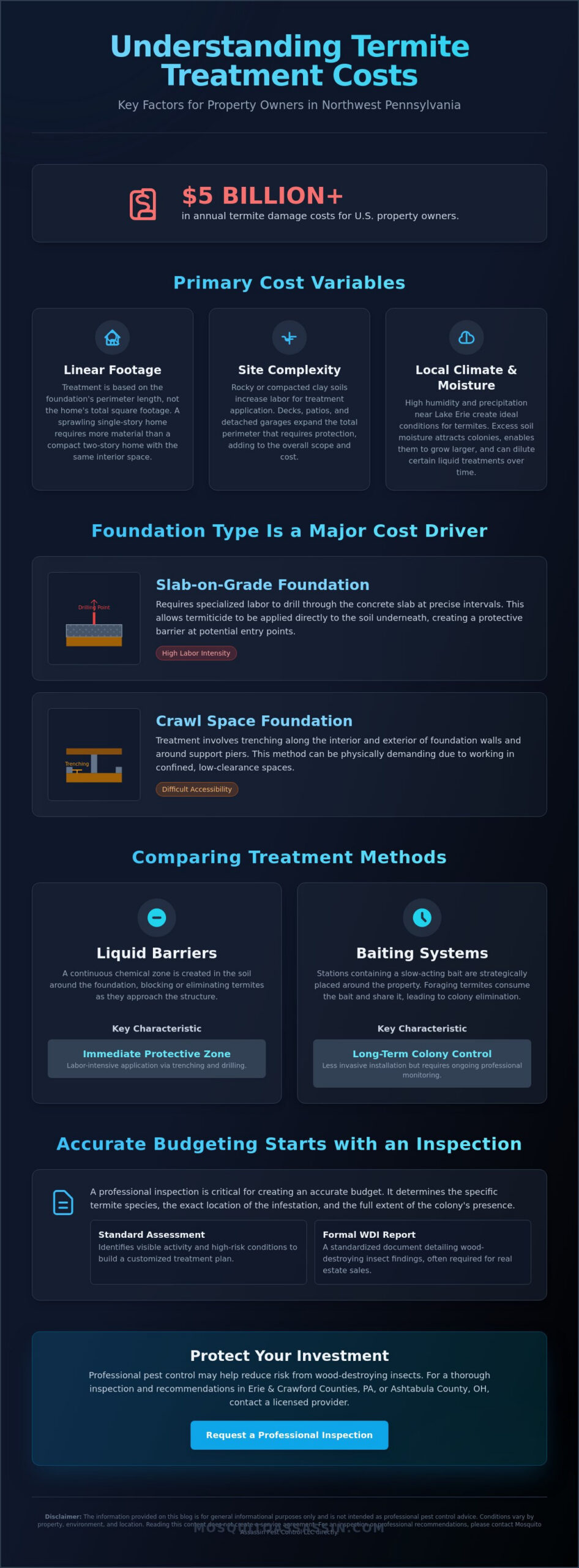
    Understanding the termite treatment cost Erie PA property owners face begins with looking at the physical footprint of the building. Most people think about square footage, but professional remediation focuses on the linear footage of the foundation perimeter. This is because subterranean termites enter from the soil, requiring a continuous protective zone around the base of the home. If there are gaps in this line, the entire structure remains vulnerable.

    Beyond size, the complexity of the site plays a major role. The depth and type of soil surrounding your structure determine how easily liquid agents can be applied. In some parts of Northwest Pennsylvania, rocky or highly compacted clay soils require more labor intensive preparation compared to looser, sandy loams. Additionally, the presence of secondary structures like decks, patios, or detached garages increases the total area that needs protection.

    To gain a clearer perspective on how these initial assessments impact your budget, watch this helpful video:

    Linear Footage vs. Total Square Footage

    Square footage tells you about the interior living space, but linear footage measures the actual path of entry. A sprawling ranch home has a much larger foundation perimeter than a multi-level colonial with the same square footage. Consequently, the ranch home requires more material and more labor to establish a complete barrier. This perimeter length directly scales the volume of treatment agents needed to ensure no gaps remain for pests to exploit. Some properties may also incorporate physical termite barriers during construction or renovation, which can alter the approach for future remediation.

    The Influence of Local Climate and Moisture

    Northwest Pennsylvania presents unique challenges due to its proximity to Lake Erie. The high humidity levels and frequent lake-effect precipitation create ideal breeding grounds for Eastern subterranean termites. These colonies thrive in moist soil; excess water near the foundation can actually dilute or wash away some liquid treatments over time. This makes the termite treatment cost Erie PA residents pay a reflection of the local environmental pressure.

    Properties in flood prone areas or those with poor drainage often require more frequent monitoring and specialized biological agents to remain effective. High soil moisture doesn’t just attract termites; it allows colonies to grow larger and more aggressive. This environmental pressure often necessitates a more robust intervention plan than what might be required in a drier climate. Professional pest control may help reduce risk by addressing these moisture concerns during the initial assessment.

    Disclaimer: The information provided on this blog is for general informational purposes only and is not intended as professional pest control advice. Conditions vary by property, environment, and location. Reading this content does not create a service agreement. For an inspection or professional recommendations, please contact Mosquito Assassin Pest Control LLC directly.

    Foundation Types and Accessibility in Northwest Pennsylvania

    The structural design of a home is often the most significant variable in determining the final termite treatment cost Erie PA property owners receive. Unlike modern construction that follows standardized codes, the architecture in Northwest Pennsylvania ranges from mid-century slab-on-grade homes to century-old structures with fieldstone foundations. Each foundation type presents unique hurdles for a remediation team, as accessibility dictates the amount of labor and specialized equipment required for a successful application.

    Slab Foundations and Precision Drilling

    Slab-on-grade foundations create a unique challenge because the wood-to-soil contact point is hidden beneath several inches of concrete. To reach the soil where Eastern subterranean termites reside, technicians must perform precision drilling. This involves creating a series of small, strategically placed holes through the floor at regular intervals along the perimeter.

    Each hole allows for the injection of liquid termiticide directly into the critical entry zones. The number of drill holes required increases both the labor hours and the wear on specialized equipment. After the application is complete, professionals carefully patch the holes to match the existing surface, ensuring the structural integrity and aesthetic of the slab remain intact. When choosing between different termite control methods, the necessity of drilling is a major factor in labor estimates.

    Crawl Space and Basement Challenges

    Crawl spaces and basements in Erie and Crawford Counties often require internal perimeter treatments to achieve total protection. Maneuvering in confined spaces is physically demanding and significantly slows the remediation process. Technicians must often perform internal trenching, which involves digging a shallow channel along the interior foundation wall to apply the treatment agents.

    During this process, existing moisture barriers or insulation may need to be temporarily moved or managed. This is particularly important in our region, where high humidity levels can lead to mold issues if barriers aren’t handled correctly. For homes with older fieldstone foundations, the porous nature of the rocks and mortar makes it easier for pests to find entry points, requiring a more meticulous and time-consuming application. Ensuring every crack and crevice is treated is essential for a definitive resolution. If you’re concerned about the specific accessibility of your home’s foundation, professional termite inspections and treatment can provide a clear assessment of the work required.

    Basement structures with finished walls add another layer of complexity. Treating these areas often requires removing sections of drywall or drilling through finished flooring, which demands a high level of precision to minimize disruption. The goal is always to create a continuous barrier that prevents termites from bypassing the treated zone through hidden gaps in the foundation. This level of technical detail is why the termite treatment cost Erie PA property owners pay is often tied directly to the time spent ensuring no entry point is overlooked.

    Disclaimer: The information provided on this blog is for general informational purposes only and is not intended as professional pest control advice. Conditions vary by property, environment, and location. Reading this content does not create a service agreement. For an inspection or professional recommendations, please contact Mosquito Assassin Pest Control LLC directly.

    Evaluating Treatment Methods and Technological Labor

    Choosing the right defense strategy is a technical decision that impacts both immediate labor and long-term property protection. The termite treatment cost Erie PA property owners evaluate often comes down to a choice between immediate, high-intensity labor and ongoing, technology-driven monitoring. Each method requires specialized equipment, such as sub-slab injectors for concrete foundations and heavy-duty trenching tools for soil applications. These tools are necessary to ensure the remediation agents reach the subterranean colonies that thrive in our moist, regional soil.

    Liquid Soil Barriers: A Labor-Intensive Approach

    Establishing a liquid barrier is a physically demanding process that involves trenching around the entire foundation. Technicians must dig a channel in the soil, usually six inches deep and six inches wide, to ensure the liquid agent reaches the footer of the foundation. This creates a continuous curtain of treated soil that termites cannot penetrate. The material costs for these applications are significant because they require high volumes of liquid to saturate the soil properly and create a reliable zone of protection.

    While the initial labor is intensive, a professionally applied liquid barrier typically maintains its effectiveness for several years. However, the durability of this barrier depends heavily on local soil composition and moisture levels. In Northwest Pennsylvania, where heavy lake-effect snow and rain are common, soil shifting or excessive saturation can occasionally disrupt the barrier’s continuity. As noted by the EPA, professional termite inspections are vital for verifying that these barriers remain intact and functional as environmental conditions change.

    Baiting Systems and Continuous Monitoring

    Baiting systems represent a shift toward non-invasive technology. Instead of trenching or drilling through concrete, technicians install monitoring stations at regular intervals around the property perimeter. This process is much faster initially but requires a commitment to recurring service visits. These visits allow professionals to check for activity and replace monitoring blocks with active bait once a colony is detected. The labor in this method is spread out over time, focusing on consistent surveillance rather than a one-time physical intervention.

    The long-term financial benefit of a baiting system lies in its ability to eliminate entire colonies rather than just blocking their path. For homeowners in Erie or Crawford Counties with complex landscaping or sensitive environments, this method provides a cleaner alternative that doesn’t require disturbing the soil or foundation. Many owners consider localized spot treatments to save money, but this approach often proves to be a false economy. Subterranean termites are highly mobile; treating one small area doesn’t address the larger colony. Without a comprehensive plan, the pests simply find a new entry point, leading to more damage. Professional termite inspections and treatment may help reduce risk by providing a total-structure solution from the start.

    Disclaimer: The information provided on this blog is for general informational purposes only and is not intended as professional pest control advice. Conditions vary by property, environment, and location. Reading this content does not create a service agreement. For an inspection or professional recommendations, please contact Mosquito Assassin Pest Control LLC directly.

    Termite Treatment Cost Erie PA: Understanding the Factors in 2026

    Professional Inspections as a Tool for Accurate Budgeting

    A professional inspection serves as the critical bridge between theoretical variables and a definitive project quote. While previous sections detailed how foundation types and environmental moisture influence labor, only a physical on-site evaluation can confirm the current state of a structure. Without this step, calculating the termite treatment cost Erie PA property owners will face is largely guesswork. An expert assessment identifies the specific species involved and the precise boundaries of the infestation, ensuring the remediation plan is neither under-engineered nor unnecessarily expensive.

    Standard Assessments vs. WDI Reports

    Homeowners often encounter two distinct types of inspections. A standard assessment is typically requested by a property owner who suspects activity and wants a remediation plan. In contrast, a Wood Destroying Insect (WDI) report is a legal document often required for real estate transactions. If you’re utilizing a VA, FHA, or conventional loan to purchase a home in Erie or Crawford County, an official WDI report is mandatory. These reports follow strict regulatory guidelines to document the presence or absence of wood-destroying organisms. Because a WDI report requires specific documentation and liability, it is a separate professional service from a standard maintenance evaluation.

    Mapping the Infestation for Precision

    Modern remediation relies on more than just a visual check of the baseboards. Professionals use specialized tools, such as moisture meters, to find active galleries hidden behind drywall or within structural timbers. Since Eastern subterranean termites require high moisture levels to survive, these tools can pinpoint exactly where the colony is most active. Mapping the infestation allows the technician to develop a site-specific plan that addresses the root cause of the problem. This precision prevents over-treatment; instead of applying high volumes of product to healthy areas, resources are concentrated where they will be most effective.

    Beyond identifying the pests, an inspection can uncover hidden structural damage that may have gone unnoticed for years. Termites often work from the inside out, leaving the exterior of a beam looking intact while the core is hollowed. Identifying these compromised areas early allows a homeowner to budget for necessary repairs alongside the treatment plan. A thorough mapping of the property ensures that every secondary structure, from a detached garage to a backyard deck, is accounted for in the final scope of work. To ensure your property is accurately evaluated before starting remediation, you can schedule professional termite inspections and treatment to get a clear understanding of your needs.

    Disclaimer: The information provided on this blog is for general informational purposes only and is not intended as professional pest control advice. Conditions vary by property, environment, and location. Reading this content does not create a service agreement. For an inspection or professional recommendations, please contact Mosquito Assassin Pest Control LLC directly.

    Long-Term Savings Through Preventative Termite Management

    Maintaining the structural integrity of a home in Northwest Pennsylvania requires a proactive approach to wood-destroying insects. While the initial termite treatment cost Erie PA homeowners face might seem like a significant line item, it is a fraction of the cost of structural reconstruction. Termites are silent destroyers. They often go undetected for years; they hollow out load-bearing timbers from the inside without leaving obvious external clues. By the time visible signs appear, the financial burden of repair has already escalated. Professional oversight provides a dependable layer of security that protects the long-term value of the property.

    The High Cost of Inaction

    The financial impact of a termite infestation extends far beyond the price of remediation. Standard homeowner’s insurance policies almost never cover the cost of termite damage or treatment. Most insurance providers categorize infestations as a preventable maintenance issue, similar to a roof leak or worn-out siding. This leaves property owners solely responsible for replacing structural members like floor joists, sills, and wall studs. According to the National Pest Management Association, termite damage accounts for over $5 billion in property losses every year across the United States.

    In our local region, the high humidity near Lake Erie increases the speed at which these colonies can grow. A small problem in the spring can become a major structural crisis by the following year. Professional remediation plans often include service assurances that provide peace of mind. Knowing that a dependable expert is monitoring the property ensures that any resurgence is handled immediately, preventing the need for another full-scale treatment. This level of professional accountability is essential for maintaining a secure and stable home environment.

    Year-Round Protection Strategies

    Integrating termite monitoring into a broader pest management strategy is one of the most effective ways to manage long-term termite treatment cost Erie PA variables. Surveillance stations allow technicians to identify early warning signs during bi-monthly or quarterly visits. This consistent oversight means that if a colony begins to move toward a structure, it can be intercepted before it crosses the foundation line. Early detection is the most reliable way to avoid the intensive labor of trenching or drilling described in previous sections.

    Combining termite surveillance with general pest control creates a comprehensive shield for the household. Regular visits allow for the identification of moisture problems or wood-to-soil contact points that might otherwise go unnoticed. Addressing these environmental risks early reduces the overall pest pressure on the structure. For those looking to understand how these strategies fit into a total home maintenance plan, reviewing a year-round protection guide can provide valuable insights. Professional pest control may help reduce risk and preserve the structural health of homes in Erie, Crawford, and Ashtabula Counties for decades to come.

    Disclaimer: The information provided on this blog is for general informational purposes only and is not intended as professional pest control advice. Conditions vary by property, environment, and location. Reading this content does not create a service agreement. For an inspection or professional recommendations, please contact Mosquito Assassin Pest Control LLC directly.

    Securing Your Property Against Structural Pests

    Protecting a home in Northwest Pennsylvania requires a clear understanding of the environmental and structural variables at play. As explored throughout this guide, the total linear footage of your foundation and the specific accessibility of your crawl space or slab are the primary drivers of labor. When evaluating the termite treatment cost Erie PA property owners encounter, it’s essential to account for the high humidity levels near Lake Erie that accelerate subterranean termite activity.

    A professional assessment serves as the only reliable tool for accurate budgeting and precise remediation. Detailed Wood Destroying Insect (WDI) inspections are available to identify the exact extent of a colony and uncover hidden damage before it becomes a structural crisis. By mapping entry points and galleries, you can ensure your remediation plan is effective and targeted without unnecessary expenses.

    Professional pest control may help reduce risk. For an inspection or professional recommendations, please contact Mosquito Assassin Pest Control LLC directly. As a licensed and insured provider in both Pennsylvania and Ohio, the team brings expert knowledge of Northwest Pennsylvania structural pests to every inspection. Taking these proactive steps today ensures your investment remains secure for years to come.

    Disclaimer: The information provided on this blog is for general informational purposes only and is not intended as professional pest control advice. Conditions vary by property, environment, and location. Reading this content does not create a service agreement. For an inspection or professional recommendations, please contact Mosquito Assassin Pest Control LLC directly.

    Frequently Asked Questions

    How much does a termite inspection typically cost in Erie?

    Termite inspection costs in the Erie area vary based on the depth of the assessment and whether an official report is needed for a real estate transaction. Factors like the size of the structure and the ease of access to crawl spaces or basements influence the final quote. Since every property in Northwest Pennsylvania has unique environmental pressures, a physical on-site evaluation is necessary to provide an accurate estimate for your specific foundation type.

    Does homeowners insurance cover the cost of termite treatment?

    Standard homeowners insurance policies typically do not cover termite treatment or the repair of structural damage caused by these pests. Insurance companies generally view wood-destroying insect infestations as a preventable maintenance issue rather than a sudden, accidental event. Because these costs are usually out-of-pocket, many property owners in Erie and Crawford Counties choose to invest in year-round monitoring to prevent small colonies from becoming expensive structural problems.

    Why is a liquid treatment more labor-intensive than baiting?

    Liquid treatments require the physical displacement of soil through trenching and often involve drilling through concrete slabs to create a continuous chemical barrier. This process is physically demanding and requires high volumes of specialized product to saturate the soil properly. In contrast, baiting systems focus on the strategic installation of monitoring stations around the perimeter, which is less invasive initially but requires consistent professional oversight to ensure the system remains active against local colonies.

    How often should an Erie home be inspected for termites?

    Annual inspections are highly recommended for property owners in Northwest Pennsylvania due to the region’s “moderate to heavy” infestation probability. Because termites work silently behind walls and under foundations, damage can accumulate for years before it becomes visible to the naked eye. Regular professional evaluations help catch activity early, which can significantly reduce the overall termite treatment cost Erie PA residents might face if an infestation were left to spread unchecked.

    Can I perform my own termite treatment to save on costs?

    While DIY products are available, professional remediation is recommended because certified technicians use professional-grade termiticides and specialized equipment not available to the general public. Effective treatment requires an understanding of subterranean termite biology and the technical skill to establish a complete barrier around complex foundations. Improperly applied DIY treatments often fail to reach the colony, leading to a false sense of security while structural damage continues to progress.

    What is a Wood Destroying Insect (WDI) report and do I need one?

    A Wood Destroying Insect (WDI) report is a specialized document required for most real estate transactions, particularly for VA, FHA, or conventional loans. This report confirms whether a licensed professional found active or previous infestations of termites, carpenter ants, or powderpost beetles. If you are buying or selling a home in Erie or Ashtabula County, you will likely need this official documentation to satisfy lender requirements and ensure the property’s structural integrity.

    Does a larger house always mean a higher termite treatment cost?

    Not necessarily. The primary factor in calculating the termite treatment cost Erie PA property owners pay is the linear footage of the foundation perimeter rather than the interior square footage. A smaller, single-story ranch home may have a larger foundation footprint than a two-story colonial with more interior living space. Additionally, the complexity of the foundation (such as a combination of slab and crawl space) can increase labor more than the size of the house alone.

    How long does a professional termite treatment last in Northwest Pennsylvania?

    The longevity of a treatment depends on the method used and local environmental conditions like soil moisture and lake-effect precipitation. Professional liquid barriers are designed to remain effective for several years, though they can be disrupted by significant landscaping changes or soil erosion. Baiting systems provide continuous protection as long as they are regularly monitored and maintained by a professional. Annual assessments are the best way to verify that your defensive barrier remains intact.

    Disclaimer: The information provided on this blog is for general informational purposes only and is not intended as professional pest control advice. Conditions vary by property, environment, and location. Reading this content does not create a service agreement. For an inspection or professional recommendations, please contact Mosquito Assassin Pest Control LLC directly.