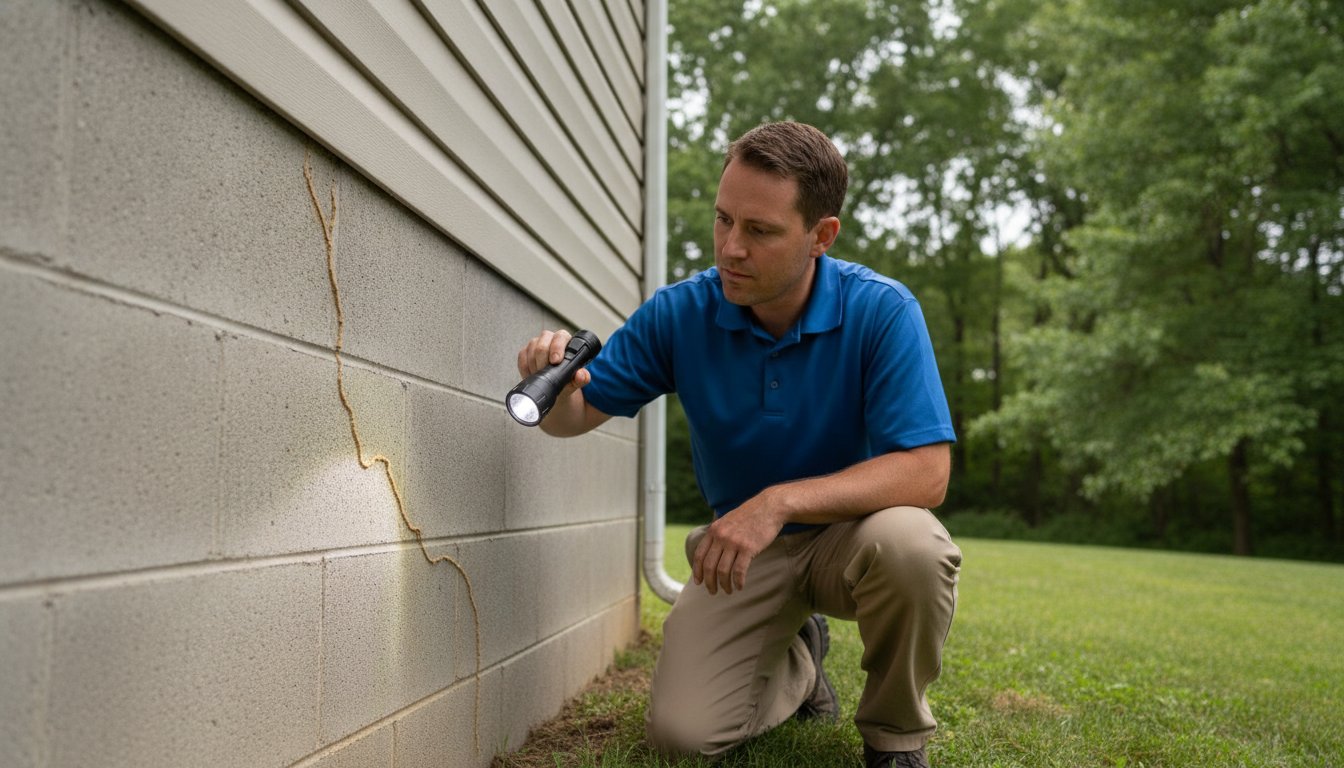
Termites cause more than $5 billion in property damage across the United States every year, often operating as “silent destroyers” for years before a homeowner notices the first sign of trouble. If you’ve discovered mud tubes along your foundation or hollow-sounding wood in the basement, it’s natural to feel a surge of anxiety regarding the potential termite treatment cost Erie PA property owners must navigate. Pennsylvania sits in a high-risk infestation zone, and most neighbors in Northwest Pennsylvania share your fear of structural collapse and the frustration of trying to distinguish between a basic inspection and a comprehensive remediation strategy.
It’s stressful to realize your largest investment is under attack by pests that thrive in our local climate. This 2026 guide clarifies the specific variables that influence remediation expenses in Erie, Crawford, and Ashtabula Counties, allowing you to protect your property investment with total confidence. You’ll learn how your home’s unique construction, the specific behavior of the Eastern Subterranean Termite, and the importance of proactive monitoring systems dictate the scope of a professional response. Understanding these drivers is the first step toward a secure, pest-free home.
Disclaimer: The information provided on this blog is for general informational purposes only and is not intended as professional pest control advice. Conditions vary by property, environment, and location. Reading this content does not create a service agreement. For an inspection or professional recommendations, please contact Mosquito Assassin Pest Control LLC directly.
Key Takeaways
- Discover how your home’s foundation type and total linear footage directly influence the termite treatment cost Erie PA homeowners can expect for professional remediation.
- Understand why the high humidity of the Lake Erie region makes Eastern subterranean termites a persistent threat to property investments in Northwest Pennsylvania.
- Learn practical landscaping and grading techniques that minimize wood-to-ground contact and moisture buildup to help prevent future termite activity.
- Identify the differences between a standard termite assessment and a formal Wood Destroying Insect (WDI) report required for regional property transactions.
- Gain insights into why local knowledge regarding Erie and Crawford County building codes and soil conditions ensures a more accurate and effective risk assessment.
Termite Activity and Structural Risks in the Lake Erie Region
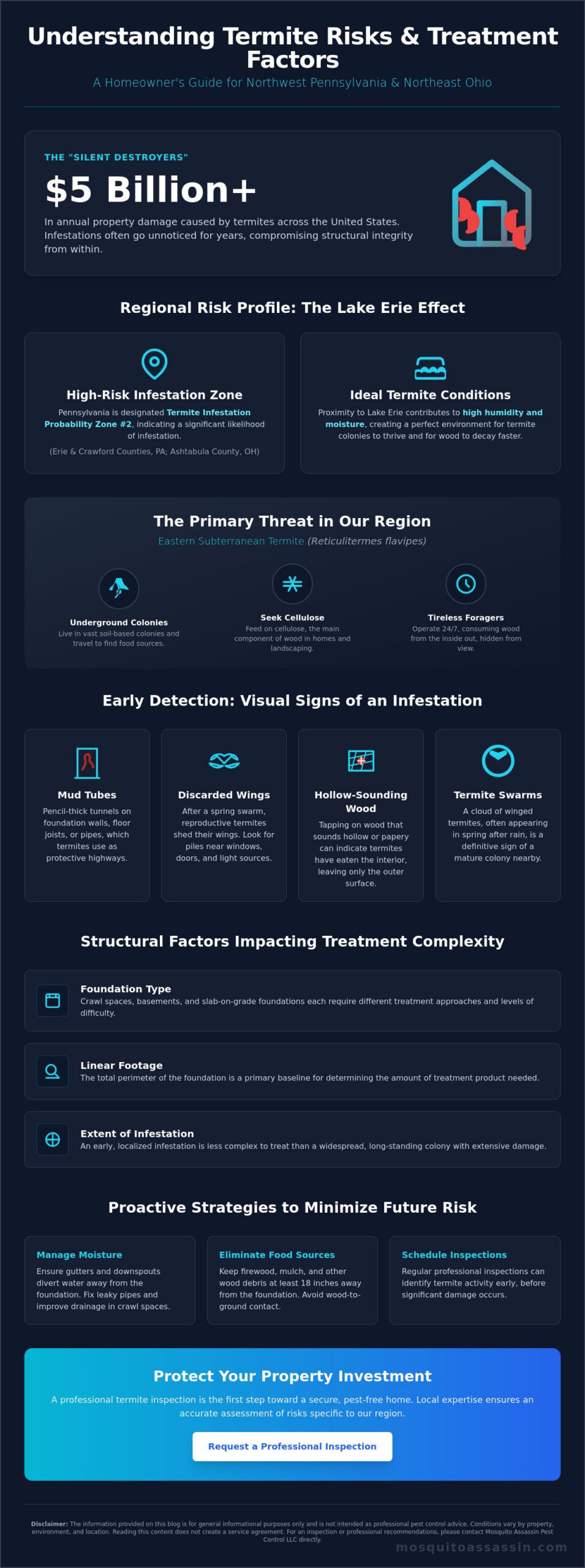
Property owners in Northwest Pennsylvania face a specific set of environmental challenges not found in drier parts of the state. The eastern subterranean termite is the most prevalent and destructive wood-destroying insect in Erie and Crawford counties. These pests live in underground colonies and forage tirelessly for cellulose, the organic compound found in structural lumber and landscaping materials. Because Pennsylvania is classified in Termite Infestation Probability Zone 2, homeowners live in a region where infestation is a significant statistical likelihood.
To better understand the factors that drive professional remediation and the overall termite treatment cost Erie PA property owners navigate, watch this helpful video:
The proximity to Lake Erie plays a massive role in local pest pressure. High humidity levels and frequent lake-effect moisture create ideal conditions for colony expansion and rapid wood decay. When wood stays damp, it becomes softer and more attractive to foraging termites. These insects often remain undetected for years, operating behind drywall, inside floor joists, or within dark crawl spaces. By the time visible signs appear, the structural damage can already be extensive, potentially compromising the safety and resale value of your property. Professional termite inspections and treatment can help identify these hidden risks before they escalate.
The Biology of Termites in Northwest Pennsylvania
Termite colonies in our region are highly organized. They rely on local soil moisture to survive and build protective tunnels to reach food sources above ground. In the spring, usually following a warm rain, mature colonies produce swarms of winged reproductives. These swarms are often the first clear indicator of an active infestation nearby. The unique moisture profile of the Lake Erie shoreline accelerates the breakdown of cellulose, making local homes particularly vulnerable to these silent foragers.
Signs of Activity Homeowners Should Monitor
Early detection is the best way to manage long term expenses. Homeowners should regularly inspect foundation walls and floor joists for mud tubes, which are pencil-thick tunnels made of soil and saliva. You might also find discarded wings near windowsills or entry points after a spring swarm. While several factors influence the total termite treatment cost Erie PA residents pay, the level of existing damage is often the most significant. It’s vital to distinguish between termite damage and standard wood rot. While rot is caused by fungi in wet wood, termite damage often looks like galleries or tunnels carved along the grain of the wood, frequently filled with bits of soil.
Disclaimer: The information provided on this blog is for general informational purposes only and is not intended as professional pest control advice. Conditions vary by property, environment, and location. Reading this content does not create a service agreement. For an inspection or professional recommendations, please contact Mosquito Assassin Pest Control LLC directly.
Structural Factors That Impact Termite Treatment Complexity
While many property owners assume that home size is the only factor in determining expenses, the architectural reality of Northwest Pennsylvania homes tells a different story. The total linear footage of your foundation perimeter is the primary baseline for liquid treatments, but the technical difficulty of the application often dictates the final termite treatment cost Erie PA residents encounter. A larger home with easy foundation access may actually be less complex to treat than a smaller, historic residence with a stone foundation and a finished basement.
Foundation type is arguably the most significant variable in labor and equipment requirements. Slab-on-grade homes, common in newer developments, often require specialized drilling through concrete floors to create a continuous chemical barrier in the soil beneath. In contrast, homes with full basements or crawl spaces present different challenges. The soil composition in Erie and Crawford counties, which can be heavy in clay or rock, influences how effectively liquid termiticides move through the earth. This makes a thorough understanding of how to identify and control termites essential for any remediation plan.
Foundation Types and Remediation Challenges
Older homes in the Lake Erie region frequently feature stone or brick foundations. These porous materials provide numerous tiny entry points for termites to bypass traditional barriers. Treating these structures requires a methodical approach to ensure every potential gallery is addressed. Crawl space clearance also impacts the professional labor needed; tight, low-clearance areas require more time and specialized protective gear for technicians to navigate safely. If you’re concerned about the integrity of your foundation, professional termite inspections and treatment can clarify the specific needs of your property.
Severity and Scope of the Infestation
The scope of the problem also dictates the technical difficulty. While a localized spot treatment might address a visible mud tube, it doesn’t provide the comprehensive protection of a full-perimeter barrier. If an inspection reveals multiple colonies or activity in several areas of the home, the scope of work increases significantly. Identifying structural damage before beginning any chemical application is a best practice. It ensures that the treatment reaches the heart of the infestation rather than just the surface. Professional assessments prioritize finding every hidden colony, especially in finished basements where drywall and flooring can mask the pests mentioned previously.
Disclaimer: The information provided on this blog is for general informational purposes only and is not intended as professional pest control advice. Conditions vary by property, environment, and location. Reading this content does not create a service agreement. For an inspection or professional recommendations, please contact Mosquito Assassin Pest Control LLC directly.
Comparing Local Inspection Types and Remediation Strategies
Selecting the right path for property protection requires a clear distinction between a basic assessment and a formal regulatory report. Many homeowners feel anxious when they realize a standard visual check isn’t the same as a comprehensive Wood Destroying Insect (WDI) inspection. While a standard assessment focuses on identifying active colonies and immediate risk factors, a WDI report is a specialized legal document. These reports are often mandatory for real estate transactions in Northwest Pennsylvania, particularly for those utilizing FHA or VA loans.
WDI Inspections for Erie Real Estate
Lenders and buyers rely on WDI reports to verify the structural integrity of a home before a sale is finalized. A certified inspector must document evidence of past or present infestations, including termites, carpenter ants, and wood-boring beetles. It’s important to understand that a routine general pest control visit differs significantly from a WDI inspection. While general plans manage common household pests, a WDI inspection is a rigorous, point-by-point examination of the entire structure. Professional documentation ensures that all parties in a real estate transaction have a transparent view of the property’s history.
Professional Treatment Methods
Determining the final termite treatment cost Erie PA property owners pay often starts with selecting the right remediation strategy. There are two primary approaches used by licensed professionals: liquid soil barriers and baiting systems. Liquid barriers involve applying a termiticide to the soil around the foundation, creating a continuous zone of protection. This method provides immediate results by preventing insects from entering the structure from the ground. Because Eastern subterranean termite behavior involves constant foraging, a liquid barrier is a highly effective way to intercept them before they reach the wood.
Baiting technology offers a different, targeted approach. Professionals install monitoring stations around the perimeter of the property. When termites find the bait, they share it with the rest of the colony, eventually leading to the elimination of the entire nest. This method is often preferred for properties where drilling into concrete or stone foundations is difficult. Ongoing professional monitoring plans are essential for both methods. These plans help detect new activity early and prevent re-infestation, protecting your long-term investment. Choosing between these strategies depends on your home’s construction and the specific level of termite pressure in your neighborhood.
Disclaimer: The information provided on this blog is for general informational purposes only and is not intended as professional pest control advice. Conditions vary by property, environment, and location. Reading this content does not create a service agreement. For an inspection or professional recommendations, please contact Mosquito Assassin Pest Control LLC directly.
Proactive Strategies to Minimize Future Infestation Expenses
Investing in preventative maintenance is the most effective way to manage the long term termite treatment cost Erie PA property owners face. While structural factors and foundation types dictate the price of active remediation, specific home maintenance habits can significantly reduce the likelihood of a colony ever establishing itself. Termites are attracted to moisture and accessible cellulose; by removing these attractants, you create a less hospitable environment for foraging pests. Regular attention to your home’s exterior and foundation can save thousands of dollars in future repair and treatment bills.
Maintaining proper grading is a fundamental step in property protection. Soil should always slope away from the foundation to ensure that rainwater flows toward the yard rather than pooling against the basement walls. Saturated soil near the structure provides the perfect high-moisture highway for subterranean colonies to reach your floor joists. Additionally, any wood-to-ground contact, such as wooden deck posts or porch lattices resting directly on the dirt, acts as a bridge for insects to bypass soil treatments and enter the home undetected.
Moisture Management in Northwest Pennsylvania
The Lake Erie region’s high humidity and frequent precipitation make moisture control a top priority. Clogged gutters and misdirected downspouts are common culprits for soil saturation. When water overflows from a gutter, it dumps directly at the base of the foundation, creating a localized damp zone that termites love. Using dehumidifiers in basements and crawl spaces also helps keep structural wood dry and less appealing to pests. Understanding how pest control prices are influenced by the state of your property highlights the value of these simple, low-cost maintenance tasks. Keeping your home dry is a scientific approach to pest prevention.
Landscaping and Exterior Maintenance
Your landscaping choices directly impact the risk of infestation. Mulch is a popular choice for Erie gardens, but when it’s piled against the siding, it provides both food and moisture for termites. It’s better to keep a six-inch gap of bare soil or gravel between your mulch beds and the foundation. Similarly, firewood should never be stacked against the house; store it on a raised rack at least twenty feet away. Trimming shrubs and trees ensures adequate airflow around the structure, which helps the foundation dry out after rain. Avoid using untreated wood for garden borders or fence posts, as these materials will quickly rot and attract colonies to your yard. For those who want to verify their property’s risk level, professional termite inspections and treatment may help identify hidden vulnerabilities before they become expensive problems.
Disclaimer: The information provided on this blog is for general informational purposes only and is not intended as professional pest control advice. Conditions vary by property, environment, and location. Reading this content does not create a service agreement. For an inspection or professional recommendations, please contact Mosquito Assassin Pest Control LLC directly.
The Value of Local Expertise in Erie and Crawford Counties
Choosing a professional who understands the specific environmental demands of Northwest Pennsylvania is vital for long term property security. Local experts possess a deep understanding of regional building codes and the unique soil types found throughout Erie and Crawford counties. Whether dealing with the heavy clay near the lake or the rocky terrain further inland, these factors influence how remediation is applied. While structural variables often dictate the termite treatment cost Erie PA residents face, the value of a professional who recognizes regional termite pressure cannot be overstated. These specialists provide more accurate risk assessments because they live and work in the same neighborhoods they protect.
Ongoing protection plans offer essential peace of mind for high risk properties in Zone 2. Professional pest control may help reduce the risk of significant structural loss by identifying activity before it compromises the integrity of the home. Relying on a neighborly expert ensures that the service is tailored to the specific behavior of local colonies rather than a generic national template. Scientific methods combined with regional experience allow for a more disciplined and effective operational approach to termite management.
Selecting a Qualified Professional
Verifying state licensing and insurance is a non-negotiable step when choosing a provider for termite remediation. A qualified professional should provide a detailed service agreement that clearly outlines the scope of work and the specific methods used. Clear communication regarding the multi step service procedure helps alleviate the anxiety often associated with hidden infestations. Community-rooted companies often offer better insights into local pest trends because they track colony movements across specific regional territories over several seasons. This historical data is an invaluable tool for preventing future outbreaks.
Next Steps for Property Protection
Preparing your home for a professional termite assessment ensures the most thorough results. It’s helpful to clear a path around the interior basement walls and the exterior foundation so the inspector can check for mud tubes or wood damage. Understanding the timeline for a comprehensive treatment plan is also important; while some barriers are established quickly, baiting systems require a steady, methodical approach to eliminate a colony entirely. For an inspection or professional recommendations, please visit the Mosquito Assassin contact page. Taking proactive steps today is the most reliable way to secure your property investment for the years ahead.
Disclaimer: The information provided on this blog is for general informational purposes only and is not intended as professional pest control advice. Conditions vary by property, environment, and location. Reading this content does not create a service agreement. For an inspection or professional recommendations, please contact Mosquito Assassin Pest Control LLC directly.
Securing Your Property Against Northwest Pennsylvania Termite Pressure
Managing the termite treatment cost Erie PA homeowners face starts with understanding that structural integrity depends on proactive maintenance and local expertise. Foundation type and moisture levels are the most significant variables in any remediation plan. Professionals who are licensed and insured in Pennsylvania and Ohio bring specialized knowledge of Erie and Crawford county soil conditions to every inspection. It’s essential to remember that structural complexity, such as finished basements or stone foundations, dictates the technical scope of work more than simple square footage.
Comprehensive year-round protection plans are available to help monitor for early activity and prevent the silent destruction often associated with subterranean species. Addressing moisture issues and maintaining proper landscaping grading are the most effective ways to lower your long term risk. Professional pest control may help reduce risk and preserve your property’s value for the long term. To secure your investment, request a professional termite inspection for your property and gain clarity on your home’s current risk level.
Disclaimer: The information provided on this blog is for general informational purposes only and is not intended as professional pest control advice. Conditions vary by property, environment, and location. Reading this content does not create a service agreement. For an inspection or professional recommendations, please contact Mosquito Assassin Pest Control LLC directly.
Frequently Asked Questions
How often should I have my Erie home inspected for termites?
Annual inspections are recommended for properties in Northwest Pennsylvania. Because Erie is in a high risk infestation zone, yearly checks help catch activity before it becomes a major expense. Regular monitoring is the best way to manage your long term termite treatment cost Erie PA by preventing extensive structural damage before it starts. This proactive approach is especially important for homes near the lake where moisture levels are high.
Does homeowners insurance cover the cost of termite treatment?
Standard homeowners insurance policies typically don’t cover termite treatment or the resulting structural damage. Insurance companies view termite activity as a preventable maintenance issue rather than a sudden, accidental event. This makes proactive inspections and professional treatment plans a vital investment for protecting your home’s equity. It’s best to verify your specific policy details with your insurance provider to understand your coverage limitations.
Is a WDI report different from a standard home inspection?
A Wood Destroying Insect (WDI) report is a specialized document that focuses exclusively on termites, carpenter ants, and wood boring beetles. While a standard home inspection covers general systems like plumbing and electrical, it doesn’t provide the rigorous, point by point examination required for WDI certification. Lenders often require this specific report before approving real estate transactions to ensure the structural integrity of the property.
Can I treat a termite infestation myself with store-bought products?
DIY products rarely reach the heart of a subterranean colony located deep in the soil. While store-bought sprays might kill a few visible insects, they don’t address the queen or the larger nest structure. Professional remediation involves specialized equipment and training to ensure a continuous barrier is established around the foundation. Attempting to manage a colony alone often leads to hidden damage that increases future repair expenses.
How long does a professional termite treatment typically last?
A professional liquid soil treatment typically provides protection for five to ten years depending on soil conditions and environmental factors. Baiting systems require ongoing maintenance and monitoring to remain effective over time. Factors like heavy rain or significant soil disruption can impact how long a barrier remains fully intact. Annual professional assessments help ensure that the protective zone hasn’t been compromised by landscaping or construction changes.
What happens if termites return after a professional treatment?
If termites are detected after a professional application, the service team will typically return to address the specific area of activity. Professional service agreements often include provisions for re-treatment if new colonies are discovered within a certain timeframe. This ensures your property remains protected and provides peace of mind for the homeowner. It’s a standard practice that reflects the methodical and disciplined operational approach of licensed experts.
Are termite treatments safe for my family and pets?
Modern termite treatments are designed for targeted application and are safe for households when applied by licensed professionals. Technicians follow strict guidelines to ensure products are placed exactly where they’re needed, often deep in the soil or inside specialized bait stations. Professional pest control focuses on the safety of all residents, including children and pets, while effectively eliminating the infestation. This scientific approach minimizes exposure while maximizing the efficacy of the treatment.
What is the most common time of year for termites to swarm in Pennsylvania?
Termites in Pennsylvania most commonly swarm during the spring months, typically between March and May. These swarms usually occur on warm days following a period of rainfall. Recognizing these winged insects near your foundation or windowsills is a clear signal that a nearby colony is mature and actively expanding. If you see a swarm, it’s a good time to request a professional assessment to determine if your structure is at risk.
Disclaimer: The information provided on this blog is for general informational purposes only and is not intended as professional pest control advice. Conditions vary by property, environment, and location. Reading this content does not create a service agreement. For an inspection or professional recommendations, please contact Mosquito Assassin Pest Control LLC directly.