Tag: Termite Damage

  • Understanding Termite Treatment Cost in Erie PA: A Homeowner’s Guide

    Understanding Termite Treatment Cost in Erie PA: A Homeowner’s Guide

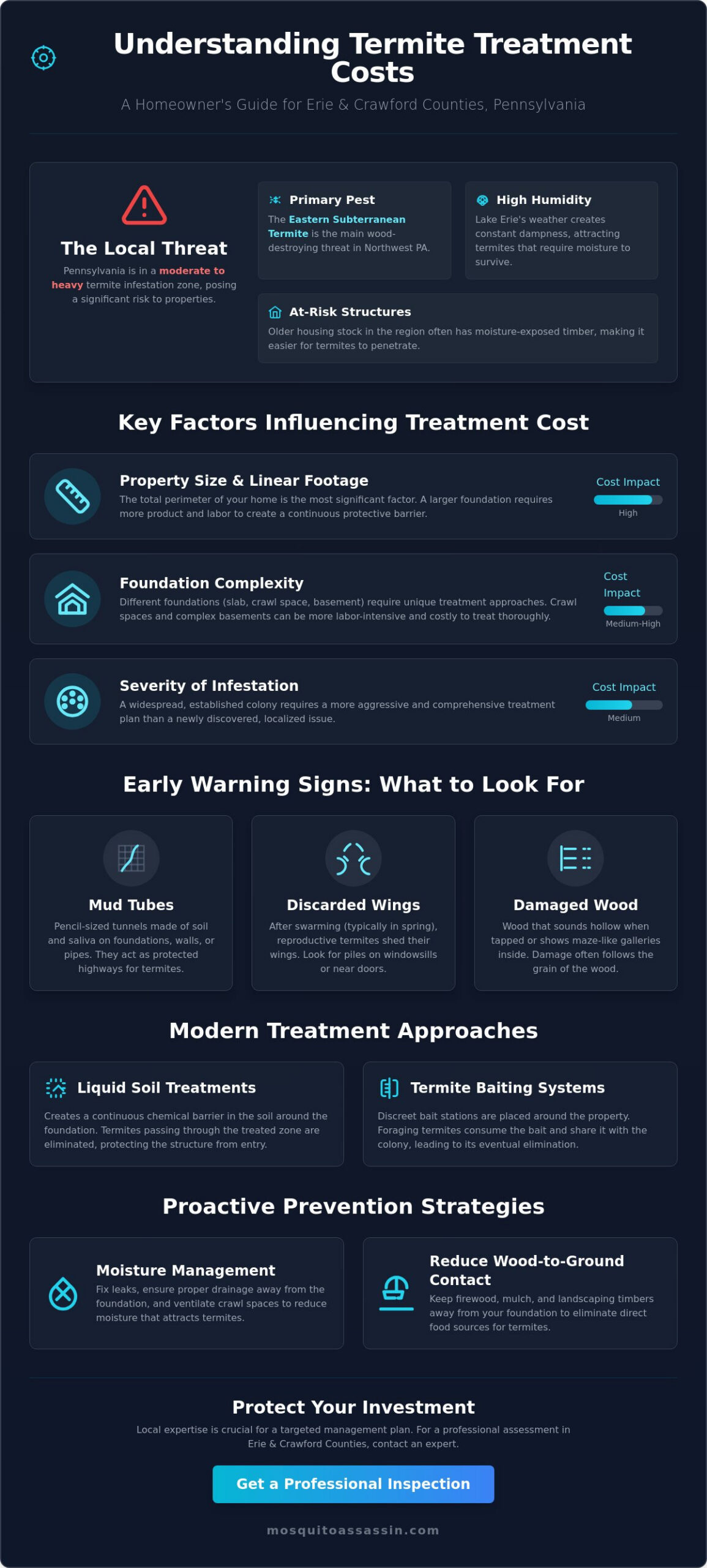
    Pennsylvania is officially classified within a moderate to heavy infestation zone, making subterranean termites a very real threat to properties throughout Erie and Crawford Counties. Finding signs of activity can be overwhelming, especially when you consider that structural repairs often cost thousands of dollars if the problem is left unchecked. It’s completely understandable to feel anxious about the potential termite treatment cost Erie PA property owners face when trying to secure their homes against these wood-destroying pests.

    This guide provides a clear roadmap to understanding the primary factors that move the needle on professional expenses in Northwest Pennsylvania. You’ll learn how to protect your property investment by identifying the variables that influence service complexity, from foundation types to the specific methods used for elimination. By the end of this article, you’ll have the knowledge needed to choose a professional service with confidence and implement strategies to prevent future infestations. The following sections explore how localized moisture levels, the extent of the colony, and modern baiting versus liquid soil treatments impact the overall scope of a professional project.

    Key Takeaways

    • Identify how the unique humidity levels of the Lake Erie region contribute to the activity of Eastern subterranean termites and increase the risk of structural damage.
    • Understand how structural variables, including foundation type (slab, crawl space, or basement) and linear footage, directly influence the termite treatment cost Erie PA property owners encounter.
    • Distinguish between standard professional assessments and official Wood Destroying Insect (WDI) reports to ensure your property meets real estate and safety requirements.
    • Learn essential moisture management and landscaping techniques to reduce wood-to-ground contact and make your property less attractive to foraging colonies.
    • Gain insight into why local expertise in Erie and Crawford Counties is necessary for developing a targeted management plan that accounts for specific regional climate patterns.

    Termite Activity and Structural Risks in the Erie Region

    The Eastern subterranean termite is the primary wood-destroying insect threatening properties throughout Northwest Pennsylvania. Unlike drywood termites found in warmer climates, these pests live in the soil and require constant moisture to survive. This makes the high humidity levels found near Lake Erie particularly problematic. The lake-effect weather patterns do more than just produce snow; they create a consistent cycle of dampness that can permeate the foundations of local homes. When moisture levels in structural wood rise, it becomes significantly more attractive to foraging termite colonies.

    Older housing stock in Erie and Crawford Counties presents additional risks. Many historic homes in neighborhoods throughout the region were built with timber that has faced decades of seasonal moisture exposure. This environmental wear and tear makes it easier for termites to penetrate the grain. Understanding these local environmental pressures is the first step in evaluating the eventual termite treatment cost Erie PA homeowners might encounter when protecting their investments.

    To better understand this concept, watch this helpful video:

    The Biology of Termites in Northwest Pennsylvania

    Subterranean termites are relentless foragers that move from the earth into a home’s structure through tiny cracks in the foundation. They consume cellulose, the organic compound found in wood, paper, and cardboard. In the Erie area, swarming season typically occurs in the spring, often following a warm rain. During this time, winged reproductive termites leave the colony to start new ones. Without a proper termite barrier, these insects can establish a presence long before a homeowner notices physical damage. They’re capable of traveling through specialized tunnels to reach food sources high above the ground level.

    Signs of Activity Homeowners Should Monitor

    Early detection is vital for minimizing structural repair expenses. Homeowners should look for specific indicators of an infestation during their regular property maintenance:

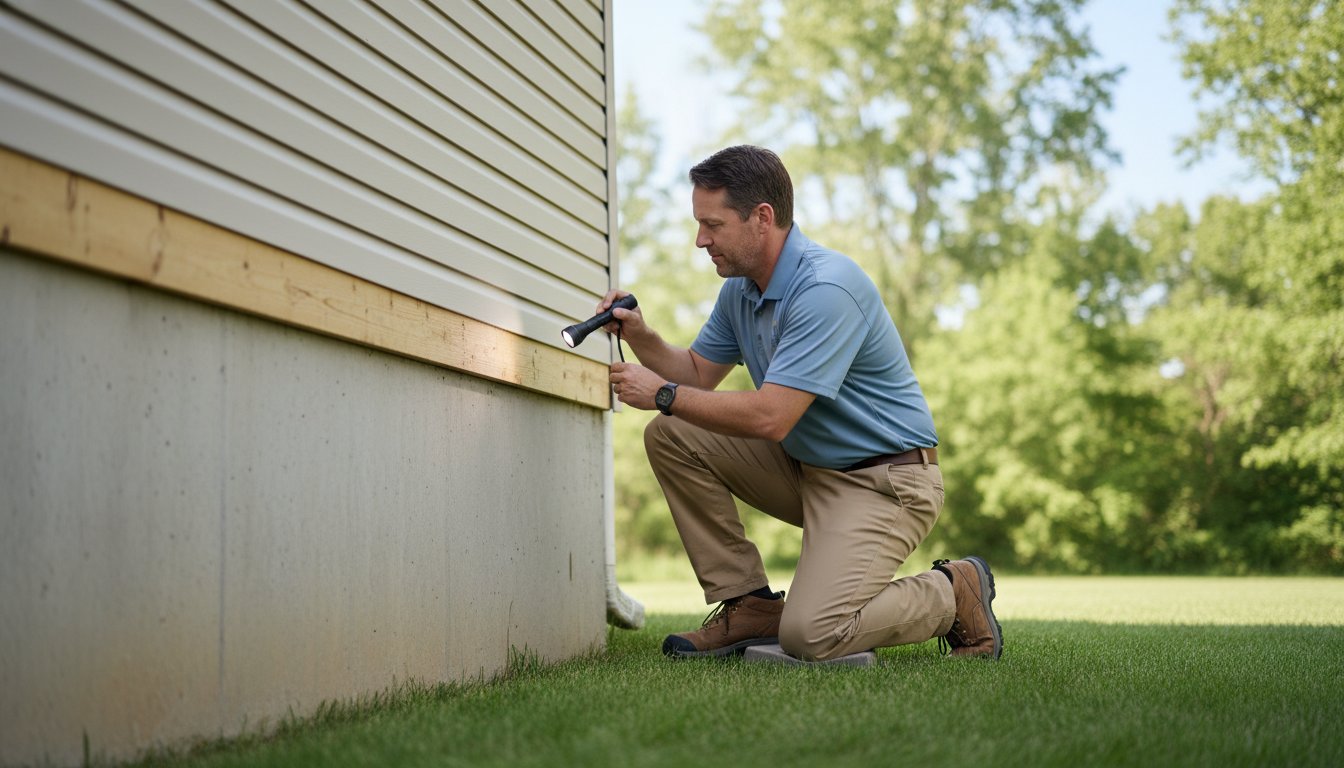
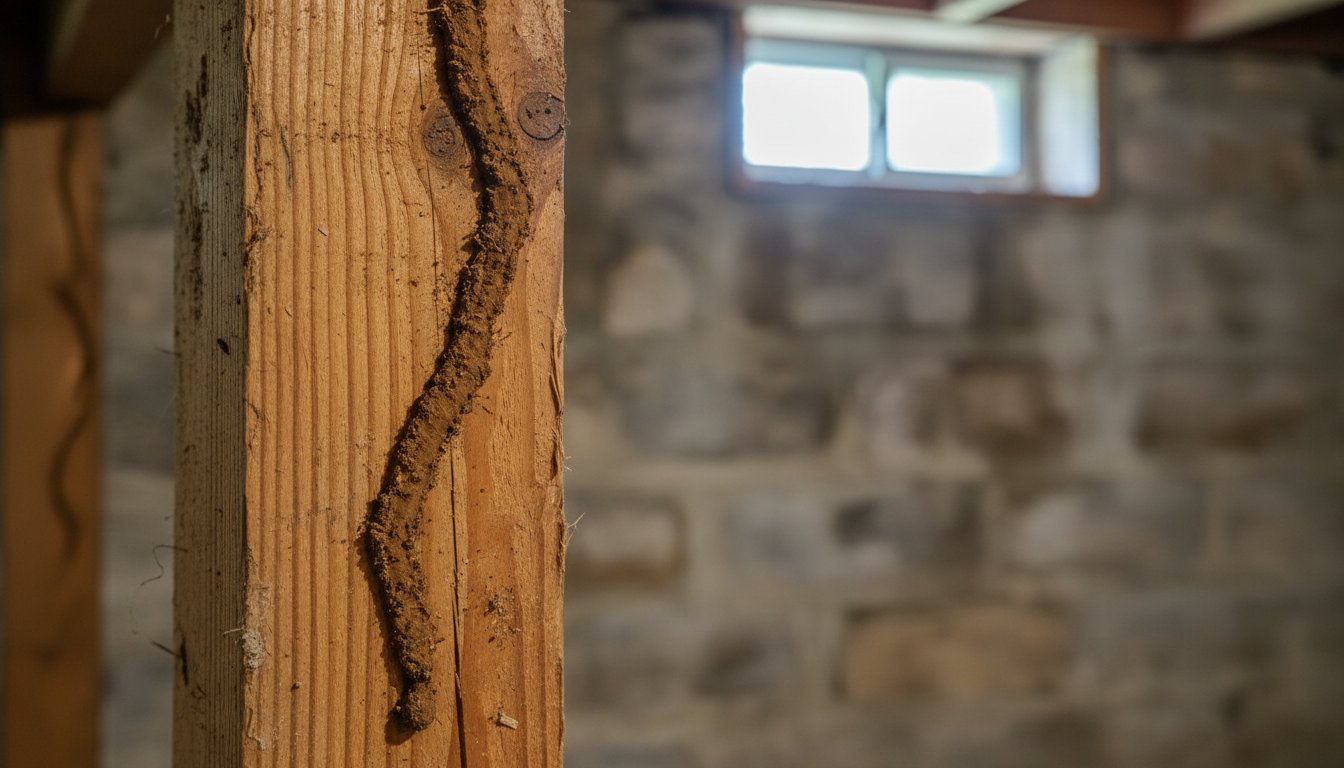
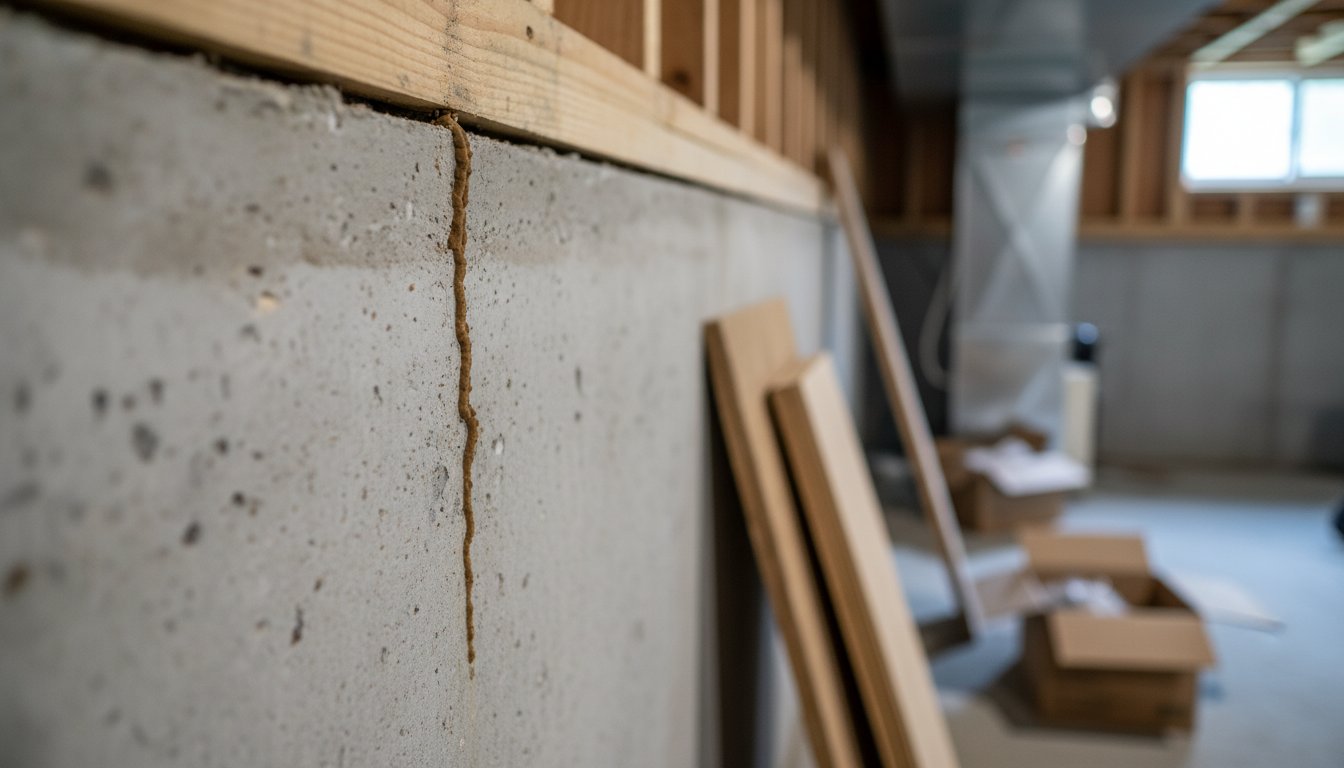
    • Mud Tubes: These pencil-sized tunnels are built from soil and saliva to protect termites from dehydration as they travel across concrete, brick, or stone foundations.
    • Discarded Wings: After a swarm, you may find small, iridescent wings piled on windowsills or near entry points. These are often the first visible signs of a nearby colony.
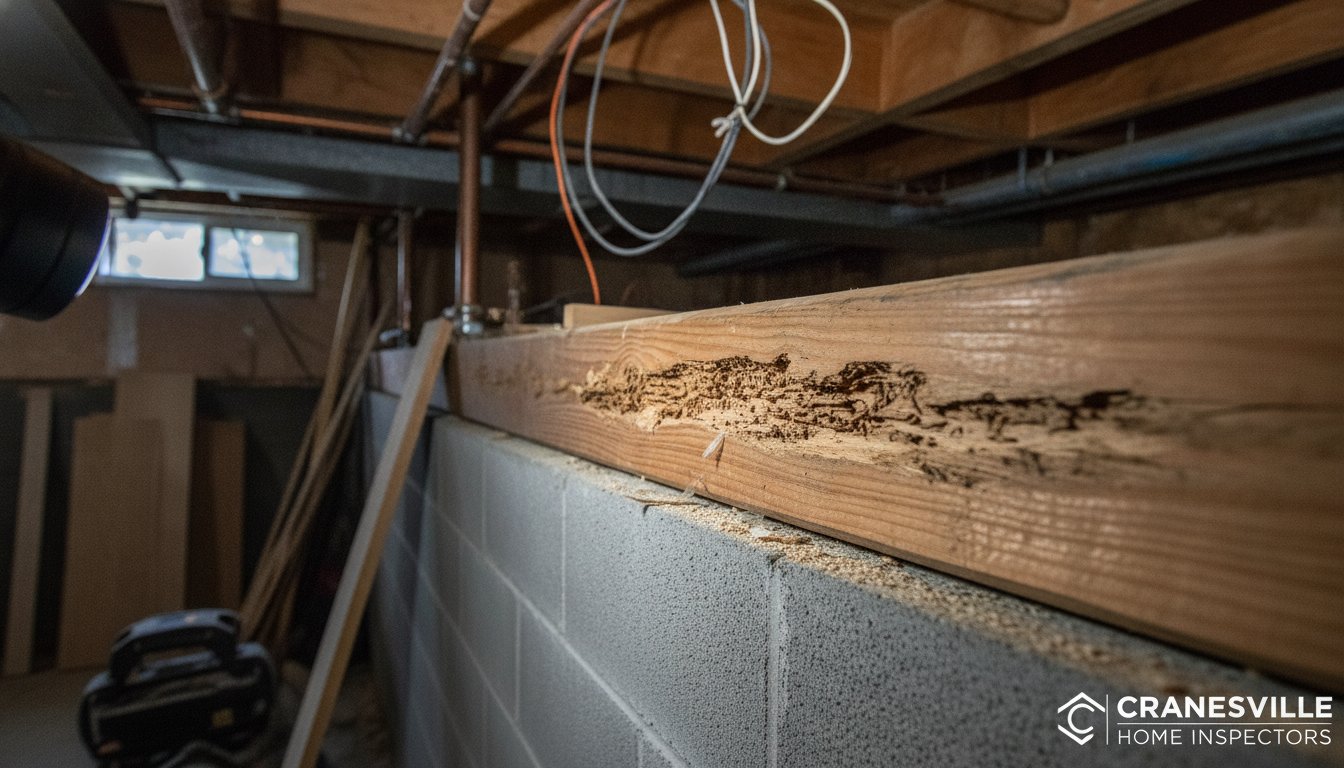
    • Wood Texture: Termite damage often follows the grain of the wood and leaves behind hollowed-out galleries. This differs from simple water rot, which usually makes wood feel soft, spongy, or crumbly without the presence of distinct tunnels or soil deposits.

    Because these pests often work from the inside out, the exterior of a beam might look perfectly fine while the interior is structurally compromised. Professional inspections are necessary to confirm whether these signs indicate an active colony or historical damage from a previous infestation.

    Variables That Determine Termite Remediation Expenses

    Every home presents a unique set of challenges for pest management professionals. The final termite treatment cost Erie PA homeowners receive is rarely a one size fits all figure. Instead, it’s a calculation based on the specific physical characteristics of the building and the environmental pressure of the surrounding soil. Technicians must evaluate how much product is needed and how much labor is required to install a reliable barrier. Several key variables dictate the scope of this work.

    Property Size and Foundation Complexity

    Total linear footage is the most significant factor in determining treatment needs. Most professional plans involve creating a continuous chemical or physical barrier around the entire perimeter of the structure. A larger home requires more specialized product and more hours of labor to ensure there are no gaps in protection. Foundation type also plays a massive role. In Erie and Crawford Counties, homes often feature a mix of full basements, crawl spaces, and concrete slabs. Treating an unfinished crawl space is a different process than treating a finished basement where technicians may need to drill through flooring or drywall to reach the foundation wall. Attached structures like decks, porches, and garages also add complexity. These areas often provide hidden entry points that require additional time and materials to secure properly.

    Severity of the Infestation

    The extent of the current termite activity influences the intensity of the response. While some property owners may inquire about localized spot treatments, these are often insufficient for long term protection. Subterranean termites are relentless. If one entry point is blocked, they will simply forage until they find another. Comprehensive perimeter protection is the standard for a reason. The Environmental Protection Agency offers resources on How to Identify and Control Them, which can help property owners understand why a thorough remediation plan is necessary. Larger, established colonies may require a higher volume of treatment materials or more frequent monitoring visits to ensure the population is fully suppressed. Scheduling a comprehensive termite inspection is the most effective way to determine which variables apply to your specific property.

    Accessibility and Technical Labor

    Accessibility is the final piece of the puzzle. Technicians must be able to reach the interface where the soil meets the foundation. If a home is surrounded by dense landscaping, heavy debris, or structural obstructions, the labor time increases. In some cases, specialized equipment is needed to inject treatments under concrete patios or through thick masonry. These labor intensive tasks are essential for creating a complete shield against wood destroying insects. Professionals familiar with the older housing stock in Northwest Pennsylvania understand these structural nuances and can provide a more accurate assessment of the work required to protect the building’s integrity.

    Disclaimer: The information provided on this blog is for general informational purposes only and is not intended as professional pest control advice. Conditions vary by property, environment, and location. Reading this content does not create a service agreement. For an inspection or professional recommendations, please contact Mosquito Assassin Pest Control LLC directly.
    Understanding Termite Treatment Cost in Erie PA: A Homeowner’s Guide

    Comparing Termite Inspections and Comprehensive Treatment Plans

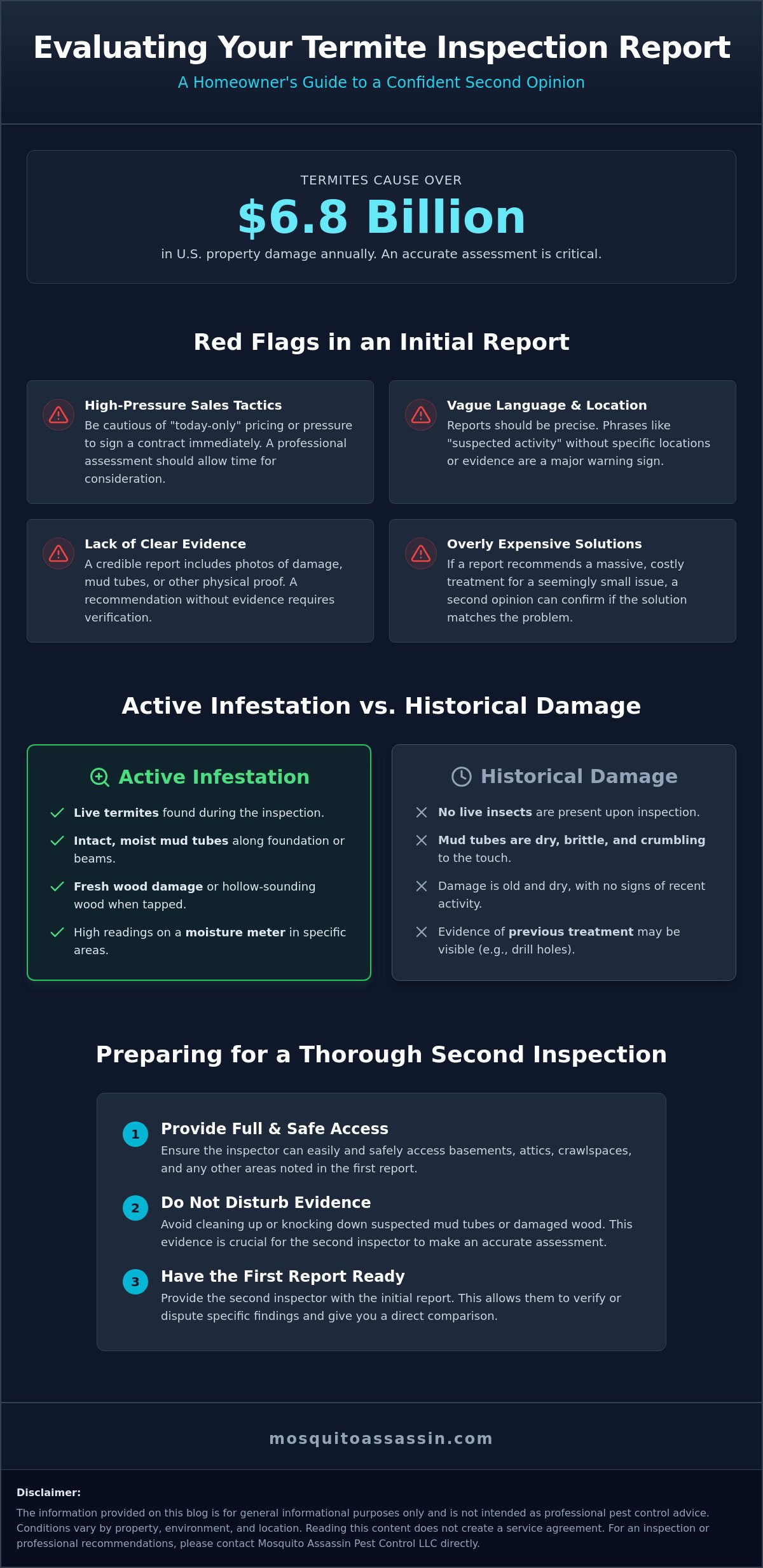
    There is often significant confusion between the diagnostic phase of pest management and the actual remediation process. A professional inspection is a critical first step, but it is purely an investigative tool. It identifies the presence of wood-destroying organisms, assesses the extent of the damage, and determines the likely entry points. However, an inspection does not stop an active colony. Homeowners should understand that pest control prices vary significantly based on whether the service is a one-time assessment or a comprehensive elimination and protection strategy. The initial termite treatment cost Erie PA property owners encounter covers the specialized labor and materials required to create a defensive shield around the structure.

    Wood Destroying Insect (WDI) Inspections

    A Wood Destroying Insect (WDI) report is a specialized document often required during real estate transactions, home sales, or refinancing. While a standard inspection might be for a homeowner’s peace of mind, a WDI report is a formal legal document. During this process, a licensed professional meticulously examines accessible areas for evidence of Eastern subterranean termites, carpenter ants, and wood-boring beetles. It is important to remember that these reports only document the conditions found on the day of the visit. They do not provide treatment, and they do not serve as a guarantee against future activity. If the report identifies an active infestation, a separate remediation plan must be developed to address the structural threat.

    Comprehensive Protection and Monitoring

    Once an infestation is confirmed, property owners must choose between different methodologies for total elimination. Professional liquid soil barriers involve applying a specialized product into the earth around the foundation to create a continuous zone of protection. This prevents termites from entering the structure. Alternatively, professional baiting systems utilize stations placed strategically around the property. These stations monitor for activity and allow for the introduction of materials that the worker termites carry back to the colony.

    Ongoing monitoring is a vital component of long-term success. Because subterranean termites are common throughout the Erie and Crawford County regions, a property that has been cleared can still be targeted by neighboring colonies later. A proactive protection plan involves regular check-ups to ensure the barrier remains intact. This approach is often more cost-effective than reactive repairs. The cost of replacing structural floor joists or sill plates far exceeds the investment in a professional monitoring program. Licensed professionals familiar with the Pennsylvania climate can help determine which method is most appropriate for a specific property’s foundation and soil type.

    Disclaimer: The information provided on this blog is for general informational purposes only and is not intended as professional pest control advice. Conditions vary by property, environment, and location. Reading this content does not create a service agreement. For an inspection or professional recommendations, please contact Mosquito Assassin Pest Control LLC directly.
    Long-Term Prevention and Structural Protection Strategies

    Effective termite management is not a one-time event but an ongoing commitment to structural integrity. While the initial termite treatment cost Erie PA residents pay secures a property, maintaining that protection requires a combination of professional oversight and diligent property maintenance. By addressing environmental factors that attract subterranean colonies, homeowners can significantly reduce the pressure on their defensive barriers and extend the lifespan of their investment.

    Moisture Control and Landscaping

    Subterranean termites are highly sensitive to dehydration and are naturally drawn to areas with high soil moisture. In the wet climate of Northwest Pennsylvania, managing water runoff is the most critical preventative step. Property owners should ensure that soil is graded to slope away from the foundation and that downspouts direct water at least five to ten feet from the building. Leaking outdoor faucets or air conditioning condensate lines should be repaired immediately to prevent localized damp spots.

    • Manage Mulch: Keep organic mulch at least six inches away from the foundation. Mulch holds moisture and can serve as a “termite bridge,” allowing insects to bypass chemical barriers.
    • Ventilate Crawl Spaces: Poorly ventilated crawl spaces create a humid microclimate that is ideal for termites. Installing vapor barriers and ensuring proper airflow reduces this attraction.
    • Eliminate Wood-to-Ground Contact: Wooden siding, lattice work, or door frames should never touch the soil. Maintaining a gap of at least six inches allows for easier inspection and removes a direct path for foragers.

    The Financial Impact of Termite Damage

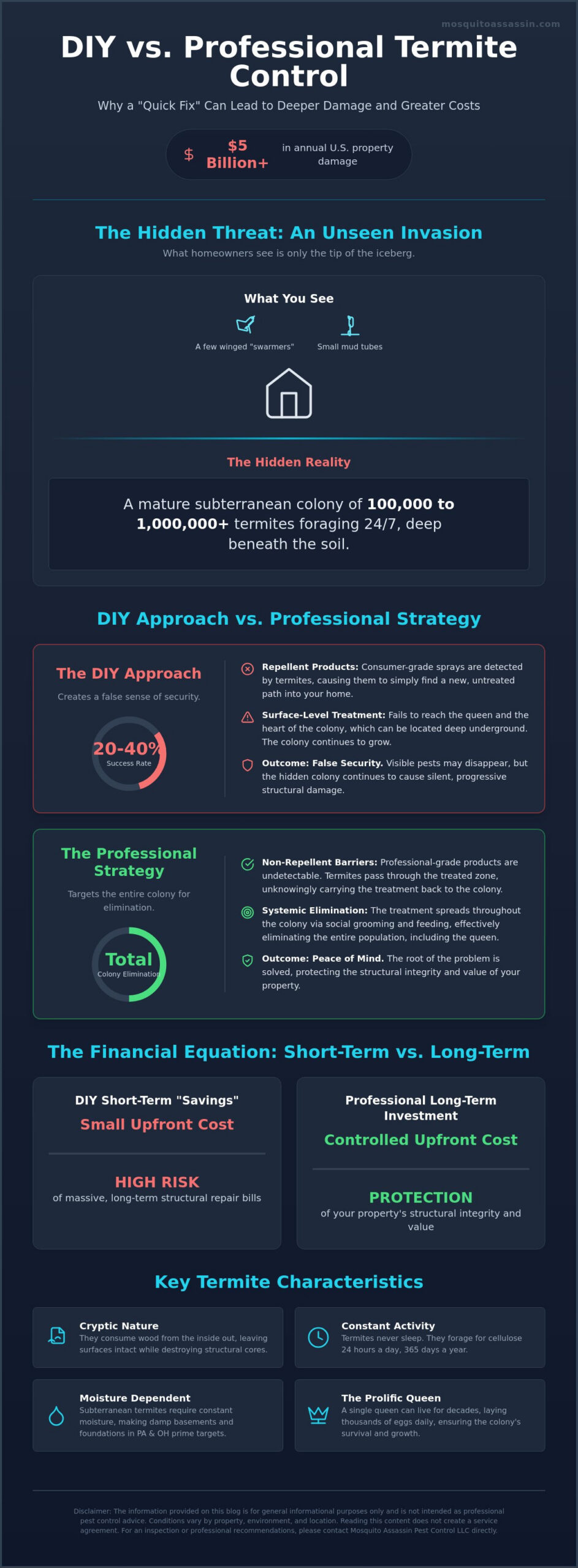
    Many property owners are surprised to learn that standard homeowners insurance policies rarely cover termite damage or remediation. This makes the cost of inaction particularly high. When compared to the investment in a professional protection plan, the expense of replacing load-bearing beams, sill plates, or floor joists is substantial. Structural wood replacement often requires specialized contractors and can reach into the thousands of dollars, depending on the severity of the compromise. In contrast, integrating termite monitoring with general pest control provides a proactive layer of security. Regular property assessments by a licensed professional allow for the early detection of foraging activity before it results in significant structural loss. Professional pest control may help reduce risk by identifying these vulnerabilities before colonies establish a foothold. For a detailed assessment of your property’s specific risks, consider scheduling a professional inspection to identify potential entry points.

    Disclaimer: The information provided on this blog is for general informational purposes only and is not intended as professional pest control advice. Conditions vary by property, environment, and location. Reading this content does not create a service agreement. For an inspection or professional recommendations, please contact Mosquito Assassin Pest Control LLC directly.

    Professional Termite Management in Erie and Crawford Counties

    Managing wood-destroying insects in Northwest Pennsylvania requires a deep understanding of the region’s specific environmental challenges. National providers often apply broad, standardized strategies, but local experts recognize how the unique lake-effect humidity and older architectural styles in Erie, Meadville, and Ashtabula influence infestation patterns. A technician who lives and works in Crawford or Erie County understands that a Victorian-era home in downtown Meadville has different structural vulnerabilities than a modern slab-on-grade property near the lakefront. This specialized knowledge ensures that the termite treatment cost Erie PA residents invest in is utilized effectively, targeting the most likely entry points and nesting sites with precision.

    Local expertise also leads to more accurate structural assessments. Because professionals in our region are familiar with common construction techniques used throughout the decades, they can quickly identify where foundation settling or previous water damage might have created an easy path for foragers. This insight allows for a more disciplined operational approach, focusing resources on the areas of highest risk rather than applying a generic solution that might miss hidden colonies. Licensed applicators play a vital role in this process, as they possess the technical training required to handle specialized materials safely and effectively while adhering to strict Pennsylvania and Ohio regulatory standards.

    Selecting a Local Professional

    When choosing a provider, property owners should verify that the company holds the necessary “Wood Destroying Pests” category licensing through the Pennsylvania Department of Agriculture. Licensed applicators are trained in the scientific application of materials, ensuring that treatments are both effective and compliant with official safety standards. A reputable provider will always provide a clear, written treatment plan before any work begins. This document should outline the specific areas targeted for remediation, the methods used, and a clear follow-up schedule for monitoring. Community-rooted providers often offer a higher level of accountability because they rely on their local reputation and shared community values. They treat their clients as neighbors, providing a reassuring level of service that national chains often struggle to match.

    Requesting a Professional Assessment

    A detailed professional walkthrough is the only way to identify hidden vulnerabilities that might be missed during a casual observation. To prepare for an evaluation, property owners should clear debris away from the foundation and ensure that crawl space entrances and basement walls are accessible for a thorough viewing. During the assessment, a professional will look for the subtle signs of activity and evaluate the soil composition around the foundation to determine the most effective barrier method. This methodical approach ensures that the resulting plan is tailored to the specific needs of the property. For those seeking more information about local service availability or specific regional expertise, visiting mosquitoassassin.com/location can help identify the nearest professional resources. Professional pest control may help reduce risk and provide long-term peace of mind for property owners.

    Disclaimer: The information provided on this blog is for general informational purposes only and is not intended as professional pest control advice. Conditions vary by property, environment, and location. Reading this content does not create a service agreement. For an inspection or professional recommendations, please contact Mosquito Assassin Pest Control LLC directly.

    Securing Your Property Against Structural Loss

    Protecting a home from subterranean termites requires a clear understanding of foundation complexity and moisture management. While environmental factors like lake-effect humidity increase local pressure, proactive barriers and regular monitoring provide a definitive solution. Determining the termite treatment cost Erie PA homeowners encounter depends on these specific structural variables. It’s also based on the depth of the protection plan chosen for the property.

    Working with a locally owned provider that is licensed in Pennsylvania and Ohio ensures that the assessment accounts for regional climate patterns. A systematic multi-step protection process identifies vulnerabilities before they lead to expensive structural repairs. Professional pest control may help reduce risk and preserve your property investment. To begin a thorough evaluation of your home, you can Request a professional inspection from Mosquito Assassin Pest Control LLC. Taking these practical steps today ensures your property remains a safe and secure environment for years to come.

    Disclaimer: The information provided on this blog is for general informational purposes only and is not intended as professional pest control advice. Conditions vary by property, environment, and location. Reading this content does not create a service agreement. For an inspection or professional recommendations, please contact Mosquito Assassin Pest Control LLC directly.
    Frequently Asked Questions

    How much does a typical termite inspection cost in Erie PA?

    Professional termite inspections in the region vary based on the depth of the evaluation and whether a formal Wood Destroying Insect (WDI) report is required for a real estate transaction. While basic assessments might sometimes be included with other pest plans, specialized inspections involving detailed structural probes and moisture readings typically involve a separate fee. This investment ensures that any activity is identified early, potentially saving thousands in structural repair expenses.

    Can I treat termites myself with hardware store products?

    Hardware store products are generally insufficient for eliminating established subterranean termite colonies. These pests live deep in the soil and utilize complex tunneling systems to reach structural wood, making surface treatments ineffective. Professional management requires specialized equipment and materials that create a continuous barrier, which DIY methods cannot achieve. Attempting to resolve the issue without professional tools often allows the colony to relocate and continue causing damage elsewhere.

    Is termite treatment safe for my family and pets?

    Modern termite treatments are designed for targeted application and are safe for households when administered by licensed professionals following strict regulatory guidelines. Technicians utilize methods that minimize exposure to family members and pets, such as placing bait stations in secure, tamper resistant housings or injecting liquid barriers directly into the soil. Following the specific re-entry instructions provided by your technician ensures the safety of all household members throughout the process.

    How long does a professional termite treatment last?

    The longevity of a treatment depends on the specific method used and the environmental conditions of the property. Liquid soil barriers typically remain effective for five to ten years, while professional baiting systems require ongoing monitoring and maintenance to remain active. Because Northwest Pennsylvania experiences significant seasonal moisture, regular professional check-ups are essential to ensure the protective shield remains intact and hasn’t been compromised by soil erosion or landscaping changes.

    What happens if I ignore signs of termites in my home?

    Ignoring signs of activity can lead to severe structural compromise that is often not covered by standard homeowners insurance. Termites consume cellulose 24 hours a day, meaning even a small colony can eventually hollow out load bearing beams and floor joists. Over time, this damage can lead to sagging floors and structural failure, resulting in a total repair bill that far exceeds the initial termite treatment cost Erie PA property owners pay for prevention.

    Are termites common in the Ashtabula and Crawford County areas?

    Termites are quite common throughout Ashtabula and Crawford Counties as these areas fall within a moderate to heavy infestation zone. The high humidity levels and presence of older housing stock create ideal conditions for Eastern subterranean termites to thrive. Properties in Meadville, Titusville, and Ashtabula face consistent pressure from soil dwelling colonies, making regular property assessments a vital part of standard home maintenance in the region.

    How often should I have my home inspected for termites in Pennsylvania?

    Annual inspections are recommended for properties in Pennsylvania due to the significant risk of subterranean termite activity. A yearly walkthrough by a licensed professional allows for the detection of mud tubes or swarming activity that a homeowner might miss. Regular assessments are especially important following any major landscaping work or structural renovations, as these activities can inadvertently disturb existing barriers or create new entry points for foraging insects.

  • Emergency Pest Control: Determining When Immediate Professional Intervention is Required

    Emergency Pest Control: Determining When Immediate Professional Intervention is Required

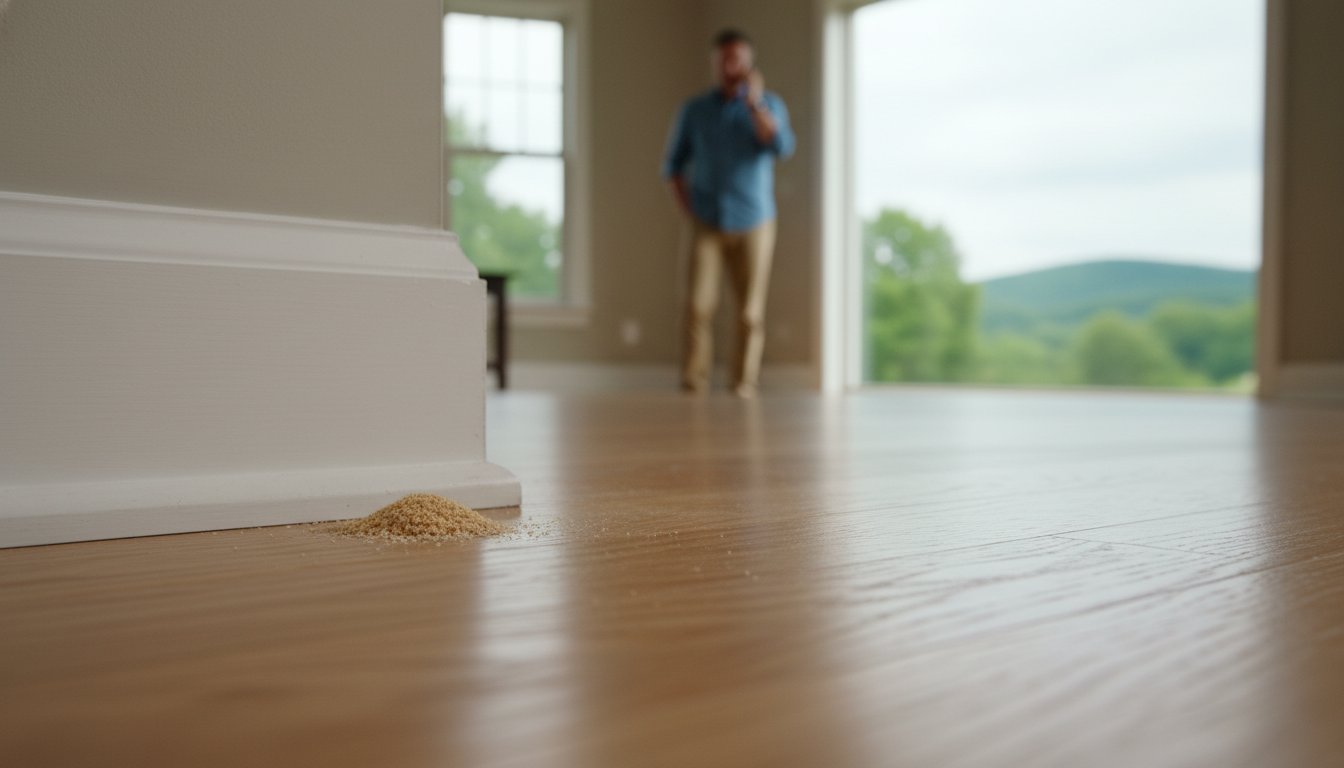
    On a humid Tuesday evening in Erie County, a homeowner discovered a massive swarm of subterranean termites emerging from a baseboard, indicating a colony that had been silently damaging the home’s structure for months. This discovery often leads to the urgent question: Q: Are you available for same-day or emergency pest control service? Most people agree that the sight of a sudden infestation triggers immediate anxiety regarding property damage and the safety of children and pets. You’ll learn how to distinguish between a routine nuisance and a genuine pest emergency that requires rapid intervention.

    This guide provides the critical steps for safeguarding your property and maintaining a safe environment before a licensed professional arrives on the scene. This article examines specific red flags like structural buzzing or nesting in electrical boxes and outlines a clear plan for immediate risk reduction and long-term prevention. Understanding these triggers ensures that the process to eliminate the threat begins the moment it is identified.

    Disclaimer: The information provided on this blog is for general informational purposes only and is not intended as professional pest control advice. Conditions vary by property, environment, and location. Reading this content does not create a service agreement. For an inspection or professional recommendations, please contact Mosquito Assassin Pest Control LLC directly.
    Key Takeaways

    • Identify the specific indicators that distinguish a minor nuisance from a true pest emergency requiring you to ask, Q: Are you available for same-day or emergency pest control service?
    • Understand the biological factors that cause certain infestations to spread rapidly, providing clarity for those asking, Q: Are you available for same-day or emergency pest control service?
    • Learn the critical safety protocols to implement to protect your household while awaiting a response to the question, Q: Are you available for same-day or emergency pest control service?
    • Evaluate the strategic differences between year-round protection and reactive treatments for those wondering, Q: Are you available for same-day or emergency pest control service? in Erie, Crawford, and Ashtabula counties.
    • Discover how delayed responses to wood-destroying organisms can lead to rapid escalation of damage, making the answer to Q: Are you available for same-day or emergency pest control service? a top priority for property owners.

    Defining a Pest Control Emergency: When to Seek Immediate Assistance

    Homeowners in Erie, Crawford, and Ashtabula counties often face situations where a pest presence shifts from a minor annoyance to a legitimate crisis. Determining when a situation requires an immediate response is critical for property protection and resident safety. A common inquiry during these high-pressure moments is, Q: Are you available for same-day or emergency pest control service? Identifying the difference between a nuisance and an emergency often comes down to the speed of reproduction and the potential for physical harm.

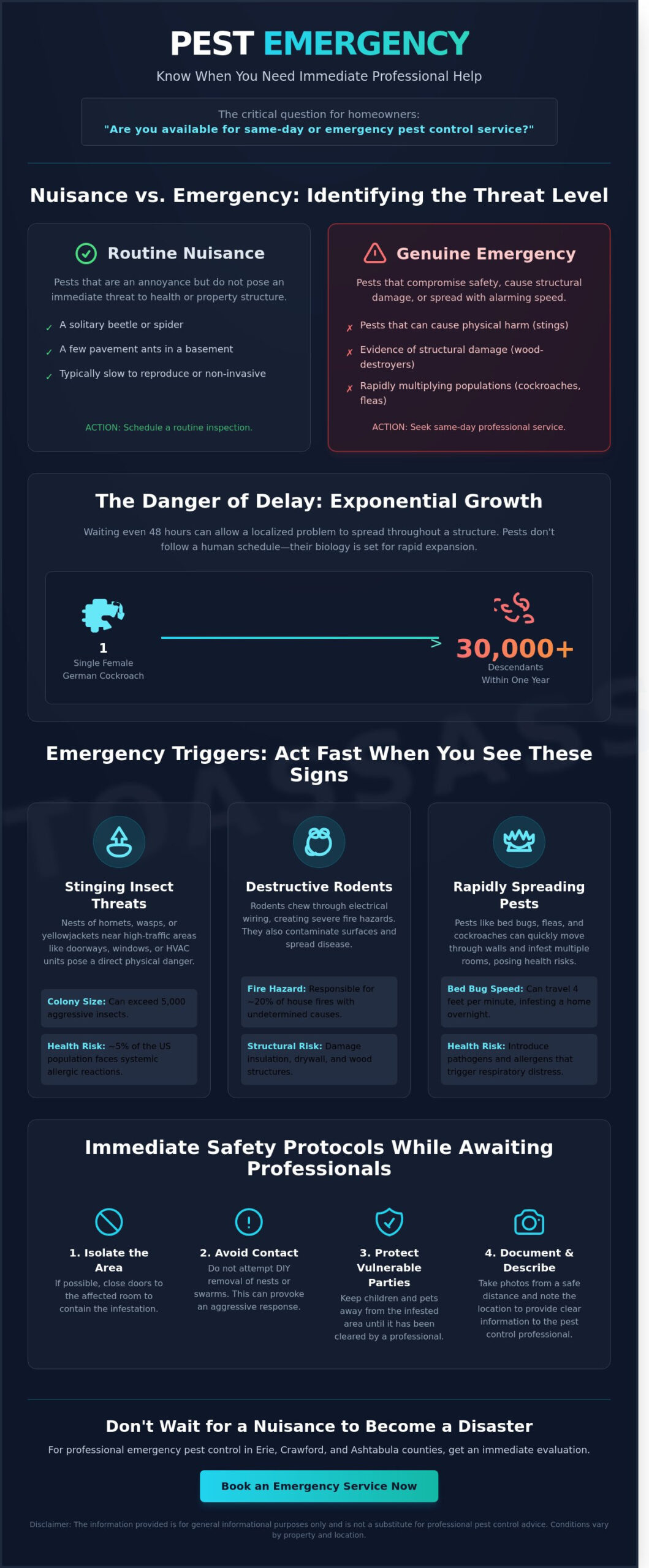
    A nuisance pest, like a solitary beetle or a few pavement ants in a basement, typically doesn’t require an hour-by-hour response. However, an emergency involves pests that compromise the safety of the inhabitants or the structural stability of the building. Rapid response is necessary because many pests follow an exponential growth curve. For example, a single German cockroach and her offspring can produce 30,000 individuals within one calendar year. Waiting even 48 hours to begin treatment can allow a localized problem to spread into wall voids and adjacent rooms. Professional intervention utilizes specialized equipment, such as high-volume injection systems and HEPA-filtered extraction tools, which aren’t available to the general public through retail channels.

    Stinging Insect Threats Near Entry Points

    When hornets, wasps, or yellowjackets establish nests directly above doorways or near HVAC units, they pose an immediate physical threat. Statistics from the Journal of Asthma and Allergy indicate that approximately 5% of the U.S. population will experience a systemic allergic reaction to insect stings in their lifetime. DIY removal is dangerous for unlicensed individuals because a single colony can contain over 5,000 aggressive insects. Professionals use protective gear and long-range application tools to ensure safety while removing the threat from high-traffic areas.

    Rapidly Spreading Indoor Infestations

    Indoor emergencies often involve pests that move quickly or cause hidden damage. Bed bugs can travel 4 feet per minute; this means they can infest multiple rooms in a single night. Rodents present a different type of emergency; they’re responsible for an estimated 20% of house fires with undetermined causes due to their habit of gnawing on electrical insulation. In residential spaces, sudden surges of fleas or cockroaches introduce pathogens and allergens that trigger respiratory distress. These situations demand a fast assessment to stop the cycle of destruction before it impacts every room in the house.

    Understanding these risks helps residents prioritize their response. When these signs appear, professional pest control may help reduce risk and prevent further escalation. Residents often ask, Q: Are you available for same-day or emergency pest control service? when they discover a nest or infestation that threatens their peace of mind. Accessing professional help quickly ensures that the right tools are deployed before the population doubles. For an evaluation in the tri-state area, visiting the online booking portal at https://portal.gorilladesk.com/mosquitoassassin is a practical first step toward resolving the issue.

    Disclaimer: The information provided on this blog is for general informational purposes only and is not intended as professional pest control advice. Conditions vary by property, environment, and location. Reading this content does not create a service agreement. For an inspection or professional recommendations, please contact Mosquito Assassin Pest Control LLC directly.
    The Risks of Delayed Response in Pest Management

    Pests don’t follow a human schedule, and their biological clocks are set for rapid expansion. A single female German cockroach can produce a lineage of 30,000 descendants within a single year if environmental conditions are favorable. This exponential growth turns a minor nuisance into a structural crisis in a matter of weeks. Homeowners often ask, Q: Are you available for same-day or emergency pest control service? because they recognize that every hour of delay allows for another cycle of reproduction. In regions like Erie and Crawford Counties, local climate shifts can accelerate these cycles during peak seasons, making immediate intervention a professional necessity.

    The correlation between response time and eradication success is absolute. Professional data suggests that treating an infestation in its early stages is 40 percent more likely to achieve total elimination with fewer intervention cycles. Waiting until a pest problem is visible to the naked eye often means the colony has already established deep roots within wall voids or foundations. Prompt action limits the biological footprint of the pests, reducing the amount of sanitization and structural repair needed after the treatment is complete. A rapid response ensures that the customized treatment plan can be implemented while the population is still manageable.

    Property and Structural Integrity Concerns

    Structural damage is rarely a sudden event; it’s a persistent erosion of a home’s value. Carpenter bees and termites are particularly destructive in the tri-county area of Pennsylvania and Ohio. Termites consume cellulose 24 hours a day, and a mature colony can eat through a significant portion of a 2×4 stud in approximately six months. Professional pest management services can help identify hidden structural risks before they require expensive contractor repairs. Beyond wood destruction, rodents pose a severe fire hazard. The National Fire Protection Association has indicated that rodents chewing through electrical insulation are responsible for a notable percentage of house fires with undetermined origins. Common property risks include:

    • Structural weakening of floor joists and support beams from wood-boring insects.
    • Damage to attic insulation and drywall from rodent nesting materials.
    • Compromised electrical systems and potential short circuits from gnawing pests.

    Public Health and Safety Considerations

    The presence of pests introduces a variety of pathogens into the living environment. In the United States, ticks and mosquitoes are the primary vectors for diseases like Lyme disease and West Nile virus. These aren’t just outdoor concerns; pests often find ways into basements and attics where they continue to shed bacteria and parasites. Pest waste, including droppings and shed skins, degrades indoor air quality. This organic debris becomes airborne, acting as a potent trigger for respiratory issues and allergic reactions. Meeting local health standards in residential properties requires a proactive approach to sanitation and pest exclusion. If an infestation is suspected, seeking an inspection through a professional booking portal can help mitigate these health risks quickly.

    Addressing an infestation immediately isn’t just about comfort; it’s about protecting the long-term viability of the asset. When residents inquire, Q: Are you available for same-day or emergency pest control service? they’re taking the first step in a methodical process to safeguard their property. Fast action prevents the physical and financial stress of a long-term battle against established colonies.

    Disclaimer: The information provided on this blog is for general informational purposes only and is not intended as professional pest control advice. Conditions vary by property, environment, and location. Reading this content does not create a service agreement. For an inspection or professional recommendations, please contact Mosquito Assassin Pest Control LLC directly.
    Emergency Intervention vs. Year-Round Protection Plans

    The tactical difference between reactive emergency service and proactive management is the difference between fighting a fire and installing a sprinkler system. Emergency interventions are designed for immediate impact; they stop the current infestation in its tracks to prevent further property damage. However, relying solely on these one-time events often leads to a cycle of “pest-and-spray” where the problem returns every few months. Homeowners in Erie County and Crawford County frequently find themselves asking, “Q: Are you available for same-day or emergency pest control service?” when a sudden swarm or sighting occurs. While immediate response is a critical tool for safety, it is only the first step in a larger strategy for property protection.

    Transitioning from an emergency state to a maintenance-free environment requires a systematic approach. Professionals use the initial emergency visit to stabilize the situation, but the real work begins with a comprehensive assessment of the property’s vulnerabilities. A 2021 industry report indicated that 65% of residential pest problems stem from structural issues like unsealed gaps or improper drainage. By identifying these factors during an emergency call, a technician can set the stage for a long-term plan that prevents the next crisis. This shift from reactive to proactive care reduces the overall volume of pesticides used on a property by focusing on targeted, strategic applications rather than broad-spectrum emergency saturation.

    The Limitations of One-Time Treatments

    One-time treatments often fail to address the complex life cycles of common pests. A single application may kill adult fleas, but it will not affect the pupae stage, which can remain dormant for 30 days. Without a scheduled follow-up, the infestation will likely resurface. Monitoring after an emergency is essential to confirm total eradication. You can learn more about the professional approach to managing these biological timelines.

    The Value of Consistent Management

    Consistent management visits, performed bi-monthly or quarterly, provide a shield for the home. These visits focus on exclusion techniques, such as sealing 1/8-inch gaps that serve as entry points. In Ashtabula County, seasonal shifts drive different pests indoors; a year-round plan anticipates these movements. This stability removes the anxiety of a 2:00 AM discovery. When residents ask, “Q: Are you available for same-day or emergency pest control service?”, they seek the peace of mind that consistent protection provides.

    The long-term benefits of integrated pest management (IPM) go beyond just killing bugs. It involves environmental modifications that make a home less attractive to pests. This includes managing moisture levels in crawlspaces and ensuring that mulch is kept at least 12 inches away from the foundation. These practical steps, combined with professional monitoring, create a barrier that emergency-only services cannot replicate. Moving away from the stress of emergency calls allows property owners to enjoy their space without the constant threat of a sudden infestation. Professional pest control may help reduce risk by maintaining these barriers year-round.

    Disclaimer: The information provided on this blog is for general informational purposes only and is not intended as professional pest control advice. Conditions vary by property, environment, and location. Reading this content does not create a service agreement. For an inspection or professional recommendations, please contact Mosquito Assassin Pest Control LLC directly.
    Immediate Safety Protocols While Awaiting Professional Service

    When a homeowner asks, “Q: Are you available for same-day or emergency pest control service?” the immediate goal is stabilization. While waiting for a professional to arrive at a property in Erie County, Crawford County, or Ashtabula County, taking proactive steps can limit the spread of an infestation. These initial actions don’t involve chemicals; instead, they focus on physical barriers and hazard reduction. It’s essential to treat every active infestation as a potential safety risk until a licensed technician completes a full assessment of the environment.

    Securing the Environment

    Safety starts with isolating the area of activity to protect vulnerable residents. If stinging insects like yellow jackets or hornets are spotted near an entry point, all windows and doors must remain closed. According to the American College of Allergy, Asthma & Immunology, insect stings send more than 500,000 people to emergency rooms every year. Keeping children and pets in a separate, unaffected part of the home prevents accidental encounters that could lead to injury. For indoor pests like rodents or cockroaches, sanitation is the most effective temporary deterrent. A single gram of food waste can sustain a small colony of cockroaches for an entire week, so immediate cleaning of crumbs and spills is vital. Homeowners should move all pantry items from cardboard boxes into airtight glass or heavy-duty plastic containers, as rodents can gnaw through standard paper packaging in less than 24 hours.

    Information Gathering for Technicians

    Documentation provides the technician with a roadmap for the inspection and eventual treatment. High-quality photos of the pests, or the damage they’ve caused, allow for faster identification without the need for the technician to wait for the pest to reappear. It’s also helpful to maintain a simple log of sightings. Noting the exact time and location of activity is crucial because many pests follow strict biological rhythms; for instance, roughly 80% of rodent activity occurs during nocturnal hours. This data helps the professional determine if the infestation is localized or widespread. Before the technician arrives, clearing a path to utility closets, attic hatches, and crawl space entries is a practical step. Research indicates that pre-clearing these access points can reduce the duration of an initial inspection by up to 20%, allowing the treatment phase to begin much sooner.

    Non-chemical exclusion is another temporary measure that residents can implement to manage the situation. If a clear entry point is identified, such as a gap under a door or a hole in a screen, blocking it with a heavy object or temporary sealant can slow the rate of entry. However, homeowners shouldn’t seal a hole if they suspect stinging insects are nesting inside, as this may force the insects further into the wall voids of the home. Maintaining a calm, systematic approach ensures that the environment remains controlled until expert help arrives. If there’s an active threat that requires immediate attention, professional pest control may help reduce risk.

    When residents in the tri-county area find themselves asking, “Q: Are you available for same-day or emergency pest control service?” they’re often dealing with high-stress situations. Following these protocols ensures that the household remains as safe as possible while providing the technician with the necessary tools to identify the problem efficiently. Proper preparation directly impacts the success of the eventual treatment plan and helps restore peace of mind to the household.

    Disclaimer: The information provided on this blog is for general informational purposes only and is not intended as professional pest control advice. Conditions vary by property, environment, and location. Reading this content does not create a service agreement. For an inspection or professional recommendations, please contact Mosquito Assassin Pest Control LLC directly.
    Professional Pest Resources in Pennsylvania and Ohio

    Managing pest activity in the Great Lakes region requires an understanding of the specific environmental factors found in Erie, Crawford, and Ashtabula counties. The proximity to Lake Erie creates unique humidity levels and weather patterns that influence how insects and rodents behave throughout the year. When a sudden infestation occurs, property owners often ask, Q: Are you available for same-day or emergency pest control service? Rapid intervention is often necessary to prevent minor issues from becoming structural threats. Professional technicians focus on identifying the source of the problem rather than just treating the visible symptoms.

    Hiring licensed and insured professionals is a critical step for property protection. In Pennsylvania and Ohio, technicians must meet specific state requirements to apply treatments safely and effectively. Verified professionals carry insurance that protects the property owner during the service process. This level of oversight ensures that the methods used align with Integrated Pest Management (IPM) standards, which prioritize long-term prevention and minimal environmental impact. Local expertise is invaluable because technicians who live in these communities understand the specific challenges of the 16417 or 44004 zip codes.

    Regional Pest Dynamics in Northwest PA and Northeast OH

    Crawford County frequently experiences seasonal surges of mosquitoes and ticks, particularly between May and September. Data from regional surveillance often shows higher activity in areas with dense vegetation or standing water. In Erie and Ashtabula, the presence of older residential structures built in the early 1900s provides numerous entry points for rodents during the first frost in November. Winter rodent issues require a focus on exclusion techniques to seal these historical entry points. Businesses can access commercial pest solutions to address these seasonal shifts effectively.

    Connecting with Local Expertise

    Property owners should always verify state licensing through the Pennsylvania or Ohio Department of Agriculture before starting service. Technicians who understand the local climate can better predict pest movements based on lake effect snow or spring flooding. Finding professional support in your specific location ensures the response is tailored to the local geography. Local professionals are familiar with the specific species of ants, spiders, and rodents common to the tri-county area, allowing for more accurate identification and treatment plans.

    Commercial properties face additional pressure to maintain regulatory compliance. Health departments in Erie and Ashtabula counties require strict documentation of pest management activities to ensure public safety. A professional service provides the necessary logs and reports to demonstrate that a facility meets all local health codes. This documentation is essential for restaurants, warehouses, and multi-family housing units where a single lapse in pest control can lead to significant fines or operational shutdowns. Establishing a routine inspection schedule helps businesses stay ahead of potential violations.

    The next step for any property owner dealing with an active concern is to secure a professional inspection. A thorough walkthrough identifies vulnerabilities that are not always obvious to the untrained eye. During this process, a technician might address the common inquiry, Q: Are you available for same-day or emergency pest control service? by evaluating the severity of the situation and recommending an immediate course of action. For those ready to begin, the online booking portal provides a direct way to request a professional evaluation. Taking proactive steps today can prevent the long-term costs associated with pest-related damage.

    Disclaimer: The information provided on this blog is for general informational purposes only and is not intended as professional pest control advice. Conditions vary by property, environment, and location. Reading this content does not create a service agreement. For an inspection or professional recommendations, please contact Mosquito Assassin Pest Control LLC directly.
    Securing Your Property Through Rapid Professional Assessment

    Recognizing the difference between a minor nuisance and a true emergency is vital for effective property maintenance. Immediate intervention is often necessary when pests like stinging insects or rodents threaten the safety of a household or the structural integrity of a building in Erie County, Crawford County, and Ashtabula County. Professionals licensed and insured in Pennsylvania and Ohio understand how regional pest biology affects local structures. While homeowners often wonder, Q: Are you available for same-day or emergency pest control service?, the primary focus remains on rapid assessment to prevent escalating damage. Relying on a locally owned and operated expert ensures that the specific environmental factors of the tri-county area are considered during every inspection. Addressing these issues early helps protect the long-term value of a home. For professional recommendations or to request an inspection, contact Mosquito Assassin Pest Control LLC today. Maintaining a pest-free environment starts with informed decisions and timely professional support.

    Disclaimer: The information provided on this blog is for general informational purposes only and is not intended as professional pest control advice. Conditions vary by property, environment, and location. Reading this content does not create a service agreement. For an inspection or professional recommendations, please contact Mosquito Assassin Pest Control LLC directly.
    Frequently Asked Questions

    Is same-day pest control service usually necessary for ants?

    Same-day service isn’t always required for a few nuisance ants, but it’s vital if you identify carpenter ants or a massive indoor swarm. Carpenter ants can cause structural damage to wooden beams over a period of 12 to 24 months if left unchecked. When a large infestation appears in a kitchen, homeowners often ask, “Q: Are you available for same-day or emergency pest control service?” because ants can contaminate food surfaces within 30 minutes of arrival.

    What should I do if I find a bed bug in my home late at night?

    Isolate the affected room immediately and don’t move any furniture, bedding, or clothing to other parts of the house. You should place the specimen in a sealed plastic bag or glass jar so a professional can provide a 100% accurate identification the next day. Moving items during a panic often spreads the infestation to other sleeping areas, increasing the complexity of the eventual treatment. Professional pest control may help reduce risk when contacted at the first sign of activity.

    Are emergency pest treatments safe for my indoor pets?

    Emergency treatments are safe for domestic pets when a licensed professional applies products according to strict EPA label instructions. Residents in Erie County are typically advised to keep cats and dogs out of the treated area for 2 to 4 hours until the application is completely dry. Following these standard safety protocols ensures that 0% of the treatment poses a risk to your animals once it has settled into the target surfaces.

    How can I tell if a stinging insect nest requires immediate professional removal?

    Immediate removal is necessary if the nest is located within 5 feet of a primary entrance or if a resident has a known allergy to venom. A single yellow jacket nest can house between 1,000 and 5,000 insects by the peak of the summer season. If the insects are nesting inside a wall void or attic space, they pose a constant risk of entering the living quarters, which requires a swift professional response to ensure safety.

    What qualifies as a rodent emergency in a commercial kitchen?

    Any sighting of a live rodent or fresh droppings in a food preparation area constitutes an immediate emergency for a business. Health department regulations in Crawford and Ashtabula Counties may require a facility to close if evidence of rodents is found near open food. A single pair of rats can produce 2,000 droppings in just 7 days, making it essential to address the breach before pathogens like Salmonella spread to customers.

    Can I stay in my house during an emergency pest treatment?

    Whether you can stay depends entirely on the specific application method, as exterior perimeter sprays often allow residents to remain indoors. However, for intensive interior liquid or aerosol treatments, occupants usually need to vacate the premises for 3 to 4 hours. When residents ask, “Q: Are you available for same-day or emergency pest control service?”, they should plan for a brief period of absence to ensure the total safety of the family while the products dry.

    How quickly do pests typically return after an emergency service?

    Most active pests are eliminated within 24 hours, but a follow-up visit is typically scheduled for 10 to 14 days later to address newly hatched larvae. Emergency services focus on the immediate population, yet many species have egg cycles that require a second treatment to break. Statistics show a 40% higher chance of re-infestation within the first month if a secondary inspection isn’t performed to verify the success of the initial knockdown. For more information, visit the online booking portal.

    Disclaimer: The information provided on this blog is for general informational purposes only and is not intended as professional pest control advice. Conditions vary by property, environment, and location. Reading this content does not create a service agreement. For an inspection or professional recommendations, please contact Mosquito Assassin Pest Control LLC directly.

  • 7 Key Signs of Termite Infestation in Crawford County: A Homeowner’s Guide

    7 Key Signs of Termite Infestation in Crawford County: A Homeowner’s Guide

    There’s a silent threat that can compromise the safety and value of your home, working undetected behind your walls and beneath your floors. For homeowners here, knowing the specific signs of termite infestation Crawford County properties are vulnerable to isn’t just helpful-it’s your first line of defense. The fear of hidden, costly damage is real, especially when it’s so easy to mistake a termite swarmer for a flying ant or dismiss subtle wood damage as a minor issue. This uncertainty can leave you feeling powerless to protect your biggest investment.

    This expert guide is designed to eliminate that doubt and give you peace of mind. We will arm you with the professional knowledge to confidently identify the seven most crucial warning signs of a termite problem, from their distinctive mud tubes to discarded wings. You’ll learn exactly what to look for, how to tell termites apart from other common pests, and the immediate steps to take to safeguard your home. It’s time to take control and ensure your property is protected from these destructive invaders.

    Key Takeaways

    • Understand why Crawford County’s specific climate and housing make local homes a prime target for destructive Eastern Subterranean Termites.
    • Learn to spot the most common visible signs of termite infestation Crawford County homeowners often miss, including tell-tale mud tubes and discarded swarmer wings.
    • Go beyond the obvious to identify subtle clues of a hidden problem and confidently distinguish termites from look-alikes like flying ants.
    • Discover the critical first steps to take-and the costly mistakes to avoid-the moment you suspect termites are damaging your property.

    Why Crawford County Homes Are a Prime Target for Termites

    For homeowners in Crawford County, the threat of termites isn’t just a possibility-it’s a reality rooted in our local environment. Our region’s specific climate, with its ample rainfall and seasonal humidity, creates the ideal damp soil conditions that termites need to thrive. Combined with a housing stock rich in wooden structures, basements, and crawl spaces, our properties offer the perfect combination of shelter, moisture, and food for these destructive pests. Understanding these local risk factors is the first step in safeguarding your most valuable asset from silent destruction.

    To help you identify the damage these pests can cause, watch this video overview:

    The Eastern Subterranean Termite: Crawford County’s #1 Threat

    The primary culprit behind local infestations is the Eastern Subterranean Termite. True to their name, these pests live in massive underground colonies, sometimes numbering in the hundreds of thousands, and travel through the soil in search of food. These social insects, known broadly as Termites, feed on cellulose, a material found in wood, paper backing on drywall, and even books. They can invade your home through foundation cracks no wider than a credit card, working silently for years. Because they operate out of sight, recognizing the subtle signs of termite infestation Crawford County homeowners face often requires a professional eye.

    Local Conditions That Encourage Infestations

    Several common features of Crawford County properties can unintentionally invite termites. Being aware of these vulnerabilities is crucial for effective prevention and protection. Key risk factors include:

    • Moisture: Our humid summers and consistent rainfall create moist soil, which is essential for subterranean termite survival. Leaky pipes, poor drainage, and clogged gutters near the foundation only make matters worse.
    • Wood-to-Ground Contact: Any wooden part of your home touching the ground, like a deck post or porch step, provides a direct highway for termites to enter.
    • Common Landscaping: Piling firewood against the house or using thick layers of wood mulch near the foundation offers termites a convenient food source right next to your home.

    These same risk factors that endanger homes also threaten local businesses. Mosquito Assassin Pest Control LLC provides proven protection for commercial properties with our dedicated commercial pest services, safeguarding your investment and ensuring a pest-free environment.

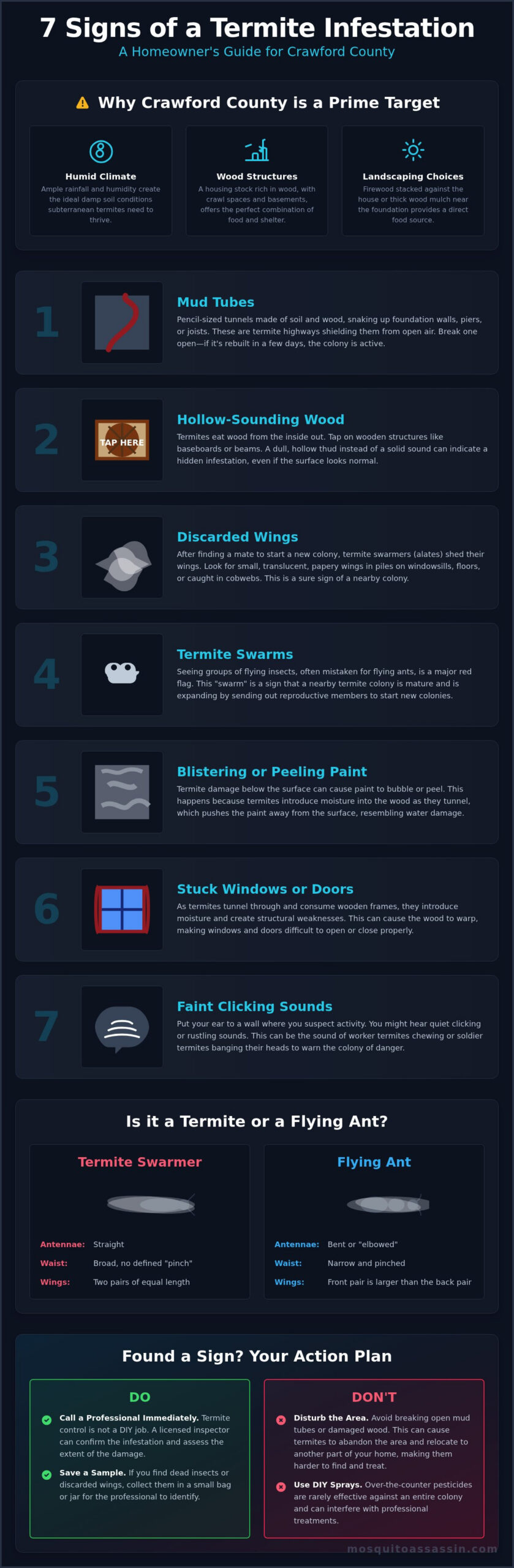
    The 4 Most Obvious Signs of Termites You Can See

    Termites are masters of stealth, causing extensive damage long before they are ever noticed. However, these silent destroyers do leave behind critical evidence of their presence. For homeowners, learning to spot the most common visual clues is the first line of defense. If you know what to look for, you can catch an infestation early and prevent catastrophic damage to your property. These are the most definitive signs of termite infestation Crawford County residents should be watching for.

    Sign #1: Mud Tubes on Your Foundation

    Subterranean termites, the most common type in our region, build protective tunnels to travel from their underground colony to the wood in your home. These “mud tubes” are like highways for termites, shielding them from the open air and predators.

    • What they look like: Pencil-sized tunnels made of soil, wood particles, and termite saliva, often snaking up foundation walls or support piers.
    • Where to check: Carefully inspect your home’s exterior foundation, interior crawl space walls, support piers, sill plates, and floor joists.
    • Pro Tip: Gently break off a small section of an active-looking tube. If the tube is rebuilt within a few days, you have a live, active termite colony.

    Sign #2: Damaged or Hollow-Sounding Wood

    Termites consume wood from the inside out, leaving a very thin veneer of wood or just the paint on the surface. This means wood that looks perfectly normal on the outside can be completely compromised within. Tapping on wood structures is a simple yet effective test.

    Listen for a dull, hollow thud instead of a solid sound. Visually, infested wood may appear blistered, darkened, or cracked. If you break a piece open, you may see intricate, honeycombed galleries, which are a classic sign of termite damage. Pay close attention to floor joists, window sills, door frames, and structural beams in basements and crawl spaces.

    Sign #3: Termite Swarmers or Discarded Wings

    Perhaps the most alarming sign is a termite swarm. This occurs when a mature colony sends out winged reproductive termites, known as “swarmers” or “alates,” to establish new colonies. In Crawford County, this often happens on a warm day following a spring rain. You might see the swarm itself, or you might find the evidence it leaves behind: piles of discarded wings. These wings are all identical and look like tiny, iridescent fish scales on windowsills, floors, or caught in spider webs. Finding these wings is a definitive sign that a mature termite colony is active in or very near your home.

    Discovering even one of these signs is a clear warning that should not be ignored. A swift response is critical to safeguarding the structural integrity of your home. Understanding these indicators is the first step, but a professional inspection is essential for a complete diagnosis and effective termite prevention and control. Don’t wait for the damage to become obvious; if you see the signs, it’s time to call for backup.

    Hidden Clues: The Subtle Signs of a Termite Problem

    Termite damage doesn’t happen overnight. Long before you see a swarm or find hollowed-out wood, these silent destroyers leave behind subtle clues. Spotting these early indicators is crucial for safeguarding your property from extensive damage. Many of these symptoms are easily mistaken for common household issues like humidity or settling, which is why a professional eye is essential. Understanding these hidden warnings can mean the difference between a simple treatment and a costly structural repair.

    Sign #4: Peeling Paint or Bubbling Drywall

    If you notice paint bubbling or peeling on your walls for no apparent reason, don’t just assume it’s water damage. Subterranean termites bring moisture from the soil into the spaces where they feed. As they consume the paper backing on drywall, this moisture can push paint away from the surface, creating bubbles and blisters that look remarkably similar to a leak. Check walls and ceilings, especially those near your home’s foundation, for this unexplained symptom.

    Sign #5: Tight-Fitting Doors and Sticking Windows

    Has a door that always opened smoothly suddenly started sticking? While high humidity in Crawford County can cause wood to swell, persistent issues can point to a more serious problem. Termites tunnel through wooden frames, compromising their structural integrity and introducing moisture. This damage can cause the wood to warp, making doors and windows difficult to operate. If seasonal changes don’t explain the issue, it’s a critical warning sign that warrants a professional inspection.

    Sign #6: Tiny Pinholes in Drywall

    Small, unexplained holes in your drywall or wallpaper are easy to dismiss but should never be ignored. These tiny pinholes can be exit holes created by termites as they burrow. You might even see a small amount of dirt or frass around the opening. While not the most common of the signs of a subterranean termite infestation, these holes are a definitive red flag. Any breach in your drywall is an open invitation for a professional assessment, as it proves something is happening behind the wall. These are often the most overlooked signs of termite infestation Crawford County residents face.

    Termites vs. Other Pests: Don’t Mistake These Look-Alikes

    One of the biggest challenges for homeowners in Crawford County is correctly identifying the pest causing damage. Winged insects swarming in the spring or strange debris near a windowsill can trigger alarm bells, but it’s not always termites. Misidentification can lead to the wrong treatment and allow a real termite problem to grow unchecked. Knowing the key differences between termites and their common look-alikes-flying ants and carpenter ants-is your first line of defense.

    Termite Swarmers vs. Flying Ants

    During their reproductive phase, termites grow wings and “swarm” to establish new colonies. These swarmers are frequently mistaken for flying ants. A close look, however, reveals clear differences that tell you exactly what you’re dealing with.

    • Body Shape: Termites have a broad, straight waist, giving their body a uniform, capsule-like shape. Ants, in contrast, have a distinctly pinched or “cinched” waist.
    • Antennae: Termite antennae are straight and beaded. Ant antennae are noticeably bent or “elbowed.”
    • Wing Size: This is often the easiest giveaway. A termite swarmer has two pairs of wings that are equal in size and length. A flying ant has a larger pair of front wings and a smaller pair of hind wings.

    Termite Damage vs. Carpenter Ant Damage

    Both termites and carpenter ants damage wood, but for entirely different reasons, leaving behind distinct evidence. Termites consume wood for its cellulose, while carpenter ants excavate it to build their nests. This fundamental difference is clear in the damage they create, and it’s a critical part of identifying the true signs of termite infestation in Crawford County.

    • Wood Galleries: Termite tunnels are rough, jagged, and often packed with mud, soil, and feces (known as spotting). Carpenter ant galleries, however, are smooth and clean, almost like they’ve been sandpapered. They keep their nesting areas tidy.
    • Leftover Debris: Because they excavate wood instead of eating it, carpenter ants push debris out of their nests. This creates small piles of frass-a material that looks like fine sawdust. Subterranean termites consume the wood, so you won’t find these tell-tale shavings.

    If you’ve spotted any of these pests or their unique signs of damage, don’t guess. An incorrect identification can lead to costly delays and further destruction of your property. For a definitive, professional inspection, contact Mosquito Assassin today. We’ll eliminate the threat and safeguard your home with confidence.

    Found a Sign? Your Crawford County Termite Action Plan

    Discovering potential signs of a termite infestation in your Crawford County home is unsettling, but a calm, strategic response is your most powerful weapon. These silent destroyers cause significant damage precisely because they go unnoticed. If you’ve spotted any of the signs we’ve discussed, it’s time to act decisively. Follow this proven plan to safeguard your property.

    Step 1: Don’t Panic and Don’t Disturb the Area

    Your first instinct might be to break open damaged wood or scrape away a mud tube. Resist this urge. Disturbing the evidence can cause termites to retreat and relocate to another part of your home, making a professional assessment more difficult. It’s also crucial to avoid using store-bought sprays; these are ineffective against the hidden colony and can interfere with professional-grade treatments. If you see a swarmer or discarded wings, you can collect a sample in a sealed bag for our technicians to identify.

    Step 2: Document What You’ve Found

    Before you do anything else, grab your phone. Take clear, well-lit photos of the signs you’ve discovered-the mud tubes, the wood damage, or the insects themselves. Make a quick note of the exact location (e.g., “basement, along the west wall” or “under the front porch steps”). This documentation is extremely valuable, providing our experts with crucial information before they even arrive.

    Step 3: Call Your Local Termite Professionals

    The only way to confirm an infestation, identify the termite species, and understand the full extent of the problem is with a professional inspection. When you see the signs of termite infestation Crawford County homeowners fear, you need a reliable expert who understands our local environment and building practices.

    To understand what a comprehensive professional approach looks like, you can find out more about the methods used by industry experts.

    At Mosquito Assassin, our comprehensive termite inspection is the first step toward complete eradication. A certified technician will meticulously examine your property’s vulnerable areas to provide a clear and honest assessment. As a local company, our team lives in the communities we serve. We know exactly what to look for. Learn more about our local commitment.

    Don’t let termites silently threaten your biggest investment. Protect your home and your peace of mind with a professional, proven solution. Schedule your professional termite inspection in Crawford County today!

    Your Next Step to a Termite-Free Home in Crawford County

    Your home is your most significant investment, and protecting it from the silent destruction of termites is crucial. By now, you know how to identify the critical warnings, from visible mud tubes and discarded wings to more subtle clues like hollow-sounding wood and bubbling paint. Early detection is the key to preventing widespread, costly damage and safeguarding your property’s value.

    If you’ve noticed any potential signs of termite infestation Crawford County homeowners dread, the time for decisive action is now. Don’t let uncertainty lead to costly repairs. As your locally owned and operated, five-star rated neighbors, Mosquito Assassin is here to provide definitive answers and effective solutions. We stand by our work with a powerful Pest-Free Guarantee: If pests return, so do we. Protect your investment and gain total peace of mind. Think you’ve seen the signs? Don’t wait. Schedule a Professional Termite Inspection in Crawford County Now!

    Frequently Asked Questions About Termites in Crawford County

    When is termite season in Crawford County, PA?

    Termites are a year-round threat in Pennsylvania, actively damaging structures even in winter. However, their most visible period is the “swarming season” in spring, typically from March to May. During this time, winged reproductive termites leave the colony to mate and expand. Seeing a swarm is a definitive sign that a mature, destructive colony is already established nearby and requires immediate professional attention to prevent further damage to your property.

    Can I really have termites and not see them?

    Yes, absolutely. Termites are known as “silent destroyers” because they consume wood from the inside out, often within your walls, floors, or crawl spaces. They can cause extensive structural damage for years before any obvious signs become visible. This hidden nature is why you may not see a single termite while a colony is actively weakening your home’s foundation, making professional inspections essential for early detection.

    How often should I have my home inspected for termites?

    We recommend a professional termite inspection for your Crawford County home at least once a year. Annual inspections are the most effective way for a licensed technician to identify the subtle signs of termite infestation in Crawford County before they escalate into a major structural problem. This proactive approach is the best defense for safeguarding your property’s value and ensuring your family’s peace of mind from these destructive pests.

    Is termite damage covered by my homeowner’s insurance?

    Unfortunately, nearly all standard homeowner’s insurance policies do not cover termite damage. Insurance companies consider termite control to be a part of regular home maintenance, making the homeowner responsible for prevention and repair costs. This makes investing in professional termite protection not just a smart choice, but an essential step in protecting your home from potentially thousands of dollars in out-of-pocket repair bills.

    Can I treat termites myself with store-bought products?

    While DIY termite products are available, they are rarely effective for complete eradication. These treatments often only kill a small number of surface-level termites, leaving the hidden queen and the core of the colony untouched and free to continue their destruction. For a problem this serious, only a professional, comprehensive treatment plan can locate the colony and ensure it is fully eliminated. The standards for professional pest control sydney, for example, emphasize complete colony elimination, protecting your home for the long term.

    What does a professional termite treatment from Mosquito Assassin involve?

    Our proven process starts with a comprehensive inspection to identify all entry points and areas of activity. Based on our findings, we create a customized treatment plan using industry-leading, family-safe products to eliminate the entire colony. Our certified technicians apply these treatments strategically to create a protective barrier around your home, ensuring complete eradication. We back our work with a satisfaction guarantee for your total peace of mind.

  • 7 Termite Warning Signs You Can’t Afford to Ignore

    7 Termite Warning Signs You Can’t Afford to Ignore

    There’s a silent destroyer that can compromise the safety of your home from the inside out: termites. The fear of hidden structural damage and the staggering cost of repairs is enough to keep any homeowner awake at night. You might have seen a stray winged insect and wondered if it was just an ant, or you may be completely unsure of where to even begin looking for a problem. This uncertainty is stressful, but ignoring it can be catastrophic for your most valuable asset.

    That’s why knowing the critical termite warning signs is your first and most powerful line of defense. In this essential guide, we are eliminating the guesswork. We’ll provide a clear, professional checklist of the seven key signs of an infestation, from tell-tale mud tubes to the sudden appearance of swarmers. You will gain the confidence to identify a potential threat and learn the immediate, proven steps to take to safeguard your property and secure your peace of mind.

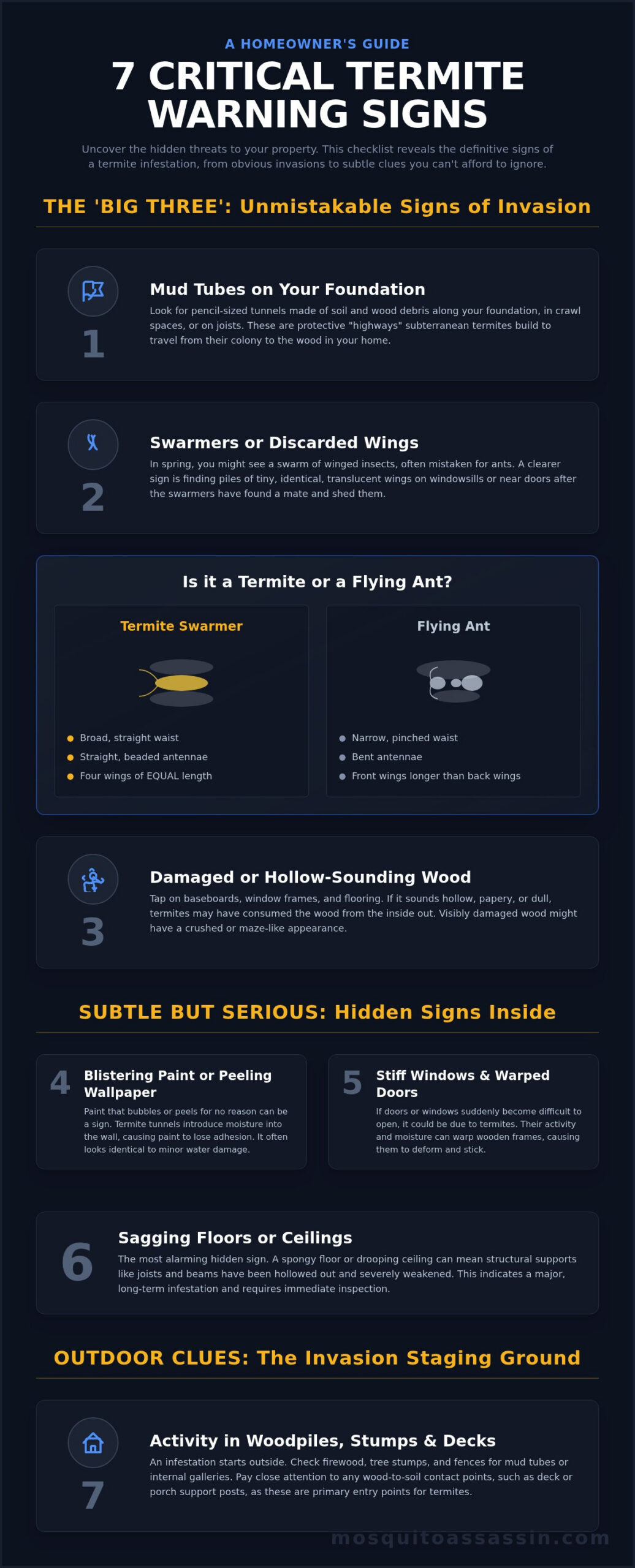
    The ‘Big Three’: Unmistakable Signs of a Termite Invasion

    When it comes to safeguarding your home, ignoring potential threats is not an option. Some issues whisper, but a termite infestation screams for attention. If you discover any of the following ‘Big Three’ termite warning signs, you are almost certainly dealing with an active colony that requires immediate, professional intervention. These are not subtle hints; they are definitive proof that your property is under attack.

    To help you visualize what to look for, this video provides an excellent overview of common signs and the damage termites can cause:

    1. Mud Tubes on Your Foundation

    Termites build protective tunnels, often called mud tubes, to travel from their underground colony to the wood in your home. These pencil-sized "highways" are made of soil, wood, and saliva, and they protect the termites from predators and dehydration. This is a classic sign of subterranean termites, the most common type found in Pennsylvania and Ohio. Be sure to inspect your:

    • Exterior foundation walls

    • Basement or crawl space supports

    • Floor joists and sill plates

    2. Swarmers or Discarded Wings

    In the spring, mature termite colonies send out "swarmers" (or alates) to mate and establish new colonies. Many homeowners mistake them for flying ants. A key tell-tale sign is finding piles of tiny, translucent wings on windowsills or near doors, as swarmers shed their wings after finding a mate. While they look similar, you can tell them apart. Termites have:

    • A broad, straight waist (ants have a pinched waist).

    • Straight, beaded antennae (ants have bent antennae).

    • Four wings of equal length (ants have larger front wings).

    3. Visibly Damaged or Hollow-Sounding Wood

    Because termites consume wood from the inside out, damage can go unnoticed for years. One of the most reliable termite warning signs is wood that sounds hollow when tapped. Gently tap on baseboards, window frames, and flooring with the handle of a screwdriver. If you hear a dull, papery thud instead of a solid sound, you may have a problem. Visibly damaged wood often has a crushed or maze-like appearance. Finding this type of damage typically means the infestation is well-established and has been active for a significant amount of time. Understanding their behavior, as detailed in this comprehensive overview of termites, explains why their damage is so often hidden from view until it becomes severe.

    Subtle but Serious: Hidden Termite Signs Inside Your Home

    Beyond the more obvious evidence like mud tubes or discarded wings, termites often leave behind more subtle clues. These hidden signs are frequently mistaken for common household issues like humidity, water damage, or the natural settling of your home. Ignoring them can lead to devastating structural problems. Understanding these subtle clues is a key part of learning how to identify and control termites before they cause irreversible damage. If you notice any of the following issues, it’s time to take a closer, more critical look.

    4. Blistering Paint or Peeling Wallpaper

    Paint that bubbles, peels, or looks water-damaged for no apparent reason can be a sign of termite activity. As subterranean termites tunnel through drywall and the wood behind it, they introduce moisture and compromise the integrity of the wall surface. This causes the paint to lose adhesion and blister, or for wallpaper to peel away. It looks almost identical to a slow leak, but the culprit may be chewing away just beneath the surface.

    5. Stiff Windows and Warped Doors

    Is a window suddenly difficult to open or a door sticking in its frame? While seasonal humidity can cause wood to swell, a sudden and persistent problem could be caused by termites. Their tunneling activity weakens wooden frames from the inside out. The combination of hollowed-out wood and the moisture they bring with them can cause frames to warp and deform, making doors and windows difficult to operate. This is one of the more deceptive termite warning signs because it’s so easily blamed on the weather.

    6. Sagging Floors or Ceilings

    Perhaps the most alarming hidden sign is a floor that feels spongy or a ceiling that appears to be sagging. This indicates that the structural supports, the floor joists or ceiling beams, may be severely compromised. Termites eat wood from the inside, hollowing out critical support members until they can no longer bear weight. While a severe water leak can also cause this, any structural sagging demands an immediate professional inspection to identify the cause and prevent a potential collapse.

    Outdoor Clues: Checking Your Property for Termite Activity

    A termite infestation doesn’t begin in your living room; it almost always starts from the outside. The soil, woodpiles, and wooden structures around your property are the staging grounds for a full-scale invasion. By conducting a simple but thorough inspection of your home’s exterior, you can spot the earliest termite warning signs and stop a colony before it breaches your foundation. At Mosquito Assassin, we believe proactive protection is the most effective strategy for safeguarding your home.

    Take a walk around your property and keep a sharp eye out for these critical outdoor clues.

    Checking Woodpiles and Stumps

    To a termite colony, a stack of firewood, an old tree stump, or a pile of untreated lumber sitting near your house is an all-you-can-eat buffet. We strongly advise keeping all firewood and wood debris at least 20 feet away from your foundation and elevated off the ground. When inspecting these areas, look for the tell-tale mud tubes climbing the wood or break a piece open to check for intricate galleries carved within.

    Inspecting Decks, Porches, and Fences

    Any place where wood meets soil is a potential termite entry point. Pay close attention to the support posts for your deck, porch, or fence. Use a screwdriver to gently probe the base of these posts. If the wood feels soft, sounds hollow, or flakes away easily, it could be a sign of termite damage. These structures often act as a bridge, giving termites direct, undetected access to your home’s framework.

    Looking for Drywood Termite Droppings (Frass)

    While Subterranean termites are the primary threat in Pennsylvania and Ohio, it’s still wise to recognize signs of other types. Drywood termites leave behind a distinct calling card: frass. This is a gritty mixture of tiny, wood-colored pellets that can look like sawdust or coffee grounds. Finding small piles of frass near window sills, door frames, or on your deck is a clear indicator of an active colony above. For more details on identifying different species, the US Environmental Protection Agency’s guide to termites offers a comprehensive overview.

    Discovering any of these outdoor termite warning signs is a serious matter that requires immediate action. If you’ve spotted suspicious activity, don’t wait for the damage to spread. Contact the certified professionals at Mosquito Assassin for a comprehensive inspection and a proven treatment plan to protect your most valuable investment.

    Found a Sign? Your Immediate Action Plan (and What NOT to Do)

    Discovering potential termite warning signs in your home can be alarming, but a panicked reaction can often make the situation worse. As your dependable local experts, we believe in empowering homeowners with a clear, calm strategy. Acting correctly from the start is the key to effective and efficient eradication. Follow these proven steps to safeguard your property without making costly mistakes.

    Step 1: Don’t Panic and Don’t Disturb the Area

    The first rule is simple: take a breath. Termite damage happens over months or years, not overnight. Resist the urge to break open drywall, scrape away mud tubes, or spray the area. Disturbing the termites can cause them to abandon the visible location and retreat deeper into your home’s structure, making a professional assessment and treatment far more difficult.

    Step 2: Avoid DIY Chemical Treatments

    While grabbing an over-the-counter pest spray might feel proactive, it’s one of the worst things you can do. These products are rarely strong enough to eliminate an entire colony. They typically kill only a few surface-level worker termites, leaving the queen and the heart of the nest untouched. Furthermore, improper use of chemicals can pose a health risk to your family and pets.

    Step 3: Document What You Found

    Your observations are incredibly valuable. Before you do anything else, take clear, well-lit photos of what you’ve found, be it mud tubes, discarded wings, or damaged wood. Make a note of the exact location (e.g., "in the basement, along the sill plate below the window"). This documentation provides our certified technicians with a crucial head start during their comprehensive inspection.

    Step 4: Schedule a Professional Inspection

    This is the most critical step. Only a trained and licensed professional can accurately confirm an active infestation, identify the specific termite species, and determine the full extent of the problem. A comprehensive inspection is the foundation of a customized treatment plan designed to eliminate the colony for good and protect your most valuable asset. Don’t leave your home’s safety to chance.

    **Don’t wait. Schedule your professional termite inspection now! **

    Don’t Let Termites Win: Your Action Plan for a Secure Home

    Your home is your greatest asset, and protecting it starts with vigilance. Recognizing everything from blatant swarms and mud tubes to subtle clues like hollow-sounding wood is your first line of defense. The most critical takeaway is that termites are silent destroyers, often causing thousands in damage long before you see them. Ignoring these crucial termite warning signs is a gamble you can’t afford to take, making swift, professional action absolutely essential.

    If you’ve noticed even one of these signs, the time to act is now. Don’t risk your property’s structural integrity with DIY solutions that often fail. As a locally owned and operated company in Pennsylvania and Ohio, Mosquito Assassin’s certified and licensed technicians are your neighbors, dedicated to safeguarding our communities. We provide definitive answers with a comprehensive inspection and stand by our work with our powerful Pest-Free Guarantee: If pests return, so do we. ******Suspect Termites? Contact Mosquito Assassin for a Professional Inspection Today! ** and restore your peace of mind.

    Frequently Asked Questions About Termite Warning Signs

    What’s the difference between flying ants and termite swarmers?

    Distinguishing between these pests is crucial for protecting your home. Flying ants have a distinctly pinched "waist," bent antennae, and two pairs of wings that are unequal in length. In contrast, termite swarmers possess a broad, straight body, straight antennae, and two pairs of wings that are both equal in length. While both can be a nuisance, correctly identifying a termite swarmer demands immediate professional action to prevent a destructive infestation.

    How quickly can termites actually damage a house?

    The speed of damage depends on the colony’s size and maturity. While a new colony works slowly, an established subterranean termite colony can consume wood 24/7, potentially eating through a foot of a 2×4 beam in a matter of months. The real danger is that this damage occurs silently within your walls for years. This hidden activity allows for significant structural harm long before any visible signs appear, making early detection and elimination essential.

    Can you hear termites moving in your walls?

    Yes, in cases of a severe infestation, it is possible to hear termites. Homeowners describe a faint, dry, rustling or quiet clicking sound from behind the drywall. This is often the sound of worker termites chewing wood or soldier termites tapping their heads to signal danger to the colony. If you hear these sounds, especially at night when your home is quiet, it’s a serious indicator that you need an immediate professional inspection to assess the activity.

    What does termite wood damage look like compared to water damage?

    Termite damage appears as a network of hollowed-out tunnels, or "galleries," that typically run with the grain of the wood, leaving a thin outer layer intact. The wood will sound hollow when tapped. Conversely, water damage causes wood to become soft, spongy, and discolored. It will often swell, rot, and crack across the grain and may be accompanied by the distinct, musty odor of mold or mildew, which is absent with termites.
    Since both issues threaten your home’s structure, addressing moisture problems at the source with services like basement waterproofing Philadelphia is a critical part of overall home protection.

    How often should I get a professional termite inspection?

    We recommend a comprehensive professional termite inspection at least once a year. Annual inspections are the most reliable and effective way to catch early termite warning signs before a colony can cause widespread and expensive structural damage. This proactive measure is a small investment in safeguarding your property’s integrity and value. Consider it an essential part of your home’s maintenance routine, ensuring peace of mind and protection from these silent destroyers.

    Are termites a common problem in Pennsylvania and Ohio?

    Absolutely. Subterranean termites are a significant and common threat to homeowners throughout Pennsylvania and Ohio. Our region’s climate and the prevalence of wooden home structures create the ideal conditions for these destructive pests to establish colonies and thrive. Because they are so widespread in our local communities, it is critical for homeowners to remain vigilant and prioritize regular, professional inspections. Assuming your home is safe is a risk not worth taking in our area.