There’s a silent destroyer that can compromise the safety of your home from the inside out: termites. The fear of hidden structural damage and the staggering cost of repairs is enough to keep any homeowner awake at night. You might have seen a stray winged insect and wondered if it was just an ant, or you may be completely unsure of where to even begin looking for a problem. This uncertainty is stressful, but ignoring it can be catastrophic for your most valuable asset.
That’s why knowing the critical termite warning signs is your first and most powerful line of defense. In this essential guide, we are eliminating the guesswork. We’ll provide a clear, professional checklist of the seven key signs of an infestation, from tell-tale mud tubes to the sudden appearance of swarmers. You will gain the confidence to identify a potential threat and learn the immediate, proven steps to take to safeguard your property and secure your peace of mind.
The ‘Big Three’: Unmistakable Signs of a Termite Invasion
When it comes to safeguarding your home, ignoring potential threats is not an option. Some issues whisper, but a termite infestation screams for attention. If you discover any of the following ‘Big Three’ termite warning signs, you are almost certainly dealing with an active colony that requires immediate, professional intervention. These are not subtle hints; they are definitive proof that your property is under attack.
To help you visualize what to look for, this video provides an excellent overview of common signs and the damage termites can cause:
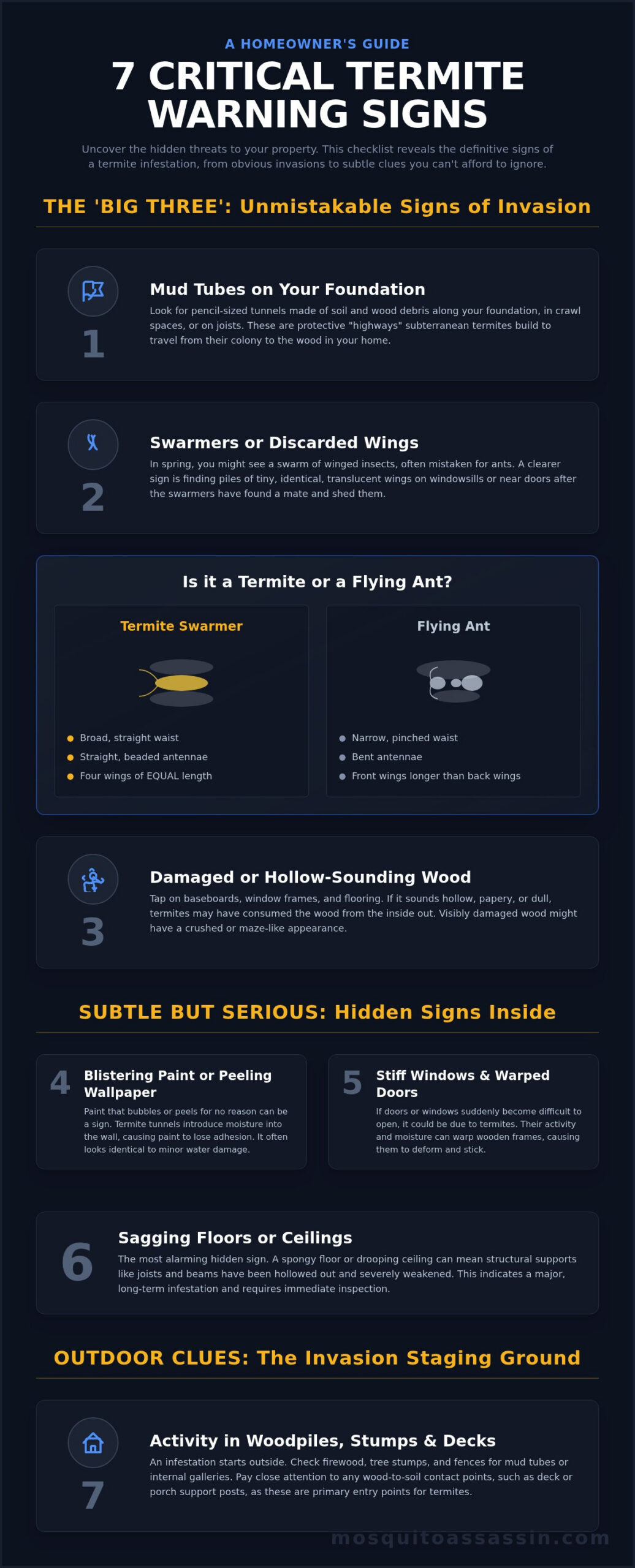
1. Mud Tubes on Your Foundation
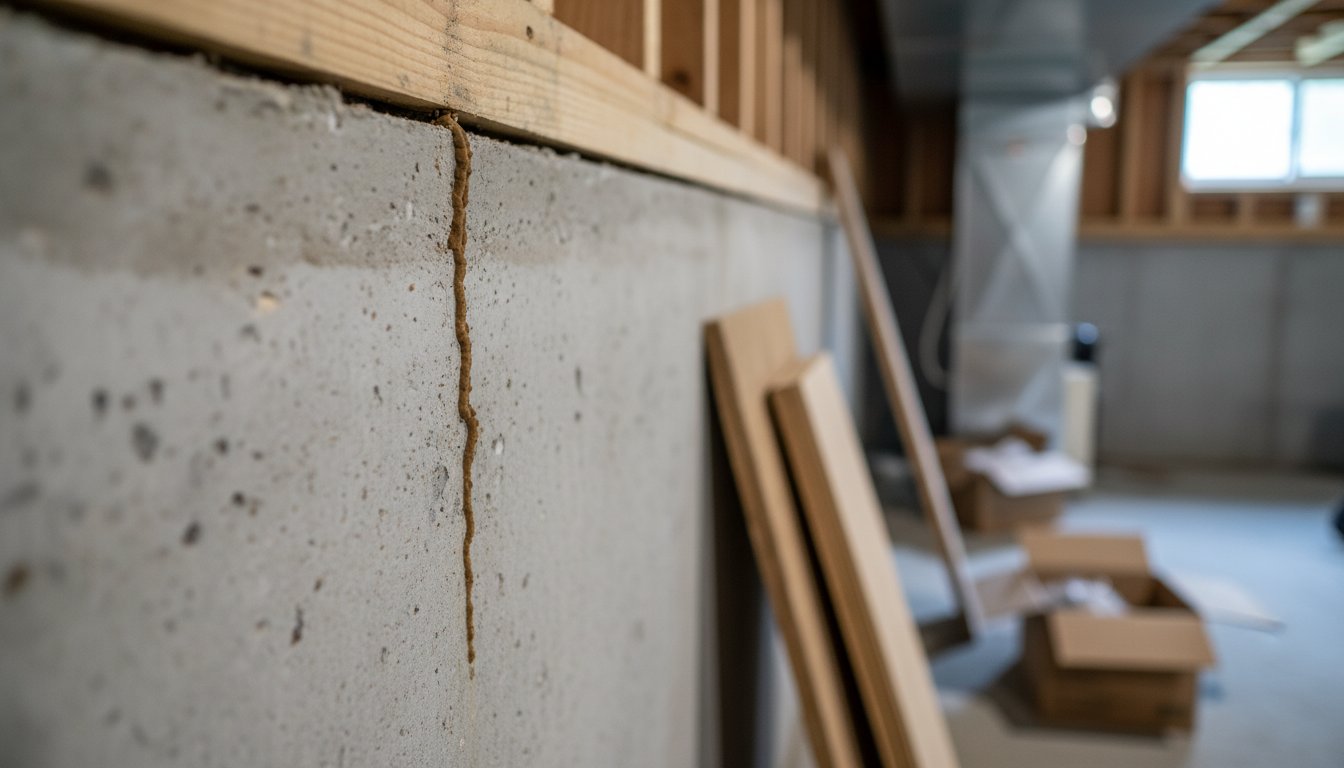
Termites build protective tunnels, often called mud tubes, to travel from their underground colony to the wood in your home. These pencil-sized "highways" are made of soil, wood, and saliva, and they protect the termites from predators and dehydration. This is a classic sign of subterranean termites, the most common type found in Pennsylvania and Ohio. Be sure to inspect your:
-
Exterior foundation walls
-
Basement or crawl space supports
-
Floor joists and sill plates
2. Swarmers or Discarded Wings
In the spring, mature termite colonies send out "swarmers" (or alates) to mate and establish new colonies. Many homeowners mistake them for flying ants. A key tell-tale sign is finding piles of tiny, translucent wings on windowsills or near doors, as swarmers shed their wings after finding a mate. While they look similar, you can tell them apart. Termites have:
-
A broad, straight waist (ants have a pinched waist).
-
Straight, beaded antennae (ants have bent antennae).
-
Four wings of equal length (ants have larger front wings).
3. Visibly Damaged or Hollow-Sounding Wood
Because termites consume wood from the inside out, damage can go unnoticed for years. One of the most reliable termite warning signs is wood that sounds hollow when tapped. Gently tap on baseboards, window frames, and flooring with the handle of a screwdriver. If you hear a dull, papery thud instead of a solid sound, you may have a problem. Visibly damaged wood often has a crushed or maze-like appearance. Finding this type of damage typically means the infestation is well-established and has been active for a significant amount of time. Understanding their behavior, as detailed in this comprehensive overview of termites, explains why their damage is so often hidden from view until it becomes severe.
Subtle but Serious: Hidden Termite Signs Inside Your Home
Beyond the more obvious evidence like mud tubes or discarded wings, termites often leave behind more subtle clues. These hidden signs are frequently mistaken for common household issues like humidity, water damage, or the natural settling of your home. Ignoring them can lead to devastating structural problems. Understanding these subtle clues is a key part of learning how to identify and control termites before they cause irreversible damage. If you notice any of the following issues, it’s time to take a closer, more critical look.
4. Blistering Paint or Peeling Wallpaper
Paint that bubbles, peels, or looks water-damaged for no apparent reason can be a sign of termite activity. As subterranean termites tunnel through drywall and the wood behind it, they introduce moisture and compromise the integrity of the wall surface. This causes the paint to lose adhesion and blister, or for wallpaper to peel away. It looks almost identical to a slow leak, but the culprit may be chewing away just beneath the surface.
5. Stiff Windows and Warped Doors
Is a window suddenly difficult to open or a door sticking in its frame? While seasonal humidity can cause wood to swell, a sudden and persistent problem could be caused by termites. Their tunneling activity weakens wooden frames from the inside out. The combination of hollowed-out wood and the moisture they bring with them can cause frames to warp and deform, making doors and windows difficult to operate. This is one of the more deceptive termite warning signs because it’s so easily blamed on the weather.
6. Sagging Floors or Ceilings
Perhaps the most alarming hidden sign is a floor that feels spongy or a ceiling that appears to be sagging. This indicates that the structural supports, the floor joists or ceiling beams, may be severely compromised. Termites eat wood from the inside, hollowing out critical support members until they can no longer bear weight. While a severe water leak can also cause this, any structural sagging demands an immediate professional inspection to identify the cause and prevent a potential collapse.
Outdoor Clues: Checking Your Property for Termite Activity
A termite infestation doesn’t begin in your living room; it almost always starts from the outside. The soil, woodpiles, and wooden structures around your property are the staging grounds for a full-scale invasion. By conducting a simple but thorough inspection of your home’s exterior, you can spot the earliest termite warning signs and stop a colony before it breaches your foundation. At Mosquito Assassin, we believe proactive protection is the most effective strategy for safeguarding your home.
Take a walk around your property and keep a sharp eye out for these critical outdoor clues.
Checking Woodpiles and Stumps
To a termite colony, a stack of firewood, an old tree stump, or a pile of untreated lumber sitting near your house is an all-you-can-eat buffet. We strongly advise keeping all firewood and wood debris at least 20 feet away from your foundation and elevated off the ground. When inspecting these areas, look for the tell-tale mud tubes climbing the wood or break a piece open to check for intricate galleries carved within.
Inspecting Decks, Porches, and Fences
Any place where wood meets soil is a potential termite entry point. Pay close attention to the support posts for your deck, porch, or fence. Use a screwdriver to gently probe the base of these posts. If the wood feels soft, sounds hollow, or flakes away easily, it could be a sign of termite damage. These structures often act as a bridge, giving termites direct, undetected access to your home’s framework.
Looking for Drywood Termite Droppings (Frass)
While Subterranean termites are the primary threat in Pennsylvania and Ohio, it’s still wise to recognize signs of other types. Drywood termites leave behind a distinct calling card: frass. This is a gritty mixture of tiny, wood-colored pellets that can look like sawdust or coffee grounds. Finding small piles of frass near window sills, door frames, or on your deck is a clear indicator of an active colony above. For more details on identifying different species, the US Environmental Protection Agency’s guide to termites offers a comprehensive overview.
Discovering any of these outdoor termite warning signs is a serious matter that requires immediate action. If you’ve spotted suspicious activity, don’t wait for the damage to spread. Contact the certified professionals at Mosquito Assassin for a comprehensive inspection and a proven treatment plan to protect your most valuable investment.
Found a Sign? Your Immediate Action Plan (and What NOT to Do)
Discovering potential termite warning signs in your home can be alarming, but a panicked reaction can often make the situation worse. As your dependable local experts, we believe in empowering homeowners with a clear, calm strategy. Acting correctly from the start is the key to effective and efficient eradication. Follow these proven steps to safeguard your property without making costly mistakes.
Step 1: Don’t Panic and Don’t Disturb the Area
The first rule is simple: take a breath. Termite damage happens over months or years, not overnight. Resist the urge to break open drywall, scrape away mud tubes, or spray the area. Disturbing the termites can cause them to abandon the visible location and retreat deeper into your home’s structure, making a professional assessment and treatment far more difficult.
Step 2: Avoid DIY Chemical Treatments
While grabbing an over-the-counter pest spray might feel proactive, it’s one of the worst things you can do. These products are rarely strong enough to eliminate an entire colony. They typically kill only a few surface-level worker termites, leaving the queen and the heart of the nest untouched. Furthermore, improper use of chemicals can pose a health risk to your family and pets.
Step 3: Document What You Found
Your observations are incredibly valuable. Before you do anything else, take clear, well-lit photos of what you’ve found, be it mud tubes, discarded wings, or damaged wood. Make a note of the exact location (e.g., "in the basement, along the sill plate below the window"). This documentation provides our certified technicians with a crucial head start during their comprehensive inspection.
Step 4: Schedule a Professional Inspection
This is the most critical step. Only a trained and licensed professional can accurately confirm an active infestation, identify the specific termite species, and determine the full extent of the problem. A comprehensive inspection is the foundation of a customized treatment plan designed to eliminate the colony for good and protect your most valuable asset. Don’t leave your home’s safety to chance.
**Don’t wait. Schedule your professional termite inspection now! **
Don’t Let Termites Win: Your Action Plan for a Secure Home
Your home is your greatest asset, and protecting it starts with vigilance. Recognizing everything from blatant swarms and mud tubes to subtle clues like hollow-sounding wood is your first line of defense. The most critical takeaway is that termites are silent destroyers, often causing thousands in damage long before you see them. Ignoring these crucial termite warning signs is a gamble you can’t afford to take, making swift, professional action absolutely essential.
If you’ve noticed even one of these signs, the time to act is now. Don’t risk your property’s structural integrity with DIY solutions that often fail. As a locally owned and operated company in Pennsylvania and Ohio, Mosquito Assassin’s certified and licensed technicians are your neighbors, dedicated to safeguarding our communities. We provide definitive answers with a comprehensive inspection and stand by our work with our powerful Pest-Free Guarantee: If pests return, so do we. ******Suspect Termites? Contact Mosquito Assassin for a Professional Inspection Today! ** and restore your peace of mind.
Frequently Asked Questions About Termite Warning Signs
What’s the difference between flying ants and termite swarmers?
Distinguishing between these pests is crucial for protecting your home. Flying ants have a distinctly pinched "waist," bent antennae, and two pairs of wings that are unequal in length. In contrast, termite swarmers possess a broad, straight body, straight antennae, and two pairs of wings that are both equal in length. While both can be a nuisance, correctly identifying a termite swarmer demands immediate professional action to prevent a destructive infestation.
How quickly can termites actually damage a house?
The speed of damage depends on the colony’s size and maturity. While a new colony works slowly, an established subterranean termite colony can consume wood 24/7, potentially eating through a foot of a 2×4 beam in a matter of months. The real danger is that this damage occurs silently within your walls for years. This hidden activity allows for significant structural harm long before any visible signs appear, making early detection and elimination essential.
Can you hear termites moving in your walls?
Yes, in cases of a severe infestation, it is possible to hear termites. Homeowners describe a faint, dry, rustling or quiet clicking sound from behind the drywall. This is often the sound of worker termites chewing wood or soldier termites tapping their heads to signal danger to the colony. If you hear these sounds, especially at night when your home is quiet, it’s a serious indicator that you need an immediate professional inspection to assess the activity.
What does termite wood damage look like compared to water damage?
Termite damage appears as a network of hollowed-out tunnels, or "galleries," that typically run with the grain of the wood, leaving a thin outer layer intact. The wood will sound hollow when tapped. Conversely, water damage causes wood to become soft, spongy, and discolored. It will often swell, rot, and crack across the grain and may be accompanied by the distinct, musty odor of mold or mildew, which is absent with termites.
Since both issues threaten your home’s structure, addressing moisture problems at the source with services like basement waterproofing Philadelphia is a critical part of overall home protection.
How often should I get a professional termite inspection?
We recommend a comprehensive professional termite inspection at least once a year. Annual inspections are the most reliable and effective way to catch early termite warning signs before a colony can cause widespread and expensive structural damage. This proactive measure is a small investment in safeguarding your property’s integrity and value. Consider it an essential part of your home’s maintenance routine, ensuring peace of mind and protection from these silent destroyers.
Are termites a common problem in Pennsylvania and Ohio?
Absolutely. Subterranean termites are a significant and common threat to homeowners throughout Pennsylvania and Ohio. Our region’s climate and the prevalence of wooden home structures create the ideal conditions for these destructive pests to establish colonies and thrive. Because they are so widespread in our local communities, it is critical for homeowners to remain vigilant and prioritize regular, professional inspections. Assuming your home is safe is a risk not worth taking in our area.
Comments
One response to “7 Termite Warning Signs You Can’t Afford to Ignore”
The house in the video is getting eaten alive wow!