Tag: wood destroying insects

  • Carpenter Ant Treatment in Meadville, PA: A Comprehensive Guide

    Carpenter Ant Treatment in Meadville, PA: A Comprehensive Guide

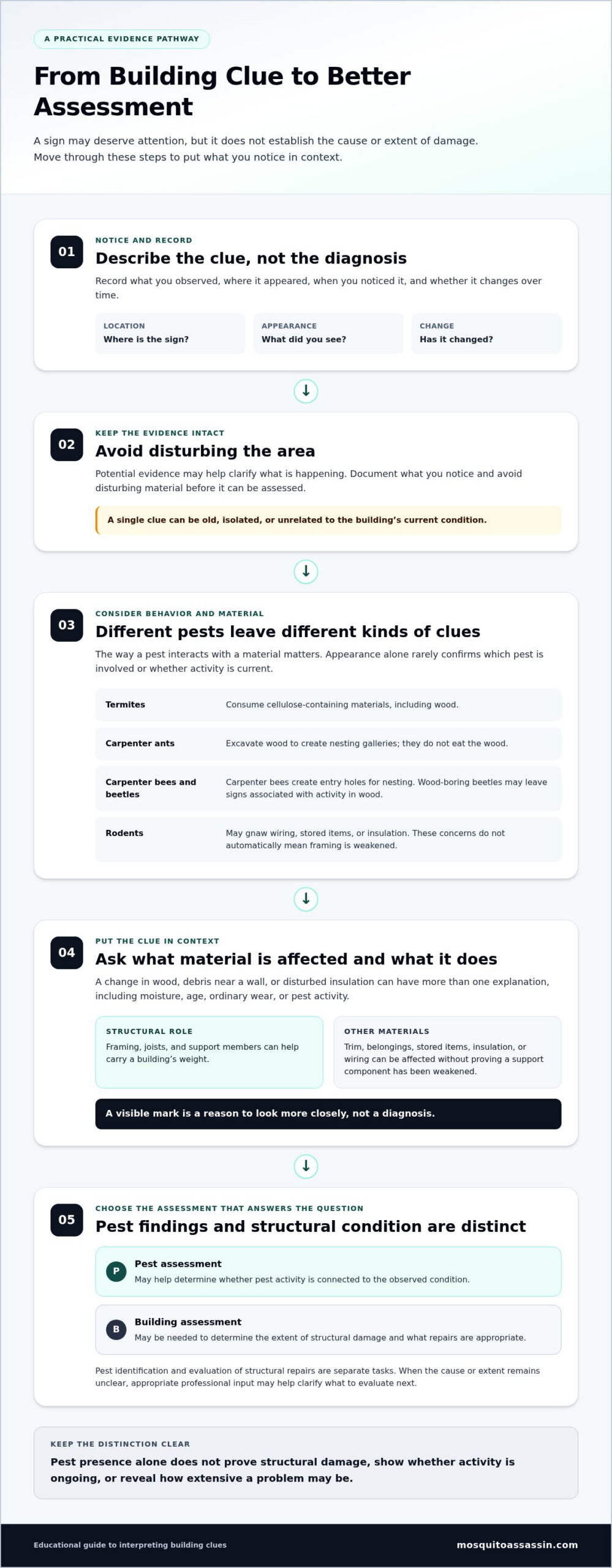
    If you spot a single large black ant on your kitchen counter in Meadville, it’s rarely a scout looking for crumbs; it’s often a sign that a colony of up to 10,000 workers is already excavating the structural beams of your home. Most homeowners in Crawford County find it incredibly frustrating when DIY sprays provide only temporary relief while the sound of rustling inside the walls continues. It’s common to worry about the high costs of structural repairs, especially when these pests are easily confused with termites. By understanding the unique biology of these wood-destroying insects, you can secure the right carpenter ant treatment Meadville PA to stop the destruction before it requires a contractor.

    This guide explores identification techniques, the limitations of over-the-counter solutions, and professional strategies to ensure the entire colony is neutralized. You’ll learn how to protect your property investment and gain peace of mind through proven prevention methods tailored for the Northwest Pennsylvania climate. Understanding these behaviors is the first step toward safeguarding your home from long-term damage.

    Disclaimer: The information provided on this blog is for general informational purposes only and is not intended as professional pest control advice. Conditions vary by property, environment, and location. Reading this content does not create a service agreement. For an inspection or professional recommendations, please contact Mosquito Assassin Pest Control LLC directly.
    Key Takeaways

    • Identify the physical characteristics of Pennsylvania carpenter ants, including their large size and dull black appearance.
    • Understand the relationship between outdoor parent colonies and indoor satellite nests to better locate the source of structural damage.
    • Differentiate between carpenter ants and termites by comparing their dietary habits and the cleanliness of their nesting galleries.
    • Implement effective prevention strategies, such as managing moisture levels and eliminating wood-to-ground contact around the foundation.
    • Discover why Integrated Pest Management (IPM) provides a systematic approach to carpenter ant treatment Meadville PA homeowners can use for long-term protection.

    Identifying Carpenter Ants in Meadville and Crawford County

    Carpenter ants, belonging to the genus Camponotus, represent one of the largest and most structurally significant ant species in Pennsylvania. These insects are distinguished by their dull black coloration and polymorphic size variations. Within a single colony, workers can range from small minors to large majors, creating a diverse workforce dedicated to nest expansion. Recognizing these physical traits is essential for homeowners considering the necessity of carpenter ant treatment Meadville PA requires to protect local properties from wood-boring pests.

    The activity cycle in Northwest Pennsylvania follows a predictable seasonal timeline. As the spring thaw begins and ground temperatures rise above 50 degrees Fahrenheit, dormant colonies become active. This period often brings the appearance of reproductive swarmers. These winged ants are frequently confused with termites; however, they’re identified by their elbowed antennae, pinched waists, and unequal wing lengths. Seeing these swarmers indoors often indicates a mature colony is already established within the structure.

    Common Species in Northwest Pennsylvania

    The Black Carpenter Ant is the most frequent invader in Crawford County residential areas. These ants typically measure between 0.25 inches and 0.55 inches in length. Unlike other common house ants, they possess a single, distinct node between the thorax and the abdomen. Their thorax also features a continuous, rounded curve when viewed from the side, a detail that helps professionals distinguish them from other wood-boring insects. They thrive in the moisture-rich environments found near local woodlands and aging timber.

    Signs of an Active Infestation

    Identifying an active infestation is the first step toward determining if a professional carpenter ant treatment Meadville PA protocol is necessary. Early detection helps mitigate potential structural damage. Homeowners should watch for specific behavioral and physical markers that indicate a nesting site is nearby. Professional pest control may help reduce risk when these signs are present:

    • Evening Activity: Observing large, dark ants in moisture-prone areas like kitchens, bathrooms, or laundry rooms during late-night hours when they’re most active.
    • Presence of Frass: Finding piles of sawdust-like material near baseboards or windowsills. This “frass” often contains insect parts and insulation debris, as the ants don’t consume the wood but rather excavate it to create galleries.
    • Audible Sounds: Hearing faint rustling or clicking noises coming from behind drywall or within structural beams, particularly when the house is quiet at night.

    Disclaimer: The information provided on this blog is for general informational purposes only and is not intended as professional pest control advice. Conditions vary by property, environment, and location. Reading this content does not create a service agreement. For an inspection or professional recommendations, please contact Mosquito Assassin Pest Control LLC directly.
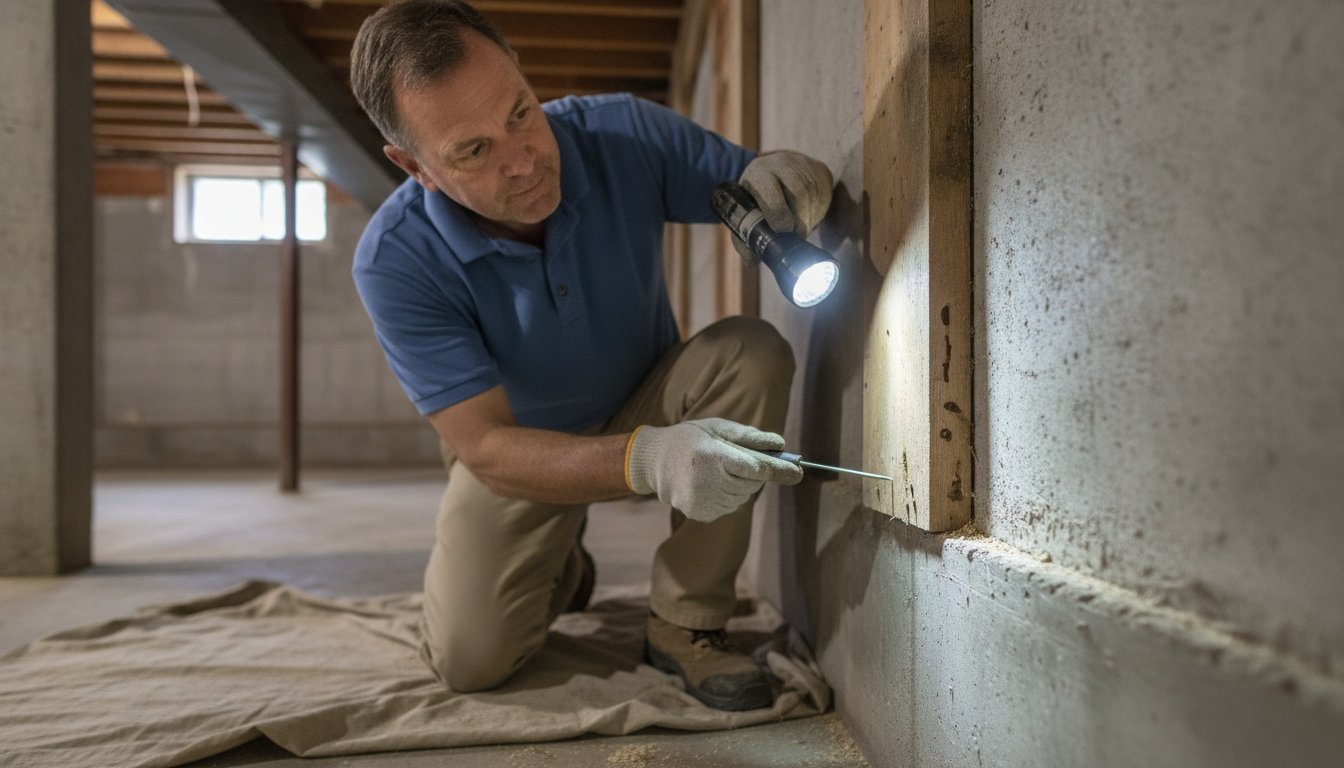
    Understanding Carpenter Ant Nesting and Structural Impact

    Carpenter ants are among the most misunderstood pests in Crawford County. Unlike termites, these insects don’t eat wood for food. They use their powerful mandibles to excavate galleries, carving out smooth tunnels to house their growing colonies. This biological distinction is critical because it changes how homeowners should approach a potential infestation. Identifying the specific nesting habits of these ants is the first step toward a successful carpenter ant treatment Meadville PA residents need to protect their property.

    Parent vs. Satellite Colony Dynamics

    A carpenter ant infestation usually involves a network of nests rather than a single location. The parent colony, which contains the queen and young larvae, typically stays outdoors in high-moisture environments like decaying tree stumps, fallen logs, or stacks of firewood. When the population grows, workers establish satellite nests inside nearby structures. These indoor nests house older larvae and pupae; they don’t require the high humidity levels the queen needs to survive. This is why satellite nests are often found in dry areas like wall voids, attic insulation, or behind appliances. For a permanent solution, the connection between these two locations must be broken.

    Moisture plays a dual role in how these ants select a home. Initially, they target wood that’s been softened by leaks or fungal decay. Common entry points in Meadville homes include window sills, door frames, and roof eaves where water may collect. Once the ants have established a satellite nest in damp wood, they can easily expand their galleries into sound, dry structural timber. This expansion is what leads to long term damage if the colony isn’t addressed quickly. If you suspect an active nest, professional pest control may help reduce risk to your home’s infrastructure.

    Potential Structural Consequences

    While carpenter ants work slower than subterranean termites, their impact is cumulative and dangerous. A mature colony can consist of thousands of workers constantly chewing through support beams. Over several years, this “honeycombing” effect hollows out the wood from the inside, often leaving the exterior surface looking perfectly normal. Specific risks include:

    • Weakened Load-Bearing Beams: Continuous excavation can reduce the weight-bearing capacity of floor joists.
    • Window and Door Misalignment: As frames are hollowed out, they may warp or sag, making it difficult to open or close windows.
    • Secondary Infestations: Abandoned galleries can become homes for other pests or trap moisture, leading to mold growth.

    The presence of multiple satellite nests within a single structure accelerates this damage. Because Meadville’s climate provides plenty of moisture during the spring and summer, carpenter ant treatment Meadville PA homeowners seek should focus on both the immediate indoor threat and the outdoor source to prevent the cycle from repeating.

    Disclaimer: The information provided on this blog is for general informational purposes only and is not intended as professional pest control advice. Conditions vary by property, environment, and location. Reading this content does not create a service agreement. For an inspection or professional recommendations, please contact Mosquito Assassin Pest Control LLC directly.
    Carpenter Ants vs. Termites: Key Differences for Homeowners

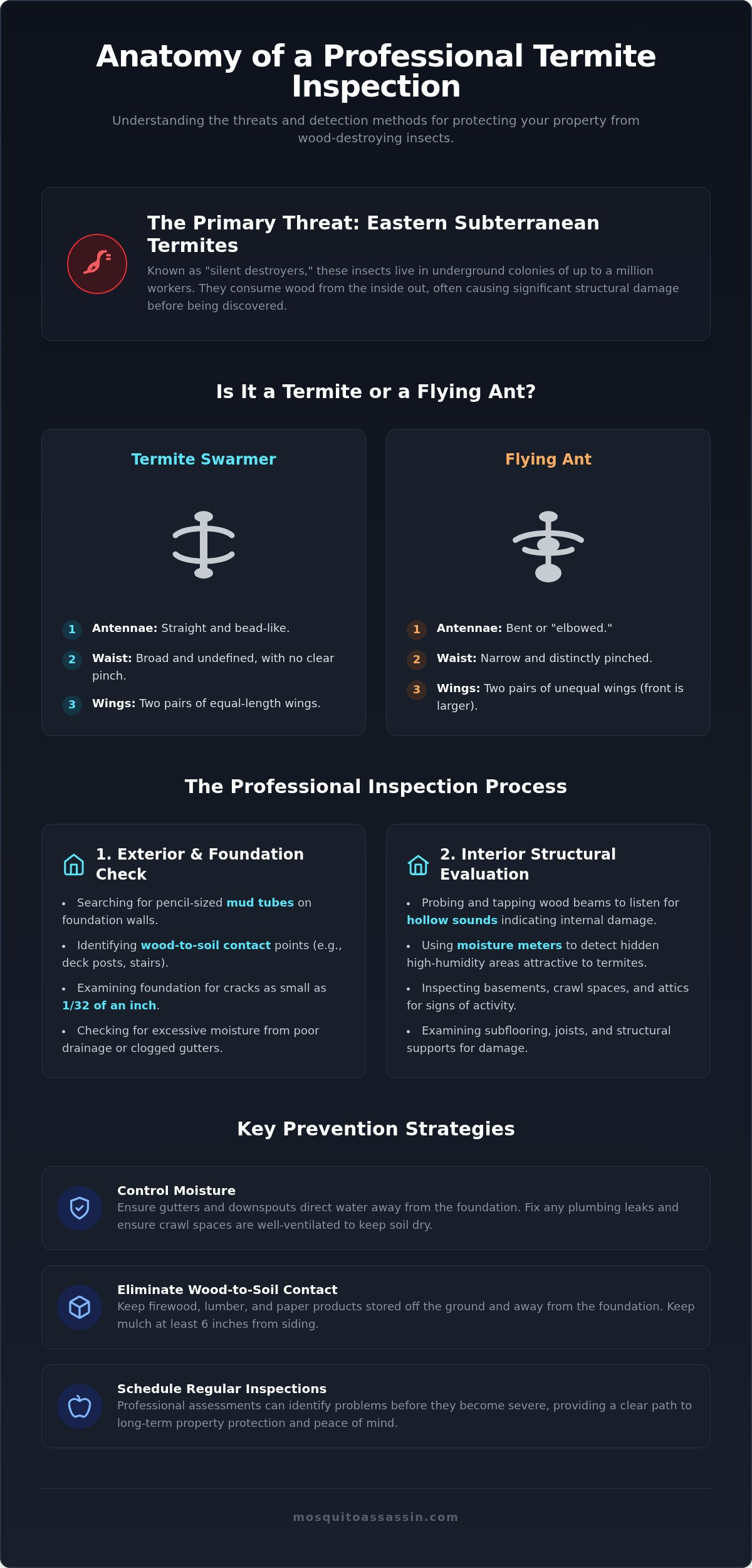
    Distinguishing between carpenter ants and termites is a critical first step for property owners in Crawford County. While both pests damage structures, they do so in fundamentally different ways. Termites are detritivores that consume cellulose found in wood, turning the structural beams of a home into a food source. Carpenter ants don’t eat wood; they simply excavate it to create nesting galleries. These ants forage outside the nest for proteins and sugars, often trailing toward kitchens or trash bins. Because their biology and habits differ, effective general pest control requires specialized strategies tailored to each species. Applying a termite-specific solution to an ant infestation rarely yields results.

    Physical characteristics provide the most reliable identification. Carpenter ants have a distinct, pinched waist with one or two nodes. Their antennae are elbowed, or bent, and their back is rounded. Termites have a broad, rectangular waist and straight antennae that look like tiny beads. Professional carpenter ant treatment Meadville PA focuses on these biological markers to ensure the correct protocols are used. Misidentifying these pests can lead to unnecessary damage if the wrong treatment is applied.

    Identifying Wood Damage

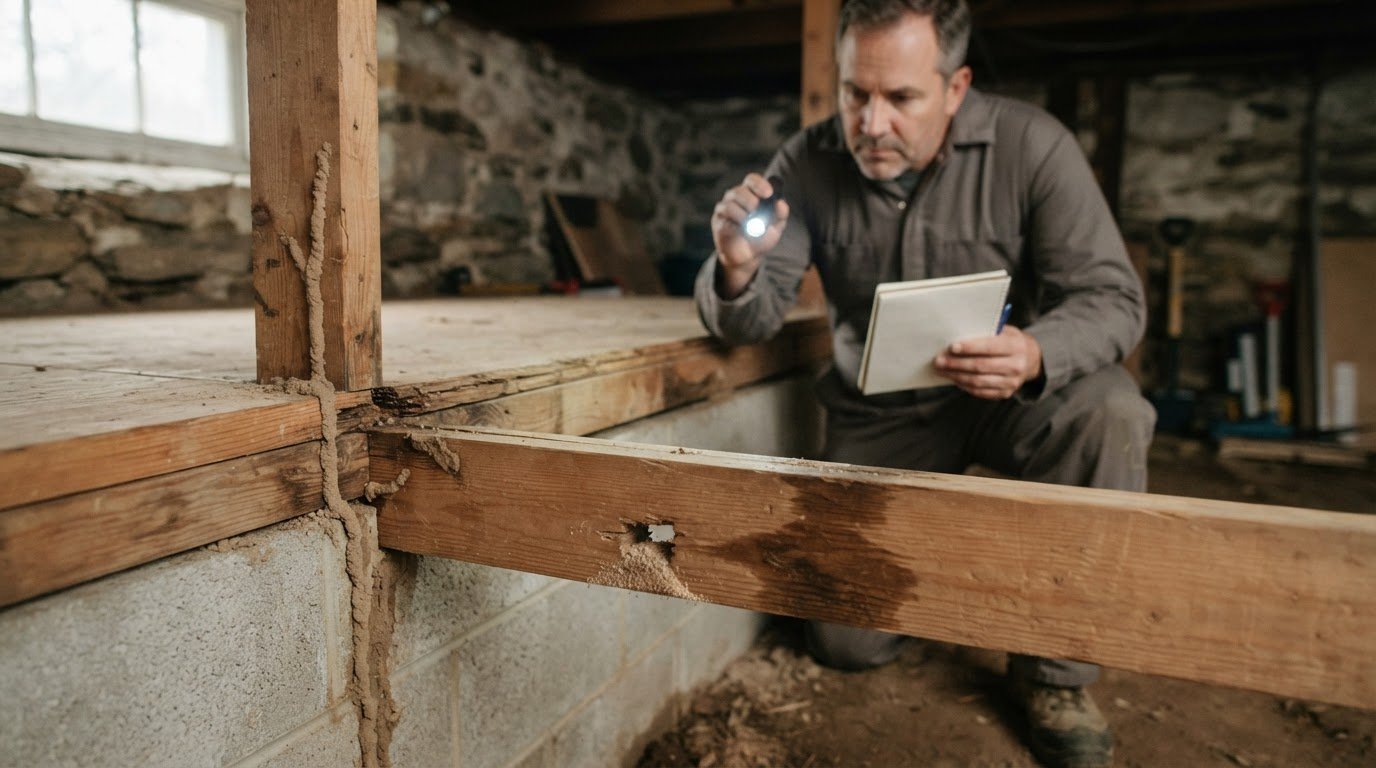
    Homeowners can often identify the culprit by inspecting the texture of the damaged wood. Carpenter ant galleries are remarkably clean and smooth, appearing as if they’ve been finished with fine-grit sandpaper. These ants are tidy and remove all debris from their tunnels. This debris, known as frass, consists of wood shavings, bits of soil, and dead insect parts. It’s often pushed out through small “kick out holes,” forming small piles that resemble sawdust. Termite damage is the opposite. Their galleries are typically filled with a gritty mixture of soil and mud, as subterranean termites use mud tubes to maintain moisture levels while they feed. These tubes are often found along foundation walls or floor joists.

    Swarmer Identification

    Identifying winged “swarmers” is common during the spring months in Meadville, typically between March and June. Ant swarmers have two pairs of wings that are unequal in length; the front wings are significantly larger than the hind wings. Termite swarmers also have four wings, but all four are the same length and often twice as long as their bodies. While termite wings break off easily and are often found in piles on windowsills, ant wings remain attached more firmly. Accurate identification during these swarming events is vital for securing the right carpenter ant treatment Meadville PA. Professional inspection is recommended when swarmers are found indoors, as this often indicates a mature colony is nesting within the structure.

    Disclaimer: The information provided on this blog is for general informational purposes only and is not intended as professional pest control advice. Conditions vary by property, environment, and location. Reading this content does not create a service agreement. For an inspection or professional recommendations, please contact Mosquito Assassin Pest Control LLC directly.

    Prevention Strategies for Meadville Properties

    Effective carpenter ant treatment Meadville PA starts with proactive prevention. Because these pests are attracted to moisture and decaying wood, maintaining a dry environment is the most critical step for local homeowners. Crawford County experiences an average of 43 inches of rainfall annually, which can lead to saturated foundations and hidden rot if not managed correctly. Reducing moisture levels around the foundation and within crawlspaces prevents the wood from softening, making it less attractive to nesting queens.

    Environmental Modifications

    Moisture control is the foundation of long term prevention. Leaking pipes under sinks or in crawlspaces should be repaired immediately; even a small drip creates the softened wood these ants prefer for nesting. It’s vital to ensure gutters are clear and downspouts direct water at least six feet away from the structure. When wood becomes water damaged or shows signs of decay, it should be replaced with pressure treated alternatives or synthetic materials to remove the primary attractant. Sealing cracks in the foundation and gaps around utility penetrations (such as where cable lines or pipes enter the home) prevents easy access for foraging scouts looking for new nesting sites.

    Landscaping Best Practices

    Landscaping choices often dictate how easily pests can reach a home. Many Meadville properties feature heavy mulch, which retains moisture and provides a perfect habitat for satellite colonies. Maintaining a 12 to 18 inch gravel or stone border between the lawn and the foundation significantly reduces the likelihood of ants crossing into the siding. Proper yard maintenance is a key component of comprehensive carpenter ant treatment Meadville PA strategies.

    Crawford County’s dense vegetation, including mature oaks and maples, often provides “bridges” for ants to bypass ground level defenses. Trimming tree branches and shrubs so they don’t touch the roofline or siding is essential. Additionally, homeowners should remove old stumps and decaying logs from the yard, as these serve as primary nesting sites for parent colonies. Firewood must be stored at least 20 feet away from the main structure and elevated off the ground to prevent it from becoming an easy entry point for wood destroying insects.

    If you suspect an active infestation, professional pest control may help reduce risk and protect your property.

    Disclaimer: The information provided on this blog is for general informational purposes only and is not intended as professional pest control advice. Conditions vary by property, environment, and location. Reading this content does not create a service agreement. For an inspection or professional recommendations, please contact Mosquito Assassin Pest Control LLC directly.

    Professional Management and Integrated Pest Management (IPM)

    Managing wood-destroying insects requires more than just reactive measures. Integrated Pest Management (IPM) offers a sustainable alternative to traditional broad-spectrum spraying. While older methods often rely on heavy chemical applications that only address visible ants, IPM focuses on understanding the biology and behavior of the pest. This method prioritizes long-term prevention by combining biological, physical, and targeted tactics. Effective carpenter ant treatment Meadville PA relies on this precision to ensure the entire colony, including the queen, is addressed rather than just the foragers seen on a kitchen counter.

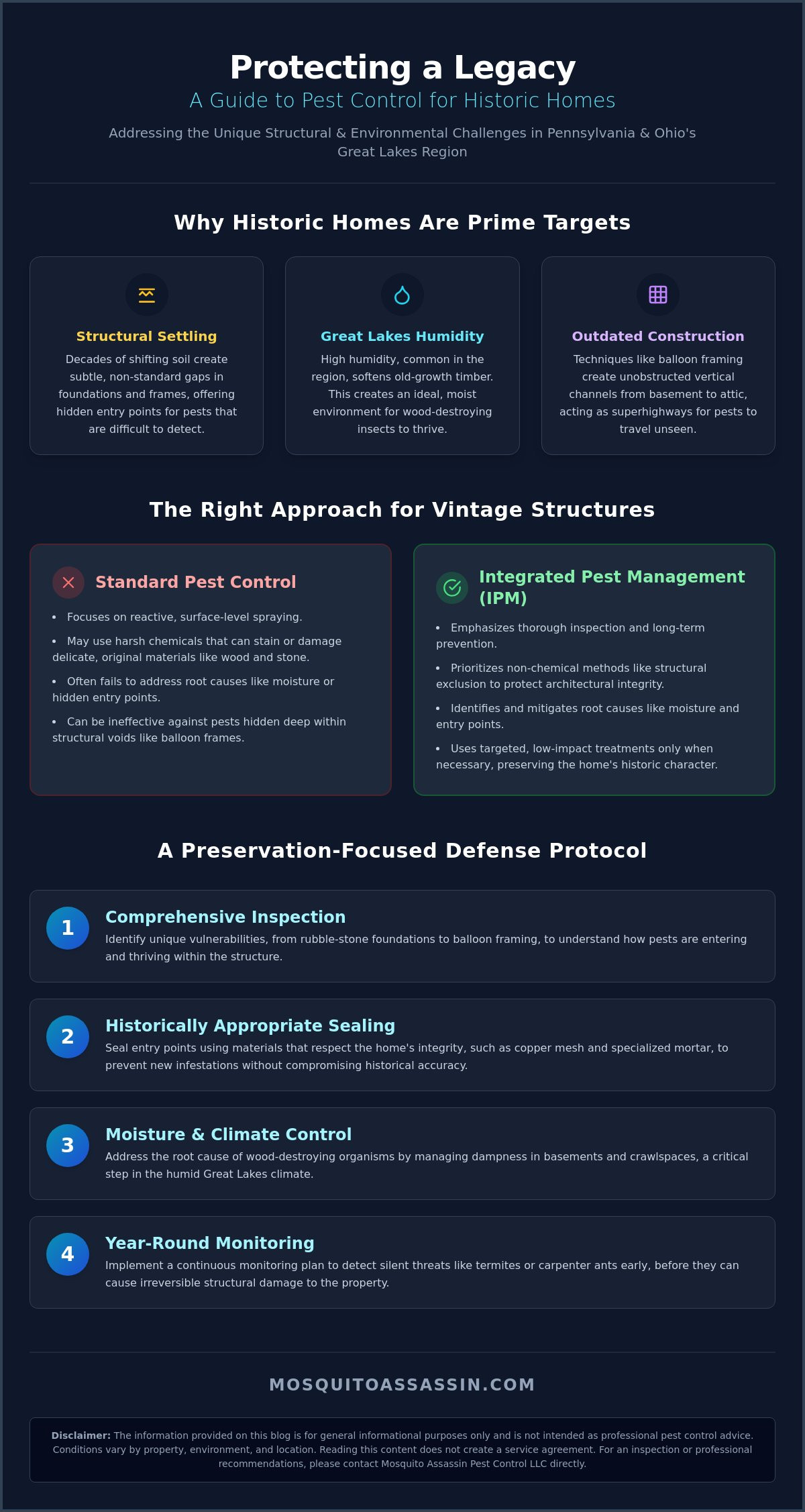
    Regional expertise is vital because the climate in Crawford and Erie counties presents unique challenges. Localized pest control in Erie, PA and Meadville requires an understanding of how high humidity levels and seasonal temperature shifts affect wood-boring insects. Professionals in this region recognize that local architecture, often featuring older timber frames and specific crawl space designs, provides vulnerabilities that national chains might overlook. Knowledge of local tree species, such as the common black cherry or oak, also helps identify where outdoor parent colonies might be nesting.

    The Inspection Process

    A systematic evaluation is the foundation of any successful management plan. Professionals conduct a thorough walkthrough of the perimeter, attic, and basement to identify active trails. Since these ants are often nocturnal, technicians use non-invasive techniques to find hidden galleries without damaging the home’s structure. Documentation of moisture issues is a critical step; data from university extension offices suggests that nearly 90 percent of indoor carpenter ant nests are located near wood with a moisture content above 20 percent. Identifying these leaks or drainage problems is essential for a permanent resolution.

    Long-Term Protection Plans

    One-time applications rarely provide a permanent solution for established colonies. Incorporating monitoring into a broader year-round pest control strategy ensures that new queens don’t re-establish themselves in the same area. Follow-up visits are necessary to confirm the parent colony, which may be located outdoors in a nearby stump or landscape timber, is completely neutralized. Without this comprehensive approach, satellite colonies inside the home can survive and continue to cause structural damage. Professional carpenter ant treatment Meadville PA provides the oversight needed to maintain a pest-free environment throughout the changing seasons.

    Professional pest control may help reduce risk and protect the structural integrity of your property. For more information, please visit the online booking portal.

    Disclaimer: The information provided on this blog is for general informational purposes only and is not intended as professional pest control advice. Conditions vary by property, environment, and location. Reading this content does not create a service agreement. For an inspection or professional recommendations, please contact Mosquito Assassin Pest Control LLC directly.
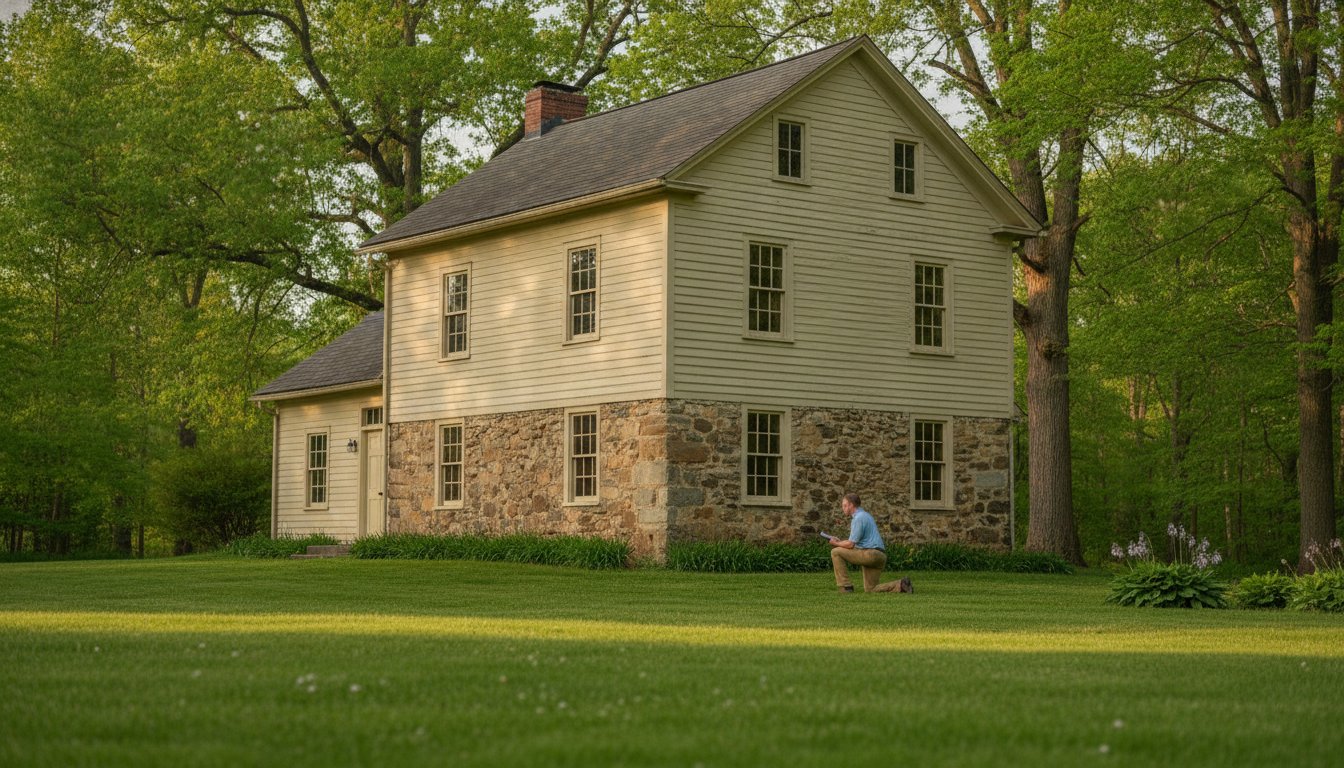
    Protecting Meadville Homes from Structural Damage

    Maintaining a sound structure in Crawford County requires constant vigilance against wood-destroying insects. Unlike termites that consume cellulose, carpenter ants excavate smooth galleries to create satellite nests, often targeting structural timber with a moisture content exceeding 20 percent. Effective management relies on identifying these nesting sites and addressing the underlying environmental conditions, such as overgrown vegetation or leaking gutters, that attract them. Utilizing detailed Integrated Pest Management (IPM) protocols ensures that every carpenter ant treatment Meadville PA property owners receive is targeted and follows 2024 industry standards for effectiveness.

    For homeowners in Northwest Pennsylvania, working with a licensed and insured professional service provides a methodical approach to pest eradication. A locally owned and operated provider in the region understands the specific climate challenges, including the high humidity levels common in the Great Lakes basin, that lead to increased pest activity. Accessing a professional inspection helps identify early signs of structural compromise before they lead to significant repair costs. To address an active infestation or establish a preventative strategy, schedule a professional inspection through the online portal at mosquitoassassin.com. Taking proactive steps today helps safeguard the long-term integrity of a home against wood-destroying pests.

    Disclaimer: The information provided on this blog is for general informational purposes only and is not intended as professional pest control advice. Conditions vary by property, environment, and location. Reading this content does not create a service agreement. For an inspection or professional recommendations, please contact Mosquito Assassin Pest Control LLC directly.
    Frequently Asked Questions

    How can I tell if I have carpenter ants or regular house ants?

    Carpenter ants are significantly larger than common nuisance ants, typically measuring between 0.5 and 1 inch in length. While most house ants are about 0.125 inches long, carpenter ants have a distinct single node on their waist and a perfectly rounded thorax when viewed from the side. Finding coarse sawdust, known as frass, near wood structures is a 100 percent certain sign of carpenter ant activity rather than regular house ants.

    Do carpenter ants actually eat the wood in my Meadville home?

    Carpenter ants don’t eat wood for nutrition like termites do. Instead, they use their powerful mandibles to excavate galleries for nesting, which removes 100 percent of the wood in those specific channels. This process creates smooth tunnels that compromise the structural integrity of the timber over time. Because they don’t digest the material, they push the debris out of the nest, creating visible piles of wood shavings.

    Why do I see large black ants in my house even in the winter?

    Seeing active ants inside a Crawford County home during winter months usually means a colony is already nesting within the walls. When outdoor temperatures drop below 50 degrees Fahrenheit, local ants typically go into a dormant state. However, the internal heat of a home allows an established colony to remain active 365 days a year, foraging for food and water in kitchens or bathrooms.

    Can I get rid of a carpenter ant colony using store bought sprays?

    Store bought contact sprays generally only eliminate the 10 percent of the colony that is currently foraging outside the nest. These products often act as repellents, which can cause a colony to “bud” or split into 2 or 3 smaller colonies deeper in the structure. Effective carpenter ant treatment Meadville PA requires non-repellent materials that workers carry back to the queen for total colony elimination.

    What attracts carpenter ants to a specific house in Crawford County?

    Moisture is the primary attractant, as these ants prefer to nest in wood with a moisture content of 20 percent or higher. Leaking roof shingles, clogged gutters, or poor drainage around the foundation create the damp conditions they need. Properties with firewood stacked within 5 feet of the exterior walls or tree branches touching the roofline are at a significantly higher risk for infestation.

    Are carpenter ant treatments safe for my children and pets?

    Professional treatments utilize products registered by the EPA specifically for use in residential environments. Licensed technicians apply these materials in targeted areas like wall voids and crevices where pests hide but children and pets cannot easily reach. Residents are typically asked to stay off treated liquid surfaces for 2 to 4 hours until the application is completely dry to ensure safety.

    How long does it typically take to eliminate a carpenter ant infestation?

    Complete elimination of a colony usually takes between 14 and 21 days from the initial application. While homeowners often see a 90 percent reduction in ant activity within the first 48 hours, the remaining time is necessary for the bait to circulate through the entire population. This slow-acting process is vital because it ensures the queen is reached, preventing the colony from rebounding.

    Is a professional inspection necessary if I only see one or two ants?

    Seeing just 1 or 2 ants often indicates the presence of a much larger parent colony that can contain over 3,000 workers. These “scout” ants are sent out to find food sources for the rest of the group hidden inside the structure. Identifying the nesting site early can prevent structural damage that costs thousands of dollars to repair, making a professional assessment a practical step for long-term protection.

    Disclaimer: The information provided on this blog is for general informational purposes only and is not intended as professional pest control advice. Conditions vary by property, environment, and location. Reading this content does not create a service agreement. For an inspection or professional recommendations, please contact Mosquito Assassin Pest Control LLC directly.
  • WDI Inspection Report Pennsylvania: A Guide for Homeowners and Buyers

    WDI Inspection Report Pennsylvania: A Guide for Homeowners and Buyers

    What if a single missing document could stop your Pennsylvania home closing in its tracks? For many buyers in Erie and Crawford Counties, the WDI inspection report pennsylvania is the final hurdle between a signed contract and moving day. It’s natural to feel anxious while waiting for a professional to examine your potential investment’s foundation. You want to ensure the structure is sound and that no hidden wood-destroying pests are silently causing thousands of dollars in damage.

    You likely already realize that termites aren’t the only threat, yet the technical jargon on official forms often feels overwhelming. This guide simplifies the entire process, from understanding the mandatory NPMA-33 form to identifying which specific insects are tracked in the local region. You’ll learn how to interpret inspection results clearly so you can move forward with your real estate transaction with confidence. This overview covers the four major wood-destroying pests and the specific requirements lenders demand before approving a mortgage.

    Disclaimer: The information provided on this blog is for general informational purposes only and is not intended as professional pest control advice. Conditions vary by property, environment, and location. Reading this content does not create a service agreement. For an inspection or professional recommendations, please contact Mosquito Assassin Pest Control LLC directly.
    Key Takeaways

    • Learn why a specialized pest assessment is different from a general home inspection (focusing on accessible areas of the property).
    • Understand the standardized NPMA-33 form used to document findings in a WDI inspection report pennsylvania for real estate transactions.
    • Identify the five primary wood-destroying insects that must be legally reported in Pennsylvania and why they thrive in the climate of Erie and Crawford counties.
    • Learn how to read the recommendations section to distinguish between current active infestations and signs of prior pest activity.
    • Gain insights into how professional pest standards and licensing requirements integrate with the typical real estate closing timeline.

    Understanding the Wood Destroying Insect (WDI) Inspection in Pennsylvania

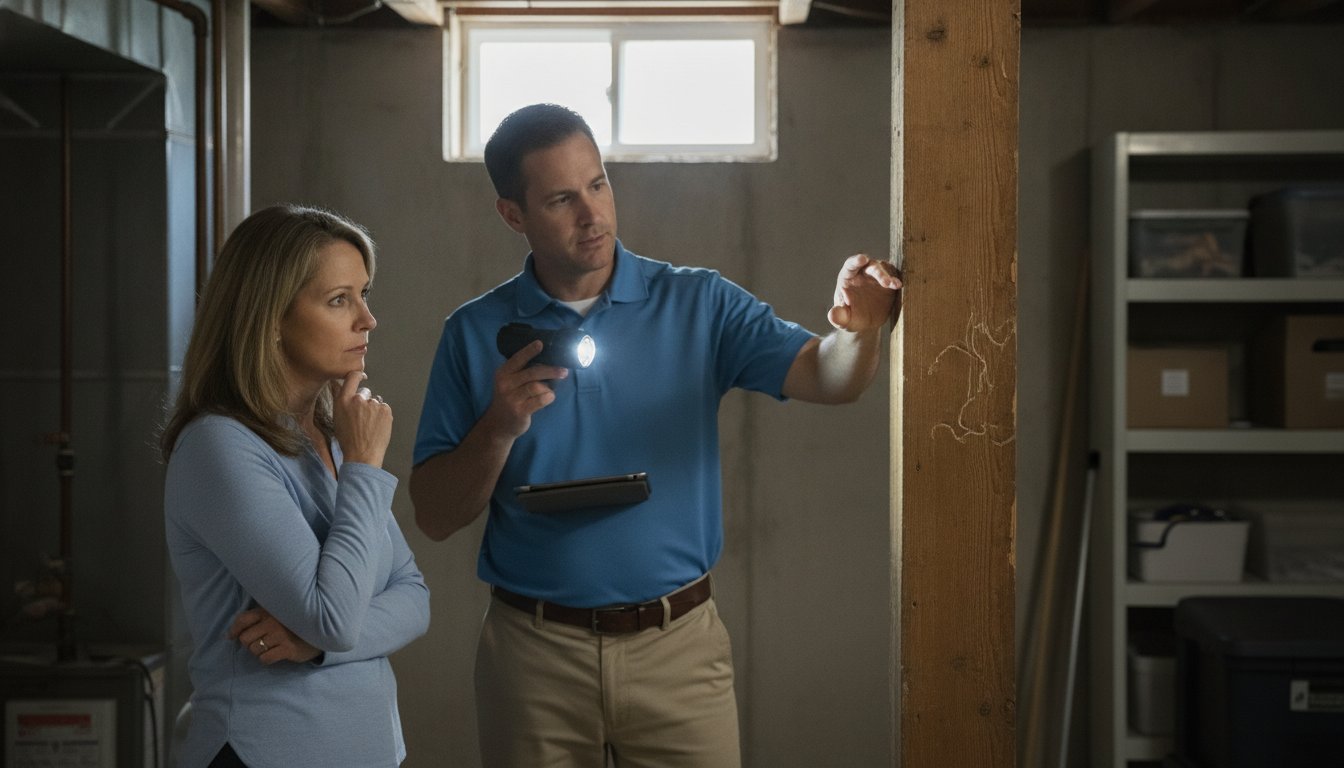
    A WDI inspection isn’t a “pass or fail” test; it’s a snapshot of a property’s condition at a specific moment. In Pennsylvania, this assessment covers visible and accessible areas like basements, crawlspaces, and exteriors. Inspectors look for live insects, dead insects, or evidence of past activity. It’s a limited visual assessment, meaning the inspector won’t tear into walls or pull up floorboards. They focus on identifying signs of termites, carpenter ants, powderpost beetles, and carpenter bees that could threaten the home’s structural integrity.

    The Pennsylvania Department of Agriculture oversees the certification of these professionals. Under the Pennsylvania Pesticide Control Act of 1973, technicians must hold a specific category license, typically Category 12, to perform these inspections for real estate transfers. This ensures the person walking through the crawlspace has the specialized training to spot subtle signs of infestation. Professional pest control may help reduce risk by identifying these issues early in the buying process.

    Home buyers often confuse a general inspection with a WDI report. A standard home inspector evaluates the structural integrity and mechanical systems like HVAC and plumbing. However, they aren’t always trained to identify the specific nuances of wood-destroying organisms. A specialized WDI inspection focuses solely on pests that can compromise the wood of a home, providing a level of detail that a general inspection lacks.

    The Purpose of the WDI Report

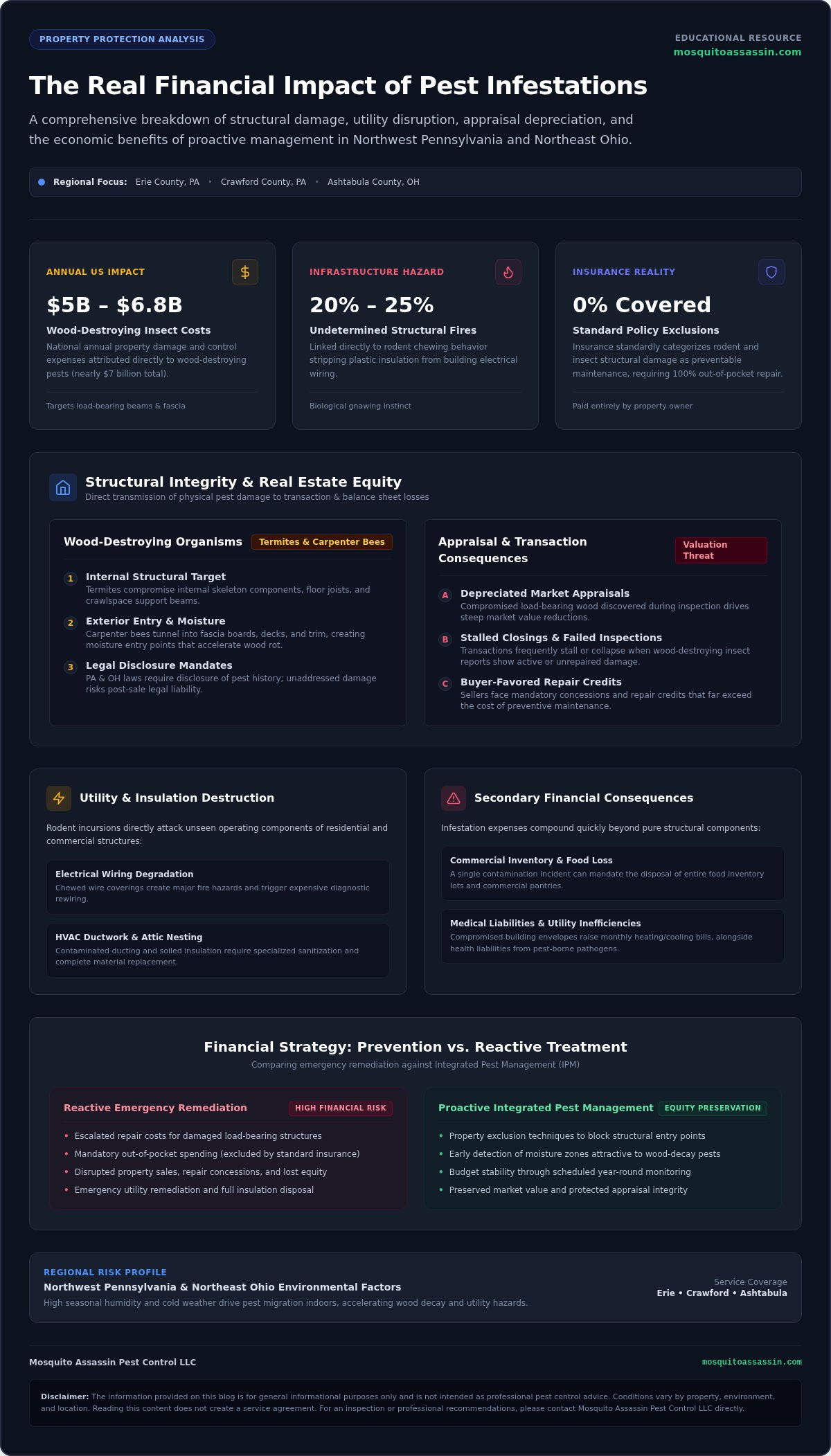
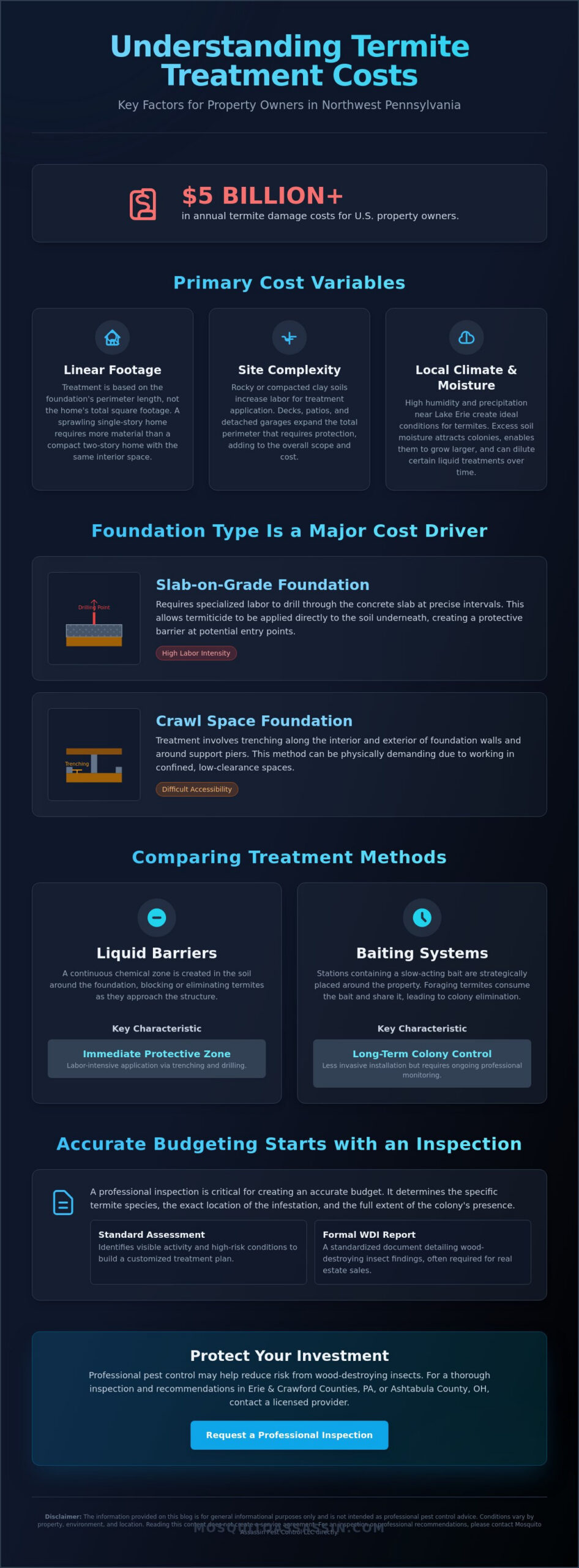
    The primary goal of a WDI inspection report pennsylvania is financial protection. According to industry data from the National Pest Management Association, termites cause over $5 billion in property damage annually in the United States. By understanding termite biology and nesting habits, inspectors can identify risks before they become five-figure repair bills. Lenders require these reports because they want to ensure the house serving as collateral isn’t being hollowed out by pests. The report also highlights “conducive conditions.” This includes wood-to-soil contact or excessive moisture in a crawlspace; these factors are red flags for future trouble even if no insects are currently present.

    When is a WDI Inspection Required?

    Loan type usually dictates the necessity of the report. For VA (Veterans Affairs) loans in Pennsylvania, a WDI inspection is mandatory for almost every purchase to protect the veteran’s investment. FHA (Federal Housing Administration) loans also frequently require them if there’s evidence of a problem or if the local area is known for high termite activity. Conventional lenders have more flexibility, but many still mandate a WDI inspection report pennsylvania to mitigate risk. In Northwest Pennsylvania, including Erie and Crawford Counties, savvy sellers often opt for pre-listing inspections. This 60-minute assessment allows sellers to address issues before a buyer’s inspector finds them, preventing delays at the closing table. For more information on scheduling an assessment, visit https://portal.gorilladesk.com/mosquitoassassin.

    Disclaimer: The information provided on this blog is for general informational purposes only and is not intended as professional pest control advice. Conditions vary by property, environment, and location. Reading this content does not create a service agreement. For an inspection or professional recommendations, please contact Mosquito Assassin Pest Control LLC directly.
    Identifying the Five Primary Wood Destroying Insects in Pennsylvania

    A standard WDI inspection report pennsylvania homeowners receive during a real estate transaction isn’t just a formality; it’s a legal safeguard. State regulations require inspectors to look for five specific wood-destroying insects that pose the greatest threat to residential structures. In the humid, temperate climates of Erie and Crawford counties, these pests thrive due to the abundance of moisture and aging timber. High annual rainfall and lake-effect humidity often push wood moisture content above 20%, creating a buffet for wood-destroying organisms. Understanding these five pests helps buyers and sellers interpret the findings of a WDI inspection report pennsylvania professionals provide.

    Professional inspectors look for distinct biological signatures to differentiate between various infestations. They must also distinguish between structural damage, which affects the load-bearing capacity of the home, and cosmetic wood surface damage. For instance, surface etching from moisture may look alarming but often lacks the depth of a true infestation. Conversely, a seemingly solid beam might be hollowed out by subterranean colonies. Identifying these nuances requires a methodical approach to checking crawlspaces, sill plates, and joists where wood meets the soil.

    Termites and Carpenter Ants

    Subterranean termites represent the most significant threat to Pennsylvania foundations. These insects live in underground colonies and build protective mud tubes to travel from the soil to the home’s wooden framing. These tubes, often the width of a pencil, protect them from the drying air of Erie County winters. While termites consume the wood, carpenter ants simply excavate it to build nests. Inspectors identify carpenter ants by the presence of “frass,” a mixture of sawdust, soil, and insect parts. Unlike termites, carpenter ants prefer wood that’s already softened by moisture or decay, making them a secondary indicator of water leaks or drainage issues. Homeowners concerned about these pests can book an evaluation to identify potential risks.

    Carpenter Bees and Wood-Boring Beetles

    Carpenter bees are easily identified by the perfectly round, 1/2-inch entry holes they drill into exterior trim, fascia boards, and decks. While a single hole is cosmetic, successive generations often expand these galleries, leading to significant rot. Powder post beetles are more subtle; they leave behind exit holes no larger than the head of a pin and a fine, flour-like powder known as “talc.” These beetles can spend years inside a piece of wood before emerging. Old house borers, despite their name, are frequently found in newer homes where seasoned softwoods were used. They leave larger, oval-shaped exit holes and are known for the audible clicking sound the larvae make while feeding on the internal wood fibers.

    Adhering to Pennsylvania’s regulatory standards ensures that every inspection covers these five specific threats. By documenting the presence or absence of these insects, inspectors provide a clear picture of the home’s structural health. This data allows for informed decisions regarding treatment or structural repairs before a property changes hands.

    Disclaimer: The information provided on this blog is for general informational purposes only and is not intended as professional pest control advice. Conditions vary by property, environment, and location. Reading this content does not create a service agreement. For an inspection or professional recommendations, please contact Mosquito Assassin Pest Control LLC directly.
    The WDI Reporting Process and the NPMA-33 Form

    Every real estate transaction involving a mortgage in Erie or Crawford County typically requires a standardized document known as the NPMA-33. This form, created by the National Pest Management Association, serves as the industry standard for reporting findings. It ensures that lenders, buyers, and sellers receive a consistent evaluation of a property’s condition regarding wood-destroying organisms. A professional WDI inspection report pennsylvania relies on this document to provide a clear, visual snapshot of a home at a specific point in time.

    The scope of this process is strictly visual. Inspectors focus on “readily accessible” areas where pests are most likely to congregate. In a typical Pennsylvania home, this includes a thorough examination of the basement, crawl spaces, and the sill plate where the wood structure meets the masonry foundation. On the exterior, the inspector checks the perimeter for soil-to-wood contact and evidence of common wood-destroying pests in PA such as subterranean termites or carpenter ants. They look for specific biological “red flags,” including mud tubes, exit holes, and discarded wings.

    Completing a comprehensive WDI inspection report pennsylvania often faces physical hurdles. In the tri-state area, finished basements are common, with approximately 55% of older homes having some form of drywall or paneling that covers the foundation. These obstructions, along with heavy storage, insulation, and large appliances, limit the inspector’s view. If an area is blocked, the inspector must note the obstruction on the form, as they cannot report on what they cannot see.

    Breaking Down the NPMA-33 Form Sections

    Section II of the form is the primary area for insect identification. The inspector marks whether they found evidence of active or inactive infestations. It’s a critical distinction; inactive evidence might suggest a past treatment, while active evidence requires immediate attention. Section III provides space for a detailed description of any observed damage and its specific location within the structure. Finally, Section IV outlines recommendations. This might include a suggestion for immediate treatment or a referral to a structural engineer if the integrity of a support beam appears compromised.

    What the Inspector Does Not Do

    It’s vital to understand the physical boundaries of a professional inspection. Inspectors don’t move furniture, lift heavy rugs, or dismantle walls to see inside cavities. They won’t crawl into spaces with less than 24 inches of clearance or enter areas they deem unsafe. Because the inspection is non-invasive, the resulting report isn’t a guarantee against future infestations or hidden activity deep within the timber. Additionally, the WDI report excludes non-insect organisms. Issues like wood rot or mold are caused by fungi, not insects, so they don’t fall under the scope of this specific pest report.

    Disclaimer: The information provided on this blog is for general informational purposes only and is not intended as professional pest control advice. Conditions vary by property, environment, and location. Reading this content does not create a service agreement. For an inspection or professional recommendations, please contact Mosquito Assassin Pest Control LLC directly.
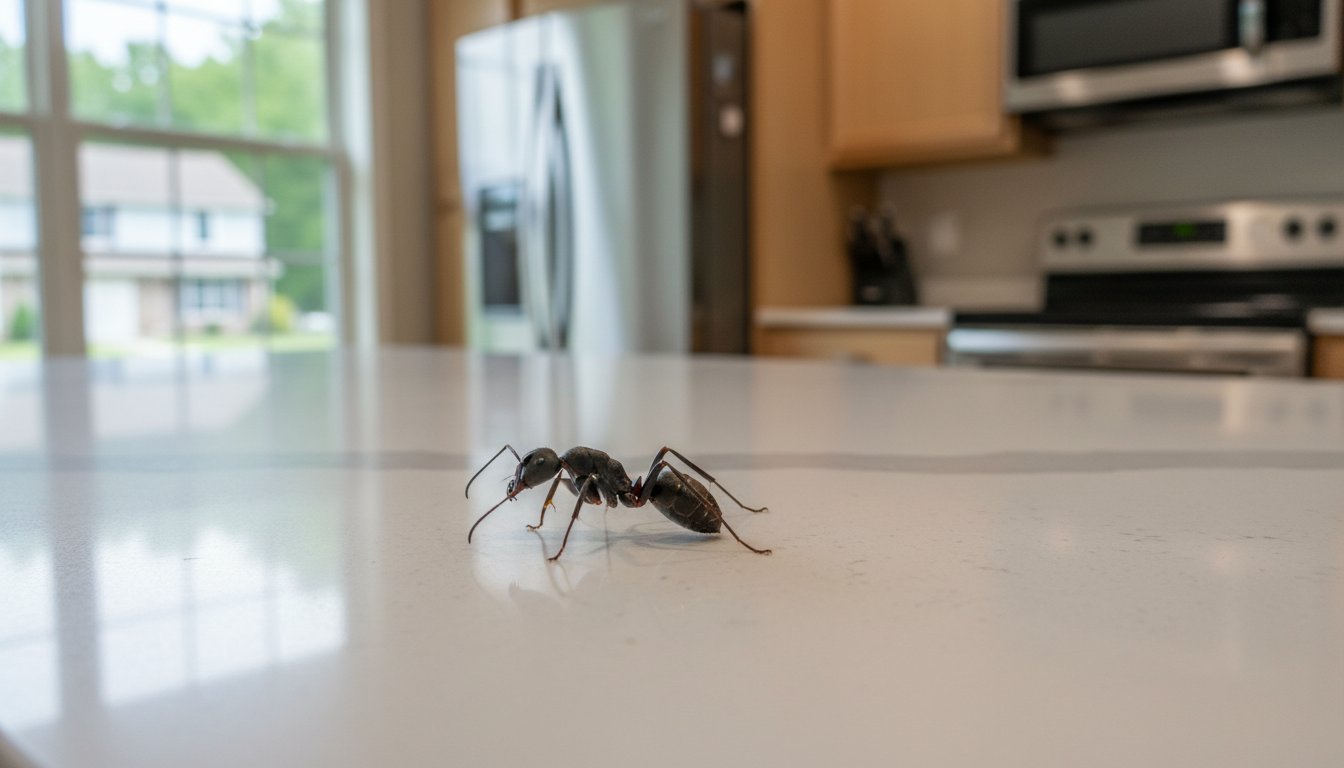
    Interpreting Your WDI Report Findings and Recommendations

    Receiving your WDI inspection report pennsylvania can feel stressful; however, it’s simply a tool for informed decision-making. This document provides a snapshot of a property’s history and current vulnerability. It categorizes findings to help you understand if there’s an immediate threat or just a record of past activity. Most reports in Erie and Crawford Counties follow a standardized format that separates active infestations from conducive conditions. Reading these results carefully ensures you don’t overreact to minor findings or overlook serious risks.

    Active vs. Inactive Infestations

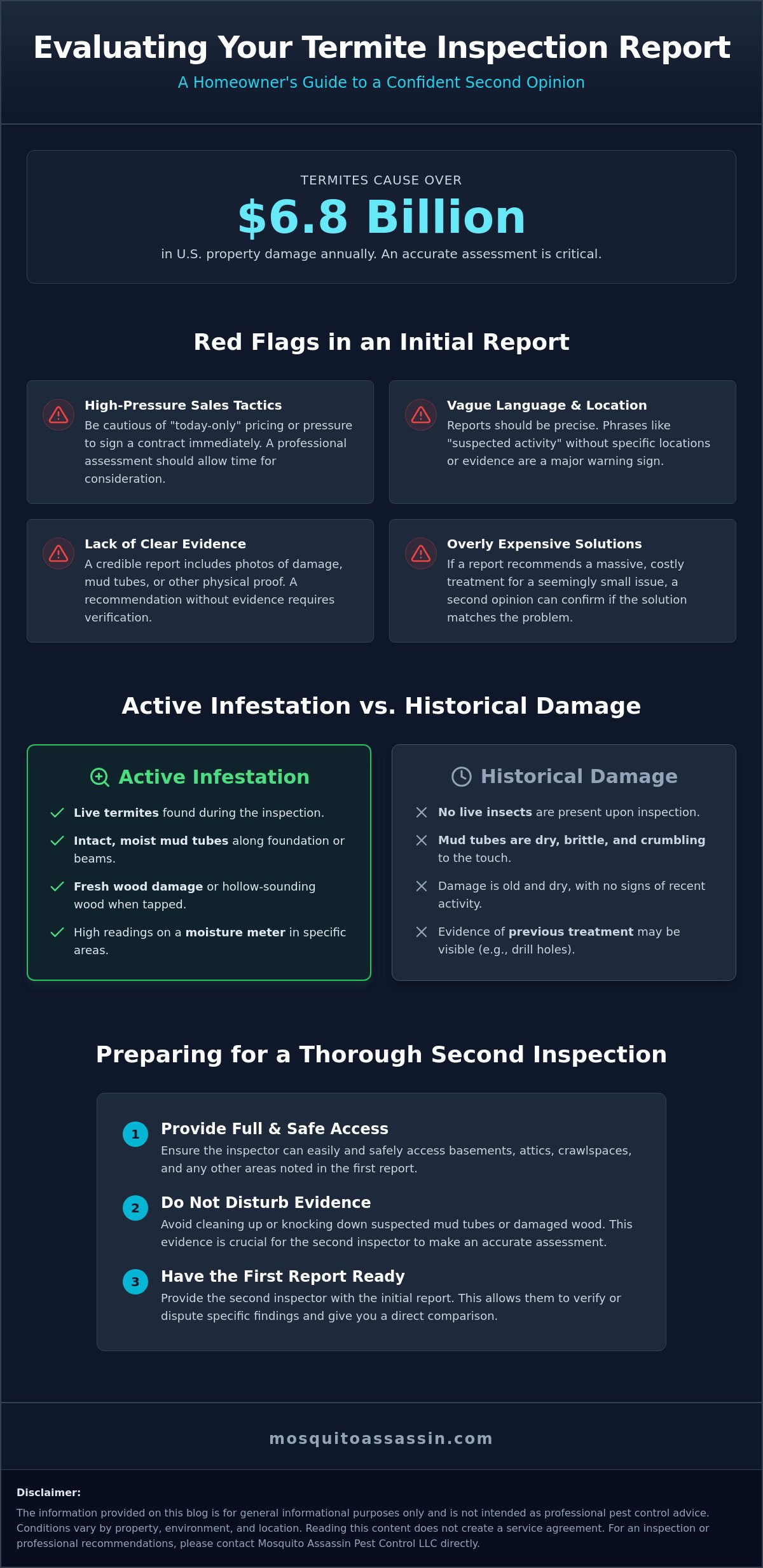
    Inspectors look for specific markers to determine if a colony is currently feeding on the structure. Active signs include live insects, swarming wings, or “wet” mud tubes that feel moist to the touch. In contrast, inactive infestations are identified by old galleries, exit holes, or dry, brittle mud tubes. While an inactive status sounds better, it still carries weight in a real estate transaction. Approximately 85% of mortgage lenders require a professional treatment if any evidence is found without a valid service record from the last 365 days. Without proof of a prior professional barrier, there’s no way to guarantee the colony won’t return.

    Addressing Conducive Conditions

    Conducive conditions are environmental factors that act as an open invitation for pests. These are often the most important part of the report for long-term home maintenance. Common issues include:

    • Wood-to-Soil Contact: Any wooden part of the house touching the ground provides a direct highway for termites. Maintaining a 12-inch gap between soil and wooden siding is a standard recommendation.
    • Excessive Moisture: Clogged gutters that spill water within 3 feet of the foundation create the damp wood that carpenter ants and subterranean termites crave.
    • Heavy Mulch: Mulch beds deeper than 4 inches retain moisture and provide insulation for pests during Pennsylvania’s colder months.
    • Firewood Placement: Stacking wood directly against the home or on the porch increases the likelihood of wood-destroying organisms migrating into the structure.

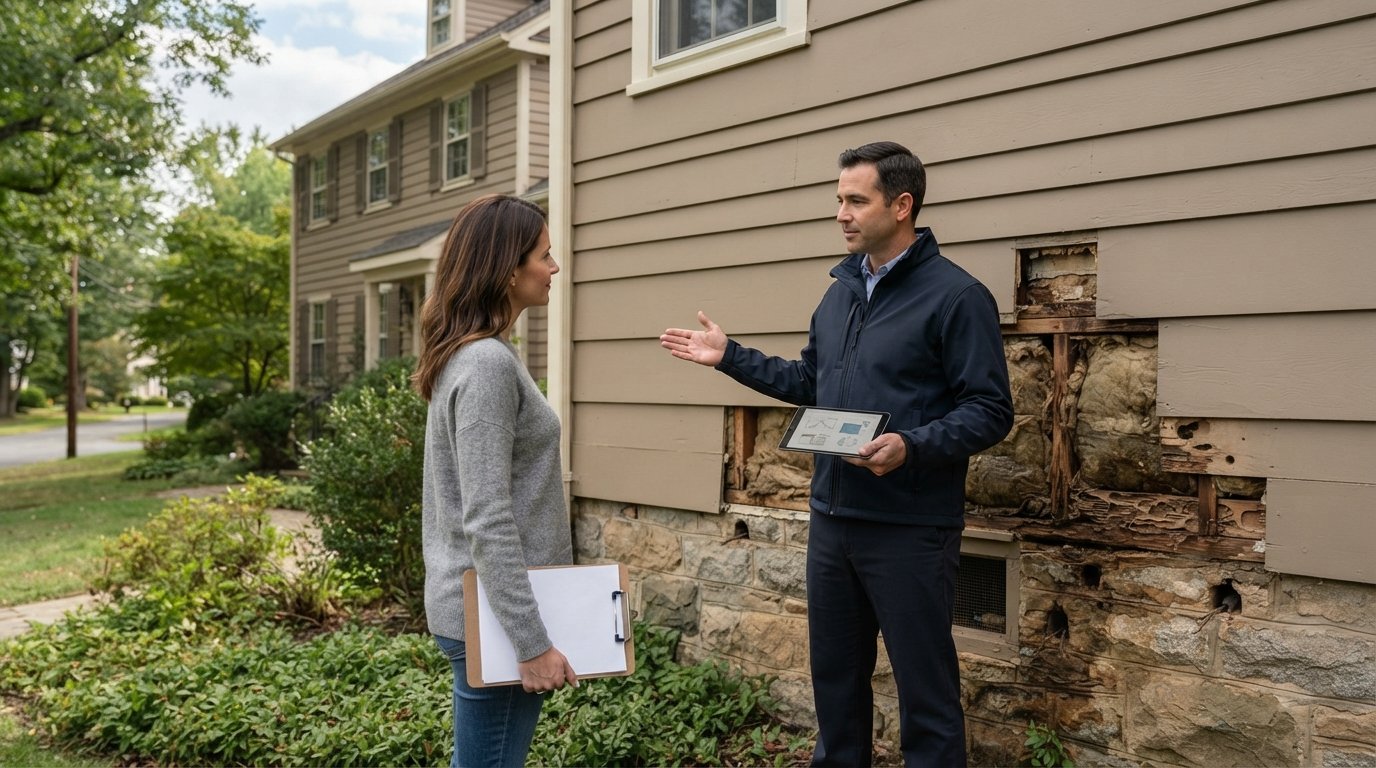
    Visible damage often looks alarming on paper, but it doesn’t always mean the home is structurally unsound. A small area of “galleries” (tunnels) in a single floor joist or rim joist is a common find in older Pennsylvania homes. Inspectors report the presence of damage, but they are not structural engineers. If the damage appears to affect more than 20% of a load-bearing member, a secondary inspection by a licensed contractor is usually the next logical step. In most cases, the damage is localized and can be addressed without major construction. Understanding the difference between cosmetic wood scarring and structural failure helps keep the process moving forward without unnecessary panic.

    Professional pest control may help reduce risk and provide clarity on your report findings.

    Disclaimer: The information provided on this blog is for general informational purposes only and is not intended as professional pest control advice. Conditions vary by property, environment, and location. Reading this content does not create a service agreement. For an inspection or professional recommendations, please contact Mosquito Assassin Pest Control LLC directly.
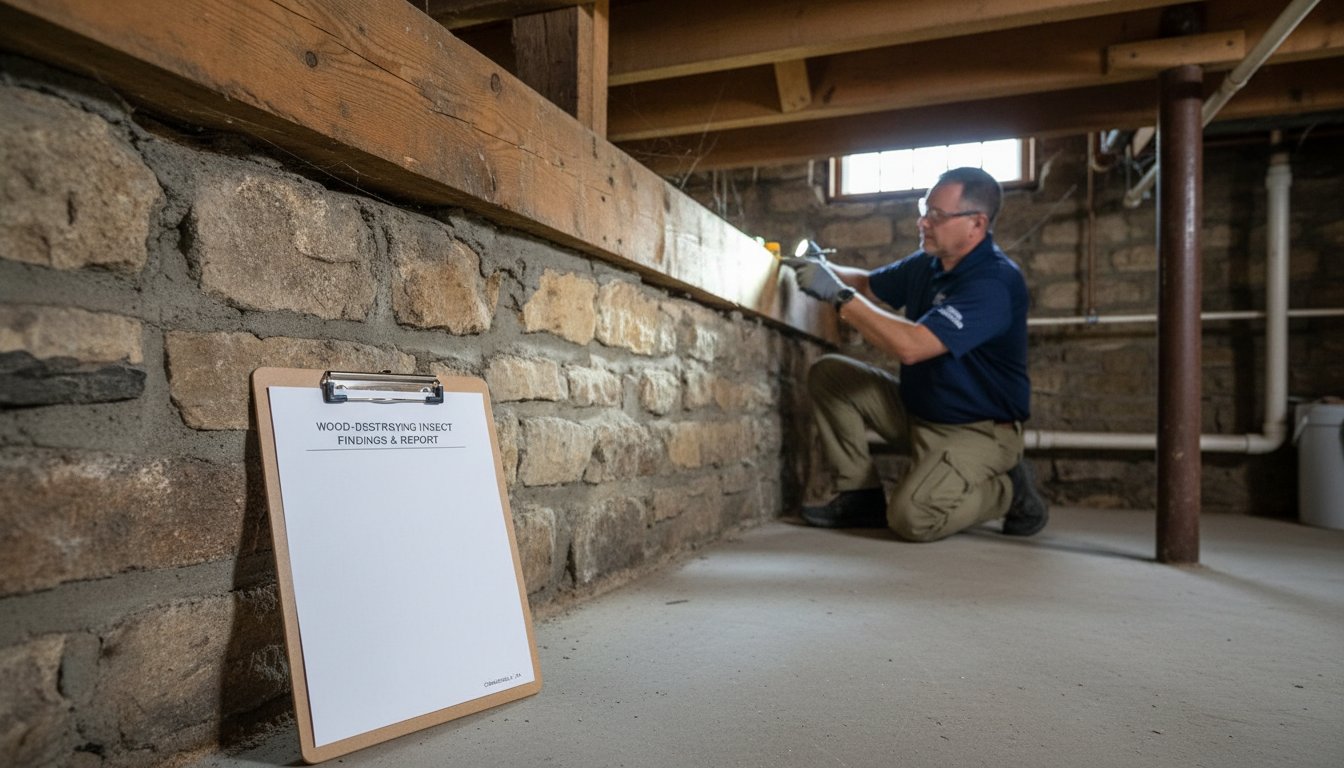
    Professional Standards and Real Estate Requirements

    Securing a licensed and insured professional is the most critical step in the wood-destroying insect (WDI) inspection process. In Pennsylvania, technicians must maintain specific certifications through the Department of Agriculture, specifically Category 12 for wood-destroying pests. This credential ensures the inspector understands the biology of subterranean termites, carpenter ants, and wood-boring beetles common to the region. Hiring an uncertified individual risks more than just a rejected loan; it can lead to overlooked structural damage that costs a homeowner an average of $3,000 or more in unforeseen repairs after closing.

    The WDI inspection report pennsylvania serves as a vital pivot point in the real estate timeline. Most purchase agreements include a 10 to 15 day contingency period for inspections. Because a 30 day closing window is standard in Erie and Crawford Counties, scheduling the WDI inspection early is essential. If the report identifies an active infestation, the timeline must expand to accommodate treatment and a follow-up clearance letter. Delays in this process can jeopardize interest rate locks or push back moving dates, making coordination between the inspector and the real estate agent a priority.

    Commercial properties in Erie and Meadville require even more specialized attention. Large-scale buildings often feature complex foundations or historic timber framing that presents unique hiding spots for pests. High humidity levels near Lake Erie often lead to moisture-damaged wood, which acts as a magnet for carpenter ants. A professional inspector identifies these conducive conditions before they become a structural liability for the business owner.

    VA and FHA Loan Specifics

    Government-backed loans carry stringent requirements for pest inspections. In many VA transactions, the buyer is technically prohibited from paying for the inspection fee; this cost is usually covered by the seller or the lender. If the WDI inspection report pennsylvania reveals an infestation, the lender requires an NPMA-33 form along with signed proof of professional treatment. Professional pest control may help reduce risk by ensuring all documentation meets federal standards, preventing a “denied” status during the final loan underwriting phase.

    Choosing a Local Professional

    Homeowners should always verify a company’s credentials through the Pennsylvania Department of Agriculture’s online database before booking. Choosing a local team provides a distinct advantage because these professionals understand the specific pest pressures of the tri-state area. They recognize how the local climate, such as the heavy snow-melt in Meadville or the damp springs in Ashtabula, influences termite swarming patterns. Professional pest control services include detailed inspections that leverage this regional knowledge to protect the property’s value. Local teams who live in the communities they serve have a personal stake in maintaining the integrity of the local housing market.

    Disclaimer: The information provided on this blog is for general informational purposes only and is not intended as professional pest control advice. Conditions vary by property, environment, and location. Reading this content does not create a service agreement. For an inspection or professional recommendations, please contact Mosquito Assassin Pest Control LLC directly.
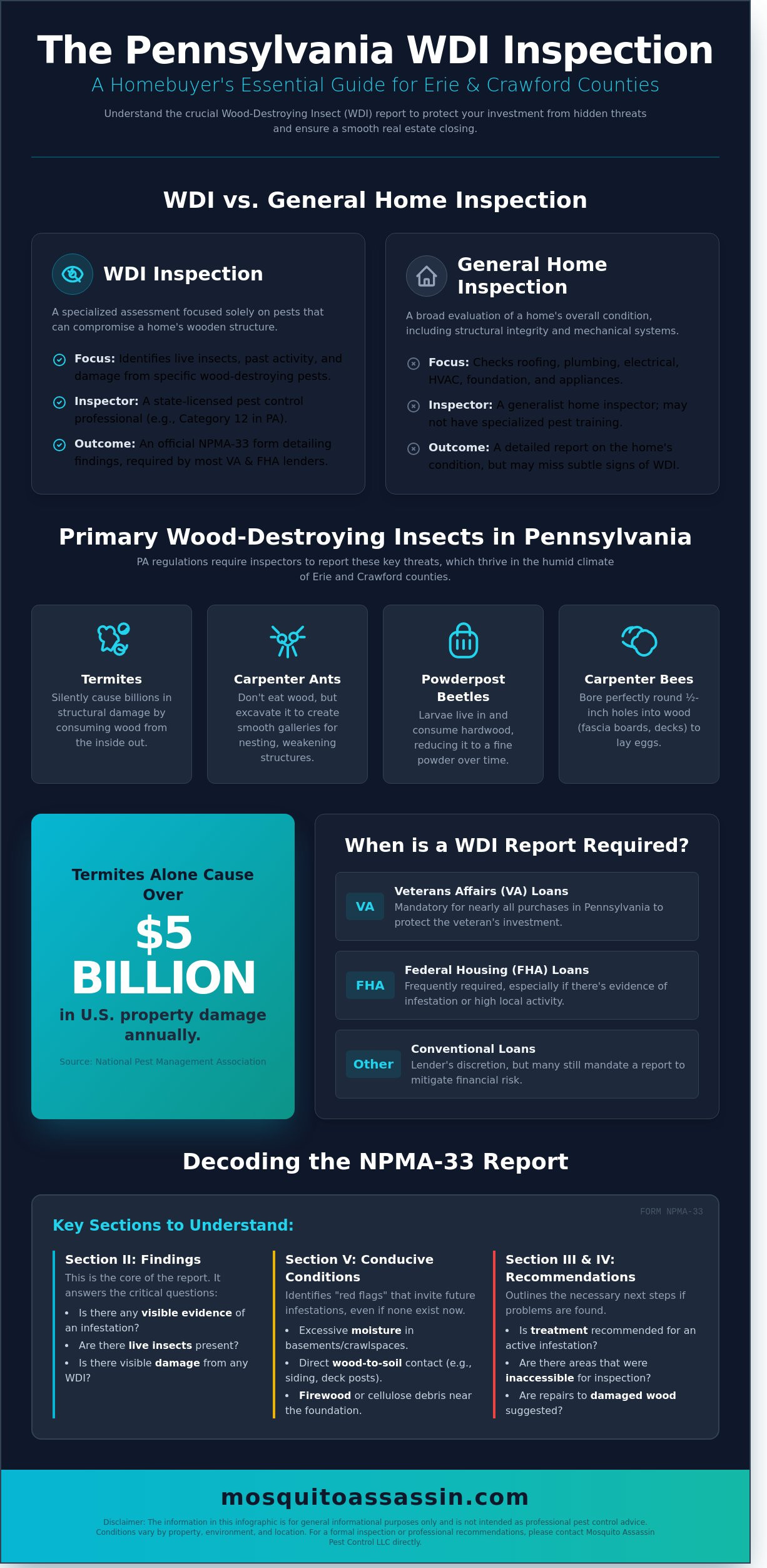
    Protecting Your Pennsylvania Property Investment

    Buying or selling a home in Erie or Crawford County involves significant paperwork, but the NPMA-33 form is a critical document for long-term structural safety. A thorough WDI inspection report pennsylvania provides a clear snapshot of activity from termites, carpenter ants, or powderpost beetles. Understanding these findings helps buyers negotiate repairs and allows sellers to address issues before they stall a closing. Because wood-destroying insects cause over 5 billion dollars in property damage annually in the United States, skipping this step isn’t worth the risk to your equity.

    Professional inspectors follow strict standards to ensure every accessible area is checked thoroughly. This localized expertise is vital because Pennsylvania’s climate supports several different wood-destroying species throughout the year. Relying on a licensed and insured professional who is locally owned and operated ensures the reporting meets real estate requirements while protecting the home’s value. For an inspection or professional recommendations, please contact Mosquito Assassin Pest Control LLC directly. Taking this step early helps prevent hidden damage from becoming a costly surprise. Protecting your home starts with accurate information and a proactive approach to pest management.

    Disclaimer: The information provided on this blog is for general informational purposes only and is not intended as professional pest control advice. Conditions vary by property, environment, and location. Reading this content does not create a service agreement. For an inspection or professional recommendations, please contact Mosquito Assassin Pest Control LLC directly.

    Frequently Asked Questions

    Is a WDI inspection the same as a termite inspection?

    A WDI inspection covers more than just termites; it includes all wood-destroying insects like carpenter ants, carpenter bees, and wood-boring beetles. While many people use the terms interchangeably, the National Pest Management Association (NPMA) Form 33 is the standard document used for a WDI inspection report pennsylvania homeowners require during a sale. This report documents visible evidence of active or past infestations from multiple species. It’s a comprehensive look at the home’s wooden components.

    How long is a Pennsylvania WDI report valid for a real estate closing?

    A Pennsylvania WDI report is typically valid for 30 days from the date of the inspection for most real estate transactions. Lenders for FHA and VA loans strictly enforce this 30 day window to ensure the property condition hasn’t changed before settlement. If a closing is delayed beyond 30 days, a reinspection is usually required to provide an updated NPMA-33 form for the mortgage underwriter. This ensures the 100% accuracy of the property’s pest status at closing.

    What happens if the WDI report shows evidence of a previous infestation?

    Evidence of a previous infestation doesn’t mean the home has active pests, but it must be documented on the report. If the inspector finds exit holes or old galleries, they’ll check for evidence of prior treatment, such as drill marks in concrete or bait stations. Buyers should request a 1 year service warranty or treatment records from the seller to confirm the issue was professionally resolved. This documentation provides peace of mind that the structure is currently protected.

    Can a home fail a WDI inspection?

    A home doesn’t technically pass or fail a WDI inspection, but the report will indicate whether there’s visible evidence of an active infestation. If Section IV of the NPMA-33 form shows active wood-destroying insects, most lenders will refuse to fund the loan until treatment is completed. In 100% of these cases, a licensed professional must treat the property and provide a clearance letter before the closing can proceed. This process protects the buyer’s investment from immediate damage.

    Who is responsible for paying for the WDI inspection in Pennsylvania?

    The buyer usually pays for the WDI inspection in Pennsylvania as part of their due diligence period. While the buyer typically covers the $100 to $150 fee, the sales contract can stipulate that the seller pays. For VA loans, the Department of Veterans Affairs previously prohibited veterans from paying this fee, but 2024 regulations allow buyers to pay for the WDI inspection report pennsylvania lenders require in most counties. It’s a standard part of the closing costs.

    Does a WDI report cover carpenter bees and ants?

    Yes, a standard WDI report specifically covers carpenter bees and carpenter ants along with termites and re-infesting wood-boring beetles. These insects cause structural damage by nesting in or consuming wood members. Inspectors look for specific signs like the 0.5 inch round entry holes made by carpenter bees or the sawdust-like frass left behind by carpenter ants. Identifying these pests early prevents the $3,000 to $5,000 repair bills often associated with long term wood damage.

    What are the most common conducive conditions found in PA homes?

    The two most common conducive conditions in Pennsylvania are earth-to-wood contact and excessive moisture in crawlspaces. Data from local inspections shows that 85% of homes with termite activity have soil touching wooden siding or deck posts. Additionally, moisture levels exceeding 20% in floor joists create an ideal environment for wood-decay fungi and subterranean termites. Fixing these issues by maintaining a 6 inch gap between soil and wood helps protect the structure from future pest invasions.

    What should I do if the report recommends a structural evaluation?

    If a report recommends a structural evaluation, you should hire a licensed structural engineer or a qualified contractor to assess the integrity of the wood. Pest inspectors identify the presence of insects and visible damage, but they aren’t authorized to determine if a 2×10 joist is still load-bearing. Obtaining a professional assessment ensures that any damage found during the WDI inspection report pennsylvania process is safely repaired before you finalize the home purchase. It’s a critical step for safety.

    Disclaimer: The information provided on this blog is for general informational purposes only and is not intended as professional pest control advice. Conditions vary by property, environment, and location. Reading this content does not create a service agreement. For an inspection or professional recommendations, please contact Mosquito Assassin Pest Control LLC directly.