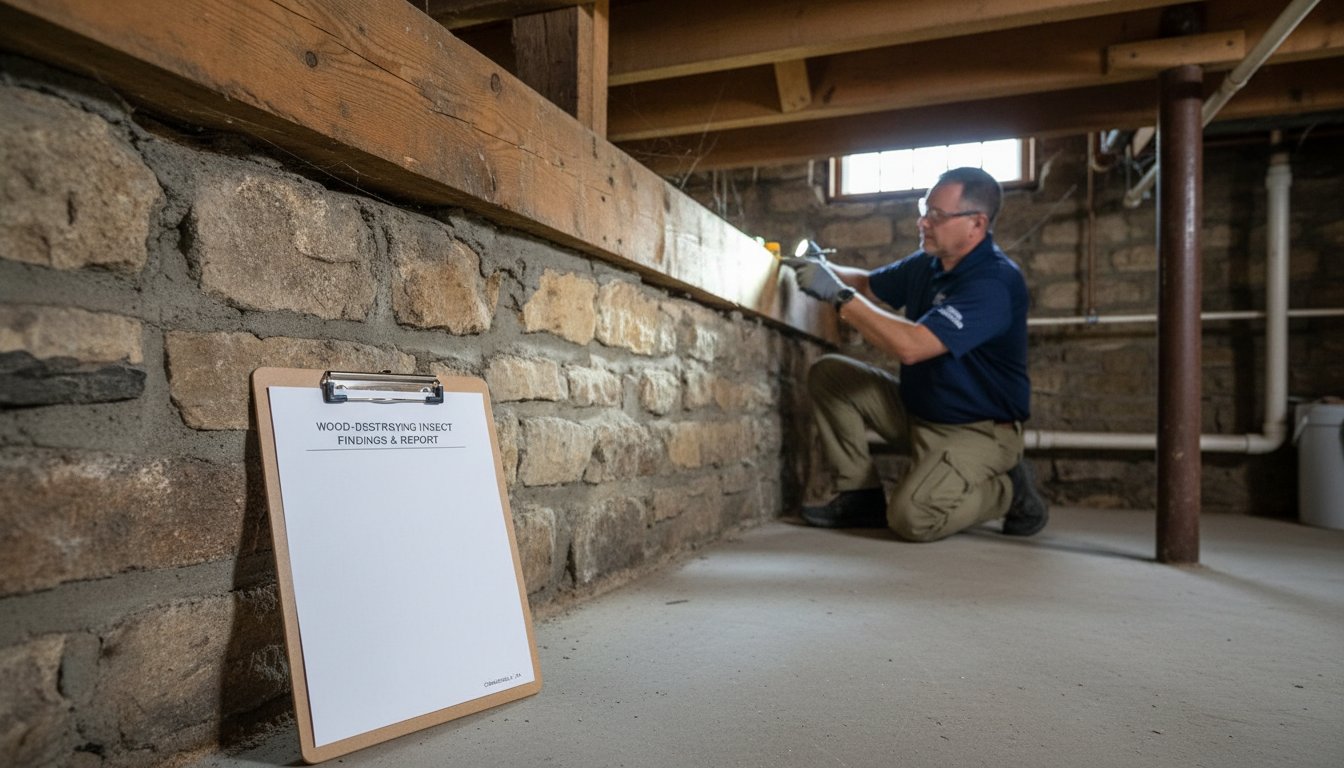
What if a single missing document could stop your Pennsylvania home closing in its tracks? For many buyers in Erie and Crawford Counties, the WDI inspection report pennsylvania is the final hurdle between a signed contract and moving day. It’s natural to feel anxious while waiting for a professional to examine your potential investment’s foundation. You want to ensure the structure is sound and that no hidden wood-destroying pests are silently causing thousands of dollars in damage.
You likely already realize that termites aren’t the only threat, yet the technical jargon on official forms often feels overwhelming. This guide simplifies the entire process, from understanding the mandatory NPMA-33 form to identifying which specific insects are tracked in the local region. You’ll learn how to interpret inspection results clearly so you can move forward with your real estate transaction with confidence. This overview covers the four major wood-destroying pests and the specific requirements lenders demand before approving a mortgage.
Disclaimer: The information provided on this blog is for general informational purposes only and is not intended as professional pest control advice. Conditions vary by property, environment, and location. Reading this content does not create a service agreement. For an inspection or professional recommendations, please contact Mosquito Assassin Pest Control LLC directly.
Key Takeaways
- Learn why a specialized pest assessment is different from a general home inspection (focusing on accessible areas of the property).
- Understand the standardized NPMA-33 form used to document findings in a WDI inspection report pennsylvania for real estate transactions.
- Identify the five primary wood-destroying insects that must be legally reported in Pennsylvania and why they thrive in the climate of Erie and Crawford counties.
- Learn how to read the recommendations section to distinguish between current active infestations and signs of prior pest activity.
- Gain insights into how professional pest standards and licensing requirements integrate with the typical real estate closing timeline.
Understanding the Wood Destroying Insect (WDI) Inspection in Pennsylvania
A WDI inspection isn’t a “pass or fail” test; it’s a snapshot of a property’s condition at a specific moment. In Pennsylvania, this assessment covers visible and accessible areas like basements, crawlspaces, and exteriors. Inspectors look for live insects, dead insects, or evidence of past activity. It’s a limited visual assessment, meaning the inspector won’t tear into walls or pull up floorboards. They focus on identifying signs of termites, carpenter ants, powderpost beetles, and carpenter bees that could threaten the home’s structural integrity.
The Pennsylvania Department of Agriculture oversees the certification of these professionals. Under the Pennsylvania Pesticide Control Act of 1973, technicians must hold a specific category license, typically Category 12, to perform these inspections for real estate transfers. This ensures the person walking through the crawlspace has the specialized training to spot subtle signs of infestation. Professional pest control may help reduce risk by identifying these issues early in the buying process.
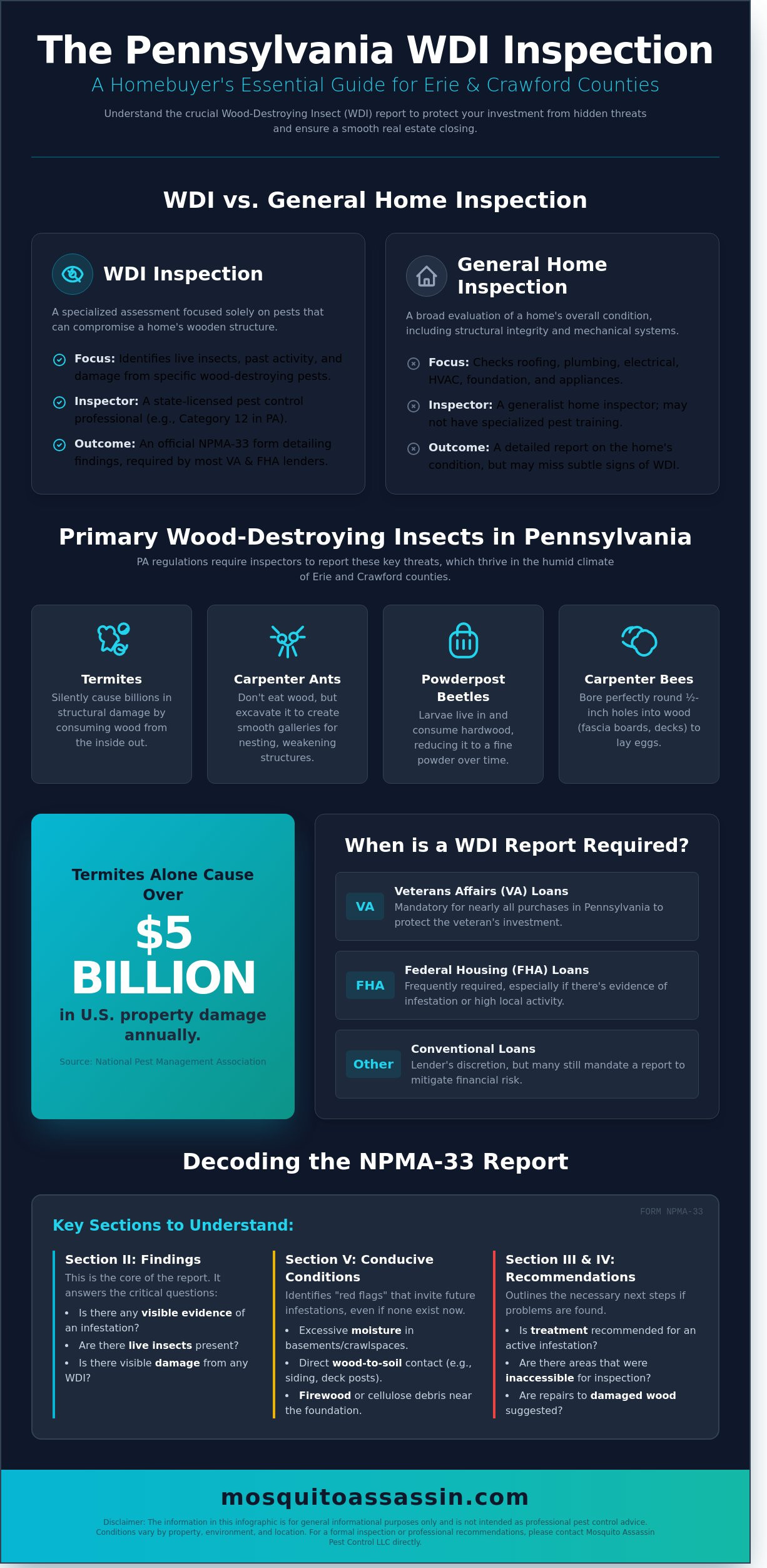
Home buyers often confuse a general inspection with a WDI report. A standard home inspector evaluates the structural integrity and mechanical systems like HVAC and plumbing. However, they aren’t always trained to identify the specific nuances of wood-destroying organisms. A specialized WDI inspection focuses solely on pests that can compromise the wood of a home, providing a level of detail that a general inspection lacks.
The Purpose of the WDI Report
The primary goal of a WDI inspection report pennsylvania is financial protection. According to industry data from the National Pest Management Association, termites cause over $5 billion in property damage annually in the United States. By understanding termite biology and nesting habits, inspectors can identify risks before they become five-figure repair bills. Lenders require these reports because they want to ensure the house serving as collateral isn’t being hollowed out by pests. The report also highlights “conducive conditions.” This includes wood-to-soil contact or excessive moisture in a crawlspace; these factors are red flags for future trouble even if no insects are currently present.
When is a WDI Inspection Required?
Loan type usually dictates the necessity of the report. For VA (Veterans Affairs) loans in Pennsylvania, a WDI inspection is mandatory for almost every purchase to protect the veteran’s investment. FHA (Federal Housing Administration) loans also frequently require them if there’s evidence of a problem or if the local area is known for high termite activity. Conventional lenders have more flexibility, but many still mandate a WDI inspection report pennsylvania to mitigate risk. In Northwest Pennsylvania, including Erie and Crawford Counties, savvy sellers often opt for pre-listing inspections. This 60-minute assessment allows sellers to address issues before a buyer’s inspector finds them, preventing delays at the closing table. For more information on scheduling an assessment, visit https://portal.gorilladesk.com/mosquitoassassin.
Disclaimer: The information provided on this blog is for general informational purposes only and is not intended as professional pest control advice. Conditions vary by property, environment, and location. Reading this content does not create a service agreement. For an inspection or professional recommendations, please contact Mosquito Assassin Pest Control LLC directly.
Identifying the Five Primary Wood Destroying Insects in Pennsylvania
A standard WDI inspection report pennsylvania homeowners receive during a real estate transaction isn’t just a formality; it’s a legal safeguard. State regulations require inspectors to look for five specific wood-destroying insects that pose the greatest threat to residential structures. In the humid, temperate climates of Erie and Crawford counties, these pests thrive due to the abundance of moisture and aging timber. High annual rainfall and lake-effect humidity often push wood moisture content above 20%, creating a buffet for wood-destroying organisms. Understanding these five pests helps buyers and sellers interpret the findings of a WDI inspection report pennsylvania professionals provide.
Professional inspectors look for distinct biological signatures to differentiate between various infestations. They must also distinguish between structural damage, which affects the load-bearing capacity of the home, and cosmetic wood surface damage. For instance, surface etching from moisture may look alarming but often lacks the depth of a true infestation. Conversely, a seemingly solid beam might be hollowed out by subterranean colonies. Identifying these nuances requires a methodical approach to checking crawlspaces, sill plates, and joists where wood meets the soil.
Termites and Carpenter Ants
Subterranean termites represent the most significant threat to Pennsylvania foundations. These insects live in underground colonies and build protective mud tubes to travel from the soil to the home’s wooden framing. These tubes, often the width of a pencil, protect them from the drying air of Erie County winters. While termites consume the wood, carpenter ants simply excavate it to build nests. Inspectors identify carpenter ants by the presence of “frass,” a mixture of sawdust, soil, and insect parts. Unlike termites, carpenter ants prefer wood that’s already softened by moisture or decay, making them a secondary indicator of water leaks or drainage issues. Homeowners concerned about these pests can book an evaluation to identify potential risks.
Carpenter Bees and Wood-Boring Beetles
Carpenter bees are easily identified by the perfectly round, 1/2-inch entry holes they drill into exterior trim, fascia boards, and decks. While a single hole is cosmetic, successive generations often expand these galleries, leading to significant rot. Powder post beetles are more subtle; they leave behind exit holes no larger than the head of a pin and a fine, flour-like powder known as “talc.” These beetles can spend years inside a piece of wood before emerging. Old house borers, despite their name, are frequently found in newer homes where seasoned softwoods were used. They leave larger, oval-shaped exit holes and are known for the audible clicking sound the larvae make while feeding on the internal wood fibers.
Adhering to Pennsylvania’s regulatory standards ensures that every inspection covers these five specific threats. By documenting the presence or absence of these insects, inspectors provide a clear picture of the home’s structural health. This data allows for informed decisions regarding treatment or structural repairs before a property changes hands.
The WDI Reporting Process and the NPMA-33 Form
Every real estate transaction involving a mortgage in Erie or Crawford County typically requires a standardized document known as the NPMA-33. This form, created by the National Pest Management Association, serves as the industry standard for reporting findings. It ensures that lenders, buyers, and sellers receive a consistent evaluation of a property’s condition regarding wood-destroying organisms. A professional WDI inspection report pennsylvania relies on this document to provide a clear, visual snapshot of a home at a specific point in time.
The scope of this process is strictly visual. Inspectors focus on “readily accessible” areas where pests are most likely to congregate. In a typical Pennsylvania home, this includes a thorough examination of the basement, crawl spaces, and the sill plate where the wood structure meets the masonry foundation. On the exterior, the inspector checks the perimeter for soil-to-wood contact and evidence of common wood-destroying pests in PA such as subterranean termites or carpenter ants. They look for specific biological “red flags,” including mud tubes, exit holes, and discarded wings.
Completing a comprehensive WDI inspection report pennsylvania often faces physical hurdles. In the tri-state area, finished basements are common, with approximately 55% of older homes having some form of drywall or paneling that covers the foundation. These obstructions, along with heavy storage, insulation, and large appliances, limit the inspector’s view. If an area is blocked, the inspector must note the obstruction on the form, as they cannot report on what they cannot see.
Breaking Down the NPMA-33 Form Sections
Section II of the form is the primary area for insect identification. The inspector marks whether they found evidence of active or inactive infestations. It’s a critical distinction; inactive evidence might suggest a past treatment, while active evidence requires immediate attention. Section III provides space for a detailed description of any observed damage and its specific location within the structure. Finally, Section IV outlines recommendations. This might include a suggestion for immediate treatment or a referral to a structural engineer if the integrity of a support beam appears compromised.
What the Inspector Does Not Do
It’s vital to understand the physical boundaries of a professional inspection. Inspectors don’t move furniture, lift heavy rugs, or dismantle walls to see inside cavities. They won’t crawl into spaces with less than 24 inches of clearance or enter areas they deem unsafe. Because the inspection is non-invasive, the resulting report isn’t a guarantee against future infestations or hidden activity deep within the timber. Additionally, the WDI report excludes non-insect organisms. Issues like wood rot or mold are caused by fungi, not insects, so they don’t fall under the scope of this specific pest report.
Interpreting Your WDI Report Findings and Recommendations
Receiving your WDI inspection report pennsylvania can feel stressful; however, it’s simply a tool for informed decision-making. This document provides a snapshot of a property’s history and current vulnerability. It categorizes findings to help you understand if there’s an immediate threat or just a record of past activity. Most reports in Erie and Crawford Counties follow a standardized format that separates active infestations from conducive conditions. Reading these results carefully ensures you don’t overreact to minor findings or overlook serious risks.
Active vs. Inactive Infestations
Inspectors look for specific markers to determine if a colony is currently feeding on the structure. Active signs include live insects, swarming wings, or “wet” mud tubes that feel moist to the touch. In contrast, inactive infestations are identified by old galleries, exit holes, or dry, brittle mud tubes. While an inactive status sounds better, it still carries weight in a real estate transaction. Approximately 85% of mortgage lenders require a professional treatment if any evidence is found without a valid service record from the last 365 days. Without proof of a prior professional barrier, there’s no way to guarantee the colony won’t return.
Addressing Conducive Conditions
Conducive conditions are environmental factors that act as an open invitation for pests. These are often the most important part of the report for long-term home maintenance. Common issues include:
- Wood-to-Soil Contact: Any wooden part of the house touching the ground provides a direct highway for termites. Maintaining a 12-inch gap between soil and wooden siding is a standard recommendation.
- Excessive Moisture: Clogged gutters that spill water within 3 feet of the foundation create the damp wood that carpenter ants and subterranean termites crave.
- Heavy Mulch: Mulch beds deeper than 4 inches retain moisture and provide insulation for pests during Pennsylvania’s colder months.
- Firewood Placement: Stacking wood directly against the home or on the porch increases the likelihood of wood-destroying organisms migrating into the structure.
Visible damage often looks alarming on paper, but it doesn’t always mean the home is structurally unsound. A small area of “galleries” (tunnels) in a single floor joist or rim joist is a common find in older Pennsylvania homes. Inspectors report the presence of damage, but they are not structural engineers. If the damage appears to affect more than 20% of a load-bearing member, a secondary inspection by a licensed contractor is usually the next logical step. In most cases, the damage is localized and can be addressed without major construction. Understanding the difference between cosmetic wood scarring and structural failure helps keep the process moving forward without unnecessary panic.
Disclaimer: The information provided on this blog is for general informational purposes only and is not intended as professional pest control advice. Conditions vary by property, environment, and location. Reading this content does not create a service agreement. For an inspection or professional recommendations, please contact Mosquito Assassin Pest Control LLC directly.
Professional Standards and Real Estate Requirements
Securing a licensed and insured professional is the most critical step in the wood-destroying insect (WDI) inspection process. In Pennsylvania, technicians must maintain specific certifications through the Department of Agriculture, specifically Category 12 for wood-destroying pests. This credential ensures the inspector understands the biology of subterranean termites, carpenter ants, and wood-boring beetles common to the region. Hiring an uncertified individual risks more than just a rejected loan; it can lead to overlooked structural damage that costs a homeowner an average of $3,000 or more in unforeseen repairs after closing.
The WDI inspection report pennsylvania serves as a vital pivot point in the real estate timeline. Most purchase agreements include a 10 to 15 day contingency period for inspections. Because a 30 day closing window is standard in Erie and Crawford Counties, scheduling the WDI inspection early is essential. If the report identifies an active infestation, the timeline must expand to accommodate treatment and a follow-up clearance letter. Delays in this process can jeopardize interest rate locks or push back moving dates, making coordination between the inspector and the real estate agent a priority.
Commercial properties in Erie and Meadville require even more specialized attention. Large-scale buildings often feature complex foundations or historic timber framing that presents unique hiding spots for pests. High humidity levels near Lake Erie often lead to moisture-damaged wood, which acts as a magnet for carpenter ants. A professional inspector identifies these conducive conditions before they become a structural liability for the business owner.
VA and FHA Loan Specifics
Government-backed loans carry stringent requirements for pest inspections. In many VA transactions, the buyer is technically prohibited from paying for the inspection fee; this cost is usually covered by the seller or the lender. If the WDI inspection report pennsylvania reveals an infestation, the lender requires an NPMA-33 form along with signed proof of professional treatment. Professional pest control may help reduce risk by ensuring all documentation meets federal standards, preventing a “denied” status during the final loan underwriting phase.
Choosing a Local Professional
Homeowners should always verify a company’s credentials through the Pennsylvania Department of Agriculture’s online database before booking. Choosing a local team provides a distinct advantage because these professionals understand the specific pest pressures of the tri-state area. They recognize how the local climate, such as the heavy snow-melt in Meadville or the damp springs in Ashtabula, influences termite swarming patterns. Professional pest control services include detailed inspections that leverage this regional knowledge to protect the property’s value. Local teams who live in the communities they serve have a personal stake in maintaining the integrity of the local housing market.
Disclaimer: The information provided on this blog is for general informational purposes only and is not intended as professional pest control advice. Conditions vary by property, environment, and location. Reading this content does not create a service agreement. For an inspection or professional recommendations, please contact Mosquito Assassin Pest Control LLC directly.
Protecting Your Pennsylvania Property Investment
Buying or selling a home in Erie or Crawford County involves significant paperwork, but the NPMA-33 form is a critical document for long-term structural safety. A thorough WDI inspection report pennsylvania provides a clear snapshot of activity from termites, carpenter ants, or powderpost beetles. Understanding these findings helps buyers negotiate repairs and allows sellers to address issues before they stall a closing. Because wood-destroying insects cause over 5 billion dollars in property damage annually in the United States, skipping this step isn’t worth the risk to your equity.
Professional inspectors follow strict standards to ensure every accessible area is checked thoroughly. This localized expertise is vital because Pennsylvania’s climate supports several different wood-destroying species throughout the year. Relying on a licensed and insured professional who is locally owned and operated ensures the reporting meets real estate requirements while protecting the home’s value. For an inspection or professional recommendations, please contact Mosquito Assassin Pest Control LLC directly. Taking this step early helps prevent hidden damage from becoming a costly surprise. Protecting your home starts with accurate information and a proactive approach to pest management.
Disclaimer: The information provided on this blog is for general informational purposes only and is not intended as professional pest control advice. Conditions vary by property, environment, and location. Reading this content does not create a service agreement. For an inspection or professional recommendations, please contact Mosquito Assassin Pest Control LLC directly.
Frequently Asked Questions
Is a WDI inspection the same as a termite inspection?
A WDI inspection covers more than just termites; it includes all wood-destroying insects like carpenter ants, carpenter bees, and wood-boring beetles. While many people use the terms interchangeably, the National Pest Management Association (NPMA) Form 33 is the standard document used for a WDI inspection report pennsylvania homeowners require during a sale. This report documents visible evidence of active or past infestations from multiple species. It’s a comprehensive look at the home’s wooden components.
How long is a Pennsylvania WDI report valid for a real estate closing?
A Pennsylvania WDI report is typically valid for 30 days from the date of the inspection for most real estate transactions. Lenders for FHA and VA loans strictly enforce this 30 day window to ensure the property condition hasn’t changed before settlement. If a closing is delayed beyond 30 days, a reinspection is usually required to provide an updated NPMA-33 form for the mortgage underwriter. This ensures the 100% accuracy of the property’s pest status at closing.
What happens if the WDI report shows evidence of a previous infestation?
Evidence of a previous infestation doesn’t mean the home has active pests, but it must be documented on the report. If the inspector finds exit holes or old galleries, they’ll check for evidence of prior treatment, such as drill marks in concrete or bait stations. Buyers should request a 1 year service warranty or treatment records from the seller to confirm the issue was professionally resolved. This documentation provides peace of mind that the structure is currently protected.
Can a home fail a WDI inspection?
A home doesn’t technically pass or fail a WDI inspection, but the report will indicate whether there’s visible evidence of an active infestation. If Section IV of the NPMA-33 form shows active wood-destroying insects, most lenders will refuse to fund the loan until treatment is completed. In 100% of these cases, a licensed professional must treat the property and provide a clearance letter before the closing can proceed. This process protects the buyer’s investment from immediate damage.
Who is responsible for paying for the WDI inspection in Pennsylvania?
The buyer usually pays for the WDI inspection in Pennsylvania as part of their due diligence period. While the buyer typically covers the $100 to $150 fee, the sales contract can stipulate that the seller pays. For VA loans, the Department of Veterans Affairs previously prohibited veterans from paying this fee, but 2024 regulations allow buyers to pay for the WDI inspection report pennsylvania lenders require in most counties. It’s a standard part of the closing costs.
Does a WDI report cover carpenter bees and ants?
Yes, a standard WDI report specifically covers carpenter bees and carpenter ants along with termites and re-infesting wood-boring beetles. These insects cause structural damage by nesting in or consuming wood members. Inspectors look for specific signs like the 0.5 inch round entry holes made by carpenter bees or the sawdust-like frass left behind by carpenter ants. Identifying these pests early prevents the $3,000 to $5,000 repair bills often associated with long term wood damage.
What are the most common conducive conditions found in PA homes?
The two most common conducive conditions in Pennsylvania are earth-to-wood contact and excessive moisture in crawlspaces. Data from local inspections shows that 85% of homes with termite activity have soil touching wooden siding or deck posts. Additionally, moisture levels exceeding 20% in floor joists create an ideal environment for wood-decay fungi and subterranean termites. Fixing these issues by maintaining a 6 inch gap between soil and wood helps protect the structure from future pest invasions.
What should I do if the report recommends a structural evaluation?
If a report recommends a structural evaluation, you should hire a licensed structural engineer or a qualified contractor to assess the integrity of the wood. Pest inspectors identify the presence of insects and visible damage, but they aren’t authorized to determine if a 2×10 joist is still load-bearing. Obtaining a professional assessment ensures that any damage found during the WDI inspection report pennsylvania process is safely repaired before you finalize the home purchase. It’s a critical step for safety.
Disclaimer: The information provided on this blog is for general informational purposes only and is not intended as professional pest control advice. Conditions vary by property, environment, and location. Reading this content does not create a service agreement. For an inspection or professional recommendations, please contact Mosquito Assassin Pest Control LLC directly.