
A house mouse can squeeze through a gap as small as a quarter-inch, and a rat requires only a half-inch to gain entry and potentially halt an entire production line. In high-stakes environments across Erie and Crawford Counties in Pennsylvania and Ashtabula County in Ohio, these tiny vulnerabilities represent massive risks to operations. Reliable food processing facility pest control is essential because maintaining a sterile environment in a large plant often feels like a constant battle against nature. Most facility managers understand the stress of a looming audit, knowing that one failure or a single contaminated batch can lead to devastating shutdowns and product recalls.
This guide provides the essential knowledge to protect your facility from infestations while maintaining strict regulatory compliance and consumer safety. You will learn the core principles of Integrated Pest Management (IPM), practical steps to reduce pest entry points, and how to build a defense that stands up to the most rigorous FDA and USDA inspections. By focusing on proactive exclusion and sanitation, you can gain the confidence needed to meet modern food safety standards and protect your brand’s reputation.
Key Takeaways
- Understand how pest activity introduces biological and physical contaminants that threaten food safety and regulatory standing.
- Discover why Integrated Pest Management (IPM) is the gold standard for food processing facility pest control, shifting focus from reactive treatments to long-term prevention.
- Identify the specific seasonal pests common to Pennsylvania and Ohio and learn how to anticipate their movements into your facility.
- Learn practical exclusion techniques for the building envelope to stop rodents and insects before they reach production areas.
- Find out what credentials and local knowledge are necessary when choosing a professional partner to maintain compliance and safety standards.
The Critical Role of Pest Control in Food Processing Safety
Food safety standards aren’t just suggestions; they’re the foundation of any successful production line. In high-stakes environments throughout Erie and Crawford Counties in Pennsylvania and Ashtabula County in Ohio, effective food processing facility pest control serves as the primary barrier between a clean product and a public health crisis. Pests don’t just eat food. They destroy reputations. Even a minor infestation can lead to significant financial loss, encompassing lost production time, destroyed inventory, and massive legal liabilities. Maintaining a zero-tolerance policy in production environments is the only way to ensure that every batch leaving the facility is safe for consumption.
Contamination risks fall into three high-stakes categories: biological, physical, and chemical. Biological risks are often the most invisible and dangerous, involving the spread of bacteria and pathogens. Physical contamination occurs when pest fragments, such as hair, droppings, or shed skins, end up in the final packaging. Chemical contamination is a secondary risk that arises if treatments are applied incorrectly in sensitive areas. Modern facilities rely on Integrated Pest Management (IPM) to balance these risks and keep the facility operational. To better understand how these systems work in a professional setting, watch this helpful video:
The Impact of Pests on Consumer Health and Reputation
Rodents and flies are notorious for transmitting dangerous pathogens like Salmonella and E. coli. These pests move between waste areas and production surfaces, carrying bacteria on their feet and through their waste. A single contaminated batch can trigger a public recall, which often has long-term effects on brand trust that take years to repair. Food facility pest control is a comprehensive system of prevention and monitoring designed to eliminate pest activity before it reaches the production floor. Protecting the consumer is the ultimate goal of any sanitation program.
Regulatory Compliance and Audit Readiness
Agencies like the FDA and local health departments expect more than just a lack of visible pests; they require proof of a proactive strategy. The Food Safety Modernization Act (FSMA) places the burden of proof on the facility to show they have preventive controls in place. Implementing professional commercial pest control strategies ensures every corner of the facility is monitored and documented. Thorough documentation is the only way to prove a facility is pest-free during a high-stakes inspection. Without a clear paper trail of inspections and findings, even a clean facility can fail a modern audit.
Disclaimer: The information provided on this blog is for general informational purposes only and is not intended as professional pest control advice. Conditions vary by property, environment, and location. Reading this content does not create a service agreement. For an inspection or professional recommendations, please contact Mosquito Assassin Pest Control LLC directly.
Implementing Integrated Pest Management (IPM) in Food Facilities
Integrated Pest Management (IPM) is a disciplined, science-based strategy that prioritizes long-term prevention over quick-fix chemical applications. In the past, pest control often meant waiting for a problem to appear and then reacting with heavy spraying. Today, successful food processing facility pest control relies on environmental management. This shift is essential because it minimizes the risk of pesticide drift or residues contaminating production lines. By focusing on the facility’s ecosystem, managers can address the root causes of infestations, such as moisture and food access, rather than just treating the symptoms. It’s a methodical approach that creates a hostile environment for pests while keeping food safe.
The Four Pillars of an Effective IPM Program
Effective IPM is built on four distinct phases. First, a thorough inspection identifies vulnerabilities like gaps in loading dock seals or cracks in the foundation. Second, accurate identification is critical. Knowing the specific species allows for targeted interventions that don’t waste resources. Third, treatment involves the least-toxic methods available, such as mechanical traps or physical exclusion. Finally, continuous monitoring ensures the strategy works. Data collection from traps and visual sightings helps professionals spot trends before they become full-blown crises. For those overseeing complex operations, professional commercial pest control provides the structured oversight necessary for audit readiness.
Why Sanitation is the Foundation of Pest Control
Sanitation isn’t just about appearances; it’s a structural defense. According to the FDA’s Current Good Manufacturing Practices (CGMPs), facilities must maintain cleanliness to prevent contamination. Pests are attracted to the smallest food residues and standing water. Biofilms in drains can harbor small flies, while crumbs under heavy machinery support cockroach populations. Strict cleaning schedules must target these hard-to-reach areas. Proper waste management, including the frequent cleaning of dumpsters and compactors, removes the primary attractants that draw pests toward the building in the first place. This foundational work significantly reduces the need for chemical intervention near food surfaces.
Disclaimer: The information provided on this blog is for general informational purposes only and is not intended as professional pest control advice. Conditions vary by property, environment, and location. Reading this content does not create a service agreement. For an inspection or professional recommendations, please contact Mosquito Assassin Pest Control LLC directly.
Common Pests in Pennsylvania and Ohio Food Processing Plants
Regional weather patterns in the Great Lakes and Tri-State area dictate pest behavior. From the humid summers of Ashtabula County to the harsh winters of Erie, food processing facility pest control must adapt to shifting environmental pressures. While some pests are seasonal, others thrive inside the stable, climate-controlled temperatures of a production plant year-round. Understanding these local threats is the first step toward building a defense that satisfies both internal quality standards and external auditors.
Large flies are the top pest issue for food facilities for eight months of the year, typically from March through October; they account for approximately 30 percent of total pest control services in these environments. Beyond the flying threats, stored product pests like warehouse beetles and Indian meal moths target raw ingredients. These insects often enter the facility via incoming shipments of grains or dried goods. A single infested pallet can quickly spread throughout a warehouse if staff don’t catch the problem during the receiving process. Professional commercial pest control strategies focus on these high-risk areas to prevent a localized issue from becoming a facility-wide contamination event.
Rodent Management in Regional Facilities
Rodents remain a persistent threat in both rural and urban processing sites across Erie and Crawford Counties. Mice can enter a building through an opening as small as a quarter-inch, while rats only need a half-inch of space. Identifying signs of activity early is critical. Managers should look for small droppings, gnaw marks on packaging, and dark rub marks along baseboards where rodents travel. Once inside, these pests do more than contaminate food; they often damage electrical systems and infrastructure by gnawing through wires, which can lead to equipment failure or fire hazards. Maintaining Food Safety Modernization Act (FSMA) requirements depends heavily on a robust perimeter exclusion strategy that keeps these animals outside the building envelope.
Fly Control and Exclusion Strategies
Flies are an ever-present risk because they are drawn to the odors produced during food manufacturing. To prevent entry, many facilities utilize air curtains at loading docks and LED insect light traps in staging areas. However, exclusion is only half the battle. Small flies, such as fruit flies and phorid flies, often breed within the facility if drain hygiene is neglected. Organic matter trapped in floor drains provides the perfect environment for larvae to develop. House flies and bottle flies are capable of carrying over 100 different pathogens, including those that cause serious foodborne illnesses, to any food contact surface they touch. Consistent sanitation of moisture-prone areas is the most effective way to break their life cycle.
Disclaimer: The information provided on this blog is for general informational purposes only and is not intended as professional pest control advice. Conditions vary by property, environment, and location. Reading this content does not create a service agreement. For an inspection or professional recommendations, please contact Mosquito Assassin Pest Control LLC directly.
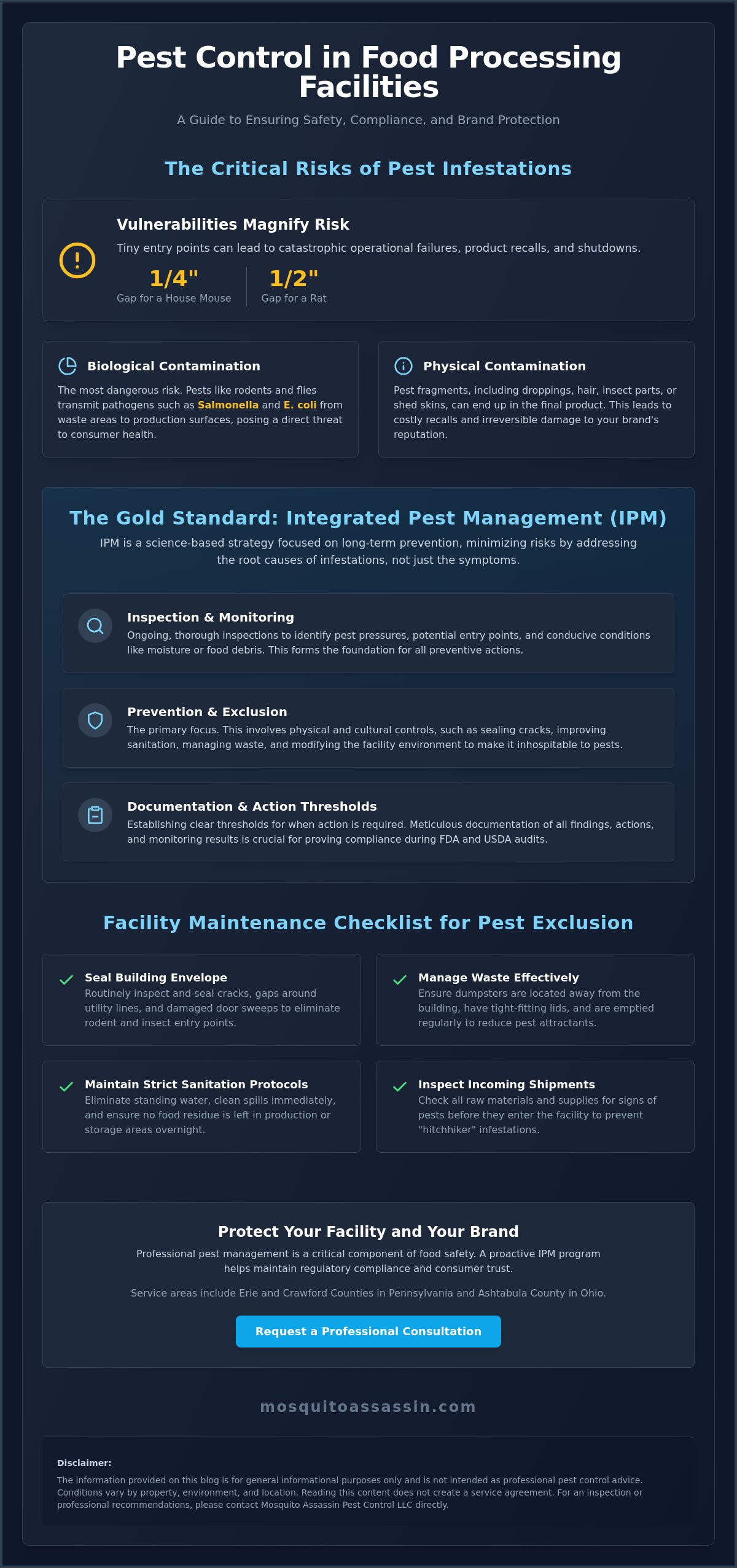
Facility Maintenance Checklist for Pest Exclusion
Maintaining a production plant requires a disciplined eye for detail and a proactive approach to structural integrity. A “set it and forget it” mentality often leads to audit failures and increased contamination risks. Effective food processing facility pest control relies on a secure building envelope that stops pests before they ever reach sensitive production zones. By establishing a routine maintenance framework, facility managers can significantly reduce the pressure on their internal sanitation teams and ensure the plant remains a hostile environment for invaders.
Exterior Perimeter and Entry Point Security
The first line of defense is the exterior wall. Pests are opportunistic; they will exploit any weakness in the building’s shell to find warmth or food. Maintenance teams should prioritize the following actions to harden the facility:
- Seal Cracks and Crevices: Use metal mesh or professional-grade silicone sealants to close gaps in the foundation or siding. Because mice can enter through holes the size of a quarter-inch, no opening is too small to ignore.
- Maintain a Vegetation-Free Zone: Clear all plants, weeds, and tall grass within at least 18 to 24 inches of the foundation. A perimeter of gravel or pavement reduces cover for rodents and prevents insects from crawling directly onto the building.
- Audit Loading Dock Seals: Inspect the heavy-duty seals around dock doors. If you can see daylight through a closed door, it’s an open invitation for pests. Replace worn or torn seals immediately to maintain a tight fit.
Interior Monitoring and Sanitation Protocols
Once the exterior is secure, internal protocols must focus on preventing pests from hitchhiking into the facility or finding a place to hide. Sanitation and organization are the primary tools here. For businesses in Erie, PA or Ashtabula, OH, establishing a professional commercial pest control strategy is the most reliable way to maintain these high standards throughout the year.
- Inspect Incoming Shipments: Stored product pests often arrive on pallets of raw ingredients. Warehouse staff should be trained to look for webbing, larvae, or damaged packaging during the receiving process.
- Manage Floor Drains: Plumbing and drains are high-moisture areas that attract small flies. Regularly scour drains to remove the organic biofilm where larvae develop.
- The 18-Inch Rule: Store all products and equipment at least 18 inches away from walls. This creates a “white space” that allows for easy inspection and prevents pests from nesting in dark, undisturbed corners.
Training staff to recognize and report early signs of activity is just as important as the physical repairs. When every employee understands the link between a small gap in a door and a potential product recall, the facility gains hundreds of extra eyes for monitoring. This collective vigilance, combined with a rigorous maintenance schedule, creates a robust defense against infestations.
Disclaimer: The information provided on this blog is for general informational purposes only and is not intended as professional pest control advice. Conditions vary by property, environment, and location. Reading this content does not create a service agreement. For an inspection or professional recommendations, please contact Mosquito Assassin Pest Control LLC directly.
Selecting a Professional Pest Management Partner
Choosing a partner for food processing facility pest control is a decision that impacts the entire supply chain. A licensed provider must demonstrate a deep understanding of food safety regulations and the specific biological threats present in the region. While some large corporations prioritize global scale, local expertise provides a significant advantage when dealing with the specific seasonal pressures of the Great Lakes area. A reliable partner acts as an extension of the quality assurance team, providing the technical expertise needed to maintain a sterile environment.
Evaluating Expertise and Local Knowledge
Providers familiar with Erie and Crawford Counties in Pennsylvania, along with Ashtabula County in Ohio, understand how local weather patterns drive pests indoors. They know that a sudden temperature drop in the fall requires a different exclusion strategy than the humid, fly-heavy months of mid-summer. Clear communication and detailed service reports are non-negotiable. These documents serve as primary evidence during health department audits and internal quality reviews. Professional pest control may help reduce risk for your business by identifying structural vulnerabilities before they result in a non-compliance report or a failed inspection.
The Long-Term Value of Professional Monitoring
The financial implications of a pest-related shutdown far outweigh the investment in a year-round protection plan. A single day of lost production or a voluntary recall can cost a facility thousands of dollars in lost revenue and damaged brand equity. Professional monitoring provides a consistent safety net. It moves the facility away from a reactive mentality and toward a disciplined, data-driven approach. Ongoing education for facility staff is also a key component of this partnership. It ensures that everyone from the loading dock to the front office is aligned with the Integrated Pest Management strategy.
Specialized facility needs often require tailored solutions that go beyond general treatments. For those managing large-scale production environments, exploring commercial services ensures that the pest management program is built around the specific layout and regulatory requirements of the plant. A dedicated partner doesn’t just apply treatments; they provide the technical oversight and documentation necessary to maintain a sterile, compliant environment month after month. This professional collaboration simplifies the auditing process and provides peace of mind for facility managers.
Disclaimer: The information provided on this blog is for general informational purposes only and is not intended as professional pest control advice. Conditions vary by property, environment, and location. Reading this content does not create a service agreement. For an inspection or professional recommendations, please contact Mosquito Assassin Pest Control LLC directly.
Securing the Future of Your Production Line
Maintaining a sterile environment is a complex task that requires constant vigilance and a scientific approach. By shifting from reactive treatments to the proactive principles of Integrated Pest Management, facility managers can eliminate the root causes of infestations before they lead to audit failures. Success depends on a combination of rigorous sanitation, structural maintenance, and the expertise of local specialists who understand the unique pest pressures in Pennsylvania and Ohio. Effective food processing facility pest control isn’t just about passing the next inspection; it’s about protecting consumer health and your brand’s hard-earned reputation every single day.
Professional oversight ensures that your facility meets the highest standards of the Food Safety Modernization Act while keeping production moving. Licensed professionals in PA and OH provide the specialized commercial protection plans and detailed documentation required for modern compliance. To start building a more resilient defense against rodents, flies, and stored product pests, contact Mosquito Assassin Pest Control LLC for professional recommendations. Taking these steps today provides the long-term security your facility needs to thrive in a competitive market.
Disclaimer: The information provided on this blog is for general informational purposes only and is not intended as professional pest control advice. Conditions vary by property, environment, and location. Reading this content does not create a service agreement. For an inspection or professional recommendations, please contact Mosquito Assassin Pest Control LLC directly.
Frequently Asked Questions
How often should a food processing facility be inspected for pests?
Most facilities require weekly or bi-weekly inspections to maintain compliance with high-level safety standards. The frequency depends on the specific risk factors of the site, such as the type of food produced and the age of the building. High-traffic areas like loading docks often need more frequent monitoring than administrative offices. Consistent food processing facility pest control documentation ensures that your plant remains audit-ready throughout the year.
What are the most common signs of a pest infestation in a warehouse?
The most common signs include small droppings, gnaw marks on pallets, and dark rub marks along floor-to-wall junctions. In warehouse environments, you might also notice damaged product packaging or spilled grains that indicate the presence of stored product pests. Webbing on shelving or the undersides of pallets often points to an active moth infestation. Early detection allows for targeted intervention before the problem spreads to production lines.
Can pest control treatments be used safely in food production areas?
Treatments can be used safely when managed by licensed professionals who prioritize non-chemical exclusion and monitoring. In sensitive production zones, the focus remains on physical barriers and mechanical traps rather than broadcast spraying. If a localized treatment is necessary, it’s applied in a way that prevents contact with food surfaces or packaging materials. This methodical approach ensures that food processing facility pest control doesn’t introduce secondary chemical risks to the environment.
What is the difference between reactive pest control and IPM?
Reactive pest control waits for a visible infestation to occur before taking action, which often leads to product loss and contamination. Integrated Pest Management (IPM) is a proactive system that addresses the environmental factors that attract pests in the first place. By focusing on structural repairs and sanitation, IPM creates a long-term defense. It’s a more sustainable and cost-effective way to manage large-scale facilities compared to repeated reactive spraying.
How do pests typically enter a large food processing plant?
Pests typically enter through open loading dock doors, gaps in door seals, or within incoming shipments of raw ingredients. Even a small crack in the foundation can provide access for ants or spiders. Because many facilities operate 24 hours a day, pests take advantage of frequent traffic to move inside. Training warehouse staff to inspect every pallet upon arrival is a critical step in preventing hitchhiking insects from entering the storage areas.
What documentation is required for a food safety pest control audit?
Auditors generally require a site map of all trap locations, detailed service reports, and a log of any corrective actions taken. You must also maintain copies of pesticide usage records and the credentials of your service provider. This paper trail proves that the facility follows a disciplined monitoring schedule. Having organized records simplifies the process when health departments or third-party auditors arrive for an unannounced inspection.
How can I prevent flies from entering my facility during the summer?
You can reduce fly pressure by keeping dumpsters far from the building and maintaining strict sanitation around waste compactors. Air curtains and high-speed doors at loading docks provide a physical barrier that prevents flying insects from being drawn inside by food odors. Inside the facility, LED insect light traps help intercept any flies that manage to get past the exterior defenses. Consistent drain cleaning also prevents small flies from breeding in organic matter.
What should I do if I find signs of rodents in a storage area?
If you find signs of rodents, you should immediately isolate any potentially contaminated products and contact a professional for a thorough inspection. Avoid moving pallets around excessively, as this can scatter the pests to other parts of the warehouse. Identify the likely entry point, such as a gap under a door or a hole in a wall, and secure it temporarily. A professional assessment will help determine the extent of the activity and the necessary steps for removal.
Disclaimer: The information provided on this blog is for general informational purposes only and is not intended as professional pest control advice. Conditions vary by property, environment, and location. Reading this content does not create a service agreement. For an inspection or professional recommendations, please contact Mosquito Assassin Pest Control LLC directly.