
Did you know that Pennsylvania consistently reports some of the highest numbers of Lyme disease cases in the United States, with the CDC often recording over 10,000 confirmed instances in a single year? This staggering statistic underscores the significant dangers of ticks in Pennsylvania for families living in Erie and Crawford Counties. It’s completely natural to feel a sense of anxiety when children or pets head outside to play, especially when a simple afternoon in the yard can lead to an unwanted encounter. You shouldn’t have to choose between enjoying the fresh air and worrying about your family’s health.
This guide provides the clarity needed to protect local properties and loved ones. Readers will learn to identify the three most common tick species found in the region and understand the specific symptoms associated with the various diseases they carry. The following sections explore professional landscaping strategies and habitat modifications that help reduce tick populations effectively. This article offers a practical, fact-based roadmap for safeguarding a yard and maintaining peace of mind throughout the 2026 season. Professional pest control may help reduce risk for those facing persistent infestations.
Disclaimer: The information provided on this blog is for general informational purposes only and is not intended as professional pest control advice. Conditions vary by property, environment, and location. Reading this content does not create a service agreement. For an inspection or professional recommendations, please contact Mosquito Assassin Pest Control LLC directly.
Key Takeaways
- Understand why Pennsylvania consistently reports some of the highest Lyme disease rates in the nation and how local geography influences tick activity.
- Identify the primary tick species active in the region to better understand the specific dangers of ticks in pennsylvania for your family and pets.
- Discover how to spot high-risk zones on your property by understanding tick questing behavior and the moisture-rich environments they require to survive.
- Master effective personal protection strategies, including proper attire and thorough inspection techniques, to reduce the risk of bites after outdoor activities.
- Explore how professional risk reduction and Integrated Pest Management (IPM) can help identify and manage tick breeding sites on your property.
Understanding the Growing Threat of Ticks in Pennsylvania
Pennsylvania holds a challenging record as a national leader in reported Lyme disease cases. Data from the Centers for Disease Control and Prevention (CDC) shows that the state consistently reports thousands of new cases annually, with 9,215 confirmed cases in 2019 alone. This trend hasn’t slowed down in recent years. The dangers of ticks in pennsylvania are a primary concern for residents because these arachnids have moved beyond deep forests into suburban backyards and public parks. This shift puts families and pets at risk during routine outdoor activities.
To better understand this concept, watch this helpful video:
Local surveillance in Erie and Crawford counties conducted by the Pennsylvania Department of Environmental Protection (DEP) confirms a steady, year-round presence of disease-carrying species. The blacklegged tick, also known as the deer tick, is the most prevalent threat in these regions. It’s the primary vector for various pathogens that affect human health. For those seeking a comprehensive Lyme disease overview, it’s vital to recognize that early detection of a tick bite is the most effective way to prevent long-term complications. Milder winters have also changed the rules of engagement. In 2023, tick activity was recorded as early as January and February when temperatures rose above 45 degrees Fahrenheit, proving that the threat is no longer limited to the summer months.
Why Tick Populations are Rising in the Keystone State
Suburban sprawl and changes in land use have created the perfect environment for tick expansion. As residential developments push further into wooded areas, they create “edge habitats” where ticks thrive. These areas provide the shade and moisture ticks need to survive while keeping them close to human activity. The proliferation of host animals is another major factor. White-tailed deer and white-footed mice populations have increased significantly in areas where natural predators are few. These animals act as transport systems, carrying ticks into residential lawns and gardens. High humidity levels and consistent rainfall throughout the spring and summer months provide the moist environment necessary for the blacklegged tick to survive its multi-year life cycle without drying out.
The Economic and Health Impact on PA Communities
The dangers of ticks in pennsylvania extend to the local economy and the healthcare system. Chronic tick-borne illnesses often require long-term medical care, which leads to high healthcare costs and lost productivity for workers. In Northwest Pennsylvania, outdoor recreation is a vital part of the culture and economy. Destinations like Presque Isle State Park and the Pymatuning Reservoir attract millions of visitors. If these areas are perceived as unsafe due to high tick activity, local tourism can suffer. Community-wide awareness is essential for public health safety. When residents understand how to identify habitats and implement prevention strategies, the overall risk to the community decreases. Professional pest control may help reduce risk by managing tick populations on private property before they become established.
Disclaimer: The information provided on this blog is for general informational purposes only and is not intended as professional pest control advice. Conditions vary by property, environment, and location. Reading this content does not create a service agreement. For an inspection or professional recommendations, please contact Mosquito Assassin Pest Control LLC directly.
Key Tick Species and Associated Disease Risks
Pennsylvania residents encounter several distinct tick species, each presenting unique health hazards. Identifying these arachnids is a vital step in mitigating the dangers of ticks in pennsylvania. While many people associate these pests strictly with deep forests, they’re frequently found in suburban backyards in Erie and Crawford Counties. Understanding which species are active in the region helps homeowners stay vigilant during outdoor activities.
- Blacklegged Ticks (Deer Ticks): These are the most significant threat in the Commonwealth. They’re the primary vector for Lyme disease and are active whenever temperatures are above freezing.
- American Dog Ticks: These ticks are larger than deer ticks and are known carriers of Rocky Mountain Spotted Fever. While this specific disease is less common in Pennsylvania than in the southeastern United States, cases are documented annually.
- Lone Star Ticks: Easily identified by the white spot on the female’s back, this species is moving northward into Pennsylvania. They’re notably aggressive and are linked to Alpha-gal syndrome, a serious allergy to red meat.
A tick’s life cycle consists of four stages: egg, larva, nymph, and adult. Larvae are barely visible and have six legs. Nymphs are roughly the size of a poppy seed and possess eight legs. Because nymphs are so small, they often go unnoticed while feeding, which increases the window for pathogen transmission. Adults are larger and easier to spot, but they remain a constant threat during the fall and spring months. Professional tick management strategies can help reduce these populations around residential properties.
Lyme Disease: The Most Prevalent Concern
Lyme disease remains the most frequently reported tick-borne illness in the region. According to the PA Department of Health tick disease guide, Pennsylvania consistently reports some of the highest case numbers in the country. Monitoring for symptoms is essential; approximately 70% to 80% of infected individuals develop an erythema migrans rash. This bullseye-shaped mark usually appears at the site of the bite within 3 to 30 days. Other early signs include fatigue, fever, and joint aches. Healthcare professionals emphasize that early detection is the most important factor for a full recovery, as untreated Lyme disease can lead to long-term neurological or cardiac complications.
Emerging Tick-borne Illnesses in Pennsylvania
While Lyme disease dominates the headlines, other illnesses are becoming more frequent across the state. Anaplasmosis is a bacterial disease that presents with symptoms similar to the flu, including high fever and severe muscle aches. It’s transmitted by the same blacklegged ticks that carry Lyme. Babesiosis is another growing concern; it’s a parasitic infection that attacks red blood cells, which can be particularly dangerous for elderly residents or those with compromised immune systems.
The Powassan virus is a rarer but significantly more severe threat. Unlike Lyme disease, which typically requires a tick to be attached for 36 to 48 hours to transmit bacteria, the Powassan virus can be transmitted in as little as 15 minutes. This viral infection can lead to encephalitis (inflammation of the brain) or meningitis. Because there are no specific vaccines or medications for Powassan, prevention and prompt tick removal are the only defenses. Understanding the dangers of ticks in pennsylvania involves recognizing that these pests carry a cocktail of potential pathogens, making consistent yard maintenance and personal protection a necessity for local families.
Identifying High-Risk Areas on Your Property
Ticks don’t fly or jump like some other common backyard pests. Instead, they rely on a behavior known as questing to find their next host. A tick will climb to the top of a blade of grass or the edge of a leaf and stretch its front legs out, waiting for a human or animal to brush past. Because they can’t move long distances on their own, they’re highly strategic about where they wait. This biological limitation makes moisture retention the single most important factor for their survival. Ticks breathe through tiny openings in their exoskeleton, and dry environments are often lethal to them within just a few hours. This need for humidity is a primary driver behind the dangers of ticks in pennsylvania, where humid summers create ideal conditions for tick populations to explode.
The transition zone between a manicured lawn and a wooded area is known as the “edge effect.” This specific area is often the highest risk zone on any residential property. Research from various agricultural studies suggests that up to 82% of nymphal ticks are found within nine feet of the lawn’s edge. These zones provide the perfect mix of shade, moisture, and access to hosts. While a sun-drenched, short-mown lawn is usually too dry for a tick to survive, the shaded leaf litter just a few feet away offers a protected sanctuary. This is why understanding the dangers of ticks in pennsylvania involves looking closely at how your landscaping meets the natural environment.
Natural hosts are the primary reason ticks enter residential spaces. White-footed mice and various bird species act as biological transit systems. A single mouse can carry dozens of larval or nymphal ticks at once. As these animals move through your yard looking for food or nesting materials, they drop ticks into gardens and play areas. Birds also contribute by dropping ticks near feeders or birdbaths, often bringing species from distant wooded areas directly into your immediate living space. According to the Penn State guide to common ticks, these wildlife interactions are a critical part of the tick life cycle in our region.
Common Tick Habitats in Residential Yards
Leaf litter and tall grass are the primary hiding spots for ticks in all life stages. These areas trap ground moisture and provide protection from the sun’s heat. Dense ground cover plants, such as pachysandra or ivy, are also significant risks because they create a permanent layer of shade and humidity. Property owners should also look closely at wood piles and stone walls. These structures don’t just hold moisture; they’re the preferred nesting sites for small rodent hosts that keep the tick cycle moving year after year.
Environmental Factors in Northwest Pennsylvania
The geography of Northwest Pennsylvania plays a major role in local tick activity. Lake Erie’s microclimate significantly influences local humidity levels, often keeping the air moist enough for ticks to remain active longer than in drier parts of the state. In Crawford County, the specific patterns of agricultural fields meeting secondary-growth forests create an abundance of “edge” habitats. These local vegetation patterns contribute to heavy tick clusters in residential areas. Learning more about Mosquito Assassin can provide insight into how local experts view these regional environmental challenges. Professional pest control may help reduce risk on your property. For professional recommendations, you can visit the online booking portal.
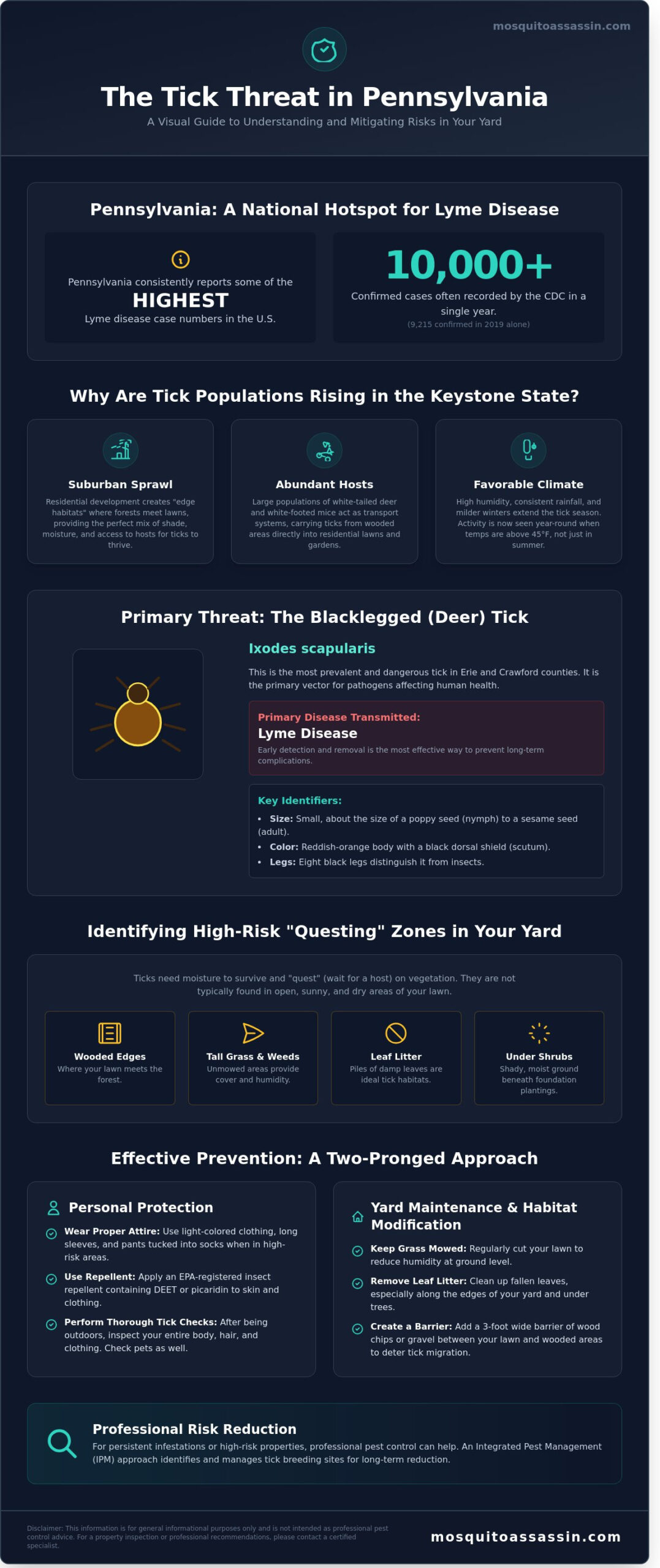
Personal Protection and Yard Maintenance Strategies
Ticks don’t jump or fly; they wait for a host to brush by them in tall grass or leaf litter. This behavior makes personal attire the first line of defense. Wear light-colored clothing to make spotting dark, poppy-seed-sized nymphs easier. Tucking pants into socks creates a physical barrier that prevents ticks from crawling up legs. Use EPA-registered repellents containing DEET, Picaridin, or IR3535 on exposed skin. For those spending significant time in wooded areas of Erie or Crawford Counties, treating outer garments with permethrin offers durable protection through multiple washes. Always follow label instructions for application, especially when applying products to children.
Prompt action after outdoor activity is vital. Perform a full-body tick check within 120 minutes of returning indoors. Focus on warm, dark areas such as underarms, behind knees, the belly button, and the hairline. Ticks often hide in the folds of the skin or in thick hair where they aren’t easily felt. Research indicates that 10 minutes in a dryer on high heat is sufficient to kill ticks on dry clothing by desiccating them. If the clothes are wet or damp, they require additional time to ensure all hitchhikers are eliminated. This simple step prevents ticks from wandering off laundry and finding a host inside the home.
Effective Landscaping for Tick Risk Reduction
Modifying the environment around a home reduces the likelihood of encounters. Ticks require high humidity to survive; they quickly dehydrate in dry, sunny conditions. Maintain lawns at a height of 3 inches or less to increase airflow and sunlight penetration at the soil level. Property owners should establish a 3-foot wide barrier of wood chips or gravel between manicured lawns and wooded edges. This physical boundary restricts tick migration into play areas. Removing invasive plants is also a key strategy. Studies from the Connecticut Agricultural Experiment Station found that Japanese Barberry (Berberis thunbergii) creates a humid microclimate that supports higher tick densities. Replacing these with native, low-maintenance plants helps mitigate the dangers of ticks in pennsylvania.
Indoor Safety and Pet Protection
Pets frequently act as bridges, carrying ticks from the yard into living spaces. Dogs and cats should stay on a consistent preventative schedule as directed by a veterinarian. Even with medication, owners should inspect pets daily, paying close attention to the ears, neck, and between the toes. Identifying common entry points helps focus prevention efforts. Ticks often enter through mudrooms, garages, or laundry areas where outdoor gear is stored. Using a lint roller on clothing before stepping inside can catch unattached ticks before they find a host. Understanding the dangers of ticks in pennsylvania means recognizing that prevention doesn’t stop at the doorstep. Consistent vigilance in Ashtabula County and surrounding regions is the best way to keep these pests out of the home.
For homeowners who want to establish a more comprehensive barrier against these pests, professional pest control may help reduce risk.
Professional Approaches to Tick Risk Reduction
Integrated Pest Management (IPM) provides a scientific framework for suppressing tick populations while minimizing environmental impact. This method relies on a deep understanding of the local ecosystem rather than relying solely on chemical intervention. Licensed professionals in Erie and Crawford Counties analyze how specific landscape features contribute to the dangers of ticks in pennsylvania. By modifying habitats, such as clearing dense leaf litter or installing wood chip barriers between lawns and wooded areas, property owners can disrupt the tick life cycle at its most vulnerable stages.
Professional inspections are the cornerstone of an effective reduction strategy. These assessments identify questing sites, which are specific locations where ticks wait for a host to pass by. Black-legged ticks (deer ticks) often congregate in the transition zones between manicured lawns and tall brush. Research indicates that approximately 82 percent of ticks found on residential properties are located within 9 feet of the woods’ edge. Identifying these high-risk zones allows for a more surgical approach to management.
Targeted applications focus on these perimeter zones rather than providing blanket coverage across an entire lawn. This precision reduces the volume of product used while maximizing effectiveness against the target species. Timing these applications is equally critical. In Pennsylvania, nymphal ticks are most active from May through July. This period accounts for the majority of Lyme disease transmissions. Aligning treatments with the emergence of nymphs and the later fall activity of adults ensures the highest level of suppression throughout the season.
Why Professional Expertise Matters
Licensed professionals possess a thorough understanding of the specific biology and behavior of Pennsylvania tick species. They evaluate property-specific risks, such as proximity to Pymatuning State Park or local wetlands, which may harbor higher wildlife populations. Accessing professional services allows homeowners to benefit from customized management plans that address the unique ecological challenges of the tri-state area. Expert identification ensures that the correct strategies are deployed for the specific tick species present on the property.
Long-Term Management vs. One-Time Solutions
A single application is rarely enough to address the ongoing dangers of ticks in pennsylvania. Wildlife, including white-tailed deer and white-footed mice, constantly introduce new ticks into residential environments. Ongoing monitoring is necessary to track these populations and adjust strategies as weather patterns shift. Professional pest control may help reduce risk over the course of the season by maintaining a consistent barrier against new introductions. Concerned residents can contact Mosquito Assassin for a professional property assessment to determine the best long-term strategy for their specific landscape.
Securing Your Pennsylvania Property Against Ticks
Managing the dangers of ticks in pennsylvania requires a proactive approach that combines habitat modification with professional expertise. Data from the Pennsylvania Department of Environmental Protection shows that tick populations have expanded into all 67 counties, making year-round vigilance necessary. Homeowners should focus on clearing tall grasses and leaf litter within 10 feet of high-traffic areas to disrupt the lifecycle of species like the black-legged tick. Implementing Integrated Pest Management (IPM) strategies provides a systematic way to address these risks without relying solely on reactive measures.
As a locally owned and operated company, Mosquito Assassin Pest Control LLC understands the specific environmental challenges in Erie and Crawford Counties. They’re licensed and insured in both PA and OH, ensuring that all interventions meet rigorous professional standards. Taking these steps helps create a more comfortable outdoor environment for everyone. For an inspection or professional recommendations, please contact Mosquito Assassin Pest Control LLC directly.
Staying informed and maintaining your yard are the most effective ways to enjoy your outdoor space with confidence.
Disclaimer: The information provided on this blog is for general informational purposes only and is not intended as professional pest control advice. Conditions vary by property, environment, and location. Reading this content does not create a service agreement. For an inspection or professional recommendations, please contact Mosquito Assassin Pest Control LLC directly.
Frequently Asked Questions
Is Lyme disease common in Northwest Pennsylvania?
Lyme disease is highly prevalent in Northwest Pennsylvania, as the state consistently reports some of the highest case counts in the United States. According to the Pennsylvania Department of Health, the state recorded 8,413 confirmed cases of Lyme disease in 2022 alone. Residents in Erie and Crawford counties face a high risk because the black-legged tick, which carries the bacteria, is established in all 67 Pennsylvania counties.
What is the most dangerous tick in Pennsylvania?
The black-legged tick, commonly called the deer tick, is considered the most dangerous tick in Pennsylvania due to the variety of pathogens it carries. This species is the primary vector for Lyme disease; however, it also transmits Anaplasmosis and the rare but severe Powassan virus. Understanding the dangers of ticks in pennsylvania starts with recognizing this specific threat, especially since nymphs are as small as a poppy seed and difficult to detect during a routine check.
Can ticks survive a Pennsylvania winter?
Ticks definitely survive Pennsylvania winters by seeking shelter under leaf litter or snow cover. They don’t die off in freezing temperatures; instead, they remain dormant until the thermometer rises above 35 degrees Fahrenheit. Adult black-legged ticks often become active during mid-winter thaws, meaning the dangers of ticks in pennsylvania persist even during the colder months of January and February.
How long does a tick need to be attached to transmit a disease?
Most research from the CDC indicates that a tick must be attached for 36 to 48 hours before the Lyme disease bacterium is transmitted. Other pathogens, such as the Powassan virus, can be transmitted in as little as 15 minutes after the initial bite. Performing a thorough check immediately after coming indoors is the most effective way to prevent infection before transmission occurs.
What should I do if I find a tick attached to my skin?
Use fine-tipped tweezers to grasp the tick as close to the skin’s surface as possible. Pull upward with steady, even pressure without twisting or jerking the tick; this prevents the mouthparts from breaking off and remaining in the skin. After removal, clean the bite area and your hands with rubbing alcohol or soap and water to prevent secondary infection.
Do natural tick repellents actually work for yard protection?
Natural repellents like cedar oil or essential oils provide limited, short-term protection but often lack the residual power needed for comprehensive yard control. While these products might repel ticks for a few hours, they don’t typically eliminate the population or provide lasting barriers. Professional pest control may help reduce risk by using products designed to withstand local weather conditions in Erie and Crawford counties. For an assessment of your property, visiting mosquitoassassin.com may provide further guidance.
When is tick season most active in Erie and Crawford counties?
Tick activity in Erie and Crawford counties follows two distinct peaks throughout the year. The first surge occurs from May through July when tiny nymphs are most active and difficult to detect. A second peak follows in October and November as adult ticks emerge to seek a final blood meal before winter. Staying vigilant during these specific months is crucial for residents in Northwest Pennsylvania and Ashtabula County.
Disclaimer: The information provided on this blog is for general informational purposes only and is not intended as professional pest control advice. Conditions vary by property, environment, and location. Reading this content does not create a service agreement. For an inspection or professional recommendations, please contact Mosquito Assassin Pest Control LLC directly.