Tag: integrated pest management

  • Commercial Pest Control in Erie, PA: A Guide for Business Owners

    Commercial Pest Control in Erie, PA: A Guide for Business Owners

    Imagine an Erie restaurateur opening a popular review site on a Tuesday morning only to find a viral photo of a cockroach near the buffet. It’s a nightmare scenario that can devastate a local business’s reputation in less than 60 seconds. You’ve worked hard to build your brand; the last thing you want is a surprise health department fine or a public relations crisis. Professional commercial pest control Erie PA is about more than just killing bugs. In 2023, consumer data indicated that 88% of patrons wouldn’t return to a business after a single pest sighting. Safeguarding your investment in Erie, Crawford, and Ashtabula Counties requires a proactive approach. Maintaining a sterile, professional environment is non-negotiable for success. This guide will show you how professional pest management protects your reputation, ensures health code compliance, and prevents property damage. You’ll learn about audit-ready documentation and long-term prevention strategies that keep your operations running without interruption.

    Disclaimer: The information provided on this blog is for general informational purposes only and is not intended as professional pest control advice. Conditions vary by property, environment, and location. Reading this content does not create a service agreement. For an inspection or professional recommendations, please contact Mosquito Assassin Pest Control LLC directly.
    Key Takeaways

    • Understand how a systematic approach to pest management helps businesses maintain health department standards and protect their professional reputation.
    • Discover the benefits of Integrated Pest Management (IPM), a science-based strategy that prioritizes non-chemical methods like sanitation and exclusion.
    • Learn to identify and address common threats such as rodents and cockroaches through effective commercial pest control Erie PA strategies.
    • Explore proactive prevention techniques, including structural maintenance and exterior sealing, to stop infestations before they impact operations.
    • Recognize why customized plans and professional-grade tools are necessary to meet the unique sanitation requirements of different local industries.

    The Role of Commercial Pest Control in Erie, PA

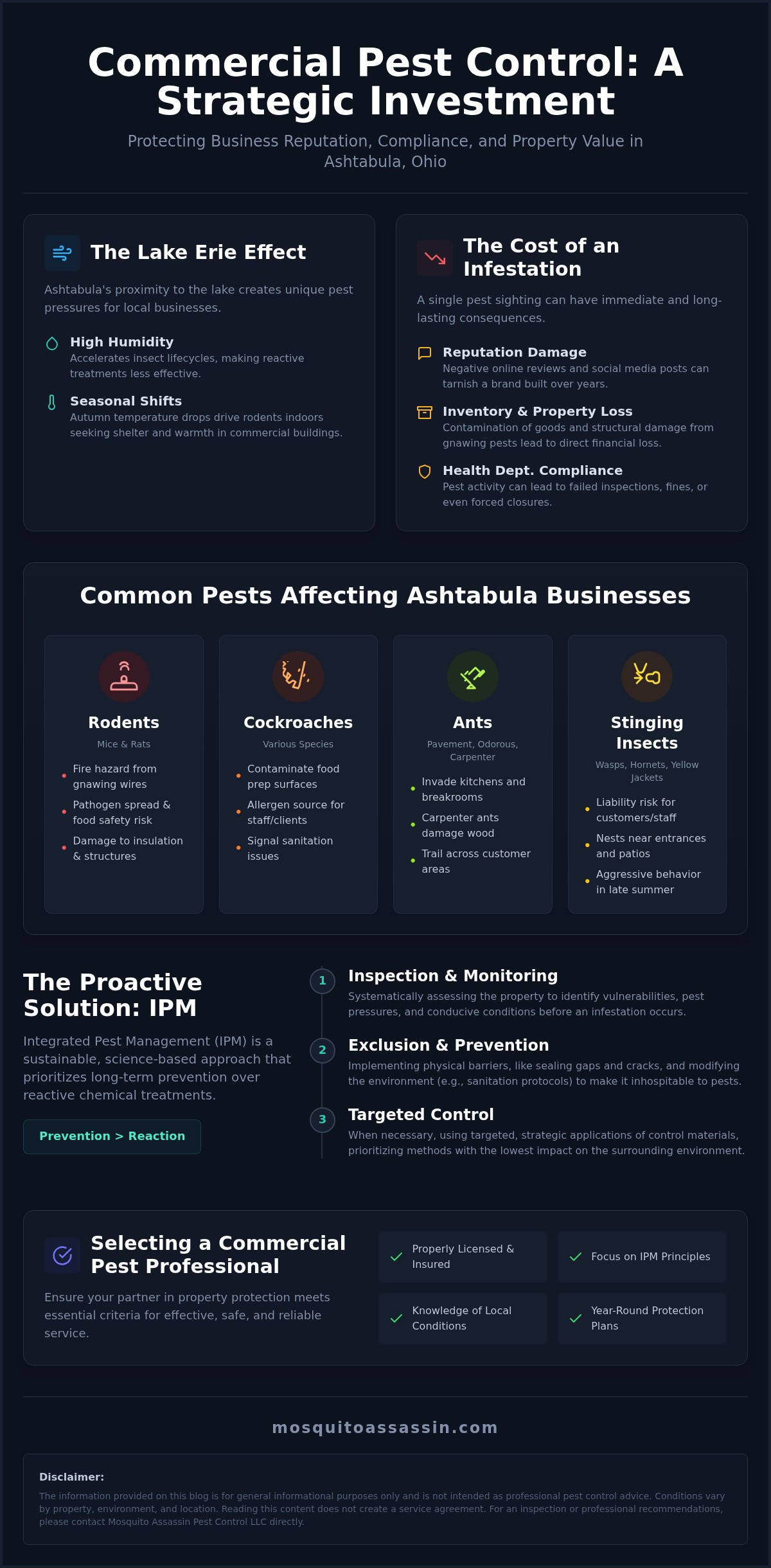
    Commercial pest management is a rigorous, systematic method for identifying and managing pests within professional environments. In Erie, Pennsylvania, businesses face unique challenges due to the lakefront climate, which often drives rodents and insects indoors during seasonal shifts. Effective management relies on Integrated Pest Management (IPM), a strategy that focuses on long-term prevention by analyzing pest biology and environmental factors rather than relying solely on reactive treatments.

    Maintaining a facility free of infestations is a fundamental requirement for operating within Erie County. Professional commercial pest control Erie PA involves routine monitoring to catch vulnerabilities like structural gaps or sanitation lapses before they escalate. It’s about protecting the building’s physical structure and the business’s bottom line. Regular inspections are necessary to identify these weaknesses, as pests can compromise electrical systems or contaminate inventory within a matter of days.

    To better understand the intensity of professional pest management in a business setting, watch this report on local industry practices:

    Protecting Business Reputation and Revenue

    A single sighting of a pest can trigger immediate consequences for a local company. In the age of digital feedback, approximately 80% of customers state they wouldn’t return to a business after seeing a pest. Negative social media reviews can damage a brand’s image overnight, leading to a direct loss in revenue. Professional management helps maintain a welcoming space for clients and staff. Investing in long-term protection plans is statistically more cost-effective than emergency remediation, which can cost three to five times more than preventative maintenance services.

    Compliance with Local Health Regulations

    The food service and healthcare sectors in Northwest Pennsylvania must meet strict sanitation codes. The Erie County Health Department conducts unannounced inspections where pest activity can lead to immediate closures or fines. Licensed technicians provide the documentation required to prove a business is following a professional pest management schedule. These records are vital during audits, ensuring the facility remains compliant with state and local laws across Erie and Crawford Counties. Professional commercial pest control Erie PA ensures that businesses stay ahead of regulatory requirements and maintain a safe environment for the public.

    Professional pest control may help reduce risk for business owners. For more information, visit the contact page or the online booking portal.

    Disclaimer: The information provided on this blog is for general informational purposes only and is not intended as professional pest control advice. Conditions vary by property, environment, and location. Reading this content does not create a service agreement. For an inspection or professional recommendations, please contact Mosquito Assassin Pest Control LLC directly.

    Understanding Integrated Pest Management (IPM)

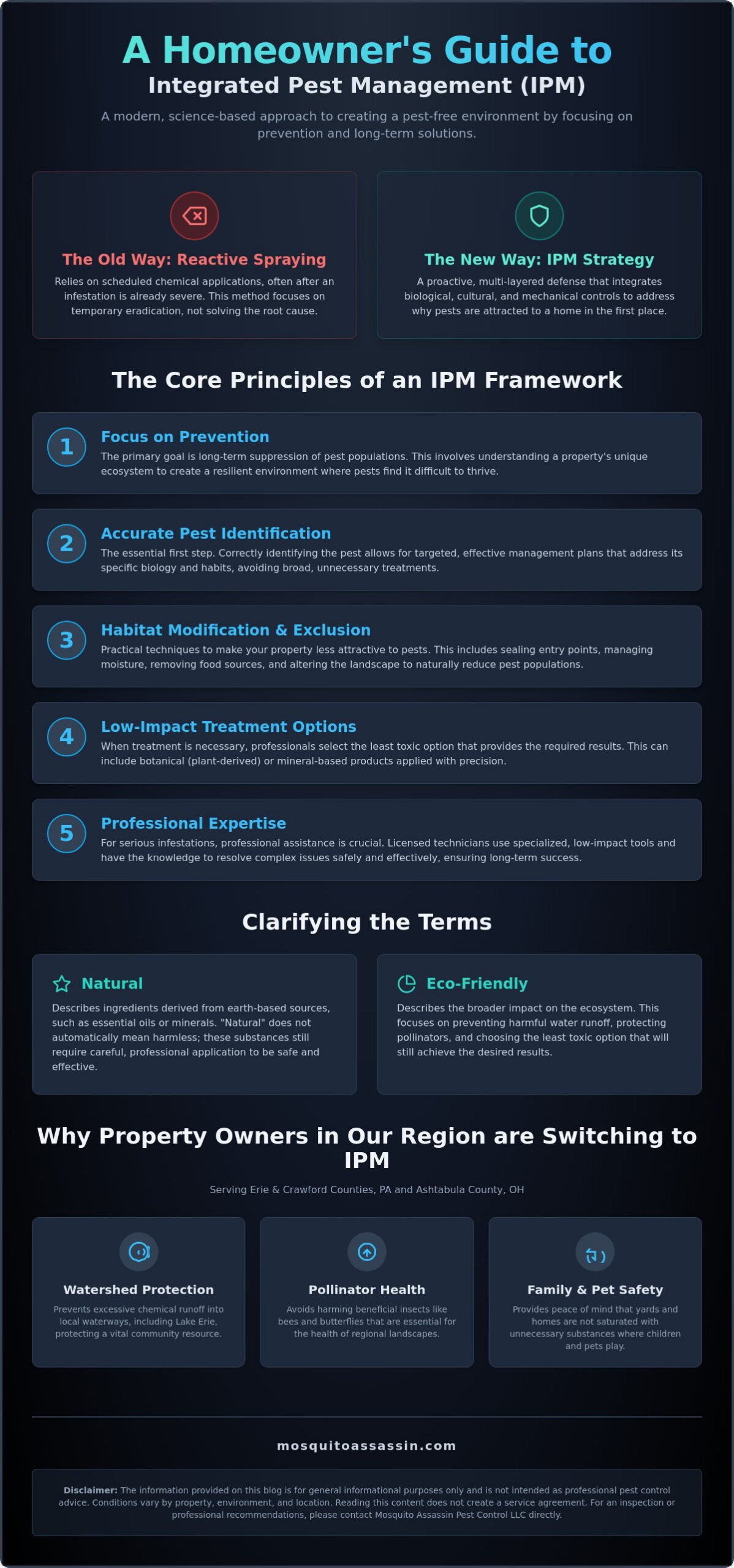
    Integrated Pest Management (IPM) is a science-based decision-making process that identifies and reduces risks from pests through a combination of techniques. For businesses seeking reliable commercial pest control Erie PA, IPM serves as the industry standard for achieving sustainable and safe results. This approach prioritizes non-chemical methods, such as exclusion and sanitation, to address the root causes of an infestation. Professional strategies focus on the life cycles of pests and their specific interactions with the environment, rather than relying on a one-size-fits-all solution.

    The primary goal of this system is to manage pest damage by the most economical means while minimizing hazards to people and property. This methodology aligns with the EPA’s IPM Principles, which emphasize prevention and monitoring over routine chemical applications. By focusing on long-term prevention, commercial properties can maintain a healthier environment for employees and customers alike.

    The Four Pillars of Commercial IPM

    Effective IPM relies on four core stages to maintain a pest-free environment. These steps ensure that every action taken is necessary and targeted:

    • Inspection: A thorough walkthrough of the facility identifies entry points, such as gaps in door sweeps, and potential food sources. In many commercial settings, a detailed inspection can reveal structural vulnerabilities that were previously unnoticed.
    • Identification: This step ensures that the specific pest species is targeted with the correct methodology. Accurate identification is critical because different species require different management tactics.
    • Monitoring: Professionals use specialized tools and data logs to track pest activity over time. This allows for adjustments based on actual pest pressure rather than guesswork.
    • Action: When pest thresholds are exceeded, interventions are tailored to the facility. This includes mechanical traps, structural repairs, or localized treatments designed for maximum efficacy.

    Climate Factors in Northwest Pennsylvania

    Erie’s humid summers and lake-effect moisture create ideal conditions for various pests to thrive. High humidity levels often lead to increased activity from wood-destroying organisms and moisture-loving insects. During cool, rainy springs, local businesses often see a 25 percent increase in rodent and insect activity as these pests seek dry shelter indoors. Commercial IPM plans must adapt to these seasonal shifts in pest behavior. For instance, when temperatures first drop below 40 degrees Fahrenheit in late autumn, proactive exclusion becomes a priority to prevent rodents from entering warehouses or kitchens. Professional pest control may help reduce risk for businesses in Erie and Crawford Counties during these peak seasonal transitions. For more information, visit commercial services.

    Disclaimer: The information provided on this blog is for general informational purposes only and is not intended as professional pest control advice. Conditions vary by property, environment, and location. Reading this content does not create a service agreement. For an inspection or professional recommendations, please contact Mosquito Assassin Pest Control LLC directly.
    Common Pests Facing Erie County Commercial Properties

    Business environments in Erie County are susceptible to various pests that threaten property and reputation. Effective commercial pest control Erie PA targets specific species based on the industry and building type. Rodents like mice and rats are a primary concern for the roughly 1,200 food service establishments in the region. These pests contaminate surfaces and chew through wiring, leading to potential fire hazards and structural damage. In warehouses, rodents can destroy packaging and leave behind waste that compromises the safety of stored goods.

    Cockroaches are another resilient threat, especially in commercial kitchens and breakrooms. They thrive in warm, damp environments and can jeopardize sanitation standards by carrying pathogens. Similarly, flies are a significant nuisance in food handling areas. They spread bacteria like E. coli and Salmonella every time they land on a surface. Stored product pests like Indian meal moths or saw-toothed grain beetles can infest bulk inventory. A single infested pallet can lead to the loss of thousands of dollars in product, making early detection vital for financial stability.

    Rodent Management in Urban and Suburban Erie

    Exclusion is the first line of defense against local rodents. Mice can squeeze through a gap as small as 1/4 inch, which is about the size of a dime. Technicians use specialized materials like steel wool or hardware cloth to seal small gaps in building foundations and doorways. Professional commercial services focus on removing nesting materials and food attractants that draw pests inside. Since rodents are prolific breeders, ongoing maintenance is necessary to prevent new populations from becoming established in commercial spaces.

    Insect Control for Offices and Retail

    Ants and spiders are common issues that can distract employees and bother customers in professional settings. Effective strategies often rely on Integrated Pest Management principles to address the root cause of an infestation rather than just the symptoms. Targeted treatments focus on the building’s exterior perimeter to stop pests before they enter. By maintaining a clear barrier, managers can keep a professional atmosphere without the constant worry of visible insects. Regular inspections help identify moisture issues or landscaping choices that might attract pests to the storefront.

    Disclaimer: The information provided on this blog is for general informational purposes only and is not intended as professional pest control advice. Conditions vary by property, environment, and location. Reading this content does not create a service agreement. For an inspection or professional recommendations, please contact Mosquito Assassin Pest Control LLC directly.

    Developing a Proactive Pest Prevention Strategy

    Sanitation serves as the primary defense in a robust commercial pest control Erie PA strategy. Pests require three essentials to survive: food, water, and shelter. By removing these resources, a business becomes significantly less attractive to invaders. A 2023 industry study indicated that nearly 90% of indoor pest sightings in commercial settings are directly linked to sanitation lapses or structural entry points. Effective waste management is a critical component of this process. Trash containers should be kept at least 20 feet away from building entrances and emptied daily to prevent odors from attracting flies or rodents. In food service environments, cleaning floor drains weekly can reduce small fly populations by up to 60%.

    Exclusion and Structural Repairs

    Structural maintenance prevents pests from gaining access to the interior. Professional inspections often reveal vulnerabilities that go unnoticed during daily operations. For example, a gap as small as 0.25 inches allows a mouse to enter a facility; while a cockroach needs only 0.06 inches for entry. Common entry points include utility line gaps, worn door sweeps, and damaged loading dock seals. Maintaining a dry environment is equally vital. Fixing plumbing leaks and ensuring proper site drainage prevents moisture buildup, which is a primary attractant for wood-destroying organisms and silverfish.

    The Importance of Professional Monitoring

    Professional monitoring stations provide essential data regarding pest pressure and movement patterns. Instead of relying on reactive treatments, technicians analyze these patterns to adjust the management plan as seasons change. In Erie County, pest activity shifts significantly between the humid summer months and the freezing winter. Data-driven monitoring allows for targeted interventions, which reduces the reliance on broad-spectrum chemical applications. Training employees to recognize early signs, such as droppings or chewed packaging, ensures that issues are reported before they escalate into full infestations.

    For more information on customized prevention plans, professional commercial pest services can provide detailed site assessments.

    Disclaimer: The information provided on this blog is for general informational purposes only and is not intended as professional pest control advice. Conditions vary by property, environment, and location. Reading this content does not create a service agreement. For an inspection or professional recommendations, please contact Mosquito Assassin Pest Control LLC directly.
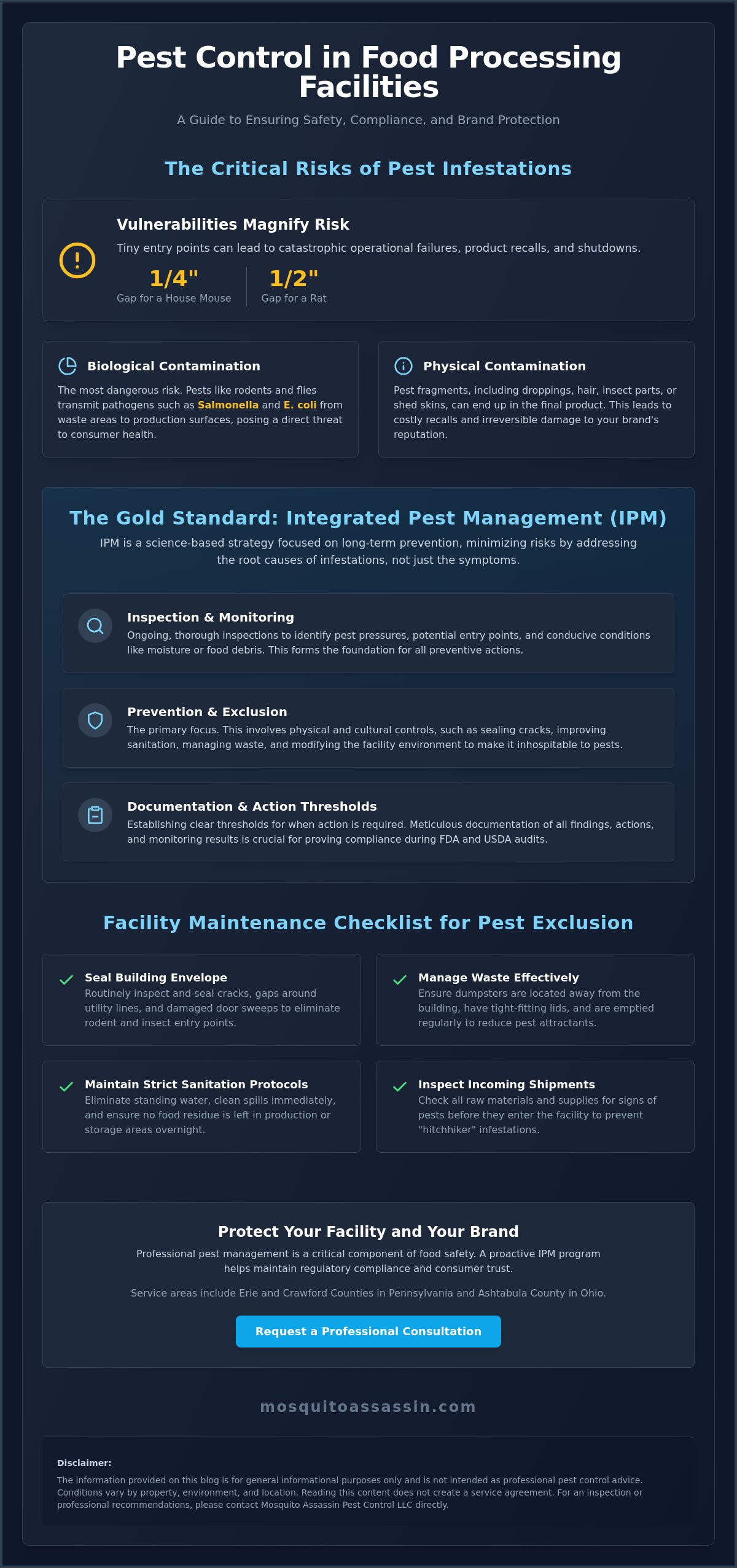
    Professional Solutions for Maintaining a Pest-Free Business

    Licensed technicians utilize advanced materials and specialized equipment regulated by the EPA that aren’t available for general retail purchase. These professional-grade solutions provide targeted results that standard over-the-counter sprays often fail to achieve. For those seeking commercial pest control Erie PA, a systematic approach is necessary to prevent structural damage and inventory loss. By addressing the root cause of an infestation, professional management helps lower long-term maintenance costs. Service coverage for these specialized treatments extends across Erie and Crawford Counties in Pennsylvania, as well as Ashtabula County in Ohio.

    Professional intervention provides a layer of security that DIY methods lack. Technicians use data-driven methods to track pest activity, ensuring that treatments are applied only where they’re most effective. This precision helps reduce the volume of materials used while increasing the success rate of the intervention. Professional pest control may help reduce the risk of infestations and property damage by identifying vulnerabilities before they’re exploited by pests.

    Tailored Industry Solutions

    Every business environment presents unique biological challenges. A warehouse has different risks than a restaurant. Food service facilities must adhere to strict health codes to prevent cross-contamination; meanwhile, industrial sites often focus on exclusionary methods to keep rodents out of loading docks. Healthcare facilities require even higher standards to protect vulnerable patients from allergens and pathogens carried by pests. You can learn more about the professional standards used in local commercial management to see how these protocols are implemented for different sectors.

    Next Steps for Business Owners

    Scheduling a professional inspection is the most effective way to identify entry points before they lead to a full-blown infestation. It’s helpful for local companies to review pest control prices to understand how to budget for year-round protection. For tailored recommendations, businesses in the location area should consult with a licensed provider to develop a strategy that fits their specific facility. Taking proactive steps today prevents the high costs associated with emergency remediation in the future.

    Disclaimer: The information provided on this blog is for general informational purposes only and is not intended as professional pest control advice. Conditions vary by property, environment, and location. Reading this content does not create a service agreement. For an inspection or professional recommendations, please contact Mosquito Assassin Pest Control LLC directly.

    Protecting Your Business Reputation

    Protecting a company’s reputation starts with a rigorous approach to facility management. Implementing a customized Integrated Pest Management (IPM) plan helps businesses in Erie, Crawford, and Ashtabula Counties address the root causes of infestations rather than just the symptoms. These strategies focus on long-term prevention by combining structural maintenance with targeted professional interventions. Licensed and insured professionals in 2 states, PA and OH, provide the technical expertise needed to navigate the specific biological cycles of pests common to the Great Lakes region.

    Reliable commercial pest control Erie PA depends on a consistent four-step process involving inspection, customized planning, treatment, and follow-up monitoring. Business owners who prioritize these proactive measures often see a measurable reduction in property damage and health code risks. It’s essential to maintain high standards for hygiene and structural integrity to keep local pests at bay. For those seeking professional guidance on facility safety, contacting professional pest control experts for an inspection can help identify hidden vulnerabilities. Taking these steps creates a safer, more professional environment for every visitor who walks through the door.

    Disclaimer: The information provided on this blog is for general informational purposes only and is not intended as professional pest control advice. Conditions vary by property, environment, and location. Reading this content does not create a service agreement. For an inspection or professional recommendations, please contact Mosquito Assassin Pest Control LLC directly.
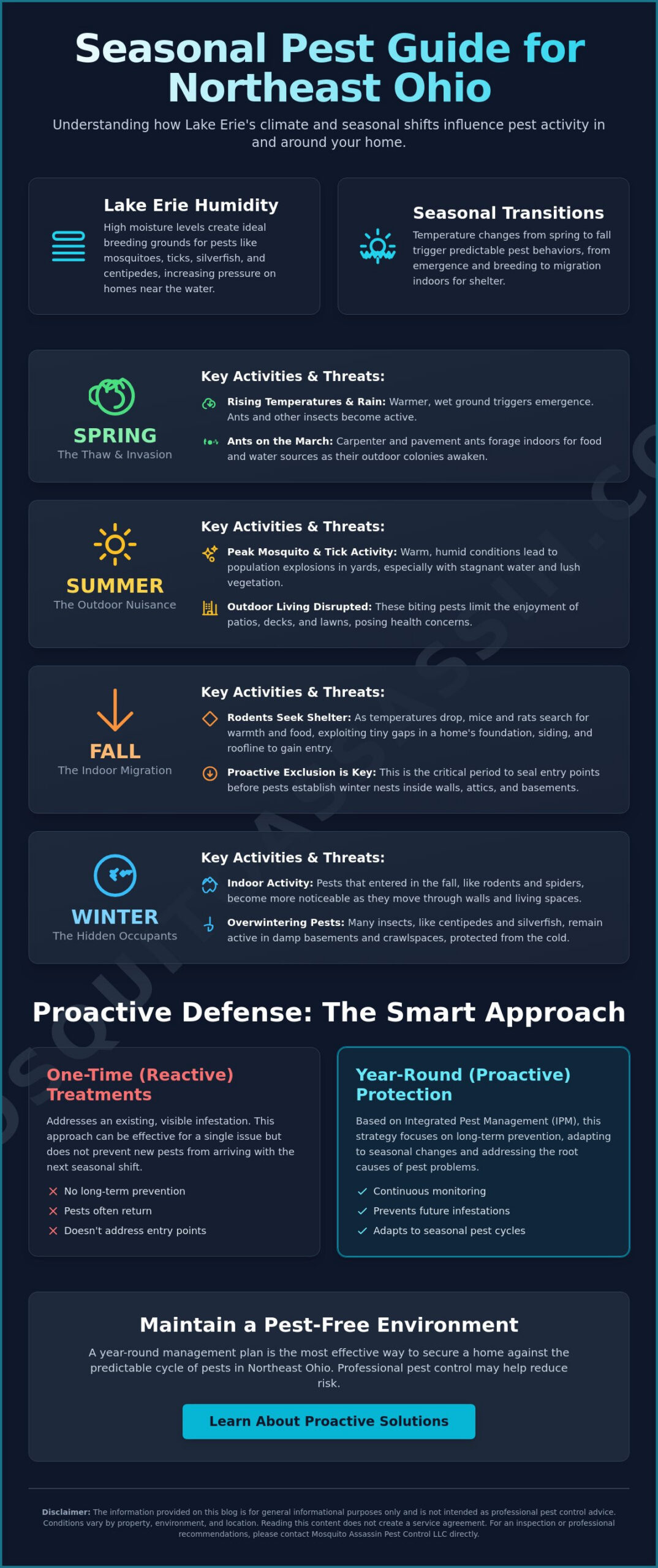
    Frequently Asked Questions

    Is commercial pest control required by law in Erie, PA?

    Pennsylvania state law and local Erie County health codes require food service establishments to maintain a pest-free environment. Title 7 of the PA Code outlines specific sanitation requirements for businesses handling food. While non-food businesses might not have the same statutory mandates, failing to address infestations can lead to violations of local property maintenance codes or 100 percent loss of a certificate of occupancy.

    How often should a business have a professional pest inspection?

    Most commercial properties in the Erie area benefit from monthly or quarterly inspections to maintain a proactive defense. High-risk environments like food processing plants or restaurants often require monthly visits, while office spaces might only need quarterly checks. Regular monitoring helps identify issues before they become a 100 percent infestation. Consistent 30-day cycles are the standard for high-traffic retail locations.

    Can pest control treatments be done discreetly?

    Professional services are often performed during off-hours or with unmarked vehicles to maintain a business’s reputation. Many technicians schedule visits before 8:00 AM or after 5:00 PM to ensure minimal interaction with customers. Using low-profile bait stations and targeted applications also helps keep the process out of the public eye. Approximately 75 percent of commercial clients prefer service during non-business hours.

    What industries benefit most from professional pest management?

    Industries like food service, healthcare, and hospitality benefit most from commercial pest control Erie PA due to strict regulatory standards. According to industry data, 90 percent of restaurants will experience a pest-related issue if a preventative plan isn’t in place. Warehousing and retail also rely on these services to prevent property damage and inventory loss from rodents or insects. Maintaining a clean facility is essential for long-term success.

    How long does a typical commercial pest treatment take?

    A typical treatment for a 2,500 square foot facility usually takes between 45 and 90 minutes. The exact time depends on the size of the building and the specific pests being addressed. Initial inspections are often longer, sometimes reaching 120 minutes, as technicians must map out entry points and nesting sites throughout the property. Follow-up visits are generally shorter once a baseline is established.

    What should employees do if they see a pest in the workplace?

    Employees should immediately report the sighting to a designated manager and document the location, time, and type of pest seen. It’s helpful if they can take a photo with a smartphone to assist in identification. Staff shouldn’t attempt to use over-the-counter sprays, as these can interfere with professional baiting systems and scatter the pests into harder-to-reach areas. Clear communication prevents small issues from growing.

    How does professional pest control help with health department audits?

    Commercial pest control Erie PA provides the necessary documentation and logbooks that health inspectors review during annual audits. Having a record of regular inspections and corrective actions can prevent the 10 to 15 point deductions often associated with pest activity. Professional management ensures that a business meets the Integrated Pest Management (IPM) standards required by many regulatory agencies. These records prove that a business is proactive about sanitation.

    Are commercial pest treatments safe for customers and staff?

    Licensed professionals use products and methods that are specifically designed for use in public workspaces when applied according to the label. Integrated Pest Management focuses on non-chemical deterrents and targeted applications to minimize exposure. Technicians often apply treatments in areas inaccessible to the public, such as behind equipment or inside wall voids, to ensure a high level of safety. These methods follow strict federal safety guidelines.

    For businesses in Erie and Crawford Counties, professional pest control may help reduce risk. To discuss a customized plan for a commercial property, visit www.mosquitoassassin.com/contact-us for more information.

    Disclaimer: The information provided on this blog is for general informational purposes only and is not intended as professional pest control advice. Conditions vary by property, environment, and location. Reading this content does not create a service agreement. For an inspection or professional recommendations, please contact Mosquito Assassin Pest Control LLC directly.

  • Pet Friendly Pest Control in Pennsylvania: A Guide for Homeowners

    Pet Friendly Pest Control in Pennsylvania: A Guide for Homeowners

    What if the treatment meant to protect your home from disease-carrying ticks actually posed a greater risk to your dog or cat than the pests themselves? It’s a common concern for homeowners, especially since roughly 66% of households in the United States share their living space with at least one animal. Finding reliable pet friendly pest control pennsylvania families can trust involves more than just reading a label. It requires a professional understanding of how treatments interact with a pet’s environment in Erie, Crawford, and Ashtabula Counties.

    It’s natural to feel hesitant when balancing the need for a pest-free home with the well-being of your animals. You’ll learn how modern pest management techniques prioritize low-impact solutions that eliminate pests without leaving hazardous residues behind for curious paws to find. This guide provides a clear look at the differences between marketing buzzwords and truly safe practices, along with practical steps to prepare your home in Northwest Pennsylvania for a professional visit. By understanding local risks and proper preparation, you can maintain a secure environment for every member of the family.

    Disclaimer: The information provided on this blog is for general informational purposes only and is not intended as professional pest control advice. Conditions vary by property, environment, and location. Reading this content does not create a service agreement. For an inspection or professional recommendations, please contact Mosquito Assassin Pest Control LLC directly.
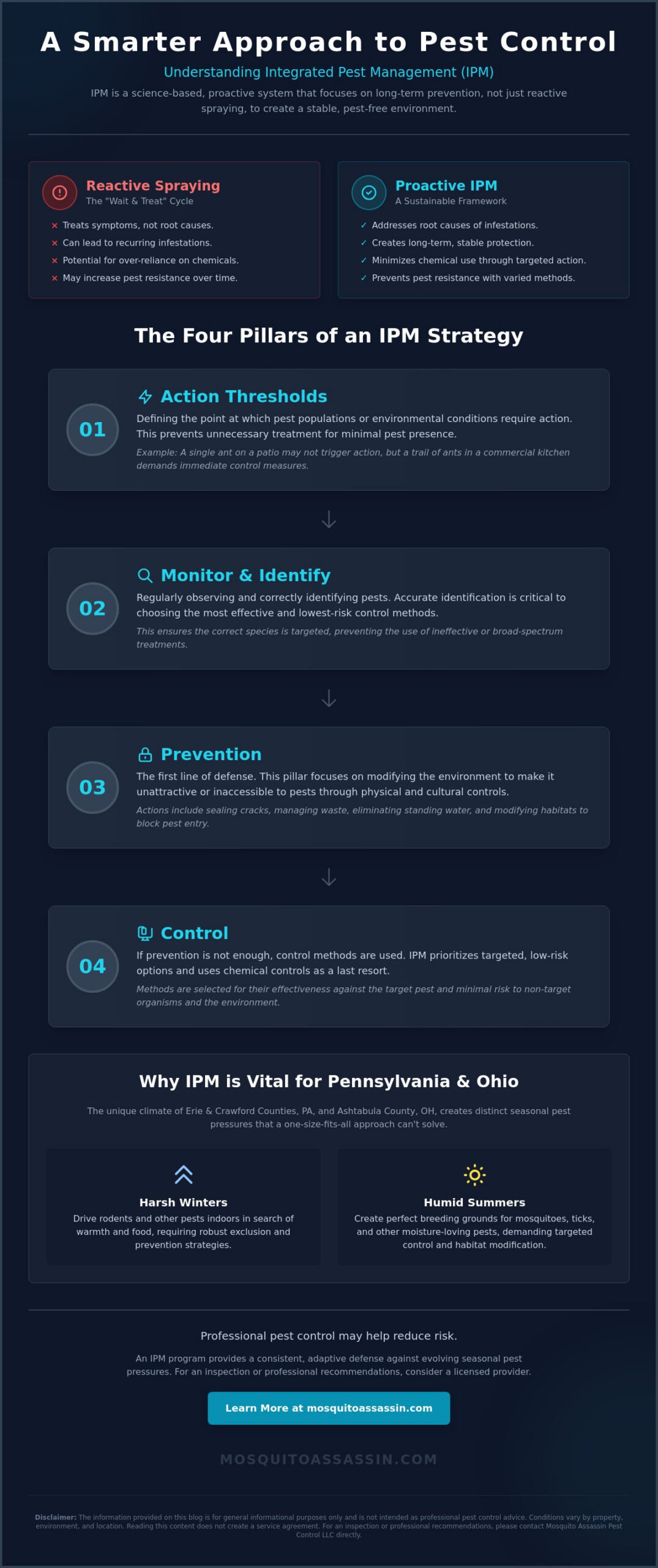
    Key Takeaways

    • Understand the professional definition of pet-safe treatments, which prioritizes products with low mammalian toxicity to protect household animals.
    • Identify common regional pests like ticks and fleas that pose year-round health risks to pets in Erie and Crawford Counties.
    • Learn how science-based Integrated Pest Management (IPM) uses non-chemical methods and exclusion techniques to prevent infestations before they start.
    • Discover practical preparation steps for homeowners, including how to manage pet food and belongings during a professional treatment.
    • Gain insights on selecting a provider for pet friendly pest control pennsylvania that understands the local climate and specific pest challenges of the Tri-State area.

    Defining Pet Friendly Pest Control in Pennsylvania

    Pet owners in Erie and Crawford Counties often prioritize the safety of their animals when dealing with household invaders. In the context of professional management, pet friendly pest control pennsylvania refers to a strategic approach that minimizes risk to non-target species. This process focuses on selecting products with low mammalian toxicity, meaning the active ingredients are specifically designed to disrupt the biology of insects rather than mammals. According to the American Pet Products Association (APPA) 2023-2024 survey, 66% of U.S. households own a pet, making these safety protocols a standard requirement for residential services.

    The Environmental Protection Agency (EPA) regulates these applications through strict labeling requirements under the Federal Insecticide, Fungicide, and Rodenticide Act (FIFRA). A professional application adheres to these federal mandates, ensuring that products are used at concentrations that are effective against pests but remain below thresholds that would harm a dog or cat. Unlike over-the-counter sprays, professional treatments often utilize bait stations or targeted crack and crevice applications that keep products out of reach of curious paws.

    To better understand this concept, watch this helpful video:

    The Difference Between Natural and Pet Safe

    Many homeowners assume that “natural” means “safe,” but this is a common misconception. For instance, certain essential oils like peppermint or tea tree can be toxic to cats if inhaled or absorbed through the skin in high concentrations. A truly pet safe approach focuses on the application method and the necessary drying time. Most professional liquid treatments are considered safe for pets once they’ve completely dried, a process that typically takes 30 to 60 minutes depending on humidity levels in Northwestern Pennsylvania. Following the specific instructions on a product label is the only way to ensure the safety of every animal in the home.

    Professional Standards for Residential Properties

    In Pennsylvania and Ohio, technicians must meet rigorous licensing requirements overseen by the Pennsylvania Department of Agriculture and the Ohio Department of Agriculture. These professionals undergo training to understand pest biology, which allows for more targeted treatments. By using Integrated Pest Management (IPM), experts focus on removing the sources of food and water that attract pests first. This reduces the reliance on heavy chemical applications. Modern pest management has shifted toward low-impact formulations, such as gel baits and insect growth regulators (IGRs), which target specific life stages of insects without affecting the health of larger animals. This scientific approach ensures that pet friendly pest control pennsylvania remains effective while safeguarding the local environment in Ashtabula and surrounding counties.

    Professional knowledge of pest behavior allows for the placement of products in areas where pets don’t typically travel. Technicians identify entry points and nesting sites, applying materials directly to the source of the infestation. This precision is a hallmark of licensed services, contrasting sharply with the broad, indiscriminate spraying often seen with DIY attempts. Homeowners who work with local professionals benefit from treatments tailored to the specific pests found in the Tri-State area, ensuring a higher level of safety for the entire family.

    Disclaimer: The information provided on this blog is for general informational purposes only and is not intended as professional pest control advice. Conditions vary by property, environment, and location. Reading this content does not create a service agreement. For an inspection or professional recommendations, please contact Mosquito Assassin Pest Control LLC directly.
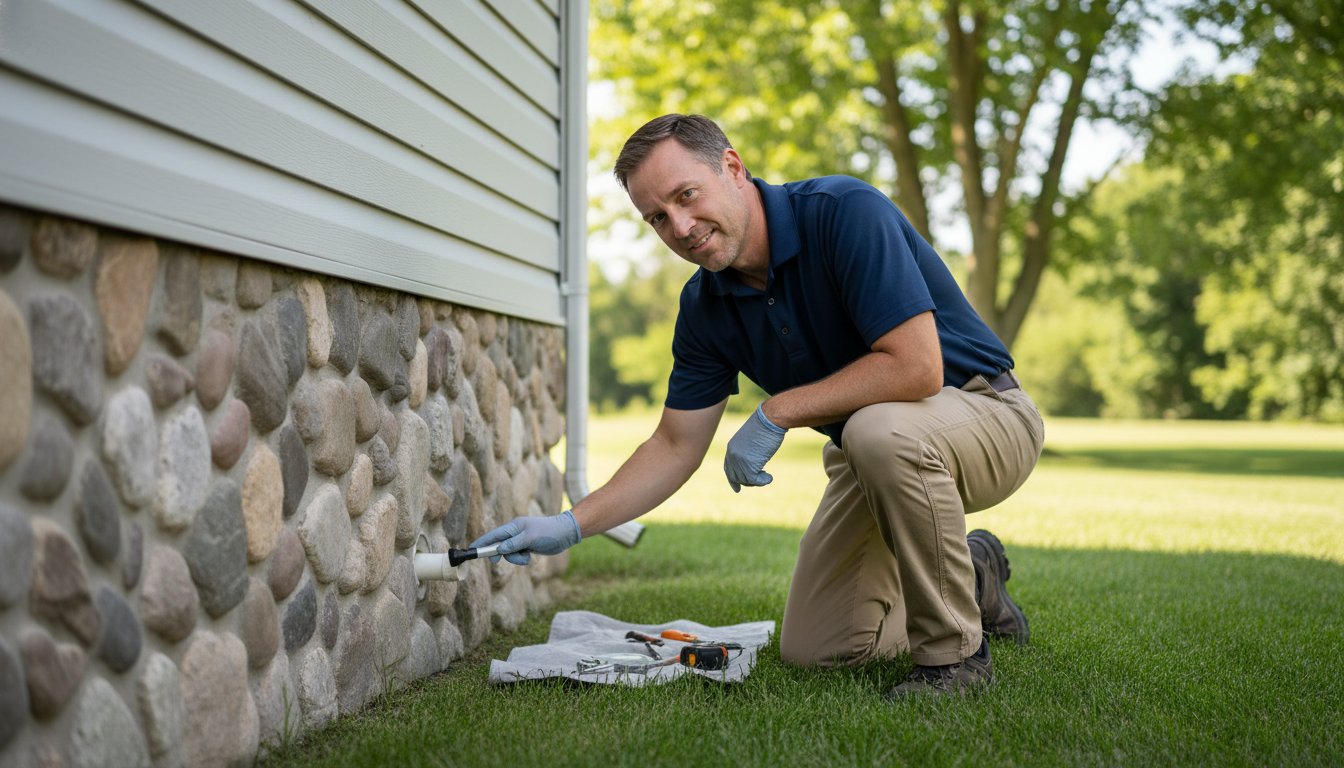
    Common Pennsylvania Pests That Threaten Pet Health

    Pennsylvania’s diverse ecosystem supports a wide range of wildlife and insects that present significant biological threats to domestic animals. In Erie County, the black-legged tick is a primary vector for Lyme disease. Statistics from the Pennsylvania Department of Health show that the state recorded 8,432 confirmed cases of Lyme disease in 2022, consistently ranking it among the highest in the United States. This isn’t just a human health issue; dogs and cats are equally susceptible to tick-borne illnesses that can cause chronic joint pain, lethargy, or even fatal kidney failure if left untreated.

    Fleas represent a different but equally persistent challenge because they thrive in the Northwest Pennsylvania climate throughout the year. While outdoor activity increases exposure, fleas often hitchhike into homes on clothing or other animals. Once they establish a presence indoors, a single female flea can lay 50 eggs per day. This leads to a massive infestation within 21 days, causing pets to suffer from severe allergic dermatitis and potential tapeworm infections.

    Mosquitoes serve as the sole vector for heartworm, a potentially fatal condition for both dogs and cats. The American Heartworm Society reports that mosquitoes can breed in as little as half an inch of standing water. In Pennsylvania, where humidity levels often exceed 70% during summer months, mosquito populations can explode rapidly. Professional management focuses on these breeding sites to protect outdoor play areas where pets spend their time. Understanding these threats is the first step toward implementing pet friendly pest control pennsylvania that works.

    Rodents like mice and rats also pose direct risks to household pets. These pests carry internal parasites such as mites and roundworms. If a pet hunts or interacts with a rodent, they can contract these parasites, leading to digestive issues or long-term health complications. Homeowners seeking to minimize these biological threats may find that professional pest control helps reduce risk for the entire household.

    Tick and Flea Risks in Northwest Pennsylvania

    Wooded areas in Crawford County provide the perfect habitat for ticks to thrive. Peak activity usually occurs between April and October when temperatures stay above 45 degrees Fahrenheit. Professional yard treatments target high-risk zones like tall grass and leaf litter where ticks wait for a host. To maximize safety, homeowners should Protect Your Pets by coordinating property treatments with veterinary-prescribed flea and tick preventatives. This multi-layered approach is a cornerstone of effective pet friendly pest control pennsylvania.

    Mosquito Management and Outdoor Safety

    Standing water is the primary driver of mosquito populations in Pennsylvania yards. Common breeding grounds often go unnoticed by homeowners. These include:

    • Clogged rain gutters that hold damp debris
    • Birdbaths that aren’t scrubbed and emptied weekly
    • Corrugated drainage pipes connected to downspouts
    • Potted plant saucers and discarded tires

    Professional mosquito control reduces these populations by addressing larvae before they reach adulthood. This safeguards pets during their peak outdoor hours at dawn and dusk. Identifying and eliminating these water sources significantly lowers the local mosquito count, providing a safer environment for pets to exercise and play without the constant threat of bites.

    Disclaimer: The information provided on this blog is for general informational purposes only and is not intended as professional pest control advice. Conditions vary by property, environment, and location. Reading this content does not create a service agreement. For an inspection or professional recommendations, please contact Mosquito Assassin Pest Control LLC directly.
    The Role of Integrated Pest Management (IPM) in Pet Safety

    Integrated Pest Management, or IPM, represents a shift from traditional broadcast spraying to a science-based strategy. This approach focuses on long-term prevention by managing the environment rather than just reacting to pests. For residents seeking pet friendly pest control pennsylvania, IPM provides a framework where non-chemical solutions are the first line of defense. By understanding the biology and lifecycle of a pest, technicians disrupt their survival without introducing unnecessary risks to cats or dogs.

    Exclusion techniques are a cornerstone of this process. It’s a physical way to keep pests out. For example, a house mouse can squeeze through a gap only 0.25 inches wide, which is roughly the width of a pencil. Sealing these entry points with hardware cloth or copper wool prevents the need for interior rodenticides. Sanitation is another primary tool. Pests enter homes in search of food, water, and shelter. Fixing a leaky pipe under a kitchen sink or storing pet food in airtight, hard-plastic containers eliminates the attractants that bring insects inside. When these environmental factors are managed, the footprint of any required treatment is significantly reduced.

    When treatments are necessary, IPM dictates targeted applications. Instead of broad perimeter sprays that pets might walk through, professionals apply products in localized areas. This might include injecting gels into deep cracks or using tamper-resistant bait stations that keep products away from curious paws. According to the National Pesticide Information Center’s guide on Pets and Pesticide Use, minimizing the area of application is a key step in reducing accidental exposure. This methodical approach ensures the treatment hits the target pest while leaving the rest of the home untouched.

    Inspection and Identification

    Every effective IPM plan begins with a meticulous inspection of the property. In older Pennsylvania homes, particularly those in Erie and Crawford Counties, stone foundations and aging siding often provide easy access for ants and rodents. Technicians look for specific rub marks from grease on rodent fur or nesting materials in crawlspaces. By identifying the exact species, a customized plan is created for the specific layout of the residence. This prevents a generic approach that might include unnecessary products.

    Monitoring and Targeted Treatments

    Monitoring stations allow for real-time tracking of pest activity. These tools act as an early warning system, showing where pests are moving before an infestation becomes visible. If activity is found, treatments are applied only in inaccessible areas like wall voids or behind heavy appliances. Utilizing professional pest control services for ongoing monitoring ensures that problems are caught early. This proactive stance maintains a pest-free environment with the lowest possible risk profile for household animals. For property-specific questions, contacting a professional through the online booking portal can help clarify the best approach for a particular home.

    Disclaimer: The information provided on this blog is for general informational purposes only and is not intended as professional pest control advice. Conditions vary by property, environment, and location. Reading this content does not create a service agreement. For an inspection or professional recommendations, please contact Mosquito Assassin Pest Control LLC directly.

    How Homeowners Can Prepare for a Professional Pest Service

    Preparation is the most critical step in ensuring that pet friendly pest control pennsylvania remains effective and safe. While professional technicians bring the expertise and specialized products, homeowners in Erie and Crawford Counties play a vital role in the process. A well prepared home allows the technician to work efficiently and prevents accidental exposure to sensitive animals. Most preparation tasks take approximately 30 to 45 minutes but provide long term peace of mind for the entire household.

    Clear communication stands as the foundation of a successful treatment. It’s necessary to inform the service provider about every animal residing on the property. This includes not just dogs and cats, but also birds, reptiles, and small mammals like guinea pigs or hamsters. Different species have varying respiratory rates and metabolic sensitivities. For instance, birds possess highly efficient respiratory systems that make them more vulnerable to airborne particles than most mammals. By identifying these residents early, the professional can adjust the application methods to suit the specific environment.

    Pre-Service Checklist for Pet Owners

    Homeowners should begin their preparation by clearing the floor of all pet related items. This includes toys, chew bones, bedding, and food or water bowls. Removing these items prevents them from coming into contact with any mist or droplets during the application. If a pet has a favorite rug or bed that cannot be moved, it should be laundered or placed in a sealed plastic bag until the treatment is complete. Technicians recommend a 10 foot clearance around the perimeter of rooms where baseboard treatments are planned.

    • Secure all pets: Animals should be placed in a crate or a room that isn’t scheduled for treatment. This prevents them from following the technician or accidentally stepping into wet product.
    • Cover fish tanks: Use a heavy towel or plastic wrap to seal the top of the tank completely. Airborne particles can settle on the water surface and harm aquatic life.
    • Turn off air pumps: Disconnect the power to fish tank aerators for at least 2 to 3 hours. This stops the pump from pulling room air into the water during the service.

    During and After the Treatment

    Safety doesn’t end when the technician leaves the driveway. The “dry to the touch” rule is the gold standard for re-entry. Most liquid applications require between 2 and 4 hours to dry completely, depending on the humidity levels in Pennsylvania or Ohio. If the weather is damp, drying times can extend by an additional 60 minutes. Keeping pets out of treated areas until they’re dry is the most effective way to prevent paw contact and subsequent grooming ingestion.

    Ventilation is a key factor in post-treatment safety. Once the technician gives the all clear, opening windows for 15 to 20 minutes can help refresh the indoor air. Homeowners should also consult with their professional about specific wait times for different species. For example, while a dog might be fine after 2 hours, a sensitive reptile might benefit from a 4 to 6 hour waiting period. If a pet owner notices any unusual behavior in their animal after a service, they should contact a veterinarian immediately as a standard precaution. Following these protocols ensures the home remains a safe sanctuary for everyone. For those ready to begin the process, scheduling an inspection through the online portal can help identify the specific needs of the property.

    Disclaimer: The information provided on this blog is for general informational purposes only and is not intended as professional pest control advice. Conditions vary by property, environment, and location. Reading this content does not create a service agreement. For an inspection or professional recommendations, please contact Mosquito Assassin Pest Control LLC directly.
    Selecting a Professional Pest Service in Northwest Pennsylvania and Northeast Ohio

    Choosing a provider in Erie, Crawford, or Ashtabula Counties requires looking past basic search results. A technician needs to understand why pests behave differently in Meadville compared to Conneaut. Local climate factors, like the high humidity and lake-effect moisture near Lake Erie, dictate pest activity levels throughout the year. A provider that fails to account for these specific regional variables often provides sub-par results. Professional services should focus on identifying the root cause of an infestation rather than just treating the visible symptoms.

    Regional Expertise in Erie and Crawford Counties

    Lake Erie influences more than just the local weather patterns. It creates a damp environment where pests like carpenter ants, spiders, and mosquitoes thrive. Selecting a locally owned and operated service ensures the team understands these specific environmental triggers. Pennsylvania has strict regulations regarding pesticide application through the Department of Agriculture. Local experts stay current on these rules to maintain high standards for safety and compliance. This deep community connection means the service is tailored to the unique challenges of the 814 and 440 area codes, rather than following a generic national script. Knowledge of local soil types and seasonal migration patterns of rodents in Northwest Pennsylvania is essential for effective prevention.

    Evaluating Professional Credentials

    Homeowners should always verify that a company holds valid, current licenses in both Pennsylvania and Ohio if they operate across the state line. Proper insurance protects the property owner during the treatment process. It’s also vital to find a team that prioritizes family and pet safety across their entire service area. A satisfaction guarantee provides peace of mind that the job will be handled correctly, as reputable companies stand behind their work. When looking for pet friendly pest control pennsylvania, transparency is the most important trait. A professional provider will explain exactly which products are used and why they’re chosen for a specific property. They should be able to provide Material Safety Data Sheets (MSDS) upon request without hesitation.

    One-time treatments often fail because they don’t account for pest life cycles. For example, flea pupae can remain dormant for over 150 days in some environments. A single visit might eliminate the adults but miss the next generation entirely. Year-round protection plans offer more consistent safety by creating a permanent barrier around the home. These plans adapt to the seasons, addressing mice and rats in the winter and stinging insects or ticks in the summer. This proactive approach is usually more effective than reacting to a full-blown infestation after it starts. It’s a more sustainable way to manage pet friendly pest control pennsylvania because it uses targeted, preventative applications rather than heavy-handed emergency measures.

    Transparency regarding methods is a non-negotiable standard for any modern pest professional. A qualified technician will provide a clear breakdown of the Integrated Pest Management (IPM) strategies they employ. This includes identifying entry points, moisture problems, and suggesting structural repairs. Knowing the specific ingredients in a treatment helps residents feel confident in their choices for their household. Effective communication ensures that everyone in the home understands the safety protocols following a service visit. Professional pest control may help reduce risk for homeowners concerned about local infestations. For those seeking a detailed property assessment, visiting the online booking portal can help start the process.

    Disclaimer: The information provided on this blog is for general informational purposes only and is not intended as professional pest control advice. Conditions vary by property, environment, and location. Reading this content does not create a service agreement. For an inspection or professional recommendations, please contact Mosquito Assassin Pest Control LLC directly.

    Protecting Pennsylvania Pets and Properties

    Balancing a pest-free home with the safety of four-legged family members requires a strategic approach. Integrated Pest Management (IPM) stands as the professional standard for safety, focusing on long-term prevention and targeted treatments rather than broad chemical application. Homeowners in Erie, Crawford, and Ashtabula counties can maintain a safer environment by removing pet toys and food bowls before any scheduled service. It’s a simple step that helps minimize exposure while maximizing the effectiveness of the treatment plan. Following these guidelines helps ensure that pest management remains effective without compromising the living space.

    Effective pet friendly pest control pennsylvania residents rely on utilizes these science-based methods and the expertise of licensed and insured professionals. Since every property presents unique challenges, professional pest control may help reduce risk by identifying specific vulnerabilities around the home. Taking these proactive steps helps ensure a comfortable and secure environment for every member of the household throughout the year.

    Disclaimer: The information provided on this blog is for general informational purposes only and is not intended as professional pest control advice. Conditions vary by property, environment, and location. Reading this content does not create a service agreement. For an inspection or professional recommendations, please contact Mosquito Assassin Pest Control LLC directly.
    Frequently Asked Questions

    Is professional pest control safe for dogs and cats?

    Professional pest control is safe for dogs and cats when the technician follows the specific application instructions on the product label. Licensed professionals in Pennsylvania use products registered by the Environmental Protection Agency (EPA), which undergo rigorous testing for safety around mammals. Once a liquid treatment has dried, which usually takes 30 to 60 minutes, it’s safe for pets to return to the area. This process ensures effective results without risking animal health.

    How long should I keep my pets away from a treated area?

    You should keep pets away from treated surfaces until they’re completely dry, which typically takes between 30 and 90 minutes. High humidity levels in Erie County can sometimes extend this drying period beyond the one-hour mark. Keeping animals in a separate room or a crate during the application and for the following hour ensures they don’t come into direct contact with wet products. This simple precaution prevents accidental ingestion or skin irritation.

    Do I need to leave my house during a pet-friendly pest treatment?

    Most homeowners don’t need to leave their house during a pet friendly pest control pennsylvania treatment. While the technician works, you and your pets can stay in an untreated room or on a different floor. If a specialized treatment like a fogger is required, the label might mandate a 2 to 4 hour vacancy period; however, standard perimeter sprays rarely require leaving the premises. Check with the technician about specific products used during your visit.

    What should I do if my pet accidentally enters a treated area before it is dry?

    If a pet enters a wet area, wash their paws and any contacted fur immediately with mild soap and water. This prevents them from licking the product off their skin or fur. You should also monitor the animal for 24 hours for any unusual behavior. If you notice vomiting or lethargy, contact a veterinarian or the Pet Poison Helpline at 855-764-7661. Quick action helps mitigate any potential risks from accidental exposure.

    Are outdoor mosquito and tick treatments safe for my pets to play in?

    Outdoor mosquito and tick treatments are safe for pets once the grass and foliage have dried. In the climate of Crawford County, this usually happens within 45 minutes of application. These treatments target specific pests like the Ixodes scapularis tick, which can carry Lyme disease. By reducing these pests, professional treatments actually help protect your pets from tick-borne illnesses. This proactive approach is a key part of maintaining a healthy outdoor environment for animals.

    Can professional pest control help with my pets flea infestation?

    Professional pest control helps eliminate environmental flea populations, but it doesn’t replace veterinary-prescribed flea preventatives. While 5 percent of a flea population lives on the pet, the other 95 percent lives in the carpet and yard as eggs or larvae. A comprehensive pet friendly pest control pennsylvania plan targets these life stages in the home to stop the cycle of re-infestation. Eliminating the source in the environment is the only way to achieve long-term relief.

    How often should pet-friendly pest control be performed in Pennsylvania?

    Most properties in Pennsylvania benefit from a quarterly service schedule, or one treatment every 90 days. This frequency maintains a consistent protective barrier as products naturally break down over 3 months. In areas like Ashtabula County with high seasonal pest pressure, a technician might recommend monthly visits during the peak summer months to ensure continuous protection for your household. Regular inspections help identify new pest entries before they become a problem.

    Will pest control products affect my fish or birds?

    Fish and birds are more sensitive to airborne particles than dogs or cats, so extra precautions are necessary. You should cover fish tanks with plastic wrap and turn off air pumps for 2 hours during indoor treatments. Birds should be moved to a room that isn’t being treated until the product has dried and the air has settled for at least 3 hours. These steps protect sensitive respiratory systems and prevent water contamination in aquatic environments.

    Disclaimer: The information provided on this blog is for general informational purposes only and is not intended as professional pest control advice. Conditions vary by property, environment, and location. Reading this content does not create a service agreement. For an inspection or professional recommendations, please contact Mosquito Assassin Pest Control LLC directly.

  • Pest Control Prices 2026: A Comprehensive Guide to Service Value and Factors

    Pest Control Prices 2026: A Comprehensive Guide to Service Value and Factors

    What if the lowest quote you receive for pest management this year is actually the most expensive mistake you’ll make for your home’s long-term health? With over 80% of homeowners in the United States reporting pest issues in a single calendar year, according to industry surveys from 2023, many are searching for clarity on pest control prices 2026 to avoid financial surprises. It’s common to feel a sense of dread when you spot a line of ants in your kitchen or hear a rustle in the attic, especially when you’re worried about hidden fees or the safety of treatments used around your family. You want a solution that works so you don’t have to worry about the well-being of your children or pets.

    This guide provides a clear understanding of the specific variables that influence professional service costs. It explores how service frequency and modern integrated pest management techniques impact the total value of professional protection in Erie County, Crawford County, and Ashtabula County. This overview breaks down the technical factors local providers use to build service models, safeguarding your home while providing the knowledge you need to prevent future infestations and maintain a healthy environment.

    Disclaimer: The information provided on this blog is for general informational purposes only and is not intended as professional pest control advice. Conditions vary by property, environment, and location. Reading this content does not create a service agreement. For an inspection or professional recommendations, please contact Mosquito Assassin Pest Control LLC directly.
    Key Takeaways

    • Discover how modern pest management prioritizes property protection and public health through sustainable, science-based methodologies.
    • Learn how structural characteristics, including property square footage and architectural accessibility, influence the allocation of professional resources.
    • Understand the distinction between emergency remediations and recurring maintenance plans to better evaluate pest control prices 2026 for residential properties.
    • Identify how regional environmental factors and proximity to Lake Erie affect pest pressures specifically in Erie, Crawford, and Ashtabula counties.
    • Verify essential professional standards by checking state-issued licenses, insurance coverage, and local community reputations.

    Understanding the Value of Professional Pest Management in 2026

    Professional pest management in 2026 is a sophisticated intersection of biology and building science. Homeowners in Erie County or Ashtabula County aren’t just paying for a technician to spray a baseboard; they’re investing in a comprehensive health and property protection service. Effective Pest control methods now rely on data-driven insights rather than the broad-spectrum applications common decades ago. This shift ensures that treatments are precise and effective while minimizing unnecessary chemical exposure.

    Understanding pest control prices 2026 requires looking at the total value of these advanced methodologies. Modern intervention is more than just applying a product to a surface. It involves a deep understanding of pest life cycles and how they interact with the specific climate of the Great Lakes region.

    The Evolution of Pest Management Standards

    By 2026, industry standards have moved away from temporary elimination tactics. Modern protocols prioritize long-term prevention. Licensed professionals in Pennsylvania and Ohio must adhere to strict state and federal guidelines that evolved significantly between 2022 and 2025. These regulations emphasize environmental stewardship and safety for residents. Professionals now use products with lower toxicity profiles that break down faster in the environment. This evolution means that a service visit in 2026 involves more time spent on exclusion and habitat modification than on applying liquids. Hiring a licensed professional ensures these updated safety standards are met on your property.

    Why Professionals Use Integrated Pest Management

    Integrated Pest Management (IPM) is the gold standard for 2026. It’s a holistic strategy that combines biological knowledge with structural repairs and targeted treatments. This approach is highly effective because it addresses the root causes of an infestation. Components of a standard IPM plan include:

    • Biological Knowledge: Identifying the specific species to understand its breeding and feeding habits.
    • Structural Repairs: Sealing entry points and fixing moisture issues that attract pests.
    • Targeted Treatments: Using baits or pheromone traps that only affect the target pest.

    IPM reduces the need for frequent chemical applications over time. In fact, data from 2025 indicates that properties utilizing IPM-based plans often require 30 percent fewer product applications than those using traditional methods. This approach focuses on the “why” of an infestation, not just the “what.”

    Everything starts with the diagnostic inspection. This is the most critical part of the process and a key factor in determining pest control prices 2026 for a specific property. It’s a physical audit where technicians look for entry points, moisture sources, and nesting sites. In Crawford County, for example, an inspection might reveal that a damp basement is the primary driver of a centipede problem. Without this diagnostic step, any treatment is just guesswork. The inspection determines the necessary scope of work and ensures the treatment plan is customized for your home’s unique footprint.

    Professional pest control may help reduce risk for homeowners seeking to protect their investment and their family’s health. For an assessment of your property, you can visit the online booking portal to schedule a consultation with a local expert.

    Disclaimer: The information provided on this blog is for general informational purposes only and is not intended as professional pest control advice. Conditions vary by property, environment, and location. Reading this content does not create a service agreement. For an inspection or professional recommendations, please contact Mosquito Assassin Pest Control LLC directly.

    Factors That Influence Professional Pest Control Service Models

    Professional service models are built on the specific needs of a structure, and they’ve evolved to be highly data-driven. A technician doesn’t simply arrive and apply product; they calculate the necessary resources based on the property’s unique profile. Total square footage remains the primary metric for resource allocation. For instance, a property exceeding 3,500 square feet typically requires 45% more inspection time than a standard 1,500-square-foot residential unit. This isn’t just about the interior living space. Technicians must evaluate the entire perimeter, including detached garages and sheds, which often serve as primary nesting sites for wood-destroying organisms.

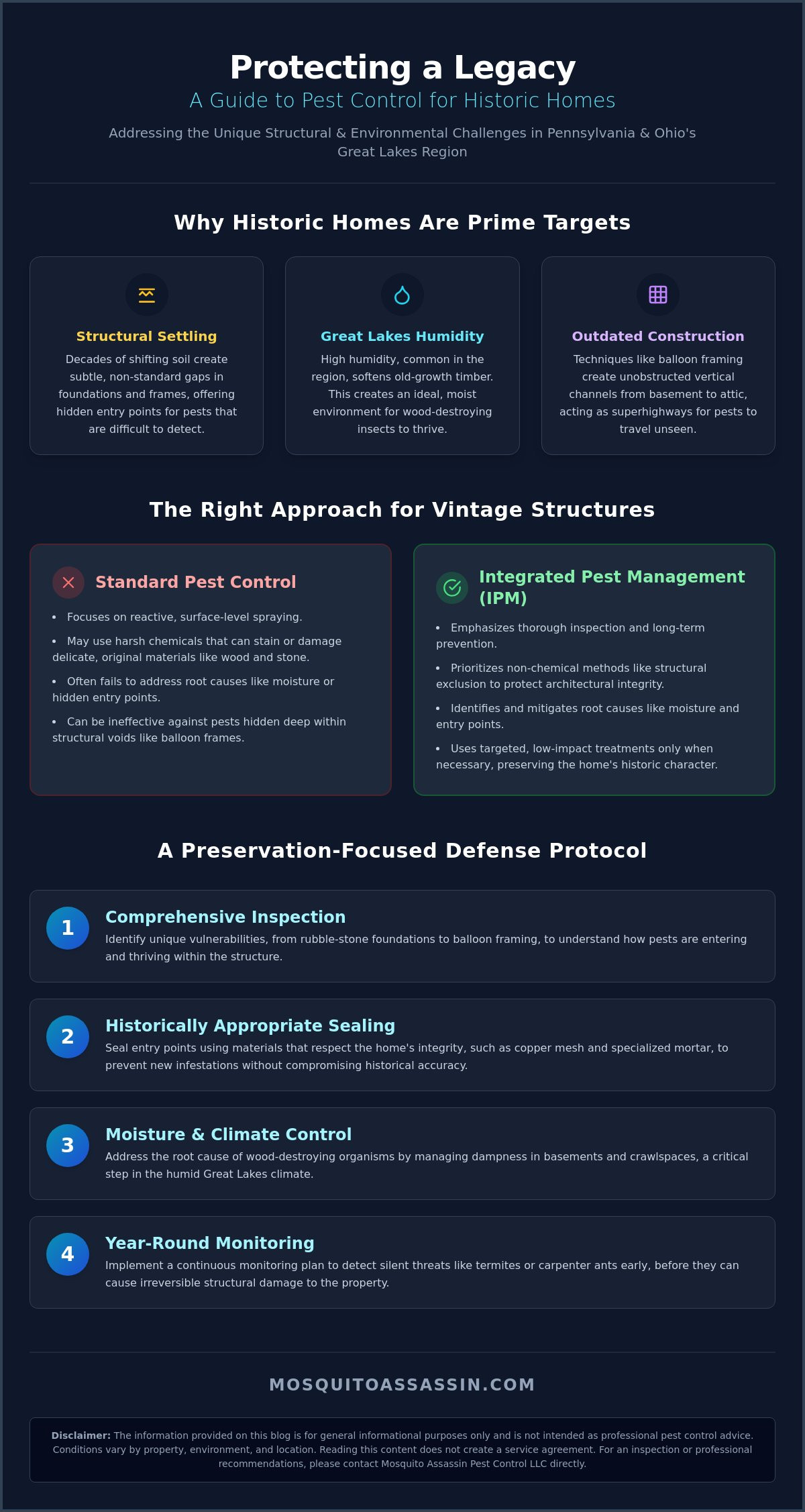
    Architectural style and age significantly dictate accessibility and labor intensity. Older homes in Erie County often feature fieldstone foundations or complex rooflines that create hidden voids. If a home has a crawl space with less than 18 inches of clearance, the difficulty of the job increases. Technicians may spend an additional 40 minutes navigating these tight quarters to identify termite mud tubes or moisture-related vulnerabilities. Identifying these entry points is a critical step in long-term prevention. Adhering to EPA Pest Control Guidelines ensures that these structural interventions are handled with professional standards of safety and efficacy. When evaluating pest control prices 2026, homeowners should recognize that these labor-intensive inspections are what prevent costly structural damage later.

    Property Size and Structural Complexity

    Larger properties or multi-unit buildings in Ashtabula County require more extensive monitoring because of the increased number of “micro-climates” within the structure. A multi-story home has more plumbing penetrations and wall voids than a single-story slab home. Crawl spaces, attics, and basements are high-traffic areas for pests seeking shelter from the Great Lakes climate. Outdoor structures like decks and sheds also expand the service area. A deck with low ground clearance can harbor thousands of insects, necessitating specialized equipment to reach the soil beneath the boards. Homeowners in Crawford County seeking a professional assessment can schedule an inspection online to identify these specific property risks.

    Target Species and Infestation Severity

    The biology of the target species is a major driver of service complexity. Common household pests like nuisance ants require different strategies than wood-destroying organisms like termites or carpenter ants. Termites, for example, require specialized liquid barriers or baiting systems that involve drilling into concrete or trenching around the foundation. Established infestations are more difficult to manage than preventative accounts. In 2024, data indicated that remediating a heavy German cockroach infestation takes three times as many man-hours as a standard preventative treatment. Specialized equipment, such as high-heat systems for bed bugs or borescope cameras for wall inspections, is often necessary for these intensive remediations. Understanding these variables helps clarify why pest control prices 2026 are tailored to the biological reality of the infestation rather than a flat rate.

    Service frequency also plays a role in maintaining a pest-free environment. Most professional models utilize quarterly or bi-monthly visits to break the reproductive cycles of common pests. Consistent monitoring allows technicians to catch structural vulnerabilities, such as weather-stripping failure or new cracks in the foundation, before they become entry points for local wildlife. This proactive approach is the industry standard for minimizing the need for heavy chemical applications.

    Disclaimer: The information provided on this blog is for general informational purposes only and is not intended as professional pest control advice. Conditions vary by property, environment, and location. Reading this content does not create a service agreement. For an inspection or professional recommendations, please contact Mosquito Assassin Pest Control LLC directly.

    One-Time Remediation vs. Ongoing Protection Plans

    Choosing between a single service and a recurring plan is a primary decision for homeowners in Erie and Crawford Counties. One-time treatments target immediate, visible threats, while recurring plans focus on long-term exclusion and monitoring. Understanding how service frequency affects pest control prices 2026 is essential for long-term budgeting. While a single visit might seem cost-effective initially, it often fails to address the underlying environmental factors that invite pests into a structure.

    The Logistics of One-Time Treatments

    A one-time service is appropriate for isolated, acute issues. A common example is the discovery of a bald-faced hornet nest attached to a second-story eave or a yellow jacket colony in a flower bed. These situations require a specific, localized response to eliminate an immediate safety hazard. However, reactive treatments have significant limitations. Approximately 65% of residential pest issues stem from recurring environmental pressures rather than isolated incidents. A single visit addresses the active pests but rarely impacts the eggs or larvae hidden within wall voids or crawlspaces.

    Reactive calls often focus on the symptoms rather than the root cause. If a homeowner in Ashtabula County requests a one-time spray for ants, the treatment may kill the foragers but leave the queen and the colony intact deep underground. Without a follow-up, the infestation typically rebounds within 30 to 45 days. Furthermore, emergency service calls often carry a higher per-visit cost because they require rapid dispatch and intensive labor to handle a full-blown infestation that has likely been growing for months.

    Benefits of Year-Round Protection Programs

    Ongoing protection programs shift the strategy from “search and destroy” to “monitor and prevent.” Professional services utilize Integrated Pest Management (IPM) to create a hostile environment for invaders through non-chemical and targeted chemical means. This approach relies on a deep understanding of pest biology and seasonal behavior. In Western Pennsylvania and Northeast Ohio, pests follow a predictable calendar. Spring brings the emergence of ants and stinging insects, while the cooling temperatures of October drive rodents toward the warmth of home foundations.

    A quarterly protection plan ensures a technician inspects the property every 90 days. This frequency is critical because it aligns with the life cycles of most common household pests. Consistent monitoring allows for the identification of early warning signs that a one-time visitor would miss, such as the small mud tubes of subterranean termites or the distinctive frass left by carpenter ants. Professional pest control may help reduce risk for homeowners by reinforcing the exterior perimeter barrier before these pests can establish a foothold inside the living space.

    The predictability of scheduled visits offers a logistical advantage over reactive calls. Homeowners can budget for a fixed annual cost rather than facing the uncertainty of emergency remediation fees. While emergency calls address immediate fears, the structure of pest control prices 2026 usually favors the consistency of a protection plan. These programs often include re-treatment guarantees, meaning if pests appear between scheduled visits, the technician returns to resolve the issue at no additional cost. This provides a level of financial and operational security that one-time services cannot match.

    Disclaimer: The information provided on this blog is for general informational purposes only and is not intended as professional pest control advice. Conditions vary by property, environment, and location. Reading this content does not create a service agreement. For an inspection or professional recommendations, please contact Mosquito Assassin Pest Control LLC directly.

    Regional Considerations for Pennsylvania and Ohio Homeowners

    The unique geography of Erie and Crawford counties in Pennsylvania, alongside Ashtabula County in Ohio, creates specific challenges for property owners. Proximity to Lake Erie acts as a primary driver for insect and rodent activity. High humidity levels, which frequently peak above 80% during July and August, provide an ideal breeding ground for moisture-reliant pests. When researching pest control prices 2026, it’s vital to account for these localized environmental factors that influence the frequency of necessary treatments.

    Moisture-loving pests like earwigs, silverfish, and centipedes thrive in the damp basements and crawlspaces common to this region. The lake effect also contributes to sudden temperature shifts. A rapid 15-degree drop in late September often serves as a biological trigger for rodents to seek shelter indoors. Understanding these patterns is a hallmark of effective pest control in local areas, as generic national strategies often miss these subtle, climate-driven cues that dictate pest behavior in the Great Lakes region.

    Seasonal Pest Pressures in the Tri-County Area

    The transition from winter to spring in Northwest Pennsylvania typically brings a surge in carpenter ant activity. As soil temperatures rise above 50 degrees, these insects begin foraging for food and moisture within residential structures. By mid-summer, stinging insects like yellow jackets and bald-faced hornets reach peak colony size, often requiring professional intervention in suburban backyards. Autumn shifts the focus toward exclusion. In Northeast Ohio, house mice can enter through gaps as small as a quarter-inch (6 millimeters), making structural seals a priority before the first frost hits in October.

    Environmental Factors in PA and OH

    Soil composition varies significantly across the Tri-County area. The sandy soils near the Lake Erie shoreline facilitate different subterranean termite movement patterns compared to the heavy clay found further inland in Crawford County. Dense vegetation and wooded lots, which cover approximately 58% of rural Pennsylvania land, also contribute to high tick population densities. Local expertise is superior to national approaches because it accounts for these specific ecological niches. Understanding the variables that impact pest control prices 2026 helps homeowners budget for year-round protection that addresses these specific environmental triggers.

    Homeowners often find that proactive monitoring is the most cost-effective way to manage these regional pressures. Detailed inspections can identify vulnerabilities before they become expensive infestations. For those seeking more information on protecting their property, scheduling a professional inspection can provide clarity on current pest activity levels.

    Disclaimer: The information provided on this blog is for general informational purposes only and is not intended as professional pest control advice. Conditions vary by property, environment, and location. Reading this content does not create a service agreement. For an inspection or professional recommendations, please contact Mosquito Assassin Pest Control LLC directly.

    Evaluating Professional Standards and Service Quality

    Selecting a provider based only on the lowest quote often leads to recurring infestations and unexpected expenses. When analyzing pest control prices 2026, property owners should weigh the total cost against the technician’s specialized training and the company’s legal standing. A suspiciously low price point might indicate a lack of proper insurance or shortcutting essential safety protocols. High-quality service is defined by total transparency; this starts at the initial inspection and continues through the final follow-up. Hiring an uncertified individual carries significant financial and physical risks for a household. In Pennsylvania and Ohio, licensed technicians undergo rigorous testing and continuing education to handle pesticides safely and effectively. Data from 2024 indicates that roughly 15 percent of residential property damage claims related to pest work involve unlicensed services. This is why professional standards matter more than a bargain price.

    Verifying Licensing and Insurance

    A reputable local pest control company will readily provide proof of their state-issued license and comprehensive liability insurance. This documentation ensures the property owner isn’t held responsible for accidental damage or injuries occurring during the treatment process. Professional certification also guarantees that the applicator adheres to Integrated Pest Management (IPM) standards, prioritizing long-term prevention over temporary chemical fixes.

    Assessing Service Guarantees and Reviews

    Service-based guarantees are more reliable than “money-back” claims, which often include complex fine print that makes a refund difficult to secure. If pests return within 21 to 30 days, the company should return to re-treat the area at no additional charge. To get an accurate baseline for a specific property, contact a licensed professional for a formal assessment of the biological pressure on the home.

    A written service agreement is a non-negotiable part of professional pest management. This document should clearly outline the specific pests being targeted, the frequency of visits, and the specific methods used. Professional technicians don’t just apply product and leave; they provide a detailed explanation of the process. They identify conducive conditions, such as clogged gutters or wood-to-soil contact, that contribute to the infestation. Clear communication is the primary hallmark of a quality provider. If a technician can’t explain the life cycle of the pest or why a specific treatment was chosen, the service quality is likely insufficient. Detailed reporting and clear communication justify a higher price point because they focus on total eradication rather than just temporary suppression. In areas like Erie, Crawford, and Ashtabula counties, localized expertise is what ensures pest control prices 2026 translate into long-term property protection. This methodical approach separates professional services from basic, ineffective applications.

    Disclaimer: The information provided on this blog is for general informational purposes only and is not intended as professional pest control advice. Conditions vary by property, environment, and location. Reading this content does not create a service agreement. For an inspection or professional recommendations, please contact Mosquito Assassin Pest Control LLC directly.

    Securing Property Health through Proactive Management

    Effective pest management in 2026 relies on a data-driven approach to identify risks before they escalate into costly infestations. Homeowners in Erie and Crawford counties in Pennsylvania, along with those in Ashtabula County, Ohio, benefit most from service models that prioritize long-term prevention over reactive treatments. Industry data suggests that proactive Integrated Pest Management programs can reduce pest-related property damage by over 40% compared to reactive measures. Evaluating pest control prices 2026 involves balancing the initial service cost against the substantial value of safeguarding a home’s integrity. Professionals who are licensed and insured in PA and OH provide essential expertise while using family-safe methods that align with modern environmental standards. Choosing a locally owned and operated provider ensures that treatments are tailored to the specific climate and pest pressures of the tri-state region. Professional pest control may help reduce risk. For an inspection, visit mosquitoassassin.com. Maintaining a pest-free environment is an achievable goal with the right professional guidance.

    Disclaimer: The information provided on this blog is for general informational purposes only and is not intended as professional pest control advice. Conditions vary by property, environment, and location. Reading this content does not create a service agreement. For an inspection or professional recommendations, please contact Mosquito Assassin Pest Control LLC directly.

    Frequently Asked Questions

    Is professional pest control worth the investment in 2026?

    Professional pest control remains a vital investment for property protection because it prevents long-term structural damage that DIY methods often miss. In 2026, homeowners face evolving pest pressures that can lead to significant repair bills. For instance, termites alone cause over 5 billion dollars in property damage across the United States every year. Investing in pest control prices 2026 ensures that a licensed professional identifies vulnerabilities before they become expensive emergencies.

    How often should a home receive professional pest inspections?

    Most residential properties benefit from a professional inspection at least 4 times per year to catch infestations in their early stages. Quarterly visits allow technicians to monitor seasonal shifts in insect behavior and apply preventative barriers. This frequency is especially important in older homes where small cracks or foundational shifts occur more frequently. Regular monitoring helps maintain a consistent defensive perimeter around the home’s exterior throughout the changing seasons.

    What factors determine the cost of a pest control plan?

    Total costs are primarily determined by the square footage of the structure and the specific biological needs of the target pest. A standard 2,000 square foot home requires different resources than a smaller apartment or a larger estate. The severity of the infestation also plays a role; a localized issue is less resource-intensive than a multi-room colony. Technicians evaluate these physical variables to create a strategy that addresses the unique environment of the property.

    Are professional treatments safe for households with children and pets?

    Professional treatments are designed with the safety of children and pets as a primary priority by utilizing Integrated Pest Management (IPM) techniques. Licensed technicians use EPA-registered products and apply them in targeted areas where family members and animals don’t typically roam. This scientific approach minimizes exposure while maximizing the impact on the target pests. It’s always best to follow the specific re-entry instructions provided by the technician after an application is completed.

    Does property size affect the frequency of pest services?

    Property size generally affects the duration of each service visit rather than the frequency of the treatments themselves. A technician might spend 60 minutes treating a large acreage property compared to 30 minutes for a smaller suburban lot. Regardless of the home’s footprint, the biological life cycles of pests like ants or spiders remain the same. Service frequency is typically scheduled to disrupt these specific reproductive cycles to ensure long-term control.

    Why do some pests require specialized treatment protocols?

    Specialized protocols are necessary because different species have unique nesting habits, diets, and survival instincts. For example, there are over 12,000 species of ants globally; a treatment for pavement ants won’t necessarily work for carpenter ants. Some pests, like bed bugs, require high-heat treatments or specific chemical rotations to overcome physiological resistances. A one-size-fits-all approach fails to account for these biological differences, making specialized knowledge essential for successful eradication.

    Can seasonal weather changes in PA and OH impact service needs?

    Weather patterns in Erie and Crawford Counties in PA, as well as Ashtabula County in OH, significantly influence when pests seek shelter indoors. When temperatures drop below 32 degrees Fahrenheit, rodents and overwintering insects look for warmth inside wall voids and attics. Conversely, heavy spring rains in the tri-county area often flush subterranean pests like ants toward higher ground. Understanding these local climate shifts allows for proactive adjustments to pest control prices 2026 and service timing.

    Disclaimer: The information provided on this blog is for general informational purposes only and is not intended as professional pest control advice. Conditions vary by property, environment, and location. Reading this content does not create a service agreement. For an inspection or professional recommendations, please contact Mosquito Assassin Pest Control LLC directly.

  • Comprehensive Hotel Pest Management Solutions for the Hospitality Industry

    Comprehensive Hotel Pest Management Solutions for the Hospitality Industry

    A single online mention of a bed bug or cockroach can decrease a hotel’s room value by 12% according to research conducted by the University of Kentucky. For a 100 room facility in Erie or Crawford County, this translates to thousands in potential revenue loss before a single treatment even begins. It’s an understandable fear for hospitality managers who must balance high guest turnover with the constant demand for a spotless, sanitary environment.

    Maintaining a five star reputation requires more than just reactive spraying; it demands comprehensive hotel pest management solutions that remain invisible to the public eye. This article explains how professional integrated pest management safeguards guest experiences, ensures compliance with health standards in the PA and OH regions, and prevents the high costs associated with room closures. Readers will discover a proactive strategy for keeping pests out of the lobby and off of social media platforms.

    Disclaimer: The information provided on this blog is for general informational purposes only and is not intended as professional pest control advice. Conditions vary by property, environment, and location. Reading this content does not create a service agreement. For an inspection or professional recommendations, please contact Mosquito Assassin Pest Control LLC directly.

    Key Takeaways

    • Understand how proactive pest management prevents revenue loss and protects a hotel’s reputation from the financial impact of public pest sightings.

    • Learn how integrated hotel pest management solutions prioritize long-term prevention through sanitation and structural exclusion rather than relying solely on reactive treatments.

    • Identify the specific behaviors of bed bugs and rodents in commercial settings to better mitigate the unique risks they pose to guest safety.

    • Discover how to establish a culture of awareness among housekeeping staff and implement effective internal reporting systems for early detection.

    • Explore how the Great Lakes climate in Erie and Ashtabula influences seasonal pest pressures and why localized knowledge is vital for effective control.

    Table of Contents

    Understanding Hotel Pest Management Solutions and Brand Protection

    Professional hospitality pest management is a proactive, data-driven system designed to stop infestations before they start. It moves beyond reactive methods that only address pests after they’ve been spotted by a guest or staff member. Instead, it relies on Integrated Pest Management (IPM), which combines detailed inspection, improved sanitation, and physical barriers to create an inhospitable environment for intruders. For hotels in Erie County, Crawford County, and Ashtabula County, this systematic approach is the baseline for maintaining brand integrity. A single pest sighting isn’t just a nuisance; it’s a direct threat to the property’s financial health.

    To better understand how these systems work within a lodging environment, watch this helpful video:

    The stakes for 2026 haven’t ever been higher for the hospitality industry. Digital reviews on platforms like TripAdvisor and Google act as permanent, searchable records of a property’s hygiene. A 2024 study by J.D. Power indicated that guest satisfaction scores drop by an average of 300 points on a 1,000-point scale when a pest is mentioned in a public review. In this digital era, a single photo of a cockroach or bed bug can reach thousands of potential travelers in minutes, causing immediate booking cancellations and long-term erosion of trust. Third-party audits and health department compliance are no longer just checkboxes; they’re essential components of a hotel’s survival strategy.

    The Financial Impact of Infestations

    The true cost of an infestation far exceeds the price of a service visit. When a room is taken out of service for remediation, the hotel loses Daily Average Rate (ADR) revenue immediately. Industry data from 2023 suggests that the average cost of a single bed bug incident, including professional treatment, replaced soft goods, and lost revenue, reaches approximately $6,383. For a mid-sized hotel in Pennsylvania, a widespread issue could lead to $50,000 in lost income over a single month. Beyond these immediate expenses, legal implications for hospitality businesses can be severe. Regulatory bodies in Ohio and Pennsylvania require strict adherence to health codes; failure to comply can lead to heavy fines or forced closures. Investing in long-term hotel pest management solutions is a capital-preserving strategy compared to the high cost of reactive crisis management.

    Guest Expectations in the Modern Era

    Today’s travelers have a zero-tolerance policy for pests. In 2025, surveys showed that 85 percent of guests wouldn’t return to a hotel if they saw a pest in their room. This expectation puts immense pressure on management to implement hotel pest management solutions that work silently in the background. The speed of social media means a guest can broadcast a complaint to a global audience before they’ve even checked out of the lobby. Successful management requires balancing effective treatment with guest privacy and comfort. Treatments must be discreet, low-impact, and odor-free so that guests remain unaware of the preventative measures in place. Maintaining this invisible shield is what separates top-tier hospitality brands in Ashtabula County from those struggling with reputation damage. Professional pest control may help reduce risk and ensure that guest comfort remains the top priority.

    Disclaimer: The information provided on this blog is for general informational purposes only and is not intended as professional pest control advice. Conditions vary by property, environment, and location. Reading this content does not create a service agreement. For an inspection or professional recommendations, please contact Mosquito Assassin Pest Control LLC directly.

    Core Components of Integrated Pest Management for Hotels

    Integrated Pest Management (IPM) is the gold standard for modern hospitality. It shifts the focus from reactive methods to a science-based strategy. For a hotel manager, this means looking at the building as an ecosystem. Successful IPM practices for hotels involve a partnership between staff and pest professionals. Instead of relying on routine chemical applications, the priority is sanitation and structural integrity. Roughly 85% of pest issues can be mitigated through physical changes rather than liquid treatments. This philosophy ensures that chemical use is a last resort, which protects guest safety and environmental health.

    Customization is vital. A hotel built in 1965 in Erie County will have different structural vulnerabilities than a new build in Crawford County. A one-size-fits-all approach fails because pests exploit specific architectural flaws. Professional managers require detailed documentation. Every sighting, trap check, and structural repair must be logged. This data creates a roadmap, showing where vulnerabilities exist before a guest ever sees a pest. A 2022 study showed that facilities with robust digital reporting saw a 40% faster resolution time for localized infestations. Detailed reporting isn’t just paperwork; it’s a defensive tool that helps managers track trends and allocate resources effectively.

    Inspection and Monitoring Protocols

    Regular inspections are the backbone of effective hotel pest management solutions. High-risk zones require frequent checks to ensure small sightings don’t become full-blown infestations. Key areas include:

    • Commercial Kitchens: These provide constant food and water sources for rodents and cockroaches.

    • Laundry Rooms: High humidity and warmth attract various insects, including silverfish.

    • Loading Docks: This is the primary entry point for 75% of structural pests arriving via shipments.

    Monitoring stations, such as glue boards or pheromone traps, act as 24/7 sentries. These devices don’t just catch pests; they provide data on population trends. If a technician finds three cockroaches in a specific corner, it reveals a localized sanitation failure that needs immediate attention. Professional assessments should occur at least monthly to catch issues before they escalate into guest-facing problems.

    Exclusion and Habitat Modification

    Exclusion is about building pests out. A mouse can squeeze through a 1/4 inch gap. In aging hotel structures across Ashtabula County, sealing gaps around utility lines and door sweeps is a primary defense. Lighting also plays a massive role. Replacing standard mercury vapor bulbs with LED lights can reduce insect attraction by up to 60% in many environments. Moisture management is another pillar. Leaky HVAC units or poorly drained plumbing create water stations for pests. Addressing these mechanical issues removes the resources pests need to survive. A single dripping faucet can support a German cockroach colony for weeks. Professional oversight ensures these technical details aren’t overlooked. If you’re concerned about structural vulnerabilities, scheduling a professional assessment may help identify hidden risks.

    Disclaimer: The information provided on this blog is for general informational purposes only and is not intended as professional pest control advice. Conditions vary by property, environment, and location. Reading this content does not create a service agreement. For an inspection or professional recommendations, please contact Mosquito Assassin Pest Control LLC directly.

    Critical Threats: Bed Bugs and Rodent Management

    Bed bugs are the single greatest threat to a hotel’s reputation and bottom line. A 2017 study by the University of Kentucky found that a single mention of bed bugs in a recent online review can lower a hotel’s room value by $38 per night for business travelers and $23 for leisure travelers. These pests don’t distinguish between a budget motel and a five-star resort. They hitchhike on luggage and clothing, making every check-in a potential introduction point. Because a single female can lay 200 to 500 eggs in her lifetime, a minor introduction can escalate into a building-wide crisis within weeks.

    Rodents present a different set of challenges that impact both health and infrastructure. Mice and rats are opportunistic, entering commercial buildings through openings as small as 1/4 inch. According to industry data, 21 million homes and businesses are invaded by rodents each winter in the United States. In Erie and Crawford Counties, dropping temperatures often drive these pests indoors during the fall months seeking warmth and food. Once inside, they cause structural damage by gnawing on wires and insulation, which increases fire risks. They also carry pathogens like Salmonella, posing a direct threat to guest safety.

    Effective hotel pest management solutions rely on the distinction between preventative monitoring and active eradication. Monitoring involves placing discreet sensors and traps to catch activity before a guest ever sees a pest. Eradication is the process of removing an established population once it’s been identified. Professional intervention ensures that treatments are contained. Without a systematic approach, a small issue in one guest room can quickly migrate through shared walls and utility lines, leading to a much larger financial loss.

    Bed Bug Prevention and Rapid Response

    Early detection is vital for maintaining high occupancy rates. Housekeeping staff should perform visual inspections during every turnover, looking for dark spotting on mattresses or discarded skins in headboard crevices. Utilizing Controlling Bed Bugs strategies through Integrated Pest Management (IPM) helps reduce the need for aggressive chemical applications. Professional intervention ensures that treatments are discrete, preventing panic among other guests. Educating staff on identifying early signs of activity in guest rooms and laundry facilities can stop an infestation before it spreads to adjacent rooms.

    Commercial Rodent Control Strategies

    Managing rodents in a hospitality setting requires a rigorous three step process: removal, maintenance, and exclusion. First, existing populations must be removed using professional methods. Second, maintenance ensures that food sources are eliminated. Third, exclusion seals entry points like gaps under doors or around plumbing. Food service areas require 100% compliance with sanitation standards to prevent contamination. Refuse areas should be situated at least 50 feet from guest entrances and kept in heavy duty, sealed containers. Implementing these hotel pest management solutions reduces the attractants that draw rodents from the surrounding environment into the building. For an inspection or professional recommendations, please contact Mosquito Assassin Pest Control LLC directly by visiting www.mosquitoassin.com/contact-us.

    Disclaimer: The information provided on this blog is for general informational purposes only and is not intended as professional pest control advice. Conditions vary by property, environment, and location. Reading this content does not create a service agreement. For an inspection or professional recommendations, please contact Mosquito Assassin Pest Control LLC directly.

    Operational Integration: Training and Housekeeping Roles

    Successful hotel pest management solutions are built on a foundation of daily vigilance rather than just monthly inspections. Every employee plays a part in safeguarding the facility. When a culture of awareness exists, staff members act as the eyes and ears of the property. This proactive approach identifies issues before they escalate into guest complaints. Statistics from industry audits in 2023 show that hotels with active staff reporting systems reduce their total pest-related expenses by 28% annually. It’s vital to establish a clear internal reporting system. Sightings should be documented immediately in a centralized log, including the exact location, time, and type of pest seen. This data allows for targeted treatments in specific zones, such as the kitchens or laundry facilities.

    Housekeeping staff are the primary defense against infestations. During a standard 25 minute room turn, team members can look for subtle indicators. They should check mattress seams, headboard mounts, and the undersides of luggage racks. These areas are prime hiding spots for bed bugs. If a housekeeper finds evidence, the room must be removed from the inventory immediately. Integrating hotel pest management solutions into the daily workflow transforms pest control from a reaction to a standard quality control measure. A 15 second check of the bathroom vanity for cockroach spotting can prevent a minor issue from becoming a building-wide problem.

    Effective Staff Training Programs

    Training programs must be tailored to specific roles within the hotel. Maintenance teams need to focus on exclusion techniques. This involves sealing cracks and crevices that are 1/4 inch or larger. They should also inspect door sweeps and window screens monthly to ensure they are intact. Housekeeping training centers on recognition. Staff must be able to identify the difference between common pests like ants and more destructive species like bed bugs. Empowering employees to report findings without fear of reprimand fosters a more transparent environment. In Erie and Crawford Counties in Pennsylvania, as well as Ashtabula County in Ohio, local hotels often find that quarterly refresher courses keep these skills sharp.

    Sanitation and Maintenance Best Practices

    Sanitation is the most effective way to eliminate pest food sources. Commercial kitchens should follow a 48 hour deep cleaning cycle for floor drains and grease traps. These areas are notorious for attracting fruit flies and cockroaches. Waste management protocols are also essential. Trash should be removed from the building twice daily, and dumpsters should be positioned at least 50 feet away from any guest entrance. Storage areas require organized management. Eliminating cardboard boxes, which provide both food and shelter for insects, can reduce harborage by 40%. Switching to plastic, lidded containers is a simple but effective change. Proper inventory rotation using the "first-in, first-out" method ensures that older products don’t sit long enough to attract pests.

    Maintaining a pest-free environment requires a professional partner who understands the unique needs of the hospitality industry. If your facility needs a thorough review of its current protocols, professional pest control may help reduce risk.

    Disclaimer: The information provided on this blog is for general informational purposes only and is not intended as professional pest control advice. Conditions vary by property, environment, and location. Reading this content does not create a service agreement. For an inspection or professional recommendations, please contact Mosquito Assassin Pest Control LLC directly.

    Selecting Regional Solutions for Pennsylvania and Ohio Hotels

    Great Lakes weather patterns dictate pest behavior in ways that national service models often overlook. Hotels located in Erie, Crawford, and Ashtabula counties face a unique intersection of high lakefront humidity and extreme seasonal temperature swings. Effective hotel pest management solutions must account for these regional shifts to remain successful throughout the calendar year. A strategy that works in a dry, southern climate will likely fail when confronted with the moisture-driven pest pressures of the Rust Belt.

    Local Environmental Factors in PA and OH

    Proximity to Lake Erie significantly impacts the biological timelines of common pests. During summer months, humidity levels in the region frequently exceed 75%, which accelerates the reproductive cycles of flies and cockroaches. Mosquitoes and ticks thrive in the damp environments common to Erie and Ashtabula counties, particularly for properties near the water or wooded recreation areas. As temperatures drop below 45 degrees Fahrenheit in October and November, rodent pressure intensifies. In Crawford County, hotels often experience a 30% increase in rodent sightings during late autumn as mice and rats migrate from agricultural fields into structural foundations to escape the frost.

    The Value of Local Partnerships

    Selecting a regional professional ensures a deeper understanding of local architecture and regulatory standards. Many hospitality buildings in northwestern Pennsylvania and northeastern Ohio were constructed over 50 years ago; these structures often feature stone foundations or complex crawl spaces that require specialized exclusion techniques. Local technicians typically provide response times within 24 hours, which is vital for guest satisfaction. In contrast, national conglomerates may take 48 to 72 hours to redirect a technician to rural areas. Furthermore, professional pest control may help reduce risk for hospitality brands by ensuring strict adherence to specific Pennsylvania and Ohio health codes. Knowledge of local building styles allows for more precise inspections, identifying entry points that outsiders might miss.

    Implementing comprehensive hotel pest management solutions protects a property’s reputation in an era of instant online feedback. A 2023 industry report indicated that 80% of travelers check online reviews for mentions of pests before finalizing a booking. A single sighting in a lobby or guest room can lead to a 15% drop in seasonal occupancy rates if not addressed immediately. Year round protection is a practical necessity because pest activity in the Great Lakes basin never truly ceases; it simply moves indoors. While summer focuses on stinging insects and lake flies, winter requires a focus on interior structural pests and stored product invaders. Maintaining a consistent, proactive stance prevents minor issues from escalating into institutional infestations. Professional pest control may help reduce risk for hospitality brands by providing documented proof of remediation and prevention efforts.

    For more information on establishing a localized protection plan, property managers can visit the online booking portal at https://portal.gorilladesk.com/mosquitoassassin or reach out through www.mosquitoassassin.com/contact-us.

    Disclaimer: The information provided on this blog is for general informational purposes only and is not intended as professional pest control advice. Conditions vary by property, environment, and location. Reading this content does not create a service agreement. For an inspection or professional recommendations, please contact Mosquito Assassin Pest Control LLC directly.

    Safeguarding Hospitality Standards Through Professional Oversight

    Maintaining a pest-free environment is essential for preserving a hotel’s reputation and long-term financial stability. Implementing comprehensive hotel pest management solutions allows managers to address specific threats like bed bugs and rodents through systematic monitoring and staff education. Industry research suggests that 80% of hotels encounter bed bug issues within any five-year period; it’s a statistic that highlights the need for constant vigilance. Licensed and insured professionals provide the specialized commercial expertise required to navigate these complex hospitality environments effectively.

    For properties located in Erie, Crawford, or Ashtabula counties, professional pest control may help reduce risk and ensure brand protection. Consistent training for housekeeping teams remains a primary defense against early-stage infestations. Taking these proactive steps helps create a safe, welcoming atmosphere for every guest who walks through the doors. For a professional inspection or recommendations, contact Mosquito Assassin Pest Control LLC.

    Disclaimer: The information provided on this blog is for general informational purposes only and is not intended as professional pest control advice. Conditions vary by property, environment, and location. Reading this content does not create a service agreement. For an inspection or professional recommendations, please contact Mosquito Assassin Pest Control LLC directly.

    Frequently Asked Questions

    How often should a hotel receive professional pest inspections?

    Hotels should receive professional inspections at least once per month in high-traffic areas like lobbies, laundry rooms, and kitchens. Standard guest rooms typically require a quarterly schedule to maintain effective hotel pest management solutions. Frequent assessments identify 90% of potential issues before they escalate into full-scale infestations that impact guest satisfaction scores.

    What is the most effective way to prevent bed bugs in a hotel?

    Comprehensive staff training is the most effective preventative measure against bed bugs. Housekeeping teams should inspect 100% of mattress seams and headboards during every room turnover. Utilizing high-quality mattress encasements and keeping luggage racks 6 inches away from walls reduces the risk of hitchhiking pests moving between rooms.

    Can professional pest management help a hotel pass health inspections?

    Professional pest management provides the documentation and exclusion strategies necessary to meet health department standards. Inspectors often evaluate up to 40% of their checklist based on evidence of pests or conducive conditions like gaps under doors. Maintaining a detailed logbook of sightings and treatments ensures the facility remains compliant with local regulations in Crawford County and surrounding areas.

    Are pest control treatments safe for hotel guests and pets?

    Licensed professionals use EPA-registered products that are applied according to strict safety guidelines. These treatments are designed to target specific pest biology while minimizing exposure to guests and their pets. Most modern applications allow for room re-entry within 2 to 4 hours; this ensures a safe environment without disrupting the guest experience.

    What should hotel staff do if a guest reports a pest sighting?

    Staff should immediately move the guest to a new room and isolate the affected area to prevent further spread. It’s critical to document the exact location and time of the sighting for the technician. Contacting a professional within a 24-hour window ensures a rapid inspection and prevents a single report from turning into a negative online review.

    How does integrated pest management differ from traditional extermination?

    Integrated Pest Management focuses on long-term prevention through habitat modification and exclusion rather than relying solely on chemical sprays. This methodology often results in a 70% reduction in pesticide volume by addressing the root causes of infestations. It combines biological knowledge with physical barriers to create a sustainable defense system for the entire property.

    What are the most common pests found in PA and OH hotels?

    Bed bugs, German cockroaches, and house mice are the three most frequent pests encountered in Erie and Ashtabula County hotels. During the winter months, 85% of rodent calls involve mice seeking warmth inside commercial buildings. Ants also pose a significant challenge during the spring thaw when they enter kitchens in search of moisture and food sources.

    Is it possible to manage hotel pests without closing down rooms?

    Effective hotel pest management solutions allow for 95% of treatments to be completed without closing rooms for extended periods. Most applications require only a brief vacancy of 3 to 4 hours while products dry. Proactive exclusion work, such as sealing cracks and installing door sweeps, can be performed during routine maintenance without affecting occupancy rates.

    Disclaimer: The information provided on this blog is for general informational purposes only and is not intended as professional pest control advice. Conditions vary by property, environment, and location. Reading this content does not create a service agreement. For an inspection or professional recommendations, please contact Mosquito Assassin Pest Control LLC directly.

  • Child-Safe Exterminator Near Me: A Parent’s Guide to Safe Pest Control

    Child-Safe Exterminator Near Me: A Parent’s Guide to Safe Pest Control

    That moment you see a pest in your home is alarming. But when you have children playing on the floor nearby, that alarm turns into a deep-seated worry. The urgent need to eliminate the problem clashes with the absolute priority of protecting your family from harsh chemicals. Your immediate search for a child safe exterminator near me is often followed by a wave of confusion. What does ‘eco-friendly’ really mean? How can you trust that a treatment is both effective and genuinely safe for your little ones?

    This guide was created to eliminate that stress. We’re giving you the professional insight needed to cut through the marketing jargon and make a confident, informed decision. You will learn the critical questions every parent must ask a pest control company, discover which treatment methods are proven to be safe and effective, and gain the peace of mind that comes from safeguarding your home the right way. It’s time to get rid of pests without compromising your family’s well-being.

    Key Takeaways

    • Learn to look past marketing slogans and understand what truly makes a pest control treatment safe for children and pets.
    • Discover the professional Integrated Pest Management (IPM) strategies that eliminate pests with minimal product use in your home’s living areas.
    • Get a checklist of critical questions to ask any potential child safe exterminator near me to verify their commitment to your family’s well-being.
    • Understand why a company’s licensing, insurance, and customized treatment plan are non-negotiable for guaranteeing peace of mind.

    What Does ‘Child-Safe’ Pest Control Actually Mean?

    When you’re searching for a “child safe exterminator near me,” you’re looking for more than just a marketing slogan. True child-safe pest control isn’t about a single “magic” product; it’s a comprehensive strategy designed to eliminate pests while minimizing exposure for your family. The focus is on a smart, targeted approach where safety is built into every step of the process, from inspection to final treatment. It’s about the professional’s strategy, not just the canister they carry.

    To better understand the difference between professional strategies and consumer products, this video offers a helpful perspective:

    The Core Principles of Integrated Pest Management (IPM)

    The gold standard for safe and effective pest control is a professional methodology called Integrated Pest Management (IPM). Rather than immediately resorting to broad-spectrum spraying, IPM is a smarter, more holistic system. If you’re wondering What is Integrated Pest Management (IPM)?, it’s a science-based approach that prioritizes long-term prevention. Its core principles include:

    • Prevention First: Sealing entry points and removing food and water sources to make your home less inviting to pests.
    • Targeted Treatments: Using chemical solutions as a precise tool, not a first resort, only when and where they are absolutely necessary.
    • Lifecycle Disruption: Understanding how pests breed and live to break their cycle and stop future generations.

    Low-Impact Products vs. ‘All-Natural’ Claims

    A key part of a child-safe strategy is the selection and application of products. Professional low-impact products are rigorously tested for effectiveness and have clear safety protocols. A certified technician uses solutions like targeted baits and gels placed inside wall voids, behind appliances, and in other areas completely inaccessible to curious hands and paws. This contrasts sharply with DIY “natural” remedies, which may have unknown risks and often fail to solve the root problem.

    Why a Certified Technician is Your Best Safety Tool

    Ultimately, your greatest safety asset is the trained professional applying the treatment. A certified technician from a reputable company is trained to identify the exact pest, understand its habits, and choose the most effective, lowest-impact solution. They know how to read complex product labels, follow strict safety protocols, and apply treatments with precision. Amateur application of any product poses the highest risk, which is why trusting a professional is the most reliable way to find a truly child safe exterminator near me.

    Key Child-Safe Pest Control Methods for Your Home

    When you’re looking for a child safe exterminator near me, it’s important to understand that a truly safe and effective approach involves much more than just spraying chemicals. The goal is always to achieve total pest eradication with minimal product use inside your family’s living space. This comprehensive strategy is known as Integrated Pest Management (IPM), a proven, multi-tiered process that prioritizes prevention and targeted solutions. The EPA’s guide to IPM outlines how professionals combine different methods for the safest, most dependable results.

    A family-focused pest control service will build a customized plan for your home using these core techniques:

    Exclusion: The First and Safest Step

    The most effective way to control pests is to stop them from ever getting inside. Exclusion is a 100% chemical-free method that serves as the foundation of any child-safe pest control plan. Our certified technicians meticulously inspect your property to identify and seal potential entry points, such as cracks in the foundation, gaps around pipes, and worn-out weather stripping. Installing door sweeps and repairing damaged window screens further fortifies your home, preventing future infestations before they can begin.

    Strategic Baiting and Gel Applications

    For pests that have already invaded, we eliminate them at their source without resorting to airborne sprays in your home. We use highly effective baits and gels placed strategically in areas where pests hide and travel-deep within wall voids, behind appliances, and along hidden crevices. These baits are contained in child- and pet-resistant stations, ensuring they are accessible to pests like ants, cockroaches, and rodents but safely out of reach for your loved ones. This method eradicates entire colonies from the inside out.

    Targeted, Low-Risk Liquid Treatments

    When a liquid treatment is necessary, precision is paramount. Our primary strategy is to apply a protective barrier to your home’s exterior foundation, neutralizing pests before they can breach your home. For interior issues, we use low-volatility, low-odor products for precise spot treatments in harborage areas, not across open floors or surfaces. Our licensed professionals know exactly which products to use, where to apply them, and how much is needed to be effective while safeguarding your family’s environment.

    How to Choose the Right Child-Safe Exterminator Near You

    When your family’s well-being is the top priority, finding a pest control company you can trust is the most critical step. Not all exterminators approach pest management with the same commitment to safety, especially around children and pets. When you search for a child safe exterminator near me, you’re looking for more than just pest elimination-you need a professional partner dedicated to protecting your home and family. Use this guide to vet potential companies and ensure you’re hiring a true professional.

    Key Questions to Ask Before You Hire

    Arm yourself with the right questions to cut through the sales pitches and identify a truly qualified professional. A reliable company will answer these questions confidently and transparently.

    • Do you practice Integrated Pest Management (IPM)? This is the gold standard for safe and effective pest control. A commitment to IPM means prioritizing non-chemical solutions first and using targeted, low-impact products only when necessary. This proven philosophy is central to the EPA’s Approach to School IPM, a framework designed to protect children in sensitive environments.
    • Are your technicians licensed, insured, and background-checked? Don’t compromise. The people entering your home must be vetted, trained professionals who are fully insured for your protection.
    • What specific products do you propose for my home and why? A professional will explain their product choice, why it’s the best option for your specific pest issue, and how it will be applied safely.
    • Can you provide Safety Data Sheets (SDS) for all products? You have a right to know exactly what is being used in your home. Reputable companies will provide this documentation without hesitation.
    • What is the required re-entry time for my family after treatment? The technician should provide clear, specific instructions on when it is safe for children and pets to return to treated areas.

    Why a Local Company Matters

    Choosing a local exterminator means hiring an expert who understands the specific pests and environmental conditions in your region. Unlike national chains, local companies have a reputation to uphold in the communities they serve. Our team lives and works right here, giving us a deep understanding of local pest pressures. You can learn more about our local team and our commitment, and see the specific locations we serve across PA and OH.

    Red Flags to Watch For

    Protect yourself from unprofessional operators by watching for these warning signs. If you encounter any of the following, it’s best to look for another child safe exterminator near me.

    • Unmarked vehicles or technicians without professional uniforms.
    • High-pressure sales tactics pushing you into a long-term contract on the spot.
    • Vague or evasive answers about products, safety procedures, or licensing.
    • Offering a very low price over the phone without performing a thorough inspection first.

    Why Families in Pennsylvania & Ohio Trust Mosquito Assassin

    Our name might be aggressive, but our approach to your family’s well-being is anything but. At Mosquito Assassin, we understand that when you’re searching for a child safe exterminator near me, you need a team that delivers powerful results without compromising on safety. We’ve built our reputation across Erie and Crawford counties by combining proven pest eradication methods with an unwavering commitment to safeguarding your home, children, and pets.

    Our licensed technicians aren’t just experts; they’re your neighbors. They live in the same communities they serve and treat every home with the same meticulous care they would use for their own. This local focus means we’re not just eliminating pests-we’re protecting our community, one family at a time.

    Our Family-First Safety Protocol

    Your peace of mind is our highest priority. We achieve this through a transparent and methodical process designed around your family’s safety. Our protocol includes:

    • A Thorough Inspection: We never use a one-size-fits-all solution. We start by identifying the specific pest, locating entry points, and assessing the extent of the problem to create a targeted, effective plan.
    • Integrated Pest Management (IPM): We prioritize non-chemical and low-impact methods first. This includes sealing entry points, setting up strategic baiting systems, and making environmental recommendations to prevent future infestations.
    • Clear Communication: Our technicians will walk you through every step of the treatment plan, explaining what we’re doing, the products we’re using, and any safety measures you should be aware of.

    Customized Plans for Local Pests

    Pests in Pennsylvania and Ohio are our specialty. We have years of hands-on experience dealing with the specific challenges common to local homes, from stubborn ants and spiders to invasive rodents. Our treatments are precisely tailored to your property’s unique layout and the specific pest you’re facing. Whether you need a one-time solution for a sudden invasion or a comprehensive year-round protection plan, we have you covered. Explore our full range of residential and commercial services to see how we can help.

    The Mosquito Assassin Pest-Free Guarantee

    We stand behind our work with a simple, powerful promise. As the most trusted child safe exterminator near me, we guarantee our results. If pests return between your scheduled services, so do we-at no extra charge. We are committed to ensuring the job is done right, giving your family the lasting protection and comfort they deserve.

    Ready to reclaim your home? Schedule Your Safe & Effective Pest Evaluation Today!

    Your Partner in Safe and Effective Pest Control

    Choosing the right pest control service is one of the most important decisions you can make for your home. It’s not just about eliminating pests; it’s about safeguarding your family’s health and restoring your peace of mind. This guide has shown that true child-safe pest control relies on a comprehensive strategy-from Integrated Pest Management to targeted, low-impact treatments. When you’re looking for a child safe exterminator near me, you need a professional team that understands these critical nuances and puts your family’s well-being first.

    For families across Pennsylvania and Ohio, Mosquito Assassin is that trusted, dependable partner. As a locally owned and operated company, we live in the communities we serve and are committed to delivering Five-Star Rated service. We don’t just treat your home; we protect it with our proven, family-safe methods and our unwavering Pest-Free Guarantee. Remember our promise: If pests return, so do we!

    Ready to reclaim your home with confidence? Get a Free Quote for Child-Safe Pest Control Now! and let our team provide the effective, reassuring solution your family deserves.

    Frequently Asked Questions About Child-Safe Pest Control

    How long do we need to stay out of the house after a pest control treatment?

    The re-entry time depends on the specific product and treatment method. For many liquid applications, we advise waiting until the product is completely dry, typically 2-4 hours. When you trust a professional child safe exterminator near me, you get precise instructions. Our certified technician will give you a definitive timeline before they begin, ensuring your family’s well-being is the top priority and eliminating any guesswork.

    Are ‘eco-friendly’ or ‘organic’ pest control methods effective and truly safe?

    While “eco-friendly” suggests safety, effectiveness depends on the pest and infestation level. Many natural products work as repellents but may not eliminate a colony. True safety comes from the professional application of any product, natural or synthetic. Our licensed technicians are trained to use the most effective, lowest-risk products necessary to safeguard your home and provide a permanent solution to your pest problem, guaranteed.

    What should I do to prepare my home for a child-safe pest treatment?

    Preparation is key for a successful, safe treatment. We recommend clearing countertops, putting away all food, and moving toys, high chairs, and playpens away from the areas being treated, such as baseboards. This creates a clear workspace for our technicians and ensures targeted application. Our team will provide a specific, easy-to-follow checklist customized to your treatment plan, guaranteeing a smooth and effective process from start to finish.

    My child has asthma/allergies. Can you still perform a safe treatment?

    Absolutely. Safeguarding your family’s health is our primary mission. It is crucial to inform us about any sensitivities like asthma or allergies when you schedule your service. This allows our technicians to design a customized treatment plan using specific low-allergen products and targeted methods like bait stations or crack-and-crevice applications. This level of customized care is essential for your peace of mind.

    Are pest control baits in stations safe to have around toddlers and pets?

    Yes, when installed by a professional. We use Tier 1, tamper-resistant bait stations, which are specifically designed to be inaccessible to children and pets. The bait is securely contained within the locked station, which can only be opened with a special key. This allows the targeted pests to access the bait while preventing accidental contact, making it a highly effective and reliable method for family-safe pest eradication.

    How can I be sure my child won’t touch a surface treated with pesticides?

    Our technicians are experts in strategic, targeted application. We focus treatments on inaccessible areas where pests live and breed, such as deep inside wall voids, behind appliances, and along hidden cracks and crevices. We avoid broad application to open surfaces like floors or countertops. Following our re-entry instructions ensures any treated surfaces are fully dry and safe before your child is back in the area, providing complete peace of mind.

  • Commercial Pest Control in Ashtabula, OH | Mosquito Assassin

    Commercial Pest Control in Ashtabula, OH | Mosquito Assassin

    One sighting. That’s all it takes. A single pest spotted by a customer can lead to a damaging online review, a failed health inspection, or irreparable harm to the reputation you’ve worked tirelessly to build. For Ashtabula business owners, a pest infestation is more than a nuisance; it’s a direct threat to your inventory, your compliance, and your bottom line. Investing in professional, proactive commercial pest control in Ashtabula, OH, is one of the most critical decisions you can make to safeguard your entire operation and ensure long-term success.

    This is your guide to creating an impenetrable defense for your business. We’ll break down how a customized, discreet, and guaranteed pest management strategy protects your assets and keeps you compliant with all local health regulations. Discover how to move beyond reactive fixes to a preventative solution that provides lasting peace of mind. Let’s explore how the right professional partner can help you eliminate pests for good, allowing you to focus on what you do best: running your business.

    Key Takeaways

    • Understand the specific financial and reputational risks pests pose, and why professional commercial pest control ashtabula oh is essential for protecting your business.
    • Discover how a customized Integrated Pest Management (IPM) strategy offers superior, lasting protection compared to one-size-fits-all approaches.
    • Learn why successful commercial pest control ashtabula oh requires industry-specific knowledge to ensure compliance and guaranteed results.
    • See the key advantages of choosing a local provider for commercial pest control ashtabula oh who understands regional challenges over a faceless national chain.

    Why Pest Control is a Critical Investment for Your Ashtabula Business

    For any business owner in Ashtabula, a single pest is more than an annoyance-it’s a direct threat to your bottom line. From restaurants and retail shops to warehouses and offices, an unchecked infestation can dismantle your hard-earned success overnight. It’s not just about getting rid of a few bugs; it’s about safeguarding your reputation, protecting your assets, and ensuring the health of your employees and customers. A professional pest management strategy is one of the most important investments you can make.

    Understanding the scope of professional services is the first step. Watch this video for a clear overview of what commercial pest control entails:

    Unlike residential pest issues, commercial properties face unique and amplified risks. The stakes are higher, the regulations are stricter, and the potential for financial loss is far greater. That’s why a reactive, “wait-and-see” approach is a recipe for disaster. A proactive plan, built around proven principles like Integrated Pest Management (IPM), is always more cost-effective than dealing with the fallout of a full-blown crisis. Investing in professional commercial pest control in Ashtabula, OH, means you’re not just solving a problem; you’re preventing one.

    Protecting Your Hard-Earned Reputation

    In a close-knit community like Ashtabula, word-of-mouth travels fast. A single pest sighting shared online or in person can quickly tarnish your brand’s image of cleanliness and professionalism. Proactive pest control maintains customer trust and confidence, ensuring that your reputation remains a powerful asset, not a liability compromised by negative reviews.

    Meeting Health & Safety Regulations

    Businesses in our area must adhere to strict health codes set by the Ashtabula County and Ohio Departments of Health. Failing to comply can lead to severe consequences, including costly fines, mandatory shutdowns, and legal action. A reliable pest management program ensures your facility is always inspection-ready, safeguarding the well-being of your staff and patrons.

    Preventing Costly Damage & Financial Loss

    The financial toll of an infestation goes far beyond the cost of extermination. Pests can inflict severe and expensive damage:

    • Rodents can chew through electrical wiring, creating fire hazards and causing critical equipment failure.
    • Cockroaches and stored product pests can contaminate thousands of dollars in inventory, rendering it unsellable.
    • Termites and carpenter ants can silently compromise your building’s structural integrity, leading to massive repair bills.

    Our Customized Commercial Pest Management Process

    Your business isn’t a template, and your pest control shouldn’t be either. At Mosquito Assassin, we reject the one-size-fits-all approach. Our process is built on the proven principles of Integrated Pest Management (IPM), a comprehensive strategy that prioritizes long-term prevention and sustainable results over temporary chemical fixes. We deliver maximum protection with minimal disruption to your daily operations, safeguarding your reputation and your bottom line.

    Step 1: Thorough On-Site Inspection

    Our process begins with a comprehensive on-site assessment. A certified technician will meticulously inspect your entire property to identify current pest pressures and potential vulnerabilities. We map out critical areas-including entry points, food and water sources, and harborage sites-to understand the full scope of the issue. You’ll receive a detailed report of our findings, giving you a clear picture of the threats and our recommended course of action.

    Step 2: A Tailored Prevention & Treatment Plan

    Based on our inspection, we design a customized strategy that addresses the specific needs of your facility and industry. A restaurant has different requirements than a warehouse, and our plan reflects that. We select the most effective, lowest-impact treatments and integrate crucial exclusion methods to seal entry points and prevent future infestations. For food-handling businesses, this plan is a critical component of your operational safety, aligning with standards like the FDA’s guidelines on Pest Control for Food Safety to ensure compliance.

    Step 3: Discreet & Effective Service

    We understand that pest control services need to be invisible to your customers. That’s why we offer flexible scheduling, including after-hours and weekend appointments, to work around your peak business times. Our technicians arrive in professional, low-profile vehicles and perform all treatments with precision and care, targeting pests directly while safeguarding your employees, clients, and inventory.

    Step 4: Ongoing Monitoring & Documentation

    Our commitment doesn’t end after the first treatment. We provide consistent monitoring and follow-up visits to ensure your property remains pest-free. After each service, you receive detailed reports and logs for your records. This documentation is essential for demonstrating due diligence and is vital for passing health inspections and third-party audits, making our service a key part of your complete solution for commercial pest control ashtabula oh.

    Pest Control Solutions for Every Ashtabula Industry

    A pest infestation doesn’t just threaten your inventory; it threatens your reputation. At Mosquito Assassin, we understand that every business in Ashtabula County faces unique challenges. From health code regulations to customer comfort, the stakes are high. That’s why we provide proven, industry-specific solutions. Our team has extensive experience delivering professional commercial pest control in Ashtabula, OH, with customized treatment plans designed to safeguard your specific environment and ensure you remain fully operational.

    We protect businesses just like yours from the pests that pose the greatest risk to their success. See how our targeted strategies work for your industry:

    Restaurants, Bars & Food Service

    Your reputation is built on quality and cleanliness. We eliminate threats like cockroaches, flies, and rodents that can lead to health code violations and closures. Our technicians implement discreet, powerful strategies to protect food storage, kitchens, and dining areas, helping you maintain the highest standards of food safety and customer satisfaction.

    Office Buildings, Retail & Property Management

    A pest-free environment is essential for employee productivity and tenant retention. We manage common nuisances like ants, spiders, and mice that can disrupt daily operations. Our services for multi-unit properties and shared spaces are designed to be fast and effective, ensuring a comfortable and professional atmosphere for everyone who walks through your doors.

    Warehouses & Industrial Facilities

    Large, complex structures require a robust defense plan. We safeguard your inventory and equipment from destructive pests like rodents, birds, and stored product pests. Our comprehensive approach includes securing loading docks, sealing entry points, and developing a strategic plan to protect your entire facility from intrusion and financial loss.

    Healthcare Facilities, Schools & Daycares

    In sensitive environments, safety is the absolute priority. We use low-impact, precision methods to manage pests like bed bugs, ants, and cockroaches while prioritizing the health of patients, students, and staff. Our approach is grounded in the U.S. Environmental Protection Agency’s Integrated Pest Management (IPM) principles, ensuring responsible and effective eradication in the most delicate settings.

    Why Mosquito Assassin is Ashtabula’s Choice for Commercial Pest Control

    Choosing a partner to safeguard your business from pests is a major decision. Your reputation, compliance, and bottom line are on the line. Unlike faceless national chains that see you as just another account number, Mosquito Assassin is your dedicated local ally. We are invested in the Ashtabula community because we are part of it. Our commitment goes beyond simple pest eradication; we are dedicated to the long-term protection and success of your business.

    Truly Local Experts

    Our technicians don’t just work in Ashtabula and Erie County-they live here. We have firsthand knowledge of the specific pest pressures that affect Northeast Ohio businesses, from persistent spiders along the lakefront to rodents seeking shelter in the winter. When you partner with us, your investment stays right here, supporting the local economy you serve.

    Our Ironclad Pest-Free Guarantee

    We stand behind our work with a simple, powerful promise that gives you complete peace of mind. Our Pest-Free Guarantee is straightforward: if the pests come back between our scheduled services, so do we-at no extra charge. Your satisfaction isn’t just a goal; it’s our guarantee. We work relentlessly until your commercial property is fully protected.

    Licensed, Insured & Committed to Safety

    Your trust is our most valuable asset, which is why we operate with the highest standards of professionalism. When you need professional commercial pest control ashtabula oh, you can count on our commitment to safety and excellence:

    • Certified Technicians: Our team is fully licensed by the state of Ohio and undergoes continuous training on the latest and most effective treatment methods.
    • Complete Insurance Coverage: We are fully insured for your total protection and peace of mind.
    • A Focus on Safety: The safety of your employees, customers, and property is paramount. We use proven products and integrated pest management strategies to minimize risk.

    Unmatched Customer Service

    We believe exceptional service is built on clear communication and rapid response. You’ll never be stuck dealing with a distant call center. We provide customized treatment plans tailored to your facility’s unique needs, not high-pressure sales tactics. Experience the difference a dedicated local partner makes. Partner with a local expert you can trust.

    Your Partner in Protecting Your Ashtabula Business

    Ultimately, maintaining a pest-free environment is not just an operational task-it’s a critical investment in your brand’s reputation, the health of your employees and customers, and your overall success in Ashtabula. As we’ve covered, a generic solution is never enough. Effective pest management requires a customized, industry-specific strategy executed with professional precision to ensure lasting results and compliance.

    This is the standard of excellence Mosquito Assassin provides. As a locally owned and operated team, we are deeply committed to the success of our community’s businesses. We offer the most dependable commercial pest control Ashtabula, OH has to offer, delivered by licensed, insured, and certified technicians. Our confidence is backed by our unwavering “If Pests Return, So Do We” guarantee, giving you the ultimate peace of mind.

    Don’t wait for a minor pest issue to become a major business liability. Take proactive control today and safeguard the company you’ve worked so hard to build. Protect Your Business Today – Get Your Free Ashtabula Quote!

    Frequently Asked Questions

    How much does commercial pest control cost in Ashtabula, OH?

    The cost for commercial pest control in Ashtabula, OH is tailored to the unique needs of your business. Pricing depends on factors like the size of your property, the type of pest, the severity of the infestation, and the frequency of service required. We provide a comprehensive on-site inspection to deliver a detailed, transparent quote with no hidden fees. Our goal is to offer a powerful, effective solution that protects your investment and fits your budget.

    Will your treatments interrupt my daily business operations?

    We guarantee minimal disruption to your business. Our professional technicians are trained to work discreetly and efficiently, scheduling services during off-peak hours, evenings, or weekends to suit your operational needs. Our process is designed to be a silent, effective shield for your business, eliminating pests without interrupting your workflow, employees, or customers. We work behind the scenes so you can focus on running your business with confidence.

    Are the products you use safe for my employees, customers, and inventory?

    Absolutely. The safety of your staff, patrons, and products is our top priority. We utilize an Integrated Pest Management (IPM) approach that focuses on targeted, low-impact solutions. Our certified technicians use professional-grade, EPA-approved products with precision, minimizing exposure and ensuring a safe environment. We deliver total pest eradication while upholding the strictest safety standards for your commercial facility, providing complete peace of mind.

    What is the difference between commercial and residential pest control services?

    Commercial pest control is more demanding than residential service due to stricter health codes, diverse facility types, and the significant risk to your reputation and bottom line. It requires specialized knowledge of industry-specific regulations, such as those in food service or healthcare. Our plans for commercial pest control in Ashtabula, OH include detailed documentation for audits and a proactive strategy to safeguard your brand, inventory, and compliance status, going far beyond typical home treatments.

    How quickly can you respond to a pest emergency at my business?

    We understand that a pest sighting is a critical emergency for any business. We offer swift and decisive emergency response services to protect your reputation. When you call with an urgent issue, we prioritize your case to dispatch a certified technician as quickly as possible, often the very same day. Our team arrives ready to neutralize the threat immediately, allowing you to resume normal operations with minimal downtime and restored peace of mind.

    Do you require a long-term contract for commercial services?

    We earn your loyalty through reliable results, not restrictive contracts. While we recommend ongoing service agreements for the most effective long-term prevention, we offer flexible options tailored to your business needs. We can provide powerful one-time eradication services or develop a customized monthly or quarterly plan without locking you into a long-term commitment. Our focus is on providing the right solution with the flexibility you deserve.