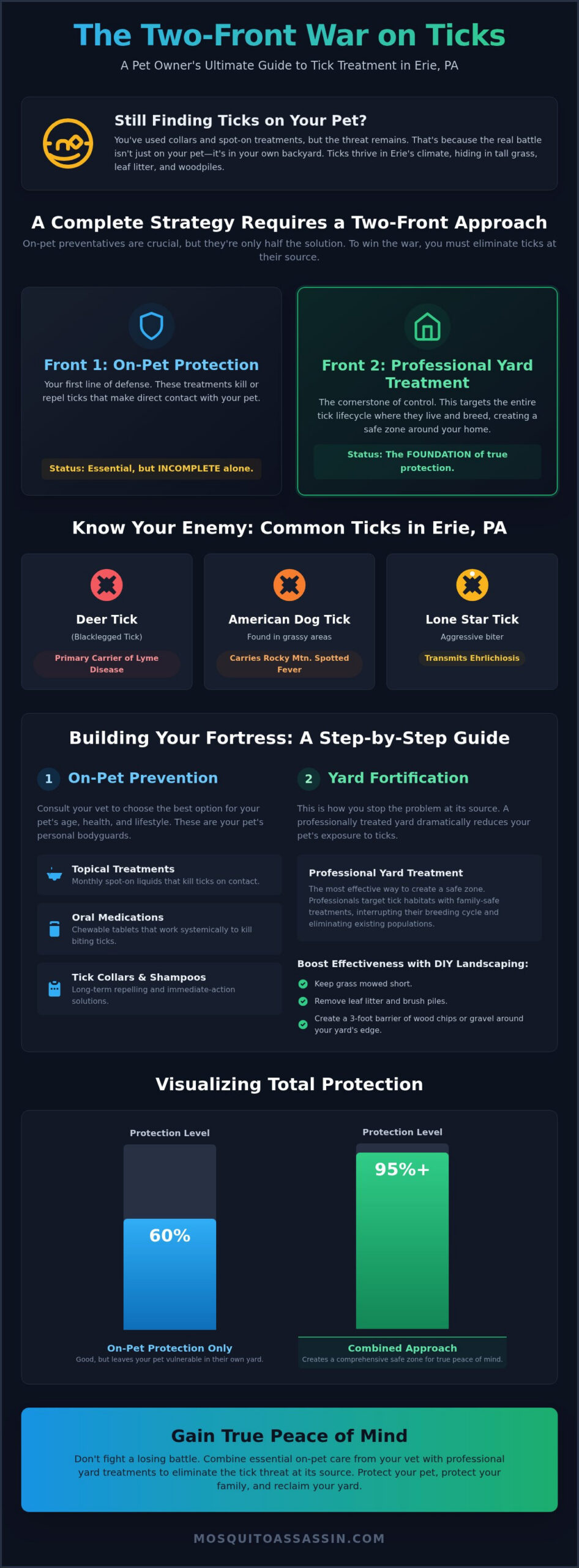
Nearly 28% of the 141,000 ticks submitted to the Pennsylvania Tick Research Lab tested positive for at least one vector-borne disease. In Erie and Crawford Counties, these pests are more than a nuisance; they’re a persistent threat to the safety of your backyard. Securing effective tick treatment Erie PA homeowners can rely on is the first step in reclaiming your outdoor living space from these invasive arachnids.
It’s frustrating to feel like a prisoner on your own patio because of the risk of Lyme disease or other illnesses. Many residents find that DIY foggers and hardware store pellets don’t offer the comprehensive protection required for the dense vegetation and humid climate of the Great Lakes region.
This guide explains how to identify specific local tick risks and implement professional-grade suppression strategies to safeguard your Northwest Pennsylvania property. You’ll learn to move beyond temporary fixes toward a long-term solution for yard protection.
The following sections cover the behavior of common species like the blacklegged tick, environmental modifications that reduce habitat, and the benefits of a methodical, year-round management plan.
Key Takeaways
- Understand how the humid climate of the Lake Erie region and shifting seasonal patterns contribute to increased tick activity throughout Northwest Pennsylvania.
- Identify the specific behaviors of the Black-legged tick and American Dog tick, which are the most prevalent species found in Erie and Crawford Counties.
- Discover why professional tick treatment Erie PA residents utilize provides deeper penetration into thick vegetation compared to standard consumer-grade sprays.
- Learn practical landscaping modifications, such as removing leaf litter and maintaining manicured lawn edges, to eliminate tick hiding spots on your property.
- Explore the benefits of Integrated Pest Management (IPM), which focuses on long-term suppression through professional inspections and identifying specific risk zones.
Tick Activity Trends in Northwest Pennsylvania and Erie
Ticks are becoming a year-round concern in Northwest Pennsylvania. Shifting weather patterns in 2026 have led to an early start to the season, with activity spiking as soon as temperatures consistently remain above freezing. The Lake Erie region’s high humidity levels provide a perfect incubator for survival and reproduction. For a comprehensive overview of ticks, it’s helpful to look at how their life cycle depends on these environmental factors. Securing professional tick treatment Erie PA homeowners can rely on is often the most effective way to address these rising populations before they establish a foothold in residential yards.
To better understand the local impact of these pests, watch this helpful video regarding regional prevention efforts:
Regional Risk Factors in Erie County
Property owners in Erie County face specific geographic challenges. Properties bordering wooded areas or featuring tall ornamental grasses are especially vulnerable to infestation. Local wildlife, particularly white-tailed deer and small rodents, serve as primary hosts. These animals transport ticks from the woods directly into suburban landscapes. As residential development expands into rural areas of Crawford County and Ashtabula County, the boundary between nature and the backyard blurs. This suburban expansion has brought tick populations closer to children and pets than in previous decades. Professional pest control may help reduce the risk of these encounters by creating a managed barrier around the home.
Seasonal Peaks for Tick Encounters
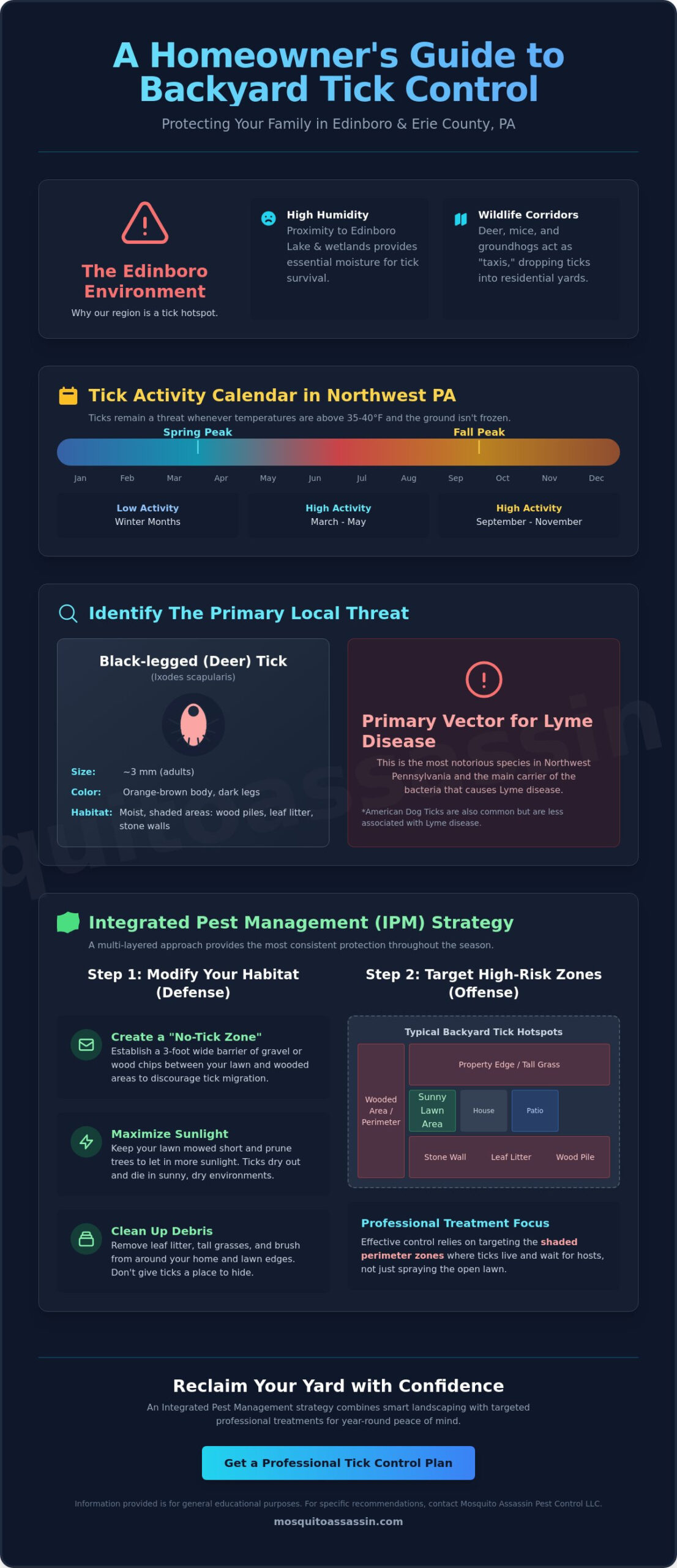
Timing is critical for effective suppression. Spring and fall represent the highest activity periods for adult ticks in Northwest Pennsylvania. However, the summer months of June and July are when nymphal ticks are most active. These nymphs are extremely small and difficult to detect. Because Pennsylvania reported nearly 19,000 Lyme disease cases in 2025, being proactive during these peak windows is a priority for many families. Professional monitoring ensures that suppression strategies align with these specific biological cycles. This approach targets ticks when they are most likely to be searching for a host, providing a higher level of protection than reactive, one-time sprays.
Common Tick Species Found in Erie and Crawford Counties
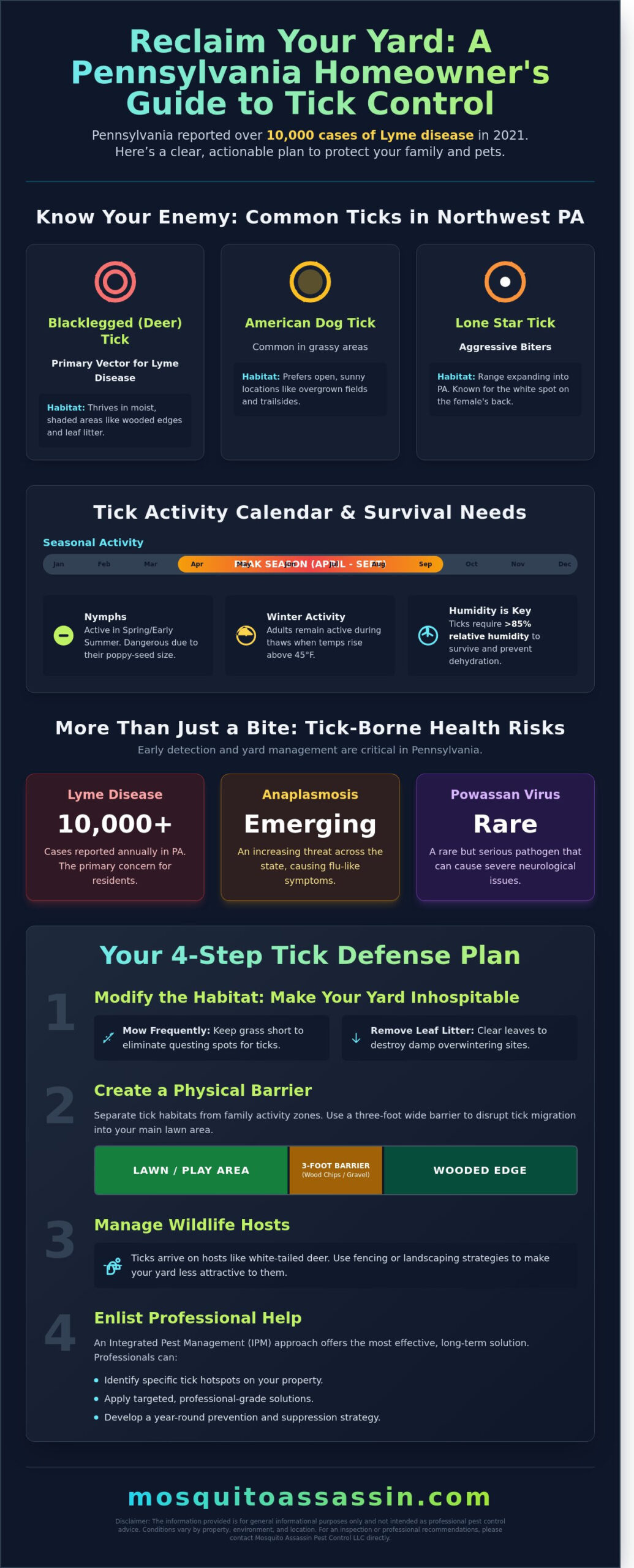
Identifying the specific pests on your property is the foundation of a successful suppression plan. Different species behave differently, and understanding these nuances allows for a more targeted approach. For instance, the blacklegged tick remains the most prevalent threat across Pennsylvania, while the American dog tick is frequently encountered in the more open landscapes of Crawford County. According to the Penn State Extension resource on Common Ticks in Pennsylvania, these species account for the majority of local encounters. Recently, health officials have also noted the expansion of the lone star tick into the region, particularly along the border of Ashtabula County. Because each species has unique environmental preferences, a professional inspection is essential to determine the best strategy for tick treatment Erie PA homeowners should implement.
The Black-legged Tick Lifecycle
The blacklegged tick, often called the deer tick, follows a complex two-year lifecycle. It progresses through four distinct stages: egg, larva, nymph, and adult. This species is remarkably resilient; it doesn’t disappear during the first frost. Instead, adults remain active whenever the ground isn’t frozen and temperatures stay above freezing. This persistence is a major reason why property owners often find ticks on their pets even in November or December. Because the nymphal stage is active during summer and is roughly the size of a poppy seed, detection is incredibly difficult without professional oversight. Understanding this multi-year cycle is vital for long-term suppression, as it ensures treatments target multiple generations of the population simultaneously.
American Dog Ticks and Grassy Habitats
Unlike the deer tick, which thrives in the damp leaf litter of wooded edges, the American dog tick prefers open, sunny areas. You’ll often find them along paths, walkways, and in tall grasses with minimal tree cover. They are significantly larger than deer ticks, making them easier to spot on light-colored clothing after a walk. When managing a yard, professional strategies focus heavily on transition zones. These are the areas where a manicured lawn meets taller brush or meadows. By targeting these perimeters, it’s possible to intercept ticks before they migrate toward high-traffic areas like patios or swing sets. Understanding these habitat preferences helps in creating a more secure environment for your family. For those concerned about specific risk zones on their property, checking local service availability can provide a starting point for professional management.
Effective tick treatment Erie PA residents rely on must account for the fact that these species often overlap. A property might have deer ticks in the wooded backyard and dog ticks in the front meadow. A comprehensive plan addresses both environments to ensure the entire property is protected throughout the changing seasons.
Comparing Professional Tick Treatment with DIY Yard Methods
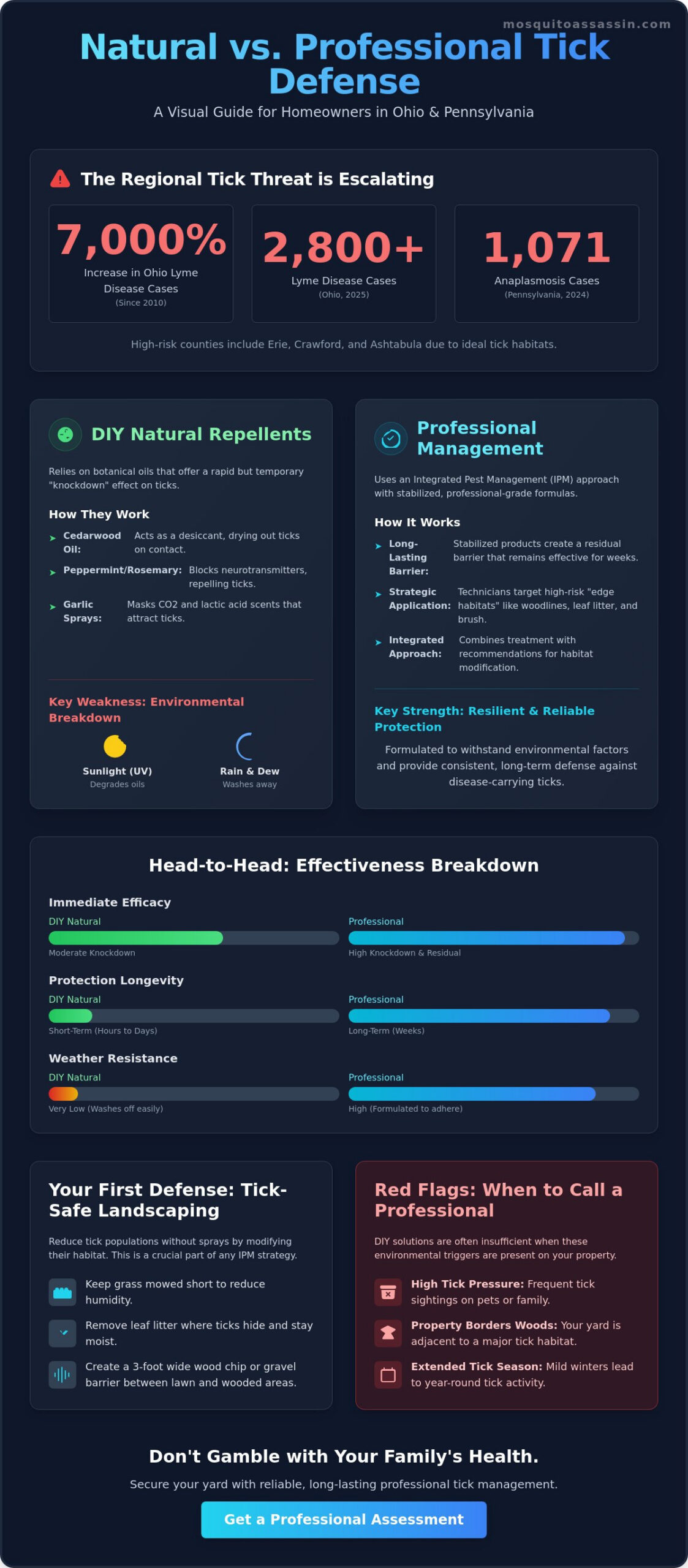
Many property owners in Northwest Pennsylvania attempt to manage pests using store-bought canisters or garden hose attachments. While these solutions might offer temporary relief, professional tick treatment Erie PA residents utilize involves a more systematic approach to yard safety. Data from Pennsylvania’s tick surveillance program highlights the high density of infected ticks across the state, making the choice between DIY and professional methods a matter of significant concern for families and pet owners. Understanding the difference in chemistry and application technique is the first step in establishing a truly secure outdoor environment.
Efficacy of Commercial Grade Suppression
Consumer-grade sprays often break down quickly when exposed to sunlight or the heavy rainfall common in the Lake Erie region. Professionals utilize specialized formulations designed for long-term residual activity. These products remain effective for several weeks, creating a reliable barrier that doesn’t wash away after a single storm. Treatment timing is also a critical factor that DIY methods often ignore. Professional applications are calculated based on the specific biology of local ticks and current weather patterns in Erie and Crawford Counties. Breaking the breeding cycle requires consistent, well-timed interventions that a standard hardware store schedule can’t replicate.
Benefits of Professional Equipment
The primary limitation of DIY methods is the inability to reach where ticks actually hide. Standard garden sprayers produce large droplets that sit on the surface of grass blades. In contrast, professional high-pressure misting equipment creates a fine vapor that penetrates deep into thick vegetation and the underside of leaves. This is where ticks wait for hosts. Thorough contact with leaf litter is essential, as this humid layer is the primary habitat for nymphal ticks. Licensed technicians are trained to identify these specific micro-habitats, ensuring that the application is targeted. This precision reduces the impact on non-target areas of the property while maximizing the defensive perimeter around high-use zones like patios and play sets.
Professional management includes regular inspections to identify hidden breeding grounds that a homeowner might overlook. By identifying areas of standing water, dense brush, or rodent activity, technicians can address the root causes of an infestation. This proactive oversight provides a level of security that temporary, one-size-fits-all DIY sprays simply can’t match. Relying on professional-grade tools and training ensures that the suppression strategy is as thorough as it is effective.

Creating a Tick-Resistant Landscape for Your Erie Property
Environmental modification is a powerful tool in the fight against ticks. While barrier sprays are essential, changing the physical layout of a property makes it less attractive to these pests in the first place. In Northwest Pennsylvania, where humidity from the lake keeps vegetation damp, a few specific landscaping adjustments can significantly lower the local population. These efforts are most effective when integrated with a professional tick treatment Erie PA homeowners use to maintain a secure perimeter.
Vegetation Management Strategies
A manicured lawn is the first line of defense. Ticks are highly sensitive to desiccation, meaning they dry out and die in sunny, low-humidity environments. Keeping grass mowed to a height of three inches or less exposes the soil to more sunlight and airflow. Pruning low-hanging tree branches and thinning out dense shrubbery further increases solar penetration, making the yard less hospitable. It’s also vital to clear tall weeds and brush from the edges of the property. These overgrown areas serve as staging grounds where ticks wait to quest for a host. By pushing back the “wild” parts of the yard, property owners create a larger safety zone for their families.
Physical Barriers and Host Management
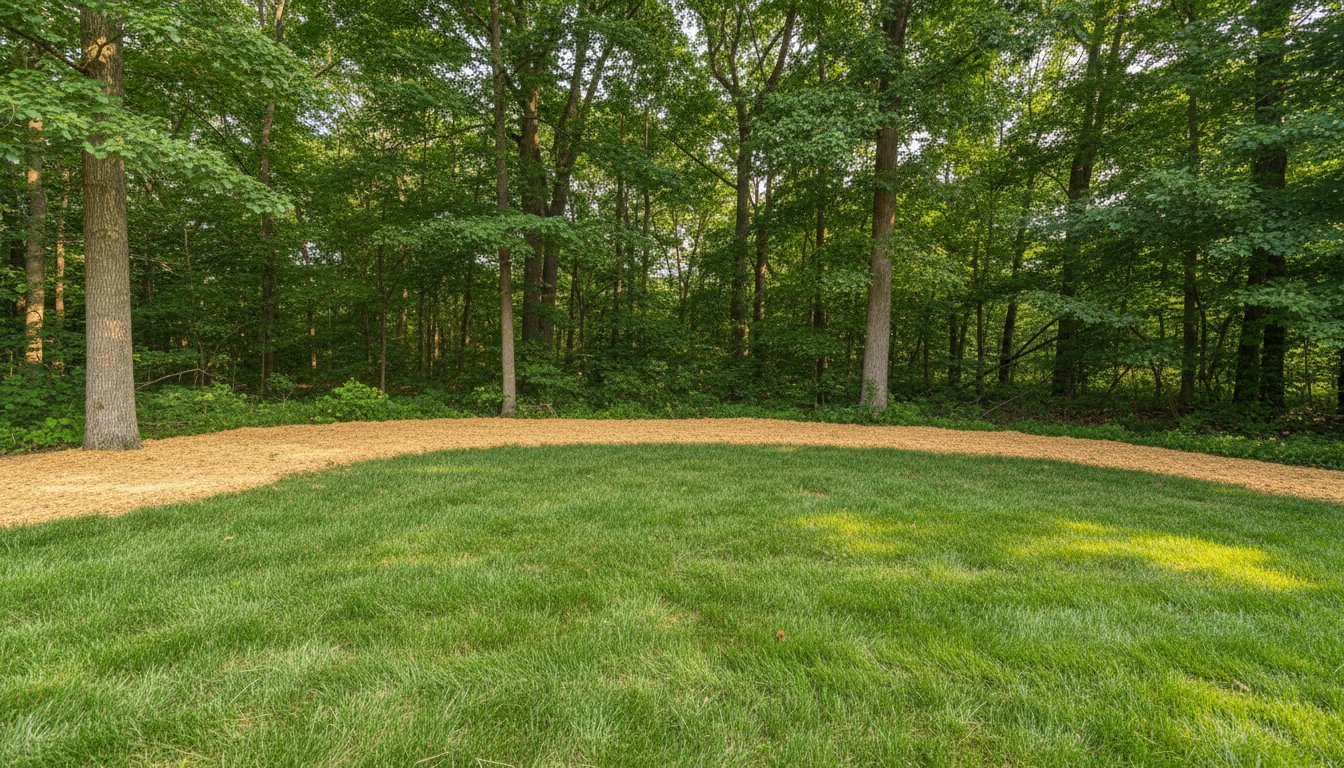
Creating a physical boundary between wooded areas and the lawn is a proven strategy. A three-foot-wide barrier of wood chips or gravel serves as a dry, hot “no-man’s-land” that ticks are reluctant to cross. This buffer also reminds residents where the managed lawn ends and the higher-risk areas begin. Placement of outdoor living features is equally important. Keep playground equipment, patios, and decks away from yard edges and overhanging trees to minimize contact with questing ticks.
Managing the animals that carry ticks is another essential component. White-tailed deer are the primary transporters of adult deer ticks in Erie and Crawford Counties. Installing fencing or using deer-resistant plants can help exclude these hosts from the property. Additionally, woodpiles should be stacked neatly in dry, sunny locations away from the house. Messy woodpiles are a favorite nesting site for rodents, which are the primary hosts for larval and nymphal ticks. By removing rodent habitats, the local tick population often drops naturally. To begin securing your yard, professional pest control may help reduce risk by addressing these environmental factors alongside targeted suppression.
Integrated Pest Management for Seasonal Tick Suppression
Integrated Pest Management (IPM) is a comprehensive approach that prioritizes long-term prevention and suppression over reactive measures. In the context of tick treatment Erie PA, this means understanding the local environment and using a combination of biological, physical, and chemical tools to manage populations effectively. Rather than relying on a single application, IPM focuses on ongoing monitoring and environmental adjustments to keep properties secure throughout the year. It’s a methodical system that doesn’t just look at the current population but addresses the root causes of infestations.
The Professional Inspection Process
A thorough inspection is the cornerstone of any IPM strategy. Licensed technicians evaluate a property for specific risk factors, such as excessive moisture, deep shade, and evidence of host activity from deer or rodents. Because every yard in Northwest Pennsylvania has a unique geography, a one-size-fits-all approach is rarely effective. These inspections allow for the development of customized plans that target the specific micro-habitats where ticks thrive. For those looking to start this process, exploring local pest control services can provide insights into how regional expertise applies to your neighborhood’s unique terrain.
Long-term Suppression Strategies
Consistency is the key to maintaining a protective barrier. Ticks are persistent, and their lifecycle spans multiple years, requiring a sustained effort to break the breeding cycle. Regular treatments throughout the peak activity months ensure that new generations are addressed before they can establish a presence. Coordinating these efforts with a comprehensive mosquito control program often maximizes the enjoyment of outdoor spaces. Many of the humid, shaded areas that harbor ticks also serve as breeding grounds for mosquitoes, so addressing both simultaneously is a practical strategy for local homeowners.
By utilizing a consistent schedule for tick treatment Erie PA families can rest easier knowing their property is being monitored by experts who understand the local ecosystem. While professional pest control may help reduce risk, property owners should remain vigilant by performing regular tick checks on pets and family members after outdoor activities. Combining professional-grade suppression with the landscaping modifications mentioned earlier creates a multi-layered defense system. This integrated approach offers the most reliable way to assess risk and maintain a yard that is both beautiful and secure for everyone in the household. Contacting a professional for an inspection is the most effective way to evaluate your property’s specific needs and develop a sustainable management plan.
Disclaimer: The information provided on this blog is for general informational purposes only and is not intended as professional pest control advice. Conditions vary by property, environment, and location. Reading this content does not create a service agreement. For an inspection or professional recommendations, please contact Mosquito Assassin Pest Control LLC directly.
Securing Your Outdoor Space for the Seasons Ahead
Maintaining a tick-free yard requires a disciplined combination of environmental management and professional-grade suppression. By reducing moisture through landscaping and creating physical barriers, property owners can significantly disrupt the habitats where local ticks thrive. Because the humid climate and specific pest cycles of Northwest Pennsylvania present unique challenges, professional tick treatment Erie PA residents rely on is the most effective way to establish a long-term defense.
As a family-owned business rooted in Erie, Crawford, and Ashtabula counties, Mosquito Assassin Pest Control LLC understands these regional risks. Licensed in Pennsylvania and Ohio, the team focuses on methodical inspections that identify specific vulnerability zones. Implementing a proactive management plan ensures that your family can enjoy the backyard without constant anxiety. To learn more about assessing your property, professional pest control may help reduce risk. Reclaiming your outdoor space provides the peace of mind every homeowner deserves.
Disclaimer: The information provided on this blog is for general informational purposes only and is not intended as professional pest control advice. Conditions vary by property, environment, and location. Reading this content does not create a service agreement. For an inspection or professional recommendations, please contact Mosquito Assassin Pest Control LLC directly.
Frequently Asked Questions
How often should a yard be treated for ticks in Erie, PA?
Most properties require treatment every 30 to 60 days during the active season to maintain a consistent barrier. In Northwest Pennsylvania, tick activity persists from early spring through late fall. Consistent application is necessary because commercial-grade products naturally break down over time. Ongoing protection plans, such as bi-monthly services, ensure that the defensive perimeter remains strong against new generations of ticks migrating from nearby wooded areas.
Can professional tick treatments help protect my pets?
Professional treatments significantly reduce the environmental population of ticks, which directly lowers the chance of these pests latching onto pets in the backyard. While yard suppression is a vital layer of defense, it doesn’t replace the need for veterinary-prescribed preventatives. By targeting the humid leaf litter and tall grasses where ticks quest, professional tick treatment Erie PA residents utilize helps create a safer outdoor environment for dogs and cats to play.
What is the best time of year to start tick treatments?
The best time to begin treatments is in early spring, specifically as soon as ground temperatures remain above freezing. In the Lake Erie region, adult blacklegged ticks become active quite early, often in March or April. Starting early targets the first wave of adults and helps suppress the nymphal population that emerges in early summer. Waiting until mid-summer allows populations to establish, making suppression more difficult throughout the remainder of the season.
Do tick treatments also work on mosquitoes?
Many professional applications target the same shaded, damp micro-habitats preferred by both ticks and mosquitoes. While the formulations and specific application techniques may vary, a comprehensive mosquito and tick control program provides overlapping benefits. This dual approach is particularly effective in Erie and Crawford Counties, where high humidity levels support large populations of both pests. Integrated plans allow families to maximize their outdoor enjoyment by addressing multiple seasonal threats simultaneously.
Are professional yard treatments safe for my family?
Licensed technicians are trained to apply products according to strict safety standards and label instructions. Once the applied treatment has completely dried, typically within one to two hours depending on weather conditions, the yard is ready for use by children and pets. Professional management focuses on targeted applications to minimize drift and ensure that products are placed only where pests harbor, such as property perimeters and dense vegetation.
How long does a tick treatment last after application?
A single professional application typically provides residual protection for approximately 30 to 60 days. Factors like heavy rainfall in the Northwest Pennsylvania region or intense sun exposure can influence how quickly products degrade. This is why year-round protection plans are the most effective method for maintaining a secure barrier. Regular intervals ensure that the suppression remains active even as environmental conditions change throughout the spring, summer, and fall months.
Should I treat my yard even if I do not see any ticks?
Ticks are often invisible to the naked eye, especially during the nymphal stage when they are roughly the size of a poppy seed. Pennsylvania reported nearly 19,000 Lyme disease cases in 2025, and many of those encounters occurred in residential yards where owners hadn’t noticed an infestation. Proactive tick treatment Erie PA homeowners implement serves as a preventative measure. It’s much easier to maintain a barrier than to eliminate a large, established population.
Disclaimer: The information provided on this blog is for general informational purposes only and is not intended as professional pest control advice. For an inspection or professional recommendations, please contact Mosquito Assassin Pest Control LLC directly.