
After a five-minute play session in the grass near Edinboro Lake, finding a tick on your dog’s ear can turn a sunny afternoon into a stressful evening. Most homeowners in Erie County value their outdoor time but feel a growing sense of anxiety every time a family member or pet steps off the patio. It’s frustrating to feel like a prisoner in your own yard because of the hidden threat of Lyme disease and other tick-borne illnesses. You want to enjoy the fresh air without the constant worry of checking for hitchhikers after every trip outside.
This guide provides the essential knowledge needed for effective backyard tick control Edinboro PA residents can rely on to reclaim their outdoor spaces. You’ll learn how to identify high-risk habitats, understand the seasonal behavior of local species, and implement landscape modifications that naturally discourage these pests. By understanding the science behind tick behavior and the specific timing required for treatments, you can create a professional-grade protection plan that keeps your family and pets safer throughout the year. Taking these proactive steps ensures that your backyard remains a place for relaxation rather than a source of concern.
Key Takeaways
- Understand how the high humidity and lake influence in Northwest Pennsylvania sustain tick populations from early spring through late autumn.
- Identify the specific behaviors of Black-legged and American Dog ticks to better protect family members and household pets.
- Discover why effective backyard tick control Edinboro PA relies on targeting shaded perimeter zones rather than just maintaining a sunny lawn.
- Learn how to create physical barriers, such as gravel or wood chip borders, to discourage ticks from migrating into active recreation areas.
- Implement a multi-layered integrated pest management strategy to achieve more consistent protection throughout the entire peak season.
Understanding Tick Activity in Edinboro and Erie County
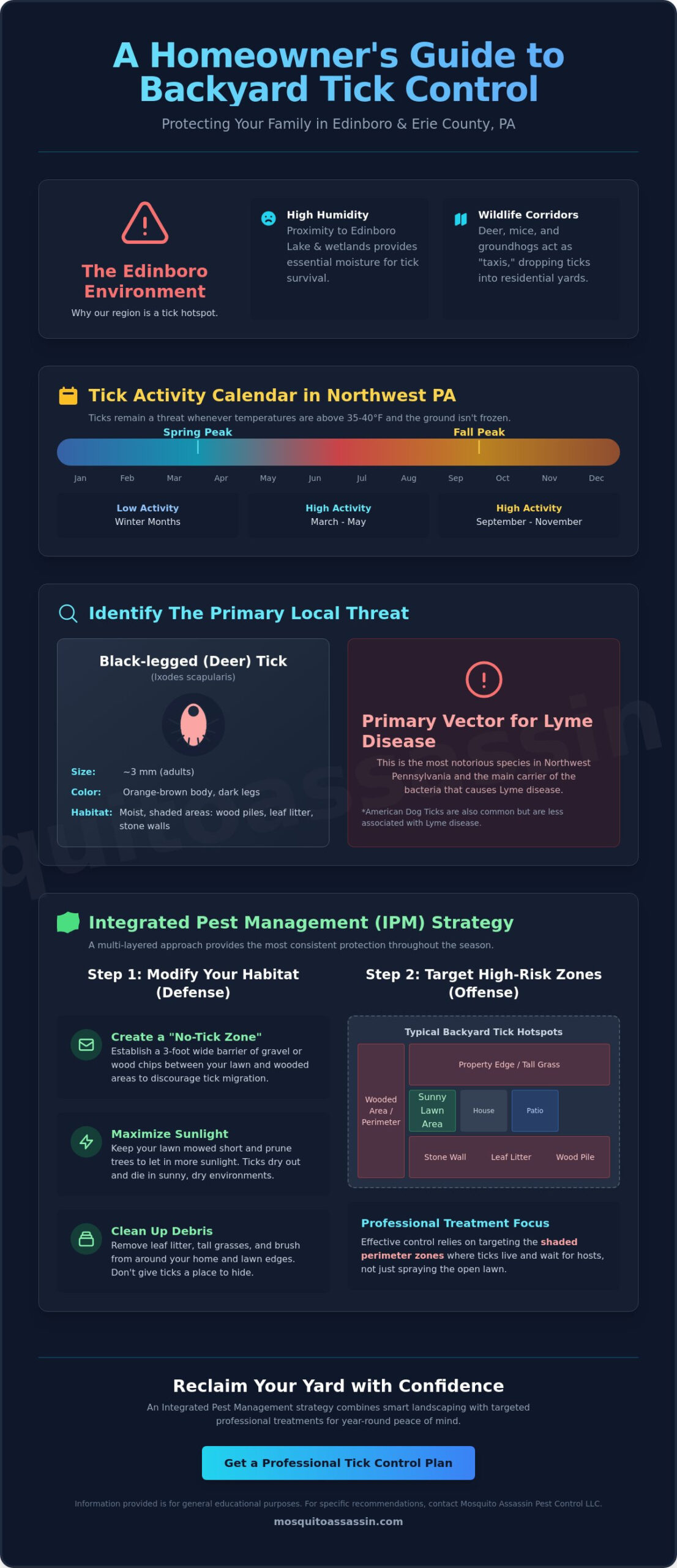
Edinboro’s unique geography creates a prime environment for tick populations to flourish. The proximity to Edinboro Lake and the surrounding wetlands in Erie County ensures high humidity levels, which are essential for tick survival. The active season in Northwest Pennsylvania typically spans from early March through late November, though activity depends heavily on local weather patterns. Effective backyard tick control Edinboro PA starts with a clear grasp of how these pests utilize the local landscape to thrive and reproduce.
To better understand how these pests inhabit residential spaces, watch this helpful video:
Ticks don’t travel long distances on their own; instead, they rely on hitchhiking via local wildlife. In Edinboro, common carriers like white-tailed deer, field mice, and groundhogs frequently cross into residential yards from nearby wooded lots or the lakefront. As these animals move through a property, ticks drop off into tall grass or leaf litter, establishing new populations right where families play. Homeowners should prioritize understanding tick-borne diseases to recognize the risks associated with these unwanted guests, especially as wildlife interactions increase during the warmer months.
Seasonal Peaks for Ticks in Pennsylvania
Ticks in Northwest Pennsylvania follow a predictable lifecycle that dictates when they are most dangerous. The spring surge usually begins in March or April as adult black-legged ticks emerge from winter dormancy to find a host. A second peak occurs in the fall, involving both adults and nymphs. Ticks remain a threat whenever the ground isn’t frozen and temperatures stay above 35 to 40 degrees Fahrenheit. Monitoring property edges before the first outdoor gatherings of the year is a practical step for early detection and prevention.
Environmental Factors in Northwest PA
The local climate in Erie County provides the consistent moisture ticks need to avoid drying out. Thick layers of leaf litter and dense groundcover act as insulation, protecting them from sudden temperature swings. Shaded areas around Edinboro homes are particularly vulnerable because they retain dampness longer than open, sunny lawns. Implementing backyard tick control Edinboro PA often involves managing these specific micro-climates to make the yard less hospitable. For residents looking to identify high-risk zones on their property, learning more about service locations can provide context on regional pest pressure and local trends.
Disclaimer: The information provided on this blog is for general informational purposes only and is not intended as professional pest control advice. Conditions vary by property, environment, and location. Reading this content does not create a service agreement. For an inspection or professional recommendations, please contact Mosquito Assassin Pest Control LLC directly.
Common Tick Species Found in Northwest Pennsylvania Backyards
Identifying the specific pests in your yard is the foundation of effective backyard tick control Edinboro PA. In Erie and Crawford Counties, homeowners typically encounter three main species. Each has unique habits, preferred habitats, and potential risks that require specific attention during the warmer months. Understanding these differences helps residents better manage their outdoor spaces and protect their families.
The Black-legged Tick, also known as the Deer Tick, is the most notorious species in Northwest Pennsylvania. These ticks are small, with adults measuring about 3 millimeters, and are identified by their orange-brown bodies and dark legs. They thrive in moist, shaded areas like wood piles, stone walls, and leaf litter. According to research on Common Pennsylvania Ticks, this species is the primary vector for Lyme disease in the region. Because they can remain active as long as temperatures are above freezing, protection is often a year-round concern for local property owners.
The American Dog Tick is larger and more robust, often found in open, sunlit grassy areas rather than deep woods. These ticks have distinct silver or white markings on their backs. They are frequently brought into homes by pets after walks in tall grass or fields. While they don’t carry Lyme disease, they are known to transmit other pathogens. Another emerging threat is the Lone Star Tick. Once rare in Pennsylvania, its range has expanded northward over the last decade. Females are easily identified by a single white spot on their back. They are aggressive biters and stay active throughout the peak summer heat.
Tick Identification Basics for Homeowners
Ticks change significantly in size during their life cycle. The cycle begins with eggs, which hatch into six-legged larvae. These progress into eight-legged nymphs before reaching adulthood. Nymphal ticks are particularly dangerous because they’re roughly the size of a poppy seed. Their tiny size makes them nearly impossible to see on skin or clothing without a thorough inspection. While adult ticks are active in the fall and spring, nymphs are most active during the late spring and early summer. This timeframe coincides with peak outdoor activity for families in Edinboro, making detection difficult but necessary.
Risks Associated with Local Ticks
The presence of these species in residential backyards increases the potential for exposure to various tick-borne pathogens. Northwest Pennsylvania has seen a steady presence of these pests in both rural and suburban properties. Performing a daily tick check on children and pets is a necessary habit after spending time outdoors. Focusing on areas behind the ears, under arms, and around the waist helps catch ticks before they have a chance to attach. Professional pest control may help reduce risk by managing the environments where these species thrive. Consistent yard maintenance, such as clearing brush and keeping grass short, further discourages tick populations from establishing themselves near the home.
Disclaimer: The information provided on this blog is for general informational purposes only and is not intended as professional pest control advice. Conditions vary by property, environment, and location. Reading this content does not create a service agreement. For an inspection or professional recommendations, please contact Mosquito Assassin Pest Control LLC directly.
Evaluating Professional Tick Management Strategies for Local Properties
Standard mowing and lawn maintenance provide a manicured look, but they rarely address the root of a tick problem. Ticks are highly sensitive to desiccation, which means they dry out and die in the direct heat of a sunny, open lawn. Instead, these arachnids congregate in the humid, shaded microclimates found at the edges of Edinboro properties. Relying solely on short grass for backyard tick control Edinboro PA ignores the high-risk zones where approximately 82% of nymphs are typically found: the leaf litter and brush at the property’s edge.
Professional strategies utilize Integrated Pest Management (IPM), a science-based approach that combines biological, cultural, and targeted chemical tools. This method relies on data from initiatives like the PA Tick Surveillance Program to understand local population densities and species distribution. By focusing on the biology of the tick, professionals can reduce populations without blanket-spraying an entire property. It’s a method that prioritizes efficiency and environmental responsibility over high-volume chemical use.
Targeted Treatment Areas
Effective management focuses on the “transition zone,” the specific area where a manicured lawn meets woods, tall weeds, or decorative groundcovers. Ticks often wait in these spots, a behavior called questing, to latch onto passing hosts. Professional barrier treatments prioritize these perimeters to stop tick migration from neighboring wooded lots. Technicians also focus on specific harborages that DIY efforts often miss:
- Shaded areas beneath decks and porches where pets often rest.
- Perimeters of sheds and outbuildings that provide cover for rodents.
- Dense vegetation along fence lines and stone walls.
Professional Standards and Safety
Hiring licensed professionals ensures that applications comply with specific regulations in Pennsylvania and Ohio. These experts are trained to identify non-target insects, such as bees and butterflies, and apply treatments in a way that minimizes environmental impact. You can explore comprehensive pest services to see how professional standards differ from standard residential gardening. Licensed technicians understand the local climate of Erie and Crawford Counties, ensuring treatments are applied during optimal weather windows for maximum efficacy.
One-time applications often fail because they don’t account for the complex tick life cycle. Ticks can live for two to three years; consistent protection throughout the spring, summer, and fall is necessary to interrupt their breeding patterns. Maintaining a defensive barrier ensures that as new ticks emerge or are dropped into the yard by wildlife, the treatment remains active. Professional pest control may help reduce risk by providing this ongoing layer of security that a single application cannot match.
Disclaimer: The information provided on this blog is for general informational purposes only and is not intended as professional pest control advice. Conditions vary by property, environment, and location. Reading this content does not create a service agreement. For an inspection or professional recommendations, please contact Mosquito Assassin Pest Control LLC directly.
Practical Habitat Modification to Reduce Tick Populations
Landscape management is the foundation of effective backyard tick control Edinboro PA. Ticks are highly sensitive to moisture loss; they require environments with high humidity to survive and thrive. By altering the landscape to increase sunlight and reduce dampness, homeowners can naturally lower the number of ticks residing on their property. This strategy focuses on making the environment inhospitable for these pests before they ever have a chance to reach your family or pets.
One of the most effective strategies involves creating a physical barrier between wooded areas and the lawn. A border of wood chips or gravel, at least 3 feet wide, serves two critical purposes. It acts as a visual reminder for family members to stay within the maintained lawn area. More importantly, it creates a dry, hot surface that ticks are unlikely to cross because they risk desiccation. Ticks don’t fly or jump; they rely on hitching a ride on a host. A wide, dry barrier makes that transition much more difficult.
Managing tick hosts is equally important for long term protection. In Erie and Crawford Counties, white-tailed deer and white-footed mice are the primary transporters of ticks into residential yards. To discourage these animals, homeowners should remove bird feeders that attract rodents and use deer-resistant plantings. Stacking firewood in a dry, sunny location away from the house also removes preferred nesting sites for mice, which are often the primary source of Lyme disease infection in tick larvae.
A Checklist for Tick-Resistant Landscaping
- Keep grass mowed short, ideally under 3 inches, as ticks prefer the moisture of tall grass.
- Prune low-hanging tree branches and thin out dense shrubs to allow more sunlight to reach the ground.
- Remove leaf litter, brush, and weeds from the perimeter of the home and the edges of the lawn.
- Store firewood neatly in a dry, sunny area to discourage rodent nesting near high-traffic zones.
Protecting High-Traffic Areas
Focusing your efforts on where your family spends the most time is essential. Move swing sets, sandboxes, and patio furniture away from the woods or tall grass. Placing play equipment on a base of mulch or gravel creates a dry zone that is less attractive to questing ticks. Understanding how our mosquito control program works can also provide insight into how integrated pest management strategies address multiple pests simultaneously. Consistent maintenance of these zones significantly reduces the likelihood of accidental encounters.
While these manual steps are vital, they are often most effective when combined with professional expertise. If you find that habitat modification alone isn’t providing the level of protection you need, professional pest control may help reduce risk on your property.
Long-Term Protection through Integrated Pest Management
Achieving effective backyard tick control Edinboro PA requires more than a reactive mindset. A single application might knock down the current population, but it rarely addresses the ongoing biological cycles of local tick species. Black-legged ticks, for example, have a life cycle that spans two to three years. This means that eggs, larvae, and nymphs may be present in the environment even if adult activity seems low. Relying on one-off treatments leaves gaps that allow these emerging generations to re-establish themselves in your lawn.
Integrated Pest Management (IPM) is the most effective strategy for residential properties in Erie County. This professional approach pairs targeted barrier treatments with physical habitat modification. Homeowners can significantly reduce tick pressure by implementing simple landscape changes, such as:
- Creating Buffer Zones: Installing a three-foot wide barrier of wood chips or gravel between the lawn and wooded edges can physically impede tick migration into play areas.
- Managing Vegetation: Keeping grass mowed to a short height and removing leaf litter eliminates the humid, shaded environments ticks need to survive.
- Strategic Woodpile Placement: Stacking firewood in sunny locations away from the house reduces nesting sites for the rodents that often carry ticks onto the property.
Professional pest control serves as a critical layer of defense within this framework. Year-round monitoring is vital because tick populations fluctuate based on weather patterns and wildlife movements. If local deer or rodent populations increase, the risk to the property rises. Regular professional evaluations help catch these surges early, ensuring that protection remains consistent throughout the year.
Developing a Seasonal Plan
Timing is the most important factor in a successful protection plan. In Pennsylvania, adult ticks often emerge as soon as temperatures consistently stay above 45 degrees Fahrenheit. Starting treatments in early spring targets these adults before they can lay thousands of eggs. Maintaining this coverage through the peak summer months is equally important, as this is when nymphal ticks are most active and backyard use is at its highest. Understanding the importance of general pest control can provide a broader perspective on how managing various backyard pests contributes to a safer outdoor environment for families.
Next Steps for Edinboro Homeowners
Homeowners should begin by conducting a thorough inspection of their property perimeter. Look for high-pressure zones where tall grass meets manicured lawn or where shaded areas provide constant moisture. Identifying these specific spots allows for more precise treatment applications. Consulting with a licensed professional is the best way to develop a comprehensive map of these risk areas. Professional pest control may help reduce risk on residential properties by providing expert insights that a standard DIY approach might miss. For those ready to begin a systematic protection strategy, you can contact Mosquito Assassin Pest Control LLC for an inspection.
Protecting Your Edinboro Property for the Seasons Ahead
Maintaining a safer outdoor space requires a consistent strategy that addresses the specific environmental factors of Northwest Pennsylvania. By identifying common species like the black-legged tick and modifying habitats to remove leaf litter and tall grass, homeowners can significantly disrupt the tick life cycle. Effective backyard tick control Edinboro PA relies on an Integrated Pest Management approach; it’s a strategy that focuses on long-term results rather than short-term fixes. Because the company is locally owned and operated in Northwest Pennsylvania, the licensed and insured professionals understand the specific needs of properties throughout Erie, Crawford, and Ashtabula counties.
Professional guidance provides a comprehensive assessment of property risks and helps implement a customized management plan. For those seeking a detailed evaluation, you can request a professional inspection from Mosquito Assassin Pest Control LLC to help reduce the presence of ticks on your property. Taking these proactive steps allows you to enjoy your outdoor living areas with greater peace of mind throughout the year.
Disclaimer: The information provided on this blog is for general informational purposes only and is not intended as professional pest control advice. Conditions vary by property, environment, and location. Reading this content does not create a service agreement. For an inspection or professional recommendations, please contact Mosquito Assassin Pest Control LLC directly.
Frequently Asked Questions
Is backyard tick control safe for my children and pets?
Professional tick control utilizes products that are registered with the Environmental Protection Agency (EPA) and applied according to strict label instructions. Technicians focus applications on tick habitats like tall grass and woodpiles rather than open areas where children play. Once the treatment has fully dried, which usually takes 30 to 60 minutes, the yard is ready for families and pets to enjoy again.
How often should a backyard be treated for ticks in Edinboro, PA?
A standard schedule for backyard tick control Edinboro PA typically involves professional applications every 21 to 30 days during the peak season. In Northwest Pennsylvania, ticks remain active from early spring through the first hard frost. Consistent treatment intervals are necessary to maintain a protective barrier against new ticks that wildlife might carry onto the property throughout the year.
Can I get rid of ticks in my yard myself?
Homeowners can reduce tick populations by maintaining a 3 foot wide barrier of wood chips between lawns and wooded areas. While DIY methods help, consumer grade products often lack the residual strength of professional formulations. Licensed professionals use specialized equipment to reach the undersides of leaves and dense brush where ticks hide, providing more thorough coverage than standard hand held sprayers.
What is the best time of year to start tick control in Erie County?
Tick activity in Erie County starts as soon as ground temperatures consistently reach 45 degrees Fahrenheit, which often happens in late March. Starting treatments in early spring targets adult ticks before they can lay thousands of eggs. This proactive timing helps suppress the overall population before the nymph stage emerges during the warmer summer months when outdoor activity increases.
Does professional tick spraying actually work in wooded yards?
Professional treatments are effective in wooded yards because they target the transition zones where forest meets the lawn. Data from the Connecticut Agricultural Experiment Station shows that 82% of ticks on residential properties are found within 3 feet of the lawn edge. By treating these specific perimeter areas, professionals create a defensive zone that significantly reduces the number of ticks entering active recreation spaces.
Will a tick treatment also help with mosquitoes?
Many products used for backyard tick control Edinboro PA are also effective against mosquitoes because both pests utilize similar shaded resting spots. While the application methods differ slightly, treating the dense foliage and damp areas of a property often provides a dual benefit. This integrated approach manages multiple biting pests at once, making the outdoor environment more comfortable for residents during the summer.
How long do I need to stay off the grass after a professional treatment?
Residents should stay off treated surfaces until the product is completely dry, which typically takes about one hour. Factors like sunlight and wind speed can change this timeframe, so it’s important to wait for a clear visual check. Professional technicians provide specific instructions after each visit to ensure homeowners know exactly when it is appropriate to resume normal activities in the yard.
Do ticks in Edinboro carry Lyme disease?
Ticks in Edinboro and the surrounding Erie County area are known carriers of the bacteria that cause Lyme disease. The Pennsylvania Department of Health reports that the state has frequently recorded the highest number of Lyme disease cases in the country over the last 10 years. Because black-legged ticks are the primary vectors, professional pest control may help reduce risk by managing the local population.
For more information or to schedule an inspection, please visit our online booking portal or contact us at www.mosquitoassassin.com/contact-us.
Disclaimer: The information provided on this blog is for general informational purposes only and is not intended as professional pest control advice. Conditions vary by property, environment, and location. Reading this content does not create a service agreement. For an inspection or professional recommendations, please contact Mosquito Assassin Pest Control LLC directly.