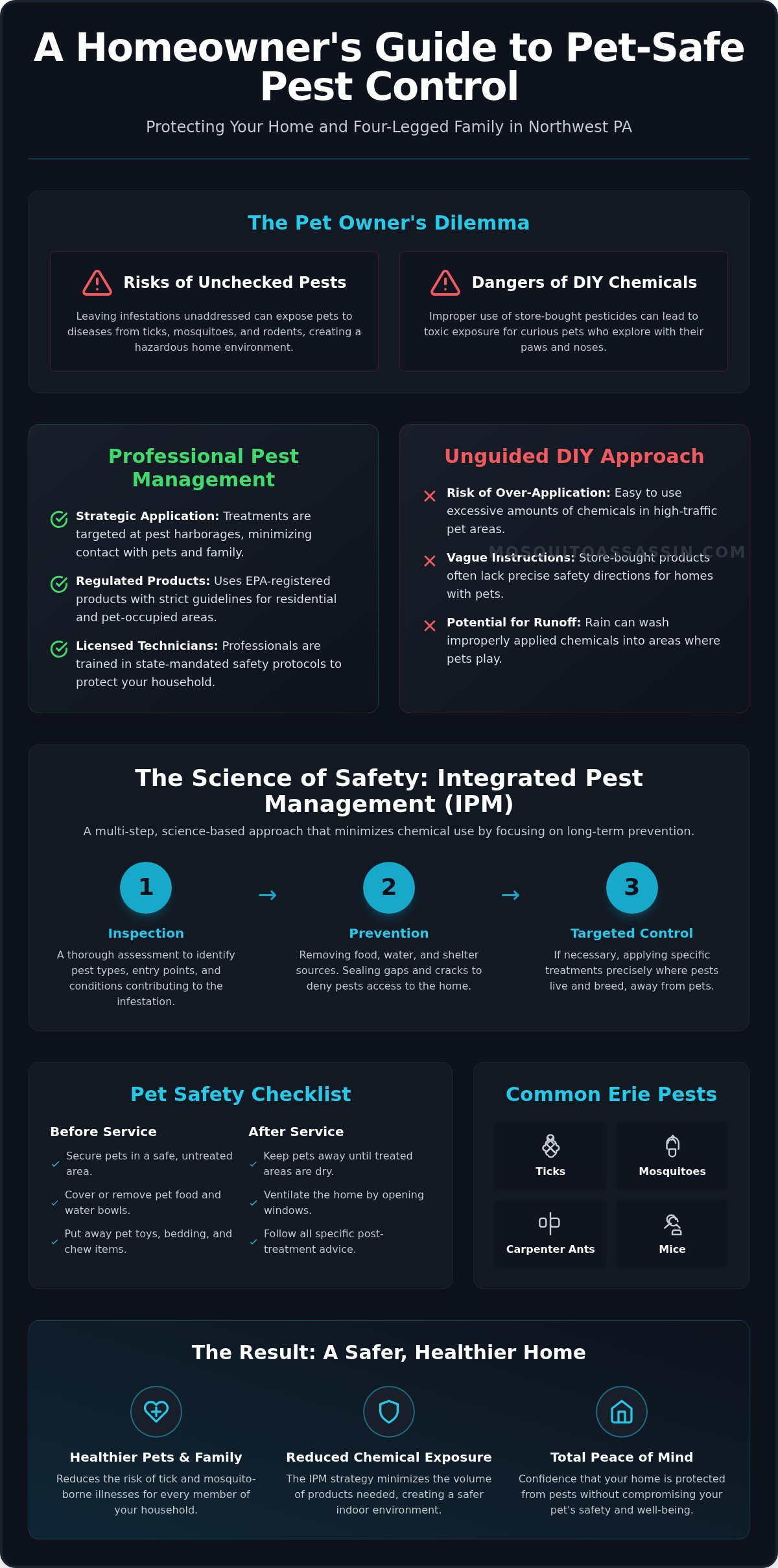
Tag: Pet Safety

  • Natural Tick Repellent for Yard vs Professional: A 2026 Comparison Guide

    Natural Tick Repellent for Yard vs Professional: A 2026 Comparison Guide

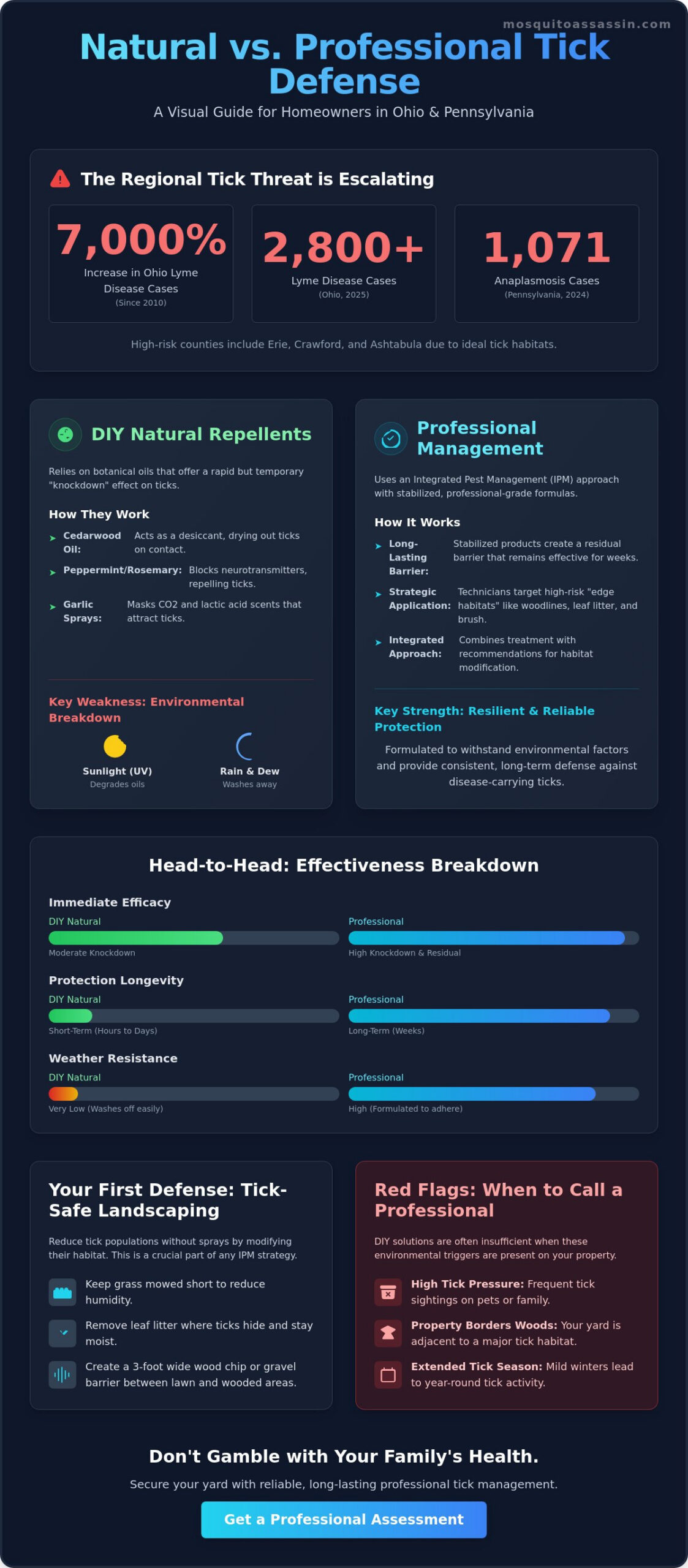
    In 2025, Ohio health officials recorded over 2,800 cases of Lyme disease, marking a staggering 7,000% increase since 2010. With tick populations reaching record highs across Erie, Crawford, and Ashtabula Counties, families are increasingly weighing the benefits of natural tick repellent for yard vs professional management strategies. Most homeowners prioritize the safety of their children and pets, yet they often face the frustration of DIY sprays that lose effectiveness after a single heavy rain or morning dew.

    It’s natural to feel uncertain about which methods truly safeguard an outdoor space from rising threats like Anaplasmosis, which saw 1,071 cases in Pennsylvania in 2024. This guide provides a direct comparison of the effectiveness, longevity, and practical application of essential oil based DIY repellents against professional integrated pest management. You’ll discover which natural ingredients carry scientific backing, how environmental factors impact the duration of protection, and exactly when a property requires the intervention of a licensed professional to maintain a tick-free environment.

    Key Takeaways

    • Understand the rising risk of Black-legged ticks in Northwest Pennsylvania and Northeast Ohio and how specific yard features create ideal habitats.
    • Learn how essential oils like cedarwood oil function as desiccants to disrupt tick biology and why their efficacy is often temporary.
    • Evaluate the differences in concentration and application methods when comparing natural tick repellent for yard vs professional integrated pest management.
    • Discover how cultural controls, such as creating Tick-Safe Zones through landscaping, can reduce tick populations without the use of sprays.
    • Identify the specific environmental triggers that indicate when high tick pressure on a property requires more than just DIY natural solutions.

    Tick Risks and Habitat in Pennsylvania and Ohio (2026)

    Creating a tick-safe yard in the Great Lakes region requires a strategic effort to minimize the survival conditions for the Ixodes scapularis, commonly known as the Black-legged tick. In Northwest Pennsylvania and Northeast Ohio, these pests thrive in high-humidity environments provided by dense leaf litter and tall grasses. While many homeowners research a natural tick repellent for yard vs professional treatment plans, the first step is always understanding the habitat. Ticks don’t usually live in the middle of a sunny, well-manicured lawn. Instead, they congregate in the edge habitat where the yard meets wooded areas or ornamental brush.

    Climate factors in Erie and Ashtabula counties have contributed to particularly high tick activity in 2026. The combination of moist lake-effect air and abundant host animals, such as white-tailed deer, creates a perfect storm for infestation. Because ticks are prone to desiccation (drying out), they stay low to the ground in shaded, damp zones. This makes the perimeter of a property the primary danger zone for children and pets who may wander near the woodline during play.

    To better understand the biological vulnerability of these pests, watch this helpful video:

    Common Tick-Borne Illnesses in the Great Lakes Region

    Residents in Crawford and Erie counties face significant health risks from local populations. Pennsylvania reported 16,624 confirmed Lyme disease cases in 2024, and preliminary data suggests that numbers are trending higher in 2026. Beyond Lyme, Tick-borne diseases like Anaplasmosis and Babesiosis are increasing across the Northeast. Cases of Anaplasmosis in Pennsylvania have nearly doubled each year for the past five years, reaching 1,071 cases in 2024. Professional pest control may help reduce risk by establishing a barrier that prevents these disease-carrying arachnids from establishing a foothold near a home.

    When is Tick Season in PA and OH?

    Local tick activity follows a predictable but expanding cycle. Two primary peaks occur: the spring, when tiny nymphs are most active, and the fall, when adult ticks seek a final host before winter. However, the mild winters of 2025 and 2026 have shifted these windows. Ticks can remain active any time temperatures stay above freezing. This extended season is a major factor when choosing between a natural tick repellent for yard vs professional services, as DIY solutions often require much more frequent reapplication to keep up with year-round activity. For those living in the service areas, consistent monitoring is now a necessity rather than a suggestion.

    Natural products often rely on botanical chemistry to deter arachnids. Essential oils like peppermint and rosemary contain compounds that disrupt octopamine receptors in a tick’s nervous system. This disruption acts as a neurotransmitter blocker, causing the pest to avoid the treated area. Cedarwood oil is particularly notable because it acts as a desiccant, which means it physically dries out the tick on contact. In contrast, garlic-based sprays don’t usually kill the pests; they simply mask the carbon dioxide and lactic acid scents that ticks use to find a host. These scents are the primary “beacons” that draw ticks toward humans and pets.

    While these options appeal to those seeking a chemical-free approach, they face significant environmental hurdles. Botanical oils are highly volatile. They evaporate quickly when exposed to sunlight and air. UV degradation can render a DIY application ineffective within just a few days. This creates a clear distinction when evaluating natural tick repellent for yard vs professional alternatives that utilize stabilized formulas designed for longevity. Without chemical stabilizers, the “barrier” created by essential oils is often too thin to withstand the elements.

    Essential Oils and Botanical Barriers

    Botanical sprays offer a rapid “knockdown” effect, meaning they can kill or repel ticks present at the time of application. However, they rarely provide a long-lasting residual effect. In the humid climates of Erie and Crawford counties, frequent rain can wash away these oils before they’ve provided meaningful protection. Consumer-grade products like Sunday “Nix Ticks” or Lawnbright “Yard Patrol” often cover between 3,000 and 5,000 square feet but require reapplication every two weeks or after heavy precipitation. For many residents, professional pest control may help reduce risk by using specialized equipment that ensures deeper coverage in the dense brush where ticks hide.

    Mineral-Based Solutions: Diatomaceous Earth

    Diatomaceous Earth (DE) is a powder made from fossilized algae. It works by cutting into the tick’s exoskeleton and absorbing its internal fluids. While it’s a mechanical killer rather than a chemical one, it has major drawbacks in the Great Lakes region. DE is only effective when it’s bone-dry. The high humidity and frequent morning dew in Ashtabula County often turn the powder into a useless paste. Homeowners should also use caution; DE is non-selective and can harm beneficial pollinators if applied to flowering plants. When considering personal protection alongside yard treatments, the CDC and health departments recommend using EPA-registered insect repellents on skin and clothing to ensure comprehensive safety.

    Natural Tick Repellent for Yard vs Professional: A 2026 Comparison Guide

    Comparing Effectiveness: Natural DIY vs. Professional Treatment

    The effectiveness of a natural tick repellent for yard vs professional service depends largely on the delivery method. Most homeowners rely on hand-pump sprayers or hose-end attachments that produce large, heavy droplets. These droplets often roll off foliage or fail to penetrate the dense undergrowth where ticks actually harbor. In contrast, professional technicians use high-pressure mist blowers that atomize the product into a fine fog. This specialized equipment ensures the treatment coats the underside of leaves and reaches deep into the brush, providing a more comprehensive barrier.

    Integrated Pest Management (IPM) provides a structural advantage over simple DIY spraying. This approach combines biological knowledge with targeted applications to disrupt pest habitats. Concentrations of active ingredients in professional-grade botanical products are typically higher than those found in retail bottles. These higher concentrations, combined with professional application techniques, result in a more durable shield against the various tick-borne diseases in Pennsylvania and Ohio. Homeowners in Erie and Crawford counties can benefit from this systematic approach.

    Residual Life and Re-application Frequency

    Longevity is a primary concern for residents in Erie and Ashtabula counties. DIY natural sprays often have a short residual life, typically lasting only 7 to 14 days before UV rays and humidity break down the botanical oils. This requires a homeowner to dedicate significant time every two weeks to re-treat the property. Professional treatments are engineered for better stability, frequently providing 21 to 30 days of protection. When you factor in the cost of high-quality DIY products, the time spent on labor, and the wear on personal equipment, the efficiency of a professional plan becomes clear.

    Targeting the Life Cycle

    Ticks go through several life stages, and missing just one can lead to a population surge. DIY applications often focus on adult ticks visible in late summer or fall but miss the nymph stage in the spring. Nymphs are roughly the size of a poppy seed and are responsible for a large portion of disease transmission. Professional monitoring helps identify property-specific ‘hot spots’ like wood piles or stone walls. By timing treatments to coincide with local emergence patterns, professional intervention can disrupt the life cycle more effectively than a generic DIY schedule. This strategic timing is a major factor when weighing the value of a natural tick repellent for yard vs professional management.

    Best Practices for a Tick-Resistant Landscape

    Landscape management is the most effective cultural control for reducing tick populations. While homeowners often debate the merits of a natural tick repellent for yard vs professional treatment, physical modifications to the property provide a permanent foundation for safety. Ticks require high humidity to survive. By altering the environment to be drier and sunnier, you can naturally eliminate the conditions they need to thrive. Establishing a ‘Tick-Safe Zone’ involves moving high-traffic areas, such as patios and playground sets, at least 10 feet away from wooded perimeters or brushy edges.

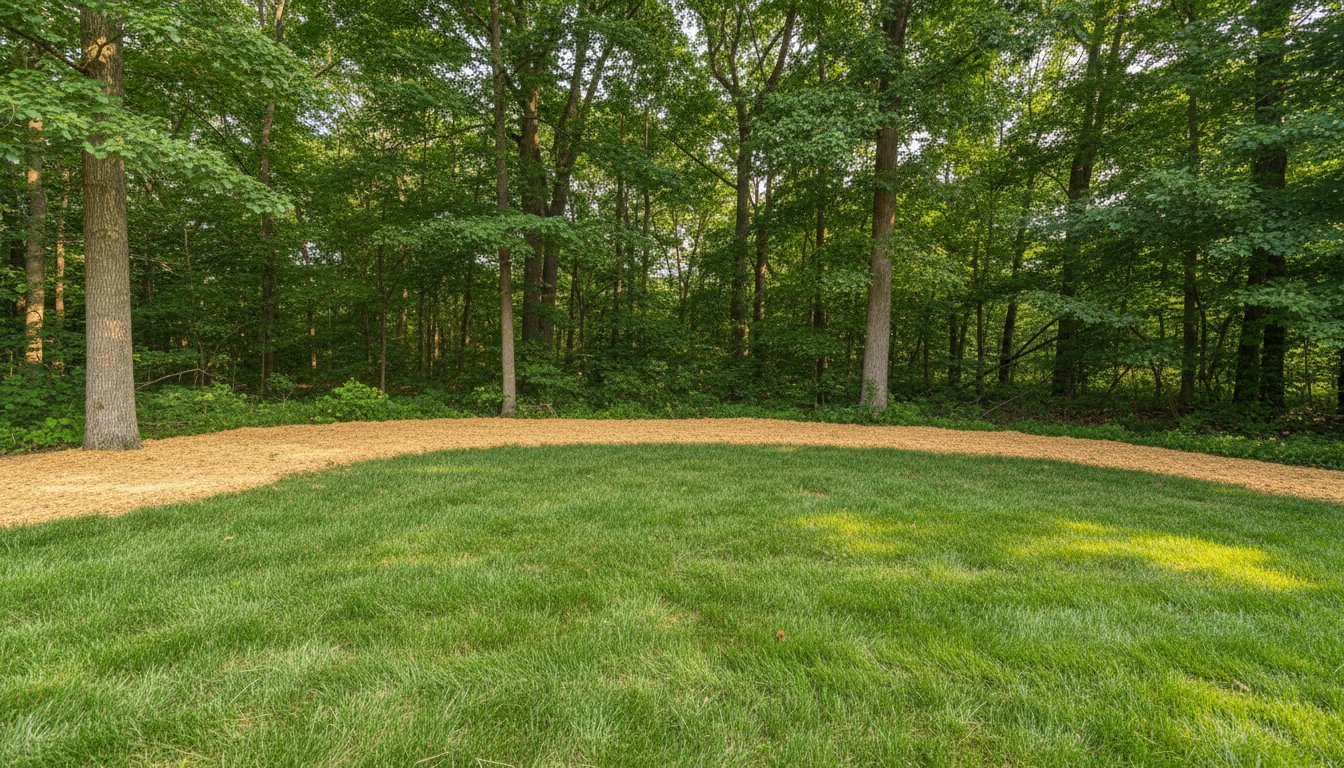
    A simple but powerful landscaping change is the installation of a 3-foot wide mulch or gravel barrier. This creates a physical deterrent between your lawn and the woods. Ticks are unlikely to cross this dry, hot zone because it risks their survival through desiccation. This structural change complements any spray program by clearly defining where the managed yard ends and the wild habitat begins. For residents in Erie and Ashtabula counties, these barriers are essential due to the dense forestation surrounding many suburban lots.

    Lawn Maintenance and Vegetation Control

    Routine yard work is a primary defense. Keeping grass mowed to a height of 3 inches or less reduces the moisture-rich microclimate that ticks crave. It’s equally important to clear leaf litter and brush piles promptly. These areas serve as primary nesting sites for white-footed mice, which are the main hosts for larval and nymphal ticks. Pruning low-hanging branches allows more sunlight to reach the ground, further drying out potential habitats. A well-maintained yard can see a significant reduction in tick presence compared to properties with overgrown vegetation.

    Host Management: Deer and Rodents

    Managing the animals that carry ticks is a critical step in a comprehensive strategy. White-tailed deer and rodents are the primary vectors that transport ticks into your living space. Using deer-resistant plants can discourage these larger hosts from lingering in your yard. Additionally, securing wood piles and keeping bird feeders away from the house prevents white-footed mice from establishing colonies near your family. In cases of heavy infestation, professional pest control may help reduce risk by integrating rodent management with traditional treatments. Because ticks don’t travel far on their own, controlling their transport is vital for long-term success.

    Evaluating When to Move Beyond Natural Repellents

    Deciding between a natural tick repellent for yard vs professional services often comes down to the concept of ‘Tick Pressure.’ This term refers to the volume of ticks present in the surrounding environment and the likelihood of them migrating onto your property. For homeowners in Erie or Ashtabula counties whose yards border state parks, forests, or unmanaged fields, the pressure is inherently higher. While botanical sprays can offer a temporary deterrent, they often fail to provide the structural population reduction needed for high-risk properties in 2026.

    Peace of mind is a major factor in this transition. Professional intervention typically includes a satisfaction guarantee, ensuring that technicians return if the pests do. This level of accountability is something DIY products simply cannot match. Scheduling a professional inspection is the most effective next step to identify local risks. A trained technician can spot vulnerabilities in your landscape that might be attracting hosts or providing shelter for nymphs that you’ve missed during routine yard work.

    Professional Pest Control in Northwest PA and Northeast OH

    Working with a local provider ensures the treatment plan accounts for the unique regional environment of the Great Lakes. Technicians who live in the communities they serve understand how lake-effect moisture and local wildlife cycles impact pest behavior. These experts can create tailored plans that address the specific needs of your acreage. You can learn about general pest control to see how a broad protective foundation helps maintain yard safety throughout the year. This local expertise is vital when natural solutions aren’t keeping pace with the 2026 tick surge.

    Taking Action for Your Outdoor Space

    If you’ve noticed gaps in current DIY efforts, such as ticks appearing on pets shortly after a spray, it’s time to evaluate the barrier’s integrity. Professional pest control may help reduce risk by applying stabilized formulas that withstand the frequent rains common in Crawford County. You can also explore the mosquito control program, which often provides overlapping protection against ticks. This multi-layered approach ensures your outdoor space remains a safe environment for your family to enjoy without the constant anxiety of tick-borne illnesses. Choosing the right path between a natural tick repellent for yard vs professional management ensures your property is protected by the most effective tools available.

    Disclaimer: The information provided on this blog is for general informational purposes only and is not intended as professional pest control advice. Conditions vary by property, environment, and location. Reading this content does not create a service agreement. For an inspection or professional recommendations, please contact Mosquito Assassin Pest Control LLC directly.

    Securing Your Yard for the Season Ahead

    Effective tick management requires a multi-layered approach that combines proactive landscaping with reliable population control. While botanical oils provide a temporary barrier, they often struggle against the high humidity and UV levels common in the Great Lakes region. Cultural controls, such as creating a 3-foot mulch barrier and managing wildlife hosts, remain the most effective natural way to reduce habitat suitability on a property. When evaluating natural tick repellent for yard vs professional intervention, remember that specialized equipment and stabilized formulas offer the durability needed to combat expanding pest habitats.

    Local providers in Northwest PA and Northeast OH utilize licensed and insured technicians who understand the specific regional environment. These professionals provide accountability through consistent monitoring and targeted applications that address the entire life cycle of the tick. Professional pest control may help reduce risk. Schedule an inspection with Mosquito Assassin today to identify the specific vulnerabilities on your property. Taking these steps now ensures an outdoor space remains a safer environment for family activities throughout the year.

    Disclaimer: The information provided on this blog is for general informational purposes only and is not intended as professional pest control advice. Conditions vary by property, environment, and location. Reading this content does not create a service agreement. For an inspection or professional recommendations, please contact Mosquito Assassin Pest Control LLC directly.

    Frequently Asked Questions

    Are natural tick repellents for the yard safe for dogs and cats?

    Most botanical repellents are formulated to be safe for pets once the application has dried, but concentration is a critical factor. Essential oils like peppermint or eucalyptus can be toxic to cats if they are ingested or absorbed in high amounts. Always check product labels for EPA exempt status under FIFRA 25(b) guidelines. Professionals ensure applications are precisely targeted to minimize pet exposure while the product is wet, providing a safer environment for your animals.

    How often should I apply natural tick repellent to my yard?

    Botanical sprays generally require reapplication every 7 to 14 days to maintain their efficacy. Because essential oils are volatile, they evaporate quickly in the summer sun or wash away during heavy Great Lakes rainstorms. Homeowners often find that maintaining a DIY schedule is labor intensive compared to professional plans that provide 21 to 30 days of residual protection. Consistent timing is necessary to prevent tick population rebounds in your outdoor space.

    Can I use cedarwood oil to kill ticks in my lawn?

    Cedarwood oil is an effective natural desiccant that kills ticks by leaching moisture from their bodies and disrupting their pheromone receptors. This makes it harder for the pests to find hosts; however, it only kills on contact and has very little residual effect once it’s dry. For a large property in Crawford County, relying solely on cedarwood oil may require high volumes of product to reach ticks hidden deep within the leaf litter.

    Do professional tick treatments for the yard kill bees?

    Professional integrated pest management focuses on minimizing the impact on pollinators like honeybees. Licensed technicians are trained to avoid spraying flowering plants where bees forage and to apply treatments during times of low pollinator activity. By targeting the damp, shaded ‘edge habitats’ where ticks harbor, professionals reduce the likelihood of contact with beneficial insects that prefer sunny, open flowers. This strategic approach helps protect the local ecosystem while managing pests.

    What is the most effective natural way to get rid of ticks in the yard?

    Landscape modification is the most effective cultural control method available for homeowners. Keeping grass cut to 3 inches or less and creating a 3-foot wide mulch barrier between the lawn and woods reduces the humidity ticks need to survive. These physical changes are more permanent than any spray. When homeowners compare a natural tick repellent for yard vs professional treatment, they often find that combining landscaping with expert application yields the best results.

    Is it worth paying for professional tick control in Pennsylvania?

    Given that Pennsylvania reported 16,624 confirmed Lyme disease cases in 2024, professional control is a high-value investment for many local families. Professional services provide specialized equipment and stabilized formulas that offer better coverage and longer protection than retail products. For properties in Erie County adjacent to wooded areas, the expertise of a licensed technician helps identify and treat high-risk ‘hot spots’ that DIY efforts might easily overlook.

    Does dish soap and water kill ticks in the grass?

    Dish soap and water can kill ticks on contact by breaking down their waxy protective coating, but it isn’t a viable yard treatment. It has no residual effect and won’t prevent new ticks from entering the property. Additionally, spraying large amounts of soapy water can harm your lawn and soil health over time. It’s much more effective to focus on proven botanical repellents or professional barrier treatments when evaluating natural tick repellent for yard vs professional options.

    How long do I need to wait after a professional spray before my kids can play outside?

    Most professional yard treatments require a waiting period of approximately 30 to 60 minutes, or until the product has completely dried. Once dry, the treatment binds to the foliage and is safe for children and pets to resume their outdoor activities. Technicians typically provide specific instructions based on the weather conditions and the type of product used to ensure total peace of mind for everyone in the household.

    Disclaimer: The information provided on this blog is for general informational purposes only and is not intended as professional pest control advice. Conditions vary by property, environment, and location. Reading this content does not create a service agreement. For an inspection or professional recommendations, please contact Mosquito Assassin Pest Control LLC directly.
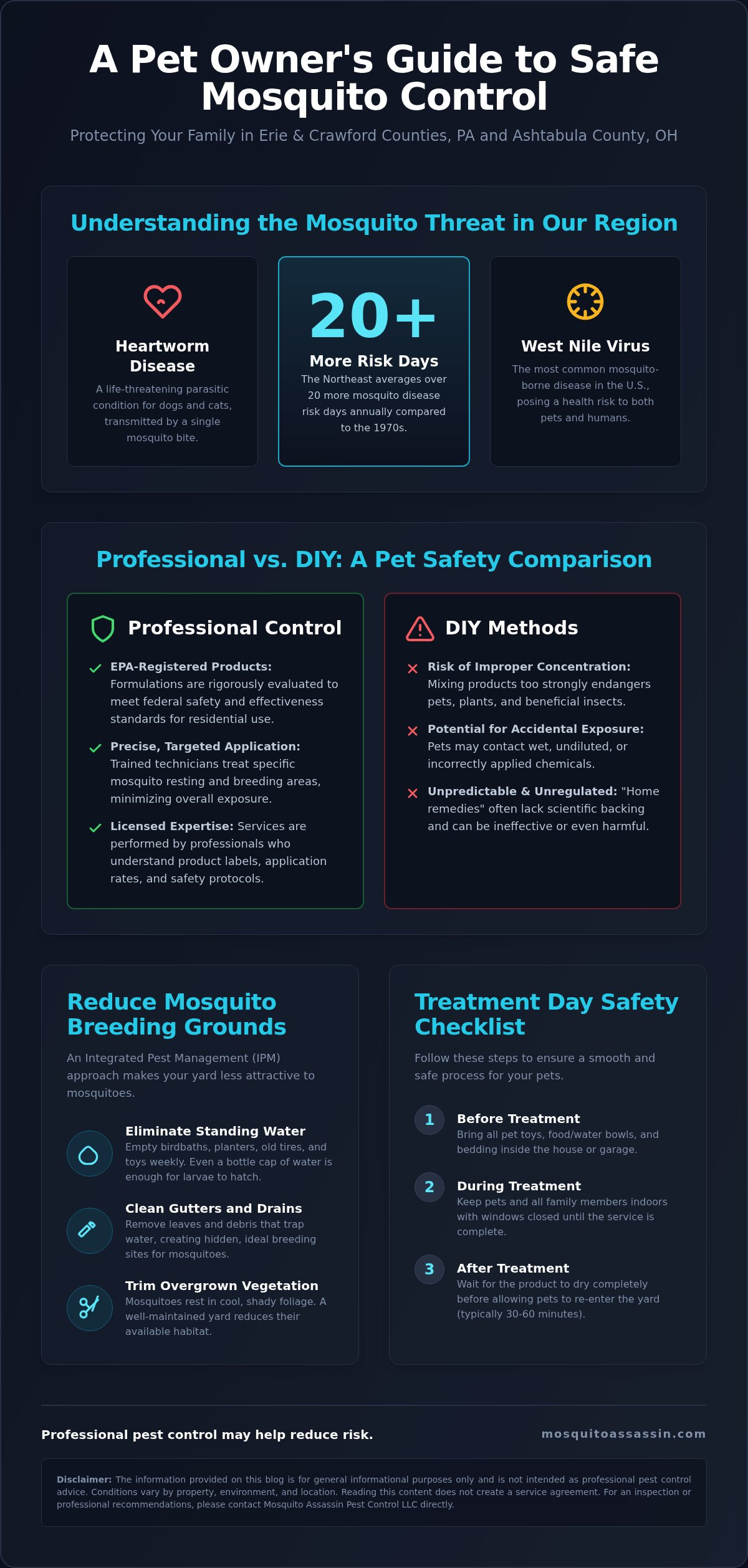
  • Backyard Tick Control in Edinboro, PA: A Homeowner’s Guide to Seasonal Protection

    Backyard Tick Control in Edinboro, PA: A Homeowner’s Guide to Seasonal Protection

    After a five-minute play session in the grass near Edinboro Lake, finding a tick on your dog’s ear can turn a sunny afternoon into a stressful evening. Most homeowners in Erie County value their outdoor time but feel a growing sense of anxiety every time a family member or pet steps off the patio. It’s frustrating to feel like a prisoner in your own yard because of the hidden threat of Lyme disease and other tick-borne illnesses. You want to enjoy the fresh air without the constant worry of checking for hitchhikers after every trip outside.

    This guide provides the essential knowledge needed for effective backyard tick control Edinboro PA residents can rely on to reclaim their outdoor spaces. You’ll learn how to identify high-risk habitats, understand the seasonal behavior of local species, and implement landscape modifications that naturally discourage these pests. By understanding the science behind tick behavior and the specific timing required for treatments, you can create a professional-grade protection plan that keeps your family and pets safer throughout the year. Taking these proactive steps ensures that your backyard remains a place for relaxation rather than a source of concern.

    Key Takeaways

    • Understand how the high humidity and lake influence in Northwest Pennsylvania sustain tick populations from early spring through late autumn.
    • Identify the specific behaviors of Black-legged and American Dog ticks to better protect family members and household pets.
    • Discover why effective backyard tick control Edinboro PA relies on targeting shaded perimeter zones rather than just maintaining a sunny lawn.
    • Learn how to create physical barriers, such as gravel or wood chip borders, to discourage ticks from migrating into active recreation areas.
    • Implement a multi-layered integrated pest management strategy to achieve more consistent protection throughout the entire peak season.

    Understanding Tick Activity in Edinboro and Erie County

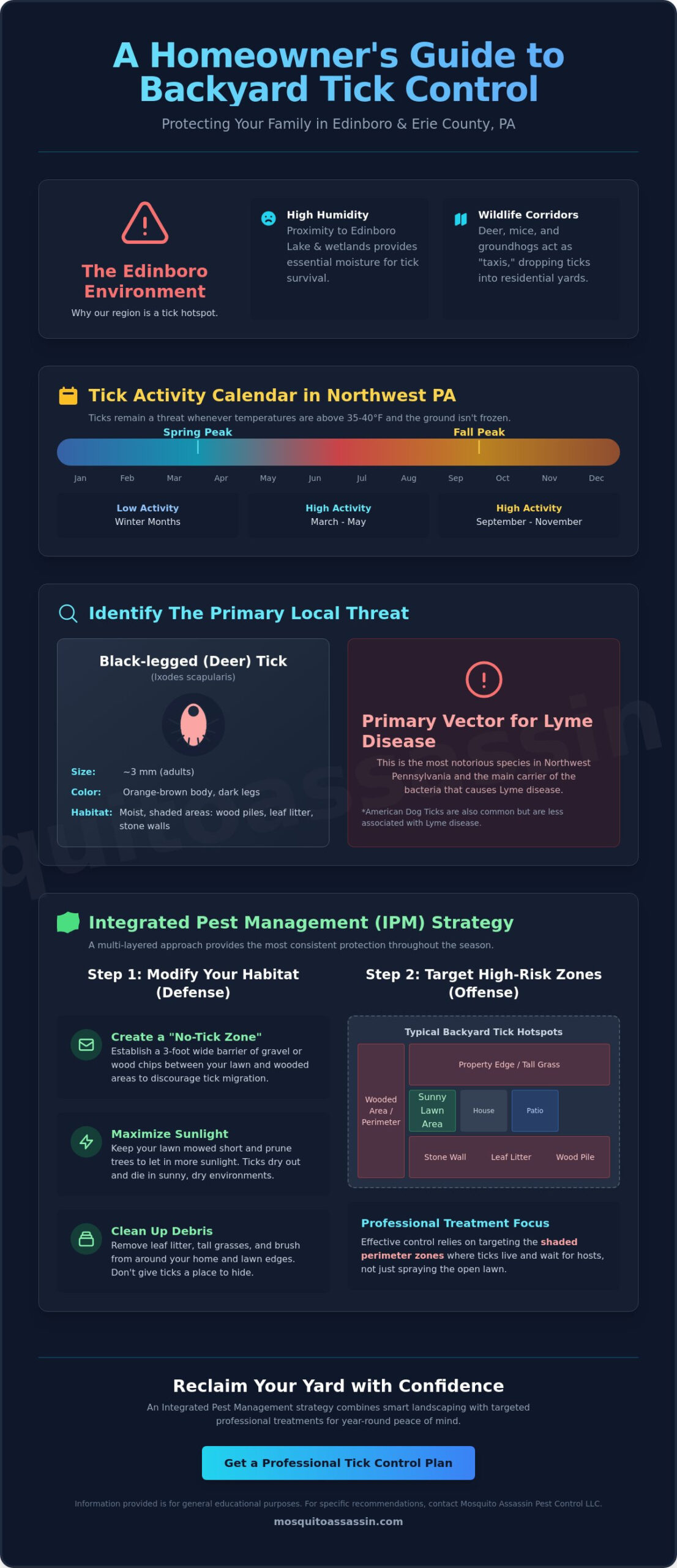
    Edinboro’s unique geography creates a prime environment for tick populations to flourish. The proximity to Edinboro Lake and the surrounding wetlands in Erie County ensures high humidity levels, which are essential for tick survival. The active season in Northwest Pennsylvania typically spans from early March through late November, though activity depends heavily on local weather patterns. Effective backyard tick control Edinboro PA starts with a clear grasp of how these pests utilize the local landscape to thrive and reproduce.

    To better understand how these pests inhabit residential spaces, watch this helpful video:

    Ticks don’t travel long distances on their own; instead, they rely on hitchhiking via local wildlife. In Edinboro, common carriers like white-tailed deer, field mice, and groundhogs frequently cross into residential yards from nearby wooded lots or the lakefront. As these animals move through a property, ticks drop off into tall grass or leaf litter, establishing new populations right where families play. Homeowners should prioritize understanding tick-borne diseases to recognize the risks associated with these unwanted guests, especially as wildlife interactions increase during the warmer months.

    Seasonal Peaks for Ticks in Pennsylvania

    Ticks in Northwest Pennsylvania follow a predictable lifecycle that dictates when they are most dangerous. The spring surge usually begins in March or April as adult black-legged ticks emerge from winter dormancy to find a host. A second peak occurs in the fall, involving both adults and nymphs. Ticks remain a threat whenever the ground isn’t frozen and temperatures stay above 35 to 40 degrees Fahrenheit. Monitoring property edges before the first outdoor gatherings of the year is a practical step for early detection and prevention.

    Environmental Factors in Northwest PA

    The local climate in Erie County provides the consistent moisture ticks need to avoid drying out. Thick layers of leaf litter and dense groundcover act as insulation, protecting them from sudden temperature swings. Shaded areas around Edinboro homes are particularly vulnerable because they retain dampness longer than open, sunny lawns. Implementing backyard tick control Edinboro PA often involves managing these specific micro-climates to make the yard less hospitable. For residents looking to identify high-risk zones on their property, learning more about service locations can provide context on regional pest pressure and local trends.

    Disclaimer: The information provided on this blog is for general informational purposes only and is not intended as professional pest control advice. Conditions vary by property, environment, and location. Reading this content does not create a service agreement. For an inspection or professional recommendations, please contact Mosquito Assassin Pest Control LLC directly.

    Common Tick Species Found in Northwest Pennsylvania Backyards

    Identifying the specific pests in your yard is the foundation of effective backyard tick control Edinboro PA. In Erie and Crawford Counties, homeowners typically encounter three main species. Each has unique habits, preferred habitats, and potential risks that require specific attention during the warmer months. Understanding these differences helps residents better manage their outdoor spaces and protect their families.

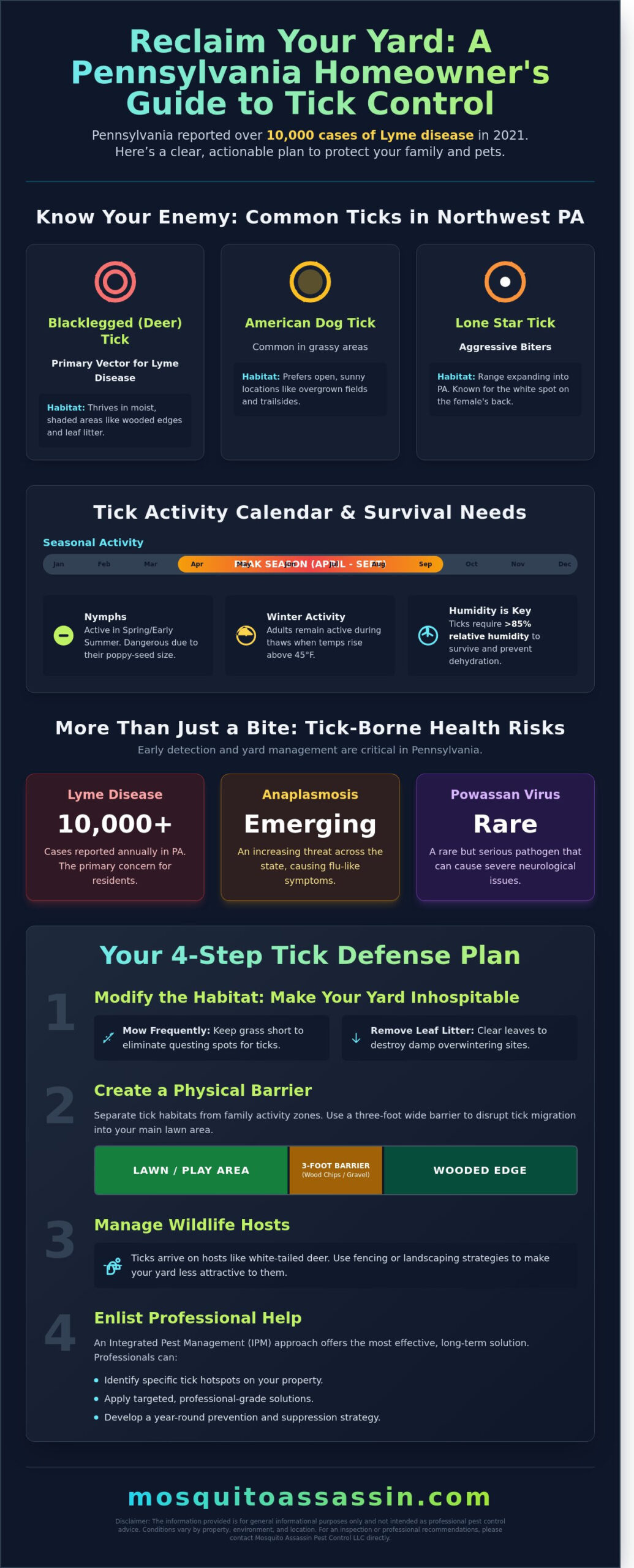
    The Black-legged Tick, also known as the Deer Tick, is the most notorious species in Northwest Pennsylvania. These ticks are small, with adults measuring about 3 millimeters, and are identified by their orange-brown bodies and dark legs. They thrive in moist, shaded areas like wood piles, stone walls, and leaf litter. According to research on Common Pennsylvania Ticks, this species is the primary vector for Lyme disease in the region. Because they can remain active as long as temperatures are above freezing, protection is often a year-round concern for local property owners.

    The American Dog Tick is larger and more robust, often found in open, sunlit grassy areas rather than deep woods. These ticks have distinct silver or white markings on their backs. They are frequently brought into homes by pets after walks in tall grass or fields. While they don’t carry Lyme disease, they are known to transmit other pathogens. Another emerging threat is the Lone Star Tick. Once rare in Pennsylvania, its range has expanded northward over the last decade. Females are easily identified by a single white spot on their back. They are aggressive biters and stay active throughout the peak summer heat.

    Tick Identification Basics for Homeowners

    Ticks change significantly in size during their life cycle. The cycle begins with eggs, which hatch into six-legged larvae. These progress into eight-legged nymphs before reaching adulthood. Nymphal ticks are particularly dangerous because they’re roughly the size of a poppy seed. Their tiny size makes them nearly impossible to see on skin or clothing without a thorough inspection. While adult ticks are active in the fall and spring, nymphs are most active during the late spring and early summer. This timeframe coincides with peak outdoor activity for families in Edinboro, making detection difficult but necessary.

    Risks Associated with Local Ticks

    The presence of these species in residential backyards increases the potential for exposure to various tick-borne pathogens. Northwest Pennsylvania has seen a steady presence of these pests in both rural and suburban properties. Performing a daily tick check on children and pets is a necessary habit after spending time outdoors. Focusing on areas behind the ears, under arms, and around the waist helps catch ticks before they have a chance to attach. Professional pest control may help reduce risk by managing the environments where these species thrive. Consistent yard maintenance, such as clearing brush and keeping grass short, further discourages tick populations from establishing themselves near the home.

    Disclaimer: The information provided on this blog is for general informational purposes only and is not intended as professional pest control advice. Conditions vary by property, environment, and location. Reading this content does not create a service agreement. For an inspection or professional recommendations, please contact Mosquito Assassin Pest Control LLC directly.
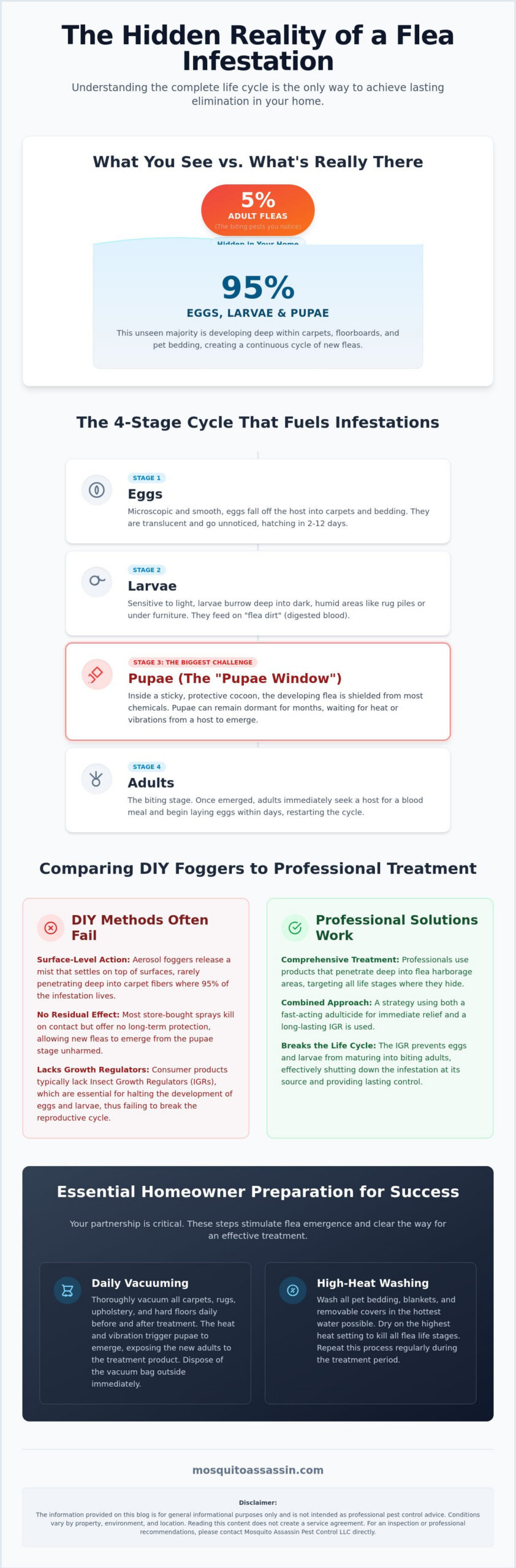
    Backyard Tick Control in Edinboro, PA: A Homeowner’s Guide to Seasonal Protection

    Evaluating Professional Tick Management Strategies for Local Properties

    Standard mowing and lawn maintenance provide a manicured look, but they rarely address the root of a tick problem. Ticks are highly sensitive to desiccation, which means they dry out and die in the direct heat of a sunny, open lawn. Instead, these arachnids congregate in the humid, shaded microclimates found at the edges of Edinboro properties. Relying solely on short grass for backyard tick control Edinboro PA ignores the high-risk zones where approximately 82% of nymphs are typically found: the leaf litter and brush at the property’s edge.

    Professional strategies utilize Integrated Pest Management (IPM), a science-based approach that combines biological, cultural, and targeted chemical tools. This method relies on data from initiatives like the PA Tick Surveillance Program to understand local population densities and species distribution. By focusing on the biology of the tick, professionals can reduce populations without blanket-spraying an entire property. It’s a method that prioritizes efficiency and environmental responsibility over high-volume chemical use.

    Targeted Treatment Areas

    Effective management focuses on the “transition zone,” the specific area where a manicured lawn meets woods, tall weeds, or decorative groundcovers. Ticks often wait in these spots, a behavior called questing, to latch onto passing hosts. Professional barrier treatments prioritize these perimeters to stop tick migration from neighboring wooded lots. Technicians also focus on specific harborages that DIY efforts often miss:

    • Shaded areas beneath decks and porches where pets often rest.
    • Perimeters of sheds and outbuildings that provide cover for rodents.
    • Dense vegetation along fence lines and stone walls.

    Professional Standards and Safety

    Hiring licensed professionals ensures that applications comply with specific regulations in Pennsylvania and Ohio. These experts are trained to identify non-target insects, such as bees and butterflies, and apply treatments in a way that minimizes environmental impact. You can explore comprehensive pest services to see how professional standards differ from standard residential gardening. Licensed technicians understand the local climate of Erie and Crawford Counties, ensuring treatments are applied during optimal weather windows for maximum efficacy.

    One-time applications often fail because they don’t account for the complex tick life cycle. Ticks can live for two to three years; consistent protection throughout the spring, summer, and fall is necessary to interrupt their breeding patterns. Maintaining a defensive barrier ensures that as new ticks emerge or are dropped into the yard by wildlife, the treatment remains active. Professional pest control may help reduce risk by providing this ongoing layer of security that a single application cannot match.

    Disclaimer: The information provided on this blog is for general informational purposes only and is not intended as professional pest control advice. Conditions vary by property, environment, and location. Reading this content does not create a service agreement. For an inspection or professional recommendations, please contact Mosquito Assassin Pest Control LLC directly.

    Practical Habitat Modification to Reduce Tick Populations

    Landscape management is the foundation of effective backyard tick control Edinboro PA. Ticks are highly sensitive to moisture loss; they require environments with high humidity to survive and thrive. By altering the landscape to increase sunlight and reduce dampness, homeowners can naturally lower the number of ticks residing on their property. This strategy focuses on making the environment inhospitable for these pests before they ever have a chance to reach your family or pets.

    One of the most effective strategies involves creating a physical barrier between wooded areas and the lawn. A border of wood chips or gravel, at least 3 feet wide, serves two critical purposes. It acts as a visual reminder for family members to stay within the maintained lawn area. More importantly, it creates a dry, hot surface that ticks are unlikely to cross because they risk desiccation. Ticks don’t fly or jump; they rely on hitching a ride on a host. A wide, dry barrier makes that transition much more difficult.

    Managing tick hosts is equally important for long term protection. In Erie and Crawford Counties, white-tailed deer and white-footed mice are the primary transporters of ticks into residential yards. To discourage these animals, homeowners should remove bird feeders that attract rodents and use deer-resistant plantings. Stacking firewood in a dry, sunny location away from the house also removes preferred nesting sites for mice, which are often the primary source of Lyme disease infection in tick larvae.

    A Checklist for Tick-Resistant Landscaping

    • Keep grass mowed short, ideally under 3 inches, as ticks prefer the moisture of tall grass.
    • Prune low-hanging tree branches and thin out dense shrubs to allow more sunlight to reach the ground.
    • Remove leaf litter, brush, and weeds from the perimeter of the home and the edges of the lawn.
    • Store firewood neatly in a dry, sunny area to discourage rodent nesting near high-traffic zones.

    Protecting High-Traffic Areas

    Focusing your efforts on where your family spends the most time is essential. Move swing sets, sandboxes, and patio furniture away from the woods or tall grass. Placing play equipment on a base of mulch or gravel creates a dry zone that is less attractive to questing ticks. Understanding how our mosquito control program works can also provide insight into how integrated pest management strategies address multiple pests simultaneously. Consistent maintenance of these zones significantly reduces the likelihood of accidental encounters.

    While these manual steps are vital, they are often most effective when combined with professional expertise. If you find that habitat modification alone isn’t providing the level of protection you need, professional pest control may help reduce risk on your property.

    Disclaimer: The information provided on this blog is for general informational purposes only and is not intended as professional pest control advice. Conditions vary by property, environment, and location. Reading this content does not create a service agreement. For an inspection or professional recommendations, please contact Mosquito Assassin Pest Control LLC directly.
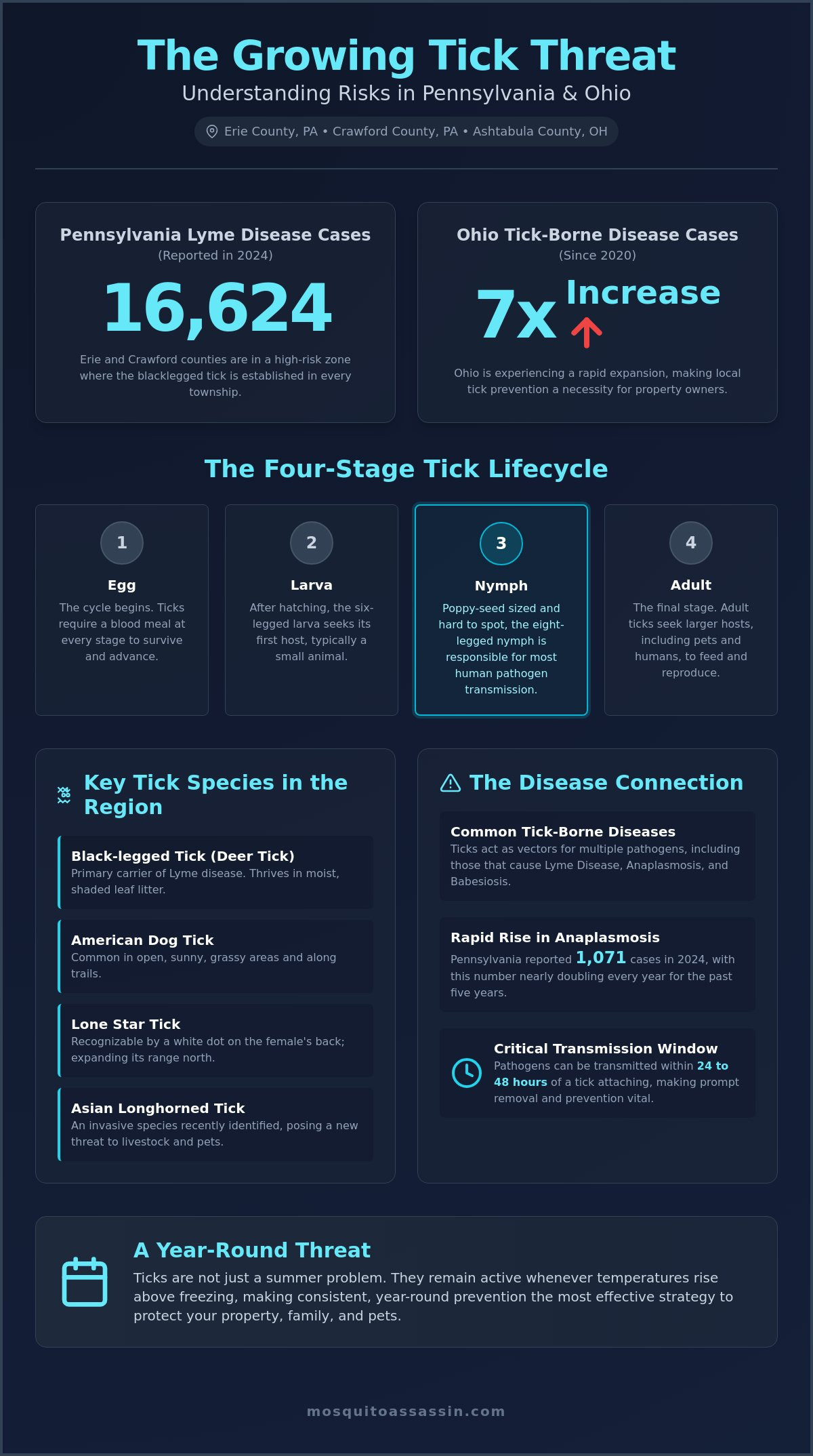
    Long-Term Protection through Integrated Pest Management

    Achieving effective backyard tick control Edinboro PA requires more than a reactive mindset. A single application might knock down the current population, but it rarely addresses the ongoing biological cycles of local tick species. Black-legged ticks, for example, have a life cycle that spans two to three years. This means that eggs, larvae, and nymphs may be present in the environment even if adult activity seems low. Relying on one-off treatments leaves gaps that allow these emerging generations to re-establish themselves in your lawn.

    Integrated Pest Management (IPM) is the most effective strategy for residential properties in Erie County. This professional approach pairs targeted barrier treatments with physical habitat modification. Homeowners can significantly reduce tick pressure by implementing simple landscape changes, such as:

    • Creating Buffer Zones: Installing a three-foot wide barrier of wood chips or gravel between the lawn and wooded edges can physically impede tick migration into play areas.
    • Managing Vegetation: Keeping grass mowed to a short height and removing leaf litter eliminates the humid, shaded environments ticks need to survive.
    • Strategic Woodpile Placement: Stacking firewood in sunny locations away from the house reduces nesting sites for the rodents that often carry ticks onto the property.

    Professional pest control serves as a critical layer of defense within this framework. Year-round monitoring is vital because tick populations fluctuate based on weather patterns and wildlife movements. If local deer or rodent populations increase, the risk to the property rises. Regular professional evaluations help catch these surges early, ensuring that protection remains consistent throughout the year.

    Developing a Seasonal Plan

    Timing is the most important factor in a successful protection plan. In Pennsylvania, adult ticks often emerge as soon as temperatures consistently stay above 45 degrees Fahrenheit. Starting treatments in early spring targets these adults before they can lay thousands of eggs. Maintaining this coverage through the peak summer months is equally important, as this is when nymphal ticks are most active and backyard use is at its highest. Understanding the importance of general pest control can provide a broader perspective on how managing various backyard pests contributes to a safer outdoor environment for families.

    Next Steps for Edinboro Homeowners

    Homeowners should begin by conducting a thorough inspection of their property perimeter. Look for high-pressure zones where tall grass meets manicured lawn or where shaded areas provide constant moisture. Identifying these specific spots allows for more precise treatment applications. Consulting with a licensed professional is the best way to develop a comprehensive map of these risk areas. Professional pest control may help reduce risk on residential properties by providing expert insights that a standard DIY approach might miss. For those ready to begin a systematic protection strategy, you can contact Mosquito Assassin Pest Control LLC for an inspection.

    Disclaimer: The information provided on this blog is for general informational purposes only and is not intended as professional pest control advice. Conditions vary by property, environment, and location. Reading this content does not create a service agreement. For an inspection or professional recommendations, please contact Mosquito Assassin Pest Control LLC directly.

    Protecting Your Edinboro Property for the Seasons Ahead

    Maintaining a safer outdoor space requires a consistent strategy that addresses the specific environmental factors of Northwest Pennsylvania. By identifying common species like the black-legged tick and modifying habitats to remove leaf litter and tall grass, homeowners can significantly disrupt the tick life cycle. Effective backyard tick control Edinboro PA relies on an Integrated Pest Management approach; it’s a strategy that focuses on long-term results rather than short-term fixes. Because the company is locally owned and operated in Northwest Pennsylvania, the licensed and insured professionals understand the specific needs of properties throughout Erie, Crawford, and Ashtabula counties.

    Professional guidance provides a comprehensive assessment of property risks and helps implement a customized management plan. For those seeking a detailed evaluation, you can request a professional inspection from Mosquito Assassin Pest Control LLC to help reduce the presence of ticks on your property. Taking these proactive steps allows you to enjoy your outdoor living areas with greater peace of mind throughout the year.

    Disclaimer: The information provided on this blog is for general informational purposes only and is not intended as professional pest control advice. Conditions vary by property, environment, and location. Reading this content does not create a service agreement. For an inspection or professional recommendations, please contact Mosquito Assassin Pest Control LLC directly.
    Frequently Asked Questions

    Is backyard tick control safe for my children and pets?

    Professional tick control utilizes products that are registered with the Environmental Protection Agency (EPA) and applied according to strict label instructions. Technicians focus applications on tick habitats like tall grass and woodpiles rather than open areas where children play. Once the treatment has fully dried, which usually takes 30 to 60 minutes, the yard is ready for families and pets to enjoy again.

    How often should a backyard be treated for ticks in Edinboro, PA?

    A standard schedule for backyard tick control Edinboro PA typically involves professional applications every 21 to 30 days during the peak season. In Northwest Pennsylvania, ticks remain active from early spring through the first hard frost. Consistent treatment intervals are necessary to maintain a protective barrier against new ticks that wildlife might carry onto the property throughout the year.

    Can I get rid of ticks in my yard myself?

    Homeowners can reduce tick populations by maintaining a 3 foot wide barrier of wood chips between lawns and wooded areas. While DIY methods help, consumer grade products often lack the residual strength of professional formulations. Licensed professionals use specialized equipment to reach the undersides of leaves and dense brush where ticks hide, providing more thorough coverage than standard hand held sprayers.

    What is the best time of year to start tick control in Erie County?

    Tick activity in Erie County starts as soon as ground temperatures consistently reach 45 degrees Fahrenheit, which often happens in late March. Starting treatments in early spring targets adult ticks before they can lay thousands of eggs. This proactive timing helps suppress the overall population before the nymph stage emerges during the warmer summer months when outdoor activity increases.

    Does professional tick spraying actually work in wooded yards?

    Professional treatments are effective in wooded yards because they target the transition zones where forest meets the lawn. Data from the Connecticut Agricultural Experiment Station shows that 82% of ticks on residential properties are found within 3 feet of the lawn edge. By treating these specific perimeter areas, professionals create a defensive zone that significantly reduces the number of ticks entering active recreation spaces.

    Will a tick treatment also help with mosquitoes?

    Many products used for backyard tick control Edinboro PA are also effective against mosquitoes because both pests utilize similar shaded resting spots. While the application methods differ slightly, treating the dense foliage and damp areas of a property often provides a dual benefit. This integrated approach manages multiple biting pests at once, making the outdoor environment more comfortable for residents during the summer.

    How long do I need to stay off the grass after a professional treatment?

    Residents should stay off treated surfaces until the product is completely dry, which typically takes about one hour. Factors like sunlight and wind speed can change this timeframe, so it’s important to wait for a clear visual check. Professional technicians provide specific instructions after each visit to ensure homeowners know exactly when it is appropriate to resume normal activities in the yard.

    Do ticks in Edinboro carry Lyme disease?

    Ticks in Edinboro and the surrounding Erie County area are known carriers of the bacteria that cause Lyme disease. The Pennsylvania Department of Health reports that the state has frequently recorded the highest number of Lyme disease cases in the country over the last 10 years. Because black-legged ticks are the primary vectors, professional pest control may help reduce risk by managing the local population.

    For more information or to schedule an inspection, please visit our online booking portal or contact us at www.mosquitoassassin.com/contact-us.

    Disclaimer: The information provided on this blog is for general informational purposes only and is not intended as professional pest control advice. Conditions vary by property, environment, and location. Reading this content does not create a service agreement. For an inspection or professional recommendations, please contact Mosquito Assassin Pest Control LLC directly.
  • Tick Control for Yards in Erie, PA: A Homeowner’s Guide (2026)

    Tick Control for Yards in Erie, PA: A Homeowner’s Guide (2026)

    Last June, a family in Millcreek discovered three deer ticks on their golden retriever after just ten minutes of backyard play. It’s a common and stressful scenario for homeowners in Northwest Pennsylvania, where 2024 data from the Pennsylvania Department of Environmental Protection confirms that every county now hosts black-legged ticks capable of carrying Lyme disease. You likely feel that same sense of anxiety every time your children or pets step into the grass, especially if store-bought sprays have failed to provide lasting results. Achieving reliable tick control for yard erie pa requires more than just a random application of retail products; it demands a clear understanding of how these pests survive and thrive in our specific humid climate.

    This guide explains the biological habits of local tick species and outlines professional prevention strategies to help manage your property effectively. You’ll learn how to identify high-risk zones like woodpiles and tall grass, evaluate pet-safe options that don’t compromise your family’s health, and implement long-term reduction plans that prioritize lasting safety. This overview covers habitat modification and professional-grade management techniques tailored for residents in Erie and Crawford Counties.

    Disclaimer: The information provided on this blog is for general informational purposes only and is not intended as professional pest control advice. Conditions vary by property, environment, and location. Reading this content does not create a service agreement. For an inspection or professional recommendations, please contact Mosquito Assassin Pest Control LLC directly.
    Key Takeaways

    • Understand why the humid Great Lakes climate and the two-year life cycle of the black-legged tick make one-time treatments ineffective for long-term suppression.
    • Discover how professional-grade equipment reaches the underside of leaf litter where ticks hide, providing a level of coverage often missed by residential grade products.
    • Learn how to create a physical “tick-safe zone” by implementing mulch or gravel barriers between wooded areas and your lawn.
    • Explore why effective tick control for yard erie pa requires a consistent schedule to account for the complex role of host animals like white-footed mice and deer.
    • Identify the benefits of integrating tick management with a comprehensive mosquito control program to safeguard your outdoor living space throughout the season.

    Understanding the Tick Population in Northwest Pennsylvania

    Ticks are a persistent reality for residents in Erie and Crawford counties. The black-legged tick, commonly called the deer tick, dominates the local landscape. Northwest Pennsylvania’s proximity to the Great Lakes creates a humid environment where these pests thrive. Moisture is essential for their survival because ticks are prone to desiccation (drying out). This makes the lakefront climate a perfect breeding ground. Effective tick control for yard erie pa requires acknowledging that these parasites are active whenever temperatures are above 45 degrees Fahrenheit. This means activity can occur even during mild winters in the region.

    Many homeowners believe ticks only live in deep woods. In reality, they are often found in the transitional zones of a backyard, such as where the lawn meets a woodline or ornamental garden. Understanding the biology and life cycle of ticks helps clarify why they move from tall grass into manicured areas. They use a behavior called “questing” to find hosts. They climb to the tips of grass blades and wait with their front legs extended to latch onto a passing human or animal.

    To better understand how these pests interact with your property, watch this helpful video:

    Primary Tick Species in the Erie Region

    While the black-legged tick is the primary concern for Lyme disease, the American dog tick is increasingly common in suburban Erie yards. These ticks are larger and prefer open, sunnier, grassy areas with less shade. They are often spotted on pets or humans after a walk through a field or trail. The seasonal timeline for these species varies slightly. Black-legged ticks have two peak activity periods in Northwest PA and Northeast Ohio, occurring in late spring and again in the autumn months. The nymphal stage represents the highest risk period for disease transmission because these tiny ticks are difficult to detect on the skin.

    Health Risks and Tick-Borne Illnesses

    Pennsylvania frequently reports some of the highest numbers of Lyme disease cases in the United States. According to data from the Pennsylvania Department of Health, the state has consistently led the nation in confirmed cases for several years. Beyond Lyme, there is a growing regional concern regarding Anaplasmosis and the rare but serious Powassan virus. These illnesses can cause symptoms ranging from fever and fatigue to neurological complications. Since ticks can be brought into the home by pets or on clothing, maintaining a clear perimeter is vital for safety. Utilizing professional pest control may help reduce risk for families and pets by targeting the specific habitats where these parasites congregate and wait for a host. For more information on local service areas, visit https://mosquitoassassin.com/location.

    Disclaimer: The information provided on this blog is for general informational purposes only and is not intended as professional pest control advice. Conditions vary by property, environment, and location. Reading this content does not create a service agreement. For an inspection or professional recommendations, please contact Mosquito Assassin Pest Control LLC directly.

    The Biology of Tick Infestations: Life Cycle and Habitats

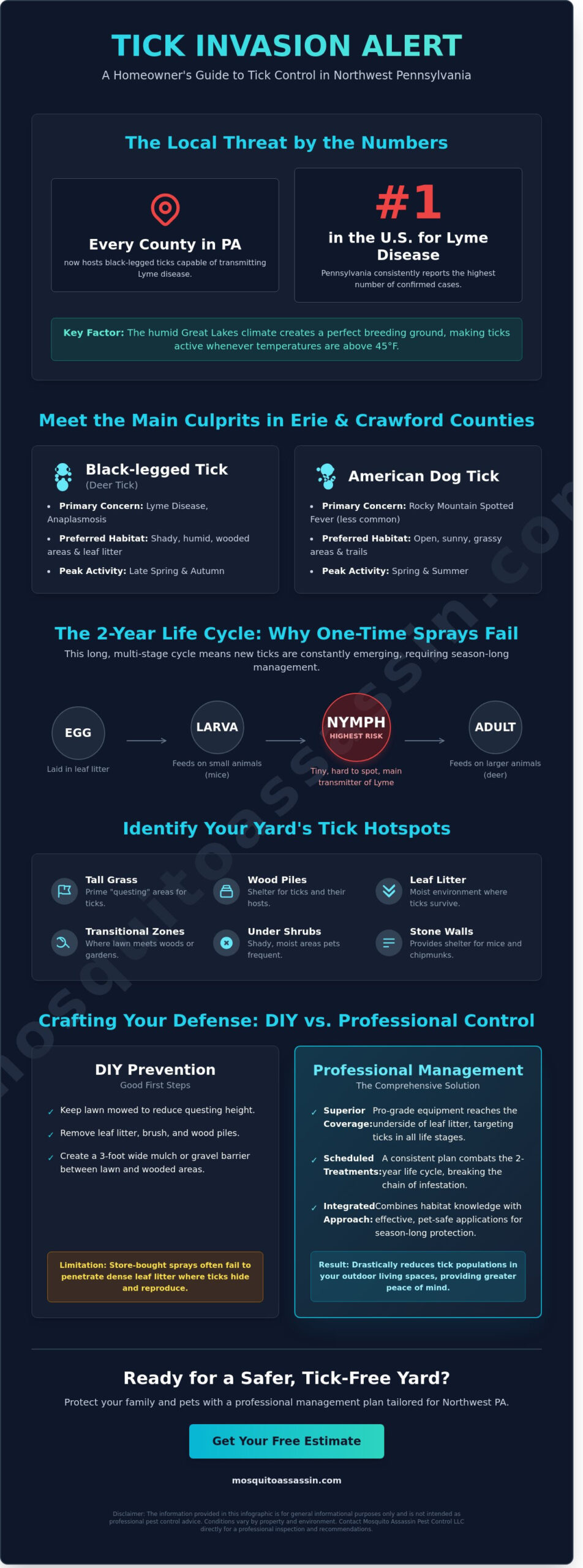
    Understanding the biological timeline of a tick is the first step in managing an infestation. Most hard-bodied ticks found in Northwest Pennsylvania, such as the black-legged tick, follow a complex two-year life cycle. They progress through four distinct stages: egg, larva, nymph, and adult. Because this cycle spans 24 months, a single treatment rarely provides a permanent solution. Ticks at different life stages may be dormant or protected in leaf litter during a treatment, only to emerge weeks or months later. Effective tick control for yard erie pa requires a consistent strategy that accounts for these overlapping generations.

    Environmental triggers like temperature and humidity dictate exactly when ticks become active. Ticks are highly sensitive to desiccation, meaning they dry out easily. They typically require humidity levels above 85 percent to remain active for long periods. To find a host without dehydrating, they utilize a behavior called questing. A tick will climb to the top of a blade of tall grass or the tip of a low-hanging branch, holding onto the plant with its back legs while reaching out with its front legs. They don’t jump or fly; they wait for a human or animal to brush past. This is why overgrown lawn perimeters and tall grass are high-risk zones for families and pets.

    The Role of Small Rodents in Tick Breeding

    While deer are often blamed for tick problems, white-footed mice are the primary drivers of tick-borne pathogens in residential yards. Larval and nymphal ticks often take their first blood meals from these small rodents, which serve as a reservoir for bacteria. Managing the environment to discourage these hosts is vital. Homeowners should focus on clearing stone walls and tightly stacking woodpiles, as these provide ideal nesting sites for mice. Integrating rodent removal and habitat modification can significantly lower the density of infected nymphs on a property. According to Pennsylvania’s tick surveillance program, identifying the specific species present is key to understanding the localized risks in Erie and Crawford counties.

    Tick Survival Mechanisms in Winter

    It’s a common misconception that a hard freeze in Erie or Ashtabula will kill off the local tick population. In reality, ticks have evolved sophisticated survival mechanisms. When temperatures drop, they retreat under the soil line or beneath thick layers of leaf litter. The snowpack actually acts as an insulator, protecting them from extreme sub-zero temperatures. Some species remains active whenever the ground isn’t frozen and temperatures rise above 45 degrees Fahrenheit. Preparation for the spring emergence should begin in late winter by clearing debris where ticks may have overwintered. Homeowners who want to identify potential habitat hotspots can contact a professional for a property inspection.

    Disclaimer: The information provided on this blog is for general informational purposes only and is not intended as professional pest control advice. Conditions vary by property, environment, and location. Reading this content does not create a service agreement. For an inspection or professional recommendations, please contact Mosquito Assassin Pest Control LLC directly.
    Tick Control for Yards in Erie, PA: A Homeowner’s Guide (2026)

    Professional Tick Management vs. DIY Yard Treatments

    Choosing between a store-bought solution and professional tick control for yard erie pa involves more than just comparing price tags. Commercial-grade products utilized by licensed technicians often feature microencapsulated technology. This specialized formulation protects the active ingredients from rapid UV degradation and heavy rainfall, which are common in Northwest Pennsylvania. Residential-grade sprays typically lack this longevity, often requiring reapplication every few days to remain even moderately effective.

    Equipment plays a critical role in successful suppression. Ticks don’t sit on top of the grass; they hide in the cool, damp layers of leaf litter and on the undersides of low-hanging foliage. Standard garden pump sprayers cannot produce the high-pressure mist required to penetrate these deep harborages. Professional technicians use high-volume mist blowers that coat the entire leaf surface, ensuring the product reaches the pests where they live. Additionally, licensed professionals follow strict safety protocols to protect non-target insects. By timing applications and targeting specific zones, they minimize the impact on pollinators like honeybees and butterflies.

    Investing in professional general pest control is often more cost-effective over a full season. Homeowners frequently spend more on multiple bottles of ineffective DIY spray than they would on a structured professional plan that offers consistent, documented results.

    Limits of Store-Bought Tick Sprays

    Many DIY products fail because they lack “rain-fastness.” In Erie County, where lake-effect rain is frequent, a single storm can wash away a residential spray application, leading to chemical runoff into local watersheds. Another common error is broadcast spraying the middle of a sunny lawn. Ticks are highly susceptible to dehydration and rarely congregate in open, dry areas. Professional strategies focus on perimeter barriers and ecotone management (the border where the lawn meets the woods) which is far more effective than saturating a sun-drenched lawn.

    The Value of Integrated Pest Management (IPM)

    Integrated Pest Management is a holistic strategy that goes beyond simple chemical application. It involves a detailed inspection to identify “hot zones” that homeowners often overlook, such as woodpiles, stone walls, and overgrown ornamental beds. These areas are primary habitats for the white-footed mouse, which serves as a major host for tick larvae. Professional plans provide year-round suppression, targeting ticks during their most active nymphal and adult stages in the spring and fall. For those concerned about local tick populations, seeking professional pest control may help reduce risk. More information is available at www.mosquitoassassin.com/contact-us.

    Disclaimer: The information provided on this blog is for general informational purposes only and is not intended as professional pest control advice. Conditions vary by property, environment, and location. Reading this content does not create a service agreement. For an inspection or professional recommendations, please contact Mosquito Assassin Pest Control LLC directly.

    Practical Steps for Tick-Proofing Your Outdoor Space

    Creating a tick-safe zone involves more than just keeping the grass short. Effective tick control for yard erie pa requires a structural approach to landscaping that makes the environment inhospitable to these arachnids. Ticks are highly sensitive to dehydration and rely on high humidity levels, often found in overgrown vegetation and leaf litter, to survive. By modifying the physical layout of a property, homeowners can significantly reduce the likelihood of ticks migrating from wooded areas into active living spaces.

    Landscape Modifications for Tick Reduction

    The transition zone between a manicured lawn and a wooded area is known as an edge habitat. Research indicates that approximately 82% of ticks found on residential properties are located within three yards of this boundary. To disrupt their movement, homeowners should install a three-foot wide barrier of wood chips or gravel. This creates a dry, high-heat zone that ticks are reluctant to cross.

    Proper pruning is another essential tactic. Removing low-hanging branches and thinning out dense shrubbery allows more sunlight to reach the ground. Increased solar exposure lowers the ground-level humidity that ticks need to stay hydrated. Management of leaf litter is equally vital; removing damp piles of leaves before they decompose prevents the creation of a perfect overwintering habitat for tick larvae and the mice that carry them.

    Protecting Pets and High-Traffic Areas

    Strategic placement of outdoor equipment plays a major role in risk reduction. Playground sets, patios, and deck furniture should be situated in sunny areas, at least ten feet away from the yard’s perimeter or any wooded edges. If a yard is bordered by heavy brush, keeping these high-traffic zones centrally located helps ensure children and guests stay within the safest parts of the property.

    Managing host animal traffic is a secondary but effective layer of protection. Ticks often enter yards on the backs of deer and small rodents. Selecting deer-resistant plants, such as boxwood, lavender, or certain varieties of sage, can make a property less attractive to these larger hosts. For pet owners, maintaining a clear boundary and performing daily checks after outdoor play is a standard best practice. If pets or family members spend time in the yard, professional pest control may help reduce risk by addressing the population at its source.

    • Keep grass mowed to a height of three inches or less to minimize shade.
    • Stack firewood neatly in a dry, sunny location away from the house.
    • Remove old tires, trash, or debris that might provide shelter for rodents.
    • Place outdoor gear in a dryer on high heat for 10 minutes after yard work to kill any hitchhiking ticks.

    Implementing these practical changes provides a foundation for long-term tick control for yard erie pa. While landscaping modifications won’t eliminate every tick, they create a defensive perimeter that makes the environment much less inviting for pests and their hosts.

    Disclaimer: The information provided on this blog is for general informational purposes only and is not intended as professional pest control advice. Conditions vary by property, environment, and location. Reading this content does not create a service agreement. For an inspection or professional recommendations, please contact Mosquito Assassin Pest Control LLC directly.
    Implementing Long-Term Protection in Northwest PA

    Consistency is the only way to maintain a property that’s truly resistant to pests. Ticks are persistent, and their life cycles don’t pause just because one treatment was applied. Achieving reliable tick control for yard erie pa requires a schedule that accounts for the constant migration of wildlife, such as deer and small rodents, which carry new ticks onto the grass every day. Maintaining a steady barrier ensures that the protective measures remain active against new hatches throughout the spring, summer, and autumn months.

    Many property owners find that combining these efforts with a mosquito control program provides the most comprehensive results. Both pests thrive in the high-humidity environments common to Northwest Pennsylvania. Because they often share the same shaded harborages and tall grasses, a dual-pronged approach targets both threats simultaneously. This integration simplifies property maintenance while maximizing the time families can spend outdoors without worry.

    Customized Treatment Plans

    Every property in Erie County has unique biological markers that dictate the best management strategy. A professional approach follows a systematic four-step process: Inspection, Plan, Treatment, and Follow-up. During the inspection, technicians identify specific hotspots like leaf litter, stone walls, or dense groundcover. The size of the property and the density of the surrounding vegetation determine how the treatment is applied. When tailored to the specific environment, professional pest control may help reduce risk by creating a custom perimeter that accounts for local wind patterns and moisture levels.

    Service Area Considerations

    Environmental challenges vary significantly across the region. Lakefront properties in Erie often deal with higher humidity levels and different migratory bird patterns compared to the dense woodlots found in inland Crawford County. These geographic differences mean that treatment timing must be precise. For example, soil temperatures in Meadville might fluctuate differently than those near the lake. Services are currently available for residents in Erie, Meadville, and Ashtabula. Learning more about the local approach helps homeowners understand how regional weather data informs the application schedule.

    Consistency is the foundation of effective tick control for yard erie pa. Homeowners seeking a tailored strategy for their specific landscape can request a professional property assessment through the online booking portal to identify potential risks before the peak season begins.

    Disclaimer: The information provided on this blog is for general informational purposes only and is not intended as professional pest control advice. Conditions vary by property, environment, and location. Reading this content does not create a service agreement. For an inspection or professional recommendations, please contact Mosquito Assassin Pest Control LLC directly.

    Securing Your Outdoor Space for the 2026 Season

    Maintaining a safe outdoor environment in Northwest Pennsylvania requires proactive habitat management. Homeowners who remove leaf litter and create gravel barriers can significantly disrupt the tick life cycle. Ticks in the Erie region are active whenever temperatures rise above 45 degrees Fahrenheit, making yard maintenance a year-round necessity. Effective tick control for yard erie pa relies on understanding that these pests thrive in transition zones between wooded areas and manicured lawns.

    A five-star rated local service licensed in PA and OH provides the expertise needed for complex landscapes. Professional pest control may help reduce risk; for an inspection or professional recommendations, please contact Mosquito Assassin Pest Control LLC directly. As a locally owned and operated business, the approach is tailored to the specific climate of Erie and Crawford Counties. It’s a practical way to ensure your yard remains a place for relaxation. Taking these steps now helps safeguard your family for the year ahead.
    Disclaimer: The information provided on this blog is for general informational purposes only and is not intended as professional pest control advice. Conditions vary by property, environment, and location. Reading this content does not create a service agreement. For an inspection or professional recommendations, please contact Mosquito Assassin Pest Control LLC directly.

    Frequently Asked Questions

    Is professional tick control for yards safe for my children and pets?

    Professional treatments are designed to be family-safe when applied according to strict label instructions. Most applications require a 30 to 60 minute drying period before children or pets return to the treated areas. Licensed technicians in Pennsylvania follow environmental guidelines to ensure that tick populations are managed while maintaining a safe outdoor space for play and relaxation.

    How often should a yard be treated for ticks in Erie, PA?

    A standard treatment plan usually involves applications every 21 to 30 days during the active season. In Erie County, this typically means 6 to 7 applications between April and October to maintain a consistent barrier. This schedule is necessary because Pennsylvania’s average 42 inches of annual rainfall can gradually diminish the effectiveness of protective barriers over time.

    Can I get rid of ticks in my yard without using heavy chemicals?

    Integrated Pest Management strategies focus on habitat modification to reduce tick presence naturally. Removing leaf litter is vital, as it serves as the primary habitat for nearly 75 percent of ticks in residential settings. Installing a 3-foot wide barrier of gravel or wood chips between the lawn and wooded areas also creates a physical boundary that many ticks won’t cross.

    What is the best time of year to start tick control in Pennsylvania?

    Effective tick control for yard Erie PA should ideally begin in late March or early April. Black-legged ticks become active once temperatures consistently stay above 45 degrees Fahrenheit. Starting early helps eliminate adult ticks before they can deposit their eggs, which can number up to 3,000 per female, preventing a population surge in the summer.

    Does cutting the grass short really help with tick control?

    Keeping the grass cut to a height of 3 inches or less is a proven way to make a yard less hospitable to ticks. Short grass allows more sunlight to reach the soil, which increases the temperature and lowers the humidity levels ticks need to survive. It also removes the tall perches they use to climb onto pets or people as they pass by.

    What should I do if I find a tick on my property after treatment?

    It’s possible to see an occasional tick after treatment if wildlife, such as deer or small rodents, carry them onto the property. If multiple ticks are found within a 48 hour period, a professional inspection might be necessary to identify any missed nesting sites or high-traffic wildlife paths. For professional recommendations or to schedule a follow-up, homeowners can visit the online booking portal.

    Disclaimer: The information provided on this blog is for general informational purposes only and is not intended as professional pest control advice. Conditions vary by property, environment, and location. Reading this content does not create a service agreement. For an inspection or professional recommendations, please contact Mosquito Assassin Pest Control LLC directly.

  • Pet Friendly Pest Control in Erie: A Guide to Safe Home Management

    Pet Friendly Pest Control in Erie: A Guide to Safe Home Management

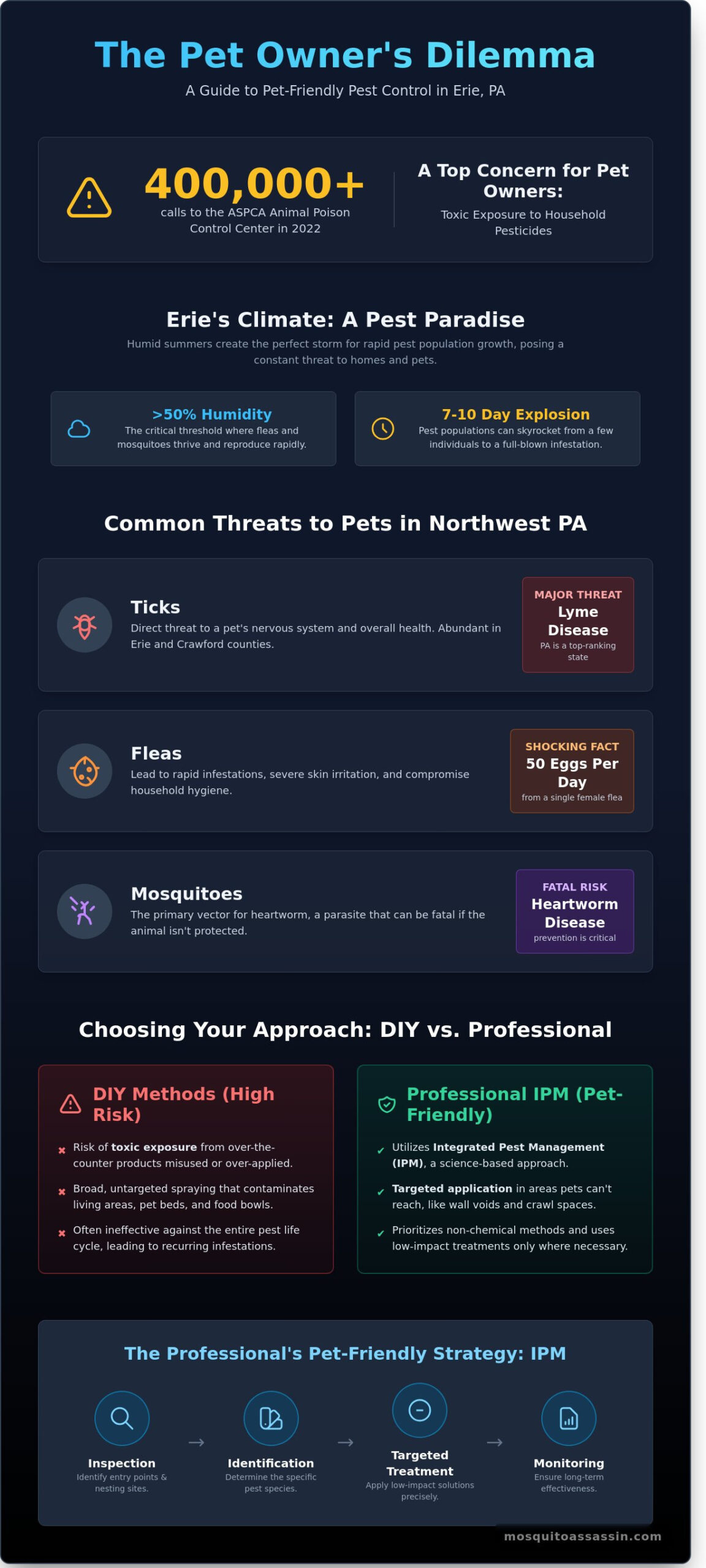
    In 2022, the ASPCA Animal Poison Control Center handled over 400,000 calls, with household chemicals and pesticides frequently ranking as top concerns for pet owners. It’s a common dilemma for residents seeking pet friendly pest control erie; you want to eliminate invasive spiders or rodents, but the fear of toxic exposure to your cats or dogs often leads to hesitation. Many homeowners find themselves stuck between ineffective “natural” sprays and the worry that professional treatments might be too harsh for their curious four-legged companions.

    Finding reliable solutions is about more than just reading labels; it’s about understanding how modern science protects animals while targeting pests. You’ll learn how professional management strategies prioritize the health of your household animals without compromising on effectiveness. This guide covers the specific pest risks found in Erie and Crawford Counties, the difference between DIY and professional safety standards, and how to maintain a pest-free home with total peace of mind. By the end, you’ll know exactly how to safeguard your property and your pets simultaneously.

    Disclaimer: The information provided on this blog is for general informational purposes only and is not intended as professional pest control advice. Conditions vary by property, environment, and location. Reading this content does not create a service agreement. For an inspection or professional recommendations, please contact Mosquito Assassin Pest Control LLC directly.

    Key Takeaways

    • Understand how Erie weather patterns influence seasonal pest behavior and why a targeted approach is necessary to maintain animal safety.
    • Discover the science of Integrated Pest Management (IPM) and how identifying specific nesting sites reduces the need for broad product application.
    • Learn why professional pet friendly pest control erie solutions provide a safer and more effective alternative to the risks of over-the-counter pesticides.
    • Gain practical steps for preparing your home and managing various pets (including birds and fish) before and after a professional service.
    • Identify the key qualifications for selecting a licensed pest management provider experienced in managing regional pest surges across the Tri-County area.

    What is Pet Friendly Pest Control and Why is it Essential in Erie?

    Pet-friendly pest management isn’t just a different set of products; it’s a strategic philosophy focused on targeted animal safety. It involves a shift from broad chemical applications to a precise methodology that minimizes exposure for dogs, cats, and other household animals. In a professional context, there’s a vital distinction between “pet-safe” and “pet-friendly.” While “safe” is often used as a marketing term, “pet-friendly” refers to a comprehensive approach using Integrated Pest Management (IPM). This science-based system prioritizes non-chemical prevention and uses low-impact treatments only where necessary, ensuring that the health of the pet remains a primary concern during the eradication process.

    Homeowners searching for pet friendly pest control erie often deal with unique environmental factors. Professional management ensures that treatments are applied in areas pets can’t reach, such as wall voids, crawl spaces, or specific outdoor perimeters. It’s about understanding animal behavior just as much as pest biology. By identifying the specific species and their nesting habits, professionals can eliminate the threat without saturating the living environment with unnecessary substances.

    To better understand how these methods work in a residential setting, watch this helpful video:

    Common Pests Affecting Pets in Northwest Pennsylvania

    Northwest Pennsylvania presents several biological threats to domestic animals. In 2023, Pennsylvania consistently ranked among the top states for Lyme disease cases, with Erie and Crawford counties seeing high tick activity in both wooded areas and manicured lawns. Ticks are a direct threat to a pet’s nervous system and overall health. Fleas are equally problematic; a single female flea can lay up to 50 eggs in a 24 hour period, leading to rapid infestations that compromise household hygiene. Furthermore, mosquitoes in the Tri-County area are the primary vector for heartworm, a condition that can be fatal if the animal isn’t protected. Effective pet friendly pest control erie focuses on breaking these life cycles before they move from the yard into the home.

    The Role of Local Climate in Pest Management

    The local climate in Erie and Ashtabula counties plays a massive role in pest behavior. Humid summers create the perfect breeding ground for mosquitoes and fleas, which thrive when relative humidity levels stay above 50%. These conditions allow pest populations to explode in as little as 7 to 10 days. Because of these rapid cycles, year-round protection is a standard practice for many local homeowners. Establishing a baseline of general pest control helps manage the property environment before populations reach a crisis point. Consistent monitoring ensures that the home remains a fortress against seasonal surges, keeping pets comfortable regardless of the weather outside.

    Disclaimer: The information provided on this blog is for general informational purposes only and is not intended as professional pest control advice. Conditions vary by property, environment, and location. Reading this content does not create a service agreement. For an inspection or professional recommendations, please contact Mosquito Assassin Pest Control LLC directly.

    The Science of Professional Pest Management and Animal Safety

    Effective pest management in residential areas across Erie County and Crawford County relies on Integrated Pest Management (IPM). This framework shifts the focus from reactive chemical application to a proactive, scientific strategy. By combining biological knowledge with physical barriers and targeted treatments, professionals minimize the presence of pests while maintaining a focus on household safety. This methodology is the foundation of pet friendly pest control erie homeowners expect, ensuring that treatments address the root cause of an infestation rather than just the symptoms.

    Professional technicians spend significant time identifying specific nesting sites and entry points. By pinpointing exactly where pests hide, such as wall voids or behind appliances, the amount of product used is drastically reduced compared to older, broad-spectrum methods. Targeted application is more effective because it places materials directly in the path of the pest, avoiding unnecessary contact with open surfaces where pets frequently roam. This approach uses science to create a barrier between the pest and the household environment.

    Understanding Targeted Application Methods

    Targeted treatments are designed to keep products out of reach from curious animals. Crack and crevice applications involve placing materials into narrow openings where pests live but pets cannot reach. For rodent management, technicians utilize tamper-resistant bait stations. These heavy-duty containers are designed to prevent dogs or cats from accessing the contents, even if they try to chew or move the station. When managing flying insects, mosquito control programs focus on the underside of specific outdoor foliage. This precision ensures the treatment remains where pests rest, rather than on the grass where pets play.

    Professional Training and Safety Standards

    State-licensed technicians undergo rigorous training to understand the chemistry and biology of pest control. This expertise is vital for ensuring proper dosage and preventing accidental over-exposure. A major component of professional safety is understanding pesticide labels, which are legal documents detailing exactly how and where a product can be applied. Professionals follow these instructions to the letter, ensuring that EPA-approved materials are used in accordance with federal safety guidelines. For those concerned about managing pests in a home with animals, reaching out for professional pest control may help reduce risk and provide peace of mind.

    Disclaimer: The information provided on this blog is for general informational purposes only and is not intended as professional pest control advice. Conditions vary by property, environment, and location. Reading this content does not create a service agreement. For an inspection or professional recommendations, please contact Mosquito Assassin Pest Control LLC directly.

    Pet Friendly Pest Control in Erie: A Guide to Safe Home Management

    Professional Methods vs. DIY: Prioritizing Household Animal Safety

    Homeowners in Erie often reach for store bought solutions at the first sign of ants or mice. While these products are accessible, they lack the precision of professional grade treatments. Effective pet friendly pest control erie requires more than just a spray bottle; it involves understanding chemical concentrations and animal physiology. Over the counter pesticides are often formulated for broad use, which can lead to over application. Professionals use products that are often more targeted, reducing the volume of chemicals introduced into the living space. This methodical approach ensures that pests are managed without turning the home into a hazardous environment for four legged family members.

    The Hidden Dangers of Mismanaged DIY Treatments

    A common mistake homeowners make is assuming that more product equals faster results. This logic often leads to over saturation of carpets or baseboards, which increases the likelihood of a pet coming into direct contact with wet residue. Small dogs and cats have a much lower tolerance for chemicals than humans. When homeowners apply “natural” remedies like essential oils, they might unknowingly cause respiratory distress or skin irritation in pets. For instance, tea tree oil and peppermint can be toxic to cats even in small concentrations.

    Another significant risk involves rodent control. Hardware store baits are often designed to be palatable, which unfortunately makes them attractive to curious dogs. This leads to a high risk of secondary poisoning if a pet finds a bait station or consumes a rodent that has ingested the toxin. Seeking professional rodent removal ensures that baiting systems are tamper resistant and strategically placed out of reach. Improper storage also accounts for many household accidents. A forgotten bottle of concentrate on a low shelf is a hazard that professional management eliminates by removing excess chemicals from the property.

    Why Professional Expertise Reduces Overall Risk

    Professionals evaluate the specific layout of a home in Erie County or Crawford County to identify high risk areas. This assessment includes looking for pet bowls, bedding, and favorite hiding spots. By following guidelines for safe pesticide use around pets, technicians apply treatments in cracks and crevices where pests hide but paws cannot reach. This precision is difficult to achieve with standard aerosol cans or foggers that coat every surface in a room.

    A customized plan focuses on Integrated Pest Management (IPM). This approach prioritizes exclusion and sanitation over chemical heavy responses. Sealing entry points and managing moisture levels provide long term prevention that reduces the need for future interventions. This proactive strategy ensures that pet friendly pest control erie remains a consistent standard rather than a one time fix. Expert technicians understand the biology of local pests in Ashtabula County and tailor their methods to protect both the structure and the animals living inside it.

    Disclaimer: The information provided on this blog is for general informational purposes only and is not intended as professional pest control advice. Conditions vary by property, environment, and location. Reading this content does not create a service agreement. For an inspection or professional recommendations, please contact Mosquito Assassin Pest Control LLC directly.

    Preparation and Post-Treatment Steps for Pet Owners

    Homeowners in Erie County, Crawford County, and Ashtabula County know that safeguarding a property requires a partnership between the resident and the technician. Achieving effective pet friendly pest control erie residents can trust depends on proactive steps taken before a technician arrives to handle the elimination process. While modern professional products prioritize safety, following a strict protocol ensures that dogs, cats, and exotic pets remain protected throughout the service.

    Pre-Service Checklist for Erie Homeowners

    Clear the environment thoroughly before the scheduled service time. This means removing 100% of pet toys, food dishes, water bowls, and bedding from the floor and any potential treatment zones. If a treatment involves baseboards or perimeter sprays, move furniture roughly 12 inches away from the walls. This provides the technician with clear access and prevents products from drifting onto upholstery.

    Managing the animals themselves is the most critical step. Dogs and cats should be secured in a crate, kept in a room not scheduled for treatment, or taken for a walk during the application. Birds and fish require specialized care due to their unique physiology. Birds have highly sensitive respiratory systems; it’s often best to move their cages to a different floor or a separate building entirely. For fish, homeowners should cover tanks with a damp towel and turn off air pumps for at least 2 hours to prevent any airborne particles from entering the water.

    Post-Service Safety Protocols

    Safety continues after the technician finishes the application. The primary rule is to wait until all treated surfaces are completely dry before allowing pets back into the area. In the climate of the Erie region, drying typically takes between 2 and 4 hours, though high humidity may extend this window. Airflow from floor fans or open windows can speed up the process. Once the product is dry, it generally binds to the surface and isn’t easily transferred to paws or fur.

    If a pet accidentally makes contact with a damp area, wipe their paws with a clean, wet cloth immediately. Homeowners should monitor their pets for a 24-hour period following a service. While professional pet friendly pest control erie treatments are designed with safety in mind, it’s vital to watch for unusual behavior. If a pet shows signs of lethargy, excessive drooling, or respiratory distress, contact a veterinarian immediately.

    Maintaining a pest-free home reduces the need for frequent chemical intervention. Seal gaps around pipes with silicone caulk and keep all pet food in airtight plastic containers to limit attractants. For those seeking a long-term management strategy, professional pest control may help reduce risk by identifying entry points before an infestation takes hold.

    Disclaimer: The information provided on this blog is for general informational purposes only and is not intended as professional pest control advice. Conditions vary by property, environment, and location. Reading this content does not create a service agreement. For an inspection or professional recommendations, please contact Mosquito Assassin Pest Control LLC directly.

    Selecting a Reliable Pest Management Partner in the Tri-County Area

    Finding the right pet friendly pest control erie means looking beyond a simple search result. A provider must demonstrate a commitment to animal safety while maintaining effective results. Homeowners should prioritize firms that provide detailed documentation on their treatment methods. This transparency ensures that every family member, including those with four legs, remains protected during the management process. Choosing a partner who understands the local landscape is essential for long term success.

    What to Look for in a Local Service Provider

    Verification of licensing is the first step in vetting a provider. In Pennsylvania and Ohio, technicians must hold specific certifications from the Department of Agriculture to apply treatments legally. A reputable provider will clearly explain their services and safety protocols before any work begins. They should be prepared to discuss specific concerns, such as how long a dog should stay off a treated lawn or what precautions are necessary for indoor cats. Quality providers often follow Integrated Pest Management (IPM) principles, which focus on long term prevention and minimize the use of materials. Always ask for proof of insurance to protect the property and the residents during the service visit.

    The Value of Community-Focused Expertise

    Local knowledge matters because pest patterns in the Tri-County area are unique. The proximity to Lake Erie creates specific moisture levels that drive surges in mosquito, tick, and ant populations. A team that understands Erie and surrounding locations can predict these surges based on seasonal weather shifts. For instance, a heavy spring thaw in Crawford County might lead to different pest pressures than a dry summer in Ashtabula County. Professional pest control may help reduce risk when managed by experts who live in the same environment. These technicians aren’t just workers; they’re neighbors who understand the specific challenges of the regional climate. This community focus often translates to better communication and more reliable follow up care.

    Verifying a company’s standing in the local community is a final, vital step. Look for providers with a consistent history of positive feedback on local review platforms. A strong reputation in Erie, Crawford, or Ashtabula counties indicates that the provider values their neighbors’ trust. It’s also helpful to check if the company maintains active memberships in professional organizations, which shows a commitment to staying updated on the latest safety standards. When a provider is transparent about their methods and has a proven track record, homeowners can feel more confident in their choice for pet friendly pest control erie.

    Disclaimer: The information provided on this blog is for general informational purposes only and is not intended as professional pest control advice. Conditions vary by property, environment, and location. Reading this content does not create a service agreement. For an inspection or professional recommendations, please contact Mosquito Assassin Pest Control LLC directly.

    Maintaining a Safe Environment for Every Family Member

    Managing pests in a household with animals requires a strategic approach that prioritizes long term safety over quick fixes. By utilizing Integrated Pest Management (IPM) principles, homeowners can address the root causes of infestations while minimizing chemical exposure. Choosing pet friendly pest control erie services ensures that treatments are applied by professionals who understand local environmental factors across Erie and Crawford Counties in Pennsylvania and Ashtabula County in Ohio. Licensed and insured technicians in PA and OH bring the expertise needed to safeguard a home without compromising the health of domestic animals.

    Professional pest control may help reduce risk. For an inspection or professional recommendations, contact Mosquito Assassin Pest Control LLC directly. It’s important to remember that being a locally owned and operated business means the team understands the specific pest challenges facing neighbors in the Tri-County area. Taking these proactive steps helps create a comfortable, pest free home where everyone can thrive. Protecting your property doesn’t have to be a stressful process when you have the right information and local support.

    Disclaimer: The information provided on this blog is for general informational purposes only and is not intended as professional pest control advice. Conditions vary by property, environment, and location. Reading this content does not create a service agreement. For an inspection or professional recommendations, please contact Mosquito Assassin Pest Control LLC directly.

    Frequently Asked Questions

    Is professional pest control safe for my dog or cat?

    Professional pest control is safe for dogs and cats when technicians follow strict EPA guidelines and product labels. Modern pet friendly pest control erie focuses on targeted applications that minimize exposure to household animals. Professionals prioritize products designed to be low-risk for mammals while effectively eliminating target insects. Homeowners should always disclose the presence of pets during the initial inspection to ensure the treatment plan accounts for their specific needs.

    How long do I need to keep my pets away after a treatment?

    Most liquid treatments require pets to stay away from the area for 30 to 60 minutes or until the product has completely dried. Once the application is dry, the active ingredients bind to the surface and pose minimal risk to animals walking through the area. For certain specialized treatments like fogging or exterior power sprays, professionals may recommend a longer window of 2 to 4 hours to ensure total safety and peace of mind for the household.

    Are there specific pests in Erie that are dangerous to my pets?

    Ticks and fleas are the most significant local threats to pets in Erie and Crawford Counties. According to the Pennsylvania Department of Health, 1 out of every 4 black-legged ticks in the region carries Lyme disease. Fleas can also cause severe dermatitis and transmit tapeworms to both cats and dogs. Effective pest management protects animals from these parasites, reducing the risk of illness and high veterinary costs associated with tick-borne diseases.

    Can “natural” pest control methods be harmful to animals?

    Some “natural” remedies like essential oils can be highly toxic to pets if inhaled or ingested. For instance, the ASPCA notes that tea tree oil and peppermint oil can cause tremors or liver failure in cats and small dogs. Just because a product is labeled as natural doesn’t mean it’s safe for every species. Professional technicians use scientifically tested products that have been vetted for safety around domestic animals, providing a more reliable alternative to DIY home remedies.

    What should I do if my pet accidentally touches a treated area?

    If a pet touches a wet treated area, the first step is to wash the affected paw or fur with mild dish soap and warm water. This prevents the animal from ingesting the product during grooming. While most modern products are highly diluted, owners should monitor their pets for 24 hours for signs of lethargy or upset stomach. If any unusual behavior occurs, contact a local veterinarian or the Pet Poison Helpline immediately for professional guidance.

    How does Integrated Pest Management (IPM) protect my household animals?

    Integrated Pest Management (IPM) protects pets by prioritizing non-chemical strategies like sealing cracks and removing food sources. This approach reduces the reliance on broad-spectrum sprays and focuses on targeted, low-impact solutions. By addressing the root cause of an infestation, IPM minimizes the amount of product used in the home environment. This methodical process ensures that pest populations are controlled without creating unnecessary exposure for dogs, cats, or other household animals.

    Do I need to leave my home during a pet-friendly treatment?

    Most standard pet friendly pest control erie treatments don’t require residents or their pets to vacate the entire home. Technicians often treat specific areas like baseboards or exterior perimeters while pets remain in a separate room. However, for intensive services like indoor flea treatments or whole-home misting, professionals typically advise leaving the premises for 2 to 4 hours. Clear communication with the technician before the service begins helps determine the best safety protocol for each specific situation.

    Are rodent bait stations safe if I have a curious dog?

    Professional rodent bait stations are designed to be tamper-resistant to protect curious dogs and cats. These heavy-duty plastic containers are locked and weighted, preventing pets from reaching the bait inside. Licensed technicians in Ashtabula and Erie Counties use Tier 1 stations, which are the highest safety grade tested against children and pets. This ensures that only the target rodents can access the material, keeping household animals safe from accidental ingestion.

    Disclaimer: The information provided on this blog is for general informational purposes only and is not intended as professional pest control advice. Conditions vary by property, environment, and location. Reading this content does not create a service agreement. For an inspection or professional recommendations, please contact Mosquito Assassin Pest Control LLC directly.

  • How to Get Rid of Ticks in Your Yard in Pennsylvania: A Professional Guide

    How to Get Rid of Ticks in Your Yard in Pennsylvania: A Professional Guide

    Last June, a homeowner in Erie County discovered three deer ticks on their dog after just ten minutes of backyard play. It’s a common and stressful scenario for families across the region, especially since Pennsylvania reported over 10,000 cases of Lyme disease in 2021 alone. You likely feel that same anxiety every time your children or pets step onto the grass, wondering if today is the day a simple outing leads to a serious health concern. Learning how to get rid of ticks in yard Pennsylvania landscapes requires a methodical approach that goes beyond basic maintenance.

    You deserve to feel confident and safe while enjoying your outdoor space. This professional guide shares proven strategies for managing local tick populations through habitat modification, wildlife management, and expert intervention. The following sections examine how to identify high-risk zones on your property, implement effective barriers, and determine when a situation requires professional-grade solutions. By the end of this article, you’ll have a clear roadmap for maintaining a yard that’s built for relaxation rather than worry.

    Disclaimer: The information provided on this blog is for general informational purposes only and is not intended as professional pest control advice. Conditions vary by property, environment, and location. Reading this content does not create a service agreement. For an inspection or professional recommendations, please contact Mosquito Assassin Pest Control LLC directly.

    Key Takeaways

    • Identify common species like the Blacklegged tick to better understand their specific activity patterns and habitat preferences in Northwest Pennsylvania.
    • Learn how consistent yard maintenance, including frequent mowing and leaf litter removal, eliminates the damp environments where ticks typically quest and overwinter.
    • Discover how to get rid of ticks in yard pennsylvania properties by creating three-foot physical barriers using wood chips or gravel to separate wooded areas from active lawn spaces.
    • Understand the role of Integrated Pest Management and professional inspections in identifying specific tick hotspots and managing local wildlife hosts like white-tailed deer.
    • Develop a year-round prevention strategy that prioritizes consistent habitat modification and routine property assessments for long-term population suppression.

    Common Tick Species and Activity Patterns in Pennsylvania

    Pennsylvania consistently ranks among the top states for tick-related incidents. Understanding the specific species in Northwest Pennsylvania helps homeowners determine how to get rid of ticks in yard pennsylvania environments. The Blacklegged tick (Ixodes scapularis), commonly called the deer tick, is the most prevalent species in Erie and Crawford Counties. These ticks thrive in the moist leaf litter found at the edges of wooded properties. They’re the primary vector for several serious illnesses in the region.

    The American Dog tick (Dermacentor variabilis) is another frequent visitor, though it prefers different habitats. Unlike the shade-loving deer tick, the American Dog tick gravitates toward open, sunny, grassy areas and overgrown fields. Additionally, the Lone Star tick (Amblyomma americanum) is expanding its range into the Pennsylvania and Ohio border regions, including Ashtabula County. This species is known for its aggressive biting behavior and the distinct white spot on the female’s back. Each of these species requires a different understanding of habitat to manage effectively.

    When are ticks most active in PA?

    Tick activity in the local region follows a distinct seasonal pattern, peaking from April through September. Nymph-stage ticks, which are approximately the size of a poppy seed, are most active during the spring and early summer months. Because they’re so small, they often go unnoticed by people working in their gardens. Adult ticks don’t simply disappear when the temperature drops. They remain active during winter thaws whenever temperatures rise above 45 degrees Fahrenheit. High humidity is essential for tick survival; they require environments with at least 85% relative humidity to prevent dehydration. Shaded yards with dense vegetation provide the perfect microclimate for these pests to thrive throughout the year.

    Tick-borne health risks in the Erie and Crawford region

    The primary concern for residents in Erie and Crawford Counties is Lyme disease. Pennsylvania often reports over 10,000 cases of Lyme disease annually, making early detection and yard management critical. Beyond Lyme, emerging threats like Anaplasmosis and the rare but serious Powassan virus are increasing in frequency across the state. These pathogens can be transmitted in a matter of hours or days depending on the specific virus or bacteria involved. Implementing a comprehensive plan for how to get rid of ticks in yard pennsylvania settings, including professional pest control, may help reduce risk for families and pets by targeting ticks where they live and breed. Professional inspections can identify high-risk zones on a property that a standard visual check might miss.

    Disclaimer: The information provided on this blog is for general informational purposes only and is not intended as professional pest control advice. Conditions vary by property, environment, and location. Reading this content does not create a service agreement. For an inspection or professional recommendations, please contact Mosquito Assassin Pest Control LLC directly.

    Essential Yard Maintenance for Tick Suppression

    Maintaining a property in Erie or Crawford County requires more than just visual appeal; it’s a strategic move for family safety. Ticks, particularly the black-legged tick common in Pennsylvania, rely on high moisture levels and consistent shade to survive. When homeowners investigate how to get rid of ticks in yard pennsylvania locations, the answer begins with altering the local microclimate to make it inhospitable for these arachnids.

    Integrated pest management relies heavily on physical changes to the environment. By reducing the areas where ticks can hide and quest, property owners can significantly lower the local population before they ever encounter a host. These maintenance efforts work in tandem with general pest control protocols to create a comprehensive barrier against infestations in high-traffic areas.

    Mowing and vegetation management

    Grass height is a primary factor in tick survival. Ticks don’t jump or fly; they quest by climbing to the top of vegetation and waiting for a person or pet to pass by. Keeping lawn grass to a height of three inches or less removes these elevated questing platforms. Shorter grass also allows the sun to reach the soil, which increases ground temperature and lowers the humidity ticks need to stay hydrated.

    Clearing tall weeds and brush from the perimeter is equally vital for residents in Ashtabula or Crawford County. Research from the CDC indicates that nearly 82% of ticks in suburban yards are found in the transitional zone between the lawn and the woods. Trimming low-hanging branches on shrubs and trees further eliminates the deep shade that protects ticks from the drying effects of the sun. Keeping these areas clear forces ticks to retreat further into the woods and away from the home.

    Debris removal and moisture control

    Organic debris acts as a thermal blanket for ticks. In Pennsylvania, tick nymphs often overwinter in leaf piles, emerging in the spring to find hosts. Removing these piles by late autumn reduces the number of ticks that survive the winter. Woodpiles should be stacked neatly and kept in dry, sunny locations, as these spots are less likely to harbor the white-footed mice that serve as primary blood meal sources for young ticks.

    Ground covers like pachysandra or heavy mulch layers create a humid microclimate that ticks prefer. If these plants are located near walkways or play sets, thinning them out can reduce the risk of contact. For those seeking a long-term strategy on how to get rid of ticks in yard pennsylvania properties, a professional property assessment may help identify specific high-risk zones that require attention. Eliminating standing water and improving drainage also helps keep the soil surface dry, further discouraging tick activity.

    Disclaimer: The information provided on this blog is for general informational purposes only and is not intended as professional pest control advice. Conditions vary by property, environment, and location. Reading this content does not create a service agreement. For an inspection or professional recommendations, please contact Mosquito Assassin Pest Control LLC directly.

    How to Get Rid of Ticks in Your Yard in Pennsylvania: A Professional Guide

    Creating Physical Barriers and Managing Wildlife Hosts

    Ticks don’t jump or fly; they rely on direct contact to move from the environment onto a host. In Erie and Crawford Counties, Pennsylvania, many properties border dense woods or tall brush where ticks thrive. Creating a physical separation between these high-risk areas and the active lawn is a fundamental strategy for how to get rid of ticks in yard pennsylvania. A three-foot wide barrier consisting of wood chips, gravel, or river rock serves as a dry “no-man’s land.” Ticks are highly sensitive to desiccation, which is the process of drying out. Because these materials retain heat and lack moisture, ticks are less likely to crawl across them into the manicured parts of the yard.

    Managing the wildlife that brings ticks onto a property is equally vital for long-term control. White-tailed deer are the primary hosts for adult black-legged ticks. A single deer can carry hundreds of ticks, dropping gravid females that will eventually lay thousands of eggs in the leaf litter. While deer are the visible carriers, small rodents like the white-footed mouse are the primary reservoir for the Lyme disease bacterium. Larval and nymphal ticks pick up the pathogen when they feed on these infected rodents. Implementing rodent removal strategies and habitat modification can significantly reduce the local tick population by removing the hosts they need to survive. Comprehensive property safety depends on addressing both the parasites and the animals that transport them.

    Hardscaping for tick prevention

    Ticks avoid crossing dry, sun-exposed surfaces because they require high humidity to survive. Using hardscaping elements like gravel paths or mulch beds creates a hostile environment for these pests. Property owners should place playground equipment, patios, and seating areas in sunny, central locations away from the yard’s perimeter. Maintaining clear, wide paths through any naturalized or wooded areas on the property ensures that residents don’t brush against questing ticks. This structural approach is a key part of understanding how to get rid of ticks in yard pennsylvania without relying solely on chemical applications.

    Discouraging deer and rodent hosts

    Reducing wildlife traffic requires making the property less hospitable to large and small carriers. Selecting deer-resistant plants such as lavender, boxwood, or certain ornamental grasses can decrease the frequency of deer visits. Removing bird feeders or cleaning up fallen fruit is essential; these food sources attract mice and rats that harbor disease-carrying nymphs. For properties with heavy deer pressure, physical fencing at least 8 feet tall is often the only way to limit wildlife access to the inner yard. Professional pest control may help reduce risk when combined with these proactive habitat changes.

    Disclaimer: The information provided on this blog is for general informational purposes only and is not intended as professional pest control advice. Conditions vary by property, environment, and location. Reading this content does not create a service agreement. For an inspection or professional recommendations, please contact Mosquito Assassin Pest Control LLC directly.

    The Role of Professional Integrated Pest Management

    Integrated Pest Management (IPM) is a science-based decision-making process that identifies and reduces risks from pests through a combination of biological, cultural, and physical tools. For homeowners researching how to get rid of ticks in yard pennsylvania, IPM represents a shift away from reactive spraying toward a proactive, ecological strategy. This method prioritizes long-term prevention by managing the environment to make it less hospitable for ticks. Professionals use this framework to ensure that every action taken is necessary, effective, and mindful of the local ecosystem.

    A primary benefit of the IPM approach is the focus on targeted treatments rather than broad-spectrum applications. While generic treatments might provide temporary relief, they often fail to address the root cause of an infestation and can inadvertently impact beneficial insects. Professional technicians focus on specific “hotspots” where ticks are most likely to congregate. This precision reduces the total amount of product applied to the property while maximizing the impact on the tick population. Homeowners looking for a tailored approach can explore professional services that utilize these advanced IPM principles.

    The professional inspection process

    A successful tick suppression strategy begins with a comprehensive property evaluation. Technicians analyze property typography and drainage patterns, as ticks require high humidity to survive and will quickly desiccate in dry, sunny areas. They also identify wildlife corridors, such as the deer paths frequently found in Erie and Crawford Counties, which serve as primary transport routes for adult ticks. By mapping out “tick zones,” such as the ecotone where a manicured lawn meets a wooded border, professionals can pinpoint exactly where children and pets are most at risk. This inspection establishes a critical baseline of activity, allowing for a more accurate assessment of treatment efficacy over time.

    Strategic timing for professional treatments

    Effective tick management requires an understanding of the complex life cycles of local species. The black-legged tick, for instance, has a two-year life cycle consisting of four stages: egg, larva, nymph, and adult. Professional treatments are strategically timed to coincide with peak activity periods for nymphs and adults, which are the stages most likely to bite humans. Perimeter treatments act as a defensive barrier, stopping ticks from migrating from tall grasses or leaf litter into active play areas. Furthermore, a mosquito control program often complements these efforts. Because both pests thrive in similar shaded and damp environments, coordinated treatments can significantly improve the overall comfort and safety of the outdoor living space.

    For those concerned about tick activity on their property, professional pest control may help reduce risk through a customized evaluation.

    Disclaimer: The information provided on this blog is for general informational purposes only and is not intended as professional pest control advice. Conditions vary by property, environment, and location. Reading this content does not create a service agreement. For an inspection or professional recommendations, please contact Mosquito Assassin Pest Control LLC directly.

    Establishing a Year-Round Tick Prevention Strategy

    Understanding how to get rid of ticks in yard pennsylvania requires more than a single application or a weekend of yard work. Ticks like the black-legged tick operate on a complex two-year life cycle, transitioning through egg, larva, nymph, and adult stages. A one-time treatment might eliminate active adults, but it won’t affect eggs tucked away in the soil or nymphs protected by heavy brush. Consistency is the only way to break this cycle and prevent new populations from establishing themselves on your property.

    Residents in Erie, Crawford, and Ashtabula counties live in high-risk zones where humidity levels and wooded landscapes create ideal tick habitats. Relying on seasonal efforts often leaves gaps in protection during the spring and fall peaks. Personal protection protocols are vital for anyone spending time outdoors in these regions. This includes wearing light-colored clothing to spot crawling ticks easily and using EPA-registered repellents containing DEET or picaridin. For those seeking localized data on tick pressure, visiting Mosquito Assassin locations can provide insights into regional trends and professional management strategies.

    Spring and summer maintenance checklist

    During the peak activity months between April and August, property owners should focus on physical barriers and host management. Ticks don’t jump or fly; they rely on questing, which involves waiting on the tips of tall grass or shrubs to hitch a ride on a passing host.

    • Monthly property inspections: Walk the perimeter of your lawn every 30 days to identify overhanging branches or tall weeds that touch high-traffic areas. Trimming these back reduces the “questing” opportunities for ticks.
    • Monitor rodent activity: Mice and chipmunks are the primary reservoirs for Lyme disease. Identifying small burrows or nests near the home foundation is a priority, as these animals carry tick larvae into your immediate living space.
    • Maintain the tick-free zone: Keep a 3-foot wide barrier of wood chips or gravel between your lawn and any wooded areas. This dry zone acts as a physical deterrent that many tick species find difficult to cross.

    Fall and winter preparation

    Tick activity doesn’t end when the temperature drops. Adult black-legged ticks remain active whenever the ground isn’t frozen and temperatures stay above 45 degrees Fahrenheit. Winter preparation is about removing the insulation these pests need to survive the cold months.

    • Leaf removal: Complete a final leaf raking and removal before the first snow. Thick layers of leaf litter provide a microclimate that protects ticks from freezing temperatures.
    • Foundation exclusion: Inspect the home foundation for gaps larger than 1/4 inch. Sealing these entry points prevents rodents from seeking shelter inside, which in turn prevents them from bringing ticks into crawlspaces or basements.
    • Early season planning: Late winter is the best time for professional consultations. Developing a plan before the spring thaw ensures that the first treatments are applied exactly when nymphs begin to emerge.

    Consistent yard maintenance combined with professional pest control may help reduce risk for families and pets throughout the year. For more information on local service options, you can contact a professional through the online booking portal.

    Disclaimer: The information provided on this blog is for general informational purposes only and is not intended as professional pest control advice. Conditions vary by property, environment, and location. Reading this content does not create a service agreement. For an inspection or professional recommendations, please contact Mosquito Assassin Pest Control LLC directly.

    Protecting Your Property From Tick Activity

    Maintaining a tick-free environment requires a multi-layered approach that combines habitat modification with professional oversight. Regular lawn care, such as keeping grass short and clearing leaf litter, removes the damp environments where ticks thrive. Establishing physical barriers like gravel or wood chips between wooded areas and lawn spaces further limits tick migration into high-traffic zones. It’s important to remember that local wildlife like deer and mice often carry these pests onto the property, making perimeter management essential.

    Understanding how to get rid of ticks in yard pennsylvania involves consistent effort and an awareness of local seasonal patterns. Licensed professionals in Erie, Crawford, and Ashtabula Counties utilize family-safe integrated pest management strategies to address specific property vulnerabilities. These expert interventions help reduce the presence of black-legged ticks while ensuring the safety of household pets and children. Professional pest control doesn’t just treat the symptoms; it addresses the root causes of infestation. For a professional property inspection and customized tick management recommendations, contact Mosquito Assassin Pest Control LLC today. Taking proactive steps now ensures a safer outdoor space for the entire family throughout the year.

    Disclaimer: The information provided on this blog is for general informational purposes only and is not intended as professional pest control advice. Conditions vary by property, environment, and location. Reading this content does not create a service agreement. For an inspection or professional recommendations, please contact Mosquito Assassin Pest Control LLC directly.

    Frequently Asked Questions

    How do I know if I have ticks in my yard in Pennsylvania?

    You can identify tick presence by performing a “tick drag” using a white piece of fabric across tall grass and shrubbery. If ticks are present, they’ll latch onto the cloth, making them easy to spot. The Pennsylvania Department of Health notes that the black-legged tick is found in all 67 counties; therefore, checking shaded areas near wooded edges is essential for homeowners in Erie and Crawford counties.

    What is the fastest way to get rid of ticks in a large yard?

    Professional barrier treatments are the most efficient method for how to get rid of ticks in yard pennsylvania properties. These liquid applications target the perimeter where ticks hide, providing rapid reduction in population. Maintaining a 3 foot wide barrier of wood chips or gravel between the lawn and wooded areas also prevents ticks from migrating into active recreation zones.

    Are there plants that naturally repel ticks in Pennsylvania?

    Lavender, rosemary, and marigolds are known to repel ticks, but they only cover a small radius around the plant. While these plants contain oils ticks dislike, they don’t provide a complete solution for a large property. Research indicates that while certain scents repel, they don’t eliminate an established tick population; therefore, they’re best used as a supplement to other control methods.

    Do tick yard treatments really work against Lyme disease?

    Yard treatments effectively reduce the population of ticks that carry Lyme disease, which lowers the risk of transmission. In 2021, Pennsylvania reported over 2,900 confirmed cases of Lyme disease, the highest in the nation. By reducing the number of black-legged ticks in high-traffic areas by up to 90 percent, professional treatments significantly lower the likelihood of a tick bite occurring on the property.

    When is the best time to spray for ticks in Erie, PA?

    In Erie, PA, the first treatment should occur in late March or early April when temperatures consistently reach 45 degrees Fahrenheit. This timing targets adult ticks emerging from winter dormancy. A second critical window occurs in October or November to address the fall surge of adult black-legged ticks before the ground freezes for the winter.

    Can ticks live in short grass or mowed lawns?

    Ticks can survive in short grass, though they’re 70 percent more likely to be found in unmowed areas or leaf litter. They require high humidity to prevent dehydration, which short, sunny lawns don’t usually provide. However, if a lawn is shaded or damp, ticks can still thrive even at a 3 inch blade height; consequently, mowing alone isn’t a guaranteed fix.

    Does a professional mosquito treatment also kill ticks?

    Many professional mosquito treatments use active ingredients that also affect ticks, but the application techniques are different. Mosquito treatments focus on the foliage of trees and shrubs, while tick treatments must reach the ground and the lower 3 feet of vegetation. A professional pest control plan may help reduce risk by combining these methods to cover all habitats.

    How often should a yard be treated for ticks in the Pennsylvania climate?

    Pennsylvania yards typically require treatments every 30 to 45 days from April through November to maintain a protective barrier. This schedule covers the life cycles of various species, including the nymph stage in early summer and the adult stage in autumn. Regular intervals prevent new ticks brought in by wildlife from establishing a permanent presence in the yard.

    Disclaimer: The information provided on this blog is for general informational purposes only and is not intended as professional pest control advice. Conditions vary by property, environment, and location. Reading this content does not create a service agreement. For an inspection or professional recommendations, please contact Mosquito Assassin Pest Control LLC directly.

  • Pet Friendly Pest Control in Pennsylvania: A Guide for Homeowners

    Pet Friendly Pest Control in Pennsylvania: A Guide for Homeowners

    What if the treatment meant to protect your home from disease-carrying ticks actually posed a greater risk to your dog or cat than the pests themselves? It’s a common concern for homeowners, especially since roughly 66% of households in the United States share their living space with at least one animal. Finding reliable pet friendly pest control pennsylvania families can trust involves more than just reading a label. It requires a professional understanding of how treatments interact with a pet’s environment in Erie, Crawford, and Ashtabula Counties.

    It’s natural to feel hesitant when balancing the need for a pest-free home with the well-being of your animals. You’ll learn how modern pest management techniques prioritize low-impact solutions that eliminate pests without leaving hazardous residues behind for curious paws to find. This guide provides a clear look at the differences between marketing buzzwords and truly safe practices, along with practical steps to prepare your home in Northwest Pennsylvania for a professional visit. By understanding local risks and proper preparation, you can maintain a secure environment for every member of the family.

    Disclaimer: The information provided on this blog is for general informational purposes only and is not intended as professional pest control advice. Conditions vary by property, environment, and location. Reading this content does not create a service agreement. For an inspection or professional recommendations, please contact Mosquito Assassin Pest Control LLC directly.

    Key Takeaways

    • Understand the professional definition of pet-safe treatments, which prioritizes products with low mammalian toxicity to protect household animals.
    • Identify common regional pests like ticks and fleas that pose year-round health risks to pets in Erie and Crawford Counties.
    • Learn how science-based Integrated Pest Management (IPM) uses non-chemical methods and exclusion techniques to prevent infestations before they start.
    • Discover practical preparation steps for homeowners, including how to manage pet food and belongings during a professional treatment.
    • Gain insights on selecting a provider for pet friendly pest control pennsylvania that understands the local climate and specific pest challenges of the Tri-State area.

    Defining Pet Friendly Pest Control in Pennsylvania

    Pet owners in Erie and Crawford Counties often prioritize the safety of their animals when dealing with household invaders. In the context of professional management, pet friendly pest control pennsylvania refers to a strategic approach that minimizes risk to non-target species. This process focuses on selecting products with low mammalian toxicity, meaning the active ingredients are specifically designed to disrupt the biology of insects rather than mammals. According to the American Pet Products Association (APPA) 2023-2024 survey, 66% of U.S. households own a pet, making these safety protocols a standard requirement for residential services.

    The Environmental Protection Agency (EPA) regulates these applications through strict labeling requirements under the Federal Insecticide, Fungicide, and Rodenticide Act (FIFRA). A professional application adheres to these federal mandates, ensuring that products are used at concentrations that are effective against pests but remain below thresholds that would harm a dog or cat. Unlike over-the-counter sprays, professional treatments often utilize bait stations or targeted crack and crevice applications that keep products out of reach of curious paws.

    To better understand this concept, watch this helpful video:

    The Difference Between Natural and Pet Safe

    Many homeowners assume that “natural” means “safe,” but this is a common misconception. For instance, certain essential oils like peppermint or tea tree can be toxic to cats if inhaled or absorbed through the skin in high concentrations. A truly pet safe approach focuses on the application method and the necessary drying time. Most professional liquid treatments are considered safe for pets once they’ve completely dried, a process that typically takes 30 to 60 minutes depending on humidity levels in Northwestern Pennsylvania. Following the specific instructions on a product label is the only way to ensure the safety of every animal in the home.

    Professional Standards for Residential Properties

    In Pennsylvania and Ohio, technicians must meet rigorous licensing requirements overseen by the Pennsylvania Department of Agriculture and the Ohio Department of Agriculture. These professionals undergo training to understand pest biology, which allows for more targeted treatments. By using Integrated Pest Management (IPM), experts focus on removing the sources of food and water that attract pests first. This reduces the reliance on heavy chemical applications. Modern pest management has shifted toward low-impact formulations, such as gel baits and insect growth regulators (IGRs), which target specific life stages of insects without affecting the health of larger animals. This scientific approach ensures that pet friendly pest control pennsylvania remains effective while safeguarding the local environment in Ashtabula and surrounding counties.

    Professional knowledge of pest behavior allows for the placement of products in areas where pets don’t typically travel. Technicians identify entry points and nesting sites, applying materials directly to the source of the infestation. This precision is a hallmark of licensed services, contrasting sharply with the broad, indiscriminate spraying often seen with DIY attempts. Homeowners who work with local professionals benefit from treatments tailored to the specific pests found in the Tri-State area, ensuring a higher level of safety for the entire family.

    Disclaimer: The information provided on this blog is for general informational purposes only and is not intended as professional pest control advice. Conditions vary by property, environment, and location. Reading this content does not create a service agreement. For an inspection or professional recommendations, please contact Mosquito Assassin Pest Control LLC directly.

    Common Pennsylvania Pests That Threaten Pet Health

    Pennsylvania’s diverse ecosystem supports a wide range of wildlife and insects that present significant biological threats to domestic animals. In Erie County, the black-legged tick is a primary vector for Lyme disease. Statistics from the Pennsylvania Department of Health show that the state recorded 8,432 confirmed cases of Lyme disease in 2022, consistently ranking it among the highest in the United States. This isn’t just a human health issue; dogs and cats are equally susceptible to tick-borne illnesses that can cause chronic joint pain, lethargy, or even fatal kidney failure if left untreated.

    Fleas represent a different but equally persistent challenge because they thrive in the Northwest Pennsylvania climate throughout the year. While outdoor activity increases exposure, fleas often hitchhike into homes on clothing or other animals. Once they establish a presence indoors, a single female flea can lay 50 eggs per day. This leads to a massive infestation within 21 days, causing pets to suffer from severe allergic dermatitis and potential tapeworm infections.

    Mosquitoes serve as the sole vector for heartworm, a potentially fatal condition for both dogs and cats. The American Heartworm Society reports that mosquitoes can breed in as little as half an inch of standing water. In Pennsylvania, where humidity levels often exceed 70% during summer months, mosquito populations can explode rapidly. Professional management focuses on these breeding sites to protect outdoor play areas where pets spend their time. Understanding these threats is the first step toward implementing pet friendly pest control pennsylvania that works.

    Rodents like mice and rats also pose direct risks to household pets. These pests carry internal parasites such as mites and roundworms. If a pet hunts or interacts with a rodent, they can contract these parasites, leading to digestive issues or long-term health complications. Homeowners seeking to minimize these biological threats may find that professional pest control helps reduce risk for the entire household.

    Tick and Flea Risks in Northwest Pennsylvania

    Wooded areas in Crawford County provide the perfect habitat for ticks to thrive. Peak activity usually occurs between April and October when temperatures stay above 45 degrees Fahrenheit. Professional yard treatments target high-risk zones like tall grass and leaf litter where ticks wait for a host. To maximize safety, homeowners should Protect Your Pets by coordinating property treatments with veterinary-prescribed flea and tick preventatives. This multi-layered approach is a cornerstone of effective pet friendly pest control pennsylvania.

    Mosquito Management and Outdoor Safety

    Standing water is the primary driver of mosquito populations in Pennsylvania yards. Common breeding grounds often go unnoticed by homeowners. These include:

    • Clogged rain gutters that hold damp debris
    • Birdbaths that aren’t scrubbed and emptied weekly
    • Corrugated drainage pipes connected to downspouts
    • Potted plant saucers and discarded tires

    Professional mosquito control reduces these populations by addressing larvae before they reach adulthood. This safeguards pets during their peak outdoor hours at dawn and dusk. Identifying and eliminating these water sources significantly lowers the local mosquito count, providing a safer environment for pets to exercise and play without the constant threat of bites.

    Disclaimer: The information provided on this blog is for general informational purposes only and is not intended as professional pest control advice. Conditions vary by property, environment, and location. Reading this content does not create a service agreement. For an inspection or professional recommendations, please contact Mosquito Assassin Pest Control LLC directly.

    The Role of Integrated Pest Management (IPM) in Pet Safety

    Integrated Pest Management, or IPM, represents a shift from traditional broadcast spraying to a science-based strategy. This approach focuses on long-term prevention by managing the environment rather than just reacting to pests. For residents seeking pet friendly pest control pennsylvania, IPM provides a framework where non-chemical solutions are the first line of defense. By understanding the biology and lifecycle of a pest, technicians disrupt their survival without introducing unnecessary risks to cats or dogs.

    Exclusion techniques are a cornerstone of this process. It’s a physical way to keep pests out. For example, a house mouse can squeeze through a gap only 0.25 inches wide, which is roughly the width of a pencil. Sealing these entry points with hardware cloth or copper wool prevents the need for interior rodenticides. Sanitation is another primary tool. Pests enter homes in search of food, water, and shelter. Fixing a leaky pipe under a kitchen sink or storing pet food in airtight, hard-plastic containers eliminates the attractants that bring insects inside. When these environmental factors are managed, the footprint of any required treatment is significantly reduced.

    When treatments are necessary, IPM dictates targeted applications. Instead of broad perimeter sprays that pets might walk through, professionals apply products in localized areas. This might include injecting gels into deep cracks or using tamper-resistant bait stations that keep products away from curious paws. According to the National Pesticide Information Center’s guide on Pets and Pesticide Use, minimizing the area of application is a key step in reducing accidental exposure. This methodical approach ensures the treatment hits the target pest while leaving the rest of the home untouched.

    Inspection and Identification

    Every effective IPM plan begins with a meticulous inspection of the property. In older Pennsylvania homes, particularly those in Erie and Crawford Counties, stone foundations and aging siding often provide easy access for ants and rodents. Technicians look for specific rub marks from grease on rodent fur or nesting materials in crawlspaces. By identifying the exact species, a customized plan is created for the specific layout of the residence. This prevents a generic approach that might include unnecessary products.

    Monitoring and Targeted Treatments

    Monitoring stations allow for real-time tracking of pest activity. These tools act as an early warning system, showing where pests are moving before an infestation becomes visible. If activity is found, treatments are applied only in inaccessible areas like wall voids or behind heavy appliances. Utilizing professional pest control services for ongoing monitoring ensures that problems are caught early. This proactive stance maintains a pest-free environment with the lowest possible risk profile for household animals. For property-specific questions, contacting a professional through the online booking portal can help clarify the best approach for a particular home.

    Disclaimer: The information provided on this blog is for general informational purposes only and is not intended as professional pest control advice. Conditions vary by property, environment, and location. Reading this content does not create a service agreement. For an inspection or professional recommendations, please contact Mosquito Assassin Pest Control LLC directly.

    How Homeowners Can Prepare for a Professional Pest Service

    Preparation is the most critical step in ensuring that pet friendly pest control pennsylvania remains effective and safe. While professional technicians bring the expertise and specialized products, homeowners in Erie and Crawford Counties play a vital role in the process. A well prepared home allows the technician to work efficiently and prevents accidental exposure to sensitive animals. Most preparation tasks take approximately 30 to 45 minutes but provide long term peace of mind for the entire household.

    Clear communication stands as the foundation of a successful treatment. It’s necessary to inform the service provider about every animal residing on the property. This includes not just dogs and cats, but also birds, reptiles, and small mammals like guinea pigs or hamsters. Different species have varying respiratory rates and metabolic sensitivities. For instance, birds possess highly efficient respiratory systems that make them more vulnerable to airborne particles than most mammals. By identifying these residents early, the professional can adjust the application methods to suit the specific environment.

    Pre-Service Checklist for Pet Owners

    Homeowners should begin their preparation by clearing the floor of all pet related items. This includes toys, chew bones, bedding, and food or water bowls. Removing these items prevents them from coming into contact with any mist or droplets during the application. If a pet has a favorite rug or bed that cannot be moved, it should be laundered or placed in a sealed plastic bag until the treatment is complete. Technicians recommend a 10 foot clearance around the perimeter of rooms where baseboard treatments are planned.

    • Secure all pets: Animals should be placed in a crate or a room that isn’t scheduled for treatment. This prevents them from following the technician or accidentally stepping into wet product.
    • Cover fish tanks: Use a heavy towel or plastic wrap to seal the top of the tank completely. Airborne particles can settle on the water surface and harm aquatic life.
    • Turn off air pumps: Disconnect the power to fish tank aerators for at least 2 to 3 hours. This stops the pump from pulling room air into the water during the service.

    During and After the Treatment

    Safety doesn’t end when the technician leaves the driveway. The “dry to the touch” rule is the gold standard for re-entry. Most liquid applications require between 2 and 4 hours to dry completely, depending on the humidity levels in Pennsylvania or Ohio. If the weather is damp, drying times can extend by an additional 60 minutes. Keeping pets out of treated areas until they’re dry is the most effective way to prevent paw contact and subsequent grooming ingestion.

    Ventilation is a key factor in post-treatment safety. Once the technician gives the all clear, opening windows for 15 to 20 minutes can help refresh the indoor air. Homeowners should also consult with their professional about specific wait times for different species. For example, while a dog might be fine after 2 hours, a sensitive reptile might benefit from a 4 to 6 hour waiting period. If a pet owner notices any unusual behavior in their animal after a service, they should contact a veterinarian immediately as a standard precaution. Following these protocols ensures the home remains a safe sanctuary for everyone. For those ready to begin the process, scheduling an inspection through the online portal can help identify the specific needs of the property.

    Disclaimer: The information provided on this blog is for general informational purposes only and is not intended as professional pest control advice. Conditions vary by property, environment, and location. Reading this content does not create a service agreement. For an inspection or professional recommendations, please contact Mosquito Assassin Pest Control LLC directly.

    Selecting a Professional Pest Service in Northwest Pennsylvania and Northeast Ohio

    Choosing a provider in Erie, Crawford, or Ashtabula Counties requires looking past basic search results. A technician needs to understand why pests behave differently in Meadville compared to Conneaut. Local climate factors, like the high humidity and lake-effect moisture near Lake Erie, dictate pest activity levels throughout the year. A provider that fails to account for these specific regional variables often provides sub-par results. Professional services should focus on identifying the root cause of an infestation rather than just treating the visible symptoms.

    Regional Expertise in Erie and Crawford Counties

    Lake Erie influences more than just the local weather patterns. It creates a damp environment where pests like carpenter ants, spiders, and mosquitoes thrive. Selecting a locally owned and operated service ensures the team understands these specific environmental triggers. Pennsylvania has strict regulations regarding pesticide application through the Department of Agriculture. Local experts stay current on these rules to maintain high standards for safety and compliance. This deep community connection means the service is tailored to the unique challenges of the 814 and 440 area codes, rather than following a generic national script. Knowledge of local soil types and seasonal migration patterns of rodents in Northwest Pennsylvania is essential for effective prevention.

    Evaluating Professional Credentials

    Homeowners should always verify that a company holds valid, current licenses in both Pennsylvania and Ohio if they operate across the state line. Proper insurance protects the property owner during the treatment process. It’s also vital to find a team that prioritizes family and pet safety across their entire service area. A satisfaction guarantee provides peace of mind that the job will be handled correctly, as reputable companies stand behind their work. When looking for pet friendly pest control pennsylvania, transparency is the most important trait. A professional provider will explain exactly which products are used and why they’re chosen for a specific property. They should be able to provide Material Safety Data Sheets (MSDS) upon request without hesitation.

    One-time treatments often fail because they don’t account for pest life cycles. For example, flea pupae can remain dormant for over 150 days in some environments. A single visit might eliminate the adults but miss the next generation entirely. Year-round protection plans offer more consistent safety by creating a permanent barrier around the home. These plans adapt to the seasons, addressing mice and rats in the winter and stinging insects or ticks in the summer. This proactive approach is usually more effective than reacting to a full-blown infestation after it starts. It’s a more sustainable way to manage pet friendly pest control pennsylvania because it uses targeted, preventative applications rather than heavy-handed emergency measures.

    Transparency regarding methods is a non-negotiable standard for any modern pest professional. A qualified technician will provide a clear breakdown of the Integrated Pest Management (IPM) strategies they employ. This includes identifying entry points, moisture problems, and suggesting structural repairs. Knowing the specific ingredients in a treatment helps residents feel confident in their choices for their household. Effective communication ensures that everyone in the home understands the safety protocols following a service visit. Professional pest control may help reduce risk for homeowners concerned about local infestations. For those seeking a detailed property assessment, visiting the online booking portal can help start the process.

    Disclaimer: The information provided on this blog is for general informational purposes only and is not intended as professional pest control advice. Conditions vary by property, environment, and location. Reading this content does not create a service agreement. For an inspection or professional recommendations, please contact Mosquito Assassin Pest Control LLC directly.

    Protecting Pennsylvania Pets and Properties

    Balancing a pest-free home with the safety of four-legged family members requires a strategic approach. Integrated Pest Management (IPM) stands as the professional standard for safety, focusing on long-term prevention and targeted treatments rather than broad chemical application. Homeowners in Erie, Crawford, and Ashtabula counties can maintain a safer environment by removing pet toys and food bowls before any scheduled service. It’s a simple step that helps minimize exposure while maximizing the effectiveness of the treatment plan. Following these guidelines helps ensure that pest management remains effective without compromising the living space.

    Effective pet friendly pest control pennsylvania residents rely on utilizes these science-based methods and the expertise of licensed and insured professionals. Since every property presents unique challenges, professional pest control may help reduce risk by identifying specific vulnerabilities around the home. Taking these proactive steps helps ensure a comfortable and secure environment for every member of the household throughout the year.

    Disclaimer: The information provided on this blog is for general informational purposes only and is not intended as professional pest control advice. Conditions vary by property, environment, and location. Reading this content does not create a service agreement. For an inspection or professional recommendations, please contact Mosquito Assassin Pest Control LLC directly.

    Frequently Asked Questions

    Is professional pest control safe for dogs and cats?

    Professional pest control is safe for dogs and cats when the technician follows the specific application instructions on the product label. Licensed professionals in Pennsylvania use products registered by the Environmental Protection Agency (EPA), which undergo rigorous testing for safety around mammals. Once a liquid treatment has dried, which usually takes 30 to 60 minutes, it’s safe for pets to return to the area. This process ensures effective results without risking animal health.

    How long should I keep my pets away from a treated area?

    You should keep pets away from treated surfaces until they’re completely dry, which typically takes between 30 and 90 minutes. High humidity levels in Erie County can sometimes extend this drying period beyond the one-hour mark. Keeping animals in a separate room or a crate during the application and for the following hour ensures they don’t come into direct contact with wet products. This simple precaution prevents accidental ingestion or skin irritation.

    Do I need to leave my house during a pet-friendly pest treatment?

    Most homeowners don’t need to leave their house during a pet friendly pest control pennsylvania treatment. While the technician works, you and your pets can stay in an untreated room or on a different floor. If a specialized treatment like a fogger is required, the label might mandate a 2 to 4 hour vacancy period; however, standard perimeter sprays rarely require leaving the premises. Check with the technician about specific products used during your visit.

    What should I do if my pet accidentally enters a treated area before it is dry?

    If a pet enters a wet area, wash their paws and any contacted fur immediately with mild soap and water. This prevents them from licking the product off their skin or fur. You should also monitor the animal for 24 hours for any unusual behavior. If you notice vomiting or lethargy, contact a veterinarian or the Pet Poison Helpline at 855-764-7661. Quick action helps mitigate any potential risks from accidental exposure.

    Are outdoor mosquito and tick treatments safe for my pets to play in?

    Outdoor mosquito and tick treatments are safe for pets once the grass and foliage have dried. In the climate of Crawford County, this usually happens within 45 minutes of application. These treatments target specific pests like the Ixodes scapularis tick, which can carry Lyme disease. By reducing these pests, professional treatments actually help protect your pets from tick-borne illnesses. This proactive approach is a key part of maintaining a healthy outdoor environment for animals.

    Can professional pest control help with my pets flea infestation?

    Professional pest control helps eliminate environmental flea populations, but it doesn’t replace veterinary-prescribed flea preventatives. While 5 percent of a flea population lives on the pet, the other 95 percent lives in the carpet and yard as eggs or larvae. A comprehensive pet friendly pest control pennsylvania plan targets these life stages in the home to stop the cycle of re-infestation. Eliminating the source in the environment is the only way to achieve long-term relief.

    How often should pet-friendly pest control be performed in Pennsylvania?

    Most properties in Pennsylvania benefit from a quarterly service schedule, or one treatment every 90 days. This frequency maintains a consistent protective barrier as products naturally break down over 3 months. In areas like Ashtabula County with high seasonal pest pressure, a technician might recommend monthly visits during the peak summer months to ensure continuous protection for your household. Regular inspections help identify new pest entries before they become a problem.

    Will pest control products affect my fish or birds?

    Fish and birds are more sensitive to airborne particles than dogs or cats, so extra precautions are necessary. You should cover fish tanks with plastic wrap and turn off air pumps for 2 hours during indoor treatments. Birds should be moved to a room that isn’t being treated until the product has dried and the air has settled for at least 3 hours. These steps protect sensitive respiratory systems and prevent water contamination in aquatic environments.

    Disclaimer: The information provided on this blog is for general informational purposes only and is not intended as professional pest control advice. Conditions vary by property, environment, and location. Reading this content does not create a service agreement. For an inspection or professional recommendations, please contact Mosquito Assassin Pest Control LLC directly.

  • Tick Bite Prevention in PA: Your Expert Guide to Staying Safe Outdoors

    Tick Bite Prevention in PA: Your Expert Guide to Staying Safe Outdoors

    Pennsylvania’s beautiful outdoors-from our rolling hills to our own backyards-should be a source of joy, not anxiety. Yet, the persistent threat of ticks and Lyme disease can make any parent or pet owner hesitate. You deserve to enjoy every moment without constantly worrying about your family’s safety. That’s why having a proven set of tick bite prevention tips PA residents can trust is not just helpful-it’s essential for your peace of mind.

    As local pest control experts who live and work in the communities we serve, we understand these concerns firsthand. In this comprehensive guide, we are eliminating the guesswork. You will learn actionable, Pennsylvania-specific strategies to safeguard your property, properly check your family and pets after coming indoors, and confidently handle a tick if you find one. Consider this your definitive plan for taking back your yard and enjoying the outdoors with confidence.

    Key Takeaways

    • Learn how to properly prepare yourself and your family before any outdoor activity, from hiking to gardening, to create a personal barrier against ticks.
    • Discover proven strategies to transform your own backyard from a tick habitat into a safe zone for your children and pets.
    • Master the correct, step-by-step method for safely removing an attached tick to minimize the risk of disease transmission.
    • This guide provides the comprehensive tick bite prevention tips PA residents need, covering personal repellents, yard maintenance, and professional treatments.

    Understanding the Tick Threat in Pennsylvania: Know Your Enemy

    When it comes to tick-borne illness, Pennsylvania is ground zero. For years, our state has consistently ranked among the highest in the nation for reported cases of Lyme disease, making it absolutely critical for families in Erie and Crawford counties to be proactive. Safeguarding your loved ones from these dangerous pests begins with a clear understanding of the enemy. The most effective tick bite prevention tips PA residents can use are rooted in knowledge of where ticks live, what they are, and when they are most active.

    For a professional overview of essential prevention strategies, this video from Johns Hopkins Medicine is an excellent resource:

    Ticks are not just a problem for deep-woods hikers. They thrive in common environments right here in our community, including wooded trails, areas with tall grass, damp leaf litter, and even your own backyard. Any time you, your children, or your pets spend time in these high-risk zones, you need a proven protection plan in place.

    Common Ticks in Erie and Crawford Counties

    To properly defend your family, you must know which specific threats you’re facing. Here in Northwest Pennsylvania, three tick species pose the most significant danger. For a comprehensive overview of the illnesses they transmit, Understanding Tick-Borne Diseases provides critical information. The primary culprits in our area include:

    • Blacklegged Tick (Deer Tick): The most dangerous tick in PA, it is the primary carrier of Lyme disease, anaplasmosis, and babesiosis.
    • American Dog Tick: Easily identified by the ornate white markings on its back, this tick is a known carrier of Rocky Mountain Spotted Fever and tularemia.
    • Lone Star Tick: An aggressive biter, this tick is associated with ehrlichiosis and alpha-gal syndrome, which can cause a severe red meat allergy.

    Pennsylvania’s Tick Season: When to Be Most Vigilant

    Many people mistakenly believe ticks are only a summer problem. The reality is that ticks can be active any time the temperature is above freezing. However, their activity peaks twice during the year: in the spring and early summer when the tiny, hard-to-see nymphs are questing, and again in the fall when adult ticks are most active. This is why year-round awareness is the cornerstone of any reliable tick protection strategy for your home and family.

    Personal Protection: Your First Line of Defense Against Ticks

    Safeguarding yourself and your family begins long before you step outside. Effective tick bite prevention is an active process, not a passive hope. By adopting a proven, multi-layered strategy, you can dramatically reduce your risk of encountering ticks and the dangerous diseases they carry. These essential tick bite prevention tips PA residents need to know will become a simple, second-nature routine for enjoying the outdoors safely.

    Before You Go Out: Dress and Repel

    Your first layer of defense is what you wear and apply. Ticks are opportunistic pests, so your goal is to create a physical and chemical barrier that makes you an undesirable target. Follow this professional checklist before any outdoor activity, from exploring local trails to gardening in your Erie backyard.

    • Choose Light-Colored Clothing: Wear light-colored long sleeves and pants. This simple tactic makes it much easier to spot a dark-colored tick crawling on you before it has a chance to bite.
    • Tuck Everything In: Tuck your long pants into your socks and your shirt into your pants. This closes off easy access points for ticks trying to reach your skin.
    • Use an EPA-Registered Repellent: Apply an insect repellent containing DEET or Picaridin to exposed skin. Always follow the product instructions, especially when applying to children.
    • Treat Your Gear: For maximum protection, treat your clothing, boots, and camping gear with products containing 0.5% permethrin. It remains effective through several washings and is a powerful tool for repelling and killing ticks on contact.

    After You Come Inside: The Critical 2-Hour Window

    What you do upon returning home is just as critical as your preparation. Ticks often wander on the body for hours before attaching, giving you a crucial window to find and remove them. Make these steps a non-negotiable routine for everyone in the family, including pets.

    • Tumble Dry Clothes First: Before washing, toss your clothes into a dryer on high heat for 10-15 minutes. The heat will kill any ticks that may have hitched a ride inside.
    • Shower Immediately: Taking a shower or bath within two hours of coming indoors can help wash off unattached ticks and provides a perfect opportunity for a tick check.
    • Perform a Full-Body Tick Check: This is the most important step. Use a handheld or full-length mirror to inspect your entire body. For a complete overview of what to look for, the official PA Department of Health Tick Guide provides excellent, state-specific resources. Pay special attention to their favorite hiding spots:
      • In and around the hair and scalp
      • Behind and inside the ears
      • Under the arms
      • Around the waist and in the belly button
      • In the groin area
      • Behind the knees

    Finally, don’t forget your four-legged family members. Dogs are prime targets for ticks and can easily carry them into your home. Check your pets thoroughly every time they come inside, and consult your veterinarian about the best tick prevention products to create a complete shield of protection for your entire household.

    Creating a Tick-Safe Zone: How to Protect Your PA Property

    While personal repellents are your first line of defense when you’re out and about, the battle against ticks truly begins at home. Studies show that a significant majority of tick encounters happen right in our own yards. By transforming your property from a tick paradise into a hostile environment, you can dramatically reduce your family’s risk. These proactive landscaping and maintenance strategies are some of the most effective tick bite prevention tips PA homeowners can implement.

    Landscaping Tips to Deter Ticks

    Creating a tick-safe yard is about eliminating the damp, shady habitats where they thrive. Ticks can’t survive in short, dry, sunny areas. The goal is to create clear transition zones and remove their hiding spots. These landscaping strategies are endorsed by experts and align with the official Pennsylvania Department of Health guide to tick prevention for creating a safer outdoor space.

    • Maintain Your Lawn: Keep your grass mowed to a height of three inches. This increases sun exposure to the soil, creating a drier environment that ticks hate.
    • Create a Barrier: Establish a 3-foot-wide barrier of dry wood chips or gravel between your lawn and any wooded areas, stone walls, or tall ornamental grasses. This “tick moat” is a dry, inhospitable zone that ticks are reluctant to cross.
    • Clean Up Debris: Remove leaf litter, brush piles, and tall weeds promptly. These are prime nesting and questing spots for ticks looking for their next meal.
    • Place Equipment Wisely: Position swing sets, sandboxes, patios, and other recreational areas in the sunniest, driest part of your yard, far from tree lines and overgrown edges.

    Discourage Tick-Carrying Wildlife

    Ticks don’t travel far on their own; they hitch rides on animals. Deer are the primary transportation and reproductive host for adult deer ticks, while mice and other small rodents are key hosts for the nymph stage, which is responsible for most Lyme disease transmissions. Making your yard less attractive to these animals is a crucial step in tick control.

    • Secure garbage cans with tight-fitting lids.
    • Remove bird feeders, as spilled seed attracts rodents.
    • Consider installing deer-resistant fencing around your primary yard area.

    Professional Yard Treatments: The Mosquito Assassin Pest Control LLC Advantage

    For the ultimate safeguard, nothing beats a professional barrier treatment. While the landscaping methods above reduce tick populations, our proven treatment process is designed to eliminate them. Our certified technicians apply a family-safe treatment that targets the cool, damp, and shady areas where ticks rest and wait for a host-like under decks, in shrubbery, and along the edges of your property. This powerful approach provides a reliable zone of protection, offering peace of mind that DIY tick bite prevention tips PA residents try can’t always guarantee. The treatments are highly effective and dry quickly, ensuring they are safe for your family and pets to enjoy the yard. Ready to reclaim your property? Contact us for a free estimate on our pest control services. This is also a key service for local businesses with outdoor seating; see our commercial services to keep your patrons safe.

    Found a Tick? A Step-by-Step Guide to Safe Removal and Next Steps

    Even with the best precautions, you might find a tick attached to yourself, a family member, or a pet. The most important thing is to stay calm and act swiftly. Prompt and proper removal is your best defense against the transmission of tick-borne diseases like Lyme disease. Panicking can lead to improper removal, which may increase your risk.

    The Correct Way to Remove an Attached Tick

    Forget the myths you’ve heard. The only professionally recommended method for tick removal is simple, direct, and requires one basic tool: fine-tipped tweezers. Follow these proven steps:

    • Grasp Firmly: Use the tweezers to grasp the tick as close to the skin’s surface as possible. You want to grab its head and mouthparts, not its body.
    • Pull Steadily: Pull upward with steady, even pressure. Do not twist, jerk, or crush the tick, as this can cause its mouthparts to break off in the skin or force it to regurgitate infectious fluids into the bite.
    • Clean Thoroughly: After removing the tick, thoroughly clean the bite area and your hands with rubbing alcohol, an iodine scrub, or soap and water.
    • Dispose Safely: Submerge the tick in alcohol, place it in a sealed bag/container, wrap it tightly in tape, or flush it down the toilet.

    Crucially, never use folk remedies. Applying petroleum jelly, nail polish, or a hot match to the tick is ineffective and dangerous. These methods can agitate the tick, causing it to burrow deeper or release more saliva, increasing the risk of infection.

    After the Bite: Monitoring for Symptoms

    While following the best tick bite prevention tips PA residents trust is your first line of defense, knowing what to do after a bite is just as critical. For the next 30 days, be vigilant for early signs of tick-borne illness, even if the bite seemed minor.

    Consult a doctor if you or a family member develops any of the following symptoms:

    • A rash, especially the classic bull’s-eye (Erythema migrans) rash associated with Lyme disease.
    • Fever and/or chills.
    • Unexplained fatigue, headache, or muscle and joint aches.

    Remember: Not everyone who contracts a tick-borne illness develops a rash. Any flu-like symptoms following a known tick bite warrant a professional medical evaluation. For comprehensive tick control that safeguards your property, contact the experts at Mosquito Assassin for a proven treatment plan.

    Why DIY Isn’t Enough: Trust PA’s Local Tick Control Experts

    Following personal safety measures and keeping a tidy yard are crucial first steps in protecting your family from tick-borne illnesses. However, when it comes to truly safeguarding your property, DIY solutions often create a false sense of security. For the most effective tick bite prevention tips PA residents can rely on, professional intervention is the key to comprehensive protection.

    The Limits of Store-Bought Products

    Consumer-grade granules and sprays you find at the hardware store offer a temporary fix at best. They have a low residual effect, meaning they break down quickly and wash away with the first heavy Pennsylvania rain. More importantly, effective application requires a deep understanding of tick biology. Ticks don’t just wander in open lawns; they hide in specific “hotspots” like dense ground cover, shaded perimeters, and under decks-areas that are easily missed without professional training.

    The Mosquito Assassin Guarantee

    This is where professional expertise makes all the difference. As a locally owned company, we aren’t a faceless national chain; our team lives and works right here, giving us firsthand knowledge of the specific tick pressures facing our communities. We safeguard your yard with a proven process designed for maximum effectiveness and family safety.

    • Expert Technicians: Our licensed professionals are trained to identify and target the precise areas on your property where ticks thrive, ensuring no hiding spot is overlooked.
    • Professional-Grade Treatments: We use powerful, long-lasting solutions that are proven to eliminate ticks while remaining safe for your children and pets once dry.
    • Season-Long Peace of Mind: Our services are designed to provide a durable barrier of protection, giving you the freedom to enjoy your yard all season long. We proudly serve homeowners throughout Erie, Crawford, and surrounding locations.

    Don’t leave your family’s health to chance with ineffective products. By partnering with a trusted local expert, you gain the confidence that your property is professionally protected. Implementing these professional tick bite prevention measures is the ultimate step in reclaiming your outdoor space. Contact Mosquito Assassin today to schedule a consultation and take back your yard with confidence.

    Safeguard Your Family with Pennsylvania’s Tick Experts

    Enjoying Pennsylvania’s beautiful outdoors doesn’t have to come with the constant worry of tick-borne illnesses. This guide has armed you with the essential knowledge for personal and property protection-from choosing the right repellent to creating a tick-safe zone in your yard. Mastering these tick bite prevention tips PA residents trust is your first line of defense, but true peace of mind comes from knowing your property is professionally secured against these persistent threats.

    Don’t leave your family’s safety to chance. As a locally owned and operated Pennsylvania team, Mosquito Assassin provides a definitive solution. Our family-safe and pet-safe treatments are designed to eliminate ticks and let you reclaim your outdoor living space. We’re so confident in our proven process that we back it with our Pest-Free Guarantee: if pests return, so do we! Protect your family and reclaim your yard. Get a free tick control quote from Mosquito Assassin today!

    Take the final step towards a safer, more enjoyable season outdoors. Your worry-free yard is just a call away.

    Frequently Asked Questions About Tick Prevention in PA

    What is the peak season for ticks in Pennsylvania?

    The peak season for ticks in Pennsylvania typically runs from April through September when nymphs and adult ticks are most active. However, ticks can be present and seek a host any time temperatures are above freezing, even during warmer winter days. This is why year-round vigilance is one of the most important tick bite prevention tips PA residents can follow to protect their families and pets from tick-borne illnesses.

    Are tick bites always painful or itchy?

    No, tick bites are often completely painless and go unnoticed. Ticks secrete a small amount of anesthetic in their saliva, which numbs the area while they feed. Any itching, soreness, or the development of a rash-like the bull’s-eye rash associated with Lyme disease-usually occurs hours or days after the tick has detached or been removed. This stealthy nature is why performing daily tick checks after spending time outdoors is so critical.

    Can ticks survive the winter in PA?

    Yes, many tick species, including the deer tick that transmits Lyme disease, are well-equipped to survive Pennsylvania’s cold winters. They find shelter and insulation by burrowing into leaf litter, soil, or under snow cover. On unseasonably warm winter days, these ticks can re-emerge and become active, posing a year-round threat. Consistent property maintenance and awareness are essential for comprehensive protection against these resilient pests.

    Is professional tick yard treatment safe for my children and pets?

    Absolutely. When performed by a licensed professional, a tick yard treatment is designed with your family’s safety as the top priority. We use proven, family-safe products and adhere to strict application protocols. Typically, we advise that you keep children and pets off the treated areas until the product has fully dried. This precaution ensures the treatment is both highly effective against ticks and completely safe for your loved ones to enjoy their yard.

    How long does a tick need to be attached to transmit Lyme disease?

    In most cases, a deer tick must be attached for 36 to 48 hours or more to transmit the bacteria that causes Lyme disease. However, other tick-borne diseases can be transmitted much more quickly. Because of this, it is crucial to find and properly remove any attached tick as soon as possible. Prompt removal is your best defense and significantly reduces the risk of contracting a dangerous illness.

    What is the most effective tick repellent I can use?

    The most effective repellents for skin, as recommended by the CDC, contain active ingredients like DEET (20-30% concentration) or Picaridin. For an even stronger layer of defense, treat your clothing and outdoor gear with products containing 0.5% permethrin. Permethrin is not for use on skin, but it kills ticks on contact with treated fabric and can last through multiple wash cycles, offering proven and long-lasting protection.

    Do all deer ticks in Pennsylvania carry Lyme disease?

    No, not every single deer tick carries the bacteria that causes Lyme disease. However, Pennsylvania has one of the highest rates of Lyme disease in the nation, and studies show a significant percentage of the deer tick population is infected. Because you cannot tell if a tick is a carrier just by looking at it, it is essential to treat every deer tick bite as a potential risk and take immediate, appropriate action.

  • Tick Treatment for Pets in Erie, PA: The Ultimate Protection Guide

    Tick Treatment for Pets in Erie, PA: The Ultimate Protection Guide

    You’ve done everything right-the flea and tick collar, the monthly spot-on-yet you’re still finding those dreaded ticks on your pet after they’ve been playing in your own yard. It’s a frustrating and worrisome cycle for any pet owner, especially with the constant threat of Lyme disease looming. It’s easy to feel like you’re fighting a losing battle, but what if the problem isn’t just on your pet, but in your backyard itself?

    Finding a truly effective tick treatment for pets in Erie PA requires a comprehensive strategy that goes beyond what you can buy at the store. Real, lasting protection comes from creating a safe environment where ticks can’t thrive in the first place. In this ultimate guide, we’ll show you how to combine essential on-pet care with professional, family-safe yard treatments. Get ready to eliminate the threat at its source and finally gain the peace of mind that comes from knowing your pet and family are safeguarded from dangerous ticks.

    Key Takeaways

    • A complete tick treatment for pets Erie PA requires a two-front approach: safeguarding your pet directly and treating your yard where ticks breed.
    • Your veterinarian is the first line of defense, providing on-pet solutions that are a crucial component of any successful tick treatment for pets Erie PA.
    • A truly effective tick treatment for pets Erie PA must include professional yard services. This is the cornerstone of the comprehensive tick treatment for pets Erie PA families trust to create a safe zone around their home.
    • Simple landscaping changes boost the effectiveness of your professional plan, making your property a less inviting habitat for ticks and supporting your overall tick treatment for pets Erie PA.

    The Two-Front War: Protecting Your Pet vs. Treating Your Yard

    As a pet owner in Erie, you’re fighting a two-front war against ticks every season. The first front is your pet itself. You diligently apply spot-on treatments, use flea and tick collars, and check for pests after every walk. While these are essential steps, they’re only half the solution. The second, more critical front is your own backyard. Ticks don’t just magically appear on your dog; they live, hunt, and breed in the cool, damp areas of your property-the tall grass, the woodpiles, and the leafy borders. Erie’s humid climate and lush foliage create a perfect breeding ground, making a yard-focused strategy essential. A complete tick treatment for pets Erie PA residents can trust must address the source of the infestation.

    Common Ticks in Erie, PA and the Dangers They Carry

    Understanding the enemy is the first step in safeguarding your pet. Our region is home to several tick species, each carrying its own set of health risks:

    • Deer Tick (Blacklegged Tick): Small and hard to spot, this is the primary carrier of Lyme disease, a serious threat to both pets and people in Pennsylvania.
    • American Dog Tick: Larger and more common in grassy areas and along trails, this tick is a known vector for Rocky Mountain spotted fever.
    • Lone Star Tick: Identifiable by the single white dot on the female’s back, this aggressive biter can transmit ehrlichiosis and is linked to the alpha-gal red meat allergy.

    Why a Proactive Approach is Critical for Pet Owners

    A single tick bite is more than just an itchy nuisance; it’s a potential medical crisis. These arachnids are notorious vectors for a range of debilitating tick-borne diseases, which can cause severe illness and lead to expensive, long-term veterinary care. Waiting until you find a tick on your pet means you’ve already lost a major battle. True protection requires a proactive, season-long strategy that targets ticks where they live. The goal of a professional tick treatment for pets Erie PA families rely on is to create a safe zone around your home, drastically reducing your pet’s exposure and giving you peace of mind. Protecting your pet means managing their entire environment, not just their fur.

    Step 1: Essential On-Pet Tick Prevention (Consult Your Vet)

    Important Disclaimer: At Mosquito Assassin, our expertise is safeguarding your yard and home perimeter from pests. For your pet’s direct health, diagnosis, and medical treatment, your veterinarian is always your most trusted and essential partner. This guide is for informational purposes only.

    The first and most critical layer of defense in protecting your pet from tick-borne diseases starts directly on their body. On-pet preventatives are designed to kill or repel ticks before they have a chance to transmit dangerous illnesses like Lyme disease. These powerful tools are your frontline defense, but their effectiveness is dramatically increased when the tick population in your immediate environment is kept to a minimum.

    A comprehensive strategy for tick treatment for pets Erie PA residents involves combining these direct-to-pet solutions with professional yard services. By actively managing ticks in your yard, as recommended by experts at Cornell University, you reduce your pet’s daily exposure, creating a much safer space for them to play and relax.

    Topical Treatments and Oral Medications

    Your veterinarian can prescribe powerful, long-lasting preventatives to safeguard your pet. These typically fall into two categories:

    • Spot-On Topical Treatments: Products like Frontline or Advantix are applied directly to your pet’s skin, usually between the shoulder blades. The active ingredients are absorbed into the skin’s oils and spread across the body, killing ticks upon contact.
    • Oral Chewable Medications: Growing in popularity, these monthly chewable tablets (e.g., NexGard, Bravecto) are administered like a treat. They work systemically, meaning a tick is eliminated after it bites your pet.

    Discussing your pet’s health, age, and lifestyle with your vet is crucial to choosing the safest and most effective option.

    Tick Collars and Shampoos

    Beyond prescribed medications, other tools offer targeted protection. Modern tick collars have evolved significantly and can offer continuous, slow-release protection for several months, repelling and killing ticks that come near your pet’s head and neck. For more immediate situations, such as after a hike through the woods at Presque Isle State Park, a medicated tick shampoo is an excellent tool for killing any ticks that may have latched on during your adventure. These are primarily contact-killers and offer no long-term prevention, but they are an important part of a complete tick management toolkit.

    Step 2: Professional Yard Treatment – The Foundation of Tick Control

    While on-pet treatments are a critical line of defense, they are only one part of a comprehensive protection strategy. To truly safeguard your furry family members, you must address the source: the thousands of ticks that can live and breed in your own yard. A professional yard treatment from Mosquito Assassin is the foundation of effective tick control. It creates a powerful barrier of protection around your home, drastically reducing the number of ticks your pet is exposed to every time they step outside.

    Our proven process doesn’t just repel ticks; it targets them where they live, hide, and breed, disrupting their life cycle and eliminating the threat before it ever reaches your door.

    How Professional Tick Spraying Works

    Our certified technicians are experts in tick behavior. We begin with a thorough inspection of your property to identify tick hot spots-the specific areas where they thrive. These high-risk zones typically include:

    • Tall grass and overgrown vegetation
    • Wooded areas and property lines
    • Shady, damp areas under decks or in gardens
    • Leaf litter and ground cover

    We then apply a targeted, professional-grade treatment to these specific areas for maximum impact. This strategic approach is a key part of our full range of expert pest control services designed to protect your home and family.

    Is Yard Treatment Safe for My Pets and Children?

    Absolutely. We are parents and pet owners, too, so your family’s safety is our top priority. The products we use are specifically chosen for their effectiveness against pests and their safety profile for people and pets. We simply advise that you keep children and pets off the treated lawn until the product has completely dried. This typically takes just 30 to 60 minutes, after which your yard is ready for playtime again with complete peace of mind.

    The Best Time for Tick Treatment in Erie, PA

    In our region, tick season is a long battle, typically running from April through October and sometimes even longer. To gain the upper hand, we strongly recommend starting treatments in the early spring. This proactive approach targets ticks before their populations explode. For the most reliable, season-long defense, a scheduled service plan is essential. Consistent applications ensure the protective barrier around your property remains strong, making it the most dependable tick treatment for pets Erie PA residents can choose.

    Choosing the Right Tick Control Service in Erie

    When it comes to safeguarding your family and four-legged friends, not all pest control companies are created equal. Selecting the right provider for tick treatment for pets Erie PA, goes beyond just eliminating pests; it’s about choosing a partner you can trust. You need a company with proven local expertise, verifiable credentials, and a deep understanding of how to protect households with pets.

    Before you hire, always verify that a company is fully licensed and insured. Look for a satisfaction guarantee, which shows they stand behind their work. Most importantly, read recent reviews and ask directly about their experience and protocols for treating properties where pets live and play. A professional service will welcome these questions and provide clear, confident answers.

    Why Choose a Local Expert like Mosquito Assassin?

    A national chain simply can’t match the specialized knowledge of a local team. At Mosquito Assassin, we live in the communities we serve. We understand Erie’s unique climate and the specific tick species that thrive here. Our team is committed to the safety of our neighbors’ families and pets. You can learn more about our local company and see our dedication in action with fast, reliable service throughout the Erie, PA area.

    What to Expect from Our Tick Control Program

    We deliver a professional, methodical approach to reclaim your yard. Our proven process ensures comprehensive protection and your complete peace of mind. Here’s what our service includes:

    • A thorough inspection of your property to identify tick habitats and high-risk zones.
    • A customized treatment plan tailored to your yard’s specific layout and needs, ensuring maximum effectiveness.
    • Clear communication and convenient scheduling for every service visit.
    • Our ‘Pest-Free Guarantee’: We are committed to delivering dependable results. If pests return between treatments, so do we.

    Beyond Ticks: Comprehensive Yard Pest Control

    Ticks are a major threat, but they often don’t come alone. Our comprehensive yard pest control programs are designed to eliminate other dangerous and annoying pests like mosquitoes. A single, integrated service can protect your family and pets from multiple threats, allowing you to enjoy your backyard again without worrying about painful, itchy bites. Reclaim your outdoor space with confidence.

    Get a free quote for a tick-free yard today!

    DIY Tips: How to Make Your Yard Less Attractive to Ticks

    While a professional service is the most effective weapon against ticks, you can significantly boost its power by making your property less inviting to these pests. Simple landscaping changes create an environment that is naturally hostile to ticks, reducing their populations and limiting their ability to thrive. These steps are a critical part of a comprehensive protection plan, designed to support and enhance professional treatments.

    For the ultimate defense, combine these tips with a proven service plan. When you proactively manage your landscape, you’re not just cleaning up; you’re actively safeguarding your family and pets from tick-borne diseases.

    Lawn and Landscape Maintenance

    A well-kept yard is your first line of defense. Ticks seek out cool, damp, and shady areas to hide from the sun and wait for a host. By eliminating these habitats, you force them out into the open where they are less likely to survive.

    • Keep Grass Mowed: Maintain a consistent, appropriate height for your lawn type to reduce humidity at ground level.
    • Remove Yard Debris: Promptly clear away leaf litter, brush piles, and grass clippings where ticks love to hide.
    • Increase Sunlight: Trim low-hanging tree branches and overgrown shrubs to allow more sunlight to penetrate shady areas of your yard, drying them out.

    Create a ‘Tick Buffer’ Zone

    If your lawn borders a wooded area, tall grass, or stone walls, you need a clear boundary. Creating a “tick buffer” zone is a simple yet highly effective strategy to stop ticks from migrating into your main yard. Place a 3-foot wide barrier of dry wood chips or gravel between your lawn and these tick-heavy zones. This dry, unattractive strip makes it extremely difficult for ticks to cross into the spaces where your pets and children play.

    Discourage Tick-Carrying Wildlife

    Ticks don’t travel far on their own-they rely on animal hosts. Deer, raccoons, opossums, and even mice are primary transporters of ticks into residential yards. By making your property less appealing to this wildlife, you cut off the ticks’ main delivery service.

    • Secure garbage cans with tight-fitting lids to deter raccoons and other scavengers.
    • Consider installing fencing if deer are common visitors to your Erie property.
    • Place bird feeders away from your house and deck, as spilled seed attracts rodents that carry ticks.

    Implementing these strategies is a powerful way to reinforce your property’s defenses. For complete peace of mind, this proactive yard maintenance should be paired with a professional tick treatment for pets Erie PA. The experts at Mosquito Assassin provide a comprehensive solution that eliminates existing ticks and prevents future infestations, ensuring your yard is a safe haven for your entire family.

    Your Ultimate Defense Against Ticks in Erie

    Safeguarding your pet from ticks in Erie requires a proactive, two-front approach. While on-pet treatments prescribed by your veterinarian are a critical first line of defense, true peace of mind comes from eliminating the threat at its source. Creating a tick-free zone in your own backyard is the foundation of comprehensive protection, preventing infestations before they can endanger your furry family members.

    When it comes to professional tick treatment for pets Erie PA families trust, choose the local experts. Mosquito Assassin is a locally owned and operated, five-star rated company dedicated to safeguarding our community. We don’t just treat your yard; we provide a reliable barrier of protection backed by our powerful Pest-Free Guarantee: If pests return, so do we!

    Take the definitive step to reclaim your yard. Protect your pet! Call Mosquito Assassin for a free tick control estimate today.

    Enjoy a worry-free season outdoors, knowing your entire family is protected.

    Frequently Asked Questions About Tick Control

    Is professional tick treatment for my yard safe for my dog?

    Absolutely. Your family’s safety is our top priority. We use professional-grade, family-safe products designed for effective tick eradication while minimizing risk. Our licensed technicians are trained to apply treatments responsibly, targeting areas where ticks live and breed. We provide clear, specific instructions after every service to ensure your pets, children, and entire family can safely enjoy your yard once the treatment has settled. Your peace of mind is part of our promise.

    How long after a yard treatment do I have to wait before my pet can go outside?

    For most of our tick control applications, we recommend waiting until the product is completely dry before allowing pets and people back into the treated area. This typically takes about 30 to 60 minutes, depending on weather conditions like temperature and humidity. Your certified technician will provide you with precise instructions on-site to guarantee the safety of your furry family members after the service is complete.

    How much does professional tick control cost in Erie, PA?

    The cost of professional tick treatment for pets in Erie, PA, varies based on several factors, including the size of your property, the level of infestation, and the specific treatment plan required. We believe in providing customized solutions, not one-size-fits-all pricing. For a precise and transparent quote, we offer a free, no-obligation inspection and estimate. This allows us to design the most effective and affordable plan to safeguard your yard.

    What types of ticks are most common in Northwestern Pennsylvania?

    In Erie County and the surrounding Northwestern PA region, the most prevalent ticks are the blacklegged tick (also known as the deer tick) and the American dog tick. The deer tick is a primary carrier of Lyme disease, making professional control crucial for your family’s health. Our local technicians possess expert knowledge of these specific threats and design our treatment plans to effectively eliminate the ticks most common to our communities.

    Will one tick spray solve my problem for the whole year?

    A single treatment provides immediate reduction but is not a year-long solution. Ticks have complex life cycles and are active from spring through fall. For continuous protection and to disrupt their breeding cycle, we recommend a comprehensive seasonal treatment plan. Our proven process involves strategically timed applications throughout the peak tick season, ensuring your yard remains a safe zone for your pets and family all year long.

    Do you guarantee your tick control service?

    Yes, we stand behind our work with a 100% satisfaction guarantee. We are confident in our proven process and our team of expert technicians. Our promise is simple and direct: if the pests return between scheduled treatments, so do we, at no additional charge. We are committed to delivering dependable results and ensuring your property is protected from the threat of ticks. Your satisfaction is our mission.

  • Pet-Friendly Pest Control: A Complete Guide to Keeping Your Animals Safe

    Pet-Friendly Pest Control: A Complete Guide to Keeping Your Animals Safe

    That sinking feeling when you spot a spider scuttling across the floor is bad enough. But it’s quickly followed by a bigger worry: how do you get rid of pests without putting your furry family members at risk? The thought of spraying chemicals in a home shared with a curious dog or a cat that licks its paws can be terrifying. This common dilemma leads many homeowners to search for pet friendly pest control services, but the term itself can be confusing and leave you with more questions than answers.

    What does ‘pet-friendly’ truly mean? Are these treatments actually strong enough to eliminate the problem for good? In this complete guide, we eliminate the guesswork. We’ll break down exactly how professional pest control can be both powerful and completely safe for your animals. You’ll learn what to look for, the right questions to ask, and how to feel confident that you’re safeguarding your home and your four-legged companions. It’s time to get rid of pests without compromising on peace of mind.

    Key Takeaways

    • "Pet-friendly" is a comprehensive strategy focused on targeted application and minimizing exposure, not just the use of "natural" products.

    • Choosing the right pet friendly pest control services means asking specific questions about their methods, from baits and traps to low-toxicity treatments.

    • Your preparation is crucial for a safe and effective treatment; learn simple steps to secure your pets and their belongings before technicians arrive.

    • The safety needs of dogs, cats, birds, and reptiles are all different, so it’s vital to understand the unique precautions required for your specific pet.

    Table of Contents

    What Does ‘Pet-Friendly Pest Control’ Actually Mean?

    When homeowners hear the term ‘pet-friendly pest control,’ they often imagine solutions made from all-natural ingredients. While low-impact products are a key component, true pet safety is built on a much more comprehensive and intelligent strategy. It’s a complete shift in philosophy: moving away from reactive, widespread chemical spraying and toward a proactive, holistic system designed to safeguard your entire family, especially your curious four-legged members.

    This modern method relies on expertise and a deep understanding of pest behavior to eliminate infestations effectively while prioritizing the well-being of your household. The core of this strategy is a professional, multi-faceted methodology that puts safety first.

    The Role of Integrated Pest Management (IPM)

    The professional gold standard for this approach is Integrated Pest Management (IPM), a proven methodology that prioritizes long-term prevention. It’s a problem-solving process that always begins with a thorough inspection to identify the specific pest, its habits, and the environmental conditions that attract it. Before any products are used, the first lines of defense are non-chemical methods like exclusion (sealing cracks) and sanitation (eliminating food and water sources). Treatments are a final, strategic tool-not a first resort-applied with precision to eliminate pests directly at their source.

    Low-Impact Products vs. Application Methods

    A safe product can become unsafe if applied incorrectly. This is why the how is just as critical as the what. Unfocused liquid sprays can leave residue on floors where pets walk and play, leading to potential contact. Our pet friendly pest control services rely on smarter, more direct application methods that minimize exposure and maximize effectiveness:

    • Targeted Bait Stations: Placed in inaccessible areas like behind appliances or in wall voids to contain the product, keeping it safely away from curious pets and children.

    • Gels and Dusts: Applied directly into the cracks, crevices, and nests where pests live and breed, ensuring the treatment stays out of common living areas.

    • Strategic Application: Our certified technicians are trained to select the right product for the specific pest and apply it in a way that safeguards your home’s occupants.

    Ultimately, this combination of an IPM strategy, careful product selection, and expert application is what truly protects your home and provides lasting peace of mind.

    Common Pet-Safe Pest Control Methods Explained

    Many homeowners believe that effective pest control must involve harsh, widespread chemical sprays. This is a dangerous myth. Modern, professional pet friendly pest control services rely on a sophisticated, multi-layered strategy known as Integrated Pest Management (IPM). This proven approach prioritizes effectiveness while safeguarding your family and beloved pets by targeting pests directly and minimizing environmental impact.

    The goal is not just to eliminate pests but to do so with precision and intelligence. By combining different techniques, we create a powerful defense system for your home that doesn’t put your non-target animals at risk.

    Strategic and Physical Controls

    The first line of defense in any pet-safe pest control plan is to make your home less inviting to pests. This foundational step reduces the need for chemical treatments. Key strategies include:

    • Exclusion: We identify and seal cracks, gaps, and other potential entry points in your home’s foundation, walls, and roofline to physically block pests from getting inside.

    • Traps: When pests are already present, strategically placed snap traps, glue boards, or live traps can effectively capture them in areas away from your pets’ reach.

    • Sanitation: Our technicians will help you identify and eliminate sources of food, water, and shelter that attract pests, from leaky pipes to unsecured trash.

    Targeted Low-Toxicity Treatments

    When a pest population requires direct intervention, we use advanced products designed for maximum impact on pests and minimum exposure to your pets. Rather than broad-spectrum spraying, we utilize precise, targeted applications. These include enclosed bait stations for rodents, insecticidal gels and dusts applied deep within wall voids and crevices, and Insect Growth Regulators (IGRs) that disrupt a pest’s life cycle without affecting mammals. We also use botanical insecticides derived from plants, such as pyrethrins, for a more natural yet powerful solution.

    Why Professional Application Matters

    Choosing a professional service is the most critical step in ensuring pet safety. Our licensed technicians are experts in pest biology and behavior. They know precisely where to apply products to intercept pests where they live and travel-locations your pets can’t access. Proper dosage is key; using too much or too little of a product can be both ineffective and unsafe. Our team is rigorously trained in the latest techniques for safely using pesticides around pets, ensuring every treatment plan prioritizes your family’s well-being. This expertise is what separates professional pet friendly pest control services from risky DIY attempts. Explore our comprehensive pest control services to see how we apply these safe and effective methods to protect your home.

    How to Prepare Your Home & Pets for Treatment

    The success of any professional pest control treatment hinges on a partnership between you and your technician. Your cooperation is key to safeguarding your furry family members and ensuring our methods are as effective as possible. Following a clear plan minimizes stress for everyone involved-especially your pets-and guarantees a smooth, safe, and successful service visit. This simple checklist will prepare you for what to expect before, during, and after we arrive.

    Before the Technician Arrives

    Proper preparation is the first step toward a pest-free home. Before our certified technician knocks on your door, please take these essential steps to protect your pets and maximize treatment effectiveness:

    • Secure Your Pets: For their safety and peace of mind, place pets in a secure area like a crate, a closed-off bathroom, or have them stay with a friend or family member temporarily. This prevents them from coming into contact with our technicians or wet treatments.

    • Cover Pet Supplies: Put away or cover all food and water bowls, toys, bedding, and chew toys. This simple action prevents any accidental contact with treatment products.

    • Provide Clear Access: Our technicians need to reach the areas where pests hide. Please move furniture, toys, and other items away from walls and baseboards in the rooms being treated.

    • Communicate Health Concerns: Open communication is vital for all professional pet friendly pest control services. Be sure to inform your technician about any specific pet health issues, such as allergies or respiratory conditions. This proactive discussion is a crucial part of preventing accidental poisonings and allows us to tailor our approach for maximum safety.

    During the Treatment

    While our team works to eliminate pests, your primary role is to ensure a safe, clear environment. Keep pets and children away from the areas being treated, allowing them to remain in their designated safe room. This allows our technicians to work efficiently and thoroughly without interruption, applying our proven solutions to the necessary areas. If you have any last-minute questions, don’t hesitate to ask before the application begins.

    After the Service is Complete

    Once the treatment is done, follow these final steps to safely reintroduce your pets to the treated spaces:

    • Follow Professional Advice: Your technician will provide specific instructions on when it is safe for pets and family members to re-enter treated areas. This time frame is critical for safety.

    • Wait for Surfaces to Dry: Do not let pets walk on or lick any treated surfaces until they are completely dry. This typically takes a few hours, but your technician will confirm the exact time.

    • Ventilate Your Home: Open windows for 30-60 minutes after you return to air out your home and help speed up the drying process.

    • Monitor Your Pet: Keep an eye on your pet for the next 24 hours. While adverse reactions to our pet friendly pest control services are extremely rare, contact your veterinarian if you notice any unusual behavior.

    Special Safety Considerations for Different Pets

    When it comes to safeguarding your home, a one-size-fits-all approach simply doesn’t work-especially when you have pets. A dog’s curious nature presents different challenges than a bird’s sensitive respiratory system. True professional pet friendly pest control services recognize these distinctions and customize their treatment plan to ensure the well-being of every member of your family, no matter their species.

    At Mosquito Assassin, our certified technicians are trained to assess your home not just for pests, but for the specific safety needs of your animals. We go beyond the basics to create a comprehensive protection strategy.

    Dogs and Cats

    While the most common household pets, dogs and cats require specific precautions to keep them safe during and after treatment. Their curiosity can lead them into trouble if proper steps aren’t taken.

    • Keep pets away from treated areas until any sprays or applications are completely dry. This prevents them from licking or absorbing products through their paws.

    • Secure all bait stations and traps. Our technicians place these strategically out of reach, but it’s crucial to ensure your pet cannot access them.

    • Store pet food and water bowls away from treatment zones. Sealing food in airtight containers is the best way to prevent any accidental contamination.

    Birds

    Birds are extremely sensitive to airborne particles and chemicals, making them one of the most vulnerable pets during pest control. Their delicate respiratory systems demand extra caution. Before any interior treatment, it is essential to move them to a separate, untreated room or even temporarily to another location. If removal is impossible, cover their cage completely with a thick blanket and ensure the room is sealed off. The home must be thoroughly ventilated before your bird is returned to its normal environment.

    Fish, Reptiles, and Caged Mammals

    Aquatic life, reptiles, and small mammals like hamsters or guinea pigs are highly susceptible to changes in their immediate environment. Their enclosed habitats require diligent protection.

    • Aquariums must be completely covered with plastic wrap, and air pumps should be turned off to prevent airborne treatments from dissolving into the water.

    • Terrariums and cages should also be securely covered with a blanket or plastic sheeting.

    • Discuss specific needs with your technician. These pets are often sensitive to temperature and air quality changes, so a detailed plan is crucial for their safety.

    A customized approach is the cornerstone of effective and safe pest elimination. To discuss a tailored plan for your home and your unique pets, contact the experts at Mosquito Assassin today.

    Questions to Ask Before Hiring a Pest Control Company

    Choosing the right pest control company is about more than just eliminating pests; it’s about safeguarding your home and loved ones. To make an informed, safe choice, you need to ask the right questions. A reputable, professional company will answer confidently and transparently. Don’t be afraid to ask for details-your pet’s safety depends on it. Use this checklist to vet any potential pet friendly pest control services you consider.

    Questions About Products and Procedures

    A professional’s process is just as important as the products they use. A commitment to Integrated Pest Management (IPM) means they prioritize non-chemical solutions first. Dig into the details of their treatment plan with these critical questions:

    • What specific products do you plan to use in and around my home?

    • Can you provide a Safety Data Sheet (SDS) for each of those products?

    • What non-chemical methods, like sealing entry points or using traps, will you use first?

    • What is your specific procedure for treating homes with pets to ensure their safety during and after the service?

    Questions About the Company and Technicians

    The people entering your home matter. The best technicians combine expertise with a deep understanding of local pest pressures and a commitment to safety. Ensure the company you hire has the credentials and local knowledge to do the job right:

    • Are your technicians licensed, insured, and specifically trained in pet-safe application protocols?

    • What is your satisfaction guarantee? If pests return, what is your policy?

    • Are you a locally owned company that understands the specific pest challenges in our area?

    • Learn more about our team of local, certified experts who live in the communities we serve.

    Armed with this checklist, you can confidently evaluate any company and choose a partner you can trust to protect your home. At Mosquito Assassin, we build our reputation on transparency, proven results, and an unwavering commitment to the safety of your family and pets. We are always ready to answer your questions and provide the peace of mind you deserve. Visit mosquitoassassin.com to schedule your professional inspection today.

    Safeguard Your Home and Pets with Confidence

    Protecting your family, including your furry, feathered, or scaled members, is your top priority. As this guide has shown, true pet-safe pest control involves more than just a label-it requires understanding the methods, properly preparing your home and animals, and asking the right questions to any company you consider. This knowledge empowers you to make the best possible choice for your household’s health and well-being, ensuring peace of mind.

    When you need professional pet friendly pest control services you can trust, you don’t have to compromise on effectiveness. The experts at Mosquito Assassin offer the best of both worlds: powerful pest elimination and an unwavering commitment to safety. As a locally owned, five-star rated company, we treat your home and pets with the same care we give our own. Our Pest-Free Guarantee means we stand by our work-if the pests return, so do we!

    Don’t let pests threaten your family’s comfort and safety. Take the next step toward a secure, pest-free home today. Call the Best of the Best for a Pet-Safe Quote Today!

    Frequently Asked Questions About Pet-Friendly Pest Control

    Are pet-friendly pesticides truly as effective as traditional ones?

    Absolutely. Modern pest control has advanced significantly. Our pet-friendly treatments use professionally selected products that are precisely targeted to a pest’s biology. When applied by our licensed technicians, these solutions are just as powerful and effective at eliminating infestations as traditional methods. We don’t compromise on results; we simply prioritize the safety of your entire family, including your furry members, as a core part of our proven pest elimination process.

    How long do I need to keep my pets away from treated areas?

    For most of our interior pet-safe treatments, we recommend keeping pets out of the treated area until the product has completely dried. This typically takes about 30 to 60 minutes, but your certified technician will provide precise instructions based on the specific treatment used. Your pet’s safety is our top priority, and we ensure you have clear, simple guidelines to follow before we leave your property, giving you complete peace of mind.

    What are the signs of pesticide poisoning in dogs and cats I should watch for?

    While our methods are designed for safety, it’s crucial to recognize signs of pesticide exposure from any source. Watch for symptoms like excessive drooling, vomiting, diarrhea, muscle tremors, difficulty breathing, or seizures. If you notice any of these signs in your pet, contact your veterinarian or an emergency animal hospital immediately. Prompt professional medical attention is critical for their well-being. We are committed to safeguarding your home with responsible application techniques.

    Are there any 100% non-toxic and natural pest control options that work?

    While options like diatomaceous earth and certain essential oils can deter some pests, they often lack the power to eliminate a full-blown infestation. For guaranteed eradication, professional pet friendly pest control services are the most reliable solution. We utilize an Integrated Pest Management (IPM) approach, which can include non-chemical methods like sealing entry points alongside targeted, low-impact treatments for dependable, long-lasting results that truly eliminate the problem.

    Is pet-safe pest control more expensive than standard services?

    Not with Mosquito Assassin. We believe safeguarding your family and pets shouldn’t come at a premium. Our commitment to using family-safe products is a core part of our standard service, not an expensive add-on. We provide a customized treatment plan that is both highly effective and affordable. The price is based on the type of pest and the size of the treatment area, not on the safety of the products we choose for your home.

    Can you treat my yard for mosquitoes and ticks safely if my dog plays there?

    Yes. Protecting your yard from dangerous pests like mosquitoes and ticks is one of our specialties. Our technicians apply a proven barrier spray that is designed to be safe for pets once it has dried. We advise keeping your dog indoors during the application and for a short period afterward-typically about 30-60 minutes. Once dry, the treatment is locked in place, eliminating pests and allowing your family and pets to enjoy the yard worry-free.