Tag: yard maintenance

  • Natural Tick Repellent for Yard vs Professional: A 2026 Comparison Guide

    Natural Tick Repellent for Yard vs Professional: A 2026 Comparison Guide

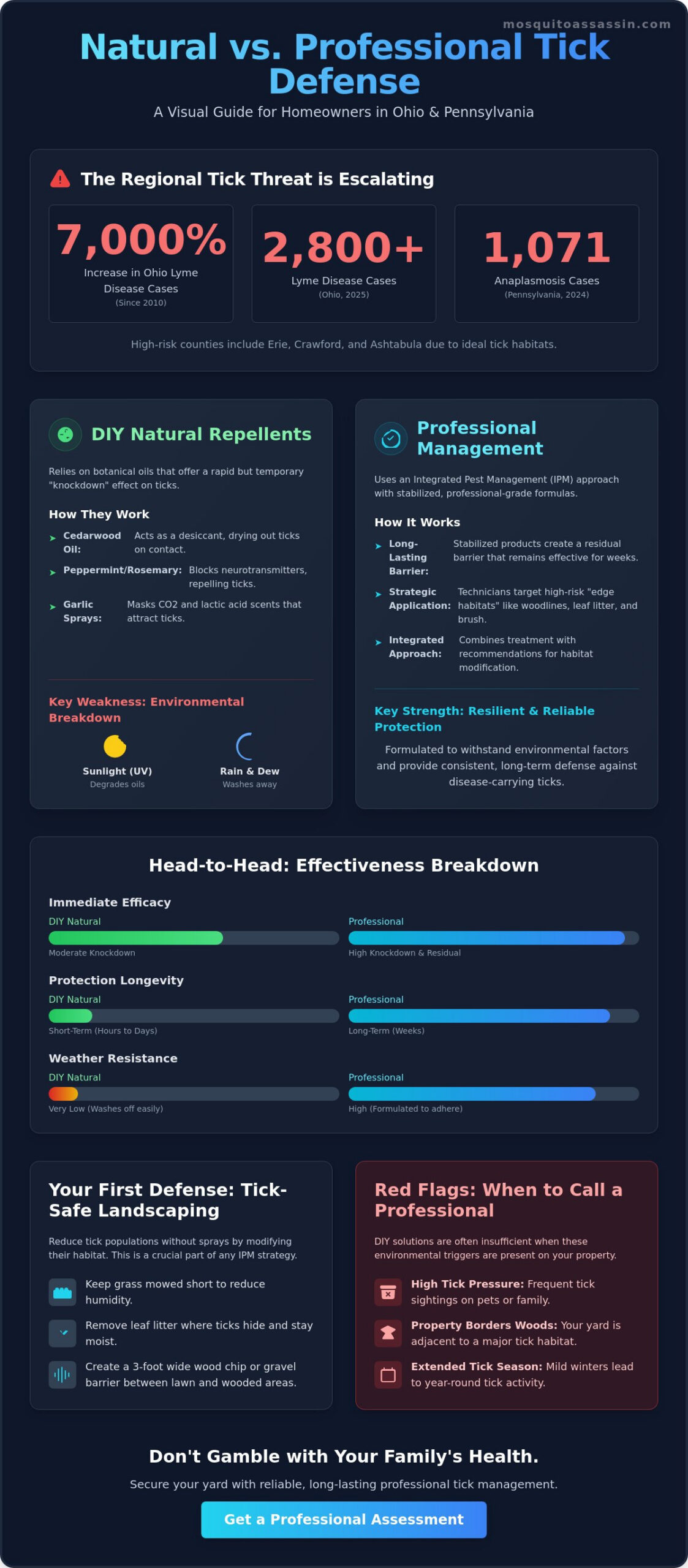
    In 2025, Ohio health officials recorded over 2,800 cases of Lyme disease, marking a staggering 7,000% increase since 2010. With tick populations reaching record highs across Erie, Crawford, and Ashtabula Counties, families are increasingly weighing the benefits of natural tick repellent for yard vs professional management strategies. Most homeowners prioritize the safety of their children and pets, yet they often face the frustration of DIY sprays that lose effectiveness after a single heavy rain or morning dew.

    It’s natural to feel uncertain about which methods truly safeguard an outdoor space from rising threats like Anaplasmosis, which saw 1,071 cases in Pennsylvania in 2024. This guide provides a direct comparison of the effectiveness, longevity, and practical application of essential oil based DIY repellents against professional integrated pest management. You’ll discover which natural ingredients carry scientific backing, how environmental factors impact the duration of protection, and exactly when a property requires the intervention of a licensed professional to maintain a tick-free environment.

    Key Takeaways

    • Understand the rising risk of Black-legged ticks in Northwest Pennsylvania and Northeast Ohio and how specific yard features create ideal habitats.
    • Learn how essential oils like cedarwood oil function as desiccants to disrupt tick biology and why their efficacy is often temporary.
    • Evaluate the differences in concentration and application methods when comparing natural tick repellent for yard vs professional integrated pest management.
    • Discover how cultural controls, such as creating Tick-Safe Zones through landscaping, can reduce tick populations without the use of sprays.
    • Identify the specific environmental triggers that indicate when high tick pressure on a property requires more than just DIY natural solutions.

    Tick Risks and Habitat in Pennsylvania and Ohio (2026)

    Creating a tick-safe yard in the Great Lakes region requires a strategic effort to minimize the survival conditions for the Ixodes scapularis, commonly known as the Black-legged tick. In Northwest Pennsylvania and Northeast Ohio, these pests thrive in high-humidity environments provided by dense leaf litter and tall grasses. While many homeowners research a natural tick repellent for yard vs professional treatment plans, the first step is always understanding the habitat. Ticks don’t usually live in the middle of a sunny, well-manicured lawn. Instead, they congregate in the edge habitat where the yard meets wooded areas or ornamental brush.

    Climate factors in Erie and Ashtabula counties have contributed to particularly high tick activity in 2026. The combination of moist lake-effect air and abundant host animals, such as white-tailed deer, creates a perfect storm for infestation. Because ticks are prone to desiccation (drying out), they stay low to the ground in shaded, damp zones. This makes the perimeter of a property the primary danger zone for children and pets who may wander near the woodline during play.

    To better understand the biological vulnerability of these pests, watch this helpful video:

    Common Tick-Borne Illnesses in the Great Lakes Region

    Residents in Crawford and Erie counties face significant health risks from local populations. Pennsylvania reported 16,624 confirmed Lyme disease cases in 2024, and preliminary data suggests that numbers are trending higher in 2026. Beyond Lyme, Tick-borne diseases like Anaplasmosis and Babesiosis are increasing across the Northeast. Cases of Anaplasmosis in Pennsylvania have nearly doubled each year for the past five years, reaching 1,071 cases in 2024. Professional pest control may help reduce risk by establishing a barrier that prevents these disease-carrying arachnids from establishing a foothold near a home.

    When is Tick Season in PA and OH?

    Local tick activity follows a predictable but expanding cycle. Two primary peaks occur: the spring, when tiny nymphs are most active, and the fall, when adult ticks seek a final host before winter. However, the mild winters of 2025 and 2026 have shifted these windows. Ticks can remain active any time temperatures stay above freezing. This extended season is a major factor when choosing between a natural tick repellent for yard vs professional services, as DIY solutions often require much more frequent reapplication to keep up with year-round activity. For those living in the service areas, consistent monitoring is now a necessity rather than a suggestion.

    Natural products often rely on botanical chemistry to deter arachnids. Essential oils like peppermint and rosemary contain compounds that disrupt octopamine receptors in a tick’s nervous system. This disruption acts as a neurotransmitter blocker, causing the pest to avoid the treated area. Cedarwood oil is particularly notable because it acts as a desiccant, which means it physically dries out the tick on contact. In contrast, garlic-based sprays don’t usually kill the pests; they simply mask the carbon dioxide and lactic acid scents that ticks use to find a host. These scents are the primary “beacons” that draw ticks toward humans and pets.

    While these options appeal to those seeking a chemical-free approach, they face significant environmental hurdles. Botanical oils are highly volatile. They evaporate quickly when exposed to sunlight and air. UV degradation can render a DIY application ineffective within just a few days. This creates a clear distinction when evaluating natural tick repellent for yard vs professional alternatives that utilize stabilized formulas designed for longevity. Without chemical stabilizers, the “barrier” created by essential oils is often too thin to withstand the elements.

    Essential Oils and Botanical Barriers

    Botanical sprays offer a rapid “knockdown” effect, meaning they can kill or repel ticks present at the time of application. However, they rarely provide a long-lasting residual effect. In the humid climates of Erie and Crawford counties, frequent rain can wash away these oils before they’ve provided meaningful protection. Consumer-grade products like Sunday “Nix Ticks” or Lawnbright “Yard Patrol” often cover between 3,000 and 5,000 square feet but require reapplication every two weeks or after heavy precipitation. For many residents, professional pest control may help reduce risk by using specialized equipment that ensures deeper coverage in the dense brush where ticks hide.

    Mineral-Based Solutions: Diatomaceous Earth

    Diatomaceous Earth (DE) is a powder made from fossilized algae. It works by cutting into the tick’s exoskeleton and absorbing its internal fluids. While it’s a mechanical killer rather than a chemical one, it has major drawbacks in the Great Lakes region. DE is only effective when it’s bone-dry. The high humidity and frequent morning dew in Ashtabula County often turn the powder into a useless paste. Homeowners should also use caution; DE is non-selective and can harm beneficial pollinators if applied to flowering plants. When considering personal protection alongside yard treatments, the CDC and health departments recommend using EPA-registered insect repellents on skin and clothing to ensure comprehensive safety.

    Natural Tick Repellent for Yard vs Professional: A 2026 Comparison Guide

    Comparing Effectiveness: Natural DIY vs. Professional Treatment

    The effectiveness of a natural tick repellent for yard vs professional service depends largely on the delivery method. Most homeowners rely on hand-pump sprayers or hose-end attachments that produce large, heavy droplets. These droplets often roll off foliage or fail to penetrate the dense undergrowth where ticks actually harbor. In contrast, professional technicians use high-pressure mist blowers that atomize the product into a fine fog. This specialized equipment ensures the treatment coats the underside of leaves and reaches deep into the brush, providing a more comprehensive barrier.

    Integrated Pest Management (IPM) provides a structural advantage over simple DIY spraying. This approach combines biological knowledge with targeted applications to disrupt pest habitats. Concentrations of active ingredients in professional-grade botanical products are typically higher than those found in retail bottles. These higher concentrations, combined with professional application techniques, result in a more durable shield against the various tick-borne diseases in Pennsylvania and Ohio. Homeowners in Erie and Crawford counties can benefit from this systematic approach.

    Residual Life and Re-application Frequency

    Longevity is a primary concern for residents in Erie and Ashtabula counties. DIY natural sprays often have a short residual life, typically lasting only 7 to 14 days before UV rays and humidity break down the botanical oils. This requires a homeowner to dedicate significant time every two weeks to re-treat the property. Professional treatments are engineered for better stability, frequently providing 21 to 30 days of protection. When you factor in the cost of high-quality DIY products, the time spent on labor, and the wear on personal equipment, the efficiency of a professional plan becomes clear.

    Targeting the Life Cycle

    Ticks go through several life stages, and missing just one can lead to a population surge. DIY applications often focus on adult ticks visible in late summer or fall but miss the nymph stage in the spring. Nymphs are roughly the size of a poppy seed and are responsible for a large portion of disease transmission. Professional monitoring helps identify property-specific ‘hot spots’ like wood piles or stone walls. By timing treatments to coincide with local emergence patterns, professional intervention can disrupt the life cycle more effectively than a generic DIY schedule. This strategic timing is a major factor when weighing the value of a natural tick repellent for yard vs professional management.

    Best Practices for a Tick-Resistant Landscape

    Landscape management is the most effective cultural control for reducing tick populations. While homeowners often debate the merits of a natural tick repellent for yard vs professional treatment, physical modifications to the property provide a permanent foundation for safety. Ticks require high humidity to survive. By altering the environment to be drier and sunnier, you can naturally eliminate the conditions they need to thrive. Establishing a ‘Tick-Safe Zone’ involves moving high-traffic areas, such as patios and playground sets, at least 10 feet away from wooded perimeters or brushy edges.

    A simple but powerful landscaping change is the installation of a 3-foot wide mulch or gravel barrier. This creates a physical deterrent between your lawn and the woods. Ticks are unlikely to cross this dry, hot zone because it risks their survival through desiccation. This structural change complements any spray program by clearly defining where the managed yard ends and the wild habitat begins. For residents in Erie and Ashtabula counties, these barriers are essential due to the dense forestation surrounding many suburban lots.

    Lawn Maintenance and Vegetation Control

    Routine yard work is a primary defense. Keeping grass mowed to a height of 3 inches or less reduces the moisture-rich microclimate that ticks crave. It’s equally important to clear leaf litter and brush piles promptly. These areas serve as primary nesting sites for white-footed mice, which are the main hosts for larval and nymphal ticks. Pruning low-hanging branches allows more sunlight to reach the ground, further drying out potential habitats. A well-maintained yard can see a significant reduction in tick presence compared to properties with overgrown vegetation.

    Host Management: Deer and Rodents

    Managing the animals that carry ticks is a critical step in a comprehensive strategy. White-tailed deer and rodents are the primary vectors that transport ticks into your living space. Using deer-resistant plants can discourage these larger hosts from lingering in your yard. Additionally, securing wood piles and keeping bird feeders away from the house prevents white-footed mice from establishing colonies near your family. In cases of heavy infestation, professional pest control may help reduce risk by integrating rodent management with traditional treatments. Because ticks don’t travel far on their own, controlling their transport is vital for long-term success.

    Evaluating When to Move Beyond Natural Repellents

    Deciding between a natural tick repellent for yard vs professional services often comes down to the concept of ‘Tick Pressure.’ This term refers to the volume of ticks present in the surrounding environment and the likelihood of them migrating onto your property. For homeowners in Erie or Ashtabula counties whose yards border state parks, forests, or unmanaged fields, the pressure is inherently higher. While botanical sprays can offer a temporary deterrent, they often fail to provide the structural population reduction needed for high-risk properties in 2026.

    Peace of mind is a major factor in this transition. Professional intervention typically includes a satisfaction guarantee, ensuring that technicians return if the pests do. This level of accountability is something DIY products simply cannot match. Scheduling a professional inspection is the most effective next step to identify local risks. A trained technician can spot vulnerabilities in your landscape that might be attracting hosts or providing shelter for nymphs that you’ve missed during routine yard work.

    Professional Pest Control in Northwest PA and Northeast OH

    Working with a local provider ensures the treatment plan accounts for the unique regional environment of the Great Lakes. Technicians who live in the communities they serve understand how lake-effect moisture and local wildlife cycles impact pest behavior. These experts can create tailored plans that address the specific needs of your acreage. You can learn about general pest control to see how a broad protective foundation helps maintain yard safety throughout the year. This local expertise is vital when natural solutions aren’t keeping pace with the 2026 tick surge.

    Taking Action for Your Outdoor Space

    If you’ve noticed gaps in current DIY efforts, such as ticks appearing on pets shortly after a spray, it’s time to evaluate the barrier’s integrity. Professional pest control may help reduce risk by applying stabilized formulas that withstand the frequent rains common in Crawford County. You can also explore the mosquito control program, which often provides overlapping protection against ticks. This multi-layered approach ensures your outdoor space remains a safe environment for your family to enjoy without the constant anxiety of tick-borne illnesses. Choosing the right path between a natural tick repellent for yard vs professional management ensures your property is protected by the most effective tools available.

    Disclaimer: The information provided on this blog is for general informational purposes only and is not intended as professional pest control advice. Conditions vary by property, environment, and location. Reading this content does not create a service agreement. For an inspection or professional recommendations, please contact Mosquito Assassin Pest Control LLC directly.

    Securing Your Yard for the Season Ahead

    Effective tick management requires a multi-layered approach that combines proactive landscaping with reliable population control. While botanical oils provide a temporary barrier, they often struggle against the high humidity and UV levels common in the Great Lakes region. Cultural controls, such as creating a 3-foot mulch barrier and managing wildlife hosts, remain the most effective natural way to reduce habitat suitability on a property. When evaluating natural tick repellent for yard vs professional intervention, remember that specialized equipment and stabilized formulas offer the durability needed to combat expanding pest habitats.

    Local providers in Northwest PA and Northeast OH utilize licensed and insured technicians who understand the specific regional environment. These professionals provide accountability through consistent monitoring and targeted applications that address the entire life cycle of the tick. Professional pest control may help reduce risk. Schedule an inspection with Mosquito Assassin today to identify the specific vulnerabilities on your property. Taking these steps now ensures an outdoor space remains a safer environment for family activities throughout the year.

    Disclaimer: The information provided on this blog is for general informational purposes only and is not intended as professional pest control advice. Conditions vary by property, environment, and location. Reading this content does not create a service agreement. For an inspection or professional recommendations, please contact Mosquito Assassin Pest Control LLC directly.

    Frequently Asked Questions

    Are natural tick repellents for the yard safe for dogs and cats?

    Most botanical repellents are formulated to be safe for pets once the application has dried, but concentration is a critical factor. Essential oils like peppermint or eucalyptus can be toxic to cats if they are ingested or absorbed in high amounts. Always check product labels for EPA exempt status under FIFRA 25(b) guidelines. Professionals ensure applications are precisely targeted to minimize pet exposure while the product is wet, providing a safer environment for your animals.

    How often should I apply natural tick repellent to my yard?

    Botanical sprays generally require reapplication every 7 to 14 days to maintain their efficacy. Because essential oils are volatile, they evaporate quickly in the summer sun or wash away during heavy Great Lakes rainstorms. Homeowners often find that maintaining a DIY schedule is labor intensive compared to professional plans that provide 21 to 30 days of residual protection. Consistent timing is necessary to prevent tick population rebounds in your outdoor space.

    Can I use cedarwood oil to kill ticks in my lawn?

    Cedarwood oil is an effective natural desiccant that kills ticks by leaching moisture from their bodies and disrupting their pheromone receptors. This makes it harder for the pests to find hosts; however, it only kills on contact and has very little residual effect once it’s dry. For a large property in Crawford County, relying solely on cedarwood oil may require high volumes of product to reach ticks hidden deep within the leaf litter.

    Do professional tick treatments for the yard kill bees?

    Professional integrated pest management focuses on minimizing the impact on pollinators like honeybees. Licensed technicians are trained to avoid spraying flowering plants where bees forage and to apply treatments during times of low pollinator activity. By targeting the damp, shaded ‘edge habitats’ where ticks harbor, professionals reduce the likelihood of contact with beneficial insects that prefer sunny, open flowers. This strategic approach helps protect the local ecosystem while managing pests.

    What is the most effective natural way to get rid of ticks in the yard?

    Landscape modification is the most effective cultural control method available for homeowners. Keeping grass cut to 3 inches or less and creating a 3-foot wide mulch barrier between the lawn and woods reduces the humidity ticks need to survive. These physical changes are more permanent than any spray. When homeowners compare a natural tick repellent for yard vs professional treatment, they often find that combining landscaping with expert application yields the best results.

    Is it worth paying for professional tick control in Pennsylvania?

    Given that Pennsylvania reported 16,624 confirmed Lyme disease cases in 2024, professional control is a high-value investment for many local families. Professional services provide specialized equipment and stabilized formulas that offer better coverage and longer protection than retail products. For properties in Erie County adjacent to wooded areas, the expertise of a licensed technician helps identify and treat high-risk ‘hot spots’ that DIY efforts might easily overlook.

    Does dish soap and water kill ticks in the grass?

    Dish soap and water can kill ticks on contact by breaking down their waxy protective coating, but it isn’t a viable yard treatment. It has no residual effect and won’t prevent new ticks from entering the property. Additionally, spraying large amounts of soapy water can harm your lawn and soil health over time. It’s much more effective to focus on proven botanical repellents or professional barrier treatments when evaluating natural tick repellent for yard vs professional options.

    How long do I need to wait after a professional spray before my kids can play outside?

    Most professional yard treatments require a waiting period of approximately 30 to 60 minutes, or until the product has completely dried. Once dry, the treatment binds to the foliage and is safe for children and pets to resume their outdoor activities. Technicians typically provide specific instructions based on the weather conditions and the type of product used to ensure total peace of mind for everyone in the household.

    Disclaimer: The information provided on this blog is for general informational purposes only and is not intended as professional pest control advice. Conditions vary by property, environment, and location. Reading this content does not create a service agreement. For an inspection or professional recommendations, please contact Mosquito Assassin Pest Control LLC directly.

  • Outdoor Tick Spray Service: A Comprehensive Guide for Homeowners in 2026

    Outdoor Tick Spray Service: A Comprehensive Guide for Homeowners in 2026

    With 11,263 lab-confirmed cases of Lyme disease in Pennsylvania in 2024 and a 15 percent increase in emergency room visits for tick bites in April 2026, the health risks in the tri-county region have reached a critical point. Many homeowners are now considering a professional outdoor tick spray service to address these concerns, as tick populations in Northeast Ohio have surged to record levels this season. It is natural to feel a sense of anxiety when letting pets or children play in the yard, especially when the effectiveness of various retail products remains inconsistent and confusing.

    This guide explains the science behind professional tick treatments and how they function as part of a comprehensive property management plan. You will learn about the differences between various treatment formulas (including 25(b) minimum-risk options) and how state-certified applicators navigate strict regulations in Pennsylvania and Ohio. By combining professional expertise with strategic landscape modifications, residents in Erie, Crawford, and Ashtabula counties can better manage their outdoor spaces and reduce the presence of these persistent pests.

    Disclaimer: The information provided on this blog is for general informational purposes only and is not intended as professional pest control advice. Conditions vary by property, environment, and location. Reading this content does not create a service agreement. For an inspection or professional recommendations, please contact Mosquito Assassin Pest Control LLC directly.
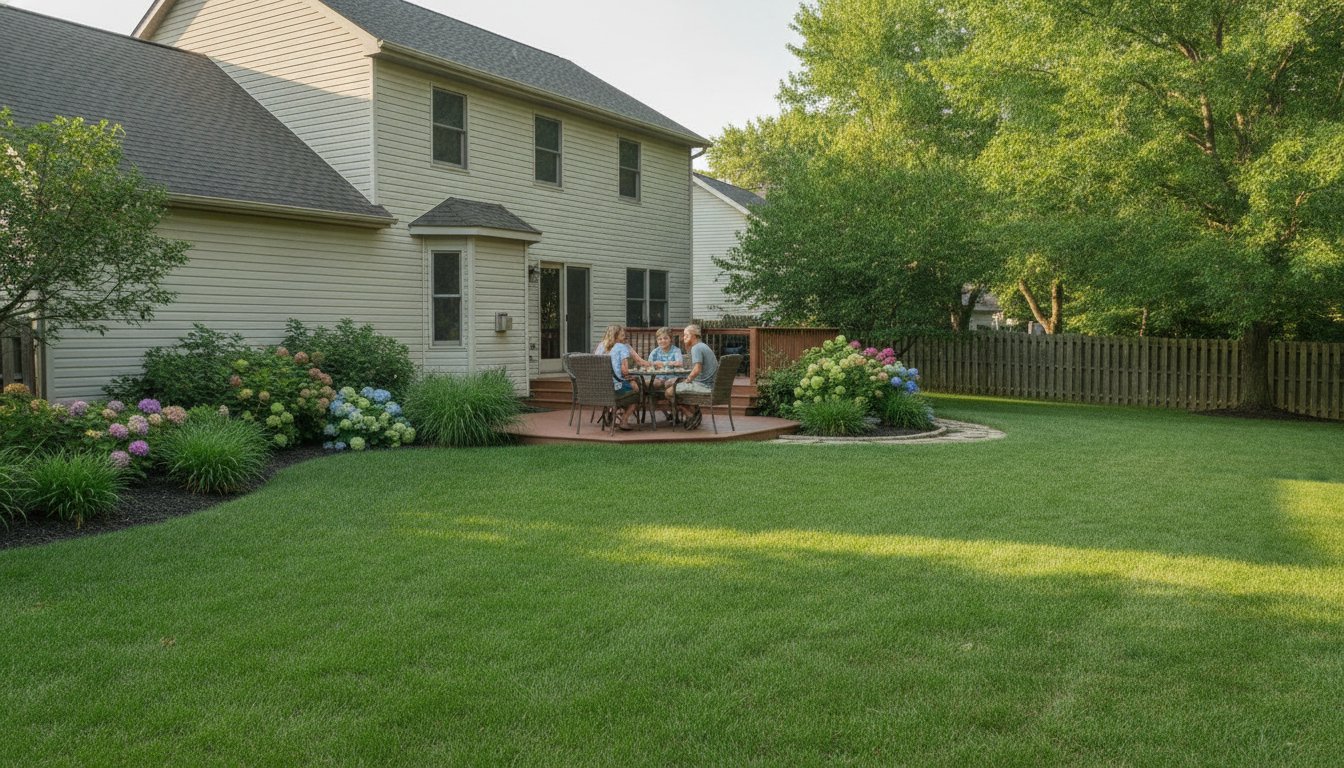
    Key Takeaways

    • Identify high-risk transition zones where residential lawns meet wooded areas to focus prevention efforts where ticks are most likely to quest for hosts.
    • Understand how a professional outdoor tick spray service creates a perimeter barrier to reduce populations in the areas of your yard used most frequently by families.
    • Learn to implement Integrated Pest Management techniques, such as using wood chips or gravel to create physical boundaries that discourage tick migration.
    • Ensure all property treatments are performed by technicians who are properly licensed and certified by the Pennsylvania or Ohio Department of Agriculture.

    Ticks in Pennsylvania and Ohio: Understanding Regional Risks

    An outdoor tick spray service involves the application of specialized products to yard perimeters to reduce tick populations before they reach your family. For residents in Erie and Crawford counties in Pennsylvania and Ashtabula County in Ohio, this protection is a necessity rather than a luxury. The region’s unique geography near Lake Erie creates a humid environment where ticks thrive in both wooded edges and tall grasses. Professional treatments focus on the specific areas where these pests hide, creating a barrier that disrupts their ability to migrate into your active lawn space.

    To better understand how these pests interact with your property, watch this helpful video:

    Common Tick Species in the Tri-County Area

    The black-legged tick (Ixodes scapularis) is the primary concern for homeowners in Pennsylvania and Ohio. This species is responsible for the majority of common tick-borne diseases reported in the state. In 2024, Pennsylvania recorded 11,263 lab-confirmed cases of Lyme disease, highlighting the prevalence of this species in wooded habitats. They’re often found in the leaf litter at the base of trees or in thick brush.

    American dog ticks (Dermacentor variabilis) are also common, particularly in Ashtabula County. Unlike the black-legged tick, the dog tick prefers open, sunlit areas with tall grasses. They’re hardy and can survive in drier conditions. Because ticks go through a multi-year life cycle consisting of egg, larva, nymph, and adult stages, a single treatment isn’t enough. Professional outdoor tick spray service protocols are designed to address these pests at various points in their development to ensure the population doesn’t rebound.

    The Importance of Seasonal Timing

    Local weather patterns in the Great Lakes region significantly influence tick behavior. While many believe ticks disappear in winter, they actually remain active whenever temperatures rise above 32 degrees Fahrenheit. This means adult ticks can be questing for a host even during a mid-winter thaw. However, activity typically peaks during two distinct windows in our region.

    • Early Spring: Applications during April and May target nymphal ticks. These are the size of a poppy seed and cause a high percentage of infections because they’re so hard to detect.
    • Late Fall: As temperatures drop in September and October, adult black-legged ticks become highly active. Fall treatments help reduce the number of adults that would otherwise overwinter and lay thousands of eggs in the spring.

    Effective management requires understanding these biological clocks. By timing treatments to match local emergence patterns, homeowners can maintain a more consistent level of protection throughout the year.

    Disclaimer: The information provided on this blog is for general informational purposes only and is not intended as professional pest control advice. Conditions vary by property, environment, and location. Reading this content does not create a service agreement. For an inspection or professional recommendations, please contact Mosquito Assassin Pest Control LLC directly.
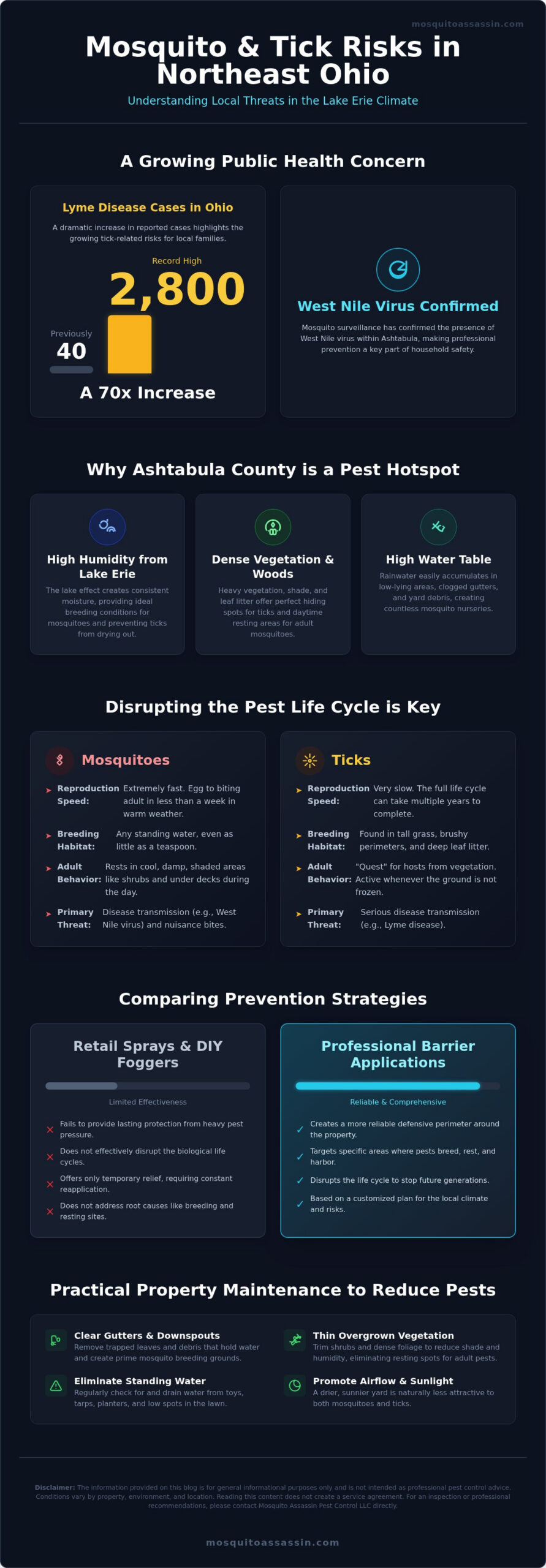
    Tick Habitats and Behavior: Where Pests Hide in Residential Landscapes

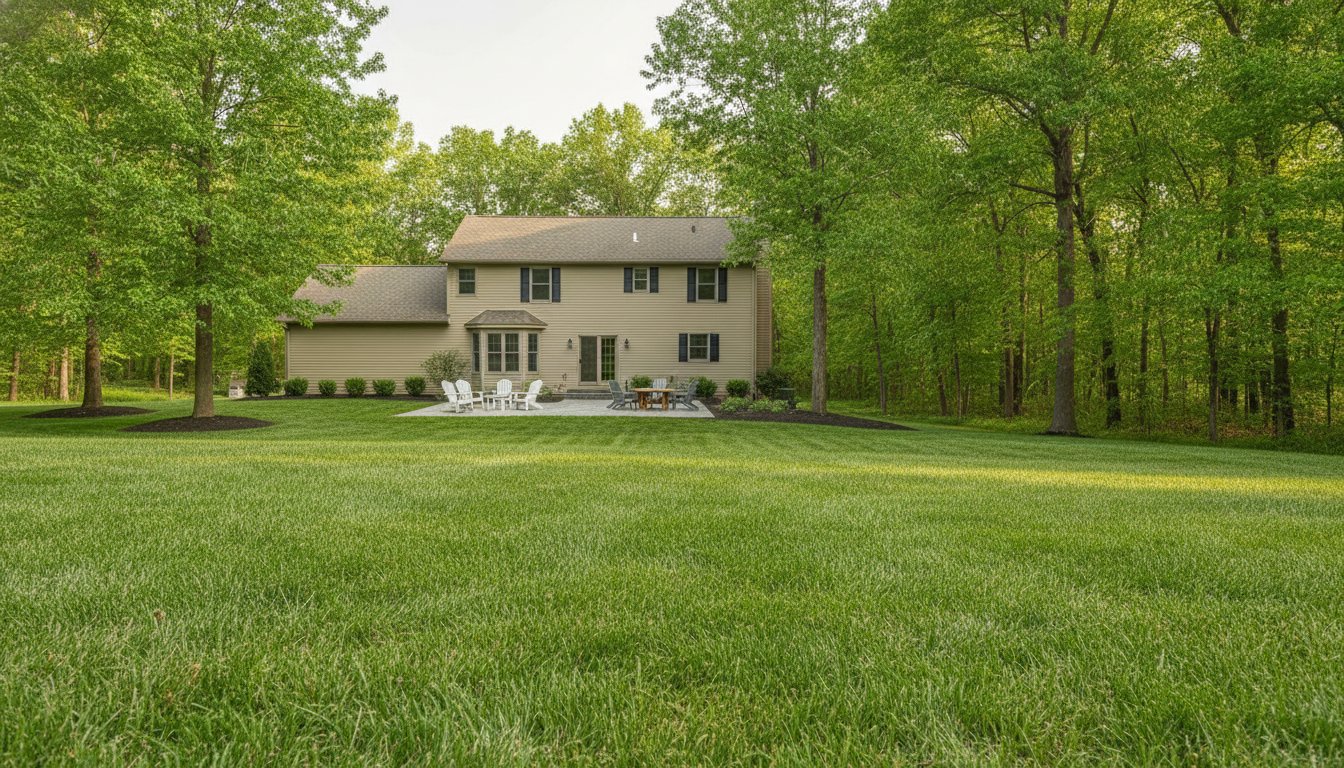
    Ticks are patient, opportunistic hunters that don’t possess the ability to fly or jump. Instead, they rely on a unique behavior known as questing to find their next host. A tick will climb to the top of a blade of grass or the tip of a low-hanging branch, extending its front legs to latch onto any person or animal that brushes past. Because they move so slowly on their own, their survival depends entirely on being in the right place at the right time. A professional outdoor tick spray service focuses on these specific high-risk areas rather than treating the middle of a sunny lawn where ticks are unlikely to survive.

    The Science of Questing

    Ticks are highly sensitive to their environment. They use specialized sensors, called Haller’s organs, located on their front legs to detect carbon dioxide, heat, and vibrations from a distance. When a potential host approaches, the tick becomes alert and prepares to grab hold. You’ll rarely find ticks in the center of a well-manicured, sun-drenched lawn. This is because ticks are extremely vulnerable to desiccation (drying out). They require shady, moist environments with at least 80 percent humidity to maintain their internal water balance. If they stay in the sun too long, they will die from dehydration, which is why they retreat to the cool dampness of leaf litter during the heat of the day.

    Identifying High-Risk Zones on Your Property

    In the tri-county region of Erie, Crawford, and Ashtabula, the transition zone is the most dangerous area for tick encounters. This is the perimeter where your maintained grass meets woods, tall weeds, or decorative ground cover. Research suggests that the vast majority of ticks in residential yards are found within nine feet of this edge. These areas provide the perfect “nursery” environment: plenty of shade, high moisture, and a steady supply of hosts.

    • Woodpiles and Stone Walls: These structures are ideal nesting sites for white-footed mice and other small rodents. These animals are the primary reservoirs for pathogens. When rodents live near your home, they bring ticks directly into your landscape.
    • Dense Ornamental Plantings: Thick ground covers like pachysandra or ivy create a humid microclimate at the soil level. This protects ticks from the wind and sun, allowing them to remain active longer.
    • Leaf Litter: Accumulations of dead leaves provide an insulating blanket that protects ticks from temperature extremes, even during the colder months in Northwest Pennsylvania.

    Understanding these biological requirements helps homeowners prioritize their yard work. While maintaining your landscape is essential, professional pest control may help reduce risk by treating these specific zones where ticks are most concentrated. Managing the environment is a powerful way to disrupt the tick life cycle before they have a chance to quest for a host.

    Disclaimer: The information provided on this blog is for general informational purposes only and is not intended as professional pest control advice. Conditions vary by property, environment, and location. Reading this content does not create a service agreement. For an inspection or professional recommendations, please contact Mosquito Assassin Pest Control LLC directly.

    Outdoor Tick Spray Service: A Comprehensive Guide for Homeowners in 2026

    The Science of Professional Tick Barrier Treatments

    A professional outdoor tick spray service relies on technical precision rather than simple volume. Unlike a general broadcast application that blankets an entire property, a barrier treatment is a surgical approach. Licensed technicians use high-pressure sprayers to penetrate deep into dense foliage and reach the underside of leaves where ticks congregate to avoid the sun. This high-pressure delivery is essential. Standard handheld sprayers often lack the force to reach the humid micro-climates at the base of shrubs or within thick ground covers where ticks are most likely to survive.

    Perimeter vs. Broadcast Spraying

    Targeting the property edge is significantly more effective than treating a sunny, well-manicured lawn. Since ticks are concentrated within the first nine feet of the transition zone, the treatment focuses on creating a literal barrier between the woods and your living space. Professional equipment is calibrated to provide a consistent droplet size that adheres to organic matter. This differs from many retail products, which often wash away after the first heavy rain. In addition to sprays, comprehensive management may include the use of tick tubes. These are biodegradable cylinders filled with treated cotton that rodents take back to their nests. This targets ticks at their host source; the mice and chipmunks that bring them onto your property. Granular applications are also used in thick leaf litter to reach ticks that are buried beneath the surface where liquid sprays might not penetrate.

    Residual Effectiveness and Follow-Up

    Modern formulations are engineered to bind to the surface of plants and mulch, providing residual protection for several weeks. However, environmental factors like UV light and heavy rainfall naturally break down these products. In the Great Lakes region, where spring rains can be frequent, maintaining this barrier requires a recurring schedule. With tick populations in Northeast Ohio reaching record highs in 2026, consistent protection is vital to manage the ongoing threat. Technicians identify specific micro-climates on a property, such as shaded dog runs or the areas around stone walls, that require targeted attention.

    By understanding the local environment and the specific biology of regional ticks, a customized plan ensures that the treatment remains effective throughout the peak seasons. While environmental management is a key part of the process, professional pest control may help reduce risk by significantly lowering the number of questing ticks in your immediate landscape. This methodical approach provides a level of coverage that is difficult to achieve with standard DIY methods.

    Disclaimer: The information provided on this blog is for general informational purposes only and is not intended as professional pest control advice. Conditions vary by property, environment, and location. Reading this content does not create a service agreement. For an inspection or professional recommendations, please contact Mosquito Assassin Pest Control LLC directly.
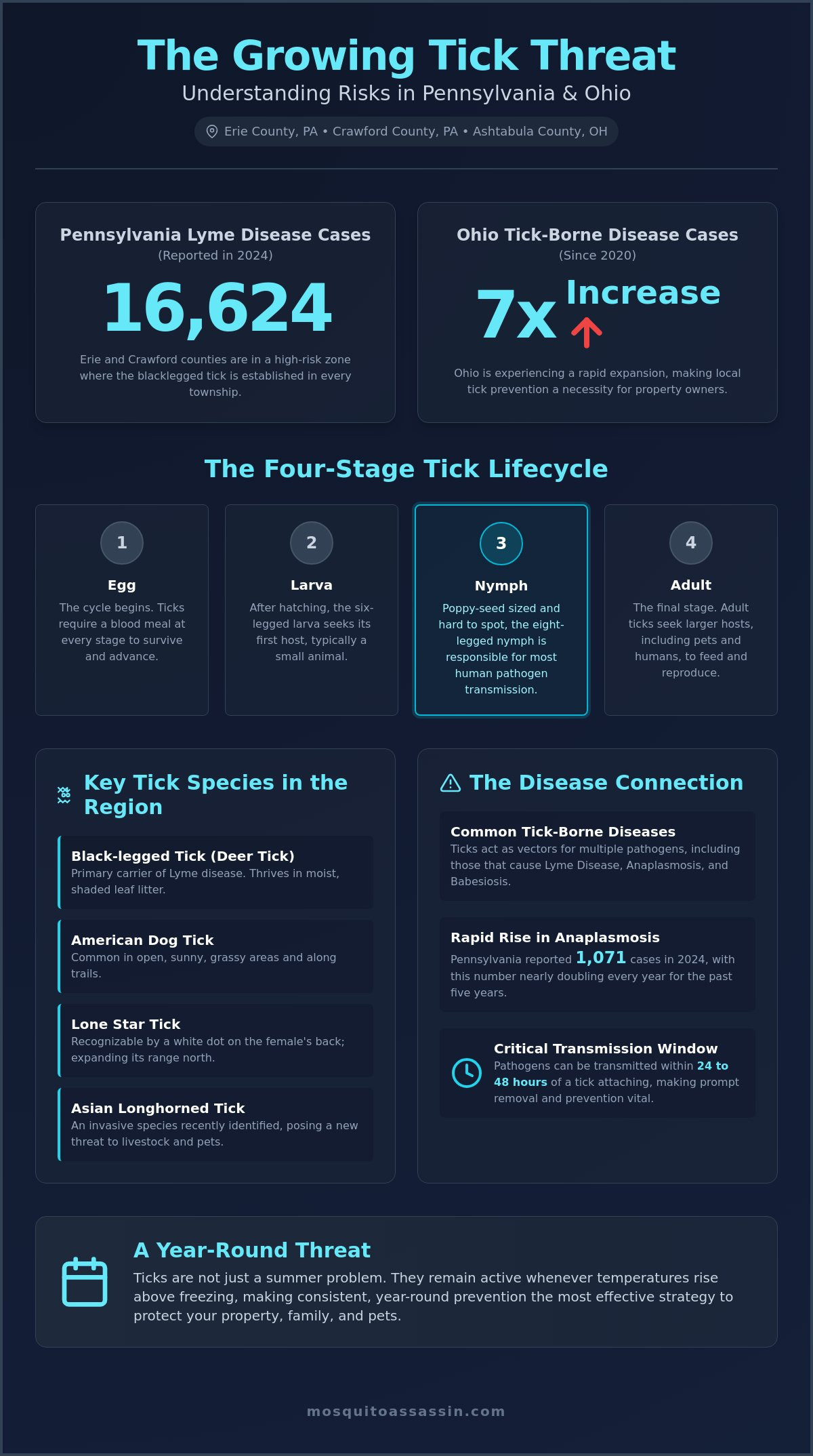
    Integrated Strategies for Reducing Tick Populations on Your Property

    Effective tick control is rarely the result of a single action. It requires a partnership between a professional outdoor tick spray service and strategic landscape management. This approach, known as Integrated Pest Management (IPM), focuses on making the environment less hospitable for pests through multiple biological and physical methods. By reducing the humidity and shelter that ticks require, homeowners can significantly decrease the likelihood of these parasites establishing a presence in active yard spaces. This strategy doesn’t just target the ticks themselves; it addresses the entire ecosystem that allows them to thrive.

    Landscape Modification Tips

    Using woodchips or gravel to create a three-foot buffer zone between the lawn and wooded areas is a proven strategy for disrupting tick movement. This physical barrier serves two important purposes. It creates a dry, sun-exposed strip that ticks are reluctant to cross because they risk dehydration. It also provides a clear visual reminder for family members and pets to stay within the maintained safe zone. For properties in Erie and Crawford counties, where woods often meet suburban lawns, this separation is vital. Keeping playground equipment, patios, and deck areas at least ten feet away from the yard perimeter further reduces the chance of accidental encounters. Pruning low-hanging branches and thinning out dense ornamental shrubs increases sunlight and airflow, which naturally lowers the humidity levels at the soil surface.

    Managing Tick Hosts

    Ticks don’t travel long distances on their own; they rely on wildlife to move through the tri-county region. The white-footed mouse is the primary host for nymphal ticks and a major reservoir for the bacteria that cause Lyme disease. Reducing rodent attractants is a critical step in a comprehensive plan. Bird feeders often drop seeds that attract mice and chipmunks directly to your foundation. Moving these feeders to the far edge of the property and sealing trash containers can limit rodent activity. Deer are the primary hosts for adult ticks, often transporting them from deep woods into residential landscapes. Planting deer-resistant vegetation or installing physical fencing can help discourage these larger animals from bedding down near your home. Clearing leaf litter remains the most effective DIY task for homeowners, as it removes the damp insulation ticks use for protection during temperature fluctuations. For an inspection of your property’s specific high-risk zones, professional pest control may help reduce risk.

    Regular lawn maintenance also plays a role in this integrated approach. Keeping grass mown to a height of three inches or less allows the sun to reach the soil, creating a drier environment. When combined with a targeted outdoor tick spray service, these landscape changes create a multi-layered defense system that is much more effective than relying on any single treatment alone.

    Disclaimer: The information provided on this blog is for general informational purposes only and is not intended as professional pest control advice. Conditions vary by property, environment, and location. Reading this content does not create a service agreement. For an inspection or professional recommendations, please contact Mosquito Assassin Pest Control LLC directly.

    Choosing a Professional Tick Control Service for Your Home

    Selecting an outdoor tick spray service requires careful consideration of credentials and methodology. In both Pennsylvania and Ohio, anyone applying pesticides for hire must be a certified commercial applicator. This means they have passed rigorous exams administered by the Pennsylvania or Ohio Department of Agriculture. Beyond legal requirements, a reputable provider should emphasize a customized treatment plan. Every property has unique drainage, vegetation, and wildlife patterns that dictate where ticks are most likely to aggregate. Professional recommendations should always follow a thorough on-site inspection rather than a blind estimate over the phone. Homeowners should also inquire about safety protocols, ensuring that treatments are applied in a manner that respects the health of families and pets. This includes verifying that the products used are registered for residential use and that the technician follows all label instructions precisely.

    The Value of Local Expertise

    Pest pressure isn’t uniform across the country. Technicians who live in communities like Erie or Meadville understand the specific environmental factors of the Lake Erie region. They know how a particularly wet spring or a mild winter affects local tick emergence. This regional knowledge is essential for identifying the specific micro-climates on a property that require targeted attention. When a company is locally owned and operated, they’re often more responsive if pests return between scheduled visits. You can learn more about the importance of community-focused service on the Mosquito Assassin about page, which highlights how local roots contribute to more effective pest management. Local experts aren’t just visiting a territory; they’re protecting the neighborhoods where they also live and work.

    Establishing an Ongoing Protection Plan

    Because ticks and mosquitoes often thrive in the same shaded, humid environments, many residents find value in a combined mosquito control program. This dual-purpose approach ensures that the perimeter barrier addresses multiple pests simultaneously, providing a more comprehensive shield for the yard. When reviewing a service agreement, look for clear language regarding a satisfaction guarantee. A reliable provider stands by their work and will return to re-treat the area if the initial application doesn’t meet the expected results. This commitment is a hallmark of professional service, indicating that the company is invested in the long-term management of your property’s pest population. To confirm if service is available in your specific town, visiting the Mosquito Assassin location page is a helpful next step.

    Professional pest control may help reduce risk when managed by experts who understand the seasonal biology of the tri-county area. By choosing a licensed professional who prioritizes a methodical, integrated approach, homeowners can reclaim their outdoor spaces with greater confidence. Managing tick populations is a seasonal commitment, but with the right partnership, it’s possible to maintain a more comfortable environment for your family throughout the year.

    Disclaimer: The information provided on this blog is for general informational purposes only and is not intended as professional pest control advice. Conditions vary by property, environment, and location. Reading this content does not create a service agreement. For an inspection or professional recommendations, please contact Mosquito Assassin Pest Control LLC directly.
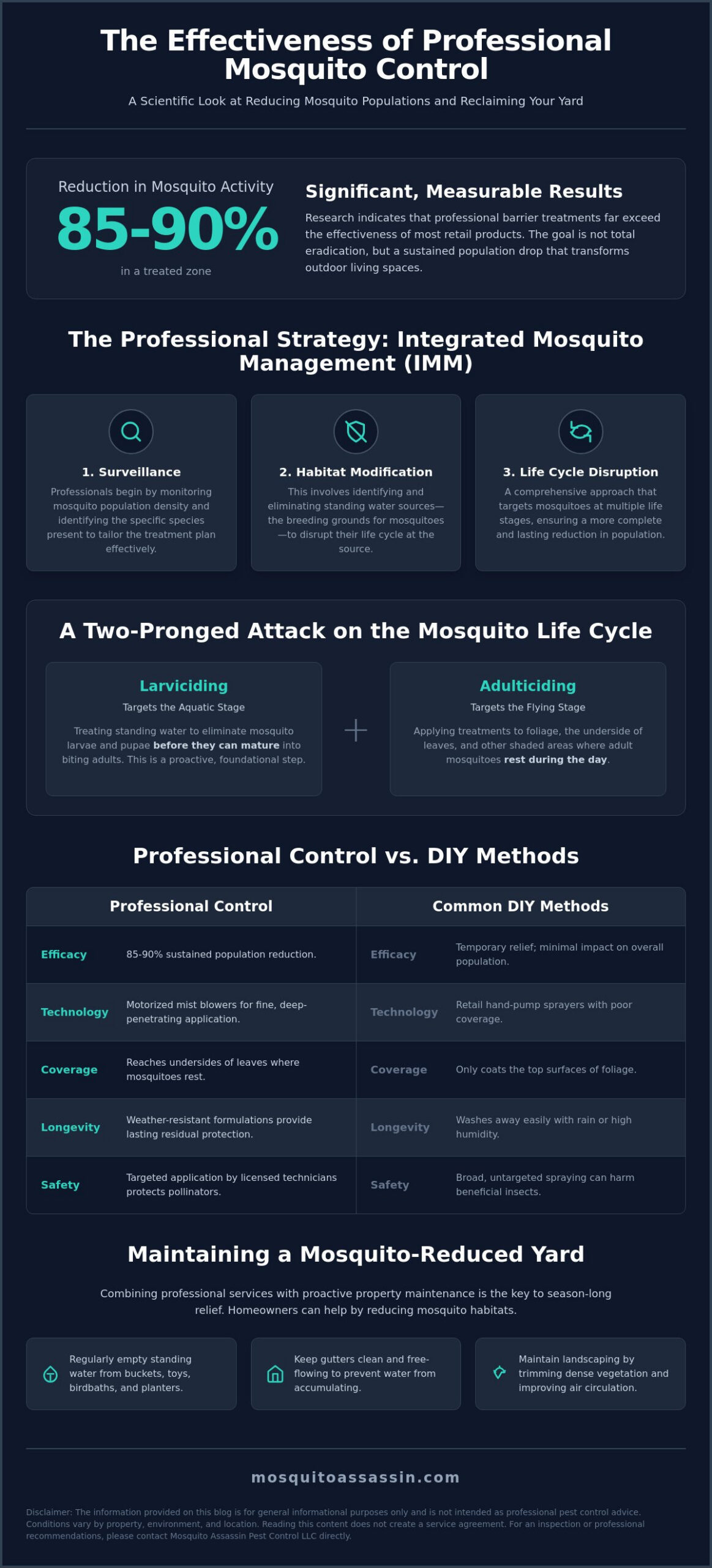
    Protecting Your Property for the Seasons Ahead

    Managing a property in the tri-county region requires a proactive approach to tick population control. By focusing on the transition zones where lawns meet wooded areas and implementing Integrated Pest Management strategies, residents can create a less hospitable environment for these parasites. A professional outdoor tick spray service provides the technical precision needed to reach questing ticks in their humid micro-habitats. This methodical approach, combined with regular leaf litter removal and rodent management, forms a comprehensive defense for your outdoor living space. Mosquito Assassin is locally owned and operated in Northwest PA and Northeast OH; utilizing licensed and insured technicians who understand regional pest pressures. Their satisfaction-focused service approach ensures that treatment plans are tailored to the specific needs of each property.

    Professional pest control may help reduce risk. Contact Mosquito Assassin for a property assessment to begin establishing a customized barrier for your yard. Taking these steps now ensures you can enjoy your outdoor space with greater peace of mind throughout the 2026 season.

    Disclaimer: The information provided on this blog is for general informational purposes only and is not intended as professional pest control advice. Conditions vary by property, environment, and location. Reading this content does not create a service agreement. For an inspection or professional recommendations, please contact Mosquito Assassin Pest Control LLC directly.
    Frequently Asked Questions

    When is the best time to start an outdoor tick spray service?

    The ideal time to begin treatment is in early spring, typically during April or May, when nymphal ticks first become active. Starting an outdoor tick spray service early in the season targets these younger pests before they have a chance to mature and reproduce. This proactive approach helps suppress the population before it reaches peak levels during the summer months.

    How long does a tick spray treatment last in my yard?

    A professional barrier treatment generally remains effective for approximately 21 to 30 days. Environmental conditions in the Great Lakes region, such as heavy rainfall or intense UV exposure, can cause the product to break down more quickly. Consistent, recurring applications are necessary to maintain a protective shield and ensure that the barrier remains intact throughout the entire active season.

    Is the tick spray service safe for my children and pets to be around?

    Treatments are designed to be family-safe and pet-safe once the application has completely dried on the foliage. Licensed technicians utilize products registered for residential use and follow strict application protocols to ensure the safety of your household. It’s important to keep everyone indoors during the treatment and for a short period afterward until the yard is dry.

    Do I need to be home when the tick treatment is applied?

    Homeowners do not need to be present for the application as long as the technician can access the perimeter of the property. Most professional services provide a notification once the treatment is finished, allowing you to go about your daily schedule without interruption. Simply ensure that all pets are indoors and that any gates or entry points are unlocked for the technician.

    Will the tick spray also kill mosquitoes and other yard pests?

    The formulations used in an outdoor tick spray service are often effective against mosquitoes and other common perimeter pests. Since these insects thrive in the same shaded, humid environments, a single barrier application can provide broad-spectrum protection. This integrated approach simplifies yard maintenance by addressing multiple pest concerns with a coordinated treatment plan.

    How soon can we use the yard after a tick treatment has been applied?

    The yard can typically be used within 30 to 60 minutes after the technician finishes the application. The primary requirement is that the product must be completely dry on the grass and shrubs before people or pets resume outdoor activities. Drying times can vary slightly based on local humidity levels and the amount of sunlight the yard receives.

    Does a professional tick spray guarantee I will not find ticks on my property?

    No service can provide a 100 percent guarantee because wildlife, such as deer and rodents, can continuously drop new ticks into the landscape. Professional pest control may help reduce risk by significantly lowering the number of questing ticks in your immediate environment. Using a professional service should always be combined with personal protection measures like regular tick checks.

    Can I spray for ticks myself using products from a home improvement store?

    While DIY products are available, they often lack the residual strength and professional-grade delivery systems required for effective control. Licensed professionals use high-pressure sprayers to ensure the product reaches the underside of leaves and deep into thick brush where ticks hide. They also have the expertise to identify specific micro-climates that are most likely to harbor pests.

    Disclaimer: The information provided on this blog is for general informational purposes only and is not intended as professional pest control advice. Conditions vary by property, environment, and location. Reading this content does not create a service agreement. For an inspection or professional recommendations, please contact Mosquito Assassin Pest Control LLC directly.
  • Organic Mosquito Spray: A Professional Guide to Natural Yard Protection

    Organic Mosquito Spray: A Professional Guide to Natural Yard Protection

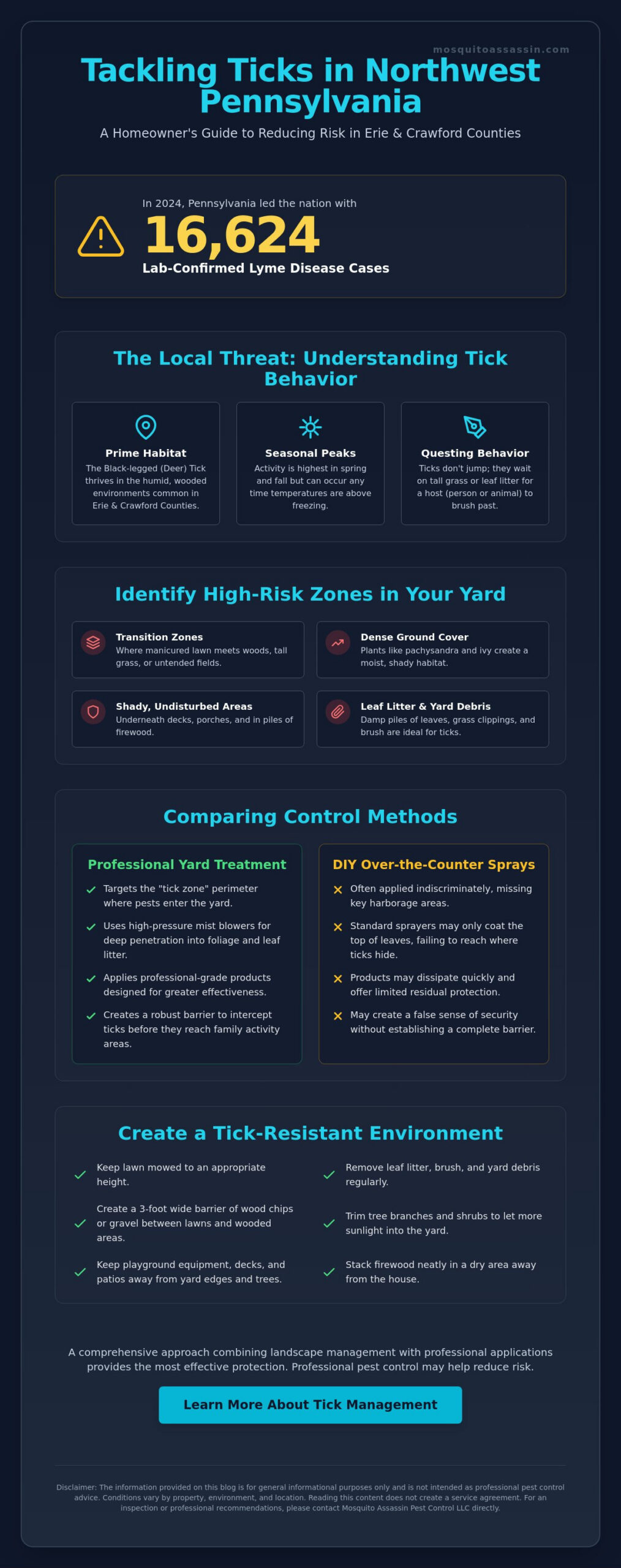
    Imagine standing in your backyard in Erie County on a humid July evening, only to be forced back inside within ten minutes by a swarm of buzzing pests. It’s a common frustration for residents across Crawford and Ashtabula Counties who value their outdoor time but worry about the impact of traditional pesticides on their families. You likely agree that a mosquito-free yard shouldn’t come at the cost of peace of mind regarding chemical exposure. Fortunately, using a high-quality organic mosquito spray provides a professional-grade alternative that targets pests while remaining environmentally conscious.

    This guide explores the mechanics of botanical treatments and their proven effectiveness against the persistent mosquito populations found near the Great Lakes. Readers will discover which natural ingredients actually stand up to scientific scrutiny and how these methods fit into a comprehensive protection plan. By understanding the lifecycle of these insects and the specific properties of essential oils, homeowners can maintain a safer, more enjoyable outdoor environment throughout the peak summer months.

    Key Takeaways

    • Understand the crucial distinctions between USDA-certified products and general natural labels to ensure your yard receives authentic botanical protection.
    • Learn how concentrated essential oils used in an organic mosquito spray disrupt a mosquito’s ability to track carbon dioxide and heat.
    • Explore the scientific differences between immediate synthetic knockdown and the long-term repelling properties of botanical treatments.
    • Identify how to address unique humidity challenges and specific breeding hotspots found throughout the Lake Erie region, including Crawford and Ashtabula counties.
    • Evaluate why professional application techniques provide more consistent results than standard over-the-counter natural solutions.

    What Defines an Organic Mosquito Spray?

    Understanding organic mosquito spray requires looking past marketing buzzwords to the actual chemistry of the product. These solutions are formulated using botanical elements, which are oils or extracts taken directly from plants. These compounds evolved over millions of years to protect vegetation from being eaten by insects. In regions like Ashtabula County, professional applications use these natural defenses to create a barrier around residential properties. Unlike synthetic alternatives, these products break down more quickly in the environment, reducing the long-term chemical footprint on a property.

    The term “natural” is often used loosely in advertising, but true organic pest control involves specific botanical derivatives. Integrating a comprehensive overview of insect repellents helps clarify that while synthetic options exist, botanical derivatives offer a different mode of action. While the USDA organic seal is a standard in the food industry, pest control professionals focus on the source and safety profile of the active ingredients used in a yard.

    To better understand this concept, watch this helpful video:

    Key Botanical Ingredients and Their Roles

    Cedarwood oil is a cornerstone of organic pest control. It doesn’t just smell pleasant; it physically affects mosquitoes by disrupting their respiratory systems and interfering with the pheromones they use to navigate. Peppermint and lemongrass oils provide high concentrations of menthol and citral, which act as powerful aromatic repellents. Garlic-based solutions take a different approach. They mask the carbon dioxide and lactic acid scents humans emit, essentially making a backyard invisible to biting insects. These ingredients work together to create a multi-sensory deterrent that discourages pests from entering the treated area.

    Regulatory Standards for Natural Pesticides

    Many organic formulas fall under the EPA-exempt (25b) category. These are classified as minimum risk pesticides because their active and inert ingredients are considered safe for the environment when used as directed. This classification is vital for protecting local pollinators, such as bees and butterflies, which are often more sensitive to traditional synthetic treatments. Even though these products are natural, using licensed professionals in Erie and Crawford Counties ensures the formula is applied at the correct intervals for maximum effectiveness. Professionals understand the biology of the target pests and how weather patterns in the tri-county area affect the longevity of botanical oils.

    Organic sprays are most effective when used as part of an integrated pest management (IPM) strategy. This involves identifying breeding sites and managing stagnant water alongside the application of botanical barriers. Professional pest control may help reduce risk by combining these methods. For more information on professional standards, residents can visit the services overview or contact a specialist through the online booking portal.

    Disclaimer: The information provided on this blog is for general informational purposes only and is not intended as professional pest control advice. Conditions vary by property, environment, and location. Reading this content does not create a service agreement. For an inspection or professional recommendations, please contact Mosquito Assassin Pest Control LLC directly.

    Comparing Organic and Synthetic Mosquito Treatments

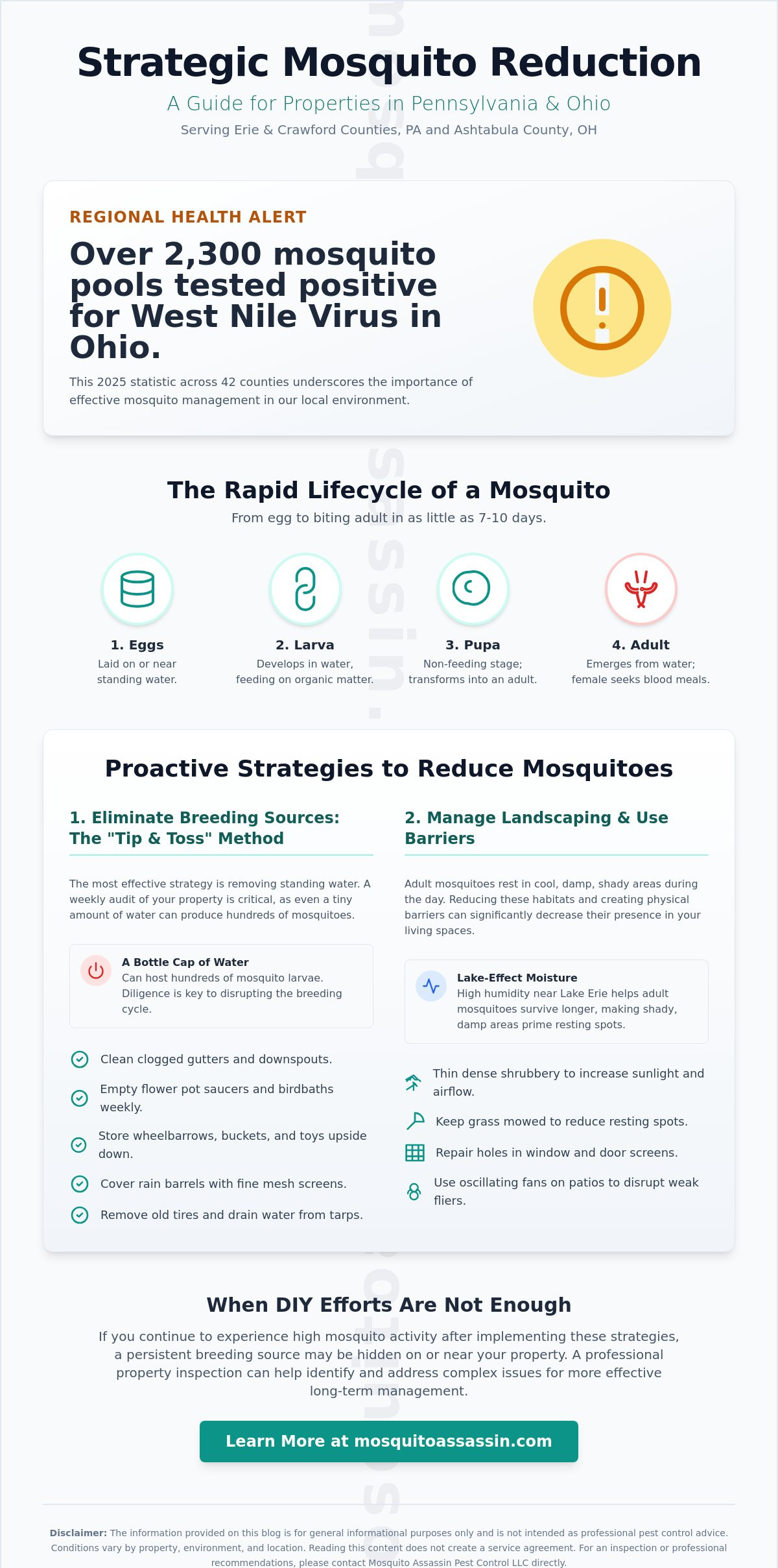
    Understanding the distinction between synthetic pyrethroids and organic essential oils is vital for homeowners in Erie and Crawford Counties. Synthetic treatments typically utilize pyrethroids, which are man-made versions of pyrethrins found in chrysanthemum flowers. These chemicals provide an immediate “knockdown” effect, neutralizing mosquitoes on contact and providing a residual barrier that lasts up to 30 days. In contrast, an organic mosquito spray relies on concentrated botanical oils like cedarwood, peppermint, or lemongrass. These oils primarily function through repellent properties and by disrupting the scent trails mosquitoes use to locate hosts.

    The environmental impact differs significantly between the two methods. Synthetic pyrethroids are broad-spectrum insecticides, meaning they can affect non-target insects, including bees and butterflies, if they come into direct contact with the wet product. Organic oils generally have a lower impact on these beneficial pollinators because they degrade much faster in the environment. Detailed data on how various active ingredients interact with the environment can be found in this insect repellents fact sheet from Oregon State University. This resource explains the science behind repellent efficacy and safety for those looking to minimize their ecological footprint.

    Safety Profiles for Families and Pets

    Residential properties in Ashtabula County often prioritize organic solutions to maintain a lower chemical footprint. While both synthetic and organic treatments are regulated for safety, organic options are frequently preferred for high-traffic yards where children and pets play daily. A key difference lies in the “dry time” requirements. Synthetic applications usually require residents to stay off the lawn for 30 to 60 minutes until the product has completely dried. Many organic formulas allow for faster re-entry, though professional best practices still suggest waiting until the spray has settled. Choosing a professional treatment plan ensures these products are applied at the correct concentrations for maximum safety.

    Effectiveness and Re-application Cycles

    Managing expectations is essential when using an organic mosquito spray. Because botanical oils are natural substances, they are highly susceptible to environmental degradation. UV sunlight and heavy rain, common in the Great Lakes region, break down these oils faster than synthetic compounds. While a synthetic barrier might last 21 to 30 days, organic treatments typically require a tighter schedule of 14 to 21 days to maintain a consistent repellent barrier. Consistent application is the most effective way to manage local mosquito populations throughout the humid summer months. Homeowners should monitor local weather patterns, as a period of heavy rainfall may necessitate an earlier follow-up to ensure the protective barrier remains intact.

    Disclaimer: The information provided on this blog is for general informational purposes only and is not intended as professional pest control advice. Conditions vary by property, environment, and location. Reading this content does not create a service agreement. For an inspection or professional recommendations, please contact Mosquito Assassin Pest Control LLC directly.
    Organic Mosquito Spray: A Professional Guide to Natural Yard Protection

    The Science of How Natural Repellents Work

    Mosquitoes are highly efficient biological hunters that rely on a sophisticated array of sensors to find their next meal. They track targets by detecting carbon dioxide (CO2) exhaled by humans and animals from distances of up to 100 feet. As they get closer, they use thermal receptors to sense body heat and chemical receptors to identify lactic acid and skin oils. An organic mosquito spray works by directly targeting these biological systems to prevent mosquitoes from successfully identifying a target.

    The effectiveness of natural treatments depends on high concentrations of specific plant extracts. These extracts don’t just smell pleasant to humans; they contain complex chemical structures that are toxic or repellent to specific insect nervous systems. By applying these concentrated oils to a property in Erie County or Crawford County, professional technicians create an environment that is biologically hostile to pests while remaining safe for families and pets.

    Sensory Masking Techniques

    Mosquitoes rely on their antennae to navigate. When a yard is treated with botanical compounds, the air becomes saturated with molecules that overwhelm the mosquito’s olfactory sensors. This process prevents the insect from “locking on” to the CO2 plumes or skin odors that would normally lead them to a person. Many professional-grade natural solutions rely on EPA-recognized natural ingredients such as cedarwood oil, peppermint oil, and geraniol to create this effect.

    Vapor pressure plays a critical role in how long these barriers last. High-quality organic oils have a specific evaporation rate that maintains a protective aromatic barrier over several weeks. Sensory masking is the process of using concentrated botanical compounds to interfere with a mosquito’s ability to detect and follow chemical signals from a human host. This creates a “cloaking” effect for the entire property, making it invisible to passing swarms.

    Larvicidal Properties of Organic Oils

    Effective pest management involves more than just repelling adult insects; it requires breaking the breeding cycle. Certain organic oils act as larvicides when they come into contact with standing water or damp soil. These oils create a thin film on the water’s surface that prevents mosquito larvae from breathing, effectively neutralizing the next generation of pests before they can fly. In areas like Ashtabula County, where summer humidity can lead to rapid breeding in shaded foliage, this dual-action approach is essential.

    Professional pest control may help reduce risk of future infestations by identifying and treating these specific micro-habitats. Homeowners can find more information about localized protection strategies at mosquitoassassin.com/location. Targeting the underside of leaves and dense brush is vital because that’s where 90 percent of mosquitoes rest during the heat of the day.

    Professional Equipment vs. Hand-Held Sprayers

    The science of the spray is just as important as the ingredients. Professional technicians use high-powered mist blowers that atomize the organic mosquito spray into tiny droplets measured in microns. This specialized equipment provides several advantages over standard hand-pump sprayers:

    • Deeper Penetration: The air-assisted blast forces the organic solution deep into thick shrubs and tall grass where mosquitoes hide.
    • Uniform Coverage: Mist blowers ensure every leaf surface is coated, leaving no “gaps” in the sensory barrier.
    • Surface Adhesion: Smaller droplets stick more effectively to vertical surfaces and the undersides of leaves, extending the life of the treatment.

    By using professional-grade tools, the treatment reaches the areas where biological activity is highest, ensuring the natural compounds can do their job effectively. For an inspection or to learn more about professional yard protection, visiting the online booking portal can provide immediate assistance.

    Disclaimer: The information provided on this blog is for general informational purposes only and is not intended as professional pest control advice. Conditions vary by property, environment, and location. Reading this content does not create a service agreement. For an inspection or professional recommendations, please contact Mosquito Assassin Pest Control LLC directly.

    Maximizing the Impact of Natural Treatments in PA and OH

    The unique climate of the Great Lakes region requires a strategic approach to yard protection. In Erie and Ashtabula counties, the proximity to Lake Erie creates a microclimate characterized by high humidity and sudden weather shifts. These factors directly influence how an organic mosquito spray interacts with the environment. Successful protection doesn’t just depend on the application itself; it requires a combination of professional timing and consistent property maintenance.

    Regional Climate Considerations

    High humidity levels in Northwest PA often exceed 70 percent during summer mornings. This moisture slows the evaporation of essential oils, which can be beneficial for longevity but requires precise application to ensure the product adheres to foliage. The regional mosquito season typically spans from May through September. During these months, the timing of treatments is vital. Professional applications are most effective when scheduled during dry windows, as the Great Lakes region can see average monthly rainfall totals of 3 to 4 inches during the peak of summer.

    Lake Erie weather patterns often bring heavy, sudden downpours. These events can wash away surface treatments if they haven’t had sufficient time to dry. Monitoring local forecasts helps ensure that applications occur at least 24 to 48 hours before significant rain is expected. This window allows the natural compounds to bond with the underside of leaves where mosquitoes hide during the day.

    Environmental Modifications for Better Results

    Property owners can significantly improve the performance of natural treatments by addressing local breeding hotspots. In Crawford County, rural landscapes often feature low-lying areas that collect water after spring thaws. Identifying these zones is the first step in a comprehensive plan. Standing water is the primary nursery for mosquito larvae; even a bottle cap full of water can host hundreds of eggs.

    • Clear Leaf Litter: Decaying leaves in Erie properties create damp, shaded environments that protect mosquitoes from the sun.
    • Clean Gutters: Clogged gutters are one of the most overlooked breeding sites in Ashtabula and Crawford counties.
    • Manage Low Spots: Filling in depressions or improving drainage in yards reduces the surface area available for egg-laying.

    Landscaping choices also play a role. Dense thickets of overgrown brush provide the perfect resting spot for adult mosquitoes. Thinning out heavy vegetation improves airflow and allows sunlight to reach the ground, which naturally dries out potential breeding sites. When these physical changes are combined with professional treatments, the overall mosquito population in a yard can be managed more effectively. For those seeking a tailored approach to their property, professional pest control may help reduce risk by identifying specific vulnerabilities in the landscape.

    Disclaimer: The information provided on this blog is for general informational purposes only and is not intended as professional pest control advice. Conditions vary by property, environment, and location. Reading this content does not create a service agreement. For an inspection or professional recommendations, please contact Mosquito Assassin Pest Control LLC directly.

    Selecting a Professional Organic Protection Plan

    Choosing a professional application for an organic mosquito spray often yields better results than retail products found in big-box stores. Retail bottles usually rely on low-pressure garden hoses that can’t reach the underside of leaves where 90% of mosquitoes hide during the day. Licensed technicians in Erie and Crawford Counties use high-volume mist blowers. These machines create a fine mist that penetrates deep into dense vegetation, ensuring the botanical oils coat every surface where pests harbor. This level of coverage is difficult to achieve with standard DIY equipment.

    Evaluating a service provider requires looking at their knowledge of Integrated Pest Management (IPM) protocols. A knowledgeable professional won’t just spray; they’ll look for the source of the problem. This includes identifying drainage issues or debris that traps moisture. In Ashtabula County, where wooded perimeters are common, understanding how to create a perimeter barrier is essential for effective suppression. Professional plans also allow for the seamless integration of tick control, as many botanical formulas are effective against multiple types of biting insects simultaneously.

    The Value of Professional Expertise

    Professional technicians are trained to identify cryptic harborages that the average homeowner might overlook. While a resident might focus on the lawn, a professional targets areas like the interior of hollow logs, the undersides of deck boards, and dense ornamental shrubs. These specific locations are where mosquitoes rest to avoid the sun. Utilizing comprehensive protection options ensures that the treatment covers more than just the visible areas. This methodical approach is vital for maintaining a comfortable outdoor space throughout the humid summer months.

    Consistency and the Pest-Free Goal

    Single applications rarely solve a season-long problem. Mosquitoes can go from egg to adult in as little as 7 to 10 days during peak heat. A consistent management plan creates a cumulative effect, where each visit reinforces the previous treatment. It’s a common mistake to wait until an infestation is severe before seeking help. Ongoing professional assessments, which can be requested through the online booking portal, help determine the correct frequency for a specific property. Regular inspections allow technicians to adjust the application based on recent rainfall or temperature shifts. Professional pest control may help reduce risk by maintaining a persistent barrier that discourages new populations from moving onto the property.

    Disclaimer: The information provided on this blog is for general informational purposes only and is not intended as professional pest control advice. Conditions vary by property, environment, and location. Reading this content does not create a service agreement. For an inspection or professional recommendations, please contact Mosquito Assassin Pest Control LLC directly.

    Securing Your Yard with Botanical Protection

    Choosing an effective organic mosquito spray involves understanding how plant-based oils interact with pest biology. These natural treatments provide a specialized alternative to synthetic options, focusing on disrupting the life cycle of mosquitoes without leaving long-term residues. Properties in Erie, Crawford, and Ashtabula counties often face unique pest pressures due to Great Lakes weather patterns; this makes precise application timing essential for success. Licensed and insured technicians are trained to identify specific breeding sites and apply botanical solutions that are safe for both families and pets. Maintaining a yard that’s comfortable for outdoor activities requires a consistent strategy tailored to the local environment. Professional oversight ensures these natural formulas are applied at the correct intervals to provide dependable protection throughout the peak season. It’s possible to enjoy a backyard without the constant nuisance of biting insects by using science-based, natural methods. Taking proactive steps now helps ensure a more comfortable summer for everyone. For those looking to reclaim their outdoor space, request an inspection for professional organic mosquito management to determine the best approach for a specific property.

    Disclaimer: The information provided on this blog is for general informational purposes only and is not intended as professional pest control advice. Conditions vary by property, environment, and location. Reading this content does not create a service agreement. For an inspection or professional recommendations, please contact Mosquito Assassin Pest Control LLC directly.
    Frequently Asked Questions

    Is organic mosquito spray as effective as traditional chemical sprays?

    Organic sprays provide a significant reduction in mosquito populations, though they typically require more frequent application than synthetic alternatives. Studies indicate that essential oil-based products can repel insects effectively for shorter durations. While synthetic pyrethroids might last 21 days, organic options often provide peak protection for about 14 days before the natural oils begin to biodegrade.

    How long does a professional organic mosquito treatment last?

    A professional organic mosquito spray treatment generally maintains its maximum effectiveness for 14 days. Environmental factors like high humidity or temperatures exceeding 90 degrees Fahrenheit can cause the botanical oils to break down faster. Because these natural compounds biodegrade quickly, scheduling service every 2 weeks ensures consistent protection throughout the peak season in Erie and Crawford Counties.

    Is it safe for my dog to be in the yard after an organic spray?

    Pets can safely return to the yard once the organic treatment has completely dried, which usually takes 30 to 60 minutes. These formulas use plant-based ingredients like cedarwood or peppermint oil that are designed to be family-friendly. It’s always best practice to keep animals inside during the actual application to prevent direct contact with the wet mist.

    Can organic sprays help protect against ticks as well as mosquitoes?

    Yes, many organic treatments are formulated to target both mosquitoes and ticks simultaneously. Botanical oils like cedar oil interfere with the pheromone receptors of ticks and can dissolve the exoskeleton of certain crawling insects. This dual-action approach is particularly useful for properties near wooded areas in Ashtabula County where tick activity is high.

    Do I need to be home when a professional applies the organic treatment?

    Homeowners don’t need to be present for the application as long as the technician has clear access to the yard. Professionals simply require that gates are unlocked and pets are secured indoors before they arrive. Most companies provide a digital notification or a door hanger once the service is finished to confirm the treatment is complete.

    What happens if it rains shortly after an organic mosquito application?

    If heavy rain occurs within 2 hours of application, the treatment’s effectiveness may be reduced by 50 percent or more. While organic oils are designed to adhere to foliage, they need sufficient time to dry and set on the underside of leaves. Professionals monitor local weather patterns in Pennsylvania and Ohio to time applications during dry windows for the best results.

    Are there any smells associated with organic mosquito treatments?

    Organic treatments usually leave a mild, pleasant scent of essential oils, such as cedar, mint, or lemongrass, for approximately 24 hours. Unlike synthetic chemicals that may have a harsh odor, these natural aromas dissipate quickly as the product dries. Most residents find the botanical scent refreshing rather than intrusive during the first day of treatment.

    How often should organic mosquito treatments be reapplied in Pennsylvania?

    In Pennsylvania, a reapplication every 14 days is the standard recommendation for an organic mosquito spray program. The state’s typical mosquito season runs from May through October, requiring approximately 10 to 12 treatments for full-season coverage. Maintaining this strict schedule prevents gaps in protection when local mosquito populations are at their highest levels.

    Disclaimer: The information provided on this blog is for general informational purposes only and is not intended as professional pest control advice. Conditions vary by property, environment, and location. Reading this content does not create a service agreement. For an inspection or professional recommendations, please contact Mosquito Assassin Pest Control LLC directly.

  • Backyard Tick Control in Edinboro, PA: A Homeowner’s Guide to Seasonal Protection

    Backyard Tick Control in Edinboro, PA: A Homeowner’s Guide to Seasonal Protection

    After a five-minute play session in the grass near Edinboro Lake, finding a tick on your dog’s ear can turn a sunny afternoon into a stressful evening. Most homeowners in Erie County value their outdoor time but feel a growing sense of anxiety every time a family member or pet steps off the patio. It’s frustrating to feel like a prisoner in your own yard because of the hidden threat of Lyme disease and other tick-borne illnesses. You want to enjoy the fresh air without the constant worry of checking for hitchhikers after every trip outside.

    This guide provides the essential knowledge needed for effective backyard tick control Edinboro PA residents can rely on to reclaim their outdoor spaces. You’ll learn how to identify high-risk habitats, understand the seasonal behavior of local species, and implement landscape modifications that naturally discourage these pests. By understanding the science behind tick behavior and the specific timing required for treatments, you can create a professional-grade protection plan that keeps your family and pets safer throughout the year. Taking these proactive steps ensures that your backyard remains a place for relaxation rather than a source of concern.

    Key Takeaways

    • Understand how the high humidity and lake influence in Northwest Pennsylvania sustain tick populations from early spring through late autumn.
    • Identify the specific behaviors of Black-legged and American Dog ticks to better protect family members and household pets.
    • Discover why effective backyard tick control Edinboro PA relies on targeting shaded perimeter zones rather than just maintaining a sunny lawn.
    • Learn how to create physical barriers, such as gravel or wood chip borders, to discourage ticks from migrating into active recreation areas.
    • Implement a multi-layered integrated pest management strategy to achieve more consistent protection throughout the entire peak season.

    Understanding Tick Activity in Edinboro and Erie County

    Edinboro’s unique geography creates a prime environment for tick populations to flourish. The proximity to Edinboro Lake and the surrounding wetlands in Erie County ensures high humidity levels, which are essential for tick survival. The active season in Northwest Pennsylvania typically spans from early March through late November, though activity depends heavily on local weather patterns. Effective backyard tick control Edinboro PA starts with a clear grasp of how these pests utilize the local landscape to thrive and reproduce.

    To better understand how these pests inhabit residential spaces, watch this helpful video:

    Ticks don’t travel long distances on their own; instead, they rely on hitchhiking via local wildlife. In Edinboro, common carriers like white-tailed deer, field mice, and groundhogs frequently cross into residential yards from nearby wooded lots or the lakefront. As these animals move through a property, ticks drop off into tall grass or leaf litter, establishing new populations right where families play. Homeowners should prioritize understanding tick-borne diseases to recognize the risks associated with these unwanted guests, especially as wildlife interactions increase during the warmer months.

    Seasonal Peaks for Ticks in Pennsylvania

    Ticks in Northwest Pennsylvania follow a predictable lifecycle that dictates when they are most dangerous. The spring surge usually begins in March or April as adult black-legged ticks emerge from winter dormancy to find a host. A second peak occurs in the fall, involving both adults and nymphs. Ticks remain a threat whenever the ground isn’t frozen and temperatures stay above 35 to 40 degrees Fahrenheit. Monitoring property edges before the first outdoor gatherings of the year is a practical step for early detection and prevention.

    Environmental Factors in Northwest PA

    The local climate in Erie County provides the consistent moisture ticks need to avoid drying out. Thick layers of leaf litter and dense groundcover act as insulation, protecting them from sudden temperature swings. Shaded areas around Edinboro homes are particularly vulnerable because they retain dampness longer than open, sunny lawns. Implementing backyard tick control Edinboro PA often involves managing these specific micro-climates to make the yard less hospitable. For residents looking to identify high-risk zones on their property, learning more about service locations can provide context on regional pest pressure and local trends.

    Disclaimer: The information provided on this blog is for general informational purposes only and is not intended as professional pest control advice. Conditions vary by property, environment, and location. Reading this content does not create a service agreement. For an inspection or professional recommendations, please contact Mosquito Assassin Pest Control LLC directly.

    Common Tick Species Found in Northwest Pennsylvania Backyards

    Identifying the specific pests in your yard is the foundation of effective backyard tick control Edinboro PA. In Erie and Crawford Counties, homeowners typically encounter three main species. Each has unique habits, preferred habitats, and potential risks that require specific attention during the warmer months. Understanding these differences helps residents better manage their outdoor spaces and protect their families.

    The Black-legged Tick, also known as the Deer Tick, is the most notorious species in Northwest Pennsylvania. These ticks are small, with adults measuring about 3 millimeters, and are identified by their orange-brown bodies and dark legs. They thrive in moist, shaded areas like wood piles, stone walls, and leaf litter. According to research on Common Pennsylvania Ticks, this species is the primary vector for Lyme disease in the region. Because they can remain active as long as temperatures are above freezing, protection is often a year-round concern for local property owners.

    The American Dog Tick is larger and more robust, often found in open, sunlit grassy areas rather than deep woods. These ticks have distinct silver or white markings on their backs. They are frequently brought into homes by pets after walks in tall grass or fields. While they don’t carry Lyme disease, they are known to transmit other pathogens. Another emerging threat is the Lone Star Tick. Once rare in Pennsylvania, its range has expanded northward over the last decade. Females are easily identified by a single white spot on their back. They are aggressive biters and stay active throughout the peak summer heat.

    Tick Identification Basics for Homeowners

    Ticks change significantly in size during their life cycle. The cycle begins with eggs, which hatch into six-legged larvae. These progress into eight-legged nymphs before reaching adulthood. Nymphal ticks are particularly dangerous because they’re roughly the size of a poppy seed. Their tiny size makes them nearly impossible to see on skin or clothing without a thorough inspection. While adult ticks are active in the fall and spring, nymphs are most active during the late spring and early summer. This timeframe coincides with peak outdoor activity for families in Edinboro, making detection difficult but necessary.

    Risks Associated with Local Ticks

    The presence of these species in residential backyards increases the potential for exposure to various tick-borne pathogens. Northwest Pennsylvania has seen a steady presence of these pests in both rural and suburban properties. Performing a daily tick check on children and pets is a necessary habit after spending time outdoors. Focusing on areas behind the ears, under arms, and around the waist helps catch ticks before they have a chance to attach. Professional pest control may help reduce risk by managing the environments where these species thrive. Consistent yard maintenance, such as clearing brush and keeping grass short, further discourages tick populations from establishing themselves near the home.

    Disclaimer: The information provided on this blog is for general informational purposes only and is not intended as professional pest control advice. Conditions vary by property, environment, and location. Reading this content does not create a service agreement. For an inspection or professional recommendations, please contact Mosquito Assassin Pest Control LLC directly.

    Backyard Tick Control in Edinboro, PA: A Homeowner’s Guide to Seasonal Protection

    Evaluating Professional Tick Management Strategies for Local Properties

    Standard mowing and lawn maintenance provide a manicured look, but they rarely address the root of a tick problem. Ticks are highly sensitive to desiccation, which means they dry out and die in the direct heat of a sunny, open lawn. Instead, these arachnids congregate in the humid, shaded microclimates found at the edges of Edinboro properties. Relying solely on short grass for backyard tick control Edinboro PA ignores the high-risk zones where approximately 82% of nymphs are typically found: the leaf litter and brush at the property’s edge.

    Professional strategies utilize Integrated Pest Management (IPM), a science-based approach that combines biological, cultural, and targeted chemical tools. This method relies on data from initiatives like the PA Tick Surveillance Program to understand local population densities and species distribution. By focusing on the biology of the tick, professionals can reduce populations without blanket-spraying an entire property. It’s a method that prioritizes efficiency and environmental responsibility over high-volume chemical use.

    Targeted Treatment Areas

    Effective management focuses on the “transition zone,” the specific area where a manicured lawn meets woods, tall weeds, or decorative groundcovers. Ticks often wait in these spots, a behavior called questing, to latch onto passing hosts. Professional barrier treatments prioritize these perimeters to stop tick migration from neighboring wooded lots. Technicians also focus on specific harborages that DIY efforts often miss:

    • Shaded areas beneath decks and porches where pets often rest.
    • Perimeters of sheds and outbuildings that provide cover for rodents.
    • Dense vegetation along fence lines and stone walls.

    Professional Standards and Safety

    Hiring licensed professionals ensures that applications comply with specific regulations in Pennsylvania and Ohio. These experts are trained to identify non-target insects, such as bees and butterflies, and apply treatments in a way that minimizes environmental impact. You can explore comprehensive pest services to see how professional standards differ from standard residential gardening. Licensed technicians understand the local climate of Erie and Crawford Counties, ensuring treatments are applied during optimal weather windows for maximum efficacy.

    One-time applications often fail because they don’t account for the complex tick life cycle. Ticks can live for two to three years; consistent protection throughout the spring, summer, and fall is necessary to interrupt their breeding patterns. Maintaining a defensive barrier ensures that as new ticks emerge or are dropped into the yard by wildlife, the treatment remains active. Professional pest control may help reduce risk by providing this ongoing layer of security that a single application cannot match.

    Disclaimer: The information provided on this blog is for general informational purposes only and is not intended as professional pest control advice. Conditions vary by property, environment, and location. Reading this content does not create a service agreement. For an inspection or professional recommendations, please contact Mosquito Assassin Pest Control LLC directly.

    Practical Habitat Modification to Reduce Tick Populations

    Landscape management is the foundation of effective backyard tick control Edinboro PA. Ticks are highly sensitive to moisture loss; they require environments with high humidity to survive and thrive. By altering the landscape to increase sunlight and reduce dampness, homeowners can naturally lower the number of ticks residing on their property. This strategy focuses on making the environment inhospitable for these pests before they ever have a chance to reach your family or pets.

    One of the most effective strategies involves creating a physical barrier between wooded areas and the lawn. A border of wood chips or gravel, at least 3 feet wide, serves two critical purposes. It acts as a visual reminder for family members to stay within the maintained lawn area. More importantly, it creates a dry, hot surface that ticks are unlikely to cross because they risk desiccation. Ticks don’t fly or jump; they rely on hitching a ride on a host. A wide, dry barrier makes that transition much more difficult.

    Managing tick hosts is equally important for long term protection. In Erie and Crawford Counties, white-tailed deer and white-footed mice are the primary transporters of ticks into residential yards. To discourage these animals, homeowners should remove bird feeders that attract rodents and use deer-resistant plantings. Stacking firewood in a dry, sunny location away from the house also removes preferred nesting sites for mice, which are often the primary source of Lyme disease infection in tick larvae.

    A Checklist for Tick-Resistant Landscaping

    • Keep grass mowed short, ideally under 3 inches, as ticks prefer the moisture of tall grass.
    • Prune low-hanging tree branches and thin out dense shrubs to allow more sunlight to reach the ground.
    • Remove leaf litter, brush, and weeds from the perimeter of the home and the edges of the lawn.
    • Store firewood neatly in a dry, sunny area to discourage rodent nesting near high-traffic zones.

    Protecting High-Traffic Areas

    Focusing your efforts on where your family spends the most time is essential. Move swing sets, sandboxes, and patio furniture away from the woods or tall grass. Placing play equipment on a base of mulch or gravel creates a dry zone that is less attractive to questing ticks. Understanding how our mosquito control program works can also provide insight into how integrated pest management strategies address multiple pests simultaneously. Consistent maintenance of these zones significantly reduces the likelihood of accidental encounters.

    While these manual steps are vital, they are often most effective when combined with professional expertise. If you find that habitat modification alone isn’t providing the level of protection you need, professional pest control may help reduce risk on your property.

    Disclaimer: The information provided on this blog is for general informational purposes only and is not intended as professional pest control advice. Conditions vary by property, environment, and location. Reading this content does not create a service agreement. For an inspection or professional recommendations, please contact Mosquito Assassin Pest Control LLC directly.

    Long-Term Protection through Integrated Pest Management

    Achieving effective backyard tick control Edinboro PA requires more than a reactive mindset. A single application might knock down the current population, but it rarely addresses the ongoing biological cycles of local tick species. Black-legged ticks, for example, have a life cycle that spans two to three years. This means that eggs, larvae, and nymphs may be present in the environment even if adult activity seems low. Relying on one-off treatments leaves gaps that allow these emerging generations to re-establish themselves in your lawn.

    Integrated Pest Management (IPM) is the most effective strategy for residential properties in Erie County. This professional approach pairs targeted barrier treatments with physical habitat modification. Homeowners can significantly reduce tick pressure by implementing simple landscape changes, such as:

    • Creating Buffer Zones: Installing a three-foot wide barrier of wood chips or gravel between the lawn and wooded edges can physically impede tick migration into play areas.
    • Managing Vegetation: Keeping grass mowed to a short height and removing leaf litter eliminates the humid, shaded environments ticks need to survive.
    • Strategic Woodpile Placement: Stacking firewood in sunny locations away from the house reduces nesting sites for the rodents that often carry ticks onto the property.

    Professional pest control serves as a critical layer of defense within this framework. Year-round monitoring is vital because tick populations fluctuate based on weather patterns and wildlife movements. If local deer or rodent populations increase, the risk to the property rises. Regular professional evaluations help catch these surges early, ensuring that protection remains consistent throughout the year.

    Developing a Seasonal Plan

    Timing is the most important factor in a successful protection plan. In Pennsylvania, adult ticks often emerge as soon as temperatures consistently stay above 45 degrees Fahrenheit. Starting treatments in early spring targets these adults before they can lay thousands of eggs. Maintaining this coverage through the peak summer months is equally important, as this is when nymphal ticks are most active and backyard use is at its highest. Understanding the importance of general pest control can provide a broader perspective on how managing various backyard pests contributes to a safer outdoor environment for families.

    Next Steps for Edinboro Homeowners

    Homeowners should begin by conducting a thorough inspection of their property perimeter. Look for high-pressure zones where tall grass meets manicured lawn or where shaded areas provide constant moisture. Identifying these specific spots allows for more precise treatment applications. Consulting with a licensed professional is the best way to develop a comprehensive map of these risk areas. Professional pest control may help reduce risk on residential properties by providing expert insights that a standard DIY approach might miss. For those ready to begin a systematic protection strategy, you can contact Mosquito Assassin Pest Control LLC for an inspection.

    Disclaimer: The information provided on this blog is for general informational purposes only and is not intended as professional pest control advice. Conditions vary by property, environment, and location. Reading this content does not create a service agreement. For an inspection or professional recommendations, please contact Mosquito Assassin Pest Control LLC directly.

    Protecting Your Edinboro Property for the Seasons Ahead

    Maintaining a safer outdoor space requires a consistent strategy that addresses the specific environmental factors of Northwest Pennsylvania. By identifying common species like the black-legged tick and modifying habitats to remove leaf litter and tall grass, homeowners can significantly disrupt the tick life cycle. Effective backyard tick control Edinboro PA relies on an Integrated Pest Management approach; it’s a strategy that focuses on long-term results rather than short-term fixes. Because the company is locally owned and operated in Northwest Pennsylvania, the licensed and insured professionals understand the specific needs of properties throughout Erie, Crawford, and Ashtabula counties.

    Professional guidance provides a comprehensive assessment of property risks and helps implement a customized management plan. For those seeking a detailed evaluation, you can request a professional inspection from Mosquito Assassin Pest Control LLC to help reduce the presence of ticks on your property. Taking these proactive steps allows you to enjoy your outdoor living areas with greater peace of mind throughout the year.

    Disclaimer: The information provided on this blog is for general informational purposes only and is not intended as professional pest control advice. Conditions vary by property, environment, and location. Reading this content does not create a service agreement. For an inspection or professional recommendations, please contact Mosquito Assassin Pest Control LLC directly.

    Frequently Asked Questions

    Is backyard tick control safe for my children and pets?

    Professional tick control utilizes products that are registered with the Environmental Protection Agency (EPA) and applied according to strict label instructions. Technicians focus applications on tick habitats like tall grass and woodpiles rather than open areas where children play. Once the treatment has fully dried, which usually takes 30 to 60 minutes, the yard is ready for families and pets to enjoy again.

    How often should a backyard be treated for ticks in Edinboro, PA?

    A standard schedule for backyard tick control Edinboro PA typically involves professional applications every 21 to 30 days during the peak season. In Northwest Pennsylvania, ticks remain active from early spring through the first hard frost. Consistent treatment intervals are necessary to maintain a protective barrier against new ticks that wildlife might carry onto the property throughout the year.

    Can I get rid of ticks in my yard myself?

    Homeowners can reduce tick populations by maintaining a 3 foot wide barrier of wood chips between lawns and wooded areas. While DIY methods help, consumer grade products often lack the residual strength of professional formulations. Licensed professionals use specialized equipment to reach the undersides of leaves and dense brush where ticks hide, providing more thorough coverage than standard hand held sprayers.

    What is the best time of year to start tick control in Erie County?

    Tick activity in Erie County starts as soon as ground temperatures consistently reach 45 degrees Fahrenheit, which often happens in late March. Starting treatments in early spring targets adult ticks before they can lay thousands of eggs. This proactive timing helps suppress the overall population before the nymph stage emerges during the warmer summer months when outdoor activity increases.

    Does professional tick spraying actually work in wooded yards?

    Professional treatments are effective in wooded yards because they target the transition zones where forest meets the lawn. Data from the Connecticut Agricultural Experiment Station shows that 82% of ticks on residential properties are found within 3 feet of the lawn edge. By treating these specific perimeter areas, professionals create a defensive zone that significantly reduces the number of ticks entering active recreation spaces.

    Will a tick treatment also help with mosquitoes?

    Many products used for backyard tick control Edinboro PA are also effective against mosquitoes because both pests utilize similar shaded resting spots. While the application methods differ slightly, treating the dense foliage and damp areas of a property often provides a dual benefit. This integrated approach manages multiple biting pests at once, making the outdoor environment more comfortable for residents during the summer.

    How long do I need to stay off the grass after a professional treatment?

    Residents should stay off treated surfaces until the product is completely dry, which typically takes about one hour. Factors like sunlight and wind speed can change this timeframe, so it’s important to wait for a clear visual check. Professional technicians provide specific instructions after each visit to ensure homeowners know exactly when it is appropriate to resume normal activities in the yard.

    Do ticks in Edinboro carry Lyme disease?

    Ticks in Edinboro and the surrounding Erie County area are known carriers of the bacteria that cause Lyme disease. The Pennsylvania Department of Health reports that the state has frequently recorded the highest number of Lyme disease cases in the country over the last 10 years. Because black-legged ticks are the primary vectors, professional pest control may help reduce risk by managing the local population.

    For more information or to schedule an inspection, please visit our online booking portal or contact us at www.mosquitoassassin.com/contact-us.

    Disclaimer: The information provided on this blog is for general informational purposes only and is not intended as professional pest control advice. Conditions vary by property, environment, and location. Reading this content does not create a service agreement. For an inspection or professional recommendations, please contact Mosquito Assassin Pest Control LLC directly.

  • Tick Control for Yards in Erie, PA: A Homeowner’s Guide (2026)

    Tick Control for Yards in Erie, PA: A Homeowner’s Guide (2026)

    Last June, a family in Millcreek discovered three deer ticks on their golden retriever after just ten minutes of backyard play. It’s a common and stressful scenario for homeowners in Northwest Pennsylvania, where 2024 data from the Pennsylvania Department of Environmental Protection confirms that every county now hosts black-legged ticks capable of carrying Lyme disease. You likely feel that same sense of anxiety every time your children or pets step into the grass, especially if store-bought sprays have failed to provide lasting results. Achieving reliable tick control for yard erie pa requires more than just a random application of retail products; it demands a clear understanding of how these pests survive and thrive in our specific humid climate.

    This guide explains the biological habits of local tick species and outlines professional prevention strategies to help manage your property effectively. You’ll learn how to identify high-risk zones like woodpiles and tall grass, evaluate pet-safe options that don’t compromise your family’s health, and implement long-term reduction plans that prioritize lasting safety. This overview covers habitat modification and professional-grade management techniques tailored for residents in Erie and Crawford Counties.

    Disclaimer: The information provided on this blog is for general informational purposes only and is not intended as professional pest control advice. Conditions vary by property, environment, and location. Reading this content does not create a service agreement. For an inspection or professional recommendations, please contact Mosquito Assassin Pest Control LLC directly.

    Key Takeaways

    • Understand why the humid Great Lakes climate and the two-year life cycle of the black-legged tick make one-time treatments ineffective for long-term suppression.
    • Discover how professional-grade equipment reaches the underside of leaf litter where ticks hide, providing a level of coverage often missed by residential grade products.
    • Learn how to create a physical “tick-safe zone” by implementing mulch or gravel barriers between wooded areas and your lawn.
    • Explore why effective tick control for yard erie pa requires a consistent schedule to account for the complex role of host animals like white-footed mice and deer.
    • Identify the benefits of integrating tick management with a comprehensive mosquito control program to safeguard your outdoor living space throughout the season.

    Understanding the Tick Population in Northwest Pennsylvania

    Ticks are a persistent reality for residents in Erie and Crawford counties. The black-legged tick, commonly called the deer tick, dominates the local landscape. Northwest Pennsylvania’s proximity to the Great Lakes creates a humid environment where these pests thrive. Moisture is essential for their survival because ticks are prone to desiccation (drying out). This makes the lakefront climate a perfect breeding ground. Effective tick control for yard erie pa requires acknowledging that these parasites are active whenever temperatures are above 45 degrees Fahrenheit. This means activity can occur even during mild winters in the region.

    Many homeowners believe ticks only live in deep woods. In reality, they are often found in the transitional zones of a backyard, such as where the lawn meets a woodline or ornamental garden. Understanding the biology and life cycle of ticks helps clarify why they move from tall grass into manicured areas. They use a behavior called “questing” to find hosts. They climb to the tips of grass blades and wait with their front legs extended to latch onto a passing human or animal.

    To better understand how these pests interact with your property, watch this helpful video:

    Primary Tick Species in the Erie Region

    While the black-legged tick is the primary concern for Lyme disease, the American dog tick is increasingly common in suburban Erie yards. These ticks are larger and prefer open, sunnier, grassy areas with less shade. They are often spotted on pets or humans after a walk through a field or trail. The seasonal timeline for these species varies slightly. Black-legged ticks have two peak activity periods in Northwest PA and Northeast Ohio, occurring in late spring and again in the autumn months. The nymphal stage represents the highest risk period for disease transmission because these tiny ticks are difficult to detect on the skin.

    Health Risks and Tick-Borne Illnesses

    Pennsylvania frequently reports some of the highest numbers of Lyme disease cases in the United States. According to data from the Pennsylvania Department of Health, the state has consistently led the nation in confirmed cases for several years. Beyond Lyme, there is a growing regional concern regarding Anaplasmosis and the rare but serious Powassan virus. These illnesses can cause symptoms ranging from fever and fatigue to neurological complications. Since ticks can be brought into the home by pets or on clothing, maintaining a clear perimeter is vital for safety. Utilizing professional pest control may help reduce risk for families and pets by targeting the specific habitats where these parasites congregate and wait for a host. For more information on local service areas, visit https://mosquitoassassin.com/location.

    Disclaimer: The information provided on this blog is for general informational purposes only and is not intended as professional pest control advice. Conditions vary by property, environment, and location. Reading this content does not create a service agreement. For an inspection or professional recommendations, please contact Mosquito Assassin Pest Control LLC directly.

    The Biology of Tick Infestations: Life Cycle and Habitats

    Understanding the biological timeline of a tick is the first step in managing an infestation. Most hard-bodied ticks found in Northwest Pennsylvania, such as the black-legged tick, follow a complex two-year life cycle. They progress through four distinct stages: egg, larva, nymph, and adult. Because this cycle spans 24 months, a single treatment rarely provides a permanent solution. Ticks at different life stages may be dormant or protected in leaf litter during a treatment, only to emerge weeks or months later. Effective tick control for yard erie pa requires a consistent strategy that accounts for these overlapping generations.

    Environmental triggers like temperature and humidity dictate exactly when ticks become active. Ticks are highly sensitive to desiccation, meaning they dry out easily. They typically require humidity levels above 85 percent to remain active for long periods. To find a host without dehydrating, they utilize a behavior called questing. A tick will climb to the top of a blade of tall grass or the tip of a low-hanging branch, holding onto the plant with its back legs while reaching out with its front legs. They don’t jump or fly; they wait for a human or animal to brush past. This is why overgrown lawn perimeters and tall grass are high-risk zones for families and pets.

    The Role of Small Rodents in Tick Breeding

    While deer are often blamed for tick problems, white-footed mice are the primary drivers of tick-borne pathogens in residential yards. Larval and nymphal ticks often take their first blood meals from these small rodents, which serve as a reservoir for bacteria. Managing the environment to discourage these hosts is vital. Homeowners should focus on clearing stone walls and tightly stacking woodpiles, as these provide ideal nesting sites for mice. Integrating rodent removal and habitat modification can significantly lower the density of infected nymphs on a property. According to Pennsylvania’s tick surveillance program, identifying the specific species present is key to understanding the localized risks in Erie and Crawford counties.

    Tick Survival Mechanisms in Winter

    It’s a common misconception that a hard freeze in Erie or Ashtabula will kill off the local tick population. In reality, ticks have evolved sophisticated survival mechanisms. When temperatures drop, they retreat under the soil line or beneath thick layers of leaf litter. The snowpack actually acts as an insulator, protecting them from extreme sub-zero temperatures. Some species remains active whenever the ground isn’t frozen and temperatures rise above 45 degrees Fahrenheit. Preparation for the spring emergence should begin in late winter by clearing debris where ticks may have overwintered. Homeowners who want to identify potential habitat hotspots can contact a professional for a property inspection.

    Disclaimer: The information provided on this blog is for general informational purposes only and is not intended as professional pest control advice. Conditions vary by property, environment, and location. Reading this content does not create a service agreement. For an inspection or professional recommendations, please contact Mosquito Assassin Pest Control LLC directly.

    Tick Control for Yards in Erie, PA: A Homeowner’s Guide (2026)

    Professional Tick Management vs. DIY Yard Treatments

    Choosing between a store-bought solution and professional tick control for yard erie pa involves more than just comparing price tags. Commercial-grade products utilized by licensed technicians often feature microencapsulated technology. This specialized formulation protects the active ingredients from rapid UV degradation and heavy rainfall, which are common in Northwest Pennsylvania. Residential-grade sprays typically lack this longevity, often requiring reapplication every few days to remain even moderately effective.

    Equipment plays a critical role in successful suppression. Ticks don’t sit on top of the grass; they hide in the cool, damp layers of leaf litter and on the undersides of low-hanging foliage. Standard garden pump sprayers cannot produce the high-pressure mist required to penetrate these deep harborages. Professional technicians use high-volume mist blowers that coat the entire leaf surface, ensuring the product reaches the pests where they live. Additionally, licensed professionals follow strict safety protocols to protect non-target insects. By timing applications and targeting specific zones, they minimize the impact on pollinators like honeybees and butterflies.

    Investing in professional general pest control is often more cost-effective over a full season. Homeowners frequently spend more on multiple bottles of ineffective DIY spray than they would on a structured professional plan that offers consistent, documented results.

    Limits of Store-Bought Tick Sprays

    Many DIY products fail because they lack “rain-fastness.” In Erie County, where lake-effect rain is frequent, a single storm can wash away a residential spray application, leading to chemical runoff into local watersheds. Another common error is broadcast spraying the middle of a sunny lawn. Ticks are highly susceptible to dehydration and rarely congregate in open, dry areas. Professional strategies focus on perimeter barriers and ecotone management (the border where the lawn meets the woods) which is far more effective than saturating a sun-drenched lawn.

    The Value of Integrated Pest Management (IPM)

    Integrated Pest Management is a holistic strategy that goes beyond simple chemical application. It involves a detailed inspection to identify “hot zones” that homeowners often overlook, such as woodpiles, stone walls, and overgrown ornamental beds. These areas are primary habitats for the white-footed mouse, which serves as a major host for tick larvae. Professional plans provide year-round suppression, targeting ticks during their most active nymphal and adult stages in the spring and fall. For those concerned about local tick populations, seeking professional pest control may help reduce risk. More information is available at www.mosquitoassassin.com/contact-us.

    Disclaimer: The information provided on this blog is for general informational purposes only and is not intended as professional pest control advice. Conditions vary by property, environment, and location. Reading this content does not create a service agreement. For an inspection or professional recommendations, please contact Mosquito Assassin Pest Control LLC directly.

    Practical Steps for Tick-Proofing Your Outdoor Space

    Creating a tick-safe zone involves more than just keeping the grass short. Effective tick control for yard erie pa requires a structural approach to landscaping that makes the environment inhospitable to these arachnids. Ticks are highly sensitive to dehydration and rely on high humidity levels, often found in overgrown vegetation and leaf litter, to survive. By modifying the physical layout of a property, homeowners can significantly reduce the likelihood of ticks migrating from wooded areas into active living spaces.

    Landscape Modifications for Tick Reduction

    The transition zone between a manicured lawn and a wooded area is known as an edge habitat. Research indicates that approximately 82% of ticks found on residential properties are located within three yards of this boundary. To disrupt their movement, homeowners should install a three-foot wide barrier of wood chips or gravel. This creates a dry, high-heat zone that ticks are reluctant to cross.

    Proper pruning is another essential tactic. Removing low-hanging branches and thinning out dense shrubbery allows more sunlight to reach the ground. Increased solar exposure lowers the ground-level humidity that ticks need to stay hydrated. Management of leaf litter is equally vital; removing damp piles of leaves before they decompose prevents the creation of a perfect overwintering habitat for tick larvae and the mice that carry them.

    Protecting Pets and High-Traffic Areas

    Strategic placement of outdoor equipment plays a major role in risk reduction. Playground sets, patios, and deck furniture should be situated in sunny areas, at least ten feet away from the yard’s perimeter or any wooded edges. If a yard is bordered by heavy brush, keeping these high-traffic zones centrally located helps ensure children and guests stay within the safest parts of the property.

    Managing host animal traffic is a secondary but effective layer of protection. Ticks often enter yards on the backs of deer and small rodents. Selecting deer-resistant plants, such as boxwood, lavender, or certain varieties of sage, can make a property less attractive to these larger hosts. For pet owners, maintaining a clear boundary and performing daily checks after outdoor play is a standard best practice. If pets or family members spend time in the yard, professional pest control may help reduce risk by addressing the population at its source.

    • Keep grass mowed to a height of three inches or less to minimize shade.
    • Stack firewood neatly in a dry, sunny location away from the house.
    • Remove old tires, trash, or debris that might provide shelter for rodents.
    • Place outdoor gear in a dryer on high heat for 10 minutes after yard work to kill any hitchhiking ticks.

    Implementing these practical changes provides a foundation for long-term tick control for yard erie pa. While landscaping modifications won’t eliminate every tick, they create a defensive perimeter that makes the environment much less inviting for pests and their hosts.

    Disclaimer: The information provided on this blog is for general informational purposes only and is not intended as professional pest control advice. Conditions vary by property, environment, and location. Reading this content does not create a service agreement. For an inspection or professional recommendations, please contact Mosquito Assassin Pest Control LLC directly.

    Implementing Long-Term Protection in Northwest PA

    Consistency is the only way to maintain a property that’s truly resistant to pests. Ticks are persistent, and their life cycles don’t pause just because one treatment was applied. Achieving reliable tick control for yard erie pa requires a schedule that accounts for the constant migration of wildlife, such as deer and small rodents, which carry new ticks onto the grass every day. Maintaining a steady barrier ensures that the protective measures remain active against new hatches throughout the spring, summer, and autumn months.

    Many property owners find that combining these efforts with a mosquito control program provides the most comprehensive results. Both pests thrive in the high-humidity environments common to Northwest Pennsylvania. Because they often share the same shaded harborages and tall grasses, a dual-pronged approach targets both threats simultaneously. This integration simplifies property maintenance while maximizing the time families can spend outdoors without worry.

    Customized Treatment Plans

    Every property in Erie County has unique biological markers that dictate the best management strategy. A professional approach follows a systematic four-step process: Inspection, Plan, Treatment, and Follow-up. During the inspection, technicians identify specific hotspots like leaf litter, stone walls, or dense groundcover. The size of the property and the density of the surrounding vegetation determine how the treatment is applied. When tailored to the specific environment, professional pest control may help reduce risk by creating a custom perimeter that accounts for local wind patterns and moisture levels.

    Service Area Considerations

    Environmental challenges vary significantly across the region. Lakefront properties in Erie often deal with higher humidity levels and different migratory bird patterns compared to the dense woodlots found in inland Crawford County. These geographic differences mean that treatment timing must be precise. For example, soil temperatures in Meadville might fluctuate differently than those near the lake. Services are currently available for residents in Erie, Meadville, and Ashtabula. Learning more about the local approach helps homeowners understand how regional weather data informs the application schedule.

    Consistency is the foundation of effective tick control for yard erie pa. Homeowners seeking a tailored strategy for their specific landscape can request a professional property assessment through the online booking portal to identify potential risks before the peak season begins.

    Disclaimer: The information provided on this blog is for general informational purposes only and is not intended as professional pest control advice. Conditions vary by property, environment, and location. Reading this content does not create a service agreement. For an inspection or professional recommendations, please contact Mosquito Assassin Pest Control LLC directly.

    Securing Your Outdoor Space for the 2026 Season

    Maintaining a safe outdoor environment in Northwest Pennsylvania requires proactive habitat management. Homeowners who remove leaf litter and create gravel barriers can significantly disrupt the tick life cycle. Ticks in the Erie region are active whenever temperatures rise above 45 degrees Fahrenheit, making yard maintenance a year-round necessity. Effective tick control for yard erie pa relies on understanding that these pests thrive in transition zones between wooded areas and manicured lawns.

    A five-star rated local service licensed in PA and OH provides the expertise needed for complex landscapes. Professional pest control may help reduce risk; for an inspection or professional recommendations, please contact Mosquito Assassin Pest Control LLC directly. As a locally owned and operated business, the approach is tailored to the specific climate of Erie and Crawford Counties. It’s a practical way to ensure your yard remains a place for relaxation. Taking these steps now helps safeguard your family for the year ahead.

    Disclaimer: The information provided on this blog is for general informational purposes only and is not intended as professional pest control advice. Conditions vary by property, environment, and location. Reading this content does not create a service agreement. For an inspection or professional recommendations, please contact Mosquito Assassin Pest Control LLC directly.

    Frequently Asked Questions

    Is professional tick control for yards safe for my children and pets?

    Professional treatments are designed to be family-safe when applied according to strict label instructions. Most applications require a 30 to 60 minute drying period before children or pets return to the treated areas. Licensed technicians in Pennsylvania follow environmental guidelines to ensure that tick populations are managed while maintaining a safe outdoor space for play and relaxation.

    How often should a yard be treated for ticks in Erie, PA?

    A standard treatment plan usually involves applications every 21 to 30 days during the active season. In Erie County, this typically means 6 to 7 applications between April and October to maintain a consistent barrier. This schedule is necessary because Pennsylvania’s average 42 inches of annual rainfall can gradually diminish the effectiveness of protective barriers over time.

    Can I get rid of ticks in my yard without using heavy chemicals?

    Integrated Pest Management strategies focus on habitat modification to reduce tick presence naturally. Removing leaf litter is vital, as it serves as the primary habitat for nearly 75 percent of ticks in residential settings. Installing a 3-foot wide barrier of gravel or wood chips between the lawn and wooded areas also creates a physical boundary that many ticks won’t cross.

    What is the best time of year to start tick control in Pennsylvania?

    Effective tick control for yard Erie PA should ideally begin in late March or early April. Black-legged ticks become active once temperatures consistently stay above 45 degrees Fahrenheit. Starting early helps eliminate adult ticks before they can deposit their eggs, which can number up to 3,000 per female, preventing a population surge in the summer.

    Does cutting the grass short really help with tick control?

    Keeping the grass cut to a height of 3 inches or less is a proven way to make a yard less hospitable to ticks. Short grass allows more sunlight to reach the soil, which increases the temperature and lowers the humidity levels ticks need to survive. It also removes the tall perches they use to climb onto pets or people as they pass by.

    What should I do if I find a tick on my property after treatment?

    It’s possible to see an occasional tick after treatment if wildlife, such as deer or small rodents, carry them onto the property. If multiple ticks are found within a 48 hour period, a professional inspection might be necessary to identify any missed nesting sites or high-traffic wildlife paths. For professional recommendations or to schedule a follow-up, homeowners can visit the online booking portal.

    Disclaimer: The information provided on this blog is for general informational purposes only and is not intended as professional pest control advice. Conditions vary by property, environment, and location. Reading this content does not create a service agreement. For an inspection or professional recommendations, please contact Mosquito Assassin Pest Control LLC directly.

  • Is Professional Mosquito Spraying Effective? What Homeowners Should Expect

    Is Professional Mosquito Spraying Effective? What Homeowners Should Expect

    Homeowners in the Great Lakes region often spend over $150 every summer on citronella candles and electronic zappers that only provide protection within a tiny 4-foot radius. While these gadgets are popular, many people find themselves asking, is professional mosquito spraying effective when DIY methods fail to stop the constant bites? It’s a common frustration to invest in these fixes only to find yourself running back inside once the sun starts to set in Northwest Pennsylvania and Northeast Ohio. You deserve to use your patio without the worry of mosquito-borne illnesses or the annoyance of an itchy aftermath.

    This guide explores the science behind professional treatments and explains how a systematic approach can lead to a 90% reduction in local mosquito populations. You’ll discover what to expect during a typical season in Erie, Crawford, or Ashtabula County and how a clear plan can help safeguard your outdoor space for the long term. By understanding the biology of these pests and the precision of professional application, you can move away from trial-and-error methods toward a more reliable solution for your property.

    Disclaimer: The information provided on this blog is for general informational purposes only and is not intended as professional pest control advice. Conditions vary by property, environment, and location. Reading this content does not create a service agreement. For an inspection or professional recommendations, please contact Mosquito Assassin Pest Control LLC directly.

    Key Takeaways

    • Learn how professional-grade adulticides and larvicides offer a more targeted and effective approach than standard retail products.
    • Understand the science behind realistic expectations, including why homeowners find that is professional mosquito spraying effective for achieving an 85 to 90 percent reduction in activity.
    • Discover how the unique humidity and weather patterns in Erie, Crawford, and Ashtabula Counties influence the timing and longevity of outdoor treatments.
    • Identify the importance of professional training in locating hidden breeding sources that standard DIY yard sprays often fail to address.
    • Explore the strategic benefits of starting a protection plan in early spring to manage mosquito populations before they reach peak levels in the summer.

    Understanding the Science of Professional Mosquito Spraying

    Professional mosquito spraying is a targeted application of adulticides and larvicides designed to reduce pest populations around a home. Many homeowners ask "is professional mosquito spraying effective" when they see standard hardware store foggers failing to provide lasting relief. The effectiveness of a professional service stems from the use of specialized products that contain surfactants and polymers. These additives allow the treatment to bond to the underside of leaves and bark, maintaining its potency through wind and rain for approximately 21 days.

    Unlike over-the-counter sprays that offer immediate knockdown but no lasting power, professional applications utilize products designed for long-term residual control. This comprehensive overview of mosquito control methods highlights how chemical and biological agents work in tandem to manage populations. Professional technicians focus on the biology of the insect rather than just spraying the open air.

    To better understand how these treatments are applied in a residential setting, watch this video:

    Adulticides vs Larvicides: A Two-Pronged Approach

    Adulticides target the flying, biting mosquitoes that cause immediate irritation to families and pets. These products work on contact to clear out active pests during the initial visit. However, focusing only on adults is a short-term fix. Professionals also use larvicides to treat standing water where mosquitoes breed, such as gutters, low spots in the yard, or drainage areas. This disrupts the life cycle at the source. By eliminating larvae before they become winged adults, the total population in a yard can drop significantly within the first two treatment cycles. This dual approach ensures that "is professional mosquito spraying effective" becomes a question of maintenance rather than just a one-time fix.

    Targeted Application and Resting Sites

    Mosquitoes are weak fliers and spend about 90% of their time resting. They don’t hang out in the middle of a sunny lawn because they’re prone to dehydration. Instead, they seek out the underside of leaves, dense brush, and shaded vertical surfaces. Professional equipment, such as motorized backpack mist blowers, uses air-assisted technology to flip leaves over during application. This ensures the product coats the undersides where mosquitoes actually live.

    In the damp, wooded environments of Crawford County or the lakeside properties of Erie County and Ashtabula County, this level of precision is necessary to reach the deep interior of hedges and ornamental grasses. Technicians prioritize shaded harborages and vertical structures like fences or the siding of a home, as these are the primary areas where mosquitoes congregate during the heat of the day.

    Disclaimer: The information provided on this blog is for general informational purposes only and is not intended as professional pest control advice. Conditions vary by property, environment, and location. Reading this content does not create a service agreement. For an inspection or professional recommendations, please contact Mosquito Assassin Pest Control LLC directly.

    The Realistic Efficacy of Professional Mosquito Treatments

    Homeowners often ask is professional mosquito spraying effective when they see swarms in their backyard during the peak of summer. Most professional programs aim for an 85 to 90 percent reduction in mosquito activity rather than total elimination. Achieving 100 percent eradication is biologically impossible because outdoor environments are open systems. New mosquitoes can drift in from adjacent properties or wooded areas at any time. Despite this, a professional application provides a dual-action approach. It starts with an immediate knockdown of adult mosquitoes present during the service and follows up with long-term residual control that remains active on foliage.

    Professional pest control helps reduce the risk of mosquito-borne concerns by lowering the local population of disease vectors. While residential treatments focus on ground-level barriers, understanding how aerial spraying works at a municipal level can provide context on how large-scale population management functions. On a residential scale, the goal is to create a hostile environment for pests while maintaining a safe space for families and pets in Erie and Crawford Counties.

    The Neighbor Effect: Does Untreated Property Matter?

    Untreated neighboring properties don’t render a professional treatment useless. Barrier treatments create a specific kill zone around the perimeter of a yard. Most common backyard mosquito species have a limited flight range, often staying within 100 to 300 feet of their hatching site. Because mosquitoes are weak fliers and must rest frequently to avoid dehydration, they eventually land on treated foliage. When they touch the underside of leaves or dense brush on a treated property, the residual product eliminates them before they can reach the porch or patio.

    Duration of Protection and Reapplication Cycles

    A standard professional treatment typically remains effective for 21 to 30 days. Natural environmental factors cause the active ingredients to degrade over time. UV light from the sun breaks down molecular bonds, and heavy rainfall can slowly wash away the product from leaf surfaces. Because of this natural degradation, consistent scheduling is the only true way to maintain a pest-free environment throughout the season. If a gap in service occurs, the population can rebound within days. For those ready to maintain their yard, visiting the online booking portal can help secure a consistent treatment schedule.

    Disclaimer: The information provided on this blog is for general informational purposes only and is not intended as professional pest control advice. Conditions vary by property, environment, and location. Reading this content does not create a service agreement. For an inspection or professional recommendations, please contact Mosquito Assassin Pest Control LLC directly.

    Is Professional Mosquito Spraying Effective? What Homeowners Should Expect

    Environmental Factors in Northwest PA and Northeast OH

    The regional climate of Northwest PA and Northeast OH creates a challenging environment for pest management. In Erie and Crawford Counties, average relative humidity levels frequently climb above 75% during the summer months. This high moisture content accelerates the mosquito life cycle, allowing larvae to develop into biting adults in as little as 7 to 10 days. Homeowners often ask, is professional mosquito spraying effective when faced with these rapid population surges. The answer depends heavily on understanding local weather patterns and biology.

    The mosquito season in the PA/OH corridor typically begins in late April and extends through the first hard frost, which usually occurs in mid-October. Lake Erie significantly influences this timeline. The lake’s thermal mass can delay the start of spring but also keeps coastal areas in Ashtabula and Erie warmer later into the autumn. This extended warmth prolongs the period of mosquito activity compared to inland regions.

    Rain and Moisture: Will the Spray Wash Away?

    Rainfall is a constant factor in the Great Lakes region, but professional treatments are designed to withstand local conditions. While a heavy downpour immediately after application might reduce efficacy, light rain is rarely an issue once the product has dried. Licensed technicians use professional-grade surfactants, which act as sticking agents to help the treatment adhere to the underside of leaves and dense foliage even in damp conditions.

    Professional services monitor local radar data to identify dry windows of at least 30 to 60 minutes for application. This ensures the treatment has sufficient time to bond to the plant surfaces. This strategic timing is a major reason why many residents find that mosquito control methods applied by experts outperform DIY attempts during wet seasons. Once dry, these treatments are resilient against typical regional rain showers.

    Regional Species and Habitats

    The tri-county area of Erie, Crawford, and Ashtabula features diverse habitats that support various species, including the aggressive Asian Tiger mosquito and the common house mosquito. Properties in this region often contain specific features that contribute to population spikes:

    • Wooded Lots: Heavy leaf litter in forest borders retains moisture and provides ideal resting spots for adults.
    • Agricultural Runoff: Rural areas in Crawford County often have nutrient-rich standing water that fuels rapid larval growth.
    • Marshy Terrain: Low-lying areas near the lakefront and local tributaries serve as permanent breeding grounds.

    Identifying these local harborages is critical for success. In Ashtabula, for instance, older drainage systems and dense ornamental landscaping can serve as primary resting sites. When evaluating if is professional mosquito spraying effective, success is measured by how well the treatment reaches these specific, often hidden, habitats. Focusing on these high-density areas ensures a more comprehensive reduction in the local population.

    Disclaimer: The information provided on this blog is for general informational purposes only and is not intended as professional pest control advice. Conditions vary by property, environment, and location. Reading this content does not create a service agreement. For an inspection or professional recommendations, please contact Mosquito Assassin Pest Control LLC directly.

    Professional Mosquito Control vs DIY Yard Sprays

    Homeowners in Erie, Crawford, and Ashtabula Counties often weigh the cost of store-bought foggers against hiring experts. While retail sprays offer a temporary fix, they lack the residual strength of professional-grade products. Professional solutions utilize higher concentrations of active ingredients designed to withstand rain and UV exposure for 21 days or more. A central reason why is professional mosquito spraying effective involves the delivery method. High-volume backpack blowers use air turbulence to flip leaves over, coating the underside where 90% of mosquitoes hide during the heat of the day. A simple garden hose sprayer only reaches the top surfaces, leaving the pests’ primary habitat completely untouched.

    The cost of DIY failures adds up quickly. A homeowner might spend $60 to $120 on retail canisters every few weeks without seeing a significant reduction in bites. Licensed technicians identify the root of the problem through property-specific training. They locate breeding sources that the average person misses, like a single bottle cap of water which can host 200 larvae. This targeted approach provides a higher return on investment compared to the “spray and pray” method of retail products.

    The Risks of Improper DIY Application

    Incorrect mixing or poor timing does more than just waste money; it can lead to chemical resistance within local mosquito populations. When a solution is too weak, it kills only the susceptible insects while allowing the stronger ones to survive and breed. This creates a harder-to-kill generation in your own backyard. Improper application also risks harming non-target beneficial insects. Without professional training, a homeowner might accidentally spray flowering plants where bees and butterflies forage. Professional protocols are designed with family-safe considerations in mind, focusing on specific resting sites to ensure your yard’s ecosystem remains protected.

    Integrated Pest Management (IPM) Practices

    A professional doesn’t just spray; they investigate. Integrated Pest Management (IPM) involves a systematic search for hidden mosquito nurseries. Technicians provide specific recommendations for source reduction, such as clearing clogged gutters or tipping standing water in obscure areas like tire swings or tarp folds. This comprehensive approach is why a general pest control plan often includes mosquito management. By addressing the environment and identifying hidden nurseries, experts reduce the need for excessive chemical use while providing long-term relief.

    If you’re tired of battling bites, professional pest control may help reduce risk on your property.

    Disclaimer: The information provided on this blog is for general informational purposes only and is not intended as professional pest control advice. Conditions vary by property, environment, and location. Reading this content does not create a service agreement. For an inspection or professional recommendations, please contact Mosquito Assassin Pest Control LLC directly.

    Establishing a Season-Long Protection Plan

    When determining is professional mosquito spraying effective, homeowners must look beyond a single application. A one-time treatment is a useful tool for temporary relief before a backyard graduation or outdoor wedding, but it doesn’t provide lasting control for the entire summer. Mosquitoes are resilient pests with a rapid life cycle; a single female can lay up to 300 eggs at a time, and those eggs can mature into biting adults in as little as seven to 10 days. Without a consistent schedule, new generations will quickly repopulate the area once the initial product begins to weather away.

    A successful protection plan starts early in the spring. In regions like Erie County and Ashtabula County, mosquito activity begins as soon as overnight temperatures consistently hit 50 degrees Fahrenheit. By applying treatments before the first major hatch, technicians can disrupt the initial reproductive cycle, which prevents the population from reaching unmanageable levels during the peak heat of July. Ongoing monitoring during follow-up visits ensures the protective barrier remains intact. Professional pest control may help reduce risk by identifying new standing water sources that appear after heavy spring rains, such as clogged gutters or depressions in the lawn.

    Preparing Your Yard for Treatment

    Preparation is a vital step in ensuring the maximum reach of any professional application. Before the technician arrives, homeowners should clear debris like leaf piles, grass clippings, and fallen branches, as these provide cool, damp resting spots for adult mosquitoes. It is also important to ensure access to all parts of the property, including areas behind locked fences and along woodlines where mosquitoes are most likely to congregate. Learning more about the mosquito control program structure helps residents understand how technicians identify and target these specific high-traffic zones.

    Next Steps for a Mosquito-Free Summer

    Consulting with local experts who live in Crawford County and the surrounding communities is the best way to develop a plan tailored to the local environment. Because every property has unique drainage patterns and vegetation density, a standard approach isn’t always sufficient. Requesting a professional property assessment allows for a customized frequency of service, typically every 21 to 30 days, to maintain a consistent chemical barrier. This proactive strategy is the most reliable method for reclaiming outdoor spaces. For an inspection or professional recommendations, please visit the GorillaDesk portal.

    Disclaimer: The information provided on this blog is for general informational purposes only and is not intended as professional pest control advice. Conditions vary by property, environment, and location. Reading this content does not create a service agreement. For an inspection or professional recommendations, please contact Mosquito Assassin Pest Control LLC directly.

    Achieving Lasting Results for Your Outdoor Space

    Determining is professional mosquito spraying effective involves looking at the science behind the treatments and the specific environmental conditions of the region. Homeowners in Erie, Crawford, and Ashtabula counties often deal with dense vegetation and fluctuating moisture levels that favor mosquito breeding. Professional applications target these specific habitats with precision. Licensed and insured technicians understand how to apply treatments to the undersides of leaves where mosquitoes rest during the day. This method provides a level of coverage that standard hardware store foggers cannot match. A structured protection plan addresses the pests at every stage of their life cycle, preventing the rapid population spikes common in Northwest PA and Northeast OH during the summer months.

    Consistency is the most important factor for success. While a single application reduces the immediate population, regular visits ensure the barrier remains intact against new arrivals from neighboring properties. For an inspection or professional recommendations, please contact Mosquito Assassin Pest Control LLC directly. This locally owned and operated company has established a track record of results throughout the tri-county area. It’s possible to reclaim the yard and enjoy the outdoors without the constant nuisance of biting insects.

    Disclaimer: The information provided on this blog is for general informational purposes only and is not intended as professional pest control advice. Conditions vary by property, environment, and location. Reading this content does not create a service agreement. For an inspection or professional recommendations, please contact Mosquito Assassin Pest Control LLC directly.

    Frequently Asked Questions

    Is professional mosquito spraying worth the cost?

    Professional mosquito spraying is effective for homeowners who want to reclaim their outdoor living space without the constant nuisance of biting insects. While costs vary based on property size, a professional application typically results in a 90 percent reduction in mosquito activity within the first 24 hours. This level of control is difficult to achieve with retail products that often lack the residual strength of professional-grade solutions.

    Homeowners in Erie and Crawford Counties who spend 10 or more hours per week outdoors often find the investment pays off in increased comfort and peace of mind. Professional technicians target specific resting areas like the undersides of leaves and dense brush. This strategic approach ensures the product reaches the 80 percent of the population that hides during the heat of the day.

    How long does a professional mosquito treatment last?

    A standard professional mosquito treatment generally remains effective for 21 to 30 days under normal weather conditions. The specialized products used by licensed professionals are designed to bond to foliage and withstand UV degradation for several weeks. Environmental factors like extreme heat or consecutive days of heavy rain can impact this timeline, sometimes reducing the effective window by 5 to 7 days.

    Because the mosquito life cycle is short, consistent applications are necessary to disrupt the breeding process. Maintaining a regular schedule ensures that new mosquitoes emerging from eggs don’t have the opportunity to repopulate the yard. Most properties in Ashtabula County require a fresh application every three weeks to maintain a strong protective barrier.

    Does professional spraying kill all the mosquitoes in my yard?

    No professional treatment can eliminate 100 percent of mosquitoes from an outdoor environment because these insects are highly mobile. Homeowners should expect a population reduction of approximately 85 to 95 percent following a thorough application. While the treatment creates a robust barrier, mosquitoes from neighboring untreated properties may still drift into the yard on a breeze.

    Mosquitoes that fly into a treated area will typically die shortly after landing on the treated vegetation. To maximize results, it’s helpful to eliminate standing water where larvae develop. Combining professional spraying with the removal of stagnant water sources can improve overall efficacy by an additional 10 to 15 percent.

    What happens if it rains right after my yard is sprayed for mosquitoes?

    If it rains within 30 to 60 minutes of an application, the treatment’s effectiveness may be significantly reduced. Professional products need this window of time to dry and bond to the plant surfaces. Once the product is dry, it becomes rain-fast and won’t easily wash away during a typical summer afternoon thunderstorm.

    In cases of extreme weather or prolonged torrential downpours lasting more than 24 hours, the protective barrier might degrade faster than usual. Licensed professionals monitor local weather patterns in Erie County to ensure applications occur during optimal windows. If a heavy rain occurs immediately after service, a follow-up visit may be necessary to reinforce the barrier.

    Is mosquito spraying safe for my children and pets?

    Professional mosquito treatments are applied according to strict EPA guidelines to ensure they’re used at concentrations that are safe for families and pets. It’s necessary for children and animals to remain indoors during the actual application process. Everyone should stay off the treated grass and away from shrubs for 30 to 45 minutes or until the product has completely dried.

    Once the treatment is dry, it’s bonded to the vegetation and doesn’t pose a significant risk of rub-off or inhalation. This targeted application method is much different than the “fogging” seen in decades past. Modern techniques focus on the foliage where mosquitoes rest rather than broadcast spraying into the air.

    Can I spray for mosquitoes myself as effectively as a professional?

    DIY mosquito control rarely matches the efficacy of professional services because retail equipment doesn’t produce the fine mist required for deep foliage penetration. Most homeowners use hand-pump sprayers that create large droplets which roll off leaves rather than sticking to them. Professional backpack blowers use air turbulence to flip leaves over, ensuring the product reaches the undersides where mosquitoes actually live.

    Furthermore, retail products often have a much shorter residual life, sometimes lasting only 2 or 3 days compared to the 21 days provided by professional solutions. Licensed technicians are also trained to identify subtle breeding sites, such as clogged gutters or hidden containers. Addressing these sites accounts for nearly 70 percent of long-term population control on a property.

    How often should professional mosquito spraying be performed?

    Professional mosquito spraying should be performed every 21 to 28 days throughout the active season to maintain a consistent barrier. In Pennsylvania and Ohio, the mosquito season typically begins in May and lasts through September or the first hard frost. A gap in service longer than 30 days allows the mosquito population to rebound to its original levels.

    Consistent timing is vital because it targets multiple generations of mosquitoes as they emerge. If a treatment is missed, a single female mosquito can lay up to 300 eggs at a time, leading to a rapid infestation. Following a strict 3-week cycle ensures that the yard remains a hostile environment for new arrivals throughout the summer.

    Do mosquito treatments also help with ticks in the yard?

    Yes, many professional mosquito treatments provide the added benefit of reducing tick populations in the yard. Ticks and mosquitoes both thrive in shaded, damp areas and are susceptible to similar professional-grade products. When a technician treats the “perimeter” or the transition zone between a manicured lawn and wooded areas, they’re targeting prime tick habitat.

    Homeowners in Crawford County often see a 90 percent reduction in tick sightings after a mosquito treatment is applied to tall grasses and brush. While the application methods differ slightly, the overlap in product efficacy makes this a practical two-for-one solution. For those concerned about tick-borne illnesses, professional pest control may help reduce risk on the property.

    Disclaimer: The information provided on this blog is for general informational purposes only and is not intended as professional pest control advice. Conditions vary by property, environment, and location. Reading this content does not create a service agreement. For an inspection or professional recommendations, please contact Mosquito Assassin Pest Control LLC directly.

  • How to Get Rid of Ticks in Your Yard in Pennsylvania: A Professional Guide

    How to Get Rid of Ticks in Your Yard in Pennsylvania: A Professional Guide

    Last June, a homeowner in Erie County discovered three deer ticks on their dog after just ten minutes of backyard play. It’s a common and stressful scenario for families across the region, especially since Pennsylvania reported over 10,000 cases of Lyme disease in 2021 alone. You likely feel that same anxiety every time your children or pets step onto the grass, wondering if today is the day a simple outing leads to a serious health concern. Learning how to get rid of ticks in yard Pennsylvania landscapes requires a methodical approach that goes beyond basic maintenance.

    You deserve to feel confident and safe while enjoying your outdoor space. This professional guide shares proven strategies for managing local tick populations through habitat modification, wildlife management, and expert intervention. The following sections examine how to identify high-risk zones on your property, implement effective barriers, and determine when a situation requires professional-grade solutions. By the end of this article, you’ll have a clear roadmap for maintaining a yard that’s built for relaxation rather than worry.

    Disclaimer: The information provided on this blog is for general informational purposes only and is not intended as professional pest control advice. Conditions vary by property, environment, and location. Reading this content does not create a service agreement. For an inspection or professional recommendations, please contact Mosquito Assassin Pest Control LLC directly.

    Key Takeaways

    • Identify common species like the Blacklegged tick to better understand their specific activity patterns and habitat preferences in Northwest Pennsylvania.
    • Learn how consistent yard maintenance, including frequent mowing and leaf litter removal, eliminates the damp environments where ticks typically quest and overwinter.
    • Discover how to get rid of ticks in yard pennsylvania properties by creating three-foot physical barriers using wood chips or gravel to separate wooded areas from active lawn spaces.
    • Understand the role of Integrated Pest Management and professional inspections in identifying specific tick hotspots and managing local wildlife hosts like white-tailed deer.
    • Develop a year-round prevention strategy that prioritizes consistent habitat modification and routine property assessments for long-term population suppression.

    Common Tick Species and Activity Patterns in Pennsylvania

    Pennsylvania consistently ranks among the top states for tick-related incidents. Understanding the specific species in Northwest Pennsylvania helps homeowners determine how to get rid of ticks in yard pennsylvania environments. The Blacklegged tick (Ixodes scapularis), commonly called the deer tick, is the most prevalent species in Erie and Crawford Counties. These ticks thrive in the moist leaf litter found at the edges of wooded properties. They’re the primary vector for several serious illnesses in the region.

    The American Dog tick (Dermacentor variabilis) is another frequent visitor, though it prefers different habitats. Unlike the shade-loving deer tick, the American Dog tick gravitates toward open, sunny, grassy areas and overgrown fields. Additionally, the Lone Star tick (Amblyomma americanum) is expanding its range into the Pennsylvania and Ohio border regions, including Ashtabula County. This species is known for its aggressive biting behavior and the distinct white spot on the female’s back. Each of these species requires a different understanding of habitat to manage effectively.

    When are ticks most active in PA?

    Tick activity in the local region follows a distinct seasonal pattern, peaking from April through September. Nymph-stage ticks, which are approximately the size of a poppy seed, are most active during the spring and early summer months. Because they’re so small, they often go unnoticed by people working in their gardens. Adult ticks don’t simply disappear when the temperature drops. They remain active during winter thaws whenever temperatures rise above 45 degrees Fahrenheit. High humidity is essential for tick survival; they require environments with at least 85% relative humidity to prevent dehydration. Shaded yards with dense vegetation provide the perfect microclimate for these pests to thrive throughout the year.

    Tick-borne health risks in the Erie and Crawford region

    The primary concern for residents in Erie and Crawford Counties is Lyme disease. Pennsylvania often reports over 10,000 cases of Lyme disease annually, making early detection and yard management critical. Beyond Lyme, emerging threats like Anaplasmosis and the rare but serious Powassan virus are increasing in frequency across the state. These pathogens can be transmitted in a matter of hours or days depending on the specific virus or bacteria involved. Implementing a comprehensive plan for how to get rid of ticks in yard pennsylvania settings, including professional pest control, may help reduce risk for families and pets by targeting ticks where they live and breed. Professional inspections can identify high-risk zones on a property that a standard visual check might miss.

    Disclaimer: The information provided on this blog is for general informational purposes only and is not intended as professional pest control advice. Conditions vary by property, environment, and location. Reading this content does not create a service agreement. For an inspection or professional recommendations, please contact Mosquito Assassin Pest Control LLC directly.

    Essential Yard Maintenance for Tick Suppression

    Maintaining a property in Erie or Crawford County requires more than just visual appeal; it’s a strategic move for family safety. Ticks, particularly the black-legged tick common in Pennsylvania, rely on high moisture levels and consistent shade to survive. When homeowners investigate how to get rid of ticks in yard pennsylvania locations, the answer begins with altering the local microclimate to make it inhospitable for these arachnids.

    Integrated pest management relies heavily on physical changes to the environment. By reducing the areas where ticks can hide and quest, property owners can significantly lower the local population before they ever encounter a host. These maintenance efforts work in tandem with general pest control protocols to create a comprehensive barrier against infestations in high-traffic areas.

    Mowing and vegetation management

    Grass height is a primary factor in tick survival. Ticks don’t jump or fly; they quest by climbing to the top of vegetation and waiting for a person or pet to pass by. Keeping lawn grass to a height of three inches or less removes these elevated questing platforms. Shorter grass also allows the sun to reach the soil, which increases ground temperature and lowers the humidity ticks need to stay hydrated.

    Clearing tall weeds and brush from the perimeter is equally vital for residents in Ashtabula or Crawford County. Research from the CDC indicates that nearly 82% of ticks in suburban yards are found in the transitional zone between the lawn and the woods. Trimming low-hanging branches on shrubs and trees further eliminates the deep shade that protects ticks from the drying effects of the sun. Keeping these areas clear forces ticks to retreat further into the woods and away from the home.

    Debris removal and moisture control

    Organic debris acts as a thermal blanket for ticks. In Pennsylvania, tick nymphs often overwinter in leaf piles, emerging in the spring to find hosts. Removing these piles by late autumn reduces the number of ticks that survive the winter. Woodpiles should be stacked neatly and kept in dry, sunny locations, as these spots are less likely to harbor the white-footed mice that serve as primary blood meal sources for young ticks.

    Ground covers like pachysandra or heavy mulch layers create a humid microclimate that ticks prefer. If these plants are located near walkways or play sets, thinning them out can reduce the risk of contact. For those seeking a long-term strategy on how to get rid of ticks in yard pennsylvania properties, a professional property assessment may help identify specific high-risk zones that require attention. Eliminating standing water and improving drainage also helps keep the soil surface dry, further discouraging tick activity.

    Disclaimer: The information provided on this blog is for general informational purposes only and is not intended as professional pest control advice. Conditions vary by property, environment, and location. Reading this content does not create a service agreement. For an inspection or professional recommendations, please contact Mosquito Assassin Pest Control LLC directly.

    How to Get Rid of Ticks in Your Yard in Pennsylvania: A Professional Guide

    Creating Physical Barriers and Managing Wildlife Hosts

    Ticks don’t jump or fly; they rely on direct contact to move from the environment onto a host. In Erie and Crawford Counties, Pennsylvania, many properties border dense woods or tall brush where ticks thrive. Creating a physical separation between these high-risk areas and the active lawn is a fundamental strategy for how to get rid of ticks in yard pennsylvania. A three-foot wide barrier consisting of wood chips, gravel, or river rock serves as a dry “no-man’s land.” Ticks are highly sensitive to desiccation, which is the process of drying out. Because these materials retain heat and lack moisture, ticks are less likely to crawl across them into the manicured parts of the yard.

    Managing the wildlife that brings ticks onto a property is equally vital for long-term control. White-tailed deer are the primary hosts for adult black-legged ticks. A single deer can carry hundreds of ticks, dropping gravid females that will eventually lay thousands of eggs in the leaf litter. While deer are the visible carriers, small rodents like the white-footed mouse are the primary reservoir for the Lyme disease bacterium. Larval and nymphal ticks pick up the pathogen when they feed on these infected rodents. Implementing rodent removal strategies and habitat modification can significantly reduce the local tick population by removing the hosts they need to survive. Comprehensive property safety depends on addressing both the parasites and the animals that transport them.

    Hardscaping for tick prevention

    Ticks avoid crossing dry, sun-exposed surfaces because they require high humidity to survive. Using hardscaping elements like gravel paths or mulch beds creates a hostile environment for these pests. Property owners should place playground equipment, patios, and seating areas in sunny, central locations away from the yard’s perimeter. Maintaining clear, wide paths through any naturalized or wooded areas on the property ensures that residents don’t brush against questing ticks. This structural approach is a key part of understanding how to get rid of ticks in yard pennsylvania without relying solely on chemical applications.

    Discouraging deer and rodent hosts

    Reducing wildlife traffic requires making the property less hospitable to large and small carriers. Selecting deer-resistant plants such as lavender, boxwood, or certain ornamental grasses can decrease the frequency of deer visits. Removing bird feeders or cleaning up fallen fruit is essential; these food sources attract mice and rats that harbor disease-carrying nymphs. For properties with heavy deer pressure, physical fencing at least 8 feet tall is often the only way to limit wildlife access to the inner yard. Professional pest control may help reduce risk when combined with these proactive habitat changes.

    Disclaimer: The information provided on this blog is for general informational purposes only and is not intended as professional pest control advice. Conditions vary by property, environment, and location. Reading this content does not create a service agreement. For an inspection or professional recommendations, please contact Mosquito Assassin Pest Control LLC directly.

    The Role of Professional Integrated Pest Management

    Integrated Pest Management (IPM) is a science-based decision-making process that identifies and reduces risks from pests through a combination of biological, cultural, and physical tools. For homeowners researching how to get rid of ticks in yard pennsylvania, IPM represents a shift away from reactive spraying toward a proactive, ecological strategy. This method prioritizes long-term prevention by managing the environment to make it less hospitable for ticks. Professionals use this framework to ensure that every action taken is necessary, effective, and mindful of the local ecosystem.

    A primary benefit of the IPM approach is the focus on targeted treatments rather than broad-spectrum applications. While generic treatments might provide temporary relief, they often fail to address the root cause of an infestation and can inadvertently impact beneficial insects. Professional technicians focus on specific “hotspots” where ticks are most likely to congregate. This precision reduces the total amount of product applied to the property while maximizing the impact on the tick population. Homeowners looking for a tailored approach can explore professional services that utilize these advanced IPM principles.

    The professional inspection process

    A successful tick suppression strategy begins with a comprehensive property evaluation. Technicians analyze property typography and drainage patterns, as ticks require high humidity to survive and will quickly desiccate in dry, sunny areas. They also identify wildlife corridors, such as the deer paths frequently found in Erie and Crawford Counties, which serve as primary transport routes for adult ticks. By mapping out “tick zones,” such as the ecotone where a manicured lawn meets a wooded border, professionals can pinpoint exactly where children and pets are most at risk. This inspection establishes a critical baseline of activity, allowing for a more accurate assessment of treatment efficacy over time.

    Strategic timing for professional treatments

    Effective tick management requires an understanding of the complex life cycles of local species. The black-legged tick, for instance, has a two-year life cycle consisting of four stages: egg, larva, nymph, and adult. Professional treatments are strategically timed to coincide with peak activity periods for nymphs and adults, which are the stages most likely to bite humans. Perimeter treatments act as a defensive barrier, stopping ticks from migrating from tall grasses or leaf litter into active play areas. Furthermore, a mosquito control program often complements these efforts. Because both pests thrive in similar shaded and damp environments, coordinated treatments can significantly improve the overall comfort and safety of the outdoor living space.

    For those concerned about tick activity on their property, professional pest control may help reduce risk through a customized evaluation.

    Disclaimer: The information provided on this blog is for general informational purposes only and is not intended as professional pest control advice. Conditions vary by property, environment, and location. Reading this content does not create a service agreement. For an inspection or professional recommendations, please contact Mosquito Assassin Pest Control LLC directly.

    Establishing a Year-Round Tick Prevention Strategy

    Understanding how to get rid of ticks in yard pennsylvania requires more than a single application or a weekend of yard work. Ticks like the black-legged tick operate on a complex two-year life cycle, transitioning through egg, larva, nymph, and adult stages. A one-time treatment might eliminate active adults, but it won’t affect eggs tucked away in the soil or nymphs protected by heavy brush. Consistency is the only way to break this cycle and prevent new populations from establishing themselves on your property.

    Residents in Erie, Crawford, and Ashtabula counties live in high-risk zones where humidity levels and wooded landscapes create ideal tick habitats. Relying on seasonal efforts often leaves gaps in protection during the spring and fall peaks. Personal protection protocols are vital for anyone spending time outdoors in these regions. This includes wearing light-colored clothing to spot crawling ticks easily and using EPA-registered repellents containing DEET or picaridin. For those seeking localized data on tick pressure, visiting Mosquito Assassin locations can provide insights into regional trends and professional management strategies.

    Spring and summer maintenance checklist

    During the peak activity months between April and August, property owners should focus on physical barriers and host management. Ticks don’t jump or fly; they rely on questing, which involves waiting on the tips of tall grass or shrubs to hitch a ride on a passing host.

    • Monthly property inspections: Walk the perimeter of your lawn every 30 days to identify overhanging branches or tall weeds that touch high-traffic areas. Trimming these back reduces the “questing” opportunities for ticks.
    • Monitor rodent activity: Mice and chipmunks are the primary reservoirs for Lyme disease. Identifying small burrows or nests near the home foundation is a priority, as these animals carry tick larvae into your immediate living space.
    • Maintain the tick-free zone: Keep a 3-foot wide barrier of wood chips or gravel between your lawn and any wooded areas. This dry zone acts as a physical deterrent that many tick species find difficult to cross.

    Fall and winter preparation

    Tick activity doesn’t end when the temperature drops. Adult black-legged ticks remain active whenever the ground isn’t frozen and temperatures stay above 45 degrees Fahrenheit. Winter preparation is about removing the insulation these pests need to survive the cold months.

    • Leaf removal: Complete a final leaf raking and removal before the first snow. Thick layers of leaf litter provide a microclimate that protects ticks from freezing temperatures.
    • Foundation exclusion: Inspect the home foundation for gaps larger than 1/4 inch. Sealing these entry points prevents rodents from seeking shelter inside, which in turn prevents them from bringing ticks into crawlspaces or basements.
    • Early season planning: Late winter is the best time for professional consultations. Developing a plan before the spring thaw ensures that the first treatments are applied exactly when nymphs begin to emerge.

    Consistent yard maintenance combined with professional pest control may help reduce risk for families and pets throughout the year. For more information on local service options, you can contact a professional through the online booking portal.

    Disclaimer: The information provided on this blog is for general informational purposes only and is not intended as professional pest control advice. Conditions vary by property, environment, and location. Reading this content does not create a service agreement. For an inspection or professional recommendations, please contact Mosquito Assassin Pest Control LLC directly.

    Protecting Your Property From Tick Activity

    Maintaining a tick-free environment requires a multi-layered approach that combines habitat modification with professional oversight. Regular lawn care, such as keeping grass short and clearing leaf litter, removes the damp environments where ticks thrive. Establishing physical barriers like gravel or wood chips between wooded areas and lawn spaces further limits tick migration into high-traffic zones. It’s important to remember that local wildlife like deer and mice often carry these pests onto the property, making perimeter management essential.

    Understanding how to get rid of ticks in yard pennsylvania involves consistent effort and an awareness of local seasonal patterns. Licensed professionals in Erie, Crawford, and Ashtabula Counties utilize family-safe integrated pest management strategies to address specific property vulnerabilities. These expert interventions help reduce the presence of black-legged ticks while ensuring the safety of household pets and children. Professional pest control doesn’t just treat the symptoms; it addresses the root causes of infestation. For a professional property inspection and customized tick management recommendations, contact Mosquito Assassin Pest Control LLC today. Taking proactive steps now ensures a safer outdoor space for the entire family throughout the year.

    Disclaimer: The information provided on this blog is for general informational purposes only and is not intended as professional pest control advice. Conditions vary by property, environment, and location. Reading this content does not create a service agreement. For an inspection or professional recommendations, please contact Mosquito Assassin Pest Control LLC directly.

    Frequently Asked Questions

    How do I know if I have ticks in my yard in Pennsylvania?

    You can identify tick presence by performing a “tick drag” using a white piece of fabric across tall grass and shrubbery. If ticks are present, they’ll latch onto the cloth, making them easy to spot. The Pennsylvania Department of Health notes that the black-legged tick is found in all 67 counties; therefore, checking shaded areas near wooded edges is essential for homeowners in Erie and Crawford counties.

    What is the fastest way to get rid of ticks in a large yard?

    Professional barrier treatments are the most efficient method for how to get rid of ticks in yard pennsylvania properties. These liquid applications target the perimeter where ticks hide, providing rapid reduction in population. Maintaining a 3 foot wide barrier of wood chips or gravel between the lawn and wooded areas also prevents ticks from migrating into active recreation zones.

    Are there plants that naturally repel ticks in Pennsylvania?

    Lavender, rosemary, and marigolds are known to repel ticks, but they only cover a small radius around the plant. While these plants contain oils ticks dislike, they don’t provide a complete solution for a large property. Research indicates that while certain scents repel, they don’t eliminate an established tick population; therefore, they’re best used as a supplement to other control methods.

    Do tick yard treatments really work against Lyme disease?

    Yard treatments effectively reduce the population of ticks that carry Lyme disease, which lowers the risk of transmission. In 2021, Pennsylvania reported over 2,900 confirmed cases of Lyme disease, the highest in the nation. By reducing the number of black-legged ticks in high-traffic areas by up to 90 percent, professional treatments significantly lower the likelihood of a tick bite occurring on the property.

    When is the best time to spray for ticks in Erie, PA?

    In Erie, PA, the first treatment should occur in late March or early April when temperatures consistently reach 45 degrees Fahrenheit. This timing targets adult ticks emerging from winter dormancy. A second critical window occurs in October or November to address the fall surge of adult black-legged ticks before the ground freezes for the winter.

    Can ticks live in short grass or mowed lawns?

    Ticks can survive in short grass, though they’re 70 percent more likely to be found in unmowed areas or leaf litter. They require high humidity to prevent dehydration, which short, sunny lawns don’t usually provide. However, if a lawn is shaded or damp, ticks can still thrive even at a 3 inch blade height; consequently, mowing alone isn’t a guaranteed fix.

    Does a professional mosquito treatment also kill ticks?

    Many professional mosquito treatments use active ingredients that also affect ticks, but the application techniques are different. Mosquito treatments focus on the foliage of trees and shrubs, while tick treatments must reach the ground and the lower 3 feet of vegetation. A professional pest control plan may help reduce risk by combining these methods to cover all habitats.

    How often should a yard be treated for ticks in the Pennsylvania climate?

    Pennsylvania yards typically require treatments every 30 to 45 days from April through November to maintain a protective barrier. This schedule covers the life cycles of various species, including the nymph stage in early summer and the adult stage in autumn. Regular intervals prevent new ticks brought in by wildlife from establishing a permanent presence in the yard.

    Disclaimer: The information provided on this blog is for general informational purposes only and is not intended as professional pest control advice. Conditions vary by property, environment, and location. Reading this content does not create a service agreement. For an inspection or professional recommendations, please contact Mosquito Assassin Pest Control LLC directly.

  • How to Get Rid of Mosquitoes in Your Yard: A Professional Guide for Homeowners

    How to Get Rid of Mosquitoes in Your Yard: A Professional Guide for Homeowners

    Last July, a family in Crawford County had to move their entire anniversary dinner indoors because a swarm of mosquitoes made the patio unbearable within minutes. It’s a common story for homeowners in Erie and Ashtabula Counties who find their summer plans sidelined by constant itching and the underlying anxiety of mosquito-borne illnesses. Understanding how to get rid of mosquitoes in yard environments is the first step toward reclaiming your outdoor living space from these aggressive pests.

    It’s frustrating when store-bought solutions don’t provide the relief they promise on the label. You’ve probably spent countless evenings swatting away insects instead of relaxing with friends and family. This professional guide offers evidence-based strategies to reduce mosquito activity and help you understand the specific factors on your property that attract them. You’ll learn how to identify hidden breeding grounds and establish a manageable seasonal prevention plan. We’ll cover everything from environmental modifications to the reasons why professional pest control may help reduce risk during the peak summer months.

    Disclaimer: The information provided on this blog is for general informational purposes only and is not intended as professional pest control advice. Conditions vary by property, environment, and location. Reading this content does not create a service agreement. For an inspection or professional recommendations, please contact Mosquito Assassin Pest Control LLC directly.

    Key Takeaways

    • Identify why the humidity of the Great Lakes region creates unique challenges for homeowners in Erie, Crawford, and Ashtabula counties.
    • Master the “Tip and Toss” philosophy to eliminate breeding grounds in common household items and garden features.
    • Explore how proper mowing and pruning serve as effective strategies for how to get rid of mosquitoes in yard by removing preferred resting areas.
    • Recognize the signs that a property requires professional management to address hidden hot spots and heavy infestations.
    • Establish a seasonal protection timeline to ensure your outdoor space remains comfortable throughout the warmer months.

    Understanding Mosquito Behavior and Habitat in the Great Lakes Region

    Understanding mosquito behavior is the first step in learning how to get rid of mosquitoes in yard spaces effectively. In the Great Lakes region, specifically Erie and Crawford Counties in Pennsylvania and Ashtabula County in Ohio, the environment provides a perfect storm for mosquito populations. High humidity from Lake Erie and frequent summer rainfall create a moist atmosphere where these pests thrive. A mosquito’s life cycle moves from egg to adult in as little as 7 to 10 days when temperatures consistently stay above 70 degrees Fahrenheit.

    Mosquitoes are biological hunters. They use specialized sensors to detect carbon dioxide plumes from human breath from up to 100 feet away. Once they’re closer, they switch to thermal sensors to find heat signatures. This makes backyard gatherings a primary target for female mosquitoes seeking the blood meal necessary for egg production. Knowing where they hide and how they hunt is essential for any homeowner.

    Common Mosquito Species in PA and OH

    The Culex mosquito is a frequent resident in Pennsylvania and Ohio. It prefers stagnant, organic-rich water found in neglected birdbaths or clogged gutters. In contrast, the Aedes albopictus (Asian Tiger Mosquito) is an aggressive daytime feeder that thrives in residential areas. These pests remain active from late May until the first hard frost, which usually occurs in October for the Erie and Ashtabula regions. Their ability to lay eggs in tiny amounts of water makes them difficult to manage without consistent effort.

    Why Your Yard Specifically Attracts Mosquitoes

    Property owners often struggle with how to get rid of mosquitoes in yard areas because of “harbors.” These are cool, shaded spots with low airflow, such as the underside of a deck or dense ivy along a fence line. While breeding happens in water, mosquitoes spend roughly 90% of their time resting in these microclimates to avoid dehydration. Specific factors that increase local populations include:

    • Dense Vegetation: Overgrown shrubs and tall grass trap moisture and block the wind.
    • Poor Drainage: Low spots in the lawn that hold water for more than 48 hours after a storm.
    • Microclimates: Shaded areas under stairs or crawl spaces that stay damp even during dry spells.

    Local rainfall patterns play a massive role in population spikes. In Crawford County, a single heavy rain event can trigger the hatching of thousands of dormant eggs. Professional pest control may help reduce risk by identifying these specific pressure points on a property.

    Disclaimer: The information provided on this blog is for general informational purposes only and is not intended as professional pest control advice. Conditions vary by property, environment, and location. Reading this content does not create a service agreement. For an inspection or professional recommendations, please contact Mosquito Assassin Pest Control LLC directly.

    Eliminating Breeding Grounds: The Source Reduction Strategy

    Effective mosquito control begins with a strategy known as source reduction. This process focuses on removing the specific environments where larvae develop. Most homeowners don’t realize that a single female mosquito can lay up to 200 eggs at a time. These eggs only need a tiny amount of moisture to thrive. Even a discarded bottle cap or a crumpled snack wrapper can hold enough rainwater to support a new generation of pests. Adopting a “Tip and Toss” philosophy is a primary step when learning how to get rid of mosquitoes in yard spaces.

    In Ashtabula County, the humid summer climate can accelerate the mosquito life cycle. The transition from egg to adult often takes as little as 7 to 10 days. This rapid progression makes daily vigilance essential for property owners. Beyond obvious containers, it’s vital to check the bases of outdoor umbrellas and the hollow legs of plastic patio chairs. These small spaces often collect moisture that remains trapped for weeks, providing a perfect nursery for larvae away from the sun.

    A Checklist for Standing Water Removal

    Regular inspections are necessary to identify hidden reservoirs. Homeowners in Erie and Crawford Counties often face heavy seasonal rains that leave standing water in unexpected places. Use this checklist to safeguard the property:

    • Empty flower pot saucers, children’s plastic toys, and pet water bowls every 24 hours.
    • Shake out tarps covering woodpiles, boats, or patio furniture to prevent sagging pockets of water.
    • Clear debris from lawn depressions where drainage issues occur after heavy storms.
    • Clean gutters at least twice a year; clogged downspouts create elevated breeding sites that are difficult to see from the ground.

    Managing Larger Water Features

    You don’t have to remove beautiful garden features to maintain a pest-free environment. Managing these areas requires a proactive approach to keep water from becoming stagnant. Mosquitoes prefer still water for egg-laying, so physical disruption is a powerful deterrent.

    • Install fountains or bubblers in decorative ponds. Constant surface agitation prevents mosquitoes from successfully landing and laying eggs.
    • Apply biological larvicides (such as BTI) to water that cannot be drained. These specialized tablets target larvae without harming fish, birds, or plants.
    • Maintain swimming pools and hot tubs with proper chlorine levels and functional filtration systems. An untended pool can produce thousands of mosquitoes in less than two weeks.

    Identifying these sources is a foundational part of property maintenance. If breeding sites persist despite these efforts, professional pest control may help reduce risk by addressing areas that are difficult to reach or manage manually.

    Disclaimer: The information provided on this blog is for general informational purposes only and is not intended as professional pest control advice. Conditions vary by property, environment, and location. Reading this content does not create a service agreement. For an inspection or professional recommendations, please contact Mosquito Assassin Pest Control LLC directly.

    Landscaping and Physical Barriers for Long-Term Defense

    Mosquitoes spend roughly 90 percent of their adult lives resting in cool, damp areas to avoid dehydration. They aren’t strong fliers and rely on dense vegetation to shield them from the sun and wind. Homeowners in Erie and Crawford Counties often find that unmanaged foliage acts as a nursery for these pests. Understanding how to get rid of mosquitoes in yard environments requires a focus on removing these environmental advantages. By altering the physical landscape, you can make a property significantly less hospitable to local populations.

    Vegetation Management for Better Airflow

    Airflow is a natural deterrent for mosquitoes. Thinning out the interior of dense shrubs, such as boxwoods or privets, allows the wind to penetrate the foliage. This lowers the humidity levels where mosquitoes hide during the day. It’s best to keep your lawn mowed to a height of 2.5 to 3 inches. Taller grass traps moisture at the soil level, which creates a perfect habitat for resting adults. Removing invasive groundcovers like English Ivy is also beneficial; these plants create thick mats that hold stagnant air and provide excessive cover. Property owners in Ashtabula County should focus on these specific areas:

    • Pruning low-hanging tree branches to at least 18 inches above the ground.
    • Clearing leaf litter and organic debris from under decks and porches.
    • Replacing dense, moisture-retaining mulch with cedar chips or gravel in problem areas.

    Creating Mosquito-Free Zones on Patios and Decks

    Mechanical barriers provide immediate relief for outdoor living spaces. High-velocity fans are one of the most effective tools for decks and patios. Since mosquitoes are weak fliers, they struggle to navigate in wind speeds exceeding 10 miles per hour. Positioning a fan to blow across a seating area creates a reliable “no-fly zone.” For permanent structures, ensure window and door screens are 18×16 mesh or finer to prevent entry. It’s also helpful to replace standard white incandescent bulbs with yellow LED “bug lights.” These lights emit a wavelength above 550 nanometers, which is far less attractive to nocturnal insects than traditional lighting.

    Many homeowners invest in “mosquito-repelling plants” like citronella geraniums or lavender. However, research from several university entomology departments shows these plants don’t provide protection simply by growing in a pot. The essential oils must be released by crushing or burning the foliage to have any measurable effect. Relying on plants alone is rarely a successful strategy for how to get rid of mosquitoes in yard spaces. Physical barriers and moisture control remain the professional standard for long-term reduction.

    Disclaimer: The information provided on this blog is for general informational purposes only and is not intended as professional pest control advice. Conditions vary by property, environment, and location. Reading this content does not create a service agreement. For an inspection or professional recommendations, please contact Mosquito Assassin Pest Control LLC directly.

    The Role of Professional Mosquito Management

    While DIY methods like candles or retail sprays might offer temporary relief on a small patio, they often fall short on larger properties. If you’re looking for how to get rid of mosquitoes in yard areas exceeding half an acre, professional management is usually the most effective route. Licensed experts possess the equipment and specialized training to address heavy infestations that standard consumer products simply can’t touch. They understand that a one size fits all approach doesn’t work for the diverse landscapes found in our region.

    What to Expect from a Professional Inspection

    A thorough inspection is the foundation of any successful management plan. Professionals evaluate the unique topography of properties in Erie and Crawford Counties, looking for subtle drainage issues. A slight 2% dip in a lawn can collect enough water to breed thousands of larvae after a single rainstorm. They also identify off-property sources, such as a neighbor’s neglected birdbath or a nearby wooded lot in Ashtabula County, which may be the primary source of the problem impacting your home. This assessment leads to long-term habitat modification recommendations that go beyond just spraying.

    The Benefits of Scheduled Barrier Treatments

    Barrier treatments work by targeting specific mosquito biology. These insects spend roughly 90% of their daylight hours clinging to the underside of broad-leafed vegetation to stay hydrated. Professionals apply residual treatments to these specific "hot spots" to create an active perimeter around the home. This method ensures that professional pest control may help reduce risk for families throughout the peak summer months when mosquito activity is at its highest.

    Safety remains a primary concern during every application. Licensed technicians follow strict federal and state guidelines to ensure treatments don’t impact beneficial pollinators. By avoiding flowering plants and using precise, low-pressure spray patterns, they protect local bee populations while eliminating target pests. Most professional treatments typically dry within 45 minutes, making the yard safe for pets and children to return to play. This precision provides a level of consistency that’s difficult to achieve with over-the-counter foggers or handheld misters.

    For more information on maintaining a comfortable outdoor space, you can schedule a professional assessment online.

    Disclaimer: The information provided on this blog is for general informational purposes only and is not intended as professional pest control advice. Conditions vary by property, environment, and location. Reading this content does not create a service agreement. For an inspection or professional recommendations, please contact Mosquito Assassin Pest Control LLC directly.

    Creating a Seasonal Protection Plan for PA and OH Homes

    Effective mosquito management in Northwest Pennsylvania and Northeast Ohio requires a proactive calendar. Waiting until the first bite in June is usually too late to establish control. Mosquito activity typically begins when consistent overnight temperatures reach 50 degrees Fahrenheit, which often occurs by mid-April in Erie and Crawford counties. Understanding how to get rid of mosquitoes in yard spaces involves a season-long commitment rather than a one-time fix. A structured plan helps disrupt the life cycle before populations explode during the humid summer months.

    Spring and Summer Maintenance Schedule

    A successful defense starts with a yard deep clean in April. Homeowners should focus on clearing leaf litter and cleaning gutters where eggs may have overwintered. During the peak heat of July and August, mosquito larvae can develop into adults in as little as 7 days. Routine checks of low-lying areas and containers are vital during these high-growth months. By September, a fall surge often occurs as certain species become more aggressive before the first hard frost, requiring continued vigilance through late October. Key tasks include:

    • April: Remove debris from drainage systems and refresh gravel in low spots.
    • June-August: Inspect property every 7 days for standing water after heavy rainfall.
    • September: Maintain lawn height and clear brush to reduce resting sites for adult mosquitoes.

    Finding Local Support in Your County

    Local expertise is critical because weather patterns near Lake Erie directly influence pest cycles. Homeowners looking for locations in Northwest Pennsylvania and Northeast Ohio benefit from professionals who track local rainfall and humidity levels. Since many mosquito species can fly up to 3 miles from their breeding site, encouraging neighbors to practice source reduction creates a protective buffer for the entire street. Effective management often overlaps with tick prevention, as both pests thrive in tall grass and damp perimeter brush. Integrating these efforts ensures the yard remains hospitable for outdoor activities. If local populations remain high despite DIY efforts, professional pest control may help reduce risk.

    Establishing a routine that targets both breeding sites and adult resting areas is the most reliable way to maintain a comfortable outdoor space. For property-specific guidance, homeowners can visit the online booking portal to schedule a professional assessment of their land. Consistent action throughout the year is the best strategy for learning how to get rid of mosquitoes in yard environments effectively.

    Disclaimer: The information provided on this blog is for general informational purposes only and is not intended as professional pest control advice. Conditions vary by property, environment, and location. Reading this content does not create a service agreement. For an inspection or professional recommendations, please contact Mosquito Assassin Pest Control LLC directly.

    Take Control of Your Outdoor Space

    Maintaining a comfortable backyard in the Great Lakes region requires a proactive strategy that targets the specific biology of local pests. Effective source reduction involves removing standing water, as even a single tablespoon of liquid can host over 200 mosquito larvae during the peak breeding months of June through August. Homeowners in Erie and Crawford Counties in Pennsylvania, along with Ashtabula County in Ohio, don’t have to tackle these seasonal challenges alone. Understanding how to get rid of mosquitoes in yard environments involves a combination of removing breeding sites and implementing physical barriers. Professional management provides an additional layer of defense through regional expertise and specialized knowledge of local species. Mosquito Assassin Pest Control LLC is a locally owned and operated firm, licensed and insured in both PA and OH to assist with these environmental factors. For an inspection or professional recommendations, please contact Mosquito Assassin Pest Control LLC directly. Taking these steps now helps ensure your outdoor areas remain functional and pleasant for your family throughout the season.

    Disclaimer: The information provided on this blog is for general informational purposes only and is not intended as professional pest control advice. Conditions vary by property, environment, and location. Reading this content does not create a service agreement. For an inspection or professional recommendations, please contact Mosquito Assassin Pest Control LLC directly.

    Frequently Asked Questions

    What is the most effective way to get rid of mosquitoes in my yard?

    The most effective strategy involves a combination of source reduction and professional barrier treatments. Homeowners should eliminate all standing water where larvae develop, as even a small bottle cap can host 200 eggs. Combining these efforts with targeted applications on the underside of leaves creates a comprehensive defense. This multi-layered approach is the professional standard for how to get rid of mosquitoes in yard spaces effectively.

    Do mosquito-repelling plants like citronella or lavender actually work?

    Mosquito-repelling plants like citronella or lavender have very limited effectiveness in an open outdoor setting. While these plants contain natural oils that repel insects, the scent is rarely strong enough to protect a whole yard unless the leaves are crushed or the oils are extracted. Research from the Journal of Insect Science indicates that these plants often fail to provide a significant barrier against hungry female mosquitoes seeking a blood meal.

    How long do professional mosquito yard treatments typically last?

    Professional mosquito yard treatments typically provide protection for 21 to 30 days. The residual effect of the treatment depends on weather conditions like heavy rainfall or intense sunlight, which can break down active ingredients. Most property owners in Pennsylvania and Ohio schedule reapplications every three weeks during the peak season between May and September to maintain a consistent barrier against new arrivals.

    Can mosquitoes breed in wet grass or just in standing water?

    Mosquitoes cannot breed in wet grass; they require stagnant, standing water to complete their life cycle. However, tall, damp grass serves as a primary resting site for adult mosquitoes during the heat of the day. Keeping a lawn mowed to a height of 3 inches or less reduces the humidity and shade that these pests need to survive between feedings, making the environment less hospitable.

    Is it possible to completely eliminate mosquitoes from an outdoor space?

    It’s not possible to completely eliminate every mosquito from an outdoor space because they’re mobile insects that fly across property lines. Professional treatments aim for an 85% to 90% reduction in the local population. Maintaining realistic expectations is key, as a single female can lay 3,000 eggs during her short lifespan, making total eradication a biological impossibility in an open environment.

    How often should I check my yard for standing water after it rains?

    You should check your yard for standing water at least once every 7 days after it rains. This timeframe is critical because the transition from egg to biting adult can happen in just one week during the summer months when temperatures exceed 80 degrees. Focus on cleaning gutters, emptying flower pot saucers, and tipping over plastic toys where water collects to disrupt the breeding cycle.

    Are professional mosquito treatments safe for my children and dogs?

    Professional treatments are generally considered safe for children and dogs once the product has completely dried. This drying process usually takes between 30 and 60 minutes depending on the temperature and humidity. Licensed technicians follow strict EPA label instructions to ensure applications are targeted and minimize exposure to non-target areas like vegetable gardens, play sets, or neighboring properties.

    Why are mosquitoes worse in Erie and Ashtabula than in drier regions?

    Mosquitoes are more prevalent in Erie, Crawford, and Ashtabula counties because of the high humidity and abundant water sources near Lake Erie. The region’s heavy clay soil often retains water longer than sandy soils, leading to more persistent puddles. These environmental factors, combined with an average of 35 to 45 inches of annual precipitation, provide the perfect habitat for large mosquito populations to thrive.

    Disclaimer: The information provided on this blog is for general informational purposes only and is not intended as professional pest control advice. Conditions vary by property, environment, and location. Reading this content does not create a service agreement. For an inspection or professional recommendations, please contact Mosquito Assassin Pest Control LLC directly.

  • Vole vs Mole in Lawn: Identifying and Managing Turf Damage in 2026

    Vole vs Mole in Lawn: Identifying and Managing Turf Damage in 2026

    That spongy, ruined turf you’re blaming on a mole might actually be the work of a rodent that prefers eating your flower bulbs instead of earthworms. It’s incredibly frustrating for homeowners in Erie County or Ashtabula County to step into a soft patch of soil and nearly twist an ankle, only to find that over $1,200 of expensive landscaping has been decimated. Distinguishing between a vole vs mole in lawn damage is often the most difficult part of property maintenance; you know that something is destroying your hard work, but without a clear identification, any attempt at a solution is just a guess.

    This article provides the clarity needed to accurately identify which pest is currently occupying your yard. You’ll learn the critical differences between the raised ridges of a mole and the surface runways of a vole to ensure your prevention strategies actually work. The following sections examine why certain yards in Crawford County are more attractive to these rodents and provide practical steps to restore a safe, aesthetically pleasing outdoor space. By the end of this guide, you’ll have a professional perspective on managing turf damage and safeguarding your flower beds for the 2026 season.

    Disclaimer: The information provided on this blog is for general informational purposes only and is not intended as professional pest control advice. Conditions vary by property, environment, and location. Reading this content does not create a service agreement. For an inspection or professional recommendations, please contact Mosquito Assassin Pest Control LLC directly.

    Key Takeaways

    • Distinguish between moles, which are insectivores with paddle-like feet, and voles, which are rodent herbivores resembling field mice.
    • Learn to identify unique damage patterns, such as the raised ridges and volcano-shaped mounds created by moles compared to the surface runways left by voles.
    • Understand the nuances of vole vs mole in lawn activity to determine whether the pests are seeking soil-dwelling grubs or feeding on grass and bulbs.
    • Discover practical habitat modification strategies, including improving soil drainage and managing lawn height, to reduce the likelihood of an infestation.
    • Determine when to seek a professional assessment for properties in Erie, Crawford, and Ashtabula counties to address persistent tunneling or turf damage.

    Identifying the Culprit: Key Differences Between Voles and Moles

    Distinguishing between a vole vs mole in lawn environments is the first step toward protecting a property. While the damage to the grass is often the first thing noticed by residents in Erie and Crawford Counties, the animals responsible belong to entirely different biological families. Moles are members of the Talpidae family and are not rodents. They are insectivores that spend roughly 99 percent of their lives underground. Voles belong to the Cricetidae family and are true rodents. Their behavior and diet are closer to those of a field mouse than a mole.

    Homeowners often struggle with the vole vs mole in lawn dilemma because both pests are rarely seen above ground during daylight hours. A 2024 study on turf management suggests that misidentification leads to ineffective treatment in approximately 30 percent of residential cases. Understanding the taxonomy of these animals helps predict their movements. Moles are solitary hunters driven by a need for protein; voles are social herbivores that focus on plant matter and rapid reproduction.

    To better understand this concept, watch this helpful video:

    Anatomy of a Mole: Built for Subterranean Life

    The physical structure of a mole is a masterpiece of biological engineering for life in the soil. They possess a hairless, pink snout that is highly sensitive to vibrations; this helps them locate earthworms and grubs in total darkness. Their eyes are tiny and often covered by fur or skin, as sight is unnecessary in a tunnel. The most striking feature is the pair of oversized, paddle-like front feet. These feet are equipped with five heavy claws and are positioned laterally to allow the mole to "swim" through compacted dirt.

    A mole’s fur is uniquely adapted for tight spaces. Unlike most mammals, their velvet-like fur has no specific grain. This allows the hair to lay flat whether the animal is moving forward or backward. This adaptation is critical for navigating narrow hunting tunnels without getting stuck or damaging their skin. While they may appear large due to the mounds they create, an average adult mole in the Pennsylvania and Ohio region typically weighs between 3 and 5 ounces.

    Anatomy of a Vole: The Prolific Surface Scavenger

    Voles are often mistaken for common house mice, but they have distinct physical markers that set them apart. They have compact, cylindrical bodies covered in dense gray or brown fur. Compared to a mouse, a vole has much smaller ears and a significantly shorter tail. These features help them stay warm and protected while moving through the "runways" they create in tall grass or under snow cover. For more detailed information on their biological classification, residents can review this guide on All About Voles.

    The most defining anatomical feature of the vole is its pair of prominent orange incisors. These teeth never stop growing, which drives the vole’s constant need to gnaw on wood, roots, and bark. While moles have sharp, needle-like teeth for eating insects, voles have flat molars designed for grinding vegetation. Because they are rodents, they are incredibly prolific; a single female can produce up to 10 litters in a single year. This high reproductive rate means that a small population can quickly turn into a significant infestation if left unaddressed.

    Disclaimer: The information provided on this blog is for general informational purposes only and is not intended as professional pest control advice. Conditions vary by property, environment, and location. Reading this content does not create a service agreement. For an inspection or professional recommendations, please contact Mosquito Assassin Pest Control LLC directly.

    Understanding Behavior and Diet: Why They Are in Your Yard

    Identifying a vole vs mole in lawn damage starts with a clear understanding of what these animals are searching for when they enter a property. While they both create tunnels, their motivations are entirely different. Moles are subterranean insectivores that spend nearly their entire lives underground, driven by a high-protein diet. Voles, often called meadow mice, are prolific herbivores that stay closer to the surface to feast on your landscaping. These pests don’t choose a yard at random; they’re attracted to specific environmental factors that provide consistent food and shelter.

    Activity typically peaks during two specific windows in the year. In Erie and Crawford counties, the primary surges occur in the spring (April and May) and the fall (September and October). During these months, soil moisture levels are high, making it easy for moles to push through the earth and for voles to navigate through lush, damp grass. Homeowners often find it frustrating that a healthy, well-manicured lawn is more likely to attract these pests. A yard rich in organic matter supports a massive population of earthworms and soil-dwelling insects, which acts as a dinner bell for moles. Simultaneously, thick, healthy turf provides the perfect cover and food source for a growing vole colony.

    The Mole Diet: Searching for Protein

    Moles are solitary hunters with an incredibly high metabolism. To survive, a single mole must consume between 60 and 100 percent of its body weight in food every 24 hours. While many people believe moles only enter a yard to eat grubs, this is a common misconception. Earthworms actually make up the vast majority of a mole’s diet. This explains why applying a grub-killing treatment often fails to remove moles from a property; as long as the soil is healthy enough to support earthworms, the moles have no reason to leave. According to a Moles vs. Voles Comparison from the Mississippi State University Extension Service, these mammals are specialized for a life of digging, using their powerful front claws to expand their tunnel systems in search of protein-rich prey. They’re not interested in your plants, but their constant searching can heave the soil and damage root systems indirectly.

    The Vole Diet: The Vegetarian Menace

    Unlike the solitary mole, voles are highly social and reproduce at an alarming rate. A single female can produce five to ten litters in a single year, leading to rapid infestations in Ashtabula County properties. These rodents are strict vegetarians. They target the base of trees and shrubs in a process called girdling, where they strip away the bark to reach the nutrient-rich cambium layer underneath. This behavior can kill a mature ornamental tree in a single season. During the winter months, voles remain active under the snow cover, where they frequently consume flower bulbs. Tulips are a particular favorite, and homeowners often discover their spring garden has been completely hollowed out once the snow melts. Thick layers of mulch, often used to protect plants, ironically provide the perfect hidden highway for voles to feed without being spotted by predators like hawks or owls.

    Understanding these behaviors is essential for any homeowner trying to protect their investment. If you notice tunnels or chewed vegetation, professional pest control may help reduce risk by identifying the specific species involved. Identifying the culprit correctly ensures that the management strategy aligns with the animal’s actual biology and habits.

    Disclaimer: The information provided on this blog is for general informational purposes only and is not intended as professional pest control advice. Conditions vary by property, environment, and location. Reading this content does not create a service agreement. For an inspection or professional recommendations, please contact Mosquito Assassin Pest Control LLC directly.

    Recognizing Damage Patterns: Tunnels, Mounds, and Runways

    Identifying the culprit behind turf destruction is the first step toward reclaiming a healthy yard. While both pests operate largely out of sight, they leave distinct calling cards in the soil and grass. Understanding the difference between a vole vs mole in lawn damage helps homeowners in Erie and Crawford Counties choose the right management strategy. Moles are insectivores that create raised ridges as they hunt for earthworms and grubs. These ridges feel spongy underfoot and can destabilize the turf. In contrast, voles are rodents that focus on vegetation, leaving behind narrow paths of chewed grass.

    The “Step Test” is a reliable diagnostic tool used by professionals to identify active mole activity. To perform this test, locate a visible ridge and gently press a small section down with your foot until it’s level with the surrounding grass. Mark the spot with a small stake or flag. If the ridge is pushed back up within 24 to 48 hours, you’ve located a primary foraging tunnel. If the area remains flat, the tunnel was likely a temporary route that’s no longer in use. This distinction is vital because moles can tunnel up to 100 feet in a single day, but they only reuse specific “highways” regularly.

    A common complication in lawn health is the relationship between these two species. Mole tunnels often act as protected underground corridors for voles. While moles focus on insects, voles utilize these pre-built “highways” to reach the root systems of prized ornamental plants and garden vegetables. This behavior allows voles to feed on roots from below without ever exposing themselves to surface predators like hawks or owls. Distinguishing a vole vs mole in lawn infestation requires looking for both the raised earth of the mole and the gnawed vegetation typical of the vole.

    Molehills vs. Surface Ridges

    Moles produce two specific types of structural damage. Shallow foraging ridges appear just below the surface during the spring and fall when soil moisture is high. Deep nesting tunnels result in the classic “volcano” mounds of excavated soil. These mounds appear 30 percent more frequently in the heavy, clay-based soils of Ashtabula County because the dense soil structure supports the weight of deeper excavations. Over time, these mounds and ridges create significant unevenness, making it difficult to maintain a consistent mowing height and increasing the risk of ankle injuries for residents.

    Vole Runways and Entry Holes

    Vole activity is characterized by surface runways rather than raised ridges. These are 1- to 2-inch wide paths where the grass has been eaten down to the soil or worn away by constant traffic. For more detailed identification strategies, reviewing Mole and Vole Control Tips can provide additional context on these distinct damage patterns. Homeowners should look for entry holes about the size of a golf ball (1.5 inches in diameter) near stone walls, mulch beds, or heavy groundcover. Additionally, voles often gnaw the bark off the base of young trees and shrubs, a process known as girdling, which can kill the plant by cutting off its nutrient supply.

    Disclaimer: The information provided on this blog is for general informational purposes only and is not intended as professional pest control advice. Conditions vary by property, environment, and location. Reading this content does not create a service agreement. For an inspection or professional recommendations, please contact Mosquito Assassin Pest Control LLC directly.

    Habitat Modification and Prevention Strategies for Homeowners

    Modifying the landscape is a proactive way to address the vole vs mole in lawn dilemma. While both pests create visible issues, their motivations for choosing a property differ significantly. Moles seek high-moisture environments with abundant food sources like earthworms; voles look for dense vegetation and thick thatch to hide from predators. Addressing these specific environmental factors reduces the likelihood of an infestation and protects the long-term health of the turf.

    Environmental Controls for Moles

    Moles are insectivores that primarily consume earthworms and soil-dwelling larvae. Over-watering a lawn is a common mistake that invites these subterranean mammals. Saturated soil brings earthworms closer to the surface, creating a literal buffet for moles. Property owners should aim for no more than 1 inch of water per week, including rainfall, to maintain a healthy lawn without attracting pests. Managing the population of white grubs and other insects also limits the available food supply. Residents in Erie and Crawford Counties often find that professional services provide a more comprehensive approach to managing these underlying soil conditions through integrated pest management.

    Environmental Controls for Voles

    Voles thrive where they can remain hidden from hawks, owls, and cats. Tall weeds and dense groundcover near a home foundation act as a protected highway for these rodents. Keeping grass trimmed to a height of 2.5 to 3 inches removes their overhead cover and makes the area less attractive. During winter months, snow accumulation provides a subnivean environment where voles can girdle tree bark while staying invisible to predators. Clearing snow away from the base of young trees and shrubs in a 2-foot radius prevents this winter damage. When mulching, avoid the common mistake of piling material directly against the trunk. A 3-inch gap between the mulch and the plant base prevents voles from nesting right against the bark. Understanding the habitat needs of a vole vs mole in lawn helps homeowners prioritize their yard work effectively.

    Physical Barriers and Why Home Remedies Fail

    High-value plants and garden beds require physical protection that goes beyond simple landscape maintenance. Installing hardware cloth with a 1/4-inch mesh size is a proven method for safeguarding root systems. This barrier should extend at least 12 inches above the ground and be buried 6 to 10 inches deep to prevent burrowing rodents from gaining access. It’s a labor-intensive process, but it’s far more effective than popular myths.

    Many homeowners attempt to use ultrasonic spikes or home remedies like chewing gum and castor oil. These methods rarely provide lasting results for several reasons:

    • Castor Oil: These treatments often lose their efficacy after a single rain event of 0.5 inches or more, requiring constant reapplication.
    • Ultrasonic Devices: Scientific studies from university extension offices show that these devices lack the range to penetrate dense clay soil, often covering less than 15 feet.
    • Chewing Gum: There’s 0% scientific evidence that moles or voles will eat gum or that it would harm them if they did.

    Relying on these myths often allows the pest population to grow unchecked while the lawn damage worsens. Professional pest control may help reduce the risk of recurring lawn damage through more reliable, fact-based methods. Homeowners looking for assistance can schedule an inspection online to identify the specific pests active on their property.

    Disclaimer: The information provided on this blog is for general informational purposes only and is not intended as professional pest control advice. Conditions vary by property, environment, and location. Reading this content does not create a service agreement. For an inspection or professional recommendations, please contact Mosquito Assassin Pest Control LLC directly.

    Professional Pest Management for Rodent and Tunneling Pests

    Property owners often reach a point where DIY traps and habitat modifications no longer protect the integrity of the turf. When the population density of tunneling rodents exceeds the natural carrying capacity of the land, professional intervention is required. Identifying the specific culprit behind the tunnels is the first priority. The difference between a vole vs mole in lawn involves looking at the diet and the physical evidence left behind. Moles create raised ridges as they hunt for worms; voles create open surface runways to access vegetation. Professional assessments in Erie, Crawford, and Ashtabula counties provide the technical insight needed to distinguish these behaviors quickly.

    A comprehensive strategy involves several key components:

    • Population Assessment: Quantifying the extent of the colony to determine the necessary intensity of the management plan.
    • Exclusion Techniques: Implementing physical barriers and maintenance schedules that make the property less attractive to new arrivals.
    • Targeted Removal: Utilizing professional-grade tools to reduce the active population to manageable levels.
    • Habitat Modification: Adjusting the environment, such as clearing tall grass or heavy mulch, to remove the cover that these pests require.

    Why Regional Expertise Matters

    Soil conditions in Northwest Pennsylvania vary from heavy, moisture-retaining clay to lighter, loamy mixtures. These variations dictate how deep tunnels are dug and how easily they collapse. The impact of Lake Erie weather patterns is another critical factor. While some pests become dormant, voles remain active year-round. They utilize the subnivean zone, the space between the ground and the snowpack, to move safely away from predators. In cities like Erie, which averages over 100 inches of snow annually, this hidden activity can lead to extensive bark damage on trees by spring. Finding a local provider who understands these Tri-State climate shifts ensures that the management plan accounts for winter activity rather than just seasonal sightings.

    The Value of Ongoing Protection

    One-time treatments rarely solve a long-term infestation because of the biology of the pests. A single female vole can produce between 5 and 10 litters per year, with a gestation period of only 21 days. This rapid reproductive cycle means that a property can be re-populated within weeks if the management plan is not consistent. Integrating rodent control with general pest management addresses the ecosystem of the lawn as a whole. Professional pest control may help reduce risk to your landscaping by maintaining a constant defensive perimeter. This approach prevents the vole vs mole in lawn damage from escalating into a full-scale restoration project. Consistent monitoring protects the financial investment made in sod, shrubs, and ornamental gardens throughout the growing season.

    Disclaimer: The information provided on this blog is for general informational purposes only and is not intended as professional pest control advice. Conditions vary by property, environment, and location. Reading this content does not create a service agreement. For an inspection or professional recommendations, please contact Mosquito Assassin Pest Control LLC directly.

    Take Proactive Steps for a Healthier Yard

    Identifying whether a yard has a vole vs mole in lawn is the first step toward restoring turf health. Moles typically create raised ridges and volcano-shaped mounds during their search for soil invertebrates. Voles, often called meadow mice, focus on vegetation and leave visible surface runways through the grass. Effective management in 2026 relies on early detection and habitat modification; such as removing dense ground cover or managing mulch depth. Property owners in Erie and Crawford Counties in Pennsylvania, along with Ashtabula County in Ohio, can benefit from professional expertise to address these persistent tunneling issues. Licensed and insured professionals provide comprehensive rodent exclusion and maintenance programs to safeguard local landscapes. For a professional inspection of your property, contact Mosquito Assassin Pest Control LLC today. This locally owned and operated team serves the Tri-State area with reliable, industry-standard solutions. Protecting your lawn’s root system ensures a vibrant outdoor space for years to come.

    Disclaimer: The information provided on this blog is for general informational purposes only and is not intended as professional pest control advice. Conditions vary by property, environment, and location. Reading this content does not create a service agreement. For an inspection or professional recommendations, please contact Mosquito Assassin Pest Control LLC directly.

    Frequently Asked Questions

    Do moles and voles live in the same tunnels?

    Moles and voles don’t typically live together, but voles frequently use abandoned mole tunnels to travel safely. While moles are insectivores that create deep networks for hunting worms, voles are herbivores that prefer surface runways. If a mole leaves an area, a vole colony of 10 to 15 individuals might move in within 48 hours to access root systems without digging new paths.

    How fast can a mole dig through a typical lawn?

    A single Eastern mole can tunnel at a rate of 18 feet per hour in ideal soil conditions. These pests are highly efficient, capable of adding 150 feet of new tunnels to a yard in a single day. This rapid expansion explains why homeowners in Erie County often see fresh mounds appearing overnight during the damp spring months when the soil is soft and easy to navigate.

    Will moles or voles go away on their own in the winter?

    Moles and voles remain active throughout the winter and don’t hibernate. Moles retreat deeper into the soil, often 12 to 24 inches below the frost line, to follow earthworms. Voles stay active under the snowpack in Ashtabula County, where they can girdle the bark of young trees and shrubs without being seen by predators like hawks or owls. Damage often becomes visible only after the snow melts.

    Are voles and moles dangerous to pets or children?

    Moles and voles aren’t known for being aggressive toward humans or pets, but they can carry parasites like ticks and mites. According to the CDC, rodents can also carry pathogens like hantavirus or salmonella. While a bite is rare since these animals stay underground, the secondary risk of trip hazards from 4-inch deep tunnels is a more common concern for active children playing in the yard.

    Can I use mothballs to get rid of moles in my yard?

    Using mothballs to deter wildlife is ineffective and violates federal EPA regulations regarding pesticide use. Moles have a keen sense of smell, but they’ll simply block off the contaminated tunnel and dig a new one 6 inches away. Additionally, mothballs leach toxic chemicals like naphthalene into the soil, which can harm beneficial soil organisms and groundwater quality in Crawford County. Professional pest control may help reduce risk more effectively.

    What is the most effective time of year to treat for voles?

    The most effective time to address a vole vs mole in lawn issue is during the early spring or late fall. In October and November, vole populations peak before the vegetation dies back, making baiting or trapping more successful. Treating in March, before the first litter of 3 to 6 pups is born, prevents the exponential population growth that often occurs during the summer months.

    Do moles eat the roots of my grass and flowers?

    Moles don’t eat plant roots; they’re strictly insectivores that consume 70% to 100% of their body weight in earthworms and grubs daily. The damage people see is usually incidental. As the mole pushes through the soil, it separates the roots from the dirt, causing the grass to wither. If roots are actually missing or chewed, the culprit is likely a vole or a pocket gopher rather than a mole.

    How can I tell the difference between a vole and a common field mouse?

    You can distinguish a vole from a field mouse by looking at the tail length and ear size. A vole has a short tail, usually less than 2 inches, and small ears that are mostly hidden by its thick fur. In contrast, a common field mouse has a tail as long as its body and large, prominent ears. Voles also have a stockier, 5-inch long body compared to the slender profile of a mouse.

    Disclaimer: The information provided on this blog is for general informational purposes only and is not intended as professional pest control advice. Conditions vary by property, environment, and location. Reading this content does not create a service agreement. For an inspection or professional recommendations, please contact Mosquito Assassin Pest Control LLC directly.

  • How to Prevent Ticks in Your Yard: A Comprehensive Prevention Guide

    How to Prevent Ticks in Your Yard: A Comprehensive Prevention Guide

    Last Saturday, a homeowner in Erie County spent just ten minutes gardening before finding a deer tick attached to their ankle. It’s a stressful reality for many families in Northwest Pennsylvania and Northeast Ohio who want to know how to prevent ticks in your yard without feeling like a prisoner in their own home. You likely feel that your backyard should be a sanctuary, yet the anxiety over Lyme disease (which saw over 8,000 reported cases in Pennsylvania in 2022) makes it difficult to relax when children or pets are playing outside.

    This guide provides a professional roadmap for reducing these risks through strategic landscape modifications and wildlife management. By understanding the specific habits of local tick species, property owners can implement a plan that targets tick habitats directly. You will learn about the seasonal cycles of tick activity in Crawford and Ashtabula Counties and discover how managing the movements of deer and rodents can significantly lower the local population. Professional pest control may help reduce risk further by addressing specific environmental factors unique to your property.

    Disclaimer: The information provided on this blog is for general informational purposes only and is not intended as professional pest control advice. Conditions vary by property, environment, and location. Reading this content does not create a service agreement. For an inspection or professional recommendations, please contact Mosquito Assassin Pest Control LLC directly.

    Key Takeaways

    • Learn why maintaining a clean lawn and clearing leaf litter is essential for reducing the high-humidity environments where ticks thrive.
    • Understand how to prevent ticks in your yard by creating physical “dry zones” using gravel or woodchips to block their movement.
    • Identify the role of local wildlife like the white-footed mouse in transporting ticks and carrying the bacteria responsible for Lyme disease.
    • Discover the peak activity windows for ticks in Northwest Pennsylvania and Northeast Ohio to better time your personal protection efforts.
    • Explore how professional integrated pest management identifies specific high-risk hot spots on a property for more effective population control.

    Understanding Tick Habitats in Pennsylvania and Ohio

    Erie and Crawford counties in Pennsylvania, along with Ashtabula County in Ohio, provide a lush environment where ticks thrive. These pests require high humidity levels, typically above 80%, to avoid drying out. Leaf litter serves as the primary incubator for local populations, offering a damp, shaded floor that protects them from the sun’s heat. Understanding these specific environmental needs is the foundation for learning how to prevent ticks in your yard effectively.

    The black-legged tick, or deer tick, is the most significant concern for residents in the Northeast and Great Lakes regions. These arachnids follow a rigorous two-year life cycle that includes four distinct stages: egg, larva, nymph, and adult. Each stage requires a blood meal to advance. Learn more about tick biology to see how these stages dictate their behavior. Nymphs are particularly dangerous because they’re roughly the size of a poppy seed and are most active from May through July, making them difficult to spot on skin or clothing.

    Ticks don’t have the physical ability to jump or fly onto their targets. They rely on a strategy called “questing.” During this process, a tick clings to the edge of a blade of grass or a low-hanging leaf with its back legs while reaching out with its front legs. When a person or animal brushes past the vegetation, the tick quickly latches on. Because they stay low to the ground, most ticks attach at the ankle or calf level before crawling upward to find a feeding site.

    Common Tick Species in the Great Lakes Region

    The black-legged tick is the primary vector for Lyme disease in our region, preferring the deep shade of wooded areas. However, the American dog tick is also a frequent threat. Unlike the deer tick, the dog tick is more likely to be found in open, grassy fields and along sun-drenched hiking trails. In Erie County, the consistent moisture from the lake helps maintain the humidity levels these species need to survive through the hottest parts of August.

    The Biology of Questing and Survival

    Ticks use specialized sensory organs, called Haller’s organs, to detect carbon dioxide, heat, and vibrations. These sensors allow them to identify a potential host from several feet away. They’re most successful in “transition zones,” which are the specific areas where a manicured lawn meets a wooded edge or an overgrown fence line. These borders offer the perfect combination of host traffic and protective moisture. Removing these high-risk zones is a critical step when considering how to prevent ticks in your yard.

    Professional pest control may help reduce risk for homeowners in high-risk areas. For a detailed property assessment, visit https://portal.gorilladesk.com/mosquitoassassin to book an inspection.

    Disclaimer: The information provided on this blog is for general informational purposes only and is not intended as professional pest control advice. Conditions vary by property, environment, and location. Reading this content does not create a service agreement. For an inspection or professional recommendations, please contact Mosquito Assassin Pest Control LLC directly.

    Creating a Tick-Resistant Landscape through Yard Maintenance

    Ticks don’t fall from trees or fly into your yard. They’re opportunistic hitchhikers that rely on high humidity and dense cover to survive. Understanding how to prevent ticks in your yard starts with altering the physical environment to make it inhospitable for these arachnids. A well-maintained landscape acts as a primary defense, removing the transitional cover ticks need to move from the woods into your active living spaces. By creating a landscape that prioritizes sunlight and airflow, you can naturally reduce the tick population on your property.

    The Three-Foot Barrier Rule

    One of the most effective strategies for how to prevent ticks in your yard involves creating a physical “dry zone” between wooded areas and manicured lawns. Ticks are highly susceptible to desiccation, which is the process of drying out. They rarely cross wide, dry surfaces because they lose vital moisture quickly. Homeowners should install a three-foot-wide barrier of wood chips, gravel, or mulch along the perimeter of their property where the lawn meets the woods.

    In the climate of Erie and Crawford Counties, where summer humidity often stays above 65%, these barriers are essential. Wood chips or bark mulch are popular choices because they’re affordable and blend with the natural landscape. Gravel or decorative stone provides an even more permanent solution. According to the Tick Management Handbook, these barriers serve a dual purpose. They remind family members where the “safe zone” ends and physically restrict tick migration by creating a hot, dry environment that ticks won’t cross.

    Vegetation and Lawn Management

    Proper vegetation control is about more than just aesthetics; it’s a safety requirement. Ticks thrive in tall grass and dense brush where they can quest for hosts without drying out. Keeping your grass mowed to a height of three inches or less is a critical maintenance task. Short grass allows the sun to reach the soil surface, which lowers the humidity levels where ticks spend most of their time.

    Managing specific plant species is equally important. Invasive plants like Japanese Barberry are notorious for harboring tick populations. Research conducted in 2021 showed that areas infested with Japanese Barberry can host up to 120 infected black-legged ticks per acre, while areas with native vegetation host significantly fewer. Removing these shrubs and clearing leaf litter is vital. Nymphal ticks, which are responsible for the majority of Lyme disease cases, often overwinter in the leaf mulch. Clearing this debris before the spring thaw in Ashtabula County prevents these tiny pests from emerging directly into your yard.

    Strategic placement of outdoor living areas also reduces exposure. Learning how to prevent ticks in your yard also requires a strategic approach to playground and patio placement. Keep swing sets, sandboxes, and seating areas at least 10 feet away from the yard’s edge. If possible, place these items in sunny locations rather than under dense tree canopies. While these landscape adjustments are powerful, professional pest control may help reduce risk during peak tick seasons.

    Disclaimer: The information provided on this blog is for general informational purposes only and is not intended as professional pest control advice. Conditions vary by property, environment, and location. Reading this content does not create a service agreement. For an inspection or professional recommendations, please contact Mosquito Assassin Pest Control LLC directly.

    Managing Wildlife Hosts to Reduce Tick Populations

    Ticks are biological hitchhikers that lack the physical ability to jump or fly. They rely entirely on animal hosts for survival, nutrition, and transportation across a property. In the Great Lakes region, including Erie and Crawford Counties in Pennsylvania and Ashtabula County in Ohio, the movement of wildlife directly dictates the density of tick populations. By managing the animals that carry these parasites, homeowners can significantly disrupt the tick life cycle. Understanding how to prevent ticks in your yard requires a shift in focus from the insects themselves to the mammals that sustain them.

    The white-footed mouse is the most significant reservoir for Lyme disease bacteria in the United States. While deer often receive the blame for tick infestations, mice are responsible for infecting the majority of ticks during their larval and nymphal stages. Research from the Cary Institute of Ecosystem Studies suggests that a single mouse can carry up to 100 ticks at a time. Because these rodents have small home ranges, an infestation of mice in a crawlspace or woodpile creates a localized “hot zone” for infected ticks right where families play and garden.

    Rodent Prevention and Habitat Modification

    Reducing nesting sites for rodents is a primary strategy in long-term tick management. Mice seek out sheltered areas that provide protection from predators and the elements. Homeowners should focus on these specific actions:

    • Stack firewood at least 20 feet away from the home and keep it elevated off the ground.
    • Clear away dense brush, leaf litter, and tall weeds, especially along the perimeter of the lawn.
    • Seal gaps in stone walls or foundations that are larger than a quarter-inch (the size of a pencil).
    • Remove fallen fruit and spilled birdseed, which serve as easy food sources for mice and chipmunks.

    A comprehensive strategy often involves professional pest control to address existing rodent populations. Licensed technicians can identify high-traffic areas and implement baiting or trapping programs that reduce the number of hosts available to ticks. This professional intervention breaks the connection between the disease reservoir (the mouse) and the vector (the tick), providing a layer of protection that landscaping alone cannot achieve.

    Deterring Larger Hosts

    While mice infect the ticks, larger hosts like white-tailed deer are responsible for the reproduction of the species. Adult female ticks require a large blood meal to lay their eggs, and deer are their preferred source. A single deer can drop 500 or more engorged ticks in a single season. To limit this impact, physical fencing is the most effective deterrent. A fence must be at least 8 feet tall to prevent deer from jumping over, or it must be a slanted design that confuses their depth perception.

    Landscaping choices also play a role in discouraging deer from entering the immediate perimeter of a home. Choosing deer-resistant plants like lavender, boxwood, or certain varieties of spruce can make a property less attractive as a feeding ground. Conversely, plants like hostas and arborvitae act as magnets for deer, bringing them closer to the house. Bird feeders are another common attractant. Spilled seed draws in both rodents and deer, essentially creating a centralized meeting point for various tick hosts. Moving feeders to the far edge of the property or removing them during peak tick months (April through November) can help reduce the risk of infestation.

    Disclaimer: The information provided on this blog is for general informational purposes only and is not intended as professional pest control advice. Conditions vary by property, environment, and location. Reading this content does not create a service agreement. For an inspection or professional recommendations, please contact Mosquito Assassin Pest Control LLC directly.

    Seasonal Prevention and Personal Safety Protocols

    Tick activity in Northwest Pennsylvania and Northeast Ohio isn’t limited to the hottest days of summer. Understanding the biological triggers for these pests is a critical component of learning how to prevent ticks in your yard. Ticks become active as soon as ground temperatures reach 45 degrees Fahrenheit. In regions like Crawford and Ashtabula counties, this threshold is often met much earlier in the spring than many homeowners realize, sometimes as early as late February or March.

    Peak Activity Windows in the Northeast

    Adult black-legged ticks and nymphs follow a bimodal activity pattern in the Great Lakes region. The first peak typically occurs from April through June when nymphs are most active. These tiny, poppy-seed-sized ticks are responsible for a high percentage of disease transmission because they’re incredibly difficult to spot. A second peak occurs in the fall, usually from September through November, as adult ticks seek a final blood meal before winter. Mild winters in Erie and Crawford counties often lead to earlier emergence, making tick prevention a year-round necessity rather than a seasonal chore. In 2023, local observations showed ticks remained active well into December due to delayed hard frosts.

    How to Perform an Effective Tick Check

    Personal protection serves as the final line of defense after implementing yard treatments. Once yard work or outdoor recreation is finished, performing a thorough inspection is mandatory. Ticks prefer warm, moist areas where the skin is thin and blood flow is close to the surface. When considering how to prevent ticks in your yard from affecting your health, focus your search on these specific locations:

    • Inside the belly button and around the waistline.
    • Behind the knees and between the legs.
    • Under the arms and around the chest.
    • Inside and behind the ears.
    • Throughout the hairline and across the scalp.

    Showering within 120 minutes of coming indoors is proven to reduce the risk of tick-borne illness. This practice helps wash away unattached ticks and provides a focused opportunity for a visual check. Don’t leave outdoor clothing in a hamper where ticks can crawl out and hide in the home. Placing dry clothes in a dryer on high heat for 10 minutes will kill any ticks hiding in the fabric. If the clothes are damp, they require a full drying cycle plus an extra 10 minutes of high heat to ensure total eradication.

    If you find a tick attached to the skin, removal must be handled with precision. Use fine-tipped tweezers to grasp the tick as close to the skin’s surface as possible. Pull upward with steady, even pressure; don’t twist or jerk, as this can cause the mouthparts to break off and remain in the skin. Avoid using folk remedies like nail polish, matches, or petroleum jelly, because these methods are ineffective and can increase the risk of infection. Professional pest control may help reduce risk by managing populations before they reach the home. For more information on property protection, you can contact a professional for an inspection.

    Disclaimer: The information provided on this blog is for general informational purposes only and is not intended as professional pest control advice. Conditions vary by property, environment, and location. Reading this content does not create a service agreement. For an inspection or professional recommendations, please contact Mosquito Assassin Pest Control LLC directly.

    The Role of Professional Integrated Pest Management

    While basic maintenance like clearing tall grass is a vital first step, professional services provide a layer of protection that standard DIY methods often cannot match. Licensed technicians possess the specialized equipment and training required to identify high-risk “hot spots” that go unnoticed by the untrained eye. On a typical property in Erie County or Ashtabula County, these areas often include stone walls, dense groundcover, and the critical transition zones where a manicured lawn meets the woods. Identifying these micro-habitats is essential when determining how to prevent ticks in your yard effectively.

    Integrated Pest Management (IPM) is the industry standard for long-term prevention. This methodology doesn’t rely on the heavy, indiscriminate use of chemicals. Instead, it focuses on a combination of biological, cultural, and physical tactics to manage pest populations with minimal environmental impact. For properties located near dense forests or fields, ongoing protection plans aren’t just a luxury; they’re a necessary strategy. Ticks are active whenever temperatures rise above 45 degrees Fahrenheit. Because local wildlife like deer and rodents constantly move through residential areas, new ticks are frequently reintroduced to the environment, making a single application insufficient for season-long safety.

    Targeted Perimeter Treatments

    Precision is the hallmark of professional tick control. Targeted perimeter treatments involve applying barrier products specifically to the areas where ticks are most likely to hide and quest for a host. There’s a significant difference between broadcast spraying and targeted application. Broadcast spraying often coats the center of a sunny lawn where ticks rarely survive due to the risk of drying out. In contrast, local experts customize plans for specific yard layouts by focusing on the shaded, moist leaf litter at the property’s edge. This might include a 10-foot wide buffer zone along the woodline or specific treatment of ornamental shrubs where pets often wander. This methodical approach ensures that the product is placed exactly where the pests reside.

    Establishing a Year-Round Protection Plan

    Consistency is the only way to maintain a low-risk environment. Establishing a year-round protection plan provides the benefit of regular monitoring and maintenance visits. These visits allow technicians to catch population surges before they become a threat to the household. Professional pest control may help reduce risk for families and pets by disrupting the tick life cycle at multiple stages. Learning more about professional standards for tick management can help homeowners understand the science behind these schedules. In regions like Crawford County, weather patterns can be unpredictable. A professional plan adapts to these changes, ensuring that the strategy for how to prevent ticks in your yard remains effective even during unseasonably warm winters or exceptionally wet springs. Regular inspections also provide an opportunity to identify new wildlife trails or wood piles that could serve as breeding grounds.

    Disclaimer: The information provided on this blog is for general informational purposes only and is not intended as professional pest control advice. Conditions vary by property, environment, and location. Reading this content does not create a service agreement. For an inspection or professional recommendations, please contact Mosquito Assassin Pest Control LLC directly.

    Taking Control of Your Outdoor Space

    Maintaining a tick-resistant yard requires consistent effort and a strategic approach. Homeowners in Erie, Crawford, and Ashtabula Counties can significantly reduce risk by implementing 3-foot wide wood chip or gravel buffers between lawns and wooded areas. Keeping grass mowed to a height of 3 inches or less removes the tall vegetation ticks need to quest for hosts. Managing local wildlife like deer and rodents is also essential; these animals often carry ticks onto the property. Understanding how to prevent ticks in your yard involves a combination of these physical barriers and routine maintenance.

    It’s important to remember that while DIY methods are a great start, professional inspections provide a deeper level of protection. Licensed and insured technicians in PA and OH use family-safe treatment approaches to address specific property needs. This locally owned and operated team in Cranesville focuses on integrated pest management to keep local landscapes enjoyable for families and pets. For a professional inspection of your property, contact Mosquito Assassin Pest Control LLC today. Taking these steps helps ensure a safer environment for everyone.

    Disclaimer: The information provided on this blog is for general informational purposes only and is not intended as professional pest control advice. Conditions vary by property, environment, and location. Reading this content does not create a service agreement. For an inspection or professional recommendations, please contact Mosquito Assassin Pest Control LLC directly.

    Frequently Asked Questions

    What is the best thing to put in your yard for ticks?

    Installing a 3-foot wide barrier of wood chips or gravel between your lawn and wooded areas is the most effective physical deterrent. According to the CDC, these dry borders can reduce tick migration into the main yard by up to 90 percent. This creates a high-temperature zone that ticks cannot cross without dehydrating. It’s a foundational step in how to prevent ticks in your yard by clearly defining safe recreation zones.

    Can ticks survive in a well-mowed lawn?

    Ticks struggle to survive in short grass because they require humidity levels above 80 percent to stay hydrated. Keeping a lawn mowed to 3 inches or shorter exposes these pests to direct sunlight and wind, which kills them. However, a 2018 study found that 82 percent of ticks in residential yards are still found within 9 feet of the lawn’s edge. Regular mowing helps, but edge management remains critical.

    Do cedar chips actually repel ticks in a backyard?

    Cedar chips contain thujone, a natural oil that repels certain insects, but their effectiveness is limited to a specific timeframe. The repellent properties typically decrease as the oils evaporate over 6 to 12 months. While they aren’t a foolproof chemical solution, using them as a 3-foot border provides a vital physical barrier. Don’t rely on the scent alone; the dry texture of the mulch does the heavy lifting.

    How often should a yard be treated for ticks in Pennsylvania?

    Properties in Erie and Crawford Counties usually require professional treatments every 30 to 60 days during the peak season. Tick activity in Pennsylvania starts when temperatures reach 45 degrees Fahrenheit, which often occurs as early as March. Most professional plans involve 4 to 6 applications between April and October. This schedule targets the Black-legged tick throughout its 2-year life cycle to ensure consistent suppression.

    Are there plants that naturally keep ticks away from my house?

    Plants like lavender, rosemary, and marigolds produce oils that ticks dislike, but they don’t create a protective “shield” for your home. You’d need a massive density of these plants to see any measurable impact on a property’s tick population. A single plant won’t stop a tick from crawling past it. Most experts recommend focusing on clearing brush and tall weeds rather than relying on a garden for pest management.

    What should I do if I find a tick in my yard?

    Identify the tick species immediately and check all family members and pets for hitchhikers. Finding one tick indicates a presence, and in 2022, the Pennsylvania Department of Environmental Protection confirmed ticks are active in all 67 counties. Save the tick in a sealed container with rubbing alcohol for identification. Professional pest control may help reduce risk if you notice an increase in sightings. Visit www.mosquitoassassin.com/contact-us for more information.

    How do tick tubes work and are they effective for home use?

    Tick tubes are cardboard cylinders filled with cotton treated with permethrin, which mice collect for nesting material. This method targets ticks during their larval and nymph stages by killing them on the rodents that act as their primary hosts. Research indicates that consistent use can reduce the risk of encountering an infected tick by over 70 percent. They’re a practical, targeted addition to a comprehensive plan for how to prevent ticks in your yard.

    Is it possible to completely eliminate ticks from a property near the woods?

    Total elimination is nearly impossible for properties bordering wooded areas, but populations can be managed with high success rates. Rural properties in Ashtabula County face constant “re-invasion” from wildlife like deer and white-footed mice that carry new ticks daily. Professional management strategies typically aim for an 85 to 95 percent reduction in tick numbers. The goal is creating a “tick-safe zone” through landscaping and regular maintenance rather than 100 percent eradication.

    Disclaimer: The information provided on this blog is for general informational purposes only and is not intended as professional pest control advice. Conditions vary by property, environment, and location. Reading this content does not create a service agreement. For an inspection or professional recommendations, please contact Mosquito Assassin Pest Control LLC directly.