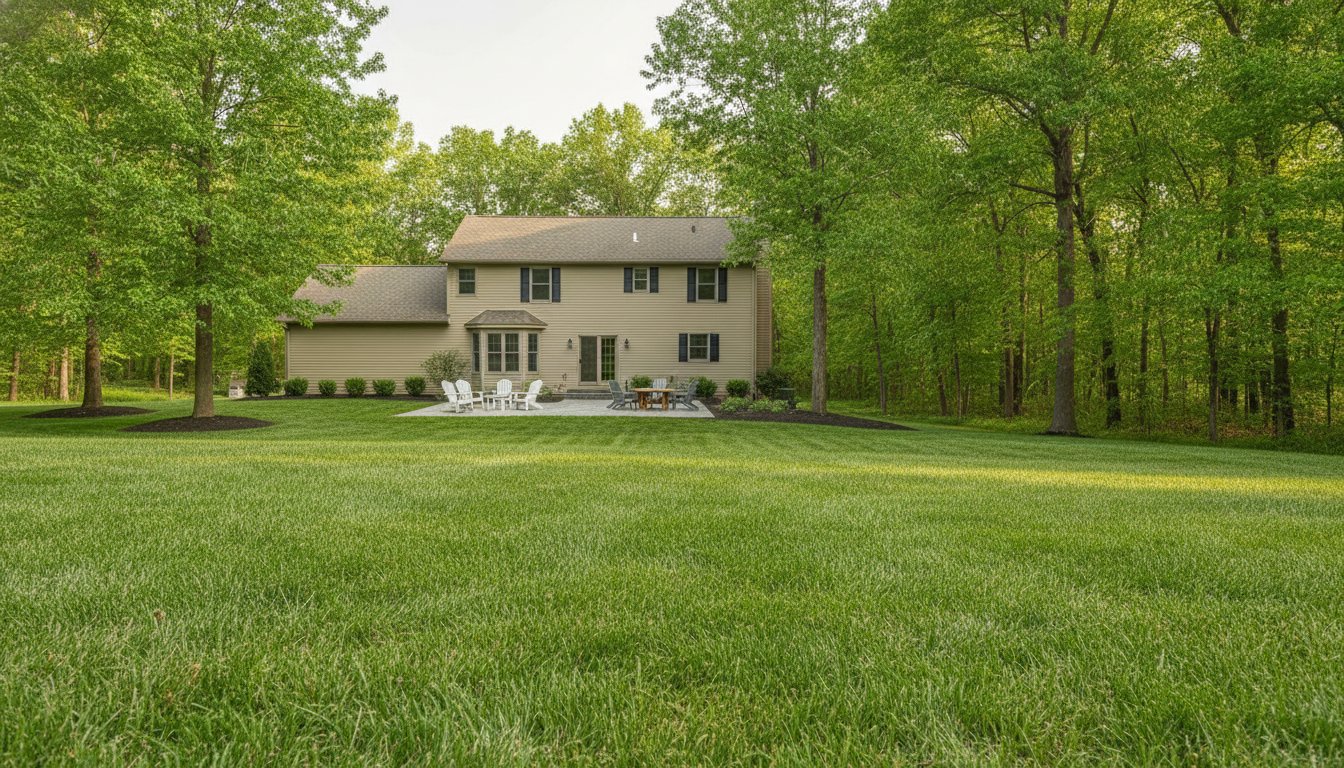
In 2024, Pennsylvania recorded 16,624 lab-confirmed cases of Lyme disease, a statistic that places the state at the forefront of the national tick crisis. For many residents in Erie and Crawford Counties, the arrival of warmer weather brings a familiar anxiety about the safety of children and pets playing in the backyard. You likely want to enjoy your outdoor space without the constant worry of tick-borne illnesses, yet the complexity of managing these pests can feel overwhelming. Implementing a professional tick yard treatment in Erie PA serves as a vital component in reducing these risks and reclaiming your property from invasive pests.
This guide explains how professional yard treatments and strategic environmental management help disrupt the tick life cycle to protect families in Northwest Pennsylvania. You will gain insight into the behavior of local ticks, the importance of professional-grade applications, and practical steps for modifying your landscape to discourage infestations. By understanding the science-based methods used by licensed pest control experts, you can move from a state of concern to a state of resolution. This comprehensive approach ensures that your backyard remains a secure environment for relaxation and play throughout the season.
Disclaimer: The information provided on this blog is for general informational purposes only and is not intended as professional pest control advice. Conditions vary by property, environment, and location. Reading this content does not create a service agreement. For an inspection or professional recommendations, please contact Mosquito Assassin Pest Control LLC directly.
Key Takeaways
- Understand why Erie and Crawford Counties experience high tick activity and how seasonal shifts affect your property’s risk level.
- Discover why a professional tick yard treatment in Erie PA offers more thorough coverage than typical over-the-counter sprays.
- Learn how to identify and modify tick harborages in your landscape to discourage pests from settling in your backyard.
- Identify the differences between professional application techniques and DIY methods to help ensure your family can use outdoor spaces comfortably.
- Explore the importance of consistent management plans to address the persistent nature of tick populations in Northwest Pennsylvania.
Understanding Tick Risks in Erie and Crawford Counties
Northwest Pennsylvania is a prime habitat for the Black-legged tick, commonly known as the deer tick. These pests thrive in our regional climate, particularly in the humid, wooded environments found throughout Erie and Crawford Counties. While many homeowners associate ticks with the height of summer, the Erie region actually sees significant activity peaks during the spring and fall. Ticks remain active whenever temperatures are above freezing, making year-round awareness essential for property owners. Understanding these patterns is the first step in determining the necessity of a professional intervention.
To better understand how seasonal management works, watch this helpful video:
Ticks don’t fall from trees; they wait in tall grass and leaf litter for a host to pass by. This behavior, known as questing, is highly effective in the thick underbrush common in our area. Local wildlife plays a major role in this cycle. White-tailed deer and white-footed mice act as the primary transport systems, bringing ticks from the deep woods directly into residential backyards. This is why a comprehensive tick yard treatment in Erie PA is often necessary to break the cycle of reintroduction from visiting animals.
Tick-Borne Illnesses in Northwest Pennsylvania
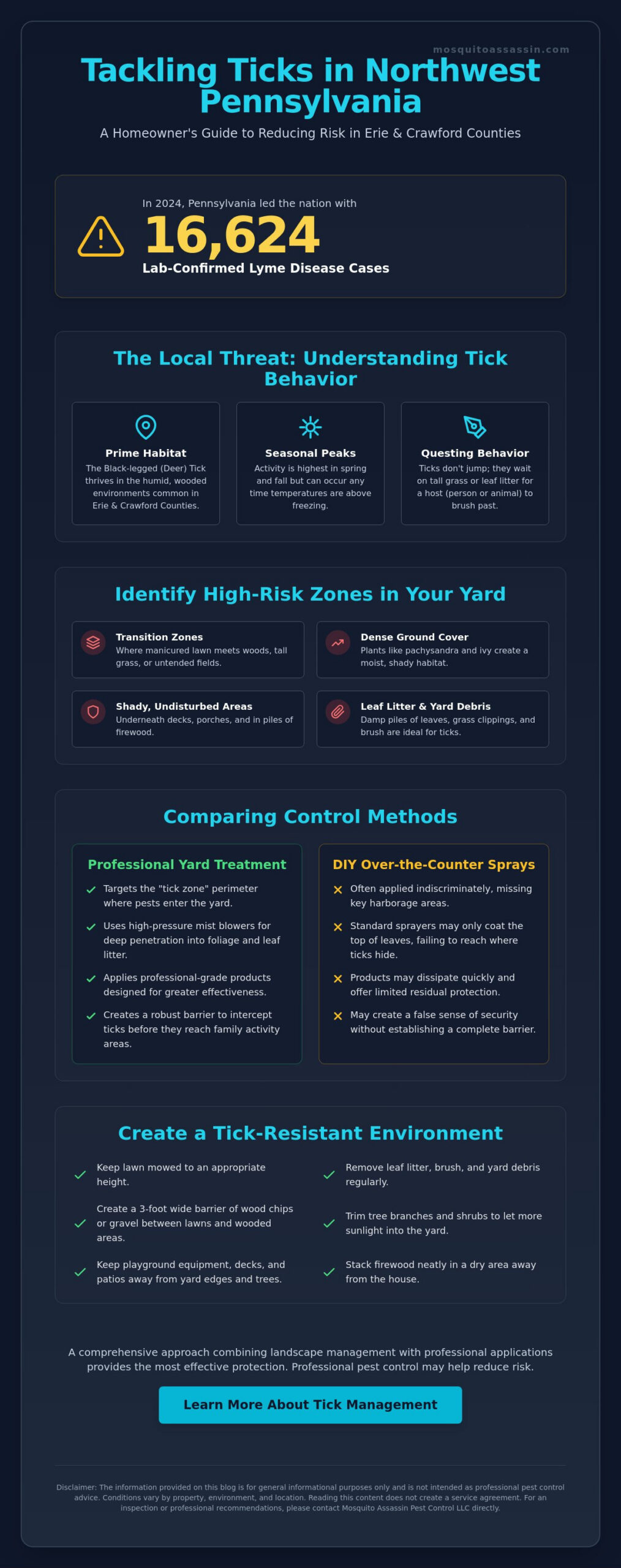
Pennsylvania consistently leads the nation in reported Lyme disease cases. In 2024, the state recorded 16,624 lab-confirmed cases, though the actual number of infections is estimated to be significantly higher due to underreporting. Beyond Lyme, residents must also be aware of common tick-borne diseases like Anaplasmosis, which has seen cases nearly double annually over the last five years. Powassan virus, while rarer, remains a serious concern due to its rapid transmission time. Professional pest control may help reduce these health risks by targeting tick populations before they can interact with your family.
Identifying High-Risk Zones in Your Backyard
Not every part of your yard carries the same level of risk. Ticks are highly sensitive to dehydration and seek out shady, moist areas to survive. The most dangerous spots are often the transition zones where a manicured lawn meets wooded edges or tall weeds. Other high-risk areas include dense ground cover plants like pachysandra, shady spaces under decks, and piles of damp leaf litter. Identifying these specific areas allows for a more strategic tick yard treatment in Erie PA, focusing efforts where pests are most likely to harbor rather than applying products indiscriminately.
Disclaimer: The information provided on this blog is for general informational purposes only and is not intended as professional pest control advice. Conditions vary by property, environment, and location. Reading this content does not create a service agreement. For an inspection or professional recommendations, please contact Mosquito Assassin Pest Control LLC directly.
How Professional Yard Treatments Manage Tick Populations
Professional intervention focuses on disrupting the tick habitat through precision application rather than indiscriminate spraying. A high-quality tick yard treatment in Erie PA prioritizes the “tick zone,” which is the perimeter of the property where wooded areas or tall brush meet the maintained lawn. Professionals utilize specialized equipment, such as high-pressure mist blowers, to ensure the product reaches the underside of foliage and deep into leaf litter where ticks congregate. This targeted approach creates a robust perimeter barrier that intercepts ticks as they attempt to move into active areas where families spend their time.
Unlike basic over-the-counter applications that may dissipate quickly, professional-grade products are formulated with specific residual properties. These treatments are designed to bind to organic matter, providing extended protection even after typical Northwest Pennsylvania rainfall. This long-term management strategy is essential because high humidity can otherwise degrade lower-quality solutions. By focusing on the specific biology of the pest, professionals ensure the treatment remains effective exactly where ticks are most likely to quest for a host.
The Science of Tick Life Cycle Interruption
Effective management requires understanding that ticks progress through four distinct life stages. Nymphs are particularly concerning for homeowners because they’re roughly the size of a poppy seed and extremely difficult to detect. Professional treatments target these pests during their most active questing periods in the spring and fall. By using products that adhere to the environment, professionals can interrupt the life cycle at multiple stages. Timing these applications to coincide with the specific climate patterns of Erie and Crawford Counties ensures the highest level of population reduction.
Safety Standards for Residential Treatments
Safety is a primary concern for homeowners, yet information regarding professional applications is often vague. All commercial pesticide applications must adhere to strict EPA regulations and state licensing requirements. Licensed professionals are trained to apply products in a manner that minimizes drift and focuses exclusively on tick harborages. According to the Pennsylvania Department of Health, reducing tick populations in the home environment is a key step in preventing disease. When scheduling a tick yard treatment in Erie PA, it’s important to choose providers who follow these rigorous standards.
To protect the local ecosystem, professionals follow best practices to avoid non-target insects. This includes avoiding applications on flowering plants where pollinators like bees and butterflies are active. For residential properties, the standard guideline for re-entry is once the application has completely dried, which typically takes between 30 to 60 minutes depending on weather conditions. If you’re looking for a comprehensive strategy to reclaim your backyard, professional pest control may help reduce risk through a customized management plan.
Disclaimer: The information provided on this blog is for general informational purposes only and is not intended as professional pest control advice. Conditions vary by property, environment, and location. Reading this content does not create a service agreement. For an inspection or professional recommendations, please contact Mosquito Assassin Pest Control LLC directly.
Comparing DIY Tick Control vs. Professional Services
Many homeowners in Erie and Crawford Counties initially attempt to manage pests using retail products. While these items are accessible at local hardware stores, they often fall short of the results provided by a professional tick yard treatment in Erie PA. Over-the-counter sprays and granular applications frequently lack the concentration and residual longevity required to withstand our regional weather patterns. A single heavy rainstorm in Northwest Pennsylvania can often wash away a DIY application, leaving the property vulnerable just days after treatment.
Equipment plays a decisive role in the efficacy of the application. Most DIYers rely on hand-pump sprayers or hose-end attachments. These tools produce large, heavy droplets that primarily coat the top surface of grass or foliage. Ticks are biologically programmed to avoid direct sunlight and dehydration, meaning they hide on the underside of leaves and deep within the thatch layer. Professional technicians utilize high-velocity mist blowers. This equipment creates a fine, turbulent fog that swirls around plants, ensuring the product reaches the hidden harborages where ticks actually reside.
Common Challenges with DIY Yard Treatments
Achieving the correct balance of product dilution and application timing is a significant hurdle for most residents. Applying a treatment too early in the spring or during a period of high heat can render the product ineffective. There’s also the persistent issue of safety. Handling concentrated pesticides requires specific knowledge of storage, mixing, and personal protective equipment. Improper handling increases the risk of accidental exposure to family members or pets. Additionally, DIY attempts often focus on the center of the lawn, which is generally too dry for ticks, while neglecting the shaded perimeter zones where the pests are most concentrated.
Advantages of Professional Management Plans
A structured management plan removes the guesswork from property protection. Professionals conduct thorough inspections to identify environmental factors, such as drainage issues or overgrown brush, that contribute to tick activity. These services often function as a component of general pest control strategies, creating a comprehensive shield for the home. By maintaining a consistent schedule, professionals ensure there are no gaps in protection during the peak activity months of May, June, and October. This methodical approach is often more cost-effective than repeated, unsuccessful DIY attempts. Investing in a professional tick yard treatment in Erie PA provides the expertise needed to address the specific challenges of our local environment.
Disclaimer: The information provided on this blog is for general informational purposes only and is not intended as professional pest control advice. Conditions vary by property, environment, and location. Reading this content does not create a service agreement. For an inspection or professional recommendations, please contact Mosquito Assassin Pest Control LLC directly.
Creating a Tick-Resistant Environment in Your Yard
While a professional tick yard treatment in Erie PA provides a critical defensive layer, homeowners can significantly enhance these results through strategic landscape modifications. Ticks are highly sensitive to environmental conditions, particularly humidity and shade. By altering the physical characteristics of your property, you create a hostile environment for these pests. This integrated approach ensures that even if ticks are introduced by local wildlife, they’re less likely to survive or establish a population in the areas your family uses most. Consistent yard maintenance remains one of the most effective ways to support professional management efforts.
Landscaping for Tick Prevention
One of the most effective modifications is the installation of a physical barrier. A three-foot wide strip of wood chips, gravel, or mulch placed between the lawn and wooded areas serves as a buffer zone. These dry materials create a heat barrier that ticks generally won’t cross because they risk dehydration. Furthermore, keeping grass mowed to a height of three inches or less allows more sunlight to reach the soil. This exposure dries out the moisture ticks need to survive and quest for hosts.
Removing specific invasive species is also crucial for long-term protection. Research has shown that Japanese Barberry (Berberis thunbergii) creates a humid microclimate that supports significantly higher tick densities than native vegetation. Clearing these plants from your property removes a primary refuge for questing ticks and helps maintain a safer perimeter. Focus your efforts on these high-risk vegetation zones to maximize the impact of your yard work.
Wildlife Management Strategies
Ticks rely on hosts like white-tailed deer and white-footed mice for transportation and blood meals. Discouraging these animals from lingering on your property is a key prevention strategy. Switching to deer-resistant plant varieties can make your yard less attractive to these large hosts, reducing the number of adult ticks dropped on your lawn. Physical barriers like fencing can also help keep larger hosts out of designated play areas and backyard living spaces.
Rodent management is often overlooked but remains essential. Mice are the primary reservoir for many tick-borne bacteria. Secure all trash lids and consider removing bird feeders, as spilled seed attracts the very rodents that carry larval and nymphal ticks into your immediate environment. For those who want a comprehensive assessment of their property’s specific risk factors, professional pest control may help reduce risk through expert evaluation and targeted intervention.
Disclaimer: The information provided on this blog is for general informational purposes only and is not intended as professional pest control advice. Conditions vary by property, environment, and location. Reading this content does not create a service agreement. For an inspection or professional recommendations, please contact Mosquito Assassin Pest Control LLC directly.
The Importance of Ongoing Protection in Erie, PA
A common misconception among property owners is that a single application provides a permanent solution to tick activity. In reality, tick pressure is a season-long challenge that requires a consistent management strategy. A one-time tick yard treatment in Erie PA may eliminate active adults present at the time of application, but it cannot account for the continuous reintroduction of pests by wandering wildlife or the emergence of new life stages from the soil. Maintaining a defensive perimeter requires a rhythmic approach that aligns with the biological cycles of the pests and the specific climate patterns of Northwest Pennsylvania.
Erie and Crawford Counties experience unique environmental stressors, including high lake-effect humidity and sudden temperature fluctuations. These conditions can impact the longevity of even the most robust professional products. Ongoing management allows for the replenishment of residual barriers before they degrade, ensuring the property remains protected during peak questing periods. This continuity is a core component of a comprehensive year-round protection plan, which addresses various seasonal pests as they become active.
Professional monitoring serves as an early warning system for homeowners. During regular visits, technicians identify new risks that may have escalated since the previous treatment, such as a neighbor’s overgrown brush pile or a new rodent nesting site near the home. Catching these environmental changes early prevents a minor presence from turning into a full-scale infestation. This proactive stance is essential for maintaining a yard where children and pets can play with a reduced sense of anxiety.
Seasonal Expectations for Tick Management
Effective protection follows the calendar. Early spring treatments are vital for targeting nymphs as they emerge from their winter leaf-litter harborages. These tiny pests are responsible for a significant portion of disease transmission because they’re so difficult to spot on the skin. As the humid summer months arrive, maintaining the integrity of the perimeter barrier becomes the priority. Finally, autumn treatments target adult ticks that remain active well into November. These late-season pests are often seeking a final blood meal before the ground freezes, making October a critical month for a final tick yard treatment in Erie PA.
Professional Recommendations for Erie Homeowners
Every property in the Erie region has a unique ecological profile. Consulting with local experts allows for a customized treatment schedule that accounts for specific factors like proximity to state game lands or the density of backyard vegetation. Many residents find that combining tick management with a mosquito control program provides the most thorough coverage for outdoor living spaces. Taking the next step toward a managed property is a practical way to reclaim your backyard. Professional pest control may help reduce risk by providing the specialized equipment and expertise necessary for long-term success.
Disclaimer: The information provided on this blog is for general informational purposes only and is not intended as professional pest control advice. Conditions vary by property, environment, and location. Reading this content does not create a service agreement. For an inspection or professional recommendations, please contact Mosquito Assassin Pest Control LLC directly.
Reclaiming Your Backyard for the Season
Protecting your family from tick-borne illnesses requires a dual approach of professional intervention and strategic yard maintenance. While landscaping modifications like barrier zones create a hostile environment for pests, a professional tick yard treatment in Erie pa provides the precision and residual coverage necessary to disrupt the tick life cycle. These methods are far more reliable than retail products that often fail to reach hidden harborages or withstand our regional humidity. By combining environmental changes with expert applications, you create a robust defense for your property.
Licensed and insured professional technicians bring a systematic multi-step process to pest management, identifying risks before they escalate. Being deeply rooted in the Erie, Crawford, and Ashtabula communities, these experts understand the specific local challenges that homeowners face. To ensure your outdoor space remains a secure environment for relaxation, request an inspection or professional recommendations from Mosquito Assassin Pest Control LLC today. You don’t have to face the threat of ticks alone when dependable local resources are available. Reclaim your yard and enjoy the outdoors with confidence once again.
Disclaimer: The information provided on this blog is for general informational purposes only and is not intended as professional pest control advice. Conditions vary by property, environment, and location. Reading this content does not create a service agreement. For an inspection or professional recommendations, please contact Mosquito Assassin Pest Control LLC directly.
Frequently Asked Questions
Is professional tick yard treatment safe for my dogs and cats?
Professional treatments utilize EPA-registered products applied by licensed technicians according to strict label instructions. You should keep pets indoors during the application and remain inside until the product has completely dried. Once dry, the treated areas are accessible for normal use. Technicians focus on perimeter harborages rather than open lawn areas where pets spend most of their time, which further reduces the potential for direct contact.
How often should my yard be treated for ticks in Erie, PA?
For consistent protection in Northwest Pennsylvania, treatments are typically scheduled every 21 to 30 days. This frequency addresses the 30-day residual life of professional-grade products. Because Erie experiences high humidity and frequent rainfall, maintaining a steady schedule is necessary to prevent gaps in the defensive barrier. A single tick yard treatment in Erie pa is rarely enough to provide protection for the entire season.
Can I still get ticks in my yard if I keep my grass short?
Yes, ticks can still inhabit your property even with a well-manicured lawn. While short grass reduces the moisture and heat protection ticks need to survive, they primarily reside in the “tick zone” at the yard’s edge. This includes shaded areas, ground cover, and leaf litter. Ticks are also frequently reintroduced to short-grass areas by visiting wildlife like deer and mice that pass through your yard.
What is the best time of year to start tick treatments in Pennsylvania?
The ideal time to begin treatments in Pennsylvania is early spring, typically in April. This timing targets the emergence of nymphal ticks as temperatures consistently rise above 45 degrees Fahrenheit. Starting early helps suppress the population before the peak activity months of May and June. A late-season application in October is also recommended to address adult ticks as they quest for a final host before the winter freeze.
Do yard treatments for ticks also kill mosquitoes?
Many professional tick treatments are effective against mosquitoes because both pests utilize similar shady, damp harborages. When a technician applies a barrier treatment to perimeter brush and foliage, it often addresses both populations simultaneously. However, specific mosquito management might require targeting additional areas like the underside of large-leafed plants or stagnant water sources that aren’t primary tick habitats. Integrating these services provides a more comprehensive shield for your outdoor space.
What should I do if I find a tick on my pet after the yard has been treated?
If you find a tick on your pet, remove it immediately using fine-tipped tweezers and consult your veterinarian if you have concerns. Even with a professional tick yard treatment in Erie pa, pets can still encounter ticks in untreated areas or from wildlife passing through. Treatments significantly reduce the local population but don’t create an impenetrable bubble. Always check your animals after they spend time near wooded edges or tall grass.
How long do I need to wait to go outside after the yard is sprayed?
You should wait until the liquid application has completely dried before entering the treated area. Depending on the temperature, humidity, and sunlight, this drying process typically takes between 30 and 60 minutes. Once the product is dry, it binds to the organic matter in the yard and is safe for children and pets to resume their normal outdoor activities. Your technician can provide a more specific estimate based on the day’s weather.
Are there natural or organic options for tick yard treatment?
Professional pest control providers often offer botanical-based treatments as an alternative to synthetic products. These options typically use essential oils like cedarwood or peppermint to repel and eliminate ticks on contact. While these products are effective, they generally have a shorter residual life than synthetic alternatives. This means they may require more frequent applications to maintain a consistent level of protection throughout the humid Erie summer months.
Disclaimer: The information provided on this blog is for general informational purposes only and is not intended as professional pest control advice. Conditions vary by property, environment, and location. Reading this content does not create a service agreement. For an inspection or professional recommendations, please contact Mosquito Assassin Pest Control LLC directly.