
The most effective way to stop a pest infestation isn’t actually a spray bottle; it’s a fundamental change in strategy. Many property owners in Erie and Crawford Counties in Pennsylvania, as well as Ashtabula County in Ohio, find themselves trapped in a cycle of recurring infestations despite repeated treatments. It’s a frustrating cycle. If you’re concerned about an over-reliance on chemicals or are struggling to find the root cause of a problem, you aren’t alone. Utilizing integrated pest management techniques moves the focus from reactive spraying to a science-based, proactive system of protection.
You likely want to keep your property secure without turning your home into a chemistry lab. This article explains how these methods provide a sustainable framework for managing pests in both homes and businesses. With the U.S. pest control market projected to grow to $29.1 billion by 2026, more property owners are turning to these data-driven strategies to achieve long-term results. You’ll learn how to modify your environment to discourage pests from entering in the first place and understand the specific indicators that suggest it’s time for professional monitoring. By the end, you’ll have the knowledge needed to maintain a pest-free environment through smarter, more methodical choices.
Disclaimer: The information provided on this blog is for general informational purposes only and is not intended as professional pest control advice. Conditions vary by property, environment, and location. Reading this content does not create a service agreement. For an inspection or professional recommendations, please contact Mosquito Assassin Pest Control LLC directly.
Key Takeaways
- Understand why shifting from reactive extermination to a proactive management model creates a more stable, pest-free environment for your property.
- Discover the four pillars of integrated pest management techniques, which prioritize cultural and mechanical controls to minimize the need for chemical intervention.
- Learn how a systematic approach prevents pest resistance and addresses the root causes of infestations rather than just treating temporary symptoms.
- Identify simple environmental modifications you can make to your property in Pennsylvania or Ohio to reduce its attractiveness to common pests.
- Recognize how professional monitoring and year-round protection plans provide a consistent defense against evolving seasonal pest pressures.
Understanding Integrated Pest Management (IPM) Principles
Effective pest control requires more than just reactive measures. Integrated Pest Management (IPM) is a science-based decision-making process that identifies and reduces risks from pests and pest management tools. Instead of relying solely on routine chemical applications, this method focuses on long-term prevention. It represents a significant shift from traditional extermination, which often waits for a problem to become severe before taking action. By utilizing specific integrated pest management techniques, professionals can manage pests in a way that minimizes risks to people, pets, and the environment.
Licensed professionals across the United States recognize IPM as the gold standard, especially as the industry prepares for the EPA’s 2026 Pesticide General Permit. This regulatory shift emphasizes the need for documented, science-based approaches. IPM is not about a single treatment; it’s about a continuous cycle of evaluation and adjustment. This methodical approach ensures that interventions are only used when necessary and are as targeted as possible.
To better understand this concept, watch this helpful video:
The Four-Tiered IPM Framework
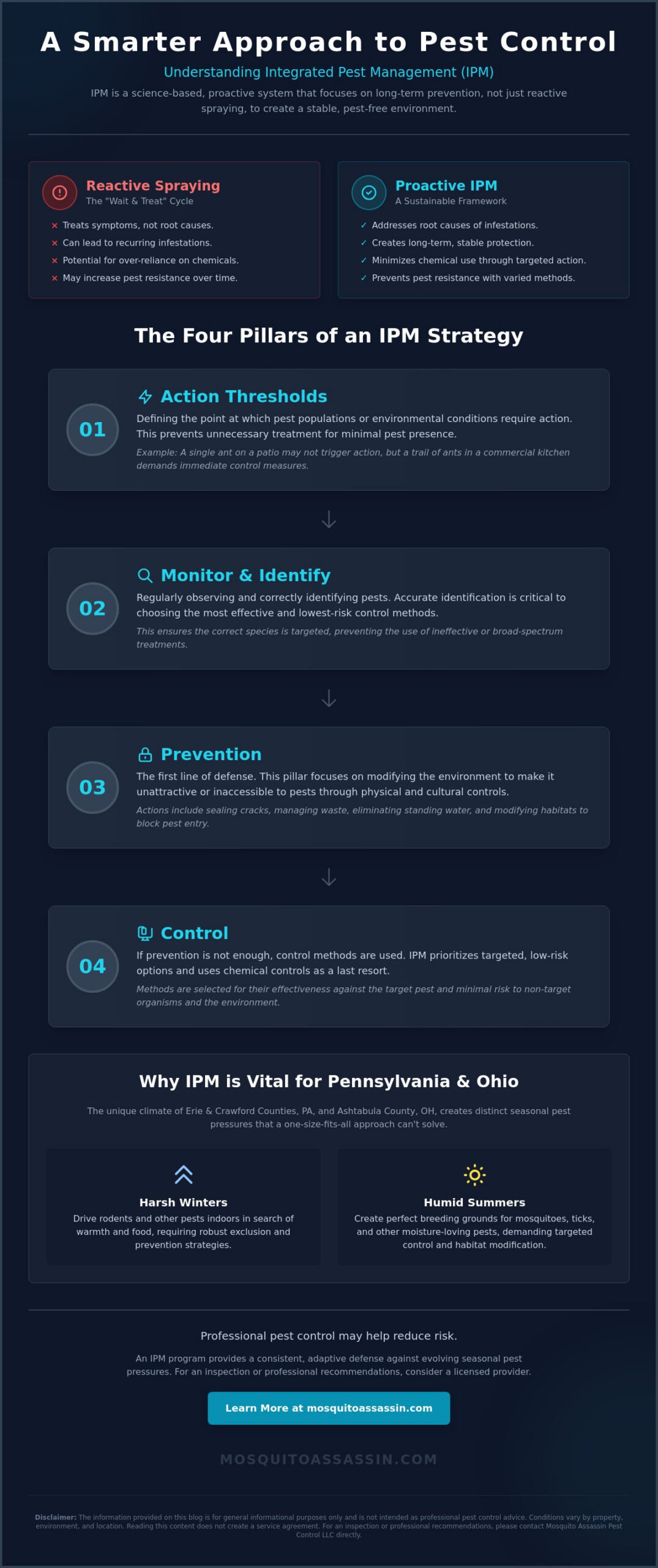
A successful strategy relies on a disciplined, four-tiered approach. This system ensures that every action taken is justified by data and observation. It begins with Action Thresholds, which is the point at which pest populations or environmental conditions indicate that pest control action must be taken. Sighting a single ant may not require chemical intervention, but a line of them in a commercial kitchen certainly does.
The next step is to Monitor and Identify. Proper identification ensures that the correct species is targeted, preventing the use of unnecessary or ineffective treatments. Once identified, Prevention becomes the priority. This involves using physical and cultural changes (such as sealing cracks or managing waste) to block pest entry. Finally, if pests persist, Control methods are selected. These are chosen for their effectiveness and lowest risk to non-target organisms.
Why IPM is Essential for Pennsylvania and Ohio Residents
Regional climate factors in Erie and Crawford Counties in Pennsylvania, along with Ashtabula County in Ohio, make a proactive strategy vital. Our harsh winters often drive rodents indoors in search of warmth and food, while the humid summers create perfect breeding grounds for mosquitoes and ticks. These seasonal shifts influence pest behavior significantly. Relying on a “one size fits all” spray doesn’t account for these local variables. Using integrated pest management techniques allows for a customized plan that adapts to the specific pressures of our Great Lakes environment, ensuring your property remains protected year-round. For those living in our service area, understanding these principles is the first step toward lasting security.
Disclaimer: The information provided on this blog is for general informational purposes only and is not intended as professional pest control advice. Conditions vary by property, environment, and location. Reading this content does not create a service agreement. For an inspection or professional recommendations, please contact Mosquito Assassin Pest Control LLC directly.
Core Integrated Pest Management Techniques and Strategies
A single method is rarely enough to stop a persistent infestation. By layering different integrated pest management techniques, property owners can create a hostile environment for pests while minimizing the footprint of chemical treatments. This multi-layered defense ensures that if one barrier fails, others are in place to stop the progression of an infestation. It’s a strategic approach that demands consistency and an understanding of how different methods complement each other to provide lasting security.
The goal is to build a comprehensive shield around your property. When these methods are combined effectively, they address the root cause of the problem rather than just the visible symptoms. Professional pest control may help reduce risk by correctly identifying which combination of techniques is appropriate for the specific species and environmental conditions found in Erie or Ashtabula counties. For those looking for a comprehensive plan, reviewing available general pest control options can provide a starting point for long-term protection.
Cultural and Mechanical Controls
Cultural controls involve modifying human habits and the immediate environment to make it less hospitable. This starts with rigorous sanitation and removing the “three essentials” that pests require to thrive: food, water, and shelter. Simple actions like using airtight food containers, fixing leaky pipes under sinks, and managing outdoor waste bins effectively disrupt pest life cycles. These habits are the foundation of any successful management plan.
Mechanical controls take this a step further by using physical barriers and tools to exclude or remove pests. This includes sealing gaps around foundation lines, installing door sweeps, and using traps or specialized vacuums to manage existing populations. These methods are often the most durable forms of protection because they address the structural vulnerabilities of a building. In our region, exclusion is particularly vital during the autumn months when rodents seek warmth inside local homes.
Biological and Chemical Controls
Biological controls utilize natural predators or pheromones to manage pest populations. While these are more common in large-scale agricultural or commercial settings, they represent a key component of the broader IPM Principles defined by the Environmental Protection Agency. These methods focus on disrupting the natural biology of the pest to prevent reproduction and growth.
Chemical controls, which include pesticides, are reserved as a last resort in a true IPM program. When cultural and mechanical methods fail to meet the established action threshold, targeted applications may be necessary. It’s vital that any chemical used is EPA-registered and applied strictly according to label directions. This ensures the intervention is as effective as possible while maintaining the professional standards expected in a modern pest management program.
Disclaimer: The information provided on this blog is for general informational purposes only and is not intended as professional pest control advice. Conditions vary by property, environment, and location. Reading this content does not create a service agreement. For an inspection or professional recommendations, please contact Mosquito Assassin Pest Control LLC directly.
The Benefits of a Proactive IPM Strategy Over Traditional Spraying
Traditional “spray-and-pray” methods often result in a frustrating “rebound effect.” In this scenario, a property owner kills the visible pests, but the population quickly returns because the underlying environment remains welcoming. This cycle is both expensive and ineffective. By contrast, using integrated pest management techniques creates a permanent solution by addressing the biological needs of the pest. It isn’t just about temporary elimination; it’s about making the property incompatible with pest survival. This proactive approach transforms pest control from an endless chore into a manageable, predictable part of home maintenance.
A major drawback of traditional reactive spraying is the development of pest resistance. When the same chemicals are used repeatedly, surviving pests pass on resistant traits to their offspring, eventually rendering the treatment useless. IPM prevents this by rotating various integrated pest management techniques and prioritizing non-chemical interventions. By using a variety of tools, professionals ensure that pests don’t have the opportunity to build a biological defense against any single treatment method. It’s helpful to understand how IPM works as a dynamic system that stays one step ahead of pest adaptation through constant evaluation.
Long-Term Effectiveness and Property Protection
Structural modifications, often referred to as exclusion, provide more permanent results than liquid barriers alone. In Ashtabula, Ohio, where older homes may have shifting foundations or weathered entry points, these physical fixes are essential for keeping rodents and insects out. Proactive monitoring also plays a critical role in protecting property value. Detecting wood-destroying insects like termites early can save thousands of dollars in structural repairs. A proactive strategy ensures that small, hidden issues don’t escalate into catastrophic damage that threatens the integrity of your investment.
Safety for Families, Pets, and the Environment
Modern homeowners prioritize the wellbeing of their household members and animals. IPM reduces unnecessary chemical exposure by applying treatments only where they are needed most, rather than blanket-spraying an entire living space. This targeted approach also protects beneficial insects like pollinators. Bees and butterflies are often collateral damage in broad-spectrum spraying, but IPM methods help preserve these vital parts of our ecosystem. Responsible pest management aligns with modern environmental standards, ensuring that your home is secure without negatively impacting the local community in Pennsylvania or Ohio.
Disclaimer: The information provided on this blog is for general informational purposes only and is not intended as professional pest control advice. Conditions vary by property, environment, and location. Reading this content does not create a service agreement. For an inspection or professional recommendations, please contact Mosquito Assassin Pest Control LLC directly.
Implementing IPM Techniques on Your Property
Success in long-term pest prevention requires a consistent partnership between property owners and professionals. While a licensed expert provides technical intervention, your daily observations and maintenance are the first line of defense. Utilizing integrated pest management techniques at home involves a shift in how you view your surroundings. Small changes in your routine can drastically reduce the likelihood of a major infestation taking root. It’s about being proactive rather than waiting for a crisis to occur.
Keeping a detailed log of pest sightings is one of the most valuable tools you can provide. Note the date, time, specific location, and description of any pest seen. This data allows a professional to identify patterns and determine if an action threshold has been met. It moves the conversation from guesswork to an evidence-based strategy that targets the specific problem area. This level of detail ensures that any intervention is as efficient and effective as possible.
Inspection and Monitoring Procedures
Regularly walk the perimeter of your home to check for signs of entry. In Erie and Crawford Counties, the regional freeze-thaw cycle often creates new gaps in siding or unsealed pipes that pests exploit. Pay close attention to damaged screens and basement windows. Monitoring for seasonal pests like carpenter bees in the spring or yellowjackets in the late summer helps you catch problems before they become structural risks. Identifying moisture issues in basements, crawlspaces, and gutters is also vital. Damp wood and standing water are primary attractants for many invasive species found in our region.
Habitat Modification and Exclusion
Modifying the environment around your home is a primary tool for controlling mosquitoes and ticks. Removing standing water from birdbaths, clogged gutters, and flowerpots disrupts mosquito breeding cycles before they begin. In Ashtabula County, clearing brush and tall grass near the home reduces tick habitats and creates a buffer zone. Sealing cracks and crevices with high-quality caulk or steel wool is another example of how integrated pest management techniques prevent rodent and ant entry. For those seeking comprehensive home protection, learning about general pest control strategies can help you maintain a secure property year-round.
A professional inspection may help reduce risk by identifying hidden vulnerabilities that are easy to miss. If you are concerned about recurring issues, professional pest control services can provide the consistent monitoring needed for lasting peace of mind.
Disclaimer: The information provided on this blog is for general informational purposes only and is not intended as professional pest control advice. Conditions vary by property, environment, and location. Reading this content does not create a service agreement. For an inspection or professional recommendations, please contact Mosquito Assassin Pest Control LLC directly.
Professional Support for Integrated Pest Management Programs
Implementing a complete strategy requires more than just good intentions; it demands specialized knowledge and professional-grade tools. While the habitat modifications mentioned earlier are vital, a licensed pest control professional brings the technical expertise necessary to handle complex infestations. Certain pests, such as termites or bed bugs, are notoriously difficult to detect in their early stages. Without the trained eye of an expert, these problems can grow undetected for months, leading to significant property damage or widespread infestation. Relying on professional integrated pest management techniques ensures that these hidden threats are identified before they become costly emergencies.
A professional approach moves beyond simple reactive measures. It involves a deep understanding of pest biology and behavior, which allows for the most effective application of control methods. Professionals have access to specialized equipment that allows them to inspect areas that are typically inaccessible to property owners, such as deep within wall voids or crawlspaces. This thoroughness is what separates a temporary fix from a long-term solution. By seeking professional recommendations tailored to your specific property, you can address vulnerabilities that might otherwise be overlooked.
Why Professional Monitoring is Essential
Professional monitoring is the backbone of any successful long-term plan. Experts use data from inspections and monitoring devices to adjust integrated pest management techniques in real time. This ensures that interventions remain targeted and effective as environmental conditions change. Applying treatments without this data often leads to wasted effort and unnecessary chemical use. By relying on a professional, you ensure that every action taken is backed by scientific observation and regional expertise. This data-driven approach also helps in identifying the exact species present, which is crucial because a treatment that works for one type of ant may be completely ineffective for another.
Year-Round Protection in the Tri-State Area
The climate in Erie and Crawford Counties in Pennsylvania, along with Ashtabula County in Ohio, faces unique seasonal challenges that require a year-round approach. Bi-monthly or quarterly visits allow for consistent monitoring as pest pressures shift from summer mosquitoes to winter rodents. Ongoing management is the most effective way to remain pest-free, as it prevents the population rebounds that often follow one-time treatments. You can see this process in action by reviewing how a mosquito control program utilizes monitoring and habitat modification to provide lasting relief during the peak of the season.
Maintaining a consistent defense is much easier and more cost-effective than trying to eliminate a massive infestation after it has already taken hold. For a professional property assessment and to learn more about consistent monitoring, please contact-us to speak with a local expert familiar with the specific needs of our community. Professional pest control may help reduce risk and provide the peace of mind that comes with knowing your property is protected by a science-based framework.
Disclaimer: The information provided on this blog is for general informational purposes only and is not intended as professional pest control advice. Conditions vary by property, environment, and location. Reading this content does not create a service agreement. For an inspection or professional recommendations, please contact Mosquito Assassin Pest Control LLC directly.
Secure Your Property with Proactive Protection
Adopting a science-based strategy is the most definitive way to protect your property from invasive species. By moving away from reactive spraying and focusing on structural exclusion and habitat modification, you eliminate the root causes of infestations. This methodical approach ensures your home or business remains a hostile environment for pests while maintaining the wellbeing of your household. It’s a shift from temporary fixes to a durable, long-term defense.
Utilizing integrated pest management techniques provides a sustainable framework that adapts to the unique seasonal shifts across Pennsylvania and Ohio. Licensed professionals serving Erie, Crawford, and Ashtabula counties provide the specialized expertise needed for effective rodent exclusion and consistent monitoring. For an inspection or professional recommendations, please visit our online booking portal. Taking these proactive steps today helps maintain a secure, pest-free environment for the future.
Disclaimer: The information provided on this blog is for general informational purposes only and is not intended as professional pest control advice. Conditions vary by property, environment, and location. Reading this content does not create a service agreement. For an inspection or professional recommendations, please contact Mosquito Assassin Pest Control LLC directly.
Frequently Asked Questions
What is the primary goal of integrated pest management?
The primary goal is to provide long-term, sustainable prevention of pest problems by managing the environment rather than just reacting to sightings. This approach identifies the biological needs of pests and removes their access to food, water, and shelter. This strategy prioritizes the safety of household members while effectively reducing pest populations to manageable levels through a science-based decision-making process.
Is IPM more expensive than traditional pest control services?
While the initial investment in structural repairs or professional inspections may seem higher, this strategy is generally more cost-effective in the long run. Preventing an infestation is significantly cheaper than paying for repeated emergency treatments or repairing structural damage caused by termites or rodents. By investing in prevention, you avoid the cycle of recurring service fees associated with traditional reactive spraying methods.
Can I perform integrated pest management techniques by myself?
Property owners can implement many basic integrated pest management techniques such as improving sanitation and sealing small entry points around the home. However, professional support is often necessary for accurate pest identification and the application of specialized treatments. A licensed expert provides the consistent monitoring and technical knowledge needed to handle difficult species or hidden vulnerabilities that are easily missed by an untrained eye.
How does IPM help with mosquito and tick control in PA and OH?
This approach manages mosquitoes and ticks by identifying and modifying their specific breeding and nesting habitats in Erie and Crawford Counties in Pennsylvania and Ashtabula County in Ohio. This might involve clearing specific types of brush or managing drainage issues that attract these pests. By disrupting their life cycles at the source, you reduce the reliance on broad-spectrum sprays and provide more consistent protection.
Does an IPM approach mean that pesticides are never used?
Pesticides are still a part of the program, but they’re used as a last resort and in a highly targeted manner. Treatments are only applied when monitoring data shows that a pest population has exceeded a specific action threshold. When chemical intervention is necessary, professionals select the most effective, lowest-risk products and apply them strictly according to EPA label directions to ensure safety.
How long does it take for IPM techniques to show results?
Some mechanical controls provide immediate relief, but the full impact of a prevention-based strategy typically takes several weeks to become apparent. Because this method focuses on disrupting life cycles and blocking entry points, it requires patience to see the total reduction in pest activity. It’s designed for lasting results rather than the temporary knockdown effect often seen with traditional chemical-only methods.
Why is monitoring such a critical part of the IPM process?
Monitoring is critical because it provides the data necessary to make informed decisions about when to intervene. Without regular inspections and data collection, it’s impossible to know if a pest population is growing or if current prevention methods are working. Consistent monitoring ensures that every action taken is justified and targeted, preventing unnecessary treatments and saving property owners time and money over the long term.
What are some common examples of mechanical pest control?
Common examples include installing door sweeps, sealing foundation cracks with caulk, and using specialized traps or vacuums. These integrated pest management techniques focus on creating physical barriers that prevent pests from entering a structure. By maintaining the integrity of the building envelope, you provide a durable defense that remains effective long after a traditional chemical treatment would have dissipated.
Disclaimer: The information provided on this blog is for general informational purposes only and is not intended as professional pest control advice. Conditions vary by property, environment, and location. Reading this content does not create a service agreement. For an inspection or professional recommendations, please contact Mosquito Assassin Pest Control LLC directly.