
Could a single negative online review regarding a pest sighting do more lasting damage to your company than a week-long closure? For many local enterprises, the answer is a resounding yes. Maintaining a clean, professional environment in Northeast Ohio requires constant vigilance, and the pressure to meet strict health department standards is a heavy burden for any manager to carry.
Most business owners in Ashtabula County agree that a reputation takes years to build but only seconds to tarnish. You’ve likely felt the stress of protecting your inventory from rodents or worrying about how seasonal mosquitoes might drive customers away from your outdoor seating. This guide explains how professional commercial pest control Ashtabula Ohio serves as a strategic investment in your property’s value and your brand’s integrity. You’ll learn how to navigate the unique climate of the Lake Erie region, ensure compliance with local regulations, and implement discreet, effective management strategies that keep your doors open and your customers coming back.
Key Takeaways
- Learn how Ashtabula’s lakefront climate and humidity levels influence pest behavior and increase risks for local commercial properties.
- Identify the specific threats that rodents and seasonal insects pose to your business reputation, inventory, and health department compliance.
- Understand the principles of Integrated Pest Management (IPM) and how proactive monitoring prevents infestations before they disrupt daily operations.
- Discover the essential licensing and insurance requirements to look for when hiring for commercial pest control Ashtabula Ohio.
- Explore the financial and operational advantages of transitioning from one-time reactive services to comprehensive year-round protection plans.
The Importance of Commercial Pest Management in Ashtabula, Ohio
Commercial pest control is a proactive, systematic strategy designed to prevent infestations within business environments rather than simply reacting to them after they occur. For local facility managers, implementing effective commercial pest control Ashtabula Ohio involves a deep understanding of how specific environmental factors influence pest activity. It’s about protecting the structural integrity of the building and ensuring that inventory remains uncontaminated and safe for public consumption.
Maintaining a pest-free facility is directly linked to health department compliance and the long-term financial value of commercial real estate. In a competitive market, a high health rating isn’t just a legal requirement; it’s a badge of quality that customers notice. Professional management utilizes Integrated Pest Management (IPM) to create a sustainable barrier against intruders. This scientific approach prioritizes long-term prevention over temporary fixes, ensuring that property values remain stable and free from the structural damage often caused by wood-destroying insects or persistent rodent gnawing.
To better understand the thorough nature of a professional inspection, watch this initial walkthrough video:
Regional Pest Pressures in Northeast Ohio
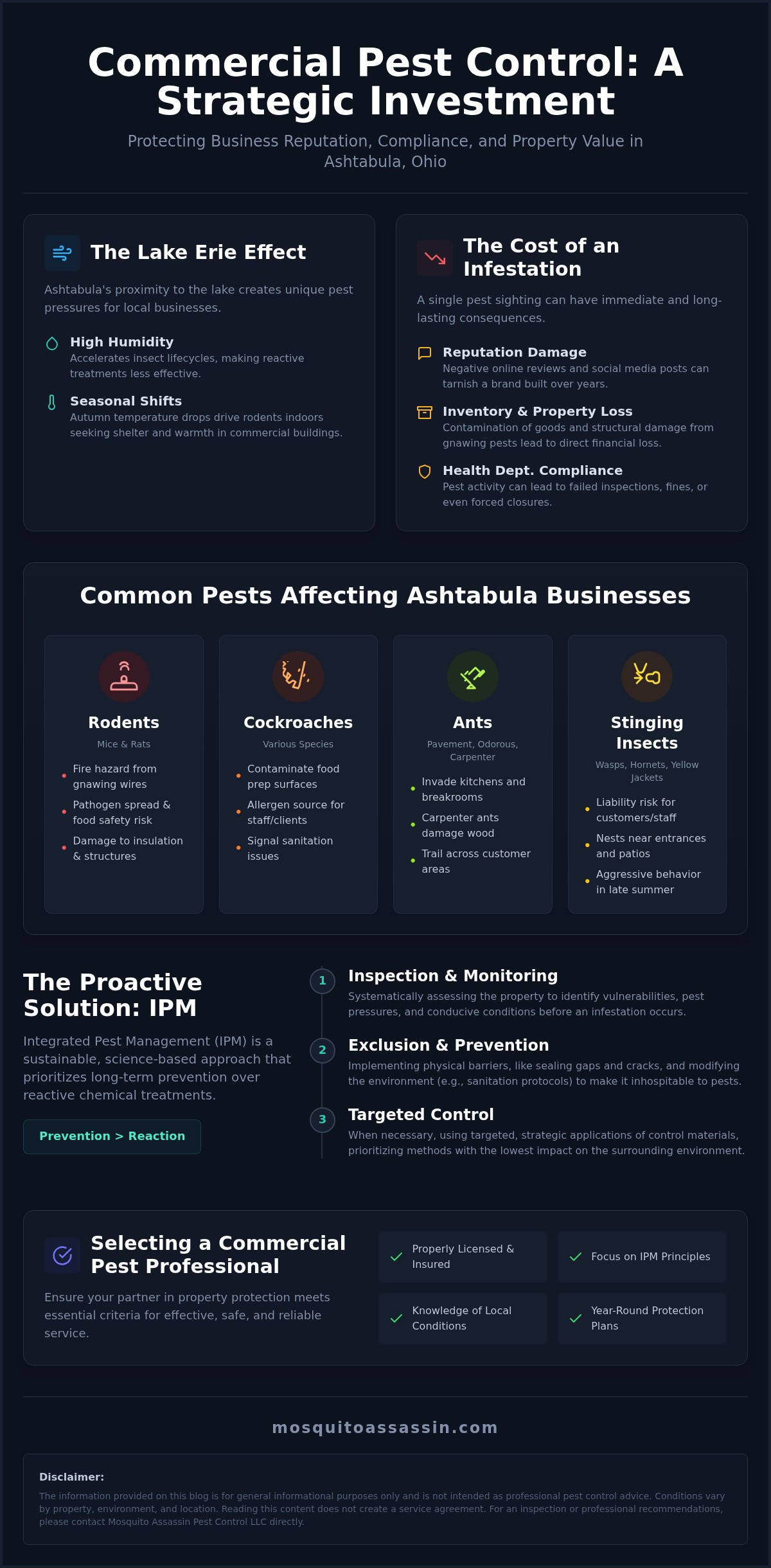
The proximity to the Lake Erie shoreline creates a unique set of challenges for local enterprises. High humidity levels along the coast can accelerate the lifecycle of many local insects, making traditional reactive methods less effective. When temperatures shift during the autumn months, rodents aggressively seek shelter within the warmth of commercial structures. Local knowledge of Ashtabula’s environment is vital because a strategy that works in a dry, inland area won’t necessarily withstand the damp, variable conditions found in Northeast Ohio. Effective prevention requires adjusting strategies based on these lakefront seasonal transitions.
Business Reputation and the Digital Age
In a small community, word travels fast. A single pest sighting can quickly transform into a viral social media post or a permanent negative review on a digital platform. These incidents impact long-term brand trust and can lead to a significant loss in revenue. Professional commercial pest control Ashtabula Ohio should be viewed as a core component of a comprehensive facility maintenance plan. It’s a layer of security that protects the brand’s image. Consistent prevention is often more cost-effective than the emergency remediation and public relations damage control required after an infestation goes public. By treating pest management as a routine utility rather than an emergency expense, businesses maintain a clean, professional atmosphere that welcomes customers and protects staff.
Common Pests Affecting Ashtabula Businesses
Commercial properties face risks that go far beyond residential concerns. While a nuisance at home is frustrating, a pest presence in a business environment threatens inventory, employee safety, and legal compliance. Effective commercial pest control Ashtabula Ohio requires a deep understanding of these specific liabilities. Maintaining a sterile environment in a medical facility or a crumb-free breakroom in an office building isn’t just about aesthetics; it’s about operational security.
Rodents are often the most destructive force for local warehouses and food service establishments. They pose a dual threat. Rats and mice carry pathogens that compromise food safety, while their constant gnawing leads to expensive repairs. Beyond rodents, ants and cockroaches frequently invade kitchens and storage areas, often hitchhiking into buildings through supply chain shipments. Stinging insects also present a unique liability, as nests near public-facing entries can lead to customer injuries and potential legal issues.
Rodent Challenges in Commercial Structures
Many older commercial buildings in downtown Ashtabula feature foundations and walls with small gaps that serve as open invitations for rodents. These pests often target electrical wiring and insulation, creating fire hazards that go unnoticed until significant damage occurs. Professional exclusion, which involves sealing these entry points with durable materials, is far more effective than simple trapping. This method aligns with the EPA’s IPM Principles by addressing the root cause of the infestation rather than just the symptoms. It’s a permanent solution that keeps your infrastructure intact.
Seasonal Mosquito Risks for Hospitality
For businesses with outdoor seating or recreational areas, mosquitoes are more than a nuisance; they’re a threat to the customer experience. Establishments near the lake often see higher populations during the warmer months. Managing these populations involves identifying and reducing breeding sites on the grounds, such as clogged gutters or low spots in the landscape. Balancing effective control with patron comfort is essential for maintaining a welcoming atmosphere. Consistent management ensures that your outdoor spaces remain profitable throughout the summer season.
If you’re concerned about how these pests might affect your operations, seeking an expert assessment can help identify vulnerabilities before they become liabilities. Professional commercial pest control Ashtabula Ohio provides the peace of mind that comes from knowing your business is protected from the ground up.
Integrated Pest Management (IPM) for Commercial Properties
Integrated Pest Management, or IPM, is a science-based decision-making process that identifies and reduces risks from pests and pest management strategies. Unlike traditional methods that rely solely on scheduled chemical applications, IPM focuses on long-term prevention. This sustainable approach is particularly vital for commercial pest control Ashtabula Ohio, where business environments require solutions that are both effective and minimally invasive.
The transition from reactive spraying to proactive monitoring represents a significant shift in facility management. Instead of waiting for a sighting to occur, professionals use data and biological knowledge to modify the environment. By removing the food, water, and shelter that pests need to survive, the reliance on broad-spectrum treatments decreases. This is especially critical in sensitive areas like medical offices, daycare centers, or retail spaces where public health and safety are the top priorities.
The Four Pillars of Professional IPM
- Thorough Inspection: Every service begins with a deep dive into the facility’s perimeter and interior. Identifying the root cause, such as a gap in a loading dock seal or a moisture issue in a basement, is the first step toward a permanent solution.
- Accurate Identification: Treating a pavement ant the same way as a carpenter ant leads to failure. Professionals ensure the strategy matches the specific biology and behavior of the intruder.
- Exclusion and Sanitation: This pillar focuses on physical barriers. Closing entry points and implementing strict sanitation protocols removes the “invitation” for pests to enter the building in the first place.
- Ongoing Monitoring: IPM is not a one-time event. Continuous monitoring through traps and visual checks provides the data needed to prevent future outbreaks before they become visible to customers.
Discreet and Targeted Interventions
Business owners often fear that pest management will disrupt daily operations or alarm customers. Professional commercial pest control Ashtabula Ohio utilizes discreet methods to manage issues without interfering with the customer experience. This includes using targeted baits in hidden areas and scheduling inspections during low-traffic periods. Low-impact strategies are prioritized to ensure the work environment remains productive and comfortable for employees.
Documentation is another critical component of the IPM process. In Ohio, licensed commercial applicators are required to maintain application records for a minimum of three years. These detailed reports provide a paper trail for health inspectors and internal audits, proving that the facility is managed according to high professional standards. Professional-grade equipment and specialized knowledge allow for a level of precision that over-the-counter products simply cannot match, providing a higher standard of protection for commercial assets.
Selecting a Commercial Pest Professional in Northeast Ohio
Choosing a partner for commercial pest control Ashtabula Ohio is a decision that impacts your operational budget and your professional reputation. While many national chains offer generic packages, a local business requires a provider that understands the specific regulatory and environmental hurdles found in Northeast Ohio. The right professional doesn’t just apply treatments; they act as a consultant for your facility’s long-term health.
In Ohio, the Department of Agriculture oversees the licensing of all pesticide businesses. It’s vital to verify that any company you hire holds a valid Pesticide Business License and employs licensed Commercial Pesticide Applicators. Beyond basic licensing, ensure the provider carries the state-mandated comprehensive general liability insurance. This includes a minimum of $300,000 for policy general aggregate and $300,000 per occurrence. For businesses requiring wood-destroying insect inspections, additional coverage is mandatory. These credentials provide a layer of security that protects your assets if an unexpected issue arises during service.
Experience in your specific industry is another non-negotiable factor. A logistics warehouse in the Ashtabula industrial corridor faces different challenges than a restaurant near the harbor. Logistics firms often struggle with pests arriving via shipments, while food service establishments must adhere to strict health department codes regarding sanitation and bait placement. A customized service plan is superior to a one-size-fits-all package because it addresses the unique vulnerabilities of your specific floor plan and supply chain.
Key Questions for Potential Providers
- Compliance Reporting: Does the provider offer detailed service reports that meet the record-keeping requirements of Ohio law, which mandates maintaining records for at least three years?
- Emergency Response: How does the company handle unexpected sightings between scheduled visits? A rapid response is essential to prevent a minor issue from becoming a public relations crisis.
- Technician Credentials: What specific category certifications do the technicians hold? For example, those managing retail spaces may need different expertise than those handling large-scale industrial sites.
The Advantage of Local Ownership
Technicians who live and work in the Ashtabula area provide a level of contextual service that distant contractors can’t match. They’re familiar with the local weather patterns and how they drive pests indoors. Local ownership also means you have direct access to decision-makers who understand the community’s needs. There’s a natural accountability that comes with being a member of the local business community; your provider is your neighbor, not just a voice on a corporate help desk. If you’re looking for a partner rooted in your community, checking a provider’s local service area is a great place to start. This regional focus ensures that the team arrives with a deep understanding of the unique pest pressures facing Ashtabula enterprises.
Professional commercial pest control Ashtabula Ohio is an ongoing relationship built on trust and technical proficiency. By prioritizing transparency and local expertise, you ensure your facility remains a safe, compliant, and welcoming environment for everyone who enters.
Long-Term Protection Strategies for Ashtabula Enterprises
Relying on one-time treatments to manage a pest problem is often a losing strategy for a growing business. While a “kill” service might address a visible infestation, it rarely tackles the underlying environmental factors that invited the pests in the first place. Transitioning to year-round protection plans ensures that a facility remains defended against every seasonal shift. This proactive approach is the gold standard for commercial pest control Ashtabula Ohio, shifting the focus from emergency remediation to consistent, reliable prevention.
Investing in a maintenance plan is significantly more cost-effective than paying for repeated emergency visits. When a business operates without a protection plan, the total cost of ownership for that property increases due to potential structural repairs, contaminated inventory, and the risk of health department fines. Consistent maintenance identifies small vulnerabilities, like a failing door sweep or a hairline crack in the foundation, before they become expensive entry points. By maintaining a pest-free status, managers protect the long-term appraisal value of their commercial real estate.
Successful pest management is a partnership between the facility manager and the service provider. Even the most advanced commercial pest control Ashtabula Ohio strategy requires proper sanitation and structural upkeep to be fully effective. Pests are biological opportunists; they’re always searching for food, water, and shelter. When a business owner ensures that trash is managed properly and moisture issues are resolved, they reinforce the professional treatments applied to the property. This collaborative effort creates an environment where pests simply cannot thrive.
The Value of Continuous Monitoring
Continuous monitoring provides the data needed to stay ahead of Northeast Ohio’s changing pest pressures. In the spring, the focus might be on preventing ant colonies from establishing themselves near the foundation. By autumn, the strategy shifts toward rodent exclusion as temperatures drop near the lake. Early detection is the primary benefit of this approach. Catching a single rodent entry in a warehouse basement is much easier to manage than dealing with an established population that has reached the retail floor. This level of vigilance provides business owners with the peace of mind that their reputation is always protected.
Next Steps for Ashtabula Businesses
The first step toward securing a facility is a professional assessment. This initial walkthrough establishes a baseline for pest activity and identifies the specific structural vulnerabilities of the building. Once a baseline is set, a customized protection plan can be implemented to address the unique needs of the industry and location. For professional recommendations or a commercial inspection, contact Mosquito Assassin Pest Control LLC directly. Taking this step ensures that your business is positioned for success with a clean, compliant, and professional environment.
Disclaimer: The information provided on this blog is for general informational purposes only and is not intended as professional pest control advice. Conditions vary by property, environment, and location. Reading this content does not create a service agreement. For an inspection or professional recommendations, please contact Mosquito Assassin Pest Control LLC directly.
Securing Your Business Reputation and Future
Proactive facility management is the most effective way to safeguard your brand from operational risks. As discussed, Integrated Pest Management (IPM) and consistent monitoring create a sustainable barrier against intruders. By addressing the root causes of infestations and adapting to the unique seasonal pressures of the Lake Erie shoreline, business owners ensure their properties remain safe and compliant.
Maintaining a professional environment requires a partner who understands Northeast Ohio. Choosing a locally owned and operated provider that is fully licensed and insured in Ohio ensures your facility is handled with technical proficiency. By implementing a customized strategy for commercial pest control Ashtabula Ohio, you protect your inventory and customer experience. Specialized commercial protection plans offer the long-term security needed to focus on growth without the fear of health department violations.
To establish a baseline for your facility’s health, you may schedule a professional commercial inspection to identify vulnerabilities. Taking this step helps reduce risk and reinforces a high standard of facility maintenance. Your property deserves the protection of a dedicated expert invested in the Ashtabula community.
Disclaimer: The information provided on this blog is for general informational purposes only and is not intended as professional pest control advice. Conditions vary by property, environment, and location. Reading this content does not create a service agreement. For an inspection or professional recommendations, please contact Mosquito Assassin Pest Control LLC directly.
Frequently Asked Questions
What is the difference between residential and commercial pest control?
Commercial pest control involves significantly higher liability and stricter regulatory compliance than residential services. While residential programs focus on family comfort, commercial pest control Ashtabula Ohio prioritizes protecting brand reputations, high-value inventory, and public safety. These commercial strategies require more frequent monitoring and robust documentation to satisfy the rigorous record-keeping requirements mandated by Ohio state law for business environments.
How often should an Ashtabula business receive pest control services?
Most commercial properties in Northeast Ohio benefit from monthly or quarterly inspections, although the ideal frequency depends on the specific industry and risk profile. Food service establishments and logistics warehouses often require monthly visits due to high traffic and constant inventory turnover. Properties located near the Lake Erie shoreline may need more frequent monitoring during seasonal transitions to ensure that local pest pressures don’t lead to costly operational disruptions.
Is commercial pest control safe for restaurants and food handling areas?
Professional pest management in food handling environments focuses on non-chemical prevention and highly targeted baiting in non-contact zones. Licensed professionals follow strict safety protocols to ensure that all interventions are fully compatible with current food safety standards. Utilizing Integrated Pest Management (IPM) principles allows for effective control while minimizing the use of broad-spectrum sprays near food preparation surfaces, storage areas, or customer dining zones.
Can professional pest management help with health department inspections?
Professional pest control provides the systematic documentation and proof of maintenance that health inspectors require during an audit. In Ohio, commercial applicators must maintain application records for a minimum of three years. Having a professional plan in place demonstrates to regulators that the business is proactive about sanitation and public health, which often correlates with higher health department ratings and fewer violations.
What are the most common pests found in Ashtabula commercial buildings?
Rodents, cockroaches, and ants are the most frequent invaders in local commercial structures. Because of Ashtabula’s lakefront climate, seasonal mosquitoes and stinging insects also pose significant liability risks for businesses with outdoor seating or public entries. Structural pests like termites can also threaten the long-term value of older commercial properties in the downtown district if they aren’t monitored by a professional regularly.
Does commercial pest control require the business to close during treatment?
Most commercial treatments are designed to be discreet and non-disruptive, allowing the business to remain open for normal operations. Technicians often schedule visits during low-traffic hours or use targeted methods, such as gel baits and monitoring stations, that don’t interfere with customers or staff. If a specific situation requires a more intensive intervention, professionals coordinate with management to minimize operational downtime and ensure safety.
How does professional rodent exclusion work for businesses?
Professional rodent exclusion involves identifying and sealing physical entry points like gaps under loading dock doors, utility line penetrations, and foundation cracks. Unlike temporary trapping, exclusion is a permanent structural fix that prevents rodents from entering the building. This method is a core component of commercial pest control Ashtabula Ohio, as it addresses the root cause of infestations rather than just the visible symptoms.
Why is year-round protection better than one-time treatments?
Year-round protection provides continuous monitoring that catches pests before they become full-scale infestations. One-time treatments only address existing pests and don’t provide a lasting barrier against future invaders. Because pest pressures shift with the seasons in Northeast Ohio, a consistent plan ensures that the property is always defended against the specific threats present during any given month, protecting both reputation and property value.
Disclaimer: The information provided on this blog is for general informational purposes only and is not intended as professional pest control advice. Conditions vary by property, environment, and location. Reading this content does not create a service agreement. For an inspection or professional recommendations, please contact Mosquito Assassin Pest Control LLC directly.
Leave a Reply