Blog

  • Residential Rodent Exclusion: How to Keep Mice and Rats Out of Your Home

    Residential Rodent Exclusion: How to Keep Mice and Rats Out of Your Home

    Could a gap no wider than a pencil be enough for a mouse to get inside? Yes. That’s why residential rodent exclusion looks beyond rooms where you’ve seen activity and focuses on how mice or rats may be entering. Droppings or gnaw marks can be unsettling, and trapping alone may not prevent repeat activity if access points remain open.

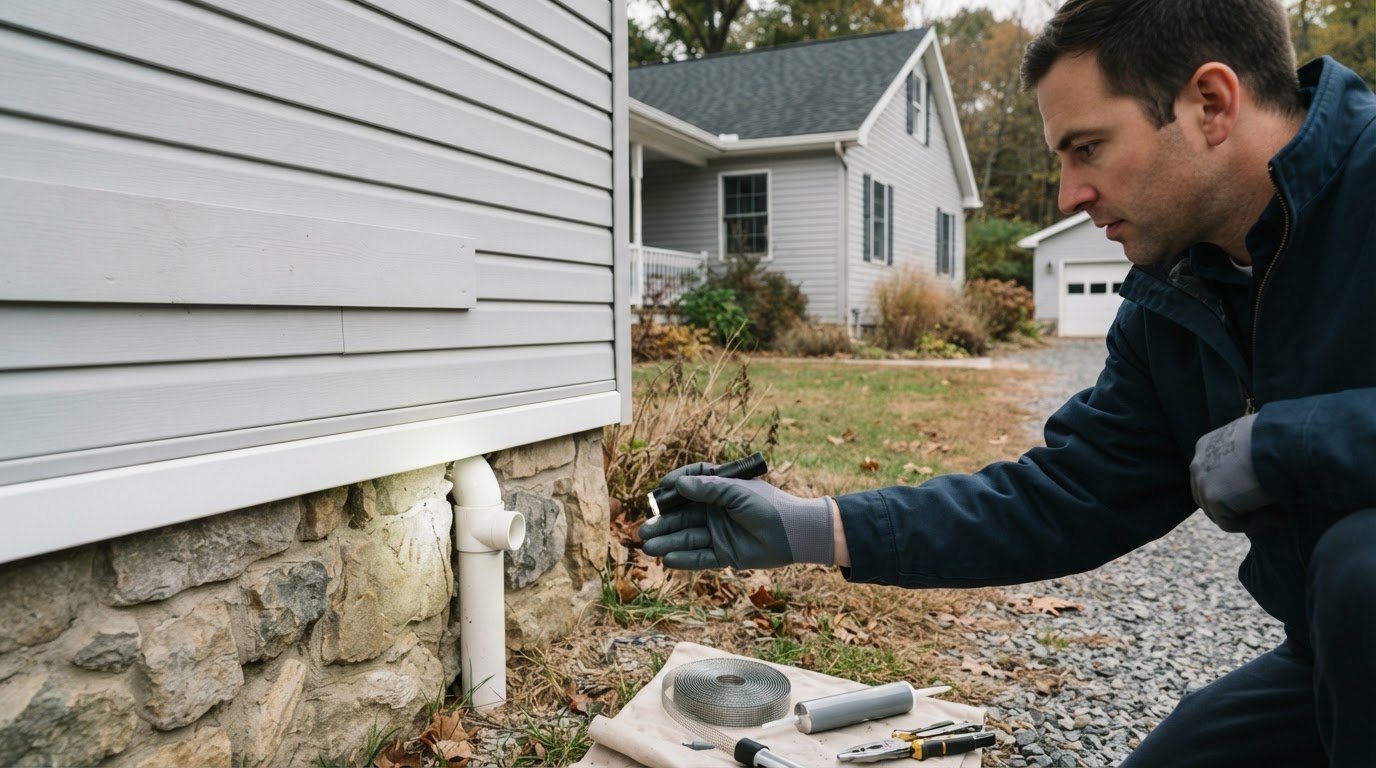
    Prevention starts with identifying likely entry areas, such as gaps around pipes and wires, foundation cracks, garage-door edges, and attic vents. Addressing relevant openings can reduce access, while removal and ongoing maintenance address other parts of rodent control. Exclusion can help prevent new rodents from entering, but it doesn’t remove animals already inside or replace monitoring.

    This article explains how exclusion works, what an assessment may consider, and which signs and access points homeowners can observe safely. You’ll also learn how removal, exclusion, and maintenance work together.

    Key Takeaways

    • Residential rodent exclusion focuses on identifying and closing access points, while other control steps address rodents already inside.
    • Structural transitions can provide clues about possible access, but a visible gap alone doesn’t confirm an active route.
    • Keep track of where and when you notice signs to help inform an assessment, without handling droppings or nesting material.
    • Removal, exclusion, and monitoring have different roles, and prevention needs can change as a home is maintained or altered.

    What Residential Rodent Exclusion Does for a Home

    Recurring rodent activity can be frustrating, especially when it’s unclear how mice or rats are getting inside. Understanding the difference between preventing access and addressing rodents already indoors makes it easier to evaluate the next steps.

    Residential rodent exclusion is the process of identifying and closing access points rodents may use to enter a home. It reduces opportunities for entry, while removal addresses rodents already present. Recommendations depend on the building, signs of activity, and which areas can be assessed.

    A general overview of exclusion techniques describes how limiting access can be part of wildlife management. For rodent control, exclusion is one part of a broader process that may also include removal and maintenance. The right approach depends on the home and the evidence of activity.

    How exclusion differs from trapping and removal

    Removal addresses rodents currently inside a structure. Exclusion focuses on access points that may allow rodents to enter again. Neither necessarily replaces the other: closing a possible route doesn’t remove an animal already indoors, and removal alone may not address how it got in. Rodent control may combine removal, exclusion, and maintenance.

    Why a whole-home view matters

    Homes have connected spaces and structural transitions. A route into a basement or garage may lead toward other parts of the building, while attic access points may be separate from openings near the foundation. Looking across these areas can provide a clearer picture than focusing only on the room where activity was noticed.

    A visible gap is a clue, not proof that rodents are using it. Its location, condition, and relationship to observed signs all matter. Some openings also serve a building function, so sealing every gap without an assessment can miss the actual route or affect how the structure operates. A professional inspection can help evaluate evidence, accessible areas, and property-specific conditions before recommendations are made.

    How Rodents Enter Homes and Which Signs Help Identify Access

    Rodent access can be difficult to pinpoint because openings may be small, tucked behind equipment, or located where building materials meet. Mice can enter through gaps around a quarter inch wide, while rats may use openings about a half inch wide. These measurements are clues, not proof that a particular gap is in use.

    Common places to inspect visually

    Observe the home’s exterior and accessible interior areas from a safe distance. Pay attention to transitions and openings such as:

    • Foundation edges, cracks, and places where siding meets masonry
    • Gaps around pipes, cables, and other utility lines entering the building
    • Garage-door edges and the threshold where the door meets the floor
    • Attic vents, soffits, roof edges, and other roof connections

    Utility penetrations deserve attention because a small gap can remain around a pipe or cable even when the surrounding wall looks intact. The UC IPM Pest Notes on Rats discusses structural exclusion as part of rat control. A visual gap alone doesn’t prove rodents are using it. Consider its location and condition alongside other evidence.

    Don’t move or handle droppings, nesting material, or other potentially contaminated debris to get a closer look. If an area can’t be viewed safely or clearly, leave it for an assessment.

    Clues that can point to rodent activity

    Droppings, gnaw marks, tracks, scratching or scurrying sounds, and disturbed or shredded materials can all be clues of possible rodent activity, but no single sign confirms the animal, its current presence, or its route into the home. Consider the setting: noises may come from other sources, and marks or debris can have explanations unrelated to rodents.

    Note where and when signs appear, and whether similar clues show up nearby. That context can help a professional connect evidence to a possible access route. Residential rodent exclusion recommendations are most useful when they account for both the signs and the structure, rather than treating every visible opening as an active entry point.

    For homeowners in Erie or Crawford County, Pennsylvania, or Ashtabula County, Ohio, a professional rodent-control assessment can help clarify what observations may indicate.

    Rodent Exclusion Compared With Trapping: What Each Approach Addresses

    Removal, exclusion, and monitoring have different roles in rodent control. Removal addresses rodents already inside. Exclusion focuses on reducing access through relevant openings, while monitoring helps assess whether activity continues. A property-specific plan may use these approaches together, but none should be treated as a guaranteed solution on its own.

    Approach Purpose and timing What it may not address
    Removal Addresses rodents currently present in the structure. By itself, it may not address entry points that remain open.
    Exclusion Reduces access opportunities by addressing identified openings. It doesn’t remove rodents already inside, and inaccessible areas can limit assessment.
    Monitoring Helps observe whether signs of activity continue after control work. It doesn’t remove rodents or close entry points on its own.

    What exclusion can address

    Residential rodent exclusion aims to reduce access through openings identified as relevant to the building and evidence of activity. The goal isn’t to seal every visible gap. A building’s condition, concealed spaces, and inaccessible areas can affect what can be assessed. Recommendations depend on identifying which openings could provide a route into the structure.

    A visible gap may not be an active entry point, while a route may be concealed or difficult to inspect. Exclusion can reduce opportunities for entry when relevant access points are addressed, but it can’t establish that every possible route has been found or prevent future changes to the building.

    When removal and follow-up also matter

    If signs suggest rodents are currently inside, exclusion alone won’t address that activity. Removal may be needed as part of the broader response. Conversely, removal alone may leave an access route open, allowing further entry. The appropriate combination depends on the evidence, the structure, and which areas are accessible for assessment.

    Monitoring helps show whether activity continues after work and can inform follow-up decisions. It doesn’t replace removal or exclusion; it adds information about what’s happening over time. For more context on addressing rodents already indoors, see professional rodent control services.

    Residential Rodent Exclusion: How to Keep Mice and Rats Out of Your Home

    What Homeowners Can Observe Before a Rodent Exclusion Assessment

    You don’t need to investigate hidden spaces or handle possible contamination to share useful information about rodent activity. A few careful observations can help describe what you’ve noticed and where an assessment may need to focus.

    Information that helps describe the concern

    Keep a brief record of the signs and their locations. Note the room or exterior area, the approximate date, and whether you’ve noticed similar signs elsewhere. For example, a sound in the attic on several evenings is different information from a one-time noise near a basement wall.

    • Record where and when you noticed droppings, gnaw marks, noises, or disturbed materials.
    • Describe what you can see without touching signs or moving stored items.
    • Note whether observations seem limited to one area or appear in several parts of the home.
    • From a safe, accessible vantage point, note visible openings around building transitions, such as near a door, vent, or utility line.

    Don’t handle droppings or nesting material, and don’t reach behind stored belongings or into areas you can’t access safely. A description is enough. If you can’t see a suspected opening clearly, record its general location rather than trying to inspect it more closely.

    Why exclusion work should follow an assessment

    Observations can suggest where to look, but they don’t confirm which opening rodents use. An assessment relates visible signs to the structure, considers accessible and inaccessible areas, and distinguishes a possible entry point from a gap that may not be relevant. This helps keep residential rodent exclusion focused on the building’s conditions and available evidence, rather than assumptions.

    Recurring signs, activity in multiple areas, or evidence near spaces that are difficult to access can make professional assessment especially useful. Mosquito Assassin Pest Control LLC’s rodent control process includes removal, maintenance, and exclusion. Removal addresses rodents present, exclusion focuses on access, and maintenance supports continued attention to changing conditions.

    Residential Rodent Exclusion: Ongoing Prevention and Professional Next Steps

    Exclusion can reduce rodent access when relevant openings are identified and addressed, but it isn’t a guaranteed permanent fix. Homes change over time. Repairs, renovations, wear, or new signs of activity may affect which areas need attention. Treat exclusion as one part of a property-specific rodent-control process, alongside removal and maintenance when appropriate.

    What ongoing prevention means

    Ongoing prevention means staying aware of known access areas and changes to the building, rather than following a fixed inspection schedule. A new gap after exterior work, damage near a door, or fresh signs indoors may warrant another look. If a professional is following up, share new observations and changes since the prior assessment. That information can help guide which areas may need attention next.

    Residential rodent exclusion can help reduce opportunities for entry, but future needs depend on the home’s condition and new evidence. Continue to note signs you can observe safely. Don’t handle droppings or nesting material, and avoid reaching into inaccessible spaces.

    When to consider professional rodent control

    Recurring signs, a suspected entry route, or activity near areas you can’t assess safely are reasons to consider a professional evaluation. An assessment can connect observations with building conditions and determine whether removal, maintenance, exclusion, or a combination is appropriate. Professional pest control may help reduce risk by addressing factors identified at the property, without assuming every home needs the same response.

    Mosquito Assassin Pest Control LLC provides rodent control in Erie and Crawford Counties in Pennsylvania and Ashtabula County in Ohio.

    Build a More Informed Plan for Rodent Prevention

    Residential rodent exclusion focuses on identifying and addressing likely entry points, but it doesn’t remove rodents already inside or guarantee they won’t return. Removal, exclusion, and ongoing maintenance each play a different role. Signs of activity and the condition of the home help determine which steps may be appropriate.

    Keep track of where and when you notice signs, and avoid handling droppings or nesting material. If activity recurs, an entry route is unclear, or an area is difficult to assess, professional pest control may help reduce risk. For a professional assessment, contact Mosquito Assassin Pest Control LLC to share what you’ve observed.

    A careful, property-specific approach can make the next steps clearer.

    Frequently Asked Questions

    What is residential rodent exclusion?

    Residential rodent exclusion is the process of identifying and closing access points mice or rats may use to enter a home. It focuses on reducing opportunities for entry, not removing rodents already inside. An assessment considers the building, signs of activity, and areas that can be accessed. Recommendations should address likely routes into the structure rather than assume every visible gap is being used.

    Does rodent exclusion get rid of mice already in the house?

    No. Exclusion addresses possible entry routes, but it doesn’t remove mice or rats already inside. If there are signs of current activity, removal may also be needed. Rodent control can combine removal, maintenance, and exclusion, with the approach shaped by the evidence and the property. Closing a suspected opening without addressing rodents inside may leave existing activity unresolved.

    Can I seal rodent entry points myself?

    Some homeowners may be able to address a clearly understood opening, but identifying the relevant route and choosing an appropriate approach can be difficult. A visible gap doesn’t necessarily mean rodents are using it, and some openings serve a building function. Avoid disturbing droppings or nesting material, and don’t reach into inaccessible areas. If the entry point is unclear or activity continues, a professional assessment may help.

    How do I know where rodents are entering my home?

    Look for patterns, not just a single clue. Note where and when you see droppings, gnaw marks, tracks, or disturbed materials, or hear scratching sounds. From a safe, accessible vantage point, observe foundation transitions, utility openings, door edges, vents, and roof connections. These signs can guide an assessment, but none alone confirms an active route. Similar evidence may have other causes, so context matters.

    Is rodent exclusion enough without trapping?

    Not always. Exclusion can reduce access through identified openings, but it doesn’t remove rodents already inside. Removal addresses current activity, while monitoring can help show whether signs continue after work. The right combination depends on the property and available evidence. Exclusion alone may be insufficient if rodents remain indoors, and removal alone may leave access points open for further entry.

    How long does rodent exclusion last?

    There isn’t a single timeframe that applies to every home. The effectiveness of residential rodent exclusion can be affected by the building’s condition, the durability of repairs, new damage, renovations, and other changes that create openings. Ongoing attention to known access areas and newly observed signs can help identify when prevention needs may have changed. A professional can assess the property and discuss appropriate follow-up.

    Disclaimer: The information provided on this blog is for general informational purposes only and is not intended as professional pest control advice. Conditions vary by property, environment, and location. Reading this content does not create a service agreement. For an inspection or professional recommendations, please contact Mosquito Assassin Pest Control LLC directly.

  • Why Are There So Many Wasps Around My House? Common Causes Explained

    Why Are There So Many Wasps Around My House? Common Causes Explained

    Why are there so many wasps around my house? Their presence may reflect an easy food source, a sheltered nesting spot, or seasonal foraging nearby. Wasps circling a yard aren’t necessarily nesting in the home, but repeated activity in one area can offer clues about what’s drawing them in.

    It’s unsettling when wasps keep returning to a patio, doorway, or outdoor meal, especially when it’s hard to tell whether they’re passing through or coming from a nest. The pattern matters: where you see them, what they’re visiting, and whether activity stays concentrated in one spot can help narrow down possible causes.

    This article explains how food, shelter, and seasonal changes influence wasp activity around homes. You’ll also learn what locations and behaviors to observe, how foraging may differ from activity near a nest, and when recurring or concentrated wasp activity may warrant a professional assessment.

    Key Takeaways

    • To understand why are there so many wasps around my house, consider possible food, water, shelter, and nesting opportunities nearby.
    • Seasonal changes and colony activity can affect how often wasps appear, so sightings may vary over time.
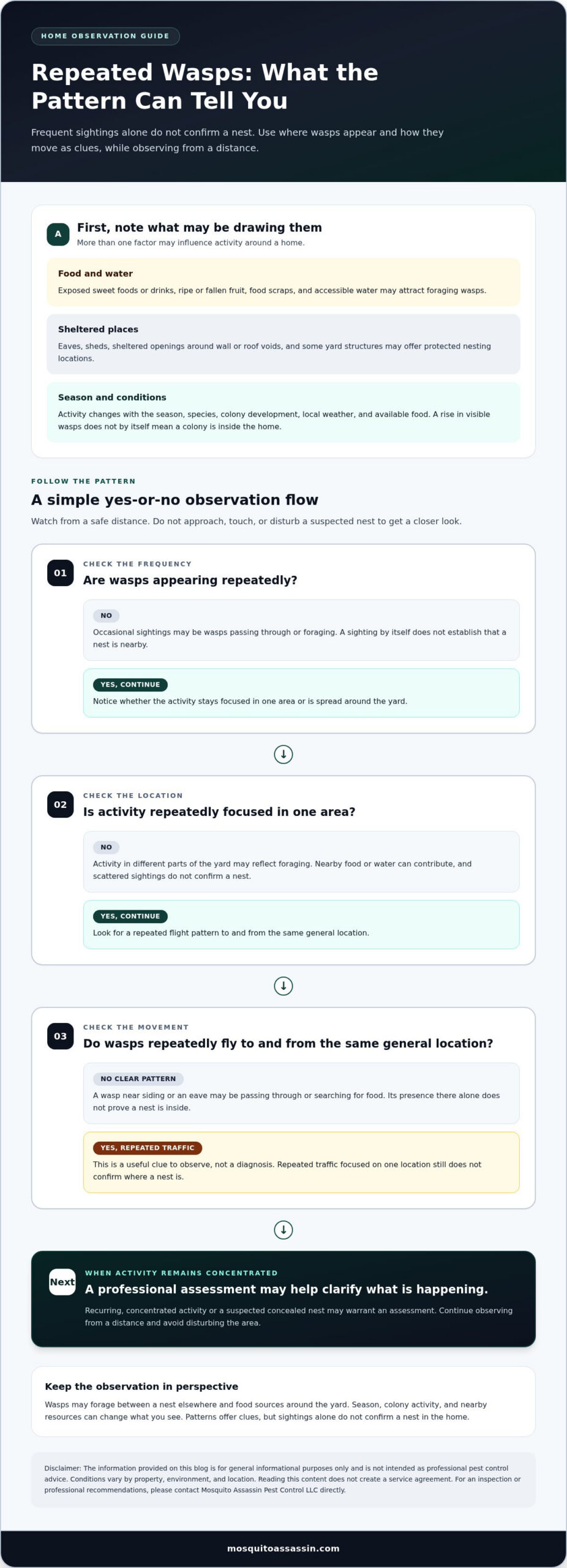
    • Frequent sightings alone don’t confirm a nest; repeated traffic focused on one location can be a useful clue to observe.
    • Note when and where wasps appear and what’s nearby, while observing from a distance and avoiding disturbance.
    • Recurring, concentrated activity or a suspected concealed nest may warrant a professional assessment.

    Why are there so many wasps around my house? Start with what attracts them

    Repeated wasp sightings around a patio, doorway, or yard can be unsettling, especially when the source isn’t obvious. There may be more than one explanation: wasps could be foraging for food or water, or they may be using a nearby sheltered spot to nest. Their presence around the house doesn’t automatically mean they’re nesting in the structure.

    Wasps gather around homes when they find accessible food or water, protected shelter, or suitable places to build a nest. The specific draw can change, so noticing where they gather and what’s nearby can help make sense of the activity.

    For a general overview of wasp behavior and life cycle, see this background reference. The video below also discusses why wasps may build nests near homes.

    What food and water can draw wasps close to a home?

    Exposed sweet foods and drinks can attract foraging wasps, as can ripe fruit left outdoors or fruit that has fallen and begun to soften. Food waste may also draw them, particularly when bins or outdoor dining areas give them easy access to scraps.

    Wasps may also use accessible water sources. The presence of water alone doesn’t explain every sighting, but a source near food or a nesting area may contribute to activity. If food is no longer available in one spot, foraging wasps may be noticed elsewhere as they seek other sources.

    Can siding, roof spaces, and yard structures offer shelter?

    Some wasps seek protected locations for nesting. Eaves, sheds, and sheltered openings around wall or roof voids can provide cover from weather and disturbance. A yard structure may also offer a suitable spot, depending on its design and condition.

    Still, a wasp flying near siding or an eave doesn’t prove there’s a nest inside. It could be passing through or searching for food. Repeated activity focused on one opening or structure is a useful observation, but it isn’t a diagnosis on its own.

    To better understand why are there so many wasps around my house, consider both what may be drawing them to the area and where you’re seeing them. Food and water can influence foraging, while sheltered spaces may offer nesting opportunities. These clues help distinguish a passing visit from a pattern worth monitoring.

    How season, colony activity, and wasp behavior change what you see

    Wasp activity changes over the season, so a sudden increase in sightings doesn’t necessarily mean a colony has moved into your home. Social wasps live in colonies, and workers leave to forage for food and other resources. As colony activity and available resources shift, the number of wasps visible around a yard can change too. That distinction can help answer why are there so many wasps around my house without assuming the structure itself is the source.

    In general, seasonal conditions influence when wasps are active, while species, colony development, and nearby food sources affect where and how often they’re seen. A rise in visible foraging may reflect more activity outdoors, not proof that a colony has grown inside a wall or roof space.

    Why might wasp activity seem to increase during part of the year?

    Wasps are generally active during the warmer part of the year, but the timing and pattern vary with species and local conditions. As social colonies develop, worker wasps may make more frequent trips to forage. Weather and the availability of food can also affect when people notice them and which parts of a property they visit.

    For households in Erie and Crawford Counties in Pennsylvania and Ashtabula County in Ohio, sightings can vary from one season to another. Treat a change in activity as a clue to observe, not an automatic sign of increased danger. Repeated traffic near one point may be more informative than seeing individual wasps at different spots around the yard.

    Do all wasps behave the same way around homes?

    No. Yellowjackets, paper wasps, and hornets are common-name groups that include different wasps, and their nesting habits and foraging patterns can differ. Paper wasps may be noticed around sheltered structures, while yellowjackets may be encountered while they forage. A quick glimpse in flight often isn’t enough to identify a wasp reliably, so avoid drawing conclusions from color or size alone.

    Regional examples include paper wasps, yellowjackets, and bald-faced hornets, though the species present and their behavior can vary by location. The University of Nebraska-Lincoln offers additional information on managing wasps around your home, including general identification and behavior guidance.

    Season, colony activity, local weather, and available food together shape when wasps are active and where foraging is noticed, but none of those factors alone confirms a nest inside a house. If activity remains recurring or concentrated, a professional assessment may help clarify what’s happening; see the page on general pest control services.

    Do frequent wasp sightings mean there is a nest nearby?

    Frequent sightings can raise the question of whether wasps are nesting close to the house. But seeing wasps repeatedly doesn’t confirm a nest on the property, much less inside the home. They may be traveling between a nest elsewhere and food sources around the yard. Their flight patterns and the locations where they appear can offer clues, but those clues aren’t a substitute for confirming what species is present or where it’s nesting.

    If you’re wondering why are there so many wasps around my house, focus on whether activity is spread across the yard or repeatedly centered near one area. Observe from a safe distance. Don’t approach, touch, or disturb a suspected nest to get a closer look.

    What patterns may suggest activity is concentrated in one spot?

    Repeated flight to and from the same general location is worth noting. For example, wasps may appear to enter and leave an opening near an eave, wall, or other structure. Record the location and when you notice the activity. A brief observation from indoors or another distant spot can help establish whether the pattern repeats without requiring you to get closer.

    Some nesting locations can be concealed in walls, roof spaces, or other protected areas, so the source may not be visible. Wasps flying near siding or an eave still don’t prove that a nest is inside. A visible path can help describe the activity, but it can’t reliably identify the nest’s exact location.

    When might wasps simply be passing through to forage?

    Wasps may visit outdoor dining areas, exposed drinks, or ripe and fallen fruit, then move on. A wasp landing on a table or circling a bin shows where it found a potential food source, not where it lives. Social wasps may travel between a nest and multiple food sources, so visits to one spot can be temporary even if they happen repeatedly.

    Notice whether sightings coincide with an outdoor meal or another changing food source, and whether wasps continue to appear in the same place when that activity isn’t present. This context can help distinguish foraging visits from a pattern that remains focused on a structure. Neither occasional visits nor repeated sightings alone prove a nest is nearby.

    Keep observations simple: note the general location, time, and whether wasps follow a consistent route. If activity repeatedly concentrates around a structure or the source may be concealed, a professional assessment can help determine what may be happening without requiring you to investigate the area yourself.

    Why Are There So Many Wasps Around My House? Common Causes Explained

    What to observe around your home when wasps keep returning

    A brief observation record can help show whether wasp activity is scattered or repeatedly focused in one area. You don’t need to approach the wasps or locate a nest. Watch from a comfortable distance, such as from indoors, and note only what you can see without disturbing them.

    Which details are useful to record?

    Keep notes about the general location and approximate time of sightings. Include whether you see wasps near a doorway, eave, shed, patio, or another area, and whether activity appears in the same place on different occasions. Avoid standing near a suspected entry point or following wasps toward a possible nest.

    Nearby conditions can add useful context. Note exposed food or drinks, fallen fruit, food waste, or a sheltered structure. Also record whether wasps seem spread across the yard or repeatedly travel to and from one general location. These patterns may help clarify what’s attracting them, but they can’t confirm a nest or identify a species.

    Which prevention observations are reasonable without treating a nest?

    As a simple way to assess whether food is contributing to activity, keep outdoor food and drinks covered and observe whether sightings change. Remove fallen fruit and keep food waste secured. These steps reduce access to potential food sources, but they don’t establish where wasps are nesting or guarantee that activity will stop.

    Compare what you see before and after changes in food availability. If sightings around a dining area lessen while activity continues elsewhere, that difference may suggest wasps were foraging there. If traffic remains concentrated near a structure, note the pattern rather than inspecting openings or attempting to disturb the area.

    For anyone asking why are there so many wasps around my house, observations are most useful when they capture the pattern without putting the observer close to wasps. Record the time, location, frequency, and nearby attractants, then look for changes over time. Don’t apply products or attempt nest treatment based on these notes. If recurring activity remains concentrated or a nest may be concealed, a professional assessment may help evaluate the situation. Learn about general pest control services for wasp and yellowjacket concerns.

    When recurring wasps may call for a professional assessment

    Occasional wasps may be foraging, but activity that repeatedly centers on one location or appears to come from a concealed space can be a reason to seek a professional assessment. Sightings alone can’t confirm a nest or establish where it is. A professional can assess the property, consider the pattern and surrounding conditions, and recommend an appropriate response without assuming the source in advance.

    What can a professional assessment help clarify?

    An assessment can help distinguish general foraging from activity that appears concentrated near a structure. Relevant observations might include where wasps repeatedly appear, whether they follow a consistent route, and whether the source could be concealed in an eave, wall, or roof space. These details help provide context, but they don’t replace an on-site assessment.

    Mosquito Assassin Pest Control LLC provides general pest control for wasps and yellowjackets in Erie and Crawford Counties, Pennsylvania, and Ashtabula County, Ohio. For background on the scope of general pest control services, see the service information available on the site.

    What is a sensible next step for recurring activity?

    Use your observation notes to describe what you’ve noticed: the locations, approximate times, how often activity recurs, and whether wasps seem to focus on a particular area. Don’t approach or disturb a suspected nest to gather more information. A clear description can help a professional understand the concern and assess what may be happening at the property.

    If recurring or concentrated activity is concerning, request professional pest control guidance. An assessment can help clarify the situation and inform a suitable next step.

    Disclaimer: The information provided on this blog is for general informational purposes only and is not intended as professional pest control advice. Conditions vary by property, environment, and location. Reading this content does not create a service agreement. For an inspection or professional recommendations, please contact Mosquito Assassin Pest Control LLC directly.
    Use what you’ve observed to choose your next step

    If you’re asking why are there so many wasps around my house, remember that food, water, shelter, and seasonal foraging can all contribute to sightings. Frequent wasps don’t automatically mean there’s a nest in your home. Instead, note whether activity is scattered or repeatedly focused near one area, and observe from a distance.

    Covering outdoor food and drinks, removing fallen fruit, and securing food waste can help you assess whether accessible food is drawing foragers. If activity continues in a concentrated area or a nest may be concealed, a professional assessment can help clarify the situation and inform an appropriate response.

    General pest control for wasps and yellowjackets is available in Erie and Crawford Counties, Pennsylvania, and Ashtabula County, Ohio. For an informational next step, request professional pest control guidance. Careful observation can help you move forward with greater clarity.

    Disclaimer: The information provided on this blog is for general informational purposes only and is not intended as professional pest control advice. Conditions vary by property, environment, and location. Reading this content does not create a service agreement. For an inspection or professional recommendations, please contact Mosquito Assassin Pest Control LLC directly.
    Frequently Asked Questions

    Why are there so many wasps around my house?

    Wasps may repeatedly visit because they find food, water, shelter, or potential nesting locations nearby. If you’re wondering why are there so many wasps around my house, look at where they gather and what’s around that area. Outdoor meals, fallen fruit, and protected building features can influence activity. Scattered visits may be foraging, while repeated traffic toward one spot is worth observing, but sightings alone don’t confirm a nest.

    Does seeing wasps around my house mean there is a nest?

    Not necessarily. Wasps can travel to a property to forage, so seeing one on a patio or near a doorway doesn’t show where it nests. Repeated traffic toward the same general location may be a useful clue, but it isn’t proof. Observe from a distance, avoid disturbing the area, and consider a professional assessment if activity continues to concentrate around one spot.

    What attracts wasps to a house?

    Possible attractants include exposed food and drinks, ripe or fallen fruit, food waste, accessible water, and sheltered places that may provide nesting opportunities. The relevant factor depends on the property and the wasp. Notice where activity occurs and what’s nearby. Covering food and securing waste can reduce access to some potential food sources, but those changes can’t establish whether a nest is present or where it may be.

    Are wasps more active at certain times of year?

    Wasp activity can change with the season, species, and local conditions. Foraging may become more noticeable as colony activity and food availability shift, but increased sightings don’t automatically mean a nest is inside the home. Seasonal patterns can vary, so avoid using a calendar date alone to identify a species or locate a nest. In Erie and Crawford Counties and Ashtabula County, local conditions matter.

    Can fallen fruit or outdoor food attract wasps?

    Yes. Exposed sweet foods and drinks, ripe or fallen fruit, and accessible food waste may attract wasps to outdoor areas. Keeping food covered during meals, removing fallen fruit where practical, and securing food waste can help limit access to these potential food sources. If sightings change after food is less exposed, that’s useful context, but it doesn’t confirm or rule out a nest elsewhere on the property.

    How can I tell if wasps are nesting in my house?

    You can’t confirm a nest just from seeing wasps around the house. Repeated flight toward the same general area may indicate concentrated activity, but a nest could be concealed, or the wasps may be foraging. Don’t approach or disturb a suspected location to investigate. Note where and when activity occurs from a distance, and consider professional assessment if the pattern persists or stays focused.

    When should I call a professional about wasps around my house?

    Consider a professional assessment if wasp activity repeatedly concentrates near one area, a nest may be concealed in a structure, or the source remains unclear. Share your observations about where and when you see activity, without approaching or disturbing a suspected nest. A professional can assess the property and recommend an appropriate response based on its conditions. A single sighting alone doesn’t establish an infestation.

    Disclaimer: The information provided on this blog is for general informational purposes only and is not intended as professional pest control advice. For an inspection or professional recommendations, please contact Mosquito Assassin Pest Control LLC directly.

  • Cost of Whole House Bed Bug Treatment: What Shapes Your Estimate in 2026

    Cost of Whole House Bed Bug Treatment: What Shapes Your Estimate in 2026

    Why can whole-house bed bug recommendations differ from one property to another? It’s understandable to want clarity, especially if you’re unsure whether every room needs attention or concerned that the treatment scope could expand. A generic rule can’t show what a particular home actually needs.

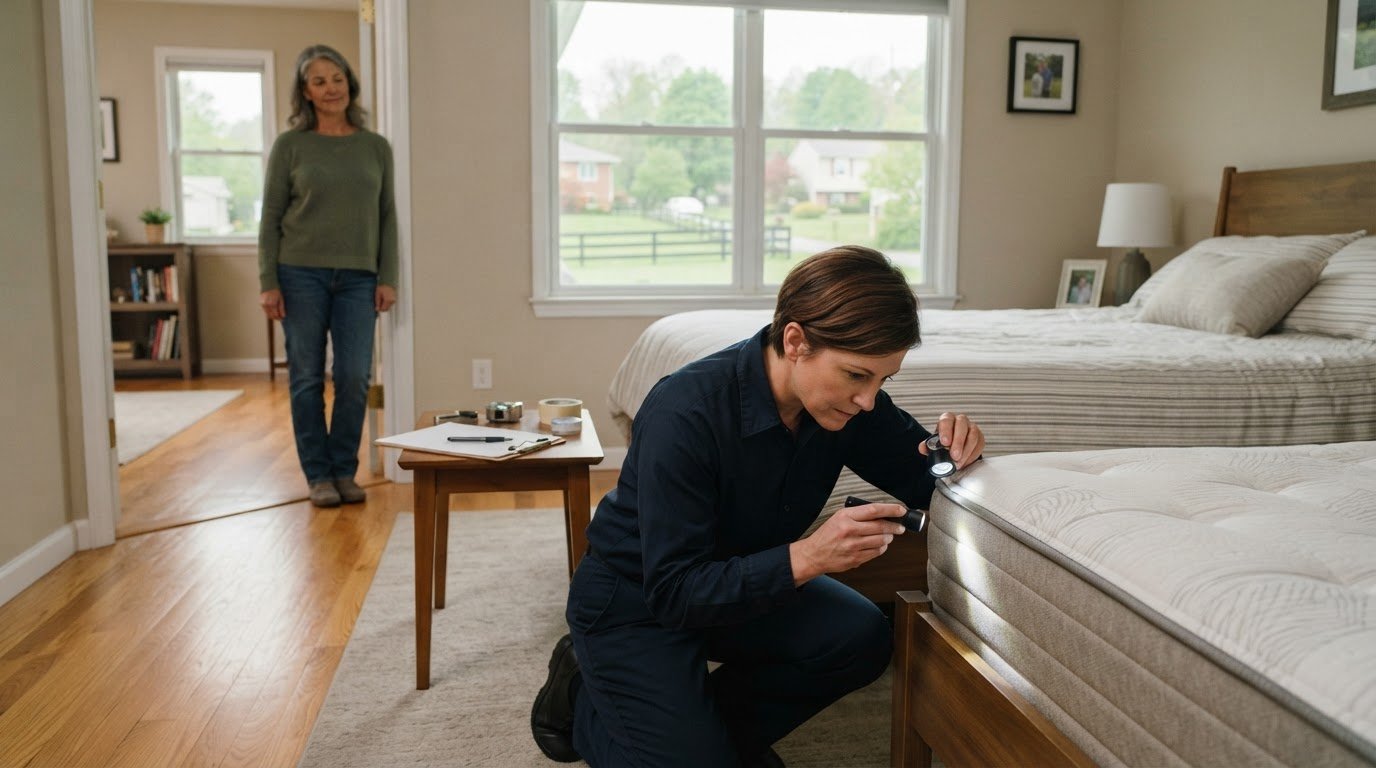
    A professional assessment helps connect recommendations to the conditions found at the property. The number of rooms where signs have been reported, the home’s layout, and areas that may provide hiding places can all help clarify the scope. Whole-house treatment doesn’t automatically mean every room has the same level of activity or needs identical attention.

    This article explains what a whole-house assessment considers, why the appropriate scope can vary, and what information can help you discuss your home’s conditions with a professional. If you’re in Erie or Crawford County, Pennsylvania, or Ashtabula County, Ohio, a property-specific assessment can help clarify the next step.

    Key Takeaways

    • Whole-house treatment describes an assessed property scope, not a rule that every room has identical activity.
    • A professional assessment helps connect recommendations to the home’s layout, reported signs, and observed conditions.
    • Note where and when you observed signs, along with basic details about your home, to help clarify the assessment.
    • A clear explanation of the proposed scope can help you understand which areas are included and why.
    • Bed bug treatment is available in Erie and Crawford Counties, Pennsylvania, and Ashtabula County, Ohio.

    What Does Whole-House Bed Bug Treatment Mean for the Scope of a Home?

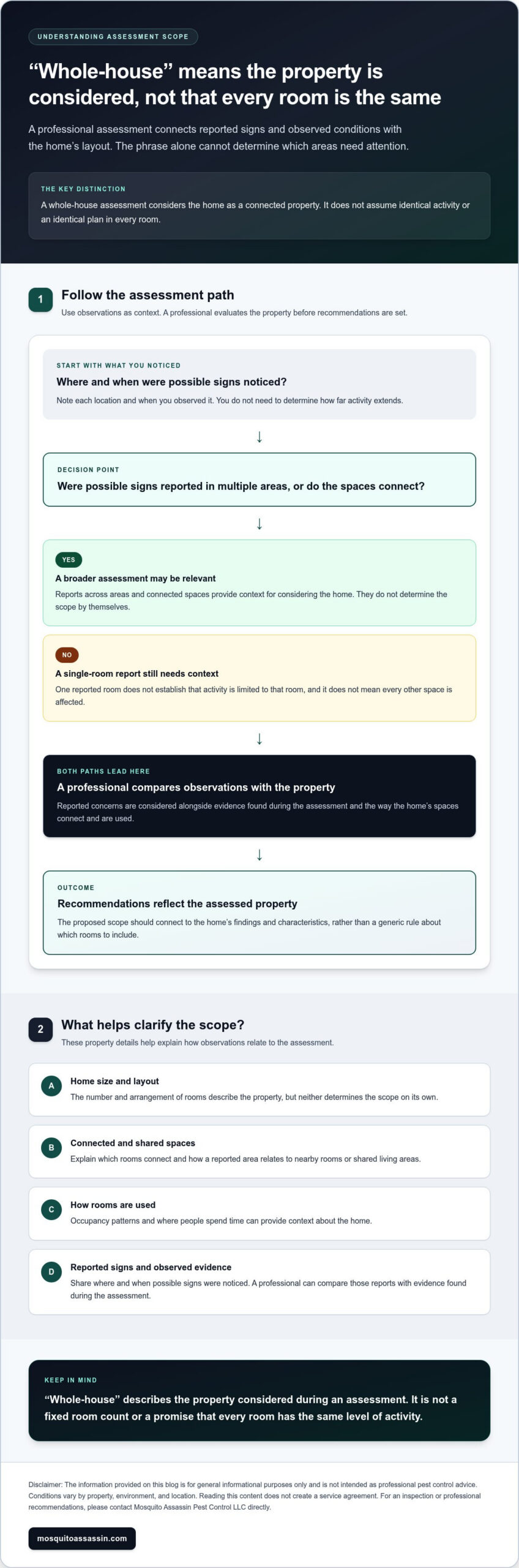
    “Whole-house” describes the property considered during an assessment, not a fixed number of rooms or a promise that every room has the same level of bed bug activity. The proposed scope depends on what a professional observes and learns about the home.

    Whole-house treatment scope is established through a property-specific assessment that considers reported signs, observed evidence, and how the home’s spaces connect. This distinction helps explain why the phrase alone can’t determine what areas need attention or provide a meaningful estimate of the cost of whole house bed bug treatment.

    Does whole-house treatment mean every room is treated?

    Not necessarily. A whole-house assessment considers the home as a connected property, but it doesn’t assume identical conditions in every room. A professional may consider reported observations alongside evidence found in relevant areas when developing recommendations.

    Connected spaces and the home’s layout can matter because activity reported in one area may lead the assessment to consider nearby spaces as well. That doesn’t mean every room automatically receives the same plan. For general background on the range of approaches professionals may consider, see this overview of bed bug control techniques.

    Why does bed bug treatment scope vary by property?

    Homes differ in size, layout, and how rooms are used. Those details can shape what an assessment needs to consider. For example, the arrangement of bedrooms and shared living areas may help a professional understand how reported activity relates across the property. Occupancy patterns can also provide context about where people spend time and where signs have been noticed.

    Reported signs are useful, too. Sharing where and when you noticed possible evidence can help focus the assessment, even if you don’t know how far activity extends. The information supports a professional evaluation, but it doesn’t act as a formula that automatically determines the treatment scope.

    A clear assessment separates what has been observed from what still needs evaluation. That gives the professional a basis for recommendations tailored to the property, rather than relying on a generic rule about which rooms to include. The final scope should reflect the findings and the home’s specific characteristics.

    Which Factors Can Affect the Cost of Whole-House Bed Bug Treatment?

    The treatment scope depends on the conditions and features of the individual property. Home size and layout provide useful context, but neither determines on its own which areas need attention. A professional assessment brings those details together with reported concerns and observed evidence.

    Recommendations should reflect the property assessed and the areas identified for attention. Understanding the details considered during an assessment can help you follow how the proposed scope relates to your home.

    How can home size and layout shape the assessment?

    The number and arrangement of rooms help describe the home being evaluated. A property with adjoining bedrooms and shared living areas has a different layout from one with more separate spaces. Explain which rooms connect, which areas are occupied, and where people spend time. These details help a professional understand the property without treating square footage as a formula for deciding the scope.

    Shared spaces can add context, too. Describing how a reported area relates to nearby rooms helps the professional consider the home’s layout alongside the observations you share.

    How do reported signs and infestation extent affect scope?

    Note where possible signs were observed and when you noticed them. If observations occurred in more than one area, identify each location without trying to determine how far activity extends. These reports provide useful context, but they don’t confirm the full extent or establish a diagnosis.

    A professional can compare your observations with evidence found during the assessment. A report from one room doesn’t automatically establish that activity is limited to that room, nor does it mean every other space is affected. The evaluation helps connect property findings with relevant concerns and recommendations.

    The U.S. Environmental Protection Agency’s bed bug control guidance offers general background on the subject. It doesn’t determine which areas of an individual property need attention. That requires a professional evaluation of the home, its layout, and the reported observations. Clear communication about those findings helps make the recommended scope understandable and specific to the property.

    Is Whole-House Bed Bug Treatment Always Necessary?

    No. A whole-house label doesn’t mean every room has identical conditions or automatically requires the same attention. It refers to considering the property as a whole when assessing reported concerns and observed evidence. The appropriate scope should come from that assessment, not a generic rule based on the words “whole-house.”

    This distinction can make recommendations easier to understand. A property-specific explanation connects the proposed scope to the home’s observations and layout. A blanket recommendation, without explaining how it relates to the property, gives little context for understanding why particular areas are included. Since the cost of whole house bed bug treatment depends on its assessed scope, clarity about that scope matters.

    When might a professional assess more than one room?

    Reports of possible bed bug signs in multiple areas can make a broader assessment relevant. So can details about how spaces connect or how rooms are used. For example, observations in more than one sleeping area may help a professional evaluate the concern across the home. These details guide an assessment, but they don’t establish a treatment threshold or prove the full extent of activity.

    For general educational background, Purdue University’s resource on bed bug control discusses control approaches. It can provide context, but it can’t determine the right scope for an individual property. That depends on the professional evaluation of the home and its reported concerns.

    What should a clear treatment scope explain?

    A clear recommendation should identify the areas proposed for attention and explain how they relate to the assessment findings and the concerns shared by the household. It should help you understand why the scope is broader or narrower than you expected, without suggesting that every room has identical conditions.

    During the discussion, you can ask for clarification about:

    • Which areas the assessment identifies for attention.
    • How reported observations and property conditions relate to the proposed scope.
    • Whether any parts of the recommendation reflect uncertainty that needs further evaluation.

    These questions focus the conversation on the property, rather than on assumptions about what “whole-house” must mean. For residents of Erie or Crawford County in Pennsylvania, and Ashtabula County in Ohio, requesting professional recommendations can help clarify the assessment and proposed scope.

    Cost of Whole House Bed Bug Treatment: What Shapes Your Estimate in 2026

    What Information Helps Clarify a Whole-House Bed Bug Estimate?

    A few clear observations can help a professional understand your concerns and assess the property. You don’t need to determine how far bed bug activity extends. Record what you noticed, where you noticed it, and any relevant details about the home. This information gives the assessment useful context and can help explain how the proposed scope relates to your property.

    What details about the home should you gather?

    Keep notes simple and observational. Useful details include:

    • Where signs were observed: Identify the room or general area, such as a bedroom or shared living space.
    • When you noticed them: Note the approximate date or whether observations have happened more than once.
    • Other reported areas: Mention if signs were noticed elsewhere, without assuming those areas are affected.
    • Home layout: Describe how relevant rooms connect and which areas are occupied or regularly used.
    • Relevant history: Share prior bed bug concerns or treatment, if applicable.

    These notes are context, not a diagnosis. Avoid trying to identify the full extent yourself or handling suspected pests to gather more information. A professional assessment can consider your observations alongside conditions found at the property.

    How can you understand the proposed scope?

    Review whether the assessment findings connect clearly to the areas included in the recommended service. If a room or shared space is included, the explanation should help you understand how it relates to the reported concerns or assessment. You can also ask what follow-up expectations apply, so the scope is clear before proceeding.

    A property-specific assessment is more useful than a generic estimate because it relates recommendations to the home’s layout, observations, and reported history. The bed bug treatment services page provides information about professional treatment. For residents of Erie and Crawford Counties in Pennsylvania, and Ashtabula County in Ohio, request professional recommendations to discuss an assessment and understand the proposed scope. This context can help make the cost of whole house bed bug treatment easier to evaluate without relying on assumptions about the property.

    How to Arrange Professional Bed Bug Treatment in Northwest Pennsylvania and Northeast Ohio

    Possible bed bug signs can leave you unsure about what the home needs. A professional inspection can help evaluate the reported concerns and clarify which areas should be included in a property-specific recommendation. That assessment gives you a more useful basis for understanding the proposed scope than a general assumption about every room.

    Is bed bug treatment available in Erie, Crawford, and Ashtabula Counties?

    Bed bug treatment is available in Erie and Crawford Counties in Pennsylvania, and Ashtabula County in Ohio. You can review the service area information for these communities. Keeping the coverage details clear helps you identify whether your property is within the stated service area.

    What is a practical next step after finding possible bed bug signs?

    Make a brief record of what you observed. Note the areas involved and when you noticed possible signs. You don’t need to determine whether they indicate bed bugs or assess how far activity may extend. Share your observations during a professional assessment, where they can be considered alongside the property’s layout and inspection findings.

    Ask how the assessment findings relate to the proposed service scope. A clear explanation can help you understand which areas are included and what follow-up expectations apply. This property-specific information is also more useful than relying on a generic estimate when considering the cost of whole house bed bug treatment.

    For an inspection or professional recommendations in Erie or Crawford County, Pennsylvania, or Ashtabula County, Ohio, request an inspection or professional recommendations.

    Disclaimer: The information provided on this blog is for general informational purposes only and is not intended as professional pest control advice. Conditions vary by property, environment, and location. Reading this content does not create a service agreement. For an inspection or professional recommendations, please contact Mosquito Assassin Pest Control LLC directly.
    Take the Next Step Toward a Clear Treatment Scope

    The cost of whole house bed bug treatment depends on the property-specific scope, not simply on the number of rooms or a one-size-fits-all assumption. A professional assessment considers reported signs, home layout, and observed evidence to help shape recommendations. Whole-house treatment also doesn’t mean every space has identical conditions or automatically needs the same attention.

    Make a note of where and when you observed possible signs, then share those details during an assessment. Clear explanations of the areas included can help you understand how the recommendation relates to your home.

    Bed bug treatment is available in Erie and Crawford Counties, Pennsylvania, and Ashtabula County, Ohio. For an inspection or professional recommendations, request an inspection or professional recommendations. A property-specific evaluation can help you take the next step with greater clarity.

    Disclaimer: The information provided on this blog is for general informational purposes only and is not intended as professional pest control advice. Conditions vary by property, environment, and location. Reading this content does not create a service agreement. For an inspection or professional recommendations, please contact Mosquito Assassin Pest Control LLC directly.
    Frequently Asked Questions

    How much does whole-house bed bug treatment cost?

    There isn’t one universal amount that applies to every home. The cost of whole house bed bug treatment depends on the property-specific scope, which can only be clarified through an assessment. Home size, layout, reported signs, and the areas identified for attention all provide relevant context. A professional evaluation can help connect recommendations to the conditions found, rather than relying on a general estimate that may not reflect your home.

    What affects the cost of whole-house bed bug treatment?

    The assessed scope is shaped by the home’s size and layout, where possible signs have been reported, and what the professional observes. The number and arrangement of rooms can provide useful context, as can connected living spaces and how different areas are occupied. These details don’t create a fixed formula. An inspection helps determine how the property’s features and reported concerns relate to the service recommendations.

    Does whole-house bed bug treatment mean every room is treated?

    No. “Whole-house” refers to considering the property during assessment, not assuming that every room has the same conditions or needs identical attention. A professional considers reported observations, connected spaces, and evidence found at the home when recommending a scope. Ask which areas are included and how the assessment findings relate to that recommendation. This helps clarify the plan without assuming every space is equally affected.

    What information should I have ready for a bed bug assessment?

    Note where you observed possible signs and when you noticed them. Include whether observations were reported in additional areas, a general description of the home’s layout, and which spaces are occupied or regularly used. If there have been previous bed bug concerns or treatment, share that history. You don’t need to determine whether the signs confirm bed bugs or how far activity extends. A professional can evaluate the information alongside the property.

    Can I get a whole-house bed bug treatment assessment in Erie or Crawford County?

    Bed bug treatment is available in Erie and Crawford Counties in Pennsylvania, as well as Ashtabula County in Ohio. An assessment can help clarify which areas need attention based on your observations and the conditions found. Share the property’s general layout and where possible signs were noticed. These details help give a professional a clearer picture of the concern and support recommendations tailored to the home.

    How do I get a professional recommendation for whole-house bed bug treatment?

    Arrange a professional assessment and describe what you’ve observed, including the locations and timing of possible signs. The assessment can help determine how the property’s layout and findings relate to the proposed service scope. Mosquito Assassin Pest Control LLC provides bed bug treatment in Erie and Crawford Counties, Pennsylvania, and Ashtabula County, Ohio. A professional recommendation can help you understand the next step for your particular home.

  • How to Keep Bugs Out of Your Shed: A Practical Prevention Guide

    How to Keep Bugs Out of Your Shed: A Practical Prevention Guide

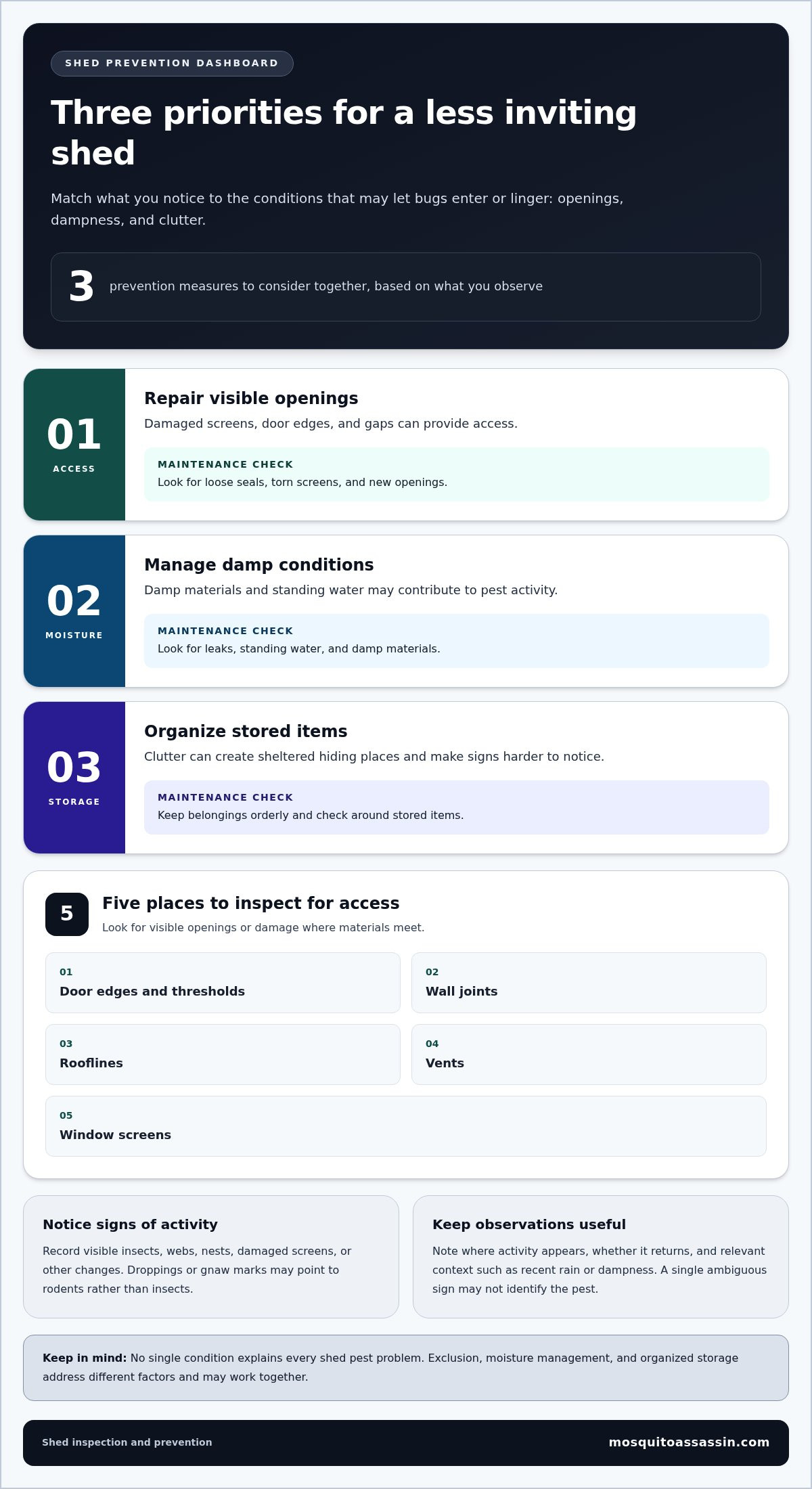
    What if the easiest way to keep bugs out of your shed is to make it harder for them to get in and settle down? Finding insects among tools, stored belongings, or gardening supplies can be frustrating, especially when it’s unclear whether they’re coming through a gap, drawn by moisture, or hiding in clutter. Learning how to keep bugs out of your shed starts with addressing those conditions, not automatically reaching for pesticides.

    A bug-resistant shed depends on practical prevention: closing common entry points, keeping stored items dry and organized, and checking for signs of recurring activity. Start by looking for openings and damp areas, then match what you find to a useful maintenance step. If bugs continue to appear despite those efforts, a professional assessment may help identify what’s contributing to the problem and what options may be appropriate for your property.

    Key Takeaways

    • Spot common ways bugs enter, including gaps, damaged screens, doors, vents, and items brought into the shed.
    • Use a visual check to note insect sightings, webs, nests, damage, and recurring activity without applying pesticides.
    • Compare exclusion, moisture reduction, and tidy storage to identify which prevention measures fit your shed.
    • Build regular checks of doors, screens, gaps, clutter, and damp areas into your maintenance routine.
    • Learn how to keep bugs out of your shed and recognize when persistent activity or uncertain pest identification may call for professional guidance.

    How Bugs Get Into a Shed, and Why They Stay

    Bugs don’t need a wide-open door to get into a shed. They may slip through a gap around a door or vent, pass through a damaged screen, or arrive unnoticed on stored items. Once inside, some find shelter in clutter, damp materials, or quiet corners. A useful starting point for how to keep bugs out of your shed is to look for both ways in and conditions that may encourage them to stay.

    Shed pest exclusion means reducing pest access by addressing openings and conditions around the structure. It’s one part of prevention, alongside observing activity and reducing what may attract pests. The principles of Integrated Pest Management also emphasize considering multiple factors rather than relying on a single measure.

    This video offers another look at protecting a shed from insect and animal access:

    Common shed entry points to inspect

    Check where materials meet: door edges and thresholds, wall joints, rooflines, vents, and window screens. Look for damaged seals, torn mesh, or visible openings. A small gap can provide access for some insects, but not every crack is an active entry point. Use sightings as clues: repeated activity near one wall or opening is a reason to inspect that area more closely.

    Stored items can also bring pests into the shed. Gardening supplies, containers, or belongings moved from another area may carry insects or provide hiding places. Inspect items as you put them away, especially if they’ve been sitting outside or in a damp location.

    Conditions that can make bugs linger

    Damp cardboard and other materials can provide sheltered places to hide, while leaf litter and undisturbed clutter create protected spaces. Standing water may attract some pests, but pest needs vary. Food residue, such as crumbs or traces left on containers, can also draw insects that feed on accessible food.

    No single condition explains every shed pest problem. Some pests may be seeking shelter or moisture, while others are more likely to find a food source or nesting spot. Look at the whole area, inside and around the shed, and note which conditions occur alongside activity. This can help you choose which maintenance changes to make first.

    How to Check a Shed for Bug Activity Without Applying Pesticides

    A visual inspection can help you understand what’s happening before deciding what to address. A basic shed pest inspection checks the structure, visible signs of activity, and nearby conditions without disturbing pests or applying pesticides. The goal is to observe and record, not to identify every insect from a single clue.

    Start outside, then check inside

    Begin around the shed’s exterior. Look at door edges, screens, vents, wall joints, and rooflines for visible openings or damage. Notice standing water, leaf litter, or damp areas nearby. Then move inside and scan walls, corners, stored materials, and the floor. Check items that have been stored outdoors before moving them or opening containers.

    A measured inspection can make it easier to decide how to keep bugs out of your shed without jumping to conclusions. Guidance on pest-resistant construction also describes how building details can affect pest access.

    What signs of bugs should you look for?

    Note visible insects, webs, nests, damaged screens, and other changes to the shed. A web shows that a spider has been present, but it doesn’t necessarily reveal where it entered or whether other pests are active. Droppings or gnaw marks may point to rodents rather than insects. A single ambiguous sign may not identify the pest, so record what you see rather than diagnosing the species from one clue.

    • Record the location of each sign, such as near a door, vent, or stored item.
    • Note whether you see live insects, webs, nests, or damage.
    • Look for activity in more than one area, without moving or disturbing nests.

    How to keep inspection observations useful

    Write down when and where activity appears, and whether you’ve noticed it more than once. Add relevant context, such as recent rain, stored materials brought into the shed, or visible dampness. These details can help describe the situation, but they don’t prove what caused it.

    Leave nests and unknown pests undisturbed. Avoid handling insects or trying to remove a nest during an inspection. If activity keeps returning or you’re unsure what you’re seeing, professional guidance may help clarify the issue.

    Which Shed Prevention Measures Matter Most?

    The best place to start depends on what you observed. A visible opening points to an exclusion issue, while damp materials or crowded storage suggest maintenance needs. These measures work together: sealing gaps won’t address moisture or food residue, and tidying the shed won’t close an entry point. Pesticides aren’t the only way to reduce conditions that may attract pests.

    Use this comparison to match an action with the issue it addresses and a practical check to keep it on track.

    Action Purpose Suitable maintenance check
    Repair visible openings Reduce access through damaged screens, door edges, or gaps Look for loose seals, torn screens, and new openings
    Manage moisture Reduce damp conditions that may support pest activity Check for leaks, standing water, and damp materials
    Organize stored items Limit cluttered hiding places and make signs easier to notice Keep belongings orderly and inspect areas around stored items

    When sealing gaps is the priority

    If you’ve spotted a torn screen, loose door edge, or visible opening, consider whether a repair is needed. Weatherstripping and door sweeps are general options for improving the fit around doors, but they aren’t guaranteed to prevent pest entry. The right repair depends on the opening’s location and condition. Damage beyond routine upkeep may need appropriate repair work.

    As you consider how to keep bugs out of your shed, focus on openings that are visibly damaged or appear connected with observed activity. Avoid assuming that every small gap is a pest route or that sealing one spot will resolve all activity. Continue checking moisture and storage conditions too.

    When moisture and storage deserve attention

    Damp cardboard, wet belongings, and clutter can create sheltered spaces or indicate moisture that needs attention. Check for leaks and other sources of dampness, then address the underlying issue where possible. Elevating stored items and keeping them organized can reduce hidden shelter and make the shed easier to inspect.

    Keep food residue and leaf litter from accumulating, and pay attention to standing water near the structure. Pest needs vary, so one change may not address every source of activity. A consistent combination of exclusion, moisture management, and tidy storage is a practical starting point, without making pesticide use the default solution.

    How to Keep Bugs Out of Your Shed: A Practical Prevention Guide

    How to Keep Bugs Out of Your Shed Throughout the Year

    Prevention works best as a repeatable maintenance habit, not a one-time fix. A quick check can help you notice a torn screen, new opening, damp material, or change in pest activity before it goes unnoticed. Tie the routine to regular upkeep and visible changes rather than assuming pests follow the same schedule at every property.

    A simple shed maintenance routine

    Check the shed after storms or whenever damage becomes visible. Look over doors, screens, and visible gaps, then scan stored belongings and the floor for clutter or dampness. Keep materials orderly and remove decaying plant matter near the shed. A brief note of repeated sightings, including where they occur, can help you track whether activity is changing.

    • Check doors and screens for damage or poor fit.
    • Look for new visible gaps and signs of moisture.
    • Keep stored items organized and clear away plant matter near the structure.
    • Record recurring sightings and where they appear.

    These simple checks support a consistent approach to how to keep bugs out of your shed. They also help you spot when a previous repair or cleanup needs follow-up.

    What if bugs keep returning?

    Repeated activity can continue if an entry point remains open or conditions inside the shed still provide shelter, moisture, or access to food. Review your notes and look for patterns, but don’t assume one observation identifies the pest or its source. Routine maintenance remains useful even when additional guidance is needed.

    Leave nests and unidentified pests undisturbed. Avoid handling them or trying to remove them as part of a maintenance check. For broader prevention information, see this general pest control information. If activity persists or the pest is unclear, professional pest control may help assess the recurring issue.

    When Professional Pest Control May Help With Shed Bugs

    Routine prevention can reduce conditions that attract pests, but it may not explain every sighting. An occasional insect may enter without indicating a larger issue. Repeated activity, nests that keep appearing, or signs that rodents may be accessing the shed can justify a closer assessment, especially if the source isn’t clear.

    When prevention alone may not resolve recurring activity

    Look for a pattern rather than drawing conclusions from one observation. If insects continue to appear in the same area after visible openings and dampness have been addressed, or nests recur around the structure, professional guidance may help identify what is contributing to the activity. Droppings or gnawing may point to rodent access, which calls for a different assessment than insect sightings.

    Mosquito Assassin Pest Control LLC provides general pest control for common pests such as ants, spiders, wasps, and hornets, along with rodent control. Learn more about general pest control services. Prevention and maintenance still matter, but recurring activity can be a reason to seek an assessment rather than continuing to guess at the source.

    What professional guidance can add

    A pest control professional can assess observed pest activity and conditions around the property that may be contributing to it. That context can help distinguish between an isolated sighting and a recurring concern, and inform appropriate next steps. If you’re working out how to keep bugs out of your shed but activity continues, share what you’ve observed, including where and when it appeared. Don’t handle unidentified pests or disturb nests to gather more information.

    Mosquito Assassin Pest Control LLC serves Erie and Crawford Counties in Pennsylvania and Ashtabula County in Ohio. If recurring activity or uncertain pest identification is a concern, professional pest control may help assess the situation.

    Make Shed Prevention Part of Your Routine

    A practical approach to how to keep bugs out of your shed combines three habits: reduce entry points, limit dampness and clutter, and check for changes in pest activity. Occasional sightings don’t always signal a persistent problem, but repeated activity, recurring nests, or signs of rodent access may warrant professional guidance.

    Mosquito Assassin Pest Control LLC provides general pest control for common pests such as ants, spiders, wasps, and hornets, as well as rodent control. Service is available in Erie and Crawford Counties in Pennsylvania and Ashtabula County in Ohio. With regular checks and practical upkeep, you can make your shed easier to monitor and less inviting to pests.

    Frequently Asked Questions

    Can bugs get into a shed through small gaps?

    Yes, some insects can enter through small openings, especially around doors, thresholds, vents, wall joints, or damaged screens. A gap isn’t automatically an active entry point, so consider whether you’ve seen activity nearby. Check for torn mesh, loose seals, or visible openings, and note where you find them. Repairing damaged areas can help reduce access, but it works best alongside moisture control and tidy storage.

    What attracts bugs to a shed?

    Bugs may be drawn to shelter, moisture, food, or undisturbed places to hide, depending on the pest. Damp cardboard, leaf litter, standing water, clutter, and food residue can contribute to favorable conditions. Gardening supplies or stored belongings may also provide hiding places or carry insects inside. Look at the whole shed and its surroundings, since one condition alone may not explain why a particular pest is present.

    How do I seal a shed to keep bugs out?

    Start by checking door edges, thresholds, window screens, vents, wall joints, and rooflines for visible damage or openings. Repair damaged screens and seals, and consider weatherstripping or a door sweep where a door doesn’t fit closely. These measures can reduce access, but they aren’t a guarantee against pests. For how to keep bugs out of your shed, combine exclusion with organized storage and attention to dampness.

    Do I need to use pesticides to keep bugs out of a shed?

    No, pesticide use isn’t the only way to reduce shed pest activity. You can focus on prevention by checking for openings, keeping stored items orderly, limiting food residue, and addressing damp materials or standing water. These steps target access and conditions that may attract pests. If activity continues or you’re unsure what pest is present, professional guidance can help assess the situation and discuss appropriate options.

    How often should I check my shed for bugs?

    Check the shed as part of regular upkeep and whenever you notice damage, moisture, or new pest activity. It’s also useful to look over doors, screens, visible gaps, and stored belongings after a storm or when items are moved in or out. There’s no single schedule that fits every shed. Keep brief notes about sightings and locations so repeated activity is easier to recognize.

    What should I do if bugs keep returning to my shed?

    If bugs keep returning, review whether visible openings, dampness, clutter, or food residue may still be present, and note where activity recurs. Don’t disturb nests or handle pests you can’t identify. Repeated activity or signs of rodent access may justify professional assessment. Mosquito Assassin Pest Control LLC provides general pest control and rodent control in Erie and Crawford Counties, Pennsylvania, and Ashtabula County, Ohio.

    Can moisture in a shed attract insects?

    Moisture can make a shed more inviting to some pests by providing damp conditions or supporting sheltered hiding places. Check for leaks, standing water, and wet materials such as cardboard, and consider what may be keeping them damp. Pest needs vary, so moisture may be one contributing factor rather than the whole explanation. Addressing the source of dampness and keeping stored items dry can support other prevention measures.

    Disclaimer: The information provided on this blog is for general informational purposes only and is not intended as professional pest control advice. Conditions vary by property, environment, and location. Reading this content does not create a service agreement. For an inspection or professional recommendations, please contact Mosquito Assassin Pest Control LLC directly.
  • What Is the Best Time of Day to Spray for Mosquitoes?

    What Is the Best Time of Day to Spray for Mosquitoes?

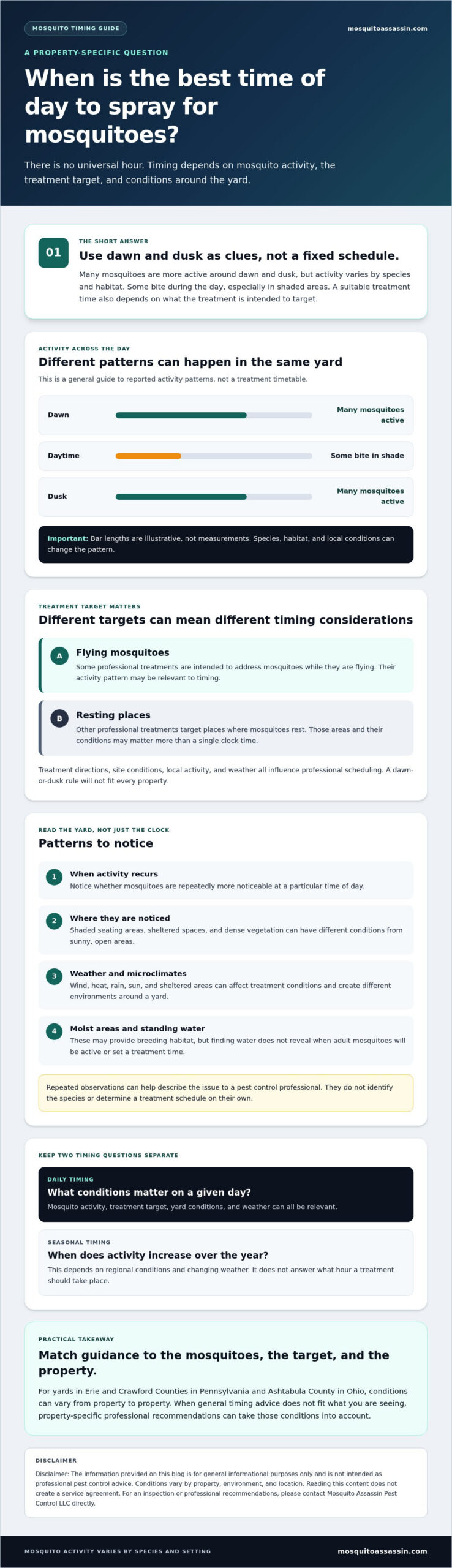
    The right time to spray for mosquitoes isn’t always dawn or dusk. If you’re asking what is the best time of day to spray for mosquitoes, the answer depends on the treatment being used, the mosquitoes being targeted, and where they’re active around your property.

    Conflicting advice is common because mosquito activity varies. Many mosquitoes are most active around dawn and dusk, while some bite during the day and rest in cool, sheltered areas. A treatment aimed at flying mosquitoes may therefore be timed differently from one applied to places where mosquitoes rest. Weather matters too: wind, heat, and rain can affect treatment conditions.

    This guide explains how mosquito activity, treatment type, weather, and yard features can influence spray timing. There isn’t one universal hour for every property. In Erie and Crawford Counties in Pennsylvania and Ashtabula County in Ohio, conditions can vary from yard to yard. When general advice doesn’t fit what you’re seeing, property-specific professional recommendations can help.

    Key Takeaways

    • The answer to “what is the best time of day to spray for mosquitoes” depends on the treatment approach and conditions around your property, not a universal schedule.
    • Compare dawn, dusk, and daytime guidance by considering when mosquitoes are active and where they tend to rest.
    • Recurring activity in shaded or sheltered parts of the yard can offer useful clues about which areas may need closer attention.
    • Notice how weather changes alongside mosquito activity, and consider property-specific professional recommendations if general timing advice doesn’t fit your yard.

    What Is the Best Time of Day to Spray for Mosquitoes?

    There isn’t one best hour for every property. The answer to “what is the best time of day to spray for mosquitoes” depends on when mosquitoes are active, the type of professional treatment, and conditions around the yard. Dawn and dusk are relevant because some mosquitoes are more active then, but neither is a universal treatment window.

    A single clock-time recommendation can be misleading because mosquito species, habitats, and treatment approaches differ. Some mosquitoes are active around dawn or dusk, while others may bite during the day in shaded places. Scheduling also needs to account for the treatment’s intended target, its directions, and current weather conditions.

    Daily timing is different from seasonal timing. The time of year when mosquito activity begins or increases depends on regional conditions and changing weather. That does not tell you what time of day a treatment should take place. These are related questions, but they have different answers.

    Is dawn or dusk better for mosquito spraying?

    Dawn and dusk are often mentioned because many mosquito species are more active during these periods. However, activity varies by species and habitat, so the pattern in one yard may not match another. A shaded area can have different conditions from an open, sunny space. Treat dawn and dusk as useful context, not a guaranteed schedule or promise of a particular result.

    What you notice outdoors can help describe the issue. Recurring bites or visible activity at a particular time may reveal a pattern, but observation alone doesn’t identify the species or determine a treatment schedule.

    Does the answer change by treatment type?

    Yes. Some professional treatments are intended to address mosquitoes that are flying, while others target places where mosquitoes rest. Because the targets differ, the relevant timing can differ too. A comprehensive overview of mosquito control also shows that spraying is one part of a wider range of control approaches.

    Product directions and site conditions can influence professional scheduling. Treatment type, local mosquito activity, and weather all matter, so a fixed dawn-or-dusk rule may not fit every property. Choosing or applying a pesticide is not simply a matter of picking an hour. Treatment decisions should follow the product’s directions and qualified professional judgment.

    How Mosquito Activity and Yard Conditions Affect Spray Timing

    Mosquito activity isn’t uniform across a yard or across species. Dawn and dusk are useful general reference points, but the mosquitoes you notice may be active at other times, depending on their species and the conditions around them. That variation explains why advice based only on the clock may not match what’s happening on a particular property.

    Why mosquito activity may peak at different times

    Many mosquitoes are most active around dawn and dusk, but this pattern isn’t universal. For example, some Culex mosquitoes are commonly active around dusk and into the night, while the Asian tiger mosquito can bite during the day, particularly in shaded areas. These are broad behavioral patterns, not a way to identify a mosquito by sight or predict activity at every property.

    Local conditions can also affect when mosquitoes are noticeable. Sun, wind, temperature, and sheltered areas can create different microclimates across a yard. A sunny, exposed lawn can feel very different from a still, shaded spot beside dense vegetation. Shade, shelter, moisture, and observed activity can all influence when mosquitoes are encountered, so consider timing in the context of the property.

    What the yard can tell you about timing

    Look for recurring patterns rather than relying on one observation. Are mosquitoes more noticeable near a shaded seating area in the afternoon, or in a sheltered part of the yard around dusk? Noting the location and time can help you explain the issue to a pest control professional. It won’t establish the species or determine a treatment schedule on its own.

    Moist areas and standing water matter for a different reason: they may provide mosquito breeding habitat. Finding water doesn’t necessarily explain when adult mosquitoes will be active, and it shouldn’t be treated as a cue for pesticide application. The CDC guidance on mosquito control discusses approaches that address mosquitoes beyond adult activity, including attention to breeding sites.

    Seasonal questions are separate, too. When mosquito activity begins or increases over the year depends on regional and weather conditions. That seasonal pattern concerns when mosquitoes become active across weeks or months, not the best hour for treatment on a given day.

    If activity varies across your yard, professional recommendations can take those conditions into account. For readers in Erie and Crawford Counties, Pennsylvania, and Ashtabula County, Ohio, mosquito control service information may help explain how property-specific considerations fit into professional guidance.

    Dawn, Dusk, or Daytime: Which Spray Timing Advice Applies?

    Dawn, dusk, and daytime advice can all be reasonable in different situations. The key is to match timing to the mosquitoes being targeted, the treatment type, and the property’s conditions. A treatment intended for active, flying mosquitoes may be scheduled differently from one focused on places where mosquitoes rest. This is why a fixed schedule can’t answer every question about what is the best time of day to spray for mosquitoes.

    Time General consideration What may affect the timing
    Dawn May overlap with activity for some mosquito types. Local activity, treatment purpose, and product directions.
    Dusk Often discussed because some mosquitoes are active around this period. Species, site conditions, weather, and treatment purpose.
    Daytime May be considered for certain treatments directed at resting mosquitoes. Where mosquitoes rest, environmental conditions, and product directions.

    When dawn or dusk may be relevant

    Many mosquitoes are more active around dawn or dusk, so these periods can be useful reference points when considering treatments aimed at mosquitoes in flight. Activity still differs by species and habitat. Some mosquitoes may bite during the day in shaded areas, and local weather can change what people notice. These patterns help frame the question, but they don’t establish a universal treatment window.

    Why professional treatments may happen at other times

    Some professional approaches target flying mosquitoes, while others focus on vegetation or other resting areas. Since the target differs, the most relevant schedule may differ as well. A treatment directed at resting mosquitoes may not need to coincide with peak flying activity, while another treatment may be more closely timed to it. Not every treatment is suitable for every time or condition.

    Weather and product directions matter too. Wind, heat, or other site conditions may affect whether treatment is appropriate at a particular time. Professionals consider these factors rather than relying on the hour alone. The time mosquitoes are most noticeable and the time a treatment is scheduled can therefore differ without being contradictory.

    Use dawn and dusk as general activity clues, not instructions for applying pesticides. If timing advice doesn’t seem to fit the activity in your yard, ask a pest control professional how the treatment type and property conditions inform the schedule. Property-specific recommendations are more useful than guessing from a general rule.

    What Is the Best Time of Day to Spray for Mosquitoes?

    What to Consider Before Deciding When to Spray Mosquitoes

    Before settling on a time, look for patterns in where and when mosquitoes appear. These observations can help a pest control professional understand what you’re experiencing, but they don’t replace an assessment or determine when a pesticide should be applied. The question “what is the best time of day to spray for mosquitoes” is about daily scheduling, not when mosquito season begins.

    Which conditions are worth noting?

    Make a simple note of recurring activity. For example, mosquitoes may be more noticeable around a shaded patio in the afternoon or near a sheltered part of the yard at dusk. Consider whether activity seems to change after shifts in weather as well. Recent conditions can inform a professional assessment, but no single weather pattern automatically indicates the right treatment time.

    • When: Is activity consistently noticed in the morning, afternoon, evening, or at more than one time?
    • Where: Are mosquitoes more noticeable in shaded, sheltered, or damp areas?
    • What has changed: Has activity shifted with recent weather or changing outdoor conditions?
    • Seasonal context: Are you asking about a treatment’s time of day, or about when mosquito activity typically starts or increases during the year?

    These details describe what you’re experiencing. They aren’t a treatment checklist. Standing water and other yard features should be considered separately from pesticide decisions.

    When is property-specific guidance useful?

    Tailored recommendations may be useful if mosquito activity keeps returning in particular areas or if the yard has a mix of open lawn, dense shade, and sheltered outdoor spaces. In those situations, a general dawn-or-dusk rule may not tell the whole story. A professional can consider the observed pattern, the property, and the treatment approach instead of relying on a clock-time guess.

    For broader context, review information about mosquito control services. For readers in Erie and Crawford Counties in Pennsylvania or Ashtabula County in Ohio, property-specific guidance may help account for local and yard-level differences. Share the conditions you’ve observed when asking about recommendations.

    How to Get Reliable Mosquito Spray Timing Guidance in PA and OH

    There’s no universal hour that suits every yard. The best timing depends on the mosquito activity being observed, the treatment approach, and property conditions. Dawn or dusk may be relevant in some situations, but neither determines the right schedule for every home.

    What local context can and cannot tell you

    Regional conditions help frame the question, but they can’t identify one exact treatment time for every property. Even within the same area, shade, shelter, moisture, and the layout of outdoor spaces can differ. General advice about mosquito season is also distinct from advice about the time of day to schedule a treatment.

    For properties in Erie and Crawford Counties, Pennsylvania, and Ashtabula County, Ohio, location provides useful context, not a substitute for considering the individual yard. You can review the company’s service area information to see the regions served.

    When to consult a mosquito-control professional

    Professional input may be useful if activity repeatedly occurs in certain parts of the yard, if conditions vary across the property, or if you’re unsure how treatment type affects scheduling. Sharing when and where mosquitoes are noticed can help inform a property-specific discussion. It doesn’t mean a particular hour or treatment is appropriate without further assessment.

    If you’re still wondering what is the best time of day to spray for mosquitoes, ask how observed activity, site conditions, and the intended treatment influence scheduling. A discussion about your property can help clarify which factors matter.

    Daily treatment timing is only one part of mosquito management. Seasonal activity and other property conditions may also matter, so treat broad regional guidance as context rather than a fixed schedule.

    Disclaimer: The information provided on this blog is for general informational purposes only and is not intended as professional pest control advice. Conditions vary by property, environment, and location. Reading this content does not create a service agreement. For an inspection or professional recommendations, please contact Mosquito Assassin Pest Control LLC directly.
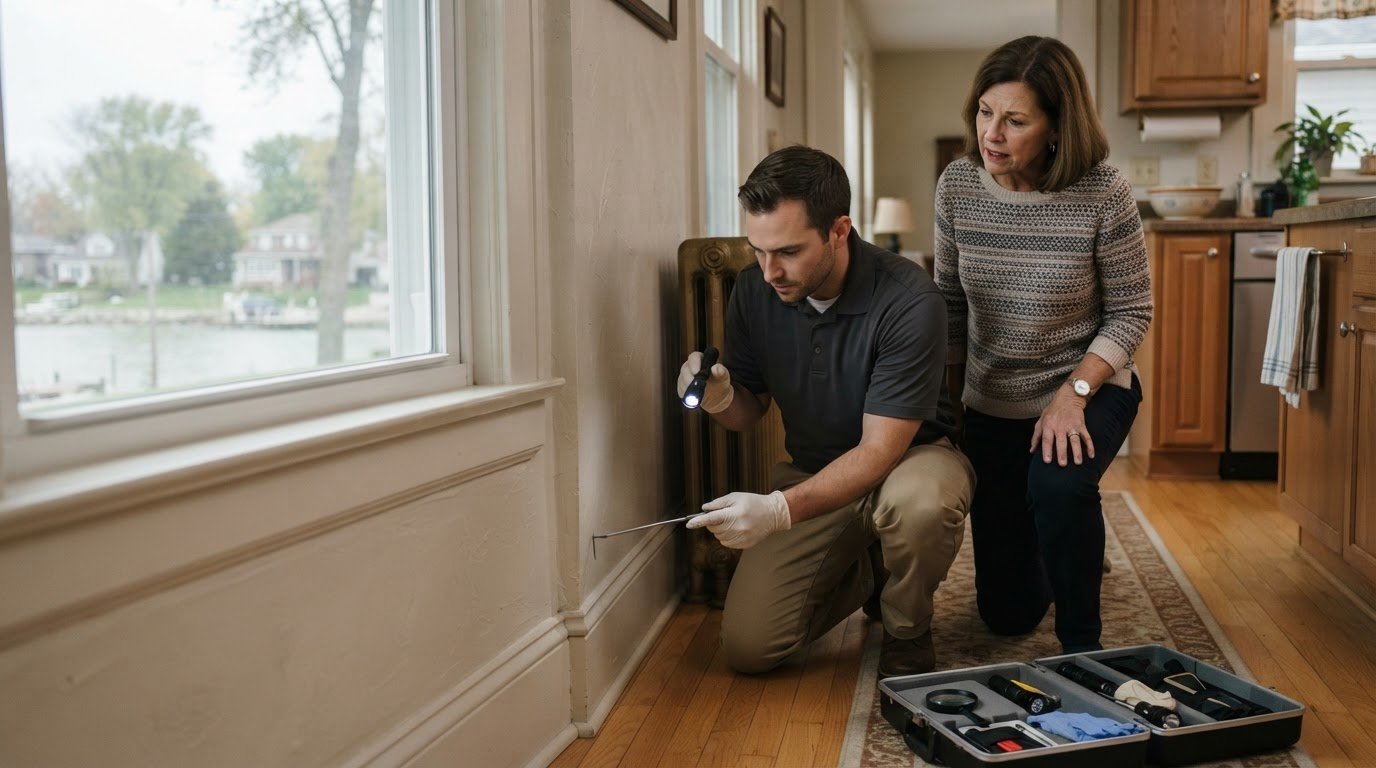
    Use Your Yard’s Conditions to Guide the Next Step

    There’s no single clock time that works for every property. Dawn and dusk can be useful reference points, but mosquito activity, treatment type, and yard conditions all influence scheduling. The answer to “what is the best time of day to spray for mosquitoes” depends on how those factors come together, not on a universal hour.

    Recurring activity in shaded or sheltered areas, along with changing weather, can help explain what’s happening around your home. Seasonal timing is a separate question from the best time of day for treatment. Property-specific guidance can help connect your observations to the conditions on your property.

    Mosquito Assassin Pest Control LLC provides mosquito and tick control in Erie and Crawford Counties, Pennsylvania, and Ashtabula County, Ohio. Contact the company to ask about mosquito control recommendations for your property.

    Disclaimer: The information provided on this blog is for general informational purposes only and is not intended as professional pest control advice. Conditions vary by property, environment, and location. Reading this content does not create a service agreement. For an inspection or professional recommendations, please contact Mosquito Assassin Pest Control LLC directly.
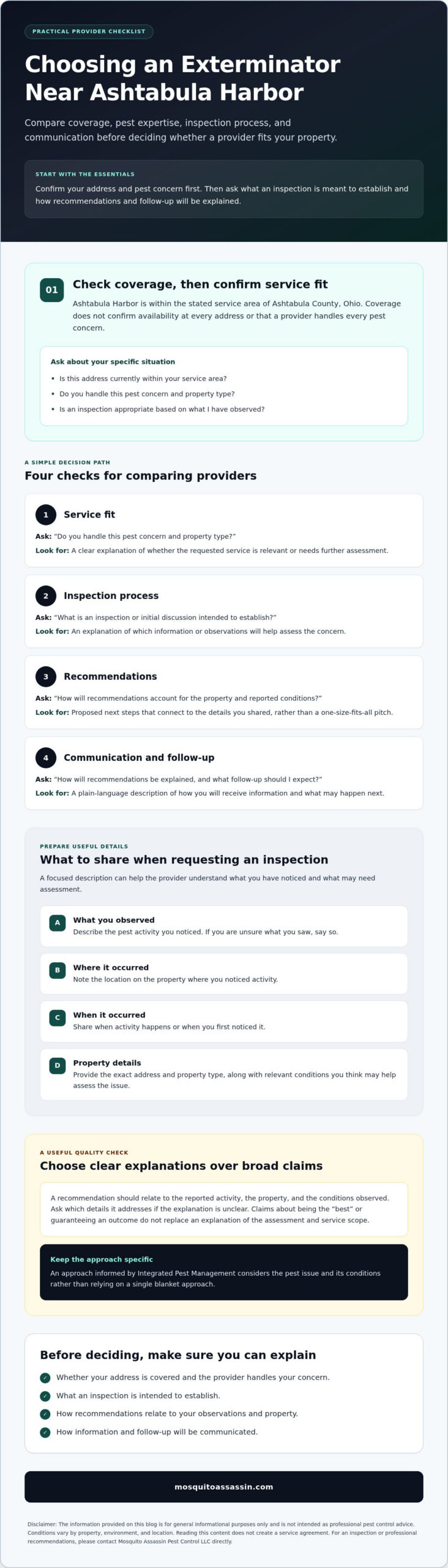
    Frequently Asked Questions

    What time of day are mosquitoes most active?

    Many mosquito species are most active around dawn and dusk, but activity varies by species and habitat. Some mosquitoes may bite during the day, especially in shaded areas, while others are active into the night. Temperature, wind, and sheltered spaces can also affect when mosquitoes are noticeable. Treat these periods as general patterns, not a precise schedule that applies to every yard or mosquito.

    Can mosquitoes be sprayed during the daytime?

    Some professional mosquito treatments may be scheduled during the day, depending on the treatment type, its intended target, and site conditions. For example, a treatment aimed at resting mosquitoes may not need to coincide with peak flying activity. This doesn’t mean every treatment is suitable at any hour. Product directions and professional judgment guide scheduling. Don’t use general timing advice as pesticide application instructions.

    Does weather affect the best time to spray for mosquitoes?

    Yes. Weather can influence both mosquito activity and whether conditions are suitable for treatment. Wind may affect where spray travels, while heat can affect treatment conditions. Rain and other changing conditions may also be relevant, depending on the product directions. There isn’t one weather rule that sets the ideal hour for every property. A professional can consider current site conditions alongside the treatment approach.

    Does the best time to spray vary by mosquito species?

    Yes. Mosquito species don’t all follow the same activity pattern. For example, some Culex mosquitoes are commonly active around dusk and into the night, while the Asian tiger mosquito can bite during daylight in shaded areas. These are broad patterns, not a reliable way to identify a mosquito from a casual observation. Species and habitat can help explain why activity differs across properties.

    Should mosquito spraying happen before mosquito season starts?

    Seasonal planning and daily treatment timing are different questions. The start and level of mosquito activity vary with regional and environmental conditions, so a fixed calendar date doesn’t apply everywhere. Whether a treatment is appropriate before activity increases depends on the property, the treatment approach, and professional recommendations. Reducing standing water is a separate prevention consideration, not a reason to apply pesticide or a substitute for treatment guidance.

    How do I know what spray timing is appropriate for my property?

    Note where and when mosquitoes repeatedly appear, such as near a shaded seating area during the afternoon or in a sheltered spot around dusk. Consider whether activity changes with weather, and share those observations with a pest control professional. If you’re asking what is the best time of day to spray for mosquitoes, the useful answer depends on your yard, observed activity, and the treatment being considered.

    Disclaimer: The information provided on this blog is for general informational purposes only and is not intended as professional pest control advice. For an inspection or professional recommendations, please contact Mosquito Assassin Pest Control LLC directly.
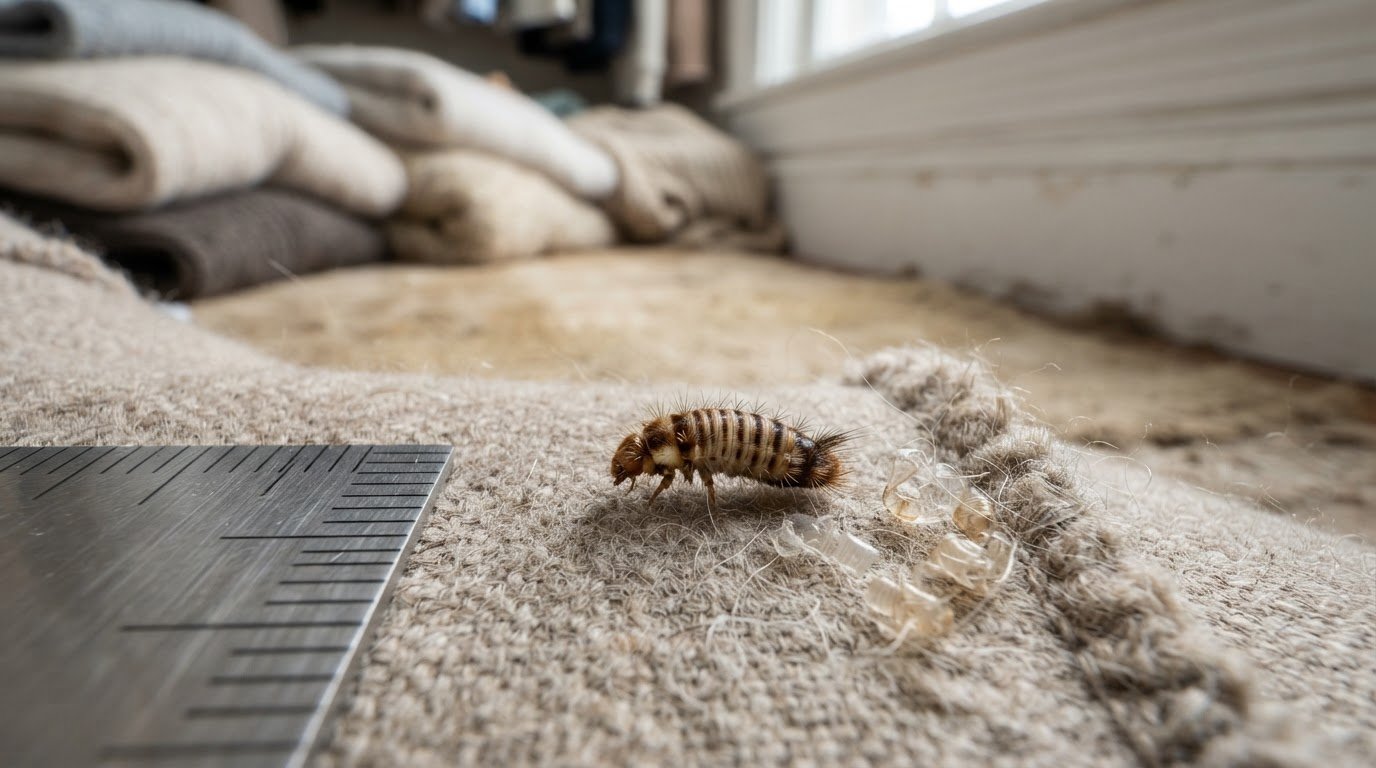
  • Exterminator Near Ashtabula Harbor: How to Choose the Right Pest Professional

    Exterminator Near Ashtabula Harbor: How to Choose the Right Pest Professional

    When choosing an exterminator near Ashtabula Harbor, start with a few practical questions rather than a bold promise. A provider may serve Ashtabula County without covering every address or handling every pest concern. Confirming those details first can save time and help you find a professional whose services fit your property.

    It’s understandable to want clear answers when you’ve spotted pests but aren’t sure what a service visit involves. A useful evaluation should clarify which pests the provider handles, what an inspection is intended to establish, and what information will help assess the issue. Claims alone can’t tell you whether a company is a good fit.

    This guide offers a practical checklist for comparing coverage, pest expertise, service approach, and communication before you make contact. You’ll also learn what to share when requesting an inspection, including what you observed, where and when activity occurs, and relevant details about the property. With those points in hand, you can ask focused questions and compare your options more confidently.

    Key Takeaways

    • Ashtabula Harbor is within the stated Ashtabula County service area, but confirm coverage for your specific address when contacting an exterminator near ashtabula harbor.
    • Compare providers by whether their services match your pest concern, not by broad claims alone.
    • Ask what an inspection involves and how the professional will explain potential service options.
    • Before requesting an inspection, note where and when you observed pest activity.
    • Clarify communication and follow-up expectations so you know what to expect after the initial assessment.

    How to confirm an exterminator serves Ashtabula Harbor

    Finding a suitable local pest professional is a practical first step when you’ve noticed activity at home or work. Before comparing service options, confirm that the provider can serve your address and handles the pest concern. An exterminator near Ashtabula Harbor may cover the area, but geographic coverage alone doesn’t confirm current availability or service fit.

    Ashtabula Harbor is within Mosquito Assassin Pest Control LLC’s stated service area of Ashtabula County, Ohio. Availability can vary by address and service, so confirm both directly before arranging an inspection. The company’s service area information describes its regional coverage.

    For general context on how pest professionals may assess and manage a pest issue, this video discusses recurring service:

    What to confirm about service near Ashtabula Harbor

    Share the property’s exact address and describe what you’ve observed. Ask whether the address is currently within the provider’s service area and whether the company handles that specific concern. These questions distinguish general geographic coverage from a service that may suit your property. Don’t assume coverage, scheduling, or availability is identical across nearby locations.

    Why local coverage is only the first check

    A provider may work in Ashtabula County but not offer a service that fits your situation. The right questions depend on the pest concern, property type, and what you expect from an inspection or follow-up. Ask how the professional will explain the assessment and potential options. An approach informed by Integrated Pest Management (IPM) considers the pest issue and its conditions rather than relying on a single blanket approach.

    When comparing providers, look for clear answers about service scope and next steps, not absolute claims about outcomes. If you’re unsure what you’ve seen, describe where and when you noticed activity and ask whether an inspection is appropriate. Confirming location and service fit first makes the conversation more focused and helps you decide whether to proceed.

    How to evaluate an exterminator near Ashtabula Harbor

    Once you’ve confirmed that a provider serves your address, compare how the service is assessed and explained. A clear process helps you understand whether the proposed service relates to the pest concern, the property, and the conditions observed. Ask questions before scheduling, and note whether the answers are specific and easy to follow.

    Use this comparison guide when speaking with providers:

    What to compare Questions to ask What clear communication looks like
    Service fit Do you handle this pest concern and property type? The provider explains whether the requested service is relevant or needs further assessment.
    Inspection process What is an inspection or initial discussion intended to establish? You’re told what information or observations will help assess the concern.
    Recommendations How will recommendations account for the property and reported conditions? Proposed next steps connect to the details you shared, rather than a one-size-fits-all pitch.
    Communication and follow-up How will recommendations be explained, and what follow-up should I expect? The provider describes how you’ll receive information and what may happen next.

    Questions that reveal whether the service fits

    Describe the pest concern and property type, then ask which services may apply. An initial conversation can establish what the provider needs to learn, but it may not be enough to determine the right approach. Ask how recommendations will be shared and whether follow-up expectations depend on the findings. The answers should make the process understandable without promising a particular result.

    How to assess a clear, professional process

    Look for explanations in plain language. If a recommendation is unclear, ask which reported activity or property condition it addresses. A proposed next step should relate to the concern, not rely only on broad claims about being the “best” or guaranteeing an outcome. Absolute promises aren’t a substitute for an explanation of the assessment and service scope.

    For additional consumer pest information, the National Pest Management Association provides educational resources. You can also review the provider’s company background to learn more about its business. Consider both sources alongside direct answers about the service you need. A property-specific discussion is more useful than a sales pitch that skips the details.

    To discuss your observations and ask about possible next steps, contact a pest professional.

    Match the pest concern to the right service near Ashtabula Harbor

    A useful service conversation starts with the pest concern, not with choosing a treatment before the issue is understood. General pest control and targeted services address different categories of concern. An exterminator near Ashtabula Harbor should ask what you’ve observed and about the property before discussing which service, if any, may be suitable.

    When a general pest service may be relevant

    General pest control may be relevant for concerns involving common pests such as ants, spiders, wasps, or hornets. These examples can help you describe what you’re seeing, but a brief description alone doesn’t confirm a pest’s identity or determine which service is appropriate. Share where and when you noticed activity, and ask the provider to clarify the service scope. Review the company’s available pest control services for its stated categories.

    General pest control isn’t automatically the right fit for every pest issue. The type of pest, where activity occurs, and the property’s circumstances all matter. If you’re unsure what you’ve seen, report the details without trying to identify or handle the pest yourself. A professional can explain whether more information or an inspection is needed before discussing next steps.

    When a targeted pest service may be more appropriate

    Some concerns align with a specific service category, such as rodent control, bed bug treatment, or termite inspections and treatment. These are distinct offerings, not interchangeable versions of general pest control. Explain the signs you’ve noticed and where they appear, then ask the provider which category may fit. The company’s service information can help you review its stated options, but it can’t determine what’s happening at your property.

    For a broader perspective, compare the provider’s service descriptions with the concern you’ve observed. The U.S. Environmental Protection Agency’s Tips for Selecting a Pest Control Service also offers questions to consider when evaluating a pest professional.

    Before settling on a service, ask the provider to explain why it fits the concern and what the assessment is meant to establish. Recommendations should reflect the reported activity and property conditions, not assumptions based on a short description. If the right category isn’t clear yet, ask for clarification rather than guessing at a diagnosis or treatment.

    Exterminator Near Ashtabula Harbor: How to Choose the Right Pest Professional

    What to ask before scheduling an exterminator in Ashtabula County

    A focused conversation can help you understand whether a service fits your concern and what to expect from an inspection or visit. Before contacting an exterminator near Ashtabula Harbor, jot down what you’ve noticed and prepare a few questions. You don’t need to identify or handle a pest to describe the issue clearly.

    Information to share when describing the concern

    Report what you observed, where it appeared, and when you first noticed it. For example, explain whether activity has been seen in one room or several areas, and whether it occurs at a particular time. Relevant property details, such as whether the concern is inside or outside, may also help the provider understand the situation. Share observations only; don’t collect or handle pests based on information in an article.

    Questions about service expectations and follow-up

    Ask direct questions before arranging a visit. Clear answers can help you understand the service scope and how recommendations will be made.

    • Service scope: Does the provider handle this pest concern and property type, and what does the proposed service include?
    • Inspection: What is an inspection or initial discussion intended to establish?
    • Recommendations: How will findings and suggested next steps be explained?
    • Service format: Is a one-time treatment or an ongoing plan being considered, and why might either suit the property?
    • Follow-up: Whom should you contact with questions after the inspection or service, and what follow-up should you expect?

    One-time and ongoing options can serve different needs. The appropriate fit depends on the pest concern, the property, and what an assessment indicates. Ask the provider to explain the reason for a recommendation in terms you understand. Be cautious of claims that promise a specific outcome without first considering the reported activity and property conditions.

    Keep your notes handy during the conversation. If important details are uncertain, say so rather than guessing. The provider can explain what additional information is useful and whether an inspection is appropriate. Confirming the service scope, communication plan, and follow-up expectations helps set clear expectations without assuming every property needs the same approach.

    For property-specific guidance, contact a pest professional with your observations and questions.

    Choosing a local exterminator: practical next steps for Ashtabula Harbor

    Choosing a pest professional comes down to three checks: confirm the provider serves your address, ask whether the service fits the pest concern, and clarify what to expect from the inspection and follow-up. A company’s general coverage doesn’t confirm that every address or service is currently available. Direct communication can resolve those details before you decide how to proceed.

    Prepare a focused request for an inspection

    Before contacting an exterminator near Ashtabula Harbor, have a few basic details ready. Share the property address, what you’ve observed, where activity appears, and when you first noticed it. These observations give the provider useful context without requiring you to identify or handle a pest.

    Use the conversation to clarify the next steps. Ask whether the provider currently serves the address and handles the relevant service category. Then ask what an inspection is intended to establish and how recommendations will be explained. If you’re uncertain about what you saw, describe the signs rather than guessing at the pest’s identity. A pest professional can tell you whether more information or an inspection is needed.

    How to make a considered provider decision

    After gathering answers, compare how clearly each provider addresses your particular concern. Focus on whether the service scope makes sense for the reported activity and property, whether the inspection process is explained in understandable terms, and whether communication and follow-up expectations are clear. Dramatic claims don’t replace a reasoned explanation. Be cautious of guaranteed outcomes, especially when a provider hasn’t yet considered the property-specific details.

    The right recommendation depends on the concern and conditions at the property, so a general article or service description can’t replace a direct assessment. If you’re ready to discuss your observations, you can request an inspection or professional recommendations. Confirm current address coverage and service availability during that conversation.

    Disclaimer: The information provided on this blog is for general informational purposes only and is not intended as professional pest control advice. Conditions vary by property, environment, and location. Reading this content does not create a service agreement. For an inspection or professional recommendations, please contact Mosquito Assassin Pest Control LLC directly.
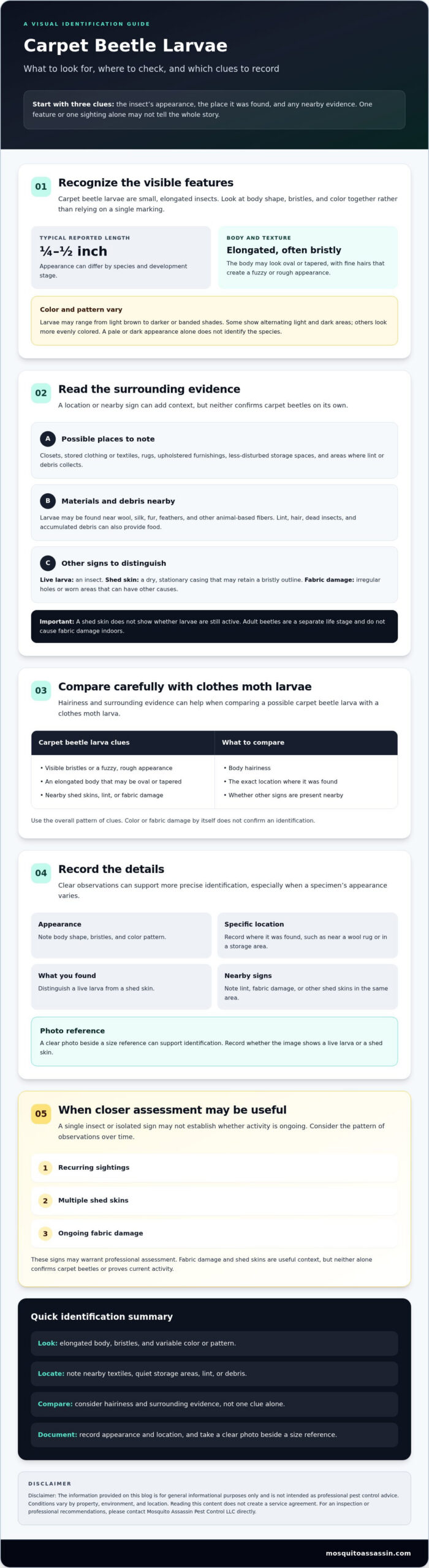
    Make your next pest-control decision with confidence

    Start with the basics: confirm that a provider serves your exact address, check that its services fit the pest concern, and ask how an inspection and follow-up will be handled. Clear, property-specific explanations are more useful than broad claims about results.

    Mosquito Assassin Pest Control LLC lists Ashtabula County, Ohio, in its service area and provides general pest control alongside targeted services. One-time treatments and customized ongoing plans are available, but the appropriate fit depends on the concern and property. Confirm current availability and discuss your situation directly before deciding.

    If you’re ready to share your observations and ask about next steps, request an inspection or professional recommendations. A clear conversation can help you understand your options.

    Disclaimer: The information provided on this blog is for general informational purposes only and is not intended as professional pest control advice. Conditions vary by property, environment, and location. Reading this content does not create a service agreement. For an inspection or professional recommendations, please contact Mosquito Assassin Pest Control LLC directly.
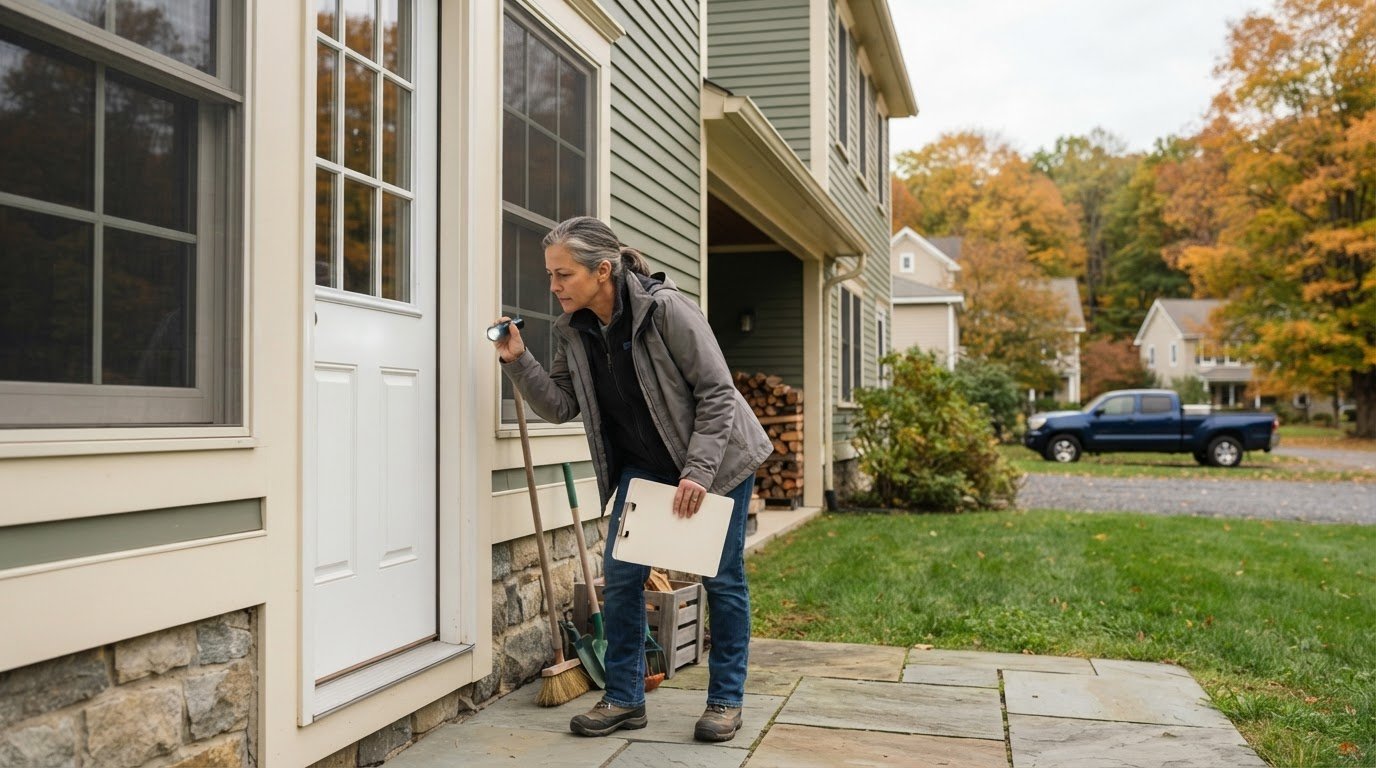
    Frequently Asked Questions

    Is an exterminator near Ashtabula Harbor able to serve my address?

    Possibly, but confirm coverage for your exact property before arranging service. Mosquito Assassin Pest Control LLC lists Ashtabula County, Ohio, within its service area, though availability may vary by address and service need. When contacting a provider, share the property address and describe the pest concern. This helps the provider check whether the location is covered and whether the relevant service may be a fit.

    What pests can an exterminator near Ashtabula Harbor help with?

    Available pest services vary by provider. Mosquito Assassin Pest Control LLC lists general pest control for concerns such as ants, spiders, wasps, and hornets, along with rodent control, bed bug treatment, and termite inspections and treatment. An exterminator near ashtabula harbor can confirm whether a specific concern is covered. Describe what you’ve observed rather than relying on a brief description to identify a pest or determine what service is appropriate.

    How do I choose between general pest control and a targeted service?

    Start by describing the pest concern and asking which service category may fit. General pest control covers several common pest categories, while providers may offer distinct services for rodents, bed bugs, or termites. The right fit depends on the property and reported conditions. Ask a pest professional to explain the options after hearing your observations. You don’t need to identify every pest yourself, and this guidance doesn’t determine a treatment.

    What should I ask an exterminator before scheduling an inspection?

    Ask whether your property is in the service area and whether the provider handles your pest concern. Find out what an inspection is intended to establish and how recommendations will be communicated. You can also ask what follow-up to expect and whom to contact with questions afterward. Clear answers help you understand the service process before scheduling, without relying on promises or assuming every property needs the same approach.

    Can I choose a one-time pest treatment instead of an ongoing plan?

    Some providers offer both one-time treatments and ongoing plans, but availability and suitability depend on the pest concern and property. Share what you’ve observed, then ask the professional to explain the differences between the options available for your situation. Neither approach is right for every household, and the choice shouldn’t be based on a general promise of results. Ask how the recommendation relates to the conditions at your property.

    What information should I share when contacting a local exterminator?

    Share the property address, the pest or signs you’ve observed, where activity appeared, and when you first noticed the concern. These details help the provider consider whether the location and service category may be a fit. Include relevant property information if it helps describe the situation. Don’t handle or collect a pest to identify it. A professional can explain whether an inspection or further discussion is appropriate.

    What happens after I contact an exterminator near Ashtabula Harbor?

    The provider can first ask about your property and pest concern, then confirm whether the address is within the service area. If the service may be relevant, ask what an inspection involves and how recommendations will be explained. The process can vary with the provider and property. A conversation doesn’t establish a specific appointment time, treatment, or result, so clarify the next steps directly before deciding how to proceed.

    Disclaimer: The information provided on this blog is for general informational purposes only and is not intended as professional pest control advice. For an inspection or professional recommendations, please contact Mosquito Assassin Pest Control LLC.

  • Carpet Beetle Larvae Identification: How to Recognize Them

    Carpet Beetle Larvae Identification: How to Recognize Them

    Found a tiny, bristly insect near a closet or damaged fabric and aren’t sure what it is? Carpet beetle larvae identification can be challenging because these pests are small and may be confused with clothes moth larvae or other household insects. To narrow it down, consider the insect’s appearance, where you found it, and any nearby signs.

    It’s understandable to worry that clothing, rugs, or stored belongings may be affected. But one insect alone may not tell the whole story. Carpet beetle larvae are typically about 1/4 to 1/2 inch long, and their shape, coloring, and bristles can vary. Shed skins and fabric damage may offer additional clues.

    This guide explains what to look for, how to compare carpet beetle larvae with common lookalikes, and what details to record if you seek professional identification. Use appearance, location, and surrounding evidence together to assess what you’ve found and decide what to do next.

    Key Takeaways

    • For carpet beetle larvae identification, look for an elongated body with visible bristles, while keeping in mind that color and shape vary.
    • Check where you found the insect and whether shed skins, lint, or fabric damage are nearby.
    • Compare body hairiness and surrounding evidence to help distinguish carpet beetle larvae from clothes moth larvae.
    • Record the insect’s appearance and location, and take a clear photo beside a size reference to support identification.
    • Recurring sightings, multiple shed skins, or ongoing fabric damage may warrant professional assessment.

    Carpet Beetle Larvae Identification: What Do They Look Like?

    Look for a small, elongated larva with a body that may be oval or tapered, noticeable bristles, and coloring that ranges from light brown to darker or banded shades. These features can help with carpet beetle larvae identification, but no single color or marking confirms what you’ve found.

    Carpet beetle larvae are small, bristly insects with elongated bodies that may appear oval or tapered and vary in color and pattern. Many are about 1/4 to 1/2 inch long, though appearance can differ by species and development stage. You may also find papery shed skins, but a skin alone doesn’t show whether larvae are still active.

    For a closer visual reference, watch this video showing a carpet beetle larva and adult:

    Common carpet beetle larval features

    Viewed from above, the body often looks longer than it is wide, with a rounded middle and a narrower end. Fine hairs or bristles may cover the body, giving it a fuzzy or rough appearance rather than a smooth one. Some larvae have visible bands or alternating light and dark areas; others look more evenly colored. Assess the overall shape and texture together instead of relying on one marking.

    A shed larval skin can look like a dried, hollow version of the insect and may retain its bristly outline. Finding one is useful information to record, especially near susceptible materials, but the larva may have moved on. Consider the skin alongside any live insects and other signs.

    Why one specimen may look different from another

    Varied, black, and furniture carpet beetles are distinct groups, and their larvae don’t all look alike. Black carpet beetle larvae tend to be more tapered, while varied and furniture carpet beetle larvae are often more oval and densely bristled. Color and markings can also change as a larva develops, so a pale or dark appearance alone isn’t enough to identify the species.

    The Varied carpet beetle reference describes one common species, but compare its details cautiously with what you observe. For a more reliable assessment, note the body shape, bristles, color pattern, and whether you found a live larva or a shed skin.

    Where Carpet Beetle Larvae Hide and What Their Presence Can Signal

    Carpet beetle larvae are more likely to be noticed in quiet, undisturbed places than in open areas. They may be found near materials they can feed on, including wool, silk, fur, feathers, and other animal-based fibers. Lint, hair, dead insects, and accumulated debris can also provide food. A sighting in one of these places is a reason to investigate, not proof of a widespread problem.

    For carpet beetle larvae identification, consider the location alongside the insect’s appearance and other signs. The University of California IPM pest note describes carpet beetle habitats, food sources, and damage, providing context for assessing a possible find. A larva or shed skin near susceptible materials may warrant closer observation and further identification.

    Common places to check when documenting a sighting

    Check closets, stored clothing or textiles, rugs, and upholstered furnishings. Less-disturbed storage spaces, folds or edges of stored materials, and areas where lint and debris collect are also worth noting. These are examples, not a complete checklist. Household conditions vary, and finding an insect in one location doesn’t establish where it came from or whether more are present.

    Record the specific location rather than simply noting that you found an insect indoors. For example, distinguish a larva seen near a wool rug from one found in a storage area with no visible fabric damage. That context can make later identification more precise.

    Signs that may accompany carpet beetle larvae

    Keep each observation distinct. A live larva is an insect; a shed skin is a dry, stationary casing left behind as the larva develops. Adult beetles are a separate life stage and don’t cause fabric damage indoors. Irregular holes or worn areas in fabric are clues to damage, but they can have other causes and don’t identify the insect on their own.

    Note whether signs occur together and in the same area. Fabric damage near a shed skin provides useful context, but neither sign alone confirms carpet beetles or shows that activity is ongoing. Recurring sightings, several shed skins, or continuing damage may justify professional assessment if the source or insect remains uncertain.

    If identification is unclear or activity continues, professional pest-control guidance may help assess what you’ve observed. Contact Mosquito Assassin Pest Control to ask about your concerns and whether further guidance is available.

    Carpet Beetle Larvae vs. Clothes Moth Larvae: How to Tell Them Apart

    Carpet beetle larvae and clothes moth larvae can both be found near damaged natural-fiber items, so location alone may not settle the question. Compare body shape and surface texture, then check for nearby evidence such as shed skins, silk-like webbing, or a case. These clues can narrow the possibilities, but they can’t confirm every specimen.

    Observable differences between the two larvae

    Carpet beetle larvae are usually bristly or hairy, while clothes moth larvae generally have a smoother, pale, caterpillar-like appearance. Clothes moth larvae may leave silk webbing or use a portable silk-like case, depending on the type and setting. Neither clue is guaranteed to be present. Color alone is not a reliable way to tell them apart.

    Clue Carpet beetle larva Clothes moth larva
    Body form Often elongated, oval, or tapered Generally caterpillar-like and elongated
    Hairiness Typically visibly bristly or hairy Usually appears smoother
    Nearby evidence Shed larval skins or irregular fabric damage may be present Silk-like webbing or a portable case may be present

    These are general comparison points, not a definitive test. The University of California IPM guide describes carpet beetle species and the damage their larvae can cause. Compare the full set of clues, including the insect’s appearance and what is nearby, rather than treating one feature as conclusive.

    Other lookalikes and when identification is uncertain

    Small household larvae can be difficult to identify from memory, especially if the specimen is tiny, partly obscured, or seen only briefly. Other insects may also appear around stored items or fabrics. For clearer carpet beetle larvae identification, compare a sharp photograph with a reliable reference and note where the insect was found and whether there were shed skins, webbing, or fabric damage.

    A comparison can narrow the possibilities, but it may not confirm every specimen. If the appearance and surrounding signs remain inconclusive, or sightings and damage continue, professional identification may help clarify what is present and whether further assessment is appropriate.

    Carpet Beetle Larvae Identification: How to Recognize Them

    How to Document a Possible Carpet Beetle Larva

    Clear observations can make carpet beetle larvae identification more reliable, especially if the insect is no longer visible. Record what you noticed without assuming that a single find confirms an infestation. A photo, precise location, and notes about nearby signs provide more useful context than a description from memory alone.

    What details help clarify an identification

    Use a simple sequence: note the date and exact location, then describe the object’s shape, visible hairs or bristles, markings, and approximate size. Avoid guessing the species. Record whether it was a moving insect, a stationary shed skin, or an object you couldn’t confidently identify.

    • Photograph the specimen clearly. If possible, include a ruler or another familiar size reference in the frame. Use enough light and focus on the body’s outline and surface texture.
    • Record nearby signs separately. Note whether similar specimens appeared nearby, and photograph any shed skins or fabric damage as separate observations.
    • Describe the setting. Include what the insect was near, such as stored textiles, a rug, or an upholstered item, without treating its location as proof of the cause.

    Keep your notes factual. “Small, brown, bristly object beside a wool rug” is more useful than “carpet beetle infestation,” which assumes both an identification and a broader problem that the observation alone may not establish.

    When a photograph is not enough

    A blurred image, poor lighting, or missing size reference can hide important details. A photo may also show a shed skin or debris rather than a live larva. If the image doesn’t clearly show body shape and texture, describe what remains uncertain instead of drawing a firm conclusion. Comparing a clear photograph with reliable identification references can help narrow the possibilities, but it may not settle every case.

    If uncertainty persists, similar signs keep appearing, or fabric damage continues, professional pest identification may help clarify what’s present. A home observation can provide useful evidence, but it doesn’t by itself confirm an infestation. If you’re unsure what your observations indicate, contact a pest control professional to ask whether further assessment may be appropriate.

    When to Seek Professional Help for Suspected Carpet Beetle Larvae

    A single uncertain sighting may not establish an infestation. Consider seeking professional assessment if you repeatedly find possible larvae, notice several shed skins in the same area, or see fabric damage that continues. These signs are more useful when considered together, but they still need to be identified in context.

    Professional advice may also help when you can’t tell whether you’re looking at a carpet beetle larva, a clothes moth larva, or another small household insect. For a broader overview of what homeowners can expect from pest management, see this general pest control guide.

    What to expect from an identification conversation

    A professional may ask where you found the insect or shed skin, how often signs appear, and whether fabric damage is nearby. Share clear photographs and notes about appearance, location, dates, and repeated sightings. These details can help explain the concern, but they don’t guarantee a specific inspection method, treatment, timeline, or outcome.

    Before arranging help, confirm that the provider can assess the pest you suspect. Mosquito Assassin Pest Control LLC’s professional pest control services page describes its listed offerings. Contact the company to ask whether it can advise on carpet beetles specifically.

    Finding relevant local information

    Local professional help may be relevant for residents in Erie and Crawford Counties in Pennsylvania and Ashtabula County in Ohio. Check the company’s service area information to see whether your location is included. If identification remains uncertain or activity continues, contact the company for professional recommendations and ask whether it can advise on your specific concern.

    Keep your notes and images available for that conversation. A careful record can help clarify what you observed, but a photograph or home observation does not confirm an infestation.

    Disclaimer: The information provided on this blog is for general informational purposes only and is not intended as professional pest control advice. Conditions vary by property, environment, and location. Reading this content does not create a service agreement. For an inspection or professional recommendations, please contact Mosquito Assassin Pest Control LLC directly.
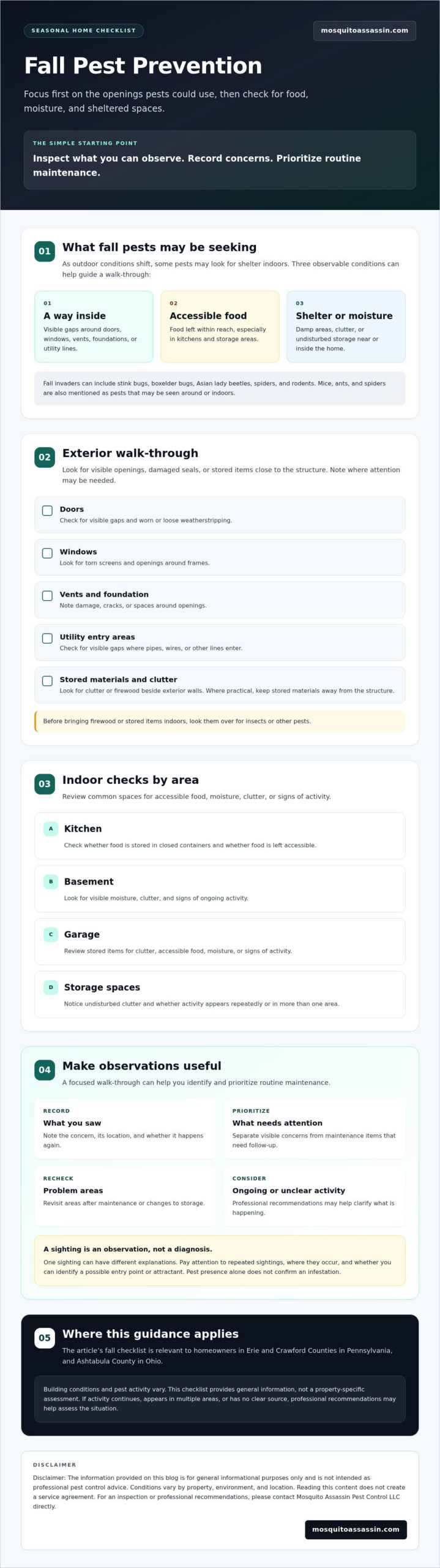
    Use the Clues to Choose Your Next Step

    Reliable carpet beetle larvae identification depends on more than color or a single sighting. Body shape and bristles, the location, and nearby evidence such as shed skins or fabric damage all help narrow the possibilities. Comparing these clues with common lookalikes can guide your next step, but unclear images or recurring signs may call for professional assessment.

    Keep a clear photo and notes about where and when you found the insect, whether it was moving, and what signs appeared nearby. This record can help explain the concern without treating one observation as proof of an infestation.

    Mosquito Assassin Pest Control LLC serves Erie and Crawford Counties in Pennsylvania and Ashtabula County in Ohio. If activity continues or identification remains uncertain, contact the company to ask about professional recommendations and whether it can advise on your specific concern.

    With careful observations, you can take an informed next step without jumping to conclusions.

    Disclaimer: The information provided on this blog is for general informational purposes only and is not intended as professional pest control advice. Conditions vary by property, environment, and location. Reading this content does not create a service agreement. For an inspection or professional recommendations, please contact Mosquito Assassin Pest Control LLC directly.

    Frequently Asked Questions

    What do carpet beetle larvae look like?

    Carpet beetle larvae are small, elongated insects with visible hairs or bristles. Their bodies may look oval or tapered, and colors can range from light brown to darker or banded patterns. Appearance varies among species and as larvae develop, so color alone isn’t enough to identify one. Look at body shape and hairiness, then consider where it was found and whether shed skins or fabric damage are nearby.

    How can you tell carpet beetle larvae from clothes moth larvae?

    Carpet beetle larvae are generally bristly, while clothes moth larvae are usually smoother and caterpillar-like. Clothes moth activity may be accompanied by silk-like webbing or a portable case, but these clues aren’t always present. Both types can occur near susceptible fabrics, so location and fabric damage alone don’t confirm the insect. Compare several visible clues, including body texture, and seek help if the specimen remains unclear.

    Can carpet beetle larvae be mistaken for bed bugs?

    They can be confused at a quick glance, but their body forms differ. Carpet beetle larvae are elongated and bristly. Bed bugs are not larvae; they develop through nymph stages and typically have flatter, oval bodies without the conspicuous bristles of carpet beetle larvae. A brief or blurry sighting may not show these details clearly. Use a sharp photograph and reliable reference, and get professional identification if uncertainty persists.

    Where are carpet beetle larvae usually found in a home?

    They may be noticed in quiet areas near materials that can provide food, such as closets, stored textiles, rugs, or upholstered furnishings. Less-disturbed storage spaces and spots where lint, hair, or debris collect may also be worth noting. These are possible locations, not a complete checklist. Finding an insect in one of these places doesn’t by itself establish that it’s a carpet beetle or that an infestation is present.

    What do carpet beetle larval shed skins look like?

    Shed skins are dry, papery remains that can keep the larva’s elongated outline and bristly appearance. Unlike a live larva, a shed skin won’t move, though it may resemble a dried insect at first glance. Note where you found it and photograph it separately from any live specimen or fabric damage. A shed skin is a useful clue, but alone it doesn’t prove that larvae are still active.

    Are carpet beetle larvae visible to the naked eye?

    Yes. Carpet beetle larvae are generally large enough to see without magnification, although their small size and tendency to occur in less-disturbed places can make them easy to overlook. They are typically about 1/4 to 1/2 inch long, with variation by species and development stage. A clear, well-lit photograph beside a size reference can help capture details for later comparison.

    When should I ask a pest professional to identify carpet beetle larvae?

    Consider professional identification if sightings recur, you find multiple shed skins, fabric damage continues, or you can’t distinguish the insect from a lookalike. Share clear photographs and notes about where and when you found the signs. Professional pest control may help clarify next steps, but ask whether the provider addresses this pest, as carpet beetle-specific service isn’t confirmed for every company. One observation alone doesn’t confirm an infestation.

    Disclaimer: The information provided on this blog is for general informational purposes only and is not intended as professional pest control advice. For an inspection or professional recommendations, please contact Mosquito Assassin Pest Control LLC directly.
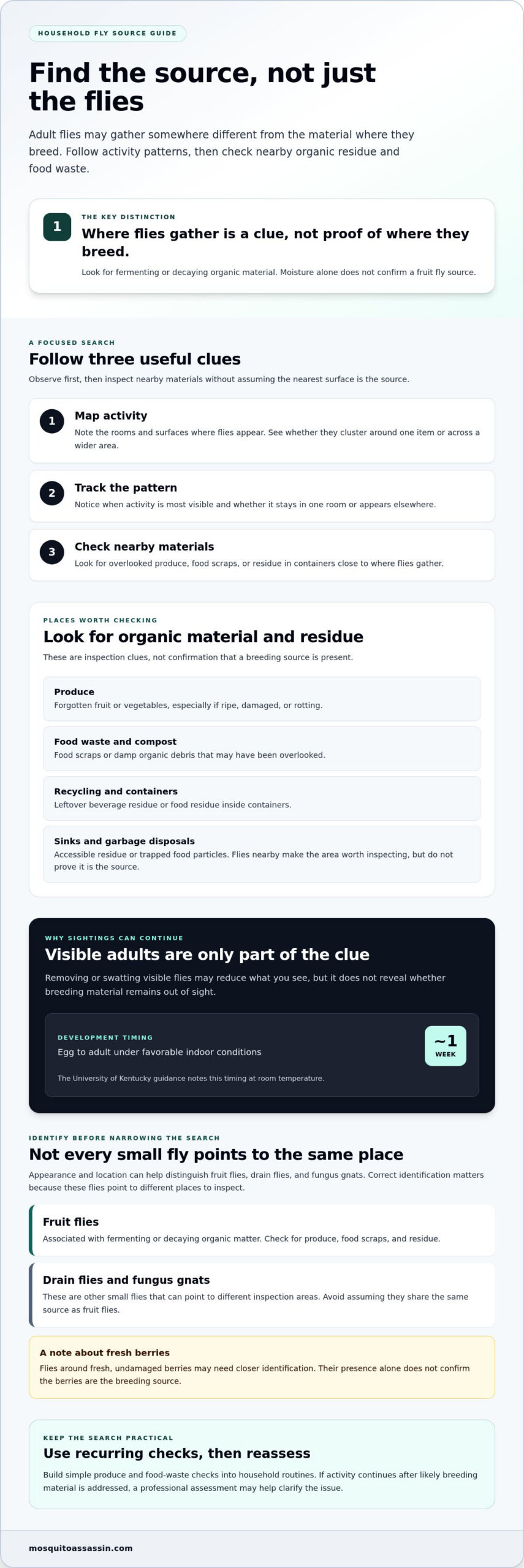
  • Fall Pest Prevention Checklist: Prepare Your Home for 2026

    Fall Pest Prevention Checklist: Prepare Your Home for 2026

    What if the easiest way to discourage fall pests is to focus less on the insects and more on the openings they can use? As temperatures drop, stink bugs, boxelder bugs, Asian lady beetles, spiders, and rodents may seek shelter indoors. It’s understandable to worry about gaps you can’t easily see or which seasonal chores will make a difference. This fall pest prevention checklist helps you focus on practical steps and record what needs attention.

    Start with the places pests can enter, then check what might attract them. Look for visible gaps around doors, windows, vents, and utility lines. Check screens and seals, keep food stored in closed containers, address visible moisture, and reduce clutter near the home. You don’t need to tackle everything at once. A focused walk-through can help you identify and prioritize useful next steps.

    Use this guide to check common entry points, review indoor and outdoor attractants, and recognize signs of ongoing pest activity. The advice is relevant to homeowners in Erie and Crawford Counties in Pennsylvania and Ashtabula County in Ohio, where fall invaders can include insects and rodents. If activity continues despite prevention efforts, professional recommendations may help clarify what’s happening.

    Key Takeaways

    • Use the fall pest prevention checklist to inspect your home, note concerns, and prioritize routine maintenance.
    • Check the exterior for openings around doors, windows, vents, and places where utilities enter the structure.
    • Review kitchens, basements, garages, and storage spaces for accessible food, moisture, clutter, or signs of activity.
    • Recheck problem areas after maintenance or changes to storage. Consider professional recommendations if activity continues or its source is unclear.

    Why Fall Pest Prevention Starts With Entry Points, Food, and Shelter

    What should you check around your home as fall conditions change? Start with three basics: access to food, shelter, and a way indoors. Prevention means reducing those opportunities, not assuming every insect or mouse spotted inside signals a larger problem. A single sighting can have different explanations, so note what you saw, where you saw it, and whether it happens again.

    As outdoor conditions shift, some pests may look for protected places to shelter. Small openings, accessible food, moisture, and undisturbed storage areas can make a home more inviting. For homeowners in Erie and Crawford Counties, Pennsylvania, and Ashtabula County, Ohio, a useful fall pest prevention checklist starts with these observable conditions rather than an automatic treatment decision.

    This short video offers another overview of fall pest-proofing considerations:

    What changes around a home in fall?

    Seasonal shifts are a practical reminder to review exterior gaps and indoor attractants. Mice may use openings to reach sheltered spaces, while ants and spiders can appear indoors as they move through or around a structure. Their presence alone doesn’t confirm an infestation. Pay attention to repeated sightings, where they occur, and whether you can identify a possible entry point or attractant.

    Focus on conditions you can observe: a gap near a door, damaged window screening, food left accessible, or a damp area. This prevention-first approach reflects the general principles of Integrated Pest Management (IPM), which considers multiple ways to manage pest pressures.

    How to use this fall pest prevention checklist

    Work through the home by area, such as the exterior, kitchen, basement, garage, and storage spaces. Record visible concerns and note which routine maintenance items need attention. This keeps observations separate from treatment decisions. Don’t treat a sighting as an automatic reason to use pesticides, and don’t apply products without understanding their directions and suitability.

    This checklist provides general information, not a property-specific assessment. Building conditions and pest activity vary. If signs continue, appear in multiple areas, or have no clear source, professional pest control may help assess the situation and offer recommendations.

    Fall Pest Prevention Checklist for Your Home’s Exterior

    A careful exterior inspection can help you spot places pests might use to enter or find shelter. Walk around the home and look for visible openings, damaged seals, and stored items close to the structure. Cornell University’s guide to common fall pests explains why these checks can be useful as the seasons change.

    Check doors, windows, vents, and foundation openings

    Look closely at door frames, window edges, foundation lines, vents, and points where utility lines enter the building. Note torn screens, loose weatherstripping, cracks, or gaps around openings. Record the location so you can follow up on repairs. Choose repair materials suited to the opening and its purpose. If you can’t tell what caused a gap or how it should be repaired, ask a qualified professional.

    Use this quick exterior checklist to record what needs attention:

    • Doors: Check for visible gaps and worn or loose weatherstripping.
    • Windows: Look for torn screens and openings around frames.
    • Vents and foundation: Note damage, cracks, or spaces around openings.
    • Utility entry areas: Check for visible gaps where pipes, wires, or other lines enter.
    • Stored materials: Look for clutter or firewood kept beside exterior walls.

    Reduce outdoor clutter and pest shelter

    Clear away unnecessary debris and organize items stored next to the home. Where practical, keep firewood and other stored materials away from exterior walls. Before bringing firewood or stored items indoors, look them over for insects or other pests. These steps can reduce available shelter near the structure, but they can’t guarantee pests won’t enter.

    Make a note of repairs that need more than routine maintenance. Avoid disturbing building components if the cause of a gap is unclear. Exterior prevention is one part of property care. If pest activity continues and you’re unsure where it’s coming from, professional pest control may help assess the conditions. Learn about general pest control services for information about available help.

    Indoor Fall Checklist: Food, Moisture, Storage, and Early Signs

    Indoor checks can reveal conditions worth addressing and clues worth tracking. Use this part of the fall pest prevention checklist to review the kitchen, basement, garage, and storage areas. A clear inspection record can help you describe what you’ve noticed, but signs alone don’t confirm which pest is present or how it entered.

    Keep food and waste from becoming attractants

    In the kitchen and pantry, store food in closed containers and clean crumbs and spills as part of regular upkeep. Keep pet food managed, too, and contain household waste, removing it routinely. In garages and storage spaces, check that food and supplies aren’t left open or forgotten in accessible packaging. A University of Arizona Extension pest prevention checklist also highlights practical housekeeping and moisture checks.

    • Kitchen: Check for accessible food, crumbs, spills, and waste that needs attention.
    • Basement: Look for visible dampness, leaks, and stored items that may conceal signs of activity.
    • Garage: Review food and supplies in their packaging, and note droppings or damage.
    • Storage spaces: Check boxes and stored belongings for disturbed materials or repeated pest sightings.

    Review damp areas and signs of activity

    Look for leaks or persistent dampness in basements, under sinks, and around appliances. Note visible moisture and arrange suitable repairs when needed. Don’t assume that dampness or a damaged package identifies the pest or explains how it got inside.

    If you notice droppings, damaged packaging, repeated sightings, or other unexplained activity, record the location and when you observed it. Patterns can make your description clearer. A single clue may have more than one explanation, so treat observations as information to investigate, not a diagnosis.

    For mouse activity, note where signs appear and whether they recur. The professional rodent removal guide provides more information about rodent concerns. If activity persists or you can’t identify its source, professional pest control may help assess the property and offer recommendations.

    Fall Pest Prevention Checklist: Prepare Your Home for 2026

    A Practical Fall Prevention Routine for the Weeks Ahead

    A checklist works best as a simple cycle: inspect, record, address routine maintenance, then recheck. Fit these checks around household routines rather than following a fixed calendar. For example, revisit an area after repairing a gap or reorganizing stored items. The goal is to notice changes and follow up, not to assume one inspection will answer every question.

    Turn checklist findings into manageable maintenance

    Use your fall pest prevention checklist to turn observations into practical next steps. Prioritize visible openings, food storage concerns, and moisture issues. If a repair appears to require a contractor or another qualified professional, note it rather than attempting work you’re unsure how to complete.

    Keep a brief record that includes:

    • Location: Identify the room, exterior area, or nearby feature.
    • Frequency: Note whether the sign or sighting was isolated or repeated.
    • Visible evidence: Describe what you observed, such as damaged packaging, droppings, or an opening.
    • Follow-up: Record any maintenance or storage changes, then check whether conditions appear different afterward.

    This record makes it easier to compare observations over time and explain a concern clearly. Keep your notes factual. A sighting or mark is useful information, but it doesn’t identify the cause on its own.

    Know when observations call for professional recommendations

    Recurring sightings, signs in multiple areas, or activity with no clear source are reasonable prompts to seek property-specific guidance. An inspection can help assess conditions that a general checklist cannot evaluate. For broader background, read this general pest control guide.

    For commercial properties, prevention checks may need to fit the building’s operations and storage practices. Businesses seeking information about this service can review commercial pest control services.

    If activity persists or the source remains unclear, request professional pest control recommendations for your property.

    When a Fall Pest Checklist Is Not Enough

    A checklist helps you spot conditions that may deserve attention, but it can’t identify every pest or explain every sign. Consider seeking property-specific guidance if activity continues after routine maintenance, appears in several areas, or has no clear source. A professional inspection can assess the conditions you’ve observed and help clarify possible next steps, without assuming that one sighting confirms an infestation.

    What information helps explain a pest concern?

    Keep a straightforward record of what you notice. Include the location, how often signs or sightings occur, and any changes over time. Note relevant conditions from your fall pest prevention checklist, such as visible openings, damp areas, accessible food, or disturbed storage. These details help describe the concern, though they don’t establish its cause.

    Don’t handle pests or collect samples. A written description of the activity and its location can still be useful when discussing the issue with a professional. For broader background on what general pest control may involve, see the general pest control guide.

    Find local service-area information

    Mosquito Assassin Pest Control LLC’s stated service area includes Erie and Crawford Counties in Pennsylvania and Ashtabula County in Ohio. If you’re checking whether your property is within that area, review the service area information. Coverage details can help you decide whom to contact for guidance.

    If pest activity persists or the source remains unclear, contact Mosquito Assassin for professional recommendations.

    Make Fall Prevention Part of Your Home Routine

    Small, consistent checks can help you spot conditions that may invite pests. Use the fall pest prevention checklist to review possible entry points, manage food and household waste, and note moisture or signs of activity. Revisit areas after maintenance or changes to storage, and remember that one sighting alone doesn’t confirm an infestation.

    If activity continues, appears in multiple areas, or has no clear source, professional recommendations may help you understand what to check next. Mosquito Assassin Pest Control LLC serves residential and commercial properties in Erie and Crawford Counties in Pennsylvania and Ashtabula County in Ohio, with general pest and rodent control among its services. Contact the company for property-specific guidance.

    Take the checklist one manageable task at a time. A clear record of what you notice can help you choose a practical next step.

    Disclaimer: The information provided on this blog is for general informational purposes only and is not intended as professional pest control advice. Conditions vary by property, environment, and location. Reading this content does not create a service agreement. For an inspection or professional recommendations, please contact Mosquito Assassin Pest Control LLC directly.

    Frequently Asked Questions

    What pests should I look for in the fall?

    Homeowners may notice mice or insects such as ants and spiders indoors, but one sighting doesn’t confirm an infestation. Note where you saw the pest, whether signs recur, and whether food, moisture, or visible openings are nearby. Pest species and activity can vary by property. If sightings continue or the source is unclear, seek professional recommendations rather than guessing at treatment.

    How do I keep mice out of my house in the fall?

    Focus on reducing opportunities for entry, food, and shelter. Look for visible openings around doors, windows, foundations, vents, and utility entry areas, then arrange suitable repairs. Store food in closed containers, manage household waste, and organize materials kept near the home. These steps can help reduce access, but they can’t guarantee mice won’t enter. Recurring signs may warrant a professional assessment.

    Can pests enter through small gaps around doors and windows?

    Visible gaps, damaged screens, and worn seals may provide access to indoor spaces, so include them in a fall inspection. Check doors, windows, vents, and other openings, then arrange repairs suited to each location. Don’t assume every gap is being used by pests. If activity recurs and you can’t identify its source, professional recommendations can help assess conditions specific to the property.

    What should be on a fall pest prevention checklist?

    A fall pest prevention checklist should include exterior openings, screens, and seals, along with stored materials and clutter near the home. Indoors, review food storage, waste, moisture, and signs of activity. Record recurring sightings and where they occur. Keep the list focused on observations and routine maintenance, not pesticide application. A checklist can help organize your next steps, but it isn’t a property-specific diagnosis.

    When should I call a pest control professional in the fall?

    Consider professional recommendations if sightings recur, signs appear in several areas, or you can’t determine how pests may be entering. Record the location and frequency of what you notice, along with relevant changes around the property. A professional can assess conditions specific to the home and discuss appropriate options. One isolated sighting alone doesn’t prove an infestation, and unfamiliar treatments may not address the underlying concern.

    Does fall pest prevention differ in Pennsylvania and Ohio?

    Basic prevention steps, such as checking openings, managing food and waste, and addressing visible moisture, can be useful in homes across the region. Conditions still vary by property, so households shouldn’t assume they’ll encounter the same pests or activity. This article focuses on Erie and Crawford Counties in Pennsylvania and Ashtabula County in Ohio. For recommendations based on your property, consult a pest control professional.

    Should I store firewood against my house during fall?

    Where practical, keep firewood and other stored materials organized and away from exterior walls. Check items before bringing them indoors, and avoid handling any pest you notice. The goal is to reduce clutter and potential shelter near the home, not to guarantee pest-free storage. If activity repeatedly appears around stored materials, note where and when it occurs, then seek appropriate professional guidance.

    Disclaimer: The information provided on this blog is for general informational purposes only and is not intended as professional pest control advice. Conditions vary by property, environment, and location. Reading this content does not create a service agreement. For an inspection or professional recommendations, please contact Mosquito Assassin Pest Control LLC directly.

  • How to Find the Source of a Fruit Fly Infestation

    How to Find the Source of a Fruit Fly Infestation

    The flies you swat are a clue, not the source. To learn how to find the source of a fruit fly infestation, look for moist, fermenting or decaying organic material where the insects can breed, even if adults gather somewhere else. A forgotten piece of produce, residue in a drain, or an unrinsed container may be easy to miss.

    It’s frustrating when flies return after visible adults are gone. The key is to trace where they may be breeding and check what kind of small fly you’re seeing. Drain flies and fungus gnats point to different places to inspect.

    This guide covers common places to check, ways to narrow your search, and clues for distinguishing fruit flies from drain flies and fungus gnats. It also explains why flies around fresh, undamaged berries may need closer identification. If activity continues after you remove likely breeding material, a professional assessment may help clarify the issue.

    Key Takeaways

    • Learn how to find the source of a fruit fly infestation by following activity patterns and checking nearby materials that may support breeding.
    • Understand why removing visible adults may not stop activity if breeding material remains out of sight.
    • Use appearance and location as preliminary clues to distinguish fruit flies from drain flies and fungus gnats.
    • Know why flies around fresh, undamaged berries may call for closer identification.
    • Build simple produce and food-waste checks into household routines, and recognize when recurring activity may merit professional assessment.

    How to Find the Source of a Fruit Fly Infestation at Home

    Seeing fruit flies after you’ve removed the adults can be frustrating. Often, the material supporting continued activity is still present. A source is fermenting or decaying organic material where fruit flies can feed and reproduce, not necessarily the surface where you see them land. Learning how to find the source of a fruit fly infestation starts with observing patterns and checking nearby clues.

    The common fruit fly, Drosophila melanogaster, is associated with fermenting organic matter. A few adults near a counter or sink can draw attention to the area, but their location alone doesn’t confirm where they’re breeding.

    For a visual example of fruit flies around a kitchen, watch this video:

    Start where adult fruit flies gather

    Begin by observing where flies repeatedly appear instead of changing several things at once. Check whether activity centers on produce, food scraps, beverage residue, or household waste. A group of adults makes an area worth inspecting, but they may be feeding or resting there rather than breeding.

    Use this sequence to narrow the search:

    • 1. Map activity. Note the rooms and surfaces where you see flies. Check whether they cluster around one item or appear across a wider area.
    • 2. Track the pattern. Record when activity is most noticeable and whether it stays in one room or appears elsewhere.
    • 3. Check nearby materials. Inspect overlooked produce, food scraps, and residue in containers close to the activity.

    Follow nearby organic residue and moisture

    Inspect likely sources near the gathering place, including forgotten fruit or vegetables, recycling containers with beverage residue, compost, and damp organic debris. Around sinks and garbage disposals, look for accessible residue or trapped food particles. Flies near a drain make it a useful place to inspect, but that observation alone doesn’t prove the drain is the breeding source.

    Write down likely locations before changing multiple household conditions. This keeps the search focused and helps you notice whether activity repeatedly points to the same area. If flies appear far from food or waste, widen the search rather than assuming the nearest surface is responsible.

    Why Fruit Flies Keep Appearing: Breeding Sources and Life Cycle Clues

    Removing the flies you can see doesn’t necessarily remove what’s allowing more to develop. Common fruit flies are associated with fermenting or decaying organic matter. Adults may gather around food while the material supporting their continued activity is tucked into a container, food scrap, or other overlooked spot.

    A fruit fly breeding source is organic material where the flies can feed and reproduce. The University of Kentucky Extension describes fruit fly development and household sources, including food residues and places where organic matter can collect. Moisture alone isn’t the key clue. Look for moisture or residue together with suitable organic material.

    What makes a household material attractive to fruit flies?

    Ripe, damaged, or rotting produce can begin to ferment and provide food and a breeding environment. Smaller amounts of residue may be less noticeable than a bowl of fruit, but are still worth checking if they contain organic material. Potential hiding places include food-waste containers, recycling with leftover beverage residue, and areas where sugary drinks or food scraps have collected.

    Not every damp surface is a fruit fly source. A wet area without fermenting or decaying organic matter may not explain the activity. Focus on places where food residue, scraps, or produce could remain rather than treating moisture by itself as proof.

    Why removing visible flies may not solve the problem

    Adults are the mobile, visible part of the infestation. Removing them may temporarily reduce what you see, but it doesn’t reveal or remove the material that supports continued breeding. If suitable material remains overlooked, new adults may appear and make it seem as though the flies have returned without an obvious reason.

    Fruit flies can develop quickly under favorable indoor conditions. The University of Kentucky’s guidance notes that development from egg to adult can take about a week at room temperature. This helps explain why sightings can continue as new adults emerge, even after the first group is gone. A persistent source is therefore more useful to investigate than the number of flies visible at one moment.

    To understand how to find the source of a fruit fly infestation, look beyond the adults and consider what suitable material may be sustaining them. If activity continues and the source remains unclear, a professional assessment may help clarify the indoor pest issue. Residents in Erie or Crawford Counties, Pennsylvania, and Ashtabula County, Ohio, can ask about a persistent indoor pest concern.

    How to Narrow Down the Source Without Guessing

    A consistent observation routine is more useful than checking random corners. Look for a pattern, identify likely nearby materials, and test one explanation at a time. Location patterns are clues, not definitive identification of a breeding source. Flies may gather where food is available or where they can rest, even if the material supporting their development is elsewhere.

    Use activity patterns to prioritize inspection areas

    Compare where flies appear most often across rooms and at different times. Note whether activity repeatedly centers on a kitchen counter, pantry, waste area, or another location. A brief written log can help distinguish a repeated pattern from a one-time sighting.

    • Record the location: Note the room and nearby surfaces or containers.
    • Describe the activity: Record whether you saw one fly or several, and when you noticed them.
    • Compare observations: Look for repeated activity in the same area over time.

    Start inspections near the strongest pattern. If flies repeatedly gather by a kitchen counter, check nearby food storage, waste, recycling, or compost before searching farther away. If activity appears in more than one room, note that too. The source may not be obvious from the first cluster, so keep the search open rather than assuming every fly came from the nearest item.

    Check hidden or easy-to-miss household sources

    Look for overlooked organic residue in the areas your observations point toward. A forgotten potato or onion in a pantry, a sticky container awaiting recycling, or food residue around a waste container may be less visible than produce left on a counter. Around the sink and garbage disposal, inspect accessible areas for organic buildup. These spots are worth checking, but activity nearby doesn’t prove they’re the source.

    Keep the process controlled. When you find a plausible source, record it and address that one condition before making other changes. For example, deal with a suspect container, then continue observing the same locations and times. Changing several conditions at once can make it harder to tell which clue mattered.

    If activity continues, broaden the inspection to other nearby places where food scraps or residue may collect. Don’t settle on a drain as the explanation without supporting clues. A simple log of locations, timing, and inspected materials can help you refine how to find the source of a fruit fly infestation. If the pattern remains unclear, consider whether a professional assessment may help.

    How to Find the Source of a Fruit Fly Infestation

    Small indoor flies can look alike at a glance, so treat visual clues as a starting point, not a confirmed identification. Compare body shape, appearance, and where activity is concentrated. These details can help you decide what to inspect next, but location alone doesn’t prove which insect you’re seeing or where it’s breeding.

    Fruit flies: Often tan or yellowish-brown, with a rounded shape and sometimes bright red eyes. They’re commonly noticed near ripe or decaying produce, food residue, and household waste.

    Drain flies: Often fuzzy and dark, with a small, moth-like appearance and broad wings held over the body. They may be seen resting on walls near sinks, showers, or floor drains.

    Fungus gnats: Often dark and slender, with long legs that give them a tiny mosquito-like appearance. They’re commonly noticed hovering near indoor plants or potting soil.

    Fruit flies and drain flies: compare appearance and location

    A cluster near a sink can have more than one explanation. Fruit flies may be drawn to organic residue or food scraps near the sink, while drain flies are associated with organic buildup in drains. Compare the fly’s appearance with the activity pattern. A fuzzy, moth-like insect near a drain points in a different direction than rounded flies near food, but neither clue is definitive on its own.

    Fruit flies and fungus gnats: check plants and soil

    Notice whether activity centers on potted plants or follows food and waste areas. Fungus gnats are often found around indoor plants and potting soil, while common fruit flies are more closely associated with fermenting or decaying food. Don’t identify a fly based on one feature, such as seeing it near a window or sink. Look for several matching clues.

    There is also an important exception: flies associated with fresh, undamaged soft fruit, such as berries, may be spotted-wing drosophila rather than common fruit flies. This is a different kind of fruit fly. The fresh-fruit clue merits closer identification rather than an assumption that decaying material is the source.

    Use these comparisons to guide your search for how to find the source of a fruit fly infestation, not as a substitute for confirming the insect. If the fly type remains unclear or activity persists, professional pest control may help assess the indoor pest issue. Ask about recurring indoor pest activity.

    After You Find a Likely Source: Prevention and When to Ask for Help

    Finding a likely source gives you a place to focus. Regularly checking food and waste areas can also help you notice conditions that may attract flies. No single household habit can guarantee they won’t return. The aim is to reduce overlooked organic material and recognize when the pattern needs another look.

    Reduce the chance of another overlooked source

    Include produce, food-waste containers, and recycling in your regular kitchen checks. Pay attention to overripe or damaged fruits and vegetables, food scraps, and beverage residue in containers. Keep these areas orderly so spills or forgotten items are easier to spot. Compost and other places where organic waste collects also merit routine attention.

    Make this an ongoing habit rather than a one-time checklist. A clean counter won’t rule out residue elsewhere, and flies may continue if another suitable source remains. If you’ve identified a likely source, note what you found and keep observing the same areas. A brief record can help you determine whether activity is decreasing, shifting, or persisting.

    For broader context on household pest prevention and management, see this general pest control guide.

    When professional pest control may help

    Consider asking for a professional assessment if small flies keep recurring after obvious sources have been addressed, or if you can’t confidently distinguish fruit flies from another indoor fly. Repeated activity may mean a source was missed, the insects were misidentified, or another condition needs attention. Share where and when you’re seeing them, along with the areas you’ve already checked.

    Mosquito Assassin Pest Control LLC provides general pest control for residential and commercial properties in Erie and Crawford Counties, Pennsylvania, and Ashtabula County, Ohio. The company’s services do not confirm a dedicated fruit fly treatment, so ask whether professional pest control may be appropriate for the recurring indoor pest activity you’re observing. Details about residential and commercial pest services and the service area can help you decide whether to inquire.

    Source-finding is about following evidence, not assuming that the first place you notice flies is the cause. If you’ve worked through how to find the source of a fruit fly infestation and activity still returns, you can contact the pest control team with your observations to ask whether an assessment may help.

    Disclaimer: The information provided on this blog is for general informational purposes only and is not intended as professional pest control advice. Conditions vary by property, environment, and location. Reading this content does not create a service agreement. For an inspection or professional recommendations, please contact Mosquito Assassin Pest Control LLC directly.

    Follow the Clues and Choose Your Next Step

    Finding the source takes more than removing the flies you can see. Look for patterns, check nearby organic material, and treat location as a clue rather than proof. Keep produce, food-waste containers, recycling, and residue-prone areas in view. Compare the insects’ appearance and behavior before deciding whether they’re fruit flies or another small fly.

    Understanding how to find the source of a fruit fly infestation can help you make a more focused search. If activity continues after likely sources are addressed, or you’re unsure what type of fly you’re seeing, a professional assessment may help clarify the issue.

    Mosquito Assassin Pest Control LLC provides residential and commercial pest management in Erie and Crawford Counties, Pennsylvania, and Ashtabula County, Ohio. To ask whether professional pest control may help with recurring indoor pest activity, contact the pest control team.

    Keep observing and follow the evidence. A careful, practical approach can help you decide what to check next.

    Frequently Asked Questions

    How do I find where fruit flies are coming from?

    Start where adults gather and inspect nearby produce, food scraps, recycling, compost, and residue. A cluster is a clue, not proof that the closest item is the source. Note where and when you see activity, then compare observations over time. If one area doesn’t explain recurring sightings, broaden the search to other places where fermenting or decaying organic material may be present.

    Can fruit flies come from a drain?

    Fruit flies may be noticed near a drain, but their location alone doesn’t confirm the drain is the source. Fermenting or decaying organic material can collect near plumbing or a garbage disposal, and food scraps or residue elsewhere nearby may also attract flies. Check the surrounding area and consider whether the insects could be drain flies, which often look fuzzy or moth-like. Several clues together are more useful than location alone.

    Why do I still have fruit flies after removing the fruit?

    Removing visible fruit may not address other material that can support fruit flies. Check for food residue, waste containers, recycling with leftover beverage residue, compost, or forgotten produce elsewhere, such as in a pantry. Adults can continue to appear if suitable breeding material remains. Notice where activity is concentrated and revisit nearby areas before deciding the source has been eliminated. If sightings persist, consider whether the insects might be another type of small fly.

    How can I tell fruit flies from drain flies?

    Fruit flies are often associated with ripe or fermenting food and may be seen around produce, kitchen surfaces, or waste. Drain flies tend to look fuzzy or moth-like and are often noticed near drains. These are general identification clues, not proof. Flies near a sink could have more than one explanation, so compare appearance with activity patterns and nearby materials. If you still can’t identify the insect, a professional assessment may help clarify what you’re seeing.

    Can fruit flies breed in houseplants?

    Small flies around houseplants may be fungus gnats rather than fruit flies. Fungus gnats are commonly noticed around indoor plants and potting soil, while fruit flies are more often associated with fermenting food or organic waste. Check whether activity consistently centers on plants or appears near food and waste areas. A single sighting near a plant doesn’t confirm the insect or its source, so weigh several clues before drawing a conclusion.

    How long does it take to find the source of a fruit fly infestation?

    There isn’t a fixed timeline for finding a fruit fly source. The search may be straightforward if activity centers near visible produce or waste, but an overlooked source can take more observation to locate. Track where flies gather and when activity appears, then inspect nearby organic materials and containers. This pattern-based approach is more useful than relying on a set time estimate, especially when activity appears in more than one room.

    What should I do if I cannot find the fruit fly source?

    Recheck areas where flies gather and consider overlooked produce, food residue, recycling, compost, or organic material near sinks and garbage disposals. Also consider whether the insects might be drain flies or fungus gnats. If activity continues and the source remains unclear, professional pest control may help assess the issue. Mosquito Assassin Pest Control LLC serves Erie and Crawford Counties in Pennsylvania and Ashtabula County in Ohio, and provides pest management for residential and commercial properties.

    Disclaimer: The information provided on this blog is for general informational purposes only and is not intended as professional pest control advice. Conditions vary by property, environment, and location. Reading this content does not create a service agreement. For an inspection or professional recommendations, please contact Mosquito Assassin Pest Control LLC directly.

  • Pest Control for Office Buildings: A Practical Buying Guide

    Pest Control for Office Buildings: A Practical Buying Guide

    A more frequent treatment schedule isn’t automatically the right answer for an office with pest concerns. Effective pest control for office buildings starts with identifying what may be attracting pests, where they could be entering, and how building operations affect risk. A suitable program responds to observed conditions while accounting for staff, visitors, and daily routines.

    Choosing a provider can feel complicated when it’s unclear which pests need attention or how inspections, prevention, monitoring, and service visits fit together. A structured approach helps clarify what the building needs and what to ask before making a decision. It also helps you compare plans without assuming that a particular schedule or treatment suits every property.

    This guide explains how to assess common office pest risks, compare management approaches, and evaluate a professional program. You’ll learn what to look for in an inspection, how maintenance and staff practices support prevention, and how to discuss service timing and scope with a provider.

    Key Takeaways

    • Match pest management to evidence in the building, not a preset treatment schedule.
    • Use office areas and daily routines to identify where pest pressure may be developing.
    • Compare pest control for office buildings by service scope, follow-up, and communication, not by promises alone.
    • Record pest observations and clarify which areas and concerns a proposed plan covers.
    • Choose an approach that fits building operations, and agree on how staff can share updates with the provider.

    Pest Control for Office Buildings Starts with Identifying the Real Risk

    Pest control for office buildings works best when it responds to the building’s conditions rather than relying on a one-size-fits-all schedule. Shared workspaces, food areas, deliveries, storage, and steady occupancy can create different opportunities for pests than a private home. Rodents, ants, and spiders may be reported in common areas, while a bed bug concern calls for attention to the specific report and location.

    Start by recording what has actually been observed. A sighting is a reason to gather details, not proof of where pests entered or how widespread an issue may be.

    This video discusses regular pest management in commercial buildings:

    Commercial office pest control is a site-specific process of preventing pest access, monitoring for activity, and responding to documented concerns. Evidence-based management uses observations to guide decisions and follow-up. A one-time response may address a sighting without clarifying whether the conditions that contributed to it remain.

    A professional approach may draw on Integrated Pest Management (IPM), which combines monitoring and prevention with appropriate control measures. The right mix depends on the pest concern and the building. Ask how a proposed plan connects inspection findings to actions and follow-up.

    Which signs should an office decision-maker document?

    Keep a simple record of what staff notice, where it occurred, and when. Note whether reports recur in a kitchen, storage area, shared room, or another location. Record relevant patterns, such as deliveries or waste handling nearby, but distinguish observations from guesses about entry points or the extent of activity. These details help a provider assess the concern without treating assumptions as confirmed findings.

    How does bird activity fit into an office pest plan?

    Bird activity is a separate building concern and shouldn’t automatically be treated as part of an insect or rodent plan. Record where activity occurs and what effects staff observe, then ask whether a prospective provider’s service scope addresses it. If it doesn’t, seek a provider whose stated scope covers the concern. Clear boundaries help prevent confusion about what an office pest-management plan includes.

    How Office Design and Daily Operations Shape Pest Pressure

    Building conditions and everyday routines can influence where pests find food, moisture, shelter, or access. Food stored in shared kitchens, waste left in work areas, frequent deliveries, and maintenance issues may all be relevant observations. None proves an infestation on its own. The useful question is whether reported activity corresponds with a location or recurring condition a professional should assess.

    Documented activity, paired with the conditions around it, gives a provider a clearer basis for tailoring an office pest assessment. A location-based record can help distinguish an isolated report from a pattern and identify areas that may need closer attention. For broader business context, see this commercial pest control guide.

    Which office areas deserve closer observation?

    Include break rooms, food-service areas, storage spaces, receiving areas, and utility rooms in facilities observations. Staff can record the location, time, and relevant conditions, such as nearby food storage or a maintenance concern. Gather reports from employees and facilities staff, but don’t disturb suspected pest sites. Keeping observations in one building record helps a provider assess whether reports point to a pattern.

    Mapping reports by area can make communication more precise. Note whether separate reports come from the same shared room or from unrelated parts of the building. Describe what was seen or reported rather than concluding why pests are there.

    What role do exclusion and housekeeping play?

    Exclusion means addressing possible access points based on a professional assessment of the building. Maintenance observations, such as gaps or damaged areas, can help identify items for review, but a sighting alone doesn’t establish an entry route. A provider may discuss how building conditions relate to a tailored pest-management plan.

    Consistent food handling and waste routines are practical prevention considerations. Store food appropriately and manage waste according to building procedures to reduce available attractants. These steps don’t replace an assessment when activity is reported. Inspection, monitoring, and assessment are also described in the National Pest Management Association’s Core Components of an IPM Plan.

    For commercial pest control, review the provider’s stated service scope and ask how building observations can inform recommendations. For office-specific questions, contact a pest control professional to discuss whether the building is within the service area and what information may help guide an assessment.

    Compare Office Pest Control Approaches by Scope, Not Promises

    A one-time response and a recurring program serve different purposes. A focused response may suit a specific concern, while recurring prevention can support ongoing monitoring and attention to conditions identified during service. Neither approach is automatically the better fit. For pest control for office buildings, compare what the provider will inspect, address, document, and follow up on.

    Service frequency alone doesn’t establish fit; the schedule should reflect site findings and the scope agreed with the provider. Compare proposals by what they cover and how they respond to new observations, not by visit frequency or broad outcome claims.

    Approach Suitable situation Questions to ask Limitations
    One-time response A specific concern needs assessment and a defined response. Which pest and areas are included? Is follow-up part of the scope? May not include ongoing monitoring or prevention after the initial visit.
    Recurring prevention Ongoing monitoring and attention to documented site conditions are priorities. How are visit timing, monitoring, and recommendations determined? A recurring schedule doesn’t guarantee every pest or area is covered.

    What should an office pest-management plan specify?

    Look for a clear description of target pests, covered areas, monitoring expectations, and how staff and the provider will communicate. Ask how observations and prevention recommendations will be recorded, and how the plan can be reviewed if building conditions change. Confirm what’s included and which concerns require another provider. The provider’s commercial pest control services page can help clarify its stated service scope.

    Specific details matter. A plan that names shared work areas but leaves storage or receiving areas undefined may not match the building’s needs. Ask for exclusions or limits to be explained before selecting a service approach.

    How should bird-control needs be compared with other pest services?

    Assess bird-related activity separately. Before comparing proposals, ask whether bird management is within the provider’s stated scope and what areas or work it includes. Keep it distinct from services such as rodent or general pest control. Don’t assume a provider handles bird concerns just because it offers commercial pest management; confirm the scope directly.

    Pest Control for Office Buildings: A Practical Buying Guide

    Practical Checklist for Office Pest Control

    A consistent selection process makes it easier to compare providers and avoid gaps in the proposed service. For pest control for office buildings, move from building observations to a defined scope, then confirm how service will fit daily operations.

    • Record observations. Gather staff reports and relevant maintenance notes, including where and when activity was noticed. Keep observed details separate from guesses about the cause.
    • Define the scope. Identify the pests and building areas that need attention, along with specific concerns the provider should assess.
    • Compare plans. Review what each proposal includes, how monitoring and follow-up work, and what falls outside its scope.
    • Confirm communication. Agree on how service findings, recommendations, and new reports will be shared with the appropriate building contact.

    Which questions help clarify provider fit?

    Ask whether the provider has experience working with buildings similar to yours, such as offices with shared kitchens, multiple tenants, or controlled-access areas. Focus on relevant experience rather than assuming credentials or expertise that haven’t been stated. Clarify which pests and areas the proposal covers, how findings and prevention recommendations will be communicated, and whether follow-up is included. If an issue falls outside the provider’s scope, ask whether a separate specialist is needed.

    How can a building team prepare without attempting treatment?

    Bring together existing observations and maintenance notes before requesting an assessment. Identify operating hours, access arrangements, and areas that may require coordination, such as tenant spaces or rooms with limited access. Staff should report what they’ve seen without disturbing suspected pest evidence or attempting pesticide treatment. These preparations help the provider understand the building and discuss a workable service plan.

    Before agreeing to a plan, clarify what service documentation will be provided and who will receive it. Confirm how visits or assessments will be coordinated with building operations, and how staff should communicate new observations. Clear expectations can reduce confusion about access, included areas, and next steps.

    Review the provider’s commercial pest control information to understand its stated commercial offerings. For questions about whether commercial pest control may fit your building’s documented needs, contact Mosquito Assassin Pest Control LLC.

    Choosing a Local Office Pest-Control Partner and Next Steps

    A sound decision connects documented observations to a clear service scope and a practical communication plan. Before choosing a provider, confirm which pests and areas are included, how building staff can report new concerns, and how service can be coordinated with office operations. This helps decision-makers compare what a plan actually covers instead of relying on broad promises.

    To check regional availability, review service-area information for Erie and Crawford Counties in Pennsylvania and Ashtabula County in Ohio. The provider’s commercial pest control services page can also help clarify its stated service offerings.

    When might professional pest control help?

    Recurring observations, or reports from more than one shared area, may warrant a professional assessment. A provider can review the documented concern and explain whether it falls within the service scope. The appropriate response depends on the building and the findings. Professional pest control can help assess documented concerns and identify suitable next steps.

    What should happen after the initial assessment?

    Review the proposed scope in writing before deciding. Check that it identifies the concerns and areas addressed, explains relevant recommendations, and states how communication will work. Ask about anything unclear, including which issues aren’t covered. Confirm follow-up with the selected provider rather than assuming it is included. Clear answers give building decision-makers a sound basis for evaluating the plan and coordinating it with staff.

    For questions about an office building’s documented concerns or whether commercial service may be appropriate, contact Mosquito Assassin Pest Control LLC.

    Disclaimer: The information provided on this blog is for general informational purposes only and is not intended as professional pest control advice. Conditions vary by property, environment, and location. Reading this content does not create a service agreement. For an inspection or professional recommendations, please contact Mosquito Assassin Pest Control LLC directly.

    Build an Office Pest Plan Around What the Building Needs

    Effective pest control for office buildings starts with documented observations, a clear service scope, and communication that fits the way the office operates. Compare providers by which pests and areas they address, how they explain recommendations, and what follow-up is included. A schedule alone can’t show whether a program matches the building’s conditions.

    Commercial pest control is an offering from Mosquito Assassin Pest Control LLC. Service is available in Erie and Crawford Counties in Pennsylvania and Ashtabula County in Ohio. Confirm that the office is within the service area and discuss the building’s needs directly.

    To discuss commercial pest control for your office building, contact Mosquito Assassin Pest Control LLC with a clear record of the concerns. That information can help make the conversation more useful and support a practical next step.

    With relevant observations and a well-defined scope, building decision-makers can approach pest concerns with greater clarity.

    Disclaimer: The information provided on this blog is for general informational purposes only and is not intended as professional pest control advice. Conditions vary by property, environment, and location. Reading this content does not create a service agreement. For an inspection or professional recommendations, please contact Mosquito Assassin Pest Control LLC directly.

    Frequently Asked Questions

    What pests are commonly found in office buildings?

    Office pest concerns can include rodents, ants, spiders, and bed bugs. The pests reported at a particular property depend on its conditions and observations, so a sighting shouldn’t be treated as proof of a larger issue. Note what was seen, where, and when, then share those details with the facilities contact or a pest professional. Accurate reports help guide an assessment without assuming the source or extent of activity.

    How do I choose pest control for an office building?

    Compare the documented needs of the building with the proposed service scope. Ask which pests and areas are covered, how findings and recommendations will be communicated, and whether follow-up is included. Consider the provider’s experience with similar building types, and clarify access arrangements and scheduling expectations. A clear written plan makes it easier to see whether the approach fits the office’s conditions and operations.

    Is recurring pest control necessary for an office?

    Not every office needs the same service frequency. A one-time response may address a specific concern, while recurring service may suit buildings where ongoing monitoring and prevention are part of the agreed scope. The decision should reflect observations, site conditions, and the provider’s recommendations, not frequency alone. Ask what each visit includes and how the plan can be reviewed if reports change or new concerns arise.

    Can pest control be scheduled around office hours?

    Scheduling options depend on the provider and the service being discussed, so confirm timing directly rather than assuming visits can happen outside office hours. Share the building’s operating schedule, access requirements, occupied areas, and any spaces that need coordination. Ask how the provider will communicate appointment details and what staff or facility contacts need to know. Clear arrangements can help limit unnecessary disruption to routine office activities.

    What should an office pest-control plan include?

    A plan should clearly identify the target pests, areas covered, proposed monitoring, and communication process. Ask how observations, recommendations, and follow-up will be documented, and clarify what falls outside the service scope. Prevention considerations may also be discussed in relation to building conditions and operations. Review the written plan before agreeing so staff and decision-makers understand what the provider will address and how concerns should be reported.

    Does general office pest control include bird control?

    Not necessarily. Bird activity is a distinct building concern, so don’t assume it’s included in a general pest-control plan. Ask the provider whether bird management falls within its stated scope and what the proposed service covers. If it doesn’t address the issue, the building may need to consult a provider whose scope includes it. Keep bird-related concerns distinct from confirmed services such as general pest or rodent control.

    What should I do if staff report pest activity at work?

    Record what staff observed, including the location and time, and note whether similar reports have occurred. Keep direct observations separate from assumptions about how pests entered or how widespread activity may be. Share relevant reports and maintenance notes with the appropriate facilities contact, then discuss recurring or unresolved concerns with a pest professional. Staff shouldn’t disturb suspected pest evidence or attempt treatment as part of documenting a report.