
Blog

  • What to Expect During a Professional Bed Bug Treatment

    What to Expect During a Professional Bed Bug Treatment

    The most decisive weapon against a bed bug infestation isn’t just a treatment method; it’s a meticulously coordinated partnership between a property owner and a trained technician. For residents in Erie and Crawford Counties in Pennsylvania or Ashtabula County in Ohio, discovering these pests often triggers immediate anxiety about chemical safety and the overwhelming task of preparation. It’s a heavy burden to carry alone, and the fear that a treatment might fail can make the situation feel impossible.

    Understanding exactly what to expect during a bed bug treatment is the first step toward reclaiming your peace of mind and your home. This guide provides a professional roadmap of the entire process, from the precision of the initial inspection to the critical post-treatment protocols required for success. You’ll learn about the timeline of the treatment day and the specific role you play in ensuring these pests are removed for good. By following a methodical, expert-led approach, you can move forward with confidence that a bug-free environment is within reach.

    Key Takeaways

    • Professional inspections identify hidden harborages in mattress seams and furniture, ensuring no nesting sites are overlooked during the assessment.
    • Eradication success depends heavily on homeowner preparation; following a detailed prep sheet is the essential foundation of a professional plan.
    • Understanding what to expect during a bed bug treatment helps you navigate the integrated approach of mechanical and chemical applications used by technicians.
    • Safety protocols require residents and pets to stay out of the treated area until all materials have dried and the space is properly ventilated.
    • Long term protection involves identifying how these pests hitchhike into the home and why ongoing monitoring is the best defense against future infestations.

    The Initial Professional Bed Bug Inspection

    A professional inspection isn’t just a suggestion; it’s the mandatory foundation for any successful eradication plan. Property owners in Erie and Crawford Counties in Pennsylvania, alongside those in Ashtabula County, Ohio, should prepare for a meticulous walkthrough of all sleeping and lounging areas. This initial visit confirms the presence of pests and determines the scale of the problem. While itchy welts are often what first alert a resident to an issue, technicians don’t rely on bite patterns alone. Bites can look like many other insect reactions or skin conditions. Instead, the focus remains on physical evidence like live insects, translucent cast skins, and dark fecal spotting found in mattress seams, headboards, and upholstered furniture.

    Tools of the Trade

    Professionals rely on a specific toolkit to uncover hidden populations. High-intensity flashlights are essential for spotting tiny nymphs and eggs tucked into dark crevices where ambient light doesn’t reach. Magnification tools help identify microscopic signs of activity that the naked eye might miss. In some cases, technicians use flushing agents (a specialized aerosol that irritates the insects) to coax them out of deep cracks and crevices for visual confirmation. These bed bug control techniques ensure that the assessment is based on hard data rather than guesswork. Technicians also look behind picture frames, inside electrical outlets, and along baseboards to ensure no harborage point is overlooked during the evaluation.

    Defining the Scope of Treatment

    The results of the inspection dictate the entire strategy. The level of infestation determines the specific treatment method and the number of follow-up visits required to break the life cycle. It’s common for technicians to inspect rooms adjacent to the primary area of activity, even if no bites or sightings have been reported there. Bed bugs move easily through wall voids and electrical outlets; verifying the perimeter is vital for total removal. Following the walkthrough, the property owner receives detailed documentation outlining the findings. This report provides a clear explanation of what to expect during a bed bug treatment moving forward, including the specific areas targeted and the intensity of the infestation. Understanding this scope helps residents in the tri-county area prepare for the next steps in the process with realistic expectations.

    Homeowner Preparation: The Foundation of Success

    Preparation is the single most important factor in determining the success of a professional intervention. While the technician brings the expertise and materials, the property owner provides the necessary access. Licensed professionals typically provide a detailed prep sheet that must be completed before the technician arrives at your home in Erie or Ashtabula County. Failure to follow these instructions can lead to the postponement of service or a significant reduction in the efficacy of the application. The primary objective is to expose as many hiding spots as possible. When you understand what to expect during a bed bug treatment, you realize that a technician cannot treat what they cannot reach. A home that hasn’t been properly prepared acts as a shield for the infestation, allowing survivors to linger and rebuild their population.

    Laundering and Heat Treating

    Heat serves as a non-chemical ally in the eradication process. You should wash all bedding, curtains, and clothing in the hottest water the fabric can safely tolerate. After washing, dry these items on a high heat setting for at least 30 minutes. This step is non-negotiable because the high temperature is what actually neutralizes the insects and their eggs. Immediately after drying, seal the clean items in airtight plastic bags. This prevents hitchhikers from re-entering your clean laundry. For delicate items like shoes, stuffed animals, or dry-clean-only fabrics, check with your provider for specific instructions. Guidance on EPA bed bug control suggests that while heat is effective, it must be applied consistently to work. Handling delicate items might involve specialized solutions such as dry cleaning, heat boxes, or careful manual inspection.

    Clutter Reduction and Room Clearing

    Technicians need a clear path to every corner of the room. You must move all furniture at least six inches away from the walls to provide unobstructed access to the baseboards. This gap is where bed bugs frequently hide and where many treatment materials are applied. Additionally, remove all items from under beds and the floor of closets. Clutter reduction is the removal of unnecessary hiding spots like cardboard boxes and old newspapers. These porous materials are favorite harborages for bed bugs and make it difficult for treatments to penetrate. By clearing the floor and perimeter, you ensure that the professional application reaches the insects directly. Following these steps through professional bed bug services transforms your home from a maze of hiding spots into a targeted zone for eradication.

    The Treatment Process: What Happens During the Visit

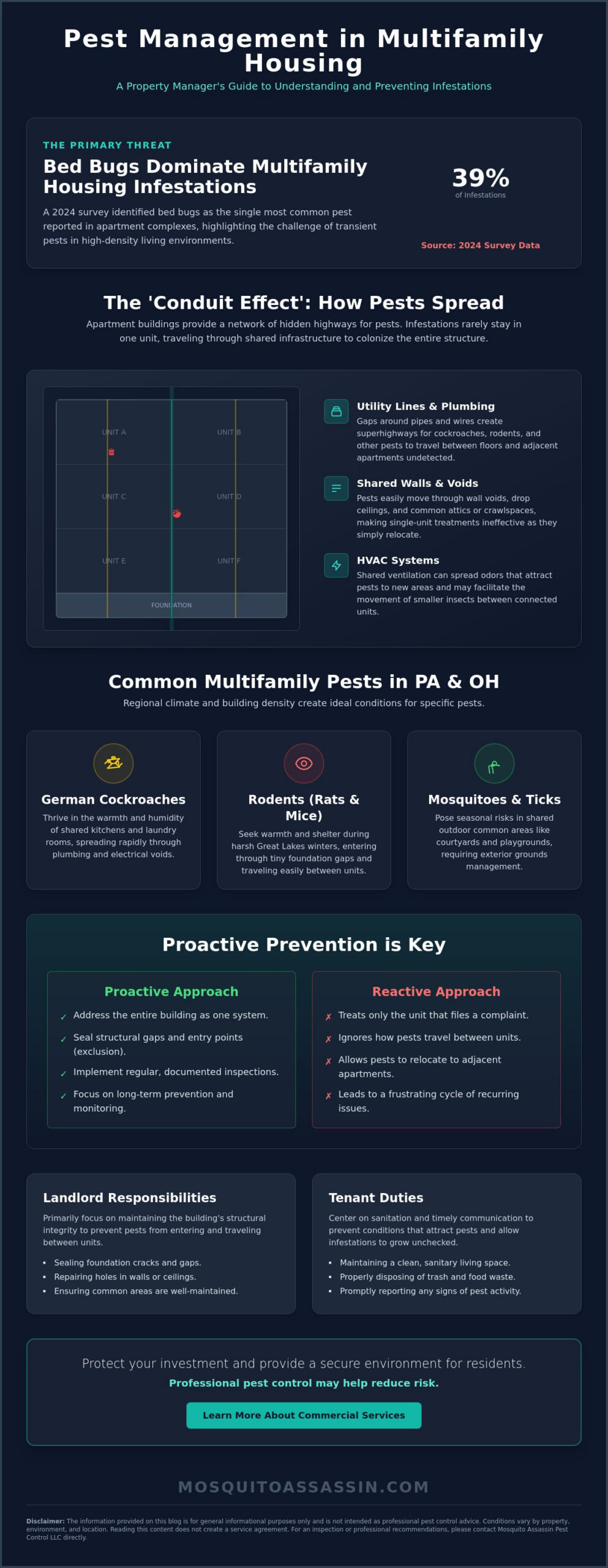
    When a technician arrives at a property in Erie, Crawford, or Ashtabula County, they follow a systematic workflow designed for total elimination. Understanding what to expect during a bed bug treatment visit helps alleviate the stress of the process. The visit typically begins with a final check of the preparation work before moving into a combination of mechanical and chemical interventions. This integrated approach is more effective than relying on a single method alone. It focuses on the specific biology of the pest to ensure no life stage is overlooked. By combining physical removal with targeted applications, professionals create a hostile environment for bed bugs while maintaining a high standard of safety for the household.

    Mechanical Removal Methods

    Mechanical methods provide immediate results by physically reducing the insect population. High-efficiency particulate air (HEPA) vacuuming is a primary tool used during the visit. This specialized equipment allows technicians to physically remove live bugs, cast skins, and eggs from mattress seams, carpet edges, and furniture crevices. Following vacuuming, steam treatment may be applied to mattresses, box springs, and upholstered furniture. The high temperature of the steam kills eggs and nymphs on contact, reaching into areas where liquids might not penetrate. To finish the mechanical phase, mattress encasements are often installed. These serve as a permanent barrier, trapping any remaining insects inside where they cannot feed or reproduce, while simultaneously preventing new ones from nesting in the fabric. These Purdue University bed bug control strategies highlight the importance of non-chemical steps in a comprehensive plan.

    Targeted Professional Applications

    Once mechanical removal is complete, the technician moves to targeted professional applications. This phase involves the precise placement of residual materials to baseboards, bed frames, and furniture joints. These areas are known harborage points where bed bugs rest between feedings. Additionally, dust formulations may be injected into wall voids or behind electrical outlet plates. These dusts are particularly effective because they remain active in undisturbed areas for an extended period. Modern professional materials are designed for long-term control rather than just an immediate knockdown effect. This means the treatment remains active to neutralize insects that may emerge from hidden spots days or weeks after the initial visit. This methodical approach ensures that the treatment reaches the smallest cracks and crevices where bed bugs hide. Safety protocols are strictly followed throughout the process to ensure the environment is prepared for re-entry once the materials have dried. Residents in the local service area can rest assured that the process is disciplined and focused on results.

    What to Expect During a Professional Bed Bug Treatment

    Post-Treatment Protocols and Re-entry

    The completion of the application marks a turning point, but the work isn’t finished once the technician leaves. For families in Erie, Crawford, and Ashtabula counties, understanding the rules for returning home is a vital part of what to expect during a bed bug treatment. Safety remains the priority. Homeowners must remain out of the treated area until all materials have completely dried. While the professional has completed the application, the environment must settle before it’s ready for occupancy. This waiting period allows the residual materials to bond to the surfaces, creating a long-term barrier against the infestation.

    Re-entry Safety Guidelines

    Standard re-entry times typically range from two to four hours, though this can vary based on the specific materials used and the humidity levels in the home. It’s essential to verify the exact timeframe with the professional on-site before you leave the property. Upon re-entry, opening windows to ensure fresh air circulation is often recommended. This simple step helps the home feel more comfortable and speeds up the final drying process. Keep children and pets away from treated surfaces, such as baseboards and furniture joints, until they’re confirmed dry to the touch. A critical rule for success is to avoid using any DIY sprays or foggers after a professional treatment. These over-the-counter products often act as repellents that can interfere with professional residual materials, causing bed bugs to scatter into untreated areas and complicating the eradication process.

    The Follow-Up Schedule

    It’s common to see a few bed bugs in the days following the initial service. This is actually a sign that the treatment is working. As the insects emerge from their harborages to seek a meal, they come into contact with the residual materials applied to the bed frame and perimeter. Most infestations require at least one follow-up visit ten to fourteen days after the initial service. This specific timeline is based on the bed bug life cycle. Follow-up visits ensure that any newly hatched nymphs are eliminated before they reach maturity and begin to reproduce. Learn more about professional pest services to understand how these layered visits create a definitive resolution for your property.

    Success depends on following specific post-treatment instructions regarding cleaning and furniture placement. Avoid deep cleaning or mopping right against the baseboards for a few weeks; this could prematurely remove the protective barrier. By maintaining this discipline, you protect the investment made in your home’s security. For homeowners in the tri-county area, professional pest control may help reduce risk and ensure the eradication is successful.

    Long-Term Prevention and Protection Plans

    Bed bugs are opportunistic hitchhikers that enter the home through travel, public transportation, or used furniture. Unlike many other pests, their presence isn’t an indicator of sanitation levels; they simply go where people go. For residents in Ashtabula, Ohio, and the surrounding regions, long-term security requires a transition from reactive treatment to proactive defense. Beyond knowing what to expect during a bed bug treatment, it’s vital to implement a strategy that prevents a single hitchhiker from becoming a full-blown infestation again. Ongoing monitoring is the most effective way to catch a re-infestation before it becomes widespread and costly to manage.

    Proactive Monitoring Strategies

    The use of passive interceptors is a highly effective method for early detection. These small, plastic dishes are placed under the legs of beds and upholstered furniture to trap insects as they attempt to climb up or down. Because bed bugs are nocturnal and expert hiders, these traps often provide the first physical evidence of a new problem. Additionally, routine inspections of luggage and clothing after returning from travel are essential. Heat treating clothes in a dryer on high heat for 30 minutes after a trip can neutralize any hidden travelers. For business owners and multi-unit managers, protecting your property with commercial services ensures that professional eyes are regularly checking for signs of activity in high-traffic areas.

    The Value of Year-Round Management

    General pest management provides a proactive shield against a variety of household invaders. While bed bug treatments are specialized, regular service visits allow a professional to identify potential entry points and harborage areas for multiple pests. This consistent oversight is often more cost-effective than reactive emergency treatments. A technician familiar with your property can spot subtle changes in pest activity that an untrained eye might miss. Understanding the broader context of household protection is helpful for any property owner. You can explore this further in General Pest Control: The Complete Guide for Homeowners.

    Residents in Erie and Crawford Counties benefit from this disciplined, professional oversight. By maintaining a clean, clutter-free environment and utilizing professional monitoring, you reduce the likelihood of a major infestation taking hold. Professional pest control may help reduce risk by ensuring that your home remains a fortress against pests throughout the changing seasons. When you know what to expect during a bed bug treatment and follow up with a solid prevention plan, you secure the long-term comfort and safety of your household.

    Disclaimer: The information provided on this blog is for general informational purposes only and is not intended as professional pest control advice. Conditions vary by property, environment, and location. Reading this content does not create a service agreement. For an inspection or professional recommendations, please contact Mosquito Assassin Pest Control LLC directly.
    Reclaiming Your Home and Peace of Mind

    Eradicating bed bugs requires a disciplined approach. Success depends on a partnership between your careful preparation and a technician’s professional precision. By understanding what to expect during a bed bug treatment, you can navigate each stage from the initial walkthrough to the final follow-up with confidence. Licensed professionals serving Erie, Crawford, and Ashtabula Counties utilize a methodical multi-step eradication process that prioritizes your family’s safety and education at every turn. This systematic strategy ensures that every hidden harborage is addressed and the insect’s life cycle is broken for good.

    Consistency is the key to maintaining a pest-free environment long after the initial visit. Implementing proactive monitoring and considering year-round protection plans will help shield your property from future invaders. If you suspect an infestation, professional pest control may help reduce risk. You don’t have to face this challenge alone. With the right expert guidance and a clear plan of action, your home can once again be the secure sanctuary you deserve.

    Disclaimer: The information provided on this blog is for general informational purposes only and is not intended as professional pest control advice. Conditions vary by property, environment, and location. Reading this content does not create a service agreement. For an inspection or professional recommendations, please contact Mosquito Assassin Pest Control LLC directly.

    Frequently Asked Questions

    How long does a professional bed bug treatment take?

    A single room treatment typically requires between 45 minutes and two hours, while a whole-home service often takes a full business day. The exact duration depends on the level of clutter and the severity of the infestation in your Erie or Ashtabula County property. Technicians must work methodically to inspect every small crevice. Missing even one nesting site can lead to a resurgence; therefore, thoroughness is more important than speed.

    Do I have to throw away my mattress if I have bed bugs?

    You generally don’t need to discard your mattress after an infestation is discovered. High-quality, bed-bug-proof encasements effectively salvage your bed by trapping remaining insects inside where they eventually perish. These covers also prevent new bugs from nesting in the mattress seams. Disposal is usually only recommended in cases of extreme physical damage or heavy soiling that prevents effective treatment or poses a separate hygiene risk.

    Is the bed bug treatment safe for my pets?

    Professional treatments are safe for pets when strict safety protocols are followed by licensed technicians. All animals must be removed from the home during the application and can return once every treated surface is completely dry. If you have fish tanks or exotic pets, you should take specific precautions like covering the tank or temporary relocation. Understanding what to expect during a bed bug treatment helps ensure the safety of every household member.

    Can I stay in my house during the treatment?

    Occupants are required to leave the home for the entire duration of the treatment and the subsequent drying period. This protocol ensures you don’t come into contact with materials while they’re being applied and gives the technician unobstructed access to every room. Most families can safely return to their property after two to four hours. This window allows for proper ventilation and ensures all materials have bonded to the target surfaces.

    How many treatments are needed to get rid of bed bugs?

    Most professional protocols require at least two separate treatments spaced approximately ten to fourteen days apart. This specific timeline is designed to break the bed bug life cycle by eliminating newly hatched nymphs before they reach maturity and begin laying eggs. Severe or widespread infestations in the tri-county area may require additional follow-up visits to ensure total eradication. Knowing what to expect during a bed bug treatment ensures you understand why a single visit is rarely sufficient.

    Will I see bed bugs after the first treatment?

    It’s normal to see bed bugs in the days following the initial service as they emerge from their hiding spots. The treatment process disrupts their harborages and forces them to move across treated surfaces where they contact residual materials. These insects are in the process of being eliminated. If you continue to see significant activity after two weeks, a follow-up inspection is necessary to assess the situation and prepare for the next application.

    Disclaimer: The information provided on this blog is for general informational purposes only and is not intended as professional pest control advice. Conditions vary by property, environment, and location. Reading this content does not create a service agreement. For an inspection or professional recommendations, please contact Mosquito Assassin Pest Control LLC directly.
  • Attic Decontamination After Rats: A Professional Safety and Sanitation Guide

    Attic Decontamination After Rats: A Professional Safety and Sanitation Guide

    The real danger of a rodent infestation doesn’t leave when the pests do; it lingers in the very air you breathe. For homeowners in Erie and Crawford Counties in Pennsylvania or Ashtabula County in Ohio, discovering a nest is stressful, but the biological aftermath is where the true risk lies. It’s common to feel overwhelmed by persistent foul odors or the fear of respiratory illnesses caused by disturbed droppings. You deserve a home that’s safe, and you likely want your energy efficiency restored after insulation has been soiled or damaged.

    This guide outlines the essential steps for thorough attic decontamination after rats to help you safely neutralize biohazards and restore your living space. You’ll learn how professional sanitation protocols address biological signals that attract future pests, the importance of proper safety equipment, and how to handle contaminated insulation according to modern standards. By following professional best practices, property owners can transition from a state of anxiety to a state of resolution, ensuring the health and security of everyone under their roof.

    Disclaimer: The information provided on this blog is for general informational purposes only and is not intended as professional pest control advice. Conditions vary by property, environment, and location. Reading this content does not create a service agreement. For an inspection or professional recommendations, please contact Mosquito Assassin Pest Control LLC directly.
    Key Takeaways

    • Understand why removing rodents is only the first step and how pathogens in droppings can remain active and dangerous long after the infestation ends.
    • Learn the critical risks associated with DIY cleaning, including how improper vacuuming during attic decontamination after rats can spread airborne contaminants through your home’s HVAC system.
    • Discover the professional standards for sanitation that involve containment strategies and the use of specialized antimicrobial agents to neutralize biological signals.
    • Identify why soiled or compressed insulation must be replaced to protect indoor air quality and maintain energy efficiency during harsh Pennsylvania and Ohio winters.
    • Get practical tips for long-term maintenance and monitoring to ensure your attic remains a clean, rodent-free environment year-round.

    Why Attic Decontamination is Essential After a Rat Infestation

    Removing the rodents is only the first half of the battle. The mess they leave behind is a biological hazard that continues to impact a home long after the traps are removed. Attic decontamination after rats is the specific process of removing biohazards and neutralizing the odors rodents use to communicate. It’s a critical safety protocol because rat droppings and urine contain pathogens that remain active and infectious even after the animals themselves are gone. Without professional intervention, these materials dry out and crumble, allowing microscopic particles to circulate through the home.

    To better understand this concept, watch this helpful video:

    Leaving an attic in a contaminated state often invites secondary problems. Decaying organic matter and waste act as a food source for other pests. It isn’t uncommon for homeowners in Erie or Ashtabula to deal with sudden outbreaks of cockroaches or carpet beetles following a rodent issue. These insects are drawn to the protein and oils found in rodent waste, turning a single pest problem into a multi-species infestation that affects the entire structure.

    Health Risks Associated with Rodent Waste

    The primary driver for professional cleaning is the mitigation of serious health risks like Hantavirus. This respiratory illness can be contracted by simply inhaling dust that has been contaminated with rodent urine or droppings. Other threats include Leptospirosis, which can persist in dried urine trapped within insulation layers for extended periods. Because many attics have air gaps around light fixtures or plumbing stacks, bacteria like Salmonella can easily migrate from the attic into the main living areas, potentially contaminating surfaces where families eat and sleep.

    The Role of Pheromones in Re-infestation

    Rats don’t just leave a mess; they leave a map. They use urine trails to mark safe paths and designate nesting sites for their colony. These pheromones act as a powerful chemical beacon for other rodents in the neighborhood. Even if every entry point is sealed, new rats may be relentlessly driven to chew through wood or siding to reach the established “safe” scent of a previous nest. Simple household cleaners don’t have the chemical properties to break down these deep-seated pheromones. Professional attic decontamination after rats requires specialized enzymatic treatments that neutralize these signals at a molecular level, effectively “deleting” the map and preventing future colonies from being drawn to the property.

    Disclaimer: The information provided on this blog is for general informational purposes only and is not intended as professional pest control advice. Conditions vary by property, environment, and location. Reading this content does not create a service agreement. For an inspection or professional recommendations, please contact Mosquito Assassin Pest Control LLC directly.

    The Dangers of DIY Attic Cleaning and Common Mistakes

    Many property owners in Erie and Crawford Counties assume that a shop vac and a bottle of bleach are sufficient to handle the aftermath of an infestation. This is a dangerous misconception. Attempting attic decontamination after rats without professional grade equipment often causes more harm than the rodents did themselves. Standard household vacuums, including those marketed with basic HEPA filters, are not designed to contain microscopic viral pathogens. Instead of removing the hazard, the vacuum’s exhaust vent can blast these particles directly into the air of your living space, contaminating rooms far away from the attic.

    Another common error is the over-reliance on household bleach. While bleach is an effective surface disinfectant for non-porous materials, it fails to penetrate the porous surfaces found in most attics. Wooden rafters, joists, and fiberglass insulation are highly absorbent. Bleach often sits on the surface while the bacteria and pheromones remain deeply embedded within the material. This leaves the biological hazard intact and the chemical signals for re-infestation active.

    The Hazard of Aerosolization

    Aerosolization occurs when dried, microscopic waste particles become airborne. This happens instantly when you sweep or vacuum dry droppings. These particles are incredibly light and can remain suspended in the air for several hours. Once airborne, they are easily pulled into the home’s HVAC system and circulated through every vent. Following public health guidance on rodent control requires misting all waste with a disinfectant solution to dampen it before any movement occurs. This saturation prevents dust from rising and keeps pathogens trapped in the liquid until they can be safely removed.

    Inadequate Protective Gear

    A simple paper dust mask provides zero protection against the viral pathogens found in rodent waste. Professional attic decontamination after rats requires P100 or N95 respirators that are specifically fitted to the user to ensure a perfect seal. Without this, you are breathing in concentrated biohazards. Proper protection also includes:

    • Full-body Tyvek suits: These prevent contaminants from clinging to your clothing and being tracked into your car or living areas.
    • Non-porous gloves: Standard work gloves absorb urine and bacteria; professionals use chemical-resistant, disposable layers.
    • Eye protection: Pathogens can enter the body through the mucous membranes of the eyes if contaminated dust is disturbed.

    Protecting your family from these invisible risks is a priority. If you’re concerned about the safety of your home, consulting a professional rodent control service can provide a safe and definitive path toward a healthy environment.

    Disclaimer: The information provided on this blog is for general informational purposes only and is not intended as professional pest control advice. Conditions vary by property, environment, and location. Reading this content does not create a service agreement. For an inspection or professional recommendations, please contact Mosquito Assassin Pest Control LLC directly.
    The Professional Attic Decontamination Process

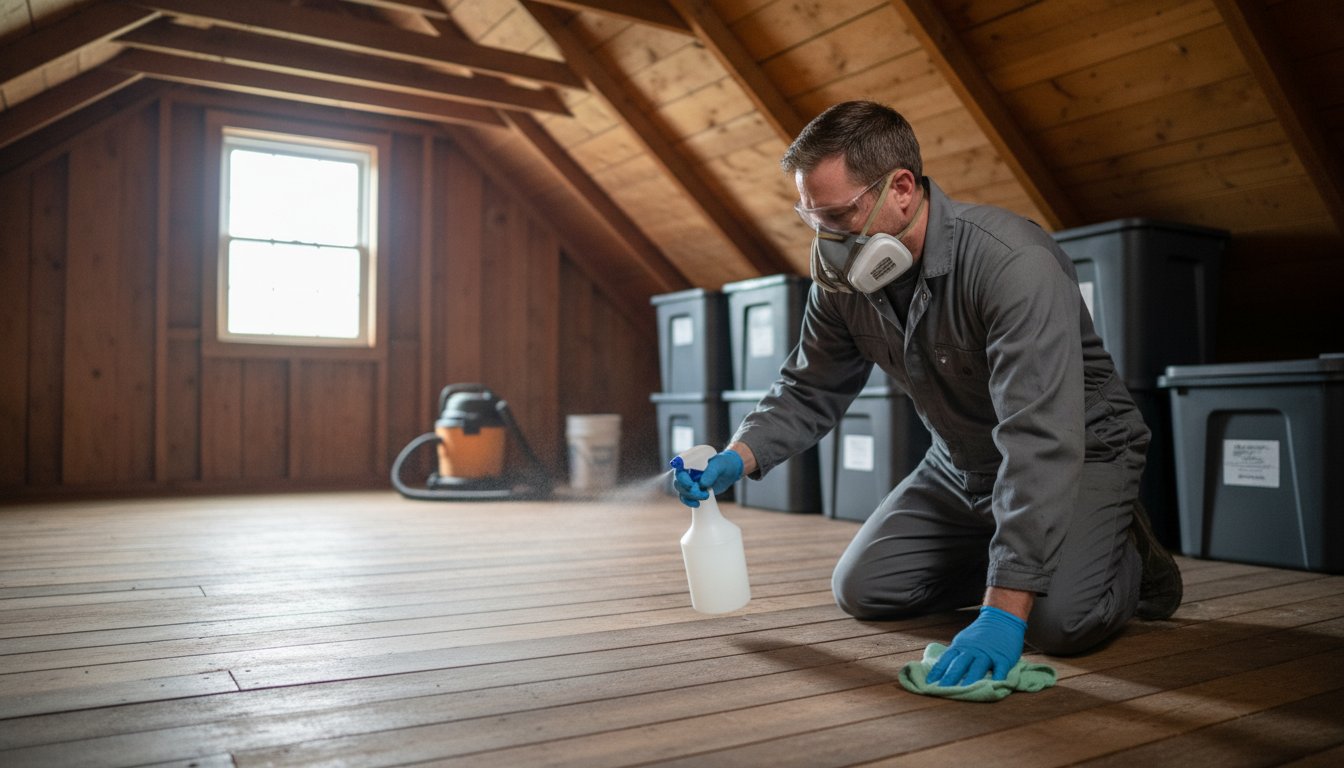
    The industry standard for professional attic decontamination after rats is a systematic, multi-stage protocol that utilizes industrial-grade, EPA-approved antimicrobial agents specifically formulated to neutralize rodent-borne pathogens and pheromones. This process is far more rigorous than a standard household cleaning; it is a technical restoration designed to return the attic to a sanitary, pre-infestation state. By following a disciplined sequence of containment, removal, and sterilization, property owners can ensure that invisible biological threats are fully eliminated from the structure.

    Containment and Preparation

    Before any waste is disturbed, a secure physical barrier must be established. Professionals use heavy-duty plastic sheeting to seal the attic entrance, creating a vestibule that prevents cross-contamination with the rest of the home. To maintain air quality, negative air machines equipped with HEPA filtration are often deployed. These machines pull air out of the attic and vent it safely outside, ensuring that any microscopic dust disturbed during the process cannot migrate into living areas. Additionally, every HVAC vent and plumbing stack is sealed to prevent pathogens from entering the home’s climate control system.

    Once the environment is stabilized, the removal of large-scale waste begins. This includes the extraction of heavily soiled insulation, nesting materials, and any rodent carcasses. Removing the bulk of the contaminated material is essential, as these items often harbor the highest concentration of pathogens. Following the bulk removal, a fine-cleaning phase involves the use of specialized HEPA vacuums. Unlike standard equipment, these vacuums are designed to capture 99.97 percent of particles as small as 0.3 microns, effectively stripping away the fine dust that settles on joists and floorboards.

    Professional Sanitization Methods

    The final and most critical phase of attic decontamination after rats is the application of antimicrobial treatments. While surface sprays are used for accessible areas, thermal fogging is often necessary to reach deep into wall voids, crevices, and tight corners where liquid sprays cannot penetrate. This fogging process suspends disinfectant particles in the air, allowing them to settle on every square inch of the attic’s interior surfaces.

    Enzyme-based cleaners are the preferred choice for this stage because they are engineered to break down the specific proteins found in rodent urine and feces. By dissolving these proteins, the cleaners effectively neutralize the pheromone trails that would otherwise attract new colonies. It is vital that the disinfectant used is specifically labeled for rodent-borne pathogens to ensure the environment is truly sanitized. This methodical approach provides a level of security that simple cleaning cannot match, protecting the long-term health of households in Erie and Crawford Counties.

    Disclaimer: The information provided on this blog is for general informational purposes only and is not intended as professional pest control advice. Conditions vary by property, environment, and location. Reading this content does not create a service agreement. For an inspection or professional recommendations, please contact Mosquito Assassin Pest Control LLC directly.

    Attic Decontamination After Rats: A Professional Safety and Sanitation Guide

    Insulation Replacement and Rodent Exclusion

    Completing the decontamination phase is a victory for your home’s hygiene, but the physical restoration of the attic space is what ensures long term safety. Soiled insulation cannot simply be vacuumed or “refreshed” with a spray. Because fiberglass and cellulose are highly porous, they act like a sponge for rodent urine and fecal matter. Even after the pathogens are neutralized, the physical degradation of the material remains. Replacing these materials is the only way to fully remove the biological load and the lingering odors that can permeate through your ceiling and into your living areas.

    The structural damage caused by rodents also has a direct impact on your wallet. During the harsh winters in Erie and Crawford Counties in Pennsylvania or Ashtabula County in Ohio, your attic insulation is your primary defense against heat loss. Rats are notorious for tunneling through batts and compressing blown-in insulation to create nesting chambers. This activity destroys the R-value (the measure of thermal resistance) of the material. When insulation is flattened or filled with air pockets from tunneling, your heating system has to work significantly harder to maintain a comfortable temperature.

    Identifying Damaged Insulation

    When assessing the state of your attic, look for visible urine “spotting” which often appears as dark or yellowish discolorations on the top of the insulation. You may also find shredded paper, cardboard, or bits of plastic that rodents have carried in to build nests. These materials are fire hazards and signs of a compromised thermal barrier. Installing new, pest-resistant insulation materials after a thorough attic decontamination after rats provides a fresh start for your home’s energy profile and air quality. It also allows for a clear view of the attic floor to ensure no entry points were missed during the initial inspection.

    Permanent Exclusion Strategies

    A professional cleanup is only as good as the barriers that prevent a repeat infestation. This process, known as exclusion, involves sealing every potential gap in your roofline, soffits, and gable vents. It is essential to use chew-proof materials like steel mesh or hardware cloth. Many homeowners make the mistake of using expanding foam, which rats can chew through in seconds. Proper attic ventilation must be maintained during this process to prevent moisture buildup, which can lead to mold and attract other pests. For a deeper look at how to secure your property, you can read this rodent removal guide for more on exclusion.

    Securing your home requires a methodical approach that addresses both the mess and the entry points. If you are dealing with the aftermath of an infestation, a professional rodent control service can help you reclaim your space and restore your peace of mind.

    Disclaimer: The information provided on this blog is for general informational purposes only and is not intended as professional pest control advice. Conditions vary by property, environment, and location. Reading this content does not create a service agreement. For an inspection or professional recommendations, please contact Mosquito Assassin Pest Control LLC directly.
    Maintaining a Pest-Free and Sanitized Attic

    Once the biological hazards are removed and the physical structure is restored, the focus shifts to long term prevention. In Western Pennsylvania and Northeast Ohio, the sharp drop in temperature during late September and October triggers a massive migration of rodents toward heated structures. An attic that has undergone attic decontamination after rats is a clean slate, but it remains a target if the exterior of the home isn’t properly maintained. Keeping tree branches trimmed at least six feet away from the roofline is a simple yet effective way to eliminate “rodent highways” that lead directly to your gutters and soffits.

    Homeowners should also stay vigilant by monitoring for any signs of new activity. This includes looking for fresh droppings, which will appear dark and moist compared to old, gray waste, or new gnaw marks on wooden supports and electrical wiring. If you notice these signs, it’s a signal that the exclusion barriers may have been compromised by house settling or environmental wear. Year-round protection plans provide the necessary oversight to catch these issues before they escalate into a repeat infestation.

    Seasonal Inspection Checkpoints

    Autumn is the most critical time for a proactive checkup. Before the first hard frost hits Crawford County, conduct a thorough perimeter check of the attic’s interior. Focus specifically on utility penetrations where pipes or wires enter the siding, as these are common failure points. You should also inspect the chimney flashing and ensure that all attic fans or vents remain covered with heavy-duty, intact screening. Small gaps can easily develop over time due to the intense freeze-thaw cycles common in the Erie and Ashtabula regions, providing a perfect entry point for opportunistic pests.

    When to Seek Professional Assistance

    While routine visual checks are a great habit, some vulnerabilities are invisible to the untrained eye. If you discover a breach or feel uncomfortable navigating the tight spaces of your attic, seeking professional help is the safest course of action. Recognizing when an infestation has exceeded the limits of safe DIY intervention protects your health and prevents costly structural damage. A professional general pest control assessment can identify hidden nesting sites and weak points in your home’s exterior that you might have missed.

    Professional pest control may help reduce risk and ensure your home remains a healthy environment for your family. For a detailed evaluation of your property or to address any concerns about your attic’s condition, visit mosquitoassassin.com/contact-us for an inspection.

    Disclaimer: The information provided on this blog is for general informational purposes only and is not intended as professional pest control advice. Conditions vary by property, environment, and location. Reading this content does not create a service agreement. For an inspection or professional recommendations, please contact Mosquito Assassin Pest Control LLC directly.

    Reclaiming Your Home and Health

    Securing your home from the biological aftermath of a rodent infestation is a critical step in protecting your family’s health and your property’s value. Effective attic decontamination after rats requires a methodical approach that combines industrial-grade sanitation with permanent exclusion strategies. By replacing soiled insulation and sealing structural gaps, you neutralize the pheromone trails that invite future colonies and restore the energy efficiency of your home. It’s a task that demands technical expertise and the right protective equipment to avoid aerosolizing dangerous pathogens.

    Licensed pest control professionals utilize a comprehensive three-step rodent control process to ensure every biohazard is addressed safely. Serving Erie and Crawford Counties in Pennsylvania and Ashtabula County in Ohio, these local experts understand the specific seasonal challenges of the region. Taking decisive action now prevents the spread of illness and provides long term peace of mind for your household. You don’t have to face these risks alone.

    For an inspection or professional recommendations, please contact Mosquito Assassin Pest Control LLC directly. Reclaiming your attic is the final step in ensuring your home remains a safe, secure sanctuary for years to come.
    Disclaimer: The information provided on this blog is for general informational purposes only and is not intended as professional pest control advice. Conditions vary by property, environment, and location. Reading this content does not create a service agreement. For an inspection or professional recommendations, please contact Mosquito Assassin Pest Control LLC directly.
    Frequently Asked Questions

    Is it safe to go into my attic if I know rats were there?

    Entering a contaminated attic without professional grade personal protective equipment is generally unsafe. Disturbing dried droppings or nesting materials can cause microscopic pathogens to become airborne instantly. Once these particles are suspended in the air, you risk inhaling them, which is a primary transmission route for several serious respiratory illnesses.

    Can I just use bleach to clean up rat droppings?

    Bleach is an ineffective solution for the porous materials typically found in an attic, such as wooden joists and fiberglass insulation. While it may kill surface bacteria, bleach cannot penetrate deep enough to neutralize embedded pathogens or pheromones. Additionally, bleach doesn’t break down the organic proteins in rodent waste, leaving behind the chemical signals that attract new pests.

    How long do rat pheromones stay in an attic?

    Rodent pheromones are incredibly resilient and can persist for several years if they aren’t chemically neutralized. These scent markers act as a permanent map for other rodents in the neighborhood, signaling that your attic is a safe nesting site. Professional attic decontamination after rats involves using enzymatic cleaners that specifically dissolve these protein based markers to prevent future infestations.

    Should I remove all the insulation after a rat infestation?

    Heavily soiled, compressed, or tunneled insulation should always be removed and replaced. Because insulation is highly absorbent, it’s impossible to fully sanitize it once it has been contaminated with urine or feces. Removing the material is the only way to ensure the biological load is gone and to restore the thermal efficiency of your home in Pennsylvania or Ohio.

    What kind of respirator do I need for cleaning rat droppings?

    A fit-tested N95 or P100 respirator is the minimum requirement for safely handling rodent waste. Standard paper dust masks do not provide a tight enough seal and aren’t designed to filter out microscopic viral pathogens. Using the wrong mask can provide a false sense of security while still allowing you to breathe in concentrated, hazardous dust particles.

    How much does professional attic decontamination typically cost?

    The cost of attic decontamination after rats depends on several factors, including the square footage of the space and the severity of the biological damage. Other variables include the type of insulation being removed and the amount of structural exclusion work required to seal entry points. A professional inspection is necessary to provide an accurate assessment based on your property’s specific conditions.

    Can rat droppings in the attic make me sick downstairs?

    Pathogens from the attic can migrate into your main living areas through air gaps around light fixtures, plumbing stacks, and attic hatches. When dust from dried droppings is disturbed by air movement, it can also be pulled into the HVAC system and circulated through every room. This cross contamination makes it possible for an attic problem to impact the air quality of the entire home.

    What is the best disinfectant for rodent urine and feces?

    The professional standard involves using EPA-approved, broad-spectrum disinfectants that are specifically labeled for rodent-borne pathogens. These specialized formulas are often paired with enzymatic cleaners that break down organic matter at a molecular level. Unlike household cleaners, these industrial grade solutions are designed to neutralize both the health hazards and the pheromones that lead to re-infestation.

    Disclaimer: The information provided on this blog is for general informational purposes only and is not intended as professional pest control advice. Conditions vary by property, environment, and location. Reading this content does not create a service agreement. For an inspection or professional recommendations, please contact Mosquito Assassin Pest Control LLC directly.
  • Developing a Comprehensive School Pest Management Plan for Student Safety

    Developing a Comprehensive School Pest Management Plan for Student Safety

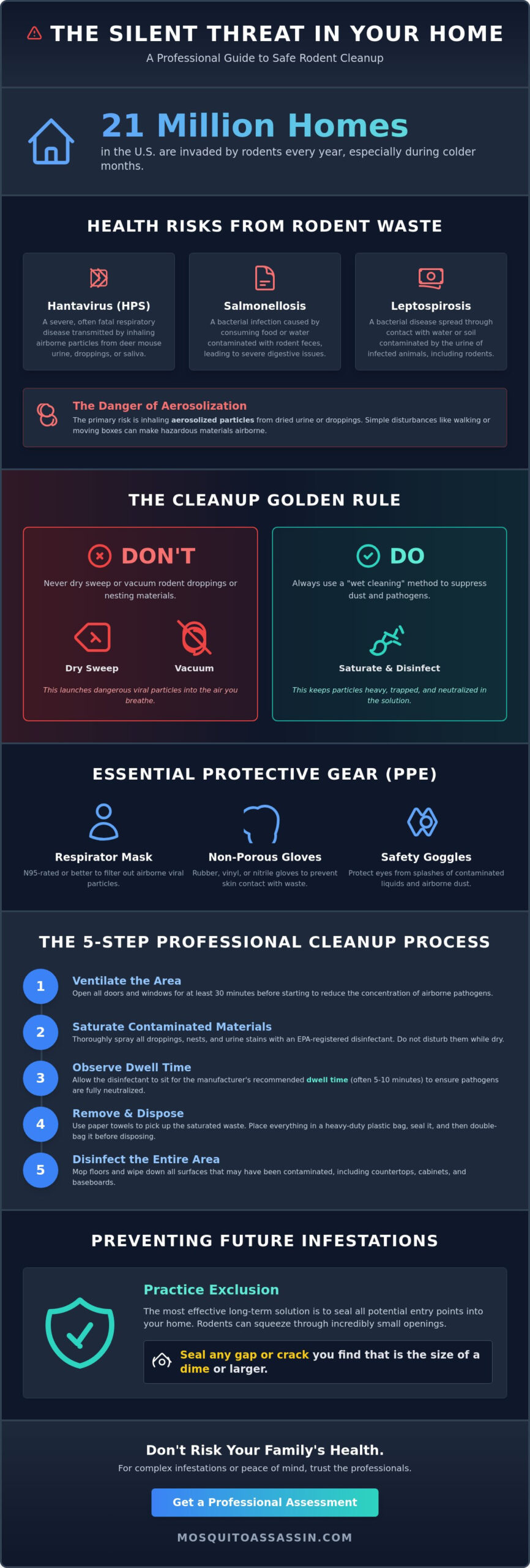
    Did you know that 81% of Pennsylvania school districts surveyed were able to maintain effective pest control without increasing their budgets after switching to an integrated program? Maintaining a safe learning environment requires a delicate balance between strict state regulations and the high expectations of parents regarding chemical use. Navigating the requirements for a school pest management plan can feel like a daunting task for administrators in Erie and Crawford counties in Pennsylvania, as well as Ashtabula County in Ohio, who are already managing tight facilities budgets.

    This guide provides a clear roadmap for establishing a proactive strategy that prioritizes student health and long term safety. You will learn the essential components of an effective Integrated Pest Management (IPM) system, including specific compliance standards such as the 72 hour notification rules in Pennsylvania and the four hour re-entry requirements in Ohio. By shifting from a reactive approach to a structured prevention model, school districts can significantly reduce health risks and ensure a pest free environment for every student and staff member.

    Key Takeaways

    • Understand why Integrated Pest Management (IPM) is the gold standard for school safety by prioritizing non-chemical prevention over routine spraying.
    • Identify the necessary steps to build a compliant school pest management plan, including setting action thresholds and establishing a rigorous monitoring schedule.
    • Learn how to address specific regional threats like rodent infestations in older facilities and seasonal stinging insects on athletic fields.
    • Discover the critical role of an IPM coordinator and why a baseline facility inspection is the first step toward long term success.
    • See how professional monitoring and third party inspections can help identify hidden vulnerabilities to ensure a safe, compliant learning environment.

    Understanding Integrated Pest Management (IPM) in Schools

    Integrated Pest Management (IPM) is a science based decision making process that identifies and reduces risks from pests and pest management strategies. It represents a significant shift from traditional, calendar based spraying to a holistic approach that prioritizes long term prevention. Instead of waiting for an infestation to occur, school districts focus on understanding pest biology and environmental factors to stop problems before they start. This method is the gold standard for educational facilities because it balances effective control with the necessity of student safety.

    A formal school pest management plan serves as the backbone of this strategy. It moves away from reactive treatments and focuses on structural repairs, improved sanitation, and constant monitoring. By addressing the root causes of infestations, such as food sources or entry points, schools can often eliminate pests without relying on chemical interventions as a first resort. This proactive stance is much more effective than traditional methods that only address pests after they become a visible nuisance.

    To better understand this concept, watch this helpful video:

    Accountability is a major benefit of a written school pest management plan. It provides a clear record of what was done, when it was done, and why. In states like Pennsylvania and Ohio, where regulations regarding student safety are strict, having a documented process ensures that the district remains compliant with state laws while keeping parents informed. It creates a transparent system where maintenance staff and administrators work together toward a common goal of a healthy campus.

    The Goals of a School-Based Pest Plan

    The primary objective is protecting students and staff from pest related allergens and diseases. Rodents and cockroaches are known triggers for asthma, which is a leading cause of student absenteeism. By reducing the presence of these pests, schools directly improve indoor air quality. Additionally, a well structured plan minimizes the potential for student exposure to unnecessary chemical treatments. It also preserves the school property itself, preventing structural damage caused by wood destroying organisms or rodents chewing through wiring and insulation.

    Why Proactive Management Matters for Education

    Pest sightings in a classroom can cause immediate disruptions to the learning process and create unnecessary anxiety for students. Proactive management ensures that these incidents are rare. Beyond the immediate physical environment, implementing an IPM strategy meets the high expectations of parents and community health advocates in Erie, Crawford, and Ashtabula counties. It demonstrates a commitment to modern, safe facility management practices. When schools prioritize prevention, they create a more stable and focused environment for education to thrive.

    Disclaimer: The information provided on this blog is for general informational purposes only and is not intended as professional pest control advice. Conditions vary by property, environment, and location. Reading this content does not create a service agreement. For an inspection or professional recommendations, please contact Mosquito Assassin Pest Control LLC directly.

    The Core Components of an Effective Management Plan

    A robust school pest management plan transitions a facility from reactive crisis mode to a disciplined, preventative state. It relies on four critical pillars: rigorous monitoring, established action thresholds, structural exclusion, and high sanitation standards. By integrating these components into daily operations, administrators ensure that pest control becomes a predictable part of facility maintenance rather than an unexpected expense. This systematic approach is especially vital for schools in Erie and Crawford counties, where seasonal shifts can drive pests indoors searching for warmth.

    Monitoring is the foundation of any successful program. It involves more than just placing traps; it requires a scheduled walkthrough of high risk areas like basement mechanical rooms and janitorial closets. These inspections identify early warning signs, such as grease marks along baseboards or chewed insulation, before a full blown infestation takes root. For districts looking to formalize these processes, commercial pest control strategies can provide the necessary framework for professional grade monitoring and documentation.

    Setting Action Thresholds for Common Pests

    Action thresholds prevent unnecessary chemical use by defining exactly when a pest sighting requires a response. An action threshold is the point where pest populations require remedial action. For example, the threshold for a stinging insect nest on a playground is zero, meaning immediate intervention is required to protect students. Conversely, a few ants near an exterior doorway might only trigger increased cleaning or sealing of a crack. The EPA’s Approach for Integrated Pest Management in Schools highlights that these standards allow staff to respond logically rather than emotionally to pest presence.

    Structural Exclusion and Maintenance

    Exclusion is the most effective long term solution in any school pest management plan, yet it’s often the most neglected. Pests don’t materialize inside; they enter through physical gaps in the building envelope. Common vulnerabilities include worn door sweeps, gaps around utility penetrations, and unsealed foundation cracks. If light can pass through a gap under a door, a juvenile rodent can likely squeeze through as well. This is a common issue in older school buildings across Ashtabula County and Western Pennsylvania.

    Facilities departments play a vital role in this process. Maintenance teams should prioritize sealing these “pest highways” with durable materials like steel wool or silicone caulk. Managing the exterior grounds is equally important. Keeping shrubs trimmed back at least 12 inches from the building and ensuring mulch doesn’t touch the siding reduces the chances of pests finding a way inside. This structural focus ensures the building itself acts as the first line of defense, significantly reducing the need for future treatments.

    Disclaimer: The information provided on this blog is for general informational purposes only and is not intended as professional pest control advice. Conditions vary by property, environment, and location. Reading this content does not create a service agreement. For an inspection or professional recommendations, please contact Mosquito Assassin Pest Control LLC directly.

    Common Pest Challenges for Pennsylvania and Ohio Schools

    Schools in Erie, Crawford, and Ashtabula counties encounter specific pest pressures shaped by the local environment and the age of their facilities. While urban schools might struggle more with certain indoor pests, rural districts often face challenges from the surrounding landscape. A comprehensive school pest management plan must be tailored to these regional realities to ensure it addresses the most likely threats effectively without relying on generic solutions.

    Rodents remain a top concern for facility managers. A 2024 poll by Pest Control Technology found that 38% of respondents identified rodents as the most challenging pests in school environments. In older buildings across Erie County, mice and rats often find easy access through foundation gaps or aging utility lines. These pests aren’t just a nuisance; they carry diseases and can trigger asthma in sensitive students. Professional rodent control service can help identify these hidden entry points and nesting sites during the initial planning phase.

    Rodent Prevention and Food Service Safety

    Food service areas are the primary draw for rodents. Best practices for school kitchens include storing all dry goods in airtight, heavy duty plastic containers rather than cardboard boxes. Staff should regularly monitor for signs of activity behind large appliances or within drop ceilings, where rodents often travel undisturbed. Immediate waste removal after lunch periods is critical. Trash should be taken to exterior dumpsters located away from the building to prevent drawing pests toward the entrances.

    Seasonal Risks: Stinging Insects and Ticks

    Outdoor safety is just as important as indoor air quality. Stinging insects were cited as the second most challenging pest in the 2024 Pest Control Technology survey, affecting 29% of schools. Yellowjackets frequently build nests near bleachers, athletic fields, and outdoor seating areas where food debris is present. Regular inspections of these high traffic zones can prevent painful encounters during sporting events or recess. This is especially vital during the late summer and early fall months when these insects are most aggressive.

    In Crawford County, where many schools are adjacent to wooded areas, tick prevention is a priority. Keeping grass trimmed short and creating a wood chip or gravel barrier between the woods and student play areas can significantly reduce tick populations. During active school hours, any discovered stinging insect nest should be cordoned off immediately until it can be addressed safely. Proactive grounds maintenance is the most effective way to manage these seasonal risks while keeping the environment safe for students.

    Disclaimer: The information provided on this blog is for general informational purposes only and is not intended as professional pest control advice. Conditions vary by property, environment, and location. Reading this content does not create a service agreement. For an inspection or professional recommendations, please contact Mosquito Assassin Pest Control LLC directly.
    Developing a Comprehensive School Pest Management Plan for Student Safety

    Developing and Implementing Your Written Plan

    Building a successful school pest management plan is a collaborative effort that requires input from every level of the district. It’s not a static document kept on a shelf; it’s a living strategy that guides daily operations. The process begins with designating an IPM coordinator. This individual serves as the central point of contact for staff, parents, and professional partners. They ensure the district remains compliant with state laws, such as Pennsylvania Acts 35 and 36, which mandate that all public school districts adopt an Integrated Pest Management program. For districts ready to begin this process, a professional baseline inspection can identify current vulnerabilities and provide a clear starting point for plan development.

    Once a coordinator is in place, the school should conduct a thorough baseline inspection of all facilities. This assessment identifies existing pest issues and structural deficiencies that need immediate attention. Establishing a standardized system for reporting pest sightings is the next step. When teachers or custodial staff have a simple, uniform way to log sightings, the district can collect accurate data to identify trends. This allows for a proactive response rather than a series of disconnected, emergency treatments.

    Stakeholder Roles and Responsibilities

    Every person in the school building has a part to play in pest prevention. Teachers are responsible for classroom sanitation, which includes managing student snack areas and reducing clutter that provides hiding spots for pests. Custodial staff serve as the primary frontline monitors; they’re the most likely to see early signs of activity during their daily cleaning rounds. The school board holds the final responsibility for reviewing and approving the plan, ensuring that the facilities department has the necessary resources to maintain a safe, pest free environment.

    Documentation and Record Keeping

    Accurate record keeping is essential for both safety and legal compliance. In Pennsylvania, schools are required to maintain records of all pest treatments for at least three years. Ohio regulations require that these records be kept for one year. Documentation should include more than just treatments; it should track non-chemical interventions like structural repairs, sanitation improvements, and trap monitoring results. Keeping these logs organized and accessible ensures the district is always prepared for state or local health inspections. It also provides a clear history of what strategies have been most effective over time.

    A transparent communication strategy is the final piece of the puzzle. Administrators must have a clear process for notifying parents and faculty about pest management activities. Pennsylvania law requires a 72 hour advance notification to parents and staff before certain pesticide applications. Ohio schools must have a policy for prior notification for those who request it. By proactively sharing information and explaining the safety measures in place, schools build trust and alleviate community concerns regarding chemical use.

    Disclaimer: The information provided on this blog is for general informational purposes only and is not intended as professional pest control advice. Conditions vary by property, environment, and location. Reading this content does not create a service agreement. For an inspection or professional recommendations, please contact Mosquito Assassin Pest Control LLC directly.
    Partnering with Professionals for Plan Success

    While internal staff play a vital role in daily monitoring and sanitation, the technical depth of a comprehensive school pest management plan often requires the expertise of licensed professionals. Professional pest control may help reduce risk by providing specialized knowledge that goes beyond basic maintenance. These experts can identify subtle signs of activity that might be overlooked during a standard custodial walkthrough, such as specific pheromone trails or early stage structural vulnerabilities in mechanical rooms and food service areas. This higher level of scrutiny is essential for maintaining the safety standards expected in educational facilities.

    A major benefit of external partnership is the third party inspection. This objective evaluation provides a fresh perspective on the facility, identifying gaps in the building envelope or sanitation protocols that staff may have become accustomed to seeing. Integrating these professional recommendations into long term maintenance goals ensures that the school district’s budget is spent effectively on permanent solutions rather than temporary fixes. For districts looking to formalize these partnerships, commercial pest control providers can offer the structured monitoring and documentation required for state compliance in both Pennsylvania and Ohio.

    Evaluating Commercial Pest Management Partners

    Selecting a provider requires verifying they have specific experience in educational environments. Schools have unique regulatory requirements, such as the strict re-entry intervals and notification laws mandated by the Ohio Administrative Code or Pennsylvania’s Act 35 and 36. Partners must demonstrate a commitment to IPM principles, prioritizing non chemical strategies and structural exclusion over routine pesticide applications. Choosing a local entity with deep roots in the Erie, Crawford, and Ashtabula regions is also beneficial. These professionals possess specialized knowledge of the local pest pressures and seasonal cycles unique to the Great Lakes and Mid-Atlantic areas, allowing for more precise and effective intervention.

    The Path Forward for a Safer School

    Maintaining a safe campus is an ongoing commitment rather than a one time project. School boards and administrators should review the school pest management plan annually to account for new challenges, such as invasive species or changes in facility use. Continued education for teachers and custodial staff is also necessary to maintain a culture of prevention across the district. By combining internal vigilance with external expertise, professional pest control may help reduce risk and improve safety outcomes for the entire school community. This proactive partnership ensures that the learning environment remains healthy, compliant, and focused on student success.

    Disclaimer: The information provided on this blog is for general informational purposes only and is not intended as professional pest control advice. Conditions vary by property, environment, and location. Reading this content does not create a service agreement. For an inspection or professional recommendations, please contact Mosquito Assassin Pest Control LLC directly.

    Securing a Safer Future for Every Student

    Protecting the health of students and staff requires more than just occasional maintenance; it demands a disciplined, strategic approach. By prioritizing structural exclusion and rigorous sanitation, school districts can significantly reduce the need for chemical interventions. A comprehensive school pest management plan ensures that every facility remains compliant with regional laws while addressing specific threats like seasonal rodents or stinging insects. It’s about more than just compliance; it’s a commitment to student well-being. Partnering with experts who understand the local landscape of Erie, Crawford, and Ashtabula counties provides an added layer of security and expertise.

    Professional pest control may help reduce risk for your facility. Licensed pest control professionals in PA and OH bring specialized expertise in commercial rodent and general pest management, focusing on year round protection plans that keep learning environments safe. Taking these proactive steps today creates a more stable, healthy, and focused environment where education can truly thrive.

    Disclaimer: The information provided on this blog is for general informational purposes only and is not intended as professional pest control advice. Conditions vary by property, environment, and location. Reading this content does not create a service agreement. For an inspection or professional recommendations, please contact Mosquito Assassin Pest Control LLC directly.
    Frequently Asked Questions

    What is the primary goal of a school integrated pest management plan?

    The primary goal is to provide a safe learning environment by managing pests with the least possible risk to people and the environment. This is achieved by focusing on long term prevention through structural repairs and sanitation rather than routine chemical applications. By addressing the root causes of infestations, schools can effectively reduce pest populations while minimizing student and staff exposure to unnecessary pesticides.

    Is a written pest management plan required by law in Pennsylvania or Ohio?

    A written school pest management plan is mandatory for all public school districts and charter schools in Pennsylvania under Acts 35 and 36. In Ohio, implementing a comprehensive plan is currently optional; however, any school that chooses to adopt one must adhere to specific state standards. Regardless of the legal requirement, having a documented strategy is considered a best practice for facility safety in Erie and Ashtabula counties.

    How often should a school building be inspected for pests?

    High risk areas like cafeterias, kitchens, and basement mechanical rooms should be inspected at least monthly. During peak seasonal shifts in Western Pennsylvania and Northeast Ohio, more frequent monitoring may be necessary to catch early signs of rodent or stinging insect activity. Regular inspections allow maintenance teams to identify structural gaps or sanitation issues before they escalate into a full blown infestation that disrupts the school day.

    Can teachers use their own pest control products in the classroom?

    No, teachers and staff should never bring their own pest control products or sprays into the classroom. Most state regulations and district policies strictly prohibit the use of unauthorized pesticides by unlicensed individuals. Using unapproved products can create health risks for students with sensitivities and may violate the district’s safety protocols. All pest concerns should be reported through the official sighting log for professional evaluation.

    What should a school do if a pest threshold is exceeded?

    When a pest population reaches an established action threshold, the school must implement the remedial actions outlined in its school pest management plan. This usually begins with non chemical interventions like deep cleaning or sealing entry points. If chemical treatment is necessary, the district must follow state specific notification and re-entry laws, such as the 72 hour advance notice required for Pennsylvania schools or the four hour re-entry period in Ohio.

    How does an IPM plan protect students with allergies or asthma?

    An IPM plan protects sensitive students by significantly reducing common environmental triggers like cockroach droppings and rodent dander. These allergens are known to cause asthma attacks and severe allergic reactions in children. By prioritizing non chemical prevention, the plan also reduces the presence of volatile organic compounds and chemical odors that can irritate the respiratory systems of students with existing health conditions.

    Who is responsible for managing the school pest plan on a daily basis?

    The daily management of the plan is the responsibility of the designated IPM Coordinator, who is often a facilities manager or high level administrator. While this individual oversees documentation and compliance, the custodial staff serves as the primary monitors during their daily cleaning routines. Successful management requires clear communication between the coordinator, the maintenance team, and any external professional partners to ensure all protocols are followed consistently.

    What role do parents play in a school’s pest management strategy?

    Parents play a vital role by staying informed about the district’s pest management policies and reporting concerns they may hear from their children. They have the right to request prior notification of pesticide applications, especially in Pennsylvania where 72 hour notice is the standard. By understanding the school’s commitment to low risk prevention, parents can support the district’s efforts to maintain a healthy and transparent learning environment.

    Disclaimer: The information provided on this blog is for general informational purposes only and is not intended as professional pest control advice. Conditions vary by property, environment, and location. Reading this content does not create a service agreement. For an inspection or professional recommendations, please contact Mosquito Assassin Pest Control LLC directly.

  • Mice Exterminator in Erie PA: Professional Rodent Control and Prevention

    Mice Exterminator in Erie PA: Professional Rodent Control and Prevention

    An estimated 11.6 percent of households report rodent problems annually, impacting over 16 million homes across the United States. In Erie and Crawford Counties, these statistics take the form of chewed electrical wires, contaminated food, and the persistent anxiety of potential disease transmission. It’s frustrating to watch DIY traps fail while the scratching in the walls continues. Finding a professional mice exterminator Erie PA helps transition a property from being vulnerable to being secure. You deserve a home that’s safe from the structural damage and health risks these small intruders bring.

    This guide explains how to identify early signs of an infestation, manage current rodent activity, and implement professional exclusion strategies to keep them out for good. This article examines why a proactive maintenance plan is more effective than reactive trapping. Learn how to secure your property in Pennsylvania or Ohio by focusing on long term prevention and professional maintenance standards.

    Disclaimer: The information provided on this blog is for general informational purposes only and is not intended as professional pest control advice. Conditions vary by property, environment, and location. Reading this content does not create a service agreement. For an inspection or professional recommendations, please contact Mosquito Assassin Pest Control LLC directly.

    Key Takeaways

    • Learn how to spot early warning signs like small droppings and gnaw marks before a minor issue becomes a severe infestation.
    • Understand the structural and safety risks rodents pose, including the potential for electrical fires caused by constant gnawing on wiring.
    • Discover why a professional mice exterminator Erie PA uses a strategic three pillar approach involving removal, maintenance, and structural exclusion.
    • Get practical tips for rodent proofing your home, such as using airtight containers for food storage and securing outdoor waste areas.
    • Identify the importance of verifying state licensing and choosing methodical service plans for long term property protection.

    Identifying Mouse Infestations in Erie Homes

    Identifying a rodent problem early is critical for protecting your property from long term damage. Mice are nocturnal and naturally evasive, meaning they’re often heard or felt before they’re seen. Homeowners frequently discover small, dark droppings shaped like grains of rice in pantries, under sinks, or along baseboards. These droppings are a definitive sign of active movement. Utilizing professional pest control methods is often necessary because these pests can reproduce rapidly, turning a small intrusion into a significant infestation within weeks. You might also notice oily “rub marks” along walls or floorboards where their fur makes frequent contact as they navigate the home.

    Beyond droppings, look for physical damage to the structure. Rodents have incisors that grow continuously, which forces them to gnaw on hard materials like wood, plastic, and even electrical wiring. Gnaw marks on food packaging or baseboards indicate active feeding and nesting behavior. You’ll likely hear scratching or scurrying sounds within the walls, particularly during the quiet nighttime hours when mice are most active. In secluded corners of the attic or basement, you may find nesting materials like shredded paper, fabric, or insulation. If these signs appear, contacting a mice exterminator Erie PA can provide a clear path toward a definitive resolution.

    To better understand this concept, watch this helpful video:

    Seasonal Rodent Patterns in Northwest Pennsylvania

    The climate in Northwest Pennsylvania creates unique challenges for property owners. Harsh winters near Lake Erie bring freezing temperatures and heavy snow, driving rodents to seek the warmth and steady food sources found inside residential structures. Autumn is the primary scouting season. During this time, mice actively seek out small gaps in foundations or siding. Older homes throughout Erie and Crawford counties are particularly vulnerable. These structures often feature settling foundations or traditional building materials that have developed structural gaps over time. Consulting a mice exterminator Erie PA helps identify these entry points before the first frost arrives.

    Distinguishing Between Mice and Other Local Rodents

    Effective management starts with proper identification. House mice are typically small, weighing less than an ounce, with large ears and lighter underbellies. They’re much smaller than young rats, which have disproportionately large feet and heads. In more rural areas like Crawford County or parts of Ashtabula County, deer mice are common. These rodents often have white feet and underbellies and may carry different health risks than the standard house mouse found in urban Erie environments. Because behavior and biology vary between species, identifying the specific intruder is the first step in determining the most effective maintenance strategy.

    Disclaimer: The information provided on this blog is for general informational purposes only and is not intended as professional pest control advice. Conditions vary by property, environment, and location. Reading this content does not create a service agreement. For an inspection or professional recommendations, please contact Mosquito Assassin Pest Control LLC directly.

    The Risks of Uncontrolled Rodent Activity

    An unchecked mouse population does more than just cause a nuisance; it represents a genuine threat to the safety and integrity of your property. For many residents, hiring a mice exterminator Erie PA is the first step in mitigating these risks. Rodents possess incisors that grow continuously throughout their lives. To manage this growth, they must gnaw on hard materials found within your home’s structure. This biological necessity often leads them to chew through electrical insulation. In residential properties, damaged wiring is a documented cause of house fires that can start behind walls where they’re difficult to detect early.

    Contamination is another immediate concern. As mice move between nesting sites and food sources, they leave behind urine, saliva, and droppings. This occurs on kitchen countertops and surfaces throughout homes in Erie, Crawford, and Ashtabula counties. Beyond direct contact, their presence can compromise the energy efficiency of your home. They often tunnel through fiberglass or cellulose insulation in attics and crawlspaces, creating air gaps that allow heat to escape during cold Pennsylvania winters.

    Health Considerations and Food Safety

    Mice act as vectors for various bacteria and pathogens. Their waste can dry and become airborne, negatively impacting indoor air quality and triggering respiratory sensitivities for residents. It’s also common for rodents to introduce secondary pests into a living space, such as fleas, ticks, or mites. Implementing general pest control may help reduce these associated risks and protect your family’s wellbeing. Using established homeowner prevention strategies can limit the attractants that bring these pests into your kitchen in the first place.

    Property and Structural Damage

    The cost of an infestation often manifests in damaged household assets. Mice frequently ruin expensive kitchen appliances by nesting within motor compartments or chewing through internal water hoses. Over time, persistent burrowing can compromise drywall and wooden supports, leading to structural weaknesses. If you suspect an infestation, seeking a professional rodent control service can prevent these issues from escalating. Early detection is the most effective way to avoid the high costs of structural restoration. A qualified mice exterminator Erie PA provides the thorough inspection needed to find these hidden threats before they become catastrophic.

    Disclaimer: The information provided on this blog is for general informational purposes only and is not intended as professional pest control advice. Conditions vary by property, environment, and location. Reading this content does not create a service agreement. For an inspection or professional recommendations, please contact Mosquito Assassin Pest Control LLC directly.

    The Three-Step Professional Rodent Control Process

    Effective rodent control requires moving beyond reactive measures. While many homeowners start with retail traps, these often fail to address the root cause of the intrusion. A professional mice exterminator Erie PA utilizes a three pillar framework consisting of removal, maintenance, and exclusion. This comprehensive approach is significantly more effective than one time trapping because it addresses both the current population and the structural vulnerabilities that allowed them entry. Relying on a single method often leads to a cycle of re-infestation as new rodents discover the same entry points used by their predecessors.

    Removal is the initial phase where professional grade methods are used to systematically eliminate the rodents currently nesting within the structure. This step is crucial for stopping immediate damage and reducing the health risks associated with droppings and urine. However, removal alone is temporary if the entry points remain open. By combining removal with structural defenses, a property becomes much less attractive to future pests. This methodical transition from a state of infestation to a state of security is what defines a professional service.

    The Role of Structural Exclusion

    Exclusion is the process of physically sealing a building to prevent re-entry. It requires a meticulous inspection because a house mouse can squeeze through a gap as small as a quarter inch. Professional exclusion goes beyond simple caulking. Technicians use durable materials like heavy gauge steel wool, copper mesh, and specialized industrial sealants that rodents cannot chew through. Key focus areas include utility pipe entries, hairline foundation cracks, and gaps around door frames or garage doors. These structural reinforcements provide a permanent barrier that standard retail products often lack.

    Ongoing Maintenance and Monitoring

    Even the best exclusion work needs oversight. Homes in Northwest Pennsylvania are subject to intense freeze thaw cycles that can cause foundations to settle or building materials to shift. Regular inspections help identify these new vulnerabilities before they can be exploited. Monitoring stations are often placed around the property perimeter to provide data on rodent pressure. These stations act as an early warning system, allowing for adjustments to the plan based on local activity levels. Consistent rodent removal strategies are essential for long term success. This ongoing vigilance from a mice exterminator Erie PA ensures that any new rodents attempting to enter are managed before they have the chance to establish a new nest.

    Disclaimer: The information provided on this blog is for general informational purposes only and is not intended as professional pest control advice. Conditions vary by property, environment, and location. Reading this content does not create a service agreement. For an inspection or professional recommendations, please contact Mosquito Assassin Pest Control LLC directly.

    Mice Exterminator in Erie PA: Professional Rodent Control and Prevention

    Actionable Prevention Strategies for Homeowners

    Establishing a defensive perimeter is a collaborative effort between a property owner and a professional mice exterminator Erie PA. While professional exclusion provides a technical barrier, daily habits determine whether a home remains attractive to opportunistic rodents. The primary goal is to eliminate the three things every mouse seeks: food, water, and shelter. By systematically removing these attractants, you significantly reduce the likelihood of a new colony attempting to breach your home’s defenses.

    Food management is the most critical step in long term prevention. Store all pantry items, especially grains, cereals, and pet food, in airtight plastic or glass containers. Cardboard boxes and thin plastic bags offer no resistance to a rodent’s teeth. Beyond the kitchen, manage your waste disposal by keeping outdoor trash cans tightly sealed and located at a distance from the home’s foundation. In rural areas of Crawford and Ashtabula counties, where woodpiles and heavy vegetation are common, it’s vital to keep these materials at least 20 feet away from the structure. Removing direct contact between debris and exterior walls eliminates the hidden runways rodents use to scout for entry points.

    Sanitation and Habitat Modification

    Rodents require very little water to survive, but eliminating easy sources can make a property less hospitable. Fix leaky outdoor faucets and ensure that gutters drain away from the foundation to prevent moisture buildup. Inside the home, pull out large appliances like stoves and refrigerators at least twice a year to clean the areas behind them. These hidden spaces often accumulate crumbs and nesting materials that facilitate a quiet infestation. Utilizing pest control services near me can provide a comprehensive sanitation checklist tailored to the specific architecture of your home.

    Seasonal Home Maintenance Tasks

    The transition into the colder months in Northwest Pennsylvania requires a specific maintenance routine. Before the first frost, inspect the weather stripping on garage doors and basement windows. If light is visible through a closed door, a mouse can likely enter. Ensure that all attic vents are covered with intact, fine-mesh screening to block access to upper levels. It’s also important to trim tree branches that overgrow the roofline. Overhanging limbs act as bridges, allowing rodents to bypass ground-level defenses and access the attic through small gaps in the eaves or soffits. For a thorough evaluation of your property’s seasonal readiness, contacting a local rodent control expert may help reduce structural risks.

    Disclaimer: The information provided on this blog is for general informational purposes only and is not intended as professional pest control advice. Conditions vary by property, environment, and location. Reading this content does not create a service agreement. For an inspection or professional recommendations, please contact Mosquito Assassin Pest Control LLC directly.

    Selecting a Licensed Exterminator in the Erie Region

    Selecting a mice exterminator Erie PA is a decision that impacts the long term safety of your property. In Pennsylvania, all pesticide application businesses must hold a Pesticide Business License from the Department of Agriculture. Similarly, providers operating in Ohio must meet the rigorous standards set by the Ohio Department of Agriculture. Verifying these credentials ensures that the technician follows state regulated safety protocols and uses approved professional methods. Beyond legal requirements, prioritize experts who demonstrate a deep understanding of the specific pest pressures in Erie, Crawford, and Ashtabula counties. Local knowledge is invaluable when identifying how regional weather patterns and local architecture influence rodent behavior.

    Avoid companies that promise a quick fix through one-time sprays or scattered traps. Effective rodent management is a methodical process that requires an initial removal phase followed by structural exclusion and ongoing maintenance. Professional pest control may help reduce risk to your home and family by addressing the root cause of the infestation rather than just the visible symptoms. A reliable provider will focus on a comprehensive strategy that prioritizes the structural integrity of your building. This commitment to a multi-step process is what separates a professional mice exterminator Erie PA from a temporary solution.

    What to Look for in a Service Agreement

    A professional service agreement should provide clear communication regarding the frequency of inspections and the specific scope of exclusion work. Look for a commitment to Integrated Pest Management (IPM). This approach focuses on long term prevention by combining biological knowledge with structural repairs and sanitation, reducing the reliance on excessive pesticide application. Having direct access to local pest control near me allows for faster response times and a more personalized understanding of your property’s history. Ensure the agreement outlines how follow-up visits are handled if new rodent activity is detected after the initial service.

    Conclusion and Next Steps

    Addressing a rodent problem early is the most effective way to prevent a small intrusion from becoming a significant, costly infestation. The structural damage and health risks associated with mice increase the longer they’re allowed to nest within a home. For professional recommendations or to schedule an inspection, property owners may visit the online booking portal to begin the recovery process. Professional intervention remains the most reliable method for achieving and maintaining a pest-free environment.

    Disclaimer: The information provided on this blog is for general informational purposes only and is not intended as professional pest control advice. Conditions vary by property, environment, and location. Reading this content does not create a service agreement. For an inspection or professional recommendations, please contact Mosquito Assassin Pest Control LLC directly.

    Secure Your Property with Professional Rodent Defense

    Effective rodent control in Northwest Pennsylvania requires a shift from reactive trapping to a systematic strategy of removal, maintenance, and exclusion. By sealing structural gaps and maintaining a clean perimeter, you protect your home from the fire hazards and health risks associated with persistent infestations. A professional mice exterminator Erie PA understands the unique building styles and seasonal pressures of our region, providing a level of defense that standard DIY methods cannot match.

    Choosing a locally owned and operated partner in Cranesville, PA, ensures your property is managed by neighbors who are licensed in both Pennsylvania and Ohio. Utilizing a specialized 3-step rodent exclusion process provides the long term security needed to keep your household safe through every season. Professional pest control may help reduce risk and restore your peace of mind. For an inspection or professional recommendations, please contact Mosquito Assassin Pest Control LLC directly. You don’t have to face these challenges alone; reliable local expertise is just a click away.

    Disclaimer: The information provided on this blog is for general informational purposes only and is not intended as professional pest control advice. Conditions vary by property, environment, and location. Reading this content does not create a service agreement. For an inspection or professional recommendations, please contact Mosquito Assassin Pest Control LLC directly.

    Frequently Asked Questions

    How do I know if I have mice or rats in my Erie home?

    You can distinguish between the two by examining the size and shape of their droppings. Mouse droppings are small, pointed, and about the size of a grain of rice, while rat droppings are larger, blunt, and resemble a bean. Rats are significantly larger and have thick, hairless tails, whereas mice have thin, hairy tails and large ears. Identifying the specific species is the first step a mice exterminator Erie PA takes to develop a targeted plan.

    Is professional rodent control safe for my pets and children?

    Professional rodent control is designed with the safety of your household members and pets in mind. Licensed professionals use tamper-resistant bait stations that are specifically engineered to prevent children and animals from accessing the contents. It’s important to follow all post-treatment instructions provided by your technician. These methods prioritize the security of your home while effectively managing the infestation and protecting vulnerable family members from accidental exposure.

    How much does a mouse exterminator cost in Erie, PA?

    The cost for rodent control in Northwest Pennsylvania varies depending on the severity of the infestation, the size of the property, and the amount of exclusion work required. A thorough inspection is necessary to provide an accurate assessment of the labor and materials needed to secure your home. Factors like the number of entry points and the presence of secondary pests can also influence the total investment for long term property protection.

    Can mice really fit through a hole the size of a pencil?

    Mice can indeed squeeze through openings as small as one quarter inch, which is roughly the diameter of a standard pencil. Their skeletons are flexible, and if their head can pass through a gap, their body will follow. This is why professional exclusion is so critical. A mice exterminator Erie PA focuses on identifying and sealing these tiny structural gaps in foundations, siding, and utility entries to prevent re-entry for the long term.

    Why do I still have mice after setting my own traps?

    DIY traps often fail because they only address the mice currently in your living space without stopping new ones from entering. Rodents are also neophobic, meaning they’re naturally suspicious of new objects in their environment, which can lead to trap avoidance. Without a comprehensive plan that includes structural exclusion and maintenance, trapping alone is a temporary solution that doesn’t address the root of the colony or the structural vulnerabilities of the house.

    What happens if the mice return after a professional treatment?

    If activity persists or returns after the initial treatment, a professional service plan typically includes follow-up visits to re-evaluate the property. Technicians will inspect the previous exclusion work and monitoring stations to determine how the rodents are attempting to re-establish a nest. Consistent maintenance ensures that new vulnerabilities, such as those caused by weather damage or house settling, are addressed quickly to maintain a pest-free environment throughout the year.

    How long does it typically take to completely eliminate a mouse problem?

    Complete elimination of a rodent colony typically takes between two and four weeks, depending on the population size and the complexity of the structure. The initial treatment reduces the immediate population, while the exclusion work stops new intruders. Monitoring during the following weeks is essential to ensure that all nesting activity has ceased and that the building’s defenses are holding firm against local pest pressures in Erie and Crawford counties.

    Do I need to leave my house during a rodent control service?

    Most rodent control services do not require you to vacate your home during the application. Technicians focus on attic spaces, basements, crawlspaces, and the exterior perimeter where rodents are most active. If a specialized treatment is necessary that requires temporary vacancy, your provider will inform you well in advance. This allows for a professional and methodical approach that minimizes disruption to your daily routine while ensuring the total removal of the problem.

    Disclaimer: The information provided on this blog is for general informational purposes only and is not intended as professional pest control advice. Conditions vary by property, environment, and location. Reading this content does not create a service agreement. For an inspection or professional recommendations, please contact Mosquito Assassin Pest Control LLC directly.

  • Food Processing Facility Pest Control: A Guide to Safety and Compliance

    Food Processing Facility Pest Control: A Guide to Safety and Compliance

    A house mouse can squeeze through a gap as small as a quarter-inch, and a rat requires only a half-inch to gain entry and potentially halt an entire production line. In high-stakes environments across Erie and Crawford Counties in Pennsylvania and Ashtabula County in Ohio, these tiny vulnerabilities represent massive risks to operations. Reliable food processing facility pest control is essential because maintaining a sterile environment in a large plant often feels like a constant battle against nature. Most facility managers understand the stress of a looming audit, knowing that one failure or a single contaminated batch can lead to devastating shutdowns and product recalls.

    This guide provides the essential knowledge to protect your facility from infestations while maintaining strict regulatory compliance and consumer safety. You will learn the core principles of Integrated Pest Management (IPM), practical steps to reduce pest entry points, and how to build a defense that stands up to the most rigorous FDA and USDA inspections. By focusing on proactive exclusion and sanitation, you can gain the confidence needed to meet modern food safety standards and protect your brand’s reputation.

    Key Takeaways

    • Understand how pest activity introduces biological and physical contaminants that threaten food safety and regulatory standing.
    • Discover why Integrated Pest Management (IPM) is the gold standard for food processing facility pest control, shifting focus from reactive treatments to long-term prevention.
    • Identify the specific seasonal pests common to Pennsylvania and Ohio and learn how to anticipate their movements into your facility.
    • Learn practical exclusion techniques for the building envelope to stop rodents and insects before they reach production areas.
    • Find out what credentials and local knowledge are necessary when choosing a professional partner to maintain compliance and safety standards.

    The Critical Role of Pest Control in Food Processing Safety

    Food safety standards aren’t just suggestions; they’re the foundation of any successful production line. In high-stakes environments throughout Erie and Crawford Counties in Pennsylvania and Ashtabula County in Ohio, effective food processing facility pest control serves as the primary barrier between a clean product and a public health crisis. Pests don’t just eat food. They destroy reputations. Even a minor infestation can lead to significant financial loss, encompassing lost production time, destroyed inventory, and massive legal liabilities. Maintaining a zero-tolerance policy in production environments is the only way to ensure that every batch leaving the facility is safe for consumption.

    Contamination risks fall into three high-stakes categories: biological, physical, and chemical. Biological risks are often the most invisible and dangerous, involving the spread of bacteria and pathogens. Physical contamination occurs when pest fragments, such as hair, droppings, or shed skins, end up in the final packaging. Chemical contamination is a secondary risk that arises if treatments are applied incorrectly in sensitive areas. Modern facilities rely on Integrated Pest Management (IPM) to balance these risks and keep the facility operational. To better understand how these systems work in a professional setting, watch this helpful video:

    The Impact of Pests on Consumer Health and Reputation

    Rodents and flies are notorious for transmitting dangerous pathogens like Salmonella and E. coli. These pests move between waste areas and production surfaces, carrying bacteria on their feet and through their waste. A single contaminated batch can trigger a public recall, which often has long-term effects on brand trust that take years to repair. Food facility pest control is a comprehensive system of prevention and monitoring designed to eliminate pest activity before it reaches the production floor. Protecting the consumer is the ultimate goal of any sanitation program.

    Regulatory Compliance and Audit Readiness

    Agencies like the FDA and local health departments expect more than just a lack of visible pests; they require proof of a proactive strategy. The Food Safety Modernization Act (FSMA) places the burden of proof on the facility to show they have preventive controls in place. Implementing professional commercial pest control strategies ensures every corner of the facility is monitored and documented. Thorough documentation is the only way to prove a facility is pest-free during a high-stakes inspection. Without a clear paper trail of inspections and findings, even a clean facility can fail a modern audit.

    Disclaimer: The information provided on this blog is for general informational purposes only and is not intended as professional pest control advice. Conditions vary by property, environment, and location. Reading this content does not create a service agreement. For an inspection or professional recommendations, please contact Mosquito Assassin Pest Control LLC directly.

    Implementing Integrated Pest Management (IPM) in Food Facilities

    Integrated Pest Management (IPM) is a disciplined, science-based strategy that prioritizes long-term prevention over quick-fix chemical applications. In the past, pest control often meant waiting for a problem to appear and then reacting with heavy spraying. Today, successful food processing facility pest control relies on environmental management. This shift is essential because it minimizes the risk of pesticide drift or residues contaminating production lines. By focusing on the facility’s ecosystem, managers can address the root causes of infestations, such as moisture and food access, rather than just treating the symptoms. It’s a methodical approach that creates a hostile environment for pests while keeping food safe.

    The Four Pillars of an Effective IPM Program

    Effective IPM is built on four distinct phases. First, a thorough inspection identifies vulnerabilities like gaps in loading dock seals or cracks in the foundation. Second, accurate identification is critical. Knowing the specific species allows for targeted interventions that don’t waste resources. Third, treatment involves the least-toxic methods available, such as mechanical traps or physical exclusion. Finally, continuous monitoring ensures the strategy works. Data collection from traps and visual sightings helps professionals spot trends before they become full-blown crises. For those overseeing complex operations, professional commercial pest control provides the structured oversight necessary for audit readiness.

    Why Sanitation is the Foundation of Pest Control

    Sanitation isn’t just about appearances; it’s a structural defense. According to the FDA’s Current Good Manufacturing Practices (CGMPs), facilities must maintain cleanliness to prevent contamination. Pests are attracted to the smallest food residues and standing water. Biofilms in drains can harbor small flies, while crumbs under heavy machinery support cockroach populations. Strict cleaning schedules must target these hard-to-reach areas. Proper waste management, including the frequent cleaning of dumpsters and compactors, removes the primary attractants that draw pests toward the building in the first place. This foundational work significantly reduces the need for chemical intervention near food surfaces.

    Disclaimer: The information provided on this blog is for general informational purposes only and is not intended as professional pest control advice. Conditions vary by property, environment, and location. Reading this content does not create a service agreement. For an inspection or professional recommendations, please contact Mosquito Assassin Pest Control LLC directly.

    Common Pests in Pennsylvania and Ohio Food Processing Plants

    Regional weather patterns in the Great Lakes and Tri-State area dictate pest behavior. From the humid summers of Ashtabula County to the harsh winters of Erie, food processing facility pest control must adapt to shifting environmental pressures. While some pests are seasonal, others thrive inside the stable, climate-controlled temperatures of a production plant year-round. Understanding these local threats is the first step toward building a defense that satisfies both internal quality standards and external auditors.

    Large flies are the top pest issue for food facilities for eight months of the year, typically from March through October; they account for approximately 30 percent of total pest control services in these environments. Beyond the flying threats, stored product pests like warehouse beetles and Indian meal moths target raw ingredients. These insects often enter the facility via incoming shipments of grains or dried goods. A single infested pallet can quickly spread throughout a warehouse if staff don’t catch the problem during the receiving process. Professional commercial pest control strategies focus on these high-risk areas to prevent a localized issue from becoming a facility-wide contamination event.

    Rodent Management in Regional Facilities

    Rodents remain a persistent threat in both rural and urban processing sites across Erie and Crawford Counties. Mice can enter a building through an opening as small as a quarter-inch, while rats only need a half-inch of space. Identifying signs of activity early is critical. Managers should look for small droppings, gnaw marks on packaging, and dark rub marks along baseboards where rodents travel. Once inside, these pests do more than contaminate food; they often damage electrical systems and infrastructure by gnawing through wires, which can lead to equipment failure or fire hazards. Maintaining Food Safety Modernization Act (FSMA) requirements depends heavily on a robust perimeter exclusion strategy that keeps these animals outside the building envelope.

    Fly Control and Exclusion Strategies

    Flies are an ever-present risk because they are drawn to the odors produced during food manufacturing. To prevent entry, many facilities utilize air curtains at loading docks and LED insect light traps in staging areas. However, exclusion is only half the battle. Small flies, such as fruit flies and phorid flies, often breed within the facility if drain hygiene is neglected. Organic matter trapped in floor drains provides the perfect environment for larvae to develop. House flies and bottle flies are capable of carrying over 100 different pathogens, including those that cause serious foodborne illnesses, to any food contact surface they touch. Consistent sanitation of moisture-prone areas is the most effective way to break their life cycle.

    Disclaimer: The information provided on this blog is for general informational purposes only and is not intended as professional pest control advice. Conditions vary by property, environment, and location. Reading this content does not create a service agreement. For an inspection or professional recommendations, please contact Mosquito Assassin Pest Control LLC directly.

    Food Processing Facility Pest Control: A Guide to Safety and Compliance

    Facility Maintenance Checklist for Pest Exclusion

    Maintaining a production plant requires a disciplined eye for detail and a proactive approach to structural integrity. A “set it and forget it” mentality often leads to audit failures and increased contamination risks. Effective food processing facility pest control relies on a secure building envelope that stops pests before they ever reach sensitive production zones. By establishing a routine maintenance framework, facility managers can significantly reduce the pressure on their internal sanitation teams and ensure the plant remains a hostile environment for invaders.

    Exterior Perimeter and Entry Point Security

    The first line of defense is the exterior wall. Pests are opportunistic; they will exploit any weakness in the building’s shell to find warmth or food. Maintenance teams should prioritize the following actions to harden the facility:

    • Seal Cracks and Crevices: Use metal mesh or professional-grade silicone sealants to close gaps in the foundation or siding. Because mice can enter through holes the size of a quarter-inch, no opening is too small to ignore.
    • Maintain a Vegetation-Free Zone: Clear all plants, weeds, and tall grass within at least 18 to 24 inches of the foundation. A perimeter of gravel or pavement reduces cover for rodents and prevents insects from crawling directly onto the building.
    • Audit Loading Dock Seals: Inspect the heavy-duty seals around dock doors. If you can see daylight through a closed door, it’s an open invitation for pests. Replace worn or torn seals immediately to maintain a tight fit.

    Interior Monitoring and Sanitation Protocols

    Once the exterior is secure, internal protocols must focus on preventing pests from hitchhiking into the facility or finding a place to hide. Sanitation and organization are the primary tools here. For businesses in Erie, PA or Ashtabula, OH, establishing a professional commercial pest control strategy is the most reliable way to maintain these high standards throughout the year.

    • Inspect Incoming Shipments: Stored product pests often arrive on pallets of raw ingredients. Warehouse staff should be trained to look for webbing, larvae, or damaged packaging during the receiving process.
    • Manage Floor Drains: Plumbing and drains are high-moisture areas that attract small flies. Regularly scour drains to remove the organic biofilm where larvae develop.
    • The 18-Inch Rule: Store all products and equipment at least 18 inches away from walls. This creates a “white space” that allows for easy inspection and prevents pests from nesting in dark, undisturbed corners.

    Training staff to recognize and report early signs of activity is just as important as the physical repairs. When every employee understands the link between a small gap in a door and a potential product recall, the facility gains hundreds of extra eyes for monitoring. This collective vigilance, combined with a rigorous maintenance schedule, creates a robust defense against infestations.

    Disclaimer: The information provided on this blog is for general informational purposes only and is not intended as professional pest control advice. Conditions vary by property, environment, and location. Reading this content does not create a service agreement. For an inspection or professional recommendations, please contact Mosquito Assassin Pest Control LLC directly.

    Selecting a Professional Pest Management Partner

    Choosing a partner for food processing facility pest control is a decision that impacts the entire supply chain. A licensed provider must demonstrate a deep understanding of food safety regulations and the specific biological threats present in the region. While some large corporations prioritize global scale, local expertise provides a significant advantage when dealing with the specific seasonal pressures of the Great Lakes area. A reliable partner acts as an extension of the quality assurance team, providing the technical expertise needed to maintain a sterile environment.

    Evaluating Expertise and Local Knowledge

    Providers familiar with Erie and Crawford Counties in Pennsylvania, along with Ashtabula County in Ohio, understand how local weather patterns drive pests indoors. They know that a sudden temperature drop in the fall requires a different exclusion strategy than the humid, fly-heavy months of mid-summer. Clear communication and detailed service reports are non-negotiable. These documents serve as primary evidence during health department audits and internal quality reviews. Professional pest control may help reduce risk for your business by identifying structural vulnerabilities before they result in a non-compliance report or a failed inspection.

    The Long-Term Value of Professional Monitoring

    The financial implications of a pest-related shutdown far outweigh the investment in a year-round protection plan. A single day of lost production or a voluntary recall can cost a facility thousands of dollars in lost revenue and damaged brand equity. Professional monitoring provides a consistent safety net. It moves the facility away from a reactive mentality and toward a disciplined, data-driven approach. Ongoing education for facility staff is also a key component of this partnership. It ensures that everyone from the loading dock to the front office is aligned with the Integrated Pest Management strategy.

    Specialized facility needs often require tailored solutions that go beyond general treatments. For those managing large-scale production environments, exploring commercial services ensures that the pest management program is built around the specific layout and regulatory requirements of the plant. A dedicated partner doesn’t just apply treatments; they provide the technical oversight and documentation necessary to maintain a sterile, compliant environment month after month. This professional collaboration simplifies the auditing process and provides peace of mind for facility managers.

    Disclaimer: The information provided on this blog is for general informational purposes only and is not intended as professional pest control advice. Conditions vary by property, environment, and location. Reading this content does not create a service agreement. For an inspection or professional recommendations, please contact Mosquito Assassin Pest Control LLC directly.

    Securing the Future of Your Production Line

    Maintaining a sterile environment is a complex task that requires constant vigilance and a scientific approach. By shifting from reactive treatments to the proactive principles of Integrated Pest Management, facility managers can eliminate the root causes of infestations before they lead to audit failures. Success depends on a combination of rigorous sanitation, structural maintenance, and the expertise of local specialists who understand the unique pest pressures in Pennsylvania and Ohio. Effective food processing facility pest control isn’t just about passing the next inspection; it’s about protecting consumer health and your brand’s hard-earned reputation every single day.

    Professional oversight ensures that your facility meets the highest standards of the Food Safety Modernization Act while keeping production moving. Licensed professionals in PA and OH provide the specialized commercial protection plans and detailed documentation required for modern compliance. To start building a more resilient defense against rodents, flies, and stored product pests, contact Mosquito Assassin Pest Control LLC for professional recommendations. Taking these steps today provides the long-term security your facility needs to thrive in a competitive market.

    Disclaimer: The information provided on this blog is for general informational purposes only and is not intended as professional pest control advice. Conditions vary by property, environment, and location. Reading this content does not create a service agreement. For an inspection or professional recommendations, please contact Mosquito Assassin Pest Control LLC directly.

    Frequently Asked Questions

    How often should a food processing facility be inspected for pests?

    Most facilities require weekly or bi-weekly inspections to maintain compliance with high-level safety standards. The frequency depends on the specific risk factors of the site, such as the type of food produced and the age of the building. High-traffic areas like loading docks often need more frequent monitoring than administrative offices. Consistent food processing facility pest control documentation ensures that your plant remains audit-ready throughout the year.

    What are the most common signs of a pest infestation in a warehouse?

    The most common signs include small droppings, gnaw marks on pallets, and dark rub marks along floor-to-wall junctions. In warehouse environments, you might also notice damaged product packaging or spilled grains that indicate the presence of stored product pests. Webbing on shelving or the undersides of pallets often points to an active moth infestation. Early detection allows for targeted intervention before the problem spreads to production lines.

    Can pest control treatments be used safely in food production areas?

    Treatments can be used safely when managed by licensed professionals who prioritize non-chemical exclusion and monitoring. In sensitive production zones, the focus remains on physical barriers and mechanical traps rather than broadcast spraying. If a localized treatment is necessary, it’s applied in a way that prevents contact with food surfaces or packaging materials. This methodical approach ensures that food processing facility pest control doesn’t introduce secondary chemical risks to the environment.

    What is the difference between reactive pest control and IPM?

    Reactive pest control waits for a visible infestation to occur before taking action, which often leads to product loss and contamination. Integrated Pest Management (IPM) is a proactive system that addresses the environmental factors that attract pests in the first place. By focusing on structural repairs and sanitation, IPM creates a long-term defense. It’s a more sustainable and cost-effective way to manage large-scale facilities compared to repeated reactive spraying.

    How do pests typically enter a large food processing plant?

    Pests typically enter through open loading dock doors, gaps in door seals, or within incoming shipments of raw ingredients. Even a small crack in the foundation can provide access for ants or spiders. Because many facilities operate 24 hours a day, pests take advantage of frequent traffic to move inside. Training warehouse staff to inspect every pallet upon arrival is a critical step in preventing hitchhiking insects from entering the storage areas.

    What documentation is required for a food safety pest control audit?

    Auditors generally require a site map of all trap locations, detailed service reports, and a log of any corrective actions taken. You must also maintain copies of pesticide usage records and the credentials of your service provider. This paper trail proves that the facility follows a disciplined monitoring schedule. Having organized records simplifies the process when health departments or third-party auditors arrive for an unannounced inspection.

    How can I prevent flies from entering my facility during the summer?

    You can reduce fly pressure by keeping dumpsters far from the building and maintaining strict sanitation around waste compactors. Air curtains and high-speed doors at loading docks provide a physical barrier that prevents flying insects from being drawn inside by food odors. Inside the facility, LED insect light traps help intercept any flies that manage to get past the exterior defenses. Consistent drain cleaning also prevents small flies from breeding in organic matter.

    What should I do if I find signs of rodents in a storage area?

    If you find signs of rodents, you should immediately isolate any potentially contaminated products and contact a professional for a thorough inspection. Avoid moving pallets around excessively, as this can scatter the pests to other parts of the warehouse. Identify the likely entry point, such as a gap under a door or a hole in a wall, and secure it temporarily. A professional assessment will help determine the extent of the activity and the necessary steps for removal.

    Disclaimer: The information provided on this blog is for general informational purposes only and is not intended as professional pest control advice. Conditions vary by property, environment, and location. Reading this content does not create a service agreement. For an inspection or professional recommendations, please contact Mosquito Assassin Pest Control LLC directly.

  • How to Get Rid of Mice in the Garage: A Complete Prevention and Removal Guide

    How to Get Rid of Mice in the Garage: A Complete Prevention and Removal Guide

    You walk into your garage to grab a tool, only to see a grey blur dash behind a stack of storage bins. It’s a sinking feeling that many homeowners in Erie and Ashtabula Counties know all too well. Finding evidence of rodents near your vehicle or stored belongings isn’t just an annoyance; it’s a genuine threat to your property. Knowing how to get rid of mice in the garage is essential for protecting expensive car wiring and preventing these pests from migrating into your kitchen or living spaces.

    Most people feel frustrated when retail traps fail to solve the problem, especially when the safety of their family and pets is at stake. It’s understandable to feel anxious about an infestation that seems to grow despite your best efforts. This guide provides a professional perspective on managing rodent populations through structural exclusion and proper sanitation. You’ll learn how to identify entry points, understand mouse behavior, and create a long-term prevention plan that keeps your garage secure and your home rodent-free.

    Disclaimer: The information provided on this blog is for general informational purposes only and is not intended as professional pest control advice. Conditions vary by property, environment, and location. Reading this content does not create a service agreement. For an inspection or professional recommendations, please contact Mosquito Assassin Pest Control LLC directly.

    Key Takeaways

    • Spot the early warning signs of rodent activity, such as unique odors and droppings, to stop an infestation before it spreads.
    • Eliminate food sources and habitat opportunities by organizing storage and securing items like birdseed in airtight containers.
    • Master the technical steps on how to get rid of mice in the garage by sealing entry points larger than a quarter inch and installing durable weatherstripping.
    • Implement a long term monitoring strategy to maintain a secure perimeter and detect new rodent pressure early.
    • Learn to recognize when an established population or complex structure requires the expertise of a professional pest control service.

    Identifying Mouse Activity and Garage Vulnerabilities

    Homeowners in Erie and Crawford Counties, Pennsylvania, and Ashtabula County, Ohio, often face a surge in rodent activity as temperatures drop during the harsh lake-effect winters. Garages provide a perfect microclimate, offering protection from freezing winds and predators while remaining close to potential food sources. Identifying the early signs of an infestation is the first step in learning how to get rid of mice in the garage before they cause structural damage. A distinctive, musky odor often provides the first clue. This scent, caused by rodent urine and pheromones, becomes more concentrated in poorly ventilated corners or behind stacks of seasonal storage bins.

    Visual evidence typically follows the smell. Mouse droppings, which look like small, dark grains of rice, are frequently found along baseboards or on top of workbench surfaces. In cases of established infestations, you might notice urine pillars. These are small mounds of grease, dirt, and urine that build up over time in frequently traveled areas. Understanding the biology and behavior of these pests is a core component of effective Pest control strategies used by professionals to protect property value and health.

    To better understand this concept, watch this helpful video:

    Mice are also notorious for their nesting habits and constant need to gnaw. They shred materials like fiberglass insulation, cardboard boxes, and fabric scraps to create warm pockets for their young. If you find piles of debris in the corners of your garage or behind cabinets, it’s a strong indicator of a nesting site. Furthermore, because their teeth never stop growing, mice will chew on almost anything. Look for gnaw marks on wooden door frames, plastic storage containers, or electrical wiring. Damaged wires are particularly dangerous, as they can lead to short circuits or fire hazards within the structure.

    Common Entry Points in Garage Structures

    Mice don’t need a wide-open door to enter your property. They can squeeze through gaps as small as one quarter inch, roughly the diameter of a pencil. The most common vulnerability is the garage door itself. Over time, bottom seals and side weatherstripping become brittle or warped, leaving gaps at the corners. Utility penetrations are another major risk factor. Gaps around electrical conduits, plumbing lines, or HVAC vents provide an easy highway into the garage. Even small cracks in the foundation or gaps around window frames can serve as an invitation for rodents seeking warmth.

    The Risk of Mice in Attached Garages

    An attached garage acts as a staging area for mice to enter the main living quarters of your home. Once they’ve established a nest in the garage, they’ll naturally explore the door leading to your kitchen or utility room. This door often lacks the same level of weatherstripping as exterior doors, making it a weak point. Beyond the risk to your home, mice in the garage pose a significant threat to vehicles. They often crawl into engine compartments to nest near the warmth of a recently driven car, where they can chew through expensive wiring harnesses and upholstery. Protecting these assets requires a thorough understanding of how to get rid of mice in the garage through both sanitation and exclusion.

    Disclaimer: The information provided on this blog is for general informational purposes only and is not intended as professional pest control advice. Conditions vary by property, environment, and location. Reading this content does not create a service agreement. For an inspection or professional recommendations, please contact Mosquito Assassin Pest Control LLC directly.

    Sanitation and Habitat Modification Strategies

    Sanitation is the backbone of any successful long term pest management plan. When homeowners ask how to get rid of mice in the garage, they often focus on traps first. However, without removing the primary reasons mice are there, new rodents will simply replace the ones you catch. Mice are opportunistic survivors that require food, water, and shelter. By systematically eliminating these resources, you transform your garage from a rodent sanctuary into a hostile environment that pests will avoid.

    The U.S. Environmental Protection Agency highlights that property owners must Identify and Prevent Rodent Infestations by addressing the root causes of attraction. This begins with a thorough audit of what you store in your garage. Common items like birdseed, bags of pet food, and grass seed are high-protein food sources that can sustain entire colonies. Mice have a keen sense of smell and can detect a single spilled seed from across the room. Once they find a food source, they leave behind pheromone trails that act as a map for other rodents to follow.

    Proper Food and Attractant Management

    Transfer all birdseed and pet food into airtight metal or thick, heavy duty plastic bins. Mice can easily chew through paper bags and thin plastic containers in a single night. Trash cans should have tight fitting lids that won’t pop off if the can is tipped. Beyond food, consider non-food attractants. Scented candles, grass seed, and even certain types of organic fertilizers can draw rodents in. If you discover that mice have already established a presence, professional rodent control can help manage the existing population while you implement these sanitation changes.

    Decluttering for Better Visibility

    Mice thrive in the shadows of cluttered spaces. Organizing your storage isn’t just about tidiness; it’s about eliminating hiding spots. Move items off the floor and onto elevated shelving units. It’s best to maintain a six inch gap between your storage bins and the walls. This creates an “inspection lane” that allows you to easily see new droppings or nesting materials. Replace all cardboard boxes with plastic totes. Cardboard is a double threat because it provides both a hiding spot and a soft material for mice to shred and use for nesting.

    Don’t forget the exterior and moisture levels. Leaf piles and overgrown weeds against the garage wall provide perfect cover for mice as they scout for entry points. Keep the perimeter clear of debris and vegetation. Additionally, fix any leaking pipes or areas of high condensation. Mice need a reliable water source to survive, and even small puddles or damp corners can be enough to keep them nesting in your garage throughout the winter months in Pennsylvania and Ohio.

    Disclaimer: The information provided on this blog is for general informational purposes only and is not intended as professional pest control advice. Conditions vary by property, environment, and location. Reading this content does not create a service agreement. For an inspection or professional recommendations, please contact Mosquito Assassin Pest Control LLC directly.

    Structural Exclusion: Sealing Mice Out for Good

    While cleaning up birdseed and pet food removes the incentive for pests to stay, structural exclusion is the only way to physically bar them from entry. When considering how to get rid of mice in the garage, you must think like a rodent. These pests can compress their bodies to fit through gaps no wider than a standard pencil. A thorough perimeter inspection is required to identify every opening larger than one quarter inch. To be truly effective, you should Eliminate Mice with IPM (Integrated Pest Management) principles, which prioritize mechanical barriers over temporary fixes.

    The most significant vulnerability in any garage is the main door. Standard rubber seals often degrade over time due to temperature fluctuations in the Erie and Ashtabula regions. This leaves gaps at the bottom corners where the door meets the track. Mice frequently target these corners because they offer a direct path inside. Reinforcing these areas with heavy duty, rodent resistant threshold seals is vital. Unlike standard foam or plastic, which mice can shred in minutes, professional grade materials incorporate metal or reinforced rubber to withstand gnawing. If the infestation has already moved beyond the garage, Rodent Control Service may be necessary to secure the rest of your property.

    Maintaining Garage Door Integrity

    Test your garage door seal by standing inside the garage at night with the lights off. If you see light filtering through the bottom or sides, a mouse can easily enter. Brittle or warped rubber seals must be replaced immediately. Many homeowners make the mistake of using standard foam weatherstripping, but mice view this as nesting material rather than a barrier. Instead, use a high quality rubber U-shaped bottom seal and install a solid threshold plate on the concrete floor to create a tight, chew proof fit.

    Sealing Secondary Entry Points

    Don’t overlook the smaller entry points that often go unnoticed. Service doors leading to the backyard should have metal kick plates and sturdy thresholds. Vents and windows require protection with quarter inch hardware cloth or metal screening; nylon mesh is insufficient as rodents can chew through it easily. For utility penetrations, such as where electrical conduits or plumbing lines enter the walls, use a combination of materials. Stuff the gap tightly with copper mesh or stainless steel wool, then seal it with an expandable foam or professional grade caulk. The metal mesh prevents the mouse from chewing through the foam, providing a permanent solution for your garage perimeter.

    Disclaimer: The information provided on this blog is for general informational purposes only and is not intended as professional pest control advice. Conditions vary by property, environment, and location. Reading this content does not create a service agreement. For an inspection or professional recommendations, please contact Mosquito Assassin Pest Control LLC directly.

    How to Get Rid of Mice in the Garage: A Complete Prevention and Removal Guide

    Monitoring and Maintenance for Long Term Protection

    Rodent pressure in Erie and Crawford Counties, Pennsylvania, and Ashtabula County, Ohio, is heavily influenced by the changing seasons. As temperatures drop and the first lake-effect snow approaches, local field mice begin a massive migration toward the warmth of residential structures. Many homeowners make the mistake of removing traps once the initial sightings stop. However, learning how to get rid of mice in the garage requires a shift from reactive trapping to a proactive, long term management mindset. A single weekend of freezing rain can push a new wave of rodents toward your garage, making consistent vigilance necessary for year round protection.

    Establishing a routine inspection schedule is the most effective way to prevent a re-infestation. Monitoring stations serve as an early warning system, allowing you to identify new rodent pressure before the pests ever make it into your storage bins or vehicle engine. These stations provide data on which side of the garage is under the most stress, helping you refine your exclusion efforts. While mechanical snap traps are effective for removal, they don’t provide the same diagnostic value as a properly placed monitoring program. If you find that new activity persists despite your best efforts, professional rodent control can help establish a more robust defense line.

    The Importance of Consistency

    A professional approach to rodent management involves a methodical three step process: identification, removal, and ongoing prevention. Consistency is key during the maintenance phase. You must regularly check for new gnaw marks on the seals and weatherstripping you recently installed. It’s also vital to clean away all old droppings using proper safety protocols. If you leave old evidence behind, you’ll find it impossible to accurately track fresh activity. Fresh droppings are usually darker and have a moist appearance, whereas older ones become grey and brittle over time.

    When to Re-evaluate Your Strategy

    Mice are persistent and highly adaptable. If you continue to find signs of activity after sealing the perimeter, it’s time to re-evaluate your strategy. Rodents may have bypassed your exclusion measures by climbing nearby trees to enter through roof vents or by finding a subterranean gap in the foundation. A growing population is often indicated by sightings during daylight hours or an increase in the volume of droppings. When these signs appear, it usually means the infestation has moved beyond a few stray mice and requires a more comprehensive inspection of the entire structure to find hidden entry points that were previously overlooked.

    Disclaimer: The information provided on this blog is for general informational purposes only and is not intended as professional pest control advice. Conditions vary by property, environment, and location. Reading this content does not create a service agreement. For an inspection or professional recommendations, please contact Mosquito Assassin Pest Control LLC directly.

    When to Seek Professional Rodent Control

    While many homeowners begin their journey by researching how to get rid of mice in the garage using retail solutions, there’s a point where DIY efforts often reach their limit. Retail traps and over the counter baits are frequently insufficient for managing established colonies or protecting complex structures. If you’ve implemented sanitation and exclusion but continue to find fresh droppings or hear scratching in the walls, the infestation is likely deep seated. Professional pest control provides access to advanced monitoring tools and high quality materials that are far more durable than the plastic or foam options found in local hardware stores.

    Managing rodent pressure in Erie and Crawford Counties requires a specialized understanding of how local species behave during the transition from autumn to winter. In commercial garages or large residential properties, the shear volume of storage can make it impossible for a homeowner to identify every nesting site. Professionals utilize a systematic approach to locate hidden entry points and nesting hubs that are often tucked away in wall voids or behind permanent fixtures. Integrating garage protection into a year round pest management plan ensures that your property remains a hostile environment for pests regardless of the weather outside.

    The Professional Inspection Process

    A thorough evaluation goes beyond looking for surface level signs. It involves identifying difficult to reach nesting sites inside crawl spaces, attics, or behind built in cabinets. During this process, experts assess structural damage that might otherwise go unnoticed, such as chewed vapor barriers or compromised insulation. Developing a customized plan for properties in Ohio and Pennsylvania is essential because environmental factors, such as proximity to Lake Erie or local agricultural fields, can drastically change the level of rodent pressure a building faces. This methodical approach ensures that no vulnerability is left unaddressed.

    Establishing a Protective Barrier

    The primary goal of securing a garage is to prevent it from becoming a staging area for home entry. Once mice are comfortable in your garage, it’s only a matter of time before they find a way into your kitchen or utility room. Utilizing professional rodent removal provides the peace of mind that comes from a comprehensive, multi step resolution. Professional pest control may help reduce risk to your property and health by creating a definitive barrier between the outdoors and your living space. If you’re struggling with a persistent population, contacting local experts for a professional inspection is the most effective way to reclaim your space and protect your investment.

    Disclaimer: The information provided on this blog is for general informational purposes only and is not intended as professional pest control advice. Conditions vary by property, environment, and location. Reading this content does not create a service agreement. For an inspection or professional recommendations, please contact Mosquito Assassin Pest Control LLC directly.

    Securing Your Garage for the Long Term

    Managing a rodent problem requires a disciplined approach that combines thorough identification with mechanical exclusion. By removing food attractants and sealing structural gaps, you create a permanent barrier that protects your property and your family’s wellbeing. Understanding how to get rid of mice in the garage is the first step in preventing these pests from migrating into your home and damaging expensive vehicle wiring. Consistency in monitoring ensures that new rodent pressure from seasonal migrations doesn’t lead to a fresh infestation.

    Professional pest control may help reduce risk through a specialized three step rodent removal process. For a comprehensive inspection or professional recommendations, please contact Mosquito Assassin Pest Control LLC directly. Choosing a licensed and insured, locally owned service ensures that your property in Erie, Crawford, or Ashtabula County receives expert attention from neighbors who understand the regional environment. Reclaiming your garage and restoring your peace of mind is achievable with a methodical strategy and professional support.

    Disclaimer: The information provided on this blog is for general informational purposes only and is not intended as professional pest control advice. Conditions vary by property, environment, and location. Reading this content does not create a service agreement. For an inspection or professional recommendations, please contact Mosquito Assassin Pest Control LLC directly.

    Frequently Asked Questions

    Can mice get into the garage if the door is closed?

    Yes, mice can enter a closed garage with ease. They only need a gap of one quarter inch, which is roughly the diameter of a pencil. Most standard garage doors have vulnerabilities at the bottom corners or through brittle weatherstripping that hasn’t been replaced. These gaps provide a direct highway for rodents seeking shelter from the harsh wind and snow common in Erie and Ashtabula Counties.

    Will keeping the garage lights on deter mice?

    No, keeping the garage lights on is not an effective way to deter rodents. While mice are naturally nocturnal and prefer the cover of darkness, they are opportunistic and will adapt to light if a food source is available. Relying on lighting is a reactive measure that fails to address the structural reasons why you need to know how to get rid of mice in the garage.

    How long does it take to get rid of a mouse infestation in a garage?

    It usually takes two to four weeks to resolve a typical infestation using a systematic approach. This period allows for the identification of all entry points, the implementation of structural exclusion, and the trapping of the existing population. The speed of the results depends heavily on how quickly you seal the perimeter and remove competing food sources like birdseed, grass seed, or stored pet food.

    Do ultrasonic pest repellers work for mice in the garage?

    Ultrasonic devices are generally ineffective for long term rodent control. While the high-frequency sound may cause temporary confusion, mice often become habituated to the noise within a few days. Professional pest control strategies prioritize physical barriers and sanitation. These methods provide a definitive resolution that electronic repellers cannot match, as they address the physical ability of the rodent to enter the structure.

    What is the best material to use for sealing mouse holes?

    Copper mesh and stainless steel wool are the best materials because rodents cannot chew through them. These should be packed tightly into utility gaps and then secured with a professional-grade sealant. For larger openings, quarter inch hardware cloth is the standard for creating a durable, rodent-proof barrier that withstands the persistent gnawing of local field mice throughout the winter months in Pennsylvania and Ohio.

    Can mice damage my car if they are in the garage?

    Yes, mice can cause catastrophic damage to vehicles stored in the garage. They are often attracted to the warmth of a recently driven engine and use soy-based wiring insulation as a food source or nesting material. Chewed wires can lead to expensive electrical failures or even fire hazards. This makes it vital to understand how to get rid of mice in the garage before they establish a nest in your vehicle.

    Why do I have mice in my garage but not in my house?

    Garages are primary targets because they offer easy access and have less frequent human activity than the main living areas. They provide a perfect staging area where rodents can nest undisturbed among seasonal storage boxes and clutter. If left unmanaged, the population will eventually explore the interior of your home through utility lines or the shared walls between the attached garage and your kitchen.

    Is it safe to use traps if I have pets that go into the garage?

    Traps can be used safely if you utilize tamper-resistant stations or place snap traps in areas that are completely inaccessible to pets. This prevents accidental contact while still allowing the traps to be placed along the walls where mice naturally travel. Using professional-grade equipment ensures that the removal process doesn’t compromise the safety of your family pets while effectively managing the rodent population.

    Disclaimer: The information provided on this blog is for general informational purposes only and is not intended as professional pest control advice. Conditions vary by property, environment, and location. Reading this content does not create a service agreement. For an inspection or professional recommendations, please contact Mosquito Assassin Pest Control LLC directly.

  • Rodent Proofing My House Checklist: A Professional Guide for 2026

    Rodent Proofing My House Checklist: A Professional Guide for 2026

    A mouse can squeeze through a gap the size of a ballpoint pen, making your home a high-stakes puzzle where one missed opening leads to a full-scale infestation. It’s natural to feel a sense of dread when you hear scratching behind the drywall or discover droppings in the pantry. You want to protect your family from health risks and your property from expensive electrical damage, but finding every entry point in a home across Erie or Ashtabula County can feel like an overwhelming task.

    This guide provides a comprehensive rodent proofing my house checklist designed to help you identify structural vulnerabilities before the winter chill drives pests indoors. This expert-backed resource details how to conduct a professional-grade inspection of your foundation, roofline, and utility entries. You’ll gain clarity on which high-performance exclusion materials actually stop rodents from gnawing through your defenses, ensuring your living space remains secure and rodent-free throughout the season.

    Key Takeaways

    • Understand how seasonal shifts in Erie and Ashtabula counties drive rodents indoors and why structural defense is your first line of protection.
    • Identify critical exterior vulnerabilities, such as gaps where siding meets the foundation and unsealed utility penetrations.
    • Use a comprehensive rodent proofing my house checklist to pinpoint hidden interior entry points behind appliances and under cabinetry.
    • Learn why professional exclusion techniques provide a more permanent solution than traditional reactive trapping methods.
    • Establish a sustainable year-round prevention strategy by maintaining clear perimeter zones and conducting biannual property inspections.

    Understanding Rodent Pressure in Pennsylvania and Ohio

    Residents in Erie and Crawford counties, along with those in Ashtabula County, often notice a shift in pest activity as autumn fades. The house mouse and Norway rat are highly opportunistic mammals. They spend the summer months in fields and gardens but seek the stability of a climate-controlled building when the frost arrives. Rodent proofing is the professional process of structurally modifying a building to deny entry to these pests. It requires a systematic approach, often starting with a rodent proofing my house checklist, to identify every potential breach in the building’s exterior envelope.

    Understanding the physical agility of these animals is vital for effective exclusion. A house mouse only needs a gap the size of a dime to gain entry into your basement or crawlspace. Norway rats are larger, but they can still compress their bodies to fit through openings no larger than a quarter. If a pencil can fit into a crack or hole, it’s a viable entry point for a rodent looking for a winter home.

    To see these entry points in a real-world setting, watch this professional property walk-through:

    Why Winter Increases Infestation Risks

    The sharp drop in ambient temperature across the region forces rodents to seek artificial heat sources. Homes naturally leak warmth through gaps in siding, rooflines, and foundations. Thermal imaging of residential properties often reveals these heat signatures, which act as beacons for cold rodents. As outdoor food supplies like seeds and fallen fruit diminish, rodents move toward the reliable scents of household waste and stored pantry goods. Adopting a comprehensive integrated pest management strategy helps address these environmental pressures by focusing on long-term structural prevention rather than just reactive measures.

    The Cost of Delayed Prevention

    Postponing structural repairs can lead to expensive consequences. Rodents possess incisors that grow continuously, which drives them to gnaw on wood, plastic, and soft metals to keep their teeth sharp. This behavior often results in significant structural damage inside walls and crawlspaces. If you don’t address these gaps early, the risks accumulate quickly:

    • Structural damage: Weakened support beams, chewed drywall, and ruined door frames.
    • Fire hazards: Rodents frequently strip the insulation off electrical wiring, creating hidden short circuits.
    • Sanitation risks: Contamination of attic insulation and living spaces with urine and droppings that carry pathogens.

    Reviewing a rodent proofing my house checklist early in the season can help prevent these costly scenarios. For those concerned about structural vulnerabilities, seeking professional pest control may help reduce risk. Detailed information on professional exclusion methods is available at www.mosquitoassassin.com/contact-us.

    Disclaimer: The information provided on this blog is for general informational purposes only and is not intended as professional pest control advice. Conditions vary by property, environment, and location. Reading this content does not create a service agreement. For an inspection or professional recommendations, please contact Mosquito Assassin Pest Control LLC directly.

    The Essential Exterior Rodent Proofing Checklist

    Securing the exterior shell of your home is the most effective way to prevent rodents from establishing a presence. This stage of the rodent proofing my house checklist focuses on the structural envelope, where even the smallest oversight can lead to a winter-long infestation. Every crack in the masonry or gap in the siding is an open invitation. You should begin your inspection at the ground level and work your way up to the roofline, looking for any sign of wear or structural compromise. Professional exclusion involves more than just filling holes; it requires an understanding of how rodents exploit building materials to gain entry.

    Utility penetrations are among the most common entry points. Gas lines, electrical conduits, and AC refrigerant lines often have oversized holes that were never properly sealed during construction. If a gap is large enough for a thumb, it’s large enough for a rat. Similarly, you should examine door sweeps and garage door seals. A simple way to test these is to stand inside a dark garage during the day; if you see light spilling in from the bottom or sides, a rodent can easily squeeze through. For properties with complex structural issues, seeking a professional rodent control service may help reduce risk by identifying hidden breaches that are easily missed by the untrained eye.

    Securing the Foundation and Ground Level

    A solid foundation is your first line of defense against Norway rats and house mice. In many older homes across Crawford County, rubble-stone foundations or aging brickwork often develop small voids. You should seal these gaps using professional-grade mortar or stainless steel mesh, as rodents can easily chew through standard caulk or spray foam. Referencing established Rodent-Proof Construction and Exclusion Methods provides the technical standards needed for long-lasting repairs. Additionally, ensure that all basement windows are tightly fitted and that crawl space vent covers are made of heavy-duty hardware cloth rather than flimsy plastic screens.

    Roofline and Attic Vulnerabilities

    Rodents are excellent climbers and will frequently use overhanging tree branches to reach your roof. Once there, they target ridge vents, gable vents, and intersections where different roof sections meet the soffit. You should inspect these areas for sturdy metal screening and look for chewed corners on fascia boards. Clogged gutters are another concern; they trap moisture that softens wood, making it much easier for a rodent to gnaw a hole into your attic. Maintaining a clear perimeter of at least 18 inches between your foundation and any mulch or dense vegetation will further discourage pests from nesting near the structure. This proactive maintenance is a vital part of your rodent proofing my house checklist for the 2026 season.

    Disclaimer: The information provided on this blog is for general informational purposes only and is not intended as professional pest control advice. Conditions vary by property, environment, and location. Reading this content does not create a service agreement. For an inspection or professional recommendations, please contact Mosquito Assassin Pest Control LLC directly.

    Interior Vulnerabilities and Common Entry Points

    Once the exterior perimeter is secured, the focus must shift to the interior of the structure. In the older housing stock found throughout the Erie and Ashtabula regions, rodents often exploit internal wall voids that connect different floors. These hidden “highways” allow pests to move from a stone foundation basement up to the attic without being seen. Adding internal inspection points to your rodent proofing my house checklist is critical because rodents may already be nesting inside the walls before your exterior exclusion work is finished. Identifying these breaches early prevents a small problem from becoming a persistent infestation.

    Major appliances like stoves and dishwashers provide the perfect environment for mice and rats. These areas offer warmth from motors and easy access to food debris. Pulling these units away from the wall often reveals unsealed gaps where gas lines or electrical cords enter the kitchen. Similarly, you should check under every sink in the house. Plumbers frequently cut oversized holes in the back of cabinets or floors to accommodate pipes. If there is a gap larger than a dime between the pipe and the wall, it needs to be sealed immediately to prevent rodents from traveling between rooms.

    In the basement or cellar, a simple “light test” can reveal significant vulnerabilities. Turn off all the lights during a sunny day and look for any pinpricks of daylight entering where the foundation meets the sill plate. This is especially common in the rubble-stone foundations found in older Pennsylvania homes. In the attic, you should look for disturbed or compressed insulation. Rodents leave distinct “runways” or tunnels in fiberglass and cellulose insulation. If you find nesting materials like shredded paper or fabric, it indicates an active or recent presence that requires immediate attention.

    Kitchen and Pantry Safety

    The kitchen is the primary destination for any rodent that enters your home. You should seal gaps around baseboards and inside cabinets using a combination of steel wool and professional-grade caulk. Rodents cannot chew through the metal fibers, which creates a permanent physical barrier. To remove the scent trails that attract more pests, store all dry goods in airtight glass or heavy plastic containers. Cardboard boxes and thin plastic bags are easily compromised. Maintaining a floor area free of crumbs and spills removes the primary attractants that keep rodents coming back to your kitchen night after night.

    Utility Rooms and Garage Security

    Utility spaces often contain the most overlooked entry points. You should check the seal around your dryer vent and ensure the exterior flap closes tightly when the machine isn’t running. A stuck flap is a direct doorway into your laundry room. In the water heater closet, inspect the floor for gaps where the plumbing or drainage lines exit the house. Finally, verify that the door leading from the garage to your living space has a tight-fitting threshold and weatherstripping. Garages are often the first place rodents enter, and a poor seal on this interior door gives them full access to your home. Professional pest control may help reduce risk if these utility areas show signs of persistent activity.

    Disclaimer: The information provided on this blog is for general informational purposes only and is not intended as professional pest control advice. Conditions vary by property, environment, and location. Reading this content does not create a service agreement. For an inspection or professional recommendations, please contact Mosquito Assassin Pest Control LLC directly.

    Rodent Proofing My House Checklist: A Professional Guide for 2026

    Exclusion Methods vs. Traditional Trapping

    Many homeowners in the Ashtabula and Crawford County areas rely solely on snap traps or bait stations when they first notice a rodent problem. While these tools are useful for managing an existing population, they are fundamentally reactive. Trapping only addresses the rodents that are already inside; it does nothing to stop the next family from moving in. To achieve long-term results, you must move beyond temporary measures and focus on exclusion. Exclusion is a proactive structural fix that addresses the root cause of the infestation by physically preventing entry. While traps have their place, they are ineffective without sealing entry points.

    A comprehensive rodent proofing my house checklist prioritizes the structural integrity of the building over the quantity of traps set. Professional exclusion involves a methodical closure of every gap, crack, and void discovered during your inspection. This approach shifts the focus from constant pest removal to permanent property protection. By turning your home into a fortress, you eliminate the need for endless cycles of trapping and disposal. For a professional assessment of your property’s structural defenses, professional rodent control services can help secure your home against future intrusions.

    The Limits of Temporary Deterrents

    Sensory deterrents like peppermint oil, mothballs, or ultrasonic sound devices are popular but often insufficient for long-term control. Rodents are highly adaptable and quickly habituate to new scents or sounds if a reliable source of food and shelter remains available. Once a mouse realizes that a specific smell isn’t a direct threat to its survival, it will simply ignore the deterrent. Physical barriers are the only way to ensure a rodent-free environment. Relying on sensory tricks often provides a false sense of security while the structural damage described in previous sections continues unabated.

    Professional Exclusion Materials

    Effective exclusion requires materials specifically designed to withstand the powerful incisors of rats and mice. Standard construction materials like plywood, plastic screening, or expanding foam are easily gnawed through. Instead, use these professional-grade options:

    • Hardware cloth: Use 1/4 inch galvanized steel mesh to cover crawl space vents, gable vents, and large openings.
    • Stainless steel or copper wool: Stuff these metal fibers into small holes around pipes and utility lines before sealing them with a high-quality sealant.
    • Heavy-duty door sweeps: Install sweeps with metal backing and thick rubber or brush seals to close ground-level gaps under exterior doors.

    Professional pest control may help reduce risk by providing the technical expertise needed to implement these permanent structural changes. Securely sealing your property according to a rodent proofing my house checklist is the most reliable way to maintain a pest-free home through the winter season.

    Disclaimer: The information provided on this blog is for general informational purposes only and is not intended as professional pest control advice. Conditions vary by property, environment, and location. Reading this content does not create a service agreement. For an inspection or professional recommendations, please contact Mosquito Assassin Pest Control LLC directly.

    Establishing a Year-Round Prevention Strategy

    Maintaining a rodent-free environment requires more than a single afternoon of work. A home is a dynamic structure that settles and shifts with the extreme temperature changes common in Erie and Crawford counties. To ensure your defenses remain intact, you must adopt a long-term mindset. Integrating a rodent proofing my house checklist into your regular home maintenance schedule allows you to catch minor issues before they escalate into structural damage or health concerns. Conducting a thorough perimeter inspection every spring and fall is the most effective way to stay ahead of seasonal pest pressure.

    Landscape management plays a vital role in this ongoing defense. You should maintain a clear zone of at least 18 inches between your house foundation and any mulch, tall grass, or ornamental plants. This gap removes the cover that rodents use to approach your siding unseen. Additionally, keep firewood piles elevated at least 18 inches off the ground and store them as far from the exterior walls as possible. Woodpiles are prime nesting sites for Norway rats; placing them against the house provides a direct staging area for an intrusion. Professional pest control may help reduce risk through ongoing monitoring and consistent maintenance of these exterior zones.

    Seasonal Maintenance Tasks

    Specific tasks should be performed as the weather changes to keep your rodent proofing my house checklist current. Clean your gutters in late autumn to remove wet leaves and debris. As discussed in previous sections, clogged gutters trap moisture that softens fascia boards, making them easy targets for gnawing. After the winter thaw, inspect the foundation for new settling cracks. The freeze-thaw cycle in Northwest Pennsylvania and Northeast Ohio can open small voids that weren’t there the previous fall. Finally, inspect window and door screens for damage or small tears before the warmer months arrive to prevent opportunistic entry.

    When to Seek a Professional Inspection

    Despite your best efforts, some structural breaches are difficult to spot without specialized equipment. If you hear scratching in the walls or attic during the night, it’s a clear sign that a rodent has breached your perimeter. Finding droppings or shredded nesting material in your kitchen or basement indicates that an infestation is likely established. For those currently facing an active intrusion, reading a guide on rodent removal can provide valuable context on the necessary steps to reclaim your space. You can also visit the contact page for localized assistance and expert recommendations tailored to the specific needs of properties in Ashtabula or Erie.

    Disclaimer: The information provided on this blog is for general informational purposes only and is not intended as professional pest control advice. Conditions vary by property, environment, and location. Reading this content does not create a service agreement. For an inspection or professional recommendations, please contact Mosquito Assassin Pest Control LLC directly.

    Securing Your Property for the Seasons Ahead

    Protecting a home from rodent intrusions requires a shift from reactive trapping to permanent structural exclusion. By following a rodent proofing my house checklist, property owners can identify gaps in the foundation, unsealed utility entries, and roofline vulnerabilities before the winter chill arrives. Maintaining a clear perimeter and performing biannual inspections ensures that seasonal shifts don’t compromise your home’s security.

    Professional pest control may help reduce risk by addressing complex structural issues hidden behind walls or under foundations. For a professional inspection or recommendations, contact Mosquito Assassin Pest Control LLC directly. They serve Erie and Crawford Counties in Pennsylvania and Ashtabula County in Ohio, utilizing a methodical three-step process to secure living spaces. Proactive steps prevent the costly damage and health risks associated with infestations. Keeping your home sealed provides lasting peace of mind.

    Disclaimer: The information provided on this blog is for general informational purposes only and is not intended as professional pest control advice. Conditions vary by property, environment, and location. Reading this content does not create a service agreement. For an inspection or professional recommendations, please contact Mosquito Assassin Pest Control LLC directly.

    Frequently Asked Questions

    How do I know if I have mice or rats in my house?

    You can identify a rodent presence by looking for droppings, gnaw marks, and dark rub marks along walls. Mice leave small, pointed droppings about the size of rice, while rat droppings are significantly larger and blunt. You may also hear scratching or scurrying sounds in the attic or wall voids during the night. Finding shredded paper or insulation is another clear sign of nesting activity inside your home.

    Can rodents climb up the sides of a house to get in?

    Yes, rodents are exceptional climbers and can easily scale brick, siding, and wood to reach upper levels. They often use overhanging tree branches or utility wires as bridges to access your roofline. This climbing ability is why a comprehensive rodent proofing my house checklist must include an inspection of the soffits, vents, and any gaps where the roof intersects with the siding.

    What is the best material to seal mouse holes?

    The most effective materials for sealing holes are stainless steel wool and 1/4 inch galvanized hardware cloth. Rodents have powerful teeth but cannot chew through these metal barriers. You should stuff small gaps with metal wool before applying a professional-grade sealant. For larger vents or foundation voids, hardware cloth provides a durable, long-term solution that standard spray foam or wood cannot match.

    Is it possible to completely rodent-proof an older home?

    It is possible to secure older homes, though the process requires a more meticulous look at stone foundations and aging masonry. Professional exclusion involves identifying every structural void and reinforcing vulnerable areas with metal-backed materials. While older structures in the Erie region often have more entry points, a systematic repair process can effectively deny entry to pests and protect the building for years.

    Do mothballs or peppermint oil actually keep rodents away?

    No, sensory deterrents like mothballs and peppermint oil are generally ineffective for long-term control. Rodents are highly adaptable and will quickly ignore these scents if a reliable source of food and warmth is available inside. Physical exclusion remains the only proven method to prevent infestations. Relying on temporary deterrents often allows structural damage to continue while the root cause remains unaddressed.

    How often should I check my house for rodent entry points?

    You should conduct a structural inspection at least twice a year, specifically during the spring and fall. These seasonal checks allow you to find new settling cracks in the foundation or damage caused by harsh winter weather. Regularly updating your rodent proofing my house checklist ensures that your home stays secure as the building naturally shifts and materials wear down over time.

    Why do rodents keep coming back even after I catch them?

    Rodents keep coming back because the original entry points remain unsealed and existing scent trails guide new pests to your home. Trapping is a reactive measure that only removes the current population. Until you physically block every access point with durable materials, new rodents will continue to exploit the same structural flaws. Permanent exclusion is the only way to break this cycle.

    What should I do if I find a rodent nest in my attic?

    If you discover a nest, avoid disturbing it to prevent the spread of dust or airborne pathogens. Professional pest control may help reduce risk by safely removing the material and sanitizing the contaminated area. Once the space is clean, you must identify and seal the specific structural breach that allowed the rodents into your attic to prevent a repeat infestation in the future.

    Disclaimer: The information provided on this blog is for general informational purposes only and is not intended as professional pest control advice. Conditions vary by property, environment, and location. Reading this content does not create a service agreement. For an inspection or professional recommendations, please contact Mosquito Assassin Pest Control LLC directly.

  • What Do Exterminators Use for General Spraying? A Professional Overview

    What Do Exterminators Use for General Spraying? A Professional Overview

    The “professional strength” label on a retail pesticide bottle is often more of a marketing tactic than a reflection of true chemical potency. Many property owners in Erie and Crawford Counties in Pennsylvania, as well as Ashtabula County in Ohio, find themselves trapped in a cycle of buying ineffective DIY sprays that fail to solve the underlying infestation. It’s completely natural to feel frustrated by these recurring pests or anxious about how various chemicals might affect your children and pets. You deserve a solution that works the first time without the guesswork of retail trial and error.

    Understanding exactly what do exterminators use for general spraying is the first step toward gaining confidence in your pest management strategy. This overview provides a comprehensive look at the specialized product classes and precision methods that define modern, professional-grade protection. You will discover how licensed experts move beyond simple sprays to utilize a scientific approach focused on long-term prevention, ensuring your home remains a secure environment for everyone inside. By the end of this guide, the terminology and technology behind professional services will be clear and accessible.

    Key Takeaways

    • Learn the science behind active and inert ingredients that allow professional products to target pests while maintaining stability.
    • Discover why professional formulations withstand weather and UV light better than standard retail sprays through advanced technology like microencapsulation.
    • Understand what do exterminators use for general spraying to establish a strategic perimeter barrier and targeted crack and crevice protection.
    • Gain confidence in the safety of professional services by learning about the strict EPA regulations and label requirements that licensed applicators must follow.
    • Explore how chemical treatments work alongside Integrated Pest Management (IPM) techniques for a more holistic and long-term approach to pest control.

    Understanding the Chemistry of Professional Pest Control

    For homeowners in Erie and Crawford Counties, general spraying is the professional application of liquid insecticides designed to create a protective barrier around a property. It targets common invaders like ants, spiders, and crickets before they can establish a presence indoors. When property owners ask what do exterminators use for general spraying, they’re often surprised to learn that the liquid in the tank is a complex mixture of active and inert ingredients. The active ingredient is the chemical responsible for controlling the pest; the inert ingredients are additives that improve the product’s shelf life, help it adhere to surfaces, or ensure it mixes properly with water.

    When investigating what do exterminators use for general spraying, it’s vital to recognize that professional formulations are built for durability. Licensed experts select specific products based on the unique biology of the target pest. They don’t rely on a one size fits all approach. While retail sprays often focus on immediate knockdown (killing a bug on contact), professional products emphasize residual protection. These chemicals are designed to remain active on surfaces for extended periods, providing a continuous shield against new arrivals for weeks or even months.

    To better understand this concept, watch this helpful video:

    Pyrethroids and Pyrethrins: The Foundation of Modern Spraying

    The most common chemical class used in general pest control includes pyrethrins and pyrethroids. Pyrethrins are natural compounds extracted from chrysanthemum flowers. Because natural pyrethrins break down quickly in sunlight, chemists developed Pyrethroids, which are synthetic versions engineered for greater stability and longer lasting results. These compounds work by disrupting the nervous systems of insects like ants and spiders. When applied according to the strict federal label, they offer a high level of efficacy while maintaining low toxicity for mammals, making them a staple for residential protection.

    Neonicotinoids and Non-Repellent Liquid Treatments

    Another critical category involves non-repellent treatments, which represent a significant shift in how professionals manage social insects. Standard repellent sprays act like a “keep out” sign; pests can sense the chemical and simply find a different way into the home. Non-repellent chemicals, including certain neonicotinoids, are undetectable to pests. Ants or cockroaches can walk directly through the treated area without realizing they’ve come into contact with the product. They then carry the chemical back to the colony, sharing it with other members through grooming and feeding. This “transfer effect” allows for the total elimination of the nest rather than just killing individual workers found on the kitchen counter.

    Why Professionals Choose Specific Formulations Over DIY Products

    A common myth found on online forums is that professional pest control relies simply on higher concentrations of the same chemicals found in hardware stores. In reality, the answer to what do exterminators use for general spraying involves advanced chemical engineering that retail products can’t match. Professional concentrates are designed for stability and precision. While a pre-mixed retail bottle begins to degrade the moment it’s manufactured; professional products are mixed fresh on-site to ensure maximum potency and chemical integrity.

    One of the most effective tools in a professional’s arsenal is microencapsulation (CS). This technology wraps the active ingredient in microscopic polymer bubbles. These capsules protect the chemical from environmental breakdown and provide a timed-release effect. As pests walk across treated surfaces, they pick up these tiny capsules, which then burst or wear down, delivering a lethal dose over time. This sophisticated delivery system is a primary reason why hired services are more effective than DIY attempts.

    Residual Life and Environmental Stability

    Chemical engineers specifically design these products to adhere to diverse surfaces like vinyl siding, porous brick, or treated wood. In regions like Erie, PA, where high humidity and frequent rain are common, retail sprays often wash away within days. Professional-grade formulations are built to withstand UV light and precipitation, often providing a reliable barrier for 60 to 90 days. This durability is maintained by adhering to Federal certification standards, which ensure that applicators understand the environmental impact and longevity of the materials they use. Utilizing a general pest control plan can help maintain this protective shield throughout the changing seasons.

    Targeted Modes of Action

    Professional pest management moves beyond just killing adult insects. When considering what do exterminators use for general spraying, you must include Insect Growth Regulators (IGRs). These specialized compounds don’t kill the insect immediately; instead, they mimic juvenile hormones to prevent larvae from reaching reproductive maturity. By disrupting the life cycle, professionals can stop an infestation from growing. This targeted approach is far superior to the “one size fits all” strategy of retail products, as it allows for specific treatments based on whether the target is in the egg, larval, or adult stage.

    The equipment used to apply these products matters just as much as the chemistry. Professional sprayers are calibrated to produce a consistent droplet size. This ensures even coverage across every crack and crevice, preventing the pooling or drifting common with low-quality hand-pump sprayers. Consistent application ensures that the chemical remains exactly where it’s needed to protect the structure.

    The Strategic Application: Where and How Professionals Spray

    Professional pest control is a discipline of precision. While many people assume that “spraying” means treating every square inch of a property, modern experts prioritize targeted applications. This shift away from broadcast spraying (treating large, open areas) is a hallmark of responsible pest management. It ensures that products are placed exactly where pests travel and hide, minimizing environmental impact while maximizing results. When property owners ask what do exterminators use for general spraying, they’re often referring to a multi-layered defense strategy that begins at the foundation and extends to the smallest interior gaps.

    Strategic application relies on a deep understanding of pest highways. Pests don’t wander aimlessly across a kitchen floor; they follow baseboards, utility lines, and structural seams. By focusing on these specific zones, professionals can intercept pests before they become a visible problem. This methodical approach is particularly important in regions like Ashtabula County and Crawford County, where seasonal shifts drive different types of insects toward the warmth and shelter of human structures.

    Perimeter Barriers and Foundation Treatments

    The primary line of defense for any home is the perimeter barrier. This involves applying a liquid treatment to the exterior foundation to stop pests from migrating from the soil into the house. A professional barrier typically covers a zone approximately two to three feet up the foundation wall and two to three feet out onto the adjacent soil or mulch. This creates a continuous “dead zone” that insects must cross to enter the building. In Crawford County, these treatments are often adjusted during the spring and fall to account for the increased activity of moisture-seeking pests like earwigs or overwintering invaders like boxelder bugs.

    Crack and Crevice vs. Spot Treatments

    Indoor protection is even more refined. Professionals use a technique known as crack and crevice treatment. Rather than applying product to open surfaces where residents or pets might come into contact with it, the applicator uses specialized fine-tipped wands to inject the product into the tiny gaps where pests actually live. These areas include:

    • The spaces behind baseboards and crown molding.
    • Gaps around plumbing penetrations under sinks.
    • Expansion joints in the foundation or basement walls.
    • The voids behind electrical outlets and switch plates.

    This method is highly effective because it places the product directly into the pest’s nesting and harborage sites. It also significantly reduces the risk of human or pet exposure, as the product is hidden deep within the structure’s anatomy. When considering what do exterminators use for general spraying, it’s clear that the precision of the application is just as vital as the active ingredient itself. This level of accuracy is why professional pest control may help reduce risk more effectively than standard retail methods.

    Disclaimer: The information provided on this blog is for general informational purposes only and is not intended as professional pest control advice. Conditions vary by property, environment, and location. Reading this content does not create a service agreement. For an inspection or professional recommendations, please contact Mosquito Assassin Pest Control LLC directly.

    What Do Exterminators Use for General Spraying? A Professional Overview

    Safety and Regulatory Oversight of Professional Pesticides

    A primary concern for property owners in Erie and Crawford Counties involves the safety of the chemicals applied around their families and pets. When asking what do exterminators use for general spraying, it’s essential to look beyond the active ingredients to the federal oversight that governs their use. In the United States, every professional-grade pesticide must undergo a rigorous registration process with the Environmental Protection Agency (EPA). This process involves years of testing to evaluate potential risks to human health and the environment before a product is ever cleared for residential use. The EPA frequently updates these standards; for instance, new rules regarding pesticide residue tolerances took effect on February 20, 2026, and April 22, 2026, reflecting the agency’s ongoing commitment to public health.

    Professional pest control may help reduce risk because licensed applicators are trained to prioritize safety through precision. Modern formulations are designed to be highly effective against target pests while maintaining a profile that, when applied according to the label, allows for residential occupancy shortly after treatment. The focus is always on minimizing exposure through the strategic methods discussed in previous sections, such as crack and crevice applications. This methodical approach ensures that the products remain where they are needed and away from common contact surfaces.

    EPA Registration and the Pesticide Label

    In the pest control industry, the phrase “the label is the law” is a literal legal standard. The EPA-approved label on every professional product is a legally binding document that dictates exactly where, how, and how much of a product can be used. It includes specific instructions for protecting non-target animals and ensuring the safety of household members. Professional training ensures that every application in Ashtabula County adheres to these strict legal requirements. Misuse of these products by an unlicensed individual isn’t just ineffective; it can carry significant legal and safety risks. To ensure your home is treated according to these rigorous federal standards, you can view the available general pest control plans for your property.

    Low-Impact and Green Alternatives

    For residents who prefer a different approach, botanical-based sprays offer a viable alternative. These products often utilize concentrated essential oils like rosemary, peppermint, or geraniol to manage pests. While these green options are derived from natural sources, they work differently than traditional chemistry. They typically provide immediate knockdown but lack the long-term residual life of the microencapsulated products professionals often use for general spraying. Experts often use these in sensitive environments or as part of a more frequent service cycle. Understanding these limitations is key to choosing the right strategy for your specific property. If you have questions about which method fits your home, you can check the local service details to see what options are best for your area.

    Disclaimer: The information provided on this blog is for general informational purposes only and is not intended as professional pest control advice. Conditions vary by property, environment, and location. Reading this content does not create a service agreement. For an inspection or professional recommendations, please contact Mosquito Assassin Pest Control LLC directly.

    Beyond the Spray: Integrated Pest Management (IPM)

    Professional pest control is more than a simple chemical application. It’s a comprehensive strategy known as Integrated Pest Management (IPM). This holistic approach views chemical treatments as just one tool in a much larger kit. When people ask what do exterminators use for general spraying, they should realize that the spray is most effective when it’s part of a broader plan that includes biological and structural considerations. For property owners in Erie and Crawford Counties, this means that a technician won’t just arrive and start spraying. They’ll first evaluate the ecosystem of the home to determine why pests are attracted to the structure in the first place. In an IPM framework, chemicals are used as a targeted intervention rather than a broad, repetitive solution.

    This methodical approach ensures that the products are used responsibly and only when necessary. By focusing on the root cause of an infestation, professionals can achieve long-term results that a single spray cannot provide. Ongoing monitoring is a standard part of professional services in our region, allowing for adjustments as weather patterns change and new pests emerge throughout the year.

    Inspection and Identification: The Critical First Steps

    Accurate identification is the foundation of any successful treatment. Different species require different active ingredients and application methods. For example, a treatment designed for pavement ants might be completely ineffective against carpenter ants. Professionals look for “conducive conditions” such as standing water, wood-to-soil contact, or overgrown vegetation that provides a bridge to the siding. Understanding these factors is a key part of general pest control for homeowners. By identifying the specific threat, the applicator can select the precise chemical class needed, ensuring that the intervention is as targeted as possible before any product is applied.

    Exclusion and Sanitation Strategies

    A professional spray creates a vital barrier, but physical exclusion and sanitation maintain it. Pests are constantly searching for food, water, and shelter. Removing debris from near the foundation and keeping gutters clear reduces the pressure on the chemical barrier. Professionals often provide specific recommendations on sealing cracks around windows or installing door sweeps to block entry points. These professional pest control services near me often involve these consultative elements to help residents preserve the integrity of their property. When you understand what do exterminators use for general spraying, it becomes clear that the liquid barrier works best when it’s supported by a clean, well-sealed home environment. This partnership between the professional and the homeowner is the most effective way to keep homes in Ashtabula County pest-free.

    Disclaimer: The information provided on this blog is for general informational purposes only and is not intended as professional pest control advice. Conditions vary by property, environment, and location. Reading this content does not create a service agreement. For an inspection or professional recommendations, please contact Mosquito Assassin Pest Control LLC directly.

    Securing Your Property with Scientific Precision

    Professional pest management is a precision-engineered science that far exceeds the capabilities of retail solutions. Gaining a clear understanding of what do exterminators use for general spraying reveals a sophisticated world of microencapsulated formulations and insect growth regulators designed to break the pest life cycle at the source. These advanced products, combined with strategic application methods, provide a durable barrier that withstands the unique environmental challenges found throughout Northwest PA and Northeast Ohio. By adhering to strict Integrated Pest Management (IPM) standards, licensed experts prioritize long-term prevention and structural integrity over temporary fixes.

    Customized protection plans for residential and commercial properties ensure that every treatment is tailored to the specific biology of the target pest. This methodical approach provides confidence that the property is secure and household members remain protected. Professional pest control may help reduce risk. For a detailed inspection and expert recommendations, contact Mosquito Assassin Pest Control LLC. Taking a proactive stance today prevents minor sightings from becoming major infestations tomorrow.

    Disclaimer: The information provided on this blog is for general informational purposes only and is not intended as professional pest control advice. Conditions vary by property, environment, and location. Reading this content does not create a service agreement. For an inspection or professional recommendations, please contact Mosquito Assassin Pest Control LLC directly.

    Frequently Asked Questions

    Is the spray used by exterminators harmful to my pets?

    Professional sprays are applied with pet safety in mind, following strict EPA guidelines. Once the application has completely dried, it’s safe for cats and dogs to return to the treated area. The active ingredients are typically applied in such low concentrations that they don’t pose a significant risk to mammals when used according to the label instructions.

    How long do I need to stay out of the house after a general spray treatment?

    Most treatments require residents and pets to remain outside for approximately two to four hours. This window allows the liquid to dry and bond to surfaces. Drying times can vary based on humidity levels in Ashtabula County, so it’s best to wait until the surfaces are no longer damp to the touch before re-entering.

    Will the rain wash away the outdoor pest control spray?

    Rain won’t wash away a professional treatment once it has had time to dry. Modern formulations use microencapsulation technology to bond with surfaces like brick, wood, and vinyl. These products are engineered to remain effective even after exposure to the heavy rain and snow common in Northwest Pennsylvania.

    Do exterminators spray the same chemicals inside and outside?

    Applicators often use different products for indoor and outdoor environments. Outdoor treatments focus on creating a durable perimeter barrier that can withstand the elements. Indoor applications are much more targeted, focusing on cracks and crevices where pests hide. The choice of what do exterminators use for general spraying depends entirely on the specific location and the target pest species.

    Can I buy professional-grade pest control sprays at a retail store?

    Professional-grade concentrates are not available in retail stores. Retail products are often pre-mixed and have a much shorter shelf life. Licensed professionals have access to specialized formulations that are regulated by the EPA and require specific certification to purchase and apply safely, ensuring higher stability and efficacy.

    How often should general spraying be performed for the best results?

    Quarterly applications provide the most consistent protection against seasonal pest migrations. Each season in Crawford County brings different threats, from spring ants to fall spiders. Regular service ensures that the protective barrier is replenished before the previous treatment begins to break down, maintaining a pest-free environment year-round.

    What should I do to prepare my home before the exterminator arrives?

    Preparing for a visit involves clearing baseboards and moving pet food bowls away from the walls. It’s helpful to pick up toys and clutter from the floor to allow the technician easy access to the perimeter. For outdoor treatments, ensure that gates are unlocked and any debris is cleared from the foundation area.

    Does professional spraying kill pests instantly or over time?

    While some products provide immediate results, most professional sprays are designed to work over several days. This delayed action allows pests to carry the product back to their colony, leading to total nest elimination through a transfer effect. This strategy is a key part of what do exterminators use for general spraying to ensure long-term control rather than a temporary fix.

    Disclaimer: The information provided on this blog is for general informational purposes only and is not intended as professional pest control advice. Conditions vary by property, environment, and location. Reading this content does not create a service agreement. For an inspection or professional recommendations, please contact Mosquito Assassin Pest Control LLC directly.

  • How to Check for Bed Bugs in a Hotel: A Professional Inspection Guide

    How to Check for Bed Bugs in a Hotel: A Professional Inspection Guide

    Recent data from April 2026 reveals that 1 in 7 U.S. travelers reported encountering bed bugs in the past year. Even more surprising is that 20% of these sightings occurred in luxury 5-star hotels, proving that a high price point doesn’t guarantee a pest-free stay. It’s completely normal to feel anxious when setting your luggage down in a new room. You don’t want the stress of bringing hitchhikers back to your home, and you shouldn’t have to waste your vacation performing an inefficient search. Understanding how to check for bed bugs in a hotel is the most effective way to protect your family and your peace of mind.

    This guide provides the systematic inspection protocol used by professionals to identify bed bugs before they follow you home. You’ll learn a clear, fast routine that focuses on high-risk harborages instead of wasting time on unlikely spots. The following sections cover everything from spotting early warning signs to knowing the correct steps if you find evidence, ensuring you can unpack with confidence. For travelers returning to Erie and Crawford Counties in Pennsylvania or Ashtabula County in Ohio, staying vigilant is the first line of defense against residential infestations.

    Disclaimer: The information provided on this blog is for general informational purposes only and is not intended as professional pest control advice. Conditions vary by property, environment, and location. Reading this content does not create a service agreement. For an inspection or professional recommendations, please contact Mosquito Assassin Pest Control LLC directly.

    Key Takeaways

    • Master a professional inspection routine that targets high-risk harborages like mattress corners and headboards to save time and increase accuracy.
    • Learn how to check for bed bugs in a hotel by starting with a luggage-safe zone, such as the bathtub or a tiled floor, to prevent hitchhikers from entering your bags.
    • Identify critical visual evidence like dark fecal spotting and shed skins, which are often easier to find than the nocturnal insects themselves.
    • Protect your belongings throughout your stay by utilizing inspected luggage racks and keeping suitcases zipped shut when not in use.
    • Understand the proper protocol for documenting evidence and notifying hotel management to ensure a swift resolution if an infestation is discovered.

    Understanding Why Hotel Inspections Are Necessary

    Many travelers mistakenly believe that bed bugs only appear in budget motels or properties with poor housekeeping. This is a dangerous assumption. These pests don’t feed on dirt; they feed on blood. Because of this, even the most pristine 5-star luxury resorts are vulnerable. In fact, research from April 2026 indicates that 20% of bed bug sightings occurred in high-end accommodations. Learning how to check for bed bugs in a hotel isn’t a commentary on the hotel’s quality. It’s a necessary step for any traveler who wants to avoid the high cost and emotional toll of a residential infestation.

    A proactive search takes less than five minutes but can prevent a situation that costs thousands of dollars to remediate once it reaches your home. Bed bugs are nocturnal insects that possess a flat body shape, allowing them to squeeze into crevices as thin as a credit card. For a comprehensive overview of bed bugs and their biology, it’s helpful to understand that they are expert hiders that remain inactive during the day. This behavior makes a deliberate, systematic inspection the only way to ensure your room is truly safe before you settle in for the night.

    The Hitchhiker Mechanism

    Bed bugs are among the most efficient travelers in the world. They don’t fly or jump; instead, they crawl onto personal items and wait to be transported to a new location. In a hotel environment, they move through shared wall voids, electrical outlets, or even on housekeeping carts that travel from room to room. This high turnover of guests creates a constant cycle of potential introduction from all over the globe. Once they latch onto your luggage or clothing, they can easily follow you back to Erie, Crawford, or Ashtabula Counties. Stopping the hitchhiking process at the hotel is much easier than treating an established colony in your own bedroom.

    When to Perform Your Inspection

    The first ten minutes of your stay are the most critical for prevention. You must perform your inspection before you unpack a single item or sit on the bed. Professional protocols suggest a strict “nothing on the floor” policy during this window. Upon entering the room, place your suitcases and bags immediately into the bathtub or on a high, hard-surfaced tiled floor. These areas are unlikely to harbor pests and provide a clear visual field. Only after you have confirmed that the room is clear should you move your belongings to the living area. Knowing how to check for bed bugs in a hotel before you get comfortable is the difference between a relaxing trip and a long-term pest problem.

    Disclaimer: The information provided on this blog is for general informational purposes only and is not intended as professional pest control advice. Conditions vary by property, environment, and location. Reading this content does not create a service agreement. For an inspection or professional recommendations, please contact Mosquito Assassin Pest Control LLC directly.

    Identifying the Visual Signs of an Infestation

    Finding a live insect is the most definitive proof of an infestation, but it’s also the least common discovery during a daytime search. These pests are light-sensitive and remain tucked deep within structural voids when the sun is up. When learning how to check for bed bugs in a hotel, you must focus on the secondary evidence they leave behind. This biological trail is often easier to spot than the insects themselves and provides a clear picture of the room’s history. Focusing on these biological markers is your best defense against bringing pests home.

    Fecal spotting is the most reliable indicator for travelers. These appear as small, dark, ink-like dots. Unlike common lint or dirt, these spots are actually digested blood that has dried. If you find dark specks on the mattress or headboard, you can perform a simple test: dampen a tissue and wipe the spot. If it smears or leaves a reddish-brown streak, it is likely fecal matter. You should also watch for translucent, amber-colored exoskeletons. These shed skins indicate a growing, active population that is successfully feeding and molting. Eggs are another critical sign; they are tiny, white, and grain-like, usually tucked into deep seams or crevices.

    The Evidence Trail

    Beyond fecal dots, look for small blood smears on pillowcases or sheets. These often occur when a guest accidentally rolls over and crushes an engorged bug during the night. In rooms with a significant population, you might notice a characteristic odor. Professionals often describe this as a musty, sweet, or “sickly” smell, similar to rotting raspberries or coriander. While smaller infestations may not produce a detectable scent, it’s a critical warning sign in larger outbreaks. If you suspect you’ve returned home to Erie or Ashtabula with unwanted guests, seeking professional bed bug treatment can help protect your property and family.

    What Do Bed Bugs Actually Look Like?

    Knowing exactly what to look for prevents confusion with common household pests. An adult bed bug is flat, oval-shaped, and roughly the size of an apple seed (5 to 7 millimeters). They are reddish-brown but can appear bright red and swollen immediately after a meal. Nymphs, or juvenile bugs, are much harder to see. They are smaller and nearly translucent or pale yellow, only becoming visible once they have consumed blood. These nymphs are often found near the same harborages as adults.

    Be careful not to confuse them with look-alikes. Carpet beetles are a common misidentification; they are rounder and covered in tiny hairs. Small spiders or booklice might also cause alarm, but they lack the distinct segmented abdomen of a true bed bug. Understanding these physical differences is a vital part of knowing how to check for bed bugs in a hotel effectively and accurately.

    Disclaimer: The information provided on this blog is for general informational purposes only and is not intended as professional pest control advice. Conditions vary by property, environment, and location. Reading this content does not create a service agreement. For an inspection or professional recommendations, please contact Mosquito Assassin Pest Control LLC directly.

    A Step-by-Step Hotel Room Inspection Protocol

    Establishing a “Safe Zone” for your belongings is the most critical first step when entering a new room. Professional inspectors never place their gear on the bed or the carpeted floor until the area is cleared. Instead, move all luggage directly into the bathtub or onto a high, tiled bathroom floor immediately upon entry. These hard, cold surfaces are poor harborages for pests and provide a clear visual field where insects cannot easily hide. This protocol ensures that while you are busy learning how to check for bed bugs in a hotel, your suitcases remain protected from potential hitchhikers.

    Once your bags are secure, begin a systematic sweep of the room using a high-powered flashlight or the light on your smartphone. You must be methodical. Bed bugs are experts at utilizing structural gaps, so a surface-level glance is never sufficient. Focus your efforts on the area within five to ten feet of the bed, as this is where the majority of infestations are concentrated. If you find evidence during this process, do not attempt to move your luggage back into the hallway; keep it in the bathtub to avoid spreading the problem further.

    The Bed and Bedding Check

    Start by stripping the bed linens back to the mattress protector. Pay close attention to all four corners of the mattress, specifically focusing on the “piping” or the thick fabric seams that run along the edges. Use a credit card or a similar flat tool to firmly run along these seams, which can force hidden insects or eggs into view. After checking the mattress, examine the box spring. You must inspect the plastic corner guards, as these are one of the most common hiding spots in hotel environments. Finally, look at the underside of the bed frame and the slats, where dark, secluded gaps provide ideal shelter.

    The Furniture and Decor Sweep

    While the bed is the primary focus, headboards are often the number one hiding spot because they are frequently bolted to the wall and rarely moved for cleaning. Use your light to peer into the gap between the headboard and the wall. Next, move to the nightstands. Open the drawers and inspect the tracks and the back of the unit. Don’t overlook the decor; examine the folds of the curtains and check behind hanging picture frames. Knowing how to check for bed bugs in a hotel requires looking at every crevice where a thin insect could fit. For residents returning to Erie and Crawford Counties in Pennsylvania or Ashtabula County in Ohio, this thoroughness is the best way to ensure your home stays protected.

    Disclaimer: The information provided on this blog is for general informational purposes only and is not intended as professional pest control advice. Conditions vary by property, environment, and location. Reading this content does not create a service agreement. For an inspection or professional recommendations, please contact Mosquito Assassin Pest Control LLC directly.

    How to Check for Bed Bugs in a Hotel: A Professional Inspection Guide

    Protecting Your Belongings During Your Stay

    Once you have completed your initial search and confirmed the room is clear, you must maintain a defensive strategy throughout your stay. A successful inspection reduces your risk significantly, but it isn’t a guarantee of total safety. Maintaining high standards for your belongings is just as important as knowing how to check for bed bugs in a hotel. These pests are opportunistic; they wait for a guest to become complacent before finding a way into personal items. By following a few professional habits, you can ensure that your luggage remains a secure environment rather than a transport vehicle for pests.

    The luggage rack is a valuable tool, but only if used correctly. Before placing your bags on the stand, inspect the nylon webbing and the joints where the frame folds. Bed bugs often hide in the tight spaces where the fabric meets the metal or wood. If the rack is clear, it’s a much safer option than the floor or the bed. Additionally, you should keep your suitcases zipped shut whenever you aren’t actively reaching for an item. Bed bugs are incapable of operating zippers, so a closed bag is your best physical barrier against an accidental hitchhiker.

    Luggage Management Best Practices

    The type of luggage you choose can impact your level of protection. Hard-sided suitcases made of polycarbonate or aluminum are superior to fabric bags because they have fewer external seams and a smoother surface that is difficult for insects to climb. If you must use fabric luggage, consider using a protective liner or an encasement designed for travel. If you ever feel uncertain about the room’s status, the bathroom remains the safest storage area. Because it’s typically tiled and lacks the fabric harborages these pests prefer, it’s a low-risk zone for your bags. If you suspect you’ve encountered pests during your travels, professional bed bug treatment can help eliminate the problem before it spreads through your home.

    Safe Unpacking Strategies

    Avoid the temptation to use the hotel dresser. Wooden drawers are porous and full of joints and crevices that are difficult to inspect thoroughly. Instead, hang your clothes in the closet using metal hangers, which are less likely to harbor pests than wooden ones. Keep your shoes away from the baseboards and the bed, as these are common travel paths for nocturnal insects. Before you check out, conduct a quick mini-inspection of your bags and the surrounding area. This final check ensures you aren’t accidentally packing away any evidence of an infestation that may have developed during your visit. For travelers returning to Erie, Crawford, or Ashtabula Counties, these small steps provide a powerful defense for your household.

    Disclaimer: The information provided on this blog is for general informational purposes only and is not intended as professional pest control advice. Conditions vary by property, environment, and location. Reading this content does not create a service agreement. For an inspection or professional recommendations, please contact Mosquito Assassin Pest Control LLC directly.

    What to Do If You Find Evidence of Bed Bugs

    If your inspection reveals signs of an infestation, your immediate priority is containment. Finding evidence after knowing how to check for bed bugs in a hotel allows you to act before the problem becomes permanent. Start by documenting everything. Use your phone to take high-resolution photographs and videos of the insects, fecal spotting, or cast skins. This evidence is crucial for your interactions with management and for your own records if you need to justify a refund or room change. Keep your luggage in the “Safe Zone” you established earlier in the bathtub or on a tiled floor to prevent any further contact with infested surfaces.

    Do not attempt to treat the room yourself or move your luggage into the hallway. Instead, keep your belongings contained while you prepare to switch rooms. The goal is to minimize the movement of pests from the infested area to other parts of the hotel or into your own vehicle. A calm, methodical approach is the most effective way to handle this stressful situation.

    Communicating with Hotel Management

    Approach the front desk with a calm, professional demeanor. Present your visual evidence clearly and request an immediate room change. It’s essential to ensure your new room is not adjacent to the infested one. Bed bugs frequently travel through wall voids, electrical outlets, and plumbing lines; this means rooms directly next door, above, or below are at the highest risk for spreading. Ask the manager for a log of when the room was last professionally inspected. As a guest, you have the right to a habitable environment, and most reputable chains will prioritize your relocation to a safe area of the building.

    Post-Travel Decontamination

    The risk doesn’t end when you leave the hotel. For residents returning to Erie, Crawford, or Ashtabula Counties, a strict decontamination protocol is the only way to ensure pests don’t enter your home. Upon arrival, keep your suitcases in the garage or another outdoor area for a final inspection. Immediately wash all travel clothing, including items you didn’t wear, in hot water. Follow this with at least 30 minutes in a dryer on the highest heat setting. Sustained heat is the most effective way to kill all life stages of bed bugs, including eggs.

    If you’re concerned that your luggage was compromised despite your best efforts, professional pest control may help reduce the risk of a residential outbreak. A preventative home inspection provides peace of mind and can catch a potential problem before it requires extensive treatment. Taking these final steps ensures that your trip remains a memory of travel rather than the start of a pest infestation.

    Disclaimer: The information provided on this blog is for general informational purposes only and is not intended as professional pest control advice. Conditions vary by property, environment, and location. Reading this content does not create a service agreement. For an inspection or professional recommendations, please contact Mosquito Assassin Pest Control LLC directly.

    Ensuring a Pest-Free Return Home

    Adopting a professional inspection routine is the most reliable way to prevent unwanted insects from invading your living space. By mastering how to check for bed bugs in a hotel, you transform from a passive guest into an active defender of your home environment. The combination of early detection, smart luggage management, and post-travel heat treatment creates a multi-layered defense that is difficult for pests to penetrate. These small habits ensure your travels remain enjoyable and free from the long-term consequences of an infestation.

    Vigilance is the foundation of effective pest management. For residents returning to Erie or Crawford Counties in Pennsylvania and Ashtabula County in Ohio, maintaining these standards is essential for the security of your household. If you are concerned that pests may have successfully entered your property despite your best efforts, professional pest control may help reduce risk. You can contact Mosquito Assassin Pest Control LLC for a professional inspection to assess your situation and receive expert recommendations. Staying proactive is the best way to keep your home a safe sanctuary.

    Disclaimer: The information provided on this blog is for general informational purposes only and is not intended as professional pest control advice. Conditions vary by property, environment, and location. Reading this content does not create a service agreement. For an inspection or professional recommendations, please contact Mosquito Assassin Pest Control LLC directly.

    Frequently Asked Questions

    Can you see bed bugs with the naked eye?

    Yes, you can see bed bugs without the use of a magnifying glass. Adult bed bugs are reddish brown and roughly the size of an apple seed. While nymphs are smaller and nearly translucent, they become much easier to spot after they have consumed blood and turned bright red. Understanding how to check for bed bugs in a hotel involves looking for these physical insects along with their tiny, grain-like eggs.

    Do luxury hotels have bed bugs more or less often than budget motels?

    Luxury hotels are just as susceptible to infestations as budget motels. Statistics from April 2026 indicate that 20% of reported sightings occur in 5-star properties. These pests are attracted to human hosts rather than the cleanliness or price point of the building. High guest turnover in premium resorts provides constant opportunities for new pests to hitchhike into the property on luggage.

    What should I do with my luggage if I found a bed bug in my room?

    Keep your luggage in the bathtub or on a tiled floor if you discover evidence of a pest. Do not move your bags into the hallway or another room until you have spoken with management. This prevents the accidental spread of the infestation to other areas of the hotel. Bathtubs are a safe zone because the smooth, vertical surfaces are very difficult for bed bugs to climb.

    Will bed bugs bite me the first night I am in a hotel?

    Bed bugs will often bite during the first night of your stay if an active population is present. They are attracted to the carbon dioxide and body heat you produce while sleeping. Because they are nocturnal, they typically emerge from harborages once the room is dark and quiet. Some people don’t react to bites immediately, which can lead to a delay in realizing an infestation exists.

    Is it possible to get bed bugs from a hotel even if I don’t see any?

    It is entirely possible to bring pests home even if you never see a live insect during your stay. They are expert hiders that remain tucked away in structural gaps during the day. This is why knowing how to check for bed bugs in a hotel for secondary signs like fecal spotting or shed skins is so important. These biological markers are often more visible than the insects themselves.

    How do I make sure I don’t bring bed bugs home from my trip?

    Prevent an introduction by washing all travel clothing in hot water and drying it on high heat for at least 30 minutes. Inspect your suitcases in a garage or driveway before bringing them into your living space. These steps are the best way to protect your residence in Erie, Crawford, or Ashtabula Counties from unwanted hitchhikers. High heat is the most effective way to eliminate all life stages of the pest.

    What do bed bug eggs look like in a hotel room?

    Bed bug eggs are tiny, white, and resemble individual grains of salt or rice. They are often found in clusters tucked deep into the seams of mattresses, behind headboards, or in the corners of box springs. Because they are coated in a sticky substance, they remain firmly attached to surfaces until they hatch. They are roughly one millimeter in length, making them difficult but not impossible to see.

    Can bed bugs travel through hotel vents or electrical outlets?

    Bed bugs easily travel through hotel vents, electrical outlets, and shared wall voids. This mobility allows them to move between adjacent rooms or floors in search of new hosts. If a room next to yours is infested, there is a high probability the insects will attempt to migrate through these utility gaps. This is why professional protocols recommend moving at least two floors away if you find evidence in your current room.

    Disclaimer: The information provided on this blog is for general informational purposes only and is not intended as professional pest control advice. Conditions vary by property, environment, and location. Reading this content does not create a service agreement. For an inspection or professional recommendations, please contact Mosquito Assassin Pest Control LLC directly.

  • Professional Tick Yard Treatment in Erie, PA: A Complete Homeowner Guide

    Professional Tick Yard Treatment in Erie, PA: A Complete Homeowner Guide

    In 2024, Pennsylvania recorded 16,624 lab-confirmed cases of Lyme disease, a statistic that places the state at the forefront of the national tick crisis. For many residents in Erie and Crawford Counties, the arrival of warmer weather brings a familiar anxiety about the safety of children and pets playing in the backyard. You likely want to enjoy your outdoor space without the constant worry of tick-borne illnesses, yet the complexity of managing these pests can feel overwhelming. Implementing a professional tick yard treatment in Erie PA serves as a vital component in reducing these risks and reclaiming your property from invasive pests.

    This guide explains how professional yard treatments and strategic environmental management help disrupt the tick life cycle to protect families in Northwest Pennsylvania. You will gain insight into the behavior of local ticks, the importance of professional-grade applications, and practical steps for modifying your landscape to discourage infestations. By understanding the science-based methods used by licensed pest control experts, you can move from a state of concern to a state of resolution. This comprehensive approach ensures that your backyard remains a secure environment for relaxation and play throughout the season.

    Disclaimer: The information provided on this blog is for general informational purposes only and is not intended as professional pest control advice. Conditions vary by property, environment, and location. Reading this content does not create a service agreement. For an inspection or professional recommendations, please contact Mosquito Assassin Pest Control LLC directly.

    Key Takeaways

    • Understand why Erie and Crawford Counties experience high tick activity and how seasonal shifts affect your property’s risk level.
    • Discover why a professional tick yard treatment in Erie PA offers more thorough coverage than typical over-the-counter sprays.
    • Learn how to identify and modify tick harborages in your landscape to discourage pests from settling in your backyard.
    • Identify the differences between professional application techniques and DIY methods to help ensure your family can use outdoor spaces comfortably.
    • Explore the importance of consistent management plans to address the persistent nature of tick populations in Northwest Pennsylvania.

    Understanding Tick Risks in Erie and Crawford Counties

    Northwest Pennsylvania is a prime habitat for the Black-legged tick, commonly known as the deer tick. These pests thrive in our regional climate, particularly in the humid, wooded environments found throughout Erie and Crawford Counties. While many homeowners associate ticks with the height of summer, the Erie region actually sees significant activity peaks during the spring and fall. Ticks remain active whenever temperatures are above freezing, making year-round awareness essential for property owners. Understanding these patterns is the first step in determining the necessity of a professional intervention.

    To better understand how seasonal management works, watch this helpful video:

    Ticks don’t fall from trees; they wait in tall grass and leaf litter for a host to pass by. This behavior, known as questing, is highly effective in the thick underbrush common in our area. Local wildlife plays a major role in this cycle. White-tailed deer and white-footed mice act as the primary transport systems, bringing ticks from the deep woods directly into residential backyards. This is why a comprehensive tick yard treatment in Erie PA is often necessary to break the cycle of reintroduction from visiting animals.

    Tick-Borne Illnesses in Northwest Pennsylvania

    Pennsylvania consistently leads the nation in reported Lyme disease cases. In 2024, the state recorded 16,624 lab-confirmed cases, though the actual number of infections is estimated to be significantly higher due to underreporting. Beyond Lyme, residents must also be aware of common tick-borne diseases like Anaplasmosis, which has seen cases nearly double annually over the last five years. Powassan virus, while rarer, remains a serious concern due to its rapid transmission time. Professional pest control may help reduce these health risks by targeting tick populations before they can interact with your family.

    Identifying High-Risk Zones in Your Backyard

    Not every part of your yard carries the same level of risk. Ticks are highly sensitive to dehydration and seek out shady, moist areas to survive. The most dangerous spots are often the transition zones where a manicured lawn meets wooded edges or tall weeds. Other high-risk areas include dense ground cover plants like pachysandra, shady spaces under decks, and piles of damp leaf litter. Identifying these specific areas allows for a more strategic tick yard treatment in Erie PA, focusing efforts where pests are most likely to harbor rather than applying products indiscriminately.

    Disclaimer: The information provided on this blog is for general informational purposes only and is not intended as professional pest control advice. Conditions vary by property, environment, and location. Reading this content does not create a service agreement. For an inspection or professional recommendations, please contact Mosquito Assassin Pest Control LLC directly.

    How Professional Yard Treatments Manage Tick Populations

    Professional intervention focuses on disrupting the tick habitat through precision application rather than indiscriminate spraying. A high-quality tick yard treatment in Erie PA prioritizes the “tick zone,” which is the perimeter of the property where wooded areas or tall brush meet the maintained lawn. Professionals utilize specialized equipment, such as high-pressure mist blowers, to ensure the product reaches the underside of foliage and deep into leaf litter where ticks congregate. This targeted approach creates a robust perimeter barrier that intercepts ticks as they attempt to move into active areas where families spend their time.

    Unlike basic over-the-counter applications that may dissipate quickly, professional-grade products are formulated with specific residual properties. These treatments are designed to bind to organic matter, providing extended protection even after typical Northwest Pennsylvania rainfall. This long-term management strategy is essential because high humidity can otherwise degrade lower-quality solutions. By focusing on the specific biology of the pest, professionals ensure the treatment remains effective exactly where ticks are most likely to quest for a host.

    The Science of Tick Life Cycle Interruption

    Effective management requires understanding that ticks progress through four distinct life stages. Nymphs are particularly concerning for homeowners because they’re roughly the size of a poppy seed and extremely difficult to detect. Professional treatments target these pests during their most active questing periods in the spring and fall. By using products that adhere to the environment, professionals can interrupt the life cycle at multiple stages. Timing these applications to coincide with the specific climate patterns of Erie and Crawford Counties ensures the highest level of population reduction.

    Safety Standards for Residential Treatments

    Safety is a primary concern for homeowners, yet information regarding professional applications is often vague. All commercial pesticide applications must adhere to strict EPA regulations and state licensing requirements. Licensed professionals are trained to apply products in a manner that minimizes drift and focuses exclusively on tick harborages. According to the Pennsylvania Department of Health, reducing tick populations in the home environment is a key step in preventing disease. When scheduling a tick yard treatment in Erie PA, it’s important to choose providers who follow these rigorous standards.

    To protect the local ecosystem, professionals follow best practices to avoid non-target insects. This includes avoiding applications on flowering plants where pollinators like bees and butterflies are active. For residential properties, the standard guideline for re-entry is once the application has completely dried, which typically takes between 30 to 60 minutes depending on weather conditions. If you’re looking for a comprehensive strategy to reclaim your backyard, professional pest control may help reduce risk through a customized management plan.

    Disclaimer: The information provided on this blog is for general informational purposes only and is not intended as professional pest control advice. Conditions vary by property, environment, and location. Reading this content does not create a service agreement. For an inspection or professional recommendations, please contact Mosquito Assassin Pest Control LLC directly.

    Comparing DIY Tick Control vs. Professional Services

    Many homeowners in Erie and Crawford Counties initially attempt to manage pests using retail products. While these items are accessible at local hardware stores, they often fall short of the results provided by a professional tick yard treatment in Erie PA. Over-the-counter sprays and granular applications frequently lack the concentration and residual longevity required to withstand our regional weather patterns. A single heavy rainstorm in Northwest Pennsylvania can often wash away a DIY application, leaving the property vulnerable just days after treatment.

    Equipment plays a decisive role in the efficacy of the application. Most DIYers rely on hand-pump sprayers or hose-end attachments. These tools produce large, heavy droplets that primarily coat the top surface of grass or foliage. Ticks are biologically programmed to avoid direct sunlight and dehydration, meaning they hide on the underside of leaves and deep within the thatch layer. Professional technicians utilize high-velocity mist blowers. This equipment creates a fine, turbulent fog that swirls around plants, ensuring the product reaches the hidden harborages where ticks actually reside.

    Common Challenges with DIY Yard Treatments

    Achieving the correct balance of product dilution and application timing is a significant hurdle for most residents. Applying a treatment too early in the spring or during a period of high heat can render the product ineffective. There’s also the persistent issue of safety. Handling concentrated pesticides requires specific knowledge of storage, mixing, and personal protective equipment. Improper handling increases the risk of accidental exposure to family members or pets. Additionally, DIY attempts often focus on the center of the lawn, which is generally too dry for ticks, while neglecting the shaded perimeter zones where the pests are most concentrated.

    Advantages of Professional Management Plans

    A structured management plan removes the guesswork from property protection. Professionals conduct thorough inspections to identify environmental factors, such as drainage issues or overgrown brush, that contribute to tick activity. These services often function as a component of general pest control strategies, creating a comprehensive shield for the home. By maintaining a consistent schedule, professionals ensure there are no gaps in protection during the peak activity months of May, June, and October. This methodical approach is often more cost-effective than repeated, unsuccessful DIY attempts. Investing in a professional tick yard treatment in Erie PA provides the expertise needed to address the specific challenges of our local environment.

    Disclaimer: The information provided on this blog is for general informational purposes only and is not intended as professional pest control advice. Conditions vary by property, environment, and location. Reading this content does not create a service agreement. For an inspection or professional recommendations, please contact Mosquito Assassin Pest Control LLC directly.

    Professional Tick Yard Treatment in Erie, PA: A Complete Homeowner Guide

    Creating a Tick-Resistant Environment in Your Yard

    While a professional tick yard treatment in Erie PA provides a critical defensive layer, homeowners can significantly enhance these results through strategic landscape modifications. Ticks are highly sensitive to environmental conditions, particularly humidity and shade. By altering the physical characteristics of your property, you create a hostile environment for these pests. This integrated approach ensures that even if ticks are introduced by local wildlife, they’re less likely to survive or establish a population in the areas your family uses most. Consistent yard maintenance remains one of the most effective ways to support professional management efforts.

    Landscaping for Tick Prevention

    One of the most effective modifications is the installation of a physical barrier. A three-foot wide strip of wood chips, gravel, or mulch placed between the lawn and wooded areas serves as a buffer zone. These dry materials create a heat barrier that ticks generally won’t cross because they risk dehydration. Furthermore, keeping grass mowed to a height of three inches or less allows more sunlight to reach the soil. This exposure dries out the moisture ticks need to survive and quest for hosts.

    Removing specific invasive species is also crucial for long-term protection. Research has shown that Japanese Barberry (Berberis thunbergii) creates a humid microclimate that supports significantly higher tick densities than native vegetation. Clearing these plants from your property removes a primary refuge for questing ticks and helps maintain a safer perimeter. Focus your efforts on these high-risk vegetation zones to maximize the impact of your yard work.

    Wildlife Management Strategies

    Ticks rely on hosts like white-tailed deer and white-footed mice for transportation and blood meals. Discouraging these animals from lingering on your property is a key prevention strategy. Switching to deer-resistant plant varieties can make your yard less attractive to these large hosts, reducing the number of adult ticks dropped on your lawn. Physical barriers like fencing can also help keep larger hosts out of designated play areas and backyard living spaces.

    Rodent management is often overlooked but remains essential. Mice are the primary reservoir for many tick-borne bacteria. Secure all trash lids and consider removing bird feeders, as spilled seed attracts the very rodents that carry larval and nymphal ticks into your immediate environment. For those who want a comprehensive assessment of their property’s specific risk factors, professional pest control may help reduce risk through expert evaluation and targeted intervention.

    Disclaimer: The information provided on this blog is for general informational purposes only and is not intended as professional pest control advice. Conditions vary by property, environment, and location. Reading this content does not create a service agreement. For an inspection or professional recommendations, please contact Mosquito Assassin Pest Control LLC directly.

    The Importance of Ongoing Protection in Erie, PA

    A common misconception among property owners is that a single application provides a permanent solution to tick activity. In reality, tick pressure is a season-long challenge that requires a consistent management strategy. A one-time tick yard treatment in Erie PA may eliminate active adults present at the time of application, but it cannot account for the continuous reintroduction of pests by wandering wildlife or the emergence of new life stages from the soil. Maintaining a defensive perimeter requires a rhythmic approach that aligns with the biological cycles of the pests and the specific climate patterns of Northwest Pennsylvania.

    Erie and Crawford Counties experience unique environmental stressors, including high lake-effect humidity and sudden temperature fluctuations. These conditions can impact the longevity of even the most robust professional products. Ongoing management allows for the replenishment of residual barriers before they degrade, ensuring the property remains protected during peak questing periods. This continuity is a core component of a comprehensive year-round protection plan, which addresses various seasonal pests as they become active.

    Professional monitoring serves as an early warning system for homeowners. During regular visits, technicians identify new risks that may have escalated since the previous treatment, such as a neighbor’s overgrown brush pile or a new rodent nesting site near the home. Catching these environmental changes early prevents a minor presence from turning into a full-scale infestation. This proactive stance is essential for maintaining a yard where children and pets can play with a reduced sense of anxiety.

    Seasonal Expectations for Tick Management

    Effective protection follows the calendar. Early spring treatments are vital for targeting nymphs as they emerge from their winter leaf-litter harborages. These tiny pests are responsible for a significant portion of disease transmission because they’re so difficult to spot on the skin. As the humid summer months arrive, maintaining the integrity of the perimeter barrier becomes the priority. Finally, autumn treatments target adult ticks that remain active well into November. These late-season pests are often seeking a final blood meal before the ground freezes, making October a critical month for a final tick yard treatment in Erie PA.

    Professional Recommendations for Erie Homeowners

    Every property in the Erie region has a unique ecological profile. Consulting with local experts allows for a customized treatment schedule that accounts for specific factors like proximity to state game lands or the density of backyard vegetation. Many residents find that combining tick management with a mosquito control program provides the most thorough coverage for outdoor living spaces. Taking the next step toward a managed property is a practical way to reclaim your backyard. Professional pest control may help reduce risk by providing the specialized equipment and expertise necessary for long-term success.

    Disclaimer: The information provided on this blog is for general informational purposes only and is not intended as professional pest control advice. Conditions vary by property, environment, and location. Reading this content does not create a service agreement. For an inspection or professional recommendations, please contact Mosquito Assassin Pest Control LLC directly.

    Reclaiming Your Backyard for the Season

    Protecting your family from tick-borne illnesses requires a dual approach of professional intervention and strategic yard maintenance. While landscaping modifications like barrier zones create a hostile environment for pests, a professional tick yard treatment in Erie pa provides the precision and residual coverage necessary to disrupt the tick life cycle. These methods are far more reliable than retail products that often fail to reach hidden harborages or withstand our regional humidity. By combining environmental changes with expert applications, you create a robust defense for your property.

    Licensed and insured professional technicians bring a systematic multi-step process to pest management, identifying risks before they escalate. Being deeply rooted in the Erie, Crawford, and Ashtabula communities, these experts understand the specific local challenges that homeowners face. To ensure your outdoor space remains a secure environment for relaxation, request an inspection or professional recommendations from Mosquito Assassin Pest Control LLC today. You don’t have to face the threat of ticks alone when dependable local resources are available. Reclaim your yard and enjoy the outdoors with confidence once again.

    Disclaimer: The information provided on this blog is for general informational purposes only and is not intended as professional pest control advice. Conditions vary by property, environment, and location. Reading this content does not create a service agreement. For an inspection or professional recommendations, please contact Mosquito Assassin Pest Control LLC directly.

    Frequently Asked Questions

    Is professional tick yard treatment safe for my dogs and cats?

    Professional treatments utilize EPA-registered products applied by licensed technicians according to strict label instructions. You should keep pets indoors during the application and remain inside until the product has completely dried. Once dry, the treated areas are accessible for normal use. Technicians focus on perimeter harborages rather than open lawn areas where pets spend most of their time, which further reduces the potential for direct contact.

    How often should my yard be treated for ticks in Erie, PA?

    For consistent protection in Northwest Pennsylvania, treatments are typically scheduled every 21 to 30 days. This frequency addresses the 30-day residual life of professional-grade products. Because Erie experiences high humidity and frequent rainfall, maintaining a steady schedule is necessary to prevent gaps in the defensive barrier. A single tick yard treatment in Erie pa is rarely enough to provide protection for the entire season.

    Can I still get ticks in my yard if I keep my grass short?

    Yes, ticks can still inhabit your property even with a well-manicured lawn. While short grass reduces the moisture and heat protection ticks need to survive, they primarily reside in the “tick zone” at the yard’s edge. This includes shaded areas, ground cover, and leaf litter. Ticks are also frequently reintroduced to short-grass areas by visiting wildlife like deer and mice that pass through your yard.

    What is the best time of year to start tick treatments in Pennsylvania?

    The ideal time to begin treatments in Pennsylvania is early spring, typically in April. This timing targets the emergence of nymphal ticks as temperatures consistently rise above 45 degrees Fahrenheit. Starting early helps suppress the population before the peak activity months of May and June. A late-season application in October is also recommended to address adult ticks as they quest for a final host before the winter freeze.

    Do yard treatments for ticks also kill mosquitoes?

    Many professional tick treatments are effective against mosquitoes because both pests utilize similar shady, damp harborages. When a technician applies a barrier treatment to perimeter brush and foliage, it often addresses both populations simultaneously. However, specific mosquito management might require targeting additional areas like the underside of large-leafed plants or stagnant water sources that aren’t primary tick habitats. Integrating these services provides a more comprehensive shield for your outdoor space.

    What should I do if I find a tick on my pet after the yard has been treated?

    If you find a tick on your pet, remove it immediately using fine-tipped tweezers and consult your veterinarian if you have concerns. Even with a professional tick yard treatment in Erie pa, pets can still encounter ticks in untreated areas or from wildlife passing through. Treatments significantly reduce the local population but don’t create an impenetrable bubble. Always check your animals after they spend time near wooded edges or tall grass.

    How long do I need to wait to go outside after the yard is sprayed?

    You should wait until the liquid application has completely dried before entering the treated area. Depending on the temperature, humidity, and sunlight, this drying process typically takes between 30 and 60 minutes. Once the product is dry, it binds to the organic matter in the yard and is safe for children and pets to resume their normal outdoor activities. Your technician can provide a more specific estimate based on the day’s weather.

    Are there natural or organic options for tick yard treatment?

    Professional pest control providers often offer botanical-based treatments as an alternative to synthetic products. These options typically use essential oils like cedarwood or peppermint to repel and eliminate ticks on contact. While these products are effective, they generally have a shorter residual life than synthetic alternatives. This means they may require more frequent applications to maintain a consistent level of protection throughout the humid Erie summer months.

    Disclaimer: The information provided on this blog is for general informational purposes only and is not intended as professional pest control advice. Conditions vary by property, environment, and location. Reading this content does not create a service agreement. For an inspection or professional recommendations, please contact Mosquito Assassin Pest Control LLC directly.