
Could the inexpensive bottle of insecticide from the local hardware store actually be the most expensive purchase you make for your home this year? It’s a common frustration for homeowners in Erie and Crawford Counties in Pennsylvania, and Ashtabula County in Ohio, who want to resolve a pest issue quickly and effectively. While a DIY approach seems like a bargain, the hidden costs of pest control often emerge when those temporary fixes fail to address the root of the problem. Many property owners find themselves trapped in a cycle of buying ineffective sprays while an undetected infestation continues to compromise their home’s structural integrity.
You likely agree that protecting your family and your investment is a top priority, but navigating complex service agreements and fine print can feel overwhelming. This guide is designed to clarify the financial risks of inadequate treatments and show you how to avoid surprise expenses. You’ll discover what a standard, professional service plan should include and how to find a transparent local provider who prioritizes your property’s long-term health. By understanding these overlooked factors, you can prevent costly repairs and ensure your home remains a secure environment for everyone inside.
Key Takeaways
- Identify common fees excluded from standard rates, such as the initial clean-out charges necessary for established infestations.
- Understand the hidden costs of pest control that accumulate during the trial-and-error cycle of using ineffective retail products.
- Recognize the long-term financial impact of structural damage caused by wood-destroying insects and rodents.
- Develop a framework for evaluating professional agreements to ensure they provide transparent coverage for specific pests.
- See how proactive prevention plans offer a more cost-effective approach than responding to emergency pest situations.
Common Hidden Fees in Pest Control Contracts
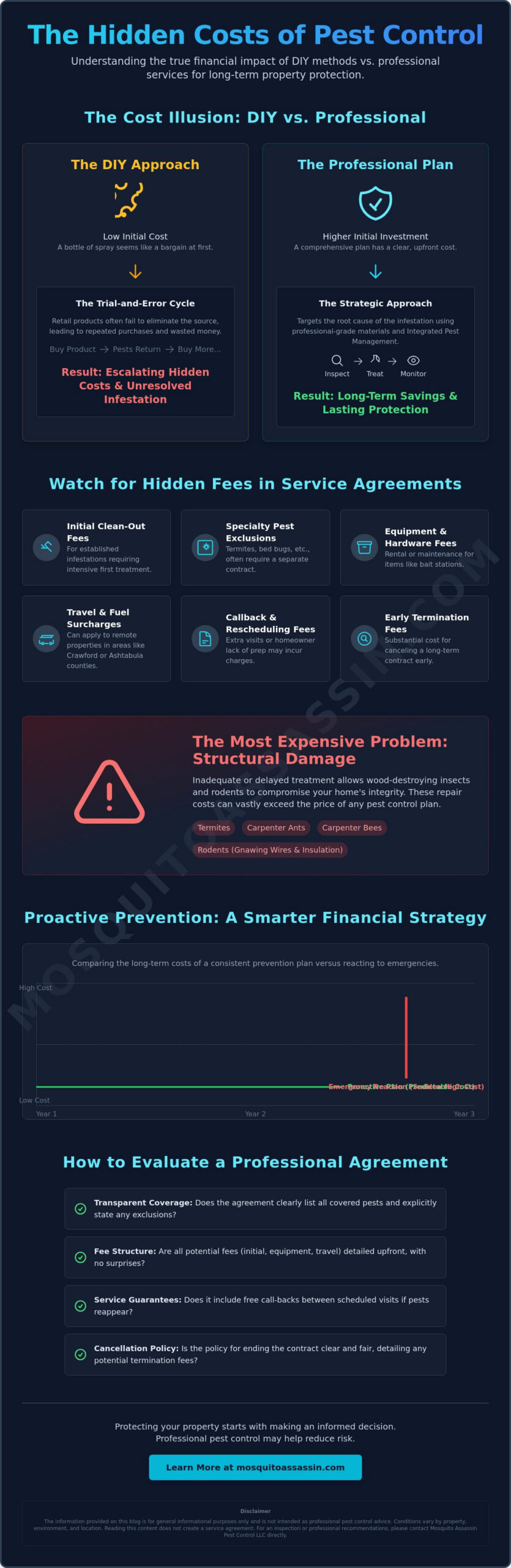
When you sign a service agreement, the number you see in bold is rarely the final amount you’ll pay over a year. Many homeowners define the hidden costs of pest control as any expense that isn’t clearly highlighted in the primary monthly or per-visit rate. These surprises often start with the very first visit. An initial setup fee, sometimes called a clean-out fee, is a standard industry practice for properties with established infestations. This charge covers the extra time and intensive materials required to achieve the total removal of a high population of pests before transitioning the property to a maintenance schedule.
To better understand the financial impact of infestations, watch this helpful video:
Beyond the initial visit, specialty pest exclusions are a frequent source of confusion. A standard plan might cover common ants and spiders but exclude bed bugs or termites. These wood-destroying organisms or blood-feeding pests often require separate, specialized agreements because the treatment methods are significantly more complex. It’s also vital to check for equipment fees. If a professional installs rodent bait stations or monitoring devices, there may be a rental or maintenance cost attached to that hardware. These devices are essential for long-term protection, but they aren’t always included in the basic service rate. Understanding that pest control prices fluctuate based on these fine-print details will help you set a realistic budget for home protection.
Understanding Service Limitations and Exclusions
A standard plan typically focuses on general household pests. It’s a common mistake to assume this includes wood-destroying organisms like termites or carpenter bees. To manage these effectively, professionals often use an Integrated Pest Management strategy that combines biological and chemical controls. If your contract doesn’t explicitly include call-backs or extra visits between scheduled services, you might face additional charges every time you see a stray bug. Additionally, review the cancellation policy. Early termination fees in long-term contracts can be substantial, often requiring you to pay back any initial discounts you received. These clauses ensure the company recovers the high cost of the initial treatment over the life of the agreement.
Administrative and Environmental Surcharges
Living in rural parts of Crawford County or Ashtabula County can sometimes lead to fuel or travel surcharges. These fees help cover the logistics of reaching remote properties. You should also consider the cost of your own time and preparation. Many treatments require extensive prep work, such as moving heavy furniture, emptying kitchen cabinets, or laundering linens, before a technician can begin. If a homeowner fails to complete these steps, some companies may charge a rescheduling fee. Additionally, if the property requires specialized exclusion hardware, such as heavy-duty metal mesh to block rodent entry points, expect to see maintenance or installation fees for that durable equipment.
Disclaimer: The information provided on this blog is for general informational purposes only and is not intended as professional pest control advice. Conditions vary by property, environment, and location. Reading this content does not create a service agreement. For an inspection or professional recommendations, please contact Mosquito Assassin Pest Control LLC directly.
The Financial Drain of DIY Pest Control Methods
The “immediate cost illusion” is a primary reason many homeowners in Erie and Crawford counties attempt to resolve infestations on their own. At first glance, a twenty dollar bottle of retail spray appears significantly more affordable than a professional service plan. However, this initial savings often marks the beginning of the hidden costs of pest control. Retail products are generally formulated with lower concentrations of active ingredients compared to professional-grade materials. This means they often fail to eliminate the entire colony, leading to a frustrating trial and error cycle. Homeowners frequently find themselves returning to the store every few weeks to purchase different brands or stronger baits, quickly accumulating expenses that rival or exceed the cost of a decisive professional intervention.
Beyond the cost of the products themselves, there is a substantial risk of property contamination and material waste. Without professional training, it’s easy to over-apply pesticides or place them in areas where they are ineffective. This misuse not only wastes money but can also lead to the contamination of living spaces or the accidental exposure of non-target animals. Professional technicians utilize specialized equipment designed for precision application, ensuring that materials reach the deep crevices where pests actually harbor. The general public simply does not have access to these high-stakes tools or the technical knowledge required to apply them with scientific accuracy.
The Cost of Recurrent Infestations
One of the most expensive mistakes in DIY pest control is focusing only on visible insects. Many store-bought treatments act as a repellent, which may seem effective initially but actually causes the colony to scatter and relocate to deeper, harder-to-reach areas of the home. This “budding” effect can turn a localized problem into a whole-house infestation. Effective general pest control requires identifying and sealing entry points rather than just treating the symptoms. When a DIY attempt fails, the eventual professional treatment often becomes more complex and labor-intensive, driving up the total investment required to secure the property.
Time Investment and Opportunity Costs
Your time has a tangible financial value. The hours spent researching pest behaviors, driving to hardware stores, and applying repetitive treatments represent a significant hidden expense. For many residents in Ashtabula County, the stress and mental load of managing an unresolved infestation can be overwhelming. A professional service provides more than just materials; it offers a warranty that ensures return visits are covered if pests persist. This protection eliminates the financial uncertainty of recurring problems. Choosing professional pest control allows property owners to delegate these high-stakes tasks to experts, ensuring the job is done correctly the first time.
Disclaimer: The information provided on this blog is for general informational purposes only and is not intended as professional pest control advice. Conditions vary by property, environment, and location. Reading this content does not create a service agreement. For an inspection or professional recommendations, please contact Mosquito Assassin Pest Control LLC directly.
Structural Damage and the Price of Inadequate Treatment
The most devastating hidden costs of pest control often involve the physical destruction of your home’s infrastructure. While a monthly service fee is predictable, the cost of replacing structural beams or floor joists is not. Wood-destroying insects like termites and carpenter bees can operate silently for years before the damage becomes visible. In regions like Erie and Crawford counties, where older wooden structures are common, these pests can compromise the integrity of a porch or foundation. Research indicates the average cost to repair termite damage is approximately $3,000, but major structural interventions can easily exceed $10,000. Inadequate treatment that fails to reach the core of a colony allows this erosion of home equity to continue unchecked.
Rodents present a different but equally expensive set of risks. Mice and rats have a biological need to gnaw on hard materials, and they frequently target electrical wiring behind walls. This behavior creates significant fire hazards and requires expensive electrical repairs to ensure the property remains up to code. Additionally, a rodent infestation can destroy attic insulation through nesting and contamination. Professional rodent removal is a multi-step process that must include detailed exclusion work. By sealing entry points and repairing damaged barriers, property owners can prevent the recurring financial losses associated with repetitive infestations and contaminated insulation remediation.
Impact on Property Value and Resale
A history of untreated or poorly managed pest issues can severely complicate a home sale. During a standard home inspection in Ashtabula County, evidence of past wood-destroying insect activity can stall a closing or force a significant price reduction. Buyers and lenders often require professional documentation, such as termite clearances, to prove a structure is sound. Beyond the hidden structural elements, pests can cause aesthetic damage to cabinetry, expensive hardwood flooring, and custom furniture. These repairs are rarely covered by standard homeowner’s insurance, leaving the property owner to cover the full cost of restoration before a sale can proceed.
Health-Related Financial Risks
The financial impact of pests extends into the household budget through health-related expenses and property loss. Many common pests trigger allergies or asthma, potentially leading to medical bills or missed work days. A single rodent or insect breach in a pantry can result in the immediate loss of hundreds of dollars in contaminated food items. Professional pest control may help reduce risk to the household environment by maintaining a sanitary perimeter. By investing in a methodical, professional approach, homeowners protect both their physical health and their financial stability from the unpredictable costs of a major infestation.
Disclaimer: The information provided on this blog is for general informational purposes only and is not intended as professional pest control advice. Conditions vary by property, environment, and location. Reading this content does not create a service agreement. For an inspection or professional recommendations, please contact Mosquito Assassin Pest Control LLC directly.
How to Evaluate a Professional Pest Control Agreement
Selecting a provider is a significant decision for your property’s long-term health. To avoid the hidden costs of pest control, homeowners must move beyond comparing simple price points. A comprehensive agreement should serve as a clear roadmap for protection, detailing exactly what is being treated and how often. When evaluating a contract, look for a structured framework that defines the scope of work. A professional agreement must clearly list the frequency of visits and the specific pests covered under the base rate. If an agreement is vague about whether it covers common regional invaders like carpenter ants or spiders, you may face unexpected charges later for “add-on” services that you assumed were included.
Liability protection is another critical factor often overlooked in the fine print. Always verify that a provider maintains current licensing and comprehensive insurance. This isn’t just a regulatory requirement; it’s a safeguard for the property owner. If an uninsured individual is injured on your property or causes accidental damage during a treatment, you could be held financially responsible. Beyond the technical scope, prioritize companies that offer a clear service guarantee or re-treatment policy. A reputable professional stands by their work. If pests return between scheduled visits, the agreement should specify that the provider will return to address the issue at no additional cost to you, protecting your budget from recurring visit fees.
Key Questions for Potential Providers
Before signing any document, request a written list of every pest included in the protection plan. Some contracts focus only on a narrow range of insects, leaving you vulnerable to others. Inquire about the “clean-out” process and whether the initial visit carries a different fee structure than subsequent maintenance visits. It’s also vital to ask if the company provides detailed written reports after every inspection. These reports should document findings, treatments applied, and any structural recommendations to prevent future breaches. Transparent documentation is the hallmark of a disciplined, professional service that values your home’s integrity.
Reviewing the Service Area and Local Reputation
Regional expertise is invaluable when managing pests in Erie and Crawford counties in Pennsylvania, or Ashtabula County in Ohio. A provider rooted in these communities understands the specific environmental pressures and seasonal behaviors of local pests. Check community-based reviews for mentions of transparency and professional conduct. Look for a provider that emphasizes education and prevention as part of their professional pest control services. Companies that focus on sealing entry points and reducing attractants often provide better long-term value than those that rely solely on repetitive chemical applications without addressing the root cause of the infestation.
Disclaimer: The information provided on this blog is for general informational purposes only and is not intended as professional pest control advice. Conditions vary by property, environment, and location. Reading this content does not create a service agreement. For an inspection or professional recommendations, please contact Mosquito Assassin Pest Control LLC directly.
Long-Term Prevention as a Financial Strategy
Adopting a proactive approach to property management is the most effective way to eliminate the hidden costs of pest control. Many homeowners wait until they see a visible infestation before calling for help, but emergency one-time treatments are often more expensive and less effective than year-round protection. Regular inspections allow a technician to identify early warning signs, such as small entry points or minor nesting activity, before they escalate into a crisis requiring specialty interventions. By maintaining a consistent perimeter, you prevent pests from establishing a foothold, which protects your home’s structural integrity and your family’s wellbeing.
Integrated Pest Management (IPM) serves as a sustainable and budget-friendly framework for this long-term strategy. Rather than relying solely on repetitive chemical applications, IPM focuses on understanding pest biology and modifying the environment to discourage activity. This methodical approach might include sealing cracks in the foundation or managing moisture levels around the property. From a financial perspective, the benefit of predictable monthly or bi-monthly billing is significant. It’s much easier to budget for a standard maintenance plan than it is to face a sudden, multi-thousand dollar repair bill for structural damage or electrical failure caused by undetected pests.
Seasonal Protection in PA and OH
In the tri-county area of Erie, Crawford, and Ashtabula, seasonal shifts bring specific financial risks. Summer surges in mosquitoes and ticks can limit the use of your outdoor space and increase health-related concerns, while the onset of winter drives rodents toward the warmth of your home. Proactive winter rodent exclusion is a vital part of a maintenance strategy. By securing the home in the fall, you avoid the high cost of spring cleanup and insulation remediation. It’s helpful to view professional pest control as an essential form of home maintenance, similar to servicing your HVAC system or inspecting your roof. Consistent care extends the life of these systems and prevents minor issues from becoming major liabilities.
Conclusion and Next Steps
Transparency and prevention are the most reliable tools for avoiding hidden pest control costs. When you understand the limitations of DIY methods and the true value of a professional agreement, you can make informed decisions that protect your investment. While the “immediate cost illusion” of store-bought products is tempting, the long-term data shows that professional pest control may help reduce risk and preserve property value over time. For an inspection or professional recommendations tailored to your home’s specific needs, contact a local professional to discuss a comprehensive protection plan.
Disclaimer: The information provided on this blog is for general informational purposes only and is not intended as professional pest control advice. Conditions vary by property, environment, and location. Reading this content does not create a service agreement. For an inspection or professional recommendations, please contact Mosquito Assassin Pest Control LLC directly.
Secure Your Home Against Unseen Financial Risks
Protecting your property requires moving beyond the initial price tag to consider the long-term health of your home. As explored throughout this guide, the hidden costs of pest control often stem from failed DIY attempts and the high price of repairing structural damage. By choosing transparent year-round protection plans, you replace unpredictable emergency expenses with a manageable maintenance schedule. Licensed and insured professionals in Erie, Crawford, and Ashtabula Counties provide the technical expertise needed to identify vulnerabilities before they become major liabilities. This proactive strategy is far more cost-effective than responding to a full-scale infestation after it’s already taken hold.
A disciplined approach to prevention ensures your living environment remains secure and your home equity is preserved. Professional pest control may help reduce risk by addressing the root causes of infestations rather than just treating visible symptoms. For homeowners who value clarity and effectiveness, taking a proactive stance is the most sustainable financial choice. To get started with a detailed assessment of your property, Request a Professional Inspection and Quote today. Taking this step helps ensure your home remains a safe haven for your family and provides the peace of mind that comes with expert oversight.
Disclaimer: The information provided on this blog is for general informational purposes only and is not intended as professional pest control advice. Conditions vary by property, environment, and location. Reading this content does not create a service agreement. For an inspection or professional recommendations, please contact Mosquito Assassin Pest Control LLC directly.
Frequently Asked Questions
What is usually excluded from a general pest control plan?
Standard protection plans typically focus on common crawling insects like ants, spiders, and crickets. Specialized pests such as bed bugs, wood-destroying termites, and carpenter bees are usually excluded because they require intensive, distinct treatment methodologies. Wildlife removal is also treated as a separate category that isn’t included in a general household pest agreement.
Why is there often an initial setup fee for pest services?
The first visit is significantly more labor-intensive than subsequent maintenance visits. This “clean-out” phase requires a thorough inspection and a higher volume of materials to eliminate an established population. Once the initial infestation is under control, the property transitions to a maintenance schedule which requires fewer materials and less time to manage.
Can DIY pest control actually cost more than hiring a professional?
Attempting to resolve an infestation with store-bought products often leads to higher total expenses. Data suggests that the combined cost of failed DIY attempts and the eventual professional service is typically 20% to 40% more than hiring a professional from the start. This is due to the repetitive purchase of ineffective materials and the continued growth of the infestation during the trial-and-error period.
How much does structural damage from termites typically cost to repair?
Repairing termite damage is a significant financial burden that averages around $3,000 per household. While minor cosmetic repairs might cost between $300 and $2,000, major structural damage to foundations or support beams can reach $5,000 to $15,000 or more. These expenses are rarely covered by standard homeowner’s insurance policies because they are classified as maintenance issues.
Are there extra charges for rodent bait stations or traps?
Equipment fees for monitoring devices and bait stations are common hidden costs of pest control that aren’t always reflected in the base rate. Some service agreements treat this hardware as a rental, while others include it in the plan. It’s essential to clarify if you’ll be billed for the installation or ongoing maintenance of these specialized tools before signing a contract.
What should I look for in a pest control service guarantee?
A reliable service guarantee should include a clear re-treatment policy that covers the cost of return visits. If pests persist or reappear between your regularly scheduled maintenance appointments, a professional provider should return to your property at no additional charge. This ensures that the financial risk of a persistent infestation remains with the service provider rather than the homeowner.
Is year-round pest protection worth the monthly cost?
Year-round plans are a strategic financial investment because they prioritize prevention over emergency response. Regular inspections allow professionals to catch issues like rodent entries or wood-destroying insect activity before they cause expensive structural or electrical damage. Predictable monthly billing also helps homeowners avoid the sudden, large repair bills associated with undetected infestations.
Do pest control companies charge for travel to rural areas?
Travel or fuel surcharges are common for properties located in more remote parts of Crawford or Ashtabula counties. These fees help cover the logistics and time required for a technician to reach rural sites. When requesting a quote, always verify if your specific location triggers any geographic surcharges to ensure your final bill matches your expectations.
Disclaimer: The information provided on this blog is for general informational purposes only and is not intended as professional pest control advice. Conditions vary by property, environment, and location. Reading this content does not create a service agreement. For an inspection or professional recommendations, please contact Mosquito Assassin Pest Control LLC directly.