
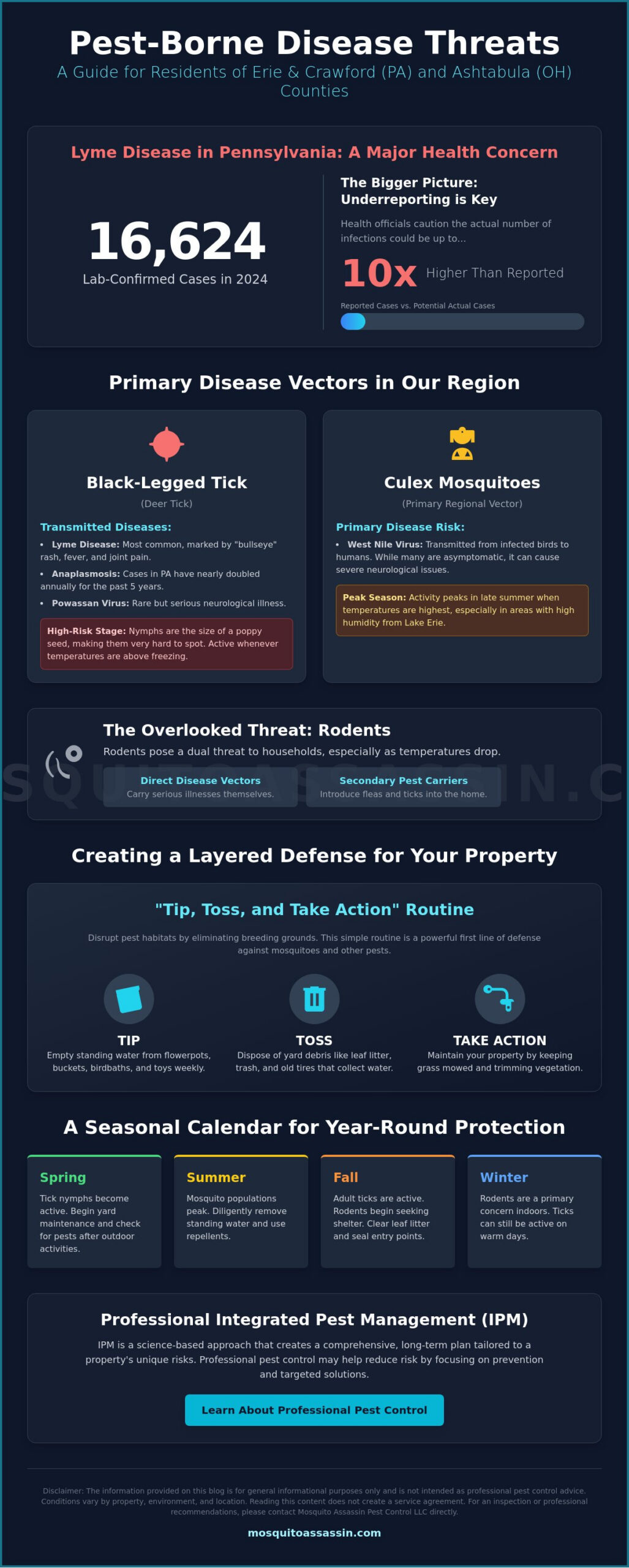
In 2024, Pennsylvania recorded 16,624 lab-confirmed cases of Lyme disease, and health officials caution that the actual number of infections could be ten times higher due to underreporting. For residents in Erie, Crawford, and Ashtabula counties, the challenge of protecting my family from pest-borne diseases is a serious, year-round priority. It’s natural to feel anxious about ticks in the yard or the threat of rodents entering the home as temperatures drop. You deserve to feel secure in your own living space, knowing that your loved ones are shielded from risks like West Nile virus or anaplasmosis.
This guide provides a clear path to safety by identifying regional pest threats and explaining how a layered defense strategy can secure your property. You’ll learn which home maintenance steps are most effective and how professional pest control may help reduce risk without the confusion of unproven DIY treatments. By the end of this article, you’ll have the actionable knowledge needed to maintain a healthy household and regain peace of mind.
Disclaimer: The information provided on this blog is for general informational purposes only and is not intended as professional pest control advice. Conditions vary by property, environment, and location. Reading this content does not create a service agreement. For an inspection or professional recommendations, please contact Mosquito Assassin Pest Control LLC directly.
Key Takeaways
- Identify the specific regional threats posed by black-legged ticks and Culex mosquitoes in Pennsylvania and Ohio.
- Establish a “Tip, Toss, and Take Action” routine to remove standing water and maintain landscaping to disrupt pest habitats.
- Recognize the dual threat of rodents, which carry serious illnesses and often introduce secondary pests like fleas into the home.
- Implement a seasonal defense strategy as a vital part of protecting my family from pest-borne diseases all year long.
- Utilize Integrated Pest Management (IPM) principles to create a science-based, professional plan tailored to your property’s unique risks.
Common Disease-Carrying Pests in Pennsylvania and Ohio
Understanding how pests transmit illness is the first step in protecting my family from pest-borne diseases. These illnesses are technically known as vector-borne diseases, which are conditions transmitted through the bite of an infected arthropod or disease vector. In our region, the primary culprits are black-legged ticks and Culex mosquitoes. Our local geography makes this a high-stakes issue for homeowners. The transition zones where residential yards meet the dense woodlots of Erie and Crawford counties create ideal breeding grounds. These “edge environments” provide the moisture and cover that pests need to thrive near human activity.
To better understand how these pests impact your household, watch this helpful video:
The geography of Northwest Pennsylvania and Northeast Ohio provides a perfect environment for these vectors. High humidity from Lake Erie, combined with heavy leaf litter and tall grasses, offers pests a sanctuary from the sun. Over the last decade, our area has seen a significant rise in tick-borne illnesses. In 2024, Pennsylvania recorded 16,624 lab-confirmed cases of Lyme disease. Because many cases go unreported, the actual number of infections could be ten times higher according to health officials. This trend highlights the necessity of a proactive defense strategy for every property owner.
The Threat of Ticks and Lyme Disease
The black-legged tick, often called the deer tick, is a persistent threat in Pennsylvania and Ohio. These pests have a complex two-year lifecycle, but they are most dangerous during the nymph stage. Nymphs are roughly the size of a poppy seed, making them incredibly difficult to spot on the skin. While they’re most active during the spring and fall, they can quest for a host whenever temperatures rise above freezing. Lyme disease is the most common result of a bite. Symptoms usually include a “bullseye” rash, fever, and joint pain. Early detection is vital for effective recovery. Residents should also be aware of Anaplasmosis, which has nearly doubled every year for the past five years in Pennsylvania, and the rare but serious Powassan virus.
Mosquito-Borne Risks: West Nile and Beyond
West Nile Virus is the primary mosquito-borne concern for the Great Lakes region. Culex mosquitoes typically pick up the virus from local bird populations. Once a mosquito is infected, it can transmit the virus to humans through a single bite. While many people don’t show symptoms, the virus can cause severe neurological issues in vulnerable individuals. Activity in Ashtabula and surrounding areas usually peaks in late summer when temperatures are highest and mosquito populations are at their largest. Staying informed about these local threats is a critical part of protecting my family from pest-borne diseases throughout the warmer months. Consistent yard maintenance and professional evaluations can significantly reduce the presence of these flying vectors.
Disclaimer: The information provided on this blog is for general informational purposes only and is not intended as professional pest control advice. Conditions vary by property, environment, and location. Reading this content does not create a service agreement. For an inspection or professional recommendations, please contact Mosquito Assassin Pest Control LLC directly.
Personal and Yard Protection Strategies for Insects
Taking control of your property is the most effective way to reduce the health risks associated with local pests. When I focus on protecting my family from pest-borne diseases, I start with a layered defense that combines personal habits with property modifications. Individual protection begins with using EPA-registered repellents. Products containing DEET, picaridin, or oil of lemon eucalyptus are proven to provide reliable protection against bites. Beyond sprays, establishing a “safe zone” for children is vital. Place swing sets and play areas in the center of the lawn, well away from wooded edges or tall grass where ticks are most likely to quest for a host.
Property management is equally important. A simple “Tip, Toss, and Take Action” routine can significantly disrupt the lifecycle of many flying insects. This involves inspecting your yard after every rainfall to ensure no water is collecting in hidden spots. Maintaining a well-manicured landscape by keeping grass short and clearing away leaf litter removes the damp, shaded environments that ticks require to survive. Professional mosquito and tick control services can provide a supplemental barrier that reinforces these manual steps, helping to secure the perimeter of your home.
Eliminating Mosquito Breeding Grounds
Mosquitoes only need a small amount of stagnant water to lay hundreds of eggs. Check your gutters at least twice a year; clogged leaves create perfect, elevated breeding pools. Weekly inspections of birdbaths, flowerpots, and discarded tires are necessary to dump any standing water. Address drainage issues in low-lying areas of the lawn where puddles persist after a storm. Inside the home, ensure all window screens fit tightly and are free of even the smallest tears to prevent insects from entering your living space.
Tick-Safe Landscaping Practices
Modifying the border of your property can drastically reduce tick migration into your yard. Create a three-foot-wide barrier of woodchips or gravel between your lawn and any wooded areas. This creates a dry, hot zone that ticks are reluctant to cross. It is also helpful to remove invasive plants like Japanese Barberry. Research has shown that these dense, humid shrubs provide a sanctuary for ticks and the mice that carry them. Finally, stack firewood neatly in a dry, sunlit area away from the house. This discourages rodents from nesting near your home, which in turn keeps the ticks they carry at a distance. Protecting my family from pest-borne diseases is a continuous process of making your yard less hospitable to these vectors.
Disclaimer: The information provided on this blog is for general informational purposes only and is not intended as professional pest control advice. Conditions vary by property, environment, and location. Reading this content does not create a service agreement. For an inspection or professional recommendations, please contact Mosquito Assassin Pest Control LLC directly.
The Overlooked Threat: Rodents as Disease Vectors
While many homeowners focus on mosquitoes and ticks during the warmer months, rodents represent a significant, year-round risk to household health. Protecting my family from pest-borne diseases involves looking beyond the backyard and into the structure of the home itself. Mice and rats are not just a nuisance; they are carriers of serious illnesses such as Hantavirus and Leptospirosis. In 2025, the United States saw 38 reported cases of Hantavirus, which was a 192% increase from 2022. Although the last known case in Pennsylvania was in 2022, the rising national trend serves as a reminder that these threats remain active in temperate climates like Erie and Crawford counties.
The danger of a rodent infestation is often invisible. Disease transmission frequently occurs when dried droppings or urine are disturbed, causing microscopic particles to become airborne. When inhaled, these contaminants can lead to severe respiratory issues. Additionally, rodents act as transport for secondary pests. A single mouse can carry dozens of the black-legged ticks or fleas discussed earlier in this guide, effectively bringing outdoor threats directly into your bedrooms and living spaces. Addressing a rodent problem requires a disciplined three-step approach: professional removal of the current population, rigorous property maintenance, and physical exclusion to prevent future entry.
Identifying Signs of a Rodent Infestation
Early detection is the best way to prevent a small problem from becoming a health crisis. Look for distinct gnaw marks on food packaging, baseboards, or even electrical wiring, which can create a fire hazard. Droppings are another clear indicator; they are typically found in dark, secluded areas like pantries, under kitchen sinks, or along the perimeter of the basement. During the evening hours, listen for scratching or scurrying sounds within the walls or ceilings. Because rodents are nocturnal, these sounds are often the first sign that the home’s perimeter has been breached.
Professional Exclusion and Maintenance
Rodents are survivalists capable of squeezing through gaps as small as a dime. Effective exclusion involves sealing these entry points with durable materials that pests cannot chew through, such as steel wool or heavy-duty caulk. Beyond physical barriers, maintaining a clean environment is essential. Store all pantry items in airtight glass or plastic containers to remove the scent of food that attracts pests. For a deeper look at the methodology behind reclaiming your space, consider reading our detailed resource on Professional Rodent Removal: A Complete Guide to Reclaiming Your Home. Combining these sanitation efforts with professional pest control may help reduce risk and ensure long-term protection.
Disclaimer: The information provided on this blog is for general informational purposes only and is not intended as professional pest control advice. Conditions vary by property, environment, and location. Reading this content does not create a service agreement. For an inspection or professional recommendations, please contact Mosquito Assassin Pest Control LLC directly.
A Seasonal Calendar for Year-Round Family Protection
Effective pest management is not a one-time event; it is a continuous cycle of prevention and intervention. In the Great Lakes region, the changing weather patterns dictate which threats are most prominent at any given time. Protecting my family from pest-borne diseases requires a dynamic approach that shifts focus as temperatures rise and fall. Ongoing management remains the most reliable way to stay ahead of infestations before they become health hazards. By following a structured calendar, you can address vulnerabilities before pests have a chance to establish a presence on your property.
Spring and Summer: The Height of Insect Pressure
Spring is the critical window for yard cleanup. As the ground thaws in Erie and Crawford counties, focus on removing accumulated debris and clearing out gutters. These actions address the early stages of mosquito larvae prevention by eliminating the damp environments where they thrive. Scheduling initial barrier sprays before the first major mosquito hatch is a proactive step that pays dividends throughout the season. As summer arrives and insect activity peaks, the focus shifts to personal protection and maintaining those barriers. This is also the time for high vigilance; perform tick checks on children and pets daily after they spend any time outdoors. For a deeper understanding of how these preventive measures work, you can explore our Mosquito Control Program: How It Works & Why You Need One.
Fall and Winter: Securing the Home Envelope
When the first frost hits Ashtabula County and the surrounding areas, outdoor insect populations begin to decline, but the threat of rodents increases. Mice and rats aggressively seek the warmth of the home envelope as the ground hardens and food sources become scarce. Fall is the time to inspect the foundation and roofline for any new gaps or cracks that may have opened over the year. During the winter, the focus moves to monitoring internal structures like attics, basements, and crawlspaces. It is also helpful to manage indoor humidity levels, as dry air is less attractive to overwintering pests like spiders or silverfish. Reviewing the effectiveness of your yearly plan during the winter months allows for strategic adjustments before the spring thaw brings the next wave of activity. Scheduling a professional evaluation for pest control in your area can help identify structural vulnerabilities before the seasons change.
Disclaimer: The information provided on this blog is for general informational purposes only and is not intended as professional pest control advice. Conditions vary by property, environment, and location. Reading this content does not create a service agreement. For an inspection or professional recommendations, please contact Mosquito Assassin Pest Control LLC directly.
Professional Integrated Pest Management and Risk Reduction
Integrated Pest Management (IPM) is a science-based, common-sense approach that focuses on long-term prevention. Rather than relying on a single treatment, IPM uses a combination of biological, cultural, and physical tactics to manage pest populations effectively. For homeowners, this means that protecting my family from pest-borne diseases isn’t just about applying a product; it’s about understanding the specific ecosystem of your property. Licensed professionals conduct thorough evaluations to identify unique risks, such as structural gaps or specific vegetation that attracts regional vectors. This methodical approach ensures that interventions are targeted and purposeful, reducing the reliance on broad-spectrum applications while maximizing results.
Customized treatment plans offer a significant advantage over generic DIY solutions. Off-the-shelf products often fail to address the root cause of an infestation, leading to a cycle of recurring problems. Professionals possess the technical knowledge to handle specialized infestations like bed bugs or termites, which require precise methodologies to eliminate entirely. Termite inspections and treatment, for instance, are critical in Pennsylvania and Ohio where structural damage can go unnoticed for years. By addressing these high-stakes pests with professional-grade strategies, you ensure a higher standard of safety for your household and your property’s integrity.
Why Professional Oversight Matters
Expert identification is the cornerstone of effective pest control. Many pests look similar to the untrained eye, but they often require vastly different management strategies. Professionals use specialized tools and methods that aren’t available to the general public, allowing them to reach nesting sites deep within walls or in dense foliage. This expertise ensures that the right treatment is applied to the right pest at the right time. For a comprehensive look at how these strategies come together, you can read our General Pest Control: The Complete Guide for Homeowners. Professional pest control may help reduce risk by maintaining consistent pressure on pest populations throughout the year.
Choosing a Local Service Provider
Selecting a provider with deep roots in the Erie, Crawford, and Ashtabula communities is essential. Local experts understand the specific environmental factors of Northwest Pennsylvania and Northeast Ohio, from Lake Erie’s humidity to the local bird populations that influence West Nile virus cycles. When evaluating a provider, verify that they offer comprehensive options like the Platinum Year-Round Protection plan. These structured General Pest Control Plans provide the consistent oversight necessary to adapt to seasonal shifts. Protecting my family from pest-borne diseases is a significant responsibility, and partnering with a neighborly, dependable expert provides the peace of mind that your home is being monitored by those who truly understand the local landscape.
Disclaimer: The information provided on this blog is for general informational purposes only and is not intended as professional pest control advice. Conditions vary by property, environment, and location. Reading this content does not create a service agreement. For an inspection or professional recommendations, please contact Mosquito Assassin Pest Control LLC directly.
Securing Your Home Against Regional Pest Threats
Maintaining a safe living environment requires a proactive stance against the unique biological challenges found in Northwest Pennsylvania and Northeast Ohio. By identifying local vectors like the black-legged tick and implementing a seasonal defense calendar, property owners can significantly disrupt the lifecycle of dangerous insects and rodents. Achieving peace of mind regarding the health of your household starts with a commitment to protecting my family from pest-borne diseases through consistent yard maintenance and structural exclusion.
While individual efforts provide a baseline of protection, professional pest control may help reduce risk by applying specialized tools and scientific methodologies. Licensed and insured local experts serving Erie, Crawford, and Ashtabula counties can identify vulnerabilities that are often overlooked. Options like the Platinum Year-Round Protection plans ensure that your property remains under constant supervision as environmental conditions shift. To begin a comprehensive strategy for your home, contact Mosquito Assassin Pest Control LLC for an inspection or visit mosquitoassassin.com for more information. Taking these steps today creates a lasting barrier that keeps your loved ones secure throughout every season.
Disclaimer: The information provided on this blog is for general informational purposes only and is not intended as professional pest control advice. Conditions vary by property, environment, and location. Reading this content does not create a service agreement. For an inspection or professional recommendations, please contact Mosquito Assassin Pest Control LLC directly.
Frequently Asked Questions
What are the most common diseases carried by pests in Northwest Pennsylvania?
Lyme disease and anaplasmosis are the primary tick-borne threats in our region. Pennsylvania recorded 16,624 lab-confirmed cases of Lyme disease in 2024, though actual numbers are likely much higher. West Nile virus remains the top mosquito-borne concern, especially in counties bordering Lake Erie where humidity levels remain high throughout the summer months.
Can rodents in my house actually make my family sick?
Yes, rodents transmit dangerous illnesses like Hantavirus and Leptospirosis through their urine, droppings, and saliva. When these waste materials dry, microscopic particles can become airborne and cause severe respiratory distress if inhaled. Rodents also carry secondary pests like ticks and fleas into your living spaces, which introduces additional disease vectors to your household.
Is it safe to have my yard treated for mosquitoes if I have pets and children?
Licensed professionals apply products that are specifically registered for use in residential environments. These treatments are applied following strict safety protocols, and the yard is safe for children and pets to enjoy once the application has completely dried. This professional intervention is a vital component of protecting my family from pest-borne diseases by reducing the local insect population.
How often should I have my home inspected for pests to ensure safety?
A quarterly inspection schedule is the most effective way to maintain a secure perimeter against seasonal threats. These regular evaluations allow professionals to identify new structural gaps before rodents seek warmth in the fall or insects hatch in the spring. Consistent monitoring ensures that your prevention strategies remain effective as environmental conditions change throughout the year.
Does professional pest control help with tick prevention better than store-bought products?
Professional treatments provide more comprehensive coverage by targeting specific habitats like woodlot edges, leaf litter, and tall grass. Licensed applicators use specialized equipment to reach the underside of foliage where ticks often congregate. Store-bought products often lack the residual strength and precision application needed to create a lasting barrier across an entire property.
What should I do if I find a tick on my child or pet?
Remove the tick immediately using fine-tipped tweezers to grasp it as close to the skin’s surface as possible. Pull upward with steady, even pressure and avoid twisting the tick, which can cause the mouthparts to break off. After removal, clean the bite area thoroughly with rubbing alcohol or soap and water, and monitor for symptoms like fever or a bullseye rash.
Can pests carry diseases that affect indoor air quality?
Rodents significantly impact indoor air quality when their waste products decompose and circulate through the home. Particles from dried droppings and urine can enter HVAC systems, triggering allergies, asthma, or more serious respiratory conditions like Hantavirus. Professional rodent control and exclusion are necessary steps to ensure the air inside your home remains clean and breathable.
Why is year-round pest control better than one-time treatments for disease prevention?
Year-round management addresses the distinct lifecycles of pests as they adapt to the changing seasons in Pennsylvania and Ohio. A one-time treatment only addresses a current infestation, while ongoing plans maintain constant pressure to prevent pests from returning. This consistent approach is the most reliable method for protecting my family from pest-borne diseases during every month of the year.
Disclaimer: The information provided on this blog is for general informational purposes only and is not intended as professional pest control advice. Conditions vary by property, environment, and location. Reading this content does not create a service agreement. For an inspection or professional recommendations, please contact Mosquito Assassin Pest Control LLC directly.