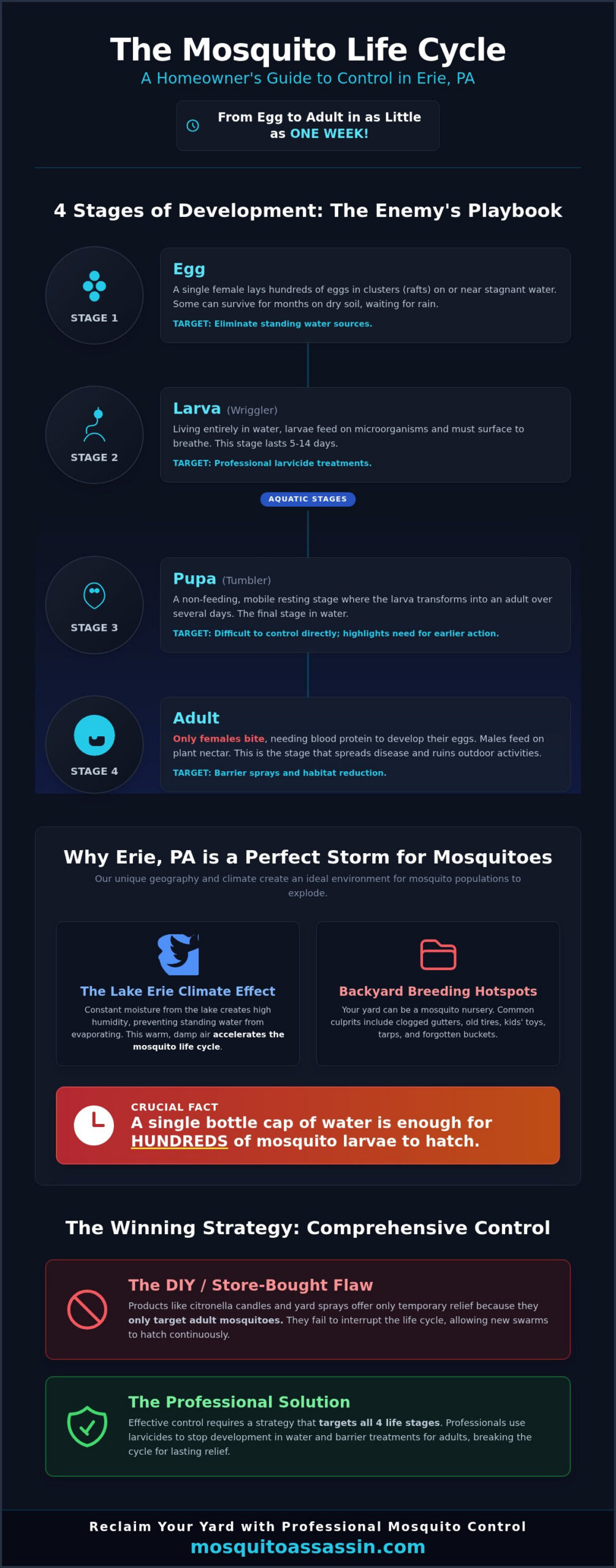
With West Nile Virus detected in Ashtabula County mosquito pools during the 2026 season, choosing between professional mosquito yard treatment vs DIY methods has become a matter of health as much as comfort. It’s frustrating to invest in retail foggers and backyard candles only to be driven indoors by pests just hours later. Many residents in Erie, Crawford, and Ashtabula counties find that DIY products often fail to address the root of the infestation, leading to wasted money and continued bites. It is common to feel that reclaiming a backyard from aggressive mosquitoes is a losing battle when using standard retail equipment.
This comparison reveals the technical differences between retail chemicals and the methodical approach used by licensed experts. Readers will gain a clear understanding of the cost-to-effectiveness ratio and learn how property-specific inspections target local breeding habits. This guide explains why professional-grade applications provide a higher level of protection for family gatherings, ensuring that summer evenings are spent enjoying the property rather than fighting off mosquitoes.
Disclaimer: The information provided on this blog is for general informational purposes only and is not intended as professional pest control advice. Conditions vary by property, environment, and location. Reading this content does not create a service agreement. For an inspection or professional recommendations, please contact Mosquito Assassin Pest Control LLC directly.
Key Takeaways
- Understand how the high humidity of the Great Lakes region accelerates breeding for the dozens of mosquito species found in Pennsylvania and Ohio.
- Learn why retail products like citronella candles and handheld foggers often fail to provide lasting relief against aggressive daytime biters.
- Analyze the technical differences of professional mosquito yard treatment vs DIY by comparing droplet size, coverage, and the use of specialized surfactants.
- Identify common mosquito breeding sites on local properties, including clogged gutters and hidden standing water in Erie and Crawford counties.
- Discover how recurring service programs break the mosquito lifecycle to provide consistent, long-term protection for outdoor living spaces.
The Mosquito Challenge in Pennsylvania and Ohio
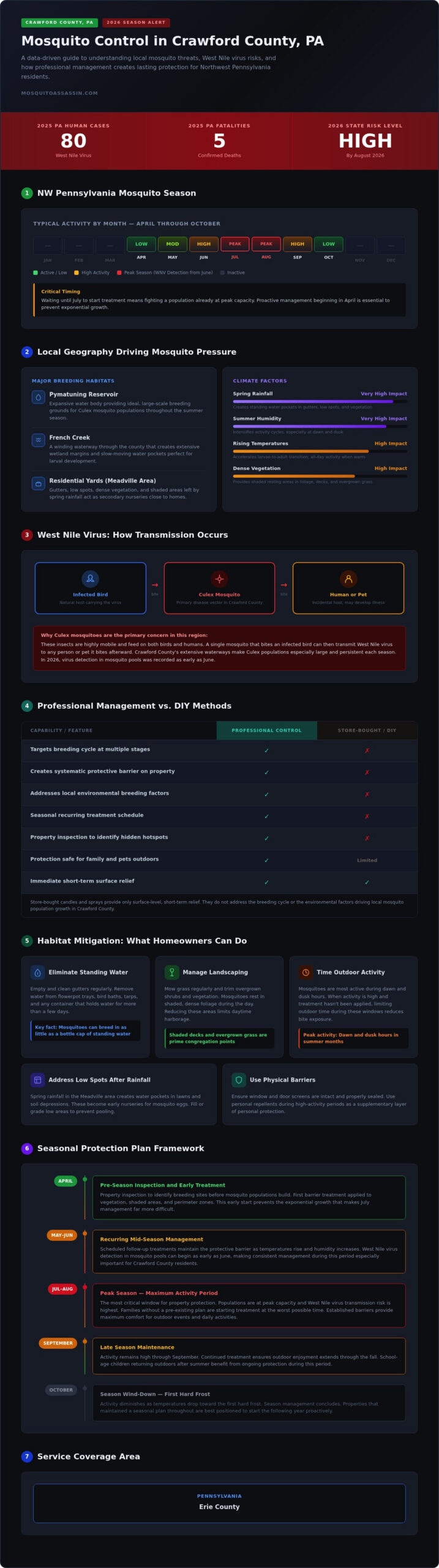
Proximity to Lake Erie creates a high-humidity environment that acts as a catalyst for mosquito populations. In Erie and Crawford Counties, as well as Ashtabula County, property owners often find themselves overwhelmed by the sheer volume of pests. When evaluating professional mosquito yard treatment vs DIY, it’s vital to recognize that our regional climate provides nearly perfect conditions for rapid reproduction. Retail products often struggle to provide lasting relief because they aren’t formulated to withstand the frequent lake-effect rain and high moisture levels characteristic of our summers. This results in a cycle where homeowners spend significant time and money on temporary fixes that fail to address the underlying pressure.
Regional Climate Factors and Pest Activity
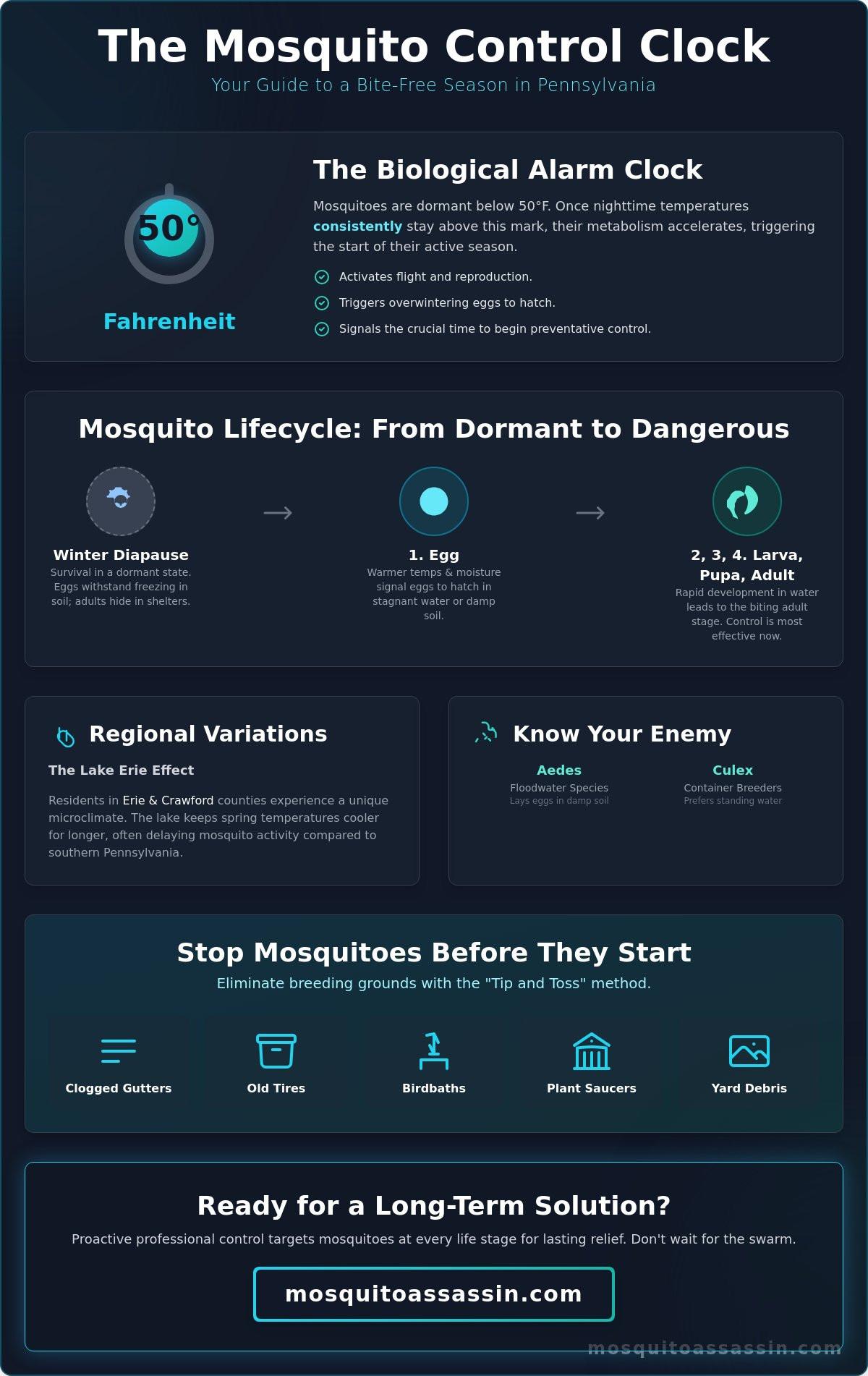
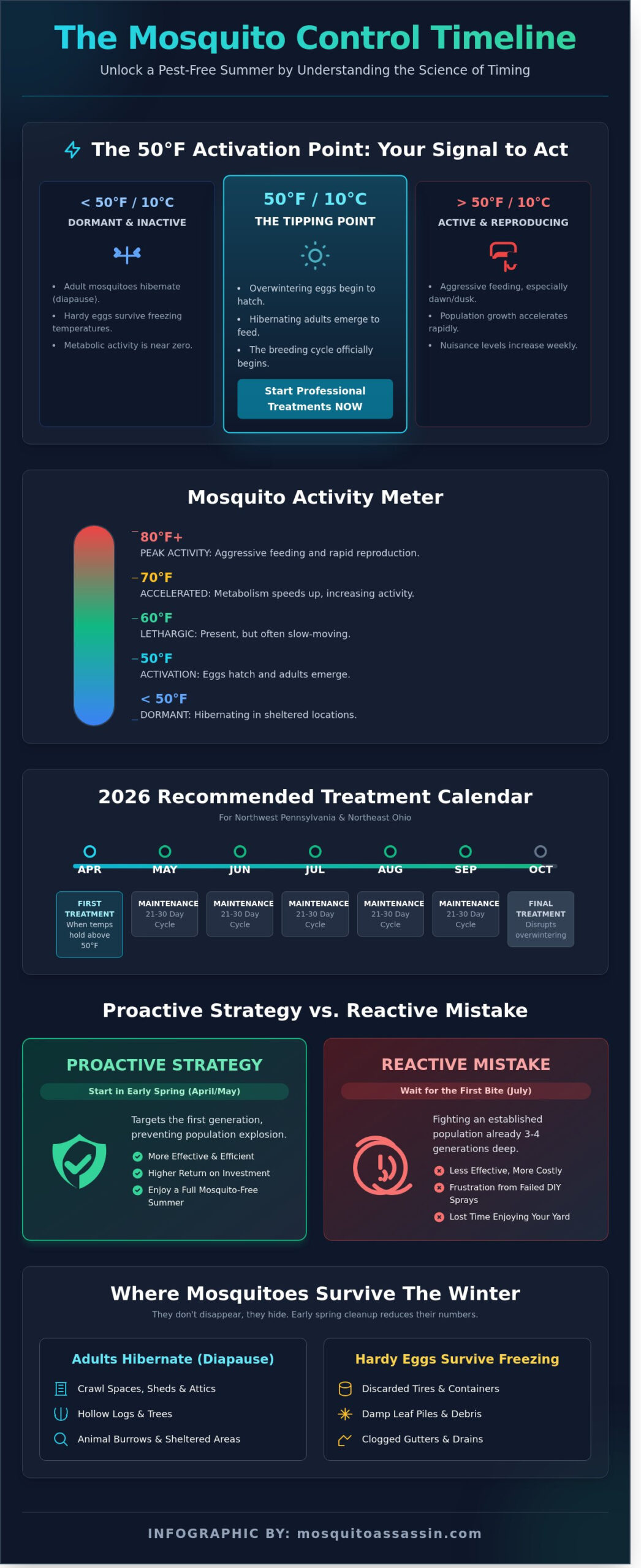
Heavy spring rains common in Northwest Pennsylvania and Northeast Ohio create stagnant pools that serve as primary nurseries for larvae. Crawford County’s extensive woodlots offer shaded, humid resting spots where mosquitoes can survive the heat of the day. Local mosquito surges typically begin once overnight temperatures consistently stay above 50 degrees Fahrenheit. High humidity levels prevent the natural desiccation of eggs, allowing populations to explode within days of a rainfall event. Property owners often struggle with DIY efforts in this climate because store-bought sprays lack the durability required for the Lake Erie shoreline. The rapid evaporation of retail-grade mist and the lack of professional-grade surfactants mean that a single rain shower can wash away hours of work.
The Biology of Local Mosquito Species
Pennsylvania and Ohio are home to approximately 60 different species, each with unique behaviors. Container-breeding mosquitoes like the Asian Tiger thrive in small amounts of water found in flowerpots or tires, while floodwater species emerge in massive numbers after heavy storms. Most common local species have a flight range of one to three miles, meaning pests from neighboring properties can easily migrate into your yard. The mosquito lifecycle progresses from egg to larva and pupa before emerging as a flying adult. Effective Mosquito control strategies must account for these biological differences to be successful. Without a professional understanding of where these specific species rest and breed, homeowners often spray areas that have no impact on the overall population.
Disclaimer: The information provided on this blog is for general informational purposes only and is not intended as professional pest control advice. Conditions vary by property, environment, and location. Reading this content does not create a service agreement. For an inspection or professional recommendations, please contact Mosquito Assassin Pest Control LLC directly.
Limitations of DIY Mosquito Control Methods
Many property owners in Northwest Pennsylvania and Northeast Ohio begin their summer by purchasing retail foggers, coils, and candles. While these products promise immediate relief, they often fail to deliver a long-term solution for a persistent infestation. When comparing professional mosquito yard treatment vs DIY, the primary difference lies in the reach and duration of the application. Citronella candles and spatial repellents depend on a completely still atmosphere to function; even a slight breeze off Lake Erie can disperse the repellent, leaving guests unprotected within minutes.
Retail Product Efficacy and Reach
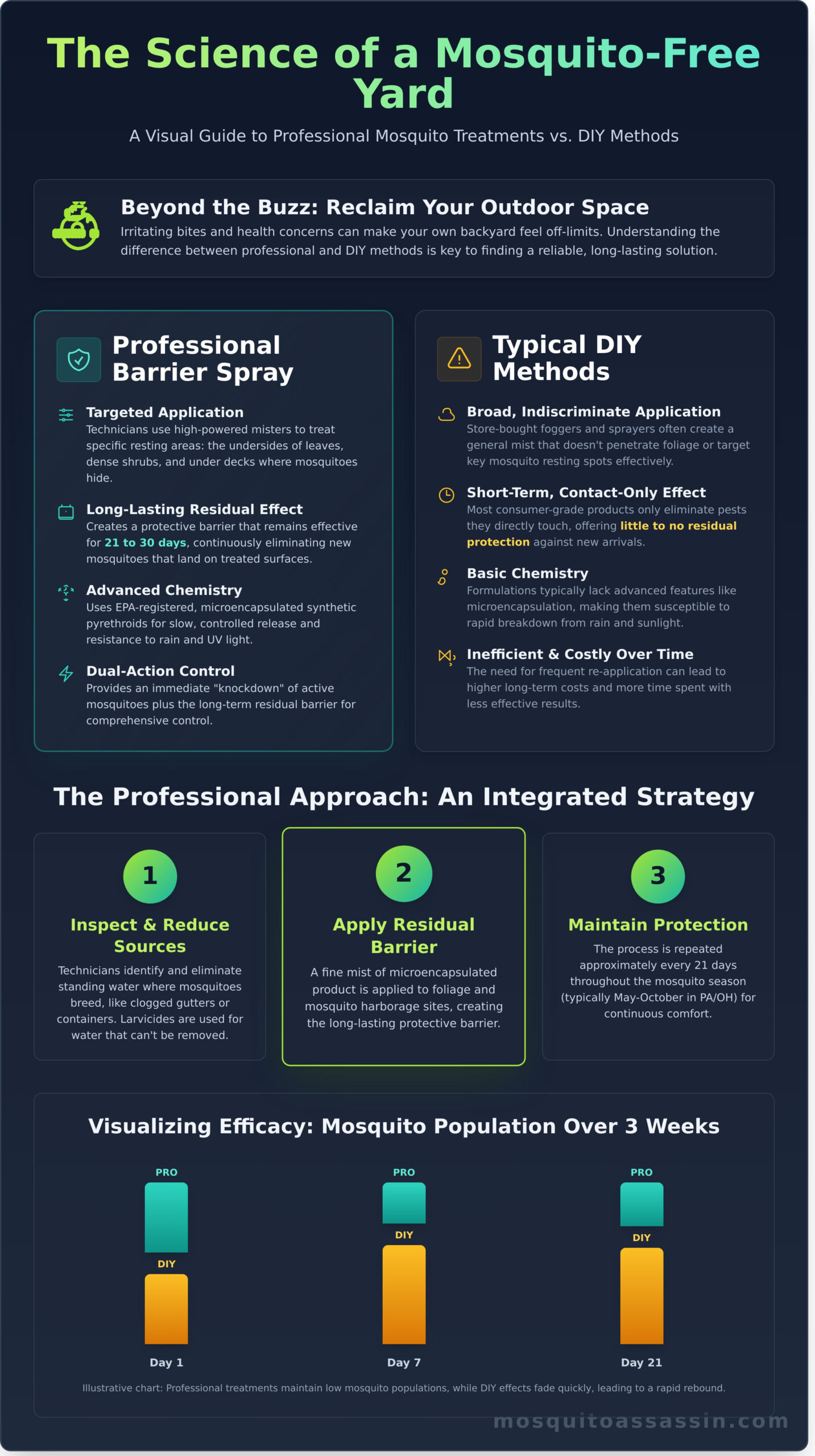
Consumer-grade pesticides typically have a very short residual life. Most retail sprays are designed for an immediate contact kill but lack the staying power to handle new mosquitoes arriving from neighboring woodlots in Crawford or Ashtabula counties. Additionally, store-bought handheld equipment often produces large, heavy droplets. These droplets fall quickly to the ground rather than drifting into the dense foliage where mosquitoes actually rest. Without the ability to coat the undersides of leaves, DIY efforts miss the primary habitat of the Asian Tiger and Northern House mosquito, leading to a quick return of the problem.
- Spatial repellents are easily neutralized by light winds common in coastal regions.
- Retail foggers lack the pressure required to penetrate deep into thick brush.
- Consumer products often require frequent reapplication, which increases overall costs over time.
The Risk of Improper Application
Improper application is a common pitfall for homeowners. Many people over-apply chemicals to their lawns, which is rarely where mosquitoes reside during the day. This leads to unnecessary environmental runoff without solving the pest problem. Misidentifying breeding sites, such as clogged gutters or hidden low spots on the property, results in wasted effort and continued bites. While DIY products are accessible, professional mosquito control techniques focus on integrated pest management to target the source of the population rather than just the flying adults.
Professional pest control may help reduce risk by utilizing specialized equipment that ensures thorough coverage of resting areas. For those who have spent significant money on ineffective retail solutions, seeking an inspection of your property’s specific vulnerabilities can prevent further frustration and wasted resources. Licensed professionals understand the biology of local species and can identify exactly where treatments will be most effective.
Disclaimer: The information provided on this blog is for general informational purposes only and is not intended as professional pest control advice.
Professional Treatment vs DIY: A Technical Comparison
The core difference between professional mosquito yard treatment vs DIY lies in the engineering of the equipment and the chemistry of the products used. Most homeowners rely on manual pump sprayers or low-pressure handheld foggers that produce large, heavy droplets. These droplets lack the velocity to penetrate deep into thick ornamental shrubs or the underside of leaves where mosquitoes hide during the day. In contrast, professional technicians use high-pressure mist blowers that atomize the solution into micron-sized droplets. This creates a turbulent air current that flips leaves, ensuring the product coats the exact resting sites that DIY methods consistently miss.
Equipment and Application Science
Professional motorized blowers operate at significantly higher PSI than standard consumer equipment. This power allows for a reach of 20 to 30 feet, covering the tall canopy of trees where certain species frequent. Micron-sized droplets are light enough to stay suspended in the air longer, providing a thorough mist that settles into every crack and crevice of a property. Professional residual barriers provide consistent protection by adhering to foliage through rain and humidity. This durability is achieved through professional-grade surfactants and stickers that are not available in retail formulations. These additives prevent the active ingredients from washing away during the frequent lake-effect rain showers common in Erie and Crawford counties.
Knowledge of Integrated Pest Management
Technical superiority extends beyond equipment to the methodology of Integrated Pest Management (IPM). While a DIY approach usually involves spraying the entire lawn, professional technicians conduct a methodical property inspection to identify cryptic breeding grounds. These may include drainage pipes, hollow tree stumps, or specific types of vegetation that hold water. The EPA on Mosquito Misting Systems highlights that automated or broad-spectrum DIY systems often fall short of the precision required for effective control. Professional monitoring ensures that treatments are adjusted based on the current mosquito lifecycle and local environmental changes. Cryptic breeding grounds, such as the catch basins of leaf-filled gutters, require specific larvicides that DIY users often overlook. For those seeking a comprehensive strategy, exploring professional mosquito control solutions can provide a more disciplined operational approach than store-bought alternatives.
Disclaimer: The information provided on this blog is for general informational purposes only and is not intended as professional pest control advice.

Assessing Your Property for Mosquito Vulnerabilities
Identifying the specific vulnerabilities of a property is a critical step in effective pest management. When weighing the benefits of professional mosquito yard treatment vs DIY, the inspection phase is often where the most significant differences emerge. While a homeowner might notice a bucket of water or a visible puddle, a professional eye looks for the structural and environmental factors that allow mosquito populations to persist despite surface-level treatments. Identifying these hidden nurseries is essential for breaking the reproductive cycle.
Common Breeding Sites in PA and OH Yards
In Erie and Crawford counties, clogged gutters are a primary source of persistent infestations. These debris-filled channels act as elevated breeding nurseries, protected from wind and many natural predators. Because they are high above the ground, they often go completely untreated during standard DIY applications. Additionally, the heavy clay soils prevalent in Northwest Pennsylvania and Northeast Ohio create unique drainage challenges. Low-lying areas in the lawn can hold standing water for several days after a lake-effect storm, providing more than enough time for a new generation of larvae to emerge. Ornamental ponds, birdbaths, and even the saucers under flowerpots also require constant vigilance. Without consistent circulation or targeted management, these features become high-density breeding zones that can produce thousands of mosquitoes weekly.
Reducing Harborage through Landscape Management
Mosquitoes spend the majority of their adult lives resting rather than flying. They seek out cool, damp areas to avoid the midday sun, making dense vegetation and tall grass ideal harborage sites. Thinning out thick brush and clearing undergrowth improves airflow and allows sunlight to reach the ground, which naturally dries out potential resting spots. Proper lawn height is also a significant factor; keeping grass short reduces the humidity trapped near the soil. Professional inspections often reveal less obvious sites that homeowners miss, such as hollow tree trunks, corrugated drainage pipes, or the space beneath low-slung decks. Property owners can learn more about how a comprehensive mosquito control program works to address these specific vulnerabilities through a multi-step approach.
Identifying these risks is the first step toward a more comfortable outdoor space. For a thorough evaluation of your property’s specific needs, contact a local professional for a property inspection to ensure no breeding sites are overlooked. Professional pest control may help reduce risk by addressing these environmental factors systematically.
Disclaimer: The information provided on this blog is for general informational purposes only and is not intended as professional pest control advice.
Securing Long-Term Protection for Your Yard
Reclaiming an outdoor space from persistent pests requires more than a single application. When evaluating professional mosquito yard treatment vs DIY, it’s important to understand that mosquitoes are prolific breeders capable of producing a new generation in as little as seven to ten days. A one-time retail spray might offer a few days of relief, but it cannot address the continuous influx of new adults emerging from hidden larvae. Securing long-term protection involves a strategic, recurring program that systematically breaks the mosquito lifecycle and maintains a protective barrier throughout the high-pressure summer months in Northwest Pennsylvania and Northeast Ohio.
A recurring mosquito control service ensures that active ingredients are replenished before they degrade due to UV exposure or lake-effect weather. This consistency is vital for maintaining a pest-free environment, especially when properties are adjacent to the dense woodlots of Crawford County or the humid shorelines of Ashtabula County. Integrating mosquito control with general pest control plans can provide a comprehensive shield against a variety of seasonal invaders, ensuring that the property remains a sanctuary for family gatherings.
To prepare for a professional service visit, property owners should follow a simple checklist to ensure the application is as effective as possible:
- Mow the lawn 24 to 48 hours before the scheduled appointment to reduce resting heights.
- Clear the yard of pet toys, water bowls, and children’s play equipment.
- Ensure all windows and doors are closed during the application process.
- Keep pets and family members indoors until the treatment has completely dried (usually 30 to 60 minutes).
- Identify any specific areas of concern, such as new ornamental features or drainage changes, to the technician.
The Value of Consistent Monitoring
A single application is rarely sufficient for a full season because environmental factors are constantly shifting. Professional technicians monitor local weather patterns and adjust their methods accordingly. If heavy rains are forecasted for Erie or Ashtabula, a professional may utilize specialized stickers to ensure the product remains adhered to the foliage. This level of oversight is a hallmark of a reliable pest management strategy. Ongoing management is a dependable way to maintain a pest-free environment, as it allows for the early detection of new breeding sites that may develop after spring thaws or summer storms.
Next Steps for Property Owners
Selecting a local service provider involves looking for licensed professionals who understand the specific pest pressures of the tri-county region. A dependable expert should prioritize property-specific inspections over a one-size-fits-all approach. For those ready to move beyond the frustrations of retail products, scheduling a professional inspection is the most effective way to identify the unique vulnerabilities of a yard. Property owners can access professional assistance through the online booking portal to begin the process of securing their outdoor living spaces. Professional pest control may help reduce risk and provide the peace of mind needed to enjoy summer evenings without the constant threat of mosquito-borne illnesses.
Disclaimer: The information provided on this blog is for general informational purposes only and is not intended as professional pest control advice.
Reclaiming Your Outdoor Sanctuary
Choosing between professional mosquito yard treatment vs DIY often comes down to the desired level of protection and the technical thoroughness of the application. While retail products offer a temporary reprieve, they rarely address the deep-seated breeding sites found in the heavy clay soils or clogged gutters of local properties. Licensed professionals in Pennsylvania and Ohio bring a specialized focus on regional mosquito biology, ensuring that every treatment is tailored to the specific humidity and environmental factors of the Lake Erie shoreline.
Local technicians serving Erie, Crawford, and Ashtabula counties provide a methodical approach that breaks the reproductive cycle rather than just managing flying adults. Professional pest control may help reduce risk and restore the comfort of your backyard for the entire season. For an inspection or professional recommendations, please contact Mosquito Assassin Pest Control LLC directly. It’s time to stop fighting a losing battle with ineffective foggers and start enjoying summer evenings with the help of dependable local experts.
Disclaimer: The information provided on this blog is for general informational purposes only and is not intended as professional pest control advice.
Frequently Asked Questions
Is professional mosquito treatment more effective than store-bought sprays?
Professional applications are significantly more effective because they utilize motorized mist blowers to achieve micron-sized droplets that penetrate deep into thick foliage. Store-bought sprays often lack the pressure and the specialized surfactants required to withstand the high humidity and frequent rain common near Lake Erie. Professional-grade products provide a durable residual effect, targeting mosquitoes where they rest during the day rather than just offering a temporary contact kill of flying adults.
How often does a yard need professional mosquito treatment in Pennsylvania?
Treatments are typically scheduled every three to four weeks during the active season to maintain a protective barrier. In Northwest Pennsylvania, the mosquito season usually begins once overnight temperatures consistently stay above 50 degrees Fahrenheit. Because a mosquito’s lifecycle is short, consistent applications are necessary to break the breeding cycle. Ongoing monitoring allows technicians to adjust the frequency based on local rainfall levels and temperature surges in Erie and Crawford counties.
Can I enjoy my yard immediately after a professional mosquito treatment?
Property owners should wait until the application is completely dry before returning to the yard for any activity. This process usually takes between 30 and 60 minutes depending on the current temperature and humidity levels in the area. Once the product has dried on the foliage, it is safe for family members and pets to resume outdoor activities. Technicians prioritize the security of household members by providing clear instructions regarding re-entry times.
What happens if it rains shortly after a professional mosquito application?
Professional-grade products include specialized surfactants or stickers that help the treatment adhere to leaves even during light rain showers. If the product has had sufficient time to dry, which is typically 30 to 60 minutes, it will remain effective against pests. However, if a heavy lake-effect storm occurs immediately after an application before it has dried, a follow-up service may be necessary to ensure the protective barrier remains intact throughout the property.
Are professional mosquito treatments safe for my garden and landscaping?
Professional treatments are designed to be applied directly to the foliage of ornamental plants and shrubs where mosquitoes hide. Technicians are trained to avoid flowering plants that attract pollinators and focus on the dense, shaded areas of the landscape. By utilizing integrated pest management principles, professionals target specific harborage sites while minimizing the impact on the broader garden environment. This methodical approach ensures that your landscaping remains healthy while reducing the pest population.
Why do mosquitoes keep coming back even after I spray my yard myself?
DIY efforts often fail because they only target flying adults and ignore cryptic breeding grounds on the property. When comparing professional mosquito yard treatment vs DIY, store-bought products lack the residual durability to handle new mosquitoes migrating from neighboring woodlots. DIY equipment also cannot reach the undersides of leaves or high tree canopies. Professionals identify and treat the source of the infestation, such as clogged gutters, to prevent new generations from emerging.
How do professionals find mosquito breeding sites that I might miss?
Licensed technicians conduct a comprehensive property inspection to identify less obvious water sources that act as nurseries. They look for cryptic sites such as corrugated drainage pipes, hollow tree stumps, and the saucers under flowerpots that homeowners often overlook. In Crawford and Erie counties, professionals also inspect elevated areas like gutters. This methodical process ensures that every potential breeding zone is addressed with larvicides or source reduction recommendations to break the lifecycle.
Do professional mosquito treatments also help with tick control in Ohio?
The methods used for mosquito control are often effective against ticks because technicians target the perimeter and transition zones of the property. In Ashtabula County, Ohio, integrated pest management strategies address both pests simultaneously to protect families. Professional mosquito yard treatment vs DIY comparisons often highlight this dual benefit, as professional-grade products are formulated to control multiple types of biting insects in a single application, providing a more comprehensive shield for the yard.
Disclaimer: The information provided on this blog is for general informational purposes only and is not intended as professional pest control advice.