
Last July, a family in Crawford County had to move their entire anniversary dinner indoors because a swarm of mosquitoes made the patio unbearable within minutes. It’s a common story for homeowners in Erie and Ashtabula Counties who find their summer plans sidelined by constant itching and the underlying anxiety of mosquito-borne illnesses. Understanding how to get rid of mosquitoes in yard environments is the first step toward reclaiming your outdoor living space from these aggressive pests.
It’s frustrating when store-bought solutions don’t provide the relief they promise on the label. You’ve probably spent countless evenings swatting away insects instead of relaxing with friends and family. This professional guide offers evidence-based strategies to reduce mosquito activity and help you understand the specific factors on your property that attract them. You’ll learn how to identify hidden breeding grounds and establish a manageable seasonal prevention plan. We’ll cover everything from environmental modifications to the reasons why professional pest control may help reduce risk during the peak summer months.
Disclaimer: The information provided on this blog is for general informational purposes only and is not intended as professional pest control advice. Conditions vary by property, environment, and location. Reading this content does not create a service agreement. For an inspection or professional recommendations, please contact Mosquito Assassin Pest Control LLC directly.
Key Takeaways
- Identify why the humidity of the Great Lakes region creates unique challenges for homeowners in Erie, Crawford, and Ashtabula counties.
- Master the “Tip and Toss” philosophy to eliminate breeding grounds in common household items and garden features.
- Explore how proper mowing and pruning serve as effective strategies for how to get rid of mosquitoes in yard by removing preferred resting areas.
- Recognize the signs that a property requires professional management to address hidden hot spots and heavy infestations.
- Establish a seasonal protection timeline to ensure your outdoor space remains comfortable throughout the warmer months.
Understanding Mosquito Behavior and Habitat in the Great Lakes Region
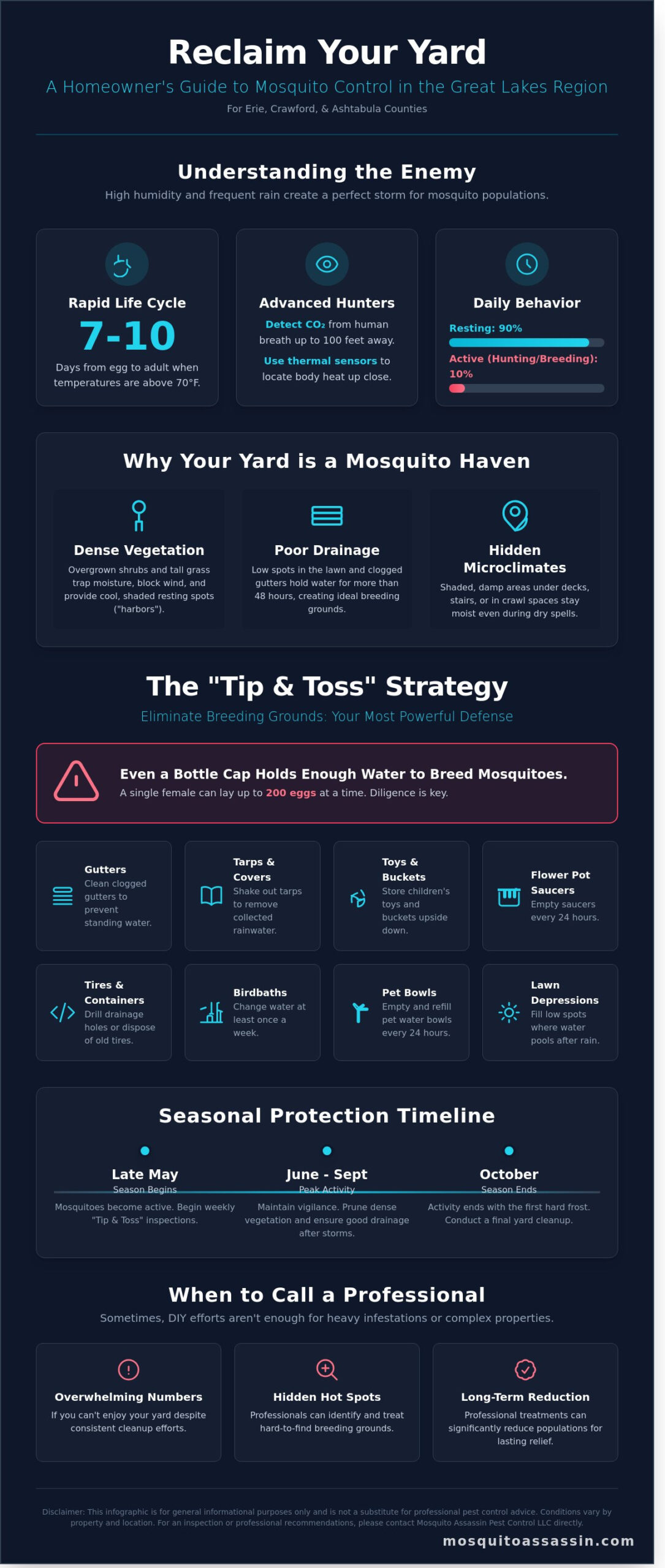
Understanding mosquito behavior is the first step in learning how to get rid of mosquitoes in yard spaces effectively. In the Great Lakes region, specifically Erie and Crawford Counties in Pennsylvania and Ashtabula County in Ohio, the environment provides a perfect storm for mosquito populations. High humidity from Lake Erie and frequent summer rainfall create a moist atmosphere where these pests thrive. A mosquito’s life cycle moves from egg to adult in as little as 7 to 10 days when temperatures consistently stay above 70 degrees Fahrenheit.
Mosquitoes are biological hunters. They use specialized sensors to detect carbon dioxide plumes from human breath from up to 100 feet away. Once they’re closer, they switch to thermal sensors to find heat signatures. This makes backyard gatherings a primary target for female mosquitoes seeking the blood meal necessary for egg production. Knowing where they hide and how they hunt is essential for any homeowner.
Common Mosquito Species in PA and OH
The Culex mosquito is a frequent resident in Pennsylvania and Ohio. It prefers stagnant, organic-rich water found in neglected birdbaths or clogged gutters. In contrast, the Aedes albopictus (Asian Tiger Mosquito) is an aggressive daytime feeder that thrives in residential areas. These pests remain active from late May until the first hard frost, which usually occurs in October for the Erie and Ashtabula regions. Their ability to lay eggs in tiny amounts of water makes them difficult to manage without consistent effort.
Why Your Yard Specifically Attracts Mosquitoes
Property owners often struggle with how to get rid of mosquitoes in yard areas because of “harbors.” These are cool, shaded spots with low airflow, such as the underside of a deck or dense ivy along a fence line. While breeding happens in water, mosquitoes spend roughly 90% of their time resting in these microclimates to avoid dehydration. Specific factors that increase local populations include:
- Dense Vegetation: Overgrown shrubs and tall grass trap moisture and block the wind.
- Poor Drainage: Low spots in the lawn that hold water for more than 48 hours after a storm.
- Microclimates: Shaded areas under stairs or crawl spaces that stay damp even during dry spells.
Local rainfall patterns play a massive role in population spikes. In Crawford County, a single heavy rain event can trigger the hatching of thousands of dormant eggs. Professional pest control may help reduce risk by identifying these specific pressure points on a property.
Disclaimer: The information provided on this blog is for general informational purposes only and is not intended as professional pest control advice. Conditions vary by property, environment, and location. Reading this content does not create a service agreement. For an inspection or professional recommendations, please contact Mosquito Assassin Pest Control LLC directly.
Eliminating Breeding Grounds: The Source Reduction Strategy
Effective mosquito control begins with a strategy known as source reduction. This process focuses on removing the specific environments where larvae develop. Most homeowners don’t realize that a single female mosquito can lay up to 200 eggs at a time. These eggs only need a tiny amount of moisture to thrive. Even a discarded bottle cap or a crumpled snack wrapper can hold enough rainwater to support a new generation of pests. Adopting a “Tip and Toss” philosophy is a primary step when learning how to get rid of mosquitoes in yard spaces.
In Ashtabula County, the humid summer climate can accelerate the mosquito life cycle. The transition from egg to adult often takes as little as 7 to 10 days. This rapid progression makes daily vigilance essential for property owners. Beyond obvious containers, it’s vital to check the bases of outdoor umbrellas and the hollow legs of plastic patio chairs. These small spaces often collect moisture that remains trapped for weeks, providing a perfect nursery for larvae away from the sun.
A Checklist for Standing Water Removal
Regular inspections are necessary to identify hidden reservoirs. Homeowners in Erie and Crawford Counties often face heavy seasonal rains that leave standing water in unexpected places. Use this checklist to safeguard the property:
- Empty flower pot saucers, children’s plastic toys, and pet water bowls every 24 hours.
- Shake out tarps covering woodpiles, boats, or patio furniture to prevent sagging pockets of water.
- Clear debris from lawn depressions where drainage issues occur after heavy storms.
- Clean gutters at least twice a year; clogged downspouts create elevated breeding sites that are difficult to see from the ground.
Managing Larger Water Features
You don’t have to remove beautiful garden features to maintain a pest-free environment. Managing these areas requires a proactive approach to keep water from becoming stagnant. Mosquitoes prefer still water for egg-laying, so physical disruption is a powerful deterrent.
- Install fountains or bubblers in decorative ponds. Constant surface agitation prevents mosquitoes from successfully landing and laying eggs.
- Apply biological larvicides (such as BTI) to water that cannot be drained. These specialized tablets target larvae without harming fish, birds, or plants.
- Maintain swimming pools and hot tubs with proper chlorine levels and functional filtration systems. An untended pool can produce thousands of mosquitoes in less than two weeks.
Identifying these sources is a foundational part of property maintenance. If breeding sites persist despite these efforts, professional pest control may help reduce risk by addressing areas that are difficult to reach or manage manually.
Landscaping and Physical Barriers for Long-Term Defense
Mosquitoes spend roughly 90 percent of their adult lives resting in cool, damp areas to avoid dehydration. They aren’t strong fliers and rely on dense vegetation to shield them from the sun and wind. Homeowners in Erie and Crawford Counties often find that unmanaged foliage acts as a nursery for these pests. Understanding how to get rid of mosquitoes in yard environments requires a focus on removing these environmental advantages. By altering the physical landscape, you can make a property significantly less hospitable to local populations.
Vegetation Management for Better Airflow
Airflow is a natural deterrent for mosquitoes. Thinning out the interior of dense shrubs, such as boxwoods or privets, allows the wind to penetrate the foliage. This lowers the humidity levels where mosquitoes hide during the day. It’s best to keep your lawn mowed to a height of 2.5 to 3 inches. Taller grass traps moisture at the soil level, which creates a perfect habitat for resting adults. Removing invasive groundcovers like English Ivy is also beneficial; these plants create thick mats that hold stagnant air and provide excessive cover. Property owners in Ashtabula County should focus on these specific areas:
- Pruning low-hanging tree branches to at least 18 inches above the ground.
- Clearing leaf litter and organic debris from under decks and porches.
- Replacing dense, moisture-retaining mulch with cedar chips or gravel in problem areas.
Creating Mosquito-Free Zones on Patios and Decks
Mechanical barriers provide immediate relief for outdoor living spaces. High-velocity fans are one of the most effective tools for decks and patios. Since mosquitoes are weak fliers, they struggle to navigate in wind speeds exceeding 10 miles per hour. Positioning a fan to blow across a seating area creates a reliable “no-fly zone.” For permanent structures, ensure window and door screens are 18×16 mesh or finer to prevent entry. It’s also helpful to replace standard white incandescent bulbs with yellow LED “bug lights.” These lights emit a wavelength above 550 nanometers, which is far less attractive to nocturnal insects than traditional lighting.
Many homeowners invest in “mosquito-repelling plants” like citronella geraniums or lavender. However, research from several university entomology departments shows these plants don’t provide protection simply by growing in a pot. The essential oils must be released by crushing or burning the foliage to have any measurable effect. Relying on plants alone is rarely a successful strategy for how to get rid of mosquitoes in yard spaces. Physical barriers and moisture control remain the professional standard for long-term reduction.
Disclaimer: The information provided on this blog is for general informational purposes only and is not intended as professional pest control advice. Conditions vary by property, environment, and location. Reading this content does not create a service agreement. For an inspection or professional recommendations, please contact Mosquito Assassin Pest Control LLC directly.
The Role of Professional Mosquito Management
While DIY methods like candles or retail sprays might offer temporary relief on a small patio, they often fall short on larger properties. If you’re looking for how to get rid of mosquitoes in yard areas exceeding half an acre, professional management is usually the most effective route. Licensed experts possess the equipment and specialized training to address heavy infestations that standard consumer products simply can’t touch. They understand that a one size fits all approach doesn’t work for the diverse landscapes found in our region.
What to Expect from a Professional Inspection
A thorough inspection is the foundation of any successful management plan. Professionals evaluate the unique topography of properties in Erie and Crawford Counties, looking for subtle drainage issues. A slight 2% dip in a lawn can collect enough water to breed thousands of larvae after a single rainstorm. They also identify off-property sources, such as a neighbor’s neglected birdbath or a nearby wooded lot in Ashtabula County, which may be the primary source of the problem impacting your home. This assessment leads to long-term habitat modification recommendations that go beyond just spraying.
The Benefits of Scheduled Barrier Treatments
Barrier treatments work by targeting specific mosquito biology. These insects spend roughly 90% of their daylight hours clinging to the underside of broad-leafed vegetation to stay hydrated. Professionals apply residual treatments to these specific "hot spots" to create an active perimeter around the home. This method ensures that professional pest control may help reduce risk for families throughout the peak summer months when mosquito activity is at its highest.
Safety remains a primary concern during every application. Licensed technicians follow strict federal and state guidelines to ensure treatments don’t impact beneficial pollinators. By avoiding flowering plants and using precise, low-pressure spray patterns, they protect local bee populations while eliminating target pests. Most professional treatments typically dry within 45 minutes, making the yard safe for pets and children to return to play. This precision provides a level of consistency that’s difficult to achieve with over-the-counter foggers or handheld misters.
For more information on maintaining a comfortable outdoor space, you can schedule a professional assessment online.
Creating a Seasonal Protection Plan for PA and OH Homes
Effective mosquito management in Northwest Pennsylvania and Northeast Ohio requires a proactive calendar. Waiting until the first bite in June is usually too late to establish control. Mosquito activity typically begins when consistent overnight temperatures reach 50 degrees Fahrenheit, which often occurs by mid-April in Erie and Crawford counties. Understanding how to get rid of mosquitoes in yard spaces involves a season-long commitment rather than a one-time fix. A structured plan helps disrupt the life cycle before populations explode during the humid summer months.
Spring and Summer Maintenance Schedule
A successful defense starts with a yard deep clean in April. Homeowners should focus on clearing leaf litter and cleaning gutters where eggs may have overwintered. During the peak heat of July and August, mosquito larvae can develop into adults in as little as 7 days. Routine checks of low-lying areas and containers are vital during these high-growth months. By September, a fall surge often occurs as certain species become more aggressive before the first hard frost, requiring continued vigilance through late October. Key tasks include:
- April: Remove debris from drainage systems and refresh gravel in low spots.
- June-August: Inspect property every 7 days for standing water after heavy rainfall.
- September: Maintain lawn height and clear brush to reduce resting sites for adult mosquitoes.
Finding Local Support in Your County
Local expertise is critical because weather patterns near Lake Erie directly influence pest cycles. Homeowners looking for locations in Northwest Pennsylvania and Northeast Ohio benefit from professionals who track local rainfall and humidity levels. Since many mosquito species can fly up to 3 miles from their breeding site, encouraging neighbors to practice source reduction creates a protective buffer for the entire street. Effective management often overlaps with tick prevention, as both pests thrive in tall grass and damp perimeter brush. Integrating these efforts ensures the yard remains hospitable for outdoor activities. If local populations remain high despite DIY efforts, professional pest control may help reduce risk.
Establishing a routine that targets both breeding sites and adult resting areas is the most reliable way to maintain a comfortable outdoor space. For property-specific guidance, homeowners can visit the online booking portal to schedule a professional assessment of their land. Consistent action throughout the year is the best strategy for learning how to get rid of mosquitoes in yard environments effectively.
Take Control of Your Outdoor Space
Maintaining a comfortable backyard in the Great Lakes region requires a proactive strategy that targets the specific biology of local pests. Effective source reduction involves removing standing water, as even a single tablespoon of liquid can host over 200 mosquito larvae during the peak breeding months of June through August. Homeowners in Erie and Crawford Counties in Pennsylvania, along with Ashtabula County in Ohio, don’t have to tackle these seasonal challenges alone. Understanding how to get rid of mosquitoes in yard environments involves a combination of removing breeding sites and implementing physical barriers. Professional management provides an additional layer of defense through regional expertise and specialized knowledge of local species. Mosquito Assassin Pest Control LLC is a locally owned and operated firm, licensed and insured in both PA and OH to assist with these environmental factors. For an inspection or professional recommendations, please contact Mosquito Assassin Pest Control LLC directly. Taking these steps now helps ensure your outdoor areas remain functional and pleasant for your family throughout the season.
Disclaimer: The information provided on this blog is for general informational purposes only and is not intended as professional pest control advice. Conditions vary by property, environment, and location. Reading this content does not create a service agreement. For an inspection or professional recommendations, please contact Mosquito Assassin Pest Control LLC directly.
Frequently Asked Questions
What is the most effective way to get rid of mosquitoes in my yard?
The most effective strategy involves a combination of source reduction and professional barrier treatments. Homeowners should eliminate all standing water where larvae develop, as even a small bottle cap can host 200 eggs. Combining these efforts with targeted applications on the underside of leaves creates a comprehensive defense. This multi-layered approach is the professional standard for how to get rid of mosquitoes in yard spaces effectively.
Do mosquito-repelling plants like citronella or lavender actually work?
Mosquito-repelling plants like citronella or lavender have very limited effectiveness in an open outdoor setting. While these plants contain natural oils that repel insects, the scent is rarely strong enough to protect a whole yard unless the leaves are crushed or the oils are extracted. Research from the Journal of Insect Science indicates that these plants often fail to provide a significant barrier against hungry female mosquitoes seeking a blood meal.
How long do professional mosquito yard treatments typically last?
Professional mosquito yard treatments typically provide protection for 21 to 30 days. The residual effect of the treatment depends on weather conditions like heavy rainfall or intense sunlight, which can break down active ingredients. Most property owners in Pennsylvania and Ohio schedule reapplications every three weeks during the peak season between May and September to maintain a consistent barrier against new arrivals.
Can mosquitoes breed in wet grass or just in standing water?
Mosquitoes cannot breed in wet grass; they require stagnant, standing water to complete their life cycle. However, tall, damp grass serves as a primary resting site for adult mosquitoes during the heat of the day. Keeping a lawn mowed to a height of 3 inches or less reduces the humidity and shade that these pests need to survive between feedings, making the environment less hospitable.
Is it possible to completely eliminate mosquitoes from an outdoor space?
It’s not possible to completely eliminate every mosquito from an outdoor space because they’re mobile insects that fly across property lines. Professional treatments aim for an 85% to 90% reduction in the local population. Maintaining realistic expectations is key, as a single female can lay 3,000 eggs during her short lifespan, making total eradication a biological impossibility in an open environment.
How often should I check my yard for standing water after it rains?
You should check your yard for standing water at least once every 7 days after it rains. This timeframe is critical because the transition from egg to biting adult can happen in just one week during the summer months when temperatures exceed 80 degrees. Focus on cleaning gutters, emptying flower pot saucers, and tipping over plastic toys where water collects to disrupt the breeding cycle.
Are professional mosquito treatments safe for my children and dogs?
Professional treatments are generally considered safe for children and dogs once the product has completely dried. This drying process usually takes between 30 and 60 minutes depending on the temperature and humidity. Licensed technicians follow strict EPA label instructions to ensure applications are targeted and minimize exposure to non-target areas like vegetable gardens, play sets, or neighboring properties.
Why are mosquitoes worse in Erie and Ashtabula than in drier regions?
Mosquitoes are more prevalent in Erie, Crawford, and Ashtabula counties because of the high humidity and abundant water sources near Lake Erie. The region’s heavy clay soil often retains water longer than sandy soils, leading to more persistent puddles. These environmental factors, combined with an average of 35 to 45 inches of annual precipitation, provide the perfect habitat for large mosquito populations to thrive.
Disclaimer: The information provided on this blog is for general informational purposes only and is not intended as professional pest control advice. Conditions vary by property, environment, and location. Reading this content does not create a service agreement. For an inspection or professional recommendations, please contact Mosquito Assassin Pest Control LLC directly.