
The familiar buzz of a mosquito is often the sound that sends families running indoors on a perfect summer evening. After spending money on citronella candles and store-bought foggers that offer little relief, it’s easy to feel like your own backyard is off-limits. Beyond the irritating bites, valid concerns over mosquito-borne illnesses can make homeowners seek a more reliable solution. For many, a professional mosquito spray for yard treatments has become the key to reclaiming their outdoor living spaces from these persistent pests.
But how exactly do these treatments work, and what makes them more effective than DIY methods? This guide breaks down the science behind professional mosquito control. You will discover the methodology trained technicians use, the importance of timing and frequency for lasting results, and key considerations for finding a dependable local service. Understanding these elements empowers you to make an informed decision for a more comfortable, enjoyable backyard all season long.
Key Takeaways
- Learn the difference between contact insecticides and the long-lasting residual barrier treatments used by professionals.
- Understand why targeting specific mosquito resting areas, like the undersides of leaves, is critical for effective control.
- Discover how a professional mosquito spray for yard can be more cost-effective than DIY methods when accounting for product efficacy and time.
- See how local climate factors in Pennsylvania and Ohio directly impact the length and severity of the mosquito season.
Understanding Professional Mosquito Spray for Residential Yards
When homeowners seek lasting relief from persistent mosquito problems, they often encounter the term “barrier spray.” A professional mosquito spray for yard is fundamentally different from a typical retail insect fogger. It involves the targeted application of a high-residual insecticide to the foliage, shaded areas, and exterior surfaces where mosquitoes land and rest during the day, creating a protective zone around the property.
To better understand how different yard sprays perform, this video offers a helpful overview:
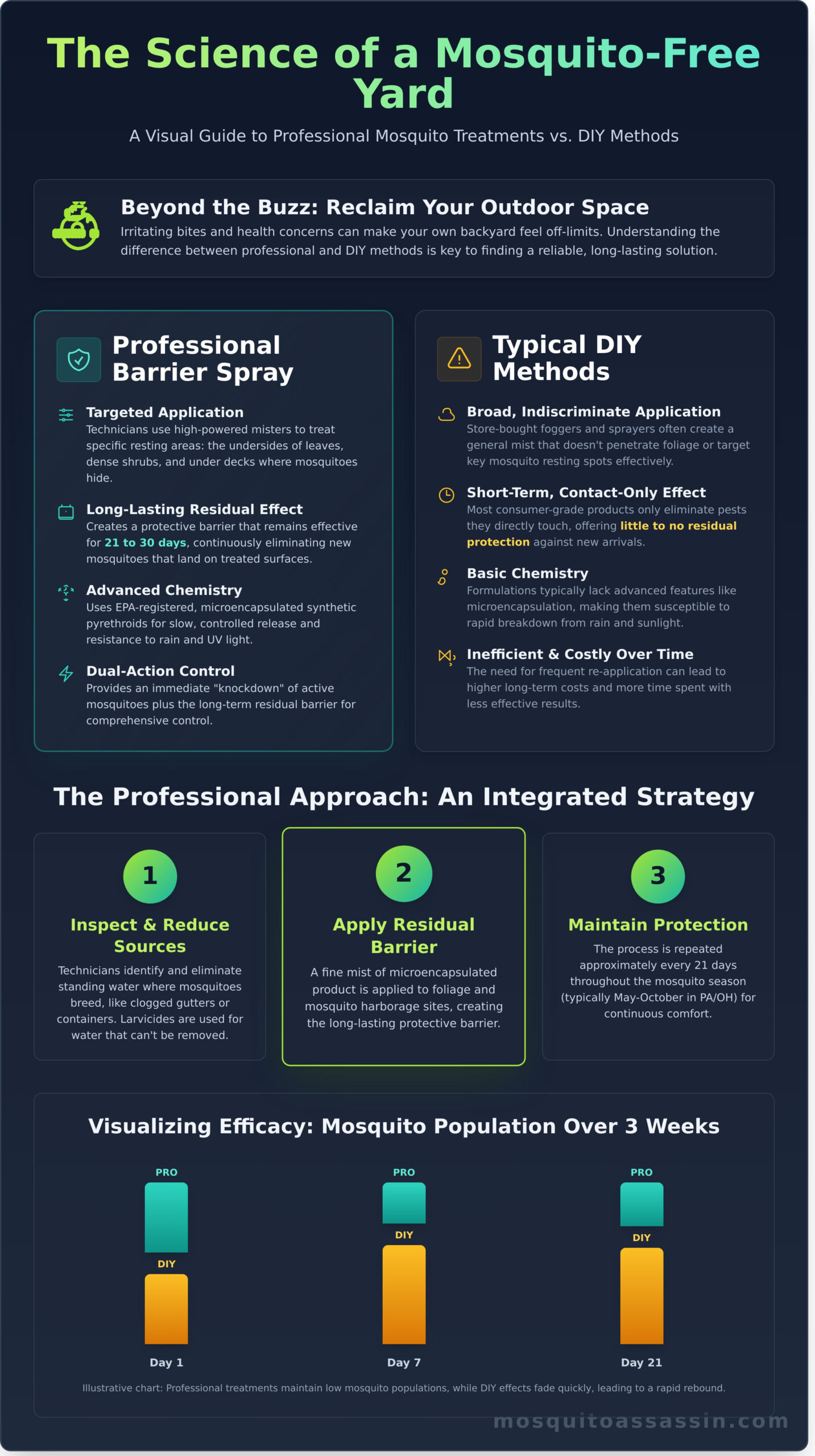
The core principle of a professional barrier treatment is longevity. Unlike contact-only insecticides that only eliminate pests they directly touch, residual formulas are engineered to remain effective for weeks. These products are often combined with surfactants, which are special agents that help the solution adhere securely to surfaces, including the critical undersides of leaves where mosquitoes shelter from the sun. This approach is a key part of comprehensive mosquito control strategies that target mosquitoes where they live and rest.
The Chemistry of Professional Control
Professional treatments rely on advanced chemistry for both effectiveness and durability. Many use synthetic pyrethroids, which are man-made versions of pyrethrins (natural insecticides found in chrysanthemum flowers). To extend their life, these active ingredients are often protected by microencapsulation technology, a process that wraps them in a protective polymer coating. This allows for a slow, controlled release and shields the product from environmental breakdown. For residential use, it is critical that all products are registered with the Environmental Protection Agency (EPA).
Knockdown vs. Residual Effects
A quality treatment delivers a two-part punch. First is the “knockdown” effect, which provides an immediate reduction in the active adult mosquito population. More importantly, however, is the “residual” effect. This long-lasting barrier continues to eliminate new mosquitoes that land on treated surfaces for approximately 21 to 30 days. Professional-grade formulations are specifically designed to resist degradation from rain and UV light far better than most consumer-grade alternatives, ensuring more consistent protection throughout the treatment cycle.
The Science of Application: Why Professional Methodology Matters
Effective mosquito control is a science that goes far beyond simply spraying a product around a property. While DIY methods often involve broad, indiscriminate spraying, a professional mosquito spray for yard services relies on a precise methodology rooted in mosquito biology. The goal is not to saturate the environment, but to strategically target the specific areas where mosquitoes live, rest, and breed.
Licensed technicians understand that adult mosquitoes avoid direct sunlight and heat, spending their days resting in cool, damp, shaded locations. Common harborage sites include the undersides of leaves on shrubs, dense ground cover, and under decks. To reach these hidden areas, professionals use specialized equipment like high-powered backpack misters. This technology generates a fine, targeted mist with an ideal droplet size that can penetrate deep into dense foliage. The mist clings to the vegetation, creating a protective barrier without causing excessive runoff, ensuring a more thorough and responsible application. This targeted application uses specific professional mosquito control insecticides, known as adulticides, which are formulated to be effective when applied as a fine mist.
Source Reduction and Larvicides
A comprehensive strategy must also address the mosquito life cycle at its source. Since mosquitoes lay their eggs in or near standing water, eliminating breeding grounds is critical for long-term reduction. Professional inspections can identify less obvious water sources like clogged gutters, forgotten containers, or uneven patches in the lawn. For water that cannot be removed, technicians may apply larvicides containing BTI (Bacillus thuringiensis israelensis), a naturally occurring bacterium that specifically targets and eliminates mosquito larvae before they can become biting adults.
The Integrated Pest Management (IPM) Approach
The most effective professional mosquito spray for yard programs operates on the principles of Integrated Pest Management (IPM). This is a sustainable, multi-faceted strategy that combines physical, biological, and chemical controls. IPM prioritizes source reduction and larval control first, using adulticide treatments as a necessary tool for immediate suppression. Throughout the season, ongoing monitoring helps inform adjustments to the treatment plan, ensuring a responsive and highly effective approach to safeguarding your outdoor space.
Professional Spraying vs. DIY Home Remedies
When battling mosquitoes, homeowners often weigh the benefits of do-it-yourself products against hiring a licensed service. While store-bought solutions may seem convenient, a professional mosquito spray for yard provides distinct advantages in effectiveness, safety, and long-term value. The differences lie not just in the products used but in the equipment, training, and strategic approach of a certified technician.
Commercially available insecticides are formulated for general consumer use and are typically less concentrated than professional-grade products. A licensed pest control provider has access to and is trained to use more potent, longer-lasting formulations that are not sold in retail stores. While the initial cost of a DIY approach may seem lower, factoring in the price of sprayers, protective gear, and the need for frequent re-application often makes professional management more cost-effective. Furthermore, untrained handling of chemicals can lead to improper mixing or application, posing unnecessary risks to family, pets, and the surrounding environment.
Many homeowners also explore “natural” remedies like citronella candles or essential oil sprays. These products primarily function as short-term repellents, creating a temporary barrier rather than reducing the mosquito population. Their effectiveness diminishes quickly and is often completely negated by wind or rain, requiring constant re-application to maintain any level of protection.
Equipment and Calibration
Standard garden sprayers lack the power to penetrate the dense foliage of shrubs and trees where adult mosquitoes rest during the day. Professional technicians use high-powered mist blowers designed to reach these harborages effectively. This specialized equipment is meticulously calibrated to apply the precise amount of product needed, ensuring comprehensive coverage without over-saturating the area. Proper maintenance and safety checks are standard protocol for professional gear.
Environmental Stewardship and Pollinator Safety
A key advantage of professional service is the focus on responsible application. Technicians are trained to identify and avoid treating blooming flowers and other plants that attract beneficial pollinators like bees and butterflies. This targeted approach aligns with the principles of Integrated Pest Management (IPM), a strategy also used by Pennsylvania’s mosquito control program to protect public health while minimizing environmental impact. A targeted professional mosquito spray for yard has a smaller ecological footprint than broad, indiscriminate DIY misting.
Local Factors Impacting Mosquito Control in PA and OH
Effective mosquito management in Northwest Pennsylvania and Northeast Ohio requires a localized approach. The unique climate, influenced by Lake Erie, creates specific challenges for homeowners in Erie, Crawford, and Ashtabula counties. Factors like high humidity, regional weather patterns, and common landscape features directly impact mosquito populations and the effectiveness of control strategies.
Seasonal Timing and Weather Patterns
In the Tri-state area, mosquito activity typically begins when temperatures consistently stay above 50°F, usually in late April or early May. This is the ideal time to implement a control strategy. Heavy spring rains can saturate the ground and fill countless containers, creating perfect breeding conditions that lead to an early-season population boom. As the summer progresses, residents should also prepare for a late-summer surge, when mosquito numbers often peak in August and September.
Habitat Management for Local Properties
Properties in this region often feature wooded borders, mature trees, and dense landscaping. While beautiful, these features can unfortunately harbor mosquitoes. A professional mosquito spray for yard treatment plan is most effective when combined with proactive habitat management. Key areas to address include:
- Leaf Litter and Drainage: Thick layers of damp leaves and poor drainage create persistent breeding sites.
- Tall Grass and Brush: Unmanaged vegetation offers shaded resting spots for adult mosquitoes during the day.
The area is also home to several specific species, such as the Northern House mosquito (Culex pipiens), which thrives in stagnant water, and the aggressive, day-biting Asian Tiger mosquito (Aedes albopictus). The Asian Tiger mosquito can reproduce in very small amounts of water, making the removal of items like toys, tarps, and clogged gutters especially important.
Understanding these local factors is the first step toward effective mosquito reduction. For a property-specific assessment to identify unique vulnerabilities, consulting a licensed pest control provider may help reduce risk. You can find more information about professional assessments at www.mosquitoassassin.com/contact-us.
Selecting a Professional Mosquito Management Plan
Choosing the right partner for a professional mosquito spray for yard is a critical step in reclaiming your outdoor space. A well-chosen management plan delivers not just immediate relief but also long-term protection. To make an informed decision, homeowners should focus on a provider’s expertise, treatment philosophy, and service structure to find the best fit for their property’s unique needs.
Evaluating Licensing and Expertise
Always verify that a company holds the necessary state-mandated pesticide applicator licenses. This certification ensures technicians are properly trained in safe and effective application methods. Furthermore, local experience is invaluable. A provider familiar with the specific pest pressures and environmental conditions in Erie and Crawford counties can develop more targeted and effective strategies. Companies that offer comprehensive services for various pests often possess a deeper understanding of integrated pest management principles.
Long-Term Prevention vs. One-Time Treatments
While a single treatment is a popular solution for special events like graduations or outdoor parties, a recurring management plan offers more sustainable results. Ongoing, scheduled treatments are designed to consistently interrupt the mosquito life cycle, which significantly reduces their population over an entire season. This proactive approach allows for more targeted applications and can help manage the overall pest pressure on your property more effectively than infrequent, reactive treatments.
Service Guarantees and Integrated Management
Understanding a company’s follow-up policies is essential. Inquire about their service guarantee and what steps are taken if mosquito activity persists between scheduled visits. Because mosquitoes and ticks often thrive in similar environments, such as shaded, damp areas with dense vegetation, an integrated approach that addresses both pests is often the most efficient solution. Bundling services can provide broader protection for your family and simplify your property’s pest management. For a customized assessment, consulting with a pest control professional is a recommended step.
Take Back Your Yard with Professional Mosquito Control
Ultimately, reclaiming your outdoor space from mosquitoes is an achievable goal. The key takeaway is that professional methodology far surpasses the limitations of DIY solutions by addressing the complete mosquito lifecycle with precision and expertise. A successful treatment plan considers unique local factors, from the climate in Pennsylvania and Ohio to your property’s specific landscape features, ensuring a targeted and effective approach.
Choosing a professional mosquito spray for yard service means investing in a comprehensive strategy for lasting relief. For homeowners seeking a dependable solution, partnering with a licensed, insured, and five-star rated local expert is the most effective path forward. A thorough property inspection can identify problem areas and lead to a customized plan that helps safeguard your family and pets.
To further enhance your evenings outdoors, you can also add custom lighting. Creating the right ambiance is another key part of making your yard a true extension of your home. For those interested in professional outdoor lighting design, you can learn more about LED Artistry.
Once your pest problem is under control, you can further enhance your evenings outdoors with custom lighting. Creating the right ambiance is another key part of making your yard a true extension of your home. For those interested in professional outdoor lighting design, you can learn more about LED Artistry.
Take the first step toward a more comfortable and enjoyable outdoor season. For a professional property inspection and customized recommendations, contact Mosquito Assassin Pest Control LLC directly.
Disclaimer: The information provided on this blog is for general informational purposes only and is not intended as professional pest control advice. Conditions vary by property, environment, and location. Reading this content does not create a service agreement. For an inspection or professional recommendations, please contact Mosquito Assassin Pest Control LLC directly.
Frequently Asked Questions About Mosquito Yard Spray
Is professional mosquito spray safe for my children and pets?
Licensed pest control technicians use products registered by the Environmental Protection Agency (EPA) and apply them according to strict label directions. When these protocols are followed, the risk to people and pets is minimized. The most important safety measure is to keep children and pets off the treated areas until the application has completely dried. This simple step significantly reduces the potential for direct contact with the product, ensuring the yard is ready for enjoyment.
How long does a professional mosquito treatment last in the yard?
A typical professional mosquito treatment provides effective control for approximately 21 to 30 days. The longevity of the application can be influenced by environmental factors such as heavy rainfall, which may reduce its residual effect over time. Properties with high mosquito pressure or significant breeding grounds nearby may also benefit from more frequent applications to maintain a consistent level of protection throughout the peak mosquito season.
What happens if it rains shortly after the yard has been sprayed?
For a mosquito treatment to be effective, it needs adequate time to dry and bond to the treated surfaces, such as foliage. This process typically takes about 30 to 60 minutes. If a heavy downpour occurs before the product has fully dried, it can wash away the application and reduce its effectiveness. Reputable pest control providers often monitor weather forecasts and may reschedule the service if significant rain is imminent to ensure proper results.
Does professional mosquito spraying kill bees and other beneficial insects?
Professional technicians are trained to minimize the impact on beneficial insects like bees and butterflies. They achieve this by strategically applying treatments to areas where mosquitoes rest, such as the underside of leaves in shady, dense vegetation, and avoiding flowering plants or blooming trees that pollinators frequent. This targeted approach used in a professional mosquito spray for yard application helps control the mosquito population while protecting the local ecosystem.
How soon can we use the yard after the professional application is complete?
It is standard practice to wait until the mosquito spray application has completely dried before allowing people or pets back into the treated area. Depending on temperature and humidity, this usually takes between 30 and 60 minutes. Following this guideline ensures that the product has properly adhered to the foliage and minimizes any potential for direct contact. The technician performing the service can provide the most accurate re-entry time based on current weather conditions.
Do I need to be home when the professional mosquito treatment is applied?
For exterior-only mosquito treatments, homeowners typically do not need to be present. As long as the technician has safe and unobstructed access to the entire yard, the service can be completed efficiently. It is important to ensure any gates are unlocked and that pets are secured indoors before the scheduled appointment time. This allows the professional to perform a thorough application without any interruptions or safety concerns.
Can professional spraying completely eliminate every mosquito on my property?
While professional treatments are highly effective at reducing the mosquito population, complete elimination is not a realistic goal. The objective is to create a protective barrier that significantly lowers the number of mosquitoes resting and breeding on the property. New mosquitoes can still fly in from neighboring areas. Consistent treatments throughout the season are the most effective strategy for maintaining control and making the outdoor space more comfortable.
What is the best time of year to start professional mosquito treatments in Pennsylvania?
In Pennsylvania, the ideal time to begin professional mosquito treatments is typically in late spring, around April or May. Mosquito activity begins once temperatures consistently stay above 50 degrees Fahrenheit, which is when they emerge and start breeding. Starting treatments early in the season helps to disrupt their life cycle before populations can grow to nuisance levels. Continuing service through early fall, often until the first frost, provides the most comprehensive protection.