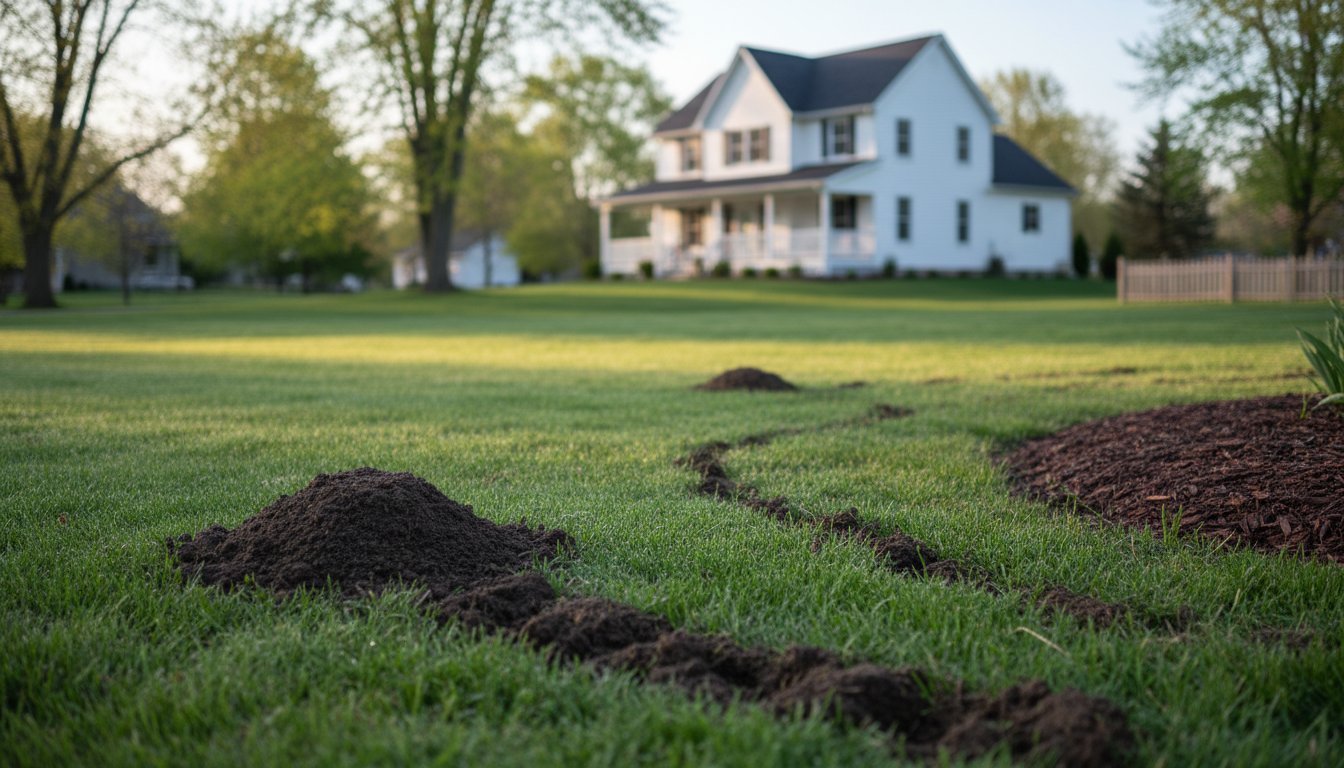
That spongy, ruined turf you’re blaming on a mole might actually be the work of a rodent that prefers eating your flower bulbs instead of earthworms. It’s incredibly frustrating for homeowners in Erie County or Ashtabula County to step into a soft patch of soil and nearly twist an ankle, only to find that over $1,200 of expensive landscaping has been decimated. Distinguishing between a vole vs mole in lawn damage is often the most difficult part of property maintenance; you know that something is destroying your hard work, but without a clear identification, any attempt at a solution is just a guess.
This article provides the clarity needed to accurately identify which pest is currently occupying your yard. You’ll learn the critical differences between the raised ridges of a mole and the surface runways of a vole to ensure your prevention strategies actually work. The following sections examine why certain yards in Crawford County are more attractive to these rodents and provide practical steps to restore a safe, aesthetically pleasing outdoor space. By the end of this guide, you’ll have a professional perspective on managing turf damage and safeguarding your flower beds for the 2026 season.
Disclaimer: The information provided on this blog is for general informational purposes only and is not intended as professional pest control advice. Conditions vary by property, environment, and location. Reading this content does not create a service agreement. For an inspection or professional recommendations, please contact Mosquito Assassin Pest Control LLC directly.
Key Takeaways
- Distinguish between moles, which are insectivores with paddle-like feet, and voles, which are rodent herbivores resembling field mice.
- Learn to identify unique damage patterns, such as the raised ridges and volcano-shaped mounds created by moles compared to the surface runways left by voles.
- Understand the nuances of vole vs mole in lawn activity to determine whether the pests are seeking soil-dwelling grubs or feeding on grass and bulbs.
- Discover practical habitat modification strategies, including improving soil drainage and managing lawn height, to reduce the likelihood of an infestation.
- Determine when to seek a professional assessment for properties in Erie, Crawford, and Ashtabula counties to address persistent tunneling or turf damage.
Identifying the Culprit: Key Differences Between Voles and Moles
Distinguishing between a vole vs mole in lawn environments is the first step toward protecting a property. While the damage to the grass is often the first thing noticed by residents in Erie and Crawford Counties, the animals responsible belong to entirely different biological families. Moles are members of the Talpidae family and are not rodents. They are insectivores that spend roughly 99 percent of their lives underground. Voles belong to the Cricetidae family and are true rodents. Their behavior and diet are closer to those of a field mouse than a mole.
Homeowners often struggle with the vole vs mole in lawn dilemma because both pests are rarely seen above ground during daylight hours. A 2024 study on turf management suggests that misidentification leads to ineffective treatment in approximately 30 percent of residential cases. Understanding the taxonomy of these animals helps predict their movements. Moles are solitary hunters driven by a need for protein; voles are social herbivores that focus on plant matter and rapid reproduction.
To better understand this concept, watch this helpful video:
Anatomy of a Mole: Built for Subterranean Life
The physical structure of a mole is a masterpiece of biological engineering for life in the soil. They possess a hairless, pink snout that is highly sensitive to vibrations; this helps them locate earthworms and grubs in total darkness. Their eyes are tiny and often covered by fur or skin, as sight is unnecessary in a tunnel. The most striking feature is the pair of oversized, paddle-like front feet. These feet are equipped with five heavy claws and are positioned laterally to allow the mole to “swim” through compacted dirt.
A mole’s fur is uniquely adapted for tight spaces. Unlike most mammals, their velvet-like fur has no specific grain. This allows the hair to lay flat whether the animal is moving forward or backward. This adaptation is critical for navigating narrow hunting tunnels without getting stuck or damaging their skin. While they may appear large due to the mounds they create, an average adult mole in the Pennsylvania and Ohio region typically weighs between 3 and 5 ounces.
Anatomy of a Vole: The Prolific Surface Scavenger
Voles are often mistaken for common house mice, but they have distinct physical markers that set them apart. They have compact, cylindrical bodies covered in dense gray or brown fur. Compared to a mouse, a vole has much smaller ears and a significantly shorter tail. These features help them stay warm and protected while moving through the “runways” they create in tall grass or under snow cover. For more detailed information on their biological classification, residents can review this guide on All About Voles.
The most defining anatomical feature of the vole is its pair of prominent orange incisors. These teeth never stop growing, which drives the vole’s constant need to gnaw on wood, roots, and bark. While moles have sharp, needle-like teeth for eating insects, voles have flat molars designed for grinding vegetation. Because they are rodents, they are incredibly prolific; a single female can produce up to 10 litters in a single year. This high reproductive rate means that a small population can quickly turn into a significant infestation if left unaddressed.
Disclaimer: The information provided on this blog is for general informational purposes only and is not intended as professional pest control advice. Conditions vary by property, environment, and location. Reading this content does not create a service agreement. For an inspection or professional recommendations, please contact Mosquito Assassin Pest Control LLC directly.
Understanding Behavior and Diet: Why They Are in Your Yard
Identifying a vole vs mole in lawn damage starts with a clear understanding of what these animals are searching for when they enter a property. While they both create tunnels, their motivations are entirely different. Moles are subterranean insectivores that spend nearly their entire lives underground, driven by a high-protein diet. Voles, often called meadow mice, are prolific herbivores that stay closer to the surface to feast on your landscaping. These pests don’t choose a yard at random; they’re attracted to specific environmental factors that provide consistent food and shelter.
Activity typically peaks during two specific windows in the year. In Erie and Crawford counties, the primary surges occur in the spring (April and May) and the fall (September and October). During these months, soil moisture levels are high, making it easy for moles to push through the earth and for voles to navigate through lush, damp grass. Homeowners often find it frustrating that a healthy, well-manicured lawn is more likely to attract these pests. A yard rich in organic matter supports a massive population of earthworms and soil-dwelling insects, which acts as a dinner bell for moles. Simultaneously, thick, healthy turf provides the perfect cover and food source for a growing vole colony.
The Mole Diet: Searching for Protein
Moles are solitary hunters with an incredibly high metabolism. To survive, a single mole must consume between 60 and 100 percent of its body weight in food every 24 hours. While many people believe moles only enter a yard to eat grubs, this is a common misconception. Earthworms actually make up the vast majority of a mole’s diet. This explains why applying a grub-killing treatment often fails to remove moles from a property; as long as the soil is healthy enough to support earthworms, the moles have no reason to leave. According to a Moles vs. Voles Comparison from the Mississippi State University Extension Service, these mammals are specialized for a life of digging, using their powerful front claws to expand their tunnel systems in search of protein-rich prey. They’re not interested in your plants, but their constant searching can heave the soil and damage root systems indirectly.
The Vole Diet: The Vegetarian Menace
Unlike the solitary mole, voles are highly social and reproduce at an alarming rate. A single female can produce five to ten litters in a single year, leading to rapid infestations in Ashtabula County properties. These rodents are strict vegetarians. They target the base of trees and shrubs in a process called girdling, where they strip away the bark to reach the nutrient-rich cambium layer underneath. This behavior can kill a mature ornamental tree in a single season. During the winter months, voles remain active under the snow cover, where they frequently consume flower bulbs. Tulips are a particular favorite, and homeowners often discover their spring garden has been completely hollowed out once the snow melts. Thick layers of mulch, often used to protect plants, ironically provide the perfect hidden highway for voles to feed without being spotted by predators like hawks or owls.
Understanding these behaviors is essential for any homeowner trying to protect their investment. If you notice tunnels or chewed vegetation, professional pest control may help reduce risk by identifying the specific species involved. Identifying the culprit correctly ensures that the management strategy aligns with the animal’s actual biology and habits.
Disclaimer: The information provided on this blog is for general informational purposes only and is not intended as professional pest control advice. Conditions vary by property, environment, and location. Reading this content does not create a service agreement. For an inspection or professional recommendations, please contact Mosquito Assassin Pest Control LLC directly.
Recognizing Damage Patterns: Tunnels, Mounds, and Runways
Identifying the culprit behind turf destruction is the first step toward reclaiming a healthy yard. While both pests operate largely out of sight, they leave distinct calling cards in the soil and grass. Understanding the difference between a vole vs mole in lawn damage helps homeowners in Erie and Crawford Counties choose the right management strategy. Moles are insectivores that create raised ridges as they hunt for earthworms and grubs. These ridges feel spongy underfoot and can destabilize the turf. In contrast, voles are rodents that focus on vegetation, leaving behind narrow paths of chewed grass.
The “Step Test” is a reliable diagnostic tool used by professionals to identify active mole activity. To perform this test, locate a visible ridge and gently press a small section down with your foot until it’s level with the surrounding grass. Mark the spot with a small stake or flag. If the ridge is pushed back up within 24 to 48 hours, you’ve located a primary foraging tunnel. If the area remains flat, the tunnel was likely a temporary route that’s no longer in use. This distinction is vital because moles can tunnel up to 100 feet in a single day, but they only reuse specific “highways” regularly.
A common complication in lawn health is the relationship between these two species. Mole tunnels often act as protected underground corridors for voles. While moles focus on insects, voles utilize these pre-built “highways” to reach the root systems of prized ornamental plants and garden vegetables. This behavior allows voles to feed on roots from below without ever exposing themselves to surface predators like hawks or owls. Distinguishing a vole vs mole in lawn infestation requires looking for both the raised earth of the mole and the gnawed vegetation typical of the vole.
Molehills vs. Surface Ridges
Moles produce two specific types of structural damage. Shallow foraging ridges appear just below the surface during the spring and fall when soil moisture is high. Deep nesting tunnels result in the classic “volcano” mounds of excavated soil. These mounds appear 30 percent more frequently in the heavy, clay-based soils of Ashtabula County because the dense soil structure supports the weight of deeper excavations. Over time, these mounds and ridges create significant unevenness, making it difficult to maintain a consistent mowing height and increasing the risk of ankle injuries for residents.
Vole Runways and Entry Holes
Vole activity is characterized by surface runways rather than raised ridges. These are 1- to 2-inch wide paths where the grass has been eaten down to the soil or worn away by constant traffic. For more detailed identification strategies, reviewing Mole and Vole Control Tips can provide additional context on these distinct damage patterns. Homeowners should look for entry holes about the size of a golf ball (1.5 inches in diameter) near stone walls, mulch beds, or heavy groundcover. Additionally, voles often gnaw the bark off the base of young trees and shrubs, a process known as girdling, which can kill the plant by cutting off its nutrient supply.

Habitat Modification and Prevention Strategies for Homeowners
Modifying the landscape is a proactive way to address the vole vs mole in lawn dilemma. While both pests create visible issues, their motivations for choosing a property differ significantly. Moles seek high-moisture environments with abundant food sources like earthworms; voles look for dense vegetation and thick thatch to hide from predators. Addressing these specific environmental factors reduces the likelihood of an infestation and protects the long-term health of the turf.
Environmental Controls for Moles
Moles are insectivores that primarily consume earthworms and soil-dwelling larvae. Over-watering a lawn is a common mistake that invites these subterranean mammals. Saturated soil brings earthworms closer to the surface, creating a literal buffet for moles. Property owners should aim for no more than 1 inch of water per week, including rainfall, to maintain a healthy lawn without attracting pests. Managing the population of white grubs and other insects also limits the available food supply. Residents in Erie and Crawford Counties often find that professional services provide a more comprehensive approach to managing these underlying soil conditions through integrated pest management.
Environmental Controls for Voles
Voles thrive where they can remain hidden from hawks, owls, and cats. Tall weeds and dense groundcover near a home foundation act as a protected highway for these rodents. Keeping grass trimmed to a height of 2.5 to 3 inches removes their overhead cover and makes the area less attractive. During winter months, snow accumulation provides a subnivean environment where voles can girdle tree bark while staying invisible to predators. Clearing snow away from the base of young trees and shrubs in a 2-foot radius prevents this winter damage. When mulching, avoid the common mistake of piling material directly against the trunk. A 3-inch gap between the mulch and the plant base prevents voles from nesting right against the bark. Understanding the habitat needs of a vole vs mole in lawn helps homeowners prioritize their yard work effectively.
Physical Barriers and Why Home Remedies Fail
High-value plants and garden beds require physical protection that goes beyond simple landscape maintenance. Installing hardware cloth with a 1/4-inch mesh size is a proven method for safeguarding root systems. This barrier should extend at least 12 inches above the ground and be buried 6 to 10 inches deep to prevent burrowing rodents from gaining access. It’s a labor-intensive process, but it’s far more effective than popular myths.
Many homeowners attempt to use ultrasonic spikes or home remedies like chewing gum and castor oil. These methods rarely provide lasting results for several reasons:
- Castor Oil: These treatments often lose their efficacy after a single rain event of 0.5 inches or more, requiring constant reapplication.
- Ultrasonic Devices: Scientific studies from university extension offices show that these devices lack the range to penetrate dense clay soil, often covering less than 15 feet.
- Chewing Gum: There’s 0% scientific evidence that moles or voles will eat gum or that it would harm them if they did.
Relying on these myths often allows the pest population to grow unchecked while the lawn damage worsens. Professional pest control may help reduce the risk of recurring lawn damage through more reliable, fact-based methods. Homeowners looking for assistance can schedule an inspection online to identify the specific pests active on their property.
Disclaimer: The information provided on this blog is for general informational purposes only and is not intended as professional pest control advice. Conditions vary by property, environment, and location. Reading this content does not create a service agreement. For an inspection or professional recommendations, please contact Mosquito Assassin Pest Control LLC directly.
Professional Pest Management for Rodent and Tunneling Pests
Property owners often reach a point where DIY traps and habitat modifications no longer protect the integrity of the turf. When the population density of tunneling rodents exceeds the natural carrying capacity of the land, professional intervention is required. Identifying the specific culprit behind the tunnels is the first priority. The difference between a vole vs mole in lawn involves looking at the diet and the physical evidence left behind. Moles create raised ridges as they hunt for worms; voles create open surface runways to access vegetation. Professional assessments in Erie, Crawford, and Ashtabula counties provide the technical insight needed to distinguish these behaviors quickly.
A comprehensive strategy involves several key components:
- Population Assessment: Quantifying the extent of the colony to determine the necessary intensity of the management plan.
- Exclusion Techniques: Implementing physical barriers and maintenance schedules that make the property less attractive to new arrivals.
- Targeted Removal: Utilizing professional-grade tools to reduce the active population to manageable levels.
- Habitat Modification: Adjusting the environment, such as clearing tall grass or heavy mulch, to remove the cover that these pests require.
Why Regional Expertise Matters
Soil conditions in Northwest Pennsylvania vary from heavy, moisture-retaining clay to lighter, loamy mixtures. These variations dictate how deep tunnels are dug and how easily they collapse. The impact of Lake Erie weather patterns is another critical factor. While some pests become dormant, voles remain active year-round. They utilize the subnivean zone, the space between the ground and the snowpack, to move safely away from predators. In cities like Erie, which averages over 100 inches of snow annually, this hidden activity can lead to extensive bark damage on trees by spring. Finding a local provider who understands these Tri-State climate shifts ensures that the management plan accounts for winter activity rather than just seasonal sightings.
The Value of Ongoing Protection
One-time treatments rarely solve a long-term infestation because of the biology of the pests. A single female vole can produce between 5 and 10 litters per year, with a gestation period of only 21 days. This rapid reproductive cycle means that a property can be re-populated within weeks if the management plan is not consistent. Integrating rodent control with general pest management addresses the ecosystem of the lawn as a whole. Professional pest control may help reduce risk to your landscaping by maintaining a constant defensive perimeter. This approach prevents the vole vs mole in lawn damage from escalating into a full-scale restoration project. Consistent monitoring protects the financial investment made in sod, shrubs, and ornamental gardens throughout the growing season.
Take Proactive Steps for a Healthier Yard
Identifying whether a yard has a vole vs mole in lawn is the first step toward restoring turf health. Moles typically create raised ridges and volcano-shaped mounds during their search for soil invertebrates. Voles, often called meadow mice, focus on vegetation and leave visible surface runways through the grass. Effective management in 2026 relies on early detection and habitat modification; such as removing dense ground cover or managing mulch depth. Property owners in Erie and Crawford Counties in Pennsylvania, along with Ashtabula County in Ohio, can benefit from professional expertise to address these persistent tunneling issues. Licensed and insured professionals provide comprehensive rodent exclusion and maintenance programs to safeguard local landscapes. For a professional inspection of your property, contact Mosquito Assassin Pest Control LLC today. This locally owned and operated team serves the Tri-State area with reliable, industry-standard solutions. Protecting your lawn’s root system ensures a vibrant outdoor space for years to come.
Disclaimer: The information provided on this blog is for general informational purposes only and is not intended as professional pest control advice. Conditions vary by property, environment, and location. Reading this content does not create a service agreement. For an inspection or professional recommendations, please contact Mosquito Assassin Pest Control LLC directly.
Frequently Asked Questions
Do moles and voles live in the same tunnels?
Moles and voles don’t typically live together, but voles frequently use abandoned mole tunnels to travel safely. While moles are insectivores that create deep networks for hunting worms, voles are herbivores that prefer surface runways. If a mole leaves an area, a vole colony of 10 to 15 individuals might move in within 48 hours to access root systems without digging new paths.
How fast can a mole dig through a typical lawn?
A single Eastern mole can tunnel at a rate of 18 feet per hour in ideal soil conditions. These pests are highly efficient, capable of adding 150 feet of new tunnels to a yard in a single day. This rapid expansion explains why homeowners in Erie County often see fresh mounds appearing overnight during the damp spring months when the soil is soft and easy to navigate.
Will moles or voles go away on their own in the winter?
Moles and voles remain active throughout the winter and don’t hibernate. Moles retreat deeper into the soil, often 12 to 24 inches below the frost line, to follow earthworms. Voles stay active under the snowpack in Ashtabula County, where they can girdle the bark of young trees and shrubs without being seen by predators like hawks or owls. Damage often becomes visible only after the snow melts.
Are voles and moles dangerous to pets or children?
Moles and voles aren’t known for being aggressive toward humans or pets, but they can carry parasites like ticks and mites. According to the CDC, rodents can also carry pathogens like hantavirus or salmonella. While a bite is rare since these animals stay underground, the secondary risk of trip hazards from 4-inch deep tunnels is a more common concern for active children playing in the yard.
Can I use mothballs to get rid of moles in my yard?
Using mothballs to deter wildlife is ineffective and violates federal EPA regulations regarding pesticide use. Moles have a keen sense of smell, but they’ll simply block off the contaminated tunnel and dig a new one 6 inches away. Additionally, mothballs leach toxic chemicals like naphthalene into the soil, which can harm beneficial soil organisms and groundwater quality in Crawford County. Professional pest control may help reduce risk more effectively.
What is the most effective time of year to treat for voles?
The most effective time to address a vole vs mole in lawn issue is during the early spring or late fall. In October and November, vole populations peak before the vegetation dies back, making baiting or trapping more successful. Treating in March, before the first litter of 3 to 6 pups is born, prevents the exponential population growth that often occurs during the summer months.
Do moles eat the roots of my grass and flowers?
Moles don’t eat plant roots; they’re strictly insectivores that consume 70% to 100% of their body weight in earthworms and grubs daily. The damage people see is usually incidental. As the mole pushes through the soil, it separates the roots from the dirt, causing the grass to wither. If roots are actually missing or chewed, the culprit is likely a vole or a pocket gopher rather than a mole.
How can I tell the difference between a vole and a common field mouse?
You can distinguish a vole from a field mouse by looking at the tail length and ear size. A vole has a short tail, usually less than 2 inches, and small ears that are mostly hidden by its thick fur. In contrast, a common field mouse has a tail as long as its body and large, prominent ears. Voles also have a stockier, 5-inch long body compared to the slender profile of a mouse.
Disclaimer: The information provided on this blog is for general informational purposes only and is not intended as professional pest control advice. Conditions vary by property, environment, and location. Reading this content does not create a service agreement. For an inspection or professional recommendations, please contact Mosquito Assassin Pest Control LLC directly.