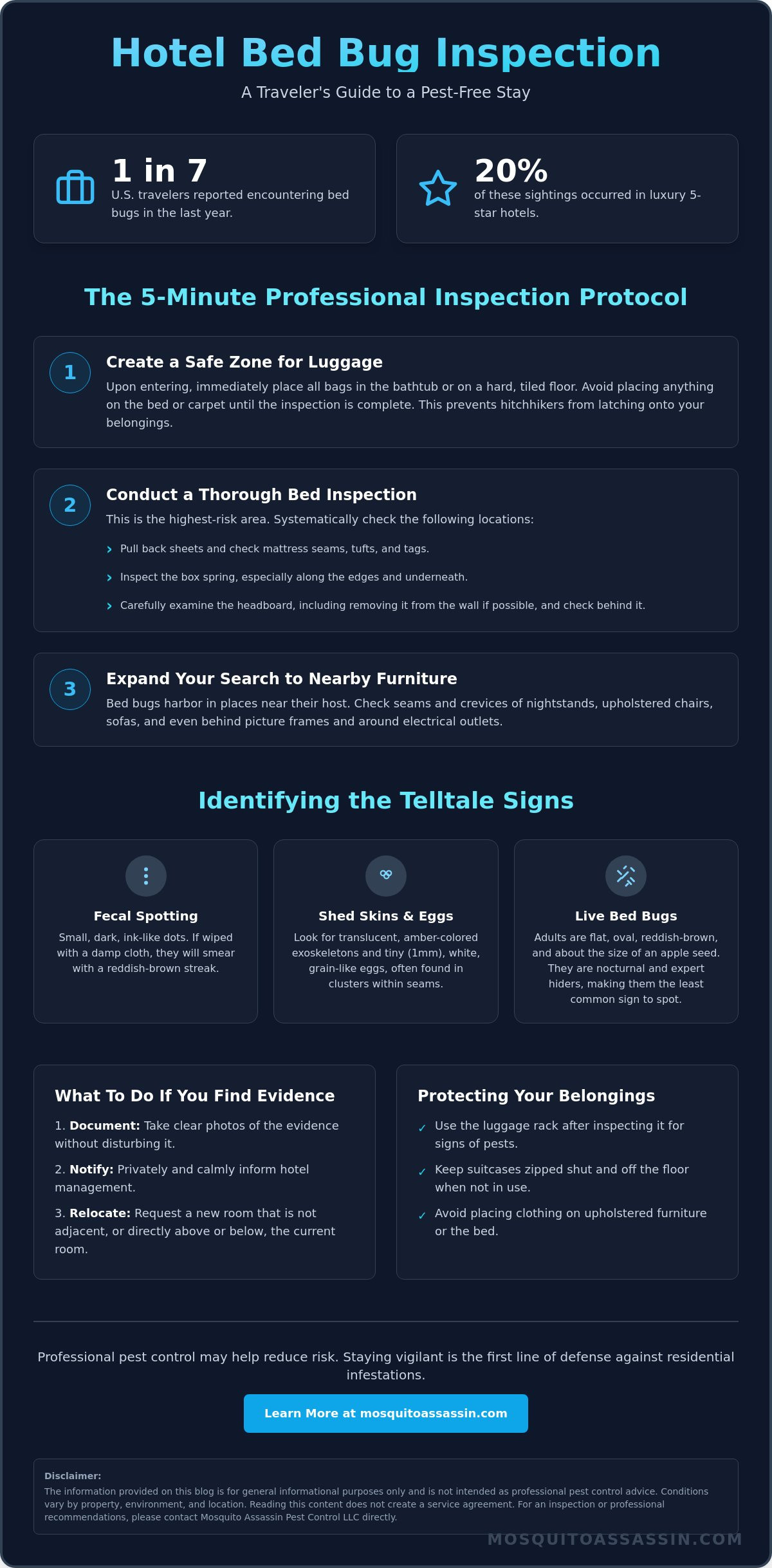
Recent data from April 2026 reveals that 1 in 7 U.S. travelers reported encountering bed bugs in the past year. Even more surprising is that 20% of these sightings occurred in luxury 5-star hotels, proving that a high price point doesn’t guarantee a pest-free stay. It’s completely normal to feel anxious when setting your luggage down in a new room. You don’t want the stress of bringing hitchhikers back to your home, and you shouldn’t have to waste your vacation performing an inefficient search. Understanding how to check for bed bugs in a hotel is the most effective way to protect your family and your peace of mind.
This guide provides the systematic inspection protocol used by professionals to identify bed bugs before they follow you home. You’ll learn a clear, fast routine that focuses on high-risk harborages instead of wasting time on unlikely spots. The following sections cover everything from spotting early warning signs to knowing the correct steps if you find evidence, ensuring you can unpack with confidence. For travelers returning to Erie and Crawford Counties in Pennsylvania or Ashtabula County in Ohio, staying vigilant is the first line of defense against residential infestations.
Disclaimer: The information provided on this blog is for general informational purposes only and is not intended as professional pest control advice. Conditions vary by property, environment, and location. Reading this content does not create a service agreement. For an inspection or professional recommendations, please contact Mosquito Assassin Pest Control LLC directly.
Key Takeaways
- Master a professional inspection routine that targets high-risk harborages like mattress corners and headboards to save time and increase accuracy.
- Learn how to check for bed bugs in a hotel by starting with a luggage-safe zone, such as the bathtub or a tiled floor, to prevent hitchhikers from entering your bags.
- Identify critical visual evidence like dark fecal spotting and shed skins, which are often easier to find than the nocturnal insects themselves.
- Protect your belongings throughout your stay by utilizing inspected luggage racks and keeping suitcases zipped shut when not in use.
- Understand the proper protocol for documenting evidence and notifying hotel management to ensure a swift resolution if an infestation is discovered.
Understanding Why Hotel Inspections Are Necessary
Many travelers mistakenly believe that bed bugs only appear in budget motels or properties with poor housekeeping. This is a dangerous assumption. These pests don’t feed on dirt; they feed on blood. Because of this, even the most pristine 5-star luxury resorts are vulnerable. In fact, research from April 2026 indicates that 20% of bed bug sightings occurred in high-end accommodations. Learning how to check for bed bugs in a hotel isn’t a commentary on the hotel’s quality. It’s a necessary step for any traveler who wants to avoid the high cost and emotional toll of a residential infestation.
A proactive search takes less than five minutes but can prevent a situation that costs thousands of dollars to remediate once it reaches your home. Bed bugs are nocturnal insects that possess a flat body shape, allowing them to squeeze into crevices as thin as a credit card. For a comprehensive overview of bed bugs and their biology, it’s helpful to understand that they are expert hiders that remain inactive during the day. This behavior makes a deliberate, systematic inspection the only way to ensure your room is truly safe before you settle in for the night.
The Hitchhiker Mechanism
Bed bugs are among the most efficient travelers in the world. They don’t fly or jump; instead, they crawl onto personal items and wait to be transported to a new location. In a hotel environment, they move through shared wall voids, electrical outlets, or even on housekeeping carts that travel from room to room. This high turnover of guests creates a constant cycle of potential introduction from all over the globe. Once they latch onto your luggage or clothing, they can easily follow you back to Erie, Crawford, or Ashtabula Counties. Stopping the hitchhiking process at the hotel is much easier than treating an established colony in your own bedroom.
When to Perform Your Inspection
The first ten minutes of your stay are the most critical for prevention. You must perform your inspection before you unpack a single item or sit on the bed. Professional protocols suggest a strict “nothing on the floor” policy during this window. Upon entering the room, place your suitcases and bags immediately into the bathtub or on a high, hard-surfaced tiled floor. These areas are unlikely to harbor pests and provide a clear visual field. Only after you have confirmed that the room is clear should you move your belongings to the living area. Knowing how to check for bed bugs in a hotel before you get comfortable is the difference between a relaxing trip and a long-term pest problem.
Disclaimer: The information provided on this blog is for general informational purposes only and is not intended as professional pest control advice. Conditions vary by property, environment, and location. Reading this content does not create a service agreement. For an inspection or professional recommendations, please contact Mosquito Assassin Pest Control LLC directly.
Identifying the Visual Signs of an Infestation
Finding a live insect is the most definitive proof of an infestation, but it’s also the least common discovery during a daytime search. These pests are light-sensitive and remain tucked deep within structural voids when the sun is up. When learning how to check for bed bugs in a hotel, you must focus on the secondary evidence they leave behind. This biological trail is often easier to spot than the insects themselves and provides a clear picture of the room’s history. Focusing on these biological markers is your best defense against bringing pests home.
Fecal spotting is the most reliable indicator for travelers. These appear as small, dark, ink-like dots. Unlike common lint or dirt, these spots are actually digested blood that has dried. If you find dark specks on the mattress or headboard, you can perform a simple test: dampen a tissue and wipe the spot. If it smears or leaves a reddish-brown streak, it is likely fecal matter. You should also watch for translucent, amber-colored exoskeletons. These shed skins indicate a growing, active population that is successfully feeding and molting. Eggs are another critical sign; they are tiny, white, and grain-like, usually tucked into deep seams or crevices.
The Evidence Trail
Beyond fecal dots, look for small blood smears on pillowcases or sheets. These often occur when a guest accidentally rolls over and crushes an engorged bug during the night. In rooms with a significant population, you might notice a characteristic odor. Professionals often describe this as a musty, sweet, or “sickly” smell, similar to rotting raspberries or coriander. While smaller infestations may not produce a detectable scent, it’s a critical warning sign in larger outbreaks. If you suspect you’ve returned home to Erie or Ashtabula with unwanted guests, seeking professional bed bug treatment can help protect your property and family.
What Do Bed Bugs Actually Look Like?
Knowing exactly what to look for prevents confusion with common household pests. An adult bed bug is flat, oval-shaped, and roughly the size of an apple seed (5 to 7 millimeters). They are reddish-brown but can appear bright red and swollen immediately after a meal. Nymphs, or juvenile bugs, are much harder to see. They are smaller and nearly translucent or pale yellow, only becoming visible once they have consumed blood. These nymphs are often found near the same harborages as adults.
Be careful not to confuse them with look-alikes. Carpet beetles are a common misidentification; they are rounder and covered in tiny hairs. Small spiders or booklice might also cause alarm, but they lack the distinct segmented abdomen of a true bed bug. Understanding these physical differences is a vital part of knowing how to check for bed bugs in a hotel effectively and accurately.
Disclaimer: The information provided on this blog is for general informational purposes only and is not intended as professional pest control advice. Conditions vary by property, environment, and location. Reading this content does not create a service agreement. For an inspection or professional recommendations, please contact Mosquito Assassin Pest Control LLC directly.
A Step-by-Step Hotel Room Inspection Protocol
Establishing a “Safe Zone” for your belongings is the most critical first step when entering a new room. Professional inspectors never place their gear on the bed or the carpeted floor until the area is cleared. Instead, move all luggage directly into the bathtub or onto a high, tiled bathroom floor immediately upon entry. These hard, cold surfaces are poor harborages for pests and provide a clear visual field where insects cannot easily hide. This protocol ensures that while you are busy learning how to check for bed bugs in a hotel, your suitcases remain protected from potential hitchhikers.
Once your bags are secure, begin a systematic sweep of the room using a high-powered flashlight or the light on your smartphone. You must be methodical. Bed bugs are experts at utilizing structural gaps, so a surface-level glance is never sufficient. Focus your efforts on the area within five to ten feet of the bed, as this is where the majority of infestations are concentrated. If you find evidence during this process, do not attempt to move your luggage back into the hallway; keep it in the bathtub to avoid spreading the problem further.
The Bed and Bedding Check
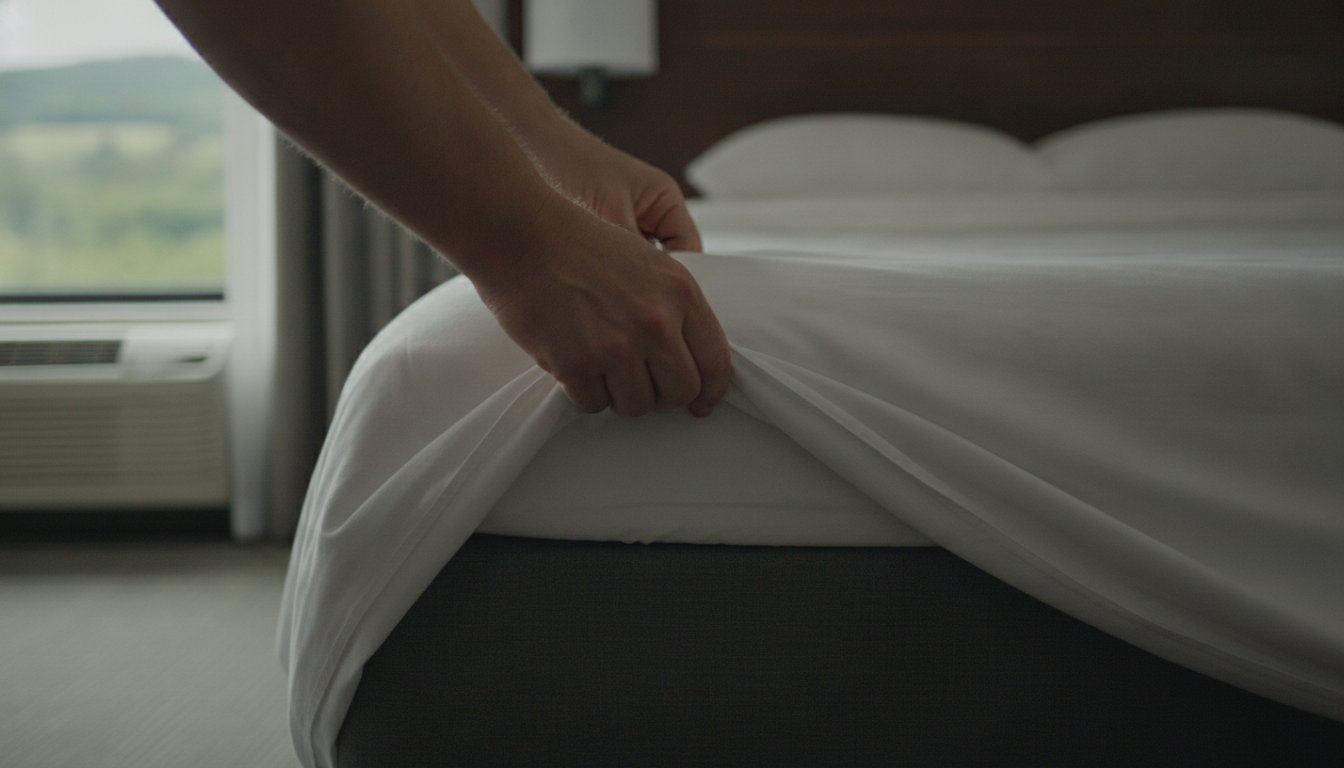
Start by stripping the bed linens back to the mattress protector. Pay close attention to all four corners of the mattress, specifically focusing on the “piping” or the thick fabric seams that run along the edges. Use a credit card or a similar flat tool to firmly run along these seams, which can force hidden insects or eggs into view. After checking the mattress, examine the box spring. You must inspect the plastic corner guards, as these are one of the most common hiding spots in hotel environments. Finally, look at the underside of the bed frame and the slats, where dark, secluded gaps provide ideal shelter.
The Furniture and Decor Sweep
While the bed is the primary focus, headboards are often the number one hiding spot because they are frequently bolted to the wall and rarely moved for cleaning. Use your light to peer into the gap between the headboard and the wall. Next, move to the nightstands. Open the drawers and inspect the tracks and the back of the unit. Don’t overlook the decor; examine the folds of the curtains and check behind hanging picture frames. Knowing how to check for bed bugs in a hotel requires looking at every crevice where a thin insect could fit. For residents returning to Erie and Crawford Counties in Pennsylvania or Ashtabula County in Ohio, this thoroughness is the best way to ensure your home stays protected.
Disclaimer: The information provided on this blog is for general informational purposes only and is not intended as professional pest control advice. Conditions vary by property, environment, and location. Reading this content does not create a service agreement. For an inspection or professional recommendations, please contact Mosquito Assassin Pest Control LLC directly.
Protecting Your Belongings During Your Stay
Once you have completed your initial search and confirmed the room is clear, you must maintain a defensive strategy throughout your stay. A successful inspection reduces your risk significantly, but it isn’t a guarantee of total safety. Maintaining high standards for your belongings is just as important as knowing how to check for bed bugs in a hotel. These pests are opportunistic; they wait for a guest to become complacent before finding a way into personal items. By following a few professional habits, you can ensure that your luggage remains a secure environment rather than a transport vehicle for pests.
The luggage rack is a valuable tool, but only if used correctly. Before placing your bags on the stand, inspect the nylon webbing and the joints where the frame folds. Bed bugs often hide in the tight spaces where the fabric meets the metal or wood. If the rack is clear, it’s a much safer option than the floor or the bed. Additionally, you should keep your suitcases zipped shut whenever you aren’t actively reaching for an item. Bed bugs are incapable of operating zippers, so a closed bag is your best physical barrier against an accidental hitchhiker.
Luggage Management Best Practices
The type of luggage you choose can impact your level of protection. Hard-sided suitcases made of polycarbonate or aluminum are superior to fabric bags because they have fewer external seams and a smoother surface that is difficult for insects to climb. If you must use fabric luggage, consider using a protective liner or an encasement designed for travel. If you ever feel uncertain about the room’s status, the bathroom remains the safest storage area. Because it’s typically tiled and lacks the fabric harborages these pests prefer, it’s a low-risk zone for your bags. If you suspect you’ve encountered pests during your travels, professional bed bug treatment can help eliminate the problem before it spreads through your home.
Safe Unpacking Strategies
Avoid the temptation to use the hotel dresser. Wooden drawers are porous and full of joints and crevices that are difficult to inspect thoroughly. Instead, hang your clothes in the closet using metal hangers, which are less likely to harbor pests than wooden ones. Keep your shoes away from the baseboards and the bed, as these are common travel paths for nocturnal insects. Before you check out, conduct a quick mini-inspection of your bags and the surrounding area. This final check ensures you aren’t accidentally packing away any evidence of an infestation that may have developed during your visit. For travelers returning to Erie, Crawford, or Ashtabula Counties, these small steps provide a powerful defense for your household.
Disclaimer: The information provided on this blog is for general informational purposes only and is not intended as professional pest control advice. Conditions vary by property, environment, and location. Reading this content does not create a service agreement. For an inspection or professional recommendations, please contact Mosquito Assassin Pest Control LLC directly.
What to Do If You Find Evidence of Bed Bugs
If your inspection reveals signs of an infestation, your immediate priority is containment. Finding evidence after knowing how to check for bed bugs in a hotel allows you to act before the problem becomes permanent. Start by documenting everything. Use your phone to take high-resolution photographs and videos of the insects, fecal spotting, or cast skins. This evidence is crucial for your interactions with management and for your own records if you need to justify a refund or room change. Keep your luggage in the “Safe Zone” you established earlier in the bathtub or on a tiled floor to prevent any further contact with infested surfaces.
Do not attempt to treat the room yourself or move your luggage into the hallway. Instead, keep your belongings contained while you prepare to switch rooms. The goal is to minimize the movement of pests from the infested area to other parts of the hotel or into your own vehicle. A calm, methodical approach is the most effective way to handle this stressful situation.
Communicating with Hotel Management
Approach the front desk with a calm, professional demeanor. Present your visual evidence clearly and request an immediate room change. It’s essential to ensure your new room is not adjacent to the infested one. Bed bugs frequently travel through wall voids, electrical outlets, and plumbing lines; this means rooms directly next door, above, or below are at the highest risk for spreading. Ask the manager for a log of when the room was last professionally inspected. As a guest, you have the right to a habitable environment, and most reputable chains will prioritize your relocation to a safe area of the building.
Post-Travel Decontamination
The risk doesn’t end when you leave the hotel. For residents returning to Erie, Crawford, or Ashtabula Counties, a strict decontamination protocol is the only way to ensure pests don’t enter your home. Upon arrival, keep your suitcases in the garage or another outdoor area for a final inspection. Immediately wash all travel clothing, including items you didn’t wear, in hot water. Follow this with at least 30 minutes in a dryer on the highest heat setting. Sustained heat is the most effective way to kill all life stages of bed bugs, including eggs.
If you’re concerned that your luggage was compromised despite your best efforts, professional pest control may help reduce the risk of a residential outbreak. A preventative home inspection provides peace of mind and can catch a potential problem before it requires extensive treatment. Taking these final steps ensures that your trip remains a memory of travel rather than the start of a pest infestation.
Disclaimer: The information provided on this blog is for general informational purposes only and is not intended as professional pest control advice. Conditions vary by property, environment, and location. Reading this content does not create a service agreement. For an inspection or professional recommendations, please contact Mosquito Assassin Pest Control LLC directly.
Ensuring a Pest-Free Return Home
Adopting a professional inspection routine is the most reliable way to prevent unwanted insects from invading your living space. By mastering how to check for bed bugs in a hotel, you transform from a passive guest into an active defender of your home environment. The combination of early detection, smart luggage management, and post-travel heat treatment creates a multi-layered defense that is difficult for pests to penetrate. These small habits ensure your travels remain enjoyable and free from the long-term consequences of an infestation.
Vigilance is the foundation of effective pest management. For residents returning to Erie or Crawford Counties in Pennsylvania and Ashtabula County in Ohio, maintaining these standards is essential for the security of your household. If you are concerned that pests may have successfully entered your property despite your best efforts, professional pest control may help reduce risk. You can contact Mosquito Assassin Pest Control LLC for a professional inspection to assess your situation and receive expert recommendations. Staying proactive is the best way to keep your home a safe sanctuary.
Disclaimer: The information provided on this blog is for general informational purposes only and is not intended as professional pest control advice. Conditions vary by property, environment, and location. Reading this content does not create a service agreement. For an inspection or professional recommendations, please contact Mosquito Assassin Pest Control LLC directly.
Frequently Asked Questions
Can you see bed bugs with the naked eye?
Yes, you can see bed bugs without the use of a magnifying glass. Adult bed bugs are reddish brown and roughly the size of an apple seed. While nymphs are smaller and nearly translucent, they become much easier to spot after they have consumed blood and turned bright red. Understanding how to check for bed bugs in a hotel involves looking for these physical insects along with their tiny, grain-like eggs.
Do luxury hotels have bed bugs more or less often than budget motels?
Luxury hotels are just as susceptible to infestations as budget motels. Statistics from April 2026 indicate that 20% of reported sightings occur in 5-star properties. These pests are attracted to human hosts rather than the cleanliness or price point of the building. High guest turnover in premium resorts provides constant opportunities for new pests to hitchhike into the property on luggage.
What should I do with my luggage if I found a bed bug in my room?
Keep your luggage in the bathtub or on a tiled floor if you discover evidence of a pest. Do not move your bags into the hallway or another room until you have spoken with management. This prevents the accidental spread of the infestation to other areas of the hotel. Bathtubs are a safe zone because the smooth, vertical surfaces are very difficult for bed bugs to climb.
Will bed bugs bite me the first night I am in a hotel?
Bed bugs will often bite during the first night of your stay if an active population is present. They are attracted to the carbon dioxide and body heat you produce while sleeping. Because they are nocturnal, they typically emerge from harborages once the room is dark and quiet. Some people don’t react to bites immediately, which can lead to a delay in realizing an infestation exists.
Is it possible to get bed bugs from a hotel even if I don’t see any?
It is entirely possible to bring pests home even if you never see a live insect during your stay. They are expert hiders that remain tucked away in structural gaps during the day. This is why knowing how to check for bed bugs in a hotel for secondary signs like fecal spotting or shed skins is so important. These biological markers are often more visible than the insects themselves.
How do I make sure I don’t bring bed bugs home from my trip?
Prevent an introduction by washing all travel clothing in hot water and drying it on high heat for at least 30 minutes. Inspect your suitcases in a garage or driveway before bringing them into your living space. These steps are the best way to protect your residence in Erie, Crawford, or Ashtabula Counties from unwanted hitchhikers. High heat is the most effective way to eliminate all life stages of the pest.
What do bed bug eggs look like in a hotel room?
Bed bug eggs are tiny, white, and resemble individual grains of salt or rice. They are often found in clusters tucked deep into the seams of mattresses, behind headboards, or in the corners of box springs. Because they are coated in a sticky substance, they remain firmly attached to surfaces until they hatch. They are roughly one millimeter in length, making them difficult but not impossible to see.
Can bed bugs travel through hotel vents or electrical outlets?
Bed bugs easily travel through hotel vents, electrical outlets, and shared wall voids. This mobility allows them to move between adjacent rooms or floors in search of new hosts. If a room next to yours is infested, there is a high probability the insects will attempt to migrate through these utility gaps. This is why professional protocols recommend moving at least two floors away if you find evidence in your current room.
Disclaimer: The information provided on this blog is for general informational purposes only and is not intended as professional pest control advice. Conditions vary by property, environment, and location. Reading this content does not create a service agreement. For an inspection or professional recommendations, please contact Mosquito Assassin Pest Control LLC directly.